• About PeterSIronwood

petersironwood

~ Finding, formulating and solving life's frustrations.

petersironwood

Tag Archives: mental-health

The Void

26 Saturday Sep 2026

Posted by petersironwood in creativity, design rationale, essay, health, leadership, management, nature, psychology, Uncategorized, user experience

≈ Leave a comment

Tags

aesthetics, beauty, calm, creativity, death, HCI, human factors, leadership, life, love, mental-health, mindfulness, pattern language, productivity, psychology, the-void, TNOO, UI, usability, user experience, UX, vacuum, void, writing

The Void

While all the previous properties of natural order seem positive, clear, and obvious, this one seems mildly scary. It reminds me of death, somehow. It’s true that individual death is part of the overall reality of life. Yet, “The Void” still seems scary. It’s reminiscent of whirlpools, caverns, the abyss. I suppose some of our tiny distant ancestors may have faced the dark mouth cavity of a large predator — a shark, a cave bear, a saber toothed tiger. And a few of those who were terrified enough to flood their bodies with adrenalin may have escaped to reproduce and pass on the terror of utter darkness genes to their offspring, including me.

In a friendlier interpretation, the void could be thought of as “empty” space, or more accurately, extra space not filled with functional items. From that perspective, The Void promotes rest, relaxation, rebirth, regeneration. Your day should include “The Void” in terms of activity — sleep, certainly, but also times that are unscheduled and restorative. If you are scheduling a day long meeting and every minute is accounted for ahead of time, there is no “margin” for something which catches the passion of participants to spill over into. There is no time for unanticipated contingencies or for people to reflect on what is happening. 

Similarly, a space (whether computer memory or physical space) that is completely “taken up” with data or things becomes inflexible. In extreme cases, nothing can be done because there is no room to move things. 

Photo by cottonbro on Pexels.com

When I was a kid, I used to enjoy puzzles that consisted of 15 square pieces and one blank space. The idea was to move the pieces around until the pieces were arranged into a particular numeric sequence (or made a picture). It’s immediately obvious that if there is no space, there is no way to move the pieces and whatever order they are in is the order that they will stay in. 

It seems that people who want to control everything want exactly that — no space — no void — no possibility for change. It may be related to the mystery of overworking so many people with long hours despite decades of research showing people are more productive with shorter hours. 

In a living human being, there is typically “space” in our respiratory system and our digestive system. To have zero space means we cannot eat and we cannot breathe. We do have spaces within our body — ventricles in the brain, sinuses in the head, and — crucially — females have a place that can accommodate the creation of a new life within. 

A hive, or a garden, or a city may indeed be crowded, but if it literally has zero space, it dies, just as we would. The void allows flow — in the case of the individual human body, space allows for the flow of food and the flow of air. 

A science that has no void, no space, has no flexibility. It is no longer science but dogma. 

A budget with no space, no void, means every penny has been pre-assigned and this is not an effective way to budget. 

Games typically have space (Go, Chess, Checkers, Monopoly) as do sports (Tennis, Baseball, Soccer, Basketball). Play often consist of using, changing, and manipulating space. The baseball pitcher tries to throw the ball so that it crosses through spaces where the hitter cannot easily hit it well. The hitter tried to hit the ball where the fielders cannot reach the ball. The tennis player tries to “build a point” by creating more space; e.g., by pulling their opponent progressively wider so that a shot can be hit into such a large space that it cannot be reached at all. In most games and sports, the amount of empty space, particularly at the beginning of play is relatively large. In chess, as in American football, play begins with a large space between the teams. In many games, there are special terms for spaces. A “Luft” in chess is a place for your King to go if attacked on the back rank by a queen or rook. In American football, the quarterback throws passes from the “pocket” which is supposed to protect them from tacklers.  

Under Umbrage, everything living and loving was smothered by a rule, or at least she wished it were.

To me, “The Void” connotes more than space, however. “The Void” seems to refer to a relatively large, concentrated space. In music, for example, without any space, there is just a long, annoying noise. But “The Void” isn’t just the space between notes. It seems as though it must be a significant silence such as after the tuning and before the first note is played or the space between movements in a symphony. 

Of course, we can contemplate things at different scales. If we see Alternating Repetition from a distance that allows us to see the alternating repetition, we might see gaps as spaces, but not as examples of “The Void.” If we moved our point of view so that only one such gap were visible, it might become an example of “The Void” at that closer-in scale. 

Most of our everyday reality is physically made up of empty space. Every atom is more than 99.999 % empty space. At that scale, it’s mostly void or at least mostly space. And, at the other extreme, although it may seem that space is crowded when you see the Starship Enterprise go through the universe at “Warp 9” that’s an illusion to make it more interesting. Most of the universe (and our solar system) is empty space. The sun which is by far the largest object in our solar system has a diameter of 865,000 miles. That’s big! But the nearest planet, Mercury, is 40 million miles away. And, that planet is the only thing in such a close orbit. 

Once I was driving with my family from San Francisco to Salt Lake City. Around 3 am, in the absolute middle of nowhere with no lights and no moon, I stopped the car and ran a quarter mile from the road into the desert to look up at the stars. It doesn’t “look” empty of course. Far from it. Yet the sheer blackness of the background and the vastness of it made it seem like a true void. In fact, because of contrast with the sharp and sparkling stars, the vast void was made into even more of a vast void. 

An atrium, a central courtyard, a reflecting pool — can these be voids that strengthen the center? 
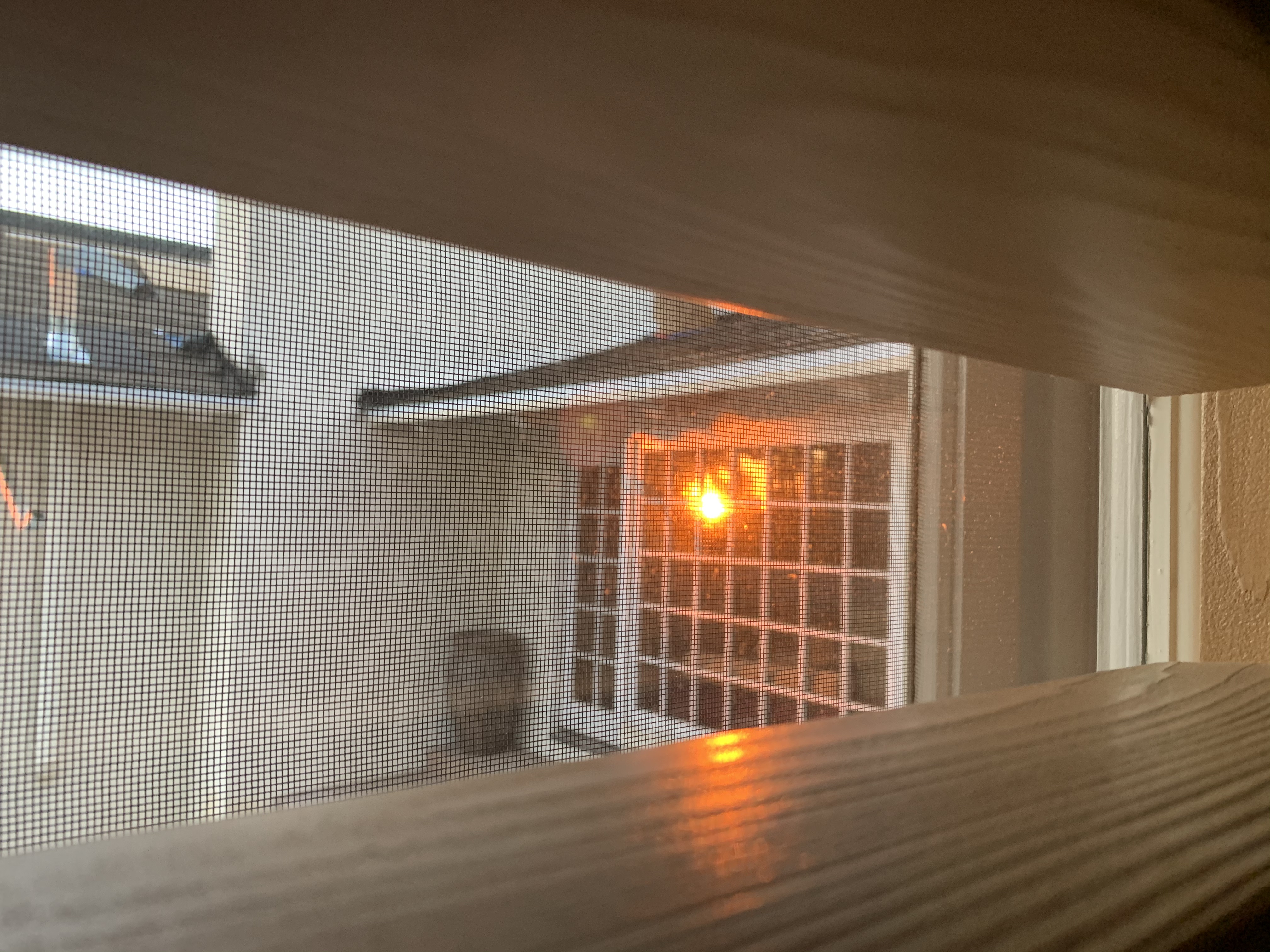
If we look at a void, does that produce a different aesthetic feeling from when we are in a void that surrounds us? If you and your family or friends or tribe huddle around a campfire at night, the fire is a center. You can see the faces of people in the firelight. But you are aware that each of you knows that surrounding your little group is darkness. Sometimes, in movies, someone will remark, “Well, it’s quiet.” To which, the proper response is, “Yeah. Too quiet!” When the frogs and crickets stop making noise, the heaviness of the silence becomes oppressive. It might mean that large predators are about, each with their own maw of void. Being in a large space that has no perceptible features is awe-inspiring or even fear-inspiring. Looking at a large space that is situated in the context of a pattern may echo that feeling slightly, but to me, it feels very different. 

The same tune can be played on a piccolo or a base vile. 

When it comes to user experience, what comes to mind for me is the empty page or the empty canvas or the empty spreadsheet. These are large unfilled spaces. To compose, whatever the medium, requires of us a kind of courage. We must “enter” the empty space. In order to write, we must also allow for empty space within us. As I write, I find that there is always a rhythm of “describing” things that have “come up” for explication and then pausing — staring as it were into the blackness, the void, of my own consciousness. I allow things to arise from that inner void and show themselves. I don’t know what it will be. 

I think that process (and not wanting it disrupted) is one reason that I, like so many others, found “Clippy” to be so annoying. Whenever I was allowing for the void to reveal to me what I wanted to say, “Clippy” would imagine I was stuck and offer a suggestion (invariably irrelevant). 

Perhaps you or one of your kids has played “8-ball.” You ask it a question then you shake it a little and an answer “appears” in a little window. The most enthralling time is that space between when you ask the question and the answer appears. Of course, it’s fun thinking of the questions and interpreting the answers, but the most dramatic part is waiting for the answer to appear. In that moment, you may suddenly realize what answer you want to appear.

Photo by Monica Silvestre on Pexels.com


If an application is to support any kind of creative activity, it should not “rush” the user and it should provide the user empty space in which to create. That emptiness can be intimidating, but I still think it’s necessary. 

My desktop has many icons, tool bars, and windows. The only true void is the blank part of the writing pane in Pages. Visually, since the blank part of the page is white, it doesn’t seem much like a void. There is enough space between the icons and menu items to make them legible, but there is no “void” there. Visually, the only thing that really strikes me as a void is the totally black rounded rectangle beside the color sphere in the Format window. It’s black because that is the color of the text I’m writing in. Its function is nothing like that of an actual void.

The void may symbolize death, but it also symbolizes life. It is the happening place. It is the dance floor. It is the game board. It is the playing field. It is waiting for the curtain to rise. It is the movie theater when the lights go out but the movie has not begun. It is also the movie theater when the credits have done rolling but before the house lights have come up. If it is death, it is also rebirth. If it is birth, it is also the end. 

As every moment of our existence and our attention becomes evermore commoditized and sold to the highest bidder, there is ever more pressure to eliminate the “wasted space” inherent in the void. 

Photo by Leonid Danilov on Pexels.com

Running into the ocean; diving into a pool; deciding to have a child; moving; divorcing; falling in love; losing a loved one; starting a composition; beginning a design — these are moments when we brush up against the void or enter it or avoid it or incorporate it into ourselves. We like to fool ourselves that there is some process or routine or formula or piece of software that can take all the uncertainty out of these transitions into the unknown.

That’s all illusion. It’s the very nature of life itself — that dance on the razor edge between chaos and repetition — to embrace the void. We try always to “avoid” The Void. 


Nature doesn’t “abhor a vacuum.” Nature is mostly vacuum.

Photo by Johannes Plenio on Pexels.com


But often, we abhor a vacuum. Our productivity tools are geared toward reducing “The Void” as much as possible. Children are shuttled from one high intensity activity to another to ensure that when they apply to college, there will be no gaps or voids in their resume. Every box should be checked. Then, they will get into a college–one which will ensure that they will get a high-paying job that will enable to them to work their entire lives so that there will be no uncertainty.

I am also a product of that “Avoid The Void” culture, so I find it hard to imagine what it would mean to design a tool or UI or app that embraced and encouraged The Void. There are some specific mobile apps that support meditation or listening to music or breathing. What of composition though? Whether it is programming, writing, drawing, or creating a business plan, is there a place for The Void to be supported? How would you encourage it? What visual elements or other sensory elements could be used to support it? How would you measure how well you did? 

Or, is it easier to avoid the whole topic? 

—————————————————-

The sound of one hand clasping 

Take a while or three

That cold walk home

Wordless perfection 

Life will find a way

The bubble people

The jewels of November

The lost sapphire 

Author Page on Amazon

The Winning Weekend Warrior focuses on the mental game for all sports using examples from tennis, golf, baseball, and other sports. It covers self-talk, imagery, mental practice, strategy, tactics, & sportsmanship. http://tinyurl.com/ng2heq3

Turing’s Nightmares explores the implications and ethics of Artificial Intelligence through fictional short stories. http://tinyurl.com/hz6dg2d

Fit in Bits shows many ways to put more fun, variety, & exercise into daily chores and habits to help with strength, flexibility, fitness, and balance. http://tinyurl.com/h6c7fce

Tales from an American Childhood recounts early experiences mainly in the American Midwest in the 1950’s and relates them to contemporary issues and events. https://tinyurl.com/y9ajvz9j

Dream Planet. Where do you run when the whole world is crumbling under the weight of human folly? When the lethal Conformers invade 22nd century Pittsburgh, escape becomes the top priority for lovebird scavengers Alex and Eva.

https://www.barnesandnoble.com/w/dream-planet-david-thomas/1148566558

Do Not Hate

08 Tuesday Sep 2026

Posted by petersironwood in America, leadership, poetry, politics, psychology, Uncategorized

≈ 1 Comment

Tags

Democracy, leadership, life, love, mental-health, peace, poetry, politics, truth, ubuntu, USA, writing

Do not hate.

Do not hate.
Demonstrate. 

Do not hate. 

Educate.

Do not hate.

Navigate.

Do not hate. 

Negotiate. 

Do not hate.
Cooperate.

Justified?
It may well be. 
Everyone who ever hates

Can generate a heap of lies
To make their hate seem justified.

But why be fustified? 

When there are so many better things

To fill your heart and mind?

Do not hate. 

Demonstrate.

Show through word and deed

That hate and greed 

Are not the only creed.

Do not hate.
Educate.

Hate is always based on lies.
There may be one you really do despise.

But everyone? 

That’s a loaded gun

Aimed without a thought

About the cost. 

Do not hate.
Navigate. 

The shortest path 

Is not always the fastest path.

Look ahead.

Use your head. 

Don’t get dead.

Do not hate.
Negotiate. 

It doesn’t always work.

But it’s always worth a try.

Just don’t be a jerk. 

Diplomacy apply. 

Do not hate.

Cooperate. 

There’s at least one thing

About the world that both sides love

Of that you sing

Help that thing rise above.

But mainly, do not hate

Because it hurts you to hate.

Guernica

A Civil War there Never Was

Somewhere a Bird Cries

The Crows and Me

Imagine All the People

Roar, Ocean, Roar

Small Steps

The Dance of Billions

Some recommended books:

The Winning Weekend Warrior focuses on the mental game for all sports using examples from tennis, golf, baseball, and other sports. It covers self-talk, imagery, mental practice, strategy, tactics, & sportsmanship. http://tinyurl.com/ng2heq3

Turing’s Nightmares explores the implications and ethics of Artificial Intelligence through fictional short stories. http://tinyurl.com/hz6dg2d

Fit in Bits shows many ways to put more fun, variety, & exercise into daily chores and habits to help with strength, flexibility, fitness, and balance. http://tinyurl.com/h6c7fce

Tales from an American Childhood recounts early experiences mainly in the American Midwest in the 1950’s and relates them to contemporary issues and events. https://tinyurl.com/y9ajvz9j

Dream Planet. Where do you run when the whole world is crumbling under the weight of human folly? When the lethal Conformers invade 22nd century Pittsburgh, escape becomes the top priority for lovebird scavengers Alex and Eva.

https://www.barnesandnoble.com/w/dream-planet-david-thomas/1148566558

A Successful Project

12 Sunday Jul 2026

Posted by petersironwood in America, leadership, management, politics, Uncategorized

≈ Leave a comment

Tags

blog, books, Democracy, goals, KPIs, life, mental-health, politics, project, teamwork, truth, USA, writing

A successful project. 

Who doesn’t like those? 

But what exactly *is* a successful project? 

Photo by Pixabay on Pexels.com

Some are quick to reply (and that very quickness might be an indicator of indoctrination more than conscious choice) that a project is successful if it meets its objectives and is on time and within budget. I have to admit that seems logical and tidy. 

In comparing two projects, we might say project A is more successful than project B if project A achieves more objectives in a shorter time with fewer resources.

A little more about objectives however. Does every objective need to be explicitly stated? Or, to put it another way, if an objective seems obvious to most people but it hasn’t been put in writing, then it need not be met?

Suppose I contract someone to build a pool in the back yard and they do indeed build a pool of the proper size and they do it at estimated cost and time frame. Wonderful! But what if, in the process, they made so much noise, I was successfully sued for twice the cost of the pool? The answer is: “Hey, it wasn’t in the contract we couldn’t do it at night and loudly.” ?

Or, if the pool construction allowed water to run under the nearby house and ruin the foundation and the house fell down and killed everyone inside. But “Hey, it’s not in the contract.”?

Photo by Tosin Superson on Pexels.com

Does every aspect of every contract have to be in writing? 

What about the successful projects of life?

Photo by Zaida M on Pexels.com

Here are some sample objectives that might be included in every contract. I’d prefer that we would all simply agree to abide by them as members of the human race, but if not, we could boilerplate it I suppose.

You project should, on the whole, provide a positive environment for everyone working there. People should not be harassed, belittled, or needlessly endangered.
People who work on the project will learn new skills.
Your project will not destroy innocent people or their environment. 

Your employees will not have to lie to the public.
If the project is wildly successful in any way, that success should be shared.

There are many more constraints that might be suggested. What do you think? 

If we put too many constraints on people, maybe no-one will never become a multi-billionaire and become too rich to jail. 

I guess I could live with that. 

Photo by Igor Passchier on Pexels.com


——————————

Essays on America: The Game

When Greed is the Only Creed

The Orange Man

At Least He’s Our Monster

Stoned Soup

The After Times

The Silent Screams

After All

The Crows and Me

We Won the War!

The Dance of Billions

Somewhere a Bird Cries

Career Advice from Polonius

07 Tuesday Jul 2026

Posted by petersironwood in creativity, essay, psychology, Uncategorized, user experience

≈ Leave a comment

Tags

career, education, HCI, human factors, learning, life, mental-health, usability, UX, work, writing

Photo by Ott Maidre on Pexels.com

Career Advice from Polonius: To Thine Own Self be True

“To thine own self be true.” This advice comes from Polonius who is giving advice to his son in Act I, scene 3 of Shakespeare’s Hamlet. 

Polonius says: “This above all: to thine own self be true. And it must follow, as the night the day, Thou canst not then be false to any man.”

Let’s focus on the first part. 

One of the dreams of education is to customize teaching to the specific learning style(s) of individual students. This was a hot topic when I was in graduate school.

Photo by Suliman Sallehi on Pexels.com


Around 50 years ago. And it still is.

Some day, your grandchildren or your great-grandchildren may be the beneficiaries of learning experiences that are individualized to their specific styles. I wouldn’t hold my breath, but it could happen. It isn’t only a question of research on what various styles are and how to present material that resonates with these various styles. There is also the question of priorities and dollars and personnel. 

But meanwhile, here’s the good news. You don’t have to wait for another 50 years of research and a reshuffling of priorities so folx spend more money on education and less on, let’s say, cosmetics and professional sports. As I say, don’t hold your breath.

But let’s get back to the good news. The good news is that you can discover for yourself how to maximize your own learning as well as what your particular talents are. 

One cautionary note: Don’t be a jerk about it. If you’re in a group dealing with grief, don’t say, “Well, I learn best if a subject is reduced to a few hundred polynomial formulae. So, let’s start right there. Let’s reduce grief to three dimensions. Later, of course, we can do a proper multidimensional scaling exercise to determine the optimal number of dimensions.”

Photo by Andrea Piacquadio on Pexels.com


No. Don’t say that. Of course, you’re free to suggest that approach, but chances are, in that situation, and in most realistic group situations, you will be treated to information in the same manner as many others who have different styles from yours.

However, in many situations, you are, far and away the main important stakeholder. You can use your knowledge of how things work for you in order to strategize and plan how you will learn about things. You can organize and arrange your work so you’ll be more productive. 

Here’s a trivial example. I have learned that my eyes have a wisdom of their own. If, for instance, I’m going out for a walk around the garden to take some pictures of the sunset on the flowers, I grab my stuff and find myself turning and staring at the hat-rack on the way out the door. When I was younger, I would ignore this. But what I have learned is that my eyes are really good at knowing what to look at. So, even if I’m in a hurry, I take a moment to reflect on why my eyes are looking there. And, then, it comes to me. I’ll do better if I wear a brimmed hat to keep the sun out of my eyes while I look at my iPhone.


By paying attention to this little quirk, I’ve saved myself a lot of grief over the years; e.g., not left the house without my wallet, etc.

Here’s another example. I’m very good at seeing “patterns” emerge from a small number of examples or when there is considerable noise involved. This serves me well as my hearing diminishes because I can use top-down processing. Generally, but not always, I understand what people are saying. On the other hand, if I try to listen to a foreign language tape that is only isolated audio words, I have no hope of knowing what they are saying. “Key” “Tee”, “Pea”, sound exactly the same.

Seeing patterns easily is generally a nice capacity. However, I’m horrible at finding my own typos immediately after I write something. I actually “see” what I meant to type. A week later, I’m pretty good at catching the errors. If I had more patience, I would wait a week to proofread for every blog post, but being patient isn’t a strength of mine either. I do go back over old posts occasionally and fix the typos (which I never saw at the time). 

Photo by Frank Cone on Pexels.com

When I go to the movies — remember when we used to go to movies? — anyway, if I went to a comedy, I was very likely to laugh too soon. I “hear” the punchline two lines earlier than it actually occurs. There’s no benefit to my laughing early! But that’s when the punchline hits me. I do keep it soft so as not to disturb the others in the audience. On the other hand, I’m pretty good at “discovering” the playing patterns of my tennis opponents and anticipating what they are going to do. Naturally, I don’t always guess right, but I do way better than chance.

I bring up these examples to illustrate a generality; that most of these individual differences have both an upside and a downside. Mainly, learning about my own styles and capacities is something I only began to think about well after leaving high school. That makes sense. In school — or at least, the schools I went to — everybody got the same instruction in the same way almost all the time. But as an adult, you often have a lot of control over your own timing, flow of information, etc. I think it’s worth your while to look back at your experience and discover what you have difficulty with, what you’re OK at and what you are exceptionally good at. When you have a choice, use the approach you’re really good at. 

Oh, and try to avoid hiding behind curtains when there’s someone with a sword around.

—————————————-

More background on “knowing yourself” 

https://en.wikipedia.org/wiki/Know_thyself

https://arkintime.com/know-thyself/history/

The Walkabout Diaries Natural Variety

Where do you draw the line

Your Cage is Unlocked

The Illness that’s Everywhere

09 Thursday Apr 2026

Posted by petersironwood in America, apocalypse, politics, psychology, story, Veritas

≈ Leave a comment

Tags

Eagles, ecology, family, fiction, greed, hope, leadership, legends, life, love, mental-health, myths, nature, pollution, story, Veritas, writing

“I don’t really feel sick. Not exactly,” said the white-haired lady.

IMG_9137

Many Paths sat down on the edge of the pine bough bed and looked down warmly into the eyes of She Who Saved Many Lives. She squeezed her mentor’s hand a bit tighter as she asked, “Can you tell me how you feel, Great Leader?” 

She Who Saved Many Lives chuckled a bit. “That’s you now, dear.” She squeezed the hands of Many Paths and returned the warm gaze. “You’re the Leader.”

“It is more like everything feels sick,” Saved Many Lives continued. “Not a lot, but some. I see, feel, hear, sense — an illness that is slight for now but growing and that it is — everywhere.”

IMG_0673

Many Paths now grew worried. Perhaps, as sometimes happened, something bad grew in the brain of She Who Saved Many Lives. Or, maybe she was being metaphorical and vague on purpose. That was one of her many “tricks” to get you to think for yourself. Maybe, thought Many Paths, she is even now about to teach me a lesson. I would certainly welcome it. The mood of Many Paths improved. She at least hoped that her mentor was teaching her. 

She Who Saved Many Lives sighed and continued:“It’s most like a dizziness. As when you spin around in a circle for a long time. Then you stop and the whole world seems to be spinning. You lose your balance and fall. And that is what this feels like as well. Something in the world is very much out of balance. It is falling. And though the earth still lives, there are those about in the world who would make earth herself fall.”

IMG_2261

“And that makes you dizzy?” Many Paths still thought a teaching lesson was not the only hypothesis, but the best. 

“It does when I look upon it. I want to understand what it is and how it came about and how to stop it of course. And when I study into it, that’s when I myself start to feel that dizziness. How can anyone want to destroy life itself? They want it to be imbalanced! They want life to stop!” She Who Saved Many Lives sat up and Many Paths could see her mentor’s forehead was wet.  

Many Paths thought perhaps rest was the most important thing to prescribe for her patient. But her “patient” was anything but; she seemed obsessed with trying to find out what was imbalanced. Many Paths decided to pursue the conversation. 

“How could the world get out of balance? If it were in balance to start with, why wouldn’t it stay in balance?”

86A389C7-4CD7-42E3-ABFA-A555A5BB24CB

She Who Saved Many Lives nodded, “I have asked myself that same question. As you no doubt would appreciate, there are many possible answers. It might be that none of them are correct. It is possible that the imbalance was always there but too slight for us to notice. Over time, the imbalance became so large that it was impossible to return to balance.”

Many Paths remained more concerned with her patient than with such a philosophical discussion. But her curiosity had nonetheless been engaged. She Who Saved Many Lives had a gift for that. 

“I can see how a small imbalance could lead to a larger one. But it may also be true that imbalance and balance are themselves in a cycle. When a person is a tiny toddler, they fall a lot! They have very little sense of balance. At last they grow into adulthood and they have good balance. Then…no offense meant…but as you get very old, your sense of balance becomes worse. Then, you fall again.”

70B87FF6-0438-41D5-ADFC-45155628CF5B

“Yes, and of course, each of us individually dies. For us, as a separate being, we grow so far out of balance that we die. And yet normally, the whole of life is not thrown off balance by that. But my sense of things is that people are “falling” at all ages, not just toddlers and old folks. It is something — I don’t think there is a better word than “evil” — some idea or way of thinking that is not only wrong in some circumstances, but actually aimed at self-destruction. I think of NUT-PI and also from our own tribe, ALT-R and POND MUD. But it is not just them. Somehow, they or people like them are infecting others. It may be that I myself am ill. And because of that, I sense illness elsewhere. But I don’t honestly think it’s like that. The illness is everywhere — and it makes me sick to think of it — that there are life forms out there — as recounted in The Myth of the Orange Man — that want to destroy life itself for some trivial greed.” 

For a time, the two women sat in silence, each considering the words of She Who Saves Many Lives. Many Paths at last began, “I have felt something similar. I felt it when POND MUD and ALT-R betrayed us. But after we won the Battle of the Three Paths, it seemed as though the world was well again. Then someone stole Tu-Swift. Stole him. Who would steal the children of others? And then, in trying to find Tu-Swift, others left — and no-one is back. No-one. They may all be dead for all I know. Everything is sick. Yes. Very sick. And I don’t know how to cure it.” 

Many Paths looked for a time into the eyes of She Who Saves Many Lives for an answer, for a clue. Any moment now, she hoped, her mentor would ask one key question and this would all fall into place. At last, Many Paths realized that was not going to happen. Saves Many Lives had not been teaching at all. She was as confused as Many Paths. Saves Many Lives had reminded Many Paths that it was now her turn to be Leader. Many Paths took a deep breath and gave the hand of She Who Saves Many Lives one last squeeze and stood up. 

IMG_3123

“But we will find out how to cure it. We will find out. But for now, let us both get some rest. Tomorrow may bring good news or bad, but it will be another day. Many Paths smiled, turned, and exited the Cabin of her mentor. She looked out onto the Center Place of the Veritas. She smelled the cooking fires, and she heard the happy chatter of her people punctuated now and again with a laugh. It suddenly hit her that she loved this entire tribe and loved it with the same ferocity as a mother grizzly loves her cubs. She would find out what this illness of the world was and together they would cure it. They would fix it. Surely, life itself would come to her aid. 

She walked over to the edge of the broad, swiftly flowing stream. She smiled as she remembered the clever way that Eagle Eyes had turned this stream into a weapon in the Battle of Three Paths. She could see the pink and gold of the sunset clouds reflected yet transformed by the churning water. She knew that somehow and some day, all would be well once again. Life, after all, was robust. It also flashed through her mind that she was only a few feet from the spot where KAVA-NUT had been attacked by a trained eagle. That was something to behold. If we can enlist nature….

flying bird during day

Photo by Pixabay on Pexels.com

Many Paths looked upward imagining the great eagle swooping down. She imagined that she could actually glimpse the eagle in the fading light…careening over the trees. No. It was an eagle, she decided, and headed this way! Could it be…? Many Paths quickly flung several folds of her robe over her forearm so that the Eagle could land there. She put her forearm up parallel to the ground and the Eagle alit. 

Many Paths recognized the Eagle as one of the ones that Eagle Eyes had trained. This one appears to have a badly broken leg, she thought. But as she calmed the Eagle, hooding its vision with her hand, she noticed that something was attached to the Eagle’s leg. She had to breathe deeply to calm herself enough to remove the something without spooking the Eagle. It seemed to be some sort of message.

———————————-

The Creation Myth of the Veritas

The Orange Man: A Parable of Lying and Greed

The First Ring of Empathy (The Start of Book One) 

Fire and Feast (The Start of Book Two)

Previous Most Recent Chapter in the Myths of the Veritas

An Essay on How we sometimes Confuse the Label with the Thing

Author Page on Amazon

My Cousin Bobby

The Stopping Rule

The Update Problem 

You Bet Your Life

Essays on America: The Game

What About the Butter Dish?

Math Class: Who are You?

Tools of Thought: Scenario Planning

15 Thursday Jan 2026

Posted by petersironwood in creativity, essay, psychology, story, Uncategorized

≈ Leave a comment

Tags

AI, decision making, fiction, health, life, mental-health, problem formulaation, story, thinking, tools of thought, truth, writing

Scenario Planning is, in some ways, likely to be a very old “tool of thought.” I imagine when our ancient ancestors prepared for a hunt, they would imagine what they would do and where and how and also imagine how their intended prey might react. Personally, I don’t think this kind of imagining is limited to human thinking. 

I take our Golden Doodle out for a walk every morning. She likes going for a walk. And, she has a pretty good “mental model” of the steps I take as I prepare. She gets more excited as she sees me getting close to the actual walk. On her morning walk, she typically urinates at least once and also defecates. She has numerous favorite places although she also improvises. Her walking behavior varies qualitatively if she “really has to go” and she aims for places to go that are closer. She also likes to steer us toward places where we’ve seen other people, dogs, animals, or other recent interesting phenomena. Her “imagined scenes” may be more olfactory than visual, but she’s anticipating. 

If scenario planning is such a common mental phenomenon, you might legitimately wonder why it needs to be examined as a tool of thought. 

Here’s the rationale. Although, in my experience as a researcher, as a teacher and as a therapist, almost everyone pictures possible future events but the way they do it could be vastly improved. For example, some people tend to imagine only negative consequences. In extreme cases, their habitual imagining focuses on the worst possible outcome. In fact, they sometimes focus, not only on the immediate worst outcome. They use that negative outcome as the onset for a whole train of imagined bad result. “There’s no way I’ll get an offer. I won’t get this job. Or, any job. It’s impossible. I’ll go broke and live on the street. I’ll likely be killed by one of those people who kill homeless folks for no reason. I’ll die lonely and forgotten. Now, I’m too depressed to go for a job interview. What’s the point? Just to end up dead?”

Photo by Zafar Mishkat on Pexels.com


Other folks go to the opposite extreme. They focus only on the best possible outcome.
“We’ll attack Cuba with a small force and the Cuban people will immediately join us in a counter-revolution and oust Castro!” Or—“Once we take control of the oil, this war will pay for itself!”


To some extent, thinking of multiple possible outcomes is addressed in another tool: Many Paths. 

It is important to be able to consider multiple scenarios. In general, it is also critical to be able to communicate imagined outcomes to others. That’s where storytelling comes in. Although scenario planning and storytelling are not identical, they are close cousins. Next, we will consider in some depth the topic of stories. How does one find, create, and personalize stories (or scenarios) and present them in a compelling fashion?

——————-

Author page

Many Paths

It was in his Nature

Donnie Takes a Blue Ribbon for Spelling

Small Successes Early 

Coelacanth 

That Cold Walk Home

Timeline for RIME

Wilbur’s Story

What Could be Better? A Horror Story.

As Gold as it Gets

A Mind of Its Own

After the Fall

Travels with Sadie 

The Walkabout Diaries

The First Ring of Empathy

The Orange Man

Stoned Soup

The Three Blind Mice

Don’t Throw Out the Baby with the Bathwater!

08 Thursday Jan 2026

Posted by petersironwood in creativity, essay, psychology, Uncategorized

≈ Leave a comment

Tags

AI, leadership, life, management, mental-health, politics, Problem_finding, problem_solving, thinking, truth, USA, writing

On Throwing Out the Baby with the Bathwater. 

adorable baby beautiful bed

Photo by Pixabay on Pexels.com

Babies are a pain. Let’s face it. Of course, they are. But they are also a joy. Not only that, they are the future of humanity. Yet, it’s true that they require a lot of attention. And, they have unpleasant by-products, bathwater being one of the least unpleasant. But we say, “Don’t throw out the baby with the bathwater” because we humans do have a tendency to over-emphasize whatever the negative aspects of something are and take for granted the good parts. 

For example, let’s say that your furnace goes out. You are sitting there one cold, wet November evening, before winter’s knife edge of cold is softened by the splendor of a snowfall’s sparkle. No, this is an evening for complete relaxation; it’s the end of a frustrating day at work. Time to settle down with a little Jack Daniels on the minimal rocks and watch the next episode of your favorite TV show. But you find yourself thinking: “It’s cold in here!” So, up you go to see whether someone — certainly not you — has set the thermostat too low. No, you see that it’s set to 72F. But the actual temp is only 67F. No wonder it’s chilly. You put on your slippers and pad down the basement stairs to look at the furnace. It’s not running. 

burning campfire

Photo by Berend de Kort on Pexels.com

You feel that you have been cheated out of your richly deserved and eagerly awaited evening of relaxation. Instead, through no real fault of your own, you find these plans and dreams in shambles and you have to go through a series of hoops, each of which will steal some of your money, and equally important, steal some of your time away from activities you’d prefer. The path in thinking that is tempting to take is to “throw out the baby with the bathwater” and decide that the company or the manufacturer is evil. (They might be, of course; my point is simply that deciding that on the basis of the evidence at hand is not warranted). You might even decide that all heating companies or even all companies or, in extreme cases, everyone else is evil. 

A similar line of thinking, again completely understandable, is something like the following. “Well, when I grew up, we just put everything in the trash. You know. We didn’t have to recycle things. If it was good enough for my parents not to recycle, it should be good enough for my kids.” It really doesn’t seem fair. After all, you were just doing what you had been taught was right and now, all of a sudden, like an infomercial embedded in a sit-com, you are supposed to do something different that does take some extra time. And why? 

assorted plastic bottles

Photo by mali maeder on Pexels.com

As the population of earth grows and grows, our own behavior will inevitably be influenced by a greater and greater number of people. That would be true even without the fact that nearly half of earth’s 7 billion human beings [That was early in 2019; now, it’s 8.3 billion and 68% have access].  now have access to the Internet. Sometimes, that interconnectedness puts constraints on your behavior or makes you feel uncomfortable. On the other hand, that same interconnectedness is what allows so many people (hopefully you included) to live in far better circumstances than did any Medieval king. 

Because we humans trade skills, and natural resources, and cultural strengths, and ideas, and money throughout this whole diverse world, our standard of living is a symphony of glorious possibilities instead of a tuning fork forever singing the monotone of “Sing, Johnny One Note.” But we tend to take for granted the affordable laptop, the central heating and air conditioning, the car now fitted with life-saving seat belts and air bags, the cancer treatment that saved your life, or the pollution regulation that prevented you from getting the cancer you would have gotten without those regulations. You have access, I hope, to a public library and the Internet where you can find out about the world’s great architecture, the world’s great ideas, the world’s great art. Think about that. The world’s knowledge is at your fingertips. Not just the knowledge of your family, or your town, or your state, or your country — the world’s knowledge. And, of course, it isn’t just you. More than 5.5 billion people on earth have this access. And, they can invent, and learn, and dialogue together to create a much better world. 

fullsizeoutput_1372

And that much better world will necessarily be different from the world of today. Being different means that people such as you and I will need to change; learn; and sometimes we will be uncomfortable. It’s understandable that it’s somewhat disconcerting. But we need to look at this in balance. The modern world gives us many good things. Yes, it has some unpleasant side-effects. If we work together though, with the knowledge of the world at hand, we should be able to find ethical and effective paths forward. 

It isn’t only in terms of world-wide cooperation (or lack thereof) that we need to take a balanced look. It’s easy to get frustrated with an actual baby and temporarily forget how wonderful it is. It’s easy to get frustrated with college courses, or roommates, or spouses, or co-workers, or technology, or stop lights, or —- when what is really causing that frustration is not the totality of any one of those things. Stop lights actually speed you on your way! If you’ve ever been to a busy intersection when the traffic light stopped functioning, you’ll quickly see how much worse off things are without the traffic light. 

black traffic light

Photo by Davis Sanchez on Pexels.com

So, please, let’s all have the best 2026 that we can. But when you encounter one of the many frustrations of modern life, let’s try to do a better job of seeing the totality of the system, not just the bothersome part. It’s not easy. When your down jacket, usually so comfortable and warm, happens to send the spiky end of a feather into your neck, it’s natural to focus for a moment on the sharp spike. Okay. We all do that. But let’s also remember that ancestors, not so long ago, would have loved to have a down jacket against the winter freeze. 

beautiful blowing cold cute

Photo by Pixabay on Pexels.com

Don’t throw the baby out with the bathwater! 

————————————

Author Page on Amazon. 

Corn on the Cob

Finding the Mustard

What about the Butter Dish?

The Invisibility Cloak of Habit

You Bet Your Life!

Essays on America: The Game

The Self-Made Man

Wednesday

The Stopping Rule

OOPS!

The Update Problem

Roar, Ocean, Roar

Tools of Thought: Problem Finding

03 Saturday Jan 2026

Posted by petersironwood in America, management, psychology, Uncategorized

≈ Leave a comment

Tags

AI, Business, creativity, Design, life, marketing, media, mental-health, problem finding, problem solving, research, thinking, thought, truth, writing

Problem Finding

IMG_5193

Today (18 December, 2018), I googled “problem solving” and it returned 287,000,000 results. In most of our school life as well as most people’s work life, we are given problems and asked to solve them. “Problem finding” only returned about 2.5 million or fewer than 1/100th as many hits. Solving problems can make processes more efficient and more effective. Solving problems can even save lives. We generally reward people both at school and at work for being good problem solvers. We seldom train people in problem finding. In fact, the reaction of many teachers and many managers when someone finds a problem is to dismiss it as being a non-problem. (FYI, Google now leads with an AI summary rather than links nor does it provide the number of “hits.”)

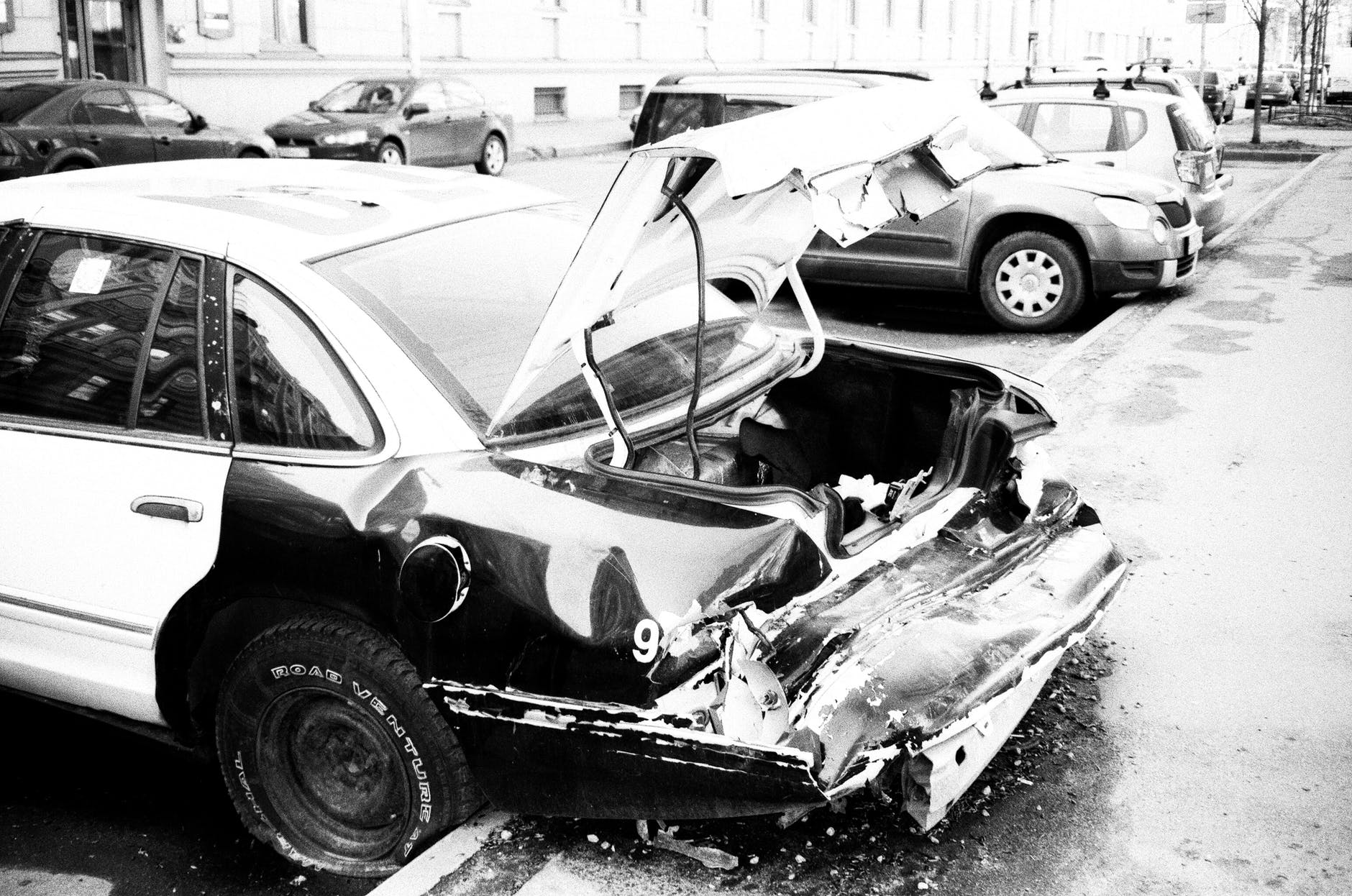
I can understand this sentiment; the emphasis on solving problems rather than finding them. As a teenager driving my dad’s car home from a date with my girlfriend, somebody beside me tried to make a right turn from the left lane and ran right into my dad’s blue Dodge. I heard what sounded like the voice of God say “NO!!” loud and clear. It was actually louder than the sound of crumpling metal. For a split second, I was in complete denial. Even some moments later, when we pulled over to assess the damage, to me, it looked minor enough to ignore and to just drive off. A more experienced guy from the corner gas station near where this happened said that while it may look minor, it would cost hundreds of dollars to fix and we therefore needed to trade information. I was stunned.

grayscale photo of wrecked car parked outside

Photo by Александр Неплохов on Pexels.com

In many cases, it is a human tendency to want to deny that a problem really exists. If you can get past that tendency however, and embrace problems and indeed, even learn to seek them out, you may be able to create tremendous value for yourself and for those around you. Problem solving can make your bookstore more profitable. Problem finding lets you invent Amazon. Problem solving lets you build a better internal combustion engine. Problem finding leads you to an electric vehicle.

What might you do to discover problems? First, you might take your own negative emotions as a jumping off place. If you find yourself angry, or anxious, or depressed, to the extent that you can trace back what is going on to the initiating event, you may be able to be consider whether that event is unique to you — or, more likely, that event is likely to trigger a negative reaction in many people. 

person holding white polaroid land camera

Photo by fotografierende on Pexels.com

If you found that waiting even 48 hours to have your photographs developed and printed — and you thought others might also be impatient to see the results–you might invent Polaroid instant photos. If you found cooking a casserole too time-consuming and messy for your taste, you might invent frozen dinners. If you drove a lot in hot, humid climates, you might be motivated to put air conditioning in cars. 

Of course, you do not have to limit yourself to your own misfortune. If you read about someone having a miserable time, you could dig a little deeper and ask yourself how a tragedy might have been prevented or how an accident could have been avoided. You can also look at a change that seems minor and ask yourself what will happen if this change becomes widespread. 

For example, if you read in the newspaper that a robot has been invented that harvests tomatoes, you might extrapolate to a more universal situation. What if all crops were harvested by machine? This might make groceries cheaper. But what else would it mean? Tomatoes are rather delicate, after all. You might wonder whether growers using a machine to harvest tomatoes would harvest them early to avoid them being mashed by the machine. You might wonder whether they would even genetically alter the tomatoes so that they were easier to harvest by machine (even if they were no longer as tasty). You might wonder what will happen to the tomato pickers. Politicians may tell you that they will all be retrained for higher paying jobs as machine inventors, machine programmers, and machine maintenance folks. But this makes no sense. If there were an equal number of IT jobs as there used to be tomato pickers but each of the new jobs came with a higher salary, why would the growers use robots? There will be fewer jobs after automation and in some cases, far fewer. 

close up of hands holding cherry tomatoes

Photo by rawpixel.com on Pexels.com

You might look at the global temperature trends and ask yourself what will happen if they continue. What will happen if global temperatures continue to rise? What can be done about it? Of course, once people start seriously mapping out the consequences, some people will react by saying, “Oh, it isn’t really happening!.” Why do they think that? Because it’s too scary to contemplate the truth; or too inconvenient to take the necessary actions. There are vested interests in old energy sources who will be happy to help you along in your fantasy of denial. In the short run, it’s often easier to imagine that problems do not exist, or are not that bad, or won’t get worse, or that there is just nothing to be done. 

Even most of the people who rail against what most of us think of as sensible gun regulation (requiring a license, showing ID, getting at least some training and testing the would-be gun owner’s knowledge, competency, and eyesight as we do with cars) don’t think that mass shootings of innocent children is a fine thing. They see it as a problem — just one that cannot be solved or one that can only be solved by adding cost and inconvenience to the potential victims. After such a tragedy, they may even send “thoughts and prayers.” 

black rifle

Photo by Specna Arms on Pexels.com

There is a possible “down side” to problem finding. The greedy may decide that they can make a lot of money by generating a solution to a problem that isn’t really a problem and making you believe it is a problem. My favorite, and so far made up, example is “Elbow Cream” for those unsightly skin wrinkles that appear on the back of your elbow when you straighten your arm. But that made up example is not too far off. You eat spicy food and it upsets your stomach? We can fix that! Of course, you could too by simply not eating overly spicy food! But nobody makes money that way. So they will sell you something that supposedly fixes the “problem.” While it might be fantasy to imagine “Elbow Cream” that will “fix” your “unsightly elbow wrinkles” it is not fantasy to imagine that people have been hoodwinked into spending money on “fixing” their faces and bodies. 

fullsizeoutput_11b5

Americans spent 16 billion dollars on cosmetic plastic surgery in 2017. There are 50 countries who each have a lower GDP than that. The beauty industry in the USA overall was supposedly around $445 billion in 2017. That’s more than the GDP of each of 151 countries! Both figures are also less than the federal government spends on reducing climate change. Or cancer research. 

Do you see that as a problem? I do. 

——————————————————

Author Page on Amazon. 

The Invisibility Cloak of Habit

Essays on America: The Game

One of the most enjoyable aspects of Science Fiction as a genre is that it often shows us problems that might occur in the future. In some cases, it suggests ways to prevent those problems and in some cases, it suggests how these future problems might be dealt with.

Turing’s Nightmares, for instance, comprises 23 short stories that explore the ethics and implications of AI. http://tinyurl.com/hz6dg2d

Dream Planet examines, among other things, the extrapolation of global warming and a radical attempt to stem it. https://www.barnesandnoble.com/w/dream-planet-david-thomas/1148566558

FaceGook

The Ides of February

A Day at the HR Department

Putin’s Favorite DOG-E

Silent Screams of Dead Men’s Dreams

Namble Mamble Jamble

May You Live in Interesting Times

Plastics!

The Last Gleam of Twilight

The “Not-See” Party

An Open Sore from Hell

Happy Talk Lies

Tools of Thought: Metaphors We Live By & Die By

24 Wednesday Dec 2025

Posted by petersironwood in America, family, management, psychology, Uncategorized

≈ Leave a comment

Tags

analogy, Democracy, elections, Feedback, government, life, love, mental-health, metaphor, politics, problem solving, programming, sense-making, thinking, thought, writing

Metaphors We Live By and Die By

PicturesfromiPhone2 087

I love metaphors. I always have. I admit it. I think every youngster does, at least until they are exposed to poetry in English class. I was lucky to have an awesome English teacher who deepened rather than destroyed my natural love of metaphors. There are plenty in my own poems.  but in this post, I am not focusing on metaphors for poetry so much as metaphors that we use in our thinking. Metaphors impact the way we approach situations at work and at home. I was influenced to see this by two main sources. First, Lakoff & Johnson’s book, Metaphors we Live By  was first published in 1980. This book greatly influenced, among other things, our IBM Research team’s study of human-computer interaction. At this point in the history of human-computer interaction and user experience, researchers and practitioners began to explore how various metaphors (e.g.,desktop, trash can, windows, drag and drop) could be used to help users understand the capabilities of computers and how to invoke them. (See, e.g., Carroll, J. and Thomas, J.C. (1982). Metaphor and the cognitive representation of computer systems. IEEE Transactions on Man, Systems, and Cybernetics., SMC-12 (2), pp. 107-116). 

Consider the error messages “Illegal Syntax” and “User Error.” They both put the responsibility for an undesirable state of affairs squarely on the shoulders of the user. “Hey you! User! You did something dastardly! You used illegal syntax.”

man wearing jacket and peaked cap grayscale photo

Photo by Brett Sayles on Pexels.com

Generally, the term “illegal” implies that you did something that was against the law. It usually implies you did something unethical too. Gerry Weinberg, one of the pioneers of UX/HCI (a keynote speaker at the Gaithersburg Conference),  pointed out that the “legal” syntax of languages often has arbitrary restrictions. It might be more accurate to have an error message that says, “Our programmers were unable to take the time to allow dates to be entered in European or Chinese format. Please enter dates as MM/DD/YYYY as in 08/04/1961 for August 4th, 1961.” This longer message tells the user what was “wrong” with their input and how to correct it as well as conveying the very real truth that the limitation is with the software, not with the user. Similarly, what is called “User Error” actually comes up as a message when the user does something that seemed reasonable to the user and would most likely be interpretable by another human being but was not anticipated or could not be dealt with by the programming team. Suppose it said instead, “Software error. We did not anticipate this kind of input so we can’t deal with it.” Or, in many cases, a more honest message might be: “Software error. We knew people would want to do this, but we didn’t have budget to program properly.”  

silver and gold coins

Photo by Pixabay on Pexels.com

 At the same time I was thinking about metaphors and Human Factors in Computing Systems, I was also conducting therapy as a Fellow at the Institute for Rational Living. I was learning and supervising cognitive behavioral therapy under the direction of Albert Ellis. Here I observed how people used metaphors to help make sense of their lives and make decisions about their lives. For example, as pointed out by Lakoff & Johnson, people often viewed romantic love as a sickness! It is also common to view romantic love as a journey over which you have little or no control. It is understandable why it sometimes feels that way, but such a metaphor is not empowering. It does little to lead you to make reasonable decisions about love or about those whom you love. Think instead of love as a collaborative work of art. 

man standing beside his wife teaching their child how to ride bicycle

Photo by Agung Pandit Wiguna on Pexels.com

The “Love is a collaborative work of art” metaphor encourages you to realize that you must collaborate with your partner to make a relationship work over time. You can’t really collaborate very well unless you communicate. It also encourages you to realize that work is involved. It encourages you to realize that it is a creative endeavor. While you can certainly learn from the successes and mistakes of others, in the end, your relationship is unique. It will take creativity to make your relationship work. It puts the responsibility for the relationship on you and your partner, not on forces beyond your control. 

It isn’t only love about which people often use inappropriate metaphors. For example, when it comes to overcoming addiction, overeating, under-exercising, people often use sin as their over-arching metaphor. “I was bad last night. I had two pieces of pumpkin pie.” “I was horrible all week. I had those evil donuts every morning.” The metaphor that “eating is evil” is inaccurate. After all, you have to eat to live. Furthermore, that metaphor doesn’t lead to any solutions except to try harder to be “good.” Worse than that, if often subverts a person’s efforts. “I didn’t want to have any ice cream but I did. Oh, well, the night is blown. I may as well eat the whole quart.” (Now that I’ve sinned, I may as well enjoy it). Weight is best thought of in purely physical terms. If you ingest more calories than you burn you will gain weight. If you burn more calories than you consume, you will lose weight. That’s it! (That accounts for almost everything. Intaking more fiber and fluid can have an impact as well as doing *some* light exercise after eating, but it’s mainly just a physics issue). Making it about good and evil does not help and, in my experience, is completely counter-productive. 

donuts and bagel display

Photo by Igor Ovsyannykov on Pexels.com

Speaking of counter-productive metaphors, I have been annoyed and concerned for decades that the media have largely (though not wholly) reported on political matters as they report on sporting events. During election season, you will hear relatively little about the candidates, their positions, their backgrounds or their ethics. You will hear a lot about strategy and where they stand in the polls. Often you will literally hear nothing more than a sound bite per day about major candidates. Then, pundits will unendingly discuss and debate how this or that sound bite will work or not work with various voter groups. No matter how outrageous, unethical, or disgusting a candidate’s behavior is, the media will spend most of their coverage on how it will affect the “score.”

Metaphors have consequences. 

We now find ourselves in an extremely weird position, at least in America. One candidate has “won” the “World Series” of elections (American Presidency). Many of the people who voted for him think of themselves as his “fans” and “supporters.” They believe their guy “won” so they want to continue to support “their team.” After all, imagine that you are a Yankees fan and the Yankees won the World Series. You get to have bragging rights until the next World Series. If one of the Yankees turns out to be a tax evader, you’re still going to be a Yankees fan. If one of the Yankee pitchers turns out to have cheated during the games, say, by putting illegal substances on the baseball, you’ll still be a Yankees fan. Another Yankee might be a wife beater. But, hey, they won the World Series! So you’re still a loyal Yankees fan. 

man wearing new york yankees cap

Photo by Oleksandr Pidvalnyi on Pexels.com

Here’s the thing. It doesn’t make a whole lot of real difference in your life who won the World Series. It doesn’t matter materially to your kids. It doesn’t matter materially to your grandkids. Don’t get me wrong. It will make some difference in how you feel. You and your whole family might be happy they won. But it won’t make the air you breathe cleaner or dirtier. It won’t make the water you and your family drink pure or contaminated with carcinogenic toxins. It won’t make or break the economy. Having the Yankees or Boston Red Sox win the World Series will have zero impact on global climate change. Even if Chicago wins the World Series, it won’t start an atomic war. If the Phillies win, it won’t mean you will lose your health care. Stay loyal to those Yankees! Or to the Green Bay Packers. Or to Manchester United. Or to the India National Cricket Team. Or whoever your favorite team is. Why not? 

Politics though, regardless of how it is reported by the news media, is vastly and vitally different from a sporting event!  Who is in office can have a huge influence on what happens in the lives of people. In the case of an American President, who is in office can have a huge influence on the lives of people around the globe, not only today and tomorrow, but also for decades to come. 

white and grey voting day sign

Photo by Element5 Digital on Pexels.com

Collectively, those Americans who voted (about 137.5 million) in the last Presidential election hired someone for a job. (Actually, nearly 63 million voted to hire him while nearly 66 million voted to hire Hilary Clinton). POTUS is an important job and how that person does that job impacts your life in a very real way. It impacts the lives of your friends and your family. It impacts the lives of people around the world. Every action that person takes, every speech they give, every statement they tweet has an impact. You or I might send out a nasty tweet about people. But our nasty tweets are very unlikely to cause someone to construct and send pipe bombs to the people we tweeted about. We have hired someone to do a very important job. It isn’t a sporting event.

IMG_2349

Imagine instead of rooting for your favorite sports team that you hired a guy to take care of your kids. To you, that is certainly an important job. After you hire him, you discover that the person you hired lied to get the job. He lies to you every single day. He steals from you! Not only that. Every day, he trashes your house a little more. He has parties at your house and the people he invites include known criminals. Worst of all, this guy you hired is a child molester! That’s obviously a nightmare scenario. What makes it worse is that many people knew that the person you hired was a crook and a child molester. 

What do you do when there is a mountain of evidence that he is lying to you; stealing from you; trashing your house; consorting with known criminals; and is a child molester? 

IMG_9150
IMG_3123

Do you keep him on to watch your kids anyway out of a sense of loyalty? 

Do you feel so guilty about hiring him that you insist to all your friends and relatives that this guy is doing a great job? (Because, after all, that’s what he keeps saying). 

Do you keep him on until he is convicted in a court of law? 

Of course you don’t! You fire him immediately. 

You have the power to choose the metaphors you use. You don’t have to stick with a metaphor just because it was the first one to occur to you. 

Metaphors have consequences. Whether in your personal life, work life, or political life, choose your metaphors with care. Don’t latch on to one simply because it’s the one the mainstream media discovered rakes in the most ad revenue.

Since I first wrote this post about metaphors, there has been a COVID epidemic. According to the respected British medical journal, Lancet, the mishandling of the COVID epidemic in America cost at least 200,000 unnecessary deaths. Treating a pandemic as though it’s just a cosmetic problem that will “magically disappear” like a prom pimple turns out not to be very effective after all.

Elections are not sporting events. You are not simply a “fan.” If democracy and the rule of law in America are to survive, you must be an active participant. Cheering and jeering are not enough.

IMG_5126

Author Page on Amazon

Roar, Ocean, Roar

We Won the War! We Won the War!

Siren Song

The Ailing King of Agitate

After All

An Open Sore

All We Stand to Lose

At Least he’s Our Monster

Stoned Soup

The Tale of the Three Blind Mice

Travels with Sadie: Teamwork

The First Ring of Empathy

The Walkabout Diaries: Variety

Regression to the Mean

21 Sunday Dec 2025

Posted by petersironwood in America, management, psychology, sports

≈ Leave a comment

Tags

AI, Business, Democracy, experiment, family, Feedback, HCI, learning, life, mental-health, personal-growth, politics, science, sports, testing, truth, USA, usability, UX, writing

Regression to the Mean

selective focus photography of yellow leaves

Photo by Haugenzhays Zhang on Pexels.com

While working full-time at IBM Research, I was also a Fellow at the Institute for Rational-Emotive Therapy in Manhattan. I wrote an article in 1978 for their Journal, Rational Living. The title was: “Why Do I Self-Down? Because I’m an Idiot?” Indeed, many people put themselves down and it is not helpful. I hypothesized several different causes for this kind of self-slamming behavior. Most of these causes you could probably figure out on your own. But one in particular is subtle and non-intuitive. It is based on a statistical phenomenon which few people know about despite the fact that it is extremely pervasive. This phenomenon is called “Regression to the Mean.” 
I want to define this term by explaining some examples. Imagine that you have a new soft drink which contains a combination of herbs that will purportedly make you smarter; e.g., gingko and bacopa. (There is some evidence these may actually work but let’s assume that they don’t or that your tea has too little to be effective). Here’s what you do to “prove” that it works anyway. You give an IQ test to 10,000 people and choose the 50 who score the lowest on the test and have them drink your tea for the next six months. At the end of that time, you give those 50 people an IQ test again and — Voila! The average (or mean) of the IQ scores has almost certainly gone up. Yay! It works! 

Or does it? One of your competitors is not too happy about your study. In fact, they aren’t even happy you put your tea on the market. They decide to prove that your tea is not only ineffective but that it makes people less smart. So what do they do? They give an IQ test to 10,000 people and they pick the 50 who score the highest. They have them drink your tea for six months and at the end of that time, they have them take another IQ test. In this case, the mean (average) score is lower than the first time! Ouch! They say your tea causes brain damage! 

photo of head bust print artwork

Photo by meo on Pexels.com

How can the same tea make people smarter and make them dumber? In this case, it does neither. What is going on? Here’s what is going on. When you measure something, there is always some error. Whether you are measuring your weight, your height, your blood pressure, or your IQ, the measurement is never exactly perfect. Your weight may vary slightly because of atmospheric pressure and more so because of water retention. If you take an IQ test, your score will partly reflect how well you do on such tests in general, but it will partly depend on luck. You may have felt particularly good that day, or a few of the questions might have been on topics you just heard about on TV the day before, or you may have made some lucky guesses. Or, you may have been unlucky on a particular day. You might have had a cold or misread one of the questions or forgotten your morning coffee. On any given day, some people will be a little lucky and some people will be a little unlucky. These things tend to balance out in a large group and if you tested all 10,000 people after six months, then assuming the tea has no real effect, no effect will be shown in the data. 

cards casino chance chip

Photo by Pixabay on Pexels.com

However, if you select the very best scores, you are partly picking smart people, of course, but you are also picking the people who were lucky that day. When you test just those people six months later, they will generally be just as smart but there is no reason to suppose they will be lucky again. Some will be lucky both times, most will not be particularly lucky or unlucky and a few will be unlucky. The average score will be lower. Conversely, if you choose the lowest scoring people, you will partly be choosing people who don’t do well on such tests in general. But you will also be choosing people who were tired, sick, guessed wrong or were otherwise unlucky that day. When you retest, those people will still tend to be people who do poorly on such tests, but they won’t necessarily all be unlucky again. Some will. Some won’t. On average, the scores will be higher than they were the first time. 

The phenomenon of “Regression to the Mean” was first noted by Francis Galton in the 1880’s. Tversky and Kahneman, so far as I know, were the first to note that this phenomenon could easily cause managers, coaches, and parents to end up being unnecessarily negative. Here’s how it works. Let’s say you are learning to hit tennis serve. Although you will likely improve in general, over time, there will also be a lot of variation in your performance. Sometimes, everything will work well together and you’ll hit an excellent serve, one that is above your average level. At first, the coach’s natural inclination will be to praise this by saying, “Wow! Great serve!” or something like that. Unfortunately, your next serve, due to regression to the mean is very likely not to be quite as good as that one was. Your coach’s praising behavior was thereby punished. On the other hand, if you hit a particularly poor serve for your level, your coach might say, “Oh, come on. You can do better than that!” If they choose to say such things only on your very worst performances, then, due to regression to the mean, your next serve is likely to be somewhat better. In other words, their slamming you will be rewarded by your doing better the next time. The same general tendencies will apply to managers and parents as well.  

adult athlete body bodybuilding

Photo by Pixabay on Pexels.com

The same applies to you! Whatever you are doing, your performance will vary somewhat over time. If you begin by praising yourself internally whenever you hit a particularly great shot, your next shot will most likely be not so great. On the other hand, if you put yourself down when you find your performance particularly bad, “You idiot! How could you miss that!?” Your next shot will tend to be somewhat better. Over time, your positive self-talk will tend to be punished and your negative self-talk will tend to be rewarded. 

It’s no wonder then that many managers, coaches, and parents end up saying very negative things about their charges. It’s also no wonder that many people say (or more likely think) many more negative things about themselves than they say positive things.


Is there anything to be done? First, simply be aware of this phenomenon. That is step one. If you are running a study, you need to be careful in selecting. The study about your tea could be fixed by re-testing the entire population; by selecting a random group of 50 rather than the best or worst; or by using a control group who did not drink tea but was retested anyway. When praising or punishing someone’s performance, do not bother with trying to reward or punish outcomes based on one trial. That’s actually a pretty poor way to coach yourself or others in any case. See The Winning Weekend Warrior for more on this. Also watch out for this when you read about various conclusions of other studies. Did the investigators select either the “best” or the “worst” for their study? If they did such a selection, did they talk about the bias this introduces? Did they have a control group? 

Meanwhile, treat your mistakes as opportunities to learn, not as opportunities to put yourself down. There’s really no point in self-downing. But if you do find yourself self-downing, remember that it’s common; relax; smile at this human foible; then quit doing it. At least give yourself a break for the holidays. 

beautiful christmas fashion female

Photo by freestocks.org on Pexels.com

————————————-

Tversky, A., & Kahneman, D. Judgment under uncertainty: Heuristics and biases. Science, 1974, 185, 1124-1131. 

Author Page on Amazon

My Cousin Bobby

The Update Problem

The Stopping Rule

Finding the Mustard

What about the Butter Dish?

The Self-Made Man

Labelism

Wednesday

Where does your loyalty lie?

After All

Roar, Ocean, Roar

Plans for US; some GRUesome

The Walkabout Diaries: Sunset

The First Ring of Empathy

Stoned Soup

The Tale of the Three Blind Mice

Fifteen Properties

A Pattern Language for Cooperation

Travels with Sadie: Cooperation


← Older posts

Subscribe

  • Entries (RSS)
  • Comments (RSS)

Archives

  • October 2026
  • September 2026
  • August 2026
  • July 2026
  • June 2026
  • May 2026
  • April 2026
  • March 2026
  • February 2026
  • January 2026
  • December 2025
  • November 2025
  • October 2025
  • September 2025
  • August 2025
  • July 2025
  • June 2025
  • May 2025
  • April 2025
  • March 2025
  • February 2025
  • January 2025
  • December 2024
  • November 2024
  • October 2024
  • September 2024
  • July 2024
  • April 2024
  • March 2024
  • February 2024
  • January 2024
  • December 2023
  • August 2023
  • July 2023
  • May 2023
  • April 2023
  • March 2023
  • February 2023
  • January 2023
  • December 2022
  • November 2022
  • October 2022
  • September 2022
  • August 2022
  • July 2022
  • June 2022
  • May 2022
  • April 2022
  • March 2022
  • February 2022
  • January 2022
  • December 2021
  • November 2021
  • October 2021
  • September 2021
  • August 2021
  • July 2021
  • June 2021
  • May 2021
  • April 2021
  • March 2021
  • February 2021
  • January 2021
  • December 2020
  • November 2020
  • October 2020
  • September 2020
  • August 2020
  • July 2020
  • June 2020
  • May 2020
  • April 2020
  • March 2020
  • February 2020
  • January 2020
  • December 2019
  • November 2019
  • October 2019
  • September 2019
  • August 2019
  • July 2019
  • June 2019
  • May 2019
  • April 2019
  • March 2019
  • February 2019
  • January 2019
  • December 2018
  • November 2018
  • October 2018
  • September 2018
  • August 2018
  • July 2018
  • June 2018
  • May 2018
  • April 2018
  • March 2018
  • February 2018
  • January 2018
  • December 2017
  • November 2017
  • October 2017
  • September 2017
  • August 2017
  • July 2017
  • June 2017
  • May 2017
  • April 2017
  • March 2017
  • February 2017
  • January 2017
  • December 2016
  • November 2016
  • October 2016
  • September 2016
  • August 2016
  • July 2016
  • June 2016
  • May 2016
  • April 2016
  • March 2016
  • February 2016
  • January 2016
  • December 2015
  • November 2015
  • October 2015
  • September 2015
  • August 2015
  • May 2015
  • January 2015
  • July 2014
  • January 2014
  • December 2013
  • November 2013

Categories

  • AI
  • America
  • apocalypse
  • cats
  • COVID-19
  • creativity
  • design rationale
  • dogs
  • driverless cars
  • essay
    • guns
  • family
  • fantasy
  • fiction
  • HCI
  • health
  • leadership
  • love
  • management
  • nature
  • pets
  • poetry
  • politics
  • psychology
  • Sadie
  • satire
  • science
  • sports
  • story
  • The Singularity
  • Travel
  • Uncategorized
  • user experience
  • Veritas
  • Walkabout Diaries

Meta

  • Create account
  • Log in

Blog at WordPress.com.

  • Subscribe Subscribed
    petersironwood
    Join 653 other subscribers

    Have a WordPress.com account? Log in now.

  • petersironwood
    View site in Reader
    Manage subscriptionsSign upLog in
    Report this content
    Collapse this bar
Loading Comments...