• About PeterSIronwood

petersironwood

~ Finding, formulating and solving life's frustrations.

petersironwood

Tag Archives: mindfulness

The Void

26 Saturday Sep 2026

Posted by petersironwood in creativity, design rationale, essay, health, leadership, management, nature, psychology, Uncategorized, user experience

≈ Leave a comment

Tags

aesthetics, beauty, calm, creativity, death, HCI, human factors, leadership, life, love, mental-health, mindfulness, pattern language, productivity, psychology, the-void, TNOO, UI, usability, user experience, UX, vacuum, void, writing

The Void

While all the previous properties of natural order seem positive, clear, and obvious, this one seems mildly scary. It reminds me of death, somehow. It’s true that individual death is part of the overall reality of life. Yet, “The Void” still seems scary. It’s reminiscent of whirlpools, caverns, the abyss. I suppose some of our tiny distant ancestors may have faced the dark mouth cavity of a large predator — a shark, a cave bear, a saber toothed tiger. And a few of those who were terrified enough to flood their bodies with adrenalin may have escaped to reproduce and pass on the terror of utter darkness genes to their offspring, including me.

In a friendlier interpretation, the void could be thought of as “empty” space, or more accurately, extra space not filled with functional items. From that perspective, The Void promotes rest, relaxation, rebirth, regeneration. Your day should include “The Void” in terms of activity — sleep, certainly, but also times that are unscheduled and restorative. If you are scheduling a day long meeting and every minute is accounted for ahead of time, there is no “margin” for something which catches the passion of participants to spill over into. There is no time for unanticipated contingencies or for people to reflect on what is happening. 

Similarly, a space (whether computer memory or physical space) that is completely “taken up” with data or things becomes inflexible. In extreme cases, nothing can be done because there is no room to move things. 

Photo by cottonbro on Pexels.com

When I was a kid, I used to enjoy puzzles that consisted of 15 square pieces and one blank space. The idea was to move the pieces around until the pieces were arranged into a particular numeric sequence (or made a picture). It’s immediately obvious that if there is no space, there is no way to move the pieces and whatever order they are in is the order that they will stay in. 

It seems that people who want to control everything want exactly that — no space — no void — no possibility for change. It may be related to the mystery of overworking so many people with long hours despite decades of research showing people are more productive with shorter hours. 

In a living human being, there is typically “space” in our respiratory system and our digestive system. To have zero space means we cannot eat and we cannot breathe. We do have spaces within our body — ventricles in the brain, sinuses in the head, and — crucially — females have a place that can accommodate the creation of a new life within. 

A hive, or a garden, or a city may indeed be crowded, but if it literally has zero space, it dies, just as we would. The void allows flow — in the case of the individual human body, space allows for the flow of food and the flow of air. 

A science that has no void, no space, has no flexibility. It is no longer science but dogma. 

A budget with no space, no void, means every penny has been pre-assigned and this is not an effective way to budget. 

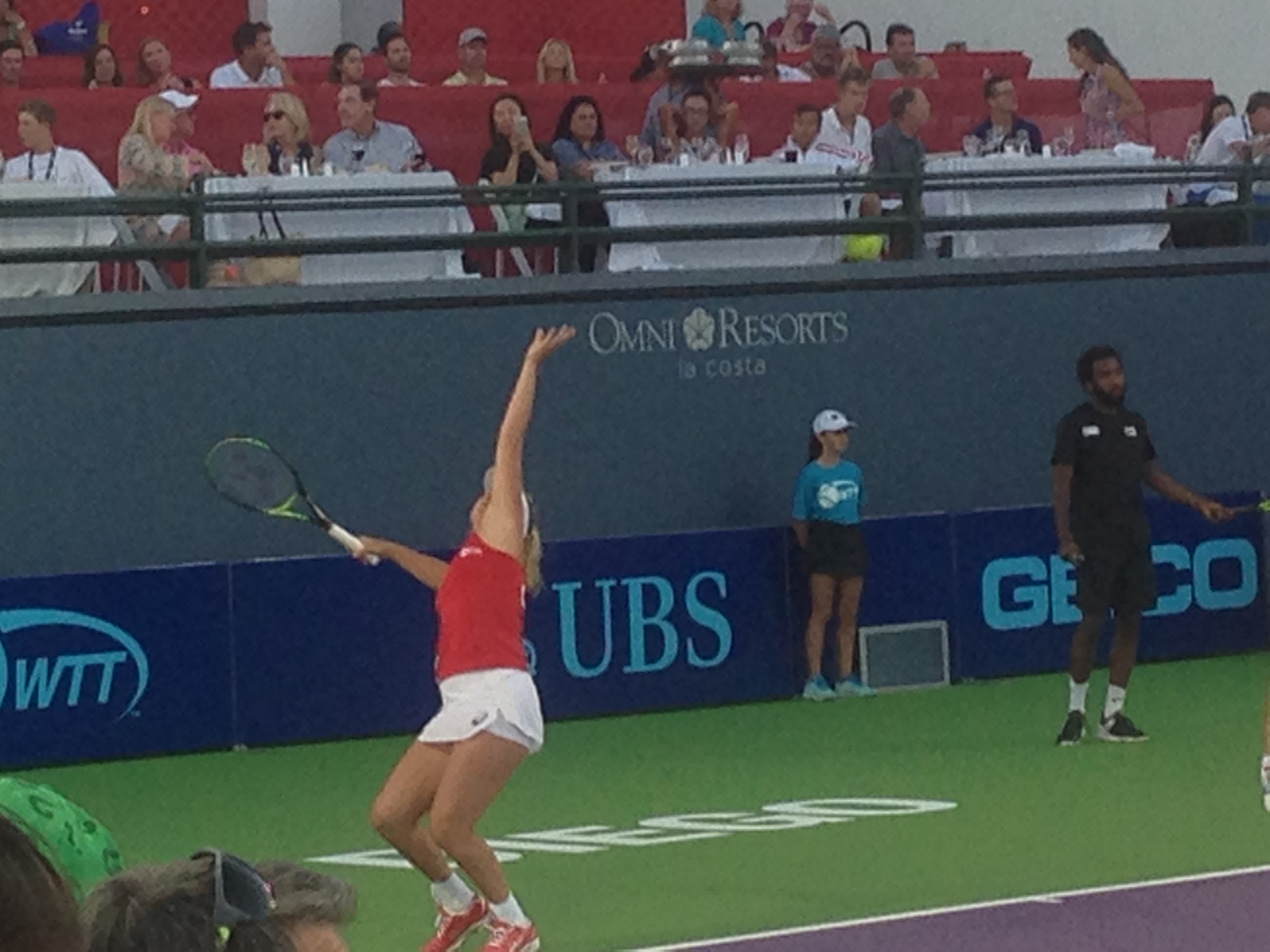
Games typically have space (Go, Chess, Checkers, Monopoly) as do sports (Tennis, Baseball, Soccer, Basketball). Play often consist of using, changing, and manipulating space. The baseball pitcher tries to throw the ball so that it crosses through spaces where the hitter cannot easily hit it well. The hitter tried to hit the ball where the fielders cannot reach the ball. The tennis player tries to “build a point” by creating more space; e.g., by pulling their opponent progressively wider so that a shot can be hit into such a large space that it cannot be reached at all. In most games and sports, the amount of empty space, particularly at the beginning of play is relatively large. In chess, as in American football, play begins with a large space between the teams. In many games, there are special terms for spaces. A “Luft” in chess is a place for your King to go if attacked on the back rank by a queen or rook. In American football, the quarterback throws passes from the “pocket” which is supposed to protect them from tacklers.  

Under Umbrage, everything living and loving was smothered by a rule, or at least she wished it were.

To me, “The Void” connotes more than space, however. “The Void” seems to refer to a relatively large, concentrated space. In music, for example, without any space, there is just a long, annoying noise. But “The Void” isn’t just the space between notes. It seems as though it must be a significant silence such as after the tuning and before the first note is played or the space between movements in a symphony. 

Of course, we can contemplate things at different scales. If we see Alternating Repetition from a distance that allows us to see the alternating repetition, we might see gaps as spaces, but not as examples of “The Void.” If we moved our point of view so that only one such gap were visible, it might become an example of “The Void” at that closer-in scale. 
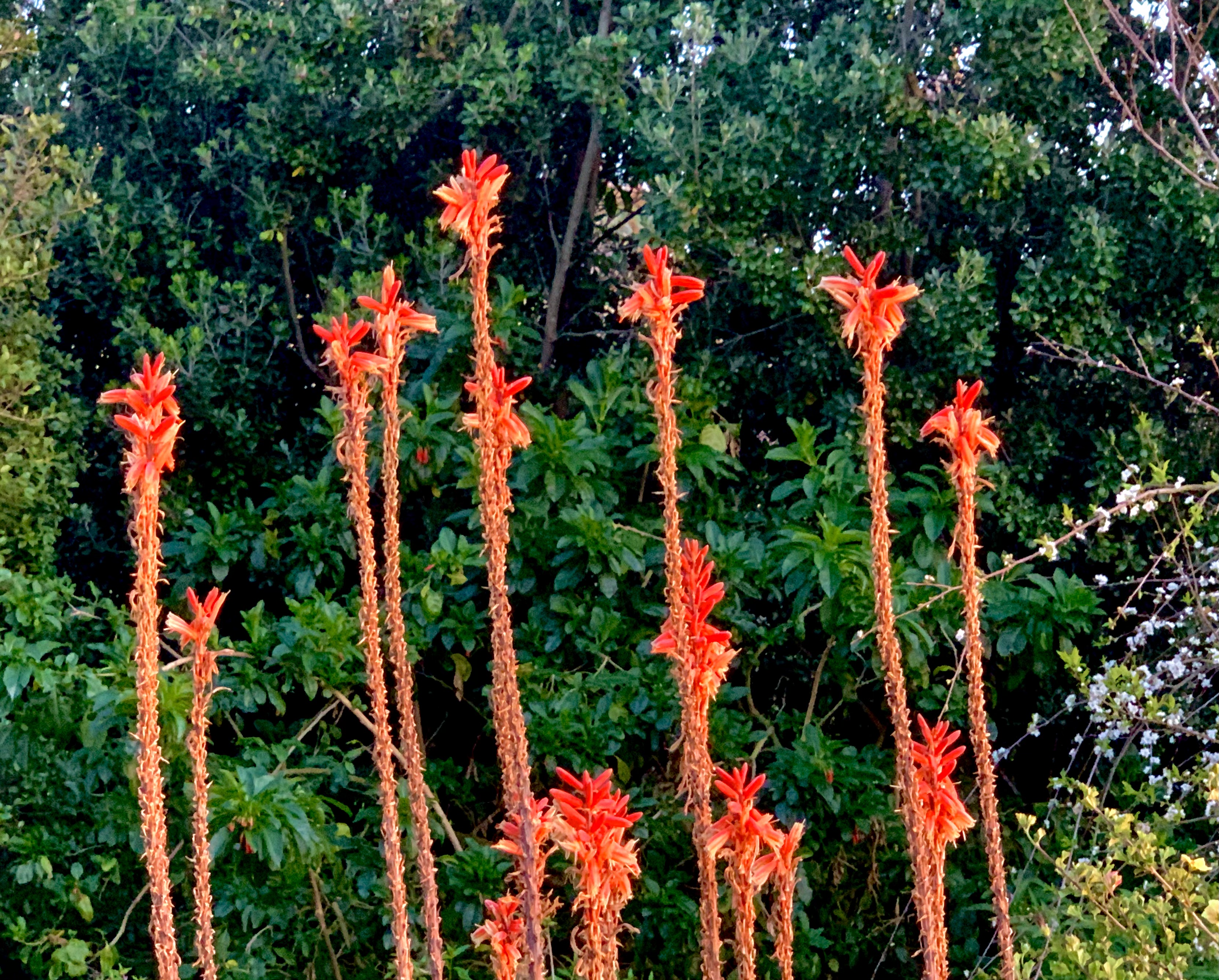
Most of our everyday reality is physically made up of empty space. Every atom is more than 99.999 % empty space. At that scale, it’s mostly void or at least mostly space. And, at the other extreme, although it may seem that space is crowded when you see the Starship Enterprise go through the universe at “Warp 9” that’s an illusion to make it more interesting. Most of the universe (and our solar system) is empty space. The sun which is by far the largest object in our solar system has a diameter of 865,000 miles. That’s big! But the nearest planet, Mercury, is 40 million miles away. And, that planet is the only thing in such a close orbit. 

Once I was driving with my family from San Francisco to Salt Lake City. Around 3 am, in the absolute middle of nowhere with no lights and no moon, I stopped the car and ran a quarter mile from the road into the desert to look up at the stars. It doesn’t “look” empty of course. Far from it. Yet the sheer blackness of the background and the vastness of it made it seem like a true void. In fact, because of contrast with the sharp and sparkling stars, the vast void was made into even more of a vast void. 

An atrium, a central courtyard, a reflecting pool — can these be voids that strengthen the center? 
If we look at a void, does that produce a different aesthetic feeling from when we are in a void that surrounds us? If you and your family or friends or tribe huddle around a campfire at night, the fire is a center. You can see the faces of people in the firelight. But you are aware that each of you knows that surrounding your little group is darkness. Sometimes, in movies, someone will remark, “Well, it’s quiet.” To which, the proper response is, “Yeah. Too quiet!” When the frogs and crickets stop making noise, the heaviness of the silence becomes oppressive. It might mean that large predators are about, each with their own maw of void. Being in a large space that has no perceptible features is awe-inspiring or even fear-inspiring. Looking at a large space that is situated in the context of a pattern may echo that feeling slightly, but to me, it feels very different. 

The same tune can be played on a piccolo or a base vile. 

When it comes to user experience, what comes to mind for me is the empty page or the empty canvas or the empty spreadsheet. These are large unfilled spaces. To compose, whatever the medium, requires of us a kind of courage. We must “enter” the empty space. In order to write, we must also allow for empty space within us. As I write, I find that there is always a rhythm of “describing” things that have “come up” for explication and then pausing — staring as it were into the blackness, the void, of my own consciousness. I allow things to arise from that inner void and show themselves. I don’t know what it will be. 

I think that process (and not wanting it disrupted) is one reason that I, like so many others, found “Clippy” to be so annoying. Whenever I was allowing for the void to reveal to me what I wanted to say, “Clippy” would imagine I was stuck and offer a suggestion (invariably irrelevant). 

Perhaps you or one of your kids has played “8-ball.” You ask it a question then you shake it a little and an answer “appears” in a little window. The most enthralling time is that space between when you ask the question and the answer appears. Of course, it’s fun thinking of the questions and interpreting the answers, but the most dramatic part is waiting for the answer to appear. In that moment, you may suddenly realize what answer you want to appear.
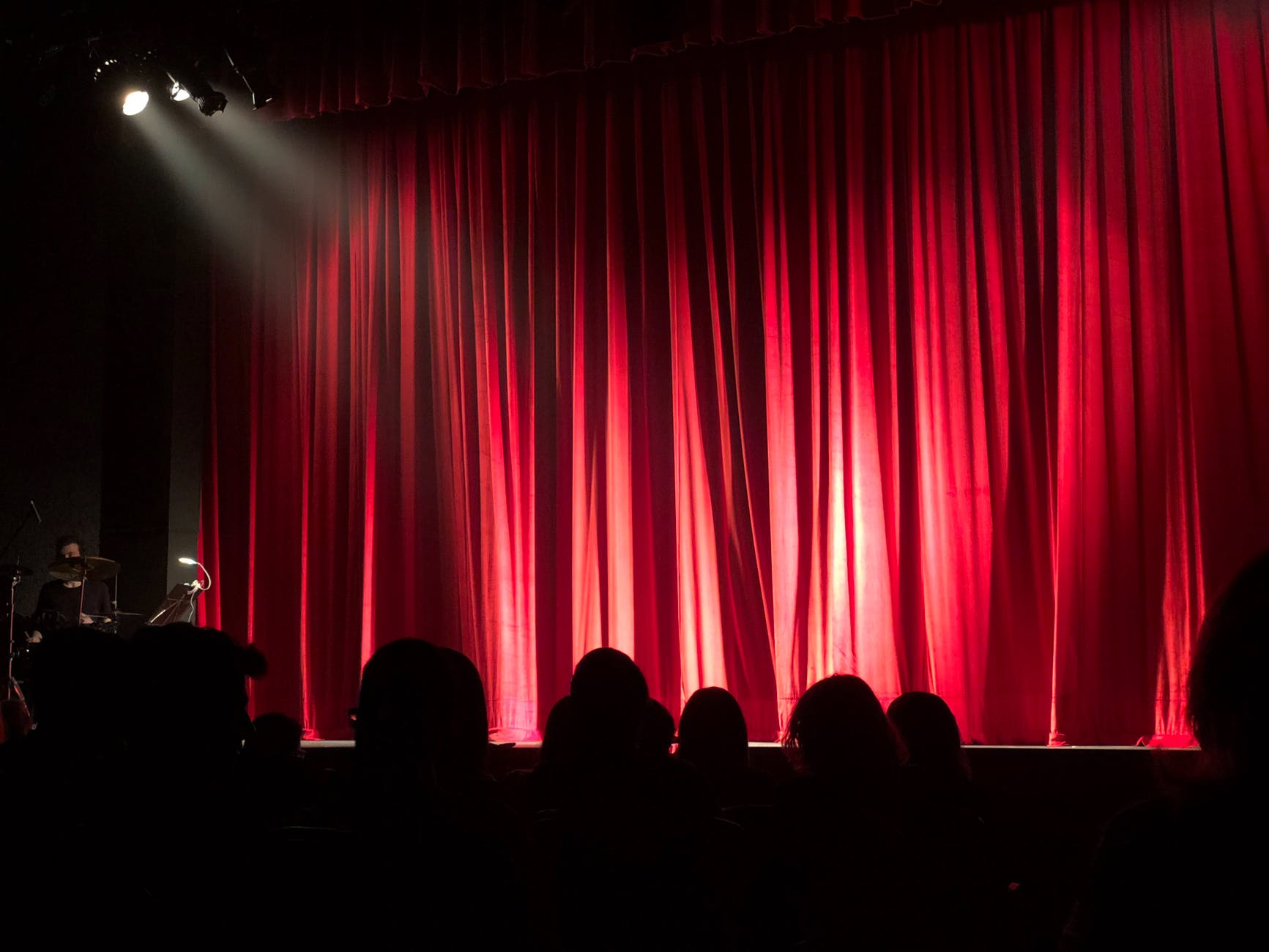
Photo by Monica Silvestre on Pexels.com


If an application is to support any kind of creative activity, it should not “rush” the user and it should provide the user empty space in which to create. That emptiness can be intimidating, but I still think it’s necessary. 

My desktop has many icons, tool bars, and windows. The only true void is the blank part of the writing pane in Pages. Visually, since the blank part of the page is white, it doesn’t seem much like a void. There is enough space between the icons and menu items to make them legible, but there is no “void” there. Visually, the only thing that really strikes me as a void is the totally black rounded rectangle beside the color sphere in the Format window. It’s black because that is the color of the text I’m writing in. Its function is nothing like that of an actual void.

The void may symbolize death, but it also symbolizes life. It is the happening place. It is the dance floor. It is the game board. It is the playing field. It is waiting for the curtain to rise. It is the movie theater when the lights go out but the movie has not begun. It is also the movie theater when the credits have done rolling but before the house lights have come up. If it is death, it is also rebirth. If it is birth, it is also the end. 

As every moment of our existence and our attention becomes evermore commoditized and sold to the highest bidder, there is ever more pressure to eliminate the “wasted space” inherent in the void. 

Photo by Leonid Danilov on Pexels.com

Running into the ocean; diving into a pool; deciding to have a child; moving; divorcing; falling in love; losing a loved one; starting a composition; beginning a design — these are moments when we brush up against the void or enter it or avoid it or incorporate it into ourselves. We like to fool ourselves that there is some process or routine or formula or piece of software that can take all the uncertainty out of these transitions into the unknown.

That’s all illusion. It’s the very nature of life itself — that dance on the razor edge between chaos and repetition — to embrace the void. We try always to “avoid” The Void. 


Nature doesn’t “abhor a vacuum.” Nature is mostly vacuum.

Photo by Johannes Plenio on Pexels.com


But often, we abhor a vacuum. Our productivity tools are geared toward reducing “The Void” as much as possible. Children are shuttled from one high intensity activity to another to ensure that when they apply to college, there will be no gaps or voids in their resume. Every box should be checked. Then, they will get into a college–one which will ensure that they will get a high-paying job that will enable to them to work their entire lives so that there will be no uncertainty.

I am also a product of that “Avoid The Void” culture, so I find it hard to imagine what it would mean to design a tool or UI or app that embraced and encouraged The Void. There are some specific mobile apps that support meditation or listening to music or breathing. What of composition though? Whether it is programming, writing, drawing, or creating a business plan, is there a place for The Void to be supported? How would you encourage it? What visual elements or other sensory elements could be used to support it? How would you measure how well you did? 

Or, is it easier to avoid the whole topic? 

—————————————————-

The sound of one hand clasping 

Take a while or three

That cold walk home

Wordless perfection 

Life will find a way

The bubble people

The jewels of November

The lost sapphire 

Author Page on Amazon

The Winning Weekend Warrior focuses on the mental game for all sports using examples from tennis, golf, baseball, and other sports. It covers self-talk, imagery, mental practice, strategy, tactics, & sportsmanship. http://tinyurl.com/ng2heq3

Turing’s Nightmares explores the implications and ethics of Artificial Intelligence through fictional short stories. http://tinyurl.com/hz6dg2d

Fit in Bits shows many ways to put more fun, variety, & exercise into daily chores and habits to help with strength, flexibility, fitness, and balance. http://tinyurl.com/h6c7fce

Tales from an American Childhood recounts early experiences mainly in the American Midwest in the 1950’s and relates them to contemporary issues and events. https://tinyurl.com/y9ajvz9j

Dream Planet. Where do you run when the whole world is crumbling under the weight of human folly? When the lethal Conformers invade 22nd century Pittsburgh, escape becomes the top priority for lovebird scavengers Alex and Eva.

https://www.barnesandnoble.com/w/dream-planet-david-thomas/1148566558
Fifteen Properties of Natural Beauty & UX/HCI

09 Wednesday Sep 2026

Posted by petersironwood in Uncategorized, psychology, creativity, nature, design rationale, user experience, HCI

≈ 1 Comment

Tags

architecture, art, books, Design, gratitude, HCI, human factors, mindfulness, photography, Travel, UX

Photo by Dominika Greguu0161ovu00e1 on Pexels.com

This is an introduction to a series of blog posts on the “Nature of Beauty.” 

Christopher Alexander was an architect and city planner. In his MIT dissertation, Alexander took a very mathematical approach to design. In our studies at IBM Research on the “Psychology of Design” I first ran across that work (Notes on the Synthesis of Form). Later in his career, however, he took a quite different approach to design. With an international team, he visited many different parts of the world to see what “worked” in terms of architecture and city planning. The results were documented in the form of a “Pattern Language.” In this sense, a “Pattern” is the named solution to a recurring problem. A “Pattern Language” is a connected lattice of Patterns that together, “cover” a field. 

Others (including me) have emulated his approach for other fields such as pedagogy, organizational change, object-oriented programming, software development processes, and human-computer interaction. A few years ago, I suggested such Patterns for collaboration and teamwork. Here’s a link to the introduction of that effort. Here’s a link to the index of those Patterns. 

Still later in life, Christopher Alexander embarked on a project called The Nature of Order. This work is documented in a series of four books. In the first book, he proposes fifteen properties of good form in nature — and in beautiful artifacts. Explication and example will be needed to appreciate what these properties mean. In this post, I list the fifteen and will attempt to explain the first one with respect to UX and Human Computer Interaction.

OLYMPUS DIGITAL CAMERA

First, you might be wondering what relevance these fifteen properties of nature might have to interface design. After all, can’t the designer just test out their ideas empirically until a UX design is shown to be usable, learnable, and perhaps enjoyable as well? Well, sure. Ideally, every possibility could be explored and tested empirically. 

But how many possibilities are there? Without any guiding principles, there are not only more possibilities than can be tested by you. There are more possibilities than there are atoms in the universe. Imagine a very simple interface on a small mobile device. Let’s say there are only ten screens in your whole application. The iPhone 12, for instance, has nearly 3 million pixels. 24-bit color allows over 16 million colors per pixel. If you literally tested out every possible arrangement, this would mean 16 million to the 3 millionth power for each of the ten screens!! The number of atoms in the universe is estimated to be between 10**78 and 10**82. Obviously, this is far less than 16,000,000**3,000,000 !! 

Of course, I’m not suggesting that anyone would attempt a pixel by pixel test of an interface, but the general point remains: you need some way to limit testing to reasonable alternatives. The notion of using these fifteen properties is not that they dictate a particular design nor that you don’t need to do any empirical testing. Rather, the fifteen properties could be used to help guide design. The properties could be thought of as reducing the search space. 

Here are the fifteen properties: 

  1. Levels of Scale
  2. Strong Centers
  3. Boundaries
  4. Alternating Repetition
  5. Positive Space
  6. Good Shape
  7. Local Symmetries
  8. Deep Interlock and Ambiguity
  9. Contrast
  10. Gradients
  11. Roughness
  12. Echoes
  13. The Void
  14. Simplicity and Inner Calm
  15. Not-separateness

Perhaps the names themselves might resonate with your own sense of aesthetics for design and composition, but let’s review them one by one. 

The first is “Levels of Scale.” 

Photo by Roney John on Pexels.com

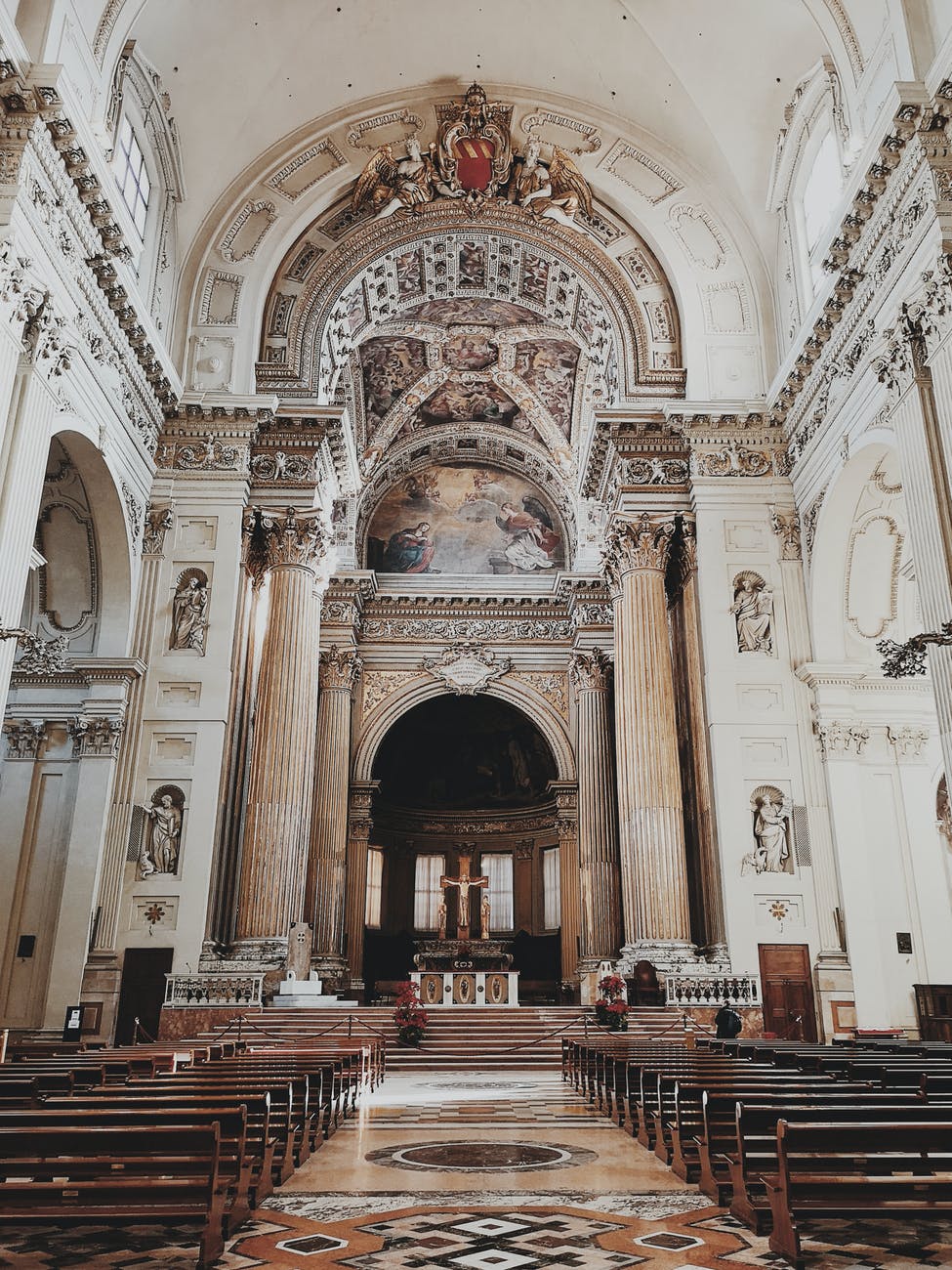
When it comes to natural beauty, a few moments reflection may provide you with many examples. Christopher Alexander claims this property is also present in traditional art and architecture across many cultures. As you see something such as, e.g., the Taj Mahal or the Parthenon in the distance, you see a beautiful shape. As you approach it, you will see more and more levels of scale. By contrast, many modern buildings are largely featureless between the overall shape and the texture of the building material. 

If your design has multiple levels of scale, it will be easier for your user to orient themselves; to know “where they are” in the application and therefore easier to take appropriate action. Not only are you making their “task” more doable, you are providing a kind of entertainment. If it works well, they will be thinking of the building and perhaps its significance the entire time they approach the building. By contrast, if I approach a modern no-scales building, I bore quickly and, like most people, there are a whole host of things waiting to be thought about. So, I’ll mainly be thinking of one or my problems and largely ignoring your building and what it stands for. Reflect on your own experiences and see whether you agree. Lincoln Memorial, Winchester Cathedral, Temple in Kyoto: they are completely different from each other and yet in this way, they are all the same: they keep your attention focused on the moment. In other words, they help you be fully alive and awake. In the best circumstance, they also elicit some awe and gratitude not only for the geniuses who designed but also for the many laborers who found and mined the materials, constructed something from it, and even those whose taxes paid those workers.

Levels of Scale is something to keep in mind with respect to your design — whether hardware, software, documentation, story, or a building. 

How could you use or see “Levels of Scale” as a desirable property of what you are doing right now? 

———————————-

Some references to Pattern Languages in HCI. 

Pan, Y., Roedl, D., Blevis, E. and Thomas, J. (2012), Re-conceptualizing Fashion in Sustainable HCI. Designing Interactive Systems conference.  New Castle, UK, June 2012.

Thomas, J. C. (2012).   Patterns for emergent global intelligence.   In Creativity and Rationale: Enhancing Human Experience By Design J. Carroll (Ed.), New York: Springer.

Thomas, J. (2012). Edging Toward Sustainability. CHI Workshop Position Paper for Simple Sustainable Living. CHI 2012, Austin, Texas.

Thomas, J. (2012), Enhancing Collective Intelligence by Enhancing Social Roles and Diversity. CSCW Workshop Position Paper for Collective Intelligence and Community Discourse and Action. CSCW 2012, Bellvue, WA.

Thomas, J. (2011), Toward a pattern language for socializing technology for seniors. Workshop position paper accepted for CSCW 2011 workshop: Socializing technology among seniors in China, Hangzhou, China, March 19-23.

Thomas, J. (2011). Toward a Socio-Technical Pattern Language for Social Systems in China and the World. Workshop position paper accepted for CSCW 2011 workshop: Designing social and collaborative systems for China. Hangzhou, China, March 19-23.

Thomas, J. (2011). Toward a Socio-Technical Pattern Language for Social Media and International Development. Workshop position paper accepted for CSCW 2011 workshop: Social media for development, Hangzhou, China, March 19-23.

Bonanni, L., Busse, D. Thomas, J., Bevis, E., Turpeinen, M. & Jardin, N. (2011). Visible, actionalble, sustainable: Sustainable interactin design in professional domains.  Workshop accepted for CHI 2011. Vancouver, B.C., May 7-12.

Thomas, J. (2011). Focus on Ego as Universe and Everyday Sustainability. Workshop position paper accepted for CHI 2011 workshop: Everyday practice and sustainable HCI: Understanding and learning from cultures of (un)sustainability.  Vancouver, B.C., May 7-12.

https://www.researchgate.net/publication/2242380_A_Pattern_Approach_to_Interaction_Design

Click to access dearden-patterns-hci09.pdf

https://www.mit.edu/~jtidwell/common_ground.html

Thomas, J. C. (2018), Building common ground in a wildly webbed world: a pattern language approach. Journal of Information, Communication and Ethics in Society, 16 (3), 338-350.

——————————-

Some recommended books:

The Winning Weekend Warrior focuses on the mental game for all sports using examples from tennis, golf, baseball, and other sports. It covers self-talk, imagery, mental practice, strategy, tactics, & sportsmanship. http://tinyurl.com/ng2heq3

Turing’s Nightmares explores the implications and ethics of Artificial Intelligence through fictional short stories. http://tinyurl.com/hz6dg2d

Fit in Bits shows many ways to put more fun, variety, & exercise into daily chores and habits to help with strength, flexibility, fitness, and balance. http://tinyurl.com/h6c7fce

Tales from an American Childhood recounts early experiences mainly in the American Midwest in the 1950’s and relates them to contemporary issues and events. https://tinyurl.com/y9ajvz9j

Dream Planet. Where do you run when the whole world is crumbling under the weight of human folly? When the lethal Conformers invade 22nd century Pittsburgh, escape becomes the top priority for lovebird scavengers Alex and Eva.

https://www.barnesandnoble.com/w/dream-planet-david-thomas/1148566558

The Walkabout Diaries are photo-essays inspired by walks in nearby neighborhoods, gardens, and parks.

The Walkabout Diaries

Travels with Sadie: To Relish the Steps

21 Friday Aug 2026

Posted by petersironwood in psychology, Uncategorized

≈ Leave a comment

Tags

dogs, family, fiction, gratitude, life, love, mindfulness, pets, psychology, story, writing

Sadie is our Golden Doodle puppy (half poodle and half golden retriever). So far, she looks a lot more like a golden retriever. Anyway, a few short weeks ago, she learned to ascend and descend the stairs to our deck. She typically does that once or twice a day as part of our general walk around, exercise, and potty break. As she grew and became more practiced, the stairs became more and more easily scaled. 

Until today.

She started up the first step and began sniffing every inch of the step. Same for the second step. How could she have lost so much skill? She scrambled up to the third step and began sniffling at every single leaf and bit of random detritus. 

Then, it hit me. She could sprint up the stairs, hindered only by my own oldish legs. She had always viewed the stairs as a means to and end, but now that she had mastered it, she wanted to experience the stairs in the way that she most likes to experience everything — with nose and tongue. 

It took her about two weeks to realize that she had forgotten to properly explore the stairs which she did today…

Photo by Polina Tankilevitch on Pexels.com


Or, 

It could be that the guy who cleans the pool once a week, and himself has a dog, came today and it was his scent that she was particularly interested in. 

Or, both. 

In any case, it made me wonder how often people think of their career ladders, or personal journeys as something to be instrumental; e.g., to get to the top of the stairs. There are advantages to being at the top of the stairs. You can see farther. And, you’re closer to the kitchen. But there are advantages to being at the bottom of the stairs as well. 

Do we ever take the time to really experience and explore the steps along the way? If your whole life is using everything as a means to an end, then in the end, it all means nothing. What of all the opportunities to explore the steps?

Photo by Reza Nourbakhsh on Pexels.com

Corn on the Cob

You Must Remember This

Ah Wilderness

A Cat’s a Cat & That’s That

A Suddenly Springing Something

Sadie Sonnet

Sadie is a Thief

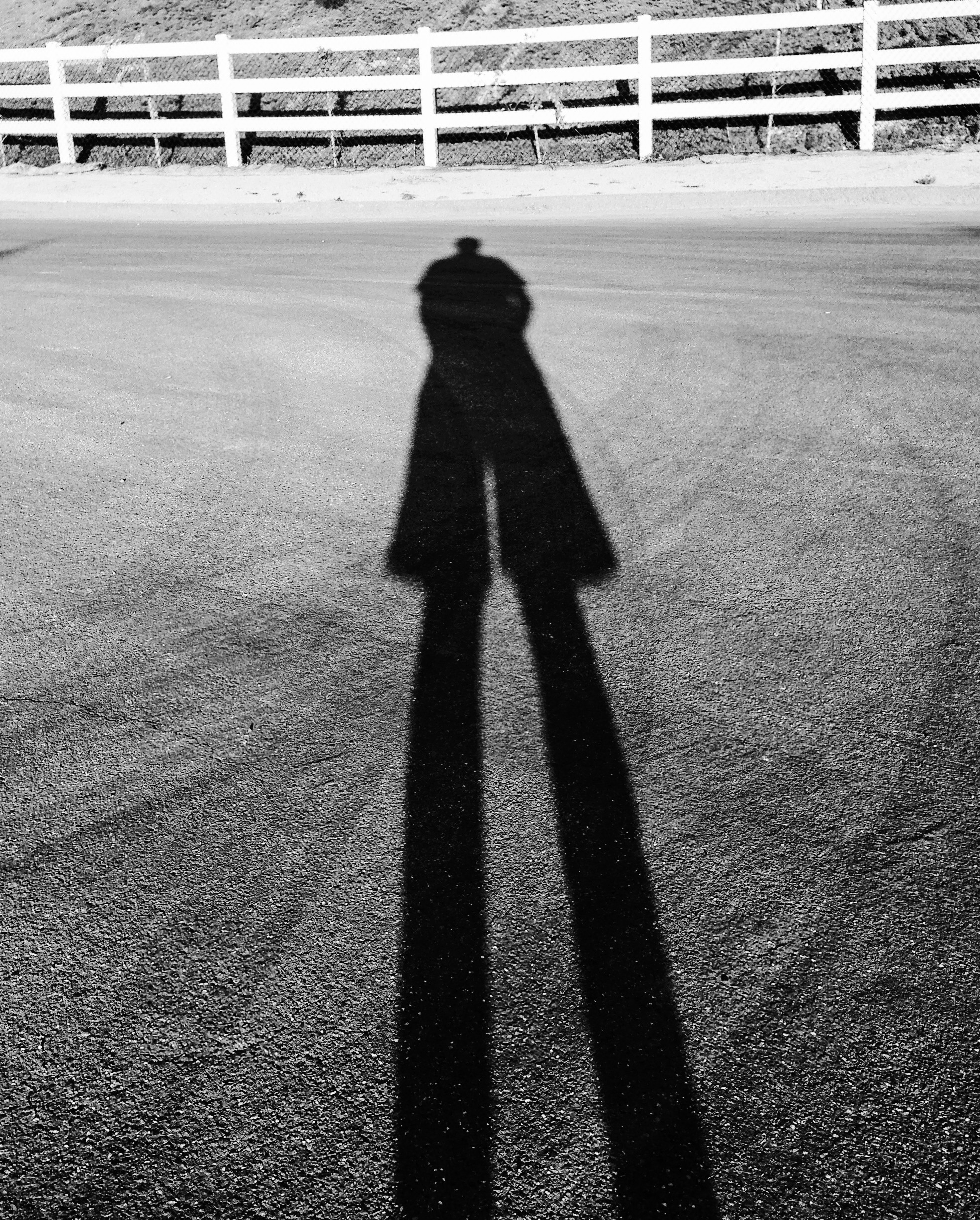
Sadie Shadows

Take Me Out to the Ball Game

Bee Wise

Life Will Find a Way

Peace

Small Steps

The Winning Weekend Warrior focuses on the mental game for all sports using examples from tennis, golf, baseball, and other sports. It covers self-talk, imagery, mental practice, strategy, tactics, & sportsmanship. http://tinyurl.com/ng2heq3

Turing’s Nightmares explores the implications and ethics of Artificial Intelligence through fictional short stories. http://tinyurl.com/hz6dg2d

Fit in Bits shows many ways to put more fun, variety, & exercise into daily chores and habits to help with strength, flexibility, fitness, and balance. http://tinyurl.com/h6c7fce

Tales from an American Childhood recounts early experiences mainly in the American Midwest in the 1950’s and relates them to contemporary issues and events. https://tinyurl.com/y9ajvz9j

Dream Planet. Where do you run when the whole world is crumbling under the weight of human folly? When the lethal Conformers invade 22nd century Pittsburgh, escape becomes the top priority for lovebird scavengers Alex and Eva.

https://www.barnesandnoble.com/w/dream-planet-david-thomas/1148566558
Travels with Sadie 6: Find Waldo

02 Thursday Jan 2025

Posted by petersironwood in creativity, nature, pets, psychology

≈ 8 Comments

Tags

art, beauty, life, mindfulness, photography, truth

It’s kind of a fun game. “Find Waldo.”  Or, “Find the Pig in the Clouds.” And—once you find it, you typically find it immediately the next time. 

Here’s a variant that I like: “Find the Beauty.” 

The idea is simple. You go to an art gallery or a museum and it’s fairly easy to find the beauty. No big surprise there. 

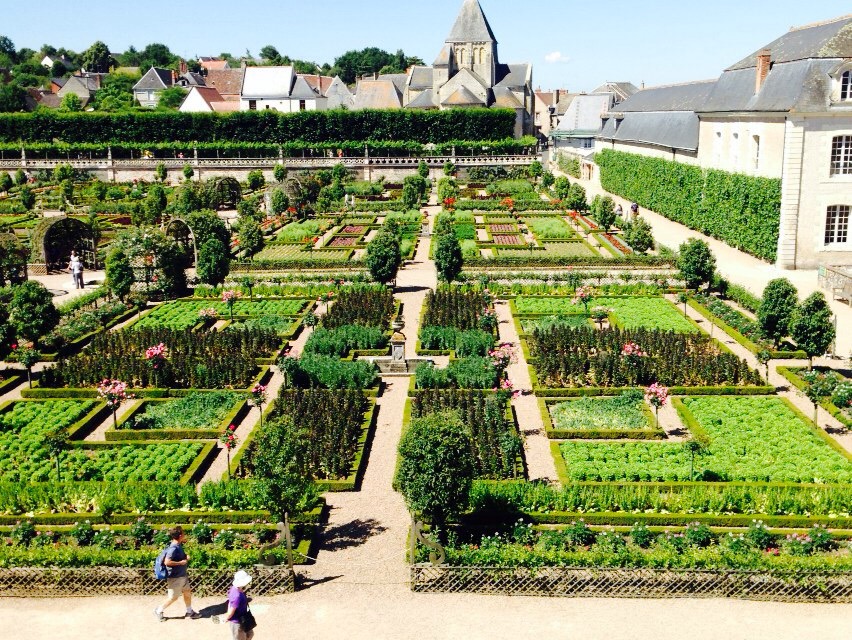
Go into a natural setting and you’re often absolutely surrounded by beauty at many different levels of scale. 

Go to see a world-famous architectural achievement, and you will see beauty. 

But—you know what? There’s also beauty to be found in many ordinary and every day places and circumstances. Since you can’t always control where you are, it’s a good skill to find that beauty wherever you are. 

Today, Wendy and I took Sadie and Bailey out to one of our favorite dog-friendly restaurants. We had a very long wait. None of the four of us is high on the scale of patience. When we finally sat down, however, the dogs were very well-behaved. 

While we waited for our food to arrive, I looked around for Waldo.

He wasn’t there. In fact, no-one even had a checkered shirt on. 

So, instead, I looked around for beauty. 

As usual, I found it, at least to my eye. 

Give it a shot. You’d be surprised where you can find beauty. 

—

——————-

Author Page on Amazon

Fit in Bits suggests many ways to work more fun, variety, and exercise into daily chores. 

Corn on the Cob is an essay on mindfulness and gratitude for simple things.

Fifteen Properties begins a series of posts about the fifteen properties that architect Christopher Alexander said characterized both natural beauty and good design. 

Maybe it Needs a New Starter is a poem about the beauty that might be found even in malfunction.

Levels of Beauty is a short picture essay about how you may find beauty at different levels.

Not Long the Daze is a short poem about finding beauty.

The Jewels of November is a longer poem about how sometimes simple beauty can be obscured by flash and dazzle.

Galactic Best is a short poem about the most wonderful planet we know of.

Kinda Crazy is a short poem about how one might perceive the world.

The Puppy’s Snapping Jaws is a short poem about a beautiful sound.

First Things First is a short poem about priorities.

What Line? Is a short poem about an important decision.

Small Things

30 Monday Dec 2024

Posted by petersironwood in creativity, nature, psychology, sports

≈ 3 Comments

Tags

beauty, fitness, gratitude, health, life, mindfulness, plantar-fasciitis, sports, Tennis, truth

Those of you who might not have read every one of my hundreds of blog posts might have missed the story about my bout with “plantar fasciitis.” I had a persistent pain under my right heel. It was painful when I walked and I liked to walk every day. When I described the symptoms to some of my family and friends, more than one suggested I visit a podiatrist. A podiatrist, after all, is an expert in medical issues of the foot. 

I made an appointment and sure enough, she confirmed the diagnosis several of my friends had mentioned: “Plantar fasciitis.” She showed me an exercise to stretch the tendons of my foot; gave me a prescription for megadoses of a non-steroidal anti-inflammatory; and she cautioned me to stop walking so much until my symptoms improved. I followed this advice, but my foot actually began to hurt more. After about a week of this, I went back to walking and my symptoms improved but the pain was still there. 

A week later, I was watching TV with my wife and cats and in our nice warm dry basement (Shout out to Be-Dry). I often like to “fiddle with stuff.” On this particular occasion, I happened to “fiddle with” the sole insert in my shoes. I removed the insert and noticed that a small pebble had somehow managed to lodge itself under the heel of the insert on my right shoe. 

Now, when I call it a ‘pebble’ I do so simply because I don’t know of a better word. It was larger than a grain of sand, but not by much. When I say ‘pebble’ I’m afraid you might be thinking of something more like the pretty pebbles that one might find beach-combing. You would not have seen this ‘pebble’ unless you were crawling along the beach with your nose about two inches from the ground. It was about the size of a lower case ‘o’ in this font size. Hard. Sharp. But tiny! I thought could this possibly be the source of my pain? No. No. It’s much too small.

Nonetheless, I removed it and my ‘plantar fasciitis’ disappeared. 

I was reminded of this today walking my dog Sadie who most often walks with her nose almost on the ground. Sometimes, I see a distinct wet stain that she stops and examines. Most times, I have no idea what she is sniffing at. I presume it’s often a bush leaf where the scent of another dog is particular strong. She pays attention to places I have seen a rabbit or bird earlier. She likes to retrace the path that our other dog Bailey took if I happened to have taken him out to pee. But it isn’t only where he’s peed. She seems to know the path he walked. Similarly, if I have taken the car somewhere in the last 48 hours, she goes over and sniffs that. She sniffs at my door only if I drive somewhere alone. But if I go to the grocery store, she also sniffs at each door that I have take groceries out of. 

Yes. We all know dogs have a good sense of smell. But—seriously—how many molecules can she sense? Apparently, dogs can detect some smells in concentrations as small as 1-10 molecules per milliliter of liquid. A very small number of molecules could spell the difference between an escaped prisoner being tracked and recaptured or escaping to a new country and enjoying decades of freedom. Small thing—big effect.


I recall reading a science book as a youngster that showed a man holding a test tube. At the bottom of the test tube was a small amount of white powder. The caption said that this was enough botulism toxin to kill everyone on the planet if properly distributed. That seems an odd use of the word ‘properly’ but leaving that aside, it is clearly extremely toxic. How does the toxin work? It interferes with your internal communication system. Your brain sends a signal to your diaphragm muscle to contract, but the signal never gets to the muscle. Small thing—big effect. 

Small things having big effects is not always about small things causing problems. Small things can also be important in having big effects in a positive way. For example, if you do such a small thing as look around you for beauty, you will often find it. If you don’t, look harder. If you still don’t, then create some or go elsewhere. If you make this small habit, over the course of your entire life, you will fill your brain with much more beauty. That is no small thing. It will impact your health and your behavior toward others. Small thing—big effect. 

There are many examples from sports. Most athletes realize that they it helps to have a physical routine that is unvarying before throwing a baseball pitch, hitting a tee shot in golf, or hitting a tennis serve. Fewer realize that it’s equally important to have a consistent mental routine as well. I found it useful before every golf shot to say to myself, “Hit it perfect—like you know you can.” 

Small things can also make a big difference in terms of what you observe. For instance, in my tennis group, there were, for a time, a high proportion of left handed players. Roughly half of the players were lefties, though only about 10% of the population is left-handed. Of course, it’s fairly obvious immediately that one’s opponent is left-handed. A clear implication is that what constitutes a backhand and forehand are on different sides. A more subtle difference is from the natural sidespin that is put on a shot. A forehand topspin shot, as the name implies, is mainly topspin. Some players hit a fairly flat shot while others—notably Rafa Nadal and, more recently, Carlos Alcaraz, can hit with tremendous top-spin. This shot also has somewhat of a sidespin component and that varies from player to player. Although professionals can alter the degree of sidespin, the amateurs I play with have a habitual way of hitting the ball. As the ball strikes the ground, a right-hander’s shot toward my side of the court will bounce slightly to my right while a  left-hander’s ball will bounce slightly to my left. This means that positioning my feet optimally for the return shot will be somewhat different for various players. 

There are many small differences in how people play. If you notice such differences, you can do a much better job of “reading” what type of shot a player will hit, where they are aiming, and so on. The differences are slight but cumulatively, the impact of noticing such differences is considerable. Small thing—big effect. 

I don’t like to receive flattery and I don’t like to flatter people either. However, I do make a habit of giving people compliments. If you are observant, this is usually easy to do because most people are doing good things most of the time. When I play tennis, for example, my partners and my opponents will often hit excellent shots. I comment on it. It makes for a better game. Over time, it’s better for everyone. Never admit aloud your opponent has just hit a good shot? Keep on your game face? Not my thing. Why make life grimmer and meaner? Someone hits a great serve or a good tee shot or sinks a long putt, I compliment them. I’m impressed. So why not share that feeling? Small thing—big effect. 

————

How the Nightingale Learned to Sing

Roar, Ocean, Roar

Imagine all the People

Dance of Billions

Life is a Dance

Take a Glance; Join the Dance

Author Page on Amazon

The Winning Weekend Warrior 

To Relish the Steps

23 Friday Sep 2022

Posted by petersironwood in psychology, Uncategorized

≈ 4 Comments

Tags

dogs, gratitude, life, mindfulness, pets, story

Sadie is our Golden Doodle puppy (half poodle and half golden retriever). So far, she looks a lot more like a golden retriever. Anyway, a few short weeks ago, she learned to ascend and descend the stairs to our deck. She typically does that once or twice a day as part of our general walk around, exercise, and potty break. As she grew and became more practiced, the stairs became more and more easily scaled. 

Until today.

She started up the first step and began sniffing every inch of the step. Same for the second step. How could she have lost so much skill? She scrambled up to the third step and began sniffling at every single leaf and bit of random detritus. 

Then, it hit me. She could sprint up the stairs, hindered only by my own oldish legs. She had always viewed the stairs as a means to and end, but now that she had mastered it, she wanted to experience the stairs in the way that she most likes to experience everything — with nose and tongue. 

It took her about two weeks to realize that she had forgotten to properly explore the stairs which she did today…

Photo by Polina Tankilevitch on Pexels.com


Or, 

It could be that the guy who cleans the pool once a week, and himself has a dog, came today and it was his scent that she was particularly interested in. 

Or, both. 

In any case, it made me wonder how often people think of their career ladders, or personal journeys as something to be instrumental; e.g., to get to the top of the stairs. There are advantages to being at the top of the stairs. You can see farther. And, you’re closer to the kitchen. But there are advantages to being at the bottom of the stairs as well. 

Do we ever take the time to really experience and explore the steps along the way? If your whole life is using everything as a means to an end, then in the end, it all means nothing. What of all the opportunities to explore the steps?

Photo by Reza Nourbakhsh on Pexels.com

Corn on the Cob

You Must Remember This

Ah Wilderness

A Cat’s a Cat & That’s That

A Suddenly Springing Something

Sadie Sonnet

Sadie is a Thief

Sadie Shadows

Take Me Out to the Ball Game

Bee Wise

Life Will Find a Way

Peace

Doggerel: Sadie is a Thief!

06 Tuesday Sep 2022

Posted by petersironwood in poetry

≈ 25 Comments

Tags

dogs, life, mindfulness, pets, poem, poetry, Puppy, Zen

My puppy is a thief! Good grief! Good grief!

Good grief! Good grief! My puppy is a thief! 

I knew about the accidents 

And needing to be often fed. 

I guessed the rugs might have their rents; 

Supposed much work, but no-one said:

“She’ll steal your heart, your heart away! 

A lot at first — then, more each day.” 

She’s packaged up in fur of brown.

She barks and cries but doesn’t frown. 

A treasure trove in every leaf 

She’d eat a stone if I’d allow;

An endless store of grief, in brief. 

Yet every moment shouts: “Hallow!”

As though each second is a gift

That glides into the next sans rift. 

[Sadie sculpted this likeness in bark with her bite. ]

And all the while her Sadie smile 

Beguiles my heart and steals my soul

She pulls ahead an endless mile;

Each molecule that’s in her bowl

Will soon become a part of her:

Her boundless spring’s harmonic whirr. 

She’s tells me in each panting breath: 

“We’re not here long so make the most.

Before that icy wind of death.”

No time regret or silly boast. 

Each life is precious and unique

And every life connects to each

The actions of us all should seek

To love, to see and then to reach

The vibrant core of Life’s vast tree; 

To see in each — Divinity.

Math Class

A Cat’s a Cat & That’s That.

A Suddenly Springing Something 

Sadie Sonnet

The Puppy’s Snapping Jaws

Dance of Billions

Life is a Dance

Take a glance – join the dance

Myths of the Veritas: The Orange Man

Myths of the Veritas: Stoned Soup

Myths of the Veritas: The First Ring of Empathy

Myths of the Veritas: The Forgotten Field

The Walkabout Diaries: Life will find a way

The Life of the Party

Sunsets

Bee Wise

Avoiding the Turtle 

Mindwalk

Author Page on Amazon

Divining Divinity

29 Tuesday Jun 2021

Posted by petersironwood in Uncategorized

≈ 2 Comments

Tags

ecsatsy, life, mindfulness, nature, peace, poem, poetry

It seemed your path had just begun;

Yet here you are again, again: 

Another trip around the sun.

Playing out your heart to win.

When you move & check & slay

I hope you save some time for play. 

At end of day, who can say, 

They’ve truly won? The truth, I say: 

We’re all just one. We’re one.

If all the joy you ever feel 

Is when you hold the golden prize,

You’ve missed the real within the deal;

You’ve missed the deal within what’s real. 

Surprise! Surprise! 

You could instead find joyous joy 

In every move; in every shot. 

You need not be a dull robot;

You need not play the useful toy. 

All it takes is letting be

In life’s essential ecstasy. 

It’s all there is — yet quite enough.

It’s not about acquired stuff 

In the attic, coats of dust, 

Nothing but a coat of “must.” 

Feel your leafness in Life’s Tree. 

You be you and I’ll be me. 

Your mind is useful in a pinch;

Don’t let it steer your every inch.


He and she? — all part of we 

Exploring all Infinity; 

Sharing Life’s discovery;

Each being each our eachest each 

Extends our reach while teachers teach. 

Be the Hamlet! Eat that peach!

In every dance, you’ll feel romance. 

In every glance, you’ll seize your chance.

In every blade of grass you’ll see,

Lurking there: Divinity.

Life is a dance

Take a glance & join the dance

Math Class: Who are you?

https://www.amazon.com/author/truthtable

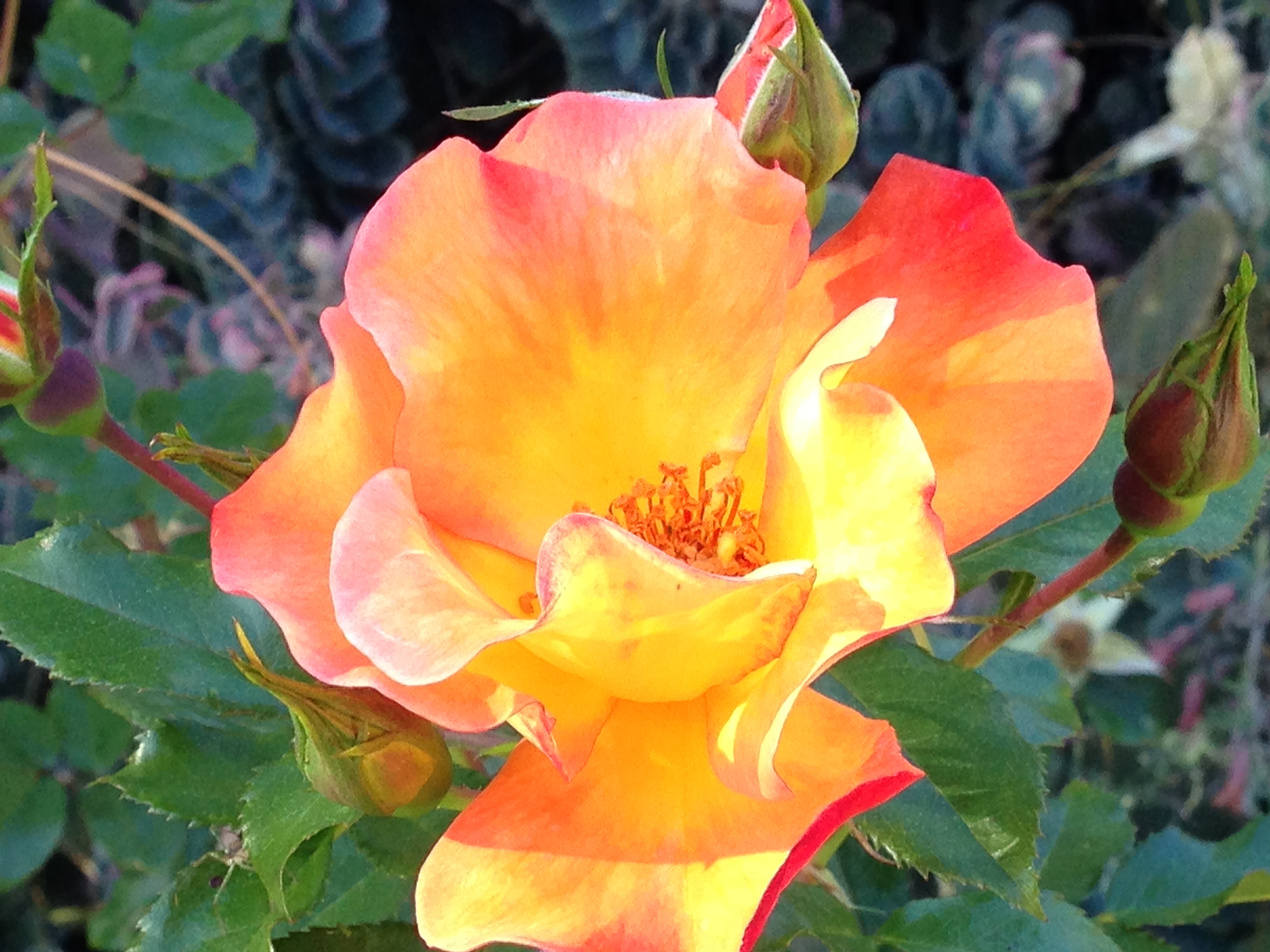
The Walkabout Diaries: A Now Rose is a New Rose

05 Wednesday May 2021

Posted by petersironwood in Uncategorized

≈ 11 Comments

Tags

gratitude, love, mindfulness, psychology, rose

Here’s the deal folks. 


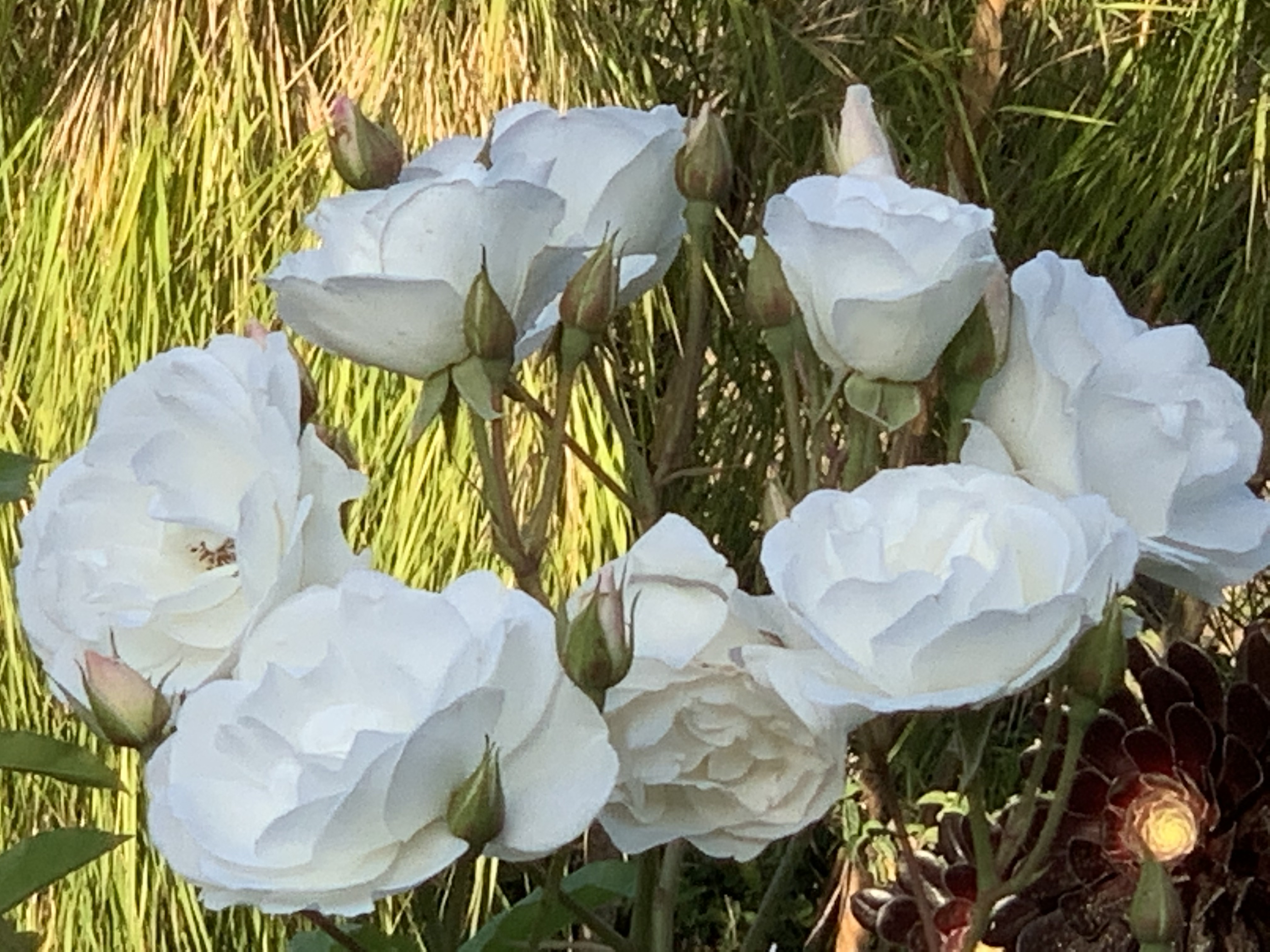
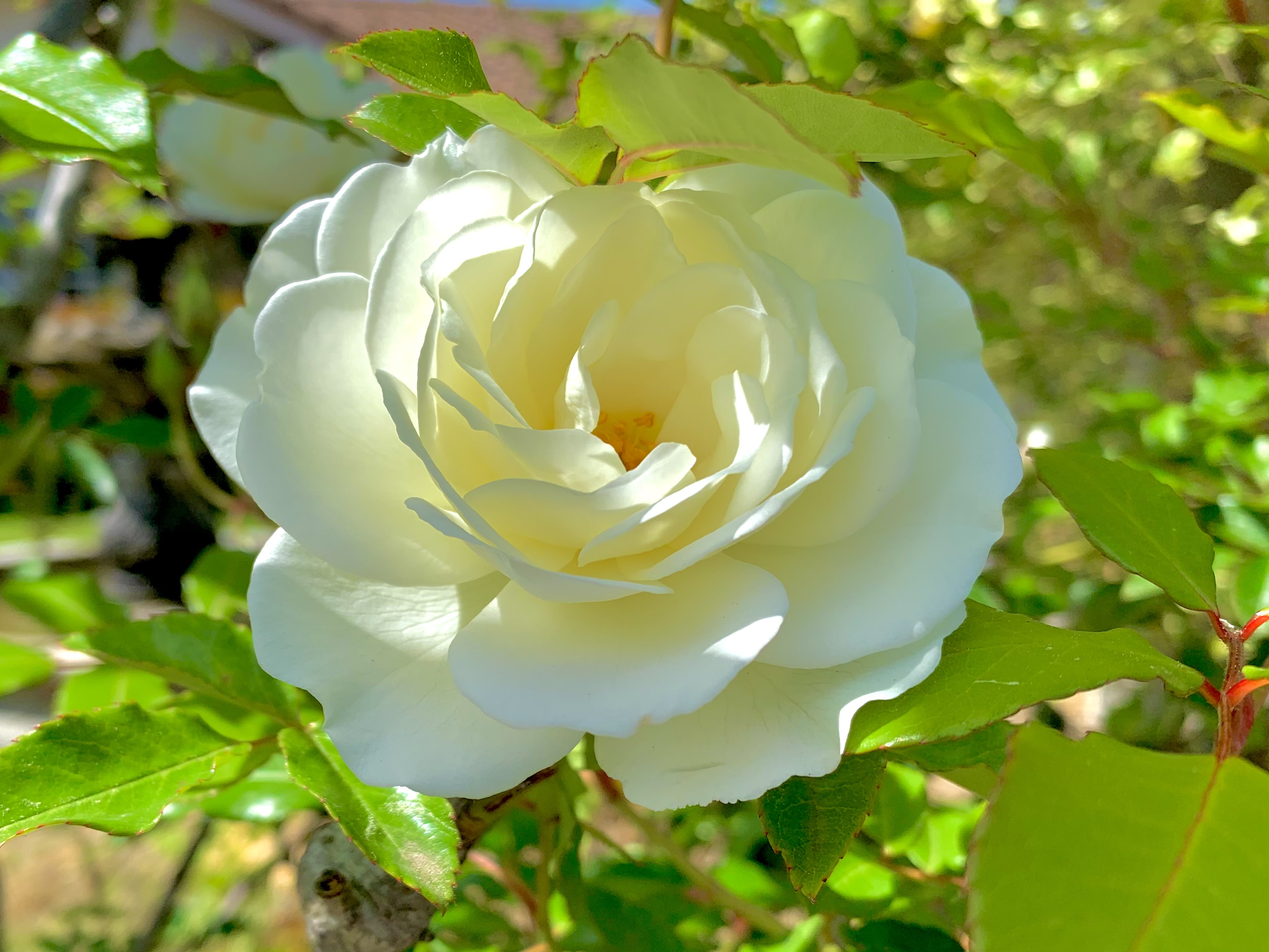
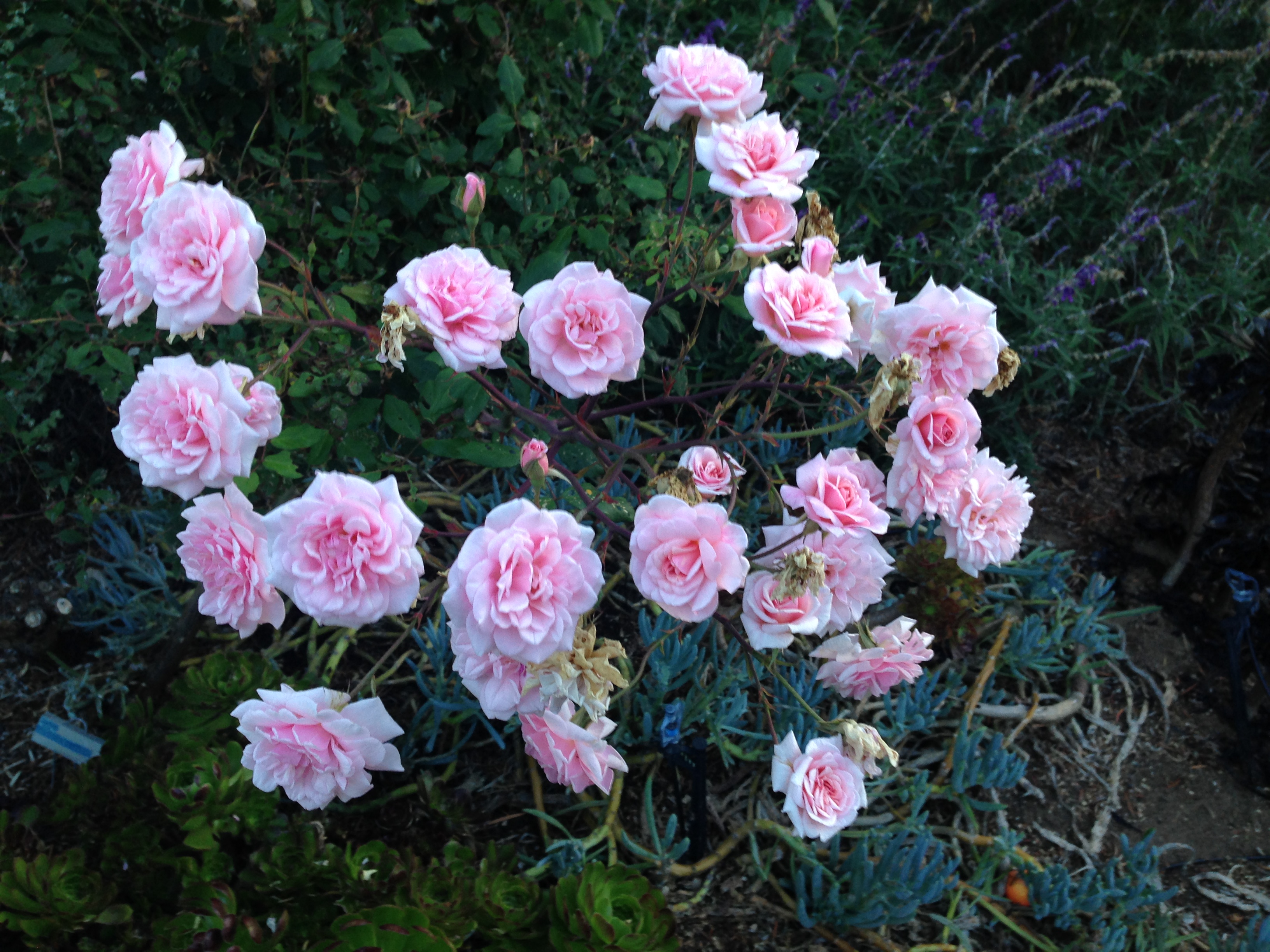
I could take pictures of the same rose bush, and never take exactly the same picture twice. In fact, it wouldn’t even take trying on my part. In fact, no matter how hard I tried to take exactly the same picture, it wouldn’t happen. Moment to moment, my hand would murmur, the sun would slide ever so slightly in the sky, a wanton puff of wind would blow the bush.


Of course, I don’t try to take exactly the same picture. Part of the joy is expanding the universe of possible pictures and being open to the possibilities that abound from angle, light, surround, seasons, my own mood, the bush’s mood, the sun’s mood, the mood of the clouds. No, of course, I don’t believe they have conscious emotions — necessarily — but mood describes it was well as any word and the moods of the world are sometimes extremely important in determining our moods. Ask the survivors of any natural disaster whether their “mood” was “influenced” by the disaster! (No, I won’t pay your medical bills). Of course, we know it in these extreme cases, but don’t we really also know it when it comes to less catastrophic events as well? Isn’t your mood influenced by the weather, the time of day, the noise you’re subjected to, the mood of those around you — all of these impact your mood to some extent and therefore, they will have some impact on the quality of the experiences you have.

Your experience with a photograph will be altered according to the mood of the photographer who took the picture, the mood of the planet at that place and time, and — let’s not forget — your mood as well. And, even if you’ve seen hundreds of my pictures, there is no way you or I could draw in detail what the next picture will look like. 

I cannot, indeed, take a picture of a rose. I can only take a picture of the now-rose. And, another now-rose. But, since no two ‘now’s’ are identical, so too, the now-rose is never like any other now-rose. Even if we had two pictures a second apart that were pixel by pixel identical (exceedingly unlikely!) It would only be because of the limitations of our sensors. Let’s not forget that these are living plants doing the “business” of life every second! And even the molecules of inanimate things are moving about, assuming the garden is above absolute zero. Roses are not known to thrive at -435 C. That’s the state, though, that some strive toward now. Absolute predictability based on absolute power means nothing learns; nothing adapts; nothing is truly alive. 

Here’s the deal folks. 

Every experience with another human being is unique. 

Yet, we like to try to categorize them. 

By person. 

By age of person.

By skin color of person.

By gender.

By religion. 

By etc. etc. and so forth.

Yet, you have literally no idea for certain what the next moment will be like. Yet, some people are willing to treat what will happen as a certainty, which would be absurd for something as well-regulated and well-studied as, say, baseball. They would never bet their life that a particular hitter would or would not get a base hit. They wouldn’t do that even if they knew his batting average to the third decimal. But they are willing to stake everything, not on a knowledge of the other person, but based on “knowledge” of a category that is not only useless but based on folklore, propaganda, and fakery.

Instead of being scared by the bees, why not take the time to appreciate the now-rose of human experience — the ever-changing dance of all humanity — which moment will never ever come again. No, not that one either. 

Nope, not that one either. 

Still different. 

Just stop now and notice. 

———————————

Go Deep

Corn on the Cob

The Jewels of November

Race, Place, Space

Essays on America: Labelism 

Mother’s Day

02 Saturday May 2020

Posted by petersironwood in America, apocalypse, COVID-19, family, poetry, Uncategorized

≈ 11 Comments

Tags

death, life, May, mindfulness, Mother's Day, poem, poetry

AE2E5F4D-85D9-4D26-9D58-B64CB9D90A64

I only have a few days left,

The radio screams;

The television blares;

The spam-mail claims;

I only have a few days left,

To order flowers for Mother’s Day.

241715B9-9604-49E0-8483-2150599D0D31

Only Mother, 

(Against all the rules of the game,

I thought I knew so well),

Mother

Is dead.

Like Father, 

And Grandfather,

And Grandmother,

And it makes me wonder:

How could all these characters

That made up the landscape of my childhood,

The very fabric and the backdrop of my life

Simply walk off stage forever?

Who wrote this script, anyway?

D2560F07-0D3D-4CAC-A440-AD4D8E9BE79B_1_105_c

But that is just ego talking,

Ego that sits like a huge blind egg

Atop a pedestal of its own design.

That is just ego pretending

To be the end-all and the be-all of existence.

In reality, the fabric of life continues;

Rip, repair, rip, repair, rip, repair.

The river of life keeps flowing

Finding another channel where one is blocked.

scenic view of waterfalls

Photo by James Wheeler on Pexels.com

The blood that ran through my parents

Flows through me and my grandchildren

As well as Sir Tulip Tree saluting the morning sun,

And those three awesome wild turkeys strolling beneath;

That humming, zipping dragonfly;

That laughing marigold.

IMG_7590

This

Flower is for you, Mother

And 

This

Moment

For you and me and all the ancestors

And all the descendants

And

The Now

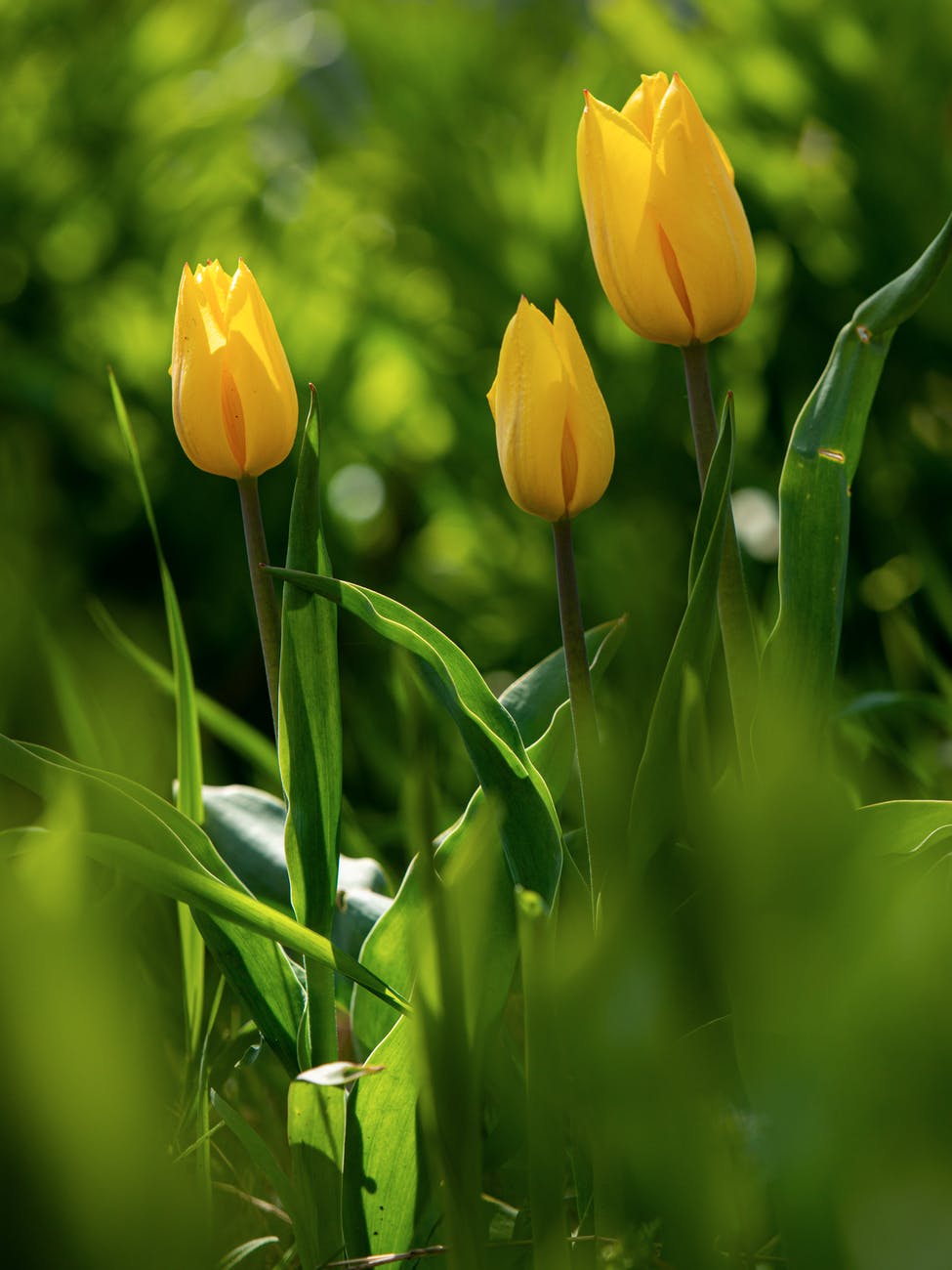
Of three yellow tulips:

Bulbs brought from Amsterdam

(Where you never journeyed,

Content with my stories and pictures)

yellow tulips in bloom

Photo by Paul Khlistunov on Pexels.com

This now, I enjoy for all the world,

For Mother,

For Mother’s Day.

The chaotic spiral path of earth will journey my egobody

Away some day too.

photography of maple trees

Photo by Johannes Plenio on Pexels.com

Meanwhile,

Do we not owe it to that host,

That multitude of ancestors

Stretching out behind us into the net of proto-life,

Do we not owe it to them 

To watch the golden flowers glow, 

As intently as we are able?

Certainly,

That is the attitude of my wise cousins:

Dragonfly, turkey and tree.

Should I do any less?

silhouette people on beach at sunset

Photo by Dana Tentis on Pexels.com

Author Page on Amazon

Life is a Dance
The Truth Train

The Pandemic Anti-Academic

Comes the Reign

← Older posts

Subscribe

  • Entries (RSS)
  • Comments (RSS)

Archives

  • September 2026
  • August 2026
  • July 2026
  • June 2026
  • May 2026
  • April 2026
  • March 2026
  • February 2026
  • January 2026
  • December 2025
  • November 2025
  • October 2025
  • September 2025
  • August 2025
  • July 2025
  • June 2025
  • May 2025
  • April 2025
  • March 2025
  • February 2025
  • January 2025
  • December 2024
  • November 2024
  • October 2024
  • September 2024
  • July 2024
  • April 2024
  • March 2024
  • February 2024
  • January 2024
  • December 2023
  • August 2023
  • July 2023
  • May 2023
  • April 2023
  • March 2023
  • February 2023
  • January 2023
  • December 2022
  • November 2022
  • October 2022
  • September 2022
  • August 2022
  • July 2022
  • June 2022
  • May 2022
  • April 2022
  • March 2022
  • February 2022
  • January 2022
  • December 2021
  • November 2021
  • October 2021
  • September 2021
  • August 2021
  • July 2021
  • June 2021
  • May 2021
  • April 2021
  • March 2021
  • February 2021
  • January 2021
  • December 2020
  • November 2020
  • October 2020
  • September 2020
  • August 2020
  • July 2020
  • June 2020
  • May 2020
  • April 2020
  • March 2020
  • February 2020
  • January 2020
  • December 2019
  • November 2019
  • October 2019
  • September 2019
  • August 2019
  • July 2019
  • June 2019
  • May 2019
  • April 2019
  • March 2019
  • February 2019
  • January 2019
  • December 2018
  • November 2018
  • October 2018
  • September 2018
  • August 2018
  • July 2018
  • June 2018
  • May 2018
  • April 2018
  • March 2018
  • February 2018
  • January 2018
  • December 2017
  • November 2017
  • October 2017
  • September 2017
  • August 2017
  • July 2017
  • June 2017
  • May 2017
  • April 2017
  • March 2017
  • February 2017
  • January 2017
  • December 2016
  • November 2016
  • October 2016
  • September 2016
  • August 2016
  • July 2016
  • June 2016
  • May 2016
  • April 2016
  • March 2016
  • February 2016
  • January 2016
  • December 2015
  • November 2015
  • October 2015
  • September 2015
  • August 2015
  • May 2015
  • January 2015
  • July 2014
  • January 2014
  • December 2013
  • November 2013

Categories

  • AI
  • America
  • apocalypse
  • cats
  • COVID-19
  • creativity
  • design rationale
  • dogs
  • driverless cars
  • essay
    • guns
  • family
  • fantasy
  • fiction
  • HCI
  • health
  • leadership
  • love
  • management
  • nature
  • pets
  • poetry
  • politics
  • psychology
  • Sadie
  • satire
  • science
  • sports
  • story
  • The Singularity
  • Travel
  • Uncategorized
  • user experience
  • Veritas
  • Walkabout Diaries

Meta

  • Create account
  • Log in

Blog at WordPress.com.

  • Subscribe Subscribed
    petersironwood
    Join 653 other subscribers

    Have a WordPress.com account? Log in now.

  • petersironwood
    View site in Reader
    Manage subscriptionsSign upLog in
    Report this content
    Collapse this bar
Loading Comments...