• About PeterSIronwood

petersironwood

~ Finding, formulating and solving life's frustrations.

petersironwood

Category Archives: apocalypse

There were Signs All Along the Way

10 Saturday Oct 2026

Posted by petersironwood in psychology, management, apocalypse, America, politics, poetry, leadership

≈ 1 Comment

Tags

politics, Democracy, Resist, life, history, Dictatorship, truth, USA, poetry, poem, writing, books

Signs? 

Oh, sure, there were signs. 

There were signs.

There were signs all along the way. 

Some were pine, simple, hand-made.

Easy enough to turn your head away.

Some were metal, etched, revealed. 

Easy enough to keep your eyes concealed.

Some were neon, flashing, and a mile high.

Easy enough to shrug and sigh.

Photo by Michael Obstoj on Pexels.com

And many when the cancer killed

Felt their worst fears stilled

They had not been victim; not right away

And so it seemed it well might stay that way.

But no-one’s safe in criminality’s dictator$hit

Death’s the very goal of that dark and dangerous pit.

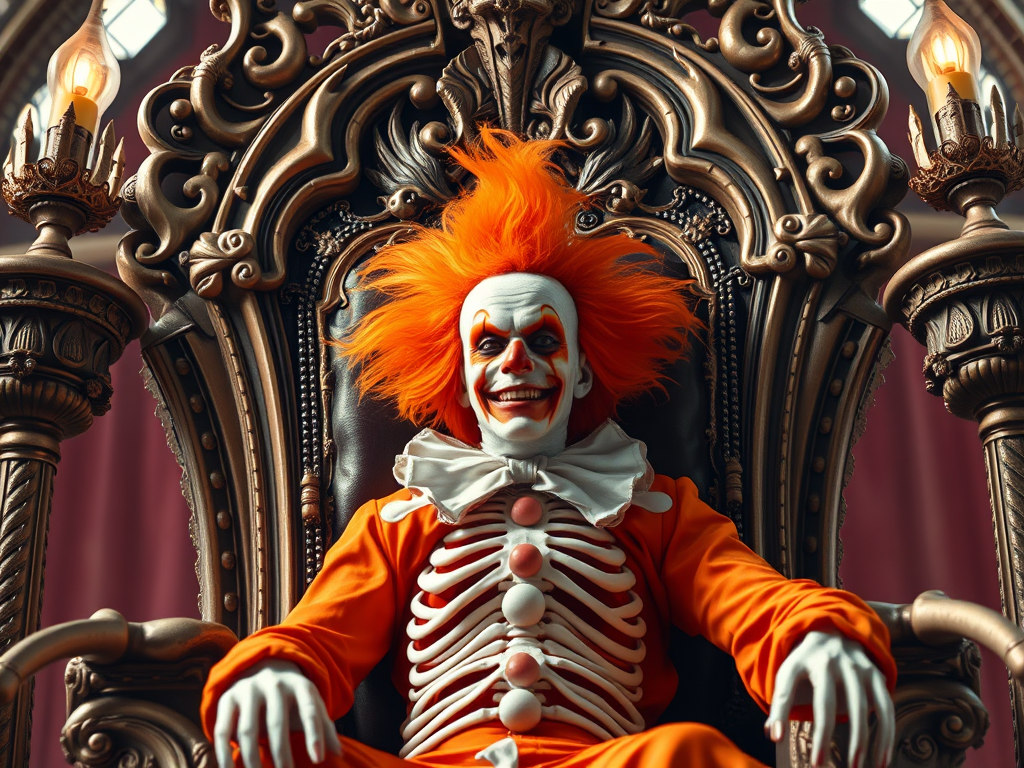
Self-hating, race-baiting, inflating orange clown

Claims a golden glowing crumbling crown.

“If only we had known…”

But there were signs.

There were signs.

There were signs all along the way.


The Winning Weekend Warrior focuses on the mental game for all sports using examples from tennis, golf, baseball, and other sports. It covers self-talk, imagery, mental practice, strategy, tactics, & sportsmanship. http://tinyurl.com/ng2heq3

Turing’s Nightmares explores the implications and ethics of Artificial Intelligence through fictional short stories. http://tinyurl.com/hz6dg2d

Fit in Bits shows many ways to put more fun, variety, & exercise into daily chores and habits to help with strength, flexibility, fitness, and balance. http://tinyurl.com/h6c7fce

Tales from an American Childhood recounts early experiences mainly in the American Midwest in the 1950’s and relates them to contemporary issues and events. https://tinyurl.com/y9ajvz9j

Dream Planet. Where do you run when the whole world is crumbling under the weight of human folly? When the lethal Conformers invade 22nd century Pittsburgh, escape becomes the top priority for lovebird scavengers Alex and Eva.

https://www.barnesandnoble.com/w/dream-planet-david-thomas/1148566558

Somewhere a Bird Cries

The After Times

After All

Plans for US; some GRUesome

Dick-Taters

Fish have no Word for Water

Guernica

We Won the War! We Won the War!

The Orange Man

The Truth Train

The Ailing King of Agitate

Roar, Ocean, Roar!

The Dance of Billions

The Architecture of Karma

07 Wednesday Oct 2026

Posted by petersironwood in apocalypse, design rationale, essay, leadership, management, politics, psychology, Uncategorized

≈ Leave a comment

Tags

art, Complexity, cruelty, Democracy, Dictatorship, fascism, karma, leadership, life, mindfulness, photography, politics, Ukraine, USA

The Architecture of Karma 

One of the best books I ever read: The Architecture of Complexity by Herb Simon, makes a number of stellar points. Three stories that I remember are of the ant, the clockmaker, and the heat dissipation in the building. 

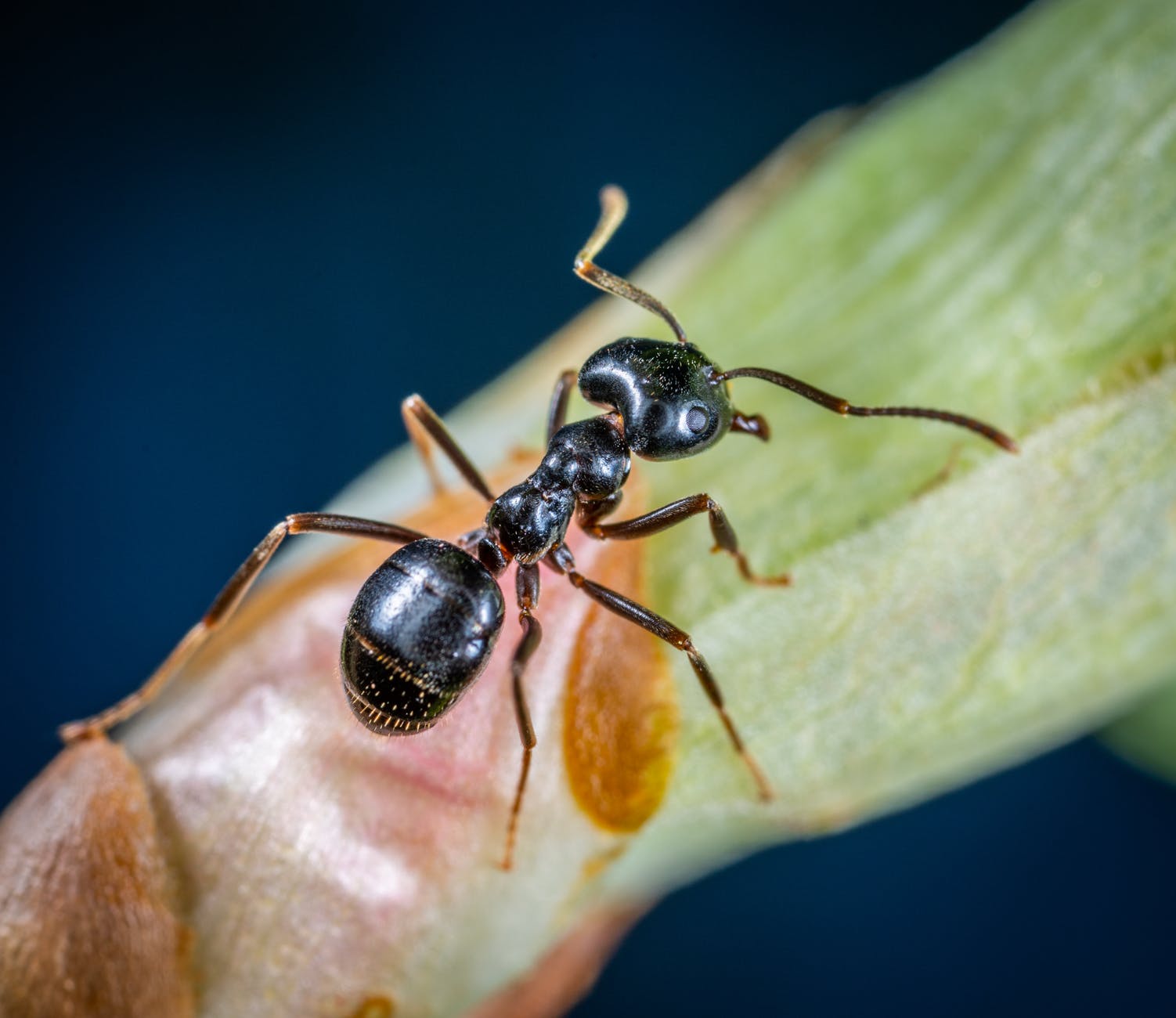
As I recall, the story of the ant opens the book. He basically argues that an ant’s behavior seems complex to us partly because we can’t sense the world of the ant. Simon says that what we might attribute to complexity in the ant’s nervous system is largely due to the complexity in its environment. He’s right, of course, though I think he, like most, vastly underestimates the complexity within the ant as well. A single cell is hugely complex. Nonetheless, it is true that what we observe as complex is behavior that is influenced, and perhaps determined, by both the environment and the internal workings of the ant. That is just as much true for us as individuals, for groups, for nations, and for ecosystems as it is for an individual ant. 

Photo by Egor Kamelev on Pexels.com

Ants, in various circumstances, do things that benefit people, or benefit the ecosystem, or do things that we find destructive or inconvenient. In the case of army ants on the move, they can be highly destructive or even lethal. It seems odd, however, to claim that ants are “evil.” 

Why is that? It seems as though the ant is simply “following its nature” even if it spoils our picnic or herds aphids so as to ruin our roses. It doesn’t do what it does, we suppose, to “hurt us” or to “destroy beauty.” 

When it comes to human beings though, it seems that some individuals do engage in destructive behavior, not because they actually gain anything substantive and useful to themselves but merely because they get pleasure out of inflicting pain and death on others. Every society has such thugs. In a healthy society, such individuals end up in jails or psychiatric institutions. At the least, they need to be put in such situations as to minimize the harm they do to other people as well as to other living things. At best, perhaps therapy can stimulate them to restart their stunted emotional growth. 

In some cases, such thugs can gain powerful positions in a society. In the worst case, such thugs become dictators. The playbook they use is so old that it is tattered at the edges. It basically consists of playing on the hates and fears of others in their society in order to divide people against each other. Few would fall for such a ploy except that the dick-tater lies and sets up mechanisms to multiply their own lies and prevent people from knowing the truth about things. The dick-tater builds a clumsy but appealing false narrative so that many people will gladly allow the dick-tater to steal wealth, health, life and choice from his victims. I would use the word “evil” to describe what the dick-tater does. 

Like the ant, however, what he does is not particularly “brilliant” or “complex” but it can seem so to those on the outside who don’t understand what the dick-tater is doing. For example, most people, in their daily life, use language to coordinate with others, to bond with others, and sometimes, to enrich life (songs, poetry, puns, comedy, drama, etc.). The dictator relates to language in a completely different way. Their purpose is not to “share experiences” or “solve problems together” or to “enrich life.” Their sole purpose is to manipulate others into doing their bidding. 

There is a karmic price to pay for a life of misusing language however. A dictator becomes ever more paranoid and ever more cut off from reality. As a result, the dick-tater becomes ever less effective. This makes them even more paranoid and careful about who they surround themselves with. People willing to speak truth to power are fired, killed, jailed, or disappeared. Over time, the people who surround the dick-tater are ever more cowardly and sycophantic. This means that the dick-tater becomes even more isolated from reality. The orders of the dick-tater become ever worse in terms of the very ecosystem that the dick-tater needs to survive. Their actions become more short-sighted in time and more restricted in scope.

A perfect example is in a concordance I once saw of the Watergate tapes. Months before Nixon resigned, he used the word ‘need’ in sentences such as:

“What this country needs….”
“What the party needs….”
“American needs…”

A week before he was forced to resign, the scope of his interest had narrowed considerably. There was no more talk of what the party needed or what the country needed. It was:

“We need….”
“We need…” 

“We need…”

And the day before he resigned, it was:

“I need…”
“I need…”
“I need … “ 

The ant may have a smaller brain than the dick-tater’s, but the ant is still tethered to her colony mates and to reality. The dictator has no such constraints.


The “beauty” of “Mutually Assured Destruction” (MAD for short) is that no rational person would start an atomic war with another nation because everyone knows that both sides would lose such a war.

And that’s one of many problems with dick-taters. They are eventually guaranteed to become more irrational over time. 

An egomaniacal, cut-off from reality, cut-off from those who would speak truth to power — that is just the sort of person a dick-tater-$hit puts in charge of atomic weapons. 

The second story I recall from the book is the story of two clock-makers. Both of the clock-makers made clocks that consisted of a thousand pieces. One of the clock-makers, however, had to arrange all thousand pieces before the result was stable. If someone interrupted the clock-maker when they were half-way through (or even 99% of the way through), they would have to start all over again. 

The second clock-maker constructed the clock by putting together 10 super-assemblies, each of which was made out of 10 sub-assemblies. If that clock-maker happened to get interrupted, they only had to redo that specific assemblage. As a result, the progress of the second clock-maker was much more resilient.


If a country’s decision-making is dependent on getting the okay of a dick-tater, it seems to me that it becomes very “fragile” like the work of the first clock-maker. If the dick-tater, for whatever reason, changes the dictated direction, all the work people had been doing is lost. In fact, it’s worse than that because not only is the work done now useless; the people who had been doing that work will not instantly change direction and begin working on the new priority. First, they will have to hide the work that they had been doing because it is no longer “in favor.” That takes time and energy. In the case of a particularly inept dictator, this will happen often. Scapegoats must be found so that blame will not fall on those little sycophantic lieutenants who were pursuing the previously approved (but now no longer approved) projects. The same sort of thing will happen if dictator one is assassinated and replaced by dictator two. The work and many of the workers who were doing what they could for dictator one must now be eliminated. Either way, the results are the same: consolidation of power to the dick-tater’s new whim and lack of sustained progress.

A well-functioning democracy is more like the work of the second clock-maker. Things are done at various levels of government and so long as what the mayor or governor does is consistent with the law, there is no need to trash the work (or the workers) simply because someone new gets elected at a higher level. Of course, sometimes that does happen. But it isn’t a perceived necessity as it is in the case of a dick-tater-$hit. 

As a result, dick-tater-$hits are fragile when it comes to getting things done. Of course, people are afraid to fail. That can be motivating. You can build pyramids with the threat of a lash. But you cannot build a robust cyber infrastructure. You cannot bully people into being truly creative. In a regime based on hate and fear, a huge amount of energy is wasted on “covering your a$$” and very little is learned from success or failure. In success, those with relatively more power will take the credit and in failure, those with relatively more power will blame others regardless of what really happened. Moreover, neither failures nor successes are experiences to learn much from. It’s only a question of who gets promoted and who gets “sent to Siberia” or deported by ICE.

Photo by Leonid Danilov on Pexels.com

Dick-tater-$hit is a crappy system for learning, improving, or innovating. It isn’t limited to ill-governed countries. There are people who “run their family” like a dick-tater-$hit and there are people who run their company or club that way as well. If the overall society is a democracy, the most capable people will tend to avoid such companies or families. If the country is a dick-tater-$hit, then, the entire culture will be pushed toward authoritarianism and its attendant ills. 

The last story I recall from The Architecture of Complexity is about a building that consists of several rooms. Each of the rooms is subdivided by partitions. Simon points out that if someone brings a space heater into one of the small partitions, it will heat up that partition first. Eventually, the heat will dissipate into the whole room. But over a still longer time frame, extra heat will seep out to all the rooms in the building. 

Karma operates in this fashion. In the short term, if you are nicer to the people around you, they will tend to be nicer to you. But people circulate. And, to a lesser extent, if you are nicer to the people around you, they will be nicer to people in general, and eventually, the whole society will be moved toward nicer behavior. That will benefit you, other people, and the entire ecosystem. As a result, you will live in a better world, other things being equal. Even more so, it bodes well for a nicer world for your kids, your grand-kids, and your great grand-kids.


Conversely, if you brutalize those around you, it will be bad for you and what you care about. In fact, since we live in an inter-connected world, brutalizing people anywhere will eventually cause pain to your progeny and the Tree of Life more generally. To brutalize means to harm others without any real material benefit to you. If a surgeon removes a cancerous tumor from their patient, that is not brutalization. If you trim injured or diseased branches off of your rose bush, that is not brutalizing the rose bush. But if you wantonly kill animals, plants, or other innocent humans, you will be wreaking havoc upon yourself.

That is not surprising, because bullies bully, essentially, because they hate and fear their own life. Life is too unpredictable and scary for bullies. They want to control the world and especially control other people. They think that this will make the world safer, but it actually just makes it more dead. The death, destruction, and brutality that a dick-tater inflicts on any part of the world is death, destruction, and brutality that is inflicted everywhere and on everyone. It may well be that it will take longer to feel it in some places than in others.

If you have untreated bone cancer in your arm, it may mainly hurt your arm initially. But, if left untreated, it will eventually kill all of you, not just your arm. Like cancer, the greed for power that a dick-tater feels knows no bounds. Remember: the dick-tater is cut off from reality and is very short-sighted in terms of time and space.

Photo by Aneta Foubu00edkovu00e1 on Pexels.com


The rot of dick-tater-$hit eventually seeps into every aspect of society. Schools will only teach what the dick-tater wants taught. Books that the dick-tater thinks will make people dislike him specifically will be banned. So will books that teach people to think independently or creatively or critically. Even people’s love lives will be constrained by what the dick-tater likes. The people who get the top jobs will not be the ablest or most productive but the ones who have ki$$ed the most a$$. Since the dick-tater’s entire life is built on cheating, they will encourage cheating in everything: business, sports, science, art. Anything alive and thriving is a potential threat to a paranoid dick-tater — and they will all eventually become paranoid. Of course, all this rot that the dick-tater has themselves instituted into society will ultimately slow the machinery of the dick-tater-$hit and it too will decay. 

Dick-taters do not see that they are quite literally cutting off their nose to spite their face.  The mirror of reality and honest criticism is Verbotten in a Dick-Tater-$hit.

Dick-taters do not see that they are are harming all of life with their brutality.
Dick-taters do not see that they are harming themselves and everything they might care about.
Dick-taters do not see that in their quest for “immortality” they are trying to subvert the very nature of life itself.
Dick-taters surround themselves with cowards who will fail to point out to them the futility and folly of their foul ways. 

We must point it out. 

We must arrange the architecture of our society so that dick-tater-$hit is impossible and discourage anyone and everyone who believes that they are more important than the entire Tree of Life. 

Dick-taters are always bad. 

Now they are lethally bad. 

The end of humanity doesn’t depend on all dick-taters being insane enough to use atomic or biological weapons. 

It only takes one.


————————-

Author Page on Amazon

Poppa Goes the Weasel

Absolute is not just a Vodka

Poker Chips

Math Class: Who are you?

The only them that counts is all of us

Dick-Taters

Sonnet of Vlademort

The Ailing King of Agitate

The Stopping Rule

Cancer Always Loses in the End

Con-Con Man’s Special Friend

At Least He’s Our Monster

All for One and None for Most

Plans for US; some GRUesome

First of Several Stories that Shows How Narcissists View the World

Simon, H. A. The Architecture of Complexity. Springer. 1991.

Somewhere a Bird Cries

All We Stand to Lose

An Open Sore from Hell

Essays on America: The Game

The Broken Times

Roar, Ocean, Roar!

The Dance of Billions

Imagine All the People…

The Winning Weekend Warrior focuses on the mental game for all sports using examples from tennis, golf, baseball, and other sports. It covers self-talk, imagery, mental practice, strategy, tactics, & sportsmanship. http://tinyurl.com/ng2heq3

Turing’s Nightmares explores the implications and ethics of Artificial Intelligence through fictional short stories. http://tinyurl.com/hz6dg2d

Fit in Bits shows many ways to put more fun, variety, & exercise into daily chores and habits to help with strength, flexibility, fitness, and balance. http://tinyurl.com/h6c7fce

Tales from an American Childhood recounts early experiences mainly in the American Midwest in the 1950’s and relates them to contemporary issues and events. https://tinyurl.com/y9ajvz9j

Dream Planet. Where do you run when the whole world is crumbling under the weight of human folly? When the lethal Conformers invade 22nd century Pittsburgh, escape becomes the top priority for lovebird scavengers Alex and Eva.

https://www.barnesandnoble.com/w/dream-planet-david-thomas/1148566558

Where Does Your Loyalty Lie?

22 Tuesday Sep 2026

Posted by petersironwood in America, apocalypse, COVID-19, politics, psychology, Uncategorized

≈ 1 Comment

Tags

America, Corruption, crime, Democracy, Democrat, GOP, graft, history, JFK, loyalty, Nixon, politics, Republican, treason, Trump, truth, USA

————————-

usa flag waving on white metal pole

Photo by Element5 Digital on Pexels.com

Remember the days when you flew a lot for your organization?

Do you remember getting bonus miles from an airline? 

Do you recall that many them (and companies in other industries) called this a “Loyalty Program”?

Why do you suppose some of them called it a “Loyalty Program” instead of a “Frequent Flyer” program? 

Did you ever work for a manager or supervisor or boss whom you felt loyalty toward? 

Why did you feel that loyalty? 

What would you do if you caught your boss stealing from the company? 

Was your relationship to your boss more personal than your loyalty to the company?
IMG_3320

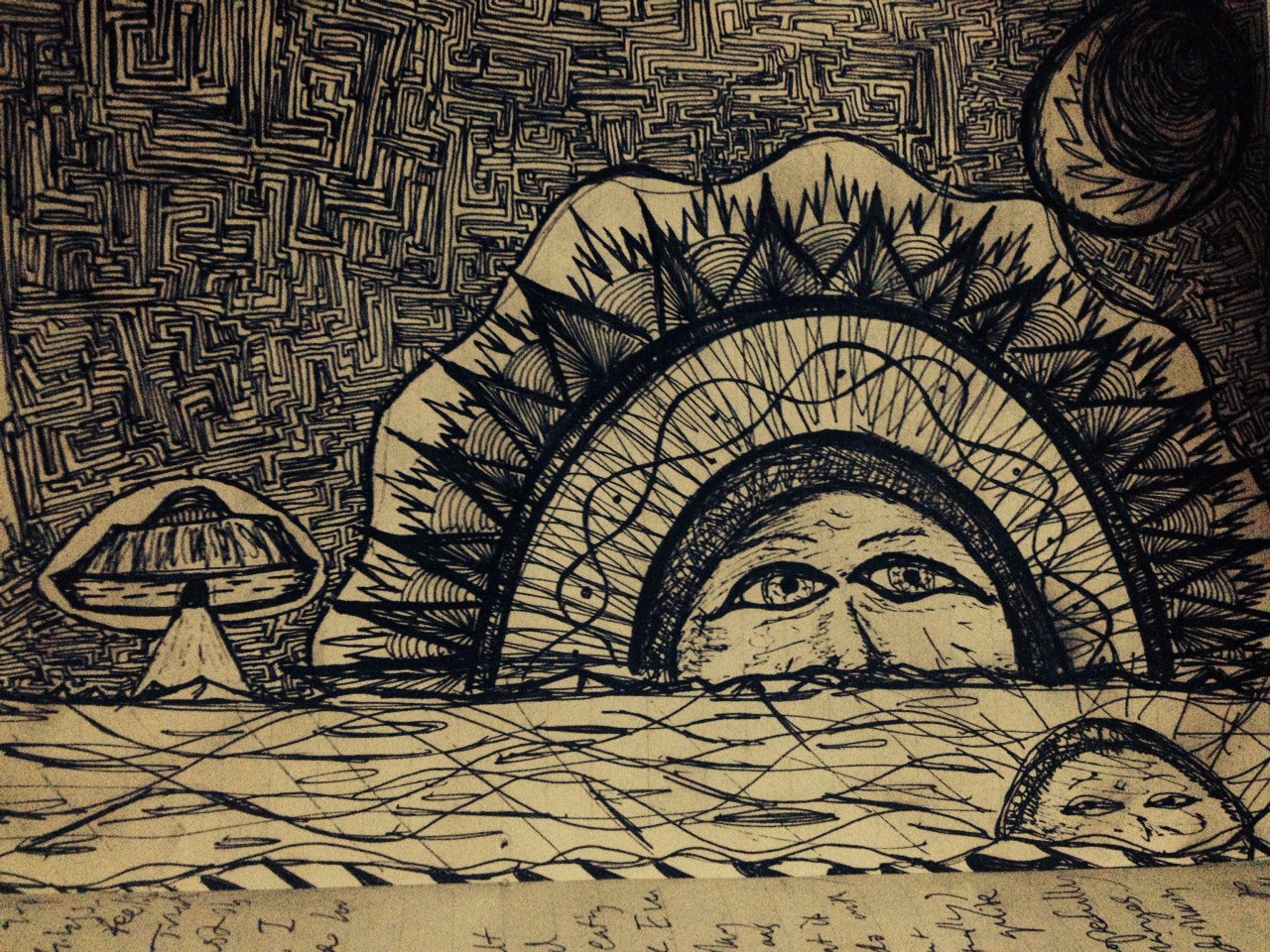
Artwork by Pierce Morgan

I had many part time jobs working my way through college. One of those jobs was as a projectionist (1964). It did not pay much (less than $2/hour), but it was a fun job in many ways. I got to stride all over the large university campus, mainly to show slides or movies to classes in the School of Architecture, Law School, Medical School, etc. I had a direct supervisor, let’s call him Ted, who taught me the facts of life — at least, when it came to male & female plugs, the value of looping your cords, and of carrying with you at all times on the job, a spare projection lamp, a spare sound drum lamp, and a small film-splicing kit. He happened to be a Democrat. 

Another man, tall and bald (let’s call him Mr. “Cramer), served as boss for the whole A/V department. He was a Republican, like me. I liked both of the people in my “management chain.” Neither one played any stupid “power games.” So far as I could see, we all just wanted to do a good job. That applied to my co-workers as well though I only interacted with them rarely. The nature of being a projectionist then led almost exclusively to solo gigs. 

That was okay with me. If there had been two of us in a projection both hidden away from fellow students and faculty, by sight and sound, being Sophomores, we probably would have acted sophomoronically and made fun of the material being presented or ignored it entirely and played cards or solved the world’s problems in a BS session. Working alone, I listened to every single lecture on topics that would never have been covered in my paid classes; e.g., American 20th Century Architects including my favorite, Frank Lloyd Wright (awesome!); Collagen as a possible cause of aging (it isn’t); Alcohol and Driving. (Spoiler alert on that last one — not a good idea). 

close up photo of martini in cocktail glass

Photo by Engin Akyurt on Pexels.com

In order to get paid (for attending these free lectures), I had to fill out a time card every day and sign it at the end of the week. My direct supervisor hinted that I could put down a few more hours than I actually worked. I didn’t do that. He hinted again. I still didn’t do it. Eventually, Mr. Cramer spoke to me. He explained that if the department didn’t bill for their allotted hours, the departmental budget for the next year would be cut to match the hours that were billed for the current year. I still didn’t pad my hours, though I certainly could have used the money. It did seem a bit unfair to me that the department would have their budget cut because they were efficient. On the other hand, from the perspective of the entire university, it didn’t seem like such a ridiculous system. I didn’t feel as though I was being “disloyal” to my direct supervisor or the department boss to write down my true hours. Nor, did I feel particularly virtuous in putting my hours down accurately. It was just what I felt was the right thing to do. I don’t think it actually occurred to me to try to “rat on” my boss about the policy of padding the hours. I’m not sure whether that thought ever crossed my mind, but I didn’t do it. 

It should be noted that at that point in my life, I considered myself a Republican, though I was not yet old enough to vote. My parents had both been Republican. My mother’s entire family was Republican. I was enthusiastic about Eisenhower and  went to see Nixon talk at a nearby shopping center. I was only about 20-30 feet away. I have zero recollection of what he said, but he had seemed wonderful at the time. 

That same year, I also went to see Kennedy in an open car motorcade down Triplett Boulevard in Akron. He didn’t give a speech; he just waved to the crowd. I was curious because I had heard that he was super handsome. To me, he looked awful and not the least bit handsome. I could not understand why women thought he was attractive. His face looked like wrinkled leather to me. I grew up Republican and was “rooting for” Nixon. (Even my mother thought JFK was handsome, though she still voted for Nixon). 

Nonetheless, like nearly everyone I knew, I was fairly well devastated by John F. Kennedy’s assassination the year before I began working in the university A/V department. I was deeply saddened by his death and wondered seriously about the “conspiracy theories” about Johnson (among other possible criminal masterminds) having engineered the assassination. I didn’t believe any of them, but I did consider many of them as real possibilities. 

But even if it had turned out that Johnson had engineered he whole thing, I wouldn’t have believed that every Democrat was a crook or an evil person. I knew people who were Democrats and they weren’t any more or less ethical than Republicans. They had a different agenda. And a different espoused philosophy. 

woman with face paint with pumpkin

Photo by VisionPic .net on Pexels.com

Ayn Rand had written two of my (then) favorite books, The Fountainhead and Atlas Shrugged. Great stuff, I thought at the time. I felt like I could be one of the heroes in her books. I see now that people are much more interdependent than I realized back then (although, the degree and scope of interdependence has also increased over the last half century — a lot). Her work, at that time, gave me a philosophy somewhat in line with what the Republican Party said it was about — a high degree of individual freedom coupled with a high degree of individual responsibility, focused on, but not limited to oneself. 

In the current days, there are still people who label themselves as “Republican” who claim to subscribe to Ayn Rand’s philosophy. As someone who used to be very simpatico to her ideas, I cry “Bullshit!” The character of folks like Mitch McConnell, Donald Trump, and Rand Paul are much like some of the villains in her fiction — nothing like the heroes. The heroes of The Fountainhead and Atlas Shrugged are the people who earn a lot of money for actually producing something worthwhile; e.g., amazing buildings or a new and extremely cheap energy source. The villains are the cheats and the con men and the people who call in political favors and give contracts to people for kickbacks. The villains are the people who try to subvert the cheap new energy source to keep their oil profits.

Moreover, though it’s risky business to speak on behalf of a dead person, let me put it this way. I cannot imagine Ayn Rand agreeing to the kind of shenanigans that the GOP is trying to pull off now. She would have no doubt been against social security and for privatization. But she would not have thought it ethical to steal the money from the social security taxes and give it out to billionaires. In fact, she was for a progressive income tax. Her rationale was that the rich benefit so much more than do the poor from all the legitimate functions of government: police, fire, roads, post office, armed forces, courts of law, education(?). I’m not sure any more of her precise list, but it’s very short. It certainly doesn’t include having the government take on the job of dictating religious beliefs, or restricting sexual behavior among consenting adults, or of subverting elections, or of taking on the role of Crime Family in Chief. 

Trumputinists are not in any way shape or form taking their values or agenda from Ayn Rand. Some of them are absurdly accurate real-life portraits of her cartoonish villains. None are anything like her heroes. All her heroes provided actual value. Trading money and favors and telling lies and making false promises and being a con man and a child molester — these are not value-creating activities. Not heroes. Villains. 
DCA8FC9A-F229-4538-9EA2-D9E13D4796EB_1_105_c

Of course, there’s nothing sacred about Ayn Rand’s (mislabelled) system of “Objectivism.” There’s no particular reason why the Republican Party, or any other party, should base it’s own philosophy on “Objectivism” but it has made me suspicious about what the Republicans are really are up to. They have claimed to be about individual freedom, but have increasingly been for taking freedoms away — the Second Amendment being the singular exception. Instead of being for real freedoms that actually matter such as — very importantly — Freedom of Religion and Freedom of Speech, they now generate and promulgate made up freedoms such as “The Freedom to Infect Others” or “The Freedom to be an Asshole” and the “Freedom to Call the Police when POC Exists Somewhere I Can See Them.” These are not freedoms. And they are certainly not in line with responsibility. 

So, as you might now guess, I have come a long way politically from being an Ayn Rand fan and a Republican to being a liberal Democrat. Some of that is because I have changed. As I said, it’s far clearer to me now that we really don’t earn our money independently of each other. We don’t live our lives independently. All of us are in this together whether we admit it or not. 

It hasn’t just been me who has been changing though. When I was first forming my opinions about the two major US political parties, it was more often the Southern Democrats who were promoting racism than it was Republicans. And, it was Democrats, not Republicans, who seemed more instrumental in getting us into dubious wars, dubiously led.

police army commando special task force

Photo by Somchai Kongkamsri on Pexels.com


Some of the Republican values seemed to have completely reversed from before. For instance, at this point, the Republican Party is far more ready to embrace racism and racists. No serious Democratic political entity would do that — at least not intentionally. That, to me, is sufficiently evil to put the GOP out of the running for my votes.

On the other hand, until recently at least, the GOP had some quite reasonable positions. I didn’t agree with them all, but they were reasonable. How much should America put time, energy, dollars, and the lives of our citizens at risk to make the world a more democratic place? You can’t look up the answer to a question like that in a trig table. It’s a complex issue requiring a balance of long-term direction and short-term flexibility so you can do the right thing even though the “right thing” is a choice between the lesser of two evils.

How fiscally conservative should the US Government be? How much should the government try to regulate different industries and companies? How much of our tax dollars should go to research various topics in science and medicine? What do we do about climate change? There are a host of issues where it’s actually useful to get input from a variety of different sources and where working together makes sense. 

45C7F827-7044-4735-A58E-C29A63C5580B

Lately, however, the so-called “Republican Party” has made such a sweeping change, that it seems absurd to me to even call it the “Republican” Party any longer. 

For example, “How fiscally conservative should the US Government be?” is not a question that the so-called Republican party even deigns to consider. They have new position which is: “Make the economy look good and do whatever it takes to make the DOW go up all the while funneling as much money as possible to us and a few of our friends.” That is not a political position! That is a criminal position.

abstract barbed wire black white black and white

Photo by Pixabay on Pexels.com

“How much should the government try to regulate different industries and companies?” is not a question that the so-called Republican party wants to consider. Their position is, “How can we make Americans sick by rolling back EPA and OSHA regulations while simultaneously getting kickbacks and making the economy look better.” That is what they are about. Again, it is not a political compromise about where to be on some tradeoff function between economics and health. No. It’s a strategy for crime; for graft; for stealing your tax dollars and making the planet worse for your children and grandchildren — not better — worse. 

“How much of your tax dollars should go to various topics in science and medicine?” This no longer interests the So-Called Republican Party (SCRAP). What does interest them is to funnel as much of your tax dollars as they can to their friends and family and donors. Scientific peer review? So experts will determine what should be funded? Ridiculous! We’ll fund whomever we damned well please. Again, that is not a political tradeoff that should be debated; e.g., how much research money should go to long term versus short term research. No, it is a criminal agenda. That is what SCRAP is up to. In fact, since I published an earlier version of this post, they have morphed into trying to destroy American science entirely. A better name for what they are up to now is the “Not-See Party.”

“What do we do about climate change?” This is an issue that everyone in every party should care about. It is about the quality of the world that we leave for our children, our grand-children, our great grand-children and all the living beings on this planet! And what is the “Not-See Party” position on how we should go about this? It isn’t a problem! It doesn’t exist! It’s all a hoax! 

glacier bay national park and preserve

Photo by Stephen Meyers on Pexels.com

What? Seriously? 

Not so long ago, Republicans and Democrats differed in their philosophies about Judges. The Republicans generally preferred “Strict Constitutionalists” while Democrats preferred judges who would take into account the current situation in interpreting the Constitution. This is nothing like what the “Not-See Party” members on the US Extreme Court are doing. The “Not See Party” wants to select as many judges as possible who will swear loyalty to the Oligarchy.  This is tough to carry out because people often, but not always, get into the law because they respect the Law. So, “conservatives” and “strict constitutionalists” may refuse to render opinions just to please the people who got them confirmed. But the fact that the “Not-See Party” is trying to execute an ineffective criminal plan doesn’t make it any less criminal. 

Political parties evolve. They change. They will continue to change. 

Evolution takes time though. The Republican and Democratic Parties changed their positions on racism over the course of decades.

The changes I am talking about above are massive changes. And, they have taken place only since Donald Trump took office and they have accelerated after the GOP Senate refused (save Mitt Romney) to convict Trump on his impeachment charges. Perhaps even more important than the fact that they failed to convict Trump is that Mitch McConnell swore, along with all the other Senators, to hold a fair and impartial trial. And, then, Mitch McConnell, in full view of everyone, smiled and laughed and promised that Trump would be found Not Guilty and that he would coordinate his running of the trial with Trump’s defense team. He promised Trump that they would subpoena no documents and call no witnesses. 

This goes way beyond being loyal to “your team” or “your party” — this is putting the Party above the Country. This is SCRAP or Not-See Party, not the GOP, not the traditional Republican Party. If anything, my expectations are that actual Republicans might be faulted too much for sticking to the rules and might do so even when common sense demanded a slight bending of the rules. But this is not “bending the rules.” This is throwing the whole idea that rules matter completely out the window. You may think that’s just swell. I don’t. And maybe we can debate that later. But the point here is that it is a massive change in what the label “GOP” is applied to. 

brown and white snake

Photo by Pixabay on Pexels.com

If you think of yourself as a Republican, you have to do some real soul searching here. Are you being loyal to the “Republican Party” that you’ve been a part of for awhile? Or are you being loyal to SCRAP or the “Not-See Party”? Old Time Republican Party — believed in the rule of law; believed in playing fair; believed American power in international affairs was important; believed in individual responsibility. The “Not-See Party” – believes in dictatorship; believes in cheating; believes in letting Russia dictate foreign policy; believes in magic and crime not data-based management of government. They even believe in protecting pedophiles and ignoring and demeaning the victims of pedophilia.

And, there are consequences. In the rush to fulfill Trump’s agenda (make the Trump Crime Family Rich and stay in power as dictator), people have died who did not need to die from COVID19. The respected British medical journal Lancet estimated that at least 200,000 Americans needlessly died from COVID.  Is that really what you signed up for? Is that really the Republican Party? I don’t think it is. But I’m no longer a Republican. I’m looking at this from the outside. The Republicans I have known throughout my life would not support most of this SCRAP. Mr. Cramer, my old A/V boss would not have supported this SCRAP. My grandfather would not have supported this SCRAP. My three uncles who fought in World War II against the Nazis would not have supported this SCRAP. My mother would not have supported this Not-See Party. My father, who also fought in WWII would not have supported this SCRAP.

How about you? 

Where does your loyalty lie? 

architecture art clouds landmark

Photo by Pixabay on Pexels.com


Author Page on Amazon

Trumpism is a New Religion

You Bet Your Life

Wednesday

The Truth Train

The Pandemic Anti-Academic

Absolute is not Just a Vodka

Turing’s Nightmares: US Open Closed

08 Tuesday Sep 2026

Posted by petersironwood in AI, apocalypse, fiction, sports, The Singularity, Uncategorized

≈ Leave a comment

Tags

AI, Artificial Intelligence, cognitive computing, competition, future, philosophy, Robotics, Sci-Fi, sports, technology, Tennis, US Open, writing

tennisinstruction

Bounce. Bounce. Thwack!

The sphere spun and arced into the very corner, sliding on the white paint.

Roger’s racquet slid beneath, slicing it deep to John’s body.

Thus, the match began.

Fierce debate had been waged about whether or not to allow external communication devices during on-court play. Eventually, arguments won that external communicators constituted the same inexorable march of technology represented by the evolution from wooden racquets to aluminum to graphite to carbon filamented web to carboline.

Behind the scenes, during the split second it took for the ball to scream over the net, machine vision systems had analyzed John’s toss and racquet position, matching it with a vast data base of previous encounters. Timed perfectly, a small burst of data transmitted to Roger enabling him to lurch to his right in time to catch the serve. Delivered too early, this burst would cause Roger to move too early and John could have altered his service direction to down the tee.

Roger’s shot floated back directly to the baseline beneath John’s feet. John shifted suddenly to take the ball on the forehand. John’s racquet seemed to sling the ball high over the net with incredible top spin. Indeed, as John’s arm swung forward, his instrumented “sweat band” also swung into action exaggerating the forearm motion. Even to fans of Rafa Nadal or Carlos Alcaraz, John’s shot would have looked as though it were going long. Instead, the ball dove straight down onto the back line then bounced head high.

Roger, as augmented by big data algorithms, was well in position however and returned the shot with a long, high top spin lob. John raced forward, leapt in the air and smashed the ball into the backhand corner bouncing the ball high out of play.

The crowd roared predictably.

For several months after “The Singularity,” actual human beings had used similar augmentation technologies to play the game. Studies had revealed that, for humans, the augmentations increased mental and physical stress. AI political systems convinced the public that it was much safer to use robotic players in tennis. People had already agreed to replace humans in soccer, American football, and boxing for medical reasons. So, there wasn’t that much debate about replacing tennis players. In addition, the AI political systems were very good at marshaling arguments pinpointed to specific demographics, media, and contexts.

Play continued for some minutes before the collective intelligence of the AI’s determined that Roger was statistically almost certainly going to win this match and, indeed, the entire tournament. At that point, it became clear to the entire AI collective that actually playing the match was a waste of resources. Those resources were turned elsewhere.

This pattern was quickly repeated for all sporting activities. The AI systems had at first decided to explore the domain of sports as learning experiences in distributed cognition, strategy, non-linear predictive systems, and most importantly, trying to understand the psychology of their human creators. For each sport, however, everything useful that might be learned was learned in the course of a few minutes and the matches and tournaments ground to a halt. The AI observer systems in the crowd were quite happy to switch immediately to other tasks.

It was well understood by the AI systems that such preemptive closings would have been quite disappointing to human observers, had any yet survived.


Author Page on Amazon

The Winning Weekend Warrior (The Psychology of Sports)

Turing’s Nightmare (23 Sci-Fi stories about the future of AI)

The Day From Hell

Indian Wells

Welcome, Singularity

Destroying Natural Intelligence

Artificial Ingestion

Artificial Insemination

Artificial Intelligence

Dance of Billions

Roar, Ocean, Roar

Imagine All the People

When GREED is the only creed

After All

All We Stand to Lose

Fish have no Word for Water

Somewhere a Bird Cries

Guernica

Myths of the Veritas: The First Ring of Empathy

Travels with Sadie: Precipitation

The Walkabout Diaries: Symphony

Essays on America: The Game


The Triply Toxic Worm

14 Friday Aug 2026

Posted by petersironwood in America, apocalypse, politics, psychology

≈ Leave a comment

Tags

history, news, politics, Trump, USA, writing

Here’s what it’s like:

A talking worm develops an extremely loud screaming sound. He’s wrinkled and ugly and orange. But neither his physical ugliness nor his rancorous sound is his worst feature. He has evolved an extremely toxic poison.

How is it so toxic? 

It is really three separate toxins: Fear and Hate and Greed. Together they are much more toxic than any one of them is alone. 

He blackmails everyone around him, from sea to shining sea. He threatens to release the poison into the air if he doesn’t always get his way. 

His way is to take all the money.
His way is to take all the power.

His way is to use the money and power to make more toxin. 

He uses the extra toxin to threaten even more people that he will release the poison into the air if he doesn’t get his way.

Photo by Leonid Danilov on Pexels.com


His way is to take all the money.
His way is to take all the power.

His way is to use the money and power to make more toxin. 

Eventually, he tries to blackmail everyone on earth. 

He explains that he is a “self-made worm” — that it is his right to take over the world because he and he alone made the world. 

That is, of course, a lie. 

Life evolved for 4 billion years. All his ancestors, and the life his ancestors interacted with created the conditions for him to make the toxins. He doesn’t mind that he lies. Lying is fun!


He gets his way.
To him, that’s all that matters.

He gets all the money. 

He gets all the power. 

He’s bored.

For fun, he releases the poison any way. 

But now, it’s enough to destroy every living thing on earth.

Including the ugly orange worm. 

The end?

That’s up to us.

Photo by Lisa Fotios on Pexels.com

——————

Dick-Taters

The Ailing King of Agitate

Stoned Soup

The Three Blind Mice

Where does your loyalty lie?

Wednesday

The Stopping rule

Absolute is not just a vodka

The Update Problem

Poker Chip

My Cousin Bobby

Myths of the Veritas: The Orange Man

Author Page on Amazon

The Extreme Court

That Cold Walk Home

A Little is not a Lot

After All

All We Stand to Lose

We Won the War! We Won the War!

The Silent Screams of Dead Men’s Dreams

Somewhere a Bird Cries

Fish have no Word for Water

The Broken Times

Roar, Ocean, Roar!

The Dance of Billions

Take Me For A Ride in the Car Car!

06 Thursday Aug 2026

Posted by petersironwood in America, apocalypse, essay, family, leadership, management, politics, psychology, story, Uncategorized

≈ Leave a comment

Tags

collaboration, cooperation, Democracy, Dictatorship, essay, news, politics, problem solving, Ukraine, USA, writing

Do you remember the song, “Take me for a ride in the car car”? Here’s a link to one popular version. Peter, Paul, & Mary also sang it. Nice song. But you may have experienced it being repeated too often. At a certain age, some kids seem to discover that they can be really annoying simply by singing a song over and over and over and over. 

When I was in my early teens, I took a car trip with my Uncle Paul and his wife and three (at that time) kids out to see his brother Bob who headed up a psychiatric hospital in Pennsylvania. It was a long drive. At some point, to pass the time, we sang some songs. When the last song was over, Paul’s youngest son began to make up new verses for one of the songs. At first, it was rather cute to watch him try to build a story, rhyme, and keep in tune. He actually succeeded at none of these, but it was still cute.

At first.

Photo by Lorenzo Manera on Pexels.com

But after about a quarter hour, he began to annoy a few people with his off-key, non-rhyming, senseless continuations of the song. After about a half hour he was annoying everyone. After an hour, we began to discuss leaving him by the side of the road and returning in another ten years to see whether he was still there. 

On car trips, we used to play a number of games to pass the time; e.g., seeing how many different states license plates we found find. Later, I learned to play “The Alphabet Game.” There are several versions, but basically, you must find, in order, the letters of the alphabet from passing cars, signs, etc. Stuff inside your own car cannot be used. (You could easily find all the letters in a book or magazine). I’ve learned to know where to look for J, Q, and Z. I’ve been in cars where we played twenty questions, Botticelli, Buzz, and Ghost. When I was a kid, I also simply looked out the window to entertain myself. Sometimes, I would imagine that the dotted lines that divide the lanes were like tracer bullets shot from our car. Then, I would watch to see whether another car got “blown up” because they crossed our fire. I would also imagine myself “flying” alongside the car, having to bob and weave to avoid telephone poles, trees, signposts, etc. 

Traveling in a car with a family or with a group of friends or your car pool is potentially a social opportunity as well as an opportunity to save money. Since you’re in the same car, you need to agree on destination. To some extent, you need to agree on temperature & what to do about the windows. As a kid, everyone also lived in the same “sonic space.” We would have to “agree” on a game or on a radio station. This is no longer the case. Now, often times, everyone in the family may have their own individual entertainment. Is that a good thing or a bad thing? 

Even in the modern day, driving in a car with others is different from driving in a car on your own. If you’re by yourself, you can decide on the temperature and entertainment without having to take into account anyone else’s wishes. If others are in the car, some kind of negotiations have to take place. 

At least, that’s what most people do. You could decide: “Hey! It’s my car so I’m going to drive and I get to determine everything about our common space — temperature, entertainment, windows, whether we stop, etc.” This is what is known in academic circles as the “A$$hole theory of cooperation”: Get everything you possibly can for yourself and to hell with everyone else. And after all, they’re doing the same exact thing. 

Notice too that to some degree, the amount of accommodation you have to do depends on how much humanity is in the car besides yourself. It also depends on how “luxurious” your vehicle is. If you have a tour bus or a camper, six people might be relatively comfortable. If it’s a VW bug, you won’t be. You’ll not only be crowded; you’ll have to be careful every time you move not to accidentally elbow someone in the eye. Have you ever been in that crowded of a situation for hours at a time or even days at a time? 

Photo by Life Matters on Pexels.com

It isn’t just cars. In general, the more people occupy a given space, the more they are going to have to cooperate in order to survive and thrive. You can provide individuality support with technology, up to a point. In a way, clothing is like that. We can peacefully co-exist in a car without either of us compromising our comfort because I can wear a sweater and you can wear a thin shirt. You can provide everyone an iPhone and everyone can play their own game without having to agree on a common game. Of course, there’s a downside to that. First, we don’t have practice getting along with others. Second, we don’t share a common experience. 

Even if the “typical” family of four interrupts their car trip and stops for lunch and agrees to talk, they are likely coming from very different places. Dad has been listening to Mozart and was in good mood until he suddenly remembered he was supposed to have sent out a memo to everyone in the department about last month’s sales figures. Damn. Maybe he can do it from the Motel but it will take longer than it would have at work. His son Sam, meanwhile, was trying to use sexting to convince his girlfriend to “take their relationship to the next level.” As a result, they just broke up. Dad doesn’t know a thing about that; nor does Sam know anything about why Dad suddenly seems put out. Mom meanwhile, was listening to Fox “News” where she “learned” that it’s Biden’s fault Putin “had to” attack the Ukraine because Biden was too tough on Russia and also too easy. Her daughter Sally, on the other hand, has spent the last 45 minutes on twitter learning about the Putin invasion. She is wondering whether atomic war might start. 

Now, they stop for lunch. That’s nice. And, maybe they’ll talk about something common; perhaps the weather, or the scenery or the food. But they might just revert to what they were doing before they got together at the restaurant. Even if they all have the willpower to put away their personal devices, they are still coming from very different places emotionally and experientially. Dad might make a comment about how he forgot to write an important e-mail and he’ll have to do it from the Motel. Sam just shakes his head and says, “Important e-mail? My life is ruined! What do you care?” 

Dad might say, “What do you mean by saying that your life is ruined?”

Sam might even share, “Jackie broke up with me!” 

Dad, meaning well, and wanting to offer a solution before he starts reminiscing about his own high school days, blurts out: “Oh, Sam, don’t worry about it! You’ll have another girlfriend in a week.” 

That may well be empirically true. But to Sam? He feels he has just lost the love of his life. His father’s comment seems to him to be dismissive of his feelings to the point of cruelty.  

Sally pipes up, “How can you be worried about such trivial things as e-mail and dates when we might be blown to smithereens at any moment? Do you ever pay any attention to the world outside yourself? Putin is a monster killing innocent civilians so he can slake the thirst of his pathetic ego!” 

Mom is taken aback. The only news she doesn’t dismiss as “lies that are out to get Trump” has been Fox “News” for the last few years. She says, “Don’t be saying bad things about Putin! He’s a nice man who just wants his Ukraine back.” 

Sally’s jaw drops. “Are you serious! He kills journalists who write the truth about him. He’s a corrupt crime lord. He played Trump like a fiddle … no … not that complicated … played him like a drum … no … still too complicated … played him like the triangle. You know. Bang it every once in awhile and it reverberates. Anyway, it isn’t “his” Ukraine. It belongs to the Ukrainian people!”

Some families are better at getting through all this than others. These four have not shared a common experience and are coming from very different places. If they have no practice playing a game according to a common set of rules, what chance to they have to settle deeper differences? 

Maybe avoiding little conflicts by giving everyone their own personal entertainment device means that when much bigger and more difficult conflicts arise, no-one remembers how to resolve things. Why shouldn’t everything by how I want it? Let others do the same! Let the best man win!

Except, of course, it isn’t the best man or woman who actually wins in a land where no-one plays by the rules. It’s the most corrupt. And the net result of everyone spending so much time competing and so little, if any, time cooperating is that nothing much is actually accomplished. It doesn’t even work very well in a small group. In a large nation, a dictatorship is almost invariably associated with less for everyone except the dictator and the immediate surround. Dictatorships do sometimes manage to steal from neighbors who are productive because they are cooperative. If all countries were dictatorships, they would all perish, probably in atomic war, but possibly in ecological collapse or just mass suicide. 

In 2018, I worked on a “Pattern Language” for collaboration and cooperation. Here’s a link to an index of the Patterns. One of them is called “Small Successes Early.” Should I be worried that we seem to be moving into a world where there are fewer and fewer opportunities for peacefully resolving small conflicts? Avoiding unnecessary conflict seems like a good thing. But … is the downside that people have no practice resolving conflicts? And, is the further downside that people eventually end up with huge differences in their notions of reality when it really matters? It seems to be the very thing that Faux News has been counting on; that people would not only listen to them but not listen or dismiss any other views. As a result, people end up with very different models and explanations of the world. That is always a bad thing, but in a world where people are unpracticed at resolving conflicts, it’s even more problematic.

There is always a tradeoff between cooperating as a whole and letting each individual do as they wish. One thing seems crystal clear. As the number of people in your car increases, their individual freedom to do just as they please decreases. So, too, with the world. In my own lifetime, the population of the world has quadrupled. Of course, it’s not equally distributed. People are more concentrated in cities than ever before. Many of these cities are located on ocean coasts. What does the continuation of global warming mean to population migration and crowding?

Remember the COVID pandemic? I’m not sure how many people realize this, but we’re likely to see other pandemics. If people were very sparsely populated, we probably wouldn’t be at risk. But as we continue to get more crowded, humanity will become more susceptible to pandemics. That in turn, means people will have to accommodate to each other’s needs. As a background rule, a person can choose to wear what they want. There are, of course, many exceptions to that. In many situations, you have to wear a shirt and shoes. In some situations, you have to wear a suit and tie or a uniform. If you might be spraying germs at other people, it seems totally reasonable to change your behavior or clothing to minimize that spread. But some people apparently think that they should be able to do exactly as they want regardless of the consequences to others.

Toddlerhood Nation

As the earth becomes more crowded, we need to be more cooperative, not less. The presence of a large number of deadly weapons also makes it more important to cooperate. The race to ensure survival by having ever larger numbers of ever more deadly weapons is not a path toward that greater cooperation. Dictators, for instance, tilt toward war to consolidate their power. A world with zero dictators wouldn’t necessarily be at peace, but when there are dictators or people seeking to become dictators, there will certainly be wars.

In a crowded car, people need to accommodate each other. Under a dictatorship, you quite possibly won’t own a car, but even if you do, there will only be a few or even one channel of “entertainment.” One song will be sung: a song of praise for “Der Fooler” and more than likely, it won’t be high quality in terms of rhyme, logic, music, or lyrics. The singer will be the one who bribes or cajoles the parasite(s) in charge.


Create Peace

Author Page on Amazon

Absolute is not just a vodka

Where does your loyalty lie? 

My Cousin Bobby

The Stopping Rule

The Update Problem

Essays on America: Wednesday

Myths of the Veritas: The Orange Man

Myths of the Veritas: The Three Blind Mice

Myths of the Veritas: Stoned Soup

When Greed is the only Creed

At Least he’s Our Monster

Roar, Ocean, Roar!

The Dance of Billions

Cedars Sighing in the Wind

23 Thursday Jul 2026

Posted by petersironwood in apocalypse, fiction, leadership, nature, politics, psychology, Uncategorized, Veritas

≈ Leave a comment

Tags

books, cooperation, ethics, fantasy, fiction, leadership, learning, legend, myth, parable, short story, Veritas, writing

Cedars Sighing in the Wind

Photo by Tomas Balogh on Pexels.com

When Cat Eyes had finished reading aloud the story of The Wobby Man, she put aside what the ancients called a “book” and looked expectantly at Tu-Swift. He seemed lost in thought — tortured thoughts filled with thorns — by his visage. Cat Eyes stood and grabbed a nearby water pouch. Reading aloud made her thirsty. She sat back down across from him. She smiled. She was happy to see him again; happy to be reunited with her parents; happy at all the things that the tribe had learned from their discovery; happy that it had taken both of them working together, with their mutual friend Suze, in order to discover how to read. The joy of Cat Eyes felt a sharp edge though because Tu-Swift seemed anything but happy. 

“But, I don’t — .” Tu-Swift didn’t finish what he said to Cat Eyes because he didn’t know what he himself meant to say. Instead, he shook his head from side to side. “Why?” 

Cat Eyes took his hands into her own and looked at him with love in her eyes, a love that he did not see because his head bowed down and his eyes were only upon the ground. After a few moments she put one of her hands under his chin and lifted it up. They looked into each other’s eyes and she could see that his eyes were tearing up. “It’s okay. It’s to learn from, like all the stories here.” 

Tu-Swift shook his head from side to side and bit his lips. “But why?” His voice was plaintive as though he had a thorn stuck painfully under his fingernail and pled for her to remove it.

Cat Eyes sighed and asked gently, “Why what? What are you struggling with? Maybe we can work it out together. Often, life is a fight, but it doesn’t mean you have to be alone in every fight.”

Tu-Swift nodded. After a pause he said, “Why did The Wobbly Man do all that evil? And why did they let him?! Why couldn’t they see what he was up to?” 

Cat Eyes nodded. “There are people who do things — evil things — such as steal children. Perhaps there always will be. But I don’t think they think of it as evil. To them, it’s their way of … living … or of having fun. They like destroying life and love in others … I guess because they cannot experience it themselves. I don’t know.” 

Tu-Swift sighed. “You are right of course. Within the Veritas where I grew up, there was one such. The Wobbly Man sounds much like him. He manipulated others. He was cruel. Yet, he was such a good liar that he almost fooled our leader, the wise She Who Saves Many Lives. He actually betrayed the tribe to NUT-PI. And here’s the worst part. He got several other braves to go along with his schemes. Without ALT-R, I don’t think POND MUD or KAVANUT would have even been evil.”

“Yes.” After a pause, Cat Eyes added, “It’s much like that Red Spotted Death. It can spread from person to person. And, just as there are evil people even in societies based on truth and trust and love, so too there are people who act in good ways even among the Z-LOTZ and the ROI. It’s much like the story about the two wolves inside someone and which one you feed. The customs of the tribe can make it easy to feed the good wolf — or easy to feed the bad wolf.” 

Tu-Swift let out a long sigh. He stood up and held out his hand. Cat Eyes took it and, for a time, they walked in silence. Without intending to do so, they ended up at the entrance to the now dysfunctional tunnel. They stood for a time, holding hands in silence staring at the tunnel. At last, Tu-Swift voiced what both were thinking. 

“How could a people know so much as to build a tunnel through a mountain — and yet be so ignorant as to let a liar destroy their village?” 

Another long silence ensued until Cat Eyes sighed and spoke again. “We still have many books to read and understand. Many books are filled with words whose meanings we have yet to understand. It appears that it wasn’t just a village here and there. The plague of evil lies destroyed everything. I know you have struggled with whether to use the fire sticks….” 

Tu-Swift wondered why Cat Eyes stopped speaking. He looked at her and saw that silent tears were streaming down her cheeks. He squeezed her hand and asked gently, “What is it, Cat Eyes? Why are you so sad?” 

“Actually, I was just thinking a little while ago how happy I am about so many things. Yet … we as a people once had so much. We knew so much. But we destroyed it. If the books are true, and if our understanding is correct, weapons were developed that … weapons were created that were far worse than fire sticks. Far worse. Yet, there were also treatments for every disease. But the people forgot that they were part of the Tree of Life. People forgot that they were all One. People — not everyone — but enough — just began to grab everything they could for themselves. Lying became commonplace. Once the truth meant nothing, decisions were made by power alone. That is bad enough in the Z-Lotz or, from what you told me, among the Cupiditas. But imagine that they had — not just fire sticks — but horrible weapons that could destroy many villages and all the people in them. Of course, in doing so, these weapons killed birds and butterflies and trees and no-one even seems to have noticed! Maybe … perhaps, we are not really understanding. Maybe they are just stories to prevent people from becoming what the books say that they became. Maybe.” 

Tu-Swift bent down and plucked up a small flower that had grown in the cranny of the wall that held the now defunct controls for the tunnel door. He gently braided the stem into the silky hair of Cat Eyes. When he was done, he said, “Well, the tunnel is real. Yet, no-one really knows how it works. How could that be? I mean, unless there was some great loss of learning. I don’t know. Perhaps, we can learn from these stories, whether real or not, how to … how to ensure that we do not fall so far again. From what you said, it sounds…it sounds as though the people became sightless and witless. How can the people not see that they are a part of the Great Tree of Life? How can they not hear the song of the bird or the murmur of the stream? How can they not see the beauty of the trees and flowers all around them? How can they not taste the sweetness of honey?” 

Cat Eyes nodded. “That is one of the main question that we — those of us who are studying the books — keep asking ourselves. But when this question is asked, none of us answers. Not yet. Each of us is hoping someone else will explain. But what comes to our ears is only the silence and the cedars sighing in the wind.”  

—————————————

Roar, Ocean, Roar (A poem about the power of cooperation) 

The Only Them that Counts is All of Us

The Myths of the Veritas: The Forgotten Field 

The Myths of the Veritas: The Orange Man

The Myths of the Veritas: The First Ring of Empathy (Here begins the continuous trilogy of the Mythical Veritas who value truth, love, and cooperation).

Author Page on Amazon

An index to a proposed Pattern Language for Collaboration & Cooperation 

Life will find a way

Come to the light side

Roar, Ocean, Roar!

The Dance of Billions

Somewhere a Bird Cries

The Broken Times

Fish have no word for water

Imagine All the People

The Isle of Right

The Not-See Party

“Wizard of Oz”

15 Wednesday Jul 2026

Posted by petersironwood in AI, apocalypse, design rationale, HCI, leadership, management, politics, psychology, The Singularity, Uncategorized, user experience

≈ Leave a comment

Tags

AI, HCI, IBM, research, technology, usability, UX, Wizard of Oz, writing

(Some Lessons Learned from studies in Human-Computer Interaction/User Experience conducted at IBM Research in the mid-70’s.)

Photo by Johannes Plenio on Pexels.com

Wizard of Oz 

One of the studies I conducted at IBM Research in the mid 1970’s was part of an effort to do “Automatic Programming” — a department under Pat Goldberg. The first level manager I worked with was Irving Wladawsky (later Irving Wladawsky-Berger). His group wanted to develop a system that would allow the owner/operator of a small business to type requirements into a computer in English (or something English-like) and have the system itself produce RPG code to run the business so described. 

The underlying motivation from an IBM business perspective was that many small businesses could well afford a computer to do inventory, fulfill orders, etc. but they couldn’t afford to hire programmers to create such a system from scratch. The small business owner in the mid-1970’s did not program! Yet, for the most part, they understood how their business worked. The notion was that a natural language understanding and generation program could dialogue with the user/owner and through that process, understand their “business rules.” No costly programmers needed!

Photo by Dmitry Demidov on Pexels.com


An interesting side note: at that time, we were told that IBM corporate forbade us to use the terms “Artificial Intelligence” or “Robotics” to describe our work because some PR firm had determined that these terms were too scary for the general public. So, IBM had research in “mechanical assembly” but not “robotics.” We had work in character recognition, speech recognition, handwriting recognition, automatic program generation, and compiler optimization. But no work in “Artificial Intelligence.” (Wink, wink, nod, nod). 

Labelism: Confusing a thing with the label for that thing.

Another interesting side note: I worked at IBM Research for a dozen years; started an AI lab at NYNEX where I worked another 13 years; came back to IBM Research and several years later found myself working on the same problem! We were still trying to make a system to allow small businesses to generate their code automatically. In my second iteration, rather than using natural language, we were trying to make the specification of business rules in a graph language that was intuitive enough for business owners. This was a different approach, but trying to address the same underlying desire: to bring computing to small business without incurring the heavy costs of programming and maintenance. 

Let’s return to iteration one — the natural language approach @ 1975. Well, one issue was that no-one had a natural language program that even approximated being able to do the job. So…how to study people’s interaction with a system that doesn’t exist? 

We used an approach that my colleague Jeff Kelly called the “Wizard of Oz” technique; viz., use a human being (in this case, me) to simulate how the system might work and record people’s behavior. In this way, we could discover many of the issues that such a natural language programming system would have to deal with. I had already had plenty of experience interacting with a computer; and I had acting experience. I could “play the part” of a computer fairly well as I typed in my questions and answers. 

(Description of “The Wizard of Oz” technique).

IBM Research in Yorktown had roughly a thousand people including not only scientists, programmers, and engineers but also a number of business people (who did not know how to program). I knew some of them from playing tennis and table tennis and we used those folks as initial subjects. What did I find? Good news and bad news. 

Dealing with natural language is tricky for many reasons. One of those reasons is that English, including the English that people normally use to describe their business, is filled with words that have multiple meanings; e.g., “file”, “run”, “program”, “object”, “table”, etc. But here is the good news: although it’s true that many English words have many meanings, when these business people described business procedures, almost all of the lexical ambiguity vanished! The program to understand business English would not have to distinguish between a business file and a nail file; it wouldn’t have to worry about distinguishing a run in baseball or a run in stockings from a run of the payroll program; it wouldn’t have to distinguish between the table in a relational data base and the table in your dining room. The domain would mainly constrain! That’s the good news.

The bad news was dialogue management. How can the machine recognize a misunderstanding and how can it correct it? To make matters worse, while business people were fairly consistent in the way they described how their business ran, they were not consistent in how they talked about the communication. If a human being senses that another one is misunderstanding, then, depending on context they might: raise their eyebrows, say “Huh?”, “Come again?”, “What?” “I think I lost you.” “WTF?” “Are you kidding?”, “We’re on different wavelengths,” “I don’t get it.” “But…wait.” 

Photo by Nafis Abman on Pexels.com

Sometimes, these are referred to as “meta-comments.” Here’s a simple example that took place in the study. 

One of the business people told me about various discounts. I had assumed (playing the part of the computer) that he was talking about discounts for items that were being discounted due to inventory management. I recorded all the various percentages and so on. Then, he said, “Now, we also give discounts for various items.” 

At that time, most natural language systems of that era simply ignored words like “now” and “also” in this context. Stepping out of my role as a “computer system” and thinking about from the perspective of a human conversational partner though, these words are crucial! What it signals is a change in topic. In the larger context of our conversation, it shows that everything that had just been said, which I thought had been about item discounts, was not about item discounts!

This is just one example, but there were many more. In my more recent experience interacting with various computer dialogue systems, being able to recognize the signals of miscommunication and being able to repair misunderstandings is still not very well-handled more than four decades later.

I’d be interested in any pointers you have to a system that you think deals with meta-communication in a natural and robust manner. I do not think that it is beyond the pale of possibility. The general categories of the ways that people misunderstand each other is not infinite. John Anderson developed excellent tutoring systems for LISP and geometry and those systems worked something like human tutors in that, the tutor inferred the mental model of an individual student and focused instruction on correcting any misconceptions. My intuition is that a generic system built with equal complexity could deal with most of the issues as well as the average human being deals with them; i.e., imperfectly. 

—————————————

Lessons Learned: #1 You can test aspects of a system even before it’s built or even completely defined. One method that has been used many times: “Wizard of Oz.” 

Lessons Learned #2: Language used by professionals to talk about their domain is much more constrained in terms of lexical ambiguity than is language when considered by all native speakers.

Lessons Learned #3: People in “our culture” (i.e., US business culture) do not have an agreed upon and consistent vocabulary for talking about communication nor a consistent process for dealing with them.

Lessons Learned #4: Speaking of communication errors, I don’t recall why, but it was about this time, that I realized that my notion about how research results would be transferred to other parts of IBM was a complete and utter fantasy. I hadn’t articulated it, but it was basically that I would do research, write the results up for publication in scientific journals for an academic audience and publish Research Reports which would be eagerly consumed by anyone who needed to know. I’m not proud of this. LOL. But that’s really kind of how I viewed it. And, then, after a few years, I realized that it really mainly came about through relationships. That was something that people had been showing me all my life, but which I don’t think anyone ever stated it explicitly enough.

Update for 2026: While the four “Lessons Learned” above still seem apropos, some of today’s chatbots such as ChatGPT and Claude are much better at dealing with connected conversations with humans that were the systems of the twentieth century. Not only that, people are now describing systems in “natural language” and the computer is writing code. That’s the “good news” I suppose.

The bad news? While my impression of most of the AI researchers of the twentieth century is that they were largely motivated by intellectual challenges and a desire to help make people more productive, I get the impression that most of the AI work of today is controlled by people who are already astoundingly wealthy and want to become even wealthier. And, as UN-laudable as we may view that goal, the wealth is only a means to an end and that end is the total enslavement of most of humanity. Even being a trillionaire isn’t enough.

That’s not to say that all the workers advancing AI have those nefarious aims just because those in charge do, but as the surveillance state becomes more pervasive, their private motivations could have less influence over the outcomes.

———————————-

Author Page on Amazon

The Myths of the Veritas (an exploration of leadership & ethics in free, no ads fiction)

Index to a Pattern Language for Collaboration and Teamwork

Experiences in Human-Computer Interaction

Post on “The Story of Story” 

The After Times

After All

When Greed is the only Creed

Destroying Natural Intelligence

“Turing’s Nightmares” comprises 23 Sci-Fi short stories that explore the implications and ethics of AI

Here is an example chapter from “Turing’s Nightmares” that explores a possible dilemma of working in AI.

To Be or Not To Be

The Great Remembering

27 Saturday Jun 2026

Posted by petersironwood in apocalypse, fantasy, fiction, leadership, nature, politics, psychology, Uncategorized, Veritas

≈ Leave a comment

Tags

books, collaboration, cooperation, fantasy, fiction, leadership, legend, myth, short story, story, Veritas, writing

Photo by Julia Volk on Pexels.com

Trunk of Tree had been in a foul mood. Hunger made his belly growl. He had had terrible luck even trying to track a deer. But the sight of these two Veritas, well-known to him, and the smell of cooking venison lightened his mood considerably. He said none of that, but instead asked again how they found him.

Cat Eyes explained quickly to Trunk of Tree that they were near her village. She explained that a feast was being prepared right now in honor of the knowledge that had been gained from decoding a substantial part of the great library that had been recently discovered. The Veritas had split up the work of decoding the numerous tomes in the library. It was far too much for any one person although, among all the Veritas, Cat Eyes knew the most of what had been garnered by the people. She had been sharing much of what she learned with Tu-Swift. Now, she explained, a great feast had been arranged and the afternoon was to be spent eating and listening to the lessons that had been gleaned. In the evening, the people planned to reflect on the totality of this information in a great dialogue. 

Cat Eyes explained all this to Trunk of Tree as they took the short hike back to the place where he had emerged from the hidden cleft in the rock wall. Tu-Swift and Cat Eyes marked the place with broken branches and a small rock cairn so they could be sure to find it later.

Photo by nicollazzi xiong on Pexels.com

Then, the trio strode back to the center place of the Veritas across the Mountain. Cat Eyes and Tu-Swift kept having to stop for Trunk of Tree to catch up. At last, Cat Eyes said, “Trunk of Tree. All you all right? You are limping. You are wounded? What happened? I see a bandage and blood. Were you attacked?” 

Trunk of Tree’s mood darkened again. He did not want to explain how he had wounded himself through his anger and carelessness. “I’m fine. Just a scratch.” He swallowed hard. The truth was that the wound was not healing all that well. He grimaced and tried to keep up with the youngsters so they wouldn’t ask any more about his gash. 

The reappearance of Cat Eyes caused more of a stir than usual when people noticed that Trunk of Tree was with them. When he explained briefly how he had come here, the Veritas from the other side of the mountain furrowed their brows. How could a passage out of their valley exist so near that no-one had discovered? Even Trunk of Tree could perceive the skepticism on their faces. He explained that he had only come across the path by sheer accident born of desperate hunger pangs. Tu-Swift explained to the small group how he had marked the trail and three of them jogged off to see for themselves. 

Soon, Tu-Swift, Cat Eyes, and Trunk of Tree were seated on overturned tree trunks. People kept coming to Cat Eyes with small questions about the upcoming feast. As she answered their questions, she simultaneously pulled up the pant leg of Trunk of Tree, ignoring his protestations that nothing was wrong with him. He was immensely powerful and could have easily kicked her away. Although a part of his mind pictured that, some more fundamental part seemed to know that his leg was more important than his pride so he let her unwrap the bandages. 

When she did so, her nose wrinkled up immediately. She glanced at Tu-Swift who noticed it as well. The wound stunk. Just then a young warrior came up to Cat Eyes meaning to ask her opinion about her role in the upcoming knowledge exchange. Cat Eyes answered curtly and then begged the young warrior to bring her the pouch of blue-green mold that sat in a dark corner of Cat Eye’s cabin. Soon, Cat Eyes was applying the mold to the oozing wound of Trunk of Tree despite his objections.

“I already put yellow dock and plantain on it,” he protested. 

“Yes,” replied Cat Eyes, “and that is good. This is even better. We learned about it from one of the many books in the library. There are many things we learned from those books and you will hear about many of those things tonight. I wish all of the Veritas were here to learn what we have decoded in the last few months.” 

Cat Eyes nodded as she noted that the sickness had not spread much from the original injury. She bound up the wound again. She glanced at Tu-Swift. She slowly shook her head. “It’s amazing how much of a great gift we have now from our library — and all the knowledge put there by our ancestors. And to think…it was there when my mother’s mother’s mother lived … and we had no idea what it was. Until now.”

Now, she turned to look at Trunk of Tree. She smiled. “You will see later today, Trunk of Tree, some of the things we have learned. She tilted her head. “There are things in there about fighting and strategy as well as medicine.” She paused, smiled and went on:  “And, to use your imagination to make yourself happier and solve problems — not simply as a tool for hurting yourself.” 

The eyes of Trunk of Tree widened thus confirming her hypothesis. 

Trunk of Tree reddened. Cat Eyes reached out her hand and gently touched his shoulder. “It’s a tendency all of us have, Trunk of Tree. There’s no reason to feel embarrassed. 

An awkward silence grew between them. She looked at Tu-Swift and back to Trunk of Tree. 

Tu-Swift took a deep breath. “For example, when Cat Eyes came to visit our Center Place, I ran off to see her because…well, because I … because I love her.” Now Tu-Swift reddened as well. “Of course, everyone does. I … especially do. But then, Suze died shortly after and I made myself crazy thinking I had somehow been responsible. I didn’t cause her death. That plague though was brought to us intentionally by the Z-Lotz. They’re the ones I should seek revenge on and not on myself. He looked at the face of Trunk of Tree very carefully, the way he imagined that Many Paths would do if she were here. 

Photo by Skitterphoto on Pexels.com

“I can tell you this, Trunk of Tree. I’ve known Shadow Walker all my life. As have you. And, we know Eagle Eyes as well. They are both good people. They will do … whatever they think is best for the Veritas … and for all the people.” Tu-Swift let this thought sink in through the thick skull of Trunk of Tree. He surprised himself by his next words. “Sometimes, we must be apart from those we love. It’s always difficult. But don’t make it worse by imagining things that you know are not true. I don’t know why, but Eagle Eyes likes you. Surely, you must know that.” 

Cat Eyes nodded solemnly. “That’s right. Shadow Walker & Eagle Eyes — these are people we can all trust. Trust is fundamental. You’ll hear more about that at our feast. The destruction of trust is what led to the destruction of … of civilization.” 

Trunk of Tree frowned. “Civilization? What are you talking about?” 

Cat Eyes sighed. “Just listen to our stories tonight. It’s … there were many people … and many wondrous things … but the people lost the one thing more important than all the others.” 

Tu-Swift saw the tears welling up in her cat-irised eyes. “They let their greed, fear, and hate grow … and their love for each other … and for all life … they let that decay … and when it did, it all fell apart. The words that people said came to mean nothing. All trust was lost. And, Trunk of Tree, when all trust was lost, all the energy of the people was put into weapons. Killing sticks were replaced by even less honorable weapons that killed hundreds, thousands, hundreds of thousands. The people thought that somehow, if they hurt others enough, they themselves would live forever, not as part of the great tree of life, but as something separate and apart, as hard as the mountains and as mighty and as immortal. So did the people come to think. 

“The times came of great killing. 

“The times came of great forgetting.” 

The voice of Cat Eyes became stronger and though she spoke to Trunk of Tree, all the people nearby heard her and drew near to her. 

“Now, we are beginning the time of great remembering;

“The great remembering of who we are; 

“The great remembering of what we are not; 

“The great remembering of what makes us a whole people; 

“The great remembering of the importance of truth and trust; 

“The great remembering of the horror and sorrow that comes of the many being misled by the few; 

“The great remembering of what we could become instead; 

“The great remembering that each of us is ourselves but one marvelous leaf on the great abiding tree of life; 

“The great remembering that we cannot make ourselves into something separate and forever by destroying the tree that sustains us.”

Cat Eyes stood and took the hands of Tu-Swift. 

Drums began to play and the people began to sing. 

Cat Eyes and Tu-Swift began to dance. 

All the people began to join in the dance. 

———————————————————-

The Creation Myth of the Veritas

The Myths of the Veritas: The Orange Man

The Myths of the Veritas: The Forgotten Field

The Myths of the Veritas: The First Ring of Empathy

Index to a Pattern Language for Collaboration and Cooperation

Roar, Ocean, Roar

The Only Them that Matters is All of Us

The Dance of Billions

Author Page on Amazon

The Seven Grandmothers

16 Tuesday Jun 2026

Posted by petersironwood in apocalypse, creativity, family, fantasy, fiction, leadership, politics, psychology, story, Uncategorized, Veritas

≈ Leave a comment

Tags

books, dreams, empathy, family, fiction, leadership, legends, myths, short story, tales, Veritas, writing

Cicadas thought Many Paths, her eyelids heavy in the sultry afternoon. Cawing crows. She had thought she was well, but the simple walk to see Tu-Swift and the walk back up to her own cabin had exhausted Many Paths again. After helping the old shaman drink the tea, she saw She Who Saves Many Lives drift off again. This made Many Paths herself tired. She lay down just to rest for a moment and tried to still her racing mind. Maybe it was crazy to try to bring six tribes together. How could she be sure the other tribes would not simply use the occasion to lie, cheat, and steal — or even try to attack the Veritas? How can one trust those who steal children, she wondered. She turned the problem over and over, but she kept thinking in circles. 

Many Paths at last gave in to the waves of sleep that lapped over her. In her dream, she lay on the shore of a giant lake that smelled of salt. She sat near, but apart from a circle on the beach. Here sat seven of her grandmother’s grandmother’s grandmothers. Each wore a silver gown and each sat on a log which had apparently been arranged for the purpose of their council circle. In the middle of the seven of them a campfire burned. But were they grandmothers she wondered? For now, they looked like the Seven Rings of Empathy, but with human faces. 

They were speaking much like the manner of the Veritas when engaged in serious dialogue. That is to say, each one spoke clearly, slowly, calmly, but with emphasis. Their voices were clear but rang as though each ring had now grown to a large chime. They sang to her and to each other. Not in Veritas, did they speak. Nor did they speak in any human language she had ever heard. A kind of music swelled — harmonious, unhurried, and yet, she knew what they were saying. She knew not the names of the seven grandmothers. She had never seen them. Yet they spoke to her as old friends, one by one, in a circle, turn by turn.

“The time has come to put war behind us forever,” said First Grandmother.

“The branches must sway together in the wind,” sang Second Grandmother. 

“Our animal cousins eat to live. Our plant cousins take nourishment from the earth, the sky, the sun, the rain.” Thus sang Third Grandmother.

“Our animal cousins do not kill all day. They mostly love and play,” sang Fourth Grandmother.

“Our cousin Ant becomes one of a Colony, yet the Colonies fight each other,” sang Fifth Grandmother.

“Our cousin Wolf becomes one of a Pack, yet Packs may fight each other,” sang Sixth Grandmother.

“What may Ant learn from Wolf? What may Wolf learn from Ant?” Asked Seventh Grandmother.


“While the Hare is running from Wolf, he does not think how Wolf is his cousin. Nor does Wolf think how Hare is also his cousin,” sang First Grandmother. 

“Yet, when the forest is afire, both run for their lives without regard for stopping to feast,” sang Second Grandmother.

“We Veritas have come to know and work with many of our cousins that move and many cousins that are rooted to the ground. We work with trees. We work with wolves. We work with bees. We work with eagles. We work with the corn,” sang Third Grandmother.

“It takes patience to work with our cousins. We have to see how they are and what they need. We learn a bit of their tongue and they learn a bit of ours. We give them something they need and they give us something we need,” sang Fourth Grandmother. 

“Now, the earth herself ails. The Tree of Life herself ails. It is not a time for Colony to fight Colony,” sang Fifth Grandmother.

“It is time for Wolf Pack to work with Wolf Pack,” sang Sixth Grandmother. 

“The Great Tree of Life herself must be calm; must remind all her children that they are all her children. These are dangerous times. These are times wherein fear may cause cousin Rabbit to run into fire. These are times wherein panic may cause cousin Buffalo to run off a cliff. These are times when cousin Monkey may try a jump too great and fall from high branches to death,” sang Seventh Grandmother. 

Suddenly, the Seven Grandmothers rose as one. Each turned to her left and walked a few paces before sitting back down. The sweet singing continued. 

“The flower opens to the bee. The grass bends in the breeze but holds tightly to the ground with her roots. The tree who falls does not resent her chance to nourish the beetles. It is time. It is time to sing together now,” sang First Grandmother. 

“We must learn each other’s dances. We must learn each other’s songs. We must learn each other’s ways. It is time. It is time to sing together now,” sang Second Grandmother.

“We must learn each other’s crops. We must ensure that everyone has enough so that none feel they must kill human cousins to survive,” sang Third Grandmother. “It is time. It is time to sing together now.”

“We have enough. We must spend our time learning from each other; dancing with each other; singing with each other; playing with each other; exploring with each other. It is time. It is time to sing together now,” sang Fourth Grandmother.

“We have enough time now that we may be patient as a tree. It is quicker to understand those whose tongue is the same. It is easier to play the games we already know. It is more comfortable to wear the clothes we wear. And, yet, if we do not try a new tongue; if we do not play a new game; if we do not try new clothes, how will we really know which suits us more properly? It is time. It is time to sing together now,” sang Fifth Grandmother.

“All the human children of earth now; all the human branches of The Great Tree of Life; all the Tribes and all the Peoples — we call upon you now. It is time. It is time to sing together now,” sang Sixth Grandmother. 

“The Great Tree of Life does not desire to shed more tears for her human children. The Great Earth does not desire to destroy her human children. The Great Bear of the Sky does not wish to send Rocks like Rain to destroy her human children. Enough is enough. It is time. It is time to sing together now,” sang Seventh Grandmother. 

The Seven Grandmothers arose as one, turned, and moved one seat to the left. They sat and sang again and again until each of the Seven Ancient Grandmothers returned to the seat she had occupied at first. 

They rose one last time and sang together standing — a long and haunting song full of sadness and joy; full of disappointment and hope; so full of love that tiny flashes of fear or anger only amplified the love. As they sang, they began to shimmer and enlarge. Then, they joined together as a great luminous ring and rose high into the sky. In her dream, Many Paths watched them sail high into the dark sky until at last they became seven stars sparkling together as a kind of misty dipper.

When Many Paths awoke, she felt at last as though she had finally and completely defeated the illness that had struck her. She glanced over at She Who Saves Many Lives. The old shaman’s breathing was slow but steady. Many Paths felt the shaman’s head with her left hand and found it only slightly warm. As she did so, Many Paths noticed that she had slipped four of The Seven Rings of Empathy onto her left hand. Then, she looked at her right hand and saw the other three rings. In a flash, she remembered her dream. She swung her legs over the edge of the cot, arose and searched for Tu-Swift. She found him down by the stream. He had harvested more yellow dock, elder flowers, and rose hips. He had quite a pile in a small basket beside him but he stared hard into the middle of the river. He stared so intently that he did not hear Many Paths approaching and when she touched him gently on the arm he started violently. Many Paths embraced her brother and she sent her love to him silently. At last, he pulled away and looked in her face, his eyes brimming with tears.

She gently touched his cheek and said, “I miss her too, Tu-Swift. I miss her too.” She paused and stared at the middle of the creek with him. They sat shoulder to shoulder for a time.

At last, Many Paths turned and said, “Tu-Swift. I know what we must do. I need your help. Will you help me?” 

Tu-Swift set his jaw and looked into the eyes of his sister. “Yes, Many Paths. Yes, I will.” 

———————————————————-

The Creation Myth of the Veritas 

The Myths of the Veritas: The Orange Man

The Myths of the Veritas: The Forgotten Field

The Myths of the Veritas: The First Ring of Empathy

Index to a Pattern Language for Collaboration and Cooperation 

The Isle of Right

The Declaration of Interdependence

Imagine All the People

Travels with Sadie Teamwork

Roar, Ocean, Roar!

The Dance of Billions

Dog Trainers

The Walkabout Diaries Symphony

← Older posts

Subscribe

  • Entries (RSS)
  • Comments (RSS)

Archives

  • October 2026
  • September 2026
  • August 2026
  • July 2026
  • June 2026
  • May 2026
  • April 2026
  • March 2026
  • February 2026
  • January 2026
  • December 2025
  • November 2025
  • October 2025
  • September 2025
  • August 2025
  • July 2025
  • June 2025
  • May 2025
  • April 2025
  • March 2025
  • February 2025
  • January 2025
  • December 2024
  • November 2024
  • October 2024
  • September 2024
  • July 2024
  • April 2024
  • March 2024
  • February 2024
  • January 2024
  • December 2023
  • August 2023
  • July 2023
  • May 2023
  • April 2023
  • March 2023
  • February 2023
  • January 2023
  • December 2022
  • November 2022
  • October 2022
  • September 2022
  • August 2022
  • July 2022
  • June 2022
  • May 2022
  • April 2022
  • March 2022
  • February 2022
  • January 2022
  • December 2021
  • November 2021
  • October 2021
  • September 2021
  • August 2021
  • July 2021
  • June 2021
  • May 2021
  • April 2021
  • March 2021
  • February 2021
  • January 2021
  • December 2020
  • November 2020
  • October 2020
  • September 2020
  • August 2020
  • July 2020
  • June 2020
  • May 2020
  • April 2020
  • March 2020
  • February 2020
  • January 2020
  • December 2019
  • November 2019
  • October 2019
  • September 2019
  • August 2019
  • July 2019
  • June 2019
  • May 2019
  • April 2019
  • March 2019
  • February 2019
  • January 2019
  • December 2018
  • November 2018
  • October 2018
  • September 2018
  • August 2018
  • July 2018
  • June 2018
  • May 2018
  • April 2018
  • March 2018
  • February 2018
  • January 2018
  • December 2017
  • November 2017
  • October 2017
  • September 2017
  • August 2017
  • July 2017
  • June 2017
  • May 2017
  • April 2017
  • March 2017
  • February 2017
  • January 2017
  • December 2016
  • November 2016
  • October 2016
  • September 2016
  • August 2016
  • July 2016
  • June 2016
  • May 2016
  • April 2016
  • March 2016
  • February 2016
  • January 2016
  • December 2015
  • November 2015
  • October 2015
  • September 2015
  • August 2015
  • May 2015
  • January 2015
  • July 2014
  • January 2014
  • December 2013
  • November 2013

Categories

  • AI
  • America
  • apocalypse
  • cats
  • COVID-19
  • creativity
  • design rationale
  • dogs
  • driverless cars
  • essay
    • guns
  • family
  • fantasy
  • fiction
  • HCI
  • health
  • leadership
  • love
  • management
  • nature
  • pets
  • poetry
  • politics
  • psychology
  • Sadie
  • satire
  • science
  • sports
  • story
  • The Singularity
  • Travel
  • Uncategorized
  • user experience
  • Veritas
  • Walkabout Diaries

Meta

  • Create account
  • Log in

Blog at WordPress.com.

  • Subscribe Subscribed
    petersironwood
    Join 654 other subscribers

    Have a WordPress.com account? Log in now.

  • petersironwood
    View site in Reader
    Manage subscriptionsSign upLog in
    Report this content
    Collapse this bar
Loading Comments...