• About PeterSIronwood

petersironwood

~ Finding, formulating and solving life's frustrations.

petersironwood

Tag Archives: news

The Triply Toxic Worm

14 Friday Aug 2026

Posted by petersironwood in America, apocalypse, politics, psychology

≈ Leave a comment

Tags

history, news, politics, Trump, USA, writing

Here’s what it’s like:

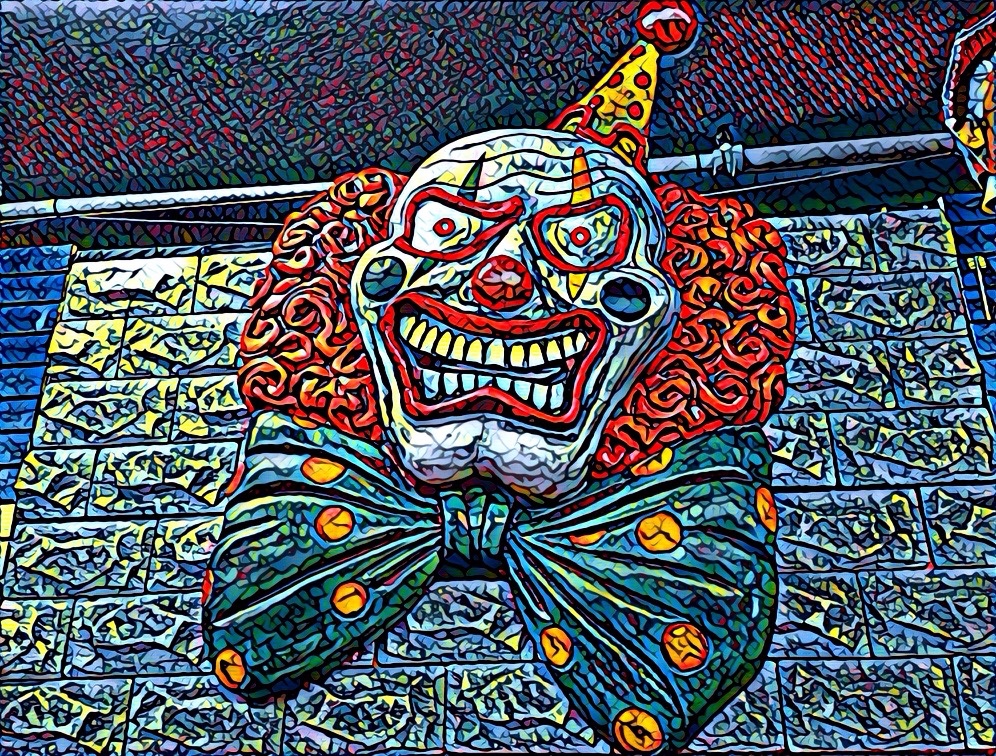
A talking worm develops an extremely loud screaming sound. He’s wrinkled and ugly and orange. But neither his physical ugliness nor his rancorous sound is his worst feature. He has evolved an extremely toxic poison.

How is it so toxic? 

It is really three separate toxins: Fear and Hate and Greed. Together they are much more toxic than any one of them is alone. 

He blackmails everyone around him, from sea to shining sea. He threatens to release the poison into the air if he doesn’t always get his way. 

His way is to take all the money.
His way is to take all the power.

His way is to use the money and power to make more toxin. 

He uses the extra toxin to threaten even more people that he will release the poison into the air if he doesn’t get his way.

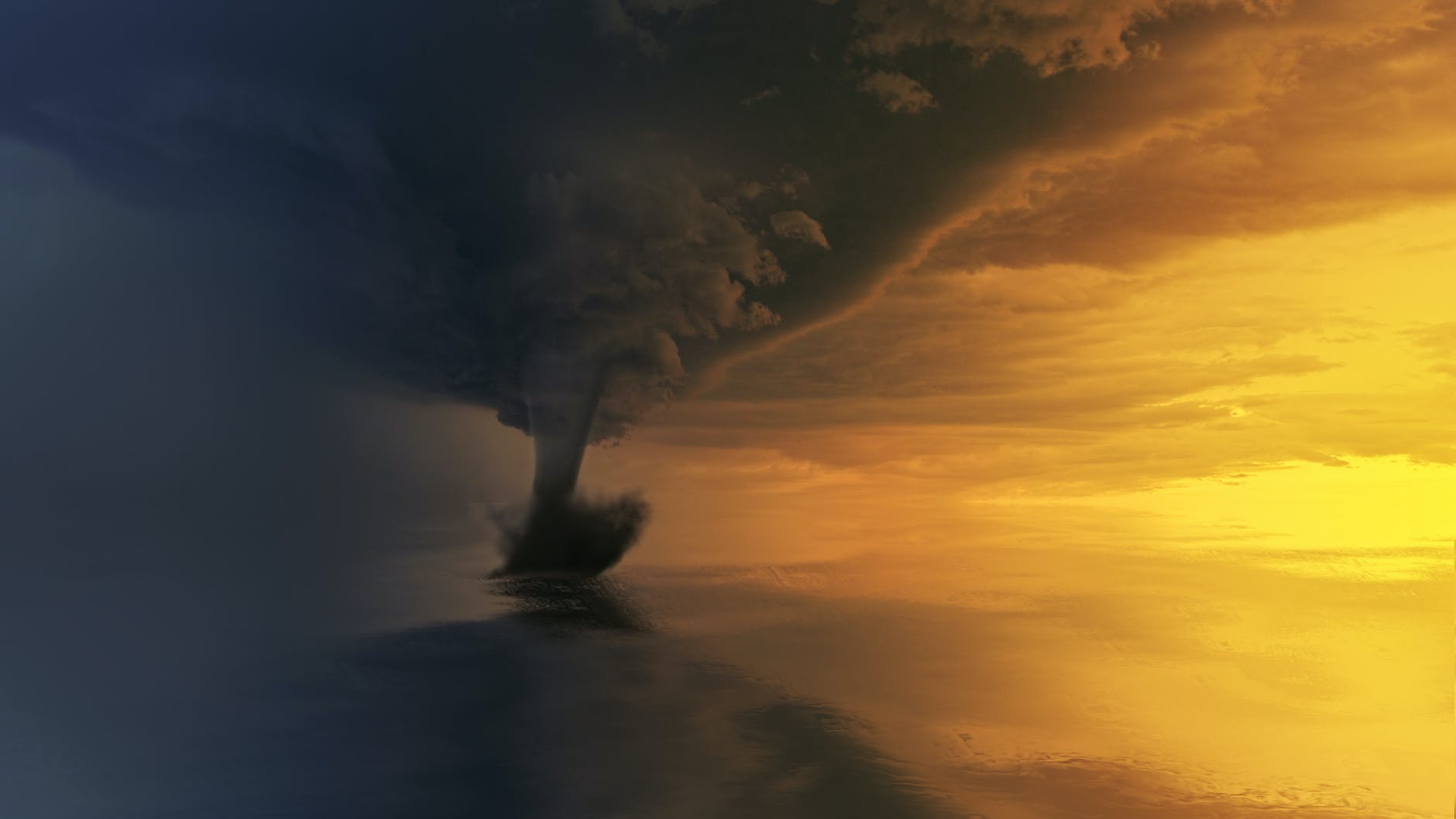
Photo by Leonid Danilov on Pexels.com


His way is to take all the money.
His way is to take all the power.

His way is to use the money and power to make more toxin. 

Eventually, he tries to blackmail everyone on earth. 

He explains that he is a “self-made worm” — that it is his right to take over the world because he and he alone made the world. 

That is, of course, a lie. 

Life evolved for 4 billion years. All his ancestors, and the life his ancestors interacted with created the conditions for him to make the toxins. He doesn’t mind that he lies. Lying is fun!


He gets his way.
To him, that’s all that matters.

He gets all the money. 

He gets all the power. 

He’s bored.

For fun, he releases the poison any way. 

But now, it’s enough to destroy every living thing on earth.

Including the ugly orange worm. 

The end?

That’s up to us.

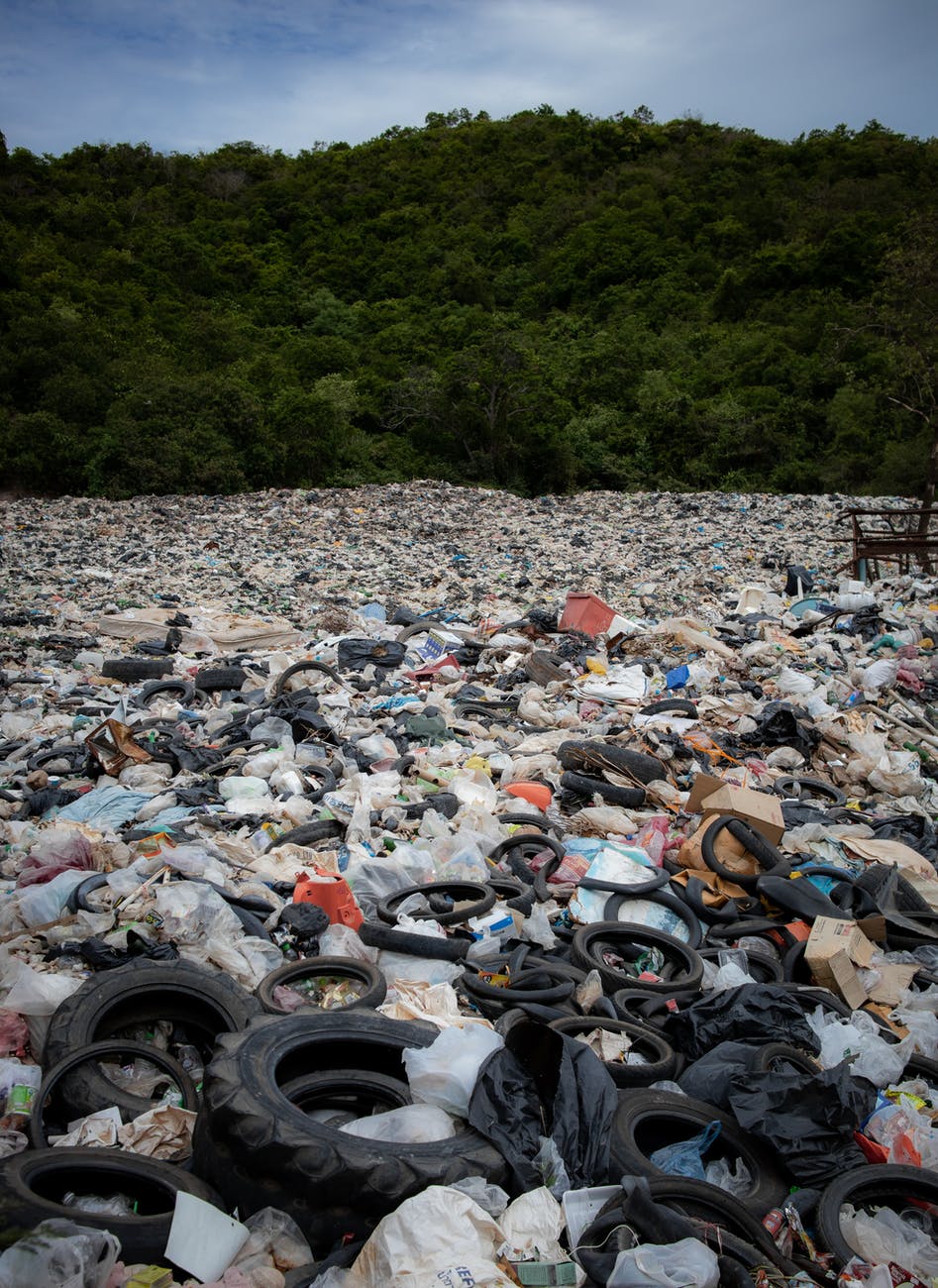
Photo by Lisa Fotios on Pexels.com

——————

Dick-Taters

The Ailing King of Agitate

Stoned Soup

The Three Blind Mice

Where does your loyalty lie?

Wednesday

The Stopping rule

Absolute is not just a vodka

The Update Problem

Poker Chip

My Cousin Bobby

Myths of the Veritas: The Orange Man

Author Page on Amazon

The Extreme Court

That Cold Walk Home

A Little is not a Lot

After All

All We Stand to Lose

We Won the War! We Won the War!

The Silent Screams of Dead Men’s Dreams

Somewhere a Bird Cries

Fish have no Word for Water

The Broken Times

Roar, Ocean, Roar!

The Dance of Billions

Take Me For A Ride in the Car Car!

06 Thursday Aug 2026

Posted by petersironwood in America, apocalypse, essay, family, leadership, management, politics, psychology, story, Uncategorized

≈ Leave a comment

Tags

collaboration, cooperation, Democracy, Dictatorship, essay, news, politics, problem solving, Ukraine, USA, writing

Do you remember the song, “Take me for a ride in the car car”? Here’s a link to one popular version. Peter, Paul, & Mary also sang it. Nice song. But you may have experienced it being repeated too often. At a certain age, some kids seem to discover that they can be really annoying simply by singing a song over and over and over and over. 

When I was in my early teens, I took a car trip with my Uncle Paul and his wife and three (at that time) kids out to see his brother Bob who headed up a psychiatric hospital in Pennsylvania. It was a long drive. At some point, to pass the time, we sang some songs. When the last song was over, Paul’s youngest son began to make up new verses for one of the songs. At first, it was rather cute to watch him try to build a story, rhyme, and keep in tune. He actually succeeded at none of these, but it was still cute.

At first.

Photo by Lorenzo Manera on Pexels.com

But after about a quarter hour, he began to annoy a few people with his off-key, non-rhyming, senseless continuations of the song. After about a half hour he was annoying everyone. After an hour, we began to discuss leaving him by the side of the road and returning in another ten years to see whether he was still there. 

On car trips, we used to play a number of games to pass the time; e.g., seeing how many different states license plates we found find. Later, I learned to play “The Alphabet Game.” There are several versions, but basically, you must find, in order, the letters of the alphabet from passing cars, signs, etc. Stuff inside your own car cannot be used. (You could easily find all the letters in a book or magazine). I’ve learned to know where to look for J, Q, and Z. I’ve been in cars where we played twenty questions, Botticelli, Buzz, and Ghost. When I was a kid, I also simply looked out the window to entertain myself. Sometimes, I would imagine that the dotted lines that divide the lanes were like tracer bullets shot from our car. Then, I would watch to see whether another car got “blown up” because they crossed our fire. I would also imagine myself “flying” alongside the car, having to bob and weave to avoid telephone poles, trees, signposts, etc. 

Traveling in a car with a family or with a group of friends or your car pool is potentially a social opportunity as well as an opportunity to save money. Since you’re in the same car, you need to agree on destination. To some extent, you need to agree on temperature & what to do about the windows. As a kid, everyone also lived in the same “sonic space.” We would have to “agree” on a game or on a radio station. This is no longer the case. Now, often times, everyone in the family may have their own individual entertainment. Is that a good thing or a bad thing? 

Even in the modern day, driving in a car with others is different from driving in a car on your own. If you’re by yourself, you can decide on the temperature and entertainment without having to take into account anyone else’s wishes. If others are in the car, some kind of negotiations have to take place. 

At least, that’s what most people do. You could decide: “Hey! It’s my car so I’m going to drive and I get to determine everything about our common space — temperature, entertainment, windows, whether we stop, etc.” This is what is known in academic circles as the “A$$hole theory of cooperation”: Get everything you possibly can for yourself and to hell with everyone else. And after all, they’re doing the same exact thing. 

Notice too that to some degree, the amount of accommodation you have to do depends on how much humanity is in the car besides yourself. It also depends on how “luxurious” your vehicle is. If you have a tour bus or a camper, six people might be relatively comfortable. If it’s a VW bug, you won’t be. You’ll not only be crowded; you’ll have to be careful every time you move not to accidentally elbow someone in the eye. Have you ever been in that crowded of a situation for hours at a time or even days at a time? 

Photo by Life Matters on Pexels.com

It isn’t just cars. In general, the more people occupy a given space, the more they are going to have to cooperate in order to survive and thrive. You can provide individuality support with technology, up to a point. In a way, clothing is like that. We can peacefully co-exist in a car without either of us compromising our comfort because I can wear a sweater and you can wear a thin shirt. You can provide everyone an iPhone and everyone can play their own game without having to agree on a common game. Of course, there’s a downside to that. First, we don’t have practice getting along with others. Second, we don’t share a common experience. 

Even if the “typical” family of four interrupts their car trip and stops for lunch and agrees to talk, they are likely coming from very different places. Dad has been listening to Mozart and was in good mood until he suddenly remembered he was supposed to have sent out a memo to everyone in the department about last month’s sales figures. Damn. Maybe he can do it from the Motel but it will take longer than it would have at work. His son Sam, meanwhile, was trying to use sexting to convince his girlfriend to “take their relationship to the next level.” As a result, they just broke up. Dad doesn’t know a thing about that; nor does Sam know anything about why Dad suddenly seems put out. Mom meanwhile, was listening to Fox “News” where she “learned” that it’s Biden’s fault Putin “had to” attack the Ukraine because Biden was too tough on Russia and also too easy. Her daughter Sally, on the other hand, has spent the last 45 minutes on twitter learning about the Putin invasion. She is wondering whether atomic war might start. 

Now, they stop for lunch. That’s nice. And, maybe they’ll talk about something common; perhaps the weather, or the scenery or the food. But they might just revert to what they were doing before they got together at the restaurant. Even if they all have the willpower to put away their personal devices, they are still coming from very different places emotionally and experientially. Dad might make a comment about how he forgot to write an important e-mail and he’ll have to do it from the Motel. Sam just shakes his head and says, “Important e-mail? My life is ruined! What do you care?” 

Dad might say, “What do you mean by saying that your life is ruined?”

Sam might even share, “Jackie broke up with me!” 

Dad, meaning well, and wanting to offer a solution before he starts reminiscing about his own high school days, blurts out: “Oh, Sam, don’t worry about it! You’ll have another girlfriend in a week.” 

That may well be empirically true. But to Sam? He feels he has just lost the love of his life. His father’s comment seems to him to be dismissive of his feelings to the point of cruelty.  

Sally pipes up, “How can you be worried about such trivial things as e-mail and dates when we might be blown to smithereens at any moment? Do you ever pay any attention to the world outside yourself? Putin is a monster killing innocent civilians so he can slake the thirst of his pathetic ego!” 

Mom is taken aback. The only news she doesn’t dismiss as “lies that are out to get Trump” has been Fox “News” for the last few years. She says, “Don’t be saying bad things about Putin! He’s a nice man who just wants his Ukraine back.” 

Sally’s jaw drops. “Are you serious! He kills journalists who write the truth about him. He’s a corrupt crime lord. He played Trump like a fiddle … no … not that complicated … played him like a drum … no … still too complicated … played him like the triangle. You know. Bang it every once in awhile and it reverberates. Anyway, it isn’t “his” Ukraine. It belongs to the Ukrainian people!”

Some families are better at getting through all this than others. These four have not shared a common experience and are coming from very different places. If they have no practice playing a game according to a common set of rules, what chance to they have to settle deeper differences? 

Maybe avoiding little conflicts by giving everyone their own personal entertainment device means that when much bigger and more difficult conflicts arise, no-one remembers how to resolve things. Why shouldn’t everything by how I want it? Let others do the same! Let the best man win!

Except, of course, it isn’t the best man or woman who actually wins in a land where no-one plays by the rules. It’s the most corrupt. And the net result of everyone spending so much time competing and so little, if any, time cooperating is that nothing much is actually accomplished. It doesn’t even work very well in a small group. In a large nation, a dictatorship is almost invariably associated with less for everyone except the dictator and the immediate surround. Dictatorships do sometimes manage to steal from neighbors who are productive because they are cooperative. If all countries were dictatorships, they would all perish, probably in atomic war, but possibly in ecological collapse or just mass suicide. 

In 2018, I worked on a “Pattern Language” for collaboration and cooperation. Here’s a link to an index of the Patterns. One of them is called “Small Successes Early.” Should I be worried that we seem to be moving into a world where there are fewer and fewer opportunities for peacefully resolving small conflicts? Avoiding unnecessary conflict seems like a good thing. But … is the downside that people have no practice resolving conflicts? And, is the further downside that people eventually end up with huge differences in their notions of reality when it really matters? It seems to be the very thing that Faux News has been counting on; that people would not only listen to them but not listen or dismiss any other views. As a result, people end up with very different models and explanations of the world. That is always a bad thing, but in a world where people are unpracticed at resolving conflicts, it’s even more problematic.

There is always a tradeoff between cooperating as a whole and letting each individual do as they wish. One thing seems crystal clear. As the number of people in your car increases, their individual freedom to do just as they please decreases. So, too, with the world. In my own lifetime, the population of the world has quadrupled. Of course, it’s not equally distributed. People are more concentrated in cities than ever before. Many of these cities are located on ocean coasts. What does the continuation of global warming mean to population migration and crowding?

Remember the COVID pandemic? I’m not sure how many people realize this, but we’re likely to see other pandemics. If people were very sparsely populated, we probably wouldn’t be at risk. But as we continue to get more crowded, humanity will become more susceptible to pandemics. That in turn, means people will have to accommodate to each other’s needs. As a background rule, a person can choose to wear what they want. There are, of course, many exceptions to that. In many situations, you have to wear a shirt and shoes. In some situations, you have to wear a suit and tie or a uniform. If you might be spraying germs at other people, it seems totally reasonable to change your behavior or clothing to minimize that spread. But some people apparently think that they should be able to do exactly as they want regardless of the consequences to others.

Toddlerhood Nation

As the earth becomes more crowded, we need to be more cooperative, not less. The presence of a large number of deadly weapons also makes it more important to cooperate. The race to ensure survival by having ever larger numbers of ever more deadly weapons is not a path toward that greater cooperation. Dictators, for instance, tilt toward war to consolidate their power. A world with zero dictators wouldn’t necessarily be at peace, but when there are dictators or people seeking to become dictators, there will certainly be wars.

In a crowded car, people need to accommodate each other. Under a dictatorship, you quite possibly won’t own a car, but even if you do, there will only be a few or even one channel of “entertainment.” One song will be sung: a song of praise for “Der Fooler” and more than likely, it won’t be high quality in terms of rhyme, logic, music, or lyrics. The singer will be the one who bribes or cajoles the parasite(s) in charge.


Create Peace

Author Page on Amazon

Absolute is not just a vodka

Where does your loyalty lie? 

My Cousin Bobby

The Stopping Rule

The Update Problem

Essays on America: Wednesday

Myths of the Veritas: The Orange Man

Myths of the Veritas: The Three Blind Mice

Myths of the Veritas: Stoned Soup

When Greed is the only Creed

At Least he’s Our Monster

Roar, Ocean, Roar!

The Dance of Billions

Tomorrow’s Dinner

13 Thursday Feb 2025

Posted by petersironwood in Uncategorized

≈ 3 Comments

Tags

fiction, health, history, life, news

AI-generated image

Main Scream Media Host Sandy: “Well, it looks like another exciting day of breaking news! Hard to tell what the Putinists will think of next. Chet, you’re right there on the Senate floor. Is Cyanide likely to be confirmed as the main ingredient in tomorrow night’s dinner or might some of the Putinists break ranks and defy President Muskmelon?” 

“That’s an excellent question, Sandy, and no-one knows for sure. Several of the Putinists have privately expressed reservations since Cyanide is known to be lethal. Snoozy Callins has even gone so far as to finger her pearls. No-one knows whether she will actually go so far as to clutch them. However, as you know, under oath, Cyanide said quite clearly that he had no intentions of poisoning anyone. But we’ll be right here covering every minute so our audience will have up to the minute coverage about whether they’ll be poisoned in the coming days!”

“Thanks for the great reporting Chet and after this short commercial break, we’ll be right back to hear from our panel of experts about the impact and legality of putting Cyanide in food.”

AI generated image. Notice the ladder leans on nothing.

The camera pans to a shot of two men on top of a roof. The first man, dressed in blue jeans and a plaid flannel shirt swings he legs over the side and begins to descend the ladder, one step at a time. When he’s about halfway down, the second man, dressed in elegant and stylish ebony Ninja gear leaps off the roof, beating him to the pavement below by quite a margin.

Announcer: “Which is faster? Climbing down a ladder one step at a time or taking a Flying Leap? Our studies show that Flying Leap is just as effective in getting to the bottom as ladder climbing but ten times faster!” 

The camera shows the ladder climbing man still descending and then pans to the Ninja who scampers off into a field of flowers and butterflies while orchestral music swells. A happy muttering voice, barely audible, says, “Some users taking Flying Leap may experience simple fractures. On rare occasions, ruptured spleens or sepsis inducing compound fractures may occur. Check with your health care provider if you are pregnant, plan on becoming pregnant, or are subject to the forces of gravity.” 

The Announcer continues: “Ask your health care provider whether Flying Leap is right for you! Why climb down a ladder when you can take one Flying Leap instead?” 

The golden sunrise glows through delicate leaves covered with dew drops.
My photograph from the real world: plants with dew in the sunrise.

Sandy: “We have here our panel of experts covering the political spectrum. Let’s start with you Mary. You’re an MD specializing in toxicology. What’s your take on Cyanide?”

Mary: “Thanks for having me Sandy. Cyanide reactions vary a lot depending on dosage and on pre-existing conditions. Generally speaking, Cyanide is known to be poisonous to humans. In fact, it is among the most deadly poisons. On the other hand, chewing one or two apple seeds won’t typically kill anyone. The poison damages both the brain and the heart. It has been used in warfare and in mass suicides.” 

Sandy: “Thanks, Mary. That was very enlightening. Let’s move to Jim, an expert on Constitutional Law. Jim, what’s your take on whether or not putting Cyanide in tomorrow’s dinner is Constitutional?” 

Jim: “Hi, Sandy. Thanks again for inviting me. Cyanide has been used for poisoning since ancient times. However, it wasn’t chemically isolated until 1782. Theoretically then, the Founding Fathers would have known that Cyanide was poisonous. However, there is no explicit mention of it in the Constitution nor even in the various letters of the time—at least none that I am aware of. Some have argued that this is clearly antithetical to the phrase in the Declaration of Independence “Life, Liberty, and the Pursuit of Happiness” since dead people don’t have life, liberty or the pursuit of happiness. However much we might like the Declaration of Independence, it does not have the force of law. However, both the Fifth and Fourteenth Amendments to the Constitution say that no person shall be deprived of Life without Due Process. Of course, therein lies a tale. Some of the current Injustices on the US Extreme Court have signaled a willingness to re-interpret personhood to refer only to their wealthiest donors and their spawn, born or unborn.”

Sandy: “Thanks, Jim. That’s very instructive if a bit esoteric. I’m afraid that’s all we have time for right now because we’ve just gotten word that Cyanide has been confirmed for dinner tomorrow. Let’s get back to the Floor and our reporter right there on the scene, Chet. Chet, what’s the latest?”

Chet: “Hi, Sandy! Cyanide has just been confirmed. Two Trumputinists registered a “No Vote” but that was not enough to block Cyanide. The Dems have introduced a bill to make poisoning the population illegal by any means, but that’s unlikely to go anywhere. However, they are asking for campaign donations and if they get enough money tonight and tomorrow, there will be plenty of speeches in the next twenty-four hours. Count on it.”

Sandy: “Well, that’s all for us this evening. I wish you all a wonderful time putting your affairs in order. Tomorrow, we’ll continue our coverage of these unprecedented times. 

My photo from a sunrise walk.

————————

My Cousin Bobby

The Update Problem

The Orange Man

The Three Blind Mice

Stoned Soup

You Bet Your Life

Where Does Your Loyalty Lie

Essays on America: The Game

Absolute is not just a Vodka

Poker Chip

The Crows and Me

Dance of Billions

Roar, Ocean, Roar 

Who Won the War?

24 Sunday Mar 2024

Posted by petersironwood in Uncategorized

≈ 21 Comments

Tags

Democracy, history, life, news, poetry, society, USA, war

Photo by Avery Nielsen-Webb on Pexels.com

The war begins and we begin to count

The dead and wounded: such and such and much.

We scrutinize the numbers as they mount

We dare not feel the shattered dreams they touch.

We analyze and matricize results.

Declare a victory when none exists.

The thought that someone wins a war insults. 

This myth through every fog of war persists. 

The would-be poet, teacher, engineer.

The father, mother, uncle, nephew, son.

The old, the young, the crooked, straight & queer.

The war hurts you and me and everyone.


Division and subtraction do not build. 

No souls are filled with joy; no gardens tilled. 

In each armed conflict both sides lose. Such waste!

Humanity needs everyone! Make haste!

Photo by Denniz Futalan on Pexels.com

———————-

Turning to prose: 

One of the things that the “winning side” of a war loses is the opportunity to spend those resources spent on war instead spent on making life better for its citizens. Even if the “winners” have a very quick and lopsided victory, they will have contributed to world-wide pollution and global climate change that will negatively impact nearly everyone on the planet including most of the people on the “winning” side and their descendants. Many of the soldiers will have died, but in almost every single case, many more innocent people will have died. In some cases, those will be minimal for the “winning” side, but not always. Meanwhile, soldiers who returned to society, even if they are not physically impacted permanently are surely impacted psychologically. Among other things, if they were successful, they killed other human beings. Some of those human beings were almost certainly innocents, but even the other soldiers were mainly people forced into fighting.

In a way, they will be carrying seeds of some very bad experiences and some of those seeds will undoubtedly leak out into that person’s environment impacting, his friends and family, as well as random strangers. But the war mentality is not limited to serious effects on fighting soldiers. To some small extent, everyone is damaged. There is more stress for everyone. There is always the threat of reprisal or that someone you care deeply about will be maimed or killed. Not only are people’s sense of fear heightened; typically, so is their hatred and anger. For many, this will be directed far beyond those actually most responsible for starting a war. 

During a war, people will be asked, or ask themselves, to view the killing of a whole bunch of their fellow humans as the best course of action. Some will embrace that with relish and a side order of over-generalization. Others will embrace the killing with reluctance. Few will object outright. So, after your victory, you will be living in a society that rationalizes killing others more often and more easily than they did before. Of course, it’s generally even worse for the “losing” society. Both sides lose. The “losing side” loses more and that keeps the war fueled as long as possible. But make no mistake. Both sides lose. 

Democracies have often gone to war against each other. But far more often in modern times, war has been instigated by dictators. They rule by hate and fear. Having an enemy is an entry fee and a talking point. If there’s no-one else around, they’ll simply pick on the vulnerable within their own society. Through constant repetition about extremely rare cases or even just outright lies, people can actually be made to hate people who have, in reality, done them zero harm. 

Time to wake up. 

——————

Stoned Soup

The Orange Man

Three Blind Mice

The Ailing King of Agitate

Plans for us

Dick-taters

Absolute is not just a vodka

Cancer always loses in the end

Dance of Billions

Subscribe

  • Entries (RSS)
  • Comments (RSS)

Archives

  • August 2026
  • July 2026
  • June 2026
  • May 2026
  • April 2026
  • March 2026
  • February 2026
  • January 2026
  • December 2025
  • November 2025
  • October 2025
  • September 2025
  • August 2025
  • July 2025
  • June 2025
  • May 2025
  • April 2025
  • March 2025
  • February 2025
  • January 2025
  • December 2024
  • November 2024
  • October 2024
  • September 2024
  • July 2024
  • April 2024
  • March 2024
  • February 2024
  • January 2024
  • December 2023
  • August 2023
  • July 2023
  • May 2023
  • April 2023
  • March 2023
  • February 2023
  • January 2023
  • December 2022
  • November 2022
  • October 2022
  • September 2022
  • August 2022
  • July 2022
  • June 2022
  • May 2022
  • April 2022
  • March 2022
  • February 2022
  • January 2022
  • December 2021
  • November 2021
  • October 2021
  • September 2021
  • August 2021
  • July 2021
  • June 2021
  • May 2021
  • April 2021
  • March 2021
  • February 2021
  • January 2021
  • December 2020
  • November 2020
  • October 2020
  • September 2020
  • August 2020
  • July 2020
  • June 2020
  • May 2020
  • April 2020
  • March 2020
  • February 2020
  • January 2020
  • December 2019
  • November 2019
  • October 2019
  • September 2019
  • August 2019
  • July 2019
  • June 2019
  • May 2019
  • April 2019
  • March 2019
  • February 2019
  • January 2019
  • December 2018
  • November 2018
  • October 2018
  • September 2018
  • August 2018
  • July 2018
  • June 2018
  • May 2018
  • April 2018
  • March 2018
  • February 2018
  • January 2018
  • December 2017
  • November 2017
  • October 2017
  • September 2017
  • August 2017
  • July 2017
  • June 2017
  • May 2017
  • April 2017
  • March 2017
  • February 2017
  • January 2017
  • December 2016
  • November 2016
  • October 2016
  • September 2016
  • August 2016
  • July 2016
  • June 2016
  • May 2016
  • April 2016
  • March 2016
  • February 2016
  • January 2016
  • December 2015
  • November 2015
  • October 2015
  • September 2015
  • August 2015
  • May 2015
  • January 2015
  • July 2014
  • January 2014
  • December 2013
  • November 2013

Categories

  • AI
  • America
  • apocalypse
  • cats
  • COVID-19
  • creativity
  • design rationale
  • dogs
  • driverless cars
  • essay
    • guns
  • family
  • fantasy
  • fiction
  • HCI
  • health
  • leadership
  • love
  • management
  • nature
  • pets
  • poetry
  • politics
  • psychology
  • Sadie
  • satire
  • science
  • sports
  • story
  • The Singularity
  • Travel
  • Uncategorized
  • user experience
  • Veritas
  • Walkabout Diaries

Meta

  • Create account
  • Log in

Blog at WordPress.com.

  • Subscribe Subscribed
    • petersironwood
    • Join 646 other subscribers
    • Already have a WordPress.com account? Log in now.
    • petersironwood
    • Subscribe Subscribed
    • Sign up
    • Log in
    • Report this content
    • View site in Reader
    • Manage subscriptions
    • Collapse this bar
Loading Comments...