• About PeterSIronwood

petersironwood

~ Finding, formulating and solving life's frustrations.

petersironwood

Tag Archives: society

Stress Fractures!

30 Wednesday Sep 2026

Posted by petersironwood in America, essay, health, leadership, management, politics, psychology, Uncategorized

≈ Leave a comment

Tags

politics, America, Democracy, history, fascism, society, USA, Resistance, news

Stress Fractures!

From Wikipedia, 9/26/2021

Stress fracture
Other namesHairline fracture, fissure fracture, march fracture, spontaneous fracture, fatigue fracture
pastedGraphic.png
Stress fracture of the second metatarsal bone (below the knuckles of the second toe)


“A stress fracture is a fatigue-induced bone fracture caused by repeated stress over time. Instead of resulting from a single severe impact, stress fractures are the result of accumulated injury from repeated submaximal loading, such as running or jumping. Because of this mechanism, stress fractures are common overuse injuries in athletes.

Stress fractures can be described as small cracks in the bone, or hairline fractures. Stress fractures of the foot are sometimes called “march fractures” because of the injury’s prevalence among heavily marching soldiers.[2] Stress fractures most frequently occur in weight-bearing bones of the lower extremities, such as the tibia and fibula (bones of the lower leg), metatarsal and navicular bones (bones of the foot). Less common are stress fractures to the femur, pelvis, and sacrum. Treatment usually consists of rest followed by a gradual return to exercise over a period of months.” 

A few weeks ago, I was playing tennis as I regularly do about 3-4 times a week. Also, as usual, my feet really began to hurt after two sets. I find that changing shoes typically helps the situation, so I sat down to change my shoes. It was extremely difficult to get my foot into my shoe — I had to bang it hard to get it in. Finally — success!

Photo by Kindel Media on Pexels.com


So, I was ready to play a third set. But after two points, I realized there was no way I was going to play more tennis. I hobbled home and could barely mount the shallow steps to the front door. It was “Labor Day” so most places were closed. We finally got my painful ankle X-rayed and the doctor who read the X-rays said, “Good news! No new breaks in your ankle.” 

That was good news. 

Except that so far as I knew, I had never broken my ankle in the past! That brings to seven the total number of broken bones I’ve had. 

I was born with flat feet and all my life I’ve had flat feet and pronated ankles. Now, however, things had moved to a new and much worse chapter. I could literally put zero weight on my left leg. Now, I can walk. Which means, I can now play tennis. 

Sort of. 

How could I have broken an ankle and not have been aware of it? Because of the structural defects in my feet, instead of having an arch that works to distribute the stress of running, jumping, and landing, one of the key bones in my arch has moved downward and toward the midline. So now, every time I land hard, the stress is not distributed evenly through the arch but smashes down into the outside of my ankle bone.

That sucks. And it makes playing tennis iffy. And, it’s painful. And, potentially dangerous.

Not so much as the fracturing of American democracy however. 

Photo by Element5 Digital on Pexels.com

The Putinists have been waging a War on Truth against America for years. They stepped up their game significantly once they began using Epstein’s pal. Who benefits from the War on Truth? 

Not the American citizens! 

The man who got 45 Putin office benefits. 

America has long been the major thorn in the side of Putin’s ambitions to reconstitute the USSR and possibly even to “rule the world.” It’s a crazy ambition, to my way of thinking. But not to would-be dictators. 

I like tennis. 

But some folks like stamp collecting. And some like to quilt. And some few like to destroy the love and livelihood of others in order to gain power. (Essays on America: The Game).

About 2400-2500 Americans were killed by the sudden attack on Pearl Harbor. FDR immediately declared war on Japan. That was like a traumatic bone break to a human body.

The Trumputinists, through their campaign of lies, false cures, false promises, and executive orders have driven up the number of deaths of Americans from the pandemic by hundreds of thousands. According to an article in the respected British Journal, Lancet, 200,000 Americans needlessly died from COVID because of the mishandling of the Trumputin Misadministration. They killed more Americans than were killed in 9/11 and Pearl Harbor and the War in Vietnam, and the Middle Eastern wars combined.

In 1860, the South seceded from the Union. Did Lincoln declare war on the South? No. Did he attack the South? No. The South attacked Fort Sumpter. Do you know how many Americans they killed? 

Zero. 

Two Union soldiers were killed in an accidental explosion while they were leaving the fort.

Even before the pandemic hit, the Mango Mussolini was rolling back safeguards on the food supply, clean water regulations, and clean air regulations. He was isolating America from our allies. All of those actions aimed at destroying America and American lives have redoubled. Every important department of the US government has been damaged; many of the most experienced and dedicated employees have been replaced with podcasters, talk show hosts, political operatives, convicted criminals (pardoned by 47) or sycophantic hangers-on. Many departments were wounded by DOGE “cost savings” but no “DOGE dividend” was ever sent, as promised to ordinary American citizens.


Stress fracture.

He divided the country using the methods that would-be dictators have used for centuries. (See: The Myths of the Veritas: Stoned Soup).

Stress fracture.

Epstein’s pal replaced patriotic, non-partisan experts throughout government with inept lackeys who would do anything to curry favor with the Putin-backed coup. 

Stress fracture.

The five-time draft dodger did everything he could to destroy the careers of any patriotic Republicans who stood up to him. 

Stress fracture.


45-47, millions of dollars in “dark money” and the Trumputinist backers have subverted confidence in elections and passed “laws” that mean that they can simply “overturn” elections when they don’t win. Nonetheless, they have also passed laws to suppress the votes of POC, the elderly, Armed Services personnel, Native Americans, and students. Suppressing the vote, aside from being unfair, guarantees that inept, cruel, and corrupt politicians will be the norm.

Stress fracture.

The Trumputinists deny that their deadly attack on the United States Capitol was a crime. They claim it was just a regular day of tourism. 


Major stress fracture.


America faces serious problems such as the need for immigration reform, wealth inequality, racial injustice, crumbling infrastructure, cybercrime, social media companies giving in to brutal dictators like Putin, climate disasters. The Trumputinists pretend to want to be part of the solution but actually are doing everything in their power to prevent these crises from being addressed. 

Stress fractures.

As the stress fractures in your body continue to multiply, you will begin to bleed to death internally. And, being unable to move, you will be unable to battle predators of any description.

It’s past time to bring to justice those who are trying to destroy our democracy, even if that makes Putin upset. 

Photo by Donald Tong on Pexels.com

It’s important to remember that in the last Presidential election, Republicans and Democrats worked together throughout the country to run the election. Those were actual Republicans — Americans who are typically more conservative than their Democratic colleagues. Those folks are being threatened with physical violence as are their families unless they pledge to be Trumputinists. Of course, the Trumputinist don’t call themselves “Fascists” or “Trumputinists” but so what?

The “Not-See” Party

(Essays on America: Labelism). 

Stress fracture. 

People who stormed the US Capitol; politicians who support the overthrow of democracy; people who threaten violence against actual Republicans who do not support the big lie — they all need to be dealt with legally, but quickly and thoroughly. 

One thing we do know from history: trying to placate a cruel ego-maniacal dictator by, say, giving them Poland, does not work. Ask the ghost of Neville Chamberlain.

I honestly cannot think of how the Trumputinists could make it more clear. 

They are not playing on team America. 

They have already attacked American democratic institutions and stormed America’s Capitol. 

They have already killed a quarter million innocent Americans. 

They are still perpetuating the big lie. 

They certainly have no business being seated in the Congress of the United States of America.

Many of the Trumputinists have been trained to deny the efficacy of masks, social distancing, and the vaccines. 

But many Democrats have been trained to deny the severity of the crisis we are facing. Ignoring the X-rays and pretending it’s all business as usual won’t knit broken bones back together. 

Ignoring the fact that Trumputinists are fighting an undeclared war on our country will not make us safe any more than shutting our eyes will make us safe from the circling wolf pack or the growing climate crisis or the unsustainable chasm in wealth and opportunity.


(See: The Truth Train).

Democrats will allow many millions to be killed if they do not address, with everything in their power, the slow coup that is breaking America. 

“There is always light if only we’re brave enough to see it…if only we’re brave enough to be it.” — Amanda Gorman



https://en.wikipedia.org/wiki/Stress_fracture

Where Does Your Loyalty Lie?

An Open Sore from Hell

My Cousin Bobby

The Stopping Rule

Wednesdays

Roar, Ocean, Roar!

Imagine All the People

The Dance of Billions

Not-Separateness

28 Monday Sep 2026

Posted by petersironwood in AI, creativity, design rationale, essay, HCI, leadership, management, nature, politics, psychology, Uncategorized, user experience

≈ Leave a comment

Tags

AI, architecture, art, beauty, Design, development, ecology, governance, GreenNewDeal, HCI, human factors, IBM, leadership, painting, peace, photography, society, technology, TNOO, UI, usability, user_experience, UX, ux-design

Not-Separateness

It seems odd to specify a property of natural order in terms of what it is not. On the other hand, I cannot come up with a positive alternative that doesn’t bring other connotations with it. I think it’s related to “unified” or “integral” or “belonging” or “inter-related” but none of those seem quite so on the mark as does “Not-Separateness.” 

Christopher Alexander’s degree from MIT was in architecture. Part of the reason he may have chosen this particular term is in reaction to some examples of architecture in which the architect seems to be in the business of constructing a building whose primary purpose is to make them famous regardless of what that building does to the neighborhood or its occupants. 

Photo by BROTE studio on Pexels.com

Imagine Mr. Bigg designs a house that is a perfect black cube set on on vertex. In effect, this design says to me: “I am BIG. I am Mr. Bigg! I am a genius! You would have never been brilliant enough to design a house that is a cube on its vertex! You would have wasted your time and done something mundane like placed the cube on the ground on one of its faces. Anyone could think of that! But I put it on a vertex!” Indeed, we may easily imagine that he says words to this effect when his interview is reported on in the (mythical) architectural journal entitled, Things that look different! 

“Mr. Bigg, you made the Bigg House out of black steel and black glass. Some critics have argued that this doesn’t fit with the existing neighborhood of stone cottages with thatched roofs.”

“Of course, little minds will always criticize Bigg ideas.” 

“Yes, yes. It also means that the construction costs of the house were quite high. And, the estimated costs of heating and cooling are much higher as well.”

“Nothing that a worthwhile (i.e., wealthy) client can’t afford.” 

“Some have also argued that it is inconvenient for the occupants who have to walk up and down at a steep angle and that furniture such as dressers, tables, chairs, and beds do not accommodate well to the tilted walls.” 

“Let me ask you a question. Would you have ever thought of putting a cube on its corner? No. I didn’t think so!” 

Of course, this is exaggeration.

But not much. 

We would hope that User Experience designers take into account the users, their tasks, their contexts, and the way in which their designs interact with other related artifacts, people and processes. We would hope that applications and artifacts and services are all designed with the property of “Not-Separateness.” 

In the early 1980’s, I worked in the IBM Office of the Chief Scientist. My main assignment was to get IBM to pay more attention to the usability of its products. As part of that process, I visited quite a few IBM development labs around the world and spoke to many development teams. On many of these visits, I was accompanied by the Chief Scientist, a brilliant physicist, who “got” usability. 

On one occasion, we watched a new printing technology. Instead of printing out black printing on a white sheet of paper sized 8.5” x 11” or A4, this printout was of no standard size. The printing was black on a shiny silver sheet that curled severely. The Chief Scientist asked the head of the development team how they envisioned this being used. 

Chief Scientist: “Once someone printed this out, what would they do with it?”

Answer: “Oh, anything they liked.” 

Chief Scientist: “I mean, would people tape this into a notebook or paste it? Or would you imagine notebooks that would bind such paper?” 

Answer: “It’s not up to me to decide how people would use it. Doesn’t it look cool?” 

Another type of answer we heard more than once to the question, “How would this be used?” 
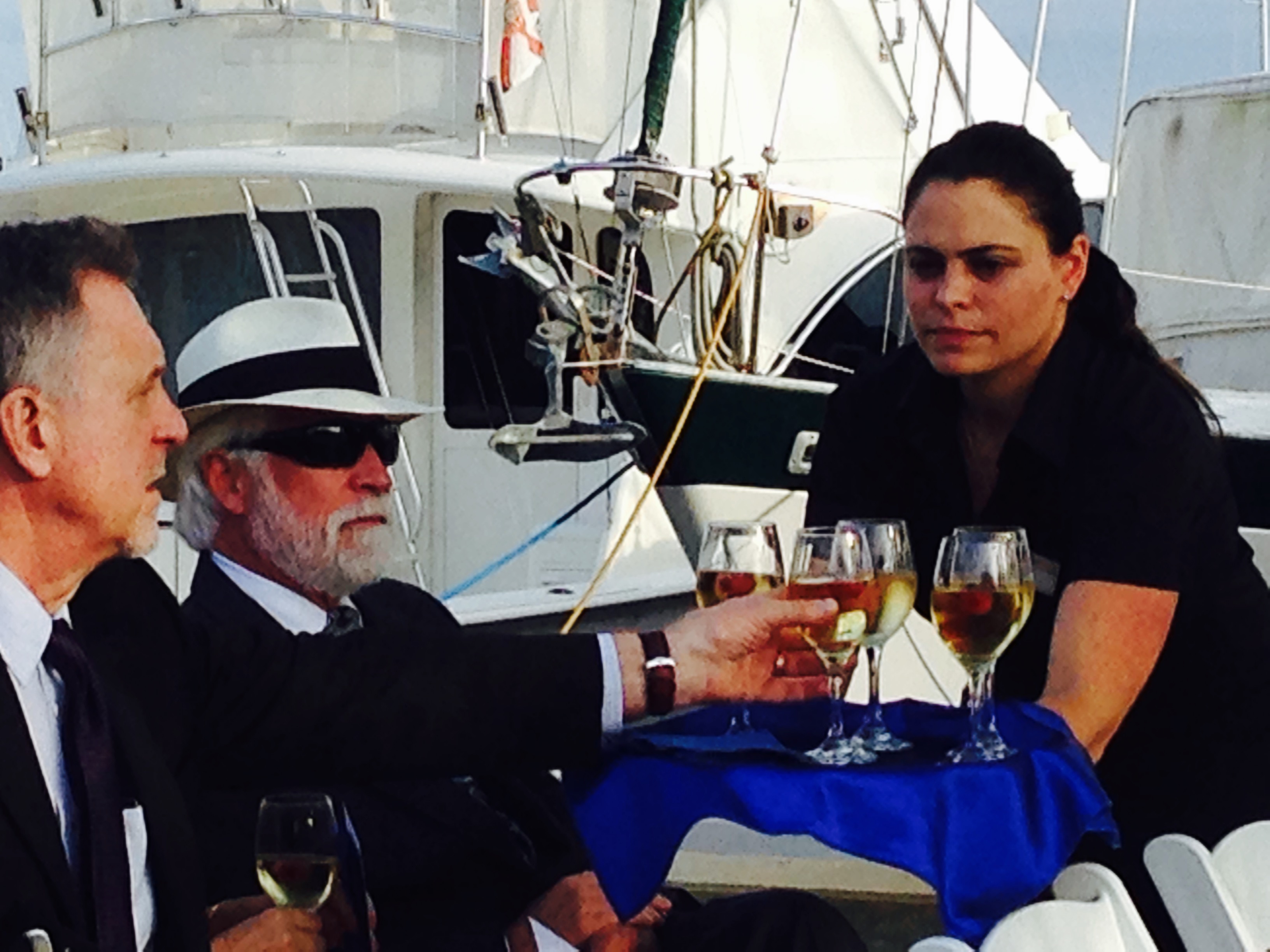
— “Oh, it’s a (replacement/upgrade) for this other IBM product.” 


“But who would use it and for what?” 


“It has three main components. Would you like a description of the components?” 

Photo by Andru00e9 Ulyssesdesalis on Pexels.com

Of course, there is a place for “playing around” with technology and thereby discovering things which someone else may find a use for. But in design and development of a product or service, having a clear notion of context of use and the users and tasks is fundamental. Of course, other users may appropriate a product or service for purposes beyond those envisioned by the original designers. That’s cool. 

What’s not cool is designing a device that is to be used in the bright outdoor sunlight and then testing the display in a typical office environment. Have you ever run across something like that? I have. Many times. At ATMs, Gas Stations, and outdoor display maps.

A more subtle lack of contextualization in design occurs when the design team fails to realize how many interruptions happen to the user while they are trying to accomplish a single task with the new application. If you “test” the application while the user is in a quiet “usability lab” and they can give your tasks their undivided attention, then necessitating them to remember the invisible internal state of “Insert” versus “Edit” mode may not be a big deal at all. They will simply remember. But in their office environment, they may be interrupted by a phone call, a message, or their boss entering their office and asking a series of detailed questions. If they now go back to the task at hand, there is about a 50-50 chance that they will correctly guess whether they are in “Edit” mode or “Insert” mode. 

A design which shows the property of Not-Separateness is the natural result of a process which shows not-separateness. Here are a few common ways to help ensure the design process grows organically from the users and their goals & contexts. 

* Put people on the design team who are familiar with the users, and/or their tasks, and/or their contexts. 


* People on the design team observe people engaging in the relevant processes, whenever possible, not — or not only — in a “Usability Lab” but in the actual work environment. For instance:

  • Observe people actually using product P (or service S) in version N so that version N+1 can be better attuned to the needs of the users.
  • Have people think aloud while doing this.
  • Gather and understand feedback from service calls and help desks and customer complaints in order to improve over time. 

There will be benefits to a company who takes such approaches beyond initial sales. If you’ve done any gardening, you will appreciate that the quality of the tomatoes you enjoy eating is related to the quality of the soil and the quality of the care you give the tomatoes. Similarly, a product or service that has the quality of Not-Separateness will not only be useful — users will fight to keep your product or service. It becomes integrated with the environment. To change the brand means that they will have to change the way they work; possibly even with whom they work. Not-Separateness is likely a path to what business people like to call a “Cash Cow.” 

If you’ve ever walked through a neighborhood after a hurricane, you’ve likely seen many uprooted trees. When you look at the roots of an uprooted tree, what do you see? Of course, you see roots. But what else? You see rocks and soil all around and embedded into the roots. They are Not-Separate. In a hurricane, there are typically not only high winds. There is also a lot of rain. The trees are hit with a double whammy. The wind pushes the tree but the rain weakens the solid soil in which the tree is embedded. It is the combination that makes it very difficult for the tree to “hold on” and keep from falling over. 

Living things, just like us, have a 4.5 billion year history of living. The living things adapt over time to their environment and they mold the environment to their needs. They are not separate. Flowers appeal to the insects who pollinate them. The insects who pollinate them are adapted to the characteristics of the flower. A horse adapts to their rider and the rider adapts to their horse. A product or service must have a design that serves the needs of its stakeholders. For a product or service to have maximum beauty, utility, and longevity, it must also have a way to adapt to the changing needs of the users and other stakeholders. At the same time, if the users and their organizations adapt to the product or service, then true Not-Separateness is achieved. 

If you want to skimp on designing your product or service, you can make it more separate, more divorced from its context, its users, and its tasks. Of course, if you do that, you also make much easier for your users to abandon your product and switch to a new one. 

Another way to think about this in terms of systems theory is where you draw the boundary. If you draw a sharp boundary around your product, you may find that, over time, your product becomes ever more peripheral to the community you’re trying to support and your product is ever more fungible with others in its class. On the other hand, if you draw the boundary around the product or service and the people and organizations who provide the product or service then, you are on the path of ever tighter interconnect. 

“Who Speaks for Wolf” is a Pattern in a Pattern Language for Collaboration and Cooperation. It is based on a Native American story and shows the importance of making sure that knowledge and perspectives of all relevant stakeholders are taken into account when a change is contemplated. Who is “relevant” may not always be obvious, but, in my experience, many more projects fail or are delayed because of too limited a view than of too broad a view.

Who Speaks for Wolf

Not-Separateness is not only a quality of good design in terms of not overly separating the context and users from the product or service. It is also a good quality for the organization that produces products & services. Of course, some people today must manage a giant amorphous “organization” of tens of thousands of people so they set up divisions, and departments, and groups, and teams, and positions etc. There may indeed be a “UX Department” and a “Software Department” and a “Hardware Department.” That’s all fine. But it is counter-productive if the UX Department sees itself as separate from the rest of the company. To a great extent the success of the UX Department depends on the success of the Hardware and Software Departments. The Sales Department’s success will, of course, depend partly on the skills of the Sales Department. But it will also depend on the success of the UX Department, HW, SW and Services. 

Have you ever had a paper cut? It isn’t just the skin on a quarter inch of the inside of your ring finger that’s cut. You’re cut! It isn’t just that the finger feels pain. You feel pain! That causes you to take steps to ameliorate the pain and to try to make sure it doesn’t happen again. That’s why empathy in leadership is important. A leader must feel empathy for all, or the organization will disintegrate from lack of Not-Separateness. At some point, a raccoon may chew off its own arm in order to escape a trap. 

But it isn’t the first thing that occurs to them every time they experience a thorn in the paw! 

The raccoon doesn’t say to itself:  — “that paw is giving me pain! I’m going to chew it off! Then, it won’t hurt any more.”

Photo by anne sch on Pexels.com

Evolution did not evolve a raccoon that acts that way. Self-mutilation exists but it is typically a last resort.

But not for corporations. It is the first thing they think of:

“Our (you name it) Department is not performing well. Let’s lay them off and outsource it. Better yet, we’ll replace it with AI!”

What does that say to every thinking employee in the entire corporation? It says:

“You know what? All this talk about teamwork and pulling together is a total bunch of bull$hit. You cannot trust management to do what’s best for everyone. You can only trust them to do what’s best for them.” 

Living forms in nature are living forms. Their parts have severe Not-Separateness with the other parts of that form. Often, as in well-functioning families or teams, that extends to all members of the group. 

Not-Separateness is essentially deep cooperation. I give to the larger community by becoming a part of it and doing my part in it. I lend strength to the community. In return, I gain strength from that community. It is not a zero sum game, of course. The community, if it is functional, is much stronger than the sum of the individuals in that community. 

This is so deeply embedded in 4.5 billion years of evolution that it does not surprise me that we recognize beauty as being even more beautiful if it is not separate. Not-Separate enhances beauty because, like all the other properties, it is essential to life. 

Eventually, if humanity is to survive, we will realize that Not-Separateness applies to all of us. We are not there yet. But that doesn’t mean we cannot appreciate and design Not Separateness in our products, in our services, and our lives. 

Photo by Pixabay on Pexels.com

—————-

The Declaration of Interdependence

How the Nightingale Learned to Sing

Roar, Ocean, Roar

Imagine all the people

Cancer Always Loses in the End

Ripples

Author Page on Amazon

Thomas, J.C. and Kellogg, W.A. (1989). Minimizing ecological gaps in interface design, IEEE Software, January 1989.

Thomas, J. C. (2012).   Patterns for emergent global intelligence.   In Creativity and Rationale: Enhancing Human Experience By Design J. Carroll (Ed.), New York: Springer.

Thomas, J. C. (2001). An HCI Agenda for the Next Millennium: Emergent Global Intelligence. In R. Earnshaw, R. Guedj, A. van Dam, and J. Vince (Eds.), Frontiers of human-centered computing, online communities, and virtual environments. London: Springer-Verlag.

Thomas, J.C. (1985). Human factors in IBM. IBM Research Report. RC-11267.  Yorktown Heights, NY: IBM Corporation.

We’re all in this together

29 Saturday Aug 2026

Posted by petersironwood in America, leadership, love, politics, psychology, Uncategorized

≈ Leave a comment

Tags

community, cooperation, Democracy, earth, green, love, music, nature, peace, poem, poetry, relationships, society, ubuntu, writing

We’re all in this together.

Each and every one. 

Oh, my God, it can’t be true. 

Perhaps for me, but not for you! 

You’re too black or brown or yellow!

I’m just an ordinary fellow! 

You’re too gay or straight or mellow!

You even eat that apple jello! 

We’re all in this together.

Each and every one.

Old & young and in-between;

The ever-seen and never-seen.

Oh, my God, it can’t be true. 

Perhaps for me, but not for you! 

You’re too fat or skinny or too tall!

Perhaps you’re short and way too small! 

We’re all in this together.

Each and every one.

Into games or sports of every sort.

Even tall and short and every sort.


Oh, my God, it can’t be true. 

Perhaps for me, but not for you! 

You’re too shallow, smart, or kind;

Too lame or sick or different mind. 

We’re all in this together.

Each and every one.

We’re all in this together.

Each and every one.


Take a glance join the dance

The Watershed Virus

The only “them” that counts is all of us

How the Nightingale Learned to Sing

Myths of the Veritas: The First Ring of Empathy

Stoned Soup

Three Blind Mice

Absolute is not just a Vodka

Fire and Ice

The “All for me” Bee

Life Will Find a Way

Myths of the Veritas: The Orange Man

Myths of the Veritas: The Forgotten Field

Imagine All the People

Roar, Ocean, Roar!

Dance of Billions

Small Steps

The Winning Weekend Warrior focuses on the mental game for all sports using examples from tennis, golf, baseball, and other sports. It covers self-talk, imagery, mental practice, strategy, tactics, & sportsmanship. http://tinyurl.com/ng2heq3

Turing’s Nightmares explores the implications and ethics of Artificial Intelligence through fictional short stories. http://tinyurl.com/hz6dg2d

Fit in Bits shows many ways to put more fun, variety, & exercise into daily chores and habits to help with strength, flexibility, fitness, and balance. http://tinyurl.com/h6c7fce

Tales from an American Childhood recounts early experiences mainly in the American Midwest in the 1950’s and relates them to contemporary issues and events. https://tinyurl.com/y9ajvz9j

Dream Planet. Where do you run when the whole world is crumbling under the weight of human folly? When the lethal Conformers invade 22nd century Pittsburgh, escape becomes the top priority for lovebird scavengers Alex and Eva.

https://www.barnesandnoble.com/w/dream-planet-david-thomas/1148566558

We’re all in this together

03 Monday Aug 2026

Posted by petersironwood in Uncategorized

≈ Leave a comment

Tags

community, cooperation, Democracy, earth, green, nature, peace, poem, poetry, society

We’re all in this together.

Each and every one. 

Oh, my God, it can’t be true. 

Perhaps for me, but not for you! 

You’re too black or brown or yellow!

I’m just an ordinary fellow! 

You’re too gay or straight or mellow!

You even eat that apple jello! 

We’re all in this together.

Each and every one.

Old & young and in-between;

The ever-seen and never-seen.

Oh, my God, it can’t be true. 

Perhaps for me, but not for you! 

You’re too fat or skinny or too tall!

Perhaps you’re short and way too small! 

We’re all in this together.

Each and every one.

Into games or sports of every sort.

Even tall and short and every sort.


Oh, my God, it can’t be true. 

Perhaps for me, but not for you! 

You’re too shallow, smart, or kind;

Too lame or sick or different mind. 

We’re all in this together.

Each and every one.

We’re all in this together.

Each and every one.


Take a glance join the dance

The Watershed Virus

The only “them” that counts is all of us

How the Nightingale Learned to Sing

Myths of the Veritas: The First Ring of Empathy

Stoned Soup

Three Blind Mice

Absolute is not just a Vodka

Fire and Ice

The “All for me” Bee

Life Will Find a Way

Myths of the Veritas: The Orange Man

Myths of the Veritas: The Forgotten Field

Systems Thinking: Positive Feedback Loops

17 Wednesday Dec 2025

Posted by petersironwood in America, creativity, psychology, Uncategorized

≈ Leave a comment

Tags

AI, Artificial Intelligence, books, chatgpt, Design, Feedback, government, innovation, leadership, learning, machine learning, management, politics, POTUS, problem solving, science, sense-making, society, systems thinking, thinking, vicious circle

Systems Thinking: Positive Feedback Loops

brown wooden stairs

Photo by Jimmy Chan on Pexels.com

One of the most important tools of thought that anyone can learn: “Systems Thinking.” I touched on this in yesterday’s post “And Then What.” I pointed out that when you take an action that impacts a system such as a human being, a family, or a country, it often does not react in a mechanical way. 

Here are some examples. For many years, the United States and the USSR were involved in a cold war arms race. Every time the USSR added more nuclear missiles to their arsenal, the people in America felt less safe. Since they felt less safe, they increased their armaments. When the USA increased nuclear weapons, this made the Soviet Union feel less safe so they increased their arms again and so on. This is what is known in Systems Thinking as a “Positive Feedback Loop.” It is also popularly known as a “Vicious Circle” or “Vicious Cycle.” 

Let’s say that you are in pretty good shape physically and regularly run, play tennis, or work out. The more you exercise (up to a point), the better you feel. Feeling better makes you feel more like exercise and more exercise makes you feel better. People call this a “Virtuous Cycle” or “Virtuous Circle” because we think the outcome is good. But formally, it is the same kind of cycle. 

active adult athlete body

Photo by Pixabay on Pexels.com

The most important thing to recognize about a Positive Feedback Loop is that it can be run in either direction. At some point, the US reduced their nuclear arsenal and this decreased the perceived threat to folks in the Soviet Union so the soviets felt that they could also reduce their nuclear arsenal which in turn, made people in the US feel safer and led to further reductions and so on. 

grey jet plane

Photo by Pixabay on Pexels.com

Similarly, if you stop exercising for a month, you will tend to feel pretty crappy. Feeling crappy makes you feel less like exercising and this in turn makes you exercise less which in turn makes you even more out of shape, feel worse and be even less likely to exercise. You can break such a “vicious circle” by starting to exercise – even it it’s just a little to start moving the circle in the “virtuous” direction. (Incidentally, that’s why I wrote “Fit in Bits” which describes many easy exercises to get you started). 

woman in white bed holding remote control while eating popcorn

Photo by JESHOOTS.com on Pexels.com

“Vicious circles” also often cause disagreements to escalate into arguments and arguments into fights. Each person feels “obligated” not to “give in” and the nastier their opponent becomes, the nastier they become. 

“Fawlty Towers” (https://en.wikipedia.org/wiki/Fawlty_Towers), a British sit-com uses “Positive Feedback Loops” in the escalating action of the comedy plots. John Cleese plays the co-owner Basil (with his wife, Sybil) of a small hotel. Typically, John Cleese makes some rather trivial but somewhat embarrassing mistake which he wants to hide from his wife. In the course of trying to cover up this rather small mistake, he has to lie, avoid, or obfuscate. This causes an even more egregious mistake which makes him even more embarrassed so he must result to still more outlandish lies and trickery in order to cover up the second mistake which in turn causes an even bigger mistake, and so on. 

That pattern of behavior reminds me of the current POTUS who is famously unable to admit to an error or lie and uses a second and bigger error or lie to try to cover up the first lie and so on. He seems, in fact, completely incapable of “systems thinking.” 

IMG_9150

For example, he may see (and exaggerate) a real, but containable threat such as a trade deficit. He sees the US send more money out of the country than the US takes in from trade. That’s a legitimate issue. But the approach he takes is to ZAP the other parties by slapping on tariffs without any real appreciation of the fact that our trading partners are extremely unlikely to react to tariffs on their products by simply doing nothing. One could use logic, empathy, or a look at history to determine that what is much more likely is that the other countries will put tariffs on our goods (which, of course, is precisely what happened). 

Similarly, he demands absolute loyalty. He repeatedly puts himself and his own interests above the law, the Constitution, the good of the country and the good of his party. He expects everyone loyal to him to do the same. But he betrays these loyal appointees, friends, and wives whenever it suits him. He thinks he is being “smart” by doing what seems to be in his best interest at that moment. But what he fails to see is that by being disloyal to so many people who have been mainly loyal to him, he encourages his so-called “allies” to only be loyal to him while it suits their interests.  

In the Pattern “Reality Check,” I point out that such behavior is an occupational hazard for dictators. Apparently, it can even be such a hazard for would-be dictators as well. By surrounding himself with those who always lie, cover for him, laud him, cater to his insane whims, etc., such a dictator (or would-be dictator) loses touch with what is really going on. He becomes more and more disconnected from sensible action yet those who remain loyal must say and do more and more outrageous things to keep the dictator from finding out just how bad things really are. Eventually, the Emperor with no clothes may die of hypothermia because no-one has the courage to tell him that he’s actually wearing no protection against the elements! 

IMG_2557

Positive feedback loops exist in purely natural systems as well as biological and social systems. For example, increased global mean temperatures mean less arctic ice which means more solar radiation will be absorbed by the earth’s dark oceans rather than reflected back into space by the white ice and snow. This, of course, makes the earth hotter still. In addition, the thawing of tracts of arctic tundra also releases more methane gas into the atmosphere which is even more effective at trapping the earth’s heat than is carbon dioxide. Global climate change also makes forest fires more prevalent which directly spews more carbon dioxide into the air and reduces the number of trees that help mitigate the emissions of carbon dioxide by turning it into oxygen through photosynthesis.

asphalt dark dawn endless

Photo by Pixabay on Pexels.com

A concept closely related to “Vicious Cycles” is that of “Cognitive Dissonance.” Basically, people like to believe that they are honest and competent. Much like John Cleese (Basil) in Falwty Towers, once they do something dishonest or incompetent, their first reaction is not to believe that they did something dishonest or incompetent. They will now try to distort reality by misperceiving, mis-remembering, or distracting. 

For example, at the height of the Vietnam War, I was horrified at the beatings perpetrated by the police on peaceful protestors at the Democratic National Convention. I was also disturbed at the techniques the Democrats used at their convention to silence the voices of dissension within the convention. Candidate Nixon claimed he had a “secret plan” to end the War in Vietnam. I voted for Nixon. As it became clear that Nixon was a crook, I decided that I had made a mistake voting for the man. But I could have taken another path which would be to “double down” on the original mistake by continuing to support Nixon and dismiss all the growing evidence of his misdeeds. As his malfeasance became more and more egregious, it made the egregiousness of my original mistake of voting for him grow as well. So, it would be possible to become ever more invested in not believing the overwhelming evidence of his treachery. (Now, it turns out, it was even worse than we knew at the time. He actively thwarted the peace efforts of Johnson!). Perhaps because I’ve been trained as a scientist and science values the truth very highly, I did not fall prey to that particular instance of “Cognitive Dissonance.” I readily admitted it was a stupid mistake to vote for Nixon. 

Of course, today, we see many people not just backed into a corner to support the current POTUS but backed into a corner of a corner. Instead of believing that a liar is lying, they protect their “integrity” by insisting that everything and everyone else is lying: the newspapers, the reporters, his opposition, people in other countries, his former business partners, his former customers, the CIA, the FBI, the NSA. Ironically, for some people, it would be easier to admit that voting for a slightly inferior candidate was a mistake than to admit that voting for a hugely inferior candidate was a mistake. Voting for a slightly inferior candidate is easily understood but if they voted for a candidate that bad and bad in so many ways it was a huge error. And now, as each new revelation comes to light, it is more and more and more embarrassing to admit what a huge mistake it was.  

Another common example of a “Vicious Circle” is addiction. A small amount of alcohol, nicotine or heroine makes you feel better. But taking the drug increases your tolerance for it. So, next time, to feel better, you need to take a little more. Taking a little more increases your tolerance still further so now you need to take a still higher dosage in order to feel better. When you do, however, your tolerance increases still more. Whether it is drugs, gambling, addictive sex, or unbridled greed, the mechanism is the same. You need more and more and more over time due to the nature of the “Positive Feedback Loop.” 

fullsizeoutput_11fc

A similar mechanism may be at work in the minds of apologists for the NRA (National Rifle Association). As more and more innocent people are killed partly because of easy access to guns, the mistake of supporting the NRA in their refusal to support mandatory vetting, training, and competency demonstrations for gun owners becomes an ever-more obviously egregious error. But, rather than making this more likely for supporters to admit to such an error and therefore change their position, every new slew of innocent children killed for no reason makes them actually less likely to change their position. According to Cognitive Dissonance, every such death makes their earlier decision worse – unless there is some counter-balancing argument. As the number of innocent deaths arises, and indeed, as more and more evidence of the perfidy of the NRA becomes clear, many who previously supported the NRA become ever more entrenched because they “buy into” the great value of unlimited access to guns ever more. Why? They continue their support because not to do so makes them complicit in more and more horrendous crimes.  

black rifle

Photo by Specna Arms on Pexels.com

If you can see such patterns in your own behavior and in others, you can better choose the correct course of action for yourself and be more thoughtful in how you communicate with others about their errors. Hint: Trying to make people feel more guilty for their stupid decisions will likely backfire. 

white and tan english bulldog lying on black rug

Photo by Pixabay on Pexels.com

————————

Author Page on Amazon. 

Love and Guns

D4

Dick-Taters

We won the war! We won the war! 

Guernica

A Civil War there Never Was

The First Ring of Empathy

The Walkabout Diaries: Life Will Find a Way

Travels with Sadie 1: Lampposts

Donnie Gets a Hamster

An Open Sore from Hell

Roar, Ocean, Roar

The Dance of Billions

The Siren Song

Imagine All the People…

You Must Remember This

At Least he’s our Monster

Stoned Soup

The Three Blind Mice

Wednesday

What About the Butter Dish?

Who Won the War?

24 Sunday Mar 2024

Posted by petersironwood in Uncategorized

≈ 21 Comments

Tags

Democracy, history, life, news, poetry, society, USA, war

Photo by Avery Nielsen-Webb on Pexels.com

The war begins and we begin to count

The dead and wounded: such and such and much.

We scrutinize the numbers as they mount

We dare not feel the shattered dreams they touch.

We analyze and matricize results.

Declare a victory when none exists.

The thought that someone wins a war insults. 

This myth through every fog of war persists. 

The would-be poet, teacher, engineer.

The father, mother, uncle, nephew, son.

The old, the young, the crooked, straight & queer.

The war hurts you and me and everyone.


Division and subtraction do not build. 

No souls are filled with joy; no gardens tilled. 

In each armed conflict both sides lose. Such waste!

Humanity needs everyone! Make haste!

Photo by Denniz Futalan on Pexels.com

———————-

Turning to prose: 

One of the things that the “winning side” of a war loses is the opportunity to spend those resources spent on war instead spent on making life better for its citizens. Even if the “winners” have a very quick and lopsided victory, they will have contributed to world-wide pollution and global climate change that will negatively impact nearly everyone on the planet including most of the people on the “winning” side and their descendants. Many of the soldiers will have died, but in almost every single case, many more innocent people will have died. In some cases, those will be minimal for the “winning” side, but not always. Meanwhile, soldiers who returned to society, even if they are not physically impacted permanently are surely impacted psychologically. Among other things, if they were successful, they killed other human beings. Some of those human beings were almost certainly innocents, but even the other soldiers were mainly people forced into fighting.

In a way, they will be carrying seeds of some very bad experiences and some of those seeds will undoubtedly leak out into that person’s environment impacting, his friends and family, as well as random strangers. But the war mentality is not limited to serious effects on fighting soldiers. To some small extent, everyone is damaged. There is more stress for everyone. There is always the threat of reprisal or that someone you care deeply about will be maimed or killed. Not only are people’s sense of fear heightened; typically, so is their hatred and anger. For many, this will be directed far beyond those actually most responsible for starting a war. 

During a war, people will be asked, or ask themselves, to view the killing of a whole bunch of their fellow humans as the best course of action. Some will embrace that with relish and a side order of over-generalization. Others will embrace the killing with reluctance. Few will object outright. So, after your victory, you will be living in a society that rationalizes killing others more often and more easily than they did before. Of course, it’s generally even worse for the “losing” society. Both sides lose. The “losing side” loses more and that keeps the war fueled as long as possible. But make no mistake. Both sides lose. 

Democracies have often gone to war against each other. But far more often in modern times, war has been instigated by dictators. They rule by hate and fear. Having an enemy is an entry fee and a talking point. If there’s no-one else around, they’ll simply pick on the vulnerable within their own society. Through constant repetition about extremely rare cases or even just outright lies, people can actually be made to hate people who have, in reality, done them zero harm. 

Time to wake up. 

——————

Stoned Soup

The Orange Man

Three Blind Mice

The Ailing King of Agitate

Plans for us

Dick-taters

Absolute is not just a vodka

Cancer always loses in the end

Dance of Billions

We’re all in this together

30 Thursday Dec 2021

Posted by petersironwood in Uncategorized

≈ 7 Comments

Tags

community, cooperation, Democracy, earth, green, nature, peace, poem, poetry, society

We’re all in this together.

Each and every one. 

Oh, my God, it can’t be true. 

Perhaps for me, but not for you! 

You’re too black or brown or yellow!

I’m just an ordinary fellow! 

You’re too gay or straight or mellow!

You even eat that apple jello! 

We’re all in this together.

Each and every one.

Old & young and in-between;

The ever-seen and never-seen.

Oh, my God, it can’t be true. 

Perhaps for me, but not for you! 

You’re too fat or skinny or too tall!

Perhaps you’re short and way too small! 

We’re all in this together.

Each and every one.

Into games or sports of every sport.

Even tall and short and every sort.


Oh, my God, it can’t be true. 

Perhaps for me, but not for you! 

You’re too shallow, smart, or kind;

Too lame or sick or different mind. 

We’re all in this together.

Each and every one.

We’re all in this together.

Each and every one.


Take a glance join the dance

The Watershed Virus

The only “them” that counts is all of us

How the Nightingale Learned to Sing

Myths of the Veritas: The First Ring of Empathy

Stoned Soup

Three Blind Mice

Absolute is not just a Vodka

Fire and Ice

The “All for me” Bee

Life Will Find a Way

Myths of the Veritas: The Orange Man

Myths of the Veritas: The Forgotten Field

Essays on America: The Game

10 Tuesday Sep 2019

Posted by petersironwood in America, apocalypse, politics, psychology, Uncategorized

≈ 140 Comments

Tags

criminal, Democracy, evil, games, life, society, sociopathy

The Game

man in gray suit playing chess

Photo by rawpixel.com on Pexels.com

The Game has no rules. Not really. I suppose you could say that the one rule is that there are no rules. 

Not everyone can play The Game. So, that might count as a rule about entering and leaving The Game.

To Enter the Game, you need to be a Player. 

And, to Leave the Game, you need to die. (You can’t “quit.”)

dog and house toy on monopoly board game

Photo by Suzy Hazelwood on Pexels.com

Those are the two rules about whether you can play, but there are no rules within The Game. 

But how does one become a Player? 

Fame is not enough. Wealth is not enough. Good looks, or sharp wits, or intelligence, or encyclopedic knowledge, or special talents? No, that is not enough. 

What is important is that you have Power and that you will execute your Power without regard to any human ethics or sense of fair play or human sensibility. 

But what exactly is this Game? 

To answer that, we must look at its origins. 

IMG_3320

Original Art by Pierce Morgan

Have you ever been bored? 

I certainly was — as a kid. But not for long. Because when I was bored — no TV, no friends, and long before video games or the Internet, I would read or I would make up a game and play that game. As an adult, however, I’ve been very busy as most of us have. I have plenty to challenge me, entertain me, make me laugh, and make me cry, both real and artificial. 

Likewise, I imagine that most of you have been more tired or worried or overjoyed or experiencing any one of a hundred emotions much more often than you’ve been bored. 

F9C2E232-6717-428F-8C4C-A2BAD4D51FFF

But let’s imagine that you had been born into different circumstances. Let’s say that you were born into so much power and wealth that you could afford literally anything provided only your parents approved. And, once you could carry cash around on your own, you could even circumvent that restriction fairly easily. You may not have been able to buy true love, but you could certainly buy enough sexual favors to keep you satisfied. You could access any drug you felt like without any fear of consequence so long as you didn’t do anything boringly inconvenient like OD. 

Because, you see, if you did overdose, it would call attention to the fact that you and your mates could use drugs without a meaningful fine and without any jail time, provided only that you ditched your parents’ mansion for a month or two and instead lived in another mansion that would set you straight. Similarly, many of life’s challenges that most people have to face are not really challenges for such folk. They don’t have to worry about getting into college, or getting a job, or being popular, or finding a mate, or getting drafted into the army, or getting sick and not having to be able to afford the drugs, or getting arrested for such trivialities as shoplifting, doing illicit drugs, speeding, sexual assault, or vandalism. 

Human nature being what it is, even this kind of upbringing will not produce only sociopaths. Some people from such circumstances do turn out to be wonderful, productive, generous human beings. After all, they will get access to a marvelous education and if they are thoughtful, they may see that the world would actually be a better place if more people could live better lives. That happens a lot. 

C0830386-C523-42B5-B53F-CB491CF4CDF5

But not always. Many people born into such circumstances will not feel true love toward another human being. They will not take advantage of the educational opportunities by learning how to be a better human being. Some might learn particular skills like finance or law that they feel will help keep them in power. But education for them, like everything else, is only a means to an end. 

Imagine how you would feel if you had everything you could possibly want? Ecstatic? For a while perhaps. Happy? Maybe. But again, the way most of us are wired, with zero challenge there is zero sense of true accomplishment. You would be bored. Since real life offers no challenges, you’d like to play a game. 

The Game. 

The Game with no rules that is only open to the very bored and very powerful. 

To be a Player, you must have enough power to make it interesting to the other Players. And, you must be willing to play unethically. Otherwise, you’d be boring because you’d be so easy to beat. 

Just because you can’t be a Player doesn’t mean you don’t have a part in The Game. You do have a part. You are the dice. You are the cards. You are the little tokens that more around the board. There are 7 billion of you. It’s a complicated game! And because it’s so complicated and so open-ended, it never really gets boring for The Players. 

Although the game is open ended, there are certain patterns of moves that recur quite regularly. A common move, for instance, is to start a war. Another is to steal a great deal of wealth. Another is to “take over” another player — to “own” them so that they have to do what you say. 

finalpanel1

These “moves” in The Game, of course, can cause great pain and suffering to millions of people in the real world. So what? Many of them are also trophy hunters. It’s kind of a signal to other potential players: “No, I don’t care about life. But I care about winning. And I won over this lion (or elephant). So there!” 

Similarly, The Players really don’t care about how the people feel who die in a war or what it means to their kin; not any more than you would care if you’re playing monopoly. You might care about what token you use. I think the train and the dog are quite popular; the iron not so much. 

monopoly board game on brown wooden tabletop

Photo by Ylanite Koppens on Pexels.com

Similarly, The Players often have some sort of persona that they prefer; gangster, thug, bon vivant, playboy, philanthropist, celebrity, politician, professor, entrepreneur, etc. Somewhat inconveniently, their persona shares a body with their real character so if the persona is mobbed, the real person beneath gets rushed, and touched, and man-handled. A great deal of time and effort goes into protecting The Player from the consequences of their actions in “the real world.” 

I cannot see the whole board, but it’s clear that The Players moves right now are, among other things, destroying the ecosystems that we rely on. By the very nature of The Game and The Players, they couldn’t care less provided the “real world” consequences will occur after their death. It’s no accident, of course, that most of The Players who are on-board with ecological suicide are old, white men who are not going to live much longer anyway. It’s of absolutely zero interest to them whether people die in hurricanes, or lose their crops, or their houses are flooded —- BOR-ing! What really matters — to them — is winning the game and “taking over” other players along the way. 

If that’s all that matters to us — the dice, the cards, the board, the checkers — if all that we care about is whose team is winning The Game and nothing about the consequences for billions of human beings and for other living beings on this earth — then that’s what will be. 

fullsizeoutput_1372

But if we do care, then it’s time to end The Game. 

Before it’s too late. 

In other words, now.

———————————————————————-

Series on SHRUGS (Super Hyper Really Ultra Greedy Swindlers). 

Post on how interconnected all life on earth is. 

An antidote to boredom: gratitude. 

Author Page on Amazon

Subscribe

  • Entries (RSS)
  • Comments (RSS)

Archives

  • October 2026
  • September 2026
  • August 2026
  • July 2026
  • June 2026
  • May 2026
  • April 2026
  • March 2026
  • February 2026
  • January 2026
  • December 2025
  • November 2025
  • October 2025
  • September 2025
  • August 2025
  • July 2025
  • June 2025
  • May 2025
  • April 2025
  • March 2025
  • February 2025
  • January 2025
  • December 2024
  • November 2024
  • October 2024
  • September 2024
  • July 2024
  • April 2024
  • March 2024
  • February 2024
  • January 2024
  • December 2023
  • August 2023
  • July 2023
  • May 2023
  • April 2023
  • March 2023
  • February 2023
  • January 2023
  • December 2022
  • November 2022
  • October 2022
  • September 2022
  • August 2022
  • July 2022
  • June 2022
  • May 2022
  • April 2022
  • March 2022
  • February 2022
  • January 2022
  • December 2021
  • November 2021
  • October 2021
  • September 2021
  • August 2021
  • July 2021
  • June 2021
  • May 2021
  • April 2021
  • March 2021
  • February 2021
  • January 2021
  • December 2020
  • November 2020
  • October 2020
  • September 2020
  • August 2020
  • July 2020
  • June 2020
  • May 2020
  • April 2020
  • March 2020
  • February 2020
  • January 2020
  • December 2019
  • November 2019
  • October 2019
  • September 2019
  • August 2019
  • July 2019
  • June 2019
  • May 2019
  • April 2019
  • March 2019
  • February 2019
  • January 2019
  • December 2018
  • November 2018
  • October 2018
  • September 2018
  • August 2018
  • July 2018
  • June 2018
  • May 2018
  • April 2018
  • March 2018
  • February 2018
  • January 2018
  • December 2017
  • November 2017
  • October 2017
  • September 2017
  • August 2017
  • July 2017
  • June 2017
  • May 2017
  • April 2017
  • March 2017
  • February 2017
  • January 2017
  • December 2016
  • November 2016
  • October 2016
  • September 2016
  • August 2016
  • July 2016
  • June 2016
  • May 2016
  • April 2016
  • March 2016
  • February 2016
  • January 2016
  • December 2015
  • November 2015
  • October 2015
  • September 2015
  • August 2015
  • May 2015
  • January 2015
  • July 2014
  • January 2014
  • December 2013
  • November 2013

Categories

  • AI
  • America
  • apocalypse
  • cats
  • COVID-19
  • creativity
  • design rationale
  • dogs
  • driverless cars
  • essay
    • guns
  • family
  • fantasy
  • fiction
  • HCI
  • health
  • leadership
  • love
  • management
  • nature
  • pets
  • poetry
  • politics
  • psychology
  • Sadie
  • satire
  • science
  • sports
  • story
  • The Singularity
  • Travel
  • Uncategorized
  • user experience
  • Veritas
  • Walkabout Diaries

Meta

  • Create account
  • Log in

Blog at WordPress.com.

  • Subscribe Subscribed
    petersironwood
    Join 653 other subscribers

    Have a WordPress.com account? Log in now.

  • petersironwood
    View site in Reader
    Manage subscriptionsSign upLog in
    Report this content
    Collapse this bar
Loading Comments...