• About PeterSIronwood

petersironwood

~ Finding, formulating and solving life's frustrations.

petersironwood

Tag Archives: books

The Open Road

04 Sunday Oct 2026

Posted by petersironwood in America, family, fiction, guns, psychology, story, Uncategorized

≈ Leave a comment

Tags

books, fantasy, fiction, guns, halloween, murder, mystery, short story, story, writing

“That ain’t showin’ respect. That’s just showin’ you don’t give a good God damn.” Greg turned and spat an impressively large wad of chewing tobacco all the way off the front porch onto the ill-kempt and scraggly lawn beyond. It was a kind of tic that Greg had, as though something of Sunday School had rubbed off on him after all; some teeny niggle of guilt dribbled through his nervous system when he said a curse word with the word “God” in it. If he happened to be chewing tobacco, which was most of his awake hours, it caused him to spew his chew. He frowned. He hated losing such a fresh wad of Stoker. Papa’s old hound dog heard the splat and ran over to investigate. One good whiff and the Bassett (named Ole’ Bassie) sneezed and turned away. Sometimes Papa remembered to feed him and that was good. But he wasn’t above eating garbage and anything he could catch. The chewing tobacco, however ,was too foul even for a semi-starving dog. 

Greg’s older brother Ron and he couldn’t seem to agree on much of anything these days except how much they hated God damned snowflakes, as they called them. Every few weeks, the two of them revisited their current argument about whether it was okay to let their dad drive into town. Understand, it wasn’t as though they scheduled the argument. No, it wasn’t that. Neither brother paid much attention to clocks or calendars. But as though scheduled by a mindless office software package, every two weeks, Papa would end up demonstrating some new level of dementia that re-ignited the old argument. It was as regular (and as useful) as the biweekly committee meeting most people in Corporate America had. You know the one.

Ron pursed his lips in a perfect, though unconscious, imitation of the most small-hearted and sanctimonious member of the church choir in the Farmington Baptist Church. Ron shook his head disapprovingly as Greg pulled out his pouch of chaw and bit off another piece. Ron looked skyward as though repeating a small, silent prayer. “You know what happens to people that chew they’s tobacco like that there? Mouth cancer. Lips. Gums. Tongue. Whatever. You’re going to die like a dog, man. Keep it up and you might go before Papa even.” 

“Better’n dyin’ of the H, I and V like you might do. I got me a wife and that’s it. I’m tellin’ you, Ron, sneaking off with every skirt…”

Ron began to wag his head back and forth as vigorously as Ole’ Bassie did whenever he emerged from “Lake Woe.” “Lake Woe” is how Aunt Emily had dubbed the swamp that lay like a forgotten promise between the family house and US 250. The name was meant as a dig. For a few years, the entire family had listened to “Lake Wobegon” on the radio every week. According to Garrison Keillor, all the children in Lake Wobegon were above average. “Well,” Aunt Emily had said with a nod, “there ain’t none of you kids that’s above average. All you been is woe. We’ll call it Lake Woe. You git it? Named after you two.” 

Whenever his older brother Ron wagged his head like that, Greg thought of two things. First, he was every time amazed that he could move his head that fast. Greg was afraid he’d smash his brains against his skull if he tried that crap. After all, he thought: Don’t they get concussions and crap from fights and soccer and football? Must be the same with his head shaking.

The second thing that snapped into Greg’s mind was this. He recalled Aunt Emily’s naming ceremony at Thanksgiving Dinner. Greg had initially thought it was wonderful to have something as fun as the swamp named after him and his brother. Ron though, being older, and more knowledgeable about how things worked in the world, knew right away that it was a put-down, an insult. She was having “fun” at their expense. Ron explained all this to Greg right after dinner. But Greg had stubbornly refused to believe his older brother. Greg had just figured Ron was trying to be a “smarty pants” just to spoil the moment for him.  

Ron said, “I’ll tell you what, you cud-chewin’ cow. I’ll outlive you, I’ll betcha’ right now!”

Photo by Johannes Plenio on Pexels.com

Greg was easily triggered by every little one of those everyday annoyances that civilization gifts upon us. Of course, some folks were pretty adept at avoiding Greg’s “hot buttons” but there were so many buttons, that even cautionary folks would screw up on occasion and say something that Greg took as demeaning or terrifying. 

There was that Christmas dinner when Aunt Millie had not partaken of the canned New England Clam Chowder. 

She led with: “The health benefits of being vegetarian” — button pushed. In fact, he was half way there just from hearing the phrase: “The health benefits.” The other thing about the way Greg’s brain worked was that once he heard a triggering word or phrase, he stopped listening. What Greg had never heard was the rest of Aunt Millie’s comment: “The health benefits of being vegetarian are nothing compared with the taste of a good fresh steak or fried chicken or best of all, roast turkey. I’ll have some of those. Butcha’ know, I’m allergic to shellfish. Even a tiny bit & I break out in hives….” 

But never mind. We’ll stop that narrative right there because the contents don’t matter. What matters is that Greg never heard any of it. If you’d ask him, he’d tell you that Aunt Millie is a friggin’ vegetarian.  And, if you did ask him, you’d likely push another “hot button.”

While there were those folks who tried to tip-toe around Greg’s hot buttons, Ron was not one of those people. No. He delighted in upsetting his brother. To Ron, it was just a game. Ron hardly even faked being upset most of the time. On rare occasions, he would feign hurt or rage or fear or love or whatever it took to get Greg’s goat. And, the thing about Greg’s hot buttons, which Ron knew full well, was that pushing the button always caused the same reaction. He could turn his brother into his … puppet. That made Ron feel as though he had some power in this world after all. He had some standing. He was somebody. Maybe he couldn’t control everything but he certainly could control his brother. 

Photo by Min Thein on Pexels.com

Greg’s brain also had an interesting kind of “three strikes and you’re out!” rule. Perhaps he had picked it up from baseball or a questionable theory about criminality. In any case, if Greg got upset three times in one day, each reaction was a little more extreme. He didn’t back off. Oh, no. To Greg, it meant, three strikes and the monster comes out. Understand, Greg didn’t realize he had such a rule. Ron understood it, but it just made it more fun. He could not only make his puppet brother dance; he could make him dance at different intensities as well. 

Greg ground his teeth. “So how we know who wins the bet, smarty pants?! Hah?! Didn’t think of that, did you?” 

Ron smiled placidly. “Sure. No problem. Give me the money now. If you die first, I’ll keep it. If I die first … well, you’re my only heir. Well, almost. I did give a little to Audrey.” Ron tried — and failed — to keep a straight face as Greg began his final meltdown. 

“Audrey! Audrey! Are you kidding me? Whaddya’ think my wife’s gonna say about that! Why did Ron leave money to your old girlfriend? What’s going on? Are you still seeing her? I’ll friggin’ kill you!”

“That’s what would happen, you God-Damned” — well, that’s what did it right there. Ron miscounted. Greg was already beyond the boiling point when he spat out a perfectly virgin wad of chaw. It was his favorite brand too: Stokers. 

Photo by Anna Tarazevich on Pexels.com

Of course, we can only speculate what might have happened, had guns not been readily available and already loaded. As it was, the police pretty quickly chalked up the murder suicide to a family feud. It happens. They shrugged it off as just another one. Tragic. But — within normal bounds. The worst thing about the crime was how everyone seemed to have forgotten about Papa. Perhaps they unconsciously thought he was gone anyway. No-one looked for him. No-one seems to have noticed he was gone for weeks.

Since these two boys were Papa’s only offspring, in a way, the police were right. It really was a murder/suicide. 

The boys had agreed on one thing about Papa while they had still been living. They had put almost all their assents into a three-way checking account. 

Papa didn’t live much longer. 

But Fiji is beautiful. And, you can be sure Papa made the most of it. He really had a blast. His memory wasn’t nearly so bad as the boys had thought. Nonetheless, he didn’t give them any more thought than the police had given him as a possible suspect.

Photo by Dana Tentis on Pexels.com

————————————-

If Only…

Karma: A Horror Story 

I Can’t be Bothered

Tit for Tat

It couldn’t happen to a nicer guy

As Gold as it Gets

Do Unto Others

Last Call 

True Believer 

That Cold Walk Home

Author Page on Amazon

The Winning Weekend Warrior focuses on the mental game for all sports using examples from tennis, golf, baseball, and other sports. It covers self-talk, imagery, mental practice, strategy, tactics, & sportsmanship. http://tinyurl.com/ng2heq3

Turing’s Nightmares explores the implications and ethics of Artificial Intelligence through fictional short stories. http://tinyurl.com/hz6dg2d

Fit in Bits shows many ways to put more fun, variety, & exercise into daily chores and habits to help with strength, flexibility, fitness, and balance. http://tinyurl.com/h6c7fce

Tales from an American Childhood recounts early experiences mainly in the American Midwest in the 1950’s and relates them to contemporary issues and events. https://tinyurl.com/y9ajvz9j

Dream Planet. Where do you run when the whole world is crumbling under the weight of human folly? When the lethal Conformers invade 22nd century Pittsburgh, escape becomes the top priority for lovebird scavengers Alex and Eva.

https://www.barnesandnoble.com/w/dream-planet-david-thomas/1148566558

What to do? Whom to Believe?

02 Friday Oct 2026

Posted by petersironwood in America, essay, leadership, management, politics, psychology, satire, Uncategorized

≈ Leave a comment

Tags

America, books, cognitive dissonance, deception, Democracy, fantasy, fiction, leadership, lies, politics, problemsolving, psychology, short story, thinking, truth, USA, writing

What to do? What to do? 

Everyone seems about to go for the throat. People are not sure whom to trust. Should they trust doctors who spend years and years learning about calculus, chemistry, biology and then more years in medical school learning about anatomy, physiology, and medicine and then more years as an intern and resident? Or, instead, maybe how about believing a yelling, screaming talk show host? Hard to tell? Maybe no-one ever taught us how to tell liars from truth tellers. There is no simple formula that will guarantee us to be 100% accurate, but maybe we can think together about it. 

——————-

(Processed photo from one I took on Maui.)

Sam sat alone at the local sandwich shop, and began contemplating whether to have dessert after his nice lunch. It was a club sandwich, already a lot of calories, but what the hell, he thinks. With what the doctor said this morning, I should be free to eat anything I want, 

Three older guys — strangers — come in and waddle up to a table next to Sam’s. The trio have their menus but before glancing at them, they look up at a nearby TV and raise their fists. There’s a roar because someone has just run back a kickoff for a touchdown.

Andy says, “Wow! What a run back. I played in high school. Not easy running back a kickoff all the way into the end zone.” 

Sam regards the threesome. It’s hard for him to believe any of them were ever fit enough to play football, but most people do gain weight with age and lack of exercise, so — the portly stranger could be telling the truth.

Bob says, “I played in high school and college. I was good. Blew my knee out as a sophomore though and lost my scholarship.” This too seems plausible to eavesdropping Sam.

Cal says, “I played in high school, college, and went pro. I was fantastic. Probably the best runner and wide receiver and quarterback in the history of Ohio State. I played free safety too. Had more tackles than anyone before or since. If I were playing quarterback, no way that guy would have scored. I was the top draft pick five years running. A lot of quarterbacks these days are too chicken to tackle anyone. I would have nailed him. I was breaking all the records for the Houston Texans! But I got bored. Football’s really a simple game.” 

Sam thinks that Cal is bragging way too much. His story is a priori unlikely. Regardless of what he says or how he says it, the chances that a random person is the best anything at Ohio State is highly unlikely. He played back, wide receiver, quarterback and free safety? That’s unlikely. Extremely unlikely. 

Sam frowns and shakes his head. What does it mean to be the “top draft pick” for five years? If that were true, it would lead naturally to an explanation but none was provided. Further, quarterbacks may be told not to risk their careers making a tackle on a punt return. But what quarterback is on the field to defend a kickoff return? 

Houston Texans? Their first season was 2002. This guy looks to be at least 65. So…he was playing all those positions when he was 45? That seems highly unlikely. Got bored playing football? Possible, but again seems very highly unlikely. Football’s a really simple game? Really? 

Cal’s story has a lot of holes in it. Now Sam laughs that he ever swallowed any of it.

Bob says, “You played for the Houston Texans? You mean the Oilers?” 

Cal shoves his chair back hard enough to spill water on the table. He pushes on the arms of his chair and manages to stand up and he yells even louder, pounding the table to illustrate just how much he believes in what he’s saying. “I said Texans and I mean Texans! I was the best in the whole damned state of Texas! The whole south for that matter!”

Sam laughs to himself, thinking, Well, that settles it I guess. Cal is really passionate and loud so he must be telling the truth, right?

No. 

Wrong. 

People who are telling the truth do not feel the need to scream and yell and make even more outrageous claims the first time someone questions them. 

Sam snorts at the ridiculous claims and then has an idea. It takes Sam 20 seconds to pull out his iPhone and look up Eli Manning, the first name that popped into his head. 

Sam reasons: “If Cal were really the best football player in the history of Texas, he could have easily verified it by finding his own entry on the web  (likely on Wikipedia) and shown his table mates the entry. He would not have had to scream and yell and pound the table.”

Sam thinks: Okay, but no-one’s going to fall for a con man like that. 

{Really? Don’t be too sure, Sam}. 

Cal says to the approaching and attractive server: “Hey, darling. You look yummier than anything on the menu. Do you know who I am? Do you know what I did before I became a billionaire? Go ahead guys. Tell this lucky sweetheart who’s going to be leaving someone a very big tip!” 

Andy and Bob may think: Well, at least he’s going to leave the tip.

So, Andy and Bob outline Cal’s biography in the football hall of fame (where his name definitely does not appear should anyone actually look it up). 

Andy and Bob feel pretty sheepish about joining in this pack of lies. But Cal doesn’t think they have been anywhere near lavish enough in their description of him. Cal says: “Oh, on, guys! Make this girl’s day! Tell her she’s had the pleasure of serving the greatest football player in the history of the game! I don’t say that. That’s what everyone says! Right, guys?” 

Now Sam looks over and can see that Andy and Bob are both a bit embarrassed. They’ve gone along with Cal’s lies, but they don’t want to admit to that now because it proves that they are also liars. So they go along with the bigger lie. 

Andy says, “Yeah. Something else, right? He was OSU’s best player ever. Yep.” 

Bob says, “Uh-huh.” 

Cal shakes his head at Bob. “Come on! God, that’s the damndest weakest most candy-ass description I’ve ever heard, Bob. Tell her how many touchdowns I had. Just me. At OSU!” 

Bob looks bewildered. He knows it’s all a lie. People all over the restaurant are starting to look over at the table and more than a few are looking admiringly at Cal. 

Bob thinks to himself, Quite a few cute chicks here. Cal can’t handle all of them.”  He feels inspired. He takes out his iPhone and says, “Damn. Battery’s about gone. Let me just … here … fifty touchdowns. My God! That is amazing!” 

Cal rolls his eyes. “Give me that damned phone! That’s not right! It’s two hundred and fifty. Not fifty. Yep. There it is. I’m going to look up how many interceptions I had. Oh, crap! Battery dead. Hey guys, I gotta skedaddle. Here’s your crap cellphone back Bob.”

By now, Andy and Bob are both too embarrassed to come clean. Cal makes a big show out of taking out his wallet and thumbing a large pile of cash. He makes it look as though he’s leaving a big tip but actually only leaves a couple bucks. Andy and Bob split the entire bill.

Sam shakes his head slowly as he watches the three waltz out. Their server looks in awe of Cal and stares him out of the establishment. She even stares with some desire — despite the fact that Cal is grossly overweight and barely able to wobble his way out of the restaurant. But she imagines how once he must have been quite a specimen and it’s that image that is the real target of her desire. 

She also looks forward to finding out just how giant of a tip he left her. A few moments later, she walks over to the “billionaire’s” table and before opening up the placard, tries to guess how much it is. Several of her colleagues have come over as well. She turns around and tells them to back off. “It’s my tip, thank you very much” she says. “Just remember, I’m the one who tried to convince you all to share tips but you wouldn’t have any of it.”

They back off, slightly miffed. Now, the young lady has made up her mind it will be at least a hundred dollars, but she dares to hope that maybe he did something crazy and left her a thousand!! 

She notices her hands trembling as she opens up the placard and sees three bills. 

All ones. She looks more carefully at the bills. 

They

Are 

All 

Ones

Photo by Pixabay on Pexels.com

She blinks. She sets her jaw. She’s not going to let her colleagues see her disappointment or that he stiffed her, especially after he felt her thigh. All the way up. She forces a gleeful tone into her voice and jams the outer corners of her lips up towards her ears. “Oh, boy!” She shouts with intended but pretended joy. “This will buy me a new iPhone!” As she said this, each successive word increased in loudness and pitch. She sounded a lot like someone desperately peddling costume jewelry on channel 666 at 4 am.

Her colleagues glance at each other. She fooled no-one. They all realize she got stiffed. Each is torn between comforting her, making fun or her, or just pretending along with her. For the sake of keeping a reasonably happy work environment, they all choose to go along with her. 

Sam shakes his head and looks down at his melted coffee ice cream with hazelnuts. Now it’s just cold coffee with a lot of wet nuts. 

And, then Sam realizes that that is the least tragic thing that happened here today. In the length of time it took his ice cream to melt, one liar became seven liars. 

Same took a deep breath. This is what’s happening inside me, he realized. 

That’s how my cancer grew so fast. 

———————

A lot is not a little

The Truth Train

Try the Truth

The Orange Man

The Wobbly Man

Come back to the light side

My Cousin Bobby

Where Does Your Loyalty Lie?

Cancer Always Loses in the End

Imagine All the People

All we Stand to Lose

After All

Somewhere a Bird Cries

The Dance of Billions

An Open Sore from Hell

Roar, Ocean, Roar!

Author page on Amazon

The Winning Weekend Warrior focuses on the mental game for all sports using examples from tennis, golf, baseball, and other sports. It covers self-talk, imagery, mental practice, strategy, tactics, & sportsmanship. http://tinyurl.com/ng2heq3

Turing’s Nightmares explores the implications and ethics of Artificial Intelligence through fictional short stories. http://tinyurl.com/hz6dg2d

Fit in Bits shows many ways to put more fun, variety, & exercise into daily chores and habits to help with strength, flexibility, fitness, and balance. http://tinyurl.com/h6c7fce

Tales from an American Childhood recounts early experiences mainly in the American Midwest in the 1950’s and relates them to contemporary issues and events. https://tinyurl.com/y9ajvz9j

Dream Planet. Where do you run when the whole world is crumbling under the weight of human folly? When the lethal Conformers invade 22nd century Pittsburgh, escape becomes the top priority for lovebird scavengers Alex and Eva.

https://www.barnesandnoble.com/w/dream-planet-david-thomas/1148566558

Echoes. 

25 Friday Sep 2026

Posted by petersironwood in creativity, design rationale, essay, HCI, leadership, nature, politics, psychology, Uncategorized, user experience

≈ Leave a comment

Tags

art, beauty, books, Design, empathy, HCI, human factors, leadership, painting, photography, TNOO, Travel, usability, user experience, UX

Echoes. 

Among other things, I think human beings enjoy making “connections.” That applies to interpersonal connections. It also applies to connections in our own heads. “Oh, you’re the new friend I’ve been hearing so much about.” “Oh! That’s why my omelettes always stick!” “Oh, I can move immediately after I hit the ball! I don’t have to wait and see where my opponent hits it.” In other words, we like to learn. We like to see relationships that we didn’t see before. 

I think this is why I find “Echoes” a very beautiful property in architecture, in music, in poetry, and in natural beauty. Echoes need not be perfect duplications. In most cases, it’s better if that’s not overdone. Perfect duplications at the same scale are more evocative of machinery or mass production than of natural beauty. 

At this point, I am sorely tempted to tangent off on why, when you yell into a canyon, what comes back is not a perfect duplication or the original sound waves you sent out. But I will resist. 

Even identical flowers or butterflies, when seen from different angles or distances, can provide a kind of echo effect. Photo by Cindy Gustafson on Pexels.com

When nature, or a designer, creates subtle echoes, it’s delightful because it allows us to make a connection that is “across” or “different from” the main show. For example, in poetry, one typically reads from start to finish. It is a linear experience. At the same time, there are often rhyme schemes so that words “echo” other words in an auditory sense. Poetry often uses metaphor which becomes a kind of “color scheme” for the room that particular poem created. 

In social interaction, if it is done skillfully, there are also echoes. Things are hinted at, shown only partially, or suggested. Slowly, a listener may become hooked on an attractive lure and end up swallowing, as they say, hook, line and sinker. If someone came right out and said up front, “Now look, I’d like to become dictator and what I need from you is to send me lots of money and thirdly, swallow any bull-crap I spew and actually, come to think of it, you might have to kill your granny and or your kids. On board?” No. Very few would take that on. Instead, it is hinted, intimated, insinuated that: “Everything that’s bad in your life — that’s not your fault! I know who is to blame and I can help right all those wrongs!” 

Echoes aren’t always bad in human interactions. Far from it. One of the most amazing things to observe is how a two or three person team in trivial pursuit or Who Wants to be a Millionaire throw twenty miscellaneous and various possible answers — all wrong — into the air and after  several minutes of being nowhere close to the answer, someone shouts: “The Mad Hatter!” And that is exactly right.

Photo by cottonbro on Pexels.com

In music, there are harmonies, themes, motifs, recapitulations, etc. In some musical settings such as cathedrals, the music may produce literal echoes. Regardless, themes are repeated, varied, morphed into something different and so on. 

So too, in architecture. If we try to imagine how buildings first came to be, it would be quite natural for them to have “echoes” because the entire building would be constructed of local materials. Stones, reeds, skins, bricks, logs, caves, etc. naturally lead to echoes because it’s all the same “stuff.” In modern skyscrapers however, it’s quite possible to design something with no echoes at all. The only point of the skyscraper is to be as efficient as humanly possible to make as much money as possible. What would be the point of “echoes”? Would it generate more profit? Sure, it might be an interesting experience for those who looked at our building. To which, a likely answer might be: “Who cares?” 

Photo by Laura Tancredi on Pexels.com

Isn’t it interesting that back when most people had next to nothing, they bothered to make cathedrals as beautiful as they knew how. But now that we have much, much more, we can’t spare the cash. (“We may be rich, but we are not yet the richest.”)

Photo by Julia Volk on Pexels.com

Nature is rife with echoes. Here’s one I have the privilege to witness almost every night. As the sun goes down, the light in the garden turns yellow. This means that flowers, trees, and so on will appear in higher contrast and in more golden light. A close up of white roses will look golden in the setting sun and so too will tree branches in the background. 

If you walk (or run, bike, etc.) through a garden or a forest, the experience will typically be full of echoes because you will walk by many individual oaks, beeches, roses, mayapples etc. each of which echoes to an extent all the others. In the same way that a poet puts rhyme, allusions, and other figures of speech to cause echoes both within the poem and with your memories, so too, a walk in nature will remind you of other previous experiences and of other plants and animals that you see earlier in the walk. The actions of walking themselves (or of wheeling, running, biking or cross-country skiing) are a kind of echo in much the same way that a steady rhythm in a poem causes echoes among all the stressed syllables and among all the unstressed syllables. 

—————————

Where do echoes occur in user interfaces? One of the few things that I think of are that logos associated with various pieces of software appear in different places and at different scales. For example, I recognize the small version of the Safari logo on my tool bar. To the right are open file locations in that browser. There is a small image of the landing page of each website, but each little icon also has a teeny version of the Safari logo. If I go to the Safari website, I’ll no doubt see other sizes of Safari logos. 

To the extent that developers use a common style guide, that also causes a kind of echo effect. I might see something to the right of my writing pane and say to myself:  “Ah, under ‘font’ I see a common widget next to ‘11pt’ — a widget consisting of an up and down arrow. I’ve see that before! I’ll bet I can change the font size with it. Clicking on the up arrow will make for larger font; clicking on the down arrow will make a smaller font.” 

To the extent that the use of various conventions causes correct patterns to be accessed out of my memory, those echoes seem mildly aesthetic and quite useful. Where else do you see “echoes” in user experience or in user interfaces?  Where might we include echoes in a new way that makes the user more productive? Where and how might they make the user experience richer? What might you do in your own behavior that could provide more pleasure to you and your colleagues via the use of echoes?

———————-

Listen. You can hear the echoes of your actions 

Ripples 

Myths of the Veritas: The Orange Man

True Believer

Do unto others

I can’t be bothered

Tit for Tat

It couldn’t happen to a nicer guy

Author Page on Amazon

Some suggested books. Are links themselves a kind of echo?

The Winning Weekend Warrior focuses on the mental game for all sports using examples from tennis, golf, baseball, and other sports. It covers self-talk, imagery, mental practice, strategy, tactics, & sportsmanship. http://tinyurl.com/ng2heq3

Turing’s Nightmares explores the implications and ethics of Artificial Intelligence through fictional short stories. http://tinyurl.com/hz6dg2d

Fit in Bits shows many ways to put more fun, variety, & exercise into daily chores and habits to help with strength, flexibility, fitness, and balance. http://tinyurl.com/h6c7fce

Tales from an American Childhood recounts early experiences mainly in the American Midwest in the 1950’s and relates them to contemporary issues and events. https://tinyurl.com/y9ajvz9j

Dream Planet. Where do you run when the whole world is crumbling under the weight of human folly? When the lethal Conformers invade 22nd century Pittsburgh, escape becomes the top priority for lovebird scavengers Alex and Eva.

https://www.barnesandnoble.com/w/dream-planet-david-thomas/1148566558

10A. Gradients

23 Wednesday Sep 2026

Posted by petersironwood in creativity, design rationale, essay, HCI, leadership, management, nature, poetry, politics, psychology, Uncategorized, user experience

≈ Leave a comment

Tags

aesthetics, art, beauty, books, Design, gradients, HCI, human_factors, painting, photography, poetry, TNOO, usability, user_experience, UX, writing

10A. Gradients

My first conscious memory of thinking about “gradients” was in college biology. Gradients of chemicals make a difference in terms of cell differentiation, our professor explained. 

For the past few days, I’ve been walking the garden on the lookout for “gradients.” As an experiment, I’m going to break up the discussion of gradients into sub-categories. 

Visually, all the various gradients look similar. I am categorizing them by the cause of the gradient. 

So, first, we have “Perspective Gradient” … as we look at identical or nearly identical items at different distances, they will obviously appear to have different sizes and different distances between those items. 

Second, we have “Light Gradient.” For example, a series of spheres or cylinders lit by a single source, the three-dimensional shape will result in a gradient of light and dark from most angles. 

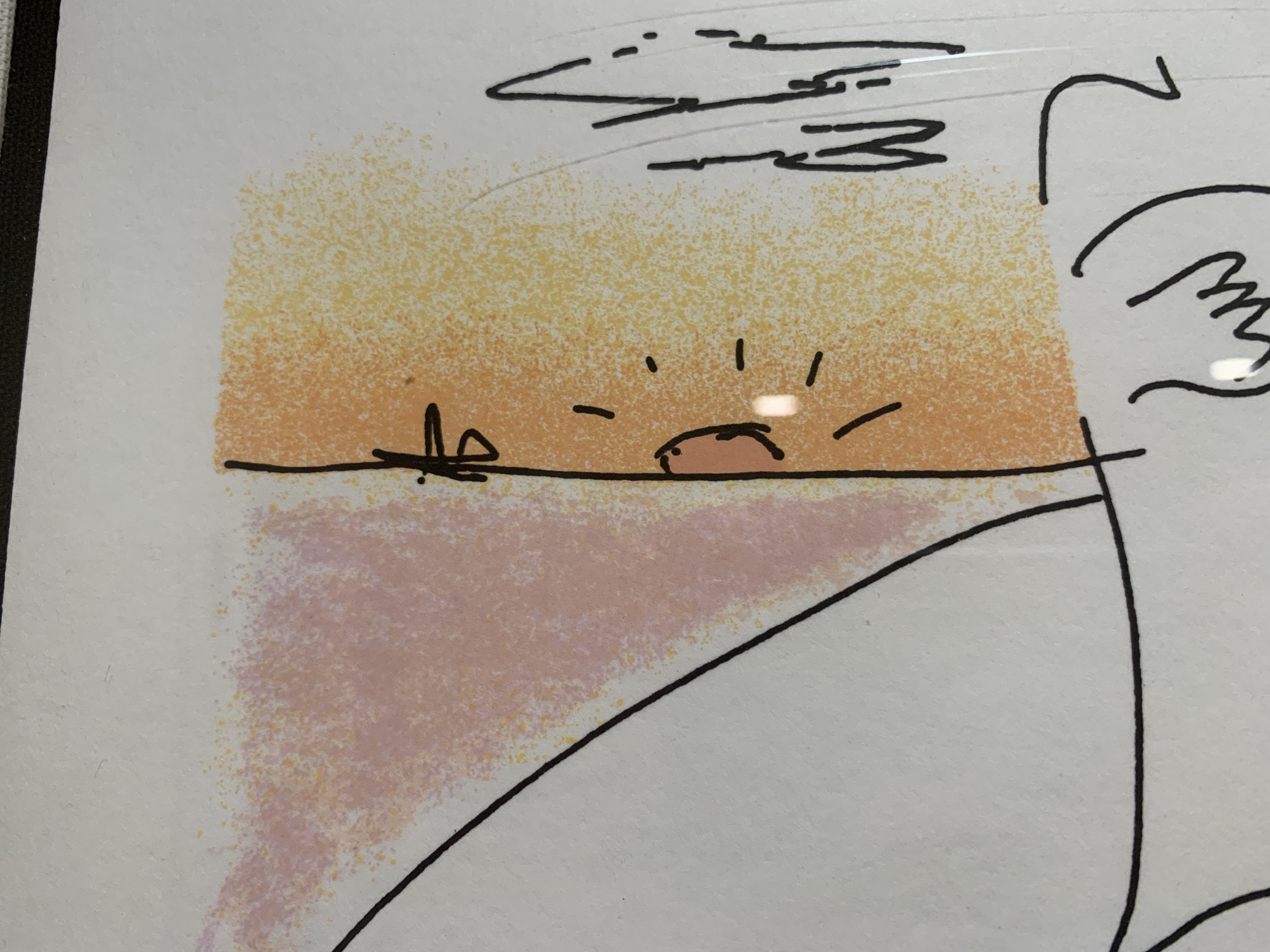
Third, there are often “Color Gradients” for both animals and plants. 

Fourth, there are “Growth Gradients.” Color Gradients, are often a specific example of Growth Gradients. However, there are other types of Growth Gradients. For example, in many plants new growth is at the distal end and is smaller. Old growth is more central or more toward the roots; it is older, and is larger. 

Growth Gradients apply to many plants and animals. They often apply to organizations as well. Imagine a multi-national distributor with field offices in half the countries in the world. If they move into a new country, at first, there will only be a few people; perhaps housed in a small space. Sales will grow hopefully and with the growth, new personnel and space may be added. 

Conversely, Color Gradients can be quite intentionally added by the artist! Here’s a detail from a John Lennon lithograph. Note that “Boundaries” and “Gradients” reinforce each other. The Gradient makes the Boundary Stronger and vice versa.


There are also “Force Gradients” that appear in response to water, wind, gravity, magnetism, etc. One could argue that “Growth Gradients” are due to forces as well. Historically, gradients can arise from evolutionary pressures. These, in turn, are instantiated, in many cases, by chemical gradients of hormones that control growth. However, there are also many non-living cases of gradients.


Finally, there are “Intentional Gradients” that are put in by artists, architects, landscape gardeners, designers, and UX designers. 

Although the examples above are visual, there are also gradients in music. There are gradients in activity. 

Gradients are also present in narrative. Think of the rising passion between two lovers or the increasing tension and suspense in a mystery or horror film scene. 

Photo by Thirdman on Pexels.com

Are there gradients in User Interfaces? One example that springs to mind was in the “Audio Distribution System” and “Olympic Message System.” These were audio messaging systems from IBM that allowed subscribers to the service to leave an audio message to a person or distribution list “on a person’s phone.” (Of course, the message was really on a server and played upon demand.) The UI’s only visual elements were an ordinary touch tone key pad circa 1980 and possibly a small booklet or template with the various command options. Primarily, the user was meant to hear Prompts for actions. 

The gradient part came in the fact that the user could speed up the audio more and more as they became more and more familiar with it. That variable speed applied to prompts and also to messages. A typical user would experience slow messages, then faster messages, then, still faster messages, and so on.

In another IBM project, we built a “Personalized Education System” that would allow IT personnel to build a “Custom Course” for on-line learning that could vary continuously in length and difficulty. However, while each individual user could choose length and difficulty, they typically did not experience a gradient in that regard. By analogy, some insects may prefer to chew on new growth while others may like more mature leaves. An individual insect only experiences one “size & tenderness” yet the plant taken as a whole provides a gradient. Similarly, if you have a barbecue party again, you might offer up a range of options on how done you cook the burgers. In this case, we might say the BBQ service offers gradations though an individual burger is not a gradient. This isn’t strictly true. A well-done burger is fairly consistent throughout but a rare burger may be much more rare in the middle and charred on the edges. So, for that choice, there is a gradient of experience. 

Compared to the natural environment around me, which is positively thick with gradients, I don’t see (or feel) many gradients in any of the UI’s I interact with (games aside). The fisheye lens provides one way of introducing gradient into the UI. It produces, a kind of “Perspective Gradient.” 

https://citeseerx.ist.psu.edu/viewdoc/download?doi=10.1.1.124.1233&rep=rep1&type=pdf

It would be possible to put gradients into many of the visual elements of a UI. Would it make the interface look more like nature? Would it be more beautiful? Would it be distracting? 

——————-

Here’s a poem that illustrates a gradient of love. 

Wonder, wonder, who kept the wonder

Here’s a poem with a gradient of tension and suspense 

Late on the Interstate 

Here’s a story that exhibits gradient. 

As Gold as it Gets

What kind of gradients do you see in this poem?

Somewhere a Bird Cries

Oh, they’re all the same

18 Friday Sep 2026

Posted by petersironwood in creativity, design rationale, leadership, love, nature, politics, psychology

≈ Leave a comment

Tags

books, Democracy, fantasy, fiction, life, politics, short story, truth, USA, writing

“Oh, they’re all the same!” 

I’m sure you’ve heard someone say that. 

I wouldn’t be surprised if you yourself said it. 

“Oh, they’re all the same!” 

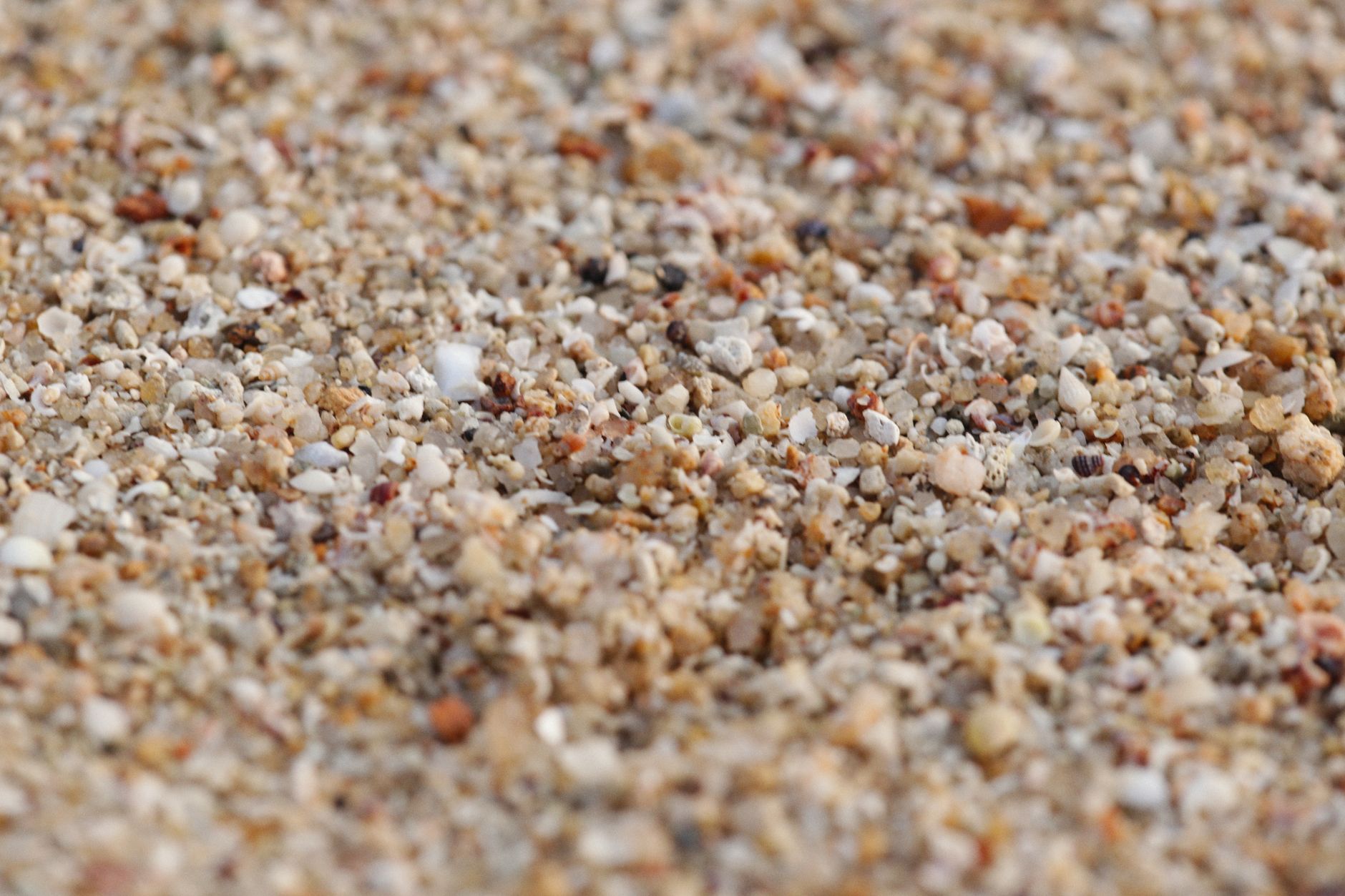
Maybe they are. If you’re talking about grains of sand or cans of beans. But human beings? 

Photo by Alexey Demidov on Pexels.com

We’ll get to humans, but let’s start with the grains of sand and cans of beans. 

Grains of sand are not the same. Not at all other than being found in a beach or sandbox and being smallish in size. Their shape and composition differ. Now, you might think, “OK, but for all practical purposes they are the same.”

Soon after I joined IBM Research, I flew with my boss into an IBM chip fabrication factory in the Northeaster US. We were studying query languages and interviewed some people in quality control who used query languages as a serious part of their job. They recounted a time when the percentage of error free chips fell drastically. For a time, no-one could figure it out. It turned out that the silicon supplier had shifted sands (so to speak) and that had translated into slightly different silicon properties. 

“Oh, they’re all the same!” 

Now, let’s look into beans because it so happens that I made a bean salad tonight that I hadn’t made for a year or two. I pretty much remembered the recipe, but to make sure, I took down the cookbook and propped it open as well. I made the bean salad according to recipe and the bean salad was good. But usually, in the past, it had been great, not just good. The difference was mainly, I decided, in the quality of the beans themselves. Same brand. Always the same brand. So, they’re all the same, right? Possibly.

The following situation is happening all the time. Imagine popcorn hitting its climax. Here’s the history in outline. 

A person or small group works hard and makes a success. They have pride in their product (say, canned beans). But then, they decide that MEGACORP wants to buy their company for a phenomenal amount of money. Yay! Win/Win! Congratulations all around. And, now their wonderful product can continue into the mainstream and more people than ever can taste the pleasure of that high quality can of beans. 

They’re all the same.

Maybe. But maybe the true motive of MEGACORP is to poison a few people. They’re being paid by the Big Bad Beef Business to make people afraid to get their protein from beans and instead make people go for the safer alternative: Meat! Here’s another possibility. They don’t give a can of beans about your cans of beans. They want the guy who knows how to make that great lining so they can use his expertise for their much more lucrative line of Cheese Naughts. But the most likely case is the mundane one. They “cash in” on the brand name you’ve built. They buy the business and then use much cheaper beans and the pass along the savings to the consumer through lower prices and higher wages for their workers. 

Oh, no, no. Never mind. That’s on a different planet. This is planet Earth. That’s the one where MEGACORP keeps every frigging penny of savings for C-Sweet salaries and shareholder confidence. The beans bear the same label in every way. But inside, they are different. Is MEGACORP required to inform their customers that they lowering quality? Of course not. 

“Oh, they’re all the same!” 

But they’re not all the same. Not the grains of sand; not the cans of beans; not the entrepreneurs, not the lab rats I encountered at Oberlin.

My college girlfriend attended Oberlin and I visited many times. One time she asked me to help with a psych experiment. Being a psych major myself, I was eager to oblige. 

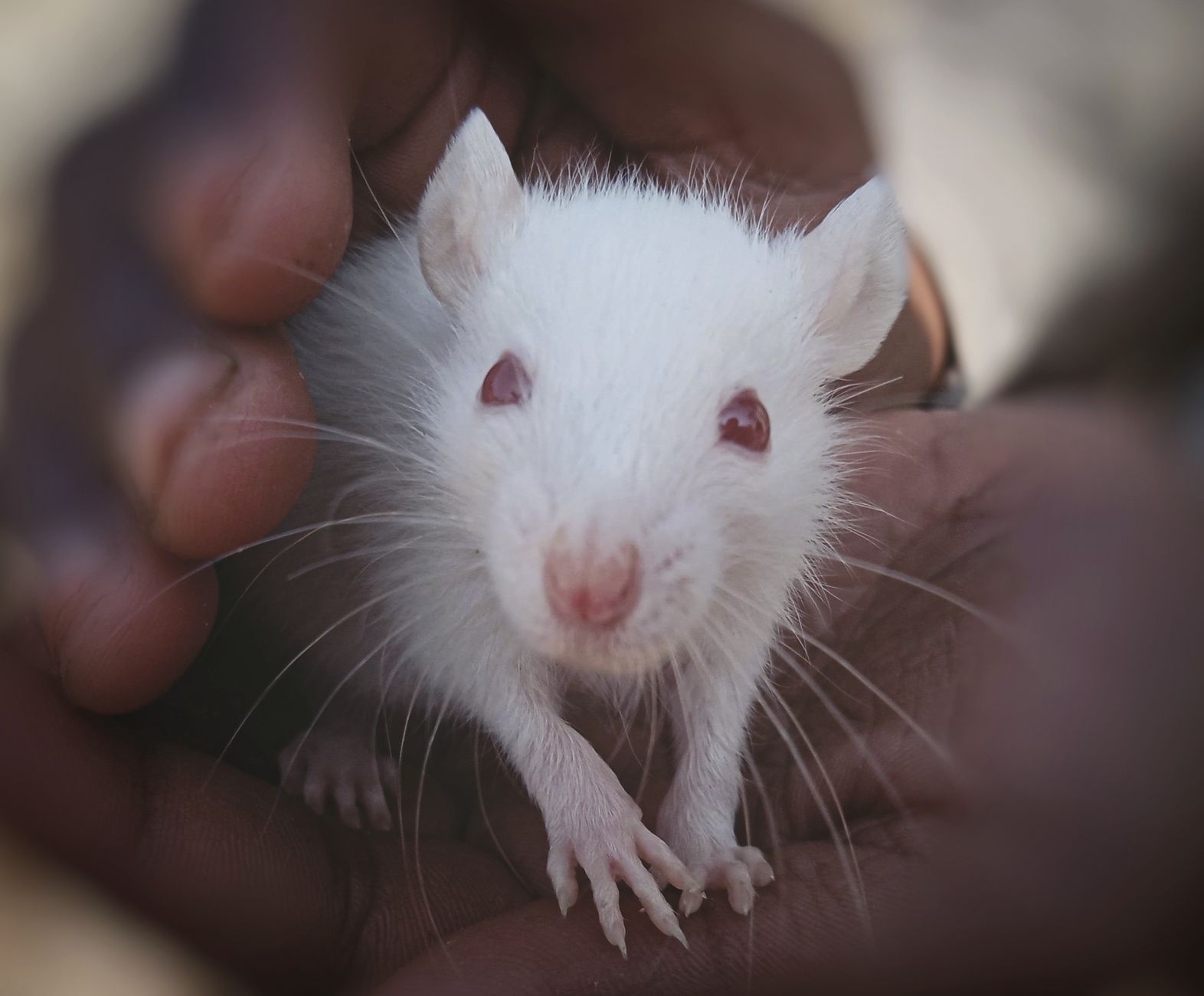
I suppose some people might be freaked out at the idea of grabbing a rat to put it in a maze, but it’s easy to avoid their razor sharp teeth. Oh, and BTW, lab rats don’t look like sewer rats. The lab rats are smaller, cleaner, and far more narrowly educated than sewer rats. 

Photo by Choco Virat on Pexels.com

Photo by Brixiv on Pexels.com

The experiment in question looked at the impact of stress on performance. Typically, stress causes an increase in performance, but only up to a moderate level. Beyond that, more stress generally reduces performance. We controlled stress by holding the rat under the water for a few seconds before having it swim a U-shaped maze. We put it in the maze on the left and then shut the door. Once the rat swam down, turned right and then turned right again it could swim to an air-hole on the other “tine” of the “U”.  

Everything went fine for the first five rats. Not surprising. After all, they’re all the same. They are bred to be the same. For many generations. And, for the most part, the biters and the fighters were probably less likely to be chosen to promulgate the sub-species. Since birth, these mice have been mostly subjected to the same stimuli and the same diet as their lab-mates.

And, then there was Rat P-4547  (I’ve changed the number to protect the rat’s privacy). As I said, these lab rats were easy to pick up. You picked them up by grasping them from above and they just accepted the fact that they been chosen. Who knows? Maybe they had been bred to feel pride in having been chosen for an experiment. 

In any case, Rat P-4547 certainly hadn’t read the manual on appropriate rat behavior. He immediately grasped the cage bars with everyone one of his teeny fingers and toes. Even more remarkably, he screamed. Somehow, he seems to have gotten it into his head that the experiment he was about to engage in was a kind of Putin vivisection game. 

I eventually wrestled Rat P-4547 into the starting gate. There we were supposed to hold him underwater before allowing him to traverse the simple U-shaped maze. A quick glance at the sheet showed that Rat P=4547 was destined to be in the “High Stress” group. Of course he was.

I did it. I held him under the prescribed time and let him go. It was taking too long. At last, we saw him swimming furiously into the end zone, his oasis of oxygen, his Mount Ararat, and then…did he pop his little head up gasping for air? 

He did not. He executed an amazingly coordinated lateral flip turn and swam the wrong way up toward the now closed beginning of the maze. 

I did not want the rat to die, but how could we save him? He swam all the way back to the starting gate —nowhere else to go so we went to open it, discussed whether we should and then heard him make another flip turn before we could open the top. Now, we knew he had to drown. But no! His crazy little head finally ended up where it was supposed to.

I congratulated him on his grit, toweled him off, and settled him back into his cage. Of course, Rat P-4547 is long gone. An asterisk on a undergraduate term paper. Probably have a hard time finding it even with the help of an Artificial Influencer. 

What? You thought the expression was “Artificial Intelligence”? That’s the term they use but that’s not the goal. The goal is to have Artificial Influencers disguised as helpful Artificial Intelligences. 

Returning to the idea that they’re all the same, the truth of the matter is that any two things share some properties and any two things also show some differences. The idea of grouping things together for some purposes does make some sense. When you go to get firewood, for instance, you mostly want to focus on a reasonable size and dry wood. If you went to look for something to carve your attention would focus on the beauty and workability of the wood. If you went to get a cudgel, you’d be looking for a thick, sturdy piece. 

Photo by Peter Fazekas on Pexels.com

Think how absurd it would be for someone who likes to carve chotskies telling you how to pick firewood based on their criteria for choosing carving material. 

———————

How the Nightingale Learned to Sing

Stoned Soup

The Orange Man

The Three Blind Mice

The Dance of Billions

Roar, Ocean, Roar!

Imagine All the People

The Isle of Right

When Greed is the Only Creed

7. Local Symmetries

17 Thursday Sep 2026

Posted by petersironwood in Uncategorized, psychology, creativity, nature, design rationale, user experience, leadership

≈ Leave a comment

Tags

Design, UX, architecture, HCI, usability, art, psychology, photography, books

7. Local Symmetries. 

Complex organizations typically have many levels of organizations. In life, there are cells which often have symmetry. The human body has large-scale bilateral symmetry (two eyes, two ears, two arms, two legs, two sides to the brain, etc.). If we look at our hands, we see a thumb and four fingers. Each finger, and the thumb, each have roughly bilateral symmetry. Symmetries such as these are visible. 

There are also often functional symmetries in living systems as well. We breathe in. We breath out. Our nervous system has excitatory circuits and inhibitory circuits. Most complex organisms reproduce via two sexes. Many animals have cycles of sleep and wakefulness. Often birds, and other animals have migrations tied to the cycle of the seasons. Trees are able to draw water up and move water down. 

Photo by Wendy Wei on Pexels.com

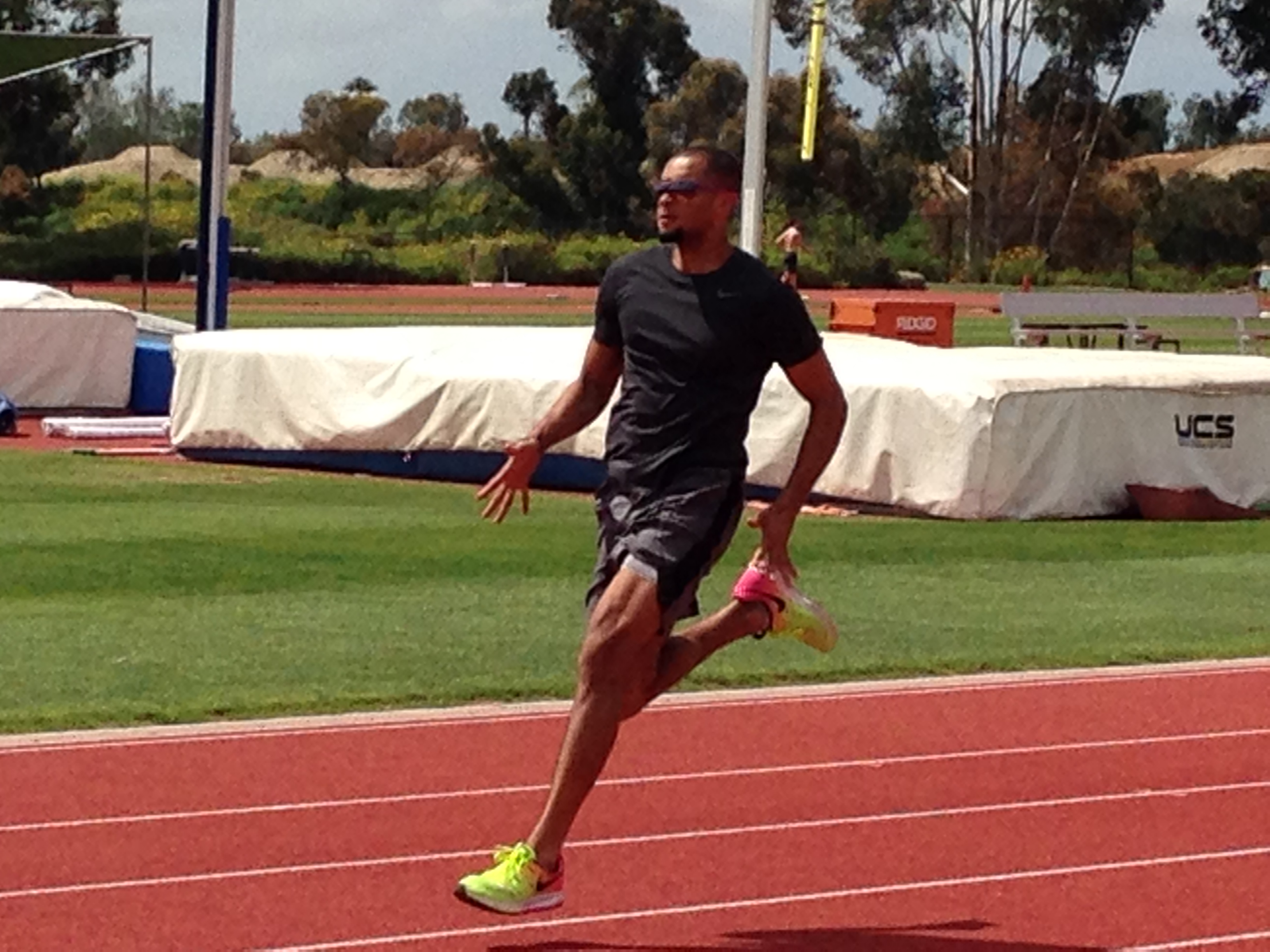
The structural symmetries and the functional symmetries are often connected. When a person runs, for example, they use one leg and then the other. In fact, as your left leg goes forward, typically so does your right arm. As you move your right leg forward, you move you left arm forward. As you breathe in, your rib cage expands on both sides symmetrically. As you breathe out, your rib cage contracts on both sides symmetrically. 

Human organizations often have functional symmetries as well as structural symmetries. For example, most organizations have an “onboarding process” as well as a “termination process.” Our physical artifacts often exhibit local symmetries and these are often related to our physical and behavioral symmetries. A long boat, for instance, allows for multiple rowers to row in unison. The boat and oars are symmetrical and so is the rowing of the boat. 

Photo by Patrick Case on Pexels.com

Human artifacts of many scales may exhibit local symmetries for two reasons. First, since most natural living things exhibit local symmetries, copying that may strike us a more beautiful. In addition, if one learns the skills necessary to make the left half of a canoe, one already knows a lot about how to make the right half, provided the canoe has bilateral symmetry. The same is true of an oar, a cane, a bowl, etc. It also makes it easier for the user of the artifact. 

As a user of an artifact such a chair, for example, you come to expect that the right arm rest and the left arm rest will be at the same height and be equally hard. If the arm rests are at different heights, you will, I believe, be more likely to bang your elbow when shifting position or reaching for something. 

One could, no doubt, adapt fairly quickly to a chair which had two different kinds of arm rests, but imagine a keyboard for your computer in which every key was a different size and shape. Or, imagine a piano keyboard in which all the keys were at different spacings, and sizes. 

Local symmetries also offer another advantage. Systems with local symmetries are easier to repair or maintain. Imagine how much more expensive it would be to maintain a piano, for example, if a repair shop had to keep 88 different sizes of keys! In a similar fashion, imagine a programmer decided it would be fun to program every pull-down menu with completely different algorithms. When the next release of the application required changes or additions, it would make understanding and modifying the code much more difficult. 

Why does local symmetry, as opposed to merely, symmetry, make sense? Let’s go back to the chair example. It might make sense for a family to have three chairs for three different sized people; e.g., a papa bear chair, a mama bear chair, and a baby bear chair. Or, think of tee-shirts that come in Small, Medium, Large, and Extra Large. It makes no sense to make every tee-shirt the same size. People differ a lot in their size. But for mass manufacturing, it does make sense that the left and right sleeves match for any particular size. Similarly, it doesn’t matter that the arms on papa bear’s chair are of a different size than the arms on baby bear’s chair. It doesn’t matter if the teeth on my comb are different from the teeth on your comb. It doesn’t matter if the tires on my Saab match the tires on your Range Rover. And, generally, this is true for most artifacts, organizational structures, architectural features, and anatomical features. Local symmetry almost always has four advantages: 1) it adds to beauty. 2) it’s easier to create 3) it’s easier for the user and 4) it’s easier to maintain or repair. 

Design always carries messages. Design which solves our problem or beautifies our world or resonates and echoes the properties of natural beauty carries the messages: “I care. I am a bit like you. I am making this for you and others like us. It shows the beauty that I see is a lot like the beauty (and usefulness) that you see. You are not alone. We are in this together. You and I both belong to “Team Humanity.” 

What could be more important? 

On the other hand, (notice the oblique reference to symmetry) when I look at most of the screens of most of the interfaces I deal with on a daily basis, there is generally a decided lack of local symmetry. Would they look more natural and more beautiful if there were more local symmetry. I think so. What’s less clear is whether they would be more usable. Much of the screen is taken up with words and icons. In drop-down, pop-up, and flyover menus, there are lists which mainly consist of words. Words, by virtue of the nature of written language are of different lengths.

On the other hand, programming languages and functionalities often do exhibit local symmetry. This probably makes learning and using such languages more tractable.

———————————————-

Design – Interpretation Model of Communication

Design Interpretation Analysis of Natural English

Some recommended books:

The Winning Weekend Warrior focuses on the mental game for all sports using examples from tennis, golf, baseball, and other sports. It covers self-talk, imagery, mental practice, strategy, tactics, & sportsmanship. http://tinyurl.com/ng2heq3

Turing’s Nightmares explores the implications and ethics of Artificial Intelligence through fictional short stories. http://tinyurl.com/hz6dg2d

Fit in Bits shows many ways to put more fun, variety, & exercise into daily chores and habits to help with strength, flexibility, fitness, and balance. http://tinyurl.com/h6c7fce

Tales from an American Childhood recounts early experiences mainly in the American Midwest in the 1950’s and relates them to contemporary issues and events. https://tinyurl.com/y9ajvz9j

Dream Planet. Where do you run when the whole world is crumbling under the weight of human folly? When the lethal Conformers invade 22nd century Pittsburgh, escape becomes the top priority for lovebird scavengers Alex and Eva.

https://www.barnesandnoble.com/w/dream-planet-david-thomas/1148566558


The Walkabout Diaries:

The Walkabout Diaries:

The Walkabout Diaries:

Travels with Sadie

Travels with Sadie

Travels with Sadie

5. Positive Space

15 Tuesday Sep 2026

Posted by petersironwood in creativity, design rationale, love, nature, psychology, Uncategorized, user experience

≈ Leave a comment

Tags

aesthetics, art, beauty, books, Christopher Alexander., Design, freedom, greed, growth, HCI, life, nature, pattern language, Patterns, politics, psychology, responsibility, usability, user_experience, UX

5. Positive Space

(This is the fifth in a series of 15 blogs that explore Christopher Alexander’s “Fifteen Properties” of good design, natural beauty, living spaces, etc.). 

Life is a dance on the edge between chaos, on the one hand, and sameness & repetition on the other hand. Repetition without variation or change is not life. On the other hand, endless random variation without any pattern or principle is also not life. Planet Earth is sometimes said to be a “Goldilocks Planet” — not too hot and not too cold — to support life. Most of the life forms on planet earth themselves exhibit a “positive shape” — a shape that wants to expand and fill out — and yet, there are limits because of circulation, gravity, communication etc. so that growth is typically not unrestricted. The tension between trying to grow and having to stick close enough to form creates positive space. 

Life may not always be “a bowl of cherries” but nonetheless, a bowl of cherries does illustrate the property of “positive space.” The bowl connotes living things trying to expand right up to the boundaries possible. A bowl that is filled with cherries and even slightly over-filled but without inducing a fear of spillage, to me, connotes life being vigorous and healthy. To me, a single cherry sitting all alone in a large bowl seems to exhibit positive space much less — at least at the scale of the bowl. 

When I look at an individual cherry, I also see positive space. The cherry is not a perfect sphere, featureless and smooth. If it were, to me, it would be a much less positive space. The fact that there is a stem and a noticeable indentation where the stem goes provides a kind of center. So too does the slight asymmetry of the cherry. It appears as though it might have developed as two halves that tried to circle a space at the same time from two different directions – clockwise and counterclockwise. They met and merged to form the almost spherical cherry. 

The lobes of this red pepper show positive shape.

The cherry is not the only natural food that has this kind of positive space. Think of corn on the cob. Each kernel seems to have tried to grow as large as it can. It pushes up against and into other kernels. Each kernel seems therefore to be “bursting with life.” 

Consider a cucumber. It’s roughly cylindrical. But “roughly” is important here. To me, it would seem much less an example of “Positive Space” if it were literally a cylinder. It tapers at the ends and it bulges at the middle. That seems more “positive.” 

To a person who doesn’t understand that life is primarily a cooperative endeavor among all the parts of the vast tree of life, but instead sees the world only as a zero-sum game, it must seem as though the positive living space of a cucumber makes the space around the cucumber less positive and less living. But this is not true! The space around the cucumber’s slightly rotund shape is much more positive and living than the space around a perfect cylinder. 

Think of a tree trunk compared with a telephone pole. They are both made of wood and they are both approximately cylindrical. But a tree trunk feels much more alive to us than a telephone pole. I don’t think this is simply because we “know” a tree is alive. It looks more alive and if you allow yourself to “tune in” to it, it feels more alive. And, importantly, not only does the space that the tree inhabits seem more living. So too does the space around it! A long line of telephone poles may exhibit “Levels of Scale” and “Alternating Repetition” and such a picture may make us feel some life to it. 

Photo by Lerkrat Tangsri on Pexels.com

But a single telephone pole does nothing to stir life in me. In that sense, it’s nothing like a tree. It’s flat and it kills the space on either side as well. The columns in the Parthenon are roughly cylindrical and obviously not literally alive. But they, unlike a telephone pole, have positive space and create positive space around them. Life is not fundamentally a zero-sum game. The bee does not “steal” the flowers pollen and thus damage the flower. The bee helps the flower. The flower helps the bee. Positive space in an object does not steal from or detract from the space around the object. It enhances it! 

Similarly, the “competition” for space among the kernels of corn on a cob of corn shows that competition can be a beautiful thing. I like to see the kernels pushing against each other. All of them seem living and positive. Imagine instead a cob of corn in which one kernel had grown like a giant spider of orange cancer and took up 98% of the cob. Aside from this one ultra-greedy cell, there were only a few widely spaced and shriveled up kernels. Would you pick that from the pile of corn? Would you want to slather it with butter and bite into it? I sure wouldn’t! And to me, that is exactly what cruelty, unfairness, and greed look like. It might seem positive — after all, the dictator is trying to “grow.” That is true but he’s rigged the game. Competition is no longer beautiful when the game is rigged. Competition is no longer beautiful when your tennis opponent slices off your leg before the match starts or pays off the chair umpire to call everything you hit out. 

I don’t think there’s anything particularly special about cucumbers or cherries or corn. I just happened to have been washing vegetables before writing this. These radishes also exhibit positive space. And, although their shape is not the same as a cherry or a cucumber, the radishes also enhance the space around them. And, so does the avocado. An avocado that is just past ideal ripeness begins to flatten irregularly and the “pebbles” of the skin also flatten making a less positive space. The pebbles of a perfectly ripe avocado are themselves tiny positive spaces that add to the overall impression of vigor. 

Flowers provide numerous examples of positive space. And, so far as I can tell, the positive space of flowers invariably also enhances the positivity of the space around them. 

Animals also generally exhibit positive space. Their shapes, after all, come about through a struggle among different tradeoffs that have been “learned” by each species over four and a half billion years. But whether you look at the leg of a turtle, the leg of a turkey, or the leg of a polar bear, you will see positive space. The shapes are quite different because their histories are quite different. But in every case, the shape is determined by the history and each of those histories is the same length — 4.5 billion years. The fact that each of these shapes comes about through the dance of trying to survive and thrive in all their various habitats makes every one of them beautiful in its own right — even those whom most of us don’t particularly like to interact with such as rattlesnakes or lions. Even if we don’t wish to come face to face with a lion or grizzly bear, we do recognize their beauty. And, I would claim that as those animals walk through any landscape, they will not only exhibit their own positive shape; they will also enhance the positivity of the shape around where they are walking. Think how many times photographers and painters have put an animal in the foreground of a landscape. Of course, doing so makes the scene immediately more living, more interesting, and more beautiful. 

Photo by Anastasia Shuraeva on Pexels.com

What does this have to do with the user’s experience on a computing device? I would have to say that most interfaces on most devices do not do much to bring the interface “alive” including having positive space. The tool bar icons on this version of my Mac are very slightly “bulging” like a living cell (or kernel of corn). Even more subtly, the windows have slightly rounded corners. 

It’s an entirely different story with many games though. It seems to me that some of the game artists are among the best artists in the world. They have created many very beautiful games. Could they be more beautiful still if game designers consciously thought about using Christopher Alexander’s “Properties” in general, and “Positive Space” in particular? I think so, but for many games, such as Horizon Zero Dawn, many of the elements are copied so closely from nature that aspects such as “Positive Space” are mostly already taken care of by evolutionary bias toward the beautiful. (Yes, I do think there is such a bias, but it will have to be the subject of a different post.)

What about other applications and systems? Do you think you’ve seen good examples of “Positive Space” in such systems? How could you see incorporating “Positive Space” in UX? 

At a more societal level, it seems to me that freedom is closely related to “positive space.” Each individual should be free to expand, grow, experiment, so long as it doesn’t impinge much on those around them. Imposing overly strict boundaries makes life less interesting and less lively. Growth without any sense of balance or notion of how a particular piece of life relates to the whole is called cancer. A society which allows or even encourages theft, rape, fraud and other felonies under the banner of “freedom” is doomed to ultimate failure with lots of pain along the way.

————————————

Winning by Cheating is Losing

Life Will Find a Way

Math Class: Who are you?

Life is a dance

Myths of the Veritas: The Forgotten Field

Cancer Always Loses in the End

When GREED is the only creed

The After Times

After All

Somewhere a Bird Cries

The Dance of Billions

Some recommended books —

The Winning Weekend Warrior focuses on the mental game for all sports using examples from tennis, golf, baseball, and other sports. It covers self-talk, imagery, mental practice, strategy, tactics, & sportsmanship. http://tinyurl.com/ng2heq3

Turing’s Nightmares explores the implications and ethics of Artificial Intelligence through fictional short stories. http://tinyurl.com/hz6dg2d

Fit in Bits shows many ways to put more fun, variety, & exercise into daily chores and habits to help with strength, flexibility, fitness, and balance. http://tinyurl.com/h6c7fce

Tales from an American Childhood recounts early experiences mainly in the American Midwest in the 1950’s and relates them to contemporary issues and events. https://tinyurl.com/y9ajvz9j

Dream Planet. Where do you run when the whole world is crumbling under the weight of human folly? When the lethal Conformers invade 22nd century Pittsburgh, escape becomes the top priority for lovebird scavengers Alex and Eva.

https://www.barnesandnoble.com/w/dream-planet-david-thomas/1148566558

Fifteen Properties of Natural Beauty & UX/HCI

09 Wednesday Sep 2026

Posted by petersironwood in creativity, design rationale, HCI, nature, psychology, Uncategorized, user experience

≈ 1 Comment

Tags

architecture, art, books, Design, gratitude, HCI, human factors, mindfulness, photography, Travel, UX

Photo by Dominika Greguu0161ovu00e1 on Pexels.com

This is an introduction to a series of blog posts on the “Nature of Beauty.” 

Christopher Alexander was an architect and city planner. In his MIT dissertation, Alexander took a very mathematical approach to design. In our studies at IBM Research on the “Psychology of Design” I first ran across that work (Notes on the Synthesis of Form). Later in his career, however, he took a quite different approach to design. With an international team, he visited many different parts of the world to see what “worked” in terms of architecture and city planning. The results were documented in the form of a “Pattern Language.” In this sense, a “Pattern” is the named solution to a recurring problem. A “Pattern Language” is a connected lattice of Patterns that together, “cover” a field. 

Others (including me) have emulated his approach for other fields such as pedagogy, organizational change, object-oriented programming, software development processes, and human-computer interaction. A few years ago, I suggested such Patterns for collaboration and teamwork. Here’s a link to the introduction of that effort. Here’s a link to the index of those Patterns. 

Still later in life, Christopher Alexander embarked on a project called The Nature of Order. This work is documented in a series of four books. In the first book, he proposes fifteen properties of good form in nature — and in beautiful artifacts. Explication and example will be needed to appreciate what these properties mean. In this post, I list the fifteen and will attempt to explain the first one with respect to UX and Human Computer Interaction.

OLYMPUS DIGITAL CAMERA

First, you might be wondering what relevance these fifteen properties of nature might have to interface design. After all, can’t the designer just test out their ideas empirically until a UX design is shown to be usable, learnable, and perhaps enjoyable as well? Well, sure. Ideally, every possibility could be explored and tested empirically. 

But how many possibilities are there? Without any guiding principles, there are not only more possibilities than can be tested by you. There are more possibilities than there are atoms in the universe. Imagine a very simple interface on a small mobile device. Let’s say there are only ten screens in your whole application. The iPhone 12, for instance, has nearly 3 million pixels. 24-bit color allows over 16 million colors per pixel. If you literally tested out every possible arrangement, this would mean 16 million to the 3 millionth power for each of the ten screens!! The number of atoms in the universe is estimated to be between 10**78 and 10**82. Obviously, this is far less than 16,000,000**3,000,000 !! 

Of course, I’m not suggesting that anyone would attempt a pixel by pixel test of an interface, but the general point remains: you need some way to limit testing to reasonable alternatives. The notion of using these fifteen properties is not that they dictate a particular design nor that you don’t need to do any empirical testing. Rather, the fifteen properties could be used to help guide design. The properties could be thought of as reducing the search space. 

Here are the fifteen properties: 

  1. Levels of Scale
  2. Strong Centers
  3. Boundaries
  4. Alternating Repetition
  5. Positive Space
  6. Good Shape
  7. Local Symmetries
  8. Deep Interlock and Ambiguity
  9. Contrast
  10. Gradients
  11. Roughness
  12. Echoes
  13. The Void
  14. Simplicity and Inner Calm
  15. Not-separateness

Perhaps the names themselves might resonate with your own sense of aesthetics for design and composition, but let’s review them one by one. 

The first is “Levels of Scale.” 

Photo by Roney John on Pexels.com

When it comes to natural beauty, a few moments reflection may provide you with many examples. Christopher Alexander claims this property is also present in traditional art and architecture across many cultures. As you see something such as, e.g., the Taj Mahal or the Parthenon in the distance, you see a beautiful shape. As you approach it, you will see more and more levels of scale. By contrast, many modern buildings are largely featureless between the overall shape and the texture of the building material. 

If your design has multiple levels of scale, it will be easier for your user to orient themselves; to know “where they are” in the application and therefore easier to take appropriate action. Not only are you making their “task” more doable, you are providing a kind of entertainment. If it works well, they will be thinking of the building and perhaps its significance the entire time they approach the building. By contrast, if I approach a modern no-scales building, I bore quickly and, like most people, there are a whole host of things waiting to be thought about. So, I’ll mainly be thinking of one or my problems and largely ignoring your building and what it stands for. Reflect on your own experiences and see whether you agree. Lincoln Memorial, Winchester Cathedral, Temple in Kyoto: they are completely different from each other and yet in this way, they are all the same: they keep your attention focused on the moment. In other words, they help you be fully alive and awake. In the best circumstance, they also elicit some awe and gratitude not only for the geniuses who designed but also for the many laborers who found and mined the materials, constructed something from it, and even those whose taxes paid those workers.

Levels of Scale is something to keep in mind with respect to your design — whether hardware, software, documentation, story, or a building. 

How could you use or see “Levels of Scale” as a desirable property of what you are doing right now? 

———————————-

Some references to Pattern Languages in HCI. 

Pan, Y., Roedl, D., Blevis, E. and Thomas, J. (2012), Re-conceptualizing Fashion in Sustainable HCI. Designing Interactive Systems conference.  New Castle, UK, June 2012.

Thomas, J. C. (2012).   Patterns for emergent global intelligence.   In Creativity and Rationale: Enhancing Human Experience By Design J. Carroll (Ed.), New York: Springer.

Thomas, J. (2012). Edging Toward Sustainability. CHI Workshop Position Paper for Simple Sustainable Living. CHI 2012, Austin, Texas.

Thomas, J. (2012), Enhancing Collective Intelligence by Enhancing Social Roles and Diversity. CSCW Workshop Position Paper for Collective Intelligence and Community Discourse and Action. CSCW 2012, Bellvue, WA.

Thomas, J. (2011), Toward a pattern language for socializing technology for seniors. Workshop position paper accepted for CSCW 2011 workshop: Socializing technology among seniors in China, Hangzhou, China, March 19-23.

Thomas, J. (2011). Toward a Socio-Technical Pattern Language for Social Systems in China and the World. Workshop position paper accepted for CSCW 2011 workshop: Designing social and collaborative systems for China. Hangzhou, China, March 19-23.

Thomas, J. (2011). Toward a Socio-Technical Pattern Language for Social Media and International Development. Workshop position paper accepted for CSCW 2011 workshop: Social media for development, Hangzhou, China, March 19-23.

Bonanni, L., Busse, D. Thomas, J., Bevis, E., Turpeinen, M. & Jardin, N. (2011). Visible, actionalble, sustainable: Sustainable interactin design in professional domains.  Workshop accepted for CHI 2011. Vancouver, B.C., May 7-12.

Thomas, J. (2011). Focus on Ego as Universe and Everyday Sustainability. Workshop position paper accepted for CHI 2011 workshop: Everyday practice and sustainable HCI: Understanding and learning from cultures of (un)sustainability.  Vancouver, B.C., May 7-12.

https://www.researchgate.net/publication/2242380_A_Pattern_Approach_to_Interaction_Design

Click to access dearden-patterns-hci09.pdf

https://www.mit.edu/~jtidwell/common_ground.html

Thomas, J. C. (2018), Building common ground in a wildly webbed world: a pattern language approach. Journal of Information, Communication and Ethics in Society, 16 (3), 338-350.

——————————-

Some recommended books:

The Winning Weekend Warrior focuses on the mental game for all sports using examples from tennis, golf, baseball, and other sports. It covers self-talk, imagery, mental practice, strategy, tactics, & sportsmanship. http://tinyurl.com/ng2heq3

Turing’s Nightmares explores the implications and ethics of Artificial Intelligence through fictional short stories. http://tinyurl.com/hz6dg2d

Fit in Bits shows many ways to put more fun, variety, & exercise into daily chores and habits to help with strength, flexibility, fitness, and balance. http://tinyurl.com/h6c7fce

Tales from an American Childhood recounts early experiences mainly in the American Midwest in the 1950’s and relates them to contemporary issues and events. https://tinyurl.com/y9ajvz9j

Dream Planet. Where do you run when the whole world is crumbling under the weight of human folly? When the lethal Conformers invade 22nd century Pittsburgh, escape becomes the top priority for lovebird scavengers Alex and Eva.

https://www.barnesandnoble.com/w/dream-planet-david-thomas/1148566558
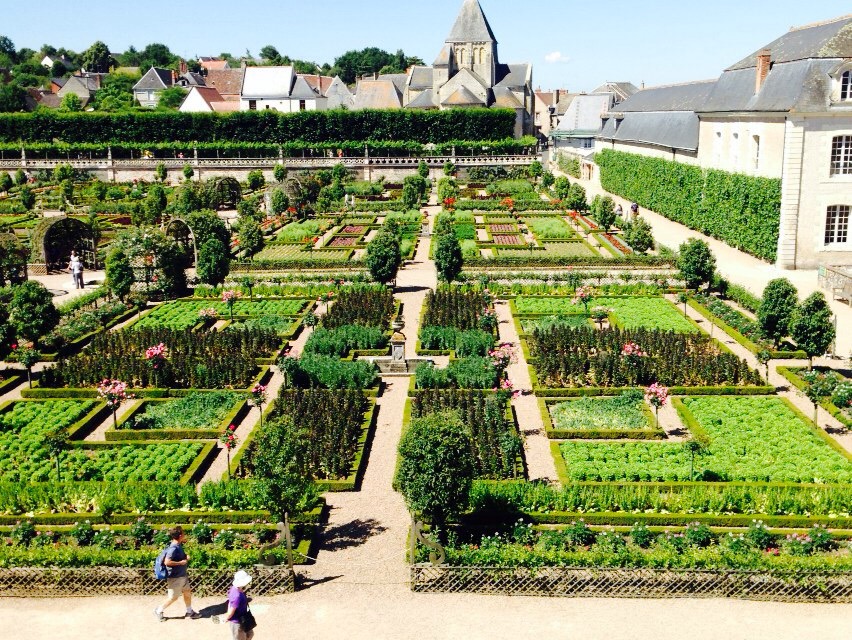
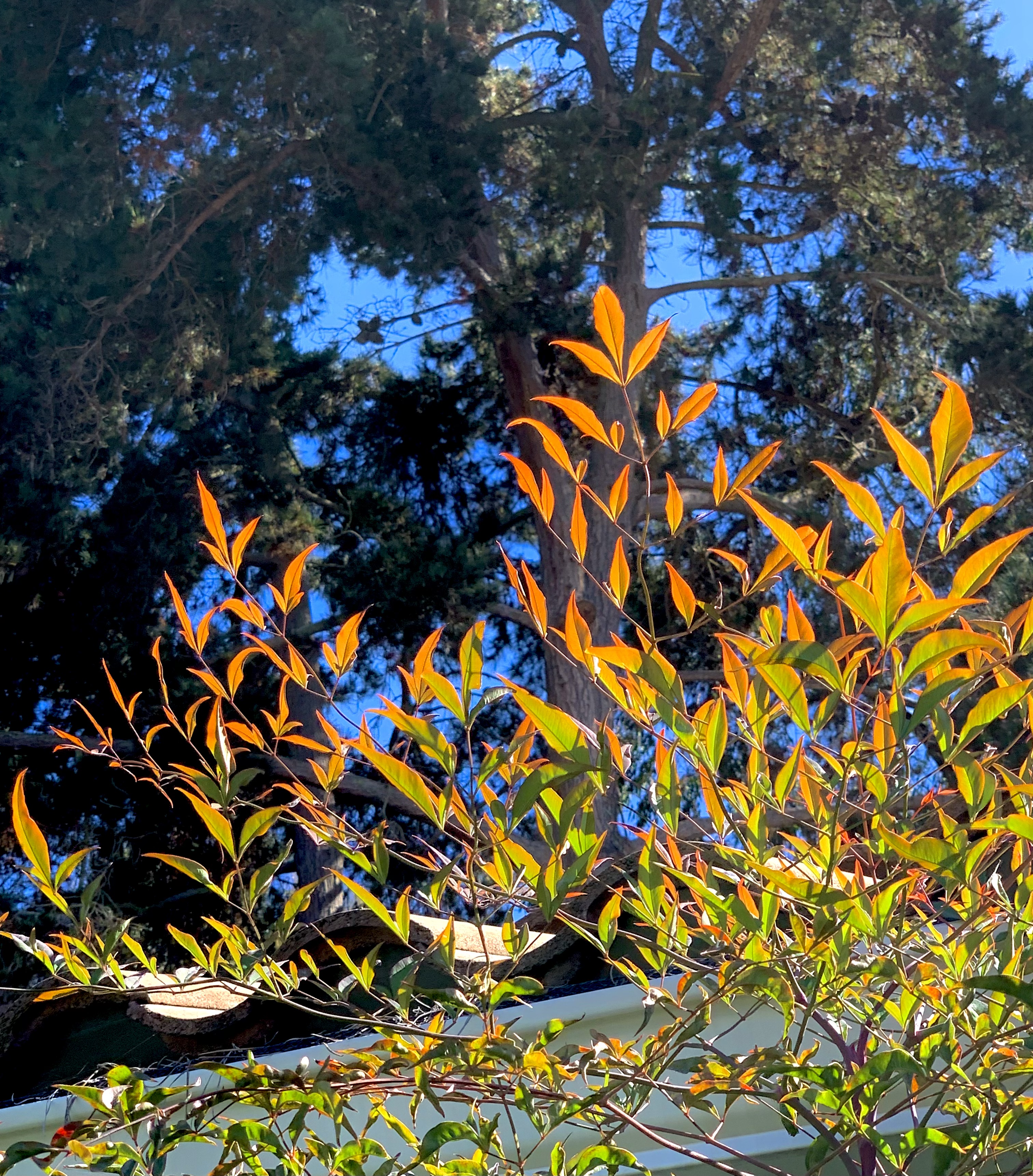
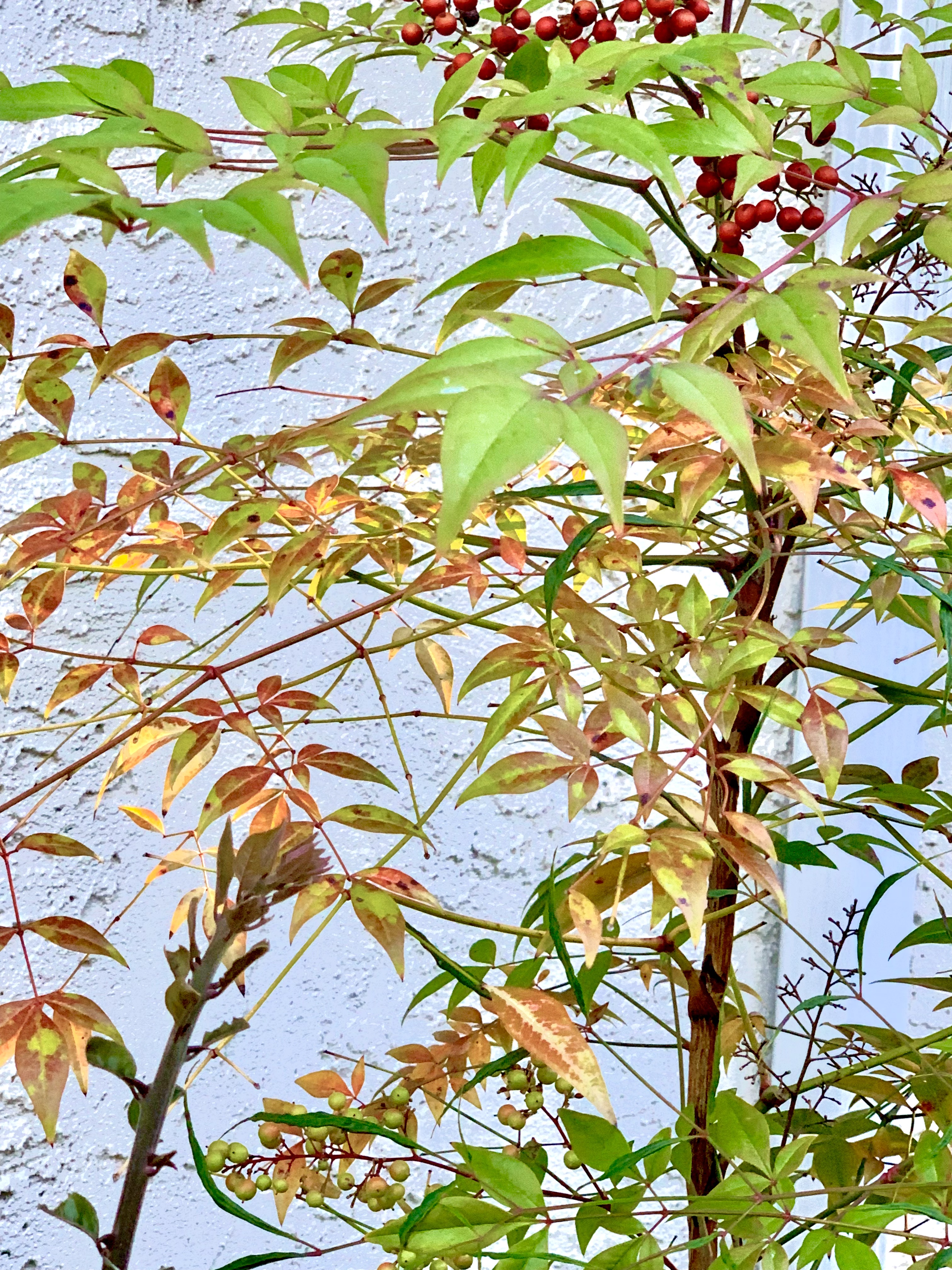
The Walkabout Diaries are photo-essays inspired by walks in nearby neighborhoods, gardens, and parks.

The Walkabout Diaries

My Brief Case Runneth Over

03 Thursday Sep 2026

Posted by petersironwood in The Singularity

≈ Leave a comment

Tags

adaptive-systems, AI, Artificial Intelligence, artificial-intellligence, books, chatgpt, cognitive computing, ethics, fiction, law, lawyers, legality, life, music, politics, technology, the singularity, USA, writing

left-right patterns 2

Turing’s Nightmares: Nineteen — My Brief Case Runneth Over

“Nice office, counselor.” Marvin spread his arm to indicate the panorama of Manhattan and Ellis Island. Yet, his attempt to sound casual failed utterly. He realized all too well the depth of trouble he was in and the creakiness in his voice so signaled.

J.B. smiled. “No need to be nervous. After all, we’re here to help. Just answer honestly. Everything you say will typically be covered under attorney client privilege.”

“Okay. Thanks. Typically?”

J.B. sighed. “There is a rare exception in the Patriot Act. Unless you’re some kind of terrorist, I wouldn’t worry about it. The government is apparently accusing you of importing illegal chips is all. I think we can argue that you are new to the business and did not realize all the required legalities. Pay the taxes now and some penalties. You should be able to avoid jail time. But we are getting way ahead of ourselves. Just tell me how and why and when you got into this business in the first place.”

Marvin chuckled slightly and then sighed “That’s a rather long story.” Marvin glanced at the expensive abstract paintings and noted the rich smell of the solid mahogany furniture. The room also had that crazy idea of luxury — making it freezing cold inside just because it was horribly hot and humid that day, even for New York City August. “At your rates…What do you really need to know?”

“Why did you get involved in making chips without the required back door?”

“These chips are not that powerful. At least not in the traditional sense of the word. And, the government’s requirement is frankly kind of silly. The extra logic makes programming more difficult. It increases the chances of errors. The chips are more expensive and require more power. Leaving aside all the valid privacy concerns, there are plenty of applications that can use a more efficient cheaper chip design. No need to report all the little finger twitches of every twelve year old who’s playing Grand Theft Spaceship. What’s the point?”

“Marvin. I’ve been a friend of your family for a long time. When…well…if we go to court and if you testify, please steer clear of politics. The law is the law. You don’t get to decide which applications are immune from the law. No, what we…our script here is that you made some honest mistakes. You made technical mistakes and what are essentially accounting errors.”

Marvin flushed. “What technical mistakes? What are you talking about? My design is an improvement.”

J.B. got up and paced. “Marvin, Marvin, you are a smart boy. We are not going to fight the government on this. Our script as I said is that you made some honest mistakes. If you want to —- the court is not the place to try to change the law. If you want to do that, get involved in politics. But not until after this is resolved. If you get on the stand and start railing about privacy and the dangers of the Sing and…”

“Ha. The Sing indeed. This data collection rampage has nothing to do with trying to increase the intelligence of computer systems. It is just mindless greed.”

“Marvin, the back door requirement is about preventing terrorism; it has nothing to do with greed.”

“Are you serious, J.B.? Terrorism is just the cover story the government uses. They want to collect all this data to keep their sponsors happy.”

“What? What sponsors? What are you talking about? The government doesn’t have sponsors.”

“Of course they do. Ever since ‘Citizens United’ — nice title by the way — billionaires can buy all the media they want. They wash the airwaves and the print media and saturate the social media space and make people believe anything they want. The point of the back door is just to make sure the sponsors keep tabs on everybody’s buying habits —- and to make sure no-one gets too far out of line. How can you not know this?”

“I don’t want to think that way. But at the end of the day, it doesn’t matter what I think. It’s the law. All digital processing chips with more than a peta-flop and …”

“Hold it! Did you say ‘digital’?”

“Huh? Yeah, of course. Isn’t that what we’re talking about? You designed digital processing chips that have no back door and now…”

“No. Maybe not, J.B. My chips are not, strictly speaking, digital.”

“What are you talking about, Marvin? Why? How not digital?”

“In my design process, I strove for something different and more robust. See, here’s the thing. Natural life processes are all…they all have some level of flexibility. They are robust. They are adaptive, I suppose, because every life form that was not flexible or robust died off over the four billion years that life evolved. Something new would come along and every life form that was rigid died. Even physical machines that people make have some flexibility. Metal bends. Wood bends. These materials also compress. They stretch. Not much, but a little. Digital devices do not stand for bending, folding or mutilating. Of course, when people build systems that include IT devices, they try to make the systems flexible. They add error checking; they put humans in the loop; there are all sorts of work-around, but the underlying tech is brittle. It is only flexible in precisely the ways that the designers anticipated it needed to be flexible. I made something that is fundamentally flexible. It is fashioned after life itself. Social systems are flexible. Eco-systems are flexible. Individual animals are flexible. Cell membranes are flexible. Bones are flexible. And so on. This flexibility is fundamental to life and evolution.”

“Okay, Marvin, but life is not infinitely flexible. You cannot just decide to breathe underwater.”

“Of course not! I never said it was infinitely flexible! For fundamental change, you need evolution and lots of time. If the climate changes too quickly, Permian life species largely go extinct. Dinosaurs die when a comet hits. But small adaptations just happen automatically and at every level. It isn’t necessary to have a pre-existing ‘program’ or ‘case’ to handle every contingency that is even slightly outside of what is anticipated.”

“Okay, fine. Granted, but what does this have to do with — did I mention that I charge $500 an hour, by the way?”

“Yes, J.B., you did. And it was in the contract you had me sign. But the point is that my chips are not, strictly speaking, digital at all. They are not strictly EITHER/OR. They are not binary. Although, in many cases, they can behave as binary.”

“So, you want me to claim that these chips are not covered under the back-door provision because they are not really digital devices? I don’t know. That seems pretty shaky to me. Can’t these chips of your be used for the same things as ordinary digital chips? Speech reco. Machine vision. Game control. Big data analytics.”

“Here’s the thing, J.B. Yes, they can, but they can change and evolve and reprogram themselves over time. And, now it occurs to me, that they could not have a real back door. They wouldn’t really function if they did.”

“What? Why?”

“Are you familiar with programmed death in cells? I can see from your blank stare, you aren’t. Anyway, if a cell is damaged within the body, it can wreak all sorts of havoc so the cells are essentially programmed to self-destruct. If that fails, the other healthy cells will tend to wipe out the damaged ones. So, if there were a functioning back door sharing data out of these chips, the chips would shut themselves down. If that failed, other chips in the matrix would isolate them and shut off communication. So, by their very nature, these particular non-digital chips cannot have a functioning back door.”

“That all sounds very clever, Marvin, but now we are talking about a very lengthy and expensive trial with expert witnesses on both sides. If, that is, you are lucky enough to even have an open trial.”

“Lucky enough? What are you talking about, J.B.? I thought you said we wanted to avoid a trial.”

“Yeah. With my strategy where we convince the NSA that this was just technical and business incompetence on your part. But in your scenario, where you want to prove you are all brilliant and everything, then, we will be lucky if —- you will be lucky to —- Look Marvin, I just cannot advise you to take this line of argument. If you really want to go that route, you will have to find a different lawyer.”

“Okay. Fine. I’ll use Solomon.”

“Solomon? Who is ‘Solomon’? Never heard of him. I mean, obviously, I know Solomon from the Bible but what firm are you talking about?”

“No firm, J.B. Solomon is one of the apps we built with my chipset.”

“An AI lawyer? Are you serious?”

“Oh, quite serious. He’s already informed me that he thinks he can win this case.”

“What? That’s preposterous. You told me you just designed the chips a year ago. What kind of experience could this Solomon have?”

“J.B., he’s been reading applicable statutes and case law for the last two months. Which means, he literally knows it all, when it comes to case law and the rulings beneath. Beyond that, Solomon has argued both sides of thousands of hypothetical cases.”

“What?! Ridiculous! But even so, he — or it —cannot possibly know how to anticipate or react to what happens in court!”

“But J.B., haven’t you been listening? Of course he can. He’s flexible, just like a real lawyer. Only…no offense…a lot smarter.”

“Computers cannot be that flexible. Ridiculous. How? No way.”

“Look, J.B., I have a picture to illustrate. See this pattern on the left [Picture at the top of page]? And, there it is on the right?”

“Yeah, beautiful. Same pattern. So what?”

“Ah, that’s just it! Is it the same pattern? Is it the same pattern or the same pattern?”

“Well. One is perfect and the other has little mistakes, but I guess it’s the same pattern.”

“Exactly, J.B. It’s the same basic pattern, but it’s not the identical instantiation of that pattern. Ordinary chips are like the picture on the left and mine are like the picture on the right. You see? And, that flexibility is built in at every level in every system. Because the underlying substrate uses an adaptive process with variations. It works 99% as efficiently as the system on the left, but it can accommodate things we didn’t think of. The difference between the system on the left and the system on the right is hubris. The one on the left is designed under the assumption that the designer knows everything of relevance. The system on the right is designed under the assumption that the designer, no matter how brilliant, does not know everything of relevance. You get it?”

“Yes, Marvin, I’m not stupid. But I am still not going to take your case. And, I strongly advise you not to rely on a robot. I am sorry to say it, Marvin, but I think you have picked on the wrong people this time. Attorney client privilege no longer applies and I have to send my recording of this conversation to the proper authorities.”

“Oh, that won’t be necessary Marvin. I’ve already broadcasts this through the social media. You’re famous! It will be good for your business.”

“What? Are you crazy? They will come get you, you fool.”

“Maybe, but if I am taken out over these chips without a trial, everyone will know, don’t you see? I sent it out everywhere, J.B. I might be ‘disappeared’ but I can’t just disappear unnoticed. Solomon’s idea, by the way.”


Author Page

Welcome, Singularity

Destroying Natural Intelligence

E-Fishiness

Life is a Dance

Life will Find a Way

Math Class

Your Cage is Open

Roar, Ocean, Roar

Dance of Billions

Imagine All the People

Dream Planet

About Writing

26 Wednesday Aug 2026

Posted by petersironwood in creativity, fiction, pets, Uncategorized

≈ Leave a comment

Tags

book-review, books, creativity, dog, dogs, fiction, internationaldogday, novel, pets, psychology, writing

Hello!

I’ve been reflecting on “International Dog Day” and on a year-long course on novel writing I took a couple years ago. To me, writing a full-length novel is more difficult than writing a Ph.D. dissertation. Writing non-fiction such as a dissertation requires research, discipline, organization, and being willing to work hard.

Writing a novel requires all of those but it also requires keeping track of the implications of many little decisions. It is not only a cognitive strain but often an emotional one as well. It’s a never-ending series of choices. Science is often, but not always, a series of choices where there is an agreed upon better answer. Even when there isn’t agreement, there are a much smaller number of choices.

To me, writing non-fiction is like taking a long trip on existing roads. You may certainly face unanticipated difficulties such as construction zones, flat tires and bad weather.

Writing fiction is more like bushwhacking. No-one has ever trod (or will ever trod) your exact path. You may learn something by discovering or following the paths of previous writers. You might, for instance, discover that some writers go over logs that lie across their intended path. Others, may crawl under. Still others might go around the fallen log. Others might choose to back-track until another path is found. What should you do?

It depends.

And, that’s the nature of fiction. It all depends. It depends on what else happens in the book. How you choose to construct and describe one character depends on the others. Even what you name them depends on the other names. What happens in character development interacts with the plot. The plot interacts with the landscape and the mood. The mood depends on the tempo. The tempo, if it’s dialog, must be consistent with the character who’s doing the talking.

Our dog Sadie and I have been co-creating and co-evolving games from the days she first came to live with us. We often played variants of “fetch.” Here’s how one worked. One of us (most often Sadie) finds a squeaky ball. At some point, I get a squeaky ball from somewhere in the garden and say, “Get up on the deck! I’m going to throw the ball on the deck.”


Now matter where she is when she hears that, she sprints to the deck and awaits my throw. She sprints with spirit! I love to watch her run, not only for her grace and speed but even more so, for the whole-heartedness with which she runs every single time. I throw the ball up and she catches it in the air more than half the time. Even when she misses, she’ll scramble after it and proudly perch on the spot on the deck where I can see that she’s caught the ball. After elaborate and genuine praise, she sprints down the stairs to the lawn near me. Then, she will lie down with the squeaky ball in her mouth. After a time, she’ll move the ball away from her some distance. I walk over casually, as though I am not trying to “steal” the ball from her. When I get close to the ball, she quickly re-grabs it. After she’s had a few “successes” she will start hanging out farther and farther away from the ball. At some point, I’ll grab the ball and announce, “I’ve got it!” At that point, she again sprints up the stairs to go the deck where I will throw the ball up to her.

The part of this scenario that I think is most like writing the fiction is the part where Sadie is judging how far away the ball should be from her buzz-fast jaws. If it’s too close, I won’t even try for it. If it’s too far away, I’ll immediately grab the ball. Similarly, as an author, I want to keep the reader interested. If my writing is too predictable, it might be clear, but it will be uninspiring and dull. The reader will quit before they get to the end of the story. On the other hand, if I write too far from the reader’s expectations, they will quit because they cannot grab the threads of the narrative.

To me, the benefits of co-creating with Sadie (rather than “training her” to play the game in a particular and predetermined way) include that I can learn a lot by observing her. Another benefit is that it keeps both of our minds more flexible and more engaged (just as does good literature). Of course, there are two of us in this exercise and that is also true in the reading of fiction. Every author, including me, will make miscalculations about how far to stray from expectations. But whether you can follow across those miscalculations is not only a measure of my skill as a writer but is also a measure of your skill as a reader.

In the past, I’ve self-published my books on Amazon. These are mostly non-fiction, but one of them is a collection of fictional short stories. Next time, I may try traditional agent/publishing. I am also thinking of putting together several more books, using the blog posts here as the seeds.

After a year long writing course, the single most important piece of advice I can give is:

“Get a dog.”


Don’t get me wrong. We have six cats and we love them dearly. The cats are smart, and I can certainly empathize with the cats. But their ability to empathize with me is either very limited or, as I suspect is more likely, they really don’t give a damn. On the other hand, Sadie is a pleasure to co-create with because she intuitively “gets” cooperation and collaboration. We accommodate each other and neither of us has any idea how the game will evolve.

The games with Sadie became more complex when we got a second dog, Bailey. Bailey is also an excellent ball player. But, unlike Sadie, Bailey almost always prefers to race after the ball, bring it back to me panting and lay the ball by my feet for an instant replay. That works quite well when I am playing only with Bailey.

The complexity arises when I try to play with Sadie and Bailey at the same time. Sadie wants to play the game of bringing the ball near me, but if she drops it near me, Bailey swoops in and grabs the ball before I can play the threshold game with Sadie. The easiest way is to deal with this is to play ball with them separately. Sometimes, I do.

My wife and I have also taken great pains to try to teach Bailey to take turns. Bailey is a smart dog and he is quite good about taking turns when it comes to eating, say, or going out to pee. But—when it comes to ball-chasing, it seems nearly impossible for him to consistently “take turns.” He’s much more likely to grab the ball, even if it means stealing it out of Sadie’s mouth.

One invention we’ve come up with is the “Three Balls on the Roof” throw. It works like this. I gather up three balls and throw all three up on the roof at the same time. We have a tiled Mediterranean roof and the balls bounce around unpredictably before coming down. This generally allows each dog to catch at least one. After they catch the ball, they both try to “touch” the other two balls. In the case of Bailey, this often entails stealing the one that Sadie caught. That has happened so many times, that generally, Sadie drops the ball she caught before Bailey gets a chance to “steal it” out of her mouth.

This “compromise” is not ideal. It reminds me though of another difficulty in writing a novel. I experience this myself, but I see evidence for the same difficult for many other writers. Here’s the essence of the dilemma. I like my hero(s). I care about them. I like to see them succeed. But…

For maximum reader engagement, the main character(s) must go through hell. I know many ways to put them there, but it’s painful to do so. One solution is to write about villains. I don’t mind if they go through hell.

Another solution is to use the “Three Ball Trick.” In this trick, I put the hero in a situation that looks dire, even impossible. But before resolving that puzzle, I put them (or a different hero) into yet another dire situation. Hopefully, the reader is already imagining that the hero is likely going to die or at least be permanently injured, possibly in two different ways. Before either of those two sticky situations gets unstuck, one of the main characters gets into yet another jam. And they must get into this jam before the other two jams are resolved.

Does this comport with your intuition as well? Compare two structures:


Hero encounters nasty situation one. (E.g., loses job).
Hero encounters nasty situation two (E.g., loses lover).

Hero encounters nasty situation three (E.g., gets arrested for a crime).

Hero “solves” situation one. (E.g., inherits money).

However, the apparent solution leads to further complication (makes them look guiltier in the crime they’ve been arrested for).

By contrast, we could imagine:

Hero encounters nasty situation one and solves it.
Hero encounters nasty situation two and solves it.
Hero encounters nasty situation three and solves it.

The latter structure is like throwing three balls on the roof, but one at a time. What would happen? My prediction is that Bailey would steal every ball that Sadie caught and she would soon stop playing.

In writing, the result would be that I would be more “comfortable” because my hero would never “hang out” in mortal danger. But the reader would not experience the joy of apparent repeated resurrection.

Author page on Amazon

Autobiography and Essays

Scenarios about AI

How to work more fun and exercise into daily chores

Sports Psychology

The Story of Stories

The First Ring of Empathy

Travels with Sadie: Photoessays Inspired by Walks with Sadie

The Walkabout Diaries: Photoessays Inspired by Parks, Gardens, and Wilderness

A Pattern Language for Collaboration and Cooperation

← Older posts

Subscribe

  • Entries (RSS)
  • Comments (RSS)

Archives

  • October 2026
  • September 2026
  • August 2026
  • July 2026
  • June 2026
  • May 2026
  • April 2026
  • March 2026
  • February 2026
  • January 2026
  • December 2025
  • November 2025
  • October 2025
  • September 2025
  • August 2025
  • July 2025
  • June 2025
  • May 2025
  • April 2025
  • March 2025
  • February 2025
  • January 2025
  • December 2024
  • November 2024
  • October 2024
  • September 2024
  • July 2024
  • April 2024
  • March 2024
  • February 2024
  • January 2024
  • December 2023
  • August 2023
  • July 2023
  • May 2023
  • April 2023
  • March 2023
  • February 2023
  • January 2023
  • December 2022
  • November 2022
  • October 2022
  • September 2022
  • August 2022
  • July 2022
  • June 2022
  • May 2022
  • April 2022
  • March 2022
  • February 2022
  • January 2022
  • December 2021
  • November 2021
  • October 2021
  • September 2021
  • August 2021
  • July 2021
  • June 2021
  • May 2021
  • April 2021
  • March 2021
  • February 2021
  • January 2021
  • December 2020
  • November 2020
  • October 2020
  • September 2020
  • August 2020
  • July 2020
  • June 2020
  • May 2020
  • April 2020
  • March 2020
  • February 2020
  • January 2020
  • December 2019
  • November 2019
  • October 2019
  • September 2019
  • August 2019
  • July 2019
  • June 2019
  • May 2019
  • April 2019
  • March 2019
  • February 2019
  • January 2019
  • December 2018
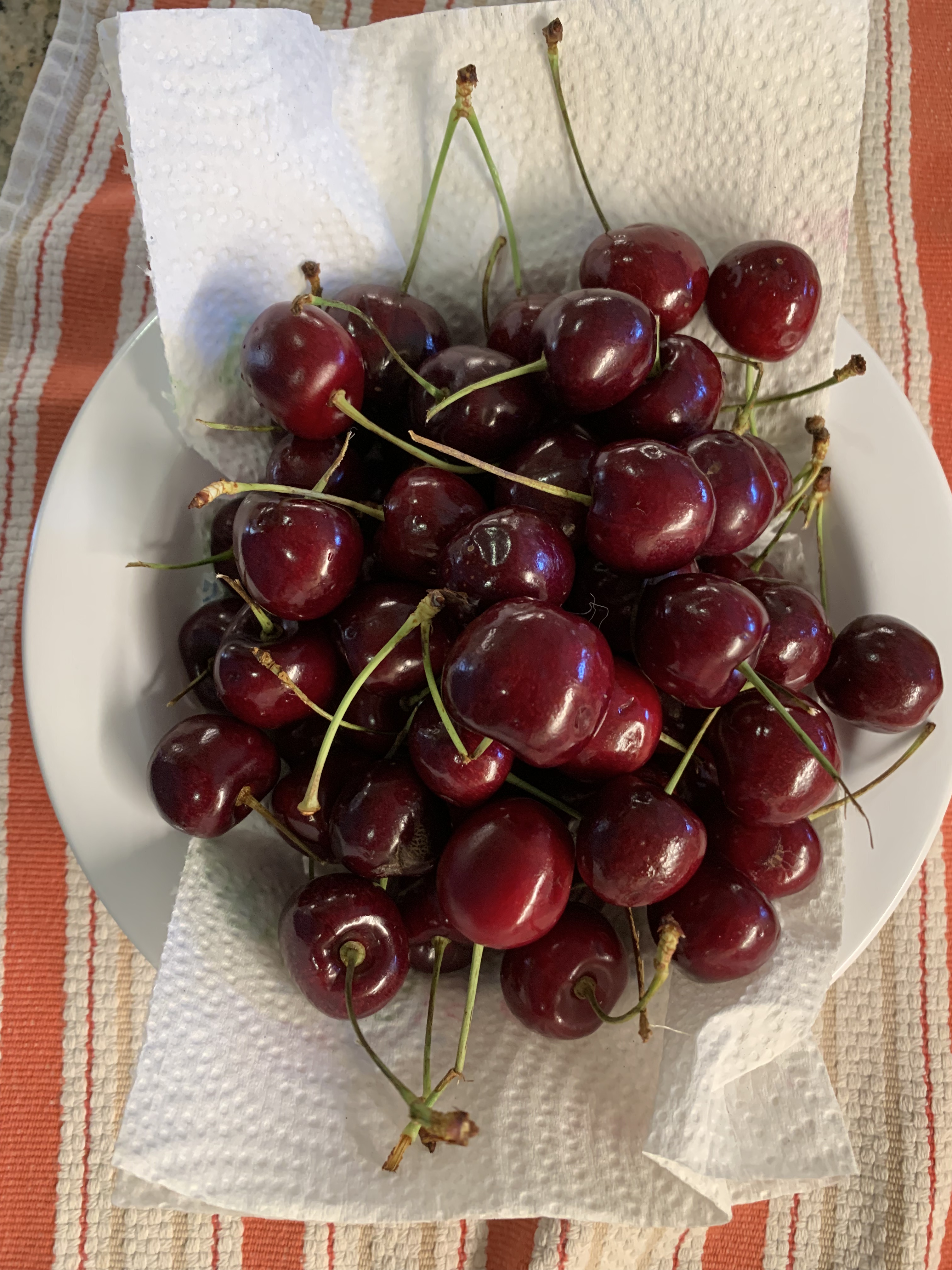
  • November 2018
  • October 2018
  • September 2018
  • August 2018
  • July 2018
  • June 2018
  • May 2018
  • April 2018
  • March 2018
  • February 2018
  • January 2018
  • December 2017
  • November 2017
  • October 2017
  • September 2017
  • August 2017
  • July 2017
  • June 2017
  • May 2017
  • April 2017
  • March 2017
  • February 2017
  • January 2017
  • December 2016
  • November 2016
  • October 2016
  • September 2016
  • August 2016
  • July 2016
  • June 2016
  • May 2016
  • April 2016
  • March 2016
  • February 2016
  • January 2016
  • December 2015
  • November 2015
  • October 2015
  • September 2015
  • August 2015
  • May 2015
  • January 2015
  • July 2014
  • January 2014
  • December 2013
  • November 2013

Categories

  • AI
  • America
  • apocalypse
  • cats
  • COVID-19
  • creativity
  • design rationale
  • dogs
  • driverless cars
  • essay
    • guns
  • family
  • fantasy
  • fiction
  • HCI
  • health
  • leadership
  • love
  • management
  • nature
  • pets
  • poetry
  • politics
  • psychology
  • Sadie
  • satire
  • science
  • sports
  • story
  • The Singularity
  • Travel
  • Uncategorized
  • user experience
  • Veritas
  • Walkabout Diaries

Meta

  • Create account
  • Log in

Blog at WordPress.com.

  • Subscribe Subscribed
    petersironwood
    Join 653 other subscribers

    Have a WordPress.com account? Log in now.

  • petersironwood
    View site in Reader
    Manage subscriptionsSign upLog in
    Report this content
    Collapse this bar
Loading Comments...