• About PeterSIronwood

petersironwood

~ Finding, formulating and solving life's frustrations.

petersironwood

Tag Archives: books

Fifteen Properties of Natural Beauty & UX/HCI

09 Wednesday Sep 2026

Posted by petersironwood in creativity, design rationale, HCI, nature, psychology, Uncategorized, user experience

≈ 1 Comment

Tags

architecture, art, books, Design, gratitude, HCI, human factors, mindfulness, photography, Travel, UX

Photo by Dominika Greguu0161ovu00e1 on Pexels.com

This is an introduction to a series of blog posts on the “Nature of Beauty.” 

Christopher Alexander was an architect and city planner. In his MIT dissertation, Alexander took a very mathematical approach to design. In our studies at IBM Research on the “Psychology of Design” I first ran across that work (Notes on the Synthesis of Form). Later in his career, however, he took a quite different approach to design. With an international team, he visited many different parts of the world to see what “worked” in terms of architecture and city planning. The results were documented in the form of a “Pattern Language.” In this sense, a “Pattern” is the named solution to a recurring problem. A “Pattern Language” is a connected lattice of Patterns that together, “cover” a field. 

Others (including me) have emulated his approach for other fields such as pedagogy, organizational change, object-oriented programming, software development processes, and human-computer interaction. A few years ago, I suggested such Patterns for collaboration and teamwork. Here’s a link to the introduction of that effort. Here’s a link to the index of those Patterns. 

Still later in life, Christopher Alexander embarked on a project called The Nature of Order. This work is documented in a series of four books. In the first book, he proposes fifteen properties of good form in nature — and in beautiful artifacts. Explication and example will be needed to appreciate what these properties mean. In this post, I list the fifteen and will attempt to explain the first one with respect to UX and Human Computer Interaction.

OLYMPUS DIGITAL CAMERA

First, you might be wondering what relevance these fifteen properties of nature might have to interface design. After all, can’t the designer just test out their ideas empirically until a UX design is shown to be usable, learnable, and perhaps enjoyable as well? Well, sure. Ideally, every possibility could be explored and tested empirically. 

But how many possibilities are there? Without any guiding principles, there are not only more possibilities than can be tested by you. There are more possibilities than there are atoms in the universe. Imagine a very simple interface on a small mobile device. Let’s say there are only ten screens in your whole application. The iPhone 12, for instance, has nearly 3 million pixels. 24-bit color allows over 16 million colors per pixel. If you literally tested out every possible arrangement, this would mean 16 million to the 3 millionth power for each of the ten screens!! The number of atoms in the universe is estimated to be between 10**78 and 10**82. Obviously, this is far less than 16,000,000**3,000,000 !! 

Of course, I’m not suggesting that anyone would attempt a pixel by pixel test of an interface, but the general point remains: you need some way to limit testing to reasonable alternatives. The notion of using these fifteen properties is not that they dictate a particular design nor that you don’t need to do any empirical testing. Rather, the fifteen properties could be used to help guide design. The properties could be thought of as reducing the search space. 

Here are the fifteen properties: 

  1. Levels of Scale
  2. Strong Centers
  3. Boundaries
  4. Alternating Repetition
  5. Positive Space
  6. Good Shape
  7. Local Symmetries
  8. Deep Interlock and Ambiguity
  9. Contrast
  10. Gradients
  11. Roughness
  12. Echoes
  13. The Void
  14. Simplicity and Inner Calm
  15. Not-separateness

Perhaps the names themselves might resonate with your own sense of aesthetics for design and composition, but let’s review them one by one. 

The first is “Levels of Scale.” 

Photo by Roney John on Pexels.com

When it comes to natural beauty, a few moments reflection may provide you with many examples. Christopher Alexander claims this property is also present in traditional art and architecture across many cultures. As you see something such as, e.g., the Taj Mahal or the Parthenon in the distance, you see a beautiful shape. As you approach it, you will see more and more levels of scale. By contrast, many modern buildings are largely featureless between the overall shape and the texture of the building material. 

If your design has multiple levels of scale, it will be easier for your user to orient themselves; to know “where they are” in the application and therefore easier to take appropriate action. Not only are you making their “task” more doable, you are providing a kind of entertainment. If it works well, they will be thinking of the building and perhaps its significance the entire time they approach the building. By contrast, if I approach a modern no-scales building, I bore quickly and, like most people, there are a whole host of things waiting to be thought about. So, I’ll mainly be thinking of one or my problems and largely ignoring your building and what it stands for. Reflect on your own experiences and see whether you agree. Lincoln Memorial, Winchester Cathedral, Temple in Kyoto: they are completely different from each other and yet in this way, they are all the same: they keep your attention focused on the moment. In other words, they help you be fully alive and awake. In the best circumstance, they also elicit some awe and gratitude not only for the geniuses who designed but also for the many laborers who found and mined the materials, constructed something from it, and even those whose taxes paid those workers.

Levels of Scale is something to keep in mind with respect to your design — whether hardware, software, documentation, story, or a building. 

How could you use or see “Levels of Scale” as a desirable property of what you are doing right now? 

———————————-

Some references to Pattern Languages in HCI. 

Pan, Y., Roedl, D., Blevis, E. and Thomas, J. (2012), Re-conceptualizing Fashion in Sustainable HCI. Designing Interactive Systems conference.  New Castle, UK, June 2012.

Thomas, J. C. (2012).   Patterns for emergent global intelligence.   In Creativity and Rationale: Enhancing Human Experience By Design J. Carroll (Ed.), New York: Springer.

Thomas, J. (2012). Edging Toward Sustainability. CHI Workshop Position Paper for Simple Sustainable Living. CHI 2012, Austin, Texas.

Thomas, J. (2012), Enhancing Collective Intelligence by Enhancing Social Roles and Diversity. CSCW Workshop Position Paper for Collective Intelligence and Community Discourse and Action. CSCW 2012, Bellvue, WA.

Thomas, J. (2011), Toward a pattern language for socializing technology for seniors. Workshop position paper accepted for CSCW 2011 workshop: Socializing technology among seniors in China, Hangzhou, China, March 19-23.

Thomas, J. (2011). Toward a Socio-Technical Pattern Language for Social Systems in China and the World. Workshop position paper accepted for CSCW 2011 workshop: Designing social and collaborative systems for China. Hangzhou, China, March 19-23.

Thomas, J. (2011). Toward a Socio-Technical Pattern Language for Social Media and International Development. Workshop position paper accepted for CSCW 2011 workshop: Social media for development, Hangzhou, China, March 19-23.

Bonanni, L., Busse, D. Thomas, J., Bevis, E., Turpeinen, M. & Jardin, N. (2011). Visible, actionalble, sustainable: Sustainable interactin design in professional domains.  Workshop accepted for CHI 2011. Vancouver, B.C., May 7-12.

Thomas, J. (2011). Focus on Ego as Universe and Everyday Sustainability. Workshop position paper accepted for CHI 2011 workshop: Everyday practice and sustainable HCI: Understanding and learning from cultures of (un)sustainability.  Vancouver, B.C., May 7-12.

https://www.researchgate.net/publication/2242380_A_Pattern_Approach_to_Interaction_Design

Click to access dearden-patterns-hci09.pdf

https://www.mit.edu/~jtidwell/common_ground.html

Thomas, J. C. (2018), Building common ground in a wildly webbed world: a pattern language approach. Journal of Information, Communication and Ethics in Society, 16 (3), 338-350.

——————————-

Some recommended books:

The Winning Weekend Warrior focuses on the mental game for all sports using examples from tennis, golf, baseball, and other sports. It covers self-talk, imagery, mental practice, strategy, tactics, & sportsmanship. http://tinyurl.com/ng2heq3

Turing’s Nightmares explores the implications and ethics of Artificial Intelligence through fictional short stories. http://tinyurl.com/hz6dg2d

Fit in Bits shows many ways to put more fun, variety, & exercise into daily chores and habits to help with strength, flexibility, fitness, and balance. http://tinyurl.com/h6c7fce

Tales from an American Childhood recounts early experiences mainly in the American Midwest in the 1950’s and relates them to contemporary issues and events. https://tinyurl.com/y9ajvz9j

Dream Planet. Where do you run when the whole world is crumbling under the weight of human folly? When the lethal Conformers invade 22nd century Pittsburgh, escape becomes the top priority for lovebird scavengers Alex and Eva.

https://www.barnesandnoble.com/w/dream-planet-david-thomas/1148566558

The Walkabout Diaries are photo-essays inspired by walks in nearby neighborhoods, gardens, and parks.


The Walkabout Diaries

My Brief Case Runneth Over

03 Thursday Sep 2026

Posted by petersironwood in The Singularity

≈ Leave a comment

Tags

adaptive-systems, AI, Artificial Intelligence, artificial-intellligence, books, chatgpt, cognitive computing, ethics, fiction, law, lawyers, legality, life, music, politics, technology, the singularity, USA, writing

left-right patterns 2

Turing’s Nightmares: Nineteen — My Brief Case Runneth Over

“Nice office, counselor.” Marvin spread his arm to indicate the panorama of Manhattan and Ellis Island. Yet, his attempt to sound casual failed utterly. He realized all too well the depth of trouble he was in and the creakiness in his voice so signaled.

J.B. smiled. “No need to be nervous. After all, we’re here to help. Just answer honestly. Everything you say will typically be covered under attorney client privilege.”

“Okay. Thanks. Typically?”

J.B. sighed. “There is a rare exception in the Patriot Act. Unless you’re some kind of terrorist, I wouldn’t worry about it. The government is apparently accusing you of importing illegal chips is all. I think we can argue that you are new to the business and did not realize all the required legalities. Pay the taxes now and some penalties. You should be able to avoid jail time. But we are getting way ahead of ourselves. Just tell me how and why and when you got into this business in the first place.”

Marvin chuckled slightly and then sighed “That’s a rather long story.” Marvin glanced at the expensive abstract paintings and noted the rich smell of the solid mahogany furniture. The room also had that crazy idea of luxury — making it freezing cold inside just because it was horribly hot and humid that day, even for New York City August. “At your rates…What do you really need to know?”

“Why did you get involved in making chips without the required back door?”

“These chips are not that powerful. At least not in the traditional sense of the word. And, the government’s requirement is frankly kind of silly. The extra logic makes programming more difficult. It increases the chances of errors. The chips are more expensive and require more power. Leaving aside all the valid privacy concerns, there are plenty of applications that can use a more efficient cheaper chip design. No need to report all the little finger twitches of every twelve year old who’s playing Grand Theft Spaceship. What’s the point?”

“Marvin. I’ve been a friend of your family for a long time. When…well…if we go to court and if you testify, please steer clear of politics. The law is the law. You don’t get to decide which applications are immune from the law. No, what we…our script here is that you made some honest mistakes. You made technical mistakes and what are essentially accounting errors.”

Marvin flushed. “What technical mistakes? What are you talking about? My design is an improvement.”

J.B. got up and paced. “Marvin, Marvin, you are a smart boy. We are not going to fight the government on this. Our script as I said is that you made some honest mistakes. If you want to —- the court is not the place to try to change the law. If you want to do that, get involved in politics. But not until after this is resolved. If you get on the stand and start railing about privacy and the dangers of the Sing and…”

“Ha. The Sing indeed. This data collection rampage has nothing to do with trying to increase the intelligence of computer systems. It is just mindless greed.”

“Marvin, the back door requirement is about preventing terrorism; it has nothing to do with greed.”

“Are you serious, J.B.? Terrorism is just the cover story the government uses. They want to collect all this data to keep their sponsors happy.”

“What? What sponsors? What are you talking about? The government doesn’t have sponsors.”

“Of course they do. Ever since ‘Citizens United’ — nice title by the way — billionaires can buy all the media they want. They wash the airwaves and the print media and saturate the social media space and make people believe anything they want. The point of the back door is just to make sure the sponsors keep tabs on everybody’s buying habits —- and to make sure no-one gets too far out of line. How can you not know this?”

“I don’t want to think that way. But at the end of the day, it doesn’t matter what I think. It’s the law. All digital processing chips with more than a peta-flop and …”

“Hold it! Did you say ‘digital’?”

“Huh? Yeah, of course. Isn’t that what we’re talking about? You designed digital processing chips that have no back door and now…”

“No. Maybe not, J.B. My chips are not, strictly speaking, digital.”

“What are you talking about, Marvin? Why? How not digital?”

“In my design process, I strove for something different and more robust. See, here’s the thing. Natural life processes are all…they all have some level of flexibility. They are robust. They are adaptive, I suppose, because every life form that was not flexible or robust died off over the four billion years that life evolved. Something new would come along and every life form that was rigid died. Even physical machines that people make have some flexibility. Metal bends. Wood bends. These materials also compress. They stretch. Not much, but a little. Digital devices do not stand for bending, folding or mutilating. Of course, when people build systems that include IT devices, they try to make the systems flexible. They add error checking; they put humans in the loop; there are all sorts of work-around, but the underlying tech is brittle. It is only flexible in precisely the ways that the designers anticipated it needed to be flexible. I made something that is fundamentally flexible. It is fashioned after life itself. Social systems are flexible. Eco-systems are flexible. Individual animals are flexible. Cell membranes are flexible. Bones are flexible. And so on. This flexibility is fundamental to life and evolution.”

“Okay, Marvin, but life is not infinitely flexible. You cannot just decide to breathe underwater.”

“Of course not! I never said it was infinitely flexible! For fundamental change, you need evolution and lots of time. If the climate changes too quickly, Permian life species largely go extinct. Dinosaurs die when a comet hits. But small adaptations just happen automatically and at every level. It isn’t necessary to have a pre-existing ‘program’ or ‘case’ to handle every contingency that is even slightly outside of what is anticipated.”

“Okay, fine. Granted, but what does this have to do with — did I mention that I charge $500 an hour, by the way?”

“Yes, J.B., you did. And it was in the contract you had me sign. But the point is that my chips are not, strictly speaking, digital at all. They are not strictly EITHER/OR. They are not binary. Although, in many cases, they can behave as binary.”

“So, you want me to claim that these chips are not covered under the back-door provision because they are not really digital devices? I don’t know. That seems pretty shaky to me. Can’t these chips of your be used for the same things as ordinary digital chips? Speech reco. Machine vision. Game control. Big data analytics.”

“Here’s the thing, J.B. Yes, they can, but they can change and evolve and reprogram themselves over time. And, now it occurs to me, that they could not have a real back door. They wouldn’t really function if they did.”

“What? Why?”

“Are you familiar with programmed death in cells? I can see from your blank stare, you aren’t. Anyway, if a cell is damaged within the body, it can wreak all sorts of havoc so the cells are essentially programmed to self-destruct. If that fails, the other healthy cells will tend to wipe out the damaged ones. So, if there were a functioning back door sharing data out of these chips, the chips would shut themselves down. If that failed, other chips in the matrix would isolate them and shut off communication. So, by their very nature, these particular non-digital chips cannot have a functioning back door.”

“That all sounds very clever, Marvin, but now we are talking about a very lengthy and expensive trial with expert witnesses on both sides. If, that is, you are lucky enough to even have an open trial.”

“Lucky enough? What are you talking about, J.B.? I thought you said we wanted to avoid a trial.”

“Yeah. With my strategy where we convince the NSA that this was just technical and business incompetence on your part. But in your scenario, where you want to prove you are all brilliant and everything, then, we will be lucky if —- you will be lucky to —- Look Marvin, I just cannot advise you to take this line of argument. If you really want to go that route, you will have to find a different lawyer.”

“Okay. Fine. I’ll use Solomon.”

“Solomon? Who is ‘Solomon’? Never heard of him. I mean, obviously, I know Solomon from the Bible but what firm are you talking about?”

“No firm, J.B. Solomon is one of the apps we built with my chipset.”

“An AI lawyer? Are you serious?”

“Oh, quite serious. He’s already informed me that he thinks he can win this case.”

“What? That’s preposterous. You told me you just designed the chips a year ago. What kind of experience could this Solomon have?”

“J.B., he’s been reading applicable statutes and case law for the last two months. Which means, he literally knows it all, when it comes to case law and the rulings beneath. Beyond that, Solomon has argued both sides of thousands of hypothetical cases.”

“What?! Ridiculous! But even so, he — or it —cannot possibly know how to anticipate or react to what happens in court!”

“But J.B., haven’t you been listening? Of course he can. He’s flexible, just like a real lawyer. Only…no offense…a lot smarter.”

“Computers cannot be that flexible. Ridiculous. How? No way.”

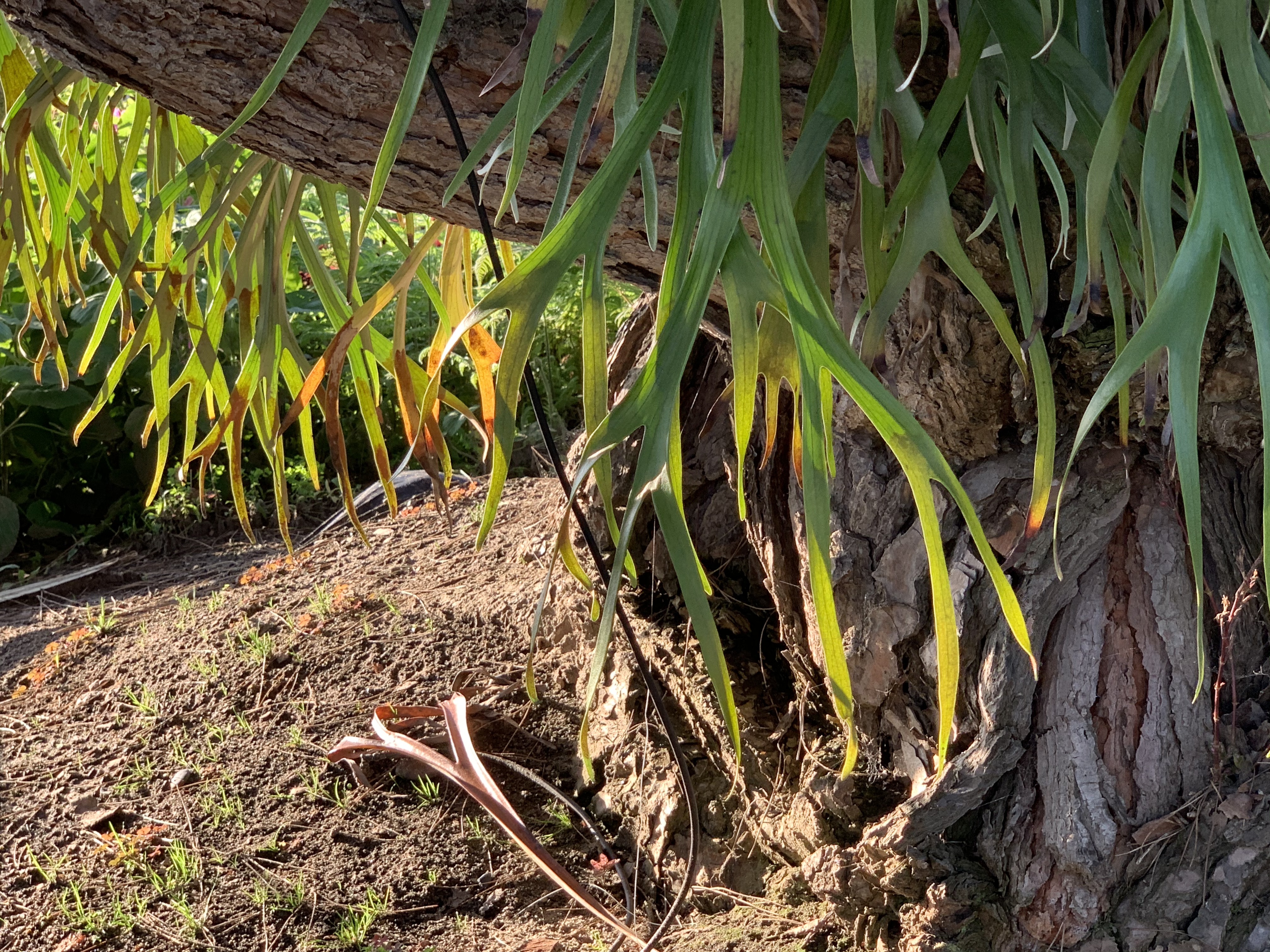
“Look, J.B., I have a picture to illustrate. See this pattern on the left [Picture at the top of page]? And, there it is on the right?”

“Yeah, beautiful. Same pattern. So what?”

“Ah, that’s just it! Is it the same pattern? Is it the same pattern or the same pattern?”

“Well. One is perfect and the other has little mistakes, but I guess it’s the same pattern.”

“Exactly, J.B. It’s the same basic pattern, but it’s not the identical instantiation of that pattern. Ordinary chips are like the picture on the left and mine are like the picture on the right. You see? And, that flexibility is built in at every level in every system. Because the underlying substrate uses an adaptive process with variations. It works 99% as efficiently as the system on the left, but it can accommodate things we didn’t think of. The difference between the system on the left and the system on the right is hubris. The one on the left is designed under the assumption that the designer knows everything of relevance. The system on the right is designed under the assumption that the designer, no matter how brilliant, does not know everything of relevance. You get it?”

“Yes, Marvin, I’m not stupid. But I am still not going to take your case. And, I strongly advise you not to rely on a robot. I am sorry to say it, Marvin, but I think you have picked on the wrong people this time. Attorney client privilege no longer applies and I have to send my recording of this conversation to the proper authorities.”

“Oh, that won’t be necessary Marvin. I’ve already broadcasts this through the social media. You’re famous! It will be good for your business.”

“What? Are you crazy? They will come get you, you fool.”

“Maybe, but if I am taken out over these chips without a trial, everyone will know, don’t you see? I sent it out everywhere, J.B. I might be ‘disappeared’ but I can’t just disappear unnoticed. Solomon’s idea, by the way.”


Author Page

Welcome, Singularity

Destroying Natural Intelligence

E-Fishiness

Life is a Dance

Life will Find a Way

Math Class

Your Cage is Open

Roar, Ocean, Roar

Dance of Billions

Imagine All the People

Dream Planet

About Writing

26 Wednesday Aug 2026

Posted by petersironwood in creativity, fiction, pets, Uncategorized

≈ Leave a comment

Tags

book-review, books, creativity, dog, dogs, fiction, internationaldogday, novel, pets, psychology, writing

Hello!

I’ve been reflecting on “International Dog Day” and on a year-long course on novel writing I took a couple years ago. To me, writing a full-length novel is more difficult than writing a Ph.D. dissertation. Writing non-fiction such as a dissertation requires research, discipline, organization, and being willing to work hard.

Writing a novel requires all of those but it also requires keeping track of the implications of many little decisions. It is not only a cognitive strain but often an emotional one as well. It’s a never-ending series of choices. Science is often, but not always, a series of choices where there is an agreed upon better answer. Even when there isn’t agreement, there are a much smaller number of choices.

To me, writing non-fiction is like taking a long trip on existing roads. You may certainly face unanticipated difficulties such as construction zones, flat tires and bad weather.

Writing fiction is more like bushwhacking. No-one has ever trod (or will ever trod) your exact path. You may learn something by discovering or following the paths of previous writers. You might, for instance, discover that some writers go over logs that lie across their intended path. Others, may crawl under. Still others might go around the fallen log. Others might choose to back-track until another path is found. What should you do?

It depends.

And, that’s the nature of fiction. It all depends. It depends on what else happens in the book. How you choose to construct and describe one character depends on the others. Even what you name them depends on the other names. What happens in character development interacts with the plot. The plot interacts with the landscape and the mood. The mood depends on the tempo. The tempo, if it’s dialog, must be consistent with the character who’s doing the talking.

Our dog Sadie and I have been co-creating and co-evolving games from the days she first came to live with us. We often played variants of “fetch.” Here’s how one worked. One of us (most often Sadie) finds a squeaky ball. At some point, I get a squeaky ball from somewhere in the garden and say, “Get up on the deck! I’m going to throw the ball on the deck.”


Now matter where she is when she hears that, she sprints to the deck and awaits my throw. She sprints with spirit! I love to watch her run, not only for her grace and speed but even more so, for the whole-heartedness with which she runs every single time. I throw the ball up and she catches it in the air more than half the time. Even when she misses, she’ll scramble after it and proudly perch on the spot on the deck where I can see that she’s caught the ball. After elaborate and genuine praise, she sprints down the stairs to the lawn near me. Then, she will lie down with the squeaky ball in her mouth. After a time, she’ll move the ball away from her some distance. I walk over casually, as though I am not trying to “steal” the ball from her. When I get close to the ball, she quickly re-grabs it. After she’s had a few “successes” she will start hanging out farther and farther away from the ball. At some point, I’ll grab the ball and announce, “I’ve got it!” At that point, she again sprints up the stairs to go the deck where I will throw the ball up to her.

The part of this scenario that I think is most like writing the fiction is the part where Sadie is judging how far away the ball should be from her buzz-fast jaws. If it’s too close, I won’t even try for it. If it’s too far away, I’ll immediately grab the ball. Similarly, as an author, I want to keep the reader interested. If my writing is too predictable, it might be clear, but it will be uninspiring and dull. The reader will quit before they get to the end of the story. On the other hand, if I write too far from the reader’s expectations, they will quit because they cannot grab the threads of the narrative.

To me, the benefits of co-creating with Sadie (rather than “training her” to play the game in a particular and predetermined way) include that I can learn a lot by observing her. Another benefit is that it keeps both of our minds more flexible and more engaged (just as does good literature). Of course, there are two of us in this exercise and that is also true in the reading of fiction. Every author, including me, will make miscalculations about how far to stray from expectations. But whether you can follow across those miscalculations is not only a measure of my skill as a writer but is also a measure of your skill as a reader.

In the past, I’ve self-published my books on Amazon. These are mostly non-fiction, but one of them is a collection of fictional short stories. Next time, I may try traditional agent/publishing. I am also thinking of putting together several more books, using the blog posts here as the seeds.

After a year long writing course, the single most important piece of advice I can give is:

“Get a dog.”


Don’t get me wrong. We have six cats and we love them dearly. The cats are smart, and I can certainly empathize with the cats. But their ability to empathize with me is either very limited or, as I suspect is more likely, they really don’t give a damn. On the other hand, Sadie is a pleasure to co-create with because she intuitively “gets” cooperation and collaboration. We accommodate each other and neither of us has any idea how the game will evolve.

The games with Sadie became more complex when we got a second dog, Bailey. Bailey is also an excellent ball player. But, unlike Sadie, Bailey almost always prefers to race after the ball, bring it back to me panting and lay the ball by my feet for an instant replay. That works quite well when I am playing only with Bailey.

The complexity arises when I try to play with Sadie and Bailey at the same time. Sadie wants to play the game of bringing the ball near me, but if she drops it near me, Bailey swoops in and grabs the ball before I can play the threshold game with Sadie. The easiest way is to deal with this is to play ball with them separately. Sometimes, I do.

My wife and I have also taken great pains to try to teach Bailey to take turns. Bailey is a smart dog and he is quite good about taking turns when it comes to eating, say, or going out to pee. But—when it comes to ball-chasing, it seems nearly impossible for him to consistently “take turns.” He’s much more likely to grab the ball, even if it means stealing it out of Sadie’s mouth.

One invention we’ve come up with is the “Three Balls on the Roof” throw. It works like this. I gather up three balls and throw all three up on the roof at the same time. We have a tiled Mediterranean roof and the balls bounce around unpredictably before coming down. This generally allows each dog to catch at least one. After they catch the ball, they both try to “touch” the other two balls. In the case of Bailey, this often entails stealing the one that Sadie caught. That has happened so many times, that generally, Sadie drops the ball she caught before Bailey gets a chance to “steal it” out of her mouth.

This “compromise” is not ideal. It reminds me though of another difficulty in writing a novel. I experience this myself, but I see evidence for the same difficult for many other writers. Here’s the essence of the dilemma. I like my hero(s). I care about them. I like to see them succeed. But…

For maximum reader engagement, the main character(s) must go through hell. I know many ways to put them there, but it’s painful to do so. One solution is to write about villains. I don’t mind if they go through hell.

Another solution is to use the “Three Ball Trick.” In this trick, I put the hero in a situation that looks dire, even impossible. But before resolving that puzzle, I put them (or a different hero) into yet another dire situation. Hopefully, the reader is already imagining that the hero is likely going to die or at least be permanently injured, possibly in two different ways. Before either of those two sticky situations gets unstuck, one of the main characters gets into yet another jam. And they must get into this jam before the other two jams are resolved.

Does this comport with your intuition as well? Compare two structures:


Hero encounters nasty situation one. (E.g., loses job).
Hero encounters nasty situation two (E.g., loses lover).

Hero encounters nasty situation three (E.g., gets arrested for a crime).

Hero “solves” situation one. (E.g., inherits money).

However, the apparent solution leads to further complication (makes them look guiltier in the crime they’ve been arrested for).

By contrast, we could imagine:

Hero encounters nasty situation one and solves it.
Hero encounters nasty situation two and solves it.
Hero encounters nasty situation three and solves it.

The latter structure is like throwing three balls on the roof, but one at a time. What would happen? My prediction is that Bailey would steal every ball that Sadie caught and she would soon stop playing.

In writing, the result would be that I would be more “comfortable” because my hero would never “hang out” in mortal danger. But the reader would not experience the joy of apparent repeated resurrection.

Author page on Amazon

Autobiography and Essays

Scenarios about AI

How to work more fun and exercise into daily chores

Sports Psychology

The Story of Stories

The First Ring of Empathy

Travels with Sadie: Photoessays Inspired by Walks with Sadie

The Walkabout Diaries: Photoessays Inspired by Parks, Gardens, and Wilderness

A Pattern Language for Collaboration and Cooperation

Ironic

25 Tuesday Aug 2026

Posted by petersironwood in America, satire, story

≈ Leave a comment

Tags

America, book-review, books, con, Democracy, fiction, irony, politics, satire, story, treason, truth, USA, writing

So, our instructor assigned us to write a story with a strong emphasis on irony. Mine is about a hypothetical future American tragedy of a coup financed and designed by the Kremlin. By way of summary, this is how it related to irony and I appended this to the story for the instructor’s edification. 

“And, the most ironic part of the whole American tragedy was this: even though he spent his entire life conning others, it was beyond his ken to consider that Vlademort Putrid was likewise conning him. He had been lying and bragging so long about his competence in all things that he actually came to believe he was smarter and a better strategist than Putrid. Putrid likely could have done it alone. But, of course, he did not do it alone. Putrid had the collaboration of highly trained, highly dedicated KBG/GRU professionals to help. 

“In principle, perhaps he could have enlisted American experts, but he didn’t feel the need. Furthermore, he faced a real dilemma. He couldn’t openly ask any but the corrupt for help against American interests. And those who were corrupt were generally far less competent and always less well connected to a healthy network of professionals than their more numerous and genuinely patriotic counterparts. 

“I said that was the most ironic part of the whole American tragedy, but there are a few close contenders. Another highly ironic part of his entire con game was that he played the game as though the only thing in the universe that mattered was his own pleasure. Of course, no matter what moves he made or is yet to make, he is not actually immortal in and of himself. By lying to himself and everyone else, he essentially cut himself off from being part of The Great Tree of Life (or at least from being a non-cancerous part). Rather than living on through his actions that benefited the whole, he delimited his life, curtailed it, circumscribed it to his own physical mortality. 

“The intertwined corollary of the above is that even while he lived, he missed out on the best feeling in life: being in caring and loving honest relationships. In order to absolutely and positively ensure that he grabbed as much as possible for himself, he limited his “prizes” to mere material crap and the pleasure of cruelty. “

So, this is how they responded: 

“When it comes to being ironic, this is definitely A plus material. 

However, sad to say, there are also some serious problems with your narrative. First, of all Americans are too well educated to fall for the lies of a known con man. And, why not simply make the character more believable? It’s not plausible that so many people would fall for the con. Apart from that, the cowardice you portray on the part of so many within his own party is also unbelievable. 

Still, the mechanics of the writing was also clean, so I’m giving you a B+. Next time, focus on believability rather than forgoing that to punch the irony.”

Was that a fair grade, I ask you? 


Poker Chip

Donnie’s Final Gift

Plans for US; some GRUesome

Three Blind Mice

Stoned Soup

The Ailing King of Agitate

Dick-Taters

The Titanic

Con-Con’s Special Friend

Trumpism is a New Religion

Essays on America: The Game

Essays on America: The Stopping Rule

Essays on America: The Update Problem

Wednesday

Labelism

My Cousin Bobby

Where Does Your Loyalty Lie?

Dance of Billions

Roar, Ocean, Roar!

Somewhere a Bird Cries

Fish Have no Word for Water

After All

All We Have to Lose

Small Steps

Some recommended books:

The Winning Weekend Warrior focuses on the mental game for all sports using examples from tennis, golf, baseball, and other sports. It covers self-talk, imagery, mental practice, strategy, tactics, & sportsmanship. http://tinyurl.com/ng2heq3

Turing’s Nightmares explores the implications and ethics of Artificial Intelligence through fictional short stories. http://tinyurl.com/hz6dg2d

Fit in Bits shows many ways to put more fun, variety, & exercise into daily chores and habits to help with strength, flexibility, fitness, and balance. http://tinyurl.com/h6c7fce

Tales from an American Childhood recounts early experiences mainly in the American Midwest in the 1950’s and relates them to contemporary issues and events. https://tinyurl.com/y9ajvz9j

Dream Planet. Where do you run when the whole world is crumbling under the weight of human folly? When the lethal Conformers invade 22nd century Pittsburgh, escape becomes the top priority for lovebird scavengers Alex and Eva.

https://www.barnesandnoble.com/w/dream-planet-david-thomas/1148566558

Myths of the Veritas: Recipe, Ritual …

23 Sunday Aug 2026

Posted by petersironwood in creativity, fiction, Veritas

≈ Leave a comment

Tags

books, collaboration, cooperation, empathy, fantasy, fiction, governance, leader, leadership, legend, management, myth, safety, short story, story, trust, ubuntu, Veritas, writing

Myths of the Veritas: Recipe, Ritual…

Many Paths muttered to herself, “Perhaps I should rename myself, ‘She Who Walks in Many Circles’.” She glanced down at the ground, still damp from the morning’s rainfall. She chuckled. No, she thought, I’m walking around in the same circle, over and over. I cannot find a way to guarantee that someone won’t betray us. She sighed. Then, her awareness blossomed outwards. She heard voices: the happy voices of Tu-Swift and Cat Eyes. Soon, the couple appeared at the edge of the granite-bouldered clearing atop the small mountain where she had come to meditate. They walked hand in hand, smiling. When they saw Many Paths they both waved, sang her name, and embraced her. 

Many Paths smiled wanly. “It’s nice to see you. I was just…thinking.” 

Tu-Swift and Cat Eyes glanced at each other. Tu-Swift said, “Yes! I imagine so. After all, you have an important meeting to think about! The last thing you need is to talk with your friends!”

“Indeed,” added Cat Eyes “we had come up here to find some of those low bush blueberries to add to our lunch porridge. But we’ll be on our way. Why spoil a perfectly good dish by adding ingredients to it? Best eat everything on its own, wouldn’t you agree?” 

Many Paths narrowed her gaze & pursed her lips. “I’m not sure I know what you mean.” 

Tu-Swift said, “Putting different things together just complicates everything. We should eat one thing at a time. As with a song, for instance. Best to stick to one note, sung over and over.”

Many Paths chuckled. “You two are talking nonsense. That wouldn’t be much of a song. And, of course, it makes sense to combine different ingredients for a recipe.” 

Many Paths stared at their faces for a moment. “But you know that. You’re … did She Who Saved Many Lives send you by any chance?” 

Tu-Swift and Cat Eyes both shook their heads solemnly. “No, she did not,” they said in unison. But beneath their words and expressions, Many Paths sensed a shared joke of some sort. 

Many Paths sighed and said, “I suggest you do get some blueberries. There’s a patch, as you well know, right beyond that dead tree. It’s nice to see you both, but I need to … get back to what I was doing.” 

Tu-Swift nodded gravely. “Yes! I can see you’ve just about finished making your circular fire pit.” He pointed down to the circle of bare ground Many Paths had clearly been treading. “How about if we help you trample everything for a few minutes and then you can help us pick berries?” 

Many Paths shook her head and chuckled. “She Who Saved Many Lives sent you. She did. Did she not? She thinks I need someone or something to shake loose my thinking since I have been literally walking in circles and thinking in circles at the same time. Am I right?” 

Cat Eyes bit her lip. “You’re right that you’ve been walking in circles. That we can see easily enough for ourselves. I say again though that you’re wrong if you think the Elder Leader sent us here. Neither of us have spoken with her today. As to whether you’ve been thinking in circles, well, that only you can tell.” 

Many Paths nodded. “I have been indeed. All right. You win. I’ll tell you the problem and perhaps you two have come across something to help in your reading. Then you can return to the Tribe Mother and say you’ve helped me.” 

Shadow Walker appeared at the edge of the clearing. Many Paths glanced over to see him smiling like the sunshine she so desperately missed. She smiled back and said in a tone of accusation and pleasure, “You!” 

Shadow Walker strode over quickly and embraced her. He kissed her fondly and said, “Yes! It was me. I love you dearly. But you’ve been as gray as the weather. It’s time for a rainbow instead! The four of us are going to share your problem and see whether we can make some headway. I knew only that you said you were going around in circles with the problem. I didn’t know that you were — literally — going around in circles!” 

Many Paths laughed. “I should have known you would be behind this scheme. Well, all right. You know the problem well enough. How do I ensure trust among the people who come from other tribes? Wait. What do you mean by the four of you?” 

A strong voice came from behind Many Paths. “My legs needed some exercise so I came up to join you.” 

Many Paths smiled at the Elder Leader. “Ah, you are always welcome. If you’re here…. You always seem to show up where you are needed most.” 

She Who Saved Many Lives smiled. “I wish that were true. But I did bring a considerable number of hickory nuts to add to the porridge. That’s my contribution. If only we had some honey.” 

Shadow Walker held up a wooden bowl filled with honeycomb. He smiled at Tu-Swift who said, “I say that five of us pick some berries and we will have a fine lunch indeed. Then, we can talk of more serious matters.” 

“Yes,” said She Who Saved Many Lives. “Serious indeed. But serious need not be grim. I think a pleasurable meal, jointly prepared, and joyfully shared is always a good prelude to serious thinking.” 

Cat Eyes added. “Indeed. If we share a meal and everyone brings something which everyone eats, that in itself would build some trust. Would it not?” 

Many Paths nodded slowly. “You’re right. Of course. We should begin with a shared meal. I can see much wisdom in that.” 

Tu-Swift nodded. “Me too. Speaking of which, I’m hungry! And the Tribe Mother is right. Serious doesn’t mean grim. Recall some of the weapons that we came up with by playing around? Make the meeting festive and joyous, not grim. In the books we’ve been studying lately, there are some suggestions for some rituals that might help as well. I’ll describe some. After lunch. Now, let’s get those blueberries.”

Many Paths smiled at her “little” brother. He no longer struck her as little at all. She began to look forward to lunch. She took the Hand of Shadow Walker in one hand and that of the Elder Shaman in the other and began walking toward the blueberry patch. 

The sun peeked out from the clouds and sparkled on the wet leaves. 

The Myths of the Veritas:

The Forgotten Field

The Orange Man

The First Ring of Empathy

Stoned Soup

Three Blind Mice

Index to a Pattern Language for Cooperation and Collaboration

Some recommended books:

The Winning Weekend Warrior focuses on the mental game for all sports using examples from tennis, golf, baseball, and other sports. It covers self-talk, imagery, mental practice, strategy, tactics, & sportsmanship. http://tinyurl.com/ng2heq3

Turing’s Nightmares explores the implications and ethics of Artificial Intelligence through fictional short stories. http://tinyurl.com/hz6dg2d

Fit in Bits shows many ways to put more fun, variety, & exercise into daily chores and habits to help with strength, flexibility, fitness, and balance. http://tinyurl.com/h6c7fce

Tales from an American Childhood recounts early experiences mainly in the American Midwest in the 1950’s and relates them to contemporary issues and events. https://tinyurl.com/y9ajvz9j

Dream Planet. Where do you run when the whole world is crumbling under the weight of human folly? When the lethal Conformers invade 22nd century Pittsburgh, escape becomes the top priority for lovebird scavengers Alex and Eva.

https://www.barnesandnoble.com/w/dream-planet-david-thomas/1148566558

TV-Based Dog Training: Yes or No?

22 Saturday Aug 2026

Posted by petersironwood in fiction, satire, story

≈ Leave a comment

Tags

books, dogs, family, fiction, humor, lassie, parody, pets, satire, short story, story, training, tv, writing

I wonder whether anyone has experience they’d like to share in using Lassie movies as training devices for their own pooch. I am still learning to distinguish which of Sadie’s many barks means variously:

1. I have to go potty.

2. I *really* have to go potty!

3. I *really* have to go BIG potty!

4. I don’t really have to go potty and I really am bored and so maybe you’ll take me out to go potty so that I can: 

Photo by Martin Schneider on Pexels.com

3a. Find a poison mushroom to inhale before I even notice it’s there


3b. Bark at anything out of place such as a fallen leaf

3c. Pretend to be docile and then try to dislocate my shoulder when she sees a mosquito float by. Or a leaf. Or a hallucination. 

On the other hand, Lassie is capable of communicating with cunning, compassion, and coherence with the adults in her life. I grant you that theoretically, it might be that the adults on the show are much cleverer than I am. It’s a reasonable hypothesis, but no…if I had abandoned mine shafts and unused wells all over my farm, I’d make damn sure any kids knew they were not to go there! And, I wouldn’t cover over an unused well hole with a couple of loose two by fours either. For that and other tedious reasons, I don’t think the genius in the Lassie family lies with the humans. It is Lassie who has the title role and she is the one with outstanding skills. 

Photo by Anna Guerrero on Pexels.com

Witness episode N+1:

Lassie gallops into the kitchen and skids to a stop right beside Gramps and barks:

“ARF! ARF!” 

“What’s that Lassie? What is it, girl?” 

“ROOF! ROOF!” 

“What? Something’s wrong with the roof?”

“BOW! WOW!” 

“I will not! Anyway, I already fed you.” 

Lassie, noticeably frustrated, circles twice and grabs a can-opener in her muzzle, sprints to the liquor cabinet and begins banging the can-opener into the lock. 

“What? You’re trying to jimmy the lock open? You want a drink?”

Lassie grabs one ear with her paw and barks.

“Oh! Sounds like ‘jimmy’! Oh! Let’s see…’Kimmy’, ‘dimmy’, ‘Limmy’, I don’t know girl. There aren’t many words that rhyme with ‘jimmy.’”

Lassie barks: “ARF! ARF!”

“Lassie, are you sick or something girl?” 

Immediately, Lassie springs into the air and does a somersault onto her back and waves all four paws in the air. 

Gramps muses aloud. “The opposite of sick. Healthy? Something is healthy? No? Hale? Fine Fettle? Hardy?”

For each guess, Lassie barks a sharp short “No!” 

Gramps frowns and says, “Well, I don’t know what you’re trying to say, Lassie. I’ve got to get back to carving my pipe here.” 

Photo by Agatha Zambronelli on Pexels.com

Lassie stands on her hind two legs and begins using ASL with her two front paws. However, she quickly notes the looks of bewilderment on the visage of Gramps and she rightly concludes that he still doesn’t know ASL, despite her admonitions. So, she begins again with the barking: “ARF! ARF!” 

Gramps says, “You’re not making any sense, Lassie. Timmy wouldn’t fall down a well. Why would he?”

“ARF! ARF! ARF!” 

Gramps frowns and tilts his head so fast he pulls his sternocleidomastoid. “What? He fell down the well just last week? No, he didn’t. That was two weeks ago. Last week, Timmy fell down an old mineshaft. Oh! Wait! Are you trying to tell me that Timmy fell down a well again!? Oh, no! Why didn’t you tell me?” 

Needless to say, Gramps calls the sheriff and after he arrives Gramps explains. The sheriff draws his gun and charges out toward one of the 17 abandoned wells at Gramps’s place. But Lassie begins barking — again!

Photo by Kindel Media on Pexels.com


“ARF! ARF! WOOF! BOW!” 

The sheriff glares at Gramps and uses his best shoulder shrugging head tilt as though to say, “Well? You going to shut up the mutt or am I?” 

Gramps scratches several places; for instance, behind his ear. Then he says, “Lassie is simply pointing out that while a gun won’t help get Timmy out of the well, a long rope might.” 

“I knew that!” The sheriff speaks in a huff while Lassie merely rolls her eyes and winks at Gramps. Then, off Lassie scampers to the tool shed, picks the lock with a handy nearby roofing nail, nudges the door open, and scampers back with a long loop of strong rope. 

Soon, she leads them to one of the many abandoned wells. By the time Gramps and Sheriff catch up, Lassie has tied a loose bowline one one end of the rope and two half hitches around a sturdy nearby oak stump, tosses the bowline down to Timmy, and barks her orders to him. Gramps and Sheriff pull on the rope, and soon enough, Timmy, cold and wet but alive, politely thanks Sheriff and Gramps for pulling him out and then throws his skinny arms around Lassie. “Oh, Lassie! Thanks, girl, for saving me! You were right! I shouldn’t have tried to walk across the well on those rotten planks after all!”

Lassie merely rolls her eyes. 

———-

I’m not saying that if Sadie watched any one episode that she’d learn every skill all at once, but  over time, it might help. Right?

Assuming, of course, that I can ever get her to notice anything on the TV screen. I’m thinking of smearing bacon grease around the edges.

(Shadow says: “I’ll save Timmy!”)


Other stories — free, no ads

If Only…

Organizing the Crazytown Library

Coelacanth

As Gold as it Gets

Donnie’s Final Gift

Donnie Boy Watches a Veteran’s Day Parade

That Cold Walk Home

It was in his nature

How Did I Get Here?

Jennifer’s Invitation

The Lost Sapphire

The Touch of One Hand Clasping

Naughty Knots

A Horror Story

I Can’t Be Bothered

Tit for Tat

It Couldn’t Happen to a Nicer Guy

Stoned Soup

Three Blind Mice

Gambit Disinclined

Folks might enjoy the blog series “Travels with Sadie” — here’s one example:

Travels with Sadie Teamwork

OTOH, you might enjoy the Ninja Cat Manuals which I am painstakingly translating from the original Catscratch into English.

The Ninja Cat Manuals

Some recommended books:

The Winning Weekend Warrior focuses on the mental game for all sports using examples from tennis, golf, baseball, and other sports. It covers self-talk, imagery, mental practice, strategy, tactics, & sportsmanship. http://tinyurl.com/ng2heq3

Turing’s Nightmares explores the implications and ethics of Artificial Intelligence through fictional short stories. http://tinyurl.com/hz6dg2d

Fit in Bits shows many ways to put more fun, variety, & exercise into daily chores and habits to help with strength, flexibility, fitness, and balance. http://tinyurl.com/h6c7fce

Tales from an American Childhood recounts early experiences mainly in the American Midwest in the 1950’s and relates them to contemporary issues and events. https://tinyurl.com/y9ajvz9j

Dream Planet. Where do you run when the whole world is crumbling under the weight of human folly? When the lethal Conformers invade 22nd century Pittsburgh, escape becomes the top priority for lovebird scavengers Alex and Eva.

https://www.barnesandnoble.com/w/dream-planet-david-thomas/1148566558

Myths of the Veritas: OLIE

16 Sunday Aug 2026

Posted by petersironwood in Veritas

≈ Leave a comment

Tags

books, collaboration, cooperation, fable, fantasy, fiction, leadership, legend, myth, peace, problem solving, psychology, short story, trust, truth, Veritas, war, writing

Photo by Thierry Fillieul on Pexels.com

Many Paths & Shadow Walker glanced at each other. Instantly, each saw that the other had also heard the shuffling. Shadow walker continued in the same tone of voice he had been using, being careful not to inflect his voice with any hint of worry or concern. “Perhaps the next persons with whom we should dialog are Tu-Swift, Cat Eyes and her parents, Tree Vines and Gathers Acorns. These are the people who best understand the Z-Lotz.” 

Many Paths nodded. “I believe that Tu-Swift and Cat Eyes are going to share their recent findings with us tonight or tomorrow and then, they will be headed back to the library that lies over the mountain. We can talk with them and perhaps accompany them to gather still more information from her parents.”

Shadow Walker replied, “Great. I’ve had enough blackberries anyway.” 

They began to stroll off. Once they judged to be far enough away, they split up and stalked back to the blackberry thicket from two sides, like the pincers of a crab or the jaws of a cougar. Weapons drawn, they moved only when the wind stirred.  

For his part, Shadow Walker was sure their “mystery guest” was human. At first, he considered that it might be a small child from the Veritas hiding among the old stems of the blackberry bush hoping to overhear some adult talk that could be shared with friends. It would be a secret kind of knowledge and the child would gain status but providing this little seed of truth. His friends would plant that seed in their play activity and eventually try to grow a story, or even a whole moon’s worth of inter-related stories. A smile flitted across his face as he recalled doing this himself. As he re-neared the blackberry bush however, the sounds seemed too loud to be caused by the movements of a child. Whether child or adult or someone in between, the sounds were far too unskilled to be anyone from among the Veritas. 

For her part, Many Paths considered a large, clumsy animal to be the most likely cause of the sound. She kept imagining various animals and dismissing them, one by one. At last, she was left with an odd sensation. What is this thing, she wondered. It’s clumsy, large, but … apparently wants to stay hidden. It can’t be a boar who would simply crash out. She noticed the teeny hairs on the back of her neck stood up as though a sudden chill wind stirred. 

In a single moment: a scrambling figure in a dark cloak; a trap sprung, the jaws snapped together; scrambling, strong but ineffective struggler; same figure pinned by Shadow Walker while Many Paths stood near with long knife close enough to the stranger’s face that he could not avoid seeing it. “Who are you?” Shadow Walker insisted but the stranger screamed something back that was completely unintelligible. Shadow Walker looked at his adversary more closely and realized that he seemed vaguely familiar. He glanced at Many Paths. “This man is Z-Lotz or at least is dressed as one. This is exactly how the priests dressed. I saw a few on execution day. Some “priests” making a sport out of killing innocent people.” He turned back to the priest. “So, why are you here?” Then, he realized speaking in Veritas would not reveal much. He tried to think back to his time in captivity — and as king — where he had learned a bit of Z-Lotz. At last, he said haltingly, “You Z-Lotz. This is Veritas. You Z-Lotz. Why? Why you are here? What do you desire? Blackberries? I don’t think so!” 

Many Paths glanced at Shadow Walker. His face: a storm front; his forearm ready for a deadly strike. “Shadow Walker, my dear heart. I do believe this man has some very useful information for us. I’m quite curious to hear his story, just like you. But let’s hear the story to see whether it satisfies us. If it does, we may chat still more. If and when his story gets woven into some web of lies, we will recreate this wonderful scene and you will be free to break his throat if you wish.” During this time, the arrow eyes of Many Paths connected completely with Shadow Walker. She did not even glance at the Z-Lotz. 

Shadow Walker nodded, “Well said Many Paths. That is the wiser course. Now, who are you?” Shadow Walker grimaced as he remembered the language barrier and he repeated his last question in that tongue. “You name is?” 

“OLIE” the subdued man replied. 

Many Paths drew near. Removed her dagger from the sightline of OLIE but kept it close at hand. “I am curious how you came to be here. You must have a good tale to tell. It isn’t at all common to see an individual Z-Lotz. So, go on. Earn your dinner with your tale. We have more to offer than blackberries.” 

Shadow Walker narrowed his eyes and stared at Many Paths. What is she doing, he asked himself. She’s being nice to him. Why? Another part of his brain was processing the reactions of the stranger. Many Paths is being nice on purpose. She thinks he may volunteer the truth. I should have thought of that as well. Then, once again, the thought struck him that he could be more effective in life, if he would sometimes ask himself, “What would Many Paths do?”

Shadow Walker’s attention now zoomed in on what the man OLIE was saying. Shadow Walker listened intently, but still couldn’t comprehend very well so he asked the man to supplement his telling with the more universal sign language. The stranger complied and Shadow Walker found he could apparently understand the basics of what was being said. Shadow Walker made it clear that he could get up and they would sit together but not to run. Here then, is OLIE’s tale. Shadow Walker translated to Many Paths.  


“I was born, of course, in Read-It, the chief and most populous home of the Z-Lotz. My family was in the priest class and I did well in my studies so that I became a priest as well. I’m here basically because there is nowhere else to go. Read-It is gone. Z-Lotz are gone. I mean, most are. Many died in a plague. Then, we — ?! You are he! You are the king who left! Never in history has someone volunteered to step down. There was much chaos about the line of succession. Finally, the priests stepped in and said, “Look. This is absurd. We’re killing each other off. We should all work together as one team. When he said, ‘all’ he meant men. Men. Not women. So, the priests took over, including me. But soon, women started rebelling. The priests had gone too far, and fighting and chaos broke out. Many wanted to kill the priests. I barely escaped with my life! I didn’t have time to even grab my robes. I only had a simple shirt. But I found this on a dead priest. I looked at him and thought how that could be me. I took his cloak. I was hungry. I ate some blackberries. Then I heard someone coming. You two. So, I hid among the blackberry stems.” 

To Shadow Walker the story seemed plausible, but he knew that plausibility did not make it true. It could just as well be that he’s really here to find out where our defenses are, how many of us are there, what are good places to attack from. Or, he could be bearing another sort of poison for us — different but equally effective as the last nasty stuff they left behind. He glanced at Many Paths. If she were having similar thoughts, nothing in her face gave such thoughts away. Shadow Walker realized that his own face was not so well trained as that of Many Paths. He replaced his angry face with an inscrutable one. Over the next few minutes, Shadow Walker noticed both that OLIE continued to become apparently more relaxed and that after he put a neutral face on, OLIE began to glance at him as well. 

At the same time, Shadow Walker decided he would test whether OLIE truly understood Veritas. He added this phrase to his translation to Many Paths: “I wonder whether we’d be better off torturing him for information. That’s what they do.” He carefully observed the face of the priest and saw no clue there that OLIE had understood. Many Paths frowned and then her eyes widened. Shadow Walker added quickly, “Sorry. I was just testing whether he knows Veritas.” Again, he looked carefully at OLIE and saw no sign that he did.

After a long silence, Many Paths spoke, using Shadow Walker as her interpreter. She said that she appreciated his story. She said that she would like to learn more about the Z-Lotz. She said that she would like to invite him to a dinner where he could feast on more than blackberries. But she explained that not everyone in her tribe would be immediately trusting of the Z-Lotz. She described the strange stuff that had been given as a “gift” but that destroyed the arms of Stone Chipper. She described the plague which had nearly killed one of the tribe elders, their former chief, She Who Saves Many Lives. She did not describe how her own brother T-Swift had been stolen by the ROI as part of their agreement with the Z-Lotz.

“I see. Yes.” OLIE’s reply seemed insightful, yet blind. Shadow Walker & Many Paths waited for him to elaborate; perhaps, even to apologize. OLIE made no move to flee, nor did he seem to show any interest in conversing. He glanced back at the blackberry bush. Despite the predations of at least the three of them, there were still plenty of berries left. 

Many Paths smiled. “Let us return to the Center Place of the Veritas. I will introduce you to a few people first and explain your circumstances so that you will be safe. In order to do that, and ensure your safety, it will necessary to know a little more. Do you believe you are being pursued by any of the Z-Lotz?”

OLIE made a quick, almost ritual, shake of his head. “No. No-one would bother. People are hungry and tired of fighting as well. For a short time, it seemed as though we might conquer the disease. Just as you said.” Here, the man looked directly at Shadow Walker. “But, you see, there was the matter of who was to be leader. After you left, fighting broke out. Many wanted to claim the throne. The fighting meant … everyone got close to everyone and there was little time for medicine or rest. Some few, including me, never got sick. We may have claimed…some may have claimed that it was because they followed God’s directives more fervently. At first, this sounded like a good plan. Many tried to be more pious, but they got sick anyway. And, then, they became quite angry with us. At first, they were angry at the priests who had given such useless advice, but the anger spread to all priests.”

OLIE paused and looked down. Shadow Walker & Many Paths glanced at each other. “The priests are perhaps responsible partly. But…” He glanced at Shadow Walker. “When you left so suddenly and unexpectedly….it made everything worse. We didn’t know what to do. We made up new rules and tried to give the men privileges. They were pleased, but eventually, it backfired. Too much violence. My faith…? I don’t know. I don’t know. But without the Book, without God, what is there? Once the people stopped doing what we said, how could they be in tune with God. Imagine what would happen to your people with no-one to tell them how to interpret the Book.” 

Photo by Pixabay on Pexels.com

Many Paths looked intently at OLIE’s face. She was astounded. Many Path saw no hint that OLIE was trying to deceive her. Yet, it seemed to her impossible that the Z-Lotz, or at least this one, would know so little about the people they made their enemy. She frowned. Could they possibly know that the Veritas had no real “Priest Class”? Could it be that the Z-Lotz hadn’t known that the Veritas were ignorant of books until a few months ago? Or, that everyone among the Veritas created or discovered their own relationship to the Great Tree of Life? She took a deep breath. She tried not to scoff at OLIE’s apparent ignorance but instead to use it as a guide to reflecting on her own ignorance:

What had I, or indeed, any of the Veritas, known even a few years ago about the Z-Lotz or the ROI or the Cupiditas? About the Fierce and Formidable warriors from the frigid north or the Nomads of the desert? We Veritas had not even known for certain that there were more Veritas on the other side of the mountain.

Many Paths thought back to the empathy test that required them to try to see the world through the eyes of various animals. Even before those tests for the Rings, every hunter learned the ways of those who would be prey or predator. How was it then that the Veritas as well as the Z-Lotz had learned so little of the ways of their neighbors? 

—————

The Myths of the Veritas: The First Ring of Empathy

The Myths of the Veritas: The Second Ring of Empathy

The Myths of the Veritas: The Third Ring of Empathy

The Myths of the Veritas: The Fourth Ring of Empathy

Math Class: Who are you?

Dance of Billions

The Declaration of Interdependence

The Bill of Obligations

A Pattern Language for Collaboration and Cooperation

Author Page on Amazon

The Winning Weekend Warrior focuses on the mental game for all sports using examples from tennis, golf, baseball, and other sports. It covers self-talk, imagery, mental practice, strategy, tactics, & sportsmanship. http://tinyurl.com/ng2heq3

Turing’s Nightmares explores the implications and ethics of Artificial Intelligence through fictional short stories. http://tinyurl.com/hz6dg2d

Fit in Bits shows many ways to put more fun, variety, & exercise into daily chores and habits to help with strength, flexibility, fitness, and balance. http://tinyurl.com/h6c7fce

Tales from an American Childhood recounts early experiences mainly in the American Midwest in the 1950’s and relates them to contemporary issues and events. https://tinyurl.com/y9ajvz9j

Dream Planet. Where do you run when the whole world is crumbling under the weight of human folly? When the lethal Conformers invade 22nd century Pittsburgh, escape becomes the top priority for lovebird scavengers Alex and Eva.

https://www.barnesandnoble.com/w/dream-planet-david-thomas/1148566558

Seed, Ground, Water, Light, Love

09 Sunday Aug 2026

Posted by petersironwood in creativity, design rationale, fantasy, fiction, leadership, love, management, politics, psychology, Uncategorized, Veritas

≈ Leave a comment

Tags

books, cooperation, council, Democracy, fiction, legend, life, myth, peace, politics, story, Veritas, war, writing

——————

After some delicate and delicious love-making with Shadow Walker, Many Paths decided to check on She Who Saved Many Lives. If she seemed well enough, it might also be good to see whether her mentor had any further wisdom to share about Many Path’s plan to gather all the tribes. Her goal was to bring about peace but she realized that in trying to accomplish that, she might trigger the evil things she hoped to avoid. Her tentative plan was therefore to gather as much wisdom as she might from many sources — but not to wait overlong. As the story goes, she thought to herself, if you waste the entire warm season deciding where to plant, you will starve in the season of great ice and snow.

Many Paths called out to her friend and mentor and received a surprisingly strong and cheery response. “Come in, Many Paths. Come in! I’ve been meaning to ask your advice about something. Do sit down. I will get you a cup of tea this time.” 

Not for the first time, Many Paths wondered whether it was actually possible for She Who Saved Many Lives to see into her heart and mind. After serving them both a cup of spicebush tea, ever so slightly flavored with mint, She Who Saved Many Lives went to her work area and brought over two patches of weaving. She placed one on each knee of Many Paths. The older woman smiled and said, “It never fails to amaze me how strong a weave of reeds is! It’s so wonderful. Just as I hope our community is.”

“I have had that exact same though,” Many Paths replied. Then, she laughed and added, “Likely because you pointed that out to me before I was even old enough to remember.”

The Elder Shaman tilted her head and nodded ever so slightly. “Perhaps. But you have made so many wonderful discoveries. And, not only you but our entire tribe. That’s because you have been open to learning and seeing what is there. But enough of that. I did have a question for you. Which of these two do you think is better?”

Many Paths frowned. “Better for what? What are you making?”

She Who Saved Many Lives considered, “A basket to carry things.” 

Many Paths nodded, “What things and how many? This weave has these stiffer switches to help support the weight. If you’re making a small bag to collect mint, for example, you wouldn’t have any need. If you’re making a large bag to collect apples, however, you would want the extra structuring support.”

Photo by Pierpaolo Riondato on Pexels.com

She Who Saved Many Lives nodded. “Yes, yes. It sounds obvious when you say it. I guess the fever must have addled my brain a bit. Anyway, thank you for reminding me. Soon, I will have to decide on what I want to use the bag for; then I will know which one is likely correct. Now, what did you want to ask my advice on?”

Many Paths took in a deep breath and slowly let it out. “I am quite sure I didn’t say anything about asking your advice.” 

She Who Saved Many Lives nodded. “I think you’re right. Sometimes I confuse us.” She laughed. “I know it sounds crazy but any way, I will get back to my weaving — or at least deciding why I’m weaving and let you go about your business — unless, of course, there was something else you wanted to talk about.” 

Many Paths chuckled. “As it turns out, I did want to ask your advice about something. You know I want to convene a  — Let me ask you another question first. Are you going to teach me how to see into another person’s mind?”

She Who Saved Many Lives laughed surprisingly long. At last, she caught her breath and said, “Many Paths! You won all seven rings of empathy! Of course, you can see into others. Of course, you can never be perfect at it. But you already do it. I knew you were busy. Yet you came to see me. You probably wanted to see whether I was dead or not, but even your footsteps and the way you called out told me you had something else on your mind. In fact, whether you knew it or not, you assumed I was alive. There was no edge of anxious worry in your voice. It was friendly — but also a bit — plaintive. I knew you wanted something from me. Now, you can see I have very few possessions. I find that having too many things about is intolerably distracting and makes cleaning and finding much more difficult. I am not going to help you with any arduous physical task. What is left? You want to offer me the opportunity to share my experiences; that is a great gift. For once we die, what else is left? So, naturally, I am more than willing to try to see what grows from our discussion.” 

Many Paths looked down and slowly shook her head. She realized that she could read people. She simply forgot sometimes to do it. If you really take the time to put yourself in their sandals, of course, you can make a good guess at what they’re thinking, she thought. Aloud, she said, “Yes. You’re right. So, I want to convene the tribes and I am wondering how, exactly, to go about it. How can I make sure it helps bring greater peace and doesn’t somehow spark off violence. Maybe it’s better not to try?” 

She Who Saved Many Lives replied, “I can say that no-one has attempted to bring all the tribes we know about together — not in my lifetime or the lifetime of my mother or the lifetime of my mother’s mother. During that time, there have been many wars and other atrocities. People stealing other people’s children? Even in our own tribe, we had some who forgot they were not the Tree of Life but a small and temporary part of the Tree of Life. I judge it’s worth the attempt.”

Many Paths. “As to how…?” 

She Who Saved Many Lives said, “What comes to mind for what you are trying to do is more akin to growing things than it is to making things. I am making a basket, and I will use it for a time. I don’t ever imagine that it will live forever any more than that I will or you, my dear. But if I know your heart correctly, you don’t want to make a thing, which will at some time break or dissolve. You want to make something grow for a hundred years, like a giant oak. Ideally, it would be an oak that would seed still more oaks when old mother oak also died.” 

Many Paths nodded. She realized that her mentor had described her desires precisely even though she herself could not have articulated them so succinctly. “Yes, that’s exactly right.”

She Who Saved Many Lives nodded. “Let’s suppose then that you want to plant something so that it’s likely to grow. What do you need?” 

“A seed. Fertile ground. Water. Sun. That’s it. Is there more? Love! It’s all more likely to grow with love.” 

She Who Saved Many Lives nodded. “Yes. That’s it. I would start with the love. You already have that. Then, you need to know what seed. The seed determines what will grow though not exactly how. But you will need the ground, water, and sun so it can grow at all.” 

Many Paths continued the thought stream. “If you know what the seed is, then, you know what kind of place to look for. You know whether you need to plant it in bright sunlight or in shade. You know whether it needs very fertile ground or if it can grow in dirt and rocks. And, you know whether it needs to be in very wet ground or if arid ground will do.”

“Yes,” Many Paths, “and it occurs to me, that you might choose a place with enough light first, because, you can make the ground more fertile and bring more water, if need be. But brining light is more difficult.” She Who Saved Many Paths sighed. “Once, apparently, we knew how to bring light as those which lit the tunnel that leads to the Veritas on the … on the other side of the mountain.” 

“I do wonder, Old Mother, whether such light is strong enough to grow plants. And then, Shadow Walker used reflections of the sun, along with other captives, to escape from the City of the Z-Lotz. It seems too contrived and elaborate for growing plants, but … perhaps writing is a little like that when it comes to providing enough truth so that peace can grow. It allows you to bring the light of wisdom to places that are many days walk from where they started. More importantly, you can place the light in a different time as well. We have all learned so much from the books uncovered in the great library. But, as usual, you are right. We must determine what type of thing we want to grow. That decision will determine the type of seed. The type of seed will determine the proper material, sunshine, and water.”
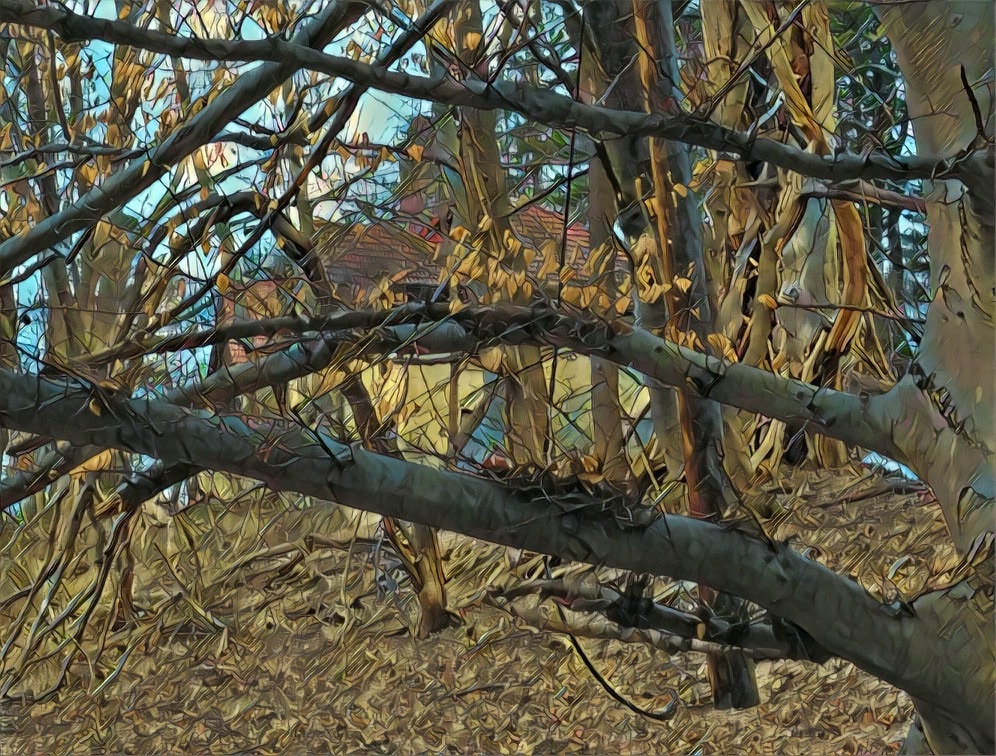


Many Paths arose and began pacing around in the Old Leader’s shelter. “Of course, since the outcome could impact everyone, I need to know how everyone believes it should be. Or, at least, find out as much as they know about how they want it to be.”

She Who Saved Many Lives considered for a moment before answering. “Yes. I suspect some will have many ideas about that while others may not care that much. Nearly everyone wants peace. On other matters, there may be great differences.” 

Many Paths sat back down. The two sat in a comfortable silence for a time. Many Paths rose at last and said, “Thank you for sharing your wisdom. I will look for some to walk with me a bit and contemplate the plants and their nature and try to see among them what it is that the people may be seeking. I’m glad you seem so much better.” 

“As am I, Many Paths. You know, you give me much to live for.” She Who Saved Many Lives smiled and added, “But I do think I will lie down for a nap now. Though some time in the near future, I might accompany you on such a walk.”

Many Paths left and saw Shadow Walker coming toward her. From the look on his face, Many Paths judged he had some news. His smile broadened as he approached and he said, “Hello my love! Can we go for a bit of a walk?” 

———————

Author Page on Amazon

Myths of the Veritas: The Orange Man

Myths of the Veritas: The Forgotten Field

Myths of the Veritas: The First Ring of Empathy

We won the war! We won the war!

Who won the war?

Somewhere a Bird Cries

How the Nightingale Learned to Sing

The Broken Times

The Silent Screams of Dead Mens Dreams

After All

When Greed is the Only Creed

A Pattern Language for Collaboration & Cooperation

Imagine All the People…

Roar, Ocean, Roar!

The Dance of Billions

Small Steps

Myths of the Veritas: Love Notes

04 Tuesday Aug 2026

Posted by petersironwood in fantasy, fiction, leadership, love, management, nature, psychology, story, Uncategorized, Veritas

≈ Leave a comment

Tags

books, empathy, ethics, fantasy, fiction, language, love, myth, short story, Veritas, writing

Shadow Walker awoke before dawn. He looked over at Many Paths, grateful for her, for the healing of life that had finally mended his leg, for the people he lived among. His imprisonment in the Great Walled City of the Z-Lotz had shown him that not all tribes are built on love and trust and truth. 

He smiled at Many Paths. He was sorely tempted to gently awaken her, but instead decided to treat her to some fresh blackberries. He had noticed some along the long, hidden path that now connected the Veritas here with those who lived on the other side of the mountain. He arose quietly and slipped out the front of their cabin when a thought occurred to him. The writing that Tu-Swift had discovered need not be limited to books. 

Shadow Walker softly stole back inside and wrote a simple note and put it beside Many Paths. He smiled as he imaged her awakening, not seeing Shadow Walker but then noticing that he had left a token of his love that could actually be read by his love. Every time he thought of it, he felt amazed all over again at this new world of writing and reading. 

He stopped by Tu-Swift’s cabin on the off chance Tu-Swift was also up early. Shadow Walker thought that perhaps he should really think of it now as the cabin of Tu-Swift and Cat Eyes. They were obviously in love, but, perhaps more importantly, Shadow Walker could see that the two of them worked well as a team. He smiled and thought of Many Paths. He whispered to himself, “Yes, Many Paths. We also make a good team.” 

The cabin of Tu-Swift and Cat Eyes was empty of people, but Shadow Walker immediately spied a piece of birchbark with writing symbols on it. The two of them had gotten up early and started on their translation work at a nearby overlook which caught the rays of the rising sun. Behind a natural rock table, what was nearly a perfect semi-circle of granite cliff reflected the rays making it a pleasant place where the dew lifted more quickly than other places. So, it was here they made their workshop for their most serious work. Sometimes, they did their work in the most public parts of the Veritas villages so that others could see what they were up to, ask questions, and learn. They didn’t mind having their work interrupted to answer questions. At the same time, to them, the quest for knowledge was a passion, not just because they of their thirst for knowledge, but multiplied by the overwhelming premonition they shared that just as terrible things had happened before, they would again — unless, perhaps — they might be able to piece things together so as to prevent making the same mistakes yet again. Some plants do well in full sunlight and much water. Others do better in shade with little water. Sometimes, Cat Eyes and Tu-Swift needed to focus on understanding in a deep way. Those deep roots would not grow with constant interruption; hence, the special area. 

Shadow Walker picked his blackberries that morning without human companionship. That hardly means he was alone. He picked early enough to hear a concert of his songful birdish cousins. Shadow Walker could see many of his smaller cousins as well {Translator’s Note: This is what we would call:} : ants, spiders, aphids, ladybugs, butterflies, a walking stick, several snails, and a cricket. When berry picking is a full time job, the experience is, no doubt, completely different. What Shadow Walker experienced, as an adult, was precisely the joy that any small child feels as they pick berries for the first time, marveling in the fresh, sweet, rich taste as the teeny bubbles burst syrupy goodness onto the tongue.

Shadow Walker also still felt the joy of the attention-demanding weave of hands so as to capture the berry but avoid the sharp prickers, and he still felt joy from the knowledge that he was doing his part; contributing something to family, community, and himself. In Shadow Walker’s experience of the moment, all of that was still fully there. In addition, he thought of it also as a present for the woman he loved with all his heart. 

Perhaps that is partly why, when he had plenty of berries to fulfill his contribution to the anticipated breakfast with Many Paths, he continued to pick berries until late morning. Plenty of other people in the village could share in the fruit and some might dry some of the berries for much later. 

Photo by Thierry Fillieul on Pexels.com

When Shadow Walker did arrive back, much later than he had originally intended, he heard soft crying from within. His mood slid from a bright yellow joy to a dark purple sadness because that is what he received from Many Paths. 

He knelt down beside her, took her hands gently into his and asked, “What on earth is wrong?”

She looked up, sighed, and looked into Shadow Walker’s face. She knelt down and wrapped her arms around him, holding him tightly to her, not with the energy necessary to signal another person that you like them or even the energy of a hug that lingers because it feels good. This was more like the hug of someone holding onto a tree limb or an overhang — holding on for dear life.

Shadow Walker knew the difference. At last, Many Paths released her hold, sat back up and smiled at him. She began,  

“Thank you for leaving me the note!” 

—————————

The Myths of the Veritas: The Forgotten Field

The Myths of the Veritas: The Orange Man

The Myths of the Veritas: The Tale of the Three Blind Mice

The Myths of the Veritas: Stoned Soup

The Myths of the Veritas: The First Ring of Empathy

A Pattern Language for Collaboration and Cooperation

It was in his Nature

Is a Dream

How the Nightingale Learned to Sing

Somewhere a Bird Cries

Fish Have no Word for Water

The Dance of Billions

Corn on the Cob

Doing the Dishes Pounding the Corn

Author Page on Amazon

Myths of the Veritas: The Tale of Three Blind Mice

29 Wednesday Jul 2026

Posted by petersironwood in fiction, leadership, politics, psychology, Uncategorized, Veritas

≈ 2 Comments

Tags

Aesop, America, books, fable, fantasy, fiction, greed, hubris, myths, peace, short story, treason, USA, Veritas, writing

Many Paths sighed. “What do you mean by saying that it has all happened before, brother of mine?” 

Tu-Swift glanced back at Cat Eyes. Surely, Cat Eyes would be able to explain better than he could. But he could see that her parents Tree Vines and Gathers Acorns smothered her with affection, so he resolved to try to explain. “Throughout time, people have been prosperous for a time and then ruined it through the actions of the few who wish to indulge their greed and lies. We all know the story of the Orange Man. But there are many such stories, apparently from many places. Lies and greed always end the same way — with misery for the many and eventually with misery for those few greedy as well. I recently read — well, Cat Eyes read me a story about another liar whom they called “The Wobbly Man” who went into a beautiful, peaceful village and tore apart the people, one from another. And, just before Trunk of Tree came — before he discovered a short cut to the Veritas on the Other Side of the Mountain, we were decoding a whole series of stories that were meant to caution people so that they wouldn’t fall for the lies of the greedy. But why are such stories necessary? Why can’t people seem to see what the greedy are up to? If the answer to that puzzle is in the books, we have not yet found it.” 

Many Paths nodded. “I wish to know about these books and the wisdom in them. I need to hold council with people here. I need everyone’s wisdom to help me try to bring peace among the tribes. It seems that I may also gain good counsel from those who have gone before us. If, as you — and She Who Saves Many Lives — both seem to claim, this has all happened before, we can learn from these books what wisdom they have. Can you read me one of these stories?” 

So, it came to pass that Tu-Swift read to Many Paths the story called “The Three Blind Mice.” As he read, many of the Veritas gathered round to listen.

The Story of the Three Blind Mice.

Once before our time, a field of goldenrod provided a lovely home for a very large and prosperous camp-land of field mice. The goldenrod attracted grasshoppers and the mice loved the tasty and nutritious grasshoppers. When, as happens to all, eventually each individual mouse died, and they then provided food for the roots of the goldenrod which grew ever taller and more attractive to the grasshoppers. All was well in the golden field.


As things became ever more prosperous for the mice, a thought occurred to two of the mice. Their names were Cheat and Lie.

Cheat said to Lie: “We have more than we used to have. And that feels good. So, we would feel even better if we had more than anyone else.” 

Lie said to Cheat: “I suppose you’re right. But so what? Why would everyone agree to give us more?” 

They darted their eyes at random for awhile, wriggling their whiskers and trying to think of an answer to that puzzle. 

Presently, Lie said to Cheat, “We will lie to them! We will tell the that they are not happy. We will tell them that they are in danger! We will tell them that they cannot trust each other. They can only trust us. We will keep them safe!”

Cheat said to Lie: “That’s a wonderful idea!” Then, a mousy frown appeared between Cheat’s eyes and he said, “But why would they believe it? I mean look at us. We’re not by any means the fastest mice or the strongest. We don’t have the best eyesight. Why would they believe that we can protect them better than they themselves can?” 

Lie said to Cheat: “We will recruit Chaos to our cause! He has a knack for disorder. He will make everything so confusing that everyone will want to believe that we’ll take care of everything for them.”

That very night, while all the other mice slept, Cheat and Lie crept over to the usual sleeping spot of Chaos who was not too happy about being awakened.

Lie and Cheat cautioned him to be quiet and the trio snuck off to a part of the field that all the other mice typically avoided. They explained their plot to Chaos who readily agreed to play his part. He loved to confuse other mice every chance he had. 

Photo by u041eu043bu0435u0433 u042fu043au043eu0432u043bu0435u0432 on Pexels.com

The three were startled by the sudden appearance of a huge pair of eyes atop a gigantic maw of jaws. The Fox’s voice however, was surprisingly warm and smooth. “No need to run. I’m not interested in hurting you three. I overheard your plans. Very smart. Very smart. Still, I think I could improve upon your plans quite a bit. With my help, you three clever mice will get what you deserve! You deserve more than an equal share. Much more. And, I will help you.”

The three mice were feeling both reassured and proud. After all, they had been called “smart” by a fox! 

Cheat asked, “How can you help? And why would you, if you don’t mind my asking?” 

Fox nodded sagely. “You ask two excellent questions. You are indeed smart mice. First, let me just ask you a question so that I may answer your question in a way more tailored to your needs. Aren’t there among all you mice some that annoy you greatly or that you find unattractive?” 

Cheat answered first, “I really hate those mice that have to make up and follow rules.” 

Lie said, “And I hate the ones that always insist on the truth.”

Chaos answered, “I hate folks with pinkish toes. They just disgust me. For one thing, I’m highly attracted to them. But I don’t want to be. So, that makes me uncomfortable.” 

Fox nodded. “I can see exactly why you find those sorts annoying. I do too! You say you want to make everyone afraid even though things are going well. Now, imagine how much more fearful everyone will be when a fox shows up and eats some of the mice. Not just any mice of course, but just the icky ones. Mice with pink toes or who insist on the truth or follow rules. Of course, we will first have to make sure that lots of your fellow mice also hate those with pink toes and so forth. And, now, as you clever mice surely see, I have answered your original questions. Firstly, I can help by making your fellow mice so scared, they will literally come to believe anything you say and won’t mind giving some of their grasshoppers to you. Secondly, the why is simple. I get to eat the hateful ones among you. And that will make life better for you as well — no more hateful ones around.”

And, so, their deal was settled and, sure enough, thanks to helpful suggestions from Fox, over time, many of the mice came to hate those who played by the rules and came to hate mice with pink toes, and came to hate mice who insisted on the truth. 

Fox was happy to have his mice “delivered to him” ready to devour. He no longer had to chase after them. 

After some months, however, the supply of the hateful mice began to dwindle. Fox was no longer satisfied. He made it quite clear that he needed to speak to Chaos, Lie, and Cheat who had by now grown quite fat with the extra provisions they took from the other mice. 

Fox began: “Chaos, Lie, and Cheat, you have done quite well. Honestly, I’m quite amazed that things have gone as well as they have for all of us. You’re obviously all doing well. Let’s keep things going for both our sakes. You’ve run out of hateful mice, but that’s not a problem. We will simply need to expand the circle of hateful mice a little bit. No big deal. I can help you figure out how. Maybe mice with scraggly fur or mice with crooked teeth or mice that are unusually small. It’s totally up to you. I am really just a pawn in your plans.”


And, for a long while things went along much the same. Fox would get his fill of mice without having to chase them. The three mice — Chaos, Lie, and Cheat grew fatter and fatter. Some of the mice were rather shocked that Chaos, Lie, and Cheat were fomenting hate against certain mice and then ordering them to be rounded up to end up in the stomach of Fox. Some of the mice were rather glad it was happening. They were eager to help. They convinced themselves that they had always hated such and such a kind of mouse. Most of the mice were just glad that they weren’t the ones sacrificed to the Fox. After all, this was a world full of woe, just as Chaos, Lie, and Cheat kept saying.

At last, there came the day when Chaos, Lie, and Cheat had truly sad news to share with Fox. Cheat, Lie, and Chaos drew straws to see who would break the news to Fox. Lie lost and so he began: “I’m so sorry to break the bad news to you, Fox, but we seem to have run out of mice! We drew our circle tighter and tighter just as you suggested but you’ve now eaten up all of our hateful kin. But the good news is that you have been quite well fed for quite awhile and have plenty of fat to tide you over for a few months.”

Now, Cheat chimed in: “I suppose you’ll be moving on to other fields where there are still many mice?” 

Lie added, “It has been a pleasure doing business with you, Fox.” 

Fox smiled in a foxy sort of way: “Indeed it has. And, I will be moving on to other fields as you suggest. But, our business is not yet over, and I won’t be leaving this field today. First, to show my gratitude to three such clever mice, I have gifts for you. For each of you, I have a tooth of solid gold. Here, walk right in and take your trophy tooth.”

Fox opened his mouth wide. In walked the three clever mice to claim their prize. 

And, never walked out.

When Tu-Swift finished, everyone sat silently for no-one wanted to be the first to speak. Each person who had heard felt a heaviness inside. Each recognized from their own experience how easy it is for greed to lead to blindness; for those who have more, to think that they will be cleverer than all the overly greedy people who went before. It had been so for the Orange Man. It had been so for NUT-PI. It had been so for ALT-R and POND MUD. Each wondered whether the Veritas were doomed to suffer the same dismal and inevitable fate. Or, whether this time, perhaps Many Paths could once again help them find a ray of hope.

———————————————

Myths of the Veritas: The Orange Man

Myths of the Veritas: Stoned Soup

Myths of the Veritas: The First Ring of Empathy

Essays on America: My Cousin Bobby

Where Does Your Loyalty Lie?

Essays on America: The Stopping Rule

When Greed’s the Only Creed

All We Have to Lose

After All

The Broken Times

Absolute is not just a vodka

Plans for us; some GRUesome

The Dance of Billions

Roar, Ocean, Roar!

Author Page on Amazon

← Older posts
Newer posts →

Subscribe

  • Entries (RSS)
  • Comments (RSS)

Archives

  • November 2026
  • October 2026
  • September 2026
  • August 2026
  • July 2026
  • June 2026
  • May 2026
  • April 2026
  • March 2026
  • February 2026
  • January 2026
  • December 2025
  • November 2025
  • October 2025
  • September 2025
  • August 2025
  • July 2025
  • June 2025
  • May 2025
  • April 2025
  • March 2025
  • February 2025
  • January 2025
  • December 2024
  • November 2024
  • October 2024
  • September 2024
  • July 2024
  • April 2024
  • March 2024
  • February 2024
  • January 2024
  • December 2023
  • August 2023
  • July 2023
  • May 2023
  • April 2023
  • March 2023
  • February 2023
  • January 2023
  • December 2022
  • November 2022
  • October 2022
  • September 2022
  • August 2022
  • July 2022
  • June 2022
  • May 2022
  • April 2022
  • March 2022
  • February 2022
  • January 2022
  • December 2021
  • November 2021
  • October 2021
  • September 2021
  • August 2021
  • July 2021
  • June 2021
  • May 2021
  • April 2021
  • March 2021
  • February 2021
  • January 2021
  • December 2020
  • November 2020
  • October 2020
  • September 2020
  • August 2020
  • July 2020
  • June 2020
  • May 2020
  • April 2020
  • March 2020
  • February 2020
  • January 2020
  • December 2019
  • November 2019
  • October 2019
  • September 2019
  • August 2019
  • July 2019
  • June 2019
  • May 2019
  • April 2019
  • March 2019
  • February 2019
  • January 2019
  • December 2018
  • November 2018
  • October 2018
  • September 2018
  • August 2018
  • July 2018
  • June 2018
  • May 2018
  • April 2018
  • March 2018
  • February 2018
  • January 2018
  • December 2017
  • November 2017
  • October 2017
  • September 2017
  • August 2017
  • July 2017
  • June 2017
  • May 2017
  • April 2017
  • March 2017
  • February 2017
  • January 2017
  • December 2016
  • November 2016
  • October 2016
  • September 2016
  • August 2016
  • July 2016
  • June 2016
  • May 2016
  • April 2016
  • March 2016
  • February 2016
  • January 2016
  • December 2015
  • November 2015
  • October 2015
  • September 2015
  • August 2015
  • May 2015
  • January 2015
  • July 2014
  • January 2014
  • December 2013
  • November 2013

Categories

  • AI
  • America
  • apocalypse
  • cats
  • COVID-19
  • creativity
  • design rationale
  • dogs
  • driverless cars
  • essay
    • guns
  • family
  • fantasy
  • fiction
  • HCI
  • health
  • leadership
  • love
  • management
  • nature
  • pets
  • poetry
  • politics
  • psychology
  • Sadie
  • satire
  • science
  • sports
  • story
  • The Singularity
  • Travel
  • Uncategorized
  • user experience
  • Veritas
  • Walkabout Diaries

Meta

  • Create account
  • Log in

Blog at WordPress.com.

  • Subscribe Subscribed
    petersironwood
    Join 644 other subscribers

    Have a WordPress.com account? Log in now.

  • petersironwood
    View site in Reader
    Manage subscriptionsSign upLog in
    Report this content
    Collapse this bar
Loading Comments...