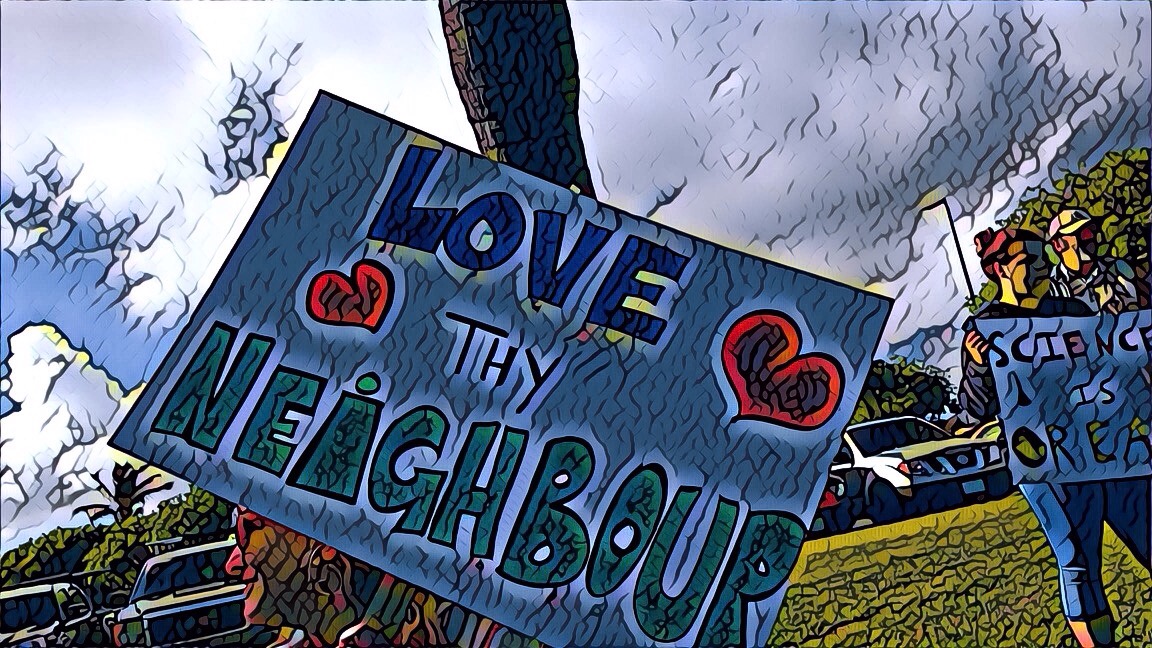
An expression that perhaps goes back to the Roman Coliseum or “gentlemanly” dueling. What is a weapon? What can it mean to say, “The pen is mightier than the sword.”?
A few years ago, I decided to try a little experiment. I knew that studies showed that owning a handgun did not, in general, make you safer. Actually, it was the reverse. Nonetheless, I thought perhaps I would feel safer. For one week, I imagined that my cellphone was a lethal weapon. I could pull it out and cause someone else horrendous pain or end their life or both. As you might imagine, I did not feel more secure or safer. I felt more paranoid about others but also afraid I might accidentally shoot someone.

In the middle of Monday night, one of our cats turned over some cat bowls and made a huge ruckus. I immediately yelled bloody murder and jumped out of bed. I would not want to have a gun if I’m awakened like that. My body is primed for action and my mind is not yet anywhere to be found. I literally have no idea as to what’s going on. It only last a few moments. But those few moments are enough time to grab a gun and shoot someone. And that someone is far more likely to be someone in my family than a home invader. Maybe they left a book in your room and couldn’t sleep so they came into your room to retrieve it. I don’t really think an error like that is self-forgivable. Your mood would be altered much to the negative for the rest of your life. The only alternative would be to shut off your feelings so completely that you literally become a heartless monster.
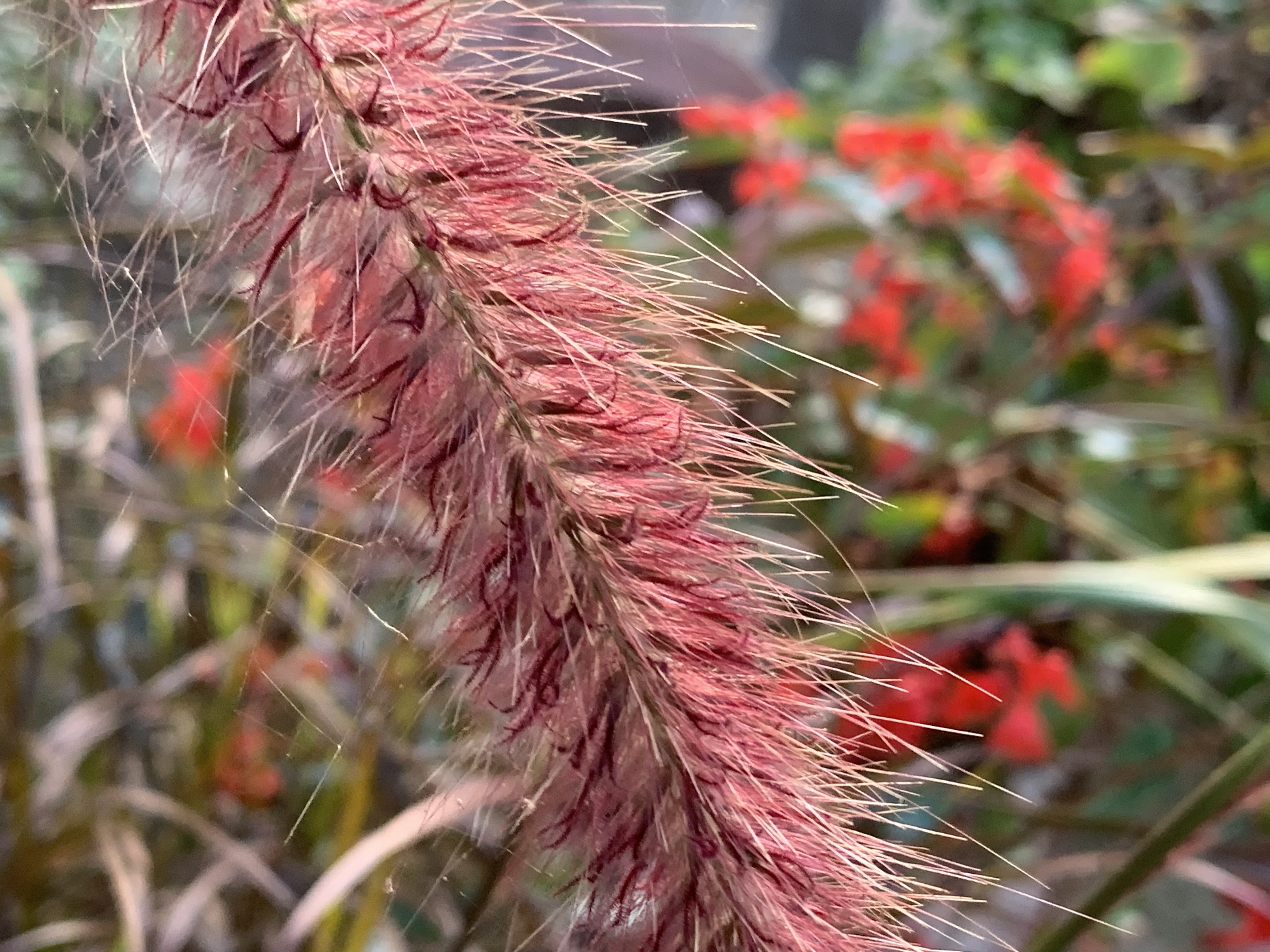
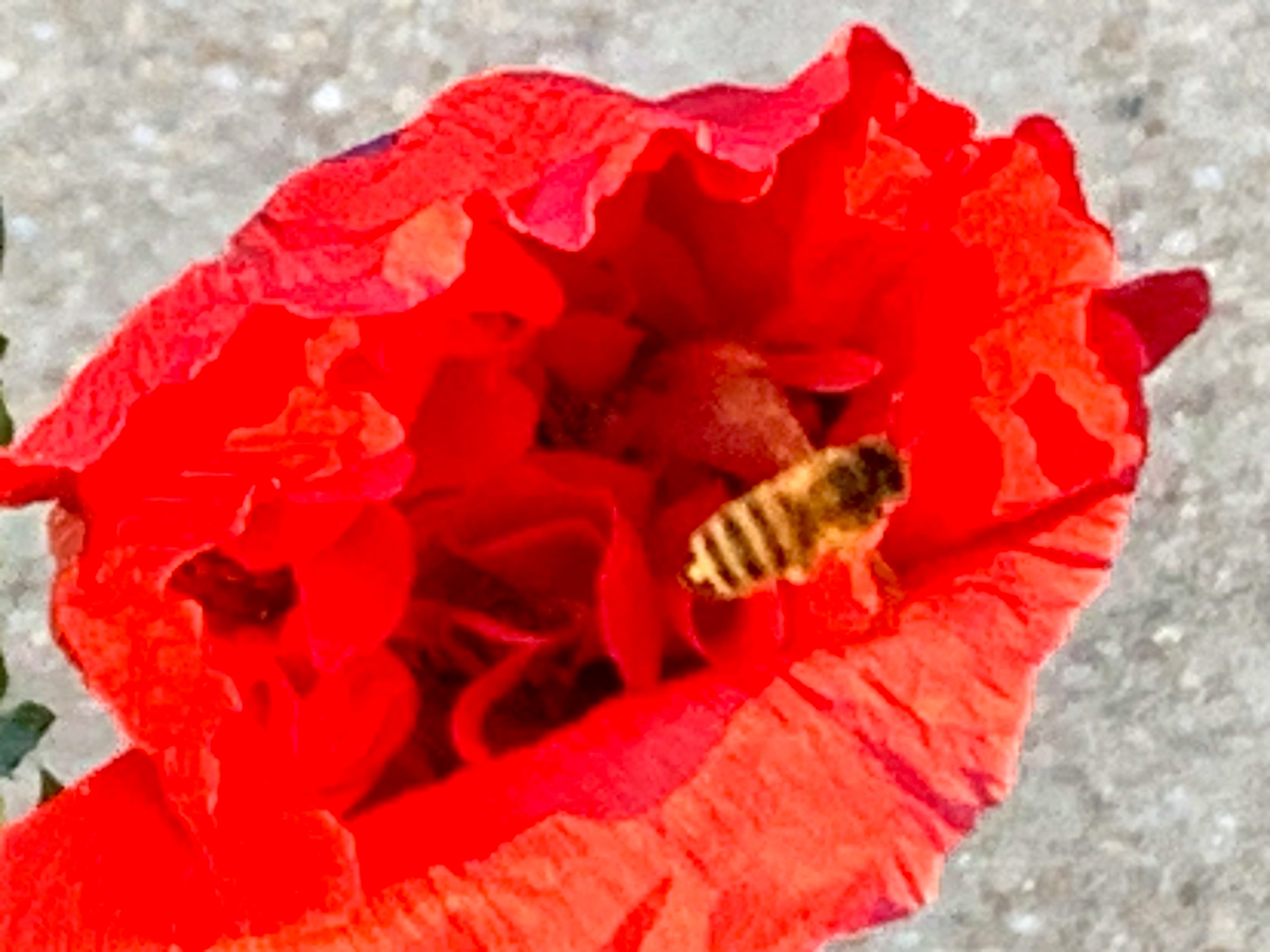
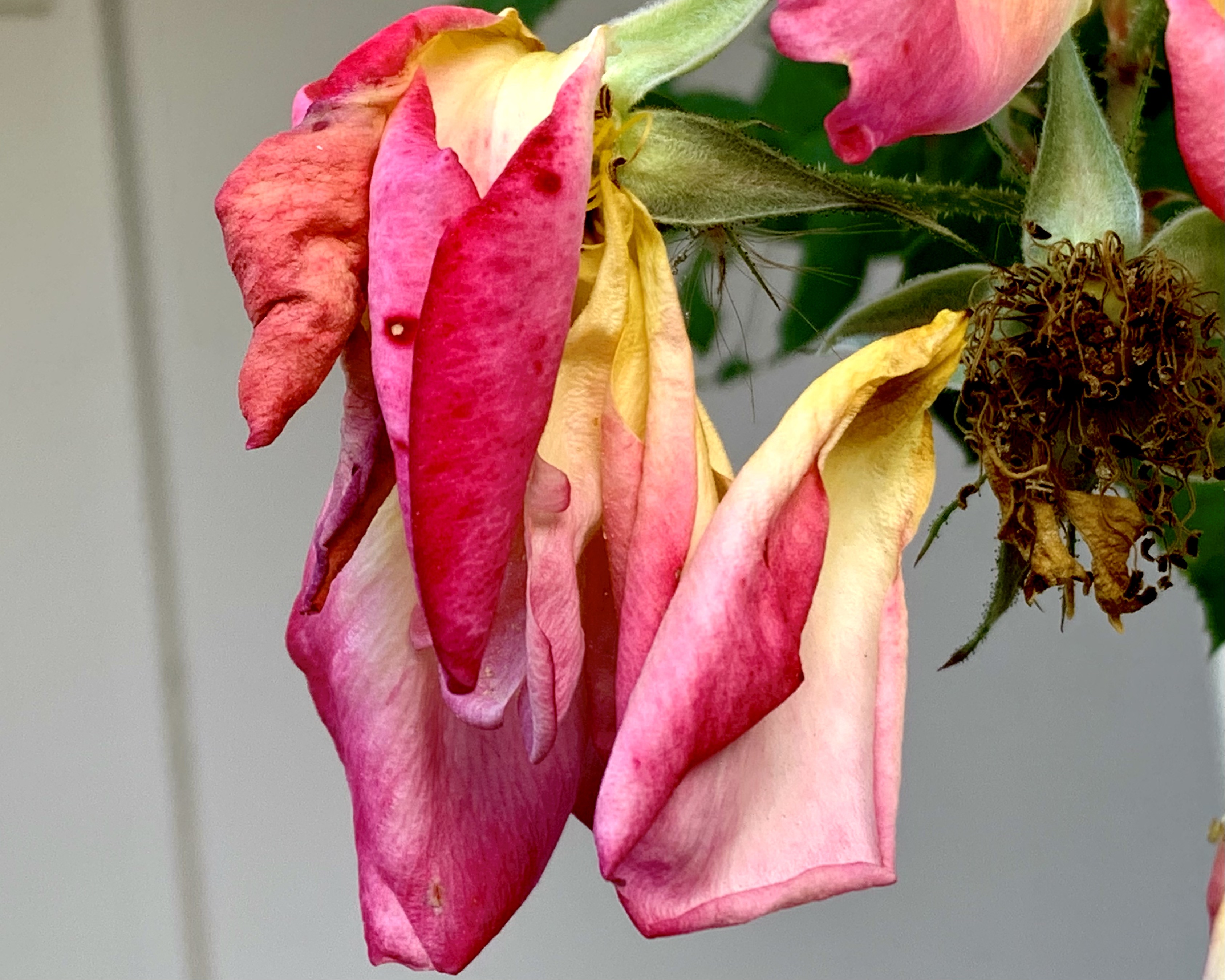
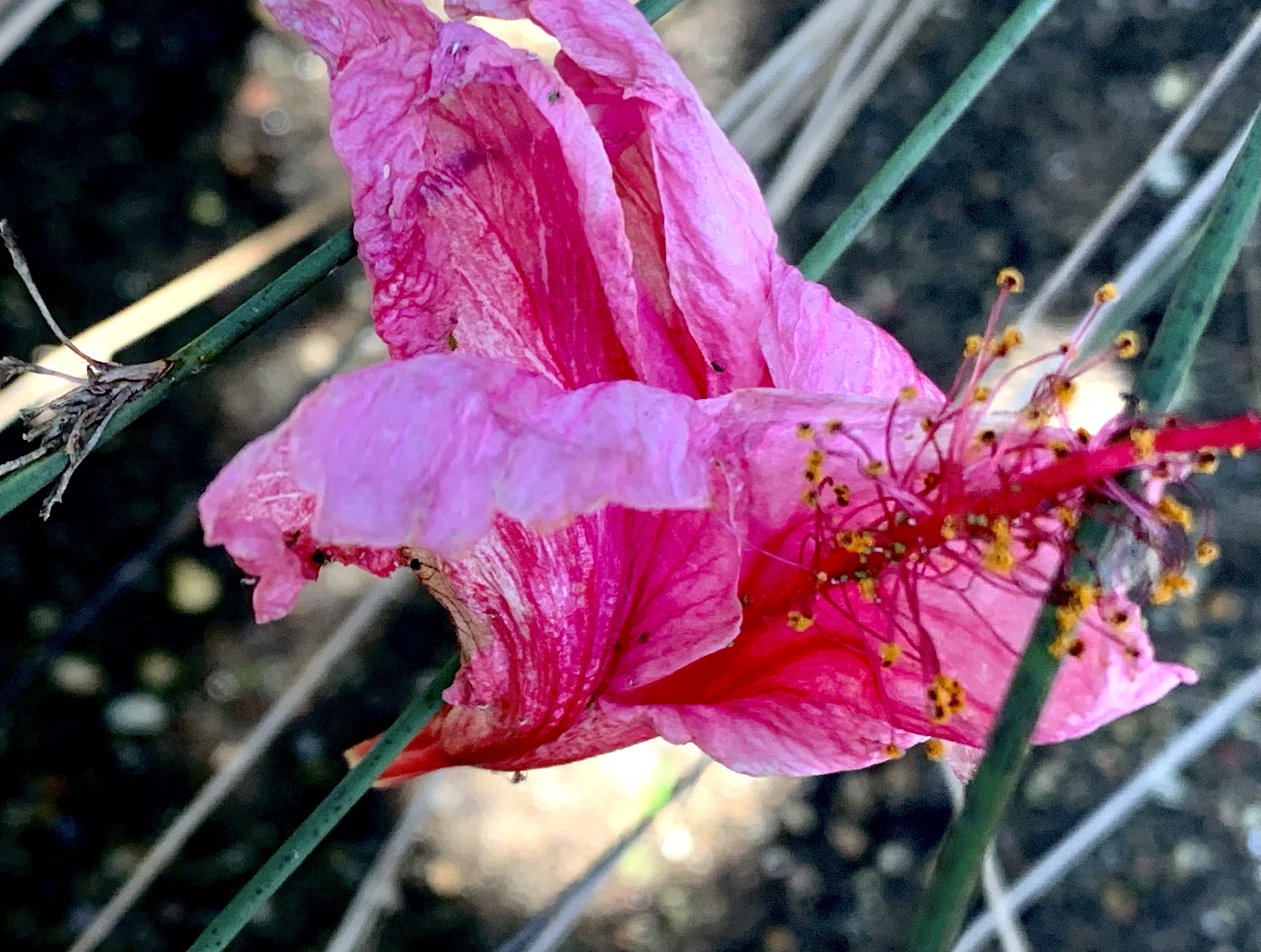
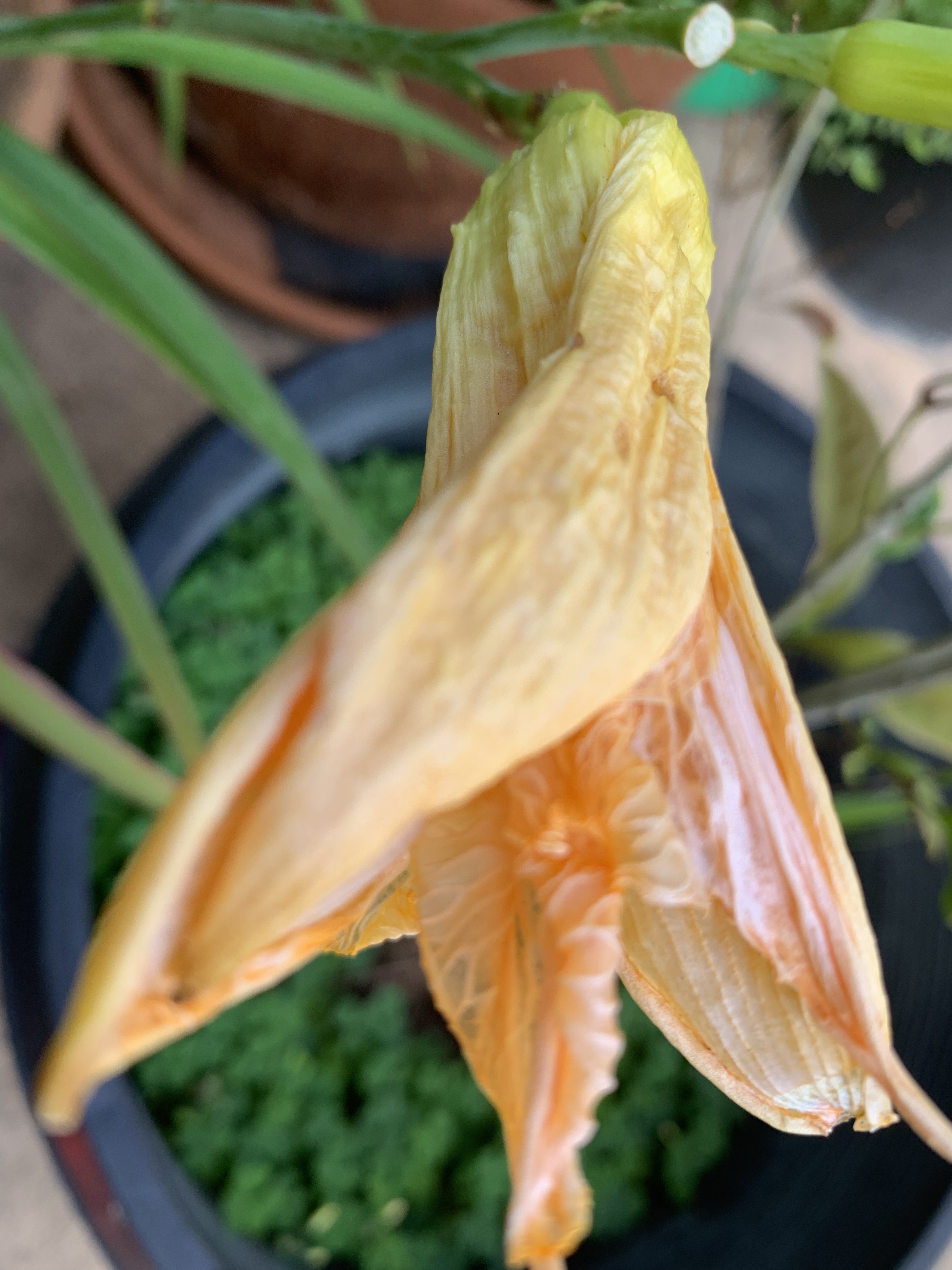
What occurred to me tonight while taking pictures of flowers, as one is wont to do, is that taking pictures is making a much better use of the iPhone than a gun for home protection is. For one thing, if you own a gun for home protection, you hopefully rarely use it. I use the iPhone nearly every day. The statistics say that you’re actually more likely to die in a home invasion if you have a gun, but let’s say, no, in your particular case, you did manage to shoot two people dead. And, that’s that.
Except of course, it isn’t done at all. You will find out that the families of the two people you shot didn’t think it was so cool and they may sue you. Or, you may find out things about those families such as how desperate they were to make enough money to feed their kids that they turned to crime. Of course, you don’t want to hear that. They broke the law. And, indeed, in many states, that can be enough to get you off the hook.
The “hook” of the law, that is. But that’s not the only hook. There’s the social hook. How do you think other people would view you? Maybe some will view you as a hero. But certainly many will not. You might end up being much more annoyed at those who view you as a hero than at those who view you as a villain. Either way, your life will never be the same. Those changes are much more likely to be negative on balance.
There’s another social hook. How would you feel about someone you care about marrying into a family where someone killed two young lads? Better protected? Or, might you be worried about how that gun might be used in the future, in say, a marital dispute? (Although, of course, suicides and accidental killings should also be on your mind, but those are always a possibility with a gun owner. But in the case of the dual killer, we don’t just know he might kill when provoked; we know he will kill when provoked. Maybe you think a home invasion is sufficient reason for murder. But how about a marital dispute? Surely you’ve noticed that even couples who love each other can come to a point where they are too frustrated to think clearly. I don’t really see how a gun helps a situation like that.
Lastly, there is your own hook. That may be the sharpest and deepest cutting hook of all. You will second guess your actions on the night of the fatal shooting no matter what. That’s just human nature. Some dark, rainy evening, when that re-run is playing for the 13th time, it will hit you that you knew damned well they were unarmed. Another part of your brain screams “Bullshit!” And, so you block it out. Until several weeks later, you discover your cousin’s preferred brand of weed is way stronger than what you’re used to. And, as that snuff movie replays itself yet again, it occurs to you that you not only knew they were unarmed, you thought: “So what? Nobody’s going to put me in prison for it. In this state, they’l think I’m a hero.” Again, you hear the booming voice: “Bullshit!” Only this time, you realize that isn’t your voice at all. That voice is the one he used to destroy you when you told people about his molestations. That’s not you. Or is it? You might, at some point, find yourself depressed by this debate, perhaps riddled with self-doubt. At other times, maybe you’ll come to peace with your actions. But the debate will never stop.
I take pictures of flowers. They are for anyone to enjoy or ignore. No regrets. That’s my “weapon” of choice.
Do you remember the song, “Take me for a ride in the car car”? Here’s a link to one popular version. Peter, Paul, & Mary also sang it. Nice song. But you may have experienced it being repeated too often. At a certain age, some kids seem to discover that they can be really annoying simply by singing a song over and over and over and over.
When I was in my early teens, I took a car trip with my Uncle Paul and his wife and three (at that time) kids out to see his brother Bob who headed up a psychiatric hospital in Pennsylvania. It was a long drive. At some point, to pass the time, we sang some songs. When the last song was over, Paul’s youngest son began to make up new verses for one of the songs. At first, it was rather cute to watch him try to build a story, rhyme, and keep in tune. He actually succeeded at none of these, but it was still cute.
But after about a quarter hour, he began to annoy a few people with his off-key, non-rhyming, senseless continuations of the song. After about a half hour he was annoying everyone. After an hour, we began to discuss leaving him by the side of the road and returning in another ten years to see whether he was still there.
On car trips, we used to play a number of games to pass the time; e.g., seeing how many different states license plates we found find. Later, I learned to play “The Alphabet Game.” There are several versions, but basically, you must find, in order, the letters of the alphabet from passing cars, signs, etc. Stuff inside your own car cannot be used. (You could easily find all the letters in a book or magazine). I’ve learned to know where to look for J, Q, and Z. I’ve been in cars where we played twenty questions, Botticelli, Buzz, and Ghost. When I was a kid, I also simply looked out the window to entertain myself. Sometimes, I would imagine that the dotted lines that divide the lanes were like tracer bullets shot from our car. Then, I would watch to see whether another car got “blown up” because they crossed our fire. I would also imagine myself “flying” alongside the car, having to bob and weave to avoid telephone poles, trees, signposts, etc.
Traveling in a car with a family or with a group of friends or your car pool is potentially a social opportunity as well as an opportunity to save money. Since you’re in the same car, you need to agree on destination. To some extent, you need to agree on temperature & what to do about the windows. As a kid, everyone also lived in the same “sonic space.” We would have to “agree” on a game or on a radio station. This is no longer the case. Now, often times, everyone in the family may have their own individual entertainment. Is that a good thing or a bad thing?
Even in the modern day, driving in a car with others is different from driving in a car on your own. If you’re by yourself, you can decide on the temperature and entertainment without having to take into account anyone else’s wishes. If others are in the car, some kind of negotiations have to take place.
At least, that’s what most people do. You could decide: “Hey! It’s my car so I’m going to drive and I get to determine everything about our common space — temperature, entertainment, windows, whether we stop, etc.” This is what is known in academic circles as the “A$$hole theory of cooperation”: Get everything you possibly can for yourself and to hell with everyone else. And after all, they’re doing the same exact thing.
Notice too that to some degree, the amount of accommodation you have to do depends on how much humanity is in the car besides yourself. It also depends on how “luxurious” your vehicle is. If you have a tour bus or a camper, six people might be relatively comfortable. If it’s a VW bug, you won’t be. You’ll not only be crowded; you’ll have to be careful every time you move not to accidentally elbow someone in the eye. Have you ever been in that crowded of a situation for hours at a time or even days at a time?
It isn’t just cars. In general, the more people occupy a given space, the more they are going to have to cooperate in order to survive and thrive. You can provide individuality support with technology, up to a point. In a way, clothing is like that. We can peacefully co-exist in a car without either of us compromising our comfort because I can wear a sweater and you can wear a thin shirt. You can provide everyone an iPhone and everyone can play their own game without having to agree on a common game. Of course, there’s a downside to that. First, we don’t have practice getting along with others. Second, we don’t share a common experience.
Even if the “typical” family of four interrupts their car trip and stops for lunch and agrees to talk, they are likely coming from very different places. Dad has been listening to Mozart and was in good mood until he suddenly remembered he was supposed to have sent out a memo to everyone in the department about last month’s sales figures. Damn. Maybe he can do it from the Motel but it will take longer than it would have at work. His son Sam, meanwhile, was trying to use sexting to convince his girlfriend to “take their relationship to the next level.” As a result, they just broke up. Dad doesn’t know a thing about that; nor does Sam know anything about why Dad suddenly seems put out. Mom meanwhile, was listening to Fox “News” where she “learned” that it’s Biden’s fault Putin “had to” attack the Ukraine because Biden was too tough on Russia and also too easy. Her daughter Sally, on the other hand, has spent the last 45 minutes on twitter learning about the Putin invasion. She is wondering whether atomic war might start.
Now, they stop for lunch. That’s nice. And, maybe they’ll talk about something common; perhaps the weather, or the scenery or the food. But they might just revert to what they were doing before they got together at the restaurant. Even if they all have the willpower to put away their personal devices, they are still coming from very different places emotionally and experientially. Dad might make a comment about how he forgot to write an important e-mail and he’ll have to do it from the Motel. Sam just shakes his head and says, “Important e-mail? My life is ruined! What do you care?”
Dad might say, “What do you mean by saying that your life is ruined?”
Sam might even share, “Jackie broke up with me!”
Dad, meaning well, and wanting to offer a solution before he starts reminiscing about his own high school days, blurts out: “Oh, Sam, don’t worry about it! You’ll have another girlfriend in a week.”
That may well be empirically true. But to Sam? He feels he has just lost the love of his life. His father’s comment seems to him to be dismissive of his feelings to the point of cruelty.
Sally pipes up, “How can you be worried about such trivial things as e-mail and dates when we might be blown to smithereens at any moment? Do you ever pay any attention to the world outside yourself? Putin is a monster killing innocent civilians so he can slake the thirst of his pathetic ego!”
Mom is taken aback. The only news she doesn’t dismiss as “lies that are out to get Trump” has been Fox “News” for the last few years. She says, “Don’t be saying bad things about Putin! He’s a nice man who just wants his Ukraine back.”
Sally’s jaw drops. “Are you serious! He kills journalists who write the truth about him. He’s a corrupt crime lord. He played Trump like a fiddle … no … not that complicated … played him like a drum … no … still too complicated … played him like the triangle. You know. Bang it every once in awhile and it reverberates. Anyway, it isn’t “his” Ukraine. It belongs to the Ukrainian people!”
Some families are better at getting through all this than others. These four have not shared a common experience and are coming from very different places. If they have no practice playing a game according to a common set of rules, what chance to they have to settle deeper differences?
Maybe avoiding little conflicts by giving everyone their own personal entertainment device means that when much bigger and more difficult conflicts arise, no-one remembers how to resolve things. Why shouldn’t everything by how I want it? Let others do the same! Let the best man win!
Except, of course, it isn’t the best man or woman who actually wins in a land where no-one plays by the rules. It’s the most corrupt. And the net result of everyone spending so much time competing and so little, if any, time cooperating is that nothing much is actually accomplished. It doesn’t even work very well in a small group. In a large nation, a dictatorship is almost invariably associated with less for everyone except the dictator and the immediate surround. Dictatorships do sometimes manage to steal from neighbors who are productive because they are cooperative. If all countries were dictatorships, they would all perish, probably in atomic war, but possibly in ecological collapse or just mass suicide.
In 2018, I worked on a “Pattern Language” for collaboration and cooperation. Here’s a link to anindex of the Patterns. One of them is called “Small Successes Early.” Should I be worried that we seem to be moving into a world where there are fewer and fewer opportunities for peacefully resolving small conflicts? Avoiding unnecessary conflict seems like a good thing. But … is the downside that people have no practice resolving conflicts? And, is the further downside that people eventually end up with huge differences in their notions of reality when it really matters? It seems to be the very thing that Faux News has been counting on; that people would not only listen to them but not listen or dismiss any other views. As a result, people end up with very different models and explanations of the world. That is always a bad thing, but in a world where people are unpracticed at resolving conflicts, it’s even more problematic.
There is always a tradeoff between cooperating as a whole and letting each individual do as they wish. One thing seems crystal clear. As the number of people in your car increases, their individual freedom to do just as they please decreases. So, too, with the world. In my own lifetime, the population of the world has quadrupled. Of course, it’s not equally distributed. People are more concentrated in cities than ever before. Many of these cities are located on ocean coasts. What does the continuation of global warming mean to population migration and crowding?
Remember the COVID pandemic? I’m not sure how many people realize this, but we’re likely to see other pandemics. If people were very sparsely populated, we probably wouldn’t be at risk. But as we continue to get more crowded, humanity will become more susceptible to pandemics. That in turn, means people will have to accommodate to each other’s needs. As a background rule, a person can choose to wear what they want. There are, of course, many exceptions to that. In many situations, you have to wear a shirt and shoes. In some situations, you have to wear a suit and tie or a uniform. If you might be spraying germs at other people, it seems totally reasonable to change your behavior or clothing to minimize that spread. But some people apparently think that they should be able to do exactly as they want regardless of the consequences to others.
As the earth becomes more crowded, we need to be more cooperative, not less. The presence of a large number of deadly weapons also makes it more important to cooperate. The race to ensure survival by having ever larger numbers of ever more deadly weapons is not a path toward that greater cooperation. Dictators, for instance, tilt toward war to consolidate their power. A world with zero dictators wouldn’t necessarily be at peace, but when there are dictators or people seeking to become dictators, there will certainly be wars.
In a crowded car, people need to accommodate each other. Under a dictatorship, you quite possibly won’t own a car, but even if you do, there will only be a few or even one channel of “entertainment.” One song will be sung: a song of praise for “Der Fooler” and more than likely, it won’t be high quality in terms of rhyme, logic, music, or lyrics. The singer will be the one who bribes or cajoles the parasite(s) in charge.
I was about five when my grandfather held my ear in the Solarium as we watched for cars and tried to guess the color of the next one. And, he quoted Confucius:
“When I reach over and pinch my grandson’s ear for a moment, I hold immortality in my hand.” When I was a child, I took this to mean that I was his immortality since I would live on. And, he did mean that. But I also think that he meant me to remember it when I became a grandfather. So, I pass down this wisdom, originally perhaps from Confucius and perhaps from much older sources.
In any case, when I contemplate their lives, it also means I hold immortality in my mind. I see the unbroken chain of ideas as well as the unbroken chain of biology. We are all part of a great tree of life. And, now we are also part of a giant tree of information. Ideally, the two work together as one. We learn more and as we learn more we use that knowledge to make the tree of life ever more resilient and ever more diverse. The healthier the Great Tree of Life, the more time and energy will be left over for us to learn more and more. Biology and knowledge reinforce each other in a natural virtuous circle.
Destroying the chain of knowledge and instead corrupting it for selfish purposes will mar the Great Tree of Life. It cannot be otherwise. How can we do what is wise for any part of the Tree of Life, if we are filled with lies? We will utterly fail to be nourishing. The Cancer-Greed will want you to think nothing of the welfare of any life except a small circle which they will, of course, claim to include you in. But focusing that narrowly on life always results in catastrophe. It’s like driving a car in LA traffic while staring at a spot on your steering wheel through a magnifying glass.
“Short-sightedness can be fatal.”
——————-
Certain experiences jump so easily to mind after many decades much more readily than they have any right to. For example, my grandfather made a wonderful rock garden with a goldfish pond. Once when I was perhaps 5, we sat on a rock and I saw some ants on the ground traveling in a line. He wondered aloud whether they were “sugar ants” or “fat ants.” He claimed that some ants like sugar and others prefer fat. Well, I certainly knew where I stood on that issue and announced, “Oh, they are sugar ants!” We got two little bottle caps and in one, put some sugary water and in the other some lard. (Back in those days, people used lard. It’s true.)
I knew, even then, that my grandpa was a really smart guy. And, yet, here I was — absolutely sure of the answer without even having to do an experiment. Fat? Yech! Don’t get me wrong. I already loved bacon and nuts. But Lard? What self-respecting ant is going to want to eat that? I certainly wouldn’t!
It didn’t take long for me to be proven right. The ants almost totally ignored the lard and had an entire supply chain set up in minutes for the sugar water. Of course, it’s easy to see now that my reasoning was completely naive and self-centered. But that didn’t mean I believed it any less fervently. Grandpa designed an experiment and we looked at the results. But it was no experiment to me. I knew the answer — so I thought. It wasn’t as though I thought it more likely that they would go for the sugar. No. I knew they would go for the sugar because that’s what I would do.
“Pilots who die from running out of gas were sure they wouldn’t when they took off.”
Many Paths trotted over to the location specified by the drum rolls. Her eyes skimmed over the path ahead, skipping from one good landing spot to another. She gave a little chuckle as she reminded herself that there was no need for another sprain in the family. Images of her brother Tu-Swift and her lover Shadow Walker both loomed into her mind’s eye. She missed both of them so much. She believed it likely that Tu-Swift was fine but Shadow Walker was another matter. She felt he was okay, but being surrounded by ROI and Z-Lotz…? That was inherently dangerous and unstable. She really wanted both of them to be with her.
Then she sighed and thought to herself, If I am really going to attempt to bring peace to the tribes — or bring the tribes to peace — I must be able to master my own feelings. Trunk of Tree is not the person whose counsel I most wish for, but still he does have a different perspective on things and I should tell him that I value that. But …
She stopped in the path and listened to the drum signals. There were four people approaching. So far as Many Paths knew, Trunk of Tree had stomped off by himself. Who were the other three? She frowned and bit her lower lip, but she took a deep breath and waited for the drumbeats to signal who his companions might be. Soon, she knew, the signal drums would inform her of names for known people and transmit descriptions for unknown people.
Her eyes widened. The drums did not speak of Trunk of Tree. No! It was Shadow Walker! She began sprinting toward the spot the drums indicated. And, Eagle Eyes! And two more Veritas! Her strong legs now propelled her forward even faster, fueled by a mixture of gratitude, longing, joy, and curiosity. At last, she came around a bend in the path, went up a slight rise and saw a party ahead on the path. Shadow Walker!
She screamed his name, “Shadow Walker!”
Shadow Walker saw Many Paths and began running as well. They came together in a rib-bruising clasp. They closed their eyes and kissed each other wordlessly. Many Paths chided herself for forgetting how wonderful her partner smelled. And tasted. She pushed him away at arm’s length to allow herself a good long look at him and then hugged him to her again. “Shadow, Shadow, Shadow!”
She again pushed him away and smiled at him. “You have no idea. What? We thought… Dear Eagle Eyes.” She embraced her as well. “Who —? I’m sorry. Forgive me, visitors. I am Many Paths of the Veritas tribe.”
Shadow Walker’s smile of joy seemed to illuminate the nearby sheaves of grass. “Many Paths, allow me to introduce Tree Vines and Gathers Acorns. These are the parents of Cat Eyes! We — there is so much to tell, but we must save much for another time. We must — I am afraid that we suspect the Z-Lotz may come after us. I am sorry to say, we must be prepared for another attack.”
Many Paths greeted Tree Vines and Gathers Acorns with a genuinely warm smile. “I am very happy to meet you. Come. Let us go to our Center Place where we may prepare guards so that we may tell each other our stories in peace and safety!” Many Paths took the hands of Eagle Eyes in her own and then hugged her. “I missed you too! I could really use your advice on so much. There is so much. But wait! Are you sick? Are any of you sick? You don’t look sick. But very recently we have had a plague here.”
Shadow Walker quickly explained that he believed all four of them to be well though there were many among the Z-Lotz and ROI who were quite sick and many had died. As the small group proceeded toward the village, many other Veritas came out to greet them as well for all had heard the drum signals. By the time they came to the Center Place of the Veritas, a great crowd had assembled.
Many Paths strode up to the speaking stone that stood at one end of the clear open space in the middle of the village. She called out in strong, happy voice: “As you can see, Shadow Walker and Eagle Eyes have returned! And, these two companions are Tree Vines and Gathers Acorns and all have tales to tell. But first, we must make sure the guards are on alert. Although they do not believe they were followed, they have reason to think we must be ready for another attack by the Z-Lotz, the people who steal children.”
When she had finished her short speech a thousand questions began to be whispered while the drummers pounded out their message of caution to the guards that had been posted at the outskirts of the Veritas lands. When the drumbeat signals stopped, Many Paths held her hand out to Eagle Eyes. Many Paths desperately wanted to hear what Shadow Walker had to say, but she felt that Eagle Eyes should likely tell her tale first.
She ascended the rock and described how she and Shadow Walker had quite easily tracked the recent envoys from the Z-Lotz. She told how the men they tracked had all fallen quite ill with red dots and how they had buried their bodies in rocks. She began to describe how unclean she and Shadow Walker had felt after. As she thought back on that, she felt the color rising in her neck so she quickly skipped ahead. “In any case, we snuck into the city of the Z-Lotz and thought we were unseen. We were captured and held separately. We had all been on the verge of being murdered in public by the King of the Z-Lotz, NUT-PI. He had a killing stick which he was going to use to torture and kill us along with many other prisoners. As she looked out on her tribe, she could see that they were spellbound. She nodded briefly and went on. “I looked up into the sky and saw eagles. I closed my eyes and imagined their calls.” By now, Eagle Eyes animated every aspect of her story. When she closed her eyes, she saw eagles right here and now. So did most of her audience.
She continued, “I called them to me. They began to circle and then swooped down in a flash to attack NUT-PI. He tried to kill them with his killing stick but he was too slow. And…we had another weapon!”
She paused, enjoying the expectant looks on the faces before her. “Not so long ago, some of you may have seen that we were playing with reflections and found that enough reflections of the sun, concentrated on one place, could cause small sticks to catch fire. The Z-Lotz put a shiny collar on us. While we were imprisoned, Gathers Acorns and I hatched a plan that, if we had a chance, we would shine the sun into the eyes of our enemies. Shadow Walker and the other men prisoners had similar collars. He quickly caught on to what we were doing and added their reflections. Since NUT-PI was the immediate threat, we all reflected our little suns onto him and his head burst into flames!”
The eyes of the Veritas widened as they pictured someone bursting into flames. She let this image sit for a moment in the collective imagination of her tribe. Then, she resumed.
“Different tribes choose their leaders in various ways. The Z-Lotz choose by assassination! Since Shadow Walker, so we claimed, had killed NUT-PI, he should become their leader. As you might imagine, many objected to this, but, at least initially, since it was their habit, and the people were afraid, most accepted him — us really — as rulers. I can tell you more about how that went later, but first, there were several attempts to overthrow Shadow Walker by assassination. Last night, Tree Vines came at night and told us there was going to be an attack by many in the morning so we had to leave immediately. We came here. Obviously, the Z-Lotz already know where we are. But we didn’t see any signs that we were being followed. Still, prudence would say that we need to be careful. From the Z-Lotz standpoint, Shadow Walker is actually still king…so long as he’s alive, that is. But even apart from that, it’s clear that they would not mind exploiting us and possibly even destroying us.”
Many Paths spoke next. “Did you bring NUT-PI’s killing stick back with you? Were there more?”
Eagle Eyes glanced at Shadow Walker. Then, their eyes locked. It was clear that Eagle Eyes wanted him to explain why he had made the killing sticks inaccessible. He nodded, almost imperceptibly and ascended the rock, unafraid to take a helping hand from his friend. “By sheer accident, we discovered a stash of killing sticks. By the way, I destroyed the one NUT-PI had. It was a thing of much violence, clearly, but beyond that, I knew nothing about how to operate it. So, I destroyed it. If I had kept it, it might have been used against me. I could not picture myself killing a human being in such a way with such a thing.” He paused as though reliving how difficult the decision had been.
Then, Shadow Walker continued his narrative.”We found a stash of killing sticks. By accident. We don’t know who among the Z-Lotz knew of its existence. We had not yet decided what to do with them when Gathers Acorns and Tree Vines told us we must leave with as little as possible. I made it so the Z-Lotz could not easily get to these killing sticks. If they know about them, they will eventually get them but, Gathering Acorns also poured a combination of fermenting acorns and sewage atop the killing sticks. She believes this will render them useless, not to mention disgusting, but we are not really sure.”
Many Paths regained the gray granite stage, and said, “Now, here is another thing. These helpers of Shadow Walker and Eagle Eyes — Tree Vines and Gathers Acorns — are the parents of Cat Eyes. They have been apart for many years. And, as soon as these two are rested from their journey, we will have a group quickly take them to their village on the other side of the mountain so they can be re-united at last with their daughter.”
“Tu-Swift, we are learning so much from the library we uncovered. Just as you came, I was putting the final touches on a translation of a story about Stoned Soup, Would you like to hear it?”
“Yes! What’s it about, Cat Eyes?”
Cat Eyes smiled. “Well, I’ll tell you the story and you tell me what you think it means. Here. Come sit beside me.” She patted the rough-hewn bench she sat upon. “You can watch the words as I tell them. How would that be?”
“That,” replied Tu-Swift, “would be wonderful. I love hearing your voice.” He sat beside her and took her hand in his and peered at the runes that he had helped decode. This is the story she read him:
Once upon a time, long ago, there was a village blessed with enough for everyone. The village, named Acirema, was located near ancient beautiful forests of beech and oak. The forests abounded with plentiful game. Long ago, the people of Acirema had cut down part of the forests and turned it into rich farmland capable of producing abundant food. Beyond the forests lay snow-capped mountains. From the mountains, several clear beautiful rivers ran to the plains near the village of the Acirema.
These villagers, like most villagers, had developed many customs. Among them was their shared evening feast. Except when the weather was exceptionally bad, the villagers gathered in the evening to share a feast. They built a huge fire beneath a large cauldron. When the water finally began to boil, villagers began to contribute what they had to the community soup. Some brought potatoes and turnips; others brought large yellow squash, Jerusalem artichokes, and bright orange carrots; still others brought nettles, blackberry leaves, and hickory nuts. Others, who had been lucky at hunting or fishing or gathering eggs brought those contributions and added them to the soup. Each time the villagers made this soup, the first ingredient that they added was invariably a clean stone, though no-one knew exactly why. Many simply accepted that this was the proper way to make soup. Some theorized that the stone made it tastier. Others believed it helped the flavors circulate. Some thought it was a sacrifice to the god of the fresh mountain water, the sun, or the spirits of the forests.
When the soup was ready, everyone partook and everyone was satisfied. After the meal, they would take turns telling stories or reflecting on the events of the day. Sometimes, they would dialogue about why they began their recipe with a stone.
On occasion, strangers would wander by and they would join in the evening meal. Some of these strangers taught the Acirema new dances or songs or showed them new ways to make things. Some were strangely silent. All of them thanked them for the soup and most continued on their way after a day or two but some liked the village so much that they joined with the Acirema. Those who joined soon found a way to make their own contribution to the village and its soup. Although some harvests were sparse and some flush, the Acirema always had enough to feed everyone in the village. They worked in harmony and enjoyed life.
One hot summer day, it so happened that a fat old man wobbled unsteadily into their village. Despite his obvious extra folds of fat, he demanded a very large portion of soup. His appetite seemed nearly insatiable. He didn’t say much at his first few evening meals, but he observed carefully.
The Wobbly Man noticed that some people ate more than others. The Wobbly Man noticed that some people were taller than others; that some had blue eyes and some had brown eyes. The Wobbly Man noticed that some villagers put a large quantity of carrots in the soup and others only put in a few nuts. The Wobbly Man noticed that some people were old and some were young.
Although the Wobbly Man said little during the evening meal for the whole village, he spoke throughout the entire day, at first, only to one at a time. The Wobbly Man spoke to a strong young man thus:
“Well met, my strong young lad! You must be the strongest man I have ever seen! Surely, you are the strongest in the village! Am I right?”
The strong man answered modestly, “I may be.” He shrugged.
“Of course you are. And, yet, I know that you could be much stronger still. You are not really getting your fair share of the evening soup. Your grandfather eats as much as you do! How is that fair? I’m sure you’re a much better hunter.”
“Grandfather? My grandfather no longer walks this earth. Perhaps you saw my father? He often sits next to me.”
The Wobbly Man acted surprised. “Oh, that old man is your father. I wonder…he doesn’t seem nearly so strong as you do. Well…who knows? But anyway, he certainly eats a lot for his size. And, yet, he isn’t half the hunter you are, I imagine. I don’t really know. I’m just guessing from how little he adds to the soup.” The Wobbly Man smiled.
After a few moments of awkward silence, the strong young man said, “I’m going hunting. Do you know how to hunt? Do you wish to come too?”
The Wobbly Man replied, “Oh, no. I don’t hunt. You go ahead. And don’t pay any attention to what I said. It’s none of my concern. I like to joke a lot. That’s all. It means nothing. Sometimes a maple tree springs from an acorn, you know?”
The strong man shook his head. “No, that never happens. What are you talking about?”
The Wobbly Man replied, “No. Perhaps you are right. I’ve never actually seen that either. Well, you go hunting. Happy hunting!”
Next, the Wobbly Man spied one of the beautiful young maidens of the tribe. Long silky blond hair framed her smooth skin and her bright blue eyes. He followed her down to a nearby stream where she bathed herself. He watched with pleasure from behind some bushes. At last, she emerged, quite refreshed; she lay on a warm slab of shale to allow the sun to dry her front and back. When he judged she was about to re-robe herself, the Wobbly Man walked by casually placing himself between the young maiden and her robe.
“Oh! Well met, young maiden. I didn’t realize anyone was here. Nor did I realize it was your custom to go naked in public. I shall join you then and learn more about your ways.” In a flash, he dropped his own clothes in a pile at his feet.
The young maiden blushed and this excited the Wobbly Man even more; so much so, that his excitement was nearly visible. He strode up to her wondering whether his great weight would be sufficient to force her to do what he wanted regardless of her wishes.
“Sir, put your own clothes back on and hand me mine! You are a guest here and it will not do well for people to see you naked. They may misunderstand your intentions.”
“Oh, me, oh, my,” said the Wobbly Man. “I’m just having a little fun. Is that such a bad thing? It’s of no concern to me if you prefer other women instead of a handsome guy like me. I’m sure another young lady will be along shortly. Maybe this is where you congregate? Ah, but I’m a stranger. What do I know?”
As he spoke, the Wobbly Man reclothed himself and sauntered back toward the nearby village. Here, he spied a group of youth having a spear-throwing contest. After he spied a particularly long throw, he spoke up again.
“Nice throw! Back in my village a throw like that would earn you the right to a maiden such as the one lying naked by yon stream.” The Wobbly Man pointed in the direction he had just come. “Even now, she is quite — what is the right word? She is quite desirous of having pleasure with someone. She even begged me to have sex with her. She complained that none of the young men hereabouts were interested in wooing women. A shame really. But what do I know of your customs? But if I were younger and stronger, I wouldn’t wait so long to make my own desires known.”
The young men looked at each other and left off their spear throwing contest and ran down the path toward the river, each hoping to win the young lady’s heart.
The Wobbly Man smiled and chuckled to himself. He closed his eyes and imagined all of them forcing themselves on her. At least, he hoped that’s what would happen. If she were broken and exhausted, he would try his own luck again.
Now, a new opportunity presented itself and required his attention. The father of the young man he had spoken to earlier was sitting alone and cleaning fish. The Wobbly Man walked over and sat down on a nearby log. “Good afternoon, dear sir. I believe I spoke earlier today with your son. I’m still learning the names of the people here. What is your son’s name again?”
“Rigel.”
“Rigel! Rigel! That’s a fine name. And your son seems healthy and strong as well. I must tell you that my own son, named Junior, is every bit as ungrateful. More so. I’m sure they’ll grow out of it. That’s just the way youth are. I wouldn’t worry about it. Speaking of Rigel, where is he? Why isn’t he helping you clean the fish? That seems the least — I mean, it’s none of my business, of course, but it seems as though if he’s going to complain about you getting more of the soup than he gets, he would have a stronger argument if he did more to prepare the soup.”
The man stopped cleaning the fish and looked at the Wobbly Man. “What? Rigel said I eat more than my share?”
“What? Oh, no! No, no, no, not at all. Not in so many words.” Here, the Wobbly Man paused, tilted his head, and pretended to be thoughtful. He clicked his tongue, leaned closer to the slender old man and whispered in a conspiratorial tone.
“If you ask me, he should be very grateful that you agreed — you know — to act as his father. Not everyone I know is man enough to do that. Right?”
The fish cleaner stopped his work again and looked at the Wobbly Man with a frown. “What do you mean, ‘to act as his father.’? I am his father.”
The Wobbly Man nodded his head up and down vigorously. “Of course you are. Of course you are! You are the man who raised him. I’m sure beneath all that resentment, he has great respect for you. I’m sure he does. Right? You are sure too, right? All that resentment in his tone and so on — that’s just — he’s probably angry at his mother, really.”
Every day, the villagers of Acirema hunted, fished, gathered food, or worked their farmland. Every day, the villagers made things, observed things, added to the general well-being, the food stores, or the knowledge of the Acirema. Everyone, that is, except for The Wobby Man, who never hunted, never fished, never built or crafted anything with his own two hands.
That is not to say that The Wobbly Man was not busy. He was very busy each and every day. He told the tall people that they should receive more soup because their tall bodies needed it more than short people did. He told short people that they were short because they had not received enough soup. He told blue-eyed people that the brown-eyed people thought blue eyes were a deformity and he told brown-eyed people that the blue-eyed people thought brown eyes was a deformity. The Wobbly Man set husband against wife; he set father against son; he set men against women; he set the elderly against youngsters and he set youngsters against the elderly.
At first, the Acirema remained peaceful and kept to their own ways. But gradually, just as the sand in a river bank eventually becomes sandstone or shale, the people began to mistrust each other. As the elderly began to mistrust the young people, that made the young people suspicious of the old people.
Day after day, week upon week, month upon month, the Acirema tribe grew ever more suspicious of each other. When the autumn harvest came, many kept back a good proportion of their food for their private consumption. The community soup grew thinner in consistency and lesser in quantity. The fire needed not to be so large. People often ate in silence. Instead of sitting around the fire sharing songs and stories, the people retired to their own dwellings. When the cold winds of autumn turned icy, they stopped bothering to make soup at all, at least as a group.
The Wobbly Man had left. No-one seemed to have noticed exactly when he left. He did not tell them that he was going, nor did he share why he was going, nor where. No-one noticed him walk away from the Acirema, turn back and look from afar upon the village of Acirema and smile a broad grin. His last words to the Acirema, he muttered far out of earshot of the Acirema.
Trunk of Tree wrapped his wound with boiled yellow dock and plantain leaves and then tied strips of rawhide to hold the poultice in place. He clenched his teeth. Then, he clenched them tighter still. He realized that he was hungry and exhausted. He had hiked aimlessly and alone for three days. Most of that time, he had been angry — so angry that he had stupidly stepped heavily upon the dry branch of a fallen tree. The branch had snapped and as his weight drew his leg downward now that nothing any longer held it; at the same time, the sharp end of the broken branch snapped upward, making a long gash in the side of his lower leg.
He mentally listed his grievances. He was angry at the red death. He was angry at Many Paths for sending her own betrothed, Shadow Walker, with the only woman Trunk of Tree had ever loved, Eagle Eyes, on a mission together and now they were far away, living as king and queen and surely, they were mating now. Trunk of Tree clenched his fists and banged them down hard on the trunk of the fallen tree that he sat on. Even in his nearly blind anger, some small part of his brain knew enough to hit the bark with the side of his hand rather than his knuckles. That survival part of his brain knew that injuring his hands would not help him in his current situation, nor allow him somehow to win back Eagle Eyes, should he so deign.
Trunk of Tree swallowed a wordless growl as he thought about how angry he was with She Who Saves Many Lives. She had chosen Many Paths as her successor and then made up various schemes and tests to make it come true. He was sure of it. Many Paths was a woman and it annoyed Trunk of Tree that he had not been chosen as leader. He was much stronger than Many Paths. And, he knew what to do in any situation immediately while Many Paths apparently, he thought, felt obligated to live up to her name and think of a thousand ways to kill a deer while he just picked up the nearest stone and whacked it on the head. That wouldn’t work of course, but that wasn’t the point.
Trunk of Tree could hear his stomach growl. He hadn’t eaten all day and the scant supplies he had grabbed as he stormed off had run out early yesterday. He looked down and saw deer tracks plain as day run through this small clearing where he had made his fire. Some of these tracks are fresh. Good, he thought. He stood up.
“My leg is okay to walk on,” he mumbled to himself. “It’s not bleeding through my bandaging, crude though it may be. Good,” he muttered. “I don’t want the scent to scare off the deer. Nor my anger. I must slow my breathing and become one with the track and with the deer and with the traces of the deer and with wants and needs of the deer.”
Trunk of Tree began to imagine once again that Shadow Walker and Eagle Eyes were together. “I need to discipline myself. I need to concentrate. I can kill them later if need be. But first, I need to find food. I need to focus on the deer. Find the deer. Find the deer. Kill the deer. Eat the deer.”
He found that his wound did not slow him down much. The deer tracks were becoming fresher. At last he caught a glimpse of the buck he had been tracking. The hunter bent down and tightened the straps holding his bandage in place. When he stood back up, the buck was nowhere to be seen. He was still walking so the wind would keep his scent away from the deer and his long training allowed him to stalk stealthily. He began to croon one of the soft hunting chants that he had learned as a boy. Although the slightest snap of a twig or a sudden movement would sent the buck bounding off through the brush, these songs seemed to pique the curiosity of the deer allowing a much closer approach.
“I am the deer. My mind is clear. I walk with no sound,
Yet I sing you my song. We all go to ground. It cannot be wrong.
Come become a part of me.
Someday I’ll die too.
Perhaps becoming part of you.
This is how it’s meant to be.
I am the deer.
My mind is clear.”
Trunk of Tree halted. The track led into a dense thicket of blackberry bushes. Trunk of Tree smiled at the irony. The only reason he would be able to keep tracking the deer was because of his deer skin clothing. A smile crept onto the corner of his lips. This irony was all the funnier because he himself had killed the deer whose skin he was using. His memory flashed back to that day. Eagle Eyes, naturally, had first spotted the track. Trunk of Tree had begun to run after it since the tracks seemed so fresh. Shadow Walker had grabbed him, faced him and sniffed the air. Shadow Walker had been right. They would have simply spooked the deer.
Anyway, Trunk of Tree, thought to himself, enough reminiscing. I must return to the moment. Trunk of Tree slid sideways through the thicket fairly easily. When he came out the other side though, the deer track went right into a cliff. He stared at the track. It made no sense. He began to recite his song again and followed the track right up to … a solid stone wall. He muttered to himself, “This makes no sense. Is this another of those stupid magic doors? I don’t see ….”
Then, Trunk of Tree noticed that what seemed to have been a solid wall really contained a narrow passageway barely wide enough for a deer. The rock walls of the passage tilted outwards slightly. As he walked through, he noticed markings along the moss and rock tripe growing on those wall as though deer antlers had scraped through. When he made it through this passage, he saw the deer tracks veer off to his left down toward a spring. The deer was not in sight. He contemplated tracking the deer across the cold running stream. If he did, his bandage would certainly be washed away along with the medicinal herbs he had so carefully searched out, boiled, and applied.
He wished Eagle Eyes were here. Her eyes were remarkably good. Trunk of Tree tried to push the image away, but it came back. And as he imaged Eagle Eyes beside him, he realized for the first time in his life that Eagle Eyes not only had remarkable vision. She looked at things differently. Trunk of Trees eyes darted always, as did everyone’s. But sometimes, Eagle Eyes looked — for a long time — and she looked methodically. She looked patiently. Trunk of Tree bit his lower lip. It wasn’t just her eyes — it was her patience — and her method that made her so valuable. And, then, Trunk of Tree had another insight. While he may never have such clear vision as Eagle Eyes, he could use her patience and her method.
Trunk of tree looked off to the right. His stomach rumbled again, as though he needed to be reminded of his hunger. He decided to ignore that for a moment and he looked up the slope to his right, trying to imagine the way Eagle Eyes would look. He looked back and forth along a large rock outcropping and realized that something was amiss. At first, he couldn’t tell what. Then, in his mind, he heard the voice of Eagle Eyes say “road” in her wonderful voice. “Road” he muttered to himself. “What road?” He walked up the slope the length of a fallen pine and sure enough, there was a man-made road up there. He looked back toward the cleft in the rock that he had just slid through. There was no sign of the cleft. He walked back down. He couldn’t really see that the cleft was there until he was almost upon it. He walked back up to the road and scanned the far side of the stream, looking for a sign of the deer in the same patient, methodical way that Eagle Eyes would have used. He decided to walk along the road for a time. He now saw that it curved gently around the base of what appeared to be a mountain. As he walked he kept stopping and looking back toward the creek to see whether the deer had reappeared.
Trunk of Tree shook his head muttering to himself yet again. “I’m so damned hungry, I’m imagining the smell of deer meat cooking.” Then, he stopped and sniffed the air. “No,” he thought, “that’s no illusion. That is the smell of venison cooking.”
As he followed the road, the scent strengthened. The road took a sharp turn to the right. Trunk of Tree found himself hungrier than ever now, but he slowed his pace. He may be coming upon enemies. He heard voices! Enemies! Wait, he thought. They are speaking Veritas. He frowned and thought, That boy’s voice sounds exactly like…like that of Tu-Swift! Have I been going in circles?
Trunk of Tree stepped off the path and pressed himself against the rock, peering from behind a tree that grew next to the rocks. Coming down the path he saw Tu-Swift…holding hands with Cat Eyes!
Seeing no-one else, Trunk of Tree stepped back to the road and looked again, forcing himself to look carefully, as Eagle Eyes might do.
He swallowed hard and spoke out loud. “Tu-Swift? Is that you? And Cat Eyes? What are you doing here?”
Tu-Swift and Cat Eyes were both startled at the sudden appearance of the large, well-muscled body of Trunk of Tree and both reflexively hit the ground on either side of the path.
Tu-Swift realized a split second later that it really was Trunk of Tree. He climbed back onto the path and yelled happily, “Trunk of Tree! Hey! Well met!” He loped toward him and embraced him. Cat Eyes came up as well and smiled at Trunk of Tree and took one of his hands.
Tu-Swift shook his head. “How on earth did you get here? You’re nowhere near the ancient tunnel!”
Trunk of Tree frowned. “How did I get here? How did … where am I exactly?”
Cat Eyes answered, “You are in the village of the Veritas. The village you call ‘The Veritas on the far side of the mountain. But how did you get here? And, what happened to your leg?”
Cicadas thought Many Paths, her eyelids heavy in the sultry afternoon. Cawing crows. She had thought she was well, but the simple walk to see Tu-Swift and the walk back up to her own cabin had exhausted Many Paths again. After helping the old shaman drink the tea, she saw She Who Saves Many Lives drift off again. This made Many Paths herself tired. She lay down just to rest for a moment and tried to still her racing mind. Maybe it was crazy to try to bring six tribes together. How could she be sure the other tribes would not simply use the occasion to lie, cheat, and steal — or even try to attack the Veritas? How can one trust those who steal children, she wondered. She turned the problem over and over, but she kept thinking in circles.
Many Paths at last gave in to the waves of sleep that lapped over her. In her dream, she lay on the shore of a giant lake that smelled of salt. She sat near, but apart from a circle on the beach. Here sat seven of her grandmother’s grandmother’s grandmothers. Each wore a silver gown and each sat on a log which had apparently been arranged for the purpose of their council circle. In the middle of the seven of them a campfire burned. But were they grandmothers she wondered? For now, they looked like the Seven Rings of Empathy, but with human faces.
They were speaking much like the manner of the Veritas when engaged in serious dialogue. That is to say, each one spoke clearly, slowly, calmly, but with emphasis. Their voices were clear but rang as though each ring had now grown to a large chime. They sang to her and to each other. Not in Veritas, did they speak. Nor did they speak in any human language she had ever heard. A kind of music swelled — harmonious, unhurried, and yet, she knew what they were saying. She knew not the names of the seven grandmothers. She had never seen them. Yet they spoke to her as old friends, one by one, in a circle, turn by turn.
“The time has come to put war behind us forever,” said First Grandmother.
“The branches must sway together in the wind,” sang Second Grandmother.
“Our animal cousins eat to live. Our plant cousins take nourishment from the earth, the sky, the sun, the rain.” Thus sang Third Grandmother.
“Our animal cousins do not kill all day. They mostly love and play,” sang Fourth Grandmother.
“Our cousin Ant becomes one of a Colony, yet the Colonies fight each other,” sang Fifth Grandmother.
“Our cousin Wolf becomes one of a Pack, yet Packs may fight each other,” sang Sixth Grandmother.
“What may Ant learn from Wolf? What may Wolf learn from Ant?” Asked Seventh Grandmother.
“While the Hare is running from Wolf, he does not think how Wolf is his cousin. Nor does Wolf think how Hare is also his cousin,” sang First Grandmother.
“Yet, when the forest is afire, both run for their lives without regard for stopping to feast,” sang Second Grandmother.
“We Veritas have come to know and work with many of our cousins that move and many cousins that are rooted to the ground. We work with trees. We work with wolves. We work with bees. We work with eagles. We work with the corn,” sang Third Grandmother.
“It takes patience to work with our cousins. We have to see how they are and what they need. We learn a bit of their tongue and they learn a bit of ours. We give them something they need and they give us something we need,” sang Fourth Grandmother.
“Now, the earth herself ails. The Tree of Life herself ails. It is not a time for Colony to fight Colony,” sang Fifth Grandmother.
“It is time for Wolf Pack to work with Wolf Pack,” sang Sixth Grandmother.
“The Great Tree of Life herself must be calm; must remind all her children that they are all her children. These are dangerous times. These are times wherein fear may cause cousin Rabbit to run into fire. These are times wherein panic may cause cousin Buffalo to run off a cliff. These are times when cousin Monkey may try a jump too great and fall from high branches to death,” sang Seventh Grandmother.
Suddenly, the Seven Grandmothers rose as one. Each turned to her left and walked a few paces before sitting back down. The sweet singing continued.
“The flower opens to the bee. The grass bends in the breeze but holds tightly to the ground with her roots. The tree who falls does not resent her chance to nourish the beetles. It is time. It is time to sing together now,” sang First Grandmother.
“We must learn each other’s dances. We must learn each other’s songs. We must learn each other’s ways. It is time. It is time to sing together now,” sang Second Grandmother.
“We must learn each other’s crops. We must ensure that everyone has enough so that none feel they must kill human cousins to survive,” sang Third Grandmother. “It is time. It is time to sing together now.”
“We have enough. We must spend our time learning from each other; dancing with each other; singing with each other; playing with each other; exploring with each other. It is time. It is time to sing together now,” sang Fourth Grandmother.
“We have enough time now that we may be patient as a tree. It is quicker to understand those whose tongue is the same. It is easier to play the games we already know. It is more comfortable to wear the clothes we wear. And, yet, if we do not try a new tongue; if we do not play a new game; if we do not try new clothes, how will we really know which suits us more properly? It is time. It is time to sing together now,” sang Fifth Grandmother.
“All the human children of earth now; all the human branches of The Great Tree of Life; all the Tribes and all the Peoples — we call upon you now. It is time. It is time to sing together now,” sang Sixth Grandmother.
“The Great Tree of Life does not desire to shed more tears for her human children. The Great Earth does not desire to destroy her human children. The Great Bear of the Sky does not wish to send Rocks like Rain to destroy her human children. Enough is enough. It is time. It is time to sing together now,” sang Seventh Grandmother.
The Seven Grandmothers arose as one, turned, and moved one seat to the left. They sat and sang again and again until each of the Seven Ancient Grandmothers returned to the seat she had occupied at first.
They rose one last time and sang together standing — a long and haunting song full of sadness and joy; full of disappointment and hope; so full of love that tiny flashes of fear or anger only amplified the love. As they sang, they began to shimmer and enlarge. Then, they joined together as a great luminous ring and rose high into the sky. In her dream, Many Paths watched them sail high into the dark sky until at last they became seven stars sparkling together as a kind of misty dipper.
When Many Paths awoke, she felt at last as though she had finally and completely defeated the illness that had struck her. She glanced over at She Who Saves Many Lives. The old shaman’s breathing was slow but steady. Many Paths felt the shaman’s head with her left hand and found it only slightly warm. As she did so, Many Paths noticed that she had slipped four of The Seven Rings of Empathy onto her left hand. Then, she looked at her right hand and saw the other three rings. In a flash, she remembered her dream. She swung her legs over the edge of the cot, arose and searched for Tu-Swift. She found him down by the stream. He had harvested more yellow dock, elder flowers, and rose hips. He had quite a pile in a small basket beside him but he stared hard into the middle of the river. He stared so intently that he did not hear Many Paths approaching and when she touched him gently on the arm he started violently. Many Paths embraced her brother and she sent her love to him silently. At last, he pulled away and looked in her face, his eyes brimming with tears.
She gently touched his cheek and said, “I miss her too, Tu-Swift. I miss her too.” She paused and stared at the middle of the creek with him. They sat shoulder to shoulder for a time.
At last, Many Paths turned and said, “Tu-Swift. I know what we must do. I need your help. Will you help me?”
Tu-Swift set his jaw and looked into the eyes of his sister. “Yes, Many Paths. Yes, I will.”
When Many Paths awoke, she felt strong, as though the life force within her had replenished itself. She glanced over at She Who Saved Many Lives and frowned. The old Shaman’s rapid shallow breaths rasped. Her skin appeared to be covered with chiggers or orange bloated deer ticks. The rash of the red plague — that’s what really caused it. Many Paths swung her legs out and stood. A momentary dizziness swept over her. She remembered the healing medicine. Hopefully, Tu-Swift had left some on the porch as requested. She pulled aside the skins from the entry door but nothing had been prepared. Maybe Tu-Swift had also fallen ill, she thought.
She decided to gather the necessary plants herself and ask those she met along the way whether they had seen Tu-Swift. She met surprisingly few on her way to the riverbank and none of them had seen Tu-Swift. As she crested a small hill and began her descent to the stand of yellow dock, she heard crying. The voice of Tu-Swift. She came upon him silently. He sat on the bank of the river, his arms cradled tightly across his knees. He rocked back and forth slowly and sobbed quietly. She whispered his name, first softly and then more insistently.
He remained unresponsive while she sat beside him and put her arm around him, rocking slowly with him and softly singing one of the grief songs of the Veritas. After a time, he began shaping his sobs into song and singing with her. At first, his voice cracked a lot, but soon his voice grew more even and rhythmic.
When the song drew to a close, Tu-Swift stopped rocking and spoke to his sister, still staring into the roiling waters of the nearby river. “I killed her. I should not have left her. I thought…I thought maybe Cat Eyes had returned. So, I left Sooz. And now she’s dead.”
“She is and I am very sorry. It is not your fault, however. She died from this nasty red plague. And, I hate to say it, but She Who Saves Many Lives may be next if we don’t get her some medicine. And soon. Did you gather any of the ingredients already, dear brother?”
“Ingredients? Oh! That’s why I came here. I thought of — Sooz and I — we played together right over there in the pond. When I came here, I thought of her and — I could not think of else. But you’re right. We need medicine.” He arose, wobbled a little, and then went down to the stand of yellow dock.
Many Paths spoke to him, “Tu-Swift, you gather the yellow dock, I’m going up that hill to the elderberries. I still have rose hips. I’ll go back and minister to She Who Saves Many Lives. You should continue to stay distant. Tu-Swift, I know you miss Sooz, but now we need to concentrate all our energy on saving those who yet remain alive. I am worried about the mother of the tribe and also about Eagle Eyes and Shadow Walker. They may not return — all the more urgent to save such lives as we can.”
Tu-Swift did not turn to look at Many Paths, but he nodded his head silently and began harvesting the yellow dock. Many Paths climbed the small hill and began using her hands to rake the entire umbel of elderberries from one stalk after another. As she did so, she imagined that each stalk was a different tribe. What might it be like, she wondered, to sit down and talk among six tribes. How could it not just be chaos? There would have to be rules, she decided, and everyone would have to agree to the rules and to kick out any tribe who did not follow the rules.
Many Paths finished quickly and plod back down to the riverbank. Tu-Swift had finished as well. He did not look cheerful, but he did look as though, at least for now, he had decided to rejoin the world of the living. They strode back up to the village and boiled more tonic for She Who Saves Many Paths. As they worked, Many Paths related to him the plan to get all six tribes together in a single Great Dialogue.
“I have been imagining, Tu Swift,” she explained “that we should contact each of these tribes separately first, to see whether they would participate and to understand what each tribe sees as a possible benefit and also so that we might know of any concerns they have.”
Tu-Swift agreed that this approach made sense. “Do you think it matters which tribes you contact first?”
“I do, but I am not sure yet of the right order. I do think though that we should start with the Veritas beyond — I mean — the Veritas on the other side of the Twin Peaks.”
Tu-Swift tilted his head at this comment and looked at his sister quizzically.
“Yes, I think you should definitely be one of those to visit our cousins. But first, we need to get those Veritas of the Center Place healthy — those who can be. Some considerable thought is needed to … to build … a plan about how to conduct such a large meeting.”
Many Paths continued. “All tribes must agree to meet and to tell the truth, and of course, not to fight, or give such “gifts” as those the Z-Lotz last gave to bring sickness and death. I have been thinking also of how our lives relate to the lives of others. We are like … each of us has a different path. And, we learn along these different paths and we come to Dialogue with each other and we learn from those who took different paths and we teach others about our paths.”
Tu-Swift nodded. “Yes. And — and even when someone — even when someone dies. They have changed our life and taught us things and shown us things…. I learned so much from Sooz. I miss her, Many Paths. I miss Sooz. And, I also miss Cat Eyes.”
Many Paths spoke gently. “I know. I know you do. Cat Eyes you may see again in the flesh but Sooz you will meet only in your dreams and in your heart. And there is a part of you that is her. By being aware of how we are all inter-connected, not just all of us within the Veritas, but how also the Veritas — we are not — we would not be what we are except for other Tribes. And humanity itself would not be humanity without the trees, the birds, the vines, the fish. Just as we cannot put ourselves as more important than our tribe, we cannot put our tribe above all of the tribes. We cannot put humanity above all of the rest of life. It makes no sense.”
The tea was ready so Many Paths asked Tu-Swift to prepare more for others who may be in need but to keep his distance from those who were ill. Many Paths herself set off for the Old Mother and as she walked, she sang a new song.
“It is foolish to put Humanity above The Great Tree of Life.
It is foolish to put Tribe above Humanity.
It is foolish to put your own Family above the Tribe.
It is foolish to put your own Person-Life above your own Family.
It is foolish to put your temporary pleasure of a moment above your own Person-Life.”
She pulled aside the curtain and She Who Saved Many Lives had apparently propped herself up to take tea. Her voice cracked as she spoke, but there was still a lively child’s twinkle in her ancient yellow eyes as she said, “Indeed you are right, Many Paths. It is childish, foolish, or crazy to put the part above the whole.” The Ancient Shaman laughed a laugh which was part cough, but no less genuine for that.
The Old One spoke again. “And indeed, you are the leader this tribe needs. If you please, a little tea, and then I must rest again. I cannot say for how long.”
Life on earth, by our best estimates, is about 4.5 billion years old. If you are lucky enough to live to a “ripe old age” you might live 100 years or slightly more. When you “die” the influence that you had on others will continue to ripple and ripple and ripple. Let’s examine one of the ways in which such ripples may vary qualitatively based on the “rules” that you use to learn about and communicate about your own experience.
Roughly speaking, we can consider two quite different types of rules that people might use when their own experience appears to contradict the experience of others or their intuitions about what action to take. These rules might be called “The Power Rule” and “The Truth Rule.”
The Power Rule: I will do my damnedest in every interaction to convince the other person that I am right! I will never give in! How do I know I’m right? Because I’m better than everyone else! If I can’t convince them, I’ll try to make them do what I want anyway.
The Truth Rule: I will do my damnedest in every interaction to work with the other person to find the truth. That truth might be what I already thought, what they thought, or something completely different. How do I know I’m right? I don’t, but I know I’m getting closer as I go on.
It should be obvious that a person who follows Rule One will largely be in for a lifetime of trouble. First, they will irritate a huge number of people who disagree with them — not because they disagree — but because they act robotically, when they disagree. They respond to every argument with a pre-programmed counter-argument. If you ever watched “All in the Family” Archie Bunker, you’ll recognize him as the perfect prototype of someone who would not be swayed by science or facts. He has, indeed, a “Bunker” mentality.
Second, a person who always uses “The Power Rule” will make many unnecessary mistakes in life simply because they spent a life refusing to learn something from others if it was in conflict with what they already believed. As a result, they might be “stuck” with a variety of bad habits that they learned early in life but which they would always “defend” rather than change — even though change would have been to their benefit.
Third, The Power Rule approach has a negative impact, not only on themselves and their families but on everyone they come in contact with. When they interact, they will only either agree or disagree, not discover. By contrast, using The Truth Rule among people with different beliefs and opinions means you can actually discover something new.
Analogously, most species of complex animals and plants reproduce sexually. There is a reason evolution favors that approach. It allows for faster adaptation to change.
Of course, all of us are actually mixtures of Rule One and Rule Two.
I would be very careful with having very many examples of The Power Rule in your repertoire.
In addition to the issues raised above, it stands to reason that you will have less real influence on others beyond your own lifetime. Our world today is much richer and more comfortable because of the work of people like Mozart, Beethoven, Frank Lloyd Wright, Shakespeare, Tolstoy, Voltaire, Tesla, Edison, Einstein, Galileo. Can we say the same about Hitler, Mussolini, or Stalin? The latter three, along with many other dictators and war-mongers have killed millions. But let’s not forget that those millions are human beings who are, in a very real sense, part of their family. Destroying other people, as well as destroying other species is anti-life. Discovering, learning, solving, communicating honestly — these are life-affirming activities.
It’s pretty obvious that different political systems are aligned with these different approaches. Hereditary Kings with absolute power, dictators, Czars — they institutionalize and depend on The Power Rule. Democracy and Republics are premised on The Truth Rule. It’s not surprising that science and the arts tend to flourish much more in Democracies.
She Who Saves Many Lives heard a familiar voice, as though from far away. I am dreaming, she realized. It is Tu-Swift. I wonder what he wants. Oh, of course. He wants me to bring Suze back to life. But I cannot do that. He knows that. Such a lovely dream. I must return. Such peace. So many flowers. There is a field of flowers. Wild roses, pink and white form hedges around the perimeter. And such lovely blue lupins. The happy white daisies. The bright sunflowers. You must see how beautiful it all is, Tu-Swift. But of course, he sees no such thing. His friend just died. I must rise from the dream now and give him my love. It seems so … difficult … to awaken. It’s the fever. The red plague. Now Many Paths is talking too. What is she saying though? I must return to the dream. There, everything was easy…and beautiful. Understanding words is hard. Too hard. And understanding the meaning is harder still. And listening to the heart behind the meaning — the hope, the love, the fears — that is harder still. It is nearly time. Nearly time. But I must tell Many Paths something. And I must tell Tu-Swift something as well. Lids are such heavy things to lift. I never noticed that before.
“Hello, Many Paths. Hello, Tu-Swift.” The old shaman sighed and thought: My voice sounds so weak. Just a few hours ago, or possibly a few days ago, I sounded strong. And, look at my old lady’s skin. A covering of tiny red mountains. That is not so pretty.
Tu-Swift bent over her and said, “You’re awake! Good! Suze needs you! Many Paths cannot wake her! She needs a tonic from you or some magic or — I don’t know what! You must save her! Please!”
She Who Saves Many Lives looked at the face of Many Paths. The eyes of Many Paths held the answer that she already knew. She looked back to Tu-Swift. He knew as well. “I am so sorry, Tu-Swift. This red plague is not a good thing for us. Please back away from me. Don’t look at me like that. Of course, I still love you. While I was asleep, I recalled a story my mother told me long ago when I was a child much younger than you. Another plague came and people had to leave our village and go camp by themselves for a full moon. Those who stayed in the village almost all died, like Suze. Those who camped by themselves mostly lived. We must do the same. Stay back from the sick people. Even well people! Or you will get sick too. If two or three of us must talk, we must talk with a fire between us. Now, please, Tu-Swift, do not come close to me again, but you can go and make more of the healing tea for me. Leave it at the threshold and I’ll get it…or Many Paths may bring it to me. She’s just recovered. She won’t get sick again.”
Many Paths looked down at She Who Saves Many Lives and gently murmured, “Rest, Mother. Save your energy.”
The old Shaman smiled and spoke, “Yes, I will, but I may — I may soon join back with the soil from which the Great Tree of Life draws nourishment. There is something you must know. I need to … I had a dream. Perhaps I dreamt of the Forgotten Field of Flowers. Perhaps Not. But it was very beautiful and varied. And, it occurred to me that just as we who are among the Veritas all have something unique to contribute to the tribe, so too the various tribes have learned to adapt to various circumstances and therefore become expert in various things. This is the teaching of The Forgotten Field of Flowers, of course. That teaching is about people who may argue among the Veritas. But why limit it? Why not have all the Tribes come together and learn from each other?”
“Yes, as shown in The Battle of the Three Paths. In small. But are you saying include other tribes, even The ROI and the Z-Lotz? The Z-Lotz are treacherous! They steal children! That’s not even — that’s against life itself. And, they came — they may have brought the disease of red sores intentionally!”
“Yes. You cannot trust them. Not yet. But perhaps they will learn the value of truth from us and they could change. And, perhaps we can learn something from them. It doesn’t mean we have to steal children, or spread disease as they do.”
A silence grew between them. Many Paths held the old shaman’s hand. She could see that the Old One was drifting off to sleep so she held her hand and lay down beside her. Many Paths took deep calming breaths. She herself was not back to her full energy level so she let herself be lulled by the warm day into drowsiness. She listened to the sounds of her people at work outside. So many sick and unnecessarily so. It was hard to feel anything but contempt for the Z-Lotz who had brought them this disease. She wondered about Shadow Walker and Eagle Eyes. What if they never returned? Perhaps they had been killed or taken captive. Maybe it was a mistake to even go there. As she usually did when she worried about Shadow Walker, she began to fiddle with the Sixth Ring of Empathy — the one that she alone shared with Shadow Walker. She turned it this way and that. She put it on her finger and her eyelids grew heavy with sleep.
She glanced over at She Who Saves Many Lives. She could see the many lines in her wrinkled visage. There was history there, Many Paths realized. And in her form was written, not just her personal history, but the history of the people. And in her form was written, not just the history of the Veritas, but the history of all people, for surely they all did form one small branch of the great Tree of Life. Many Paths contemplated this branch. Most of her friends were on this small branch — She Who Saves Many Lives, Shadow Walker, Tu-Swift, Eagle Eyes, Fleet of Foot. But every daisy, every oak, every butterfly–they were all on the Great Tree of Life and constituted that Great Tree of Life.
Many Paths listened to the beautiful haunting cooing of a mourning dove from somewhere outside. She wondered whether the dove also realized that she and Many Paths were of The Same Great Tree of Life. If we are all of and make up the same tree, was it then possible, as She Who Saves Many Lives had hinted, for different tribes to get along?
Many Paths closed her eyes and pictured Shadow Walker. Having him away — that was hard — especially when there was no guarantee that he would return. She touched the Sixth Ring of Empathy and traced the circle of metal around her finger. It calmed her and made her realize that the Tree itself was safe. So long as people of character like Shadow Walker did what they could, not only for themselves, but also for the Great Tree of Life itself, all would be well. Many Paths smiled. She knew in her heart that her friends would do what they could.
She thought: Everyone’s path ended in this life. And yet, every path also leads to other paths. A stream might dry up — even a lake — but water — water itself is plentiful. The Path of Paths goes on forever. The water circles itself back into life. And the Tree of Life will be here long outlasting our individual lives.
Many Paths realized: This Great Tree of Life is not something separate from me, or from Shadow Walker or from Tu-Swift. We are all part of that Tree. In a way, dying was only an illusion. A tree doesn’t die, even in winter. It may lose all its leaves and look dead, but it is only dormant and waiting for another spring. None of us really dies. Still, I prefer him here, warm, in the pleasurable press of our warm bodies together. I will always have the memory, and there is that vast tree, The Tree of Life. That lasts forever. He is one of my favorite parts though. Yet, I feel as though he is alive. It could be illusion.
Many Paths jerked as her head began to fall with sleep and then she chuckled as an image flickered for a moment behind her eyes — an image of Shadow Walker and Eagle Eyes sitting together on the throne of the Z-Lotz. She shook her head at that silliness then returned her mind back to the challenge that She Who Saves Many Lives had set for her: to bring all the tribes together.
Was that possible? Or even desirable? A tree branches ever outwards. The branches don’t try to impale each other with thorns! Yet, Tu-Swift now feels as though he has been impaled. She Who Saves Many Lives sleeps. I will go and I will find Tu-Swift and comfort him. Can the Z-Lotz really have brought this plague here intentionally? And can I meet with them; dialogue with them if they have? But if I cannot meet with them, are we doomed yet again to war and killing and hatred? Then, her thoughts returned to Tu-Swift. Tu-Swift is alive and hurting. I must go see him. I just need to rest my eyes for a moment, then, I will find him.
Having concluded that, Many Paths fell into a deep sleep.