• About PeterSIronwood

petersironwood

~ Finding, formulating and solving life's frustrations.

petersironwood

Category Archives: politics

The Architecture of Karma

07 Wednesday Oct 2026

Posted by petersironwood in apocalypse, design rationale, essay, leadership, management, politics, psychology, Uncategorized

≈ Leave a comment

Tags

art, Complexity, cruelty, Democracy, Dictatorship, fascism, karma, leadership, life, mindfulness, photography, politics, Ukraine, USA
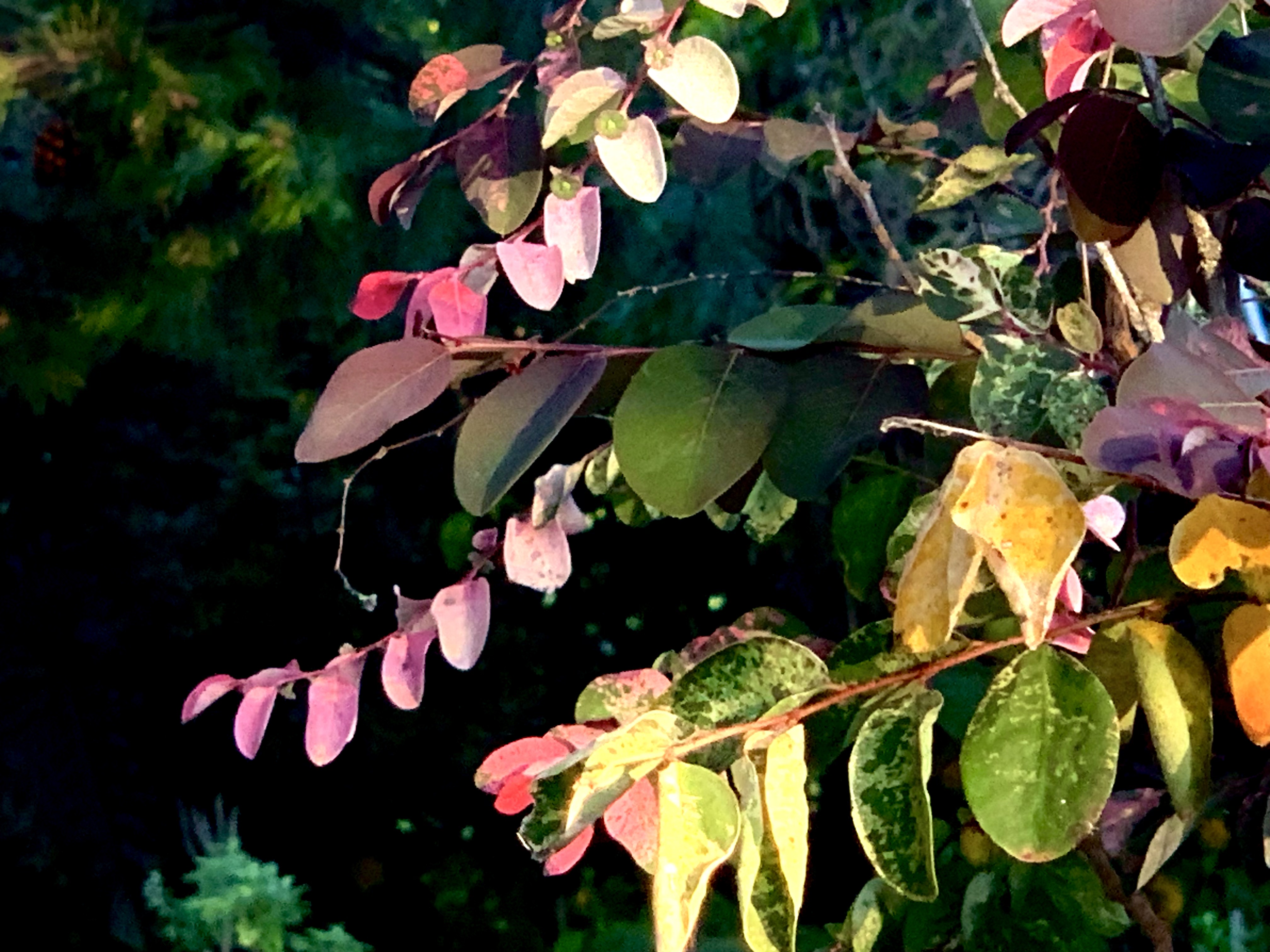
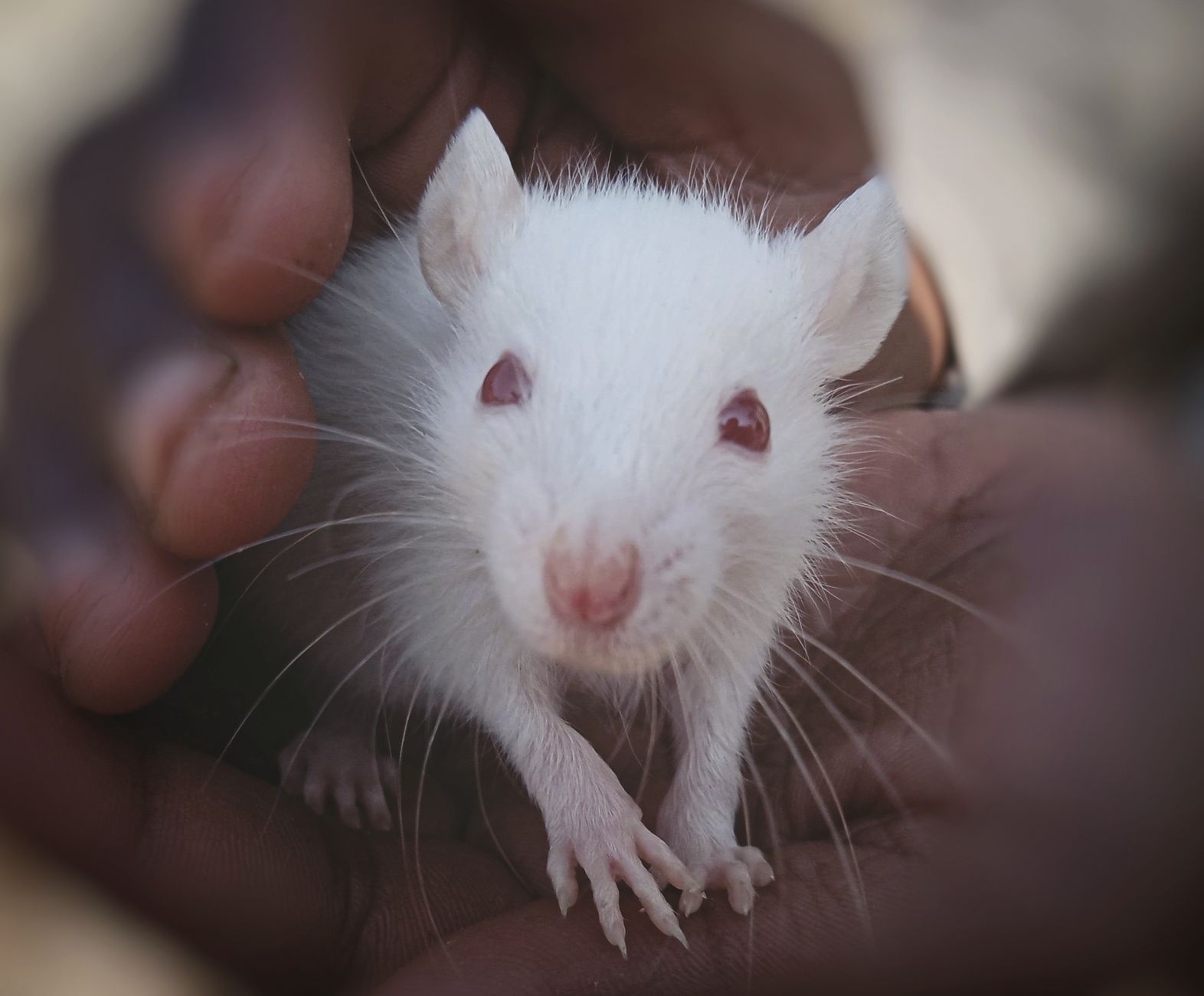
The Architecture of Karma 

One of the best books I ever read: The Architecture of Complexity by Herb Simon, makes a number of stellar points. Three stories that I remember are of the ant, the clockmaker, and the heat dissipation in the building. 

As I recall, the story of the ant opens the book. He basically argues that an ant’s behavior seems complex to us partly because we can’t sense the world of the ant. Simon says that what we might attribute to complexity in the ant’s nervous system is largely due to the complexity in its environment. He’s right, of course, though I think he, like most, vastly underestimates the complexity within the ant as well. A single cell is hugely complex. Nonetheless, it is true that what we observe as complex is behavior that is influenced, and perhaps determined, by both the environment and the internal workings of the ant. That is just as much true for us as individuals, for groups, for nations, and for ecosystems as it is for an individual ant. 
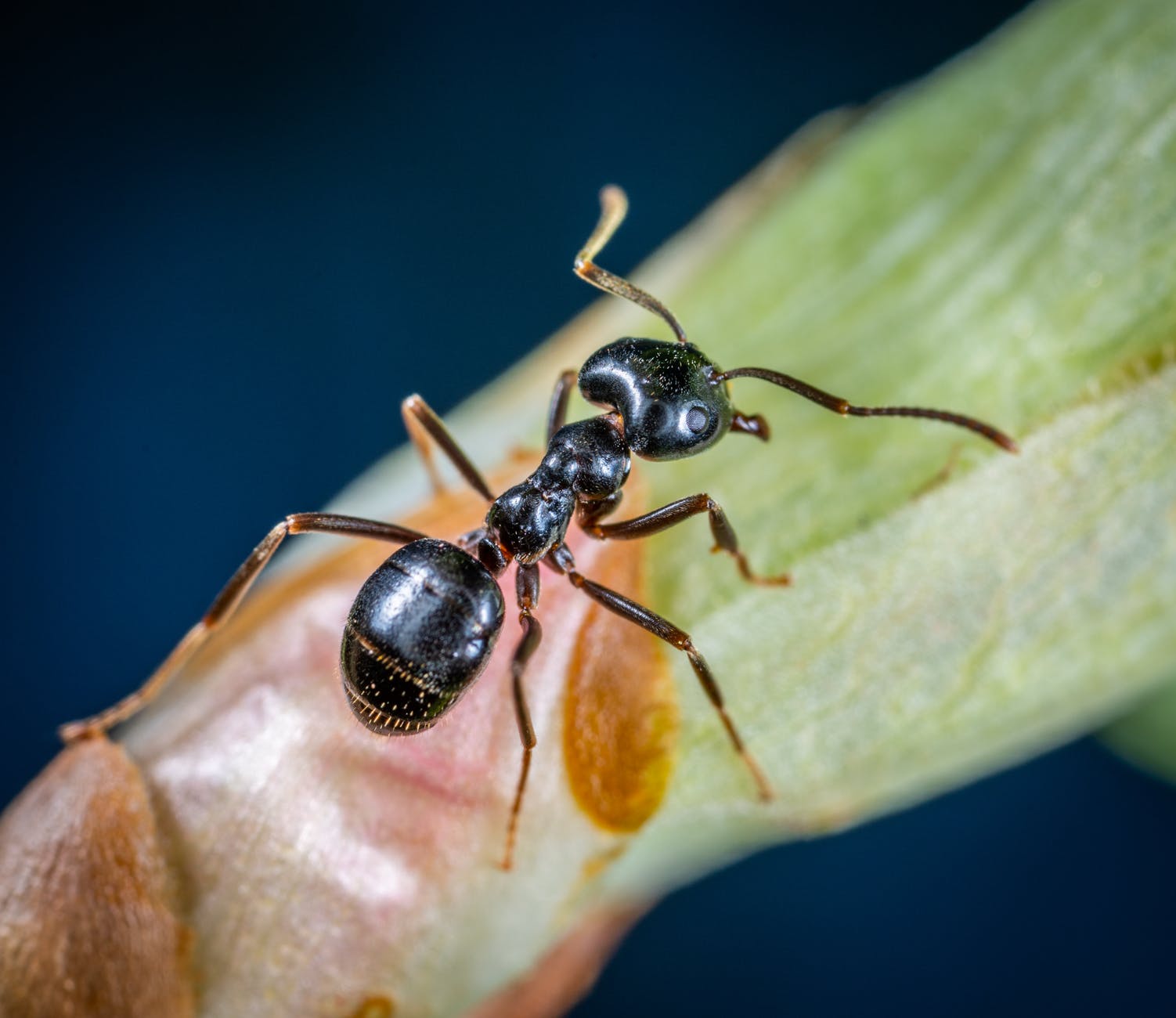
Photo by Egor Kamelev on Pexels.com

Ants, in various circumstances, do things that benefit people, or benefit the ecosystem, or do things that we find destructive or inconvenient. In the case of army ants on the move, they can be highly destructive or even lethal. It seems odd, however, to claim that ants are “evil.” 

Why is that? It seems as though the ant is simply “following its nature” even if it spoils our picnic or herds aphids so as to ruin our roses. It doesn’t do what it does, we suppose, to “hurt us” or to “destroy beauty.” 

When it comes to human beings though, it seems that some individuals do engage in destructive behavior, not because they actually gain anything substantive and useful to themselves but merely because they get pleasure out of inflicting pain and death on others. Every society has such thugs. In a healthy society, such individuals end up in jails or psychiatric institutions. At the least, they need to be put in such situations as to minimize the harm they do to other people as well as to other living things. At best, perhaps therapy can stimulate them to restart their stunted emotional growth. 
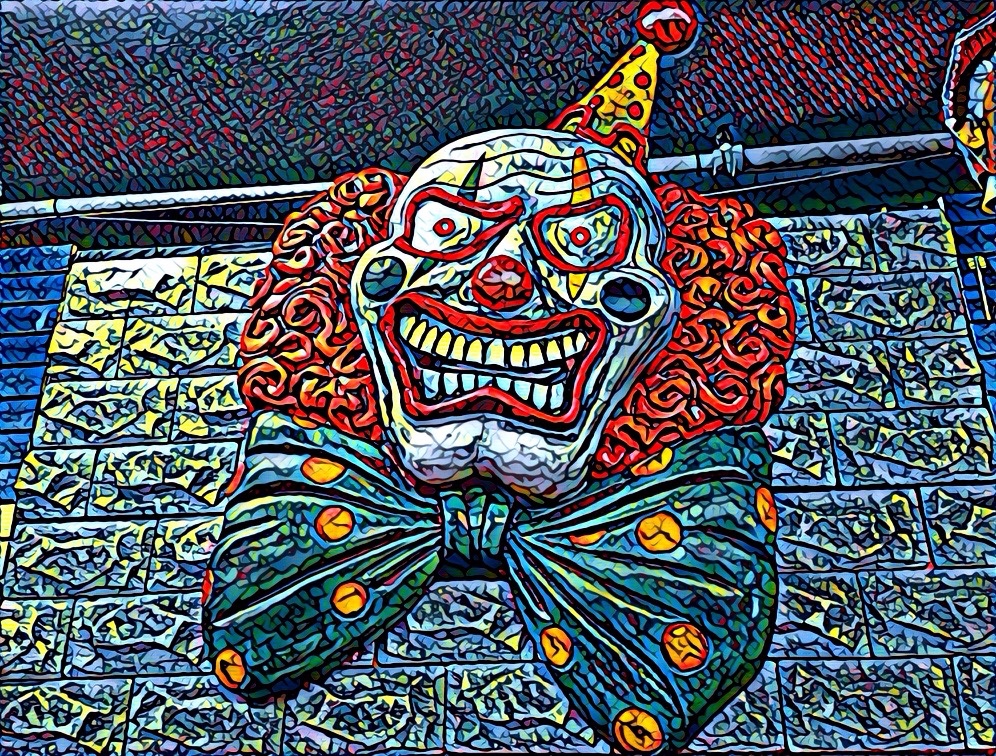
In some cases, such thugs can gain powerful positions in a society. In the worst case, such thugs become dictators. The playbook they use is so old that it is tattered at the edges. It basically consists of playing on the hates and fears of others in their society in order to divide people against each other. Few would fall for such a ploy except that the dick-tater lies and sets up mechanisms to multiply their own lies and prevent people from knowing the truth about things. The dick-tater builds a clumsy but appealing false narrative so that many people will gladly allow the dick-tater to steal wealth, health, life and choice from his victims. I would use the word “evil” to describe what the dick-tater does. 

Like the ant, however, what he does is not particularly “brilliant” or “complex” but it can seem so to those on the outside who don’t understand what the dick-tater is doing. For example, most people, in their daily life, use language to coordinate with others, to bond with others, and sometimes, to enrich life (songs, poetry, puns, comedy, drama, etc.). The dictator relates to language in a completely different way. Their purpose is not to “share experiences” or “solve problems together” or to “enrich life.” Their sole purpose is to manipulate others into doing their bidding. 

There is a karmic price to pay for a life of misusing language however. A dictator becomes ever more paranoid and ever more cut off from reality. As a result, the dick-tater becomes ever less effective. This makes them even more paranoid and careful about who they surround themselves with. People willing to speak truth to power are fired, killed, jailed, or disappeared. Over time, the people who surround the dick-tater are ever more cowardly and sycophantic. This means that the dick-tater becomes even more isolated from reality. The orders of the dick-tater become ever worse in terms of the very ecosystem that the dick-tater needs to survive. Their actions become more short-sighted in time and more restricted in scope.

A perfect example is in a concordance I once saw of the Watergate tapes. Months before Nixon resigned, he used the word ‘need’ in sentences such as:

“What this country needs….”
“What the party needs….”
“American needs…”

A week before he was forced to resign, the scope of his interest had narrowed considerably. There was no more talk of what the party needed or what the country needed. It was:

“We need….”
“We need…” 

“We need…”

And the day before he resigned, it was:

“I need…”
“I need…”
“I need … “ 

The ant may have a smaller brain than the dick-tater’s, but the ant is still tethered to her colony mates and to reality. The dictator has no such constraints.


The “beauty” of “Mutually Assured Destruction” (MAD for short) is that no rational person would start an atomic war with another nation because everyone knows that both sides would lose such a war.

And that’s one of many problems with dick-taters. They are eventually guaranteed to become more irrational over time. 

An egomaniacal, cut-off from reality, cut-off from those who would speak truth to power — that is just the sort of person a dick-tater-$hit puts in charge of atomic weapons. 

The second story I recall from the book is the story of two clock-makers. Both of the clock-makers made clocks that consisted of a thousand pieces. One of the clock-makers, however, had to arrange all thousand pieces before the result was stable. If someone interrupted the clock-maker when they were half-way through (or even 99% of the way through), they would have to start all over again. 

The second clock-maker constructed the clock by putting together 10 super-assemblies, each of which was made out of 10 sub-assemblies. If that clock-maker happened to get interrupted, they only had to redo that specific assemblage. As a result, the progress of the second clock-maker was much more resilient.


If a country’s decision-making is dependent on getting the okay of a dick-tater, it seems to me that it becomes very “fragile” like the work of the first clock-maker. If the dick-tater, for whatever reason, changes the dictated direction, all the work people had been doing is lost. In fact, it’s worse than that because not only is the work done now useless; the people who had been doing that work will not instantly change direction and begin working on the new priority. First, they will have to hide the work that they had been doing because it is no longer “in favor.” That takes time and energy. In the case of a particularly inept dictator, this will happen often. Scapegoats must be found so that blame will not fall on those little sycophantic lieutenants who were pursuing the previously approved (but now no longer approved) projects. The same sort of thing will happen if dictator one is assassinated and replaced by dictator two. The work and many of the workers who were doing what they could for dictator one must now be eliminated. Either way, the results are the same: consolidation of power to the dick-tater’s new whim and lack of sustained progress.

A well-functioning democracy is more like the work of the second clock-maker. Things are done at various levels of government and so long as what the mayor or governor does is consistent with the law, there is no need to trash the work (or the workers) simply because someone new gets elected at a higher level. Of course, sometimes that does happen. But it isn’t a perceived necessity as it is in the case of a dick-tater-$hit. 

As a result, dick-tater-$hits are fragile when it comes to getting things done. Of course, people are afraid to fail. That can be motivating. You can build pyramids with the threat of a lash. But you cannot build a robust cyber infrastructure. You cannot bully people into being truly creative. In a regime based on hate and fear, a huge amount of energy is wasted on “covering your a$$” and very little is learned from success or failure. In success, those with relatively more power will take the credit and in failure, those with relatively more power will blame others regardless of what really happened. Moreover, neither failures nor successes are experiences to learn much from. It’s only a question of who gets promoted and who gets “sent to Siberia” or deported by ICE.

Photo by Leonid Danilov on Pexels.com

Dick-tater-$hit is a crappy system for learning, improving, or innovating. It isn’t limited to ill-governed countries. There are people who “run their family” like a dick-tater-$hit and there are people who run their company or club that way as well. If the overall society is a democracy, the most capable people will tend to avoid such companies or families. If the country is a dick-tater-$hit, then, the entire culture will be pushed toward authoritarianism and its attendant ills. 

The last story I recall from The Architecture of Complexity is about a building that consists of several rooms. Each of the rooms is subdivided by partitions. Simon points out that if someone brings a space heater into one of the small partitions, it will heat up that partition first. Eventually, the heat will dissipate into the whole room. But over a still longer time frame, extra heat will seep out to all the rooms in the building. 

Karma operates in this fashion. In the short term, if you are nicer to the people around you, they will tend to be nicer to you. But people circulate. And, to a lesser extent, if you are nicer to the people around you, they will be nicer to people in general, and eventually, the whole society will be moved toward nicer behavior. That will benefit you, other people, and the entire ecosystem. As a result, you will live in a better world, other things being equal. Even more so, it bodes well for a nicer world for your kids, your grand-kids, and your great grand-kids.



Conversely, if you brutalize those around you, it will be bad for you and what you care about. In fact, since we live in an inter-connected world, brutalizing people anywhere will eventually cause pain to your progeny and the Tree of Life more generally. To brutalize means to harm others without any real material benefit to you. If a surgeon removes a cancerous tumor from their patient, that is not brutalization. If you trim injured or diseased branches off of your rose bush, that is not brutalizing the rose bush. But if you wantonly kill animals, plants, or other innocent humans, you will be wreaking havoc upon yourself.

That is not surprising, because bullies bully, essentially, because they hate and fear their own life. Life is too unpredictable and scary for bullies. They want to control the world and especially control other people. They think that this will make the world safer, but it actually just makes it more dead. The death, destruction, and brutality that a dick-tater inflicts on any part of the world is death, destruction, and brutality that is inflicted everywhere and on everyone. It may well be that it will take longer to feel it in some places than in others.

If you have untreated bone cancer in your arm, it may mainly hurt your arm initially. But, if left untreated, it will eventually kill all of you, not just your arm. Like cancer, the greed for power that a dick-tater feels knows no bounds. Remember: the dick-tater is cut off from reality and is very short-sighted in terms of time and space.

Photo by Aneta Foubu00edkovu00e1 on Pexels.com


The rot of dick-tater-$hit eventually seeps into every aspect of society. Schools will only teach what the dick-tater wants taught. Books that the dick-tater thinks will make people dislike him specifically will be banned. So will books that teach people to think independently or creatively or critically. Even people’s love lives will be constrained by what the dick-tater likes. The people who get the top jobs will not be the ablest or most productive but the ones who have ki$$ed the most a$$. Since the dick-tater’s entire life is built on cheating, they will encourage cheating in everything: business, sports, science, art. Anything alive and thriving is a potential threat to a paranoid dick-tater — and they will all eventually become paranoid. Of course, all this rot that the dick-tater has themselves instituted into society will ultimately slow the machinery of the dick-tater-$hit and it too will decay. 

Dick-taters do not see that they are quite literally cutting off their nose to spite their face.  The mirror of reality and honest criticism is Verbotten in a Dick-Tater-$hit.

Dick-taters do not see that they are are harming all of life with their brutality.
Dick-taters do not see that they are harming themselves and everything they might care about.
Dick-taters do not see that in their quest for “immortality” they are trying to subvert the very nature of life itself.
Dick-taters surround themselves with cowards who will fail to point out to them the futility and folly of their foul ways. 

We must point it out. 

We must arrange the architecture of our society so that dick-tater-$hit is impossible and discourage anyone and everyone who believes that they are more important than the entire Tree of Life. 

Dick-taters are always bad. 

Now they are lethally bad. 

The end of humanity doesn’t depend on all dick-taters being insane enough to use atomic or biological weapons. 

It only takes one.
 

————————-

Author Page on Amazon

Poppa Goes the Weasel

Absolute is not just a Vodka

Poker Chips

Math Class: Who are you?

The only them that counts is all of us

Dick-Taters

Sonnet of Vlademort

The Ailing King of Agitate

The Stopping Rule

Cancer Always Loses in the End

Con-Con Man’s Special Friend

At Least He’s Our Monster

All for One and None for Most

Plans for US; some GRUesome

First of Several Stories that Shows How Narcissists View the World

Simon, H. A. The Architecture of Complexity. Springer. 1991.

Somewhere a Bird Cries

All We Stand to Lose

An Open Sore from Hell

Essays on America: The Game

The Broken Times

Roar, Ocean, Roar!

The Dance of Billions

Imagine All the People…

The Winning Weekend Warrior focuses on the mental game for all sports using examples from tennis, golf, baseball, and other sports. It covers self-talk, imagery, mental practice, strategy, tactics, & sportsmanship. http://tinyurl.com/ng2heq3

Turing’s Nightmares explores the implications and ethics of Artificial Intelligence through fictional short stories. http://tinyurl.com/hz6dg2d

Fit in Bits shows many ways to put more fun, variety, & exercise into daily chores and habits to help with strength, flexibility, fitness, and balance. http://tinyurl.com/h6c7fce

Tales from an American Childhood recounts early experiences mainly in the American Midwest in the 1950’s and relates them to contemporary issues and events. https://tinyurl.com/y9ajvz9j

Dream Planet. Where do you run when the whole world is crumbling under the weight of human folly? When the lethal Conformers invade 22nd century Pittsburgh, escape becomes the top priority for lovebird scavengers Alex and Eva.

https://www.barnesandnoble.com/w/dream-planet-david-thomas/1148566558

What to do? Whom to Believe?

02 Friday Oct 2026

Posted by petersironwood in Uncategorized, psychology, management, America, politics, satire, essay, leadership

≈ Leave a comment

Tags

America, books, cognitive dissonance, deception, Democracy, fantasy, fiction, leadership, lies, politics, problemsolving, psychology, short story, thinking, truth, USA, writing

What to do? What to do? 

Everyone seems about to go for the throat. People are not sure whom to trust. Should they trust doctors who spend years and years learning about calculus, chemistry, biology and then more years in medical school learning about anatomy, physiology, and medicine and then more years as an intern and resident? Or, instead, maybe how about believing a yelling, screaming talk show host? Hard to tell? Maybe no-one ever taught us how to tell liars from truth tellers. There is no simple formula that will guarantee us to be 100% accurate, but maybe we can think together about it. 

——————-

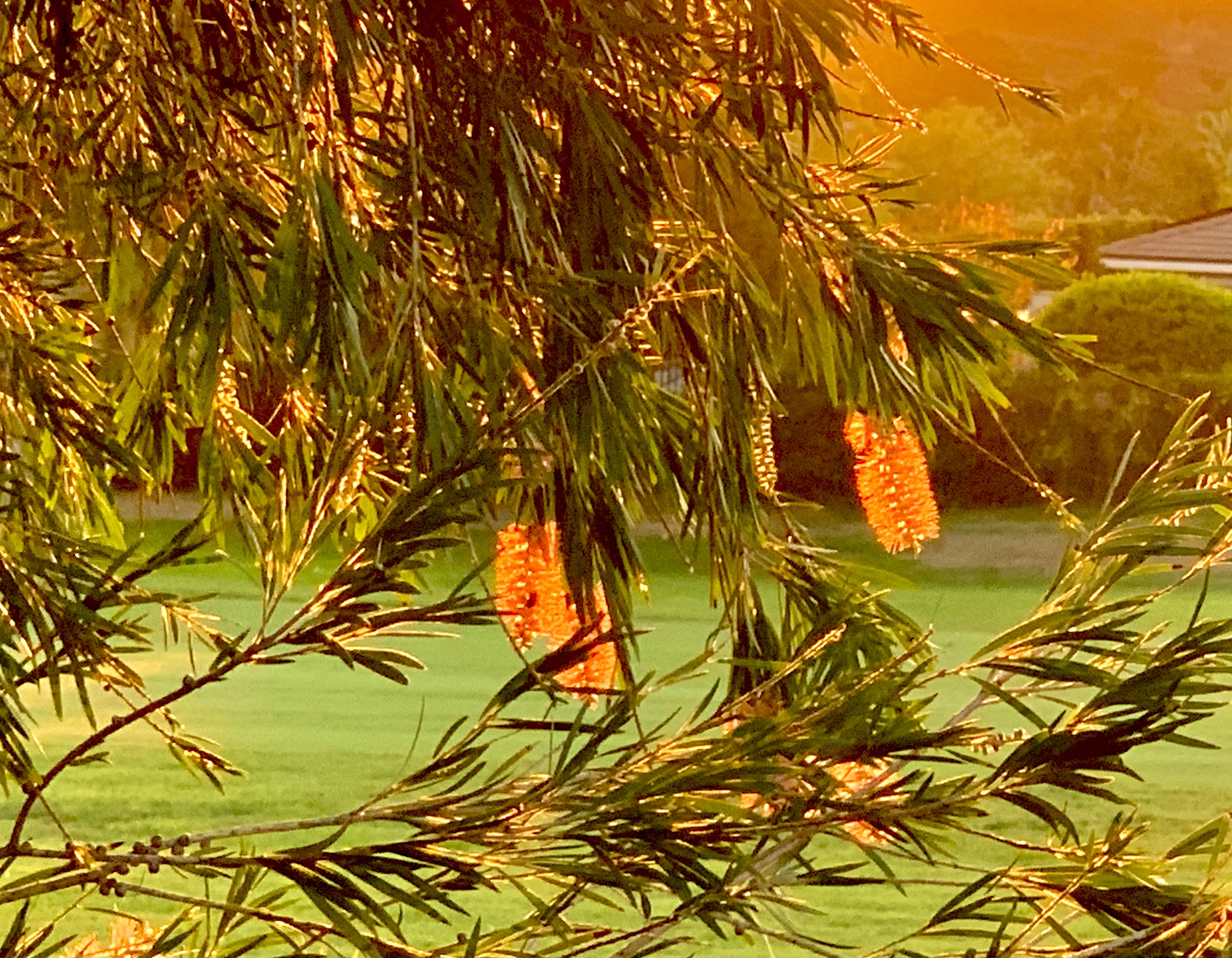
(Processed photo from one I took on Maui.)

Sam sat alone at the local sandwich shop, and began contemplating whether to have dessert after his nice lunch. It was a club sandwich, already a lot of calories, but what the hell, he thinks. With what the doctor said this morning, I should be free to eat anything I want, 

Three older guys — strangers — come in and waddle up to a table next to Sam’s. The trio have their menus but before glancing at them, they look up at a nearby TV and raise their fists. There’s a roar because someone has just run back a kickoff for a touchdown.

Andy says, “Wow! What a run back. I played in high school. Not easy running back a kickoff all the way into the end zone.” 

Sam regards the threesome. It’s hard for him to believe any of them were ever fit enough to play football, but most people do gain weight with age and lack of exercise, so — the portly stranger could be telling the truth.

Bob says, “I played in high school and college. I was good. Blew my knee out as a sophomore though and lost my scholarship.” This too seems plausible to eavesdropping Sam.

Cal says, “I played in high school, college, and went pro. I was fantastic. Probably the best runner and wide receiver and quarterback in the history of Ohio State. I played free safety too. Had more tackles than anyone before or since. If I were playing quarterback, no way that guy would have scored. I was the top draft pick five years running. A lot of quarterbacks these days are too chicken to tackle anyone. I would have nailed him. I was breaking all the records for the Houston Texans! But I got bored. Football’s really a simple game.” 

Sam thinks that Cal is bragging way too much. His story is a priori unlikely. Regardless of what he says or how he says it, the chances that a random person is the best anything at Ohio State is highly unlikely. He played back, wide receiver, quarterback and free safety? That’s unlikely. Extremely unlikely. 

Sam frowns and shakes his head. What does it mean to be the “top draft pick” for five years? If that were true, it would lead naturally to an explanation but none was provided. Further, quarterbacks may be told not to risk their careers making a tackle on a punt return. But what quarterback is on the field to defend a kickoff return? 

Houston Texans? Their first season was 2002. This guy looks to be at least 65. So…he was playing all those positions when he was 45? That seems highly unlikely. Got bored playing football? Possible, but again seems very highly unlikely. Football’s a really simple game? Really? 

Cal’s story has a lot of holes in it. Now Sam laughs that he ever swallowed any of it.

Bob says, “You played for the Houston Texans? You mean the Oilers?” 

Cal shoves his chair back hard enough to spill water on the table. He pushes on the arms of his chair and manages to stand up and he yells even louder, pounding the table to illustrate just how much he believes in what he’s saying. “I said Texans and I mean Texans! I was the best in the whole damned state of Texas! The whole south for that matter!”

Sam laughs to himself, thinking, Well, that settles it I guess. Cal is really passionate and loud so he must be telling the truth, right?

No. 

Wrong. 

People who are telling the truth do not feel the need to scream and yell and make even more outrageous claims the first time someone questions them. 

Sam snorts at the ridiculous claims and then has an idea. It takes Sam 20 seconds to pull out his iPhone and look up Eli Manning, the first name that popped into his head. 

Sam reasons: “If Cal were really the best football player in the history of Texas, he could have easily verified it by finding his own entry on the web  (likely on Wikipedia) and shown his table mates the entry. He would not have had to scream and yell and pound the table.”

Sam thinks: Okay, but no-one’s going to fall for a con man like that. 

{Really? Don’t be too sure, Sam}. 

Cal says to the approaching and attractive server: “Hey, darling. You look yummier than anything on the menu. Do you know who I am? Do you know what I did before I became a billionaire? Go ahead guys. Tell this lucky sweetheart who’s going to be leaving someone a very big tip!” 

Andy and Bob may think: Well, at least he’s going to leave the tip.

So, Andy and Bob outline Cal’s biography in the football hall of fame (where his name definitely does not appear should anyone actually look it up). 

Andy and Bob feel pretty sheepish about joining in this pack of lies. But Cal doesn’t think they have been anywhere near lavish enough in their description of him. Cal says: “Oh, on, guys! Make this girl’s day! Tell her she’s had the pleasure of serving the greatest football player in the history of the game! I don’t say that. That’s what everyone says! Right, guys?” 

Now Sam looks over and can see that Andy and Bob are both a bit embarrassed. They’ve gone along with Cal’s lies, but they don’t want to admit to that now because it proves that they are also liars. So they go along with the bigger lie. 

Andy says, “Yeah. Something else, right? He was OSU’s best player ever. Yep.” 

Bob says, “Uh-huh.” 

Cal shakes his head at Bob. “Come on! God, that’s the damndest weakest most candy-ass description I’ve ever heard, Bob. Tell her how many touchdowns I had. Just me. At OSU!” 

Bob looks bewildered. He knows it’s all a lie. People all over the restaurant are starting to look over at the table and more than a few are looking admiringly at Cal. 

Bob thinks to himself, Quite a few cute chicks here. Cal can’t handle all of them.”  He feels inspired. He takes out his iPhone and says, “Damn. Battery’s about gone. Let me just … here … fifty touchdowns. My God! That is amazing!” 

Cal rolls his eyes. “Give me that damned phone! That’s not right! It’s two hundred and fifty. Not fifty. Yep. There it is. I’m going to look up how many interceptions I had. Oh, crap! Battery dead. Hey guys, I gotta skedaddle. Here’s your crap cellphone back Bob.”

By now, Andy and Bob are both too embarrassed to come clean. Cal makes a big show out of taking out his wallet and thumbing a large pile of cash. He makes it look as though he’s leaving a big tip but actually only leaves a couple bucks. Andy and Bob split the entire bill.

Sam shakes his head slowly as he watches the three waltz out. Their server looks in awe of Cal and stares him out of the establishment. She even stares with some desire — despite the fact that Cal is grossly overweight and barely able to wobble his way out of the restaurant. But she imagines how once he must have been quite a specimen and it’s that image that is the real target of her desire. 

She also looks forward to finding out just how giant of a tip he left her. A few moments later, she walks over to the “billionaire’s” table and before opening up the placard, tries to guess how much it is. Several of her colleagues have come over as well. She turns around and tells them to back off. “It’s my tip, thank you very much” she says. “Just remember, I’m the one who tried to convince you all to share tips but you wouldn’t have any of it.”

They back off, slightly miffed. Now, the young lady has made up her mind it will be at least a hundred dollars, but she dares to hope that maybe he did something crazy and left her a thousand!! 

She notices her hands trembling as she opens up the placard and sees three bills. 

All ones. She looks more carefully at the bills. 

They

Are 

All 

Ones

Photo by Pixabay on Pexels.com

She blinks. She sets her jaw. She’s not going to let her colleagues see her disappointment or that he stiffed her, especially after he felt her thigh. All the way up. She forces a gleeful tone into her voice and jams the outer corners of her lips up towards her ears. “Oh, boy!” She shouts with intended but pretended joy. “This will buy me a new iPhone!” As she said this, each successive word increased in loudness and pitch. She sounded a lot like someone desperately peddling costume jewelry on channel 666 at 4 am.

Her colleagues glance at each other. She fooled no-one. They all realize she got stiffed. Each is torn between comforting her, making fun or her, or just pretending along with her. For the sake of keeping a reasonably happy work environment, they all choose to go along with her. 

Sam shakes his head and looks down at his melted coffee ice cream with hazelnuts. Now it’s just cold coffee with a lot of wet nuts. 

And, then Sam realizes that that is the least tragic thing that happened here today. In the length of time it took his ice cream to melt, one liar became seven liars. 

Same took a deep breath. This is what’s happening inside me, he realized. 

That’s how my cancer grew so fast. 

———————

A lot is not a little

The Truth Train

Try the Truth

The Orange Man

The Wobbly Man

Come back to the light side

My Cousin Bobby

Where Does Your Loyalty Lie?

Cancer Always Loses in the End

Imagine All the People

All we Stand to Lose

After All

Somewhere a Bird Cries

The Dance of Billions

An Open Sore from Hell

Roar, Ocean, Roar!

Author page on Amazon

The Winning Weekend Warrior focuses on the mental game for all sports using examples from tennis, golf, baseball, and other sports. It covers self-talk, imagery, mental practice, strategy, tactics, & sportsmanship. http://tinyurl.com/ng2heq3

Turing’s Nightmares explores the implications and ethics of Artificial Intelligence through fictional short stories. http://tinyurl.com/hz6dg2d

Fit in Bits shows many ways to put more fun, variety, & exercise into daily chores and habits to help with strength, flexibility, fitness, and balance. http://tinyurl.com/h6c7fce

Tales from an American Childhood recounts early experiences mainly in the American Midwest in the 1950’s and relates them to contemporary issues and events. https://tinyurl.com/y9ajvz9j

Dream Planet. Where do you run when the whole world is crumbling under the weight of human folly? When the lethal Conformers invade 22nd century Pittsburgh, escape becomes the top priority for lovebird scavengers Alex and Eva.

https://www.barnesandnoble.com/w/dream-planet-david-thomas/1148566558

Stress Fractures!

30 Wednesday Sep 2026

Posted by petersironwood in America, essay, health, leadership, management, politics, psychology, Uncategorized

≈ Leave a comment

Tags

politics, America, Democracy, history, fascism, society, USA, Resistance, news

Stress Fractures!

From Wikipedia, 9/26/2021

Stress fracture
Other namesHairline fracture, fissure fracture, march fracture, spontaneous fracture, fatigue fracture
pastedGraphic.png
Stress fracture of the second metatarsal bone (below the knuckles of the second toe)


“A stress fracture is a fatigue-induced bone fracture caused by repeated stress over time. Instead of resulting from a single severe impact, stress fractures are the result of accumulated injury from repeated submaximal loading, such as running or jumping. Because of this mechanism, stress fractures are common overuse injuries in athletes.

Stress fractures can be described as small cracks in the bone, or hairline fractures. Stress fractures of the foot are sometimes called “march fractures” because of the injury’s prevalence among heavily marching soldiers.[2] Stress fractures most frequently occur in weight-bearing bones of the lower extremities, such as the tibia and fibula (bones of the lower leg), metatarsal and navicular bones (bones of the foot). Less common are stress fractures to the femur, pelvis, and sacrum. Treatment usually consists of rest followed by a gradual return to exercise over a period of months.” 

A few weeks ago, I was playing tennis as I regularly do about 3-4 times a week. Also, as usual, my feet really began to hurt after two sets. I find that changing shoes typically helps the situation, so I sat down to change my shoes. It was extremely difficult to get my foot into my shoe — I had to bang it hard to get it in. Finally — success!

Photo by Kindel Media on Pexels.com


So, I was ready to play a third set. But after two points, I realized there was no way I was going to play more tennis. I hobbled home and could barely mount the shallow steps to the front door. It was “Labor Day” so most places were closed. We finally got my painful ankle X-rayed and the doctor who read the X-rays said, “Good news! No new breaks in your ankle.” 

That was good news. 

Except that so far as I knew, I had never broken my ankle in the past! That brings to seven the total number of broken bones I’ve had. 

I was born with flat feet and all my life I’ve had flat feet and pronated ankles. Now, however, things had moved to a new and much worse chapter. I could literally put zero weight on my left leg. Now, I can walk. Which means, I can now play tennis. 

Sort of. 

How could I have broken an ankle and not have been aware of it? Because of the structural defects in my feet, instead of having an arch that works to distribute the stress of running, jumping, and landing, one of the key bones in my arch has moved downward and toward the midline. So now, every time I land hard, the stress is not distributed evenly through the arch but smashes down into the outside of my ankle bone.

That sucks. And it makes playing tennis iffy. And, it’s painful. And, potentially dangerous.

Not so much as the fracturing of American democracy however. 

Photo by Element5 Digital on Pexels.com

The Putinists have been waging a War on Truth against America for years. They stepped up their game significantly once they began using Epstein’s pal. Who benefits from the War on Truth? 

Not the American citizens! 

The man who got 45 Putin office benefits. 

America has long been the major thorn in the side of Putin’s ambitions to reconstitute the USSR and possibly even to “rule the world.” It’s a crazy ambition, to my way of thinking. But not to would-be dictators. 

I like tennis. 

But some folks like stamp collecting. And some like to quilt. And some few like to destroy the love and livelihood of others in order to gain power. (Essays on America: The Game).

About 2400-2500 Americans were killed by the sudden attack on Pearl Harbor. FDR immediately declared war on Japan. That was like a traumatic bone break to a human body.

The Trumputinists, through their campaign of lies, false cures, false promises, and executive orders have driven up the number of deaths of Americans from the pandemic by hundreds of thousands. According to an article in the respected British Journal, Lancet, 200,000 Americans needlessly died from COVID because of the mishandling of the Trumputin Misadministration. They killed more Americans than were killed in 9/11 and Pearl Harbor and the War in Vietnam, and the Middle Eastern wars combined.

In 1860, the South seceded from the Union. Did Lincoln declare war on the South? No. Did he attack the South? No. The South attacked Fort Sumpter. Do you know how many Americans they killed? 

Zero. 

Two Union soldiers were killed in an accidental explosion while they were leaving the fort.

Even before the pandemic hit, the Mango Mussolini was rolling back safeguards on the food supply, clean water regulations, and clean air regulations. He was isolating America from our allies. All of those actions aimed at destroying America and American lives have redoubled. Every important department of the US government has been damaged; many of the most experienced and dedicated employees have been replaced with podcasters, talk show hosts, political operatives, convicted criminals (pardoned by 47) or sycophantic hangers-on. Many departments were wounded by DOGE “cost savings” but no “DOGE dividend” was ever sent, as promised to ordinary American citizens.


Stress fracture.

He divided the country using the methods that would-be dictators have used for centuries. (See: The Myths of the Veritas: Stoned Soup).

Stress fracture.

Epstein’s pal replaced patriotic, non-partisan experts throughout government with inept lackeys who would do anything to curry favor with the Putin-backed coup. 

Stress fracture.

The five-time draft dodger did everything he could to destroy the careers of any patriotic Republicans who stood up to him. 

Stress fracture.


45-47, millions of dollars in “dark money” and the Trumputinist backers have subverted confidence in elections and passed “laws” that mean that they can simply “overturn” elections when they don’t win. Nonetheless, they have also passed laws to suppress the votes of POC, the elderly, Armed Services personnel, Native Americans, and students. Suppressing the vote, aside from being unfair, guarantees that inept, cruel, and corrupt politicians will be the norm.

Stress fracture.

The Trumputinists deny that their deadly attack on the United States Capitol was a crime. They claim it was just a regular day of tourism. 


Major stress fracture.


America faces serious problems such as the need for immigration reform, wealth inequality, racial injustice, crumbling infrastructure, cybercrime, social media companies giving in to brutal dictators like Putin, climate disasters. The Trumputinists pretend to want to be part of the solution but actually are doing everything in their power to prevent these crises from being addressed. 

Stress fractures.

As the stress fractures in your body continue to multiply, you will begin to bleed to death internally. And, being unable to move, you will be unable to battle predators of any description.

It’s past time to bring to justice those who are trying to destroy our democracy, even if that makes Putin upset. 

Photo by Donald Tong on Pexels.com

It’s important to remember that in the last Presidential election, Republicans and Democrats worked together throughout the country to run the election. Those were actual Republicans — Americans who are typically more conservative than their Democratic colleagues. Those folks are being threatened with physical violence as are their families unless they pledge to be Trumputinists. Of course, the Trumputinist don’t call themselves “Fascists” or “Trumputinists” but so what?

The “Not-See” Party

(Essays on America: Labelism). 

Stress fracture. 

People who stormed the US Capitol; politicians who support the overthrow of democracy; people who threaten violence against actual Republicans who do not support the big lie — they all need to be dealt with legally, but quickly and thoroughly. 

One thing we do know from history: trying to placate a cruel ego-maniacal dictator by, say, giving them Poland, does not work. Ask the ghost of Neville Chamberlain.

I honestly cannot think of how the Trumputinists could make it more clear. 

They are not playing on team America. 

They have already attacked American democratic institutions and stormed America’s Capitol. 

They have already killed a quarter million innocent Americans. 

They are still perpetuating the big lie. 

They certainly have no business being seated in the Congress of the United States of America.

Many of the Trumputinists have been trained to deny the efficacy of masks, social distancing, and the vaccines. 

But many Democrats have been trained to deny the severity of the crisis we are facing. Ignoring the X-rays and pretending it’s all business as usual won’t knit broken bones back together. 

Ignoring the fact that Trumputinists are fighting an undeclared war on our country will not make us safe any more than shutting our eyes will make us safe from the circling wolf pack or the growing climate crisis or the unsustainable chasm in wealth and opportunity.


(See: The Truth Train).

Democrats will allow many millions to be killed if they do not address, with everything in their power, the slow coup that is breaking America. 

“There is always light if only we’re brave enough to see it…if only we’re brave enough to be it.” — Amanda Gorman


https://en.wikipedia.org/wiki/Stress_fracture

Where Does Your Loyalty Lie?

An Open Sore from Hell

My Cousin Bobby

The Stopping Rule

Wednesdays

Roar, Ocean, Roar!

Imagine All the People

The Dance of Billions

Not-Separateness

28 Monday Sep 2026

Posted by petersironwood in AI, creativity, design rationale, essay, HCI, leadership, management, nature, politics, psychology, Uncategorized, user experience

≈ Leave a comment

Tags

AI, architecture, art, beauty, Design, development, ecology, governance, GreenNewDeal, HCI, human factors, IBM, leadership, painting, peace, photography, society, technology, TNOO, UI, usability, user_experience, UX, ux-design

Not-Separateness

It seems odd to specify a property of natural order in terms of what it is not. On the other hand, I cannot come up with a positive alternative that doesn’t bring other connotations with it. I think it’s related to “unified” or “integral” or “belonging” or “inter-related” but none of those seem quite so on the mark as does “Not-Separateness.” 

Christopher Alexander’s degree from MIT was in architecture. Part of the reason he may have chosen this particular term is in reaction to some examples of architecture in which the architect seems to be in the business of constructing a building whose primary purpose is to make them famous regardless of what that building does to the neighborhood or its occupants. 

Photo by BROTE studio on Pexels.com

Imagine Mr. Bigg designs a house that is a perfect black cube set on on vertex. In effect, this design says to me: “I am BIG. I am Mr. Bigg! I am a genius! You would have never been brilliant enough to design a house that is a cube on its vertex! You would have wasted your time and done something mundane like placed the cube on the ground on one of its faces. Anyone could think of that! But I put it on a vertex!” Indeed, we may easily imagine that he says words to this effect when his interview is reported on in the (mythical) architectural journal entitled, Things that look different! 

“Mr. Bigg, you made the Bigg House out of black steel and black glass. Some critics have argued that this doesn’t fit with the existing neighborhood of stone cottages with thatched roofs.”

“Of course, little minds will always criticize Bigg ideas.” 

“Yes, yes. It also means that the construction costs of the house were quite high. And, the estimated costs of heating and cooling are much higher as well.”

“Nothing that a worthwhile (i.e., wealthy) client can’t afford.” 

“Some have also argued that it is inconvenient for the occupants who have to walk up and down at a steep angle and that furniture such as dressers, tables, chairs, and beds do not accommodate well to the tilted walls.” 

“Let me ask you a question. Would you have ever thought of putting a cube on its corner? No. I didn’t think so!” 

Of course, this is exaggeration.

But not much. 

We would hope that User Experience designers take into account the users, their tasks, their contexts, and the way in which their designs interact with other related artifacts, people and processes. We would hope that applications and artifacts and services are all designed with the property of “Not-Separateness.” 

In the early 1980’s, I worked in the IBM Office of the Chief Scientist. My main assignment was to get IBM to pay more attention to the usability of its products. As part of that process, I visited quite a few IBM development labs around the world and spoke to many development teams. On many of these visits, I was accompanied by the Chief Scientist, a brilliant physicist, who “got” usability. 

On one occasion, we watched a new printing technology. Instead of printing out black printing on a white sheet of paper sized 8.5” x 11” or A4, this printout was of no standard size. The printing was black on a shiny silver sheet that curled severely. The Chief Scientist asked the head of the development team how they envisioned this being used. 

Chief Scientist: “Once someone printed this out, what would they do with it?”

Answer: “Oh, anything they liked.” 

Chief Scientist: “I mean, would people tape this into a notebook or paste it? Or would you imagine notebooks that would bind such paper?” 

Answer: “It’s not up to me to decide how people would use it. Doesn’t it look cool?” 

Another type of answer we heard more than once to the question, “How would this be used?” 

— “Oh, it’s a (replacement/upgrade) for this other IBM product.” 


“But who would use it and for what?” 


“It has three main components. Would you like a description of the components?” 

Photo by Andru00e9 Ulyssesdesalis on Pexels.com

Of course, there is a place for “playing around” with technology and thereby discovering things which someone else may find a use for. But in design and development of a product or service, having a clear notion of context of use and the users and tasks is fundamental. Of course, other users may appropriate a product or service for purposes beyond those envisioned by the original designers. That’s cool. 

What’s not cool is designing a device that is to be used in the bright outdoor sunlight and then testing the display in a typical office environment. Have you ever run across something like that? I have. Many times. At ATMs, Gas Stations, and outdoor display maps.

A more subtle lack of contextualization in design occurs when the design team fails to realize how many interruptions happen to the user while they are trying to accomplish a single task with the new application. If you “test” the application while the user is in a quiet “usability lab” and they can give your tasks their undivided attention, then necessitating them to remember the invisible internal state of “Insert” versus “Edit” mode may not be a big deal at all. They will simply remember. But in their office environment, they may be interrupted by a phone call, a message, or their boss entering their office and asking a series of detailed questions. If they now go back to the task at hand, there is about a 50-50 chance that they will correctly guess whether they are in “Edit” mode or “Insert” mode. 

A design which shows the property of Not-Separateness is the natural result of a process which shows not-separateness. Here are a few common ways to help ensure the design process grows organically from the users and their goals & contexts. 

* Put people on the design team who are familiar with the users, and/or their tasks, and/or their contexts. 


* People on the design team observe people engaging in the relevant processes, whenever possible, not — or not only — in a “Usability Lab” but in the actual work environment. For instance:

  • Observe people actually using product P (or service S) in version N so that version N+1 can be better attuned to the needs of the users.
  • Have people think aloud while doing this.
  • Gather and understand feedback from service calls and help desks and customer complaints in order to improve over time. 

There will be benefits to a company who takes such approaches beyond initial sales. If you’ve done any gardening, you will appreciate that the quality of the tomatoes you enjoy eating is related to the quality of the soil and the quality of the care you give the tomatoes. Similarly, a product or service that has the quality of Not-Separateness will not only be useful — users will fight to keep your product or service. It becomes integrated with the environment. To change the brand means that they will have to change the way they work; possibly even with whom they work. Not-Separateness is likely a path to what business people like to call a “Cash Cow.” 

If you’ve ever walked through a neighborhood after a hurricane, you’ve likely seen many uprooted trees. When you look at the roots of an uprooted tree, what do you see? Of course, you see roots. But what else? You see rocks and soil all around and embedded into the roots. They are Not-Separate. In a hurricane, there are typically not only high winds. There is also a lot of rain. The trees are hit with a double whammy. The wind pushes the tree but the rain weakens the solid soil in which the tree is embedded. It is the combination that makes it very difficult for the tree to “hold on” and keep from falling over. 

Living things, just like us, have a 4.5 billion year history of living. The living things adapt over time to their environment and they mold the environment to their needs. They are not separate. Flowers appeal to the insects who pollinate them. The insects who pollinate them are adapted to the characteristics of the flower. A horse adapts to their rider and the rider adapts to their horse. A product or service must have a design that serves the needs of its stakeholders. For a product or service to have maximum beauty, utility, and longevity, it must also have a way to adapt to the changing needs of the users and other stakeholders. At the same time, if the users and their organizations adapt to the product or service, then true Not-Separateness is achieved. 

If you want to skimp on designing your product or service, you can make it more separate, more divorced from its context, its users, and its tasks. Of course, if you do that, you also make much easier for your users to abandon your product and switch to a new one. 

Another way to think about this in terms of systems theory is where you draw the boundary. If you draw a sharp boundary around your product, you may find that, over time, your product becomes ever more peripheral to the community you’re trying to support and your product is ever more fungible with others in its class. On the other hand, if you draw the boundary around the product or service and the people and organizations who provide the product or service then, you are on the path of ever tighter interconnect. 

“Who Speaks for Wolf” is a Pattern in a Pattern Language for Collaboration and Cooperation. It is based on a Native American story and shows the importance of making sure that knowledge and perspectives of all relevant stakeholders are taken into account when a change is contemplated. Who is “relevant” may not always be obvious, but, in my experience, many more projects fail or are delayed because of too limited a view than of too broad a view.

Who Speaks for Wolf

Not-Separateness is not only a quality of good design in terms of not overly separating the context and users from the product or service. It is also a good quality for the organization that produces products & services. Of course, some people today must manage a giant amorphous “organization” of tens of thousands of people so they set up divisions, and departments, and groups, and teams, and positions etc. There may indeed be a “UX Department” and a “Software Department” and a “Hardware Department.” That’s all fine. But it is counter-productive if the UX Department sees itself as separate from the rest of the company. To a great extent the success of the UX Department depends on the success of the Hardware and Software Departments. The Sales Department’s success will, of course, depend partly on the skills of the Sales Department. But it will also depend on the success of the UX Department, HW, SW and Services. 

Have you ever had a paper cut? It isn’t just the skin on a quarter inch of the inside of your ring finger that’s cut. You’re cut! It isn’t just that the finger feels pain. You feel pain! That causes you to take steps to ameliorate the pain and to try to make sure it doesn’t happen again. That’s why empathy in leadership is important. A leader must feel empathy for all, or the organization will disintegrate from lack of Not-Separateness. At some point, a raccoon may chew off its own arm in order to escape a trap. 

But it isn’t the first thing that occurs to them every time they experience a thorn in the paw! 

The raccoon doesn’t say to itself:  — “that paw is giving me pain! I’m going to chew it off! Then, it won’t hurt any more.”

Photo by anne sch on Pexels.com

Evolution did not evolve a raccoon that acts that way. Self-mutilation exists but it is typically a last resort.

But not for corporations. It is the first thing they think of:

“Our (you name it) Department is not performing well. Let’s lay them off and outsource it. Better yet, we’ll replace it with AI!”

What does that say to every thinking employee in the entire corporation? It says:

“You know what? All this talk about teamwork and pulling together is a total bunch of bull$hit. You cannot trust management to do what’s best for everyone. You can only trust them to do what’s best for them.” 

Living forms in nature are living forms. Their parts have severe Not-Separateness with the other parts of that form. Often, as in well-functioning families or teams, that extends to all members of the group. 

Not-Separateness is essentially deep cooperation. I give to the larger community by becoming a part of it and doing my part in it. I lend strength to the community. In return, I gain strength from that community. It is not a zero sum game, of course. The community, if it is functional, is much stronger than the sum of the individuals in that community. 

This is so deeply embedded in 4.5 billion years of evolution that it does not surprise me that we recognize beauty as being even more beautiful if it is not separate. Not-Separate enhances beauty because, like all the other properties, it is essential to life. 

Eventually, if humanity is to survive, we will realize that Not-Separateness applies to all of us. We are not there yet. But that doesn’t mean we cannot appreciate and design Not Separateness in our products, in our services, and our lives. 

Photo by Pixabay on Pexels.com

—————-

The Declaration of Interdependence

How the Nightingale Learned to Sing

Roar, Ocean, Roar

Imagine all the people

Cancer Always Loses in the End

Ripples

Author Page on Amazon

Thomas, J.C. and Kellogg, W.A. (1989). Minimizing ecological gaps in interface design, IEEE Software, January 1989.

Thomas, J. C. (2012).   Patterns for emergent global intelligence.   In Creativity and Rationale: Enhancing Human Experience By Design J. Carroll (Ed.), New York: Springer.

Thomas, J. C. (2001). An HCI Agenda for the Next Millennium: Emergent Global Intelligence. In R. Earnshaw, R. Guedj, A. van Dam, and J. Vince (Eds.), Frontiers of human-centered computing, online communities, and virtual environments. London: Springer-Verlag.

Thomas, J.C. (1985). Human factors in IBM. IBM Research Report. RC-11267.  Yorktown Heights, NY: IBM Corporation.

Simplicity and Inner Calm

27 Sunday Sep 2026

Posted by petersironwood in Uncategorized, psychology, management, creativity, politics, nature, design rationale, essay, user experience, HCI, leadership

≈ Leave a comment

Tags

aessthetics, architecture, art, beauty, Design, HCI, human factors, leadership, life, lifestyle, management, painting, photography, TNOO, usability, user experience, UX, writing

Simplicity and Inner Calm

(Christopher Alexander, architect and city planner, proposed fifteen properties as characteristic of natural order. I’m considering them one by one in terms of society, design generally, and user experience in particular. “Simplicity and Inner Calm” is number 14.)

Photo by Nikolay Ivanov on Pexels.com

“Send me $50,000 and I’ll enroll you in a two year course in Simplicity and Inner Calm. All you have to do then is follow the twenty-five hundred rules on the Path to Enlightenment while renouncing everything else.”

Somehow, that does not seem to be in the spirit of simplicity and inner calm. Some of the properties I discussed earlier are closer to being about something “out there” that is somewhat measurable; e.g., levels of scale, boundaries, alternating repetition, roughness. Simplicity and Inner Calm are characteristics of things “out there” but they cause or at least resonate with simplicity and inner calm within a person. 

I don’t think it’s reasonable to expect a place to enforce a particular emotional state. If someone arrives at a beautiful still lake with hate and rage in their heart and possesses a determination to stay mad by God because he deserves to be mad! Then the mere presence of beautiful scenery won’t calm them in some immediate and magical way. But, I would bet money that they would be less upset an hour later than when they arrived. 

Photo by Andru00e9 Ulyssesdesalis on Pexels.com

Meanwhile, let’s imagine their identical twin also had an identical quantity of rage in their heart and arrived at a loud buzzing booming construction site and had to sit there for an hour. Such a setting, I would imagine, would do nothing to calm them and might make them even more enraged. 

Photo by Leonid Danilov on Pexels.com

Of course, as any therapist can tell you, what you do inside your head often has more to do with how you feel than does the objective situation. I certainly believe that. Yet, I also believe that situations out there make a difference on average. In my experience, being in a safe situation surrounded by natural beauty tends to make nearly everyone feel better. 

Not all situations “work” equally well for everyone, but for most of the people I have interacted with, views of distant mountains; calm clear lakes; ocean shores; a clearing in the woods — especially if there is a calm animal there; a single tree on a small hilltop — these tend to induce a feeling of simplicity and inner calm. 

There are two things that have amazed me for a long time about natural settings. I think they both relate to why natural settings seem to produce more simplicity and inner calm. 

The first mystery is auditory. I have heard the calls of many creatures in nature. Most are, in and of themselves, attractive. Some are beautiful. A few are more annoying sounds. But for me, at least, they never seem to clash. Walking through a field and forest, I may hear insects, frogs, and a dozen species of birds. But none of them clash. Fancifully, I could say that the auditory sphere in a natural setting reinforces the reality that all life is kin. I am of this world. Wilderness was the home of my ancestors and yours for four billion years. We are all instruments in one orchestra. That adds to inner calm.

The second mystery is visual. I’ve walked through many natural settings and have seen what must be every color possible to see. But the colors never “clash.” How can that be? It’s one thing to mix and match greens and blues. They don’t really seem to clash that much even in artificial settings. But what about pinks, reds, oranges? I’ve seen plenty of people wearing clothing that clashes and likely been guilty of it myself. But autumn leaves? They are all over the place chromatically, but they never clash. This also adds to inner calm.

Photo by Jacob Colvin on Pexels.com

I think the genetic reason that clashes are not prevalent in nature is that we co-evolved with the environment. Perceiving harmony in what is would have been adaptive in two important ways. First, since harmony is the natural state, feeling good while surrounded by harmony would mean that you would feel good most of the time. As Harry Potter once put it, you would have something worth fighting for. If you enjoy life, then, when the going gets tough, you are more likely to tough it out.

Second, when things go sideways in external reality, you would quickly notice the disharmony. While normally, you would feel peaceful, when the birds suddenly start fleeing in one direction and squawking, your feeling would change and you would be more likely to prepare and therefore survive whatever comes next. 

These reasons are manifest in some of the other fifteen properties. For example, the roughness of shape of autumn leaves means that there will be natural variation in color as seen even if they are actually identical (which of course, they are not). Having distributions of color is a kind of “roughness” characteristic of nature’s colors. Clothing on the other hand is another matter. The goal of mass production is lack of variability. So, 10,000 items are precisely the same color (or as close as humanly possible). If one is slightly off, it is noticeable. If each of the 10,000 items were part of a very broad, multidimensional distribution, being slightly more extreme than most would not produce a perception of clash. 

That, to me, is also the problem with monoculture as a social philosophy. I delve into this in more detail in the blog post — “A tight flock united by division.”

A tight flock united by division.

Briefly, the more everyone is supposed to “toe the line” to a particular way of doing things; e.g., which restaurants to go to, which shows to watch, which religion to believe in, what clothes to wear, what food to eat, etc., the more intolerant the society becomes. And the more intolerant it becomes, the more people try desperately to adhere to the middle of the crowded road they share with everyone they know. Everyone who does anything differently comes to be seen as a reproach to the lack of individuality in the middle of the road. And the people who insist that everyone must stay in the middle do not want to move. Not only that. They insist that they are exercising their freedom of choice by being exactly in the middle as determine by everyone else and not at all by them. It is rather humorous at one level and rather pathetic at another.

But just as such sharp and arbitrary boundaries in artificially produced goods mean clashes are more common, so too in human societies, when there is a group that insists everyone be exactly like them and, at the same time, insist that they are expressing their freedom, clashes are inevitable. Harmony and truth are no longer conceived of as being desirable. When people reject the resolution of conflict via agreed upon rules of law, what results is inevitably chaos and death. It is almost the polar opposite of Life. 

Photo by Anna Tarazevich on Pexels.com

Some epidemiologists think the various recent explosion in the variety of pollutants that we are all subject to has resulted in a much higher incidence of auto-immune diseases and allergies. The immune system sees so many different invaders, it has trouble distinguishing real threats (streptococcus, covid, cancer cells) from imaginary ones (peanut oil, cat dander, tree pollen). 

In similar fashion, people stuck on a thin sliver of what they feel is “normal” feel assailed from all sides. They can no longer distinguish real threats (COVID 19, Climate catastrophes, racial inequities) from imaginary ones (chip implantation via needles, Medicare for all, mask mandates). Clash. Clash. Clash. No “Simplicity and inner calm.” 

But from their perspective, there would be “Simplicity and inner calm” if only everyone were just like them! Most will deny this, when put so baldly, but that is essentially what they strive toward.


There can be many such factions, all with different rigid and implacable beliefs or only two (Right/Left; Catholic/Protestant; Striders/Walkers) or really, only one. It only takes one faction to reject all connection to truth in order to destroy simplicity and inner calm — even though, ironically, that is what they are actually trying to achieve. 

Moving from societal beauty to user interfaces, for the most part, I would have to say most UIs lack simplicity and inner calm. They seem to be splattered with functions and features everywhere. This is not surprising since most product managers believe that sales will be greater with more functions and features. 

Photo by Alex Knight on Pexels.com

When I use pages, I would say my user experience is mainly one of simplicity and inner calm. That mainly comes from the fact that my attention is almost entirely on writing and I ignore everything else the interface offers “around the edges” of my vision. Sometimes, something untoward happens and the “harmony” of my environment is temporarily destroyed. Then, I have to stop writing and pop out to the interface level in order to diagnose and fix the problem. Once I do that and return to writing, I again feel “simplicity and inner calm.”

On much rarer occasions, I will wish to do something “unusual”; e.g., I might want to put a table in the text to illustrate a point. Then, before I can work on the task at hand — creating the proper table — I must first search for the proper functionality. Since I do not typically do this, I am like the creature in the forest suddenly alerted to the presence of possible “predators” (such as accidentally destroying my file). 

I have found very few UI’s that, in and of themselves, are conducive to feelings of simplicity and inner calm on first use. I have often come to feel that way fairly quickly after I become conversant with the basic functions. 

Photo by Johannes Plenio on Pexels.com

We evolved for millions of years to resonate with the simplicity and inner calm of peaceful natural settings. It’s not surprising that it would be difficult to reproduce that feelings with an artificial interface. But familiarity does move us in that direction. When I glance at the toolbar across the top of the “Pages” page, e.g., I see a set of pull-down menus. I don’t recall exactly how the entire menu structure is laid out, but I do know how to use it and explore it. This familiarity, in and of itself, helps me feel more serene, more secure, safer. 

Although I am very interested in seeing new ideas in UI, I am more likely to use a different sort of UI if I am seeing a completely new kind of functionality or access to new kinds of data. I would be far less interested in trying a completely new UI for writing, say, or an application that had the same features and functions as Bluesky but with a completely different UI. 

Sometimes, even radicals are conservative. 

If you wanted to design something that evoked simplicity and inner calm, would you yourself want to be in such a state while you were designing? Would that help or hinder you? Or, perhaps you would use the design experience itself to force yourself to experience simplicity and inner calm. Do you have any examples of a UI with simplicity and inner calm? I don’t refer here to an application whose sole purpose is to guide you through meditation. There are surely many things available whose content is meant to evoke simplicity and inner calm. But are there UI’s which, in and of themselves, evoke simplicity and inner calm? 

Photo by Markus Spiske temporausch.com on Pexels.com

——————————

What if…?

The Isle of Right

John vs. Worrier

You must remember this

Shooting the moon

Checks and balances

How the nightingale learned to sing

Ah wilderness

Comes the reign

The jewels of November

The Forest

Somewhere a Bird Cries

The Dance of Billions

Author page on Amazon

Some recommended books:

The Winning Weekend Warrior focuses on the mental game for all sports using examples from tennis, golf, baseball, and other sports. It covers self-talk, imagery, mental practice, strategy, tactics, & sportsmanship. http://tinyurl.com/ng2heq3

Turing’s Nightmares explores the implications and ethics of Artificial Intelligence through fictional short stories. http://tinyurl.com/hz6dg2d

Fit in Bits shows many ways to put more fun, variety, & exercise into daily chores and habits to help with strength, flexibility, fitness, and balance. http://tinyurl.com/h6c7fce

Tales from an American Childhood recounts early experiences mainly in the American Midwest in the 1950’s and relates them to contemporary issues and events. https://tinyurl.com/y9ajvz9j

Dream Planet. Where do you run when the whole world is crumbling under the weight of human folly? When the lethal Conformers invade 22nd century Pittsburgh, escape becomes the top priority for lovebird scavengers Alex and Eva.

https://www.barnesandnoble.com/w/dream-planet-david-thomas/1148566558

Echoes. 

25 Friday Sep 2026

Posted by petersironwood in creativity, design rationale, essay, HCI, leadership, nature, politics, psychology, Uncategorized, user experience

≈ Leave a comment

Tags

art, beauty, books, Design, empathy, HCI, human factors, leadership, painting, photography, TNOO, Travel, usability, user experience, UX

Echoes. 

Among other things, I think human beings enjoy making “connections.” That applies to interpersonal connections. It also applies to connections in our own heads. “Oh, you’re the new friend I’ve been hearing so much about.” “Oh! That’s why my omelettes always stick!” “Oh, I can move immediately after I hit the ball! I don’t have to wait and see where my opponent hits it.” In other words, we like to learn. We like to see relationships that we didn’t see before. 

I think this is why I find “Echoes” a very beautiful property in architecture, in music, in poetry, and in natural beauty. Echoes need not be perfect duplications. In most cases, it’s better if that’s not overdone. Perfect duplications at the same scale are more evocative of machinery or mass production than of natural beauty. 

At this point, I am sorely tempted to tangent off on why, when you yell into a canyon, what comes back is not a perfect duplication or the original sound waves you sent out. But I will resist. 

Even identical flowers or butterflies, when seen from different angles or distances, can provide a kind of echo effect. Photo by Cindy Gustafson on Pexels.com

When nature, or a designer, creates subtle echoes, it’s delightful because it allows us to make a connection that is “across” or “different from” the main show. For example, in poetry, one typically reads from start to finish. It is a linear experience. At the same time, there are often rhyme schemes so that words “echo” other words in an auditory sense. Poetry often uses metaphor which becomes a kind of “color scheme” for the room that particular poem created. 

In social interaction, if it is done skillfully, there are also echoes. Things are hinted at, shown only partially, or suggested. Slowly, a listener may become hooked on an attractive lure and end up swallowing, as they say, hook, line and sinker. If someone came right out and said up front, “Now look, I’d like to become dictator and what I need from you is to send me lots of money and thirdly, swallow any bull-crap I spew and actually, come to think of it, you might have to kill your granny and or your kids. On board?” No. Very few would take that on. Instead, it is hinted, intimated, insinuated that: “Everything that’s bad in your life — that’s not your fault! I know who is to blame and I can help right all those wrongs!” 

Echoes aren’t always bad in human interactions. Far from it. One of the most amazing things to observe is how a two or three person team in trivial pursuit or Who Wants to be a Millionaire throw twenty miscellaneous and various possible answers — all wrong — into the air and after  several minutes of being nowhere close to the answer, someone shouts: “The Mad Hatter!” And that is exactly right.

Photo by cottonbro on Pexels.com

In music, there are harmonies, themes, motifs, recapitulations, etc. In some musical settings such as cathedrals, the music may produce literal echoes. Regardless, themes are repeated, varied, morphed into something different and so on. 

So too, in architecture. If we try to imagine how buildings first came to be, it would be quite natural for them to have “echoes” because the entire building would be constructed of local materials. Stones, reeds, skins, bricks, logs, caves, etc. naturally lead to echoes because it’s all the same “stuff.” In modern skyscrapers however, it’s quite possible to design something with no echoes at all. The only point of the skyscraper is to be as efficient as humanly possible to make as much money as possible. What would be the point of “echoes”? Would it generate more profit? Sure, it might be an interesting experience for those who looked at our building. To which, a likely answer might be: “Who cares?” 

Photo by Laura Tancredi on Pexels.com

Isn’t it interesting that back when most people had next to nothing, they bothered to make cathedrals as beautiful as they knew how. But now that we have much, much more, we can’t spare the cash. (“We may be rich, but we are not yet the richest.”)

Photo by Julia Volk on Pexels.com

Nature is rife with echoes. Here’s one I have the privilege to witness almost every night. As the sun goes down, the light in the garden turns yellow. This means that flowers, trees, and so on will appear in higher contrast and in more golden light. A close up of white roses will look golden in the setting sun and so too will tree branches in the background. 

If you walk (or run, bike, etc.) through a garden or a forest, the experience will typically be full of echoes because you will walk by many individual oaks, beeches, roses, mayapples etc. each of which echoes to an extent all the others. In the same way that a poet puts rhyme, allusions, and other figures of speech to cause echoes both within the poem and with your memories, so too, a walk in nature will remind you of other previous experiences and of other plants and animals that you see earlier in the walk. The actions of walking themselves (or of wheeling, running, biking or cross-country skiing) are a kind of echo in much the same way that a steady rhythm in a poem causes echoes among all the stressed syllables and among all the unstressed syllables. 

—————————

Where do echoes occur in user interfaces? One of the few things that I think of are that logos associated with various pieces of software appear in different places and at different scales. For example, I recognize the small version of the Safari logo on my tool bar. To the right are open file locations in that browser. There is a small image of the landing page of each website, but each little icon also has a teeny version of the Safari logo. If I go to the Safari website, I’ll no doubt see other sizes of Safari logos. 

To the extent that developers use a common style guide, that also causes a kind of echo effect. I might see something to the right of my writing pane and say to myself:  “Ah, under ‘font’ I see a common widget next to ‘11pt’ — a widget consisting of an up and down arrow. I’ve see that before! I’ll bet I can change the font size with it. Clicking on the up arrow will make for larger font; clicking on the down arrow will make a smaller font.” 

To the extent that the use of various conventions causes correct patterns to be accessed out of my memory, those echoes seem mildly aesthetic and quite useful. Where else do you see “echoes” in user experience or in user interfaces?  Where might we include echoes in a new way that makes the user more productive? Where and how might they make the user experience richer? What might you do in your own behavior that could provide more pleasure to you and your colleagues via the use of echoes?

———————-

Listen. You can hear the echoes of your actions 

Ripples 

Myths of the Veritas: The Orange Man

True Believer

Do unto others

I can’t be bothered

Tit for Tat

It couldn’t happen to a nicer guy

Author Page on Amazon

Some suggested books. Are links themselves a kind of echo?

The Winning Weekend Warrior focuses on the mental game for all sports using examples from tennis, golf, baseball, and other sports. It covers self-talk, imagery, mental practice, strategy, tactics, & sportsmanship. http://tinyurl.com/ng2heq3

Turing’s Nightmares explores the implications and ethics of Artificial Intelligence through fictional short stories. http://tinyurl.com/hz6dg2d

Fit in Bits shows many ways to put more fun, variety, & exercise into daily chores and habits to help with strength, flexibility, fitness, and balance. http://tinyurl.com/h6c7fce

Tales from an American Childhood recounts early experiences mainly in the American Midwest in the 1950’s and relates them to contemporary issues and events. https://tinyurl.com/y9ajvz9j

Dream Planet. Where do you run when the whole world is crumbling under the weight of human folly? When the lethal Conformers invade 22nd century Pittsburgh, escape becomes the top priority for lovebird scavengers Alex and Eva.

https://www.barnesandnoble.com/w/dream-planet-david-thomas/1148566558

11. Roughness

24 Thursday Sep 2026

Posted by petersironwood in creativity, design rationale, essay, HCI, leadership, management, nature, politics, psychology, Uncategorized, user experience

≈ Leave a comment

Tags

adaptation, architecture, art, beauty, Design, evolution, HCI, human_factors, leadership, organizations, psychology, Roughness, TNOO, UI, usability, user experience, UX, writing

Roughness

Materials and organisms in the natural world such as wood, rock, clouds, reeds, water, animals, and plants exhibit a degree of roughness. By contrast, mass production ideally produces items that are identical and “sharp” or “smooth” at the boundaries. 

Think of the difference between a hand-thrown pot and a cup that is mass produced. Think of the difference between a cottage made of stone and a house made of prefabricated walls. Think of a path with flagstones and gravel versus a “sidewalk.” 

A rough path may mean it takes you longer to reach your goal. It may also make the entire journey more enlightening and enjoyable.

Perhaps because our ancestors evolved in a natural world for billions of years, we sense that roughness connotes something natural. To me, the property of “roughness” evokes beauty and comfort while perfectly straight lines and rectangles makes me feel as though I am in, and perhaps imprisoned in, a purposefully constructed space. Someone who builds a tower of stones or wooden blocks must be mindful of the whole. Tiny to moderate variations in size, angle and texture mean the constructor must pay careful attention. No two constructions are identical. By contrast, if you and I were to build a plastic rectangular lego tower of a specified size out of specified blocks, the results would be indistinguishable. It is much like cursive script versus printing. It is much like making a stew from scratch versus heating up a TV dinner. 

An old house is prone to crumbling, leaks, misalignments, idiosyncrasies, and cracks. If we allow the house to go completely to ruin, it becomes impractical or at least quite inconvenient to live in. On the other hand, a little bit of roughness gives the abode more character. Since glass is actually a fluid, old windows begin to “flow” slightly introducing irregularities in the glass and therefore in what is seen through the glass. A new window, on the other hand, it typically “perfect” and therefore somewhat boring. 

As a driveway ages, the effect of nearby life and natural forces begins to produce small cracks. These make the surface more interesting visually. It also requires someone walking to pay more attention to where they are stepping; that is, to be more in the moment. Such cracks encourage further incursions by living forms. 

Flowers often exhibit beautiful symmetry. The symmetry, to me, is made more beautiful because of slight variations in the size, angle and color of the individual petals. If instead, you imagine a mathematically perfect flower in which there is zero perceptible difference in the size, angle and color of the petals, do you feel that is more beautiful? Does it make you feel more comfortable? 

I don’t mind that your keyboard may be identical to mine (although probably not quite because my ‘N’ key and ‘A’ key are completely illegible and the ‘E’ key nearly so). I use the computer as a tool. Sometimes, it is used to produce art of one sort or another. But if the art that everyone produced were as much the same as the keyboards, it would seem sterile, non-living, mechanical. A brand new chair will hopefully be evenly painted and the upholstery will be unworn. Over time, the paint will begin to chip and the upholstery will be threadbare and potentially stained in places. 

We have been taught to see such things as flaws, defects, and imperfections. But are they? At some point, the “ravages of time” (or, more accurately, perhaps, the “ravages of entropy”) can make things less than ideally functional. For instance, your tires wear over time and, while they may look more interesting, overly worn tires are a safety hazard for you, for your passengers, and for everyone else on or near the road. 

Similarly, if you must undergo surgery, there’s a good reason for your surgeon to use a machine-tooled scalpel with a “perfect” edge. Railroad cars and railroad tracks that were too diverse from each other might look more interesting, but they would be less safe. 

In many cases, however, roughness does not negatively impact functionality. Roughness looks better without negatively impacting functionality. A chair, baseball glove, or pair of shoes that is slightly worn still works. Perhaps it even works better. A new baseball mitt or pair of shoes needs to be “broken in” for optimal use.

Roughness in the body of a living thing often allows local adaptation. The muscles in your body, for example, are not of a “pre-specified” and precise size. If you exercise a muscle, it will get stronger and grow larger. That allows your body to adapt to your circumstances. Your skin is also capable of growing stronger in places where it needs to be. Your bones grow stronger if they are required to bear a greater load. 

Roughness also exists across individuals within a species. Unlike items that come off the assembly line, items that come from life have slight variations from each other. Some seeds are smaller; some are larger; some are stickier; some are smoother. In some cases, these differences will have no impact on the viability of the seed. But sometimes they might. Life is always trying little “experiments” of small variations to see whether one might be better than another. And, by the way, that is not some minor feature of life: in many ways, that is life: the balance between repetition and variation. 

To me, the roughness of stucco adds to its beauty.

It’s ironic that our minds, which sprung from this balance, often strive for imbalance. To make things “simpler” we like to over-regularize and over-specify. Sometimes, you can go a rather long ways in one particular direction if you take such a drastic step. But if you’ve miscalculated in any way, or if your data were inaccurate, or if conditions changed after your data were collected, you’ll be stuck speeding down a railroad track toward what is now obvious disaster. Trying to impose an absolute pre-specification of action that actually works for every set of circumstances is impossible. To achieve something like it, people sometimes ignore the complexities (the roughness) in real life, and throw things into a small number of buckets. Making decisions on the basis of what bucket something is in, is a lot like judging a book by its cover. Such a process takes things which are, in fact, rough and treats them as though they were mathematically perfect.

Because of the “roughness” of circumstances, many societies have found that putting in place the human judgement of many with countervailing interests often works best. In America, for instance, there are three branches of federal government. The judge conducts a trial, with different people advocating for the two sides. In many cases, a jury of twelve decides guilt or innocence. 

Living systems are robust to various changes in circumstances. A conventional car engine, for instance, is designed to use gasoline or diesel. Put in the wrong fuel and you might ruin the engine. But what about a human being? You can use a tremendous number of different kinds of fuel in the form of food. This is just one of the many millions of ways that various life forms show resilience and robustness. Because life endlessly plays; because it exhibits roughness; because it is diverse; because of this, it adapts and it evolves. 

Meanwhile, as we look at things, we feel intuitively that “Roughness” is conducive to life and is also one of the quintessential aspects of life.  

“One could do worse than be a swinger of birches.” — Robert Frost, Birches

If you have ever swung on birches, or tried to climb any other kind of tree, you know that each is shaped and branched a little differently. From the ground, it’s easy to glance at a tree and think the branches are all basically the same. They are not. And if you are a kid who actually spends a lot of time climbing trees (as I once did), you pay attention to the peculiarities of specific trees and specific branches on those trees. Why? So as not to kill yourself, or worse, hear your parents say “I told you so!” after you break your arm swinging from a tree, say. But the miracle is that, although you are not immortal, you can heal your broken arm. In order for that to happen, obviously, some parts of your body have to do things differently than they have been doing. The “Roughness” of life isn’t only a visual characteristic. It’s also a characteristic of the processes of life. It’s also characteristic of a the processes of a healthy organization. 

As a kid, I would have learned every branch of this tree. Noticing “Roughness” is being mindful and sometimes noticing “Roughness” saves lives.

When it comes to the elements of a User Interface, in most cases, the elements are modeled after machines, not natural phenomena or living things. Is that necessary? Perhaps a designs that incorporates “Roughness” would be harder to program, harder to maintain, and may be even confusing to users? What do you think? 

In physical objects, usage often creates or exacerbates “Roughness.” Could it be advantageous for this to happen with UI elements as well? Would window edges that looked “handmade” or “rough hewn” be more beautiful? More comforting? More usable? Less usable? Right now, conventional systems would make it harder to “calculate” the edges of a rough window than a conventional, straight-edged window. Must it be so? Or, could different architectures make roughness easier to calculate and require fewer resources?

When I think about the broader User Experience in terms of Roughness, what I imagine is that a system that has “Roughness” might mean that there is flexibility in the order in which subtasks are carried out. Perhaps, it means that you offer the user of a word processing application different options in terms of font, style, documents. etc. Perhaps it even means that the user can design their own font or create their own document type. What do you think “Roughness” means in terms of User Experience? 

———————————

A short story about the lack of “Roughness.” 

As Gold as it Gets

As Gold as it Gets

A short story illustrating that likely things are not the only things that happen in life. 

Wilbur’s Story

Wilbur’s Story

Categories are useful. But to guide such a horse effectively, hold the reins loosely. 

What about the butter dish?

Wilbur’s Story

Essays on America: Labelism

Checks and Balances

Bounce

The Winning Weekend Warrior focuses on the mental game for all sports using examples from tennis, golf, baseball, and other sports. It covers self-talk, imagery, mental practice, strategy, tactics, & sportsmanship. http://tinyurl.com/ng2heq3

Turing’s Nightmares explores the implications and ethics of Artificial Intelligence through fictional short stories. http://tinyurl.com/hz6dg2d

Fit in Bits shows many ways to put more fun, variety, & exercise into daily chores and habits to help with strength, flexibility, fitness, and balance. http://tinyurl.com/h6c7fce

Tales from an American Childhood recounts early experiences mainly in the American Midwest in the 1950’s and relates them to contemporary issues and events. https://tinyurl.com/y9ajvz9j

Dream Planet. Where do you run when the whole world is crumbling under the weight of human folly? When the lethal Conformers invade 22nd century Pittsburgh, escape becomes the top priority for lovebird scavengers Alex and Eva.

https://www.barnesandnoble.com/w/dream-planet-david-thomas/1148566558

10A. Gradients

23 Wednesday Sep 2026

Posted by petersironwood in creativity, design rationale, essay, HCI, leadership, management, nature, poetry, politics, psychology, Uncategorized, user experience

≈ Leave a comment

Tags

aesthetics, art, beauty, books, Design, gradients, HCI, human_factors, painting, photography, poetry, TNOO, usability, user_experience, UX, writing

10A. Gradients

My first conscious memory of thinking about “gradients” was in college biology. Gradients of chemicals make a difference in terms of cell differentiation, our professor explained. 

For the past few days, I’ve been walking the garden on the lookout for “gradients.” As an experiment, I’m going to break up the discussion of gradients into sub-categories. 

Visually, all the various gradients look similar. I am categorizing them by the cause of the gradient. 

So, first, we have “Perspective Gradient” … as we look at identical or nearly identical items at different distances, they will obviously appear to have different sizes and different distances between those items. 

Second, we have “Light Gradient.” For example, a series of spheres or cylinders lit by a single source, the three-dimensional shape will result in a gradient of light and dark from most angles. 

Third, there are often “Color Gradients” for both animals and plants. 

Fourth, there are “Growth Gradients.” Color Gradients, are often a specific example of Growth Gradients. However, there are other types of Growth Gradients. For example, in many plants new growth is at the distal end and is smaller. Old growth is more central or more toward the roots; it is older, and is larger. 

Growth Gradients apply to many plants and animals. They often apply to organizations as well. Imagine a multi-national distributor with field offices in half the countries in the world. If they move into a new country, at first, there will only be a few people; perhaps housed in a small space. Sales will grow hopefully and with the growth, new personnel and space may be added. 

Conversely, Color Gradients can be quite intentionally added by the artist! Here’s a detail from a John Lennon lithograph. Note that “Boundaries” and “Gradients” reinforce each other. The Gradient makes the Boundary Stronger and vice versa.


There are also “Force Gradients” that appear in response to water, wind, gravity, magnetism, etc. One could argue that “Growth Gradients” are due to forces as well. Historically, gradients can arise from evolutionary pressures. These, in turn, are instantiated, in many cases, by chemical gradients of hormones that control growth. However, there are also many non-living cases of gradients.


Finally, there are “Intentional Gradients” that are put in by artists, architects, landscape gardeners, designers, and UX designers. 

Although the examples above are visual, there are also gradients in music. There are gradients in activity. 

Gradients are also present in narrative. Think of the rising passion between two lovers or the increasing tension and suspense in a mystery or horror film scene. 

Photo by Thirdman on Pexels.com

Are there gradients in User Interfaces? One example that springs to mind was in the “Audio Distribution System” and “Olympic Message System.” These were audio messaging systems from IBM that allowed subscribers to the service to leave an audio message to a person or distribution list “on a person’s phone.” (Of course, the message was really on a server and played upon demand.) The UI’s only visual elements were an ordinary touch tone key pad circa 1980 and possibly a small booklet or template with the various command options. Primarily, the user was meant to hear Prompts for actions. 

The gradient part came in the fact that the user could speed up the audio more and more as they became more and more familiar with it. That variable speed applied to prompts and also to messages. A typical user would experience slow messages, then faster messages, then, still faster messages, and so on.

In another IBM project, we built a “Personalized Education System” that would allow IT personnel to build a “Custom Course” for on-line learning that could vary continuously in length and difficulty. However, while each individual user could choose length and difficulty, they typically did not experience a gradient in that regard. By analogy, some insects may prefer to chew on new growth while others may like more mature leaves. An individual insect only experiences one “size & tenderness” yet the plant taken as a whole provides a gradient. Similarly, if you have a barbecue party again, you might offer up a range of options on how done you cook the burgers. In this case, we might say the BBQ service offers gradations though an individual burger is not a gradient. This isn’t strictly true. A well-done burger is fairly consistent throughout but a rare burger may be much more rare in the middle and charred on the edges. So, for that choice, there is a gradient of experience. 

Compared to the natural environment around me, which is positively thick with gradients, I don’t see (or feel) many gradients in any of the UI’s I interact with (games aside). The fisheye lens provides one way of introducing gradient into the UI. It produces, a kind of “Perspective Gradient.” 

https://citeseerx.ist.psu.edu/viewdoc/download?doi=10.1.1.124.1233&rep=rep1&type=pdf

It would be possible to put gradients into many of the visual elements of a UI. Would it make the interface look more like nature? Would it be more beautiful? Would it be distracting? 

——————-

Here’s a poem that illustrates a gradient of love. 

Wonder, wonder, who kept the wonder

Here’s a poem with a gradient of tension and suspense 

Late on the Interstate 

Here’s a story that exhibits gradient. 

As Gold as it Gets

What kind of gradients do you see in this poem?

Somewhere a Bird Cries

Where Does Your Loyalty Lie?

22 Tuesday Sep 2026

Posted by petersironwood in America, apocalypse, COVID-19, politics, psychology, Uncategorized

≈ 1 Comment

Tags

America, Corruption, crime, Democracy, Democrat, GOP, graft, history, JFK, loyalty, Nixon, politics, Republican, treason, Trump, truth, USA

————————-

usa flag waving on white metal pole

Photo by Element5 Digital on Pexels.com

Remember the days when you flew a lot for your organization?

Do you remember getting bonus miles from an airline? 

Do you recall that many them (and companies in other industries) called this a “Loyalty Program”?

Why do you suppose some of them called it a “Loyalty Program” instead of a “Frequent Flyer” program? 

Did you ever work for a manager or supervisor or boss whom you felt loyalty toward? 

Why did you feel that loyalty? 

What would you do if you caught your boss stealing from the company? 

Was your relationship to your boss more personal than your loyalty to the company?

IMG_3320

Artwork by Pierce Morgan

I had many part time jobs working my way through college. One of those jobs was as a projectionist (1964). It did not pay much (less than $2/hour), but it was a fun job in many ways. I got to stride all over the large university campus, mainly to show slides or movies to classes in the School of Architecture, Law School, Medical School, etc. I had a direct supervisor, let’s call him Ted, who taught me the facts of life — at least, when it came to male & female plugs, the value of looping your cords, and of carrying with you at all times on the job, a spare projection lamp, a spare sound drum lamp, and a small film-splicing kit. He happened to be a Democrat. 

Another man, tall and bald (let’s call him Mr. “Cramer), served as boss for the whole A/V department. He was a Republican, like me. I liked both of the people in my “management chain.” Neither one played any stupid “power games.” So far as I could see, we all just wanted to do a good job. That applied to my co-workers as well though I only interacted with them rarely. The nature of being a projectionist then led almost exclusively to solo gigs. 

That was okay with me. If there had been two of us in a projection both hidden away from fellow students and faculty, by sight and sound, being Sophomores, we probably would have acted sophomoronically and made fun of the material being presented or ignored it entirely and played cards or solved the world’s problems in a BS session. Working alone, I listened to every single lecture on topics that would never have been covered in my paid classes; e.g., American 20th Century Architects including my favorite, Frank Lloyd Wright (awesome!); Collagen as a possible cause of aging (it isn’t); Alcohol and Driving. (Spoiler alert on that last one — not a good idea). 

close up photo of martini in cocktail glass

Photo by Engin Akyurt on Pexels.com

In order to get paid (for attending these free lectures), I had to fill out a time card every day and sign it at the end of the week. My direct supervisor hinted that I could put down a few more hours than I actually worked. I didn’t do that. He hinted again. I still didn’t do it. Eventually, Mr. Cramer spoke to me. He explained that if the department didn’t bill for their allotted hours, the departmental budget for the next year would be cut to match the hours that were billed for the current year. I still didn’t pad my hours, though I certainly could have used the money. It did seem a bit unfair to me that the department would have their budget cut because they were efficient. On the other hand, from the perspective of the entire university, it didn’t seem like such a ridiculous system. I didn’t feel as though I was being “disloyal” to my direct supervisor or the department boss to write down my true hours. Nor, did I feel particularly virtuous in putting my hours down accurately. It was just what I felt was the right thing to do. I don’t think it actually occurred to me to try to “rat on” my boss about the policy of padding the hours. I’m not sure whether that thought ever crossed my mind, but I didn’t do it. 

It should be noted that at that point in my life, I considered myself a Republican, though I was not yet old enough to vote. My parents had both been Republican. My mother’s entire family was Republican. I was enthusiastic about Eisenhower and  went to see Nixon talk at a nearby shopping center. I was only about 20-30 feet away. I have zero recollection of what he said, but he had seemed wonderful at the time. 

That same year, I also went to see Kennedy in an open car motorcade down Triplett Boulevard in Akron. He didn’t give a speech; he just waved to the crowd. I was curious because I had heard that he was super handsome. To me, he looked awful and not the least bit handsome. I could not understand why women thought he was attractive. His face looked like wrinkled leather to me. I grew up Republican and was “rooting for” Nixon. (Even my mother thought JFK was handsome, though she still voted for Nixon). 

Nonetheless, like nearly everyone I knew, I was fairly well devastated by John F. Kennedy’s assassination the year before I began working in the university A/V department. I was deeply saddened by his death and wondered seriously about the “conspiracy theories” about Johnson (among other possible criminal masterminds) having engineered the assassination. I didn’t believe any of them, but I did consider many of them as real possibilities. 

But even if it had turned out that Johnson had engineered he whole thing, I wouldn’t have believed that every Democrat was a crook or an evil person. I knew people who were Democrats and they weren’t any more or less ethical than Republicans. They had a different agenda. And a different espoused philosophy. 

woman with face paint with pumpkin

Photo by VisionPic .net on Pexels.com

Ayn Rand had written two of my (then) favorite books, The Fountainhead and Atlas Shrugged. Great stuff, I thought at the time. I felt like I could be one of the heroes in her books. I see now that people are much more interdependent than I realized back then (although, the degree and scope of interdependence has also increased over the last half century — a lot). Her work, at that time, gave me a philosophy somewhat in line with what the Republican Party said it was about — a high degree of individual freedom coupled with a high degree of individual responsibility, focused on, but not limited to oneself. 

In the current days, there are still people who label themselves as “Republican” who claim to subscribe to Ayn Rand’s philosophy. As someone who used to be very simpatico to her ideas, I cry “Bullshit!” The character of folks like Mitch McConnell, Donald Trump, and Rand Paul are much like some of the villains in her fiction — nothing like the heroes. The heroes of The Fountainhead and Atlas Shrugged are the people who earn a lot of money for actually producing something worthwhile; e.g., amazing buildings or a new and extremely cheap energy source. The villains are the cheats and the con men and the people who call in political favors and give contracts to people for kickbacks. The villains are the people who try to subvert the cheap new energy source to keep their oil profits.

Moreover, though it’s risky business to speak on behalf of a dead person, let me put it this way. I cannot imagine Ayn Rand agreeing to the kind of shenanigans that the GOP is trying to pull off now. She would have no doubt been against social security and for privatization. But she would not have thought it ethical to steal the money from the social security taxes and give it out to billionaires. In fact, she was for a progressive income tax. Her rationale was that the rich benefit so much more than do the poor from all the legitimate functions of government: police, fire, roads, post office, armed forces, courts of law, education(?). I’m not sure any more of her precise list, but it’s very short. It certainly doesn’t include having the government take on the job of dictating religious beliefs, or restricting sexual behavior among consenting adults, or of subverting elections, or of taking on the role of Crime Family in Chief. 

Trumputinists are not in any way shape or form taking their values or agenda from Ayn Rand. Some of them are absurdly accurate real-life portraits of her cartoonish villains. None are anything like her heroes. All her heroes provided actual value. Trading money and favors and telling lies and making false promises and being a con man and a child molester — these are not value-creating activities. Not heroes. Villains. 

DCA8FC9A-F229-4538-9EA2-D9E13D4796EB_1_105_c

Of course, there’s nothing sacred about Ayn Rand’s (mislabelled) system of “Objectivism.” There’s no particular reason why the Republican Party, or any other party, should base it’s own philosophy on “Objectivism” but it has made me suspicious about what the Republicans are really are up to. They have claimed to be about individual freedom, but have increasingly been for taking freedoms away — the Second Amendment being the singular exception. Instead of being for real freedoms that actually matter such as — very importantly — Freedom of Religion and Freedom of Speech, they now generate and promulgate made up freedoms such as “The Freedom to Infect Others” or “The Freedom to be an Asshole” and the “Freedom to Call the Police when POC Exists Somewhere I Can See Them.” These are not freedoms. And they are certainly not in line with responsibility. 

So, as you might now guess, I have come a long way politically from being an Ayn Rand fan and a Republican to being a liberal Democrat. Some of that is because I have changed. As I said, it’s far clearer to me now that we really don’t earn our money independently of each other. We don’t live our lives independently. All of us are in this together whether we admit it or not. 

It hasn’t just been me who has been changing though. When I was first forming my opinions about the two major US political parties, it was more often the Southern Democrats who were promoting racism than it was Republicans. And, it was Democrats, not Republicans, who seemed more instrumental in getting us into dubious wars, dubiously led.

police army commando special task force

Photo by Somchai Kongkamsri on Pexels.com


Some of the Republican values seemed to have completely reversed from before. For instance, at this point, the Republican Party is far more ready to embrace racism and racists. No serious Democratic political entity would do that — at least not intentionally. That, to me, is sufficiently evil to put the GOP out of the running for my votes.

On the other hand, until recently at least, the GOP had some quite reasonable positions. I didn’t agree with them all, but they were reasonable. How much should America put time, energy, dollars, and the lives of our citizens at risk to make the world a more democratic place? You can’t look up the answer to a question like that in a trig table. It’s a complex issue requiring a balance of long-term direction and short-term flexibility so you can do the right thing even though the “right thing” is a choice between the lesser of two evils.

How fiscally conservative should the US Government be? How much should the government try to regulate different industries and companies? How much of our tax dollars should go to research various topics in science and medicine? What do we do about climate change? There are a host of issues where it’s actually useful to get input from a variety of different sources and where working together makes sense. 

45C7F827-7044-4735-A58E-C29A63C5580B

Lately, however, the so-called “Republican Party” has made such a sweeping change, that it seems absurd to me to even call it the “Republican” Party any longer. 

For example, “How fiscally conservative should the US Government be?” is not a question that the so-called Republican party even deigns to consider. They have new position which is: “Make the economy look good and do whatever it takes to make the DOW go up all the while funneling as much money as possible to us and a few of our friends.” That is not a political position! That is a criminal position.

abstract barbed wire black white black and white

Photo by Pixabay on Pexels.com

“How much should the government try to regulate different industries and companies?” is not a question that the so-called Republican party wants to consider. Their position is, “How can we make Americans sick by rolling back EPA and OSHA regulations while simultaneously getting kickbacks and making the economy look better.” That is what they are about. Again, it is not a political compromise about where to be on some tradeoff function between economics and health. No. It’s a strategy for crime; for graft; for stealing your tax dollars and making the planet worse for your children and grandchildren — not better — worse. 

“How much of your tax dollars should go to various topics in science and medicine?” This no longer interests the So-Called Republican Party (SCRAP). What does interest them is to funnel as much of your tax dollars as they can to their friends and family and donors. Scientific peer review? So experts will determine what should be funded? Ridiculous! We’ll fund whomever we damned well please. Again, that is not a political tradeoff that should be debated; e.g., how much research money should go to long term versus short term research. No, it is a criminal agenda. That is what SCRAP is up to. In fact, since I published an earlier version of this post, they have morphed into trying to destroy American science entirely. A better name for what they are up to now is the “Not-See Party.”

“What do we do about climate change?” This is an issue that everyone in every party should care about. It is about the quality of the world that we leave for our children, our grand-children, our great grand-children and all the living beings on this planet! And what is the “Not-See Party” position on how we should go about this? It isn’t a problem! It doesn’t exist! It’s all a hoax! 

glacier bay national park and preserve

Photo by Stephen Meyers on Pexels.com

What? Seriously? 

Not so long ago, Republicans and Democrats differed in their philosophies about Judges. The Republicans generally preferred “Strict Constitutionalists” while Democrats preferred judges who would take into account the current situation in interpreting the Constitution. This is nothing like what the “Not-See Party” members on the US Extreme Court are doing. The “Not See Party” wants to select as many judges as possible who will swear loyalty to the Oligarchy.  This is tough to carry out because people often, but not always, get into the law because they respect the Law. So, “conservatives” and “strict constitutionalists” may refuse to render opinions just to please the people who got them confirmed. But the fact that the “Not-See Party” is trying to execute an ineffective criminal plan doesn’t make it any less criminal. 

Political parties evolve. They change. They will continue to change. 

Evolution takes time though. The Republican and Democratic Parties changed their positions on racism over the course of decades.

The changes I am talking about above are massive changes. And, they have taken place only since Donald Trump took office and they have accelerated after the GOP Senate refused (save Mitt Romney) to convict Trump on his impeachment charges. Perhaps even more important than the fact that they failed to convict Trump is that Mitch McConnell swore, along with all the other Senators, to hold a fair and impartial trial. And, then, Mitch McConnell, in full view of everyone, smiled and laughed and promised that Trump would be found Not Guilty and that he would coordinate his running of the trial with Trump’s defense team. He promised Trump that they would subpoena no documents and call no witnesses. 

This goes way beyond being loyal to “your team” or “your party” — this is putting the Party above the Country. This is SCRAP or Not-See Party, not the GOP, not the traditional Republican Party. If anything, my expectations are that actual Republicans might be faulted too much for sticking to the rules and might do so even when common sense demanded a slight bending of the rules. But this is not “bending the rules.” This is throwing the whole idea that rules matter completely out the window. You may think that’s just swell. I don’t. And maybe we can debate that later. But the point here is that it is a massive change in what the label “GOP” is applied to. 

brown and white snake

Photo by Pixabay on Pexels.com

If you think of yourself as a Republican, you have to do some real soul searching here. Are you being loyal to the “Republican Party” that you’ve been a part of for awhile? Or are you being loyal to SCRAP or the “Not-See Party”? Old Time Republican Party — believed in the rule of law; believed in playing fair; believed American power in international affairs was important; believed in individual responsibility. The “Not-See Party” – believes in dictatorship; believes in cheating; believes in letting Russia dictate foreign policy; believes in magic and crime not data-based management of government. They even believe in protecting pedophiles and ignoring and demeaning the victims of pedophilia.

And, there are consequences. In the rush to fulfill Trump’s agenda (make the Trump Crime Family Rich and stay in power as dictator), people have died who did not need to die from COVID19. The respected British medical journal Lancet estimated that at least 200,000 Americans needlessly died from COVID.  Is that really what you signed up for? Is that really the Republican Party? I don’t think it is. But I’m no longer a Republican. I’m looking at this from the outside. The Republicans I have known throughout my life would not support most of this SCRAP. Mr. Cramer, my old A/V boss would not have supported this SCRAP. My grandfather would not have supported this SCRAP. My three uncles who fought in World War II against the Nazis would not have supported this SCRAP. My mother would not have supported this Not-See Party. My father, who also fought in WWII would not have supported this SCRAP.

How about you? 

Where does your loyalty lie? 

architecture art clouds landmark

Photo by Pixabay on Pexels.com


Author Page on Amazon

Trumpism is a New Religion

You Bet Your Life

Wednesday

The Truth Train

The Pandemic Anti-Academic

Absolute is not Just a Vodka

Oh, they’re all the same

18 Friday Sep 2026

Posted by petersironwood in creativity, design rationale, leadership, love, nature, politics, psychology

≈ Leave a comment

Tags

books, Democracy, fantasy, fiction, life, politics, short story, truth, USA, writing

“Oh, they’re all the same!” 

I’m sure you’ve heard someone say that. 

I wouldn’t be surprised if you yourself said it. 

“Oh, they’re all the same!” 

Maybe they are. If you’re talking about grains of sand or cans of beans. But human beings? 

Photo by Alexey Demidov on Pexels.com

We’ll get to humans, but let’s start with the grains of sand and cans of beans. 

Grains of sand are not the same. Not at all other than being found in a beach or sandbox and being smallish in size. Their shape and composition differ. Now, you might think, “OK, but for all practical purposes they are the same.”

Soon after I joined IBM Research, I flew with my boss into an IBM chip fabrication factory in the Northeaster US. We were studying query languages and interviewed some people in quality control who used query languages as a serious part of their job. They recounted a time when the percentage of error free chips fell drastically. For a time, no-one could figure it out. It turned out that the silicon supplier had shifted sands (so to speak) and that had translated into slightly different silicon properties. 

“Oh, they’re all the same!” 

Now, let’s look into beans because it so happens that I made a bean salad tonight that I hadn’t made for a year or two. I pretty much remembered the recipe, but to make sure, I took down the cookbook and propped it open as well. I made the bean salad according to recipe and the bean salad was good. But usually, in the past, it had been great, not just good. The difference was mainly, I decided, in the quality of the beans themselves. Same brand. Always the same brand. So, they’re all the same, right? Possibly.

The following situation is happening all the time. Imagine popcorn hitting its climax. Here’s the history in outline. 

A person or small group works hard and makes a success. They have pride in their product (say, canned beans). But then, they decide that MEGACORP wants to buy their company for a phenomenal amount of money. Yay! Win/Win! Congratulations all around. And, now their wonderful product can continue into the mainstream and more people than ever can taste the pleasure of that high quality can of beans. 

They’re all the same.

Maybe. But maybe the true motive of MEGACORP is to poison a few people. They’re being paid by the Big Bad Beef Business to make people afraid to get their protein from beans and instead make people go for the safer alternative: Meat! Here’s another possibility. They don’t give a can of beans about your cans of beans. They want the guy who knows how to make that great lining so they can use his expertise for their much more lucrative line of Cheese Naughts. But the most likely case is the mundane one. They “cash in” on the brand name you’ve built. They buy the business and then use much cheaper beans and the pass along the savings to the consumer through lower prices and higher wages for their workers. 

Oh, no, no. Never mind. That’s on a different planet. This is planet Earth. That’s the one where MEGACORP keeps every frigging penny of savings for C-Sweet salaries and shareholder confidence. The beans bear the same label in every way. But inside, they are different. Is MEGACORP required to inform their customers that they lowering quality? Of course not. 

“Oh, they’re all the same!” 

But they’re not all the same. Not the grains of sand; not the cans of beans; not the entrepreneurs, not the lab rats I encountered at Oberlin.

My college girlfriend attended Oberlin and I visited many times. One time she asked me to help with a psych experiment. Being a psych major myself, I was eager to oblige. 

I suppose some people might be freaked out at the idea of grabbing a rat to put it in a maze, but it’s easy to avoid their razor sharp teeth. Oh, and BTW, lab rats don’t look like sewer rats. The lab rats are smaller, cleaner, and far more narrowly educated than sewer rats. 

Photo by Choco Virat on Pexels.com

Photo by Brixiv on Pexels.com

The experiment in question looked at the impact of stress on performance. Typically, stress causes an increase in performance, but only up to a moderate level. Beyond that, more stress generally reduces performance. We controlled stress by holding the rat under the water for a few seconds before having it swim a U-shaped maze. We put it in the maze on the left and then shut the door. Once the rat swam down, turned right and then turned right again it could swim to an air-hole on the other “tine” of the “U”.  

Everything went fine for the first five rats. Not surprising. After all, they’re all the same. They are bred to be the same. For many generations. And, for the most part, the biters and the fighters were probably less likely to be chosen to promulgate the sub-species. Since birth, these mice have been mostly subjected to the same stimuli and the same diet as their lab-mates.

And, then there was Rat P-4547  (I’ve changed the number to protect the rat’s privacy). As I said, these lab rats were easy to pick up. You picked them up by grasping them from above and they just accepted the fact that they been chosen. Who knows? Maybe they had been bred to feel pride in having been chosen for an experiment. 

In any case, Rat P-4547 certainly hadn’t read the manual on appropriate rat behavior. He immediately grasped the cage bars with everyone one of his teeny fingers and toes. Even more remarkably, he screamed. Somehow, he seems to have gotten it into his head that the experiment he was about to engage in was a kind of Putin vivisection game. 

I eventually wrestled Rat P-4547 into the starting gate. There we were supposed to hold him underwater before allowing him to traverse the simple U-shaped maze. A quick glance at the sheet showed that Rat P=4547 was destined to be in the “High Stress” group. Of course he was.

I did it. I held him under the prescribed time and let him go. It was taking too long. At last, we saw him swimming furiously into the end zone, his oasis of oxygen, his Mount Ararat, and then…did he pop his little head up gasping for air? 

He did not. He executed an amazingly coordinated lateral flip turn and swam the wrong way up toward the now closed beginning of the maze. 

I did not want the rat to die, but how could we save him? He swam all the way back to the starting gate —nowhere else to go so we went to open it, discussed whether we should and then heard him make another flip turn before we could open the top. Now, we knew he had to drown. But no! His crazy little head finally ended up where it was supposed to.

I congratulated him on his grit, toweled him off, and settled him back into his cage. Of course, Rat P-4547 is long gone. An asterisk on a undergraduate term paper. Probably have a hard time finding it even with the help of an Artificial Influencer. 

What? You thought the expression was “Artificial Intelligence”? That’s the term they use but that’s not the goal. The goal is to have Artificial Influencers disguised as helpful Artificial Intelligences. 

Returning to the idea that they’re all the same, the truth of the matter is that any two things share some properties and any two things also show some differences. The idea of grouping things together for some purposes does make some sense. When you go to get firewood, for instance, you mostly want to focus on a reasonable size and dry wood. If you went to look for something to carve your attention would focus on the beauty and workability of the wood. If you went to get a cudgel, you’d be looking for a thick, sturdy piece. 

Photo by Peter Fazekas on Pexels.com

Think how absurd it would be for someone who likes to carve chotskies telling you how to pick firewood based on their criteria for choosing carving material. 

———————

How the Nightingale Learned to Sing

Stoned Soup

The Orange Man

The Three Blind Mice

The Dance of Billions

Roar, Ocean, Roar!

Imagine All the People

The Isle of Right

When Greed is the Only Creed

← Older posts

Subscribe

  • Entries (RSS)
  • Comments (RSS)

Archives

  • October 2026
  • September 2026
  • August 2026
  • July 2026
  • June 2026
  • May 2026
  • April 2026
  • March 2026
  • February 2026
  • January 2026
  • December 2025
  • November 2025
  • October 2025
  • September 2025
  • August 2025
  • July 2025
  • June 2025
  • May 2025
  • April 2025
  • March 2025
  • February 2025
  • January 2025
  • December 2024
  • November 2024
  • October 2024
  • September 2024
  • July 2024
  • April 2024
  • March 2024
  • February 2024
  • January 2024
  • December 2023
  • August 2023
  • July 2023
  • May 2023
  • April 2023
  • March 2023
  • February 2023
  • January 2023
  • December 2022
  • November 2022
  • October 2022
  • September 2022
  • August 2022
  • July 2022
  • June 2022
  • May 2022
  • April 2022
  • March 2022
  • February 2022
  • January 2022
  • December 2021
  • November 2021
  • October 2021
  • September 2021
  • August 2021
  • July 2021
  • June 2021
  • May 2021
  • April 2021
  • March 2021
  • February 2021
  • January 2021
  • December 2020
  • November 2020
  • October 2020
  • September 2020
  • August 2020
  • July 2020
  • June 2020
  • May 2020
  • April 2020
  • March 2020
  • February 2020
  • January 2020
  • December 2019
  • November 2019
  • October 2019
  • September 2019
  • August 2019
  • July 2019
  • June 2019
  • May 2019
  • April 2019
  • March 2019
  • February 2019
  • January 2019
  • December 2018
  • November 2018
  • October 2018
  • September 2018
  • August 2018
  • July 2018
  • June 2018
  • May 2018
  • April 2018
  • March 2018
  • February 2018
  • January 2018
  • December 2017
  • November 2017
  • October 2017
  • September 2017
  • August 2017
  • July 2017
  • June 2017
  • May 2017
  • April 2017
  • March 2017
  • February 2017
  • January 2017
  • December 2016
  • November 2016
  • October 2016
  • September 2016
  • August 2016
  • July 2016
  • June 2016
  • May 2016
  • April 2016
  • March 2016
  • February 2016
  • January 2016
  • December 2015
  • November 2015
  • October 2015
  • September 2015
  • August 2015
  • May 2015
  • January 2015
  • July 2014
  • January 2014
  • December 2013
  • November 2013

Categories

  • AI
  • America
  • apocalypse
  • cats
  • COVID-19
  • creativity
  • design rationale
  • dogs
  • driverless cars
  • essay
    • guns
  • family
  • fantasy
  • fiction
  • HCI
  • health
  • leadership
  • love
  • management
  • nature
  • pets
  • poetry
  • politics
  • psychology
  • Sadie
  • satire
  • science
  • sports
  • story
  • The Singularity
  • Travel
  • Uncategorized
  • user experience
  • Veritas
  • Walkabout Diaries

Meta

  • Create account
  • Log in

Blog at WordPress.com.

  • Subscribe Subscribed
    petersironwood
    Join 653 other subscribers

    Have a WordPress.com account? Log in now.

  • petersironwood
    View site in Reader
    Manage subscriptionsSign upLog in
    Report this content
    Collapse this bar
Loading Comments...