• About PeterSIronwood

petersironwood

~ Finding, formulating and solving life's frustrations.

petersironwood

Tag Archives: truth

They Will Not Object

11 Wednesday Nov 2026

Posted by petersironwood in love, poetry, psychology, Uncategorized

≈ Leave a comment

Tags

#poem, ecology, faith, gratitude, life, love, mental-health, mindfulness, poetry, truth, ubuntu, writing

They will not object,

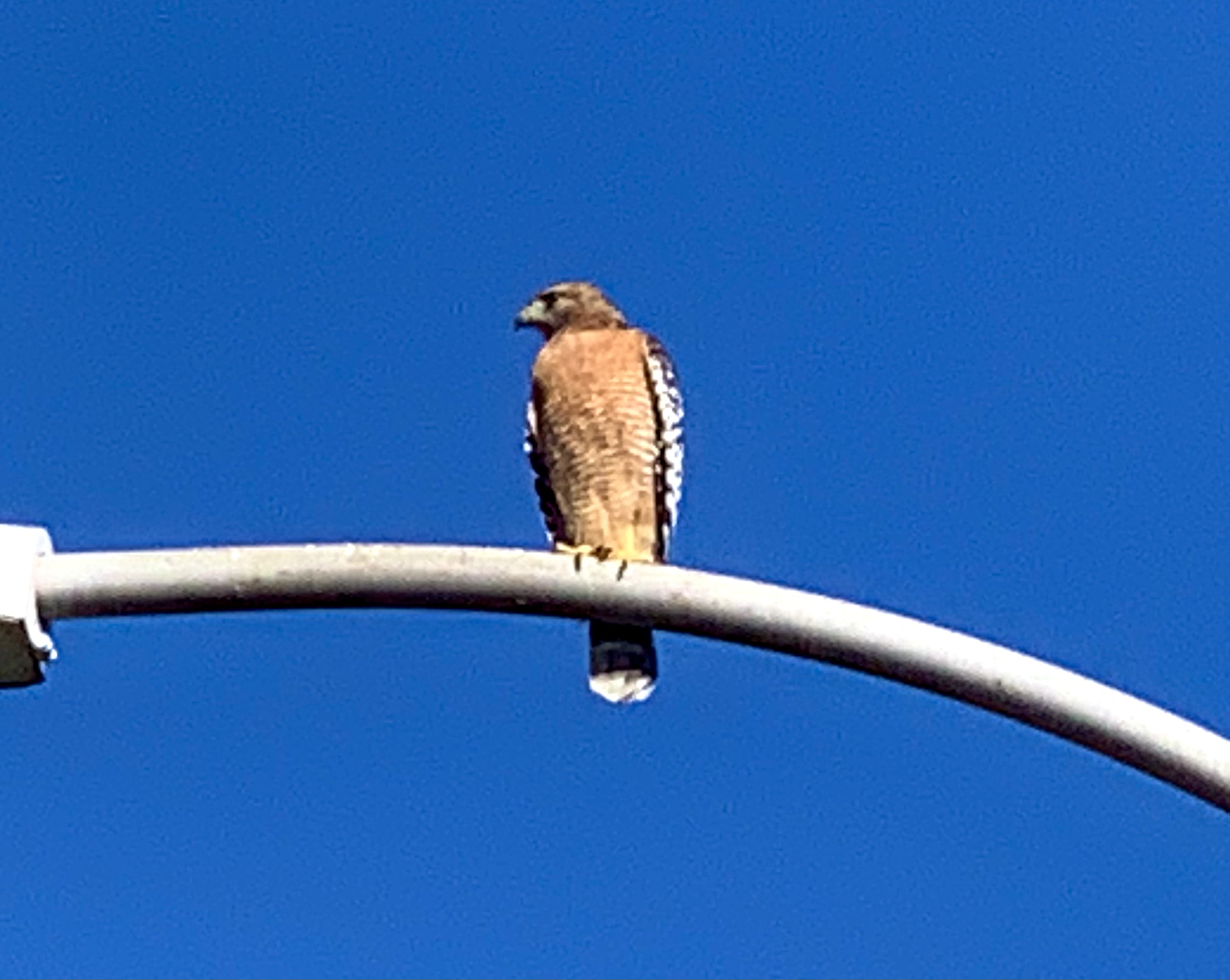
The soaring hawk, the cawing crow,

The singing finch, the cooing dove.

They will not object

When you smile back as they beguile;

When you answer them with words of love.

Photo by Eclipse Chasers on Pexels.com

They will not object,

The herring, scrod, nor even deadly sharks;

Nor catfish, crayfish, cod, or breaching whales.

They will not object

When you begin to learn about their water ways;

When you understand; begin to tell their tales.

They will not object,

The roses in the fulness of their flower,

When you sigh their delicate hour.

They will not object

When you watch the ivy twine nor hushing pine

And vibrate with their silent patient power. 

Photo by Susanne Jutzeler, suju-foto on Pexels.com

They will not object,

The rabbit hiding in his warren warmth

The squirrel nesting in her lair of leaves.

They will not object,

No matter how broad or deep your love

The Tree of Life still hopes and still believes.

Photo by cottonbro studio on Pexels.com

I will not object

If you spend your life in seeking a being

To give its love to you and you alone

I will not object

Though you may find that path is filled with stone

And at the end, despite a life of trying, alone.

I will not object,

But just for something else to try, imagine

Every branch: The Tree of Life: Our Family.

The Tree will not object

If you throw yourself into loving Life

Whole-heartedly, eternally, entirely. 

They will not object.


The Winning Weekend Warrior focuses on the mental game for all sports using examples from tennis, golf, baseball, and other sports. It covers self-talk, imagery, mental practice, strategy, tactics, & sportsmanship. http://tinyurl.com/ng2heq3

Turing’s Nightmares explores the implications and ethics of Artificial Intelligence through fictional short stories. http://tinyurl.com/hz6dg2d

Fit in Bits shows many ways to put more fun, variety, & exercise into daily chores and habits to help with strength, flexibility, fitness, and balance. http://tinyurl.com/h6c7fce

Tales from an American Childhood recounts early experiences mainly in the American Midwest in the 1950’s and relates them to contemporary issues and events. https://tinyurl.com/y9ajvz9j

Dream Planet. Where do you run when the whole world is crumbling under the weight of human folly? When the lethal Conformers invade 22nd century Pittsburgh, escape becomes the top priority for lovebird scavengers Alex and Eva.

https://www.barnesandnoble.com/w/dream-planet-david-thomas/1148566558

Related Posts:

Math Class: Who Are You?

Take a Glance; Join the Dance

Life Will Find a Way

The Walkabout Diaries: Life Will Find a Way

It was in his Nature

You Must Remember This

Hanging Chads

12 Monday Oct 2026

Posted by petersironwood in family, fiction, leadership, love, psychology, story

≈ 1 Comment

Tags

family, fathers, fiction, football, life, love, music, sons, story, truth, writing

Chad would never have become a concert pianist. 

Photo by Biekir Litovchenko on Pexels.com

He could have become a decent amateur and had a ton of fun. He could have been the one to accompany his high school classmates who were blessed with better singing voices than his own. He could have been the one that helped the church group of carolers practice so that the majority were singing something close enough to melodies that they would brighten someone’s evening on Wisconsin yuletide evenings. He might have even switched to a synthesizer and been part of a local garage band. 

Chad had a decent ear, and pretty good coordination, but not much patience. He would never have become a concert pianist. But he might have had more fun with music that he did with football. 

Chad’s dad Chad (Senior) had never let him find out. Chad’s dad Chad had played high school football. He had barely made the varsity squad and never started the game. He came in to sub a few times late in the game when the outcome was no longer in doubt. Over the passage of time and attendant years, tears, and beers, when Chad (Senior) had replayed these games, his role in them grew considerably. He watered his lies with repetition and beer, later supplemented with a shot of Jack Daniels. Or two. Or three. 

Photo by SAULO LEITE on Pexels.com

When Chad (Junior) was born, Chad (Senior) was understandably proud and pleased that he had had a son. While his wife Claire took care of the cooking, cleaning, diaper changes and such, Chad (Senior) began the long process of teaching his son to be a pro footballer. His first present to Chad Junior was not a mobile or a cloth book, but a small, blue rubber football. Chad Senior saw in Chad Junior a chance to fulfill his own dreams of being a star.

Photo by Gerardo Manzano on Pexels.com


As the years went on, he enrolled Chad Junior in various programs to teach football. Chad Junior was a decent catcher and a pretty fast runner. Whereas Chad Senior had neither of those advantages, he had grown up to be large and muscular. Even as a Freshmen, the head football coach at Big Bluff High had thought, Now there’s a hunk of meat to beef up our line! Chad Senior had the body of an offensive lineman, but he could not seem to memorize and then enact the plays. An even worse problem was that he couldn’t seem to control his anger and direct it at solely at the players on the opposing team. He got plenty angry during play, but it was anyone’s guess where that anger would be directed. The coach couldn’t predict and neither could Chad Senior. He quickly became a decent blocker, but couldn’t resist grabbing any defensive player he could reach. Worse, he never got the hang of hiding his illegal holding. It was always so outrageously obvious that he invariably incurred a penalty. When that happened, he loudly blamed the officials, his coach, and his teammates. 

The coach tried switching him to defense, but that didn’t work out any better. He couldn’t memorize offensive plays but he had an uncanny knack for running after and tackling someone who did not have the ball. His impatience and low tolerance for frustration made him a much less desirable footballer than his six foot three, two hundred and fifty pound frame promised. But it was in the classroom where Chad Senior’s anger and impatience hurt him even more. His idea of studying was to twist the arms of his classmates till he got the answers to homework assignments and then guess when it came to exams. His on field behavior led to his being benched most of his Sophomore and Junior Year. But by the time his Senior year rolled around, he lost his eligibility and didn’t play at all. 

So, when Chad Senior asked Chad Junior how Freshman football tryouts were going and Chad Junior replied that he was doing okay but that he’d rather join the band and learn how to play the piano instead, Chad Senior felt betrayed by life itself. Circuits buzzed and crackled in his brain. What the F—- was the point of having a F—ing kid and teaching them to play F—-ing football if the F—-ing kid didn’t even want to play? That’s what Chad Senior’s subconscious was screaming though Chad Senior didn’t hear that scream out loud. It was drowned out by his vocal chords screaming at his only son.

“No son of mine is going to be a homo! No possible way! You’re playing football and no way are you playing some sissy music instrument and especially not the piano!” 

Chad Junior frowned. He thought: What does playing music have to do with sexual orientation? But he had long ago learned not to question Dad Chad’s thought trains which generally resembled, not trains speeding a long a track so much as squirrels stoned on cocaine and hash jerking all over the highway so randomly one couldn’t tell whether they were desperately trying to throw themselves beneath the spinning black wheels of death or desperately trying to avoid those wheels of death. In any case, Chad Junior felt his heart sink. 

It wasn’t that Chad Junior had had his heart set on a career in music. It was more that he had his heart set on getting to know Jennifer Banning better. Jennifer of the long blond hair and endless blue kaleidoscopic eyes loved music. When their music teacher, Mister Thomas, played music, Jennifer invariably closed her eyes. This gave Chad a chance to pretend to close his eyes too. Jennifer seemed to be watching a light show or fireworks display in her own brain. Chad, in turn, watched Jennifer which, to him, was better than a drone show, a fireworks display, and a magic show combined. 

Photo by Lada Rezantseva on Pexels.com

Chad Junior had planned to become a good piano player mainly to impress Jennifer and to spend another hour a day in band practice with her. Speaking of practice, Junior had spent many hours learning to keep his face expressionless during lectures. It didn’t prevent all beatings but it minimized them. While Chad Senior droned on about the ever-more epic fantasy of his “spectacular” football career and harangued Chad Junior about this, that, and Jesus and the importance of being somebody and making money and learning how to be a man, by God, Chad Junior practiced mental arithmetic. He began with two, doubled it to four, doubled that to eight and so on. He played a little contest with himself to see how far he could get before some deeply hidden circuit breaker in Chad Senior’s brainstem at last turned off the flow of norepinephrine in time to prevent a stroke or heart attack. 

At last, Chad Senior’s arpeggios of anger ended. “Well, Junior? What do you have to say for yourself?!” 

Junior had just begun to double 4,294,967,296 when he realized it was his turn to say something. “I never thought of it that way, Dad. Thanks.” When he heard himself, it sounded so insincere and so pat that he feared it might actually trigger another outburst of verbal or physical abuse. But Dad Chad took it all at face value. He took most things at face value because digging deeper took too much patience. 

“Listen, Junior, trust me, football’s a lot more fun than music, for Christ’s sake. You’ll thank me later. You’ll see. Chicks dig footballers. You need to get more meat on your bones though. Weight training. That’s what you need.”

“Gee, Dad. Coach Andrews told me almost the same thing in history class last year. I guess you’re right.” 

Chad Junior had first become interested in powers when, as a third grader, he happened upon a book called something like “Powers of Ten” and it zoomed from a woman getting a tan out to the edges of the universe and in to the innermost workings of the atom. A few years later, as he was learning chess, he happened to hear a story about a rich King who was cured of “ague” whatever that was by one of his Court Jesters and as a reward, he offered to give the Jester anything at all. The Court Jester said, “I am but a poor man and my tastes are simple. If you could simply give me rice that I can share with my family, that would be more than enough. How about this: Tomorrow give me one grain of rice on this first square of the chessboard. On the day after, two grains on the next square and so on, doubling the number each time.”

The King had thought the Court Jester was indeed a fool to settle for something so cheap and simple. And, for the first week, everything went fine, but soon the King was scrambling to meet the requirement. He arranged to have the Court Jester slip and fall off the castle wall long before his kingdom was destroyed. 

Photo by Bob Krustev on Pexels.com

Chad Junior had learned many lessons from this one story. First, he learned that Kings can be stupidly short-sighted. Second, he learned the power of doubling. Third, he learned that greed can get you killed. Fourth, he learned that sometimes, when everything looked bleak, violence could solve your problem. He stored these learnings away and only occasionally brought one off the shelf to ponder it more closely.

Chad Junior joined the football team, lifted weights, and found that Dad Chad was right about one thing, Girls really did go for the football team. Many did. Not Jennifer though. Not Jennifer. Who knows whether things might have turned out differently if Chad Junior had studied piano and had years of band practice with Jennifer. Perhaps. Perhaps not. We’ll never really know. 

Photo by u0412u043bu0430u0434u0438u043cu0438u0440 u0412u044bu0441u043eu0446u043au0438u0439 on Pexels.com

But Chad Junior compulsively played one game of “What If” after the other. His addictions reinforced each other and grew harder to shake. The addictions were no longer his addictions. Rather the addictions owned him. The idea began as a small poppy seed of hope, of life, of taking control in his otherwise dark, cheerless, choiceless world. The idea grew to a plan and then a small set of plans. Then a network of plans. Along with the exponential growth of these plans, so too, his motivation to carry them out also doubled and redoubled. He dusted off Internet memes and the morals of the many stories he had read such as the King with a rice problem.

Chad Junior had not originally planned to join Dad Chad, but “The Plan” had developed a life-force of its own; one that owned Chad Junior. 

Both inquests officially concluded death by suicide.

Half right is perhaps the best we can hope for. After all, even Ted Williams didn’t bat .500

——————-

The Winning Weekend Warrior focuses on the mental game for all sports using examples from tennis, golf, baseball, and other sports. It covers self-talk, imagery, mental practice, strategy, tactics, & sportsmanship. http://tinyurl.com/ng2heq3

Turing’s Nightmares explores the implications and ethics of Artificial Intelligence through fictional short stories. http://tinyurl.com/hz6dg2d

Fit in Bits shows many ways to put more fun, variety, & exercise into daily chores and habits to help with strength, flexibility, fitness, and balance. http://tinyurl.com/h6c7fce

Tales from an American Childhood recounts early experiences mainly in the American Midwest in the 1950’s and relates them to contemporary issues and events. https://tinyurl.com/y9ajvz9j

Dream Planet. Where do you run when the whole world is crumbling under the weight of human folly? When the lethal Conformers invade 22nd century Pittsburgh, escape becomes the top priority for lovebird scavengers Alex and Eva.

https://www.barnesandnoble.com/w/dream-planet-david-thomas/1148566558

The Walkabout Diaries

Travels with Sadie

The First Ring of Empathy

How the Nightingale Learned to Sing

Math Class: Who are You?

Small Steps

And there were Signs All Along the Way

Somewhere a Bird Cries

Fish have no Word for Water

Imagine All the People…

Roar, Ocean, Roar!

The Dance of Billions

There were Signs All Along the Way

10 Saturday Oct 2026

Posted by petersironwood in America, apocalypse, leadership, management, poetry, politics, psychology

≈ 1 Comment

Tags

books, Democracy, Dictatorship, history, life, poem, poetry, politics, Resist, truth, USA, writing

Signs? 

Oh, sure, there were signs. 

There were signs.

There were signs all along the way. 

Some were pine, simple, hand-made.

Easy enough to turn your head away.

Some were metal, etched, revealed. 

Easy enough to keep your eyes concealed.

Some were neon, flashing, and a mile high.

Easy enough to shrug and sigh.

Photo by Michael Obstoj on Pexels.com

And many when the cancer killed

Felt their worst fears stilled

They had not been victim; not right away

And so it seemed it well might stay that way.

But no-one’s safe in criminality’s dictator$hit

Death’s the very goal of that dark and dangerous pit.

Self-hating, race-baiting, inflating orange clown

Claims a golden glowing crumbling crown.

“If only we had known…”

But there were signs.

There were signs.

There were signs all along the way.


The Winning Weekend Warrior focuses on the mental game for all sports using examples from tennis, golf, baseball, and other sports. It covers self-talk, imagery, mental practice, strategy, tactics, & sportsmanship. http://tinyurl.com/ng2heq3

Turing’s Nightmares explores the implications and ethics of Artificial Intelligence through fictional short stories. http://tinyurl.com/hz6dg2d

Fit in Bits shows many ways to put more fun, variety, & exercise into daily chores and habits to help with strength, flexibility, fitness, and balance. http://tinyurl.com/h6c7fce

Tales from an American Childhood recounts early experiences mainly in the American Midwest in the 1950’s and relates them to contemporary issues and events. https://tinyurl.com/y9ajvz9j

Dream Planet. Where do you run when the whole world is crumbling under the weight of human folly? When the lethal Conformers invade 22nd century Pittsburgh, escape becomes the top priority for lovebird scavengers Alex and Eva.

https://www.barnesandnoble.com/w/dream-planet-david-thomas/1148566558

Somewhere a Bird Cries

The After Times

After All

Plans for US; some GRUesome

Dick-Taters

Fish have no Word for Water

Guernica

We Won the War! We Won the War!

The Orange Man

The Truth Train

The Ailing King of Agitate

Roar, Ocean, Roar!

The Dance of Billions

Karmic Architecture II

08 Thursday Oct 2026

Posted by petersironwood in America, design rationale, essay, family, leadership, love, management, nature, politics, psychology, Uncategorized

≈ Leave a comment

Tags

Democracy, Dictatorship, essay, government, humanity, karma, leadership, life, love, management, mental-health, peace, truth, Ukraine, USA, war, writing

You and I and King Cobra and Queen Anne’s Lace and every other living thing on earth are small and temporary little leaves on the ancient (4.5 billion years and counting), vast, and diverse Tree of Life. Typically, you know a lot more about the neighborhood surrounding your little leaf than you do about mine and vice versa. Yet, I may discover things that are of use to you. And, you may discover things that are of use to me. So, humans, have one gift that is valuable above all others. 

But before we explore what that valuable gift is, let me ask you a question about how you would react to a hypothetical.

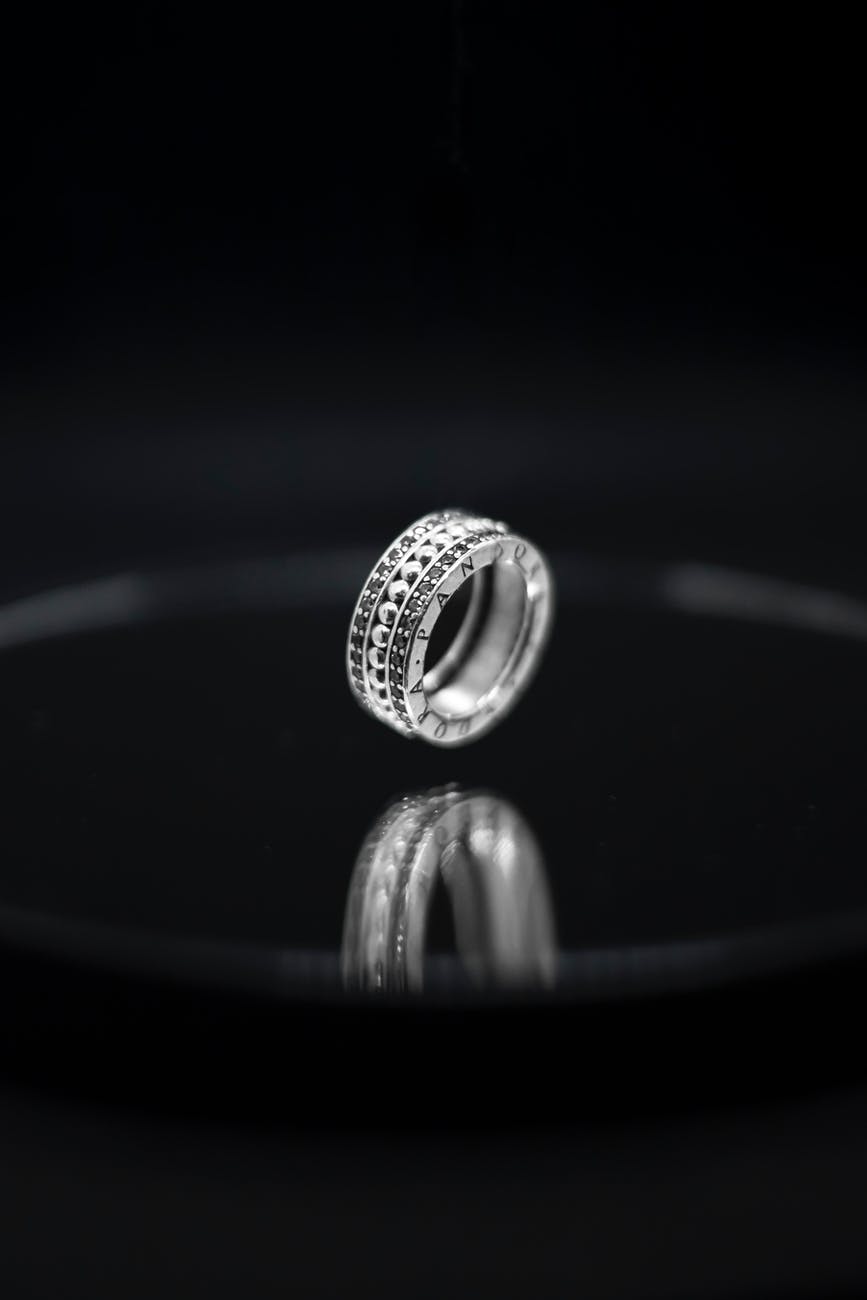
Suppose you were so poor that you barely had enough to eat, no clothes to wear, a small damp cave for shelter. You were cold in the winter and hot in the summer. Now, suppose I gave you a magic ring that changed all that. If you wear this ring — voila! — you now have clean water and sufficient food and plenty of clothes and a house that really shelters you from the extremes of the environment. In return, you must wear the magic ring at all times. If you remove the ring, your life reverts immediately.

Photo by Jordan Rushton on Pexels.com


How tempted would you be to throw that magic ring in the toilet? 

Yet, that is precisely what many people do. 

And, if a sufficient number of people throw away the ring, everyone will essentially live the life of a beast. 

That “magic” ring is, like most rings, circular. It represents the whole of humanity. It represents the family. It represents a club, a marriage, a lodge, a company, a church, a school, a class, a group of friends. It represents our respect for each other as human beings. It represents our ability to communicate with each other. 

You could call that ring love and I wouldn’t object. It need not be imbued with so much positivity that people feel love. But it must be overall positive. It represents truth. It represents empathy. Love is strong and it can overcome both a few misdeeds by everyone and many misdeeds by a few. But if lies become more commonplace than truths, civilization will run downhill and eventually cease. 

Similarly, if hate and fear and contempt are how we mostly regard each other, the marriage, the family, the club, the school, the church, the party, the lodge, the company, the group of friends will eventually disintegrate. In many cases, it would disintegrate into a self-destructive war except that most people will stop themselves because they don’t want to be ostracized or jailed by the larger society. If, however, the entire society becomes rife enough with hate and fear, no one will come to anyone else’s rescue. 


Our entire survival depends on our gift, our ring, our community, our country, our fellow human beings. 

Our gift is not our lightning speed of running.

Our ring is not our ability to out-swim the shark.

Our gift is not our powerful jaws, or our steel strong talons. 

It is our ability to communicate with each other by sharing experiences. It is truth, caring, and cooperation. That is our one gift that enabled us to survive and thrive. 

Photo by Andrea Piacquadio on Pexels.com

A democracy can take many specific forms. What it is, at base, is that it recognizes the gift as a fundamental value to be cherished and used. The fundamental purpose is to ensure that government is aware of and takes into account how policies and people and processes actually impact people who live in the democracy. In a representative democracy, the people, in turn, can vote for people to represent them. They can vote for any reason they like; e.g., because they admire a particular person; they believe they will do a competent job; they like the candidate’s promised policy changes; they find that the candidate reminds them of his funny old uncle Al who always had the best candy on offer.  

No democracy is perfect. There has to be in its structure and processes more truth than lie; more empathy than indifference; more love than hate; more hope than fear. In some democracies, there are basically two parties; others have dozens. Parties may differ on philosophies, priorities, platforms, programs, etc. 

A “party” who rejects democracy itself however, is not an actual political party. The term “political party” only makes sense in the context of a democracy. If “elections” are determined by those in power, they are not actual elections and there is no party. It’s just a group of thugs who want to rule by hate and fear and lies. That is not a political party. It is not a legitimate part of a political process. They want to throw the ring away in the toilet. They want to subvert the truth to lies. They want to severely limit love and enhance fear and hate. They divide rather than unify. Oh, and guess what else? Historically, they want war. They will ensure that war just as Putrid is doing right now.

Democracies have also been known to start wars. When they do, it’s often based on lies. As communication has become more ubiquitous, it has been harder and harder for democracies to lie, cheat, and be cruel. Most people don’t want that! Most people want there to be more truth, love, caring, and cooperation. There are plenty of differences about how to go about that. That’s fine. That’s just the sort of difficult and messy problem that democracy is particularly less bad than any other system. 

As I said, I really think most people prefer interacting in a caring and cooperative way. We see that it’s more effective in getting things done and it simply feels better for everyone. For that reason, dick-tater-$hits have to provide lies to help assuage the consciences of its citizens. “Oh, they are all murderers and rapists! You shouldn’t feel bad about being cruel to them!” Another favorite is: “Oh, they aren’t really human beings, the way we are. No need to treat them any better than a fox trying to steal your chickens!”

Photo by u041eu043bu0435u0433 u042fu043au043eu0432u043bu0435u0432 on Pexels.com


Needless to say, this ploy completely fails on many people and isn’t completely effective on anyone. Any time you’re cruel, whatever story you tell yourself about it, you know you are destroying a bit of yourself. Except, what you are really destroying is something much vaster than a bit of yourself. In fact, what you are destroying is something much vaster than all of yourself. What you are destroying by being cruel, whatever story you tell yourself is the human branch of the Tree of Life. Lies weaken that branch. Cruelty weakens that branch. Bullying weakens that branch. So too does cowardice. 

The architecture of karma shows that the future impact of your present day behavior is much greater in scope than your present impact. Behaving well is in your interest because what you are is essentially a very small and very temporary part of that ancient, vast, and diverse Tree of Life. The more you can enhance that tree with truth and love, the better for the whole tree.


Don’t throw away the ring. Wear it proudly. It is truly an amazing gift! 

Photo by Pixabay on Pexels.com

Author page on Amazon

Dick-Tater

Absolute is not just a vodka

The First Ring of Empathy

Pattern Language for Cooperation 

How the Nightingale Learned to Sing

Listen: You can hear the echos of your actions

Poppa Goes the Weasel

The Three Blind Mice

Stoned Soup

The Orange Man

Math Class: Who Are You? 

Ripples

Happy Darwin Day!

Somewhere a Bird Cries

All We Stand to Lose

The Broken Times

Fish have no word for water


Some recommended books:

The Winning Weekend Warrior focuses on the mental game for all sports using examples from tennis, golf, baseball, and other sports. It covers self-talk, imagery, mental practice, strategy, tactics, & sportsmanship. http://tinyurl.com/ng2heq3

Turing’s Nightmares explores the implications and ethics of Artificial Intelligence through fictional short stories. http://tinyurl.com/hz6dg2d

Fit in Bits shows many ways to put more fun, variety, & exercise into daily chores and habits to help with strength, flexibility, fitness, and balance. http://tinyurl.com/h6c7fce

Tales from an American Childhood recounts early experiences mainly in the American Midwest in the 1950’s and relates them to contemporary issues and events. https://tinyurl.com/y9ajvz9j

Dream Planet. Where do you run when the whole world is crumbling under the weight of human folly? When the lethal Conformers invade 22nd century Pittsburgh, escape becomes the top priority for lovebird scavengers Alex and Eva.

https://www.barnesandnoble.com/w/dream-planet-david-thomas/1148566558

Tools of Thought: “What If…?”

06 Tuesday Oct 2026

Posted by petersironwood in creativity, design rationale, essay, leadership, management, psychology, Veritas

≈ 1 Comment

Tags

books, creativity, fiction, invention, leadership, life, problem solving, psychology, sense making, story, truth, writers, writing, writing-tips

What if…?

Generally speaking, our thoughts and certainly our actions should be grounded in reality. To take a random, yet extremely poignant example from my own life, human-caused global warming is real. Treating it as though it doesn’t exist in order to rationalize further swaths of our country’s and the world’s wealth to oil oligarchs is not only bad thinking; it is suicidal. 

Photo by Johannes Plenio on Pexels.com

Sometimes, however, during the process of thinking about a situation or trying to solve a problem, it may be useful to imagine that the state of affairs were different that they are. That is not denial; it is a heuristic for sense-making. 

One of the most famous examples were the “what if” conjectures about parallel lines. It’s a theorem of Euclidian geometry that parallel lines never meet. Other thinkers in early Greece, Babylonia, Egypt probably other places also used the idea of parallel lines, but Euclid formalized it in his “The Elements” around 300 BCE. 

It wasn’t until the early 1800’s that mathematicians systematically explored other geometries in which, for instance, Gauss, Lobachevsky, Bolyai, looked into non-Euclidian geometries. In effect, they took an intuitive and long-standing idea and asked “What if…?” What if parallel lines did meet? What if parallel lines diverged? These ideas ultimately turned out to be useful in navigation, general relativity, astrophysics, and computer graphics. 

Photo by Alejandro De Roa on Pexels.com

In general, playing “what if” games with reality can be a useful way to generate ideas. It’s important not to get so carried away by the “what if” games that you believe, with no evidence that your “what if” applies to reality. I could say, for example, “What if I could jump off a tall building and land without injury?” That might be fun to imagine. 

It could also lead to various other ideas; e.g., a race of beings on another planet who could do just that. How? Could the gravity of their planet be so low that they could get away with it? Might the atmosphere be so thick that a body’s acceleration would reach terminal velocity of only 10 miles per hour? Or, might they be made of different material.

Photo by Javier Captures The World on Pexels.com


Such a line of enquiry might naturally lead to a study of real animals on earth that are capable of absorbing a great deal of shock. Woodpeckers come to mind. Peregrine Falcons kill their prey by diving into them at high speed from above. The Falcons themselves have numerous adaptations to surviving the collisions.

Photo by David Solce on Pexels.com


Looking into the details of organisms adapted to high speed collisions might lead to new inventions for car collisions, football helmets, hiking boots, or armor for vehicles traveling in minefields. 

Using the “What if…?” Tool can lead to inventions, insights, or the premise for writing fiction, fantasy, science fiction, a mystery, etc. It can help you see problems, re-frame problems, solve problems or make sense of the world around you. Like any tool, it should be used wisely. Don’t run with scissors; don’t use a hacksaw to remove a splinter, and don’t use “What if…?” as an excuse to deny reality. 

—————

Recommended books. 

The Winning Weekend Warrior focuses on the mental game for all sports using examples from tennis, golf, baseball, and other sports. It covers self-talk, imagery, mental practice, strategy, tactics, & sportsmanship. http://tinyurl.com/ng2heq3

Turing’s Nightmares explores the implications and ethics of Artificial Intelligence through fictional short stories. http://tinyurl.com/hz6dg2d

Fit in Bits shows many ways to put more fun, variety, & exercise into daily chores and habits to help with strength, flexibility, fitness, and balance. http://tinyurl.com/h6c7fce

Tales from an American Childhood recounts early experiences mainly in the American Midwest in the 1950’s and relates them to contemporary issues and events. https://tinyurl.com/y9ajvz9j

Dream Planet. Where do you run when the whole world is crumbling under the weight of human folly? When the lethal Conformers invade 22nd century Pittsburgh, escape becomes the top priority for lovebird scavengers Alex and Eva.

https://www.barnesandnoble.com/w/dream-planet-david-thomas/1148566558

Further tools of thought can be found here: 

Tools of Thought

Photoessays inspired by walks with our Golden Doodle Sadie: 

Travels with Sadie: Precipitation

Photoessays inspired by walks in natural settings such as gardens, parks, wilderness, and fields:

The Walkabout Diaries: Symphony

The “Myths of the Veritas” explores Leadership based on values of truth, empathy, creativity, love, participation, and cooperation. Our tale begins as the leader/shaman of the Veritas seeks an eventual successor so she devises a series of seven trials that mainly test empathy.

The First Ring of Empathy

What to do? Whom to Believe?

02 Friday Oct 2026

Posted by petersironwood in America, essay, leadership, management, politics, psychology, satire, Uncategorized

≈ Leave a comment

Tags

America, books, cognitive dissonance, deception, Democracy, fantasy, fiction, leadership, lies, politics, problemsolving, psychology, short story, thinking, truth, USA, writing

What to do? What to do? 

Everyone seems about to go for the throat. People are not sure whom to trust. Should they trust doctors who spend years and years learning about calculus, chemistry, biology and then more years in medical school learning about anatomy, physiology, and medicine and then more years as an intern and resident? Or, instead, maybe how about believing a yelling, screaming talk show host? Hard to tell? Maybe no-one ever taught us how to tell liars from truth tellers. There is no simple formula that will guarantee us to be 100% accurate, but maybe we can think together about it. 

——————-

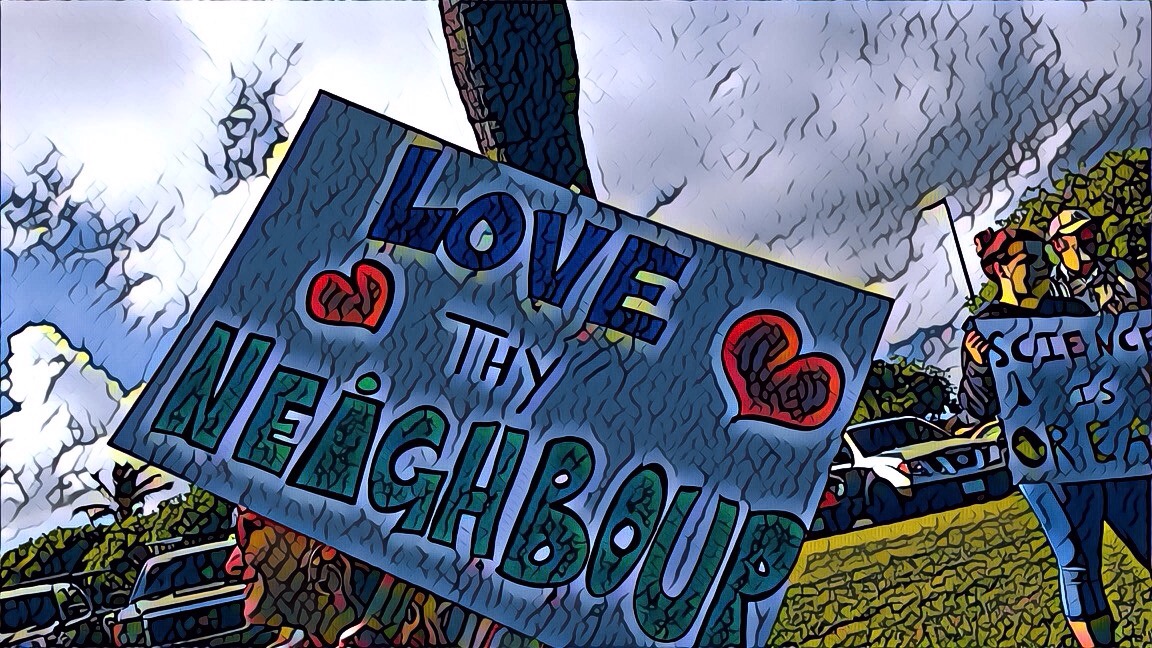
(Processed photo from one I took on Maui.)

Sam sat alone at the local sandwich shop, and began contemplating whether to have dessert after his nice lunch. It was a club sandwich, already a lot of calories, but what the hell, he thinks. With what the doctor said this morning, I should be free to eat anything I want, 

Three older guys — strangers — come in and waddle up to a table next to Sam’s. The trio have their menus but before glancing at them, they look up at a nearby TV and raise their fists. There’s a roar because someone has just run back a kickoff for a touchdown.

Andy says, “Wow! What a run back. I played in high school. Not easy running back a kickoff all the way into the end zone.” 

Sam regards the threesome. It’s hard for him to believe any of them were ever fit enough to play football, but most people do gain weight with age and lack of exercise, so — the portly stranger could be telling the truth.

Bob says, “I played in high school and college. I was good. Blew my knee out as a sophomore though and lost my scholarship.” This too seems plausible to eavesdropping Sam.

Cal says, “I played in high school, college, and went pro. I was fantastic. Probably the best runner and wide receiver and quarterback in the history of Ohio State. I played free safety too. Had more tackles than anyone before or since. If I were playing quarterback, no way that guy would have scored. I was the top draft pick five years running. A lot of quarterbacks these days are too chicken to tackle anyone. I would have nailed him. I was breaking all the records for the Houston Texans! But I got bored. Football’s really a simple game.” 

Sam thinks that Cal is bragging way too much. His story is a priori unlikely. Regardless of what he says or how he says it, the chances that a random person is the best anything at Ohio State is highly unlikely. He played back, wide receiver, quarterback and free safety? That’s unlikely. Extremely unlikely. 

Sam frowns and shakes his head. What does it mean to be the “top draft pick” for five years? If that were true, it would lead naturally to an explanation but none was provided. Further, quarterbacks may be told not to risk their careers making a tackle on a punt return. But what quarterback is on the field to defend a kickoff return? 

Houston Texans? Their first season was 2002. This guy looks to be at least 65. So…he was playing all those positions when he was 45? That seems highly unlikely. Got bored playing football? Possible, but again seems very highly unlikely. Football’s a really simple game? Really? 

Cal’s story has a lot of holes in it. Now Sam laughs that he ever swallowed any of it.

Bob says, “You played for the Houston Texans? You mean the Oilers?” 

Cal shoves his chair back hard enough to spill water on the table. He pushes on the arms of his chair and manages to stand up and he yells even louder, pounding the table to illustrate just how much he believes in what he’s saying. “I said Texans and I mean Texans! I was the best in the whole damned state of Texas! The whole south for that matter!”

Sam laughs to himself, thinking, Well, that settles it I guess. Cal is really passionate and loud so he must be telling the truth, right?

No. 

Wrong. 

People who are telling the truth do not feel the need to scream and yell and make even more outrageous claims the first time someone questions them. 

Sam snorts at the ridiculous claims and then has an idea. It takes Sam 20 seconds to pull out his iPhone and look up Eli Manning, the first name that popped into his head. 

Sam reasons: “If Cal were really the best football player in the history of Texas, he could have easily verified it by finding his own entry on the web  (likely on Wikipedia) and shown his table mates the entry. He would not have had to scream and yell and pound the table.”

Sam thinks: Okay, but no-one’s going to fall for a con man like that. 

{Really? Don’t be too sure, Sam}. 

Cal says to the approaching and attractive server: “Hey, darling. You look yummier than anything on the menu. Do you know who I am? Do you know what I did before I became a billionaire? Go ahead guys. Tell this lucky sweetheart who’s going to be leaving someone a very big tip!” 

Andy and Bob may think: Well, at least he’s going to leave the tip.

So, Andy and Bob outline Cal’s biography in the football hall of fame (where his name definitely does not appear should anyone actually look it up). 

Andy and Bob feel pretty sheepish about joining in this pack of lies. But Cal doesn’t think they have been anywhere near lavish enough in their description of him. Cal says: “Oh, on, guys! Make this girl’s day! Tell her she’s had the pleasure of serving the greatest football player in the history of the game! I don’t say that. That’s what everyone says! Right, guys?” 

Now Sam looks over and can see that Andy and Bob are both a bit embarrassed. They’ve gone along with Cal’s lies, but they don’t want to admit to that now because it proves that they are also liars. So they go along with the bigger lie. 

Andy says, “Yeah. Something else, right? He was OSU’s best player ever. Yep.” 

Bob says, “Uh-huh.” 

Cal shakes his head at Bob. “Come on! God, that’s the damndest weakest most candy-ass description I’ve ever heard, Bob. Tell her how many touchdowns I had. Just me. At OSU!” 

Bob looks bewildered. He knows it’s all a lie. People all over the restaurant are starting to look over at the table and more than a few are looking admiringly at Cal. 

Bob thinks to himself, Quite a few cute chicks here. Cal can’t handle all of them.”  He feels inspired. He takes out his iPhone and says, “Damn. Battery’s about gone. Let me just … here … fifty touchdowns. My God! That is amazing!” 

Cal rolls his eyes. “Give me that damned phone! That’s not right! It’s two hundred and fifty. Not fifty. Yep. There it is. I’m going to look up how many interceptions I had. Oh, crap! Battery dead. Hey guys, I gotta skedaddle. Here’s your crap cellphone back Bob.”

By now, Andy and Bob are both too embarrassed to come clean. Cal makes a big show out of taking out his wallet and thumbing a large pile of cash. He makes it look as though he’s leaving a big tip but actually only leaves a couple bucks. Andy and Bob split the entire bill.

Sam shakes his head slowly as he watches the three waltz out. Their server looks in awe of Cal and stares him out of the establishment. She even stares with some desire — despite the fact that Cal is grossly overweight and barely able to wobble his way out of the restaurant. But she imagines how once he must have been quite a specimen and it’s that image that is the real target of her desire. 

She also looks forward to finding out just how giant of a tip he left her. A few moments later, she walks over to the “billionaire’s” table and before opening up the placard, tries to guess how much it is. Several of her colleagues have come over as well. She turns around and tells them to back off. “It’s my tip, thank you very much” she says. “Just remember, I’m the one who tried to convince you all to share tips but you wouldn’t have any of it.”

They back off, slightly miffed. Now, the young lady has made up her mind it will be at least a hundred dollars, but she dares to hope that maybe he did something crazy and left her a thousand!! 

She notices her hands trembling as she opens up the placard and sees three bills. 

All ones. She looks more carefully at the bills. 

They

Are 

All 

Ones

Photo by Pixabay on Pexels.com

She blinks. She sets her jaw. She’s not going to let her colleagues see her disappointment or that he stiffed her, especially after he felt her thigh. All the way up. She forces a gleeful tone into her voice and jams the outer corners of her lips up towards her ears. “Oh, boy!” She shouts with intended but pretended joy. “This will buy me a new iPhone!” As she said this, each successive word increased in loudness and pitch. She sounded a lot like someone desperately peddling costume jewelry on channel 666 at 4 am.

Her colleagues glance at each other. She fooled no-one. They all realize she got stiffed. Each is torn between comforting her, making fun or her, or just pretending along with her. For the sake of keeping a reasonably happy work environment, they all choose to go along with her. 

Sam shakes his head and looks down at his melted coffee ice cream with hazelnuts. Now it’s just cold coffee with a lot of wet nuts. 

And, then Sam realizes that that is the least tragic thing that happened here today. In the length of time it took his ice cream to melt, one liar became seven liars. 

Same took a deep breath. This is what’s happening inside me, he realized. 

That’s how my cancer grew so fast. 

———————

A lot is not a little

The Truth Train

Try the Truth

The Orange Man

The Wobbly Man

Come back to the light side

My Cousin Bobby

Where Does Your Loyalty Lie?

Cancer Always Loses in the End

Imagine All the People

All we Stand to Lose

After All

Somewhere a Bird Cries

The Dance of Billions

An Open Sore from Hell

Roar, Ocean, Roar!

Author page on Amazon

The Winning Weekend Warrior focuses on the mental game for all sports using examples from tennis, golf, baseball, and other sports. It covers self-talk, imagery, mental practice, strategy, tactics, & sportsmanship. http://tinyurl.com/ng2heq3

Turing’s Nightmares explores the implications and ethics of Artificial Intelligence through fictional short stories. http://tinyurl.com/hz6dg2d

Fit in Bits shows many ways to put more fun, variety, & exercise into daily chores and habits to help with strength, flexibility, fitness, and balance. http://tinyurl.com/h6c7fce

Tales from an American Childhood recounts early experiences mainly in the American Midwest in the 1950’s and relates them to contemporary issues and events. https://tinyurl.com/y9ajvz9j

Dream Planet. Where do you run when the whole world is crumbling under the weight of human folly? When the lethal Conformers invade 22nd century Pittsburgh, escape becomes the top priority for lovebird scavengers Alex and Eva.

https://www.barnesandnoble.com/w/dream-planet-david-thomas/1148566558

Where Does Your Loyalty Lie?

22 Tuesday Sep 2026

Posted by petersironwood in America, apocalypse, COVID-19, politics, psychology, Uncategorized

≈ 1 Comment

Tags

America, Corruption, crime, Democracy, Democrat, GOP, graft, history, JFK, loyalty, Nixon, politics, Republican, treason, Trump, truth, USA

————————-

usa flag waving on white metal pole

Photo by Element5 Digital on Pexels.com

Remember the days when you flew a lot for your organization?

Do you remember getting bonus miles from an airline? 

Do you recall that many them (and companies in other industries) called this a “Loyalty Program”?

Why do you suppose some of them called it a “Loyalty Program” instead of a “Frequent Flyer” program? 

Did you ever work for a manager or supervisor or boss whom you felt loyalty toward? 

Why did you feel that loyalty? 

What would you do if you caught your boss stealing from the company? 

Was your relationship to your boss more personal than your loyalty to the company?
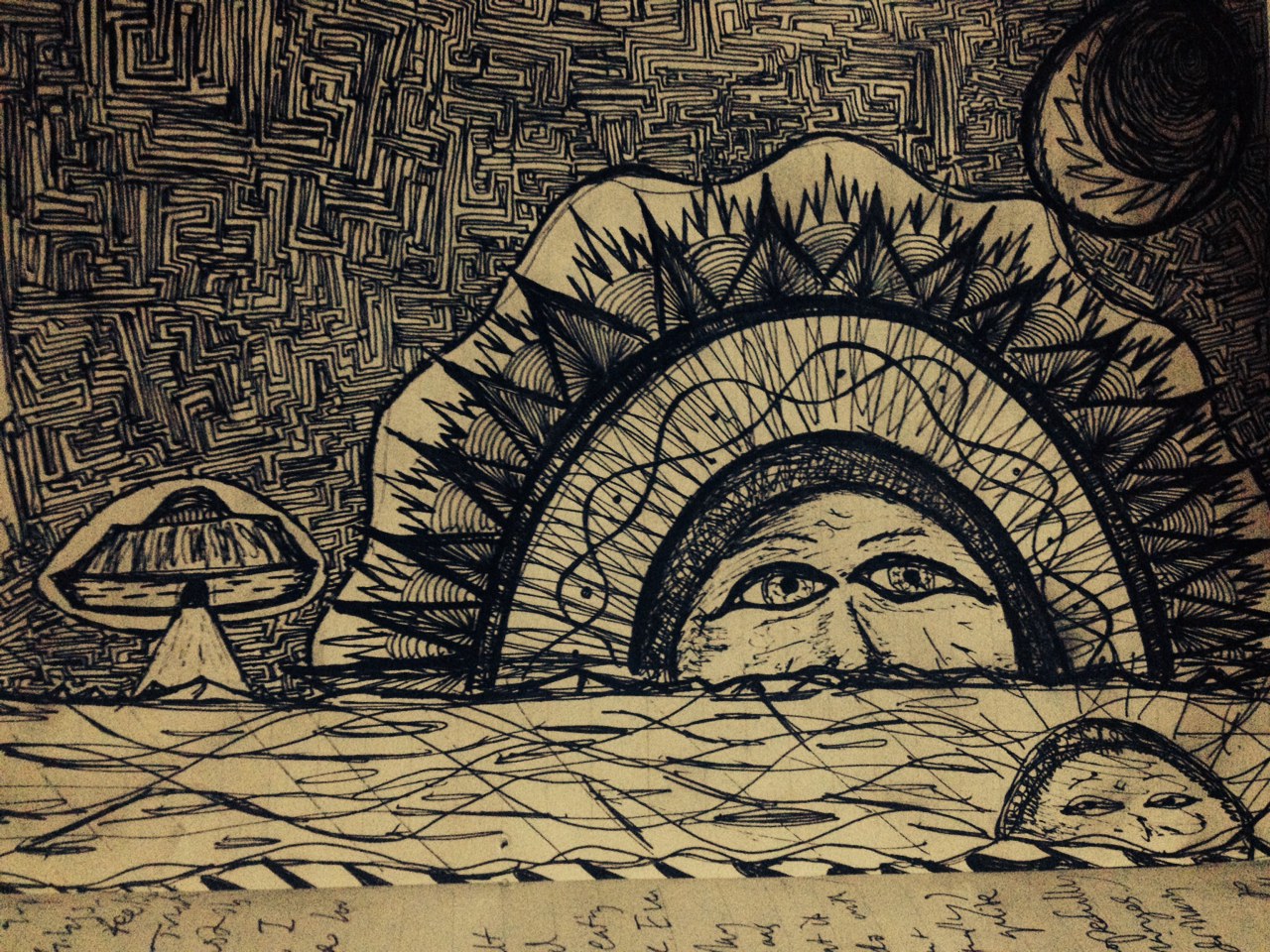
IMG_3320

Artwork by Pierce Morgan

I had many part time jobs working my way through college. One of those jobs was as a projectionist (1964). It did not pay much (less than $2/hour), but it was a fun job in many ways. I got to stride all over the large university campus, mainly to show slides or movies to classes in the School of Architecture, Law School, Medical School, etc. I had a direct supervisor, let’s call him Ted, who taught me the facts of life — at least, when it came to male & female plugs, the value of looping your cords, and of carrying with you at all times on the job, a spare projection lamp, a spare sound drum lamp, and a small film-splicing kit. He happened to be a Democrat. 

Another man, tall and bald (let’s call him Mr. “Cramer), served as boss for the whole A/V department. He was a Republican, like me. I liked both of the people in my “management chain.” Neither one played any stupid “power games.” So far as I could see, we all just wanted to do a good job. That applied to my co-workers as well though I only interacted with them rarely. The nature of being a projectionist then led almost exclusively to solo gigs. 

That was okay with me. If there had been two of us in a projection both hidden away from fellow students and faculty, by sight and sound, being Sophomores, we probably would have acted sophomoronically and made fun of the material being presented or ignored it entirely and played cards or solved the world’s problems in a BS session. Working alone, I listened to every single lecture on topics that would never have been covered in my paid classes; e.g., American 20th Century Architects including my favorite, Frank Lloyd Wright (awesome!); Collagen as a possible cause of aging (it isn’t); Alcohol and Driving. (Spoiler alert on that last one — not a good idea). 

close up photo of martini in cocktail glass

Photo by Engin Akyurt on Pexels.com

In order to get paid (for attending these free lectures), I had to fill out a time card every day and sign it at the end of the week. My direct supervisor hinted that I could put down a few more hours than I actually worked. I didn’t do that. He hinted again. I still didn’t do it. Eventually, Mr. Cramer spoke to me. He explained that if the department didn’t bill for their allotted hours, the departmental budget for the next year would be cut to match the hours that were billed for the current year. I still didn’t pad my hours, though I certainly could have used the money. It did seem a bit unfair to me that the department would have their budget cut because they were efficient. On the other hand, from the perspective of the entire university, it didn’t seem like such a ridiculous system. I didn’t feel as though I was being “disloyal” to my direct supervisor or the department boss to write down my true hours. Nor, did I feel particularly virtuous in putting my hours down accurately. It was just what I felt was the right thing to do. I don’t think it actually occurred to me to try to “rat on” my boss about the policy of padding the hours. I’m not sure whether that thought ever crossed my mind, but I didn’t do it. 

It should be noted that at that point in my life, I considered myself a Republican, though I was not yet old enough to vote. My parents had both been Republican. My mother’s entire family was Republican. I was enthusiastic about Eisenhower and  went to see Nixon talk at a nearby shopping center. I was only about 20-30 feet away. I have zero recollection of what he said, but he had seemed wonderful at the time. 

That same year, I also went to see Kennedy in an open car motorcade down Triplett Boulevard in Akron. He didn’t give a speech; he just waved to the crowd. I was curious because I had heard that he was super handsome. To me, he looked awful and not the least bit handsome. I could not understand why women thought he was attractive. His face looked like wrinkled leather to me. I grew up Republican and was “rooting for” Nixon. (Even my mother thought JFK was handsome, though she still voted for Nixon). 

Nonetheless, like nearly everyone I knew, I was fairly well devastated by John F. Kennedy’s assassination the year before I began working in the university A/V department. I was deeply saddened by his death and wondered seriously about the “conspiracy theories” about Johnson (among other possible criminal masterminds) having engineered the assassination. I didn’t believe any of them, but I did consider many of them as real possibilities. 

But even if it had turned out that Johnson had engineered he whole thing, I wouldn’t have believed that every Democrat was a crook or an evil person. I knew people who were Democrats and they weren’t any more or less ethical than Republicans. They had a different agenda. And a different espoused philosophy. 

woman with face paint with pumpkin

Photo by VisionPic .net on Pexels.com

Ayn Rand had written two of my (then) favorite books, The Fountainhead and Atlas Shrugged. Great stuff, I thought at the time. I felt like I could be one of the heroes in her books. I see now that people are much more interdependent than I realized back then (although, the degree and scope of interdependence has also increased over the last half century — a lot). Her work, at that time, gave me a philosophy somewhat in line with what the Republican Party said it was about — a high degree of individual freedom coupled with a high degree of individual responsibility, focused on, but not limited to oneself. 

In the current days, there are still people who label themselves as “Republican” who claim to subscribe to Ayn Rand’s philosophy. As someone who used to be very simpatico to her ideas, I cry “Bullshit!” The character of folks like Mitch McConnell, Donald Trump, and Rand Paul are much like some of the villains in her fiction — nothing like the heroes. The heroes of The Fountainhead and Atlas Shrugged are the people who earn a lot of money for actually producing something worthwhile; e.g., amazing buildings or a new and extremely cheap energy source. The villains are the cheats and the con men and the people who call in political favors and give contracts to people for kickbacks. The villains are the people who try to subvert the cheap new energy source to keep their oil profits.

Moreover, though it’s risky business to speak on behalf of a dead person, let me put it this way. I cannot imagine Ayn Rand agreeing to the kind of shenanigans that the GOP is trying to pull off now. She would have no doubt been against social security and for privatization. But she would not have thought it ethical to steal the money from the social security taxes and give it out to billionaires. In fact, she was for a progressive income tax. Her rationale was that the rich benefit so much more than do the poor from all the legitimate functions of government: police, fire, roads, post office, armed forces, courts of law, education(?). I’m not sure any more of her precise list, but it’s very short. It certainly doesn’t include having the government take on the job of dictating religious beliefs, or restricting sexual behavior among consenting adults, or of subverting elections, or of taking on the role of Crime Family in Chief. 

Trumputinists are not in any way shape or form taking their values or agenda from Ayn Rand. Some of them are absurdly accurate real-life portraits of her cartoonish villains. None are anything like her heroes. All her heroes provided actual value. Trading money and favors and telling lies and making false promises and being a con man and a child molester — these are not value-creating activities. Not heroes. Villains. 
DCA8FC9A-F229-4538-9EA2-D9E13D4796EB_1_105_c

Of course, there’s nothing sacred about Ayn Rand’s (mislabelled) system of “Objectivism.” There’s no particular reason why the Republican Party, or any other party, should base it’s own philosophy on “Objectivism” but it has made me suspicious about what the Republicans are really are up to. They have claimed to be about individual freedom, but have increasingly been for taking freedoms away — the Second Amendment being the singular exception. Instead of being for real freedoms that actually matter such as — very importantly — Freedom of Religion and Freedom of Speech, they now generate and promulgate made up freedoms such as “The Freedom to Infect Others” or “The Freedom to be an Asshole” and the “Freedom to Call the Police when POC Exists Somewhere I Can See Them.” These are not freedoms. And they are certainly not in line with responsibility. 

So, as you might now guess, I have come a long way politically from being an Ayn Rand fan and a Republican to being a liberal Democrat. Some of that is because I have changed. As I said, it’s far clearer to me now that we really don’t earn our money independently of each other. We don’t live our lives independently. All of us are in this together whether we admit it or not. 

It hasn’t just been me who has been changing though. When I was first forming my opinions about the two major US political parties, it was more often the Southern Democrats who were promoting racism than it was Republicans. And, it was Democrats, not Republicans, who seemed more instrumental in getting us into dubious wars, dubiously led.

police army commando special task force

Photo by Somchai Kongkamsri on Pexels.com


Some of the Republican values seemed to have completely reversed from before. For instance, at this point, the Republican Party is far more ready to embrace racism and racists. No serious Democratic political entity would do that — at least not intentionally. That, to me, is sufficiently evil to put the GOP out of the running for my votes.

On the other hand, until recently at least, the GOP had some quite reasonable positions. I didn’t agree with them all, but they were reasonable. How much should America put time, energy, dollars, and the lives of our citizens at risk to make the world a more democratic place? You can’t look up the answer to a question like that in a trig table. It’s a complex issue requiring a balance of long-term direction and short-term flexibility so you can do the right thing even though the “right thing” is a choice between the lesser of two evils.

How fiscally conservative should the US Government be? How much should the government try to regulate different industries and companies? How much of our tax dollars should go to research various topics in science and medicine? What do we do about climate change? There are a host of issues where it’s actually useful to get input from a variety of different sources and where working together makes sense. 

45C7F827-7044-4735-A58E-C29A63C5580B

Lately, however, the so-called “Republican Party” has made such a sweeping change, that it seems absurd to me to even call it the “Republican” Party any longer. 

For example, “How fiscally conservative should the US Government be?” is not a question that the so-called Republican party even deigns to consider. They have new position which is: “Make the economy look good and do whatever it takes to make the DOW go up all the while funneling as much money as possible to us and a few of our friends.” That is not a political position! That is a criminal position.

abstract barbed wire black white black and white

Photo by Pixabay on Pexels.com

“How much should the government try to regulate different industries and companies?” is not a question that the so-called Republican party wants to consider. Their position is, “How can we make Americans sick by rolling back EPA and OSHA regulations while simultaneously getting kickbacks and making the economy look better.” That is what they are about. Again, it is not a political compromise about where to be on some tradeoff function between economics and health. No. It’s a strategy for crime; for graft; for stealing your tax dollars and making the planet worse for your children and grandchildren — not better — worse. 

“How much of your tax dollars should go to various topics in science and medicine?” This no longer interests the So-Called Republican Party (SCRAP). What does interest them is to funnel as much of your tax dollars as they can to their friends and family and donors. Scientific peer review? So experts will determine what should be funded? Ridiculous! We’ll fund whomever we damned well please. Again, that is not a political tradeoff that should be debated; e.g., how much research money should go to long term versus short term research. No, it is a criminal agenda. That is what SCRAP is up to. In fact, since I published an earlier version of this post, they have morphed into trying to destroy American science entirely. A better name for what they are up to now is the “Not-See Party.”

“What do we do about climate change?” This is an issue that everyone in every party should care about. It is about the quality of the world that we leave for our children, our grand-children, our great grand-children and all the living beings on this planet! And what is the “Not-See Party” position on how we should go about this? It isn’t a problem! It doesn’t exist! It’s all a hoax! 

glacier bay national park and preserve

Photo by Stephen Meyers on Pexels.com

What? Seriously? 

Not so long ago, Republicans and Democrats differed in their philosophies about Judges. The Republicans generally preferred “Strict Constitutionalists” while Democrats preferred judges who would take into account the current situation in interpreting the Constitution. This is nothing like what the “Not-See Party” members on the US Extreme Court are doing. The “Not See Party” wants to select as many judges as possible who will swear loyalty to the Oligarchy.  This is tough to carry out because people often, but not always, get into the law because they respect the Law. So, “conservatives” and “strict constitutionalists” may refuse to render opinions just to please the people who got them confirmed. But the fact that the “Not-See Party” is trying to execute an ineffective criminal plan doesn’t make it any less criminal. 

Political parties evolve. They change. They will continue to change. 

Evolution takes time though. The Republican and Democratic Parties changed their positions on racism over the course of decades.

The changes I am talking about above are massive changes. And, they have taken place only since Donald Trump took office and they have accelerated after the GOP Senate refused (save Mitt Romney) to convict Trump on his impeachment charges. Perhaps even more important than the fact that they failed to convict Trump is that Mitch McConnell swore, along with all the other Senators, to hold a fair and impartial trial. And, then, Mitch McConnell, in full view of everyone, smiled and laughed and promised that Trump would be found Not Guilty and that he would coordinate his running of the trial with Trump’s defense team. He promised Trump that they would subpoena no documents and call no witnesses. 

This goes way beyond being loyal to “your team” or “your party” — this is putting the Party above the Country. This is SCRAP or Not-See Party, not the GOP, not the traditional Republican Party. If anything, my expectations are that actual Republicans might be faulted too much for sticking to the rules and might do so even when common sense demanded a slight bending of the rules. But this is not “bending the rules.” This is throwing the whole idea that rules matter completely out the window. You may think that’s just swell. I don’t. And maybe we can debate that later. But the point here is that it is a massive change in what the label “GOP” is applied to. 

brown and white snake

Photo by Pixabay on Pexels.com

If you think of yourself as a Republican, you have to do some real soul searching here. Are you being loyal to the “Republican Party” that you’ve been a part of for awhile? Or are you being loyal to SCRAP or the “Not-See Party”? Old Time Republican Party — believed in the rule of law; believed in playing fair; believed American power in international affairs was important; believed in individual responsibility. The “Not-See Party” – believes in dictatorship; believes in cheating; believes in letting Russia dictate foreign policy; believes in magic and crime not data-based management of government. They even believe in protecting pedophiles and ignoring and demeaning the victims of pedophilia.

And, there are consequences. In the rush to fulfill Trump’s agenda (make the Trump Crime Family Rich and stay in power as dictator), people have died who did not need to die from COVID19. The respected British medical journal Lancet estimated that at least 200,000 Americans needlessly died from COVID.  Is that really what you signed up for? Is that really the Republican Party? I don’t think it is. But I’m no longer a Republican. I’m looking at this from the outside. The Republicans I have known throughout my life would not support most of this SCRAP. Mr. Cramer, my old A/V boss would not have supported this SCRAP. My grandfather would not have supported this SCRAP. My three uncles who fought in World War II against the Nazis would not have supported this SCRAP. My mother would not have supported this Not-See Party. My father, who also fought in WWII would not have supported this SCRAP.

How about you? 

Where does your loyalty lie? 

architecture art clouds landmark

Photo by Pixabay on Pexels.com


Author Page on Amazon

Trumpism is a New Religion

You Bet Your Life

Wednesday

The Truth Train

The Pandemic Anti-Academic

Absolute is not Just a Vodka

New Hai-Cat-Ku for You

19 Saturday Sep 2026

Posted by petersironwood in cats, pets, poetry

≈ Leave a comment

Tags

cats, haiku, life, photography, poetry, truth, writing

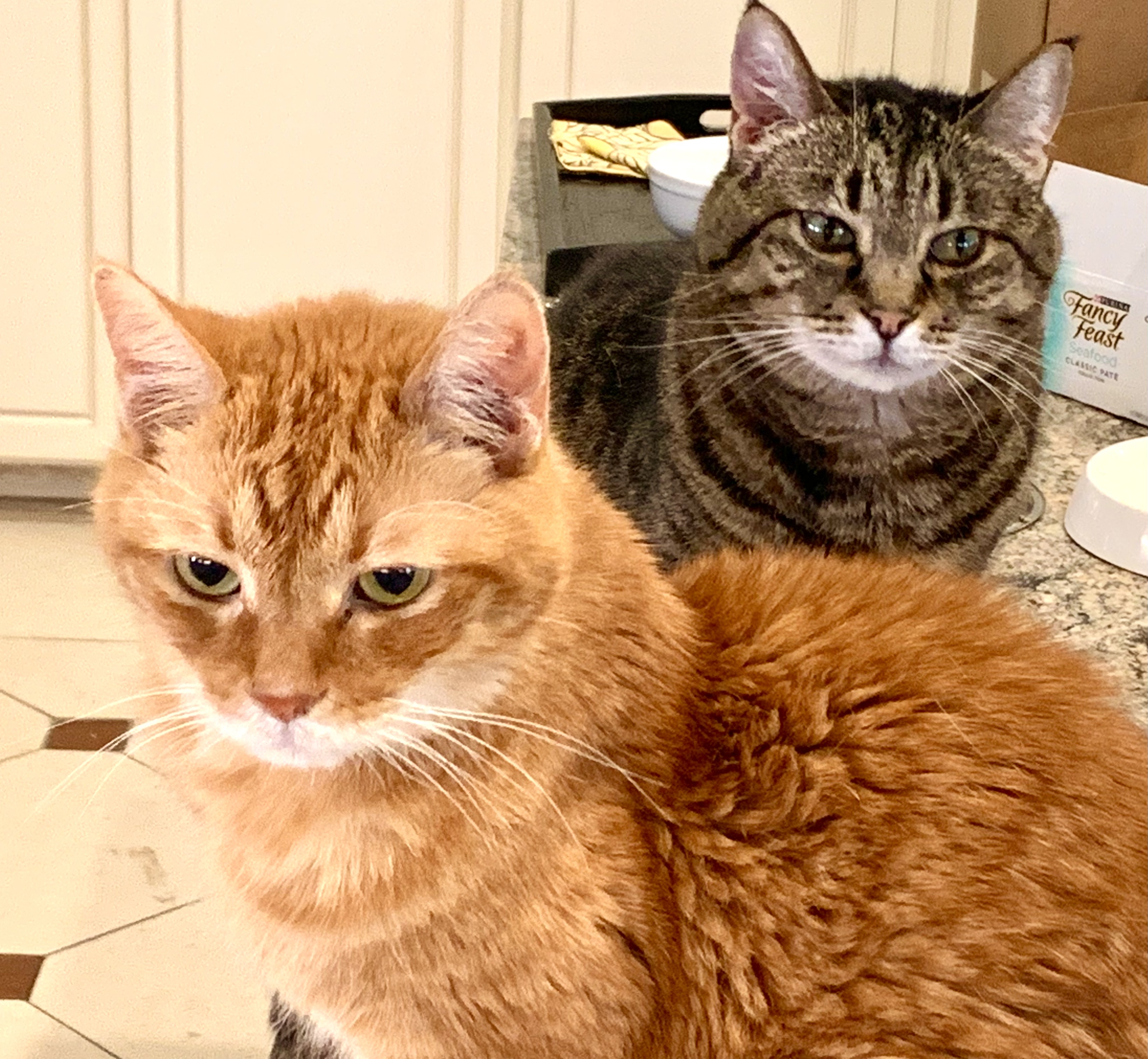
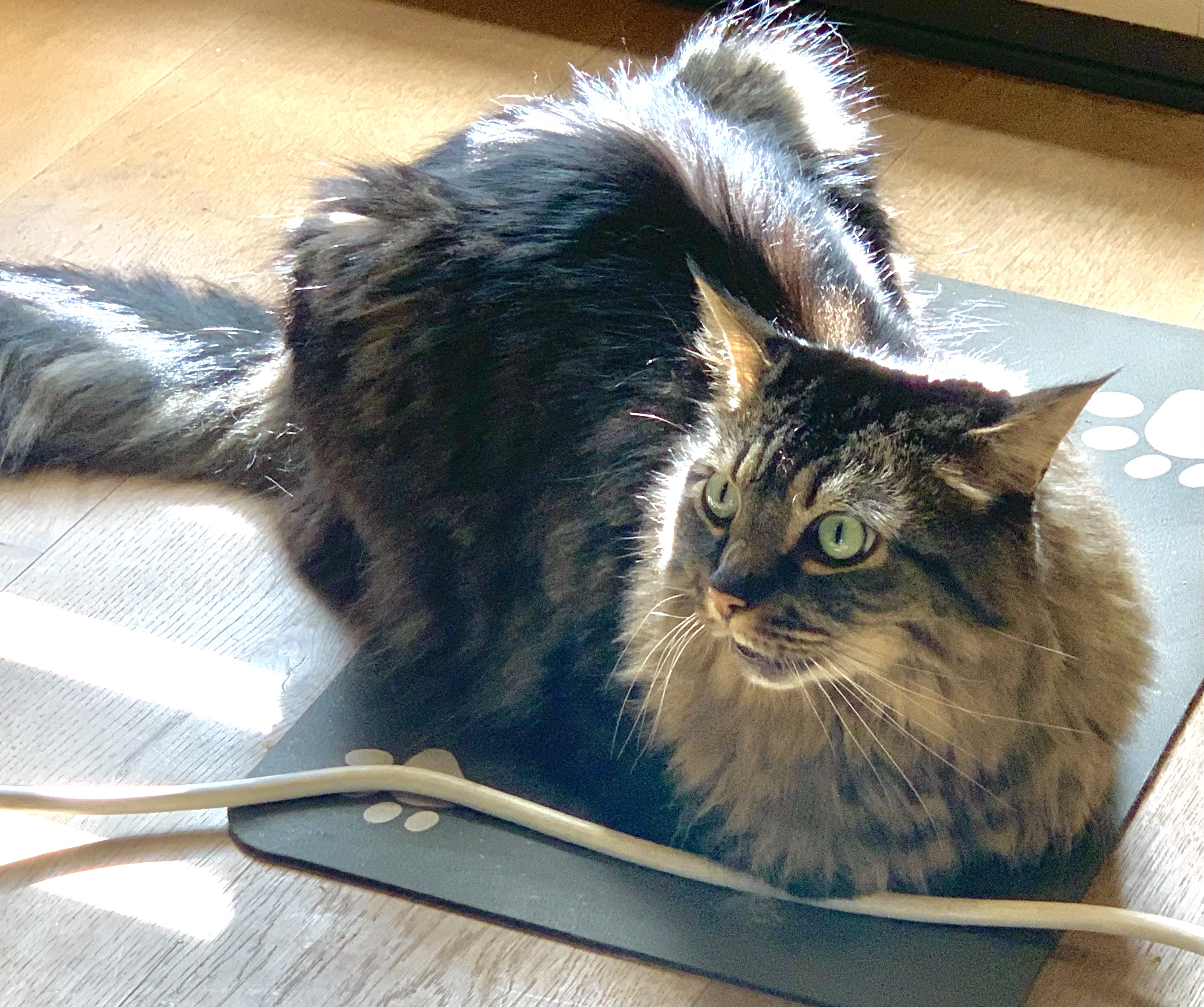
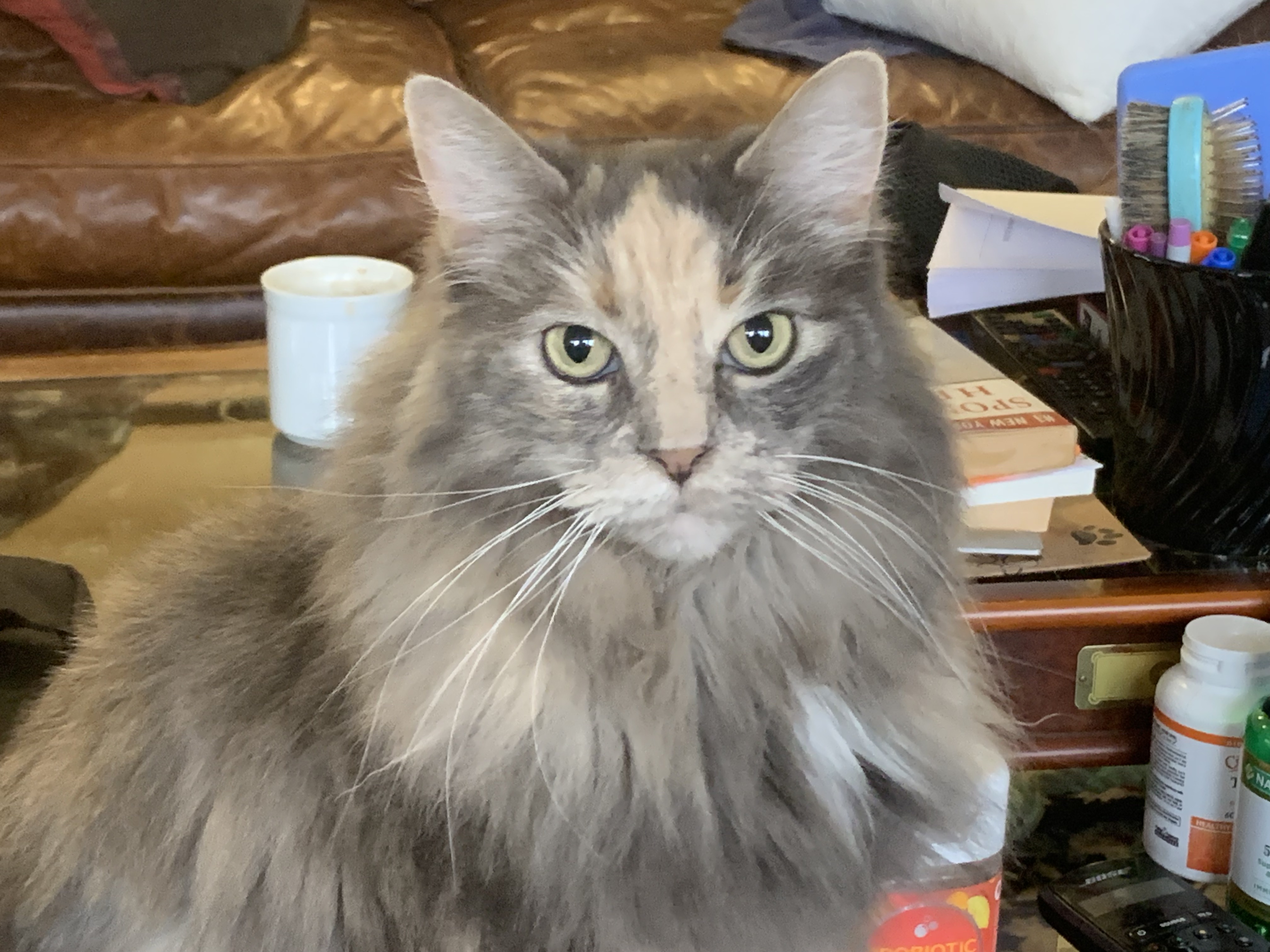
One of these fine days

Cats will share our wily ways

Human eyes shall glaze.

I hear things: faint, small;

My genome shall still recall

After humans fall.

Flurry burry fur:

Whirling dervish fireball. Then…

Lulling quietude. 

Master needs a gift.

I ate, of course, the mouse— yet

Offered eyes and gut. 

It’s three o’clock! Wake!

Time to chase a shadow dream!

Harken to my scream!

———-

Life Will Find a Way

The Walkabout Diaries: Life Will Find a Way

Math Class: Who Are You

Life is a Dance

The Ninja Cat Manual

A Suddenly Springing Something

A cat’s a cat

Greed’s the only Creed

Recommended Books:

The Winning Weekend Warrior focuses on the mental game for all sports using examples from tennis, golf, baseball, and other sports. It covers self-talk, imagery, mental practice, strategy, tactics, & sportsmanship. http://tinyurl.com/ng2heq3

Turing’s Nightmares explores the implications and ethics of Artificial Intelligence through fictional short stories. http://tinyurl.com/hz6dg2d

Fit in Bits shows many ways to put more fun, variety, & exercise into daily chores and habits to help with strength, flexibility, fitness, and balance. http://tinyurl.com/h6c7fce

Tales from an American Childhood recounts early experiences mainly in the American Midwest in the 1950’s and relates them to contemporary issues and events. https://tinyurl.com/y9ajvz9j

Dream Planet. Where do you run when the whole world is crumbling under the weight of human folly? When the lethal Conformers invade 22nd century Pittsburgh, escape becomes the top priority for lovebird scavengers Alex and Eva.

https://www.barnesandnoble.com/w/dream-planet-david-thomas/1148566558

Oh, they’re all the same

18 Friday Sep 2026

Posted by petersironwood in creativity, design rationale, leadership, love, nature, politics, psychology

≈ 1 Comment

Tags

books, Democracy, fantasy, fiction, life, politics, short story, truth, USA, writing

“Oh, they’re all the same!” 

I’m sure you’ve heard someone say that. 

I wouldn’t be surprised if you yourself said it. 

“Oh, they’re all the same!” 

Maybe they are. If you’re talking about grains of sand or cans of beans. But human beings? 

Photo by Alexey Demidov on Pexels.com

We’ll get to humans, but let’s start with the grains of sand and cans of beans. 

Grains of sand are not the same. Not at all other than being found in a beach or sandbox and being smallish in size. Their shape and composition differ. Now, you might think, “OK, but for all practical purposes they are the same.”

Soon after I joined IBM Research, I flew with my boss into an IBM chip fabrication factory in the Northeaster US. We were studying query languages and interviewed some people in quality control who used query languages as a serious part of their job. They recounted a time when the percentage of error free chips fell drastically. For a time, no-one could figure it out. It turned out that the silicon supplier had shifted sands (so to speak) and that had translated into slightly different silicon properties. 

“Oh, they’re all the same!” 

Now, let’s look into beans because it so happens that I made a bean salad tonight that I hadn’t made for a year or two. I pretty much remembered the recipe, but to make sure, I took down the cookbook and propped it open as well. I made the bean salad according to recipe and the bean salad was good. But usually, in the past, it had been great, not just good. The difference was mainly, I decided, in the quality of the beans themselves. Same brand. Always the same brand. So, they’re all the same, right? Possibly.

The following situation is happening all the time. Imagine popcorn hitting its climax. Here’s the history in outline. 

A person or small group works hard and makes a success. They have pride in their product (say, canned beans). But then, they decide that MEGACORP wants to buy their company for a phenomenal amount of money. Yay! Win/Win! Congratulations all around. And, now their wonderful product can continue into the mainstream and more people than ever can taste the pleasure of that high quality can of beans. 

They’re all the same.

Maybe. But maybe the true motive of MEGACORP is to poison a few people. They’re being paid by the Big Bad Beef Business to make people afraid to get their protein from beans and instead make people go for the safer alternative: Meat! Here’s another possibility. They don’t give a can of beans about your cans of beans. They want the guy who knows how to make that great lining so they can use his expertise for their much more lucrative line of Cheese Naughts. But the most likely case is the mundane one. They “cash in” on the brand name you’ve built. They buy the business and then use much cheaper beans and the pass along the savings to the consumer through lower prices and higher wages for their workers. 

Oh, no, no. Never mind. That’s on a different planet. This is planet Earth. That’s the one where MEGACORP keeps every frigging penny of savings for C-Sweet salaries and shareholder confidence. The beans bear the same label in every way. But inside, they are different. Is MEGACORP required to inform their customers that they lowering quality? Of course not. 

“Oh, they’re all the same!” 

But they’re not all the same. Not the grains of sand; not the cans of beans; not the entrepreneurs, not the lab rats I encountered at Oberlin.

My college girlfriend attended Oberlin and I visited many times. One time she asked me to help with a psych experiment. Being a psych major myself, I was eager to oblige. 

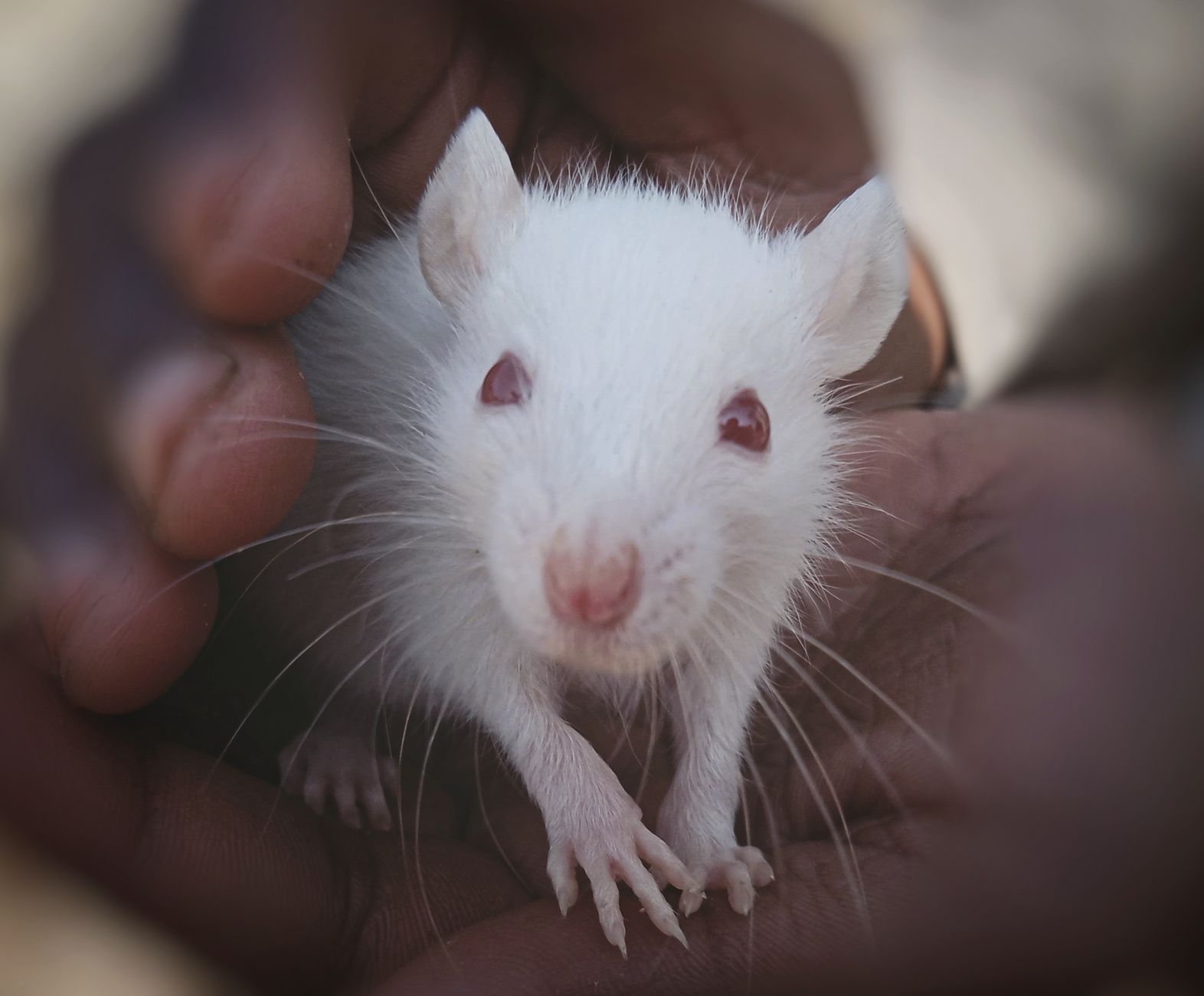
I suppose some people might be freaked out at the idea of grabbing a rat to put it in a maze, but it’s easy to avoid their razor sharp teeth. Oh, and BTW, lab rats don’t look like sewer rats. The lab rats are smaller, cleaner, and far more narrowly educated than sewer rats. 

Photo by Choco Virat on Pexels.com

Photo by Brixiv on Pexels.com

The experiment in question looked at the impact of stress on performance. Typically, stress causes an increase in performance, but only up to a moderate level. Beyond that, more stress generally reduces performance. We controlled stress by holding the rat under the water for a few seconds before having it swim a U-shaped maze. We put it in the maze on the left and then shut the door. Once the rat swam down, turned right and then turned right again it could swim to an air-hole on the other “tine” of the “U”.  

Everything went fine for the first five rats. Not surprising. After all, they’re all the same. They are bred to be the same. For many generations. And, for the most part, the biters and the fighters were probably less likely to be chosen to promulgate the sub-species. Since birth, these mice have been mostly subjected to the same stimuli and the same diet as their lab-mates.

And, then there was Rat P-4547  (I’ve changed the number to protect the rat’s privacy). As I said, these lab rats were easy to pick up. You picked them up by grasping them from above and they just accepted the fact that they been chosen. Who knows? Maybe they had been bred to feel pride in having been chosen for an experiment. 

In any case, Rat P-4547 certainly hadn’t read the manual on appropriate rat behavior. He immediately grasped the cage bars with everyone one of his teeny fingers and toes. Even more remarkably, he screamed. Somehow, he seems to have gotten it into his head that the experiment he was about to engage in was a kind of Putin vivisection game. 

I eventually wrestled Rat P-4547 into the starting gate. There we were supposed to hold him underwater before allowing him to traverse the simple U-shaped maze. A quick glance at the sheet showed that Rat P=4547 was destined to be in the “High Stress” group. Of course he was.

I did it. I held him under the prescribed time and let him go. It was taking too long. At last, we saw him swimming furiously into the end zone, his oasis of oxygen, his Mount Ararat, and then…did he pop his little head up gasping for air? 

He did not. He executed an amazingly coordinated lateral flip turn and swam the wrong way up toward the now closed beginning of the maze. 

I did not want the rat to die, but how could we save him? He swam all the way back to the starting gate —nowhere else to go so we went to open it, discussed whether we should and then heard him make another flip turn before we could open the top. Now, we knew he had to drown. But no! His crazy little head finally ended up where it was supposed to.

I congratulated him on his grit, toweled him off, and settled him back into his cage. Of course, Rat P-4547 is long gone. An asterisk on a undergraduate term paper. Probably have a hard time finding it even with the help of an Artificial Influencer. 

What? You thought the expression was “Artificial Intelligence”? That’s the term they use but that’s not the goal. The goal is to have Artificial Influencers disguised as helpful Artificial Intelligences. 

Returning to the idea that they’re all the same, the truth of the matter is that any two things share some properties and any two things also show some differences. The idea of grouping things together for some purposes does make some sense. When you go to get firewood, for instance, you mostly want to focus on a reasonable size and dry wood. If you went to look for something to carve your attention would focus on the beauty and workability of the wood. If you went to get a cudgel, you’d be looking for a thick, sturdy piece. 

Photo by Peter Fazekas on Pexels.com

Think how absurd it would be for someone who likes to carve chotskies telling you how to pick firewood based on their criteria for choosing carving material. 

———————

How the Nightingale Learned to Sing

Stoned Soup

The Orange Man

The Three Blind Mice

The Dance of Billions

Roar, Ocean, Roar!

Imagine All the People

The Isle of Right

When Greed is the Only Creed

3. Boundaries

13 Sunday Sep 2026

Posted by petersironwood in Uncategorized

≈ Leave a comment

Tags

beauty, boundary, Design, ethics, greed, HCI, life, limit, nature, privacy, truth, usability, user_experience, UX, writing

3. Boundaries

Here are a few thoughts about “Boundaries” and how they apply in User Experience. 

I decided to gift a copy of of Volume One on The Nature of Order to my daughter earlier today. I logged on to Amazon and looked at my address book. I am aware that she moved fairly recently. So, I was scrolling through my earlier text conversations with her to see whether she had told me of her new address. I couldn’t find a text about her new address so I texted her to get the new address. 

Suddenly, a popup window appeared from SIRI. It had her new address. I hadn’t said anything aloud. I thought of SIRI as a voice-activated service on my iPhone. It was disconcerting to have it “notice” my text message and then suggest an answer (which turned out to be correct). 

Last week, after physical therapy, my therapist & I began to discuss the time for my next appointment. I pulled up the calendar application on my iPhone and went to a particular day and began to type in her name. After the first two characters were typed in, the “type-ahead” function suggested three possible “completions” the first of which was the time we had been orally discussing (which was not a common time nor the time of any of my recent appointments with her). It also filled in her complete name and the purpose of the appointment, but that was more understandable. 

Photo by Nikolay Ivanov on Pexels.com

One sense of “Boundaries” in User Experience connects with a notion of “boundaries” that is much discussed in contemporary mental health. We are advised to “establish boundaries” with co-workers, family, friends, and strangers. We don’t necessarily want to share personal information with everyone or let everyone touch us in any way they choose to. If intimate details are shared in a recovery group or group therapy, it is generally agreed that such details will not be shared with others. 

We sometimes extend the idea of informational boundaries to written materials as well. If, for instance, we keep a personal diary, we do not expect other people to “search for it” or to read it. In the short story, “Jennifer’s Invitation,” (link below) about my shy attempt as a third-grader to invite my girlfriend to my birthday party, I relied on my expectation that she would read a paper I “accidentally” dropped on the sidewalk. But she was so protective of my privacy that she wouldn’t even glance at my paper. I lost track of Jennifer, but I’m pretty sure she never became CEO of an IT company.

On the other hand, if we write and publish an autobiography, then we can expect that other people will feel justified in discussing the contents. To me, it would seem odd for an author to feel “violated” if people start talking about the contents of their autobiography (or their blog).

When it comes to modern interactions with computer software however, the boundaries are invisible — and sometimes non-existent. It can feel as though I write a private diary on paper; lock it up in a safe immediately; and then — without any sign that the safe has been broken into, I suddenly find details of my personal life revealed! 

There appear to be boundaries between applications, and certainly between devices but these boundaries may be illusory. I find that troubling and confusing. I think the first application of “Boundaries” as a property of UX is that apparent boundaries should be real. There may be exceptions for exceptional circumstances; e.g., the police may get a search warrant to search your house if there is reasonable suspicion that you have committed a crime. 

When a social media site analyzes your reactions, relationships, and word usage to determine what to try to sell you and what type of approach is most likely to succeed, that does not strike me as a reasonable response to an “emergency.” As most readers know by now, such information is not only used to try to sell you more stuff; it was also used to manipulate public opinion; for example, to convince some US voters to stay away from the polls on election day in 2016; to convince voters in the UK to vote for Brexit; to convince people not to get vaccinated. 

Living things do have boundaries. Breaching those boundaries is typically something to be avoided. We call such breaches by names like “bites”, “wounds”, “diseases”, “gunshots”, “parasites.” Living cells typically have a cell wall. Within the cell are tinier organelles such as the mitochondria. The mitochondria have boundaries. The nucleus of a cell has a boundary. Within the nucleus, the nucleolus has a boundary. Larger structures often have boundaries. Motor neurons have a myelin sheath which allows neural impulses to travel faster. Almost our entire body is covered in layers of skin which serve for us a boundary.


The formation of boundaries does not stop with our physical body. Organizations of humans — nuclear families, clans, nation-states, counties, cities, townships, teams, corporations — they have boundaries. A bank, for instance, might have a safe for the money, but the building itself also functions as a boundary — not an impermeable boundary — customers are allowed to come in during banking hours. There are also legal boundaries. If you have “an account” at a bank, you will be allowed to do things that non-customers cannot. Similarly, if you are an employee of a company or a member of a sports team, you will be allowed to do things and go places that you couldn’t if you were outside that boundary. 

All boundaries are semi-permeable. Boundaries change over time. A thorn tears your skin. Your boundary is broken. If you’re not careful, bacteria can get in and cause an infection. Your white blood cells destroy the invading bacteria. Your body heals. If the cut was bad enough, you may get a scar and the scar is now part of your “boundary.” It isn’t only at the level of the body that changes occur. Your social boundaries change too.

You get married. You get divorced. You are born. You join a team. You quit the team. You sell your house and other people buy it. Now, you are no longer allowed to come into the house without an invitation. Meanwhile, you buy another house. You have acquired new boundaries. Or, perhaps, you have no home. You are homeless and your boundaries are not so secure. 

Most of our possessions have clearly defined boundaries. Your hammer is separate from your saw which is separate from your drill. They come from an earlier time and the “boundary” of such objects are determined by their shape. More recently, such tools (and nearly everything else!) comes packaged in bubble wrap which forms an additional boundary. This makes it harder for people to hide one under their clothes and walk out without paying. Such packaging has the added advantage that it will require time and energy on your part before you can actually start using the tool for its intended purpose. Not only that — such packaging helps pollute our world beyond the pollution required by “old style” tools.

Photo by cottonbro on Pexels.com


Once you have separated your new tool purchase from its packaging, if you have any energy left, you can saw a board, or drill a hole, or hammer a nail. But you do not expect (not yet, at least), the saw to “communicate” behind the scenes with your drill. Or to communicate with you. You’d be surprised if it piped up and said, “Gee, Gene, you just sawed a board. Now, you have taken up the drill. Would you like suggestions on how to build a dog house?” (That’s what Clippy would do). 

(Link to Wikipedia article on “Clippy” and how it was parodied). https://en.wikipedia.org/wiki/Office_Assistant

Clippy tried to be helpful. But it didn’t really have enough information about my tasks, goals, and context to actually be helpful. But today’s behind-the-scenes information sharing with dark forces is not trying to be helpful. It’s trying to get you to change your behavior for someone else’s benefit — and you don’t even know who those someones are. 

Notice that if you buy a house (which typically comes with doors and keys), you can lock the house and the default is that it keeps everyone else out — except those you’ve given a key to or those who have rung your doorbell or otherwise asked for permission to come in. Typically, if a rare visitor comes to your house, you make arrangements for a time and a place. The piano tuner comes to tune your piano. You might let them use your bathroom or even offer them something to drink. But you don’t expect the piano tuner to redecorate your study or to spend the night uninvited. 

Photo by Mike on Pexels.com

That’s kind of what does happen in the electronic world though. In many cases, you cannot visit a website or use an application unless you give permission for the “guest” to rifle through the choices you make. Just to be clear, these “choices” are not only explicit choices; your “choices” can include how long you linger over a particular message or video clip. In many cases, you have not just given a key to a specific vendor, application, or website — in many cases, you have also given them rights, essentially, to make as many copies of your front door key as they care to make and hand them out to whomever they like. 

These are missing boundaries, not so much in the user interface design, but in the socio-technical context in which we use our technology. 

In the physical world in which we evolved, invasion of privacy typically involved symmetry. If I can see your eyes, you can see mine. Conversely, if I can’t see anyone, chances are that they can’t see me. Of course, this isn’t literally true. A tiger’s camouflaging stripes may mean that they can see the gazelles even though the gazelles cannot see them. The astounding eyesight of the eagle allows them to see a mouse on the ground and start their deadly dive before the mouse can see the eagle. 

In the electronic world, it isn’t genetically coded asymmetries of information that allows other people to invade your boundaries — in many cases without your permission or even knowledge. It is an asymmetry that comes from money and time. You don’t have anything like the fortune that rich companies have. They can hire experts at subverting your boundaries. They can hire an entirely different set of experts to convince you that it’s all okay. They can afford to hire still other experts to defend themselves in a court of law should you seek redress for any particularly unethical behavior. They can afford to (and do) hire politicians as well in order to make laws to protect their unfettered access to your data. You typically cannot afford to hire politicians to protect your right to privacy. 

You probably don’t have 10,000 to 100,000 people working for you. Companies not only have the money to spy on you. They also have to time to collect and analyze your behavior & make sense of it. You don’t. Perhaps, every once in a while, you take the time to wade through a “privacy policy.” In most cases, since experts were hired to make the text as incomprehensible as possible, you likely didn’t see much value in reading the document. 

The Nature of Order is about aesthetics, not ethics. And, this post was meant to be about aesthetics, not ethics. 

The poem by Keats, Ode on a Grecian Urn, 

https://www.poetryfoundation.org/poems/44477/ode-on-a-grecian-urn

ends thusly: 

“Beauty is truth, truth beauty,—that is all

                Ye know on earth, and all ye need to know.”

Life includes differences in sensory capability. And life includes camouflage. Generally, however, when you get to the end a cliff and step off, you have a pretty good idea what’s going to happen. The boundary is visible to you, to a bison, to a mouse, to a lemming, to an eagle. 

Photo by Pixabay on Pexels.com

When we walk through the woods in northeastern USA where I lived for many years, we run the risk of being attacked by a deer tick. The dear tick makes a hole in you and starts sucking your blood (oh, while they’re at it, they may inject a large does of Lyme disease bacteria into your blood stream). You don’t notice it, because the deer tick is “kind enough” to administer a local anesthetic so you don’t feel any pain from this invasion of your person; this breaking of boundaries. It’s a one-sided breach. The deer tick is well aware of the invasion. It’s the whole point! But you do not perceive the breach. At least, I didn’t. Twice. Thankfully, I don’t seem to have any long-lasting effects though I have several friends who are still suffering from the effects. 

A one-sided boundary breach, doesn’t seem “aesthetic” to me. Nor does it seem “truthful.” The little orange deer tick, is, in a very real sense, lying to me. It uses its narcotic to tell me, “No worries! There’s no wound here! There’s no deer tick sucking your blood. There’s no deer tick injecting a serious disease into your blood. No, no. All is well!” It seems the opposite of beauty and the opposite of truth.

I suppose if I had been born a deer tick, I might view things differently. 

———————-

Myths of the Veritas: The Orange Man

Pattern Language for Collaboration and Teamwork

Jennifer’s Invitation

Your Cage is Unlocked

What Line?

Roar, Ocean, Roar!

Stoned Soup

How the Nightingale Learned to Sing

Some recommended books:

The Winning Weekend Warrior focuses on the mental game for all sports using examples from tennis, golf, baseball, and other sports. It covers self-talk, imagery, mental practice, strategy, tactics, & sportsmanship. http://tinyurl.com/ng2heq3

Turing’s Nightmares explores the implications and ethics of Artificial Intelligence through fictional short stories. http://tinyurl.com/hz6dg2d

Fit in Bits shows many ways to put more fun, variety, & exercise into daily chores and habits to help with strength, flexibility, fitness, and balance. http://tinyurl.com/h6c7fce

Tales from an American Childhood recounts early experiences mainly in the American Midwest in the 1950’s and relates them to contemporary issues and events. https://tinyurl.com/y9ajvz9j

Dream Planet. Where do you run when the whole world is crumbling under the weight of human folly? When the lethal Conformers invade 22nd century Pittsburgh, escape becomes the top priority for lovebird scavengers Alex and Eva.

https://www.barnesandnoble.com/w/dream-planet-david-thomas/1148566558

https://www.goodreads.com/en/book/show/222376640-enshittification

← Older posts

Subscribe

  • Entries (RSS)
  • Comments (RSS)

Archives

  • November 2026
  • October 2026
  • September 2026
  • August 2026
  • July 2026
  • June 2026
  • May 2026
  • April 2026
  • March 2026
  • February 2026
  • January 2026
  • December 2025
  • November 2025
  • October 2025
  • September 2025
  • August 2025
  • July 2025
  • June 2025
  • May 2025
  • April 2025
  • March 2025
  • February 2025
  • January 2025
  • December 2024
  • November 2024
  • October 2024
  • September 2024
  • July 2024
  • April 2024
  • March 2024
  • February 2024
  • January 2024
  • December 2023
  • August 2023
  • July 2023
  • May 2023
  • April 2023
  • March 2023
  • February 2023
  • January 2023
  • December 2022
  • November 2022
  • October 2022
  • September 2022
  • August 2022
  • July 2022
  • June 2022
  • May 2022
  • April 2022
  • March 2022
  • February 2022
  • January 2022
  • December 2021
  • November 2021
  • October 2021
  • September 2021
  • August 2021
  • July 2021
  • June 2021
  • May 2021
  • April 2021
  • March 2021
  • February 2021
  • January 2021
  • December 2020
  • November 2020
  • October 2020
  • September 2020
  • August 2020
  • July 2020
  • June 2020
  • May 2020
  • April 2020
  • March 2020
  • February 2020
  • January 2020
  • December 2019
  • November 2019
  • October 2019
  • September 2019
  • August 2019
  • July 2019
  • June 2019
  • May 2019
  • April 2019
  • March 2019
  • February 2019
  • January 2019
  • December 2018
  • November 2018
  • October 2018
  • September 2018
  • August 2018
  • July 2018
  • June 2018
  • May 2018
  • April 2018
  • March 2018
  • February 2018
  • January 2018
  • December 2017
  • November 2017
  • October 2017
  • September 2017
  • August 2017
  • July 2017
  • June 2017
  • May 2017
  • April 2017
  • March 2017
  • February 2017
  • January 2017
  • December 2016
  • November 2016
  • October 2016
  • September 2016
  • August 2016
  • July 2016
  • June 2016
  • May 2016
  • April 2016
  • March 2016
  • February 2016
  • January 2016
  • December 2015
  • November 2015
  • October 2015
  • September 2015
  • August 2015
  • May 2015
  • January 2015
  • July 2014
  • January 2014
  • December 2013
  • November 2013

Categories

  • AI
  • America
  • apocalypse
  • cats
  • COVID-19
  • creativity
  • design rationale
  • dogs
  • driverless cars
  • essay
    • guns
  • family
  • fantasy
  • fiction
  • HCI
  • health
  • leadership
  • love
  • management
  • nature
  • pets
  • poetry
  • politics
  • psychology
  • Sadie
  • satire
  • science
  • sports
  • story
  • The Singularity
  • Travel
  • Uncategorized
  • user experience
  • Veritas
  • Walkabout Diaries

Meta

  • Create account
  • Log in

Blog at WordPress.com.

  • Subscribe Subscribed
    petersironwood
    Join 644 other subscribers

    Have a WordPress.com account? Log in now.

  • petersironwood
    View site in Reader
    Manage subscriptionsSign upLog in
    Report this content
    Collapse this bar
Loading Comments...