• About PeterSIronwood

petersironwood

~ Finding, formulating and solving life's frustrations.

petersironwood

Tag Archives: ubuntu

They Will Not Object

11 Wednesday Nov 2026

Posted by petersironwood in love, poetry, psychology, Uncategorized

≈ Leave a comment

Tags

#poem, ecology, faith, gratitude, life, love, mental-health, mindfulness, poetry, truth, ubuntu, writing

They will not object,

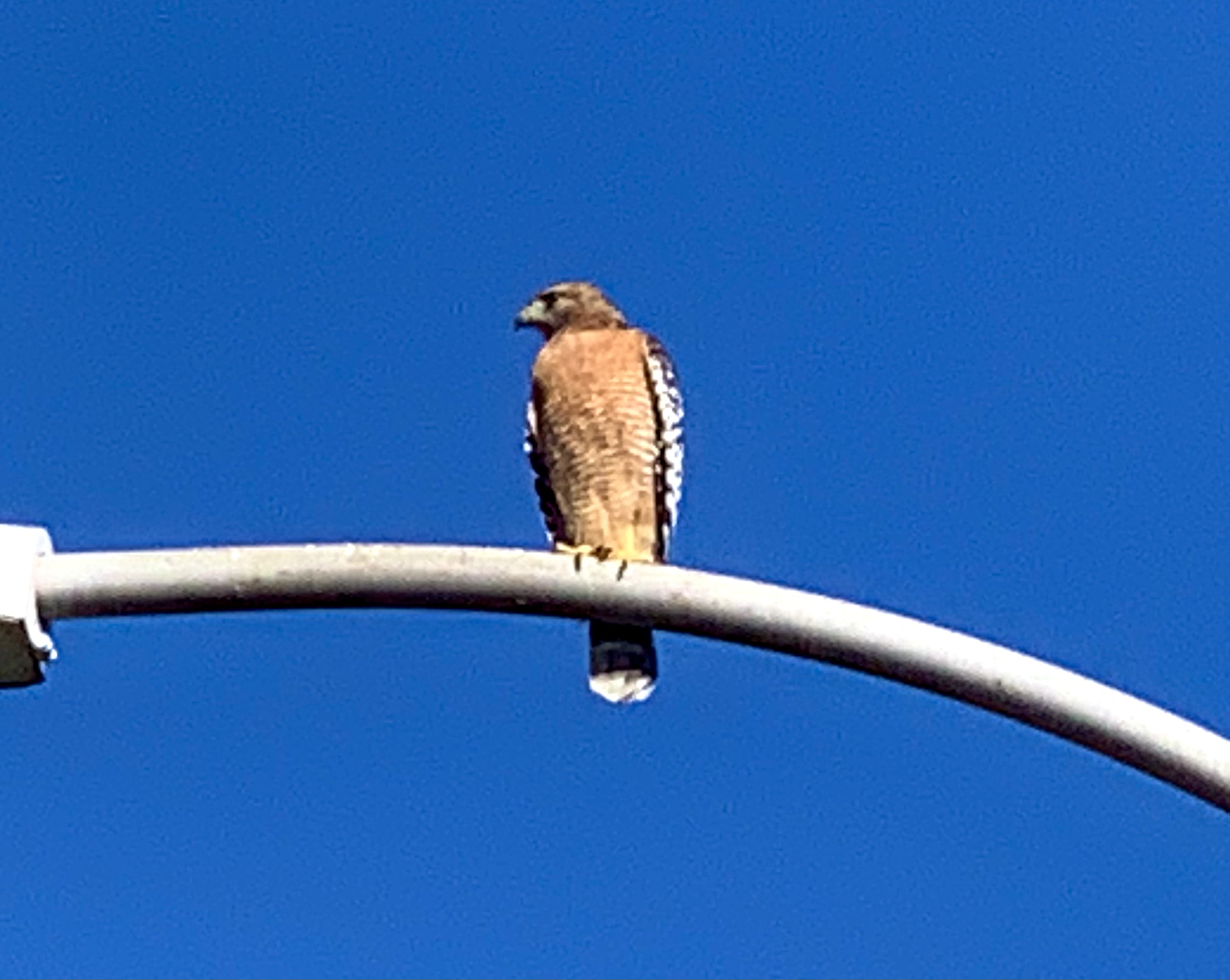
The soaring hawk, the cawing crow,

The singing finch, the cooing dove.

They will not object

When you smile back as they beguile;

When you answer them with words of love.

Photo by Eclipse Chasers on Pexels.com

They will not object,

The herring, scrod, nor even deadly sharks;

Nor catfish, crayfish, cod, or breaching whales.

They will not object

When you begin to learn about their water ways;

When you understand; begin to tell their tales.

They will not object,

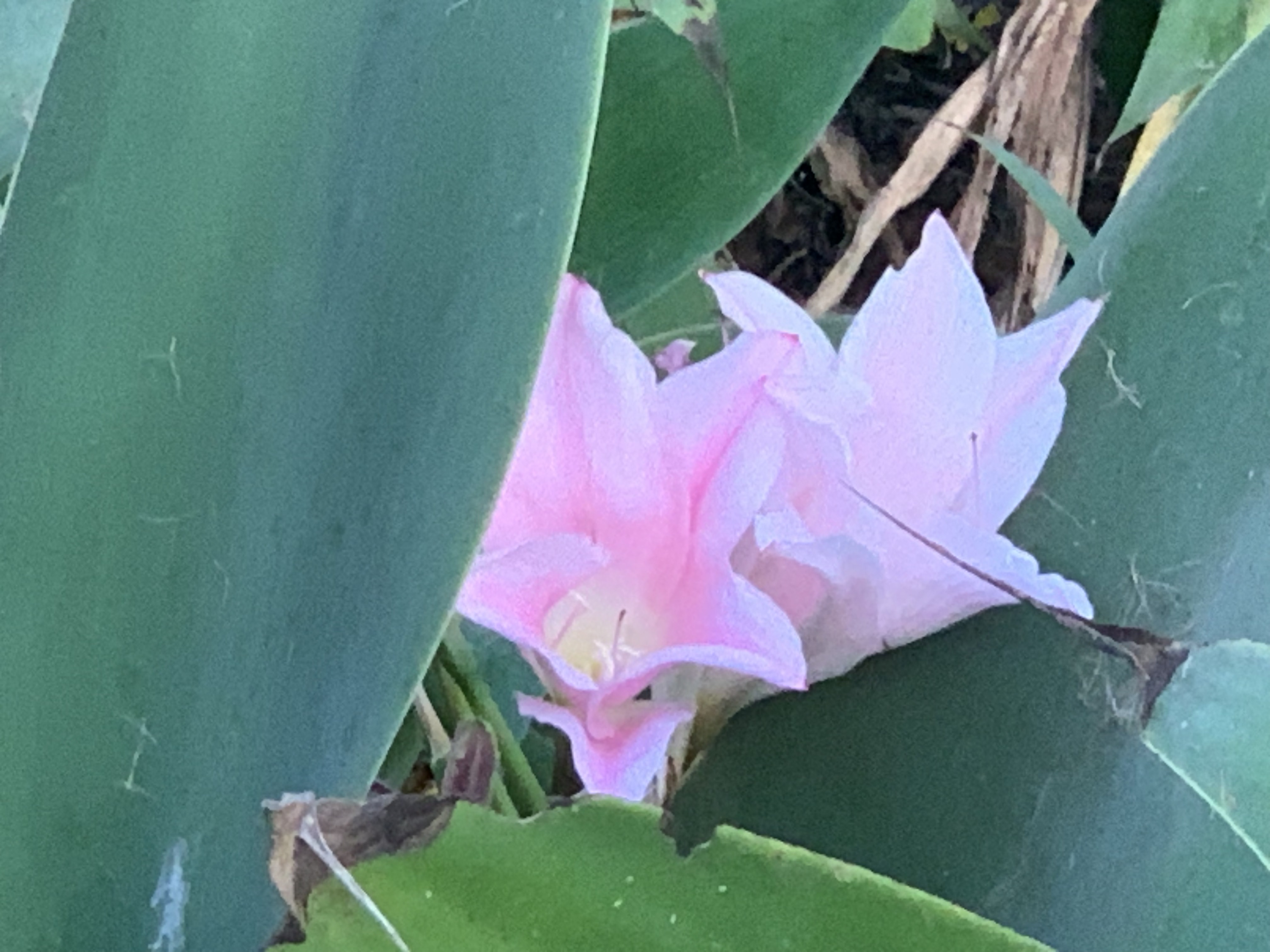
The roses in the fulness of their flower,

When you sigh their delicate hour.

They will not object

When you watch the ivy twine nor hushing pine

And vibrate with their silent patient power. 

Photo by Susanne Jutzeler, suju-foto on Pexels.com

They will not object,

The rabbit hiding in his warren warmth

The squirrel nesting in her lair of leaves.

They will not object,

No matter how broad or deep your love

The Tree of Life still hopes and still believes.

Photo by cottonbro studio on Pexels.com

I will not object

If you spend your life in seeking a being

To give its love to you and you alone

I will not object

Though you may find that path is filled with stone

And at the end, despite a life of trying, alone.

I will not object,

But just for something else to try, imagine

Every branch: The Tree of Life: Our Family.

The Tree will not object

If you throw yourself into loving Life

Whole-heartedly, eternally, entirely. 

They will not object.


The Winning Weekend Warrior focuses on the mental game for all sports using examples from tennis, golf, baseball, and other sports. It covers self-talk, imagery, mental practice, strategy, tactics, & sportsmanship. http://tinyurl.com/ng2heq3

Turing’s Nightmares explores the implications and ethics of Artificial Intelligence through fictional short stories. http://tinyurl.com/hz6dg2d

Fit in Bits shows many ways to put more fun, variety, & exercise into daily chores and habits to help with strength, flexibility, fitness, and balance. http://tinyurl.com/h6c7fce

Tales from an American Childhood recounts early experiences mainly in the American Midwest in the 1950’s and relates them to contemporary issues and events. https://tinyurl.com/y9ajvz9j

Dream Planet. Where do you run when the whole world is crumbling under the weight of human folly? When the lethal Conformers invade 22nd century Pittsburgh, escape becomes the top priority for lovebird scavengers Alex and Eva.

https://www.barnesandnoble.com/w/dream-planet-david-thomas/1148566558

Related Posts:

Math Class: Who Are You?

Take a Glance; Join the Dance

Life Will Find a Way

The Walkabout Diaries: Life Will Find a Way

It was in his Nature

You Must Remember This

Greater Gathering

22 Thursday Oct 2026

Posted by petersironwood in America, management, psychology, sports, Uncategorized

≈ Leave a comment

Tags

Business, celebration, collaboration, cooperation, coordination, empathy, innovation, leadership, love, marketing, pattern language, seva, social capital, sports, teamwork, technology, trust, ubuntu


IMG_9267

Greater Gathering.

Author, reviewer and revision dates:

Created by John C. Thomas on Dec. 11, 2004

Reviewed by <> on <>

Revised by JCT on Feb. 7, 2018. Revised by JCT on Oct. 22, 2026

Prologue and Acknowledgements. 

This pattern can be found in many teams, companies, NGO’s, families, and religious organizations. If you are interested in how this happened to strike me as a pattern, feel free to read this section Otherwise, you can skip it. I began to notice this pattern after two events happened to coincide.

While working at IBM Research many years ago, I played in an inter-company tennis league in Westchester County, New York. During those matches, I met many IBMers from outside of IBM Research. One of the people I met worked in the corporate tax department. In those days, long before Google, we used a Key Word In Context system (ITERC?) to scan for potentially useful documents. Every week, I would get a long list of abstracts based on my list of keywords. This system was not nearly so accurate as what many of us have access to today. While there were many “hits” for me, there were also quite a few false positives. For example, I was interested in the psychological process of “induction” – learning a rule based on examples. I often got abstracts, however, about “induction motors.” One day, I got one of those “false positives” about a new tax law that allowed highly profitable companies like IBM to “trade” tax liabilities with companies who were struggling like the tire companies in my home town of Akron. According to the abstract, it was in the financial interests of both companies to use this “trading” mechanism. I had little interest in it, but I liked the guy I had met from corporate and we had traded contact information for tennis purposes. I sent him the abstract. As it turned out, this was precisely applicable to IBM and saved them a lot of money.

At the same time, I was reading about the history of IBM and particularly thought it interesting that they had put so much time and effort into the 100% club meetings. This was a country-wide meeting to bring together sales people from all over the US who had met or exceeded their sales quotas. I was never in sales, but even at Research, we had “annual picnics” in which everyone in IBM Research was invited to come with their families. As I began thinking about it, I realized that these kinds of “larger gatherings” were common across many different cultures, domains, and types of groups. The tax example showed a very specific financial benefit to the IBM company but I realized there were many other potential benefits as well.

IMG_9895

Synonyms:

Conference. Congress. Convention. Jamboree. National Holidays.

Abstract:

When moderate to large groups work to solve large, complex problems, it is often necessary for them to subdivide the work into distinct subgroups. This results in the group being more efficient and effective. However, it also means that each group comes to develop their own vocabulary, search for people who are particularly good at certain things,  and in various other ways, the people within the subgroup communicate a lot, come to trust each other, and have clear common interests. They are often at conflict with other subgroups for resources. In addition, there is less trust across these organizational boundaries than within such a boundary. Often, the people themselves develop to be somewhat different kinds of people. Large effective groups therefore participate at least annually in a “Greater Gathering” which allows people to meet and co-mingle across these organizational boundaries. These meetings are constructed to emphasize “common ground” within the larger group. As a result, new lines of communication are opened up; mutual trust is enhanced; sometimes, real problems are solved.

Problem: 

As large, complex problems are broken down into pieces and assigned to different groups, efficiency and effectiveness increase. Not only that, the individuals within each of these various subgroups typically grow more trusting of each other within that sub-group.  They learn about each other’s skills and motivations, so over time, the sub-group as a whole grows more effective and efficient.

However, this high intra-group cohesion comes at a price. People in one part of an organization consider themselves the “in-group” and may begin to limit their learning because of the lack of diversity that is inherent in looking from one perspective. Furthermore, they may come to work so hard to solve their own sub-problem that they lose sight of the larger problem and make sub-optimizing decisions. In some cases, the ideas of various subgroups about how to handle something will differ and result in conflict. Even worse, sometimes, decisions made in Group A help them a little but make life for Group B much more difficult and make the overall objective of the group, whatever it is, more difficult to achieve and no-one ever realizes it. There may be lack of trust between different sub-groups or even outright mistrust among sub-groups. Often sub-groups that are “at odds” with each other, not only have different management chains and objectives; they may also be geographically apart; they may be from different cultures; they may be of different professions, etc. For these reasons, a suspicion may grow over time while mutual trust diminishes. Information sharing becomes strained. The overall organization is not doing as well as it might nor are the people within that organization doing as well as they might.

IMG_9320

Context: 

A group of people has been attempting to accomplish some task as effectively and efficiently as possible. In order to do this, one common method is to breakdown a large, complex task into smaller, less complex tasks. Often, those people working on a subtask naturally spend more time with others on that subtask than on other subtasks. It naturally occurs in this context that since people spend a lot of time together, they may develop common interests and also spend leisure time together as well. Sharing common sub-goals, physical contexts, and leisure activities as well as working on the same subtasks may eventually lead to an “in-group” feeling.

Over time, these subgroups develop different methods, procedures, values, customs, terms of art. They become, in a sense, different sub-cultures. But just as cooperation and communication can be trickier when two historical cultures are involved, so too, it can more difficult for, say, someone from each of the legal department, the accounting department and the R&D department to understand each other than, say, three accountants. Sometimes, various departments actually want the same thing. They simply don’t know it because they are speaking different languages.

Some degree of “antagonism” of purpose is often built in to the organization. The R&D department will ask for more money. Finance will say no. But these kinds of one-sided or even two-sided or multi-sided competitions are much healthier both for the organization and its people if they are done with mutual respect and by adhering to rules. Having completely different sub-cultures can enhance the difficulty of such negotiations.

Forces:

*People are naturally gregarious.

*People working on a common problem often bond as well.

*People working on a common sub-problem often lose sight of the larger problem.

*Social sanctions can lead to a lack of diversity of perspectives.

*All people share certain basic drives.

*Shared special events help build social bonds.

*People enjoy novel experiences and viewpoints, under some circumstances

*An expectation of what happens (based on story and experience) can help mold what does happen.

  • The possibility of one person harming another and not doing so increases mutual trust.
  • Shared experiences tend to increase mutual trust.

Solution:

All the sub-groups that need to cooperate in a larger group should get together periodically for a meeting of “Greater Gathering.” This should be periodic and structured. Activities need to be formulated that help everyone visualize and experience common ground. Eating, drinking, dancing, singing, athletic contests, and other physical activities should also be included since these are experiences people will relate to and enjoy regardless of which sub-group they belong to or which sub-problem they are working on.

OLYMPUS DIGITAL CAMERA

Examples:

Companies generally used to have many of these events when such companies were run by people who cared about the companies and the people within those companies rather than simply caring about using companies as a tool to enhance the power and wealth of a few. For example, when I first joined IBM, they sponsored many sports leagues within IBM Research including tennis, golf, softball, and soccer. Furthermore, they participated, as in the prologue of this pattern, in sports leagues across nearby IBM locations which included sales, CHQ, Engineering, Programming and Technology, Marketing, and Advanced Ad Tech. Every year, there was an elaborate company picnic. There was a Holliday Party and fairly frequent less formal award ceremonies with refreshments. There were also numerous recognition events which were attended by people of multiple sub-groups.

Other examples are numerous. Boy Scouts and Girl Scouts had national Jamborees. Families often have extended family reunions. Sometimes, these can be at a civic level such as Mardi Gras or a local annual parade that most people work on or attend. Nations have shared Holidays.

I’ve been very active for a long time in a group called “CHI” for “Computer-Human Interaction.” It’s a Special Interest Group of the Association for Computing Machinery. (ACM). The people who do research in this field are scattered across the globe. They work for different university departments or companies or non-profits or governments or as individual consultants. We have full professors and undergraduate students; we have people with original backgrounds in electrical engineering, philosophy, psychology, design, architecture, fine arts, English, human-computer interaction, mathematics, mechanical engineering and many more. Some are doing research whose application is out at least 20 years and others are worried about whether their start-up will survive the quarter. Some work for giant multi-nationals and others are one person companies. Every year, we have a rather challenging conference where all of these folks are invited. The conference centers around the technical program, but there are also many things meant to provide a larger gathering; to foster mutual trust; to have a great time together so that we can better respect each other, communicate more effectively and achieve common goals.

fullsizeoutput_1b3b

Resulting Context:

One result of the first example above is that people throughout IBM at that time almost universally thought of themselves as IBMers rather than someone from the accounting department. What this meant was that there was a high level of trust for people from other parts of the company. I’m not saying it was perfect but it was much higher with more people honestly trying to do what was best for the company rather than what was best for them or their immediate manager. Now, that’s largely reversed. Of course, it’s hard to know how much is due to the “cutting out of all the fat” like annual picnics and sport’s leagues.

In the second example, Boy Scouts get a chance to see that people of different shades of skin, creeds, geographical locations share a lot in common.

In the third example, the CHI conference continues, I believe, to be an important reason that people in such a wide variety of circumstances can collaborate and communicate so well.

Rationale:

It is easy to imagine that people we rarely or never see are not only different from us superficially, but that they are different in essence. If you meet people from various parts of your organization in a neutral informal situation that stresses your commonality such as a picnic, a sporting even, an ice-cream social, or a walk-a-thon, you will see that you have some common ground and mutual trust and that makes communication easier.

IMG_3898

Related Patterns:

Conversational Support at the Boundaries.

Known Uses:

Religions celebrate common holidays. Nations celebrate common holidays. The Olympics brings nations together every four years for athletic competition. In many countries, including the United States of America, people voting though for different candidates, platforms and parties was nonetheless largely seen as a force for greater cohesion. Only after lies and propaganda, much of it instigated by those wanting to destroy America’s power as a nation, have elections come to be possible sources of contention and conflict rather than common celebrations of democracy.

Metaphors: 

Many species go to a common place at least annually. We humans attribute this to the benefits of cross-fertilization or more global competitions in survival of the fittest. Is it also possible that they are also exchanging information that is useful for the species as a whole?

Fable: 

I think I will defer, at least temporarily, to that excellent fable of Norton Juster’s: The Phantom Tollbooth. In that fable, Rhyme and Reason are banished to separate kingdoms and the results are not good.

References: 

Jacobs, Jane. (1969) The Economics of Cities. Mass Market Paperbacks.

Thomas, J. C. (2001). An HCI Agenda for the Next Millennium: Emergent Global Intelligence. In R. Earnshaw, R. Guedj, A. van Dam, and J. Vince (Eds.), Frontiers of human-centered computing, online communities, and virtual environments. London: Springer-Verlag. 

Thomas, J. C. (2012).   Patterns for emergent global intelligence.   In Creativity and Rationale: Enhancing Human Experience By Design J. Carroll (Ed.), New York: Springer.


Links

Imagine All the People

Roar, Ocean, Roar!

The Dance of Billions

We’re All in this Together

Stoned Soup


Do Not Hate

08 Tuesday Sep 2026

Posted by petersironwood in America, leadership, poetry, politics, psychology, Uncategorized

≈ 1 Comment

Tags

Democracy, leadership, life, love, mental-health, peace, poetry, politics, truth, ubuntu, USA, writing

Do not hate.

Do not hate.
Demonstrate. 

Do not hate. 

Educate.

Do not hate.

Navigate.

Do not hate. 

Negotiate. 

Do not hate.
Cooperate.

Justified?
It may well be. 
Everyone who ever hates

Can generate a heap of lies
To make their hate seem justified.

But why be fustified? 

When there are so many better things

To fill your heart and mind?

Do not hate. 

Demonstrate.

Show through word and deed

That hate and greed 

Are not the only creed.

Do not hate.
Educate.

Hate is always based on lies.
There may be one you really do despise.

But everyone? 

That’s a loaded gun

Aimed without a thought

About the cost. 

Do not hate.
Navigate. 

The shortest path 

Is not always the fastest path.

Look ahead.

Use your head. 

Don’t get dead.

Do not hate.
Negotiate. 

It doesn’t always work.

But it’s always worth a try.

Just don’t be a jerk. 

Diplomacy apply. 

Do not hate.

Cooperate. 

There’s at least one thing

About the world that both sides love

Of that you sing

Help that thing rise above.

But mainly, do not hate

Because it hurts you to hate.

Guernica

A Civil War there Never Was

Somewhere a Bird Cries

The Crows and Me

Imagine All the People

Roar, Ocean, Roar

Small Steps

The Dance of Billions

Some recommended books:

The Winning Weekend Warrior focuses on the mental game for all sports using examples from tennis, golf, baseball, and other sports. It covers self-talk, imagery, mental practice, strategy, tactics, & sportsmanship. http://tinyurl.com/ng2heq3

Turing’s Nightmares explores the implications and ethics of Artificial Intelligence through fictional short stories. http://tinyurl.com/hz6dg2d

Fit in Bits shows many ways to put more fun, variety, & exercise into daily chores and habits to help with strength, flexibility, fitness, and balance. http://tinyurl.com/h6c7fce

Tales from an American Childhood recounts early experiences mainly in the American Midwest in the 1950’s and relates them to contemporary issues and events. https://tinyurl.com/y9ajvz9j

Dream Planet. Where do you run when the whole world is crumbling under the weight of human folly? When the lethal Conformers invade 22nd century Pittsburgh, escape becomes the top priority for lovebird scavengers Alex and Eva.

https://www.barnesandnoble.com/w/dream-planet-david-thomas/1148566558

We’re all in this together

29 Saturday Aug 2026

Posted by petersironwood in America, leadership, love, politics, psychology, Uncategorized

≈ 3 Comments

Tags

community, cooperation, Democracy, earth, green, love, music, nature, peace, poem, poetry, relationships, society, ubuntu, writing

We’re all in this together.

Each and every one. 

Oh, my God, it can’t be true. 

Perhaps for me, but not for you! 

You’re too black or brown or yellow!

I’m just an ordinary fellow! 

You’re too gay or straight or mellow!

You even eat that apple jello! 

We’re all in this together.

Each and every one.

Old & young and in-between;

The ever-seen and never-seen.

Oh, my God, it can’t be true. 

Perhaps for me, but not for you! 

You’re too fat or skinny or too tall!

Perhaps you’re short and way too small! 

We’re all in this together.

Each and every one.

Into games or sports of every sort.

Even tall and short and every sort.


Oh, my God, it can’t be true. 

Perhaps for me, but not for you! 

You’re too shallow, smart, or kind;

Too lame or sick or different mind. 

We’re all in this together.

Each and every one.

We’re all in this together.

Each and every one.


Take a glance join the dance

The Watershed Virus

The only “them” that counts is all of us

How the Nightingale Learned to Sing

Myths of the Veritas: The First Ring of Empathy

Stoned Soup

Three Blind Mice

Absolute is not just a Vodka

Fire and Ice

The “All for me” Bee

Life Will Find a Way

Myths of the Veritas: The Orange Man

Myths of the Veritas: The Forgotten Field

Imagine All the People

Roar, Ocean, Roar!

Dance of Billions

Small Steps

The Winning Weekend Warrior focuses on the mental game for all sports using examples from tennis, golf, baseball, and other sports. It covers self-talk, imagery, mental practice, strategy, tactics, & sportsmanship. http://tinyurl.com/ng2heq3

Turing’s Nightmares explores the implications and ethics of Artificial Intelligence through fictional short stories. http://tinyurl.com/hz6dg2d

Fit in Bits shows many ways to put more fun, variety, & exercise into daily chores and habits to help with strength, flexibility, fitness, and balance. http://tinyurl.com/h6c7fce

Tales from an American Childhood recounts early experiences mainly in the American Midwest in the 1950’s and relates them to contemporary issues and events. https://tinyurl.com/y9ajvz9j

Dream Planet. Where do you run when the whole world is crumbling under the weight of human folly? When the lethal Conformers invade 22nd century Pittsburgh, escape becomes the top priority for lovebird scavengers Alex and Eva.

https://www.barnesandnoble.com/w/dream-planet-david-thomas/1148566558

Myths of the Veritas: Recipe, Ritual …

23 Sunday Aug 2026

Posted by petersironwood in creativity, fiction, Veritas

≈ Leave a comment

Tags

books, collaboration, cooperation, empathy, fantasy, fiction, governance, leader, leadership, legend, management, myth, safety, short story, story, trust, ubuntu, Veritas, writing

Myths of the Veritas: Recipe, Ritual…

Many Paths muttered to herself, “Perhaps I should rename myself, ‘She Who Walks in Many Circles’.” She glanced down at the ground, still damp from the morning’s rainfall. She chuckled. No, she thought, I’m walking around in the same circle, over and over. I cannot find a way to guarantee that someone won’t betray us. She sighed. Then, her awareness blossomed outwards. She heard voices: the happy voices of Tu-Swift and Cat Eyes. Soon, the couple appeared at the edge of the granite-bouldered clearing atop the small mountain where she had come to meditate. They walked hand in hand, smiling. When they saw Many Paths they both waved, sang her name, and embraced her. 

Many Paths smiled wanly. “It’s nice to see you. I was just…thinking.” 

Tu-Swift and Cat Eyes glanced at each other. Tu-Swift said, “Yes! I imagine so. After all, you have an important meeting to think about! The last thing you need is to talk with your friends!”

“Indeed,” added Cat Eyes “we had come up here to find some of those low bush blueberries to add to our lunch porridge. But we’ll be on our way. Why spoil a perfectly good dish by adding ingredients to it? Best eat everything on its own, wouldn’t you agree?” 

Many Paths narrowed her gaze & pursed her lips. “I’m not sure I know what you mean.” 

Tu-Swift said, “Putting different things together just complicates everything. We should eat one thing at a time. As with a song, for instance. Best to stick to one note, sung over and over.”

Many Paths chuckled. “You two are talking nonsense. That wouldn’t be much of a song. And, of course, it makes sense to combine different ingredients for a recipe.” 

Many Paths stared at their faces for a moment. “But you know that. You’re … did She Who Saved Many Lives send you by any chance?” 

Tu-Swift and Cat Eyes both shook their heads solemnly. “No, she did not,” they said in unison. But beneath their words and expressions, Many Paths sensed a shared joke of some sort. 

Many Paths sighed and said, “I suggest you do get some blueberries. There’s a patch, as you well know, right beyond that dead tree. It’s nice to see you both, but I need to … get back to what I was doing.” 

Tu-Swift nodded gravely. “Yes! I can see you’ve just about finished making your circular fire pit.” He pointed down to the circle of bare ground Many Paths had clearly been treading. “How about if we help you trample everything for a few minutes and then you can help us pick berries?” 

Many Paths shook her head and chuckled. “She Who Saved Many Lives sent you. She did. Did she not? She thinks I need someone or something to shake loose my thinking since I have been literally walking in circles and thinking in circles at the same time. Am I right?” 

Cat Eyes bit her lip. “You’re right that you’ve been walking in circles. That we can see easily enough for ourselves. I say again though that you’re wrong if you think the Elder Leader sent us here. Neither of us have spoken with her today. As to whether you’ve been thinking in circles, well, that only you can tell.” 

Many Paths nodded. “I have been indeed. All right. You win. I’ll tell you the problem and perhaps you two have come across something to help in your reading. Then you can return to the Tribe Mother and say you’ve helped me.” 

Shadow Walker appeared at the edge of the clearing. Many Paths glanced over to see him smiling like the sunshine she so desperately missed. She smiled back and said in a tone of accusation and pleasure, “You!” 

Shadow Walker strode over quickly and embraced her. He kissed her fondly and said, “Yes! It was me. I love you dearly. But you’ve been as gray as the weather. It’s time for a rainbow instead! The four of us are going to share your problem and see whether we can make some headway. I knew only that you said you were going around in circles with the problem. I didn’t know that you were — literally — going around in circles!” 

Many Paths laughed. “I should have known you would be behind this scheme. Well, all right. You know the problem well enough. How do I ensure trust among the people who come from other tribes? Wait. What do you mean by the four of you?” 

A strong voice came from behind Many Paths. “My legs needed some exercise so I came up to join you.” 

Many Paths smiled at the Elder Leader. “Ah, you are always welcome. If you’re here…. You always seem to show up where you are needed most.” 

She Who Saved Many Lives smiled. “I wish that were true. But I did bring a considerable number of hickory nuts to add to the porridge. That’s my contribution. If only we had some honey.” 

Shadow Walker held up a wooden bowl filled with honeycomb. He smiled at Tu-Swift who said, “I say that five of us pick some berries and we will have a fine lunch indeed. Then, we can talk of more serious matters.” 

“Yes,” said She Who Saved Many Lives. “Serious indeed. But serious need not be grim. I think a pleasurable meal, jointly prepared, and joyfully shared is always a good prelude to serious thinking.” 

Cat Eyes added. “Indeed. If we share a meal and everyone brings something which everyone eats, that in itself would build some trust. Would it not?” 

Many Paths nodded slowly. “You’re right. Of course. We should begin with a shared meal. I can see much wisdom in that.” 

Tu-Swift nodded. “Me too. Speaking of which, I’m hungry! And the Tribe Mother is right. Serious doesn’t mean grim. Recall some of the weapons that we came up with by playing around? Make the meeting festive and joyous, not grim. In the books we’ve been studying lately, there are some suggestions for some rituals that might help as well. I’ll describe some. After lunch. Now, let’s get those blueberries.”

Many Paths smiled at her “little” brother. He no longer struck her as little at all. She began to look forward to lunch. She took the Hand of Shadow Walker in one hand and that of the Elder Shaman in the other and began walking toward the blueberry patch. 

The sun peeked out from the clouds and sparkled on the wet leaves. 

The Myths of the Veritas:

The Forgotten Field

The Orange Man

The First Ring of Empathy

Stoned Soup

Three Blind Mice

Index to a Pattern Language for Cooperation and Collaboration

Some recommended books:

The Winning Weekend Warrior focuses on the mental game for all sports using examples from tennis, golf, baseball, and other sports. It covers self-talk, imagery, mental practice, strategy, tactics, & sportsmanship. http://tinyurl.com/ng2heq3

Turing’s Nightmares explores the implications and ethics of Artificial Intelligence through fictional short stories. http://tinyurl.com/hz6dg2d

Fit in Bits shows many ways to put more fun, variety, & exercise into daily chores and habits to help with strength, flexibility, fitness, and balance. http://tinyurl.com/h6c7fce

Tales from an American Childhood recounts early experiences mainly in the American Midwest in the 1950’s and relates them to contemporary issues and events. https://tinyurl.com/y9ajvz9j

Dream Planet. Where do you run when the whole world is crumbling under the weight of human folly? When the lethal Conformers invade 22nd century Pittsburgh, escape becomes the top priority for lovebird scavengers Alex and Eva.

https://www.barnesandnoble.com/w/dream-planet-david-thomas/1148566558

The Walkabout Diaries: Symphony

22 Saturday Aug 2026

Posted by petersironwood in family, nature

≈ 5 Comments

Tags

collaboration, community, cooperation, Cymru, diaries, empathy, flower, flowers, garden, gardening, karma, love, nature, peace, photos, plants, teamwork, ubuntu, unity, walkabout

Below is a picture of a plant popularly known as a black rose. It’s a succulent and not closely related to a regular rose (as are apples, by the way). Shown here, by itself, more or less, it shows beauty in its radial symmetry and shiny leaves.

And then, there’s this:

Fireworks. Rainbows. A light show of beauty. What gives?


What gives? Its neighbors — that’s what gives

And it gives back. The beauty, the variety, the subtlety — they only come to life as part of a community of plants. Each one allows, blocks, filters, reflects, or even possibly refracts and diffracts the light of the setting sun. On evenings like this, with not a cloud in the sky, the light here (very dry) is sharply directional and allows these effects to be enhanced. But the main thing is the interaction with the other plants and trees of the garden.


And, isn’t this true for people as well? Someone can look beautiful but true beauty shines when someone is loving, teaching, learning, dancing with, or playing as part of a team or orchestra. That’s when people reveal their most amazing and unique gifts and charms.

In fact, the only special gift humans have is the ability to communicate with each other in complex ways that allow us to cooperate even across time and space.

After originally writing the blog post above in 2022, I discovered that this observation aligns nicely with the concept of “Ubuntu”

https://en.wikipedia.org/wiki/Ubuntu_philosophy

By way of contrast, there is the absurd idea of “the self-made man” — really just a rationalization for psychotic levels of greed.

Dance of Billions

Fencing

What Line?

How the Nightingale Learned to Sing

Listen you can hear the echoes

Series on Leadership and Empathy

The Walkabout Diaries: Bee Wise

The Walkabout Diaries: How Beautiful and Green

The Walkabout Diaries: The Party

The Walkabout Diaries: Life Will Find a Way

The Walkabout Diaries: Life of the Party

The Walkabout Diaries: Friends

The Walkabout Diaries: Sunset

The Walkabout Diaries: Lest We Forget

Some book recommendations:

The Winning Weekend Warrior focuses on the mental game for all sports using examples from tennis, golf, baseball, and other sports. It covers self-talk, imagery, mental practice, strategy, tactics, & sportsmanship. http://tinyurl.com/ng2heq3

Turing’s Nightmares explores the implications and ethics of Artificial Intelligence through fictional short stories. http://tinyurl.com/hz6dg2d

Fit in Bits shows many ways to put more fun, variety, & exercise into daily chores and habits to help with strength, flexibility, fitness, and balance. http://tinyurl.com/h6c7fce

Tales from an American Childhood recounts early experiences mainly in the American Midwest in the 1950’s and relates them to contemporary issues and events. https://tinyurl.com/y9ajvz9j

Dream Planet. Where do you run when the whole world is crumbling under the weight of human folly? When the lethal Conformers invade 22nd century Pittsburgh, escape becomes the top priority for lovebird scavengers Alex and Eva.

https://www.barnesandnoble.com/w/dream-planet-david-thomas/1148566558

Turing’s Nightmares: Eight

21 Friday Nov 2025

Posted by petersironwood in psychology, The Singularity, Uncategorized

≈ Leave a comment

Tags

AI, Artificial Intelligence, cognitive computing, collaboration, cooperation, openai, peace, philosophy, seva, teamwork, technology, the singularity, Turing, ubuntu, United Peoples Ecosystem

OLYMPUS DIGITAL CAMERA

Workshop on Human Computer Interaction for International Development

In chapter 8 of Turing’s Nightmares, I portray a quite different path to ultra-intelligence. In this scenario, people have begun to concentrate their energy, not on building a purely artificial intelligence; rather they have explored the science of large scale collaboration. In this way, referred to by Doug Engelbart among others as Intelligence Augmentation, the “super-intelligence” comes from people connecting.

Photo by RF._.studio on Pexels.com

It could be argued, that, in real life, we have already achieved the singularity. The human race has been pursuing “The Singularity” ever since we began to communicate with language. Once our common genetic heritage reached a certain point, our cultural evolution has far out-stripped our genetic evolution. The cleverest, most brilliant person ever born would still not be able to learn much in their own lifetime compared with what they can learn from parents, siblings, family, school, society, reading and so on.

Photo by AfroRomanzo on Pexels.com

One problem with our historical approach to communication is that it evolved for many years among a small group of people who shared goals and experiences. Each small group constituted an “in-group” but relations with other groups posed more problems. The genetic evidence, however, has become clear that even very long ago, humans not only met but mated with other varieties of humans proving that some communication is possible even among very different tribes and cultures.

Photo by Min An on Pexels.com

More recently, we humans started traveling long distances and trading goods, services, and ideas with other cultures. For example, the brilliance of Archimedes notwithstanding, the idea of “zero” was imported into European culture from Arab culture. The Rosetta Stone illustrates that even thousands of years ago, people began to see the advantages of being able to translate among languages. In fact, modern English contains phrases even today that illustrate that the Norman conquerers found it useful to communicate with the conquered. For example, the phrase, “last will and testament” was traditionally used in law because it contains both the word “will” with Germanic/Saxon origins and the word “testament” which has origins in Latin. Many other traditional legal terms in English have similar bilingual origins.

Automatic translation across languages has made great strides. Although not so accurate as human translation, it has reached the point where the essence of many straightforward communications can be usefully carried out by machine. The advent of the Internet, the web, and, more recently google has certainly enhanced human-human communication. It is worth noting that the tremendous value of google arises only a little through having an excellent search engine but much more though the billions of transactions of other human beings. People are exploring and using MOOCs, on-line gaming, e-mail and many other important electronically mediated tools.

Photo by Rebecca Zaal on Pexels.com

Equally importantly, we are learning more and more about how to collaborate effectively both remotely and face to face, both synchronously and asynchronously. Others continue to improve existing interfaces to computing resources and inventing others. Current research topics include how to communicate more effectively across cultural divides; how to have more coherent conversations when there are important differences in viewpoint or political orientation. All of these suggest that as an alternative or at least an adjunct to making purely separate AI systems smarter, we can also use AI to help people communicate more effectively with each other and at scale. Some of the many investigators in these areas include Wendy Kellogg, Loren Terveen, Joe Konstan, Travis Kriplean, Sherry Turkle, Kate Starbird, Scott Robertson, Eunice Sari, Amy Bruckman, Judy Olson, and Gary Olson. There are several important conferences in the area including European Conference on Computer Supported Cooperative Work, and Conference on Computer Supported Cooperative Work, and Communities and Technology. It does not seem at all far-fetched that we can collectively learn, in the next few decades how to take international collaboration to the next level and from there, we may well have reached “The Singularity.”

Photo by Patrick Case on Pexels.com

————————————-

For further reading, see: Thomas, J. (2015). Chaos, Culture, Conflict and Creativity: Toward a Maturity Model for HCI4D. Invited keynote @ASEAN Symposium, Seoul, South Korea, April 19, 2015.

Thomas, J. C. (2012). Patterns for emergent global intelligence. In Creativity and Rationale: Enhancing Human Experience By Design J. Carroll (Ed.), New York: Springer.

Thomas, J. C., Kellogg, W.A., and Erickson, T. (2001). The Knowledge Management puzzle: Human and social factors in knowledge management. IBM Systems Journal, 40(4), 863-884.

Thomas, J. C. (2001). An HCI Agenda for the Next Millennium: Emergent Global Intelligence. In R. Earnshaw, R. Guedj, A. van Dam, and J. Vince (Eds.), Frontiers of human-centered computing, online communities, and virtual environments. London: Springer-Verlag.

Thomas, J.C. (2016). Turing’s Nightmares. Available on Amazon. http://tinyurl.com/hz6dg2

An Inside View of IBMs Innovation Jam

————-

Author Page on Amazon

Turing’s Nightmares: The Road Not Taken

Pattern Language for Collaboration and Cooperation

The First Ring of Empathy

The Dance of Billions

Imagine All the People…

Roar, Ocean, Roar

Corn on the Cob

Take a Glance; Join the Dance

The Self-Made Man

Indian Wells

Subscribe

  • Entries (RSS)
  • Comments (RSS)

Archives

  • November 2026
  • October 2026
  • September 2026
  • August 2026
  • July 2026
  • June 2026
  • May 2026
  • April 2026
  • March 2026
  • February 2026
  • January 2026
  • December 2025
  • November 2025
  • October 2025
  • September 2025
  • August 2025
  • July 2025
  • June 2025
  • May 2025
  • April 2025
  • March 2025
  • February 2025
  • January 2025
  • December 2024
  • November 2024
  • October 2024
  • September 2024
  • July 2024
  • April 2024
  • March 2024
  • February 2024
  • January 2024
  • December 2023
  • August 2023
  • July 2023
  • May 2023
  • April 2023
  • March 2023
  • February 2023
  • January 2023
  • December 2022
  • November 2022
  • October 2022
  • September 2022
  • August 2022
  • July 2022
  • June 2022
  • May 2022
  • April 2022
  • March 2022
  • February 2022
  • January 2022
  • December 2021
  • November 2021
  • October 2021
  • September 2021
  • August 2021
  • July 2021
  • June 2021
  • May 2021
  • April 2021
  • March 2021
  • February 2021
  • January 2021
  • December 2020
  • November 2020
  • October 2020
  • September 2020
  • August 2020
  • July 2020
  • June 2020
  • May 2020
  • April 2020
  • March 2020
  • February 2020
  • January 2020
  • December 2019
  • November 2019
  • October 2019
  • September 2019
  • August 2019
  • July 2019
  • June 2019
  • May 2019
  • April 2019
  • March 2019
  • February 2019
  • January 2019
  • December 2018
  • November 2018
  • October 2018
  • September 2018
  • August 2018
  • July 2018
  • June 2018
  • May 2018
  • April 2018
  • March 2018
  • February 2018
  • January 2018
  • December 2017
  • November 2017
  • October 2017
  • September 2017
  • August 2017
  • July 2017
  • June 2017
  • May 2017
  • April 2017
  • March 2017
  • February 2017
  • January 2017
  • December 2016
  • November 2016
  • October 2016
  • September 2016
  • August 2016
  • July 2016
  • June 2016
  • May 2016
  • April 2016
  • March 2016
  • February 2016
  • January 2016
  • December 2015
  • November 2015
  • October 2015
  • September 2015
  • August 2015
  • May 2015
  • January 2015
  • July 2014
  • January 2014
  • December 2013
  • November 2013

Categories

  • AI
  • America
  • apocalypse
  • cats
  • COVID-19
  • creativity
  • design rationale
  • dogs
  • driverless cars
  • essay
    • guns
  • family
  • fantasy
  • fiction
  • HCI
  • health
  • leadership
  • love
  • management
  • nature
  • pets
  • poetry
  • politics
  • psychology
  • Sadie
  • satire
  • science
  • sports
  • story
  • The Singularity
  • Travel
  • Uncategorized
  • user experience
  • Veritas
  • Walkabout Diaries

Meta

  • Create account
  • Log in

Blog at WordPress.com.

  • Subscribe Subscribed
    petersironwood
    Join 644 other subscribers

    Have a WordPress.com account? Log in now.

  • petersironwood
    View site in Reader
    Manage subscriptionsSign upLog in
    Report this content
    Collapse this bar
Loading Comments...