

“Oh, they’re all the same!”
I’m sure you’ve heard someone say that.
I wouldn’t be surprised if you yourself said it.
“Oh, they’re all the same!”
Maybe they are. If you’re talking about grains of sand or cans of beans. But human beings?

We’ll get to humans, but let’s start with the grains of sand and cans of beans.
Grains of sand are not the same. Not at all other than being found in a beach or sandbox and being smallish in size. Their shape and composition differ. Now, you might think, “OK, but for all practical purposes they are the same.”

Soon after I joined IBM Research, I flew with my boss into an IBM chip fabrication factory in the Northeaster US. We were studying query languages and interviewed some people in quality control who used query languages as a serious part of their job. They recounted a time when the percentage of error free chips fell drastically. For a time, no-one could figure it out. It turned out that the silicon supplier had shifted sands (so to speak) and that had translated into slightly different silicon properties.
“Oh, they’re all the same!”
Now, let’s look into beans because it so happens that I made a bean salad tonight that I hadn’t made for a year or two. I pretty much remembered the recipe, but to make sure, I took down the cookbook and propped it open as well. I made the bean salad according to recipe and the bean salad was good. But usually, in the past, it had been great, not just good. The difference was mainly, I decided, in the quality of the beans themselves. Same brand. Always the same brand. So, they’re all the same, right? Possibly.
The following situation is happening all the time. Imagine popcorn hitting its climax. Here’s the history in outline.
A person or small group works hard and makes a success. They have pride in their product (say, canned beans). But then, they decide that MEGACORP wants to buy their company for a phenomenal amount of money. Yay! Win/Win! Congratulations all around. And, now their wonderful product can continue into the mainstream and more people than ever can taste the pleasure of that high quality can of beans.

Maybe. But maybe the true motive of MEGACORP is to poison a few people. They’re being paid by the Big Bad Beef Business to make people afraid to get their protein from beans and instead make people go for the safer alternative: Meat! Here’s another possibility. They don’t give a can of beans about your cans of beans. They want the guy who knows how to make that great lining so they can use his expertise for their much more lucrative line of Cheese Naughts. But the most likely case is the mundane one. They “cash in” on the brand name you’ve built. They buy the business and then use much cheaper beans and the pass along the savings to the consumer through lower prices and higher wages for their workers.
Oh, no, no. Never mind. That’s on a different planet. This is planet Earth. That’s the one where MEGACORP keeps every frigging penny of savings for C-Sweet salaries and shareholder confidence. The beans bear the same label in every way. But inside, they are different. Is MEGACORP required to inform their customers that they lowering quality? Of course not.
“Oh, they’re all the same!”
But they’re not all the same. Not the grains of sand; not the cans of beans; not the entrepreneurs, not the lab rats I encountered at Oberlin.
My college girlfriend attended Oberlin and I visited many times. One time she asked me to help with a psych experiment. Being a psych major myself, I was eager to oblige.
I suppose some people might be freaked out at the idea of grabbing a rat to put it in a maze, but it’s easy to avoid their razor sharp teeth. Oh, and BTW, lab rats don’t look like sewer rats. The lab rats are smaller, cleaner, and far more narrowly educated than sewer rats.
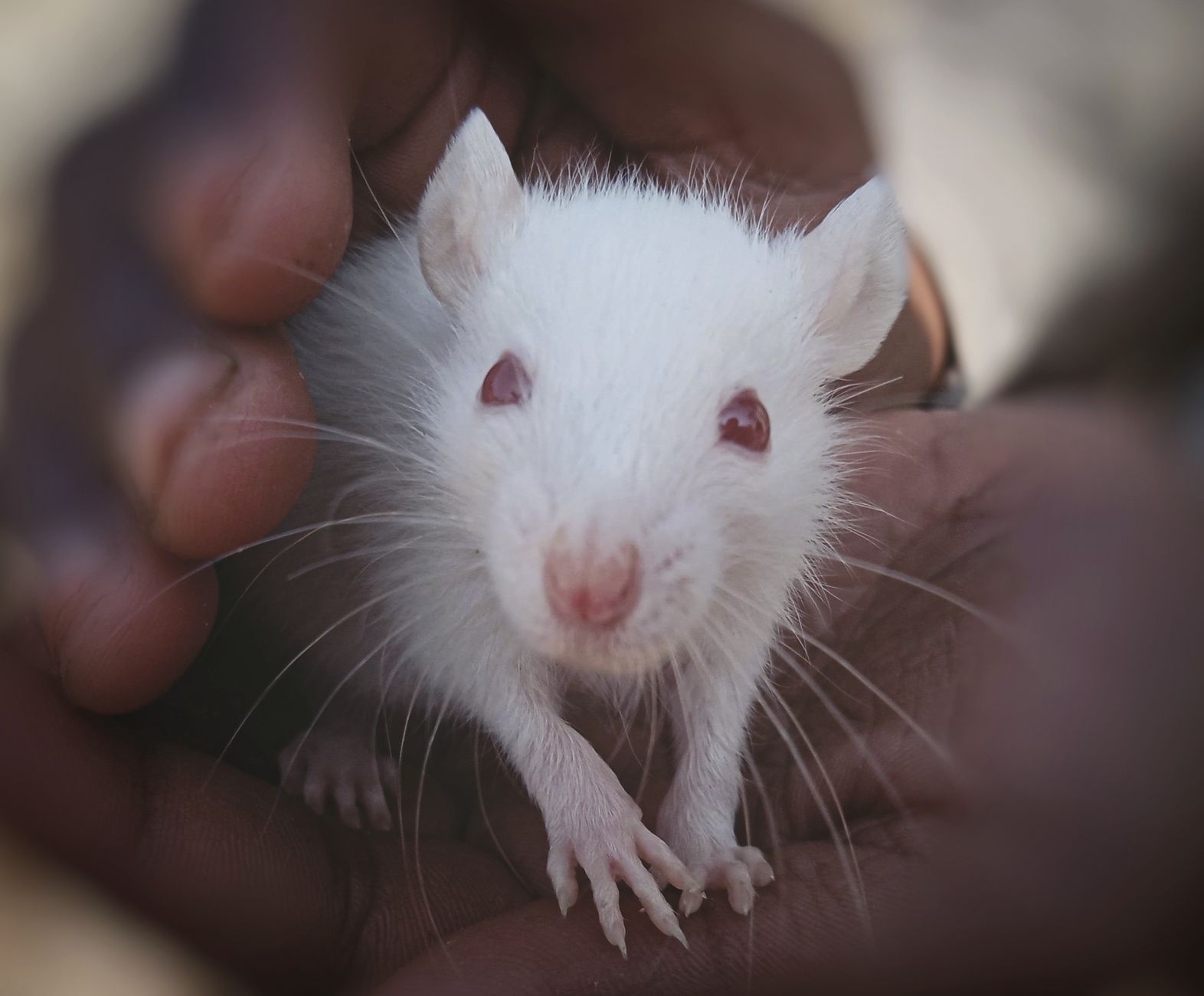

The experiment in question looked at the impact of stress on performance. Typically, stress causes an increase in performance, but only up to a moderate level. Beyond that, more stress generally reduces performance. We controlled stress by holding the rat under the water for a few seconds before having it swim a U-shaped maze. We put it in the maze on the left and then shut the door. Once the rat swam down, turned right and then turned right again it could swim to an air-hole on the other “tine” of the “U”.
Everything went fine for the first five rats. Not surprising. After all, they’re all the same. They are bred to be the same. For many generations. And, for the most part, the biters and the fighters were probably less likely to be chosen to promulgate the sub-species. Since birth, these mice have been mostly subjected to the same stimuli and the same diet as their lab-mates.
And, then there was Rat P-4547 (I’ve changed the number to protect the rat’s privacy). As I said, these lab rats were easy to pick up. You picked them up by grasping them from above and they just accepted the fact that they been chosen. Who knows? Maybe they had been bred to feel pride in having been chosen for an experiment.
In any case, Rat P-4547 certainly hadn’t read the manual on appropriate rat behavior. He immediately grasped the cage bars with everyone one of his teeny fingers and toes. Even more remarkably, he screamed. Somehow, he seems to have gotten it into his head that the experiment he was about to engage in was a kind of Putin vivisection game.
I eventually wrestled Rat P-4547 into the starting gate. There we were supposed to hold him underwater before allowing him to traverse the simple U-shaped maze. A quick glance at the sheet showed that Rat P=4547 was destined to be in the “High Stress” group. Of course he was.
I did it. I held him under the prescribed time and let him go. It was taking too long. At last, we saw him swimming furiously into the end zone, his oasis of oxygen, his Mount Ararat, and then…did he pop his little head up gasping for air?
He did not. He executed an amazingly coordinated lateral flip turn and swam the wrong way up toward the now closed beginning of the maze.
I did not want the rat to die, but how could we save him? He swam all the way back to the starting gate —nowhere else to go so we went to open it, discussed whether we should and then heard him make another flip turn before we could open the top. Now, we knew he had to drown. But no! His crazy little head finally ended up where it was supposed to.
I congratulated him on his grit, toweled him off, and settled him back into his cage. Of course, Rat P-4547 is long gone. An asterisk on a undergraduate term paper. Probably have a hard time finding it even with the help of an Artificial Influencer.
What? You thought the expression was “Artificial Intelligence”? That’s the term they use but that’s not the goal. The goal is to have Artificial Influencers disguised as helpful Artificial Intelligences.
Returning to the idea that they’re all the same, the truth of the matter is that any two things share some properties and any two things also show some differences. The idea of grouping things together for some purposes does make some sense. When you go to get firewood, for instance, you mostly want to focus on a reasonable size and dry wood. If you went to look for something to carve your attention would focus on the beauty and workability of the wood. If you went to get a cudgel, you’d be looking for a thick, sturdy piece.

Think how absurd it would be for someone who likes to carve chotskies telling you how to pick firewood based on their criteria for choosing carving material.
———————
 petersironwood