• About PeterSIronwood

petersironwood

~ Finding, formulating and solving life's frustrations.

petersironwood

Tag Archives: thinking

Tools of Thought: Problem Finding

03 Saturday Jan 2026

Posted by petersironwood in America, management, psychology, Uncategorized

≈ Leave a comment

Tags

AI, Business, creativity, Design, life, marketing, media, mental-health, problem finding, problem solving, research, thinking, thought, truth, writing

Problem Finding

IMG_5193

Today (18 December, 2018), I googled “problem solving” and it returned 287,000,000 results. In most of our school life as well as most people’s work life, we are given problems and asked to solve them. “Problem finding” only returned about 2.5 million or fewer than 1/100th as many hits. Solving problems can make processes more efficient and more effective. Solving problems can even save lives. We generally reward people both at school and at work for being good problem solvers. We seldom train people in problem finding. In fact, the reaction of many teachers and many managers when someone finds a problem is to dismiss it as being a non-problem. (FYI, Google now leads with an AI summary rather than links nor does it provide the number of “hits.”)

I can understand this sentiment; the emphasis on solving problems rather than finding them. As a teenager driving my dad’s car home from a date with my girlfriend, somebody beside me tried to make a right turn from the left lane and ran right into my dad’s blue Dodge. I heard what sounded like the voice of God say “NO!!” loud and clear. It was actually louder than the sound of crumpling metal. For a split second, I was in complete denial. Even some moments later, when we pulled over to assess the damage, to me, it looked minor enough to ignore and to just drive off. A more experienced guy from the corner gas station near where this happened said that while it may look minor, it would cost hundreds of dollars to fix and we therefore needed to trade information. I was stunned.
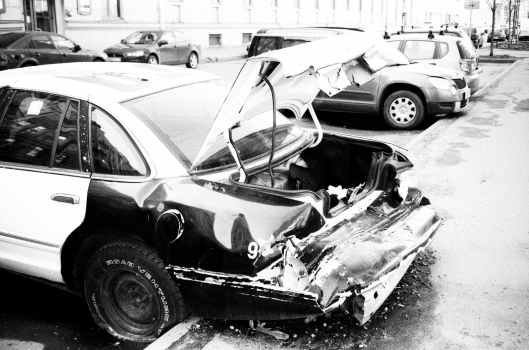
grayscale photo of wrecked car parked outside

Photo by Александр Неплохов on Pexels.com

In many cases, it is a human tendency to want to deny that a problem really exists. If you can get past that tendency however, and embrace problems and indeed, even learn to seek them out, you may be able to create tremendous value for yourself and for those around you. Problem solving can make your bookstore more profitable. Problem finding lets you invent Amazon. Problem solving lets you build a better internal combustion engine. Problem finding leads you to an electric vehicle.

What might you do to discover problems? First, you might take your own negative emotions as a jumping off place. If you find yourself angry, or anxious, or depressed, to the extent that you can trace back what is going on to the initiating event, you may be able to be consider whether that event is unique to you — or, more likely, that event is likely to trigger a negative reaction in many people. 

person holding white polaroid land camera

Photo by fotografierende on Pexels.com

If you found that waiting even 48 hours to have your photographs developed and printed — and you thought others might also be impatient to see the results–you might invent Polaroid instant photos. If you found cooking a casserole too time-consuming and messy for your taste, you might invent frozen dinners. If you drove a lot in hot, humid climates, you might be motivated to put air conditioning in cars. 

Of course, you do not have to limit yourself to your own misfortune. If you read about someone having a miserable time, you could dig a little deeper and ask yourself how a tragedy might have been prevented or how an accident could have been avoided. You can also look at a change that seems minor and ask yourself what will happen if this change becomes widespread. 

For example, if you read in the newspaper that a robot has been invented that harvests tomatoes, you might extrapolate to a more universal situation. What if all crops were harvested by machine? This might make groceries cheaper. But what else would it mean? Tomatoes are rather delicate, after all. You might wonder whether growers using a machine to harvest tomatoes would harvest them early to avoid them being mashed by the machine. You might wonder whether they would even genetically alter the tomatoes so that they were easier to harvest by machine (even if they were no longer as tasty). You might wonder what will happen to the tomato pickers. Politicians may tell you that they will all be retrained for higher paying jobs as machine inventors, machine programmers, and machine maintenance folks. But this makes no sense. If there were an equal number of IT jobs as there used to be tomato pickers but each of the new jobs came with a higher salary, why would the growers use robots? There will be fewer jobs after automation and in some cases, far fewer. 

close up of hands holding cherry tomatoes

Photo by rawpixel.com on Pexels.com

You might look at the global temperature trends and ask yourself what will happen if they continue. What will happen if global temperatures continue to rise? What can be done about it? Of course, once people start seriously mapping out the consequences, some people will react by saying, “Oh, it isn’t really happening!.” Why do they think that? Because it’s too scary to contemplate the truth; or too inconvenient to take the necessary actions. There are vested interests in old energy sources who will be happy to help you along in your fantasy of denial. In the short run, it’s often easier to imagine that problems do not exist, or are not that bad, or won’t get worse, or that there is just nothing to be done. 

Even most of the people who rail against what most of us think of as sensible gun regulation (requiring a license, showing ID, getting at least some training and testing the would-be gun owner’s knowledge, competency, and eyesight as we do with cars) don’t think that mass shootings of innocent children is a fine thing. They see it as a problem — just one that cannot be solved or one that can only be solved by adding cost and inconvenience to the potential victims. After such a tragedy, they may even send “thoughts and prayers.” 

black rifle

Photo by Specna Arms on Pexels.com

There is a possible “down side” to problem finding. The greedy may decide that they can make a lot of money by generating a solution to a problem that isn’t really a problem and making you believe it is a problem. My favorite, and so far made up, example is “Elbow Cream” for those unsightly skin wrinkles that appear on the back of your elbow when you straighten your arm. But that made up example is not too far off. You eat spicy food and it upsets your stomach? We can fix that! Of course, you could too by simply not eating overly spicy food! But nobody makes money that way. So they will sell you something that supposedly fixes the “problem.” While it might be fantasy to imagine “Elbow Cream” that will “fix” your “unsightly elbow wrinkles” it is not fantasy to imagine that people have been hoodwinked into spending money on “fixing” their faces and bodies. 

fullsizeoutput_11b5

Americans spent 16 billion dollars on cosmetic plastic surgery in 2017. There are 50 countries who each have a lower GDP than that. The beauty industry in the USA overall was supposedly around $445 billion in 2017. That’s more than the GDP of each of 151 countries! Both figures are also less than the federal government spends on reducing climate change. Or cancer research. 

Do you see that as a problem? I do. 

——————————————————

Author Page on Amazon. 

The Invisibility Cloak of Habit

Essays on America: The Game

One of the most enjoyable aspects of Science Fiction as a genre is that it often shows us problems that might occur in the future. In some cases, it suggests ways to prevent those problems and in some cases, it suggests how these future problems might be dealt with.

Turing’s Nightmares, for instance, comprises 23 short stories that explore the ethics and implications of AI. http://tinyurl.com/hz6dg2d

Dream Planet examines, among other things, the extrapolation of global warming and a radical attempt to stem it. https://www.barnesandnoble.com/w/dream-planet-david-thomas/1148566558

FaceGook

The Ides of February

A Day at the HR Department

Putin’s Favorite DOG-E

Silent Screams of Dead Men’s Dreams

Namble Mamble Jamble

May You Live in Interesting Times

Plastics!

The Last Gleam of Twilight

The “Not-See” Party

An Open Sore from Hell

Happy Talk Lies

Negative Space

02 Friday Jan 2026

Posted by petersironwood in creativity, management, psychology, sports, Uncategorized

≈ Leave a comment

Tags

AI, art, creativity, Design, HCI, illustration, music, negative space, painting, poetry, problem formulation, problem framing, sports, thinking, thought, UX, writing

Negative Space

When you look at a scene, it is natural to concentrate on the objects in the scene. So too, when one begins to design, it is natural to concentrate your attention on the things you intentionally put into the design whether those are menus, icons, images, banners, buttons and so on. You tend to give little thought to what is not there because, after all, there’s nothing there! 

IMG_9815

As your expertise grows, you will find it useful to spend some time and resources thinking about what is not there; the “negative space” if you will. In art, the “negative space” refers to the space around and between the objects. Often, paying attention to the “negative space” can result in a much more interesting and aesthetically pleasing composition. It is a concept that has applications far beyond artistic visual composition however. 

Consider music for a moment, or better yet, listen to some and you will note that the silence is just as important as are the notes. Increase or decrease the silence in a tune by a factor of two and it becomes a different, and in most cases much worse, tune. 

printed musical note page

Photo by Pixabay on Pexels.com

The same can be said of great acting whether on stage or in a movie. The silence while we wait for the actor’s response to some news — while they are saying nothing and possibly even showing nothing or very little on their face, can often be the most poignant and moving parts of the picture. If the actor reacts “too quickly” with no space, we can tell that the stimulus presented is something that they “trigger” on because they are upset about it or trying to deny it. The leading man, for instance, asks a seemingly innocent question on a first date, such as, “So, do you like French Cuis…” “NO!” she cuts in. The audience’s attention is immediately drawn to see what comes next. The response that is too fast indicates a “sore spot.” Did the leading lady want to become a French chef? Did she just end a love affair with a Frenchman? What is going on here? 

IMG_6022

On the other hand, imagine the leading man, says, “So, do you like French Cuisine?” One beat, two beats go by. No answer. A long pause. The leading lady’s face shows nothing. Perhaps she tightens her lips ever so slightly or frowns to the slightest possible extent. The pause continues. The leading man tilts his head as though to ask whether she’s okay. Finally, we come to expect a tirade about the French or French Cuisine or French wine or … something. Instead, after this long pause, the leading lady says nothing but punctuates her silence with something that sounds like a cross between a humorless laugh and a karate grunt. There are probably no words she could have said which would have intrigued us more than the non-response. We think, “What the hell is going on with her and French Cuisine?”  

IMG_9504

Speaking of French Cuisine, when you go to a fine restaurant, your focus is on the food. So too is the focus on the chef and the server. But the space is important as well. It is annoying when you are paying good money to have a nice dining experience and you are shown to your table, given menus and then ignored for the next twenty-five minutes. On the other hand, it is equally annoying when your server comes back every 30 seconds and asks, “Are you ready to order yet or do you need more time?” The optimal time to wait between courses is not always obvious either. Some people need or want much more time between courses. Maybe this nice dinner is all they have planned for the evening. The patrons are having a nice quiet dinner with good conversation. They are in no hurry. Just as one of the diners launches into a complex story or joke, the server comes over and interrupts to tell about the specials. Conversely, another foursome may be planning on attending a play and long pauses between courses may mean missing the first act. 

The negative space in dining is not just about the timing of events. It is also about the spatial arrangement of the food, the spacing between textures and colors. Often, the artistic arrangement is as much about the negative space as the objects on the plate. 

Sometimes, the food itself has positive and negative elements. In a meal with varied and complex and contrasting tastes, for instance, the rice or the bread can provide a kind of “negative space” between the tastier and more salient constituents. These neutral or negative elements allow more contrast among the salient elements than if the more salient elements were enjoyed right after each other. I’m reminded of a line from Kahil Gibran’s The Prophet:

“Let there be spaces in your togetherness.”

Negative space is important in architecture, painting, typography, cinematography, the design of user interfaces, culinary arts, music, and the design of other stimuli. It is also important in activity.

IMG_2769


One of the first popular video games was called “Asteroids.” In this black and white vector graphics game, you controlled a small space ship that shut bullets in the direction the space ship was aimed. All you could control was the speed and direction of the space ship and whether it was shooting. The screen also showed a number of large, irregular “asteroids” that you were meant to hit. When you hit one of these large asteroids with a bullet, it split into two moderate asteroids. When you hit a moderately sized asteroid with a bullet, it split into two small asteroids. When you hit a small asteroid with a bullet, it disappeared. If you got hit by an asteroid, you would die. There was also a flying saucer who came to hassle you. Anyway, I found that if I focused on all these floating asteroids and trying to not to get hit by one, it was a difficult game. For me, at least, it was much better to visualize a path among the asteroids and try to follow that path. In a way, concentrating on the negative space, helped. 

action athletes ball blur

Photo by Pixabay on Pexels.com

The importance of negative space in sports can hardly be over-emphasized. In American football, the back tries to find the holes to run through. In soccer, players seek paths between. In baseball, the hitter wants to “hit it where they ain’t.” In tennis, beginners often play only during half a point. Their attention is focused on the ball and the opposing player(s). They choose a target on the other side of the court and watch to see how well they hit that target. Just as their opponent begins to hit the ball they shift their attention to their opponent and watch where that opponent hits the ball, scurrying there as quickly as possible so as to hit the next shot. What does such a player do between the time they hit the ball and their opponent hits the ball? They watch! They want to see where the next ball goes. If you are young and fast and your opponent is not well skilled, you can often get away with this process. However, what higher level players do is something quite different though it may look similar. The good player has a target in mind but watches the ball while their mind has the target clearly in mind. By watching the ball, they are much less likely to mis-hit the ball. Furthermore, they are not giving away their intended target with their body language. Perhaps most importantly, long before their opponent hits a return shot, the good player thinks about the open spaces on their side of the court and go to cover the most likely of those spaces. 

Many otherwise well-skilled athletes only focus on the game during play. For example, many hitters on amateur softball teams, pay little or no attention to the game while their team is batting until they are “on deck” (almost ready for a turn at bat). This is absurd in the majors, but it’s even more absurd in amateur games. You should be taking this time to learn about the opposing pitcher and about the weaknesses in the opponent team’s fielders. Just because you’re not in the batter’s box doesn’t mean you can’t improve your play. Similarly, in tennis, you can use the time between points to think about tactics and strategy, as well as to mentally “reset” yourself if necessary. Some players wave their hands in front of their face after a point as a reminder/trigger to forget about what just happened and focus on the next point. Some will even turn away from the play, seemingly to talk with their “imaginary friend.” 

To close, a very short, short story based on true events in my first trip to Japan. 

tokyo tower behind black and white dojo building during daytime

Photo by Pixabay on Pexels.com

The Touch of One Hand Clasping

Japan, Tokyo, 1977. I walk crowded streets and beautiful gardens where care is taken for spaces as well as things that grow. I struggle — try to speak Japanese language but usually mispronounce “Key-Ray-Ee-Des” (It is beautiful) as “Key-Rah-Ee-Des” (It is dirty). I tip-toe through minefields of culture steeped in subtlety; lose huge chunks of flesh and karma with my thunderous, blunderous New York strides.

Shin-Ju-Ku: lights dim Times Square into grandmother’s fruit cellar. Row on countless row of Japanese stare hypnotized at small vertical pin-ball game called Pah-Chinn-Koe. This bright hustle bustle hassle hides deeper subtlety, deeper calm, inside, beneath, where foreign eyes can peer not.

I enter Tokyo subway. Then — she enters — total stranger, totally beautiful, black hair, endless eyes. I, of course, having learned small little in my many minefield walks, look everywhere but at her. Better, she looks everywhere but at me. We ride, totally not looking at each other. She stands in middle — nowhere to hold on to — unprotected, beautiful, vulnerable.

Suddenly, train lurches. Simultaneously: she shoots hand out to only spot I can possibly reach while I shoot hand out to only spot she can reach. Our hands clasp strongly for instant and I save her from fall. 

Slowly, we release.

Next stop, she rushes out. But — just before the doors bang shut, she turns — looks straight into my eyes. “Kohn-bahn-wah” she says (“Good Evening”).

Thus, Japanese beauty touches beyond body into very soul of clumsy Westerner.

———————————-

woman holding pink petaled flower

Photo by Đàm Tướng Quân on Pexels.com

Negative space….

———————————————-

Author Page on Amazon 

The Void

After All

It was in his Nature

Life is a Dance

Take a Glance; Join the Dance

Life Will Find a Way

At Least he’s Our Monster

What About the Butter Dish?

The Gods of Old

The Truth about Clouds and Gods

The Bubble People

Comes the Dawn

Is a Dream?

Good Morning!

Camelot is in your Heart

The Tree of Life

Happy New Year, 2026; Reviewing 2025

01 Thursday Jan 2026

Posted by petersironwood in America, pets, poetry, politics, psychology, satire, Uncategorized, user experience

≈ Leave a comment

Tags

AI, Democracy, essays, fiction, life, poem, poetry, politics, Review, thinking, USA, writing

Here’s a hint for having a happy 2026–or, at least one happier than it would otherwise be.

Your happiness actually depends more on how much you love than on how much you are loved. That turns out to be a wonderful thing because you have much more control over how much you love than you do over how much you are loved by others. You need not limit your love to your immediate family. You can love all the fish in the sea; every bird in a tree; every living thing on earth–all of which are in our extended family.

I thought it might be useful for reviewing 2025 for readers to have an index in one place. For instance, something happens or you read something on-line and you think, “Oh, I read something relevant to this on the Peter S. Ironwood blog. Now, what was it called?” Well, this should help.

January 1, 2025 began with a blog post about one of our Golden Doodles named Sadie. I take her for a walk every morning and sometimes write about it. Here are some posts about Sadie.

Travels with Sadie 5: 2025 is here

Travels with Sadie 6: Find Waldo

Travels with Sadie 7: Tolerance

Travels with Sadie 8 – Singing of the Rain

Travels with Sadie 9: Joint Problem Solving

Travels with Sadie 10: The Best Laid Plans

Travels with Sadie 11: Teamwork

Travels with Sadie 12: Taking Turns

During 2025, I found myself writing a number of poems. Many, but not all, were in response to the destruction of America that’s being directed by Putin.

Metastasized

Exauguration Day

The Ides of February

Destroying Our Government’s Effectiveness

The Unread Red

Silent Screams of Dead Men’s Dreams

We Won the War! We Won the War!

Namble Mamble Jamble

Co-Travelers

Autocrat: Putin’s Evil Traitor

Just Desserts?

The Last Gleam of Twilight

Oh, Frabjous Day!

The “Not-See” Party

A Cancerous Weed

An Open Sore from Hell

Baddies often have Bad Daddies

Aside from poetry, I also wrote a number of satirical pieces.

FaceGook explores how the value of social media is mainly created by the participants. Of course, the participants don’t get paid. The companies that own the media do.

Tomorrow’s Dinner is a satire on how the media normalize what is not at all normal.

A Day at the HR Department satirizes the utter incompetence of the Misadministration

Putin’s Favorite DOGE is a satire about DOGE

Interview with Putrid’s DOG-E

E-Fishiness Comes to Mass General Hospital

But Mommy! I had a Reason! satirizes the absurdity of the excuses


Here are links to a number of essays about contemporary issues

Ohms Come in Many Flavors

Running with the Bulls in a China Shop

Increased E-Fishiness in Government

Destroying Natural Intelligence

The Irony Age

Frank Friend or Fawning Foe?

May You Live in Interesting Times

Waves or Particles?

President Mush? Just Flush

The Agony of the Feet

Plastics!

Cooperation is More Common than Disruption

Wordless Perfection


On the lighter side, I’ve been translating sections of “The Ninja Cat Manual” into English

The Ninja Cat Manual

The Ninja Cat Manual 2

The Ninja Cat Manual 3

The Ninja Car Manual 4

From September 20th to September 30th, I began revising & reposting earlier posts about User Experience. Here’s a link to the first:
Customer Experience does not equal Website Design

Turing’s Nightmares is a book of 23 Sci-Fi short stories that examine the future and the ethics of Artificial Intelligence. It’s available on Amazon, but you can also read the chapters in October, 2025 blog posts and commentary on the chapters in November blog posts.

November 28th, I began recounting a series of experiences illustrating the importance of problem formulation.

Problem Formulation Who Knows What?

Starting December 14th, there are a series of essays about various “Tools of Thought”

Tools of Thought


Have a *wonderful* 2026!

Fraught Framing: The Virulent “Versus” Virus

29 Monday Dec 2025

Posted by petersironwood in America, apocalypse, creativity, driverless cars, management, psychology

≈ Leave a comment

Tags

Climate change, creativity, Democracy, Design, environment, framing, history, innovation, IQ, life, peace, politics, problem formulation, problem solving, school, technology, testing, thinking, TRIZ, truth, USA, war

Fraught Framing: The Virulent “Versus” Virus

IMG_2349

Like most of us, I spent a lot of time in grades K through 12 solving problems that others set for me. These problems were to be solved by applying prescribed methods. In math class, for example, we were given long division problems and we solved them by doing — you guessed it — long division. We were given history questions and asked who discovered [sic] America and we had to answer “Christopher Columbus” because that’s what the book said and that’s what the teacher had said. 

Even today, as of this writing, when I google “problem solving” I get 332,000,000 results. When I google “problem formulation” I only get 1,430,000 results — less than 1%. (“Problem Framing,” which is a synonym, only returned 127,000). [2025 Update: Google no longer provides this information. Indeed, the only non-commercial link I see is one to Wikipedia. The first entry to any search is typically their AI answer.]

And yet, in real life, at least in my experience, far greater leverage, understanding, and practical benefit comes from attention to problem formulation or problem framing. You still need to do competent problem solving, but unless you have properly framed the problem, you will most often find yourself doing much extra work; finding a sub-optimal solution; being stymied and finding no solution; or solving completely the wrong problem. In the worst case scenario, which happens surprisingly often, you not only solve the “wrong problem.” You don’t even know that you’ve solved the wrong problem. 

IMG_0687

There are many ways to go wrong when you frame the problem. Here, I want to focus on one particularly common error in problem framing which is to cast a problem as a dichotomy, a contest, or a tradeoff between two seemingly incompatible values. We’ve all heard examples such as “Military Defense Spending versus  Foreign Aid” or “Dollars for Police versus After School Programs” or “Privacy versus Convenience” or “A Woman’s Right to Choose versus the Rights of the Unborn Fetus” or “Heredity versus Environment” or “Addressing Climate Change versus Growing the Economy.” 

One disadvantage of framing things as a dichotomy is that it tends to cause people to polarize in opinion. This, in turn, tends to close the minds on both sides of an issue. A person who defines themselves as a “staunch defender” of the Second Amendment “Gun Rights”, for instance, will tend not to process information or arguments of any kind. If they hear someone say something about training or safety requirements, rather than consider whether this is a good idea, they will instead immediately look for counter-arguments, or rare scenarios, or exceptional statistics. The divisive nature of framing things as dichotomies is not what I want to focus on here. Rather, I would like to show that these kinds of “versus” framings often lead even a single problem solver astray. 

Let’s examine the hidden flaws in a few of these dichotomies. At a given point in time, we may indeed only have a fixed pool of dollars to spend. So, at first blush, it seems to make sense that if we spend more money on Foreign Aid, we may have fewer dollars to spend on Military Defense and vice versa. Over a slightly longer time frame, however, relations are more complex. 

woman standing on sand dune throwing hat

Photo by The Lazy Artist Gallery on Pexels.com

It might be that a reasonable-sounding foreign aid program that spends dollars on food for those folks facing starvation due to drought is a good thing. However, it might turn on in a specific case, that the food never arrives at the destination but instead is intercepted by local War Lords who steal the food and use it get money to buy more weapons to enhance their power; in turn, this actually makes the starvation worse. Spending money right now on military operations to destroy the power of the warlords might be a necessary prerequisite to having an effective drought relief programs.  

Conversely, spending money today on foreign aid, particularly if it goes toward women’s education, will be very likely to result in the need for less military intervention in the future. That there is a “fixed pie” to be divided is one underlying metaphor that leads to a false framing of issues. In the case of spending on military “versus” foreign aid, the metaphor ignores the very real interconnections that can exist among the various actions. 

There are other problems with this particular framing as well. Another obvious problem is that how money is spent is often much more important than the category of spending. To take it to an absurd extreme, if you spend money on the “military” and the “military” money is actually to arm a bunch of thugs who subvert democracy in the region, it might not make us even slightly safer in the short run. Even worse, in the long run, we may find precisely these same weapons being used against us in the medium turn. Similarly, a “foreign aid” package that mostly goes to deforesting the Amazon rain forest and replacing it with land used to graze cows, will be ruinous in the long run for the very people it is supposedly aimed to help. In the slightly longer term, it speeds destructive (and anti-economic) climate change for everyone on the planet.

bird s eye view of woodpile

Photo by Pok Rie on Pexels.com

False dichotomies are not limited to the economic and political arena. Say for example that you are designing a car or truck for delivering groceries. If you design an axle that is too thin, it may be too weak and subject to breakage. But if you make it too thick, it will be heavy and the car will not accelerate or corner as well and will also have worse gas mileage. On the surface, it seems like a real “versus” situation: thick versus thin, right? Maybe. Let’s see what Altshuller has to say.

Genrich Altshuller was a civil engineer and inventor in the Stalin era of Soviet Russia. He wrote a letter to Stalin explaining how Russian science and engineering could become more creative. A self-centered dictator, Stalin took such suggestions for improvement as personal insults so Altshuller was sent to the Gulags. Here, he met many other scientists and engineers who had, one way or another, gotten on the wrong side of Stalin. He discussed technical issues and solutions in many fields and developed a system called TRIZ (a Russian acronym) for technical invention. He uses the axle as one example to show the power of TRIZ. It turns out that the “obvious” trade-off between a thick, strong but heavy axle and a thin, weak, but light axle is only a strict trade-off under the assumption of a solid axle. A hollow axle can weigh much less than a solid axle but have almost all the strength of the solid version. 

IMG_8612

One may question the design assumptions even further. For instance, why is there an axle at all? If you use electric motors, for example, you could have four smaller, independent electric motors and not have any axle. Every wheel could be independent in suspension, direction, and speed. No-one would have designed such a car because no human being is likely capable of operating such a complex vehicle. Now that people are developing self-driving vehicles, such a design might be feasible. 

The axle example illustrates another common limitation of the “versus” mentality. It typically presumes a whole set of assumptions, many of which may not even be stated. To take this example even further, why are you even designing a truck for delivering groceries? How else might groceries go from the farm to the store? What if farms were co-located with grocery stores? What if groceries themselves were unnecessary and people largely grew food on their own roofs, or back yards, or greenhouses? 

house covered with red flowering plant

Photo by Lisa Fotios on Pexels.com

For many years, people debated the relative impact of environment versus heredity on various human characteristics such as intelligence. Let us put aside for a moment the considerable problems with the concept of intelligence itself and how it is tested, and focus on the question as to which is more important in determining intelligence: heredity or environment. In this case, the question can be likened to asking whether the length or height of a rectangle is a more important determiner of its area. A rectangle whose length is one mile and whose height is zero will have zero area. Similarly, a rectangle that is a mile high but has zero length will have zero area. Similarly, a child born of two extremely intelligent parents but who is abandoned in the jungle and brought up by wolves or apes will not learn the concepts of society that are necessary to score well on a typical IQ test. At the other extreme, no matter how much you love and cherish and try to educate your dog or cat, they will never score well on a typical IQ test. Length and breadth are both necessary for a rectangle to have area. The right heredity and environment are both necessary for a person to score well on an IQ test. 

IMG_0423

This is so obvious that one has to question why people would even raise the issue. Sadly, the historical answer often points toward racism. Some people wanted to argue that it was pointless to spend significant resources on educating people of color because they were limited in how intelligent they might become because of their heredity. 

Similarly, it seems that in the case of framing dealing with climate change as something that is versus economic growth, the people who frame the issue this way are not simply falling into a poor thinking habit of dichotomous thinking. They are framing as a dichotomy intentionally in order to win political support from people who feel economically vulnerable. If you have lost your job in the steel mill or rubber factory, you may find it easy to be sympathetic to the view that working to stop climate change might be all well and good but it can’t be done because it kills jobs. 

scenic view of mountains

Photo by Zun Zun on Pexels.com

If the planet becomes uninhabitable, how many jobs will be left? Even short of the complete destruction of the ecosphere, the best estimates are that there will be huge economic costs of not dealing with global climate change. These will soon be far larger than costs associated with reducing carbon emissions and reforesting the planet. Much of the human population of the planet lives close to the oceans. As ice melts and sea levels rise, many people will be displaced and large swaths of heavily populated areas will be made uninhabitable. Climate change is also increasing the frequency and severity of weather disasters such as tornados and hurricanes. These cause tremendous and wide-spread damage. They kill people and cause significant economic damage. In addition, there will be more floods and more droughts, both of which negatively impact the economy. Rather than dealing with climate change being something we must do despite the negative impact on the economy, the opposite is closer to the truth. Dealing with climate change is necessary to save the world economy from catastrophic collapse. Oligarchs whose power and wealth depend on non-renewable energy sources are well aware of this. They simply don’t care. They shrug it off. They won’t be alive in another twenty years so they are willing to try to obfuscate the truth by setting up a debate based on a false versus. 

They don’t care. 

Do you? 

—————————-

Author Page on Amazon

The Dance of Billions

We Won the War! We Won the War!

Fish have no word for Water

After All

All we Have to Lose

Guernica

Love and Guns

You Must Remember This

Essays on America: The Game

Cancer Always Loses in the End

FREEDOM!

The Loud Defense of Untenable Positions

Where Does your Loyalty Lie?

The Crows and Me

Somewhere a Bird Cries

Roar, Ocean, Roar

Imagine All the People

Collide-o-scope


Metaphors We Live and Die By: Part 2

26 Friday Dec 2025

Posted by petersironwood in America, health, management, psychology, Uncategorized

≈ Leave a comment

Tags

analogy, cancer, disease, HCI, health, human factors, innovation, metaphor, peace, politics, problem solving, testing, thinking, UX, war

Metaphors We Live and Die By: Part 2

men holding rifle while walking through smoke grenade

Photo by Pixabay on Pexels.com

Today, I want to delve further into the topic of metaphors that we often unconsciously adopt. In particular, I want to look at a common metaphor in four areas: disease, business, politics, and and the role of UX in the entire cycle of product development. 

Although I am fascinated by other cultures, my experience is overwhelmingly USA-centric. I am aware that all of the four areas I touch on may be quite different in other countries and cultures. If readers have examples of how different metaphors are used in their culture, I would love to hear about it. 

Disease is an Enemy to be Destroyed 

In most cases, American doctors view disease as an enemy to be destroyed. In fact, this metaphor is so pervasive that American readers are likely puzzled that I used the verb “view” rather than “is” in the previous sentence. In American culture, there is also a strong thread of another metaphor about disease: “Disease is a punishment.” This latter metaphor is behind such statements as, “Oh, they had a heart attack! Oh, my! Were they overweight? Did they smoke?” Perhaps I will consider this more fully another time, but for now, I want to examine the view that disease is an enemy to be destroyed. 

It seems as though it is an apt metaphor. After all, aren’t many diseases caused by other organisms invading our bodies and doing harm? There are many examples: bacteria (Lyme Disease, pneumonia, ulcers, TB, syphilis), viruses (herpes, Chicken Pox, flu, common cold),  protozoa (malaria, toxoplasmosis) or even larger organisms (trichinosis, tapeworms, hookworm). 

male bugs illness disease

Photo by Pixabay on Pexels.com

When it comes to considering causality, our thoughts usually travel along linear chains of causes. So, we may admit that while Lyme disease is “caused by” Borrelia bacteria, the “deer tick” that spreads the disease is also partly at fault. Similarly, although malaria is caused by a protozoa, the most effective prevention is to reduce the mosquito population or to use netting to keep the mosquitos from biting people. Similarly, you might try to prevent Lyme disease by wearing light clothing, using spray to keep the ticks off, checking for ticks after being in tick infested areas, etc. So, even in common practice, we realize that saying that the little organism causes the disease is an over-simplification. 

Once one “gets” a disease, however, the most commonly invoked metaphor is war. We know what the enemy is and we must destroy it! I grant you that is one approach that can be very effective, but consider this. The “human” body contains approximately as many bacterial cells as human cells. What you think of as your “human” body is only half human. It is half bacteria. Furthermore, since we all have trillions of bacteria in us when we are well, the picture of treating bacteria as an enemy to be destroyed is at best an over-simplification. In fact, more recently, medical science seems to indicate that under-exposure to bacteria in childhood can make you more not less susceptible to disease. If you use anti-antibiotics to “destroy” the “enemy” bacteria in your body, many of the “good” bacteria necessary for digestion are also destroyed. This sometimes, though rarely, requires exotic treatment to return to health. 

In cancer, both doctors and the general public mainly think of the cancer cells as “enemies” who must be destroyed. And yet, it seems that people may often have mutations that could lead to cancer but don’t. There are even very rare cases of spontaneous cures of cancer. What are some alternatives to thinking of cancer as an “enemy” that must be destroyed? 

Clearly, I don’t know of a definite answer or you would have already heard about it on the news. But let’s consider a couple alternatives. First, instead of thinking you have to “destroy” this enemy, imagine you thought of cancer cells as confused. People get confused all the time. Sometimes, we put them in jail. Sometimes we put them in mental hospitals. Sometimes, we simply teach them what they need to know. Sometimes, we do end up killing them. But it is not our approach to kill someone just because they make a mistake. So, we might seek a way to “re-educate” cancer cells so that they “realize” that they are part of something even larger and more wonderful – the human body. How would one go about this? Using the metaphor of a confused person, we would have to understand just why they were acting confused. Then we would have to provide situations so that they could learn (or re-learn) what they needed to know in order to become a productive member of “society.” We could “remind” a liver cell that, after all, they were born to be a liver cell and they’re potentially quite good at that. We could think of cancer as cells that are misinformed or have amnesia about their true nature. 

grey metal hammer

Photo by Pixabay on Pexels.com

We might also think along a different line. We could try to discover the best possible environment for these cancer cells to thrive – and then offer it to them somewhere else. For example, perhaps they really prefer an extremely acidic environment. Say you have a skin cancer on the back of your hand that thrives in a really acidic environment. We could provide a gradient of acidity next to the tumor and encourage all those acid-seeking cancer cells to migrate into a really acid tube that is next to the tumor. The farther away it gets from you, the more acidic the environment. 

You might also think of cancer cells as being rebellious. For whatever reason, they “feel” as though they are not experiencing enough of the “good life” being part of your body so they “take matters into their own hands” and begin leading a rebellion of cells out to steal the food supply and multiply in an unrestrained fashion. A solution might be to “convince” them that they are better off retaining their initial function rather than becoming a lawless gang of cells. I am not sure what the best metaphor for thinking about infection or cancer is, but surely it is worth imagining others rather than sticking to just one based on war as a metaphor. 

IMG_5572

Business is a Sport

I treat this at greater length in The Winning Weekend Warrior, but the basic idea is simple. Yes, there are many strategies and tactics from sports that apply to business. But there is at least one crucial difference. Sports are designed to be difficult. They typically require skill and training if you are to do well. The parameters of the sport are fixed at any given time though they will vary somewhat over time. In golf, for instance, the hole is small and the distances are great. Though the rules of golf are complex, there is one over-arching principle. If it would help you to do something, doing that thing is penalized.

woman playing golf during daytime

Photo by Pixabay on Pexels.com

If golf were a business, many CEO’s would nonetheless approach it as a sport. They would try to hire the “best people” – that is, people with a proven track record of good golfing. They would then proceed to offer incentives for people to do even better. If people shot a high score repeatedly, they would be fired. Eventually, such a CEO might get good results by having skilled people who are well motivated and well trained. But why? If putting a golf ball in the hole is what gained you profit, simply shorten the fairways, widen the hole, and eliminate the hazards. Of course, as a sport this would make golf no challenge and no fun. Everyone could win. But having everyone win is exactly what you should do to maximize profit. Yet many in management are so taken with the “business is a sport” metaphor that they do not change the situation. Some do “change he game” and with spectacular results. Google and Amazon come to mind. 

Politics is War 

If you belong to a political party and believe the “other” party or parties are enemies to be destroyed, you are failing to understand the dialectic value that parties with different views can bring to complex situations. Life is a balanced dance between strict replication and structure on the one hand, and variation, exploration, and diversity on the other hand. A species who had no replication of structure from one generation to the next would die off. But so too would a species that had no variation because the slightest change in environment would also cause the species to die off. So it is with human cultures. If every generation had to start from scratch in determining what was edible, how to get along, how to avoid predators and so on, humans would have died out long ago. On the other hand, if a culture were completely unable to evolve and change, they would also die out. Typically, “conservative” parties want to keep things the same for longer and “liberal” parties want to change things more quickly. There is no obvious answer here. But what is vital is that members of each party see that there is value in the debate; in the dialogue; in the dialectic. 

architecture bright building capitol

Photo by Pixabay on Pexels.com

The other party is not an enemy; it is the balance so that you can do what you do best. If you are predisposed toward exploration, science, new experiences, and so on, great! On the other hand, if you are more predisposed toward tradition and loyalty and repetition, great! If you did not have the people of the opposite predisposition, you would have to incorporate all that within yourself. Conservatives are what allows liberals to be liberal. And liberals are what allows conservatives to be conservatives. A huge problem arises, as it has recently in American politics, when one party decides they are just “right” all on their own and “victory” is worth lying, cheating, and stealing to get it. This is not unique to contemporary America of course. History is littered with administrations who were so convinced that they were “right” that they wanted to destroy all opposition. It has always ended badly. Politics is not war. (Though the failure of politics often leads to war.)

Of course, if a party really does treat all opposition as enemies to be jailed or executed, that’s no longer a  “party” at all–that’s a gang of thugs. Throughout history, such gangs of thugs have also attempted to discredit and destroy any honest reporting about what the gang is doing and how it affects others.

UX is All that Matters vs. UX Does Not Matter. Development is war!

As you might guess, neither of these extreme positions is useful. Price matters. Time to market matters. Marketing matters. Having good sales people matters. Having excellent service matters. Having a good user experience matters. It all matters. Depending on the situation, various factors matter relatively more or less. 

IMG_4214

(Original artwork by Pierce Morgan)

As in the case of political ideologies, it is just fine for UX folks to push for the resources to understand users more deeply; to test interaction paradigms more thoroughly; to collect and observe from more and more users under a wider variety of circumstances. Similarly, while you are pushing for all that and doing your best to argue your case, remember that the other people who are pushing for tighter deadlines, and more superficial testing are not evil; they simply have different perspectives, payoffs, and responsibilities. Naturally, I hope the developers and financial people do not view UX folks as simply “roadblocks” to getting the product out quickly and cheaply either. 

The first half of 2018, I tried to catalog many of the “best practices” in collaboration and teamwork. You might find some of these useful if you are embroiled in “UX wars.” You and your colleagues from other disciplines might also find it useful to consider that it is worth taking the time to affirm your common purpose and common ground. You are meant to work together. Development is not war. 

IMG_5216

Author Page on Amazon

Cancer Always Loses in the End

Where does your Loyalty Lie?

At Least he’s Our Monster

The Loud Defense of Untenable Positions

Essay on America: The Game

A Day From Hell

An Open Sore

All we Stand to Lose

Somewhere a Bird Cries

How the Nightingale Learned to Sing

The Ailing King of Agitate

After All

Roar, Ocean, Roar

The Dance of Billions


Tools of Thought: Metaphors We Live By & Die By

24 Wednesday Dec 2025

Posted by petersironwood in America, family, management, psychology, Uncategorized

≈ Leave a comment

Tags

analogy, Democracy, elections, Feedback, government, life, love, mental-health, metaphor, politics, problem solving, programming, sense-making, thinking, thought, writing

Metaphors We Live By and Die By

PicturesfromiPhone2 087

I love metaphors. I always have. I admit it. I think every youngster does, at least until they are exposed to poetry in English class. I was lucky to have an awesome English teacher who deepened rather than destroyed my natural love of metaphors. There are plenty in my own poems.  but in this post, I am not focusing on metaphors for poetry so much as metaphors that we use in our thinking. Metaphors impact the way we approach situations at work and at home. I was influenced to see this by two main sources. First, Lakoff & Johnson’s book, Metaphors we Live By  was first published in 1980. This book greatly influenced, among other things, our IBM Research team’s study of human-computer interaction. At this point in the history of human-computer interaction and user experience, researchers and practitioners began to explore how various metaphors (e.g.,desktop, trash can, windows, drag and drop) could be used to help users understand the capabilities of computers and how to invoke them. (See, e.g., Carroll, J. and Thomas, J.C. (1982). Metaphor and the cognitive representation of computer systems. IEEE Transactions on Man, Systems, and Cybernetics., SMC-12 (2), pp. 107-116). 

Consider the error messages “Illegal Syntax” and “User Error.” They both put the responsibility for an undesirable state of affairs squarely on the shoulders of the user. “Hey you! User! You did something dastardly! You used illegal syntax.”

man wearing jacket and peaked cap grayscale photo

Photo by Brett Sayles on Pexels.com

Generally, the term “illegal” implies that you did something that was against the law. It usually implies you did something unethical too. Gerry Weinberg, one of the pioneers of UX/HCI (a keynote speaker at the Gaithersburg Conference),  pointed out that the “legal” syntax of languages often has arbitrary restrictions. It might be more accurate to have an error message that says, “Our programmers were unable to take the time to allow dates to be entered in European or Chinese format. Please enter dates as MM/DD/YYYY as in 08/04/1961 for August 4th, 1961.” This longer message tells the user what was “wrong” with their input and how to correct it as well as conveying the very real truth that the limitation is with the software, not with the user. Similarly, what is called “User Error” actually comes up as a message when the user does something that seemed reasonable to the user and would most likely be interpretable by another human being but was not anticipated or could not be dealt with by the programming team. Suppose it said instead, “Software error. We did not anticipate this kind of input so we can’t deal with it.” Or, in many cases, a more honest message might be: “Software error. We knew people would want to do this, but we didn’t have budget to program properly.”  

silver and gold coins

Photo by Pixabay on Pexels.com

 At the same time I was thinking about metaphors and Human Factors in Computing Systems, I was also conducting therapy as a Fellow at the Institute for Rational Living. I was learning and supervising cognitive behavioral therapy under the direction of Albert Ellis. Here I observed how people used metaphors to help make sense of their lives and make decisions about their lives. For example, as pointed out by Lakoff & Johnson, people often viewed romantic love as a sickness! It is also common to view romantic love as a journey over which you have little or no control. It is understandable why it sometimes feels that way, but such a metaphor is not empowering. It does little to lead you to make reasonable decisions about love or about those whom you love. Think instead of love as a collaborative work of art. 

man standing beside his wife teaching their child how to ride bicycle

Photo by Agung Pandit Wiguna on Pexels.com

The “Love is a collaborative work of art” metaphor encourages you to realize that you must collaborate with your partner to make a relationship work over time. You can’t really collaborate very well unless you communicate. It also encourages you to realize that work is involved. It encourages you to realize that it is a creative endeavor. While you can certainly learn from the successes and mistakes of others, in the end, your relationship is unique. It will take creativity to make your relationship work. It puts the responsibility for the relationship on you and your partner, not on forces beyond your control. 

It isn’t only love about which people often use inappropriate metaphors. For example, when it comes to overcoming addiction, overeating, under-exercising, people often use sin as their over-arching metaphor. “I was bad last night. I had two pieces of pumpkin pie.” “I was horrible all week. I had those evil donuts every morning.” The metaphor that “eating is evil” is inaccurate. After all, you have to eat to live. Furthermore, that metaphor doesn’t lead to any solutions except to try harder to be “good.” Worse than that, if often subverts a person’s efforts. “I didn’t want to have any ice cream but I did. Oh, well, the night is blown. I may as well eat the whole quart.” (Now that I’ve sinned, I may as well enjoy it). Weight is best thought of in purely physical terms. If you ingest more calories than you burn you will gain weight. If you burn more calories than you consume, you will lose weight. That’s it! (That accounts for almost everything. Intaking more fiber and fluid can have an impact as well as doing *some* light exercise after eating, but it’s mainly just a physics issue). Making it about good and evil does not help and, in my experience, is completely counter-productive. 

donuts and bagel display

Photo by Igor Ovsyannykov on Pexels.com

Speaking of counter-productive metaphors, I have been annoyed and concerned for decades that the media have largely (though not wholly) reported on political matters as they report on sporting events. During election season, you will hear relatively little about the candidates, their positions, their backgrounds or their ethics. You will hear a lot about strategy and where they stand in the polls. Often you will literally hear nothing more than a sound bite per day about major candidates. Then, pundits will unendingly discuss and debate how this or that sound bite will work or not work with various voter groups. No matter how outrageous, unethical, or disgusting a candidate’s behavior is, the media will spend most of their coverage on how it will affect the “score.”

Metaphors have consequences. 

We now find ourselves in an extremely weird position, at least in America. One candidate has “won” the “World Series” of elections (American Presidency). Many of the people who voted for him think of themselves as his “fans” and “supporters.” They believe their guy “won” so they want to continue to support “their team.” After all, imagine that you are a Yankees fan and the Yankees won the World Series. You get to have bragging rights until the next World Series. If one of the Yankees turns out to be a tax evader, you’re still going to be a Yankees fan. If one of the Yankee pitchers turns out to have cheated during the games, say, by putting illegal substances on the baseball, you’ll still be a Yankees fan. Another Yankee might be a wife beater. But, hey, they won the World Series! So you’re still a loyal Yankees fan. 

man wearing new york yankees cap

Photo by Oleksandr Pidvalnyi on Pexels.com

Here’s the thing. It doesn’t make a whole lot of real difference in your life who won the World Series. It doesn’t matter materially to your kids. It doesn’t matter materially to your grandkids. Don’t get me wrong. It will make some difference in how you feel. You and your whole family might be happy they won. But it won’t make the air you breathe cleaner or dirtier. It won’t make the water you and your family drink pure or contaminated with carcinogenic toxins. It won’t make or break the economy. Having the Yankees or Boston Red Sox win the World Series will have zero impact on global climate change. Even if Chicago wins the World Series, it won’t start an atomic war. If the Phillies win, it won’t mean you will lose your health care. Stay loyal to those Yankees! Or to the Green Bay Packers. Or to Manchester United. Or to the India National Cricket Team. Or whoever your favorite team is. Why not? 

Politics though, regardless of how it is reported by the news media, is vastly and vitally different from a sporting event!  Who is in office can have a huge influence on what happens in the lives of people. In the case of an American President, who is in office can have a huge influence on the lives of people around the globe, not only today and tomorrow, but also for decades to come. 

white and grey voting day sign

Photo by Element5 Digital on Pexels.com

Collectively, those Americans who voted (about 137.5 million) in the last Presidential election hired someone for a job. (Actually, nearly 63 million voted to hire him while nearly 66 million voted to hire Hilary Clinton). POTUS is an important job and how that person does that job impacts your life in a very real way. It impacts the lives of your friends and your family. It impacts the lives of people around the world. Every action that person takes, every speech they give, every statement they tweet has an impact. You or I might send out a nasty tweet about people. But our nasty tweets are very unlikely to cause someone to construct and send pipe bombs to the people we tweeted about. We have hired someone to do a very important job. It isn’t a sporting event.

IMG_2349

Imagine instead of rooting for your favorite sports team that you hired a guy to take care of your kids. To you, that is certainly an important job. After you hire him, you discover that the person you hired lied to get the job. He lies to you every single day. He steals from you! Not only that. Every day, he trashes your house a little more. He has parties at your house and the people he invites include known criminals. Worst of all, this guy you hired is a child molester! That’s obviously a nightmare scenario. What makes it worse is that many people knew that the person you hired was a crook and a child molester. 

What do you do when there is a mountain of evidence that he is lying to you; stealing from you; trashing your house; consorting with known criminals; and is a child molester? 

IMG_9150
IMG_3123

Do you keep him on to watch your kids anyway out of a sense of loyalty? 

Do you feel so guilty about hiring him that you insist to all your friends and relatives that this guy is doing a great job? (Because, after all, that’s what he keeps saying). 

Do you keep him on until he is convicted in a court of law? 

Of course you don’t! You fire him immediately. 

You have the power to choose the metaphors you use. You don’t have to stick with a metaphor just because it was the first one to occur to you. 

Metaphors have consequences. Whether in your personal life, work life, or political life, choose your metaphors with care. Don’t latch on to one simply because it’s the one the mainstream media discovered rakes in the most ad revenue.

Since I first wrote this post about metaphors, there has been a COVID epidemic. According to the respected British medical journal, Lancet, the mishandling of the COVID epidemic in America cost at least 200,000 unnecessary deaths. Treating a pandemic as though it’s just a cosmetic problem that will “magically disappear” like a prom pimple turns out not to be very effective after all.

Elections are not sporting events. You are not simply a “fan.” If democracy and the rule of law in America are to survive, you must be an active participant. Cheering and jeering are not enough.

IMG_5126

Author Page on Amazon

Roar, Ocean, Roar

We Won the War! We Won the War!

Siren Song

The Ailing King of Agitate

After All

An Open Sore

All We Stand to Lose

At Least he’s Our Monster

Stoned Soup

The Tale of the Three Blind Mice

Travels with Sadie: Teamwork

The First Ring of Empathy

The Walkabout Diaries: Variety

 Representation 

22 Monday Dec 2025

Posted by petersironwood in America, management, psychology

≈ Leave a comment

Tags

AI, Business, Design, Dictatorship, Feedback, leadership, life, measurement, politics, problem solving, programming, Representation, science, symbol, testing, thinking, truth, writing

 Representation 

“Choose your words carefully.” We have all heard that advice. It’s good advice and choosing a good representation is key to solving problems, but the general point extends beyond choosing words. Take a few moments now to divide DCXXXV by IX without translating to Arabic numerals. Go ahead. I’ll wait. 

A photo I took of a plant in our garden known as “black roses.”

Choosing the “best” representation for a problem depends on the nature of the problem but it also depends on your own skills and experience with a representation. If you have memorized the multiplication tables up to 99 x 99 (rather than only up to 9 x 9), you can use different techniques for multiplication than if you haven’t. If you already know how to program in FORTRAN and LISP, some algorithms will be easier to program in FORTRAN and some will be easier in LISP. But if the only language you know is R, then under most circumstances, it will be far faster and less error prone to use R than to learn another language and then use that one. 

Every representation of a real-world situation will necessarily make some features of the situation obvious and other features will be hidden or less obvious. An elevator, for instance, might say, “Capacity: 12 people.” If all of the people are wildly obese, then 12 may not fit into the elevator. The capacity sign is assuming that the people will be somewhat average. If there are 12 adults in the elevator, and one of them is holding a newborn, it won’t make much difference. If there are only 10 people in the elevator and each one has a large suitcase full of gold bullion, there may be room for all 10 to stand, but the total weight of the cargo may exceed the capacity of the elevators, snap the cable, and plummet you to your death. Remember that the next time you get on an elevator filled with folks who have suitcases of gold bullion. 

bullion gold gold bars golden
Photo by Pixabay on Pexels.com

Every representation has its limitations. If you’re familiar with a field, you will hopefully learn to recognize what those limitations are. In a famous book, The Mythical Man-Month, (still worth reading, though it should be called “Person-Month”), Fred Brooks shows that such a metric as “man-month” or “person-month” has serious limitations in planning and executing software projects. Some have paraphrased his message this way: “You can’t use nine women to make one baby in one month.” According to Brooks, who had plenty of experience as a high level manager of large software projects, when management finds that a software project is behind schedule (which is quite often), there are two major reactions of management: 1) require more measurements, reports, and presentations to management and 2) hire more people. 

batch books document education
Photo by Pixabay on Pexels.com

The issue with reaction 1 is partly that it takes time away from the managers and workers in order to make those measurements, prepare those reports and presentations, and to attend the meetings. Beyond that, it puts the focus of attention on those measurements (representations) which will only be at best, modestly correlated with what the real problems are. If, for instance, requirements keep changing, or there are incompatibilities in the requirements, measuring lines of code produced is not only useless in itself; it keeps people from tackling the hard problem. A solution to a hard problem might be telling the client that there can be no more changes in requirements. A solution to a hard problem might be resolving the incompatibility in requirements. One can count lines of code pretty easily. One can count other things like “function points” with a little more work but it doesn’t require getting into the “hard” and people-oriented problems that really need to be solved. 

fullsizeoutput_12f8

Reaction 2 – adding more people – will put more “resources” on the project. You can easily count the people. You can easily count the hours they work. The problem is that a person-hour is, like the elevator capacity, an over-simplified metric. In fact, it is a much worse representation of the resources on the project than the elevator metric. First of all, studies show that even among programmers with equal training, there are often ten-fold differences in productivity. The second, and even bigger issue is that even really productive programmers who are added late to a project will have to learn about the project: the people, the requirements, and the code base. If these new people are stolen from an existing project, that will also put that project in jeopardy as well. If they are instead new hires, then in addition to all the technical knowledge that they need to come up to speed on, they will also have to learn all sorts of administrivia that will take time and brain space away from the project: how to commute to work, where the cafeteria is, how to fill out time cards. Most likely, they’ll have to attend ethics training, and diversity training, and safety training. Even worse, a lot of the knowledge that they will need to become a productive member of the team mainly exists in the heads of the very people who are doing the programming now! This means that the busiest, most productive people on the project will have to take time away from programming to spend it instead on answering questions that the new people will have. 

Even this understated the real impact however. Let’s look at that phrase I just used, “…will have to take time away from programming to spend it instead…” What hidden assumption about representation is buried in this phrase? It gets the reader to think along the lines that time is additive. If I am deeply involved in programming and I get an IM or phone call from a newbie asking me a question about the project, it might take an hour to answer. Does that mean I have subtracted an hour from my own productive programming? No. It’s probably much worse than that. Why? Because I am not a machine, but a human being. It will cost me much more than the hour to get back to the same state of flow that I was in when I was interrupted. 

I was involved for a time in looking at programmer productivity for high performance computing  using various tools and the X programming language. One of the people I interviewed put it this way: “My manager calls for an hour meeting for 10 am when I am in the middle of a complex [parallel programming] problem. He thinks he’s taken an hour of my time. For him it’s an hour long meeting. But for me, he’s really destroyed the whole morning.”  

fullsizeoutput_1163

These representational issues apply far beyond software development. For example, in the USA and in many other countries, we look at GDP as a measure of the economic productivity of the country. But how does this metric shape — or distort — our view of productivity? If a parent stays home with small children and they both love the time together, and the parent uses that time to help grow a loving, educated, productive citizen, it adds to the well-being of the country as well as that child and that parent and that family. But GDP? Nada. If instead, the parent paid money to put the child in mediocre day care, that would add to the GDP. 

man and woman holding wine glasses
Photo by rawpixel.com on Pexels.com

Similarly, if I go to the grocery and buy a hard, tasteless tomato for myself, I will pay for the growing of that tomato, advertising it, shipping it, warehousing it, displaying it, and for the genetic alterations so that the tomato, while tasteless, is easy to transport without spoiling. Yay me! I have added to the GDP. But if I go to a friend’s house and taste a wonderful tomato, ask for some seeds or a cutting and grow my own heirloom tomato, watering it lovingly with rainwater, weeding around it, and fertilizing it with compost, I have added zero to the GDP. Yet, the tomato will give me more pleasure, not less, than the croquet balls they have in the store. 

Representation is a good thing! Humans use symbolic thinking to do many things that would be difficult or impossible without these kinds of representations. But we must remember the limitations and not confuse reality with our representations of reality. 

This is not a new phenomenon. In the American Revolutionary War, high ranking British military officers could not understand why the British navy “refused” to navigate their warships up the Bronx River to attack revolutionary positions upriver. If you’ve ever seen the Bronx River, you’ll realize why immediately. But the maps that the British brass looked at showed a navigable river! 

river inside forest near brown leaf trees
Photo by Nashwan guherzi on Pexels.com

Yes, we need to use representation in our thinking. But we also need to think about our representations. You cannot assume that the one that is customarily used is “right” in all circumstances. People of different backgrounds and cultures will often use somewhat different representations of a problem or situation. (This is one of the advantages of diversity). However you do it, it’s worth questioning whether the way you are representing a situation or problem is optimal, or even adequate, for the problem at hand. 

Suppose you are measuring “the number of user errors” that users make while using a prototype text editor. You move from prototype A which averaged 10 user errors per half hour test to prototype B which only averages 5 user errors per half hour. Yay! You’ve cut user errors in half! But what if the errors you eliminated were all fairly trivial; e.g., people with version A couldn’t figure out how to number their footnotes with Roman numerals instead of Arabic. In version B, that error, along with other trivial errors, was eliminated. But one of the new errors causes the system to crash and all the user’s work to be lost. Have you really made progress? 

All errors are not alike. All dollars are not alike. All people are not alike. Not even all tomatoes are equivalent. We constantly over-simplify and yet in some cases it’s necessary in order to deal with complexity. I don’t see how all such errors can be avoided. But it’s crucial for everyone, but especially for managers and executives, to be open to the cases where the representation that is being used has become counter-productive rather than “doubling down” on such errors. Finding and fixing errors of representation are generally harder to diagnose and fix than errors made with a representation. That is all the more reason why everyone, but especially leaders, must be open to changing the way issues are represented. 

IMG_9627

It is no accident that dictatorships generally result in nations wherein people have both less material wealth and less enjoyment and freedom. A dictator typically refuses to admit mistakes and fix them even if it means murdering someone to make the problem appear to go away. Ultimately, this process ruins any organization. Such a person need not be a national leader. They can be a company manager, a coach, a corporate executive, or a parent. Everyone makes errors, including errors of representation. But a reasonable person is open to fixing it when new information becomes available. You can be like that too. 

sunset beach people sunrise
Photo by Pixabay on Pexels.com

———————————-

Author Page on Amazon

Essays on America: Labelism

Reality Check

Wednesday

The Invisibility Cloak of Habit

Fish have no Word for Water

After All

All We Stand to Lose

A Lot is not a Little

Happy Talk Lies

The Loud Defense of Untenable Positions

At Least he’s Our Monster

Plans for US; some GRUesome

Siren Song

We Won the War! We Won the War!

————————————


Systems Thinking: Positive Feedback Loops

17 Wednesday Dec 2025

Posted by petersironwood in America, creativity, psychology, Uncategorized

≈ Leave a comment

Tags

AI, Artificial Intelligence, books, chatgpt, Design, Feedback, government, innovation, leadership, learning, machine learning, management, politics, POTUS, problem solving, science, sense-making, society, systems thinking, thinking, vicious circle

Systems Thinking: Positive Feedback Loops

brown wooden stairs

Photo by Jimmy Chan on Pexels.com

One of the most important tools of thought that anyone can learn: “Systems Thinking.” I touched on this in yesterday’s post “And Then What.” I pointed out that when you take an action that impacts a system such as a human being, a family, or a country, it often does not react in a mechanical way. 

Here are some examples. For many years, the United States and the USSR were involved in a cold war arms race. Every time the USSR added more nuclear missiles to their arsenal, the people in America felt less safe. Since they felt less safe, they increased their armaments. When the USA increased nuclear weapons, this made the Soviet Union feel less safe so they increased their arms again and so on. This is what is known in Systems Thinking as a “Positive Feedback Loop.” It is also popularly known as a “Vicious Circle” or “Vicious Cycle.” 

Let’s say that you are in pretty good shape physically and regularly run, play tennis, or work out. The more you exercise (up to a point), the better you feel. Feeling better makes you feel more like exercise and more exercise makes you feel better. People call this a “Virtuous Cycle” or “Virtuous Circle” because we think the outcome is good. But formally, it is the same kind of cycle. 

active adult athlete body

Photo by Pixabay on Pexels.com

The most important thing to recognize about a Positive Feedback Loop is that it can be run in either direction. At some point, the US reduced their nuclear arsenal and this decreased the perceived threat to folks in the Soviet Union so the soviets felt that they could also reduce their nuclear arsenal which in turn, made people in the US feel safer and led to further reductions and so on. 

grey jet plane

Photo by Pixabay on Pexels.com

Similarly, if you stop exercising for a month, you will tend to feel pretty crappy. Feeling crappy makes you feel less like exercising and this in turn makes you exercise less which in turn makes you even more out of shape, feel worse and be even less likely to exercise. You can break such a “vicious circle” by starting to exercise – even it it’s just a little to start moving the circle in the “virtuous” direction. (Incidentally, that’s why I wrote “Fit in Bits” which describes many easy exercises to get you started). 

woman in white bed holding remote control while eating popcorn

Photo by JESHOOTS.com on Pexels.com

“Vicious circles” also often cause disagreements to escalate into arguments and arguments into fights. Each person feels “obligated” not to “give in” and the nastier their opponent becomes, the nastier they become. 

“Fawlty Towers” (https://en.wikipedia.org/wiki/Fawlty_Towers), a British sit-com uses “Positive Feedback Loops” in the escalating action of the comedy plots. John Cleese plays the co-owner Basil (with his wife, Sybil) of a small hotel. Typically, John Cleese makes some rather trivial but somewhat embarrassing mistake which he wants to hide from his wife. In the course of trying to cover up this rather small mistake, he has to lie, avoid, or obfuscate. This causes an even more egregious mistake which makes him even more embarrassed so he must result to still more outlandish lies and trickery in order to cover up the second mistake which in turn causes an even bigger mistake, and so on. 

That pattern of behavior reminds me of the current POTUS who is famously unable to admit to an error or lie and uses a second and bigger error or lie to try to cover up the first lie and so on. He seems, in fact, completely incapable of “systems thinking.” 

IMG_9150

For example, he may see (and exaggerate) a real, but containable threat such as a trade deficit. He sees the US send more money out of the country than the US takes in from trade. That’s a legitimate issue. But the approach he takes is to ZAP the other parties by slapping on tariffs without any real appreciation of the fact that our trading partners are extremely unlikely to react to tariffs on their products by simply doing nothing. One could use logic, empathy, or a look at history to determine that what is much more likely is that the other countries will put tariffs on our goods (which, of course, is precisely what happened). 

Similarly, he demands absolute loyalty. He repeatedly puts himself and his own interests above the law, the Constitution, the good of the country and the good of his party. He expects everyone loyal to him to do the same. But he betrays these loyal appointees, friends, and wives whenever it suits him. He thinks he is being “smart” by doing what seems to be in his best interest at that moment. But what he fails to see is that by being disloyal to so many people who have been mainly loyal to him, he encourages his so-called “allies” to only be loyal to him while it suits their interests.  

In the Pattern “Reality Check,” I point out that such behavior is an occupational hazard for dictators. Apparently, it can even be such a hazard for would-be dictators as well. By surrounding himself with those who always lie, cover for him, laud him, cater to his insane whims, etc., such a dictator (or would-be dictator) loses touch with what is really going on. He becomes more and more disconnected from sensible action yet those who remain loyal must say and do more and more outrageous things to keep the dictator from finding out just how bad things really are. Eventually, the Emperor with no clothes may die of hypothermia because no-one has the courage to tell him that he’s actually wearing no protection against the elements! 

IMG_2557

Positive feedback loops exist in purely natural systems as well as biological and social systems. For example, increased global mean temperatures mean less arctic ice which means more solar radiation will be absorbed by the earth’s dark oceans rather than reflected back into space by the white ice and snow. This, of course, makes the earth hotter still. In addition, the thawing of tracts of arctic tundra also releases more methane gas into the atmosphere which is even more effective at trapping the earth’s heat than is carbon dioxide. Global climate change also makes forest fires more prevalent which directly spews more carbon dioxide into the air and reduces the number of trees that help mitigate the emissions of carbon dioxide by turning it into oxygen through photosynthesis.

asphalt dark dawn endless

Photo by Pixabay on Pexels.com

A concept closely related to “Vicious Cycles” is that of “Cognitive Dissonance.” Basically, people like to believe that they are honest and competent. Much like John Cleese (Basil) in Falwty Towers, once they do something dishonest or incompetent, their first reaction is not to believe that they did something dishonest or incompetent. They will now try to distort reality by misperceiving, mis-remembering, or distracting. 

For example, at the height of the Vietnam War, I was horrified at the beatings perpetrated by the police on peaceful protestors at the Democratic National Convention. I was also disturbed at the techniques the Democrats used at their convention to silence the voices of dissension within the convention. Candidate Nixon claimed he had a “secret plan” to end the War in Vietnam. I voted for Nixon. As it became clear that Nixon was a crook, I decided that I had made a mistake voting for the man. But I could have taken another path which would be to “double down” on the original mistake by continuing to support Nixon and dismiss all the growing evidence of his misdeeds. As his malfeasance became more and more egregious, it made the egregiousness of my original mistake of voting for him grow as well. So, it would be possible to become ever more invested in not believing the overwhelming evidence of his treachery. (Now, it turns out, it was even worse than we knew at the time. He actively thwarted the peace efforts of Johnson!). Perhaps because I’ve been trained as a scientist and science values the truth very highly, I did not fall prey to that particular instance of “Cognitive Dissonance.” I readily admitted it was a stupid mistake to vote for Nixon. 

Of course, today, we see many people not just backed into a corner to support the current POTUS but backed into a corner of a corner. Instead of believing that a liar is lying, they protect their “integrity” by insisting that everything and everyone else is lying: the newspapers, the reporters, his opposition, people in other countries, his former business partners, his former customers, the CIA, the FBI, the NSA. Ironically, for some people, it would be easier to admit that voting for a slightly inferior candidate was a mistake than to admit that voting for a hugely inferior candidate was a mistake. Voting for a slightly inferior candidate is easily understood but if they voted for a candidate that bad and bad in so many ways it was a huge error. And now, as each new revelation comes to light, it is more and more and more embarrassing to admit what a huge mistake it was.  

Another common example of a “Vicious Circle” is addiction. A small amount of alcohol, nicotine or heroine makes you feel better. But taking the drug increases your tolerance for it. So, next time, to feel better, you need to take a little more. Taking a little more increases your tolerance still further so now you need to take a still higher dosage in order to feel better. When you do, however, your tolerance increases still more. Whether it is drugs, gambling, addictive sex, or unbridled greed, the mechanism is the same. You need more and more and more over time due to the nature of the “Positive Feedback Loop.” 

fullsizeoutput_11fc

A similar mechanism may be at work in the minds of apologists for the NRA (National Rifle Association). As more and more innocent people are killed partly because of easy access to guns, the mistake of supporting the NRA in their refusal to support mandatory vetting, training, and competency demonstrations for gun owners becomes an ever-more obviously egregious error. But, rather than making this more likely for supporters to admit to such an error and therefore change their position, every new slew of innocent children killed for no reason makes them actually less likely to change their position. According to Cognitive Dissonance, every such death makes their earlier decision worse – unless there is some counter-balancing argument. As the number of innocent deaths arises, and indeed, as more and more evidence of the perfidy of the NRA becomes clear, many who previously supported the NRA become ever more entrenched because they “buy into” the great value of unlimited access to guns ever more. Why? They continue their support because not to do so makes them complicit in more and more horrendous crimes.  

black rifle

Photo by Specna Arms on Pexels.com

If you can see such patterns in your own behavior and in others, you can better choose the correct course of action for yourself and be more thoughtful in how you communicate with others about their errors. Hint: Trying to make people feel more guilty for their stupid decisions will likely backfire. 

white and tan english bulldog lying on black rug

Photo by Pixabay on Pexels.com

————————

Author Page on Amazon. 

Love and Guns

D4

Dick-Taters

We won the war! We won the war! 

Guernica

A Civil War there Never Was

The First Ring of Empathy

The Walkabout Diaries: Life Will Find a Way

Travels with Sadie 1: Lampposts

Donnie Gets a Hamster

An Open Sore from Hell

Roar, Ocean, Roar

The Dance of Billions

The Siren Song

Imagine All the People…

You Must Remember This

At Least he’s our Monster

Stoned Soup

The Three Blind Mice

Wednesday

What About the Butter Dish?

And, then what?

16 Tuesday Dec 2025

Posted by petersironwood in creativity, psychology, Uncategorized

≈ 3 Comments

Tags

AI, Business, chatgpt, consciousness, consequences, Democracy, Feedback, innovation, learning, life, science, testing, thinking, USA

And then what? 

IMG_5566

When it comes to increasing the drama in TV crime shows, westerns, and spy thrillers, both the brilliant, evil villain and the smart, brave, good-looking protagonist display one common and remarkable weakness: they rush into action without much thought as to the possible consequences of their actions. 

Here’s a scene that you and I have probably seen a thousand times. The hero has a gun drawn and a bead on “The Evil One” but the Evil One has a knife to the throat of the friend or lover of The Hero. The Evil One, as both we in the audience and The Hero know, cannot be trusted. Most likely, The Evil One has caused the death of many people already, is treacherous, and lies as easily as most people breathe. Nonetheless, The Evil One promises to release the hero’s friend or lover provided only that The Hero put down their gun and slide it over to The Evil One. And The Hero complies! Often, The Hero will elicit a “promise” from The Evil One: “OK, I’ll give you my gun, but you have to let them go!” The Evil One, for whom promises mean nothing, “promises” and then The Hero slides the gun over. At this point, The Evil One is obviously free to kill both The Hero and their friend or lover immediately. Instead, The Evil One will begin chatting them up. This allows time for magic, skill, accident, God, unknown allies, or brilliance to turn the tables on The Evil One.


Here’s another scene that we’ve both witnessed. The Hero suddenly finds out some crucial piece of information that lets them know the whereabouts of The Evil One. Often this is an abandoned warehouse filled to the brim with minions of The Evil One. But, it might be the cave deep beneath the island stronghold of The Evil One; a stronghold filled to the brim with his minions. The Hero rushes in with a woefully inadequate force and without informing anyone concerning his whereabouts. He or she confronts The Evil One who not only confesses to past misdeeds but outlines their future plans to The Hero as well. 

abandoned architecture building concrete

Photo by Rene Asmussen on Pexels.com

In the TV series or the movies, the sequence of events is determined by the writer(s) so even though The Hero faces impossible odds, he or she will almost certainly overcome those impossible odds. That makes for an exciting story!

But in life? 

In real life, you’ll typically do a lot better if you think about the likely consequences of your actions. 

Sometimes, people fail to do this because they have simply never developed the habit of thinking ahead. 

Sometimes, people let their wishes completely color their decisions. For instance, an addicted gambler, despite their actual experience, believes that gambling more will result in a favorable outcome for them rather than the truth which would be that there is an extremely small chance that they will win overall. 

Sometimes, people are too ignorant to realize that there are potential negative consequences. For instance, when I was a youngster, I had a “glow in the dark” watch and cross; each glowed partly because of radium. I enjoyed putting these right up to my eyes in order to observe the flashes of individual photons. I also put together model airplanes with glue. When I applied too much glue, I dissolved it with Carbon Tetra-choloride. I loved the exotic smell of Carbon Tet. Now, it is deemed too dangerous to be used in this way. 

flight flying airplane jet

Photo by Pixabay on Pexels.com

In many cases, it seems to me that people do think about consequences but use an overly simple model of reality on which to base their predictions. In particular, people often treat individuals and social systems as mechanical systems and base their decisions on those mechanical models rather than actuality. For example, your kid does not, in your opinion, eat enough broccoli so you simply force them to eat broccoli. Your “prediction” of the consequences of this may include that the kid will eat more broccoli, be healthier, eventually like broccoli, etc. Depending on the individual child, it may be that none of these will actually occur. In some cases, it may even happen that the exact opposite of your goals will be achieved. The kid may eat less broccoli, be unhealthier, and hate broccoli more than ever. There are many other possible consequences as well. The kid may end up hating meals with the family or hating you or hating the color green. 

When it comes to individuals and social systems, it is hard to know what the net effect might be. Often though, the most significant cognitive problem that people have is that they are so sure of their prediction that they base their actions on what they think should happen rather than what actually does happen or what might happen. 

As recounted in some detail in the Pattern, “Reality Check,” instituting a new social reward or punishment system often does indeed change behavior, but not necessarily in the desired manner. If, for instance, programmers are now rewarded on the basis of lines of code written, they might indeed write more lines of code but many of those lines of code may be unnecessary. You might write 1000 lines of code or you could spend time thinking about the problem and then write two lines of code that accomplish the same result. Will you do so if you are only rewarded 1/500 th of the bonus?  

man wearing brown suit jacket mocking on white telephone

Photo by Moose Photos on Pexels.com

Similarly, you may measure the performance of service technicians by how many calls they “handle” during their shift. But if that is the main or sole measure, you may end up having those service people tend to offer trivial or even useless advice based on insufficient information. In all these cases, if management keeps seeing what really happens, any damage done by having an inaccurate predictive model of what will happen as a result of a change will be mitigated. But in a system, whether private or governmental, where people are mainly motivated to keep management happy by telling them what they want to hear, instead of correcting a poor intervention, the problems caused by inadequate models will tend to multiply, fester, or explode. 

So: 

Think of possible consequences and try to determine which ones are most likely. Then, observe what really does happen. This helps avoid turning an issue into a disaster and, over time, it also helps you develop more realistic models of reality. It will also tend to put you in the habit of taking a flexible and reality-based approach to your decisions rather than one that is based on a rigid and inaccurate model of how things should be. The latter approach to decisions will not only make you individually ineffective; it will also make it almost impossible to work well with others (unless everyone involved shares the same inaccurate model). 

IMG_9333

Author Page on Amazon. 

The Update Problem

Essays on America: Labelism

Essays on America: The Game

The Invisibility Cloak of Habit

Timeline for RIME

Guernica

There Never was a Civil War

The Crows and Me

After All

At Least He’s Our Monster

The Siren Song

Occam’s Chain Saw Massacre

Math Class: Who are you?

The First Ring of Empathy

Sadie and the Lighty Ball

Roar, Ocean, Roar

Life Will Find a Way

Cancer Always Loses in the End

Tools of Thought

14 Sunday Dec 2025

Posted by petersironwood in AI, creativity, design rationale, management, psychology, science, Uncategorized

≈ 6 Comments

Tags

AI, chatgpt, index, life, problem formulation, problem framing, problem solving, sense-making, summary, technology, thinking, tools of thought, writing

Tools of Thought (Summary and Index)

In December, 2018, I began writing a series of essays on “tools of thought.” I realize that many readers probably read these tools at the time they were first published. However, in times of great division such as those we now face, effective thinking is more important than ever yet every day in the news and in social media, I see many examples that overlook even the most basic tools of thought. I therefore decided that it would be worthwhile to reprint the index of such tools now.

I suppose many readers will already be familiar with many of these tools. Nonetheless, I think it’s worthwhile to have a compilation of tools. After all — plumbers, carpenters, programmers, piano tuners, sales people — they all have tool kits. I see at least three advantages to having them together in some one place.

Without a toolkit you may be prone to try to use the tool that just so happens to be nearest to hand at the time you encounter the problem. You need to tighten a screw and you happen to have a penny in your pocket. You don’t feel like walking all the way down into the garage to get your toolkit. A penny will do. I get it. But for more serious work, you are going to want to consider the whole toolkit and choose the tool that’s most appropriate to the situation at hand.

First, then, the existence of a toolkit serves as a reminder of all the tools at your disposal. This will help you choose appropriately. 

Second, you may only be familiar with one or two ways to use a tool. I may have thought of ways to use a tool that are different from the way you use it. In the same way, you undoubtedly know useful things about these tools of thought that I have never thought of. We can learn from each other. Readers are more than welcome to comment on uses, misuses, and variations.

Third, having all the tools together may stimulate people to invent new tools or see a way to use two or more in sequence and begin to think about the handoff between two tools. 

Here’s an index to the toolkit so far.

Many Paths(December 5, 2018). The temptation is great to jump to a conclusion, snap up the first shiny object that looks like bait and charge ahead! After all, “he who hesitates is lost!” But there is also, “look before you leap.” What works best for me in many circumstances is to think of many possible paths before deciding on one. This is a cousin to the Pattern: Iroquois Rule of Six. This heuristic is a little broader and is sometimes called “Alternatives Thinking.”

Many Paths

And then what?(Dec. 6, 2018). This is sometimes called “Consequential Thinking.” The idea is simple: think not just about how you’ll feel and how a decision will affect you this moment but what will happen next. How will others react? It’s pretty easy to break laws if you set your mind to it. But what are the likely consequences?

And, then what?

Positive Feedback Loops(December 7, 2018). Also known as a virtuous or vicious circle. If you drink too much of a depressant drug (e.g., alcohol or opioids), that can cause increased nervousness and anxiety which leads you to want more of the drug. Unfortunately, it also makes your body more tolerant of the drug so you need more to feel the same relief. So, you take more but this makes you even more irritable when it wears off.

Systems Thinking: Positive Feedback Loops

Meta-Cognition.(December 8, 2018). This is basically thinking about thinking. For example, if you are especially good at math, then you tend to do well in math! Over time, if your meta-cognition is accurate, you will know that you are good in math and you can use that information about your own cognition to make decisions about the education you choose, your job, your methods of representing and solving problems and so on.

Meta-Cognition

Theory of Mind(December 9, 2018). Theory of Mind tasks require us to imagine the state of another mind. It is slightly different from empathy, but a close cousin. Good mystery writers – and good generals – may be particularly skilled at knowing what someone else knows, infers, thinks, feels and therefore, how they are likely to act.

Theory of Mind

Regression to the Mean(December 10, 2018). This refers to a statistical artifact that you sometimes need to watch out for. If you choose to work with the “best” or “worst” or “strongest” or “weakest” and then measure them again later, their extreme scores will be less extreme. The tool is to make sure that you don’t make untoward inferences from that change in the results of the measurement.

Regression to the Mean

Representation(December 11, 2018): The way we represent a problem can make a huge difference in how easy it is to solve it. Of course, we all know this, and yet, it is easy to fall into the potential trap of always using the same representations for the same types of problems. Sometimes, another representation can lead you to completely different – and better – solutions.

 Representation 

Metaphor I (December 12, 2018): Do we make a conscious choice about the metaphors we use? How can metaphors influence behavior?

Metaphors We Live By and Die By

Metaphor II (December 13, 2018): Two worked examples: Disease is an Enemy and Politics is War.

Metaphors We Live and Die By: Part 2

Imagination (December 14, 2018): All children show imagination. Many adults mainly see it as a tool for increasing their misery; viz., by only imagining the worst. Instead of a tool to help them explore, it becomes a “tool” to keep themselves from exploring by making everything outside the habitual path look scary.

Imagination

Fraught Framing (December 16, 2018): Often, how we frame a problem is the most crucial step in solving it. In this essay, several cases are examined in which people presume a zero-sum game when it certainly need not be.

Fraught Framing: The Virulent “Versus” Virus

Fraught Framing II(December 17, 2018). A continuation of thinking about framing. This essay focuses on how easy it sometimes is to confuse the current state of something with its unalterable essence or nature. 

Fraught Framing: The Presumed Being-ness of State-ness

Negative Space(December 17, 2018). Negative space is the space between. Often we separate a situation into foreground and background, or into objects and field, or into assumptions and solution space. What if we reverse these designations?

Negative Space

Problem Finding(December 18, 2018). Most often in our education, we are handed problems and told to solve them. In real life, success is as much about being able to find problems or see problems in order to realize that there is even something to fix.

Problem Finding

More recently, I wrote a series of posts about the importance of Problem Finding, Problem Framing, and Problem Formulation. I haven’t yet put this in the form of “Tools of Thought” — these posts are specific experiences from my own life where I initially mis-formulated a problem or watched my friends do that. 

The Doorbell’s Ringing! Can you get it?
Reframing the Problem: Paperwork & Working Paper
Problem Framing: Good Point!
I Say: Hello! You Say: “What City Please?”
I Went in Seeking Clarity
Problem Formulation: Who Knows What?
Wordless Perfection
How to Frame Your Own Hamster Wheel
Measure for Measure
The Slow-Seeming Snapping Turtle
A Long Day’s Journey into Hangover
Training Your Professor for Fun & Profit
Astronomy Lesson: Invisible Circles
Tag! You’re it!
Ohayōgozaimasu
Career Advice from Polonius

——————————-

Author Page on Amazon

pastedGraphic.png

Photo by Pixabay on Pexels.com

Non-Linearity. (December 20, 2018). We often think that things are linear when they may not be. In some cases, they can be severely non-linear. Increasing the force on a joint may actually make it stronger. But if increased force is added too quickly, rather than strengthening the joint even further, it can destroy it. The same is true of a system like American democracy.

Non-Linearity

Resonance. (December 20, 2018). If you add your effort to something at the right time, you are able to multiply the impact of your effort. This is true in sports, in music, and in social change.

pastedGraphic_1.png

Photo by Kaboompics .com on Pexels.com

Resonance

Symmetry(December 23, 2018). There are many kinds of symmetry and symmetry is found in many places; it is rampant in nature, but humans in all different cultures also use symmetry. It exists at macro scales and micro scales. It exists in physical reality and in social relationships.

Symmetry

Other posts that are related to various mental errors you might want to avoid.

Labelism

Wednesday

The Stopping Rule

Finding the Mustard

What about the Butter Dish?

Where does your Loyalty Lie?

Roar, Ocean, Roar

The Update Problem

The Invisibility Cloak of Habit

The Impossible

Your Cage is Unlocked

We won the war! We won the war!

The self-made man

← Older posts
Newer posts →

Subscribe

  • Entries (RSS)
  • Comments (RSS)

Archives

  • November 2026
  • October 2026
  • September 2026
  • August 2026
  • July 2026
  • June 2026
  • May 2026
  • April 2026
  • March 2026
  • February 2026
  • January 2026
  • December 2025
  • November 2025
  • October 2025
  • September 2025
  • August 2025
  • July 2025
  • June 2025
  • May 2025
  • April 2025
  • March 2025
  • February 2025
  • January 2025
  • December 2024
  • November 2024
  • October 2024
  • September 2024
  • July 2024
  • April 2024
  • March 2024
  • February 2024
  • January 2024
  • December 2023
  • August 2023
  • July 2023
  • May 2023
  • April 2023
  • March 2023
  • February 2023
  • January 2023
  • December 2022
  • November 2022
  • October 2022
  • September 2022
  • August 2022
  • July 2022
  • June 2022
  • May 2022
  • April 2022
  • March 2022
  • February 2022
  • January 2022
  • December 2021
  • November 2021
  • October 2021
  • September 2021
  • August 2021
  • July 2021
  • June 2021
  • May 2021
  • April 2021
  • March 2021
  • February 2021
  • January 2021
  • December 2020
  • November 2020
  • October 2020
  • September 2020
  • August 2020
  • July 2020
  • June 2020
  • May 2020
  • April 2020
  • March 2020
  • February 2020
  • January 2020
  • December 2019
  • November 2019
  • October 2019
  • September 2019
  • August 2019
  • July 2019
  • June 2019
  • May 2019
  • April 2019
  • March 2019
  • February 2019
  • January 2019
  • December 2018
  • November 2018
  • October 2018
  • September 2018
  • August 2018
  • July 2018
  • June 2018
  • May 2018
  • April 2018
  • March 2018
  • February 2018
  • January 2018
  • December 2017
  • November 2017
  • October 2017
  • September 2017
  • August 2017
  • July 2017
  • June 2017
  • May 2017
  • April 2017
  • March 2017
  • February 2017
  • January 2017
  • December 2016
  • November 2016
  • October 2016
  • September 2016
  • August 2016
  • July 2016
  • June 2016
  • May 2016
  • April 2016
  • March 2016
  • February 2016
  • January 2016
  • December 2015
  • November 2015
  • October 2015
  • September 2015
  • August 2015
  • May 2015
  • January 2015
  • July 2014
  • January 2014
  • December 2013
  • November 2013

Categories

  • AI
  • America
  • apocalypse
  • cats
  • COVID-19
  • creativity
  • design rationale
  • dogs
  • driverless cars
  • essay
    • guns
  • family
  • fantasy
  • fiction
  • HCI
  • health
  • leadership
  • love
  • management
  • nature
  • pets
  • poetry
  • politics
  • psychology
  • Sadie
  • satire
  • science
  • sports
  • story
  • The Singularity
  • Travel
  • Uncategorized
  • user experience
  • Veritas
  • Walkabout Diaries

Meta

  • Create account
  • Log in

Blog at WordPress.com.

  • Subscribe Subscribed
    petersironwood
    Join 644 other subscribers

    Have a WordPress.com account? Log in now.

  • petersironwood
    View site in Reader
    Manage subscriptionsSign upLog in
    Report this content
    Collapse this bar
Loading Comments...