So much mud! A desperate thud. Survival now: “Reality Show.”
They had long ago lost the word for war. Bullets spent. A home of tent.
Every day it seemed to rain. So much mud! A desperate thug Had reigned: ineptitude on full parade. They had lost the word; they had lost the word for war.
Donny squinted. It wasn’t good enough. He shut his eyes. Still not enough. He shut his eyes as tightly as he could, but the light still penetrated. He clapped his hands over his tightly shut eyes. The light still penetrated. He clenched his teeth.
That’s when the music began. Beautiful. But much, much too loud. The booming bass voice vibrated his sternum like staccato fireworks.
“Mr. Drumpf. Apologies. Our A/V department sometimes gets a bit carried away.”
The overwhelming light and deafening sound dissolved into a melodic soaring theme. Gradually, he released his hands and then unscrunched his face. His breathing slowed and he cautiously opened his eyes a slit. All around him, the golden light of a setting sun — or was it a rising sun, he wondered. Anyway, the sun gilded a garden in gold.
Danny Drumpf stared at the huge figure towering over him. Uncharacrteristically, his voice quavered as he asked, “Who are you?”
The figure chuckled good-naturedly. “The real question, Mr. Drumpf, is who are you? After all, that’s what we’re here to find out.”
———————————-
Donny tried to remember how the hell he had gotten here. “Oh, crap!” He yelled aloud with the sudden revelation. He had just died. How though? He couldn’t remember. A sudden sharp pain ripped through his chest. Donny remembered. They had cracked his sternum, retracted his ribs and taken out his heart. Surely not, he thought. Some kind of bad dream. That’s what this is. And, he willed it to be a bad dream with all his missing heart. But try as he might, he couldn’t convince himself. No, he remembered. It was real. They had literally ripped out his heart. But why he asked himself. Why would anyone do something so cruel?
Another image flew into his mind, unbidden. They had shown him a preview. While he was bound, they had dragged him along a long series of stone carvings which depicted the tortures he was about to endure, ending in the extraction of his heart. He recalled that his knees and ankles had scraped along the stone pathway that led to the altar. He marveled at how painful that had felt before they began teaching him the true dimensions of pain — its colors and tastes. But why? Why had they done this to him.
He had screamed something aloud as they had done it. Yes. He screamed the same thing again now in remembrance. “I don’t belong here!”
Donny found himself shaking his head. He reminded himself that he wasn’t really Mayan at all. That had to have been a bad dream. Bad dreams. Bad luck. Bad times. It was all bad.
Suddenly, he remembered. His real life, he recalled, had been as a con man. He was born rich and he made himself even richer. That was his real life. He recalled some of the moments so vividly that he completely forgot about the shimmering figure towering over him. He chuckled. In his real life, he was smart! Too smart to care about anyone but himself. After all, caring about others, just as Daddy had taught him, was the biggest con of all. He was a con man, all right and damned good at it. He repeated the mantra he had used almost constantly in his real life: “I am all that matters and I am always right. Give me everything you have because I’m bright!” He chuckled again.
A shadow passed across those happy sunny memories. He had had an incredible string of bad luck. That’s what had led him to prison. That’s what put him out on death row. People were out to get him. They were probably jealous. That’s why so many wanted to destroy him. Donny didn’t have a religious bone in his body. Religion! Hah! What a con job that was! But for some inexplicable reason, just as his enemies came on him he had screamed to God: “Please! Dear God! Save me! Let me be anywhere else! Anywhere!”
And, miraculously. It had worked! He had apparently been able to con God himself! He had been instantly whisked away from his 21st century enemies and had found himself in a pre-Columbian Mayan village. Using just his wits and the few 21st century possessions he still had with him, he had been able to con the Mayans as well.
For a time.
Eventually, they discovered his true nature and they killed him.
So, he wondered where the hell he was now. He muttered, “How did I survive and end up in this sunlit garden?” Donny frowned. Then, a smile spread across his face. He remembered! He had again called upon God to spare him. He had probably made some ridiculous promises or something but it didn’t matter, because he had conned God again and now, here he was in heaven! That’s where I must be. He became aware once more of the bright shimmering presence before him. Donny smiled as he realized he had outsmarted God himself!
“Hey! Tell me if I’m wrong, but I’m in heaven right? And, you must be God, right? Thanks for saving me!”
The towering presence shimmered a bit more brightly and smiled. “Oh, Mr. Drumpf. Goodness no. That’s quite amusing. My heavens, no. I am not God. That’s quaint. I am but a tiny shadow of God. I summoned you to paradise because I thought it might motivate you to do better next time. If there is a next time. I’ll check back on you in a few centuries. The carrot approach didn’t seem to work for you, Mr. Drumpf. Now, we’ll try something else.”
“Try what? What are you talking about? I don’t like your tone of voice, mister not-God.” Donny put on his imperious face: disdain, disgust, and cruelty swirled together. He had first learned to make that face while he was stealing lunch money from much younger kids back when he was a childhood bully. “Well?”
“Oh, surely, you can work it out. Mr. Drumpf. You’ll be going straight to hell. You’ll be there for quite a spell.”
“Good evening, everyone. My guest today is the author and poet, Peter S. Ironwood. Welcome to our Thanksgiving edition of ‘Meet the Authors.’”
“Speaking of Thanksgiving, thank you for having me on your show, Walter. I grew up watching you do the news so it’s a real thrill to be on your new show, even though it has to be via Zoom. I’ve been on live TV a few times, and I have to say, it is a lot more comfortable without the sweat lights.”
“Indeed. Perhaps we could talk about your most recent extensive work The Myths of the Veritas. You have been sharing these myths for several years now on your blog and now, as I understand it, you plan to put these stories you wrote into a book trilogy. Is that accurate?”
“Yes, Walter, I will be putting these into a book trilogy. That is correct. However, I have to quibble with you about the verb ‘wrote.’ I translated these tales from Veritas. And, by the way, the name ‘Veritas’ comes from Latin for truth because this tribe valued truth very highly. The so-called myths have nothing to do with the right wing deception group called Veritas who attempt to trick liberals into saying something that can be taken out of context, twisted around, and help keep extremely greedy people in power. The Veritas Tribe I write about would not have been happy to have the word ‘veritas’ misused in this way.”
Walter’s eyebrows raised just a little and he pursed his lips. After a slight pause, he continued. “Speaking of the truth, Peter S Ironwood is just a pseudonym is that correct?”
“Oh, yes. I also use the pseudonym ‘truthtable’ sometimes in my writing and translations. My real name’s ‘John’ by the way.”
Walter bit his lip and said, “Now, John, when you use the word ‘translation’ — isn’t it true that no-one else has seen the original materials from which you translated these tales? I mean, the manuscripts have never been made accessible.”
“No, that’s not true at all, although I can see why you — and possibly the viewers — are a bit confused. Of course, the Veritas themselves, once they learned to read and write, saw and indeed created the original manuscripts. And, I am by no means the only translator. My task is to turn the translations into stories. In the future, there is a whole team of scholars working on the translations.”
Walter tilted his head. “Did you say — you said — ‘in the future’ — if I’m not mistaken.”
“Yes, of course. In the future, there are all sorts of sophisticated algorithms that we do not yet have today. Frankly, even if we did have them, today’s computers are simply not powerful enough to run such software. At least, not within one individual’s allotted 150 years.”
Walter frowned. “I’m sorry. I don’t understand. You are saying these stories are true and yet they are from the future. Is that what you’re saying?”
John smiled. “Of course. Everything exists in the past, present, and future. It’s really all one giant wheel. When we stand on the earth, we cannot see the whole earth, can we? We can only see a small portion of it. If we climb a mountain, we can see much more, especially if it’s a clear day. Isn’t that correct?”
The furrow in Walter’s forehead deepened. “What does that have to do with … are you claiming you can see into the future?”
“Yes, of course. We all can. Your staff booked me for this interview and here I am. You saw that I would be on the show and here I am. People look into the future all the time. I think … sometimes, like other writers, I climb a mountain of imagination. When I’m up there, I can see further into the future.”
Walter blinked a few times. “So, let me get this straight. You are saying that you can predict the future?”
“Yes. Anyone can predict the future. Science fiction writers do that all the time. Those predictions are not always accurate in terms of what happens on our own time line. But if a writer looks clearly, and speaks truth from the heart, it will always be true of onepossible future. Whether or not that possible future comes to pass will depend on the actions of everyone — and even of non-human events. Your staff booked me to come on the show and here I am. There might have been a big storm that took down the power grid and I wouldn’t have been able to keep the appointment. Or, I might have had a heart attack. Or, going back even further, perhaps stem cell research would have been made illegal and you yourself might have died years ago. Sorry to say this, but somehow, the summer of 2009 flashes into my mind. Our choices determine which of the many possible futures actually come to pass. And, those choices, importantly, include the choices the writer makes. Which futures do I write about? How is the material presented? Who reads these works? All of these choices and more can impact which channel into the future is the one we find ourselves in.”
Walter swallowed hard. For a moment, his mind was taken back to a weird series of dreams he had had in the summer of 2009. Those dreams had all dealt with his own death — some metaphorically and some quite literally. He had pushed them away. Was it possible the dreams had come from another time-line in which stem cell research had not given him another half-century of productive reporting? For a flicker of a moment, he considered bringing it into the interview. No! He told himself. Though his body may have been renewed, he still believed in a kind of journalism which never made the interviewer the subject. He was merely the — the medium through which the news was reported. He was not himself the news. Nor meant to be. The expression ‘Dead Air’ suddenly flashed in his mind. He shook his head and continued his questions.
“So, John, you are saying — well, are you saying that the Science Fiction writers in general — and you in particular — that you simply guess at the future and that those guesses may or may not actually come true? That the real future is independent of what is written?”
“No, Walter, not at all. I am saying the writer climbs a mountain and sees a part of the landscape that others don’t. They choose parts of that landscape to write about. It’s really out there. It’s not a guess. It’s a choice. What happens in our lifetimes is not the same as the stories. On the other hand, writing is an action and as such, it helps direct the future. In some cases, the writing helps us avoid imaginary futures. I think Huxley’s Brave New Land and Orwell’s 1985 served as cautionary tales that helped us avoid the idiocy of absolute dictatorships. It doesn’t always work. But sometimes it does. After all, The Orange Man may have helped many leaders of the Veritas avoid letting the greedy bend the truth for their own gain, but then, as in the tales called Stoned Soup and Three Blind Mice, the same themes come up again. Bad ideas like dictatorship come up again and again in different forms and ages. Locusts. Plagues. Drought. We learn about them and try to avoid or mitigate. Historians cannot make us avoid the mistakes of the past. They can only show us the dangers of a path. It’s the same with Science Fiction writers. I can help people see the mistakes of the future. Whether we avoid them is up to all of us.”
Walter stared and the expression “Dead Air” shouted into his earpiece. “You believe then, that if Orwell and Huxley had not written their books, some parts of the world might now be living under dictatorships?”
“Oh, yes. Absolutely. In fact, even if their writing had been slightly different or fewer people had read their works, we might have had millions living under dictatorships today. Democracy is not guaranteed. I do think it is more life-affirming though and therefore, if humanity is to survive, it will do so via democracy, not via dictatorship. Dictatorship is much like cancer. No. Let me rephrase that. Dictatorship is cancer, writ large. Part of the reason it no longer exists is because of writers. But people could have chosen to ignore those writings or to have fooled themselves into believing the lies of the dictators and would-be dictators instead. I report on the mistakes of the future, but I can’t force people to avoid them. That takes everyone.”
Walter stared into the camera, blinked a few times and said, “And, now, we must take a short commercial break. We’ll be back in a few moments to answer questions that have been texted to our studios by our viewers at home.”
Why do you suppose there is a right to free speech in the US Constitution?
What so you see as the benefits of free speech?
Is it OK to scream “FIRE!” At the top of your lungs in a crowded theater when you know there is no fire?
Why do we need a license to own a car? Why do we have to prove that we know both the rules of the road and how to drive?
Why does almost everyone drive on the “correct” side of the road almost all of the time? Sure, it saves many lives and crippling accidents, but doesn’t it impinge on our freedom of expression?
Is there a distinction between freedom of expression and freedom of action?
Do you think people should be free to do whatever they want whenever they want regardless of how much it hurts others?
When is it okay for government to restrict personal choices?
Who exactly would benefit from a Civil War in America?
If there were a Civil War in America and the “north” won again, how should they treat those in the “south”?
If dictatorships are such a wonderful form of government, why do so many people risk their lives in order to leave them? And, again, if they’re so wonderful, why do they try to prevent their citizens from leaving? Why do they suppress criticism?
If a person says, “I am not a crook!” Does that prove he’s not a crook? How about if he screams it really, really loudly?
When is it better to keep being conned by a con man and when is it better to admit you were conned?
Some of the media lean left and some of the media lean right.
But nearly all the media lean toward the reporting of division and violence over the reporting of unity and peace. It’s understandable. We attend far more to things that make us afraid or angry than things that just seem pleasant. That means the advertisers who largely fund the media will push networks and newspapers and magazines to carry stories about division and violence. Is there anything that can be done? How much would you be willing to pay for news sources that were only funded by subscription and not by advertisers?
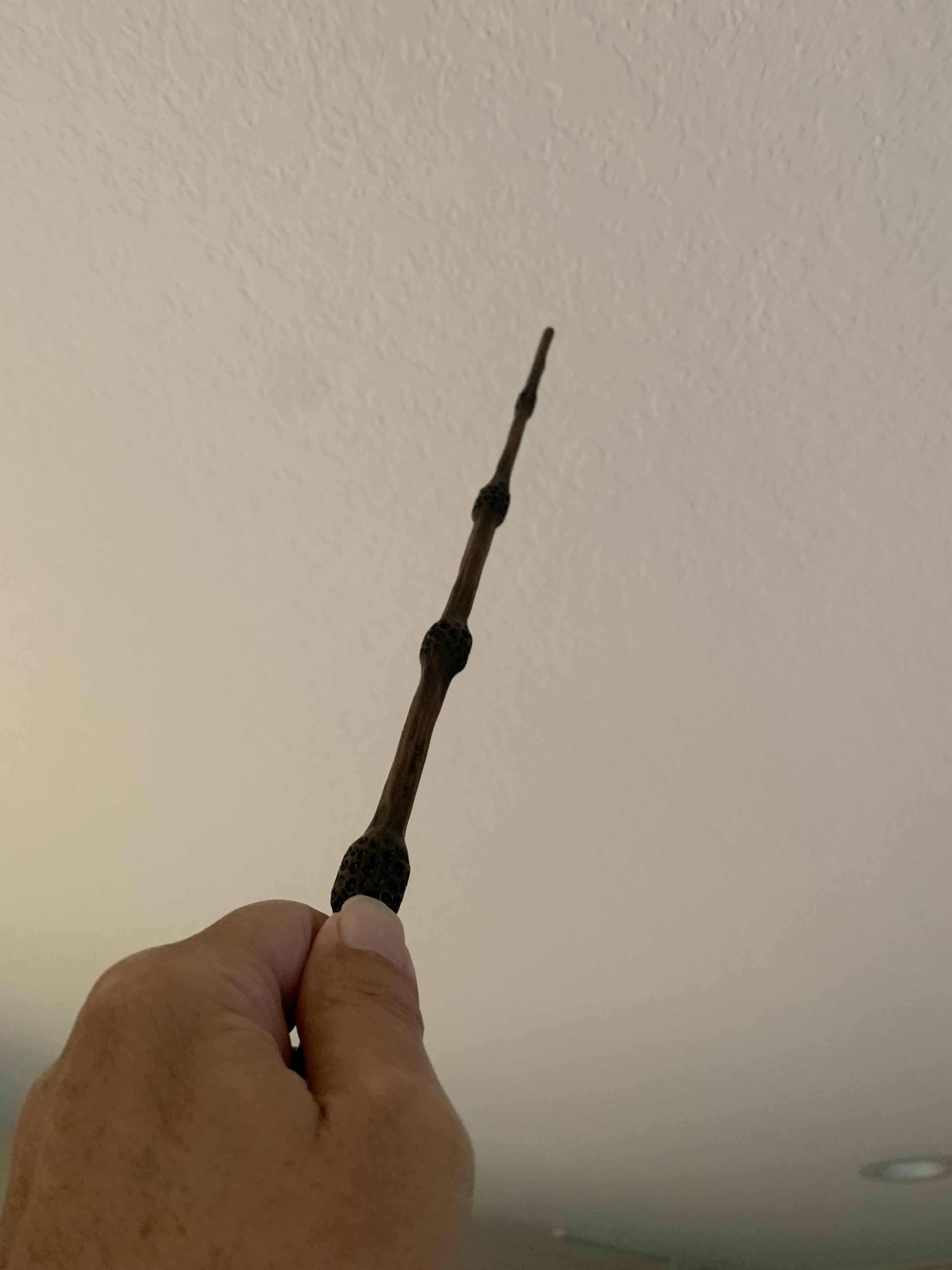
At the end of the Harry Potter movies, when the major source of evil, Voldemort, is vanquished and Harry himself has the most powerful wand, what do you suppose he does with it? Why?
What would you be willing to change in your own life if it would mean your great-grandchildren would likely have a much cleaner, safer, and more beautiful world than if you change nothing? Would you be willing to pay higher taxes? Change your habits? Travel less? Elect politicians who care about the environment?
Most scientists agree that climate change is real, exacerbated by human activity and that there will be disastrous consequences. But some people say it is a giant hoax. How can you tell which is correct? Why do you suppose some people might be motivated to say it’s a hoax even though it isn’t?
Large International Corporations have a lot of power in determining policies in America (and in most other countries). They rely on and benefit from our roads, ports, broadband, educated workforce, electricity, police, fire departments. Many pay zero taxes. What they do pay is lots and lots of campaign dollars to politicians. Do you think this might influence politicians to do what’s best for those large corporations rather than what’s best for America as a whole? If not, what do you think prevents that from happening?
If the majority of people in a state vote for a candidate but the people’s choice is overturned by a partisan state legislature, what do you think that would do to the quality and ethics of the candidates in office? How do you think the majority will react?
Who would benefit from a Civil War in America?
What do you think would happen to a baseball game in which one side consistently refused to abide by the umpires call?
What do you think would happen to a basketball game in which one side consistently refused to admit that the opposing team had scored?
How could a dictatorial head of state benefit by instituting policies that would actually increase the number of citizens who sickened and died from a deadly pandemic?
How do you decide when it is the right time to break the Elder Wand?
Many Paths sighed. “What do you mean by saying that it has all happened before, brother of mine?”
Tu-Swift glanced back at Cat Eyes. Surely, Cat Eyes would be able to explain better than he could. But he could see that her parents Tree Vines and Gathers Acorns smothered her with affection, so he resolved to try to explain. “Throughout time, people have been prosperous for a time and then ruined it through the actions of the few who wish to indulge their greed and lies. We all know the story of the Orange Man. But there are many such stories, apparently from many places. Lies and greed always end the same way — with misery for the many and eventually with misery for those few greedy as well. I recently read — well, Cat Eyes read me a story about another liar whom they called “The Wobbly Man” who went into a beautiful, peaceful village and tore apart the people, one from another. And, just before Trunk of Tree came — before he discovered a short cut to the Veritas on the Other Side of the Mountain, we were decoding a whole series of stories that were meant to caution people so that they wouldn’t fall for the lies of the greedy. But why are such stories necessary? Why can’t people seem to see what the greedy are up to? If the answer to that puzzle is in the books, we have not yet found it.”
Many Paths nodded. “I wish to know about these books and the wisdom in them. I need to hold council with people here. I need everyone’s wisdom to help me try to bring peace among the tribes. It seems that I may also gain good counsel from those who have gone before us. If, as you — and She Who Saves Many Lives — both seem to claim, this has all happened before, we can learn from these books what wisdom they have. Can you read me one of these stories?”
So, it came to pass that Tu-Swift read to Many Paths the story called “The Three Blind Mice.” As he read, many of the Veritas gathered round to listen.
The Story of the Three Blind Mice.
Once before our time, a field of goldenrod provided a lovely home for a very large and prosperous camp-land of field mice. The goldenrod attracted grasshoppers and the mice loved the tasty and nutritious grasshoppers. When, as happens to all, eventually each individual mouse died, and they then provided food for the roots of the goldenrod which grew ever taller and more attractive to the grasshoppers. All was well in the golden field.
As things became ever more prosperous for the mice, a thought occurred to two of the mice. Their names were Cheat and Lie.
Cheat said to Lie: “We have more than we used to have. And that feels good. So, we would feel even better if we had more than anyone else.”
Lie said to Cheat: “I suppose you’re right. But so what? Why would everyone agree to give us more?”
They darted their eyes at random for awhile, wriggling their whiskers and trying to think of an answer to that puzzle.
Presently, Lie said to Cheat, “We will lie to them! We will tell the that they are not happy. We will tell them that they are in danger! We will tell them that they cannot trust each other. They can only trust us. We will keep them safe!”
Cheat said to Lie: “That’s a wonderful idea!” Then, a mousy frown appeared between Cheat’s eyes and he said, “But why would they believe it? I mean look at us. We’re not by any means the fastest mice or the strongest. We don’t have the best eyesight. Why would they believe that we can protect them better than they themselves can?”
Lie said to Cheat: “We will recruit Chaos to our cause! He has a knack for disorder. He will make everything so confusing that everyone will want to believe that we’ll take care of everything for them.”
That very night, while all the other mice slept, Cheat and Lie crept over to the usual sleeping spot of Chaos who was not too happy about being awakened.
Lie and Cheat cautioned him to be quiet and the trio snuck off to a part of the field that all the other mice typically avoided. They explained their plot to Chaos who readily agreed to play his part. He loved to confuse other mice every chance he had.
Photo by u041eu043bu0435u0433 u042fu043au043eu0432u043bu0435u0432 on Pexels.com
The three were startled by the sudden appearance of a huge pair of eyes atop a gigantic maw of jaws. The Fox’s voice however, was surprisingly warm and smooth. “No need to run. I’m not interested in hurting you three. I overheard your plans. Very smart. Very smart. Still, I think I could improve upon your plans quite a bit. With my help, you three clever mice will get what you deserve! You deserve more than an equal share. Much more. And, I will help you.”
The three mice were feeling both reassured and proud. After all, they had been called “smart” by a fox!
Cheat asked, “How can you help? And why would you, if you don’t mind my asking?”
Fox nodded sagely. “You ask two excellent questions. You are indeed smart mice. First, let me just ask you a question so that I may answer your question in a way more tailored to your needs. Aren’t there among all you mice some that annoy you greatly or that you find unattractive?”
Cheat answered first, “I really hate those mice that have to make up and follow rules.”
Lie said, “And I hate the ones that always insist on the truth.”
Chaos answered, “I hate folks with pinkish toes. They just disgust me. For one thing, I’m highly attracted to them. But I don’t want to be. So, that makes me uncomfortable.”
Fox nodded. “I can see exactly why you find those sorts annoying. I do too! You say you want to make everyone afraid even though things are going well. Now, imagine how much more fearful everyone will be when a fox shows up and eats some of the mice. Not just any mice of course, but just the icky ones. Mice with pink toes or who insist on the truth or follow rules. Of course, we will first have to make sure that lots of your fellow mice also hate those with pink toes and so forth. And, now, as you clever mice surely see, I have answered your original questions. Firstly, I can help by making your fellow mice so scared, they will literally come to believe anything you say and won’t mind giving some of their grasshoppers to you. Secondly, the why is simple. I get to eat the hateful ones among you. And that will make life better for you as well — no more hateful ones around.”
And, so, their deal was settled and, sure enough, thanks to helpful suggestions from Fox, over time, many of the mice came to hate those who played by the rules and came to hate mice with pink toes, and came to hate mice who insisted on the truth.
Fox was happy to have his mice “delivered to him” ready to devour. He no longer had to chase after them.
After some months, however, the supply of the hateful mice began to dwindle. Fox was no longer satisfied. He made it quite clear that he needed to speak to Chaos, Lie, and Cheat who had by now grown quite fat with the extra provisions they took from the other mice.
Fox began: “Chaos, Lie, and Cheat, you have done quite well. Honestly, I’m quite amazed that things have gone as well as they have for all of us. You’re obviously all doing well. Let’s keep things going for both our sakes. You’ve run out of hateful mice, but that’s not a problem. We will simply need to expand the circle of hateful mice a little bit. No big deal. I can help you figure out how. Maybe mice with scraggly fur or mice with crooked teeth or mice that are unusually small. It’s totally up to you. I am really just a pawn in your plans.”
And, for a long while things went along much the same. Fox would get his fill of mice without having to chase them. The three mice — Chaos, Lie, and Cheat grew fatter and fatter. Some of the mice were rather shocked that Chaos, Lie, and Cheat were fomenting hate against certain mice and then ordering them to be rounded up to end up in the stomach of Fox. Some of the mice were rather glad it was happening. They were eager to help. They convinced themselves that they had always hated such and such a kind of mouse. Most of the mice were just glad that they weren’t the ones sacrificed to the Fox. After all, this was a world full of woe, just as Chaos, Lie, and Cheat kept saying.
At last, there came the day when Chaos, Lie, and Cheat had truly sad news to share with Fox. Cheat, Lie, and Chaos drew straws to see who would break the news to Fox. Lie lost and so he began: “I’m so sorry to break the bad news to you, Fox, but we seem to have run out of mice! We drew our circle tighter and tighter just as you suggested but you’ve now eaten up all of our hateful kin. But the good news is that you have been quite well fed for quite awhile and have plenty of fat to tide you over for a few months.”
Now, Cheat chimed in: “I suppose you’ll be moving on to other fields where there are still many mice?”
Lie added, “It has been a pleasure doing business with you, Fox.”
Fox smiled in a foxy sort of way: “Indeed it has. And, I will be moving on to other fields as you suggest. But, our business is not yet over, and I won’t be leaving this field today. First, to show my gratitude to three such clever mice, I have gifts for you. For each of you, I have a tooth of solid gold. Here, walk right in and take your trophy tooth.”
Fox opened his mouth wide. In walked the three clever mice to claim their prize.
And, never walked out.
When Tu-Swift finished, everyone sat silently for no-one wanted to be the first to speak. Each person who had heard felt a heaviness inside. Each recognized from their own experience how easy it is for greed to lead to blindness; for those who have more, to think that they will be cleverer than all the overly greedy people who went before. It had been so for the Orange Man. It had been so for NUT-PI. It had been so for ALT-R and POND MUD. Each wondered whether the Veritas were doomed to suffer the same dismal and inevitable fate. Or, whether this time, perhaps Many Paths could once again help them find a ray of hope.
Sally waited a moment and repeated her call in a louder voice which she hoped did not sound desperate. She didn’t want to sound desperate. After all, she wasn’t desperate. At least, that’s what she told herself as she tried to control her breathing.
“JOE!? You’re not funny! Where are you? Where the hell are you?”
Silence. She wondered why her voice sounded so hoarse.
“This game is stupid, Joe. I’m done. I’m leaving.” That was when Sally noticed the smell of onions. “What the hell? Are you cooking? What is that? Steak with … Onions? Garlic?”
Sally closed her eyes and concentrated on slowing her breathing. That will avoid panic, she told herself. It’s not like Joe to play these games.
She succeeded, at least a little. She opened her eyes and looked about. The light, if it could even be called that, only revealed shifting shadows — various shades of dark gray. I should never have agreed to come here.
Here?
Now, Sally really did begin to panic in earnest. She muttered aloud, “Where is here anyway? Where the hell am I? How can I have forgotten?”
Unable to see more than a few feet…inches?…in front of her, she was reluctant to take a big step so she decided to sidle along slowly till she reached some light. But she couldn’t sidle. She couldn’t move her legs at all, she discovered.
She shook her head in order to clear it. That turned out to be a big mistake. Her head exploded in pain. A field of black stars screamed into her ears and eyeballs.
Then, a clear image came to her.
Driving. They had been driving home from the party, late at night. She had been driving. Joe had been beside her, sound asleep on the passenger side, his plush seat fully reclined. He had been snoring. Loudly.
She had heard that familiar chirp, the high pitched screech cutting through his buzzing snore. She had glanced down at her cellphone. Celine. Sally had wondered what she wanted. Sally had glanced over at Joe and noted how blue he looked in the light of the oncoming headlights. She had begun to text her response, making it short just to be safe.
Apparently, not safe enough, she thought.
The pungent odor brought her back to the present. “Joe! What the hell are you cooking? It’s too … are you cooking in the car, for God’s sake? What’s wrong with you? What the hell, Joe? Why won’t you answer me! Answer me!”
“Do you mind if I turn on the A/C? I’m too damned hot!”
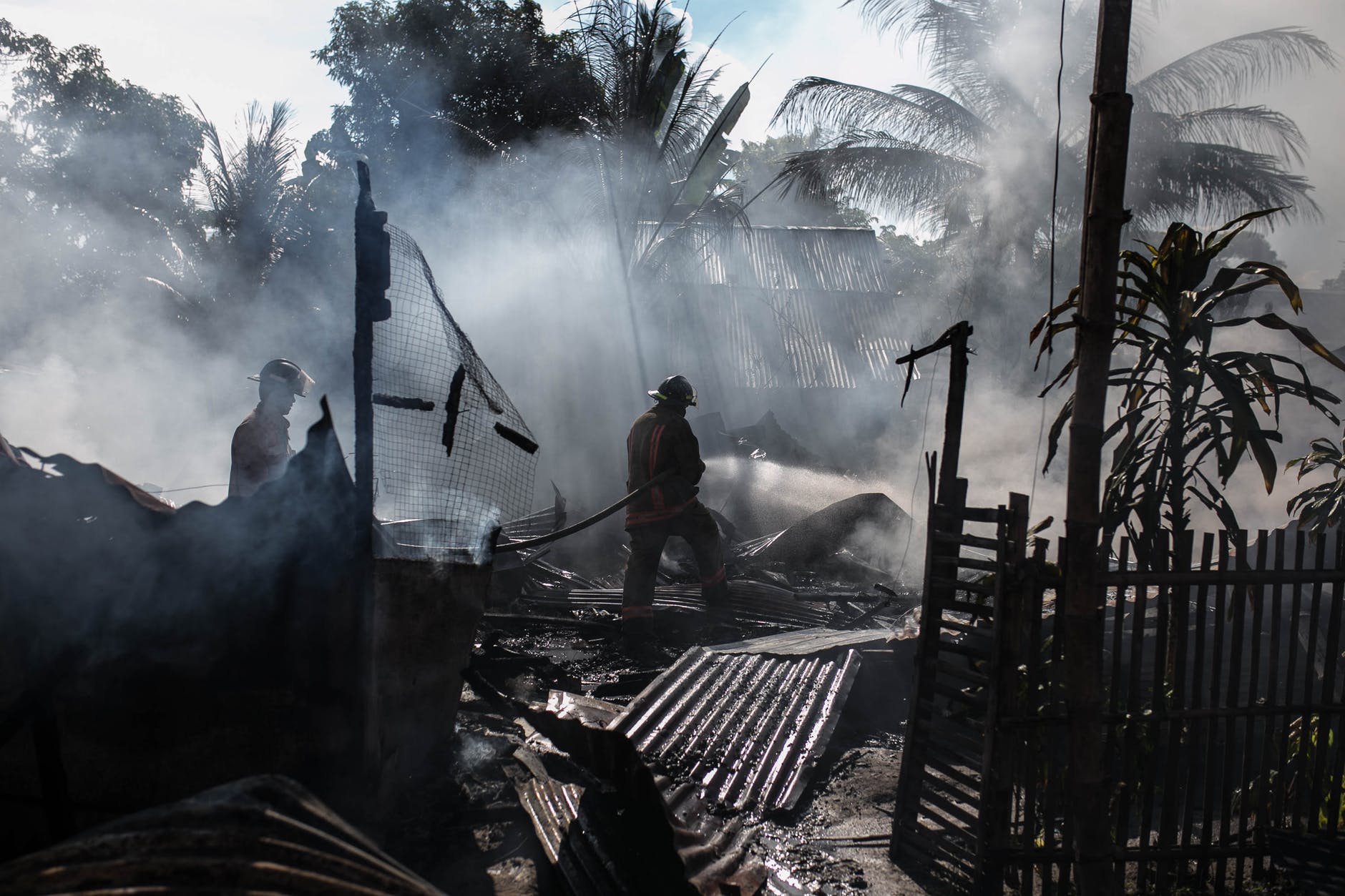
Sally had always been excellent at puzzles. This particular one was taking longer than usual. At last though, the pieces slammed together. She knew what the strange odor was. She knew why she couldn’t see properly. She knew why she couldn’t move her limbs. She knew why she was hot. Everything made perfect sense.
Everything except for the fact that she had only glanced down at the text for a few seconds.
Her last thought: “I shouldn’t have to burn for it!”