The Winning Weekend Warrior focuses on the mental game for all sports using examples from tennis, golf, baseball, and other sports. It covers self-talk, imagery, mental practice, strategy, tactics, & sportsmanship. http://tinyurl.com/ng2heq3
Turing’s Nightmares explores the implications and ethics of Artificial Intelligence through fictional short stories. http://tinyurl.com/hz6dg2d
Fit in Bits shows many ways to put more fun, variety, & exercise into daily chores and habits to help with strength, flexibility, fitness, and balance. http://tinyurl.com/h6c7fce
Tales from an American Childhood recounts early experiences mainly in the American Midwest in the 1950’s and relates them to contemporary issues and events. https://tinyurl.com/y9ajvz9j
Dream Planet. Where do you run when the whole world is crumbling under the weight of human folly? When the lethal Conformers invade 22nd century Pittsburgh, escape becomes the top priority for lovebird scavengers Alex and Eva.
We’ll get to humans, but let’s start with the grains of sand and cans of beans.
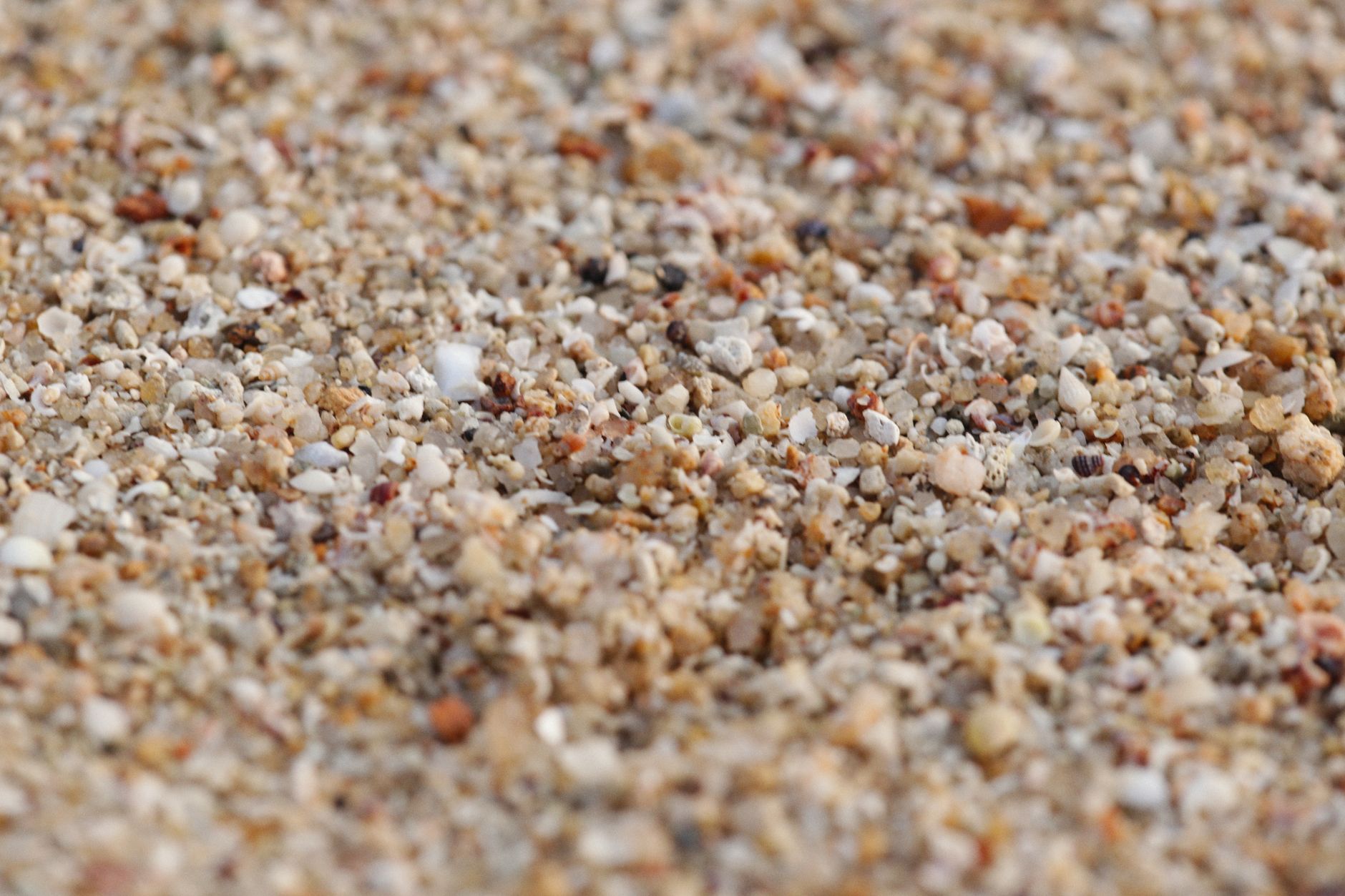
Grains of sand are not the same. Not at all other than being found in a beach or sandbox and being smallish in size. Their shape and composition differ. Now, you might think, “OK, but for all practical purposes they are the same.”
Soon after I joined IBM Research, I flew with my boss into an IBM chip fabrication factory in the Northeaster US. We were studying query languages and interviewed some people in quality control who used query languages as a serious part of their job. They recounted a time when the percentage of error free chips fell drastically. For a time, no-one could figure it out. It turned out that the silicon supplier had shifted sands (so to speak) and that had translated into slightly different silicon properties.
“Oh, they’re all the same!”
Now, let’s look into beans because it so happens that I made a bean salad tonight that I hadn’t made for a year or two. I pretty much remembered the recipe, but to make sure, I took down the cookbook and propped it open as well. I made the bean salad according to recipe and the bean salad was good. But usually, in the past, it had been great, not just good. The difference was mainly, I decided, in the quality of the beans themselves. Same brand. Always the same brand. So, they’re all the same, right? Possibly.
The following situation is happening all the time. Imagine popcorn hitting its climax. Here’s the history in outline.
A person or small group works hard and makes a success. They have pride in their product (say, canned beans). But then, they decide that MEGACORP wants to buy their company for a phenomenal amount of money. Yay! Win/Win! Congratulations all around. And, now their wonderful product can continue into the mainstream and more people than ever can taste the pleasure of that high quality can of beans.
They’re all the same.
Maybe. But maybe the true motive of MEGACORP is to poison a few people. They’re being paid by the Big Bad Beef Business to make people afraid to get their protein from beans and instead make people go for the safer alternative: Meat! Here’s another possibility. They don’t give a can of beans about your cans of beans. They want the guy who knows how to make that great lining so they can use his expertise for their much more lucrative line of Cheese Naughts. But the most likely case is the mundane one. They “cash in” on the brand name you’ve built. They buy the business and then use much cheaper beans and the pass along the savings to the consumer through lower prices and higher wages for their workers.
Oh, no, no. Never mind. That’s on a different planet. This is planet Earth. That’s the one where MEGACORP keeps every frigging penny of savings for C-Sweet salaries and shareholder confidence. The beans bear the same label in every way. But inside, they are different. Is MEGACORP required to inform their customers that they lowering quality? Of course not.
“Oh, they’re all the same!”
But they’re not all the same. Not the grains of sand; not the cans of beans; not the entrepreneurs, not the lab rats I encountered at Oberlin.
My college girlfriend attended Oberlin and I visited many times. One time she asked me to help with a psych experiment. Being a psych major myself, I was eager to oblige.
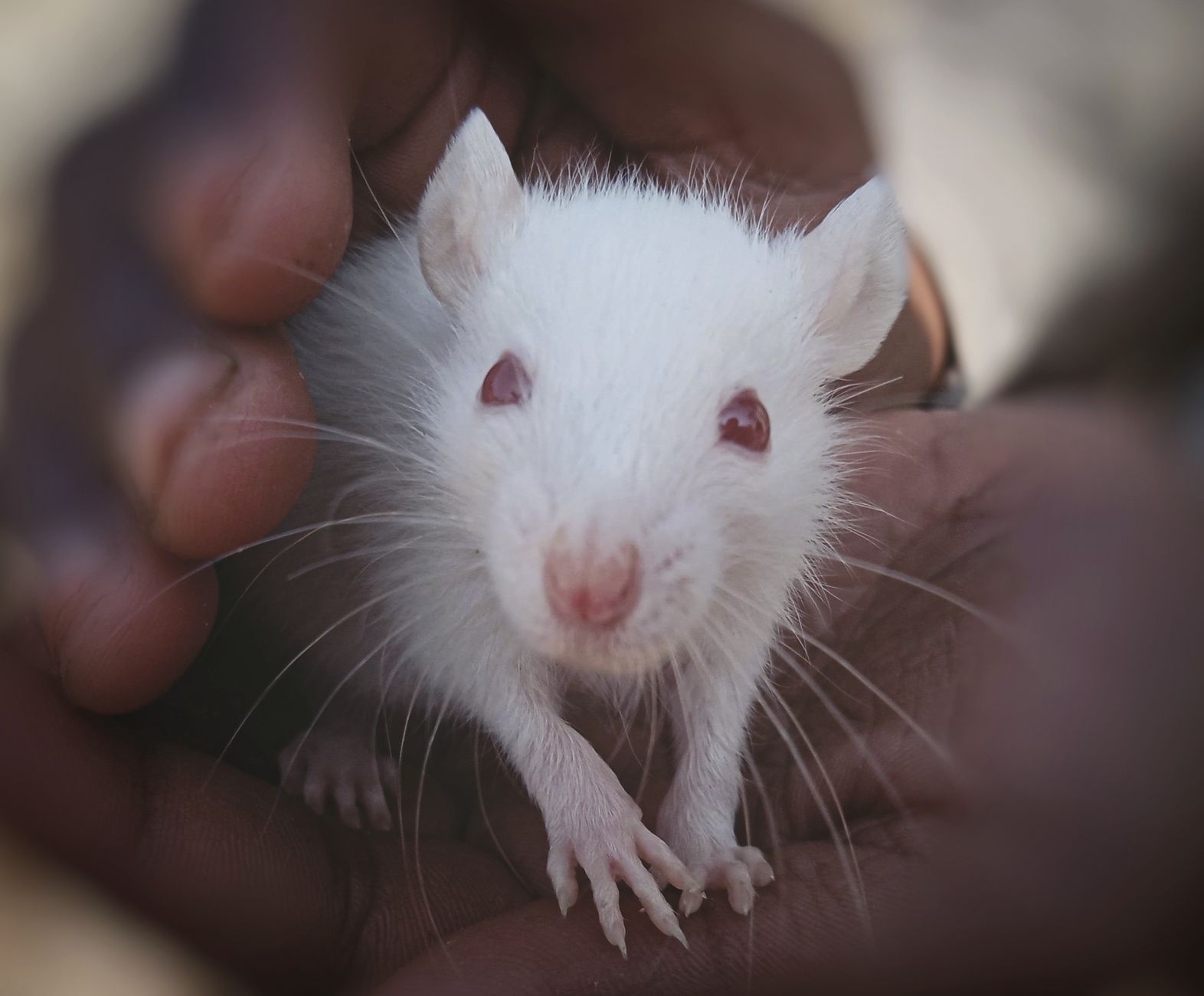
I suppose some people might be freaked out at the idea of grabbing a rat to put it in a maze, but it’s easy to avoid their razor sharp teeth. Oh, and BTW, lab rats don’t look like sewer rats. The lab rats are smaller, cleaner, and far more narrowly educated than sewer rats.
The experiment in question looked at the impact of stress on performance. Typically, stress causes an increase in performance, but only up to a moderate level. Beyond that, more stress generally reduces performance. We controlled stress by holding the rat under the water for a few seconds before having it swim a U-shaped maze. We put it in the maze on the left and then shut the door. Once the rat swam down, turned right and then turned right again it could swim to an air-hole on the other “tine” of the “U”.
Everything went fine for the first five rats. Not surprising. After all, they’re all the same. They are bred to be the same. For many generations. And, for the most part, the biters and the fighters were probably less likely to be chosen to promulgate the sub-species. Since birth, these mice have been mostly subjected to the same stimuli and the same diet as their lab-mates.
And, then there was Rat P-4547 (I’ve changed the number to protect the rat’s privacy). As I said, these lab rats were easy to pick up. You picked them up by grasping them from above and they just accepted the fact that they been chosen. Who knows? Maybe they had been bred to feel pride in having been chosen for an experiment.
In any case, Rat P-4547 certainly hadn’t read the manual on appropriate rat behavior. He immediately grasped the cage bars with everyone one of his teeny fingers and toes. Even more remarkably, he screamed. Somehow, he seems to have gotten it into his head that the experiment he was about to engage in was a kind of Putin vivisection game.
I eventually wrestled Rat P-4547 into the starting gate. There we were supposed to hold him underwater before allowing him to traverse the simple U-shaped maze. A quick glance at the sheet showed that Rat P=4547 was destined to be in the “High Stress” group. Of course he was.
I did it. I held him under the prescribed time and let him go. It was taking too long. At last, we saw him swimming furiously into the end zone, his oasis of oxygen, his Mount Ararat, and then…did he pop his little head up gasping for air?
He did not. He executed an amazingly coordinated lateral flip turn and swam the wrong way up toward the now closed beginning of the maze.
I did not want the rat to die, but how could we save him? He swam all the way back to the starting gate —nowhere else to go so we went to open it, discussed whether we should and then heard him make another flip turn before we could open the top. Now, we knew he had to drown. But no! His crazy little head finally ended up where it was supposed to.
I congratulated him on his grit, toweled him off, and settled him back into his cage. Of course, Rat P-4547 is long gone. An asterisk on a undergraduate term paper. Probably have a hard time finding it even with the help of an Artificial Influencer.
What? You thought the expression was “Artificial Intelligence”? That’s the term they use but that’s not the goal. The goal is to have Artificial Influencers disguised as helpful Artificial Intelligences.
Returning to the idea that they’re all the same, the truth of the matter is that any two things share some properties and any two things also show some differences. The idea of grouping things together for some purposes does make some sense. When you go to get firewood, for instance, you mostly want to focus on a reasonable size and dry wood. If you went to look for something to carve your attention would focus on the beauty and workability of the wood. If you went to get a cudgel, you’d be looking for a thick, sturdy piece.
Think how absurd it would be for someone who likes to carve chotskies telling you how to pick firewood based on their criteria for choosing carving material.
Good Shape. Positive Space. These seem to be highly related concepts. Most of the pictures I used as illustrations of Positive Space could equally well illustrate Good Shape. A Positive Space is often composed of multiple good shapes arranged in a “balanced way.”
In order to illustrate “Good Shape,” I decided to take some pictures to illustrate “Bad Shape.” Since I have surrounded myself mainly with nature or with artifacts that were intentionally designed to be aesthetically pleasing, it turned out to be more difficult than I imagined at first. The other issue is that when I take photographs, I (like most people) “frame” the picture so that “Good Shape” is clear. I began to intentionally brake that habitual way of framing with pictures of flowers that overlap. The natural beauty of flowers is so rich that, to me, even a quasi-random framing still results in a beautiful picture.
This turns out not to be the case with artifacts however.
Although some of the elements of this seem to have “Good Shape,” the overall composition lacks a coherent center. It seems to me to be an artificial “kludge” of colors, textures, and shapes and there is no overall “Good Shape.”
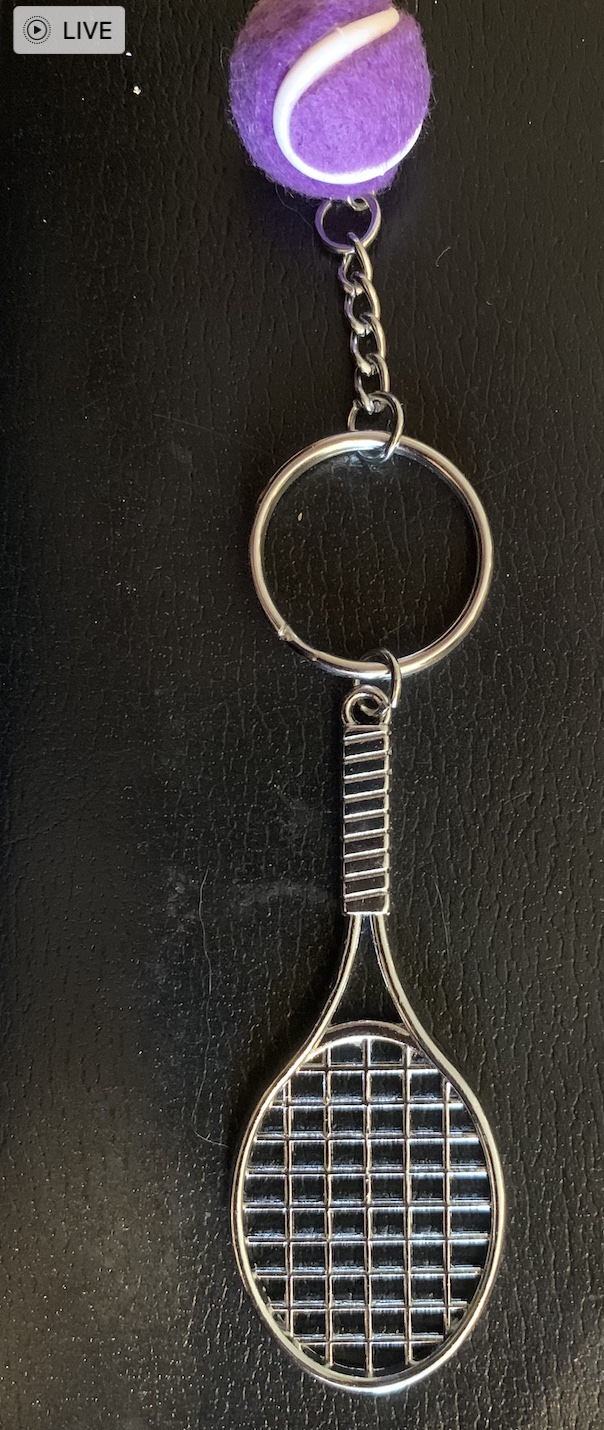
By re-arranging the elements into this form (above), to me, it seems to get closer to “Good Shape” but the purple “tennis ball” seems ill-proportioned and out of place. In “real tennis” there is a physical reason for the ball to be fuzzy but here, the fuzziness of the ball seems added on and arbitrary.
Here too (above), the overall composition lacks “Good Shape.” The large semi-random dark blob in the middle has no real “Center.” The elements around the edges do not cohere or reflect off of each other. None of the elements around the edges are complete enough to have “Good Shape” except possibly the links of the small chain.
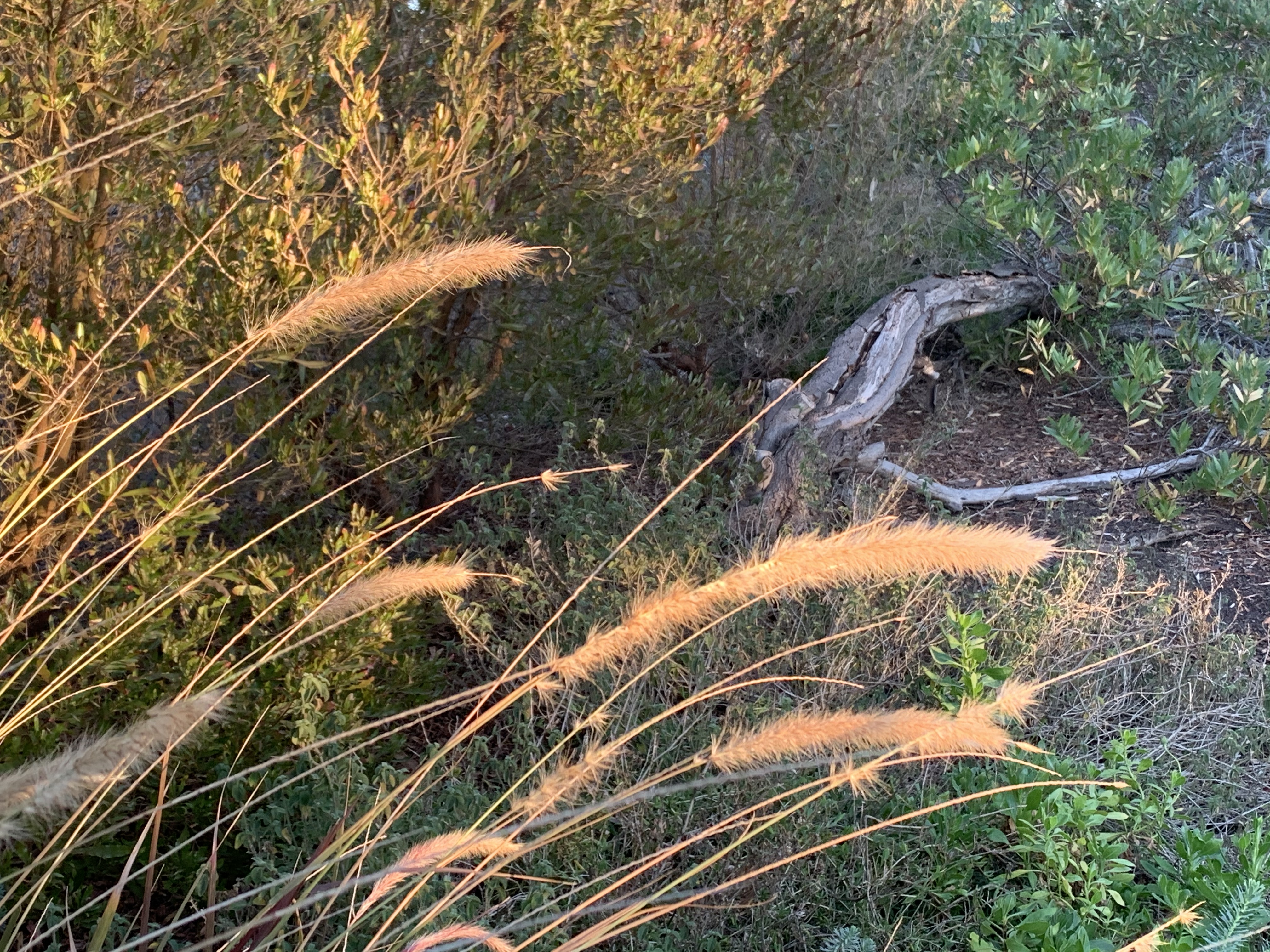
Here is another example of quasi-random elements brought together into a single picture. Though to me, both the wood and the stone are in and of themselves beautiful, there is nothing about the composition that integrates into a whole. There is no center, no echoes, no alternating repetition, no levels of scale, and despite the nice texture of the stone and wood, the overall effect, to me, is lacking in “Natural Order” and in beauty.
By way of contrast, the flower here seems to have a good overall shape reinforced by a Strong Center, Alternating Repetition, and each of the petals themselves has Good Shape. Around the flower, to me, is a “Positive Space.” Note that one of the petals seems slightly out of place. To me, however, this does not spoil the “Good Shape.”
The same can be said of these flowers.
It isn’t necessary to have overall “simplicity” in order to have “Good Shape.” These flowers are not “simple” in shape, but they still have “Good Shape.”
The bird on a branch shown above seems to me to have “Good Shape” even though it is (in outline) lacking symmetry. Though lacking symmetry in profile, the shape strikes me as “balanced.” I don’t perceive the bird as having to exert a lot of energy to keep from “falling off the branch.” The bird’s shape, like the shapes of most animals and plants is the result of 4.5 billion years of evolutionary history.
Many people view some creatures as “enemies” and therefore “creepy” or “yucky” or perhaps even as dangerous. If you can set that aside and simply look though, I think you can see that “Good Shape” characterizes all sorts of animals (as well as plants).
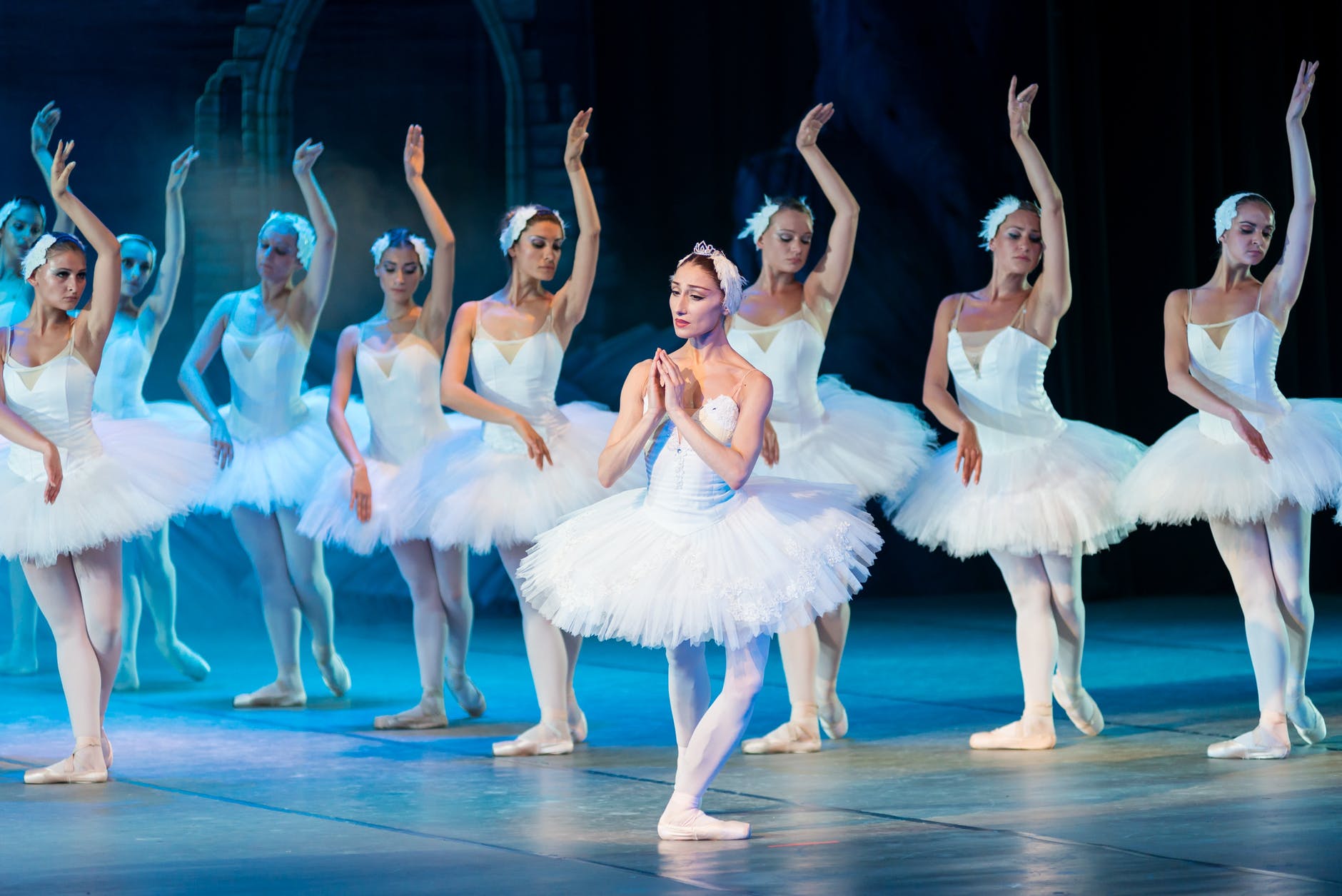
At a more abstract level, it even seems that natural animal behavior often shows beauty. That also seems characteristic of skilled human behavior. The Olympics show plenty of examples. It is hard to imagine an “ugly” baseball swing resulting in a home run. The runners, jumpers, throwers, gymnasts, tennis players, and so on produce “Good Shape” in three spatial dimensions and one temporal dimension.
I play tennis several times a week. I’m not averse to winning a point even if the ball hits my frame, skids off to the net cord and drops over for a winner. But — I never feel as pleased by such outsized luck as when I hit a good shot that results from proper choice, preparation, and execution (and a history of practice and reflection). I never think of a lucky mis-hit as “beautiful.”
The concept of “Good Shape” even applies to more complex human organizations and endeavors. Racism, for instance, to me is truly ugly. It is not based on truth, but on a kludge of lies masquerading as truth. White Supremacy for instance, basically says, “We’re white! That makes us superior! In fact, we’re so superior, that we insist every aspect of our society be tilted so we can be guaranteed a win!”
Huh?
Bad logic is never beautiful.
The “Good Shape” exhibited by most plants and animals reflects both a long evolutionary balance of forces (phylogeny) and the development of a particular organism (ontogeny). When biology goes awry, as in cancer, the result is not beauty. The “logic” of cancer is that billions of years of evolution that allows our bodies to work harmoniously is put aside for short-sighted egotism. A random cell says, in effect, “I’m no longer going to do my part for the body as a whole. Instead, I’m going to grab all I can for myself and grow in an unrestricted way!”
Such a cell, by making that decision, signs its own death warrant. Either the body destroys the cancer and therefore the cancer dies — or, the cancer prevails and in that case it destroys the life of the organism it was supposed to be a part of — and then it dies anyway! It’s an “ugly” decision both because it is disproportionate and because it is illogical. It aims to be self-serving, but it is not even self-serving. It guarantees its own death and kills more life along the way.
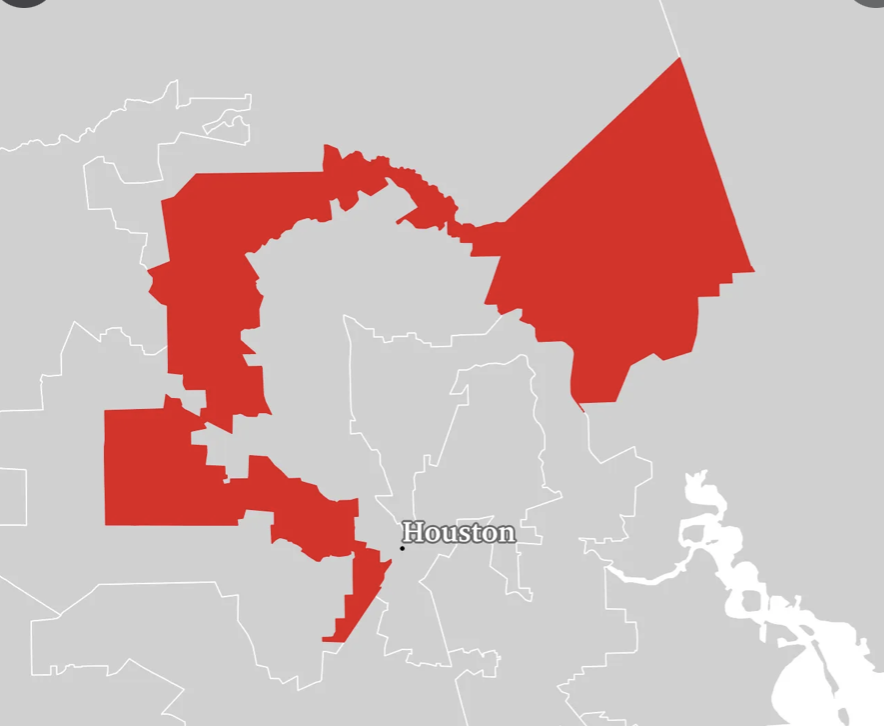
It’s the same, to me, with any dysfunctional human organization. If democracy is perverted by some people demanding that decisions be made so that they can have their way regardless of how it impacts the overall tree of life and the overall health of a city, state, or nation, it lacks “Good Shape” and instead becomes a distorted kludge lacking symmetry, lacking balance, lacking life. It is no accident that “Gerrymandered” districts do not have “Good Shape.”
In extreme cases, not surprisingly, dictatorships have resulted in a war on truth, beauty, and life itself. It’s no “accident” that Hitler, Stalin, and Mao were each responsible for millions of human deaths. Their activities also show utter disregard for the beauty of the natural environment and the plants and animals of the planet.
When it comes to User Experience, the most obvious way to apply “Good Shape” is to the visual elements of the interface — icons, windows, menus, tool bars etc. However, I think it also applies to the design process. Are the needs of all stakeholders taken into consideration?
Do the various disciplines involved in design respect each other? Do people tell the truth and show trust? Does the company treat its users with respect and tell the truth in its various communications?
If a company provides “free games” or “free services” that are purportedly for entertainment or education but the real purpose is to gather data to sell to advertisers or foreign powers trying to use the data to destroy democracy, it would seem to me that business model itself — the raison d’êtrefor the entire project is an “ugly shape” regardless of how pretty the icons are.
What do you think? Do the concepts of natural beauty apply to the design of organizations and even governments?
(This is the fourth post in a series of 15 which aim to examine the fifteen properties of natural order postulated by Christopher Alexander. I wonder whether the property of “Alternating Repetition” could be more frequently incorporated into User Experience and what the pros and cons might be).
4. Alternating Repetition
In nature, whether we look at clouds, waves, mountain ranges, forests, plants, the leaves of plants, or almost any animal, we see alternating repetition. Such natural repetition is almost never a precise and complete replication. Just as every reproductive act of life introduces an element of recombination as well as the possibility of mutation, so too the repetitions we see in life are not mathematical. We indeed see patterns repeated in a line or in a circle, but the instances in living things show variation. Similarly, human artifacts made with the hands; e.g., weaving or poetry or rock walls or tennis strokes show repetition but with slight and subtle variations.
If you look at modern industrial society, you see many examples of exact repetition. It’s true that if you looked at 10,000 examples of the same brand and model pen, or notebook, or scissors, or streak knives under a microscope, you could likely find small differences. To the naked eye, however, they would appear identical. Seeing 10,000 pebbles, leaves, or waves you would always see slight to moderate differences. To me, it makes a difference in terms of beauty. Handmade items and human actions naturally show more variation than things produced by machines.
The various “elements” of a User Interface generally have the feel of something made by machine. The size of all the application icons on the tool bar, for instance, are the same. They are all almost the same exact shape and size. On my tool bar the icons for Finder, Launchpad, Mail, Safari, Chrome, FaceTime, Messenger, Maps, Photos, Contacts, Calendar, Reminders, Notes, System Preferences, Keynote, Pages, Preview, and News are the same. However, the Kindle icon is slightly larger and more square. The Zoom icon is very slightly rounder. [NOTE: This is no longer true in 2026]. The icon for Facebook is still circular, however. In other words, there is some slight variation, but mainly the icons are the same in outline, but different inside. But the set of icons on the tool bar has no sense of “harmony” whatsoever–at least, not to me.
Note that the tool bar is both abnormally homogeneous in terms of positioning and size but completely disconnected in terms of the images which differ in a random disharmony seldom exhibited in nature.
Instead, each icon seems to scream out its individuality without regard to its neighbors. (Which reminds me of things like not masking, getting vaccinations, or telling the truth, for instance, because you don’t feel like it so who cares what the consequences to others are). Anyway, the layout of the toolbar, to me, it’s reminiscent of driving down the highway and seeing a sequence of billboards, each advertising some random product or service in no particular order. Often, each billboard is the same size but they are independent of each other. The one exception I can think of were the “Burma Shave” signs along the highway. Each sign was a small rectangle with several words on it. About a quarter mile down the road, another sign would appear. They were meant to be seen in a specific order and together, they made a kind of “story” which usually rhymed. Typically, the signs touted the joys of the product — “Burma Shave” — or, provided public service announcements about safe driving.
In the early days of computing, putting in “variation” might have been insanely wasteful of space and processing time. This is no longer true. Yet, the “look and feel” of User Interfaces remains, for the most part, quite “mechanical” or “mechanistic” rather than “natural.” Sometimes modern computer games include naturalistic looking variations in how repeated plants, rocks, clouds, etc. are represented. Look at the palm trees and you will see variations among the trees that are reminiscent of the real palm trees I see every day in the San Diego area. In addition, each tree contains a number of fronds that repeat a generic theme; yet, each front is somewhat different. The fronds themselves each contain alternating repetition, just as do real palm tree fronds.
We might consider whether it would make sense to put more natural looking alternating repetition into the more utilitarian aspects of user experience. For example, could it be both more beautiful and more useful to allow more variation in the way files are represented visually? Will Hill, James Hollan, Dave Wrobleski, & Tim McCandless suggested (in a CHI ’92 paper) that physical documents such as manuals naturally show wear in places where they are most used. They suggested that the visual representation of computer documents might be altered slightly to show which documents have been used or edited more and also that such cues within a document might also be useful.
Hill, William; Hollan, James; Wrobleski, Dave; McCandless, Tim; “Edit Wear and Read Wear,” Human factors in computing systems: Striking a balance. Proceedings of the 9th annual conference. SIGCHI ’92 Proceedings (Monterey, CA), Addison-Wesley, 1992, pp. 3-9.
One of the few cookbooks I use with some regularity is entitled, Fat Free and Flavor Full. The recipe I’ve used many times is the black bean salad. If I open the physical book, it naturally falls open to that particular recipe. “Open Recent” I find a very useful features of the Pages application, but I don’t see a way to look at files based on overall frequency of use. It could be the case that there are some applications for which you would want specific files to be easily found depending on the season or the date. The authors of “Edit Wear and Read Wear” were mainly talking about the utility of encoding information about a file into its visual representation. There might well be aesthetic reasons to do so as well.
The wooden blinds shown below exhibit alternating repetition in several ways. First, there is the matter of perspective. Some variation almost always presents itself simply by virtue of the fact that I typically view the blinds at an angle and some are closer to me than others. This means that the size, and the retinal shape are slightly different. Second, there is variation caused by slight changes in the angle of the slats relative to vertical. Third, each slat is made of wood. The wood itself shows rings (or more commonly a planar projection of the concentric cylinders.
The wooden blinds, because they are illuminated from the outside by tree-filtered sunlight also show further variation; however I don’t think that is typically “alternating repetition.” Perhaps not coincidentally, although I find it a little interesting, I can’t say I find that source of variation to be beautiful to me. The other three all add to the aesthetics, at least to me.
Is it feasible to introduce alternating repetition with slight variation into User Interfaces? Would it be desirable? What negative side-effects might arise? Do you even agree with Christopher Alexander that Alternating Repetition is an aspect of natural beauty and beautiful design? One thing that occurs to me is that if some element of the UI is more variable in outline etc., it may mean that the actions upon that object must deal with that variability. If designed greenfield, that might not be too difficult. But if, for example, the code for dragging and dropping was written under a presumption of zero variability, that might be problematic. What do you think?
——————-
Discussion of Alternating Repetition with additional visual examples can be found here:
Because Christopher Alexander wrote a book, about the 15 properties, his examples are mainly visual. But alternating repetition as an element of beauty is also clearly present in music and in dance. There is a little of it, it seems to me, in culinary arts as well. I am also reminded of the smelling actions of my dog, Sadie. As she watches an animal without charging it, she waves her nose back and forth quite deliberately in a kind of “sampling” of the surrounding air. A bear will sometimes move sideways with alternating repetition to provide better depth perception of a far away target (like me!). But that’s a story for another time.
The Winning Weekend Warrior focuses on the mental game for all sports using examples from tennis, golf, baseball, and other sports. It covers self-talk, imagery, mental practice, strategy, tactics, & sportsmanship. http://tinyurl.com/ng2heq3
Turing’s Nightmares explores the implications and ethics of Artificial Intelligence through fictional short stories. http://tinyurl.com/hz6dg2d
Fit in Bits shows many ways to put more fun, variety, & exercise into daily chores and habits to help with strength, flexibility, fitness, and balance. http://tinyurl.com/h6c7fce
Tales from an American Childhood recounts early experiences mainly in the American Midwest in the 1950’s and relates them to contemporary issues and events. https://tinyurl.com/y9ajvz9j
Dream Planet. Where do you run when the whole world is crumbling under the weight of human folly? When the lethal Conformers invade 22nd century Pittsburgh, escape becomes the top priority for lovebird scavengers Alex and Eva.
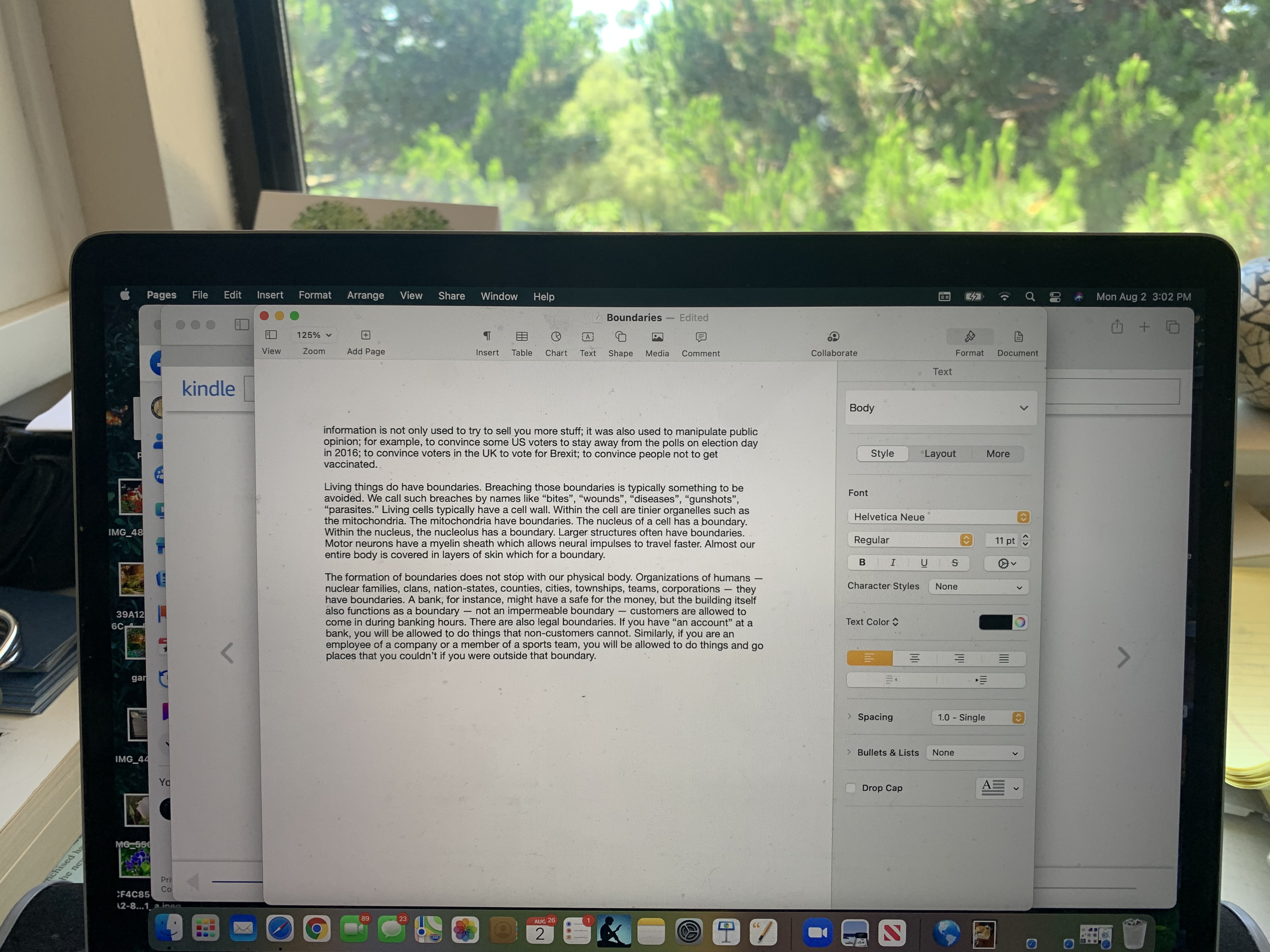
Here are a few thoughts about “Boundaries” and how they apply in User Experience.
I decided to gift a copy of of Volume One on The Nature of Order to my daughter earlier today. I logged on to Amazon and looked at my address book. I am aware that she moved fairly recently. So, I was scrolling through my earlier text conversations with her to see whether she had told me of her new address. I couldn’t find a text about her new address so I texted her to get the new address.
Suddenly, a popup window appeared from SIRI. It had her new address. I hadn’t said anything aloud. I thought of SIRI as a voice-activated service on my iPhone. It was disconcerting to have it “notice” my text message and then suggest an answer (which turned out to be correct).
Last week, after physical therapy, my therapist & I began to discuss the time for my next appointment. I pulled up the calendar application on my iPhone and went to a particular day and began to type in her name. After the first two characters were typed in, the “type-ahead” function suggested three possible “completions” the first of which was the time we had been orally discussing (which was not a common time nor the time of any of my recent appointments with her). It also filled in her complete name and the purpose of the appointment, but that was more understandable.
One sense of “Boundaries” in User Experience connects with a notion of “boundaries” that is much discussed in contemporary mental health. We are advised to “establish boundaries” with co-workers, family, friends, and strangers. We don’t necessarily want to share personal information with everyone or let everyone touch us in any way they choose to. If intimate details are shared in a recovery group or group therapy, it is generally agreed that such details will not be shared with others.
We sometimes extend the idea of informational boundaries to written materials as well. If, for instance, we keep a personal diary, we do not expect other people to “search for it” or to read it. In the short story, “Jennifer’s Invitation,” (link below) about my shy attempt as a third-grader to invite my girlfriend to my birthday party, I relied on my expectation that she would read a paper I “accidentally” dropped on the sidewalk. But she was so protective of my privacy that she wouldn’t even glance at my paper. I lost track of Jennifer, but I’m pretty sure she never became CEO of an IT company.
On the other hand, if we write and publish an autobiography, then we can expect that other people will feel justified in discussing the contents. To me, it would seem odd for an author to feel “violated” if people start talking about the contents of their autobiography (or their blog).
When it comes to modern interactions with computer software however, the boundaries are invisible — and sometimes non-existent. It can feel as though I write a private diary on paper; lock it up in a safe immediately; and then — without any sign that the safe has been broken into, I suddenly find details of my personal life revealed!
There appear to be boundaries between applications, and certainly between devices but these boundaries may be illusory. I find that troubling and confusing. I think the first application of “Boundaries” as a property of UX is that apparent boundaries should be real. There may be exceptions for exceptional circumstances; e.g., the police may get a search warrant to search your house if there is reasonable suspicion that you have committed a crime.
When a social media site analyzes your reactions, relationships, and word usage to determine what to try to sell you and what type of approach is most likely to succeed, that does not strike me as a reasonable response to an “emergency.” As most readers know by now, such information is not only used to try to sell you more stuff; it was also used to manipulate public opinion; for example, to convince some US voters to stay away from the polls on election day in 2016; to convince voters in the UK to vote for Brexit; to convince people not to get vaccinated.
Living things do have boundaries. Breaching those boundaries is typically something to be avoided. We call such breaches by names like “bites”, “wounds”, “diseases”, “gunshots”, “parasites.” Living cells typically have a cell wall. Within the cell are tinier organelles such as the mitochondria. The mitochondria have boundaries. The nucleus of a cell has a boundary. Within the nucleus, the nucleolus has a boundary. Larger structures often have boundaries. Motor neurons have a myelin sheath which allows neural impulses to travel faster. Almost our entire body is covered in layers of skin which serve for us a boundary.
The formation of boundaries does not stop with our physical body. Organizations of humans — nuclear families, clans, nation-states, counties, cities, townships, teams, corporations — they have boundaries. A bank, for instance, might have a safe for the money, but the building itself also functions as a boundary — not an impermeable boundary — customers are allowed to come in during banking hours. There are also legal boundaries. If you have “an account” at a bank, you will be allowed to do things that non-customers cannot. Similarly, if you are an employee of a company or a member of a sports team, you will be allowed to do things and go places that you couldn’t if you were outside that boundary.
All boundaries are semi-permeable. Boundaries change over time. A thorn tears your skin. Your boundary is broken. If you’re not careful, bacteria can get in and cause an infection. Your white blood cells destroy the invading bacteria. Your body heals. If the cut was bad enough, you may get a scar and the scar is now part of your “boundary.” It isn’t only at the level of the body that changes occur. Your social boundaries change too.
You get married. You get divorced. You are born. You join a team. You quit the team. You sell your house and other people buy it. Now, you are no longer allowed to come into the house without an invitation. Meanwhile, you buy another house. You have acquired new boundaries. Or, perhaps, you have no home. You are homeless and your boundaries are not so secure.
Most of our possessions have clearly defined boundaries. Your hammer is separate from your saw which is separate from your drill. They come from an earlier time and the “boundary” of such objects are determined by their shape. More recently, such tools (and nearly everything else!) comes packaged in bubble wrap which forms an additional boundary. This makes it harder for people to hide one under their clothes and walk out without paying. Such packaging has the added advantage that it will require time and energy on your part before you can actually start using the tool for its intended purpose. Not only that — such packaging helps pollute our world beyond the pollution required by “old style” tools.
Once you have separated your new tool purchase from its packaging, if you have any energy left, you can saw a board, or drill a hole, or hammer a nail. But you do not expect (not yet, at least), the saw to “communicate” behind the scenes with your drill. Or to communicate with you. You’d be surprised if it piped up and said, “Gee, Gene, you just sawed a board. Now, you have taken up the drill. Would you like suggestions on how to build a dog house?” (That’s what Clippy would do).
Clippy tried to be helpful. But it didn’t really have enough information about my tasks, goals, and context to actually be helpful. But today’s behind-the-scenes information sharing with dark forces is not trying to be helpful. It’s trying to get you to change your behavior for someone else’s benefit — and you don’t even know who those someones are.
Notice that if you buy a house (which typically comes with doors and keys), you can lock the house and the default is that it keeps everyone else out — except those you’ve given a key to or those who have rung your doorbell or otherwise asked for permission to come in. Typically, if a rare visitor comes to your house, you make arrangements for a time and a place. The piano tuner comes to tune your piano. You might let them use your bathroom or even offer them something to drink. But you don’t expect the piano tuner to redecorate your study or to spend the night uninvited.
That’s kind of what does happen in the electronic world though. In many cases, you cannot visit a website or use an application unless you give permission for the “guest” to rifle through the choices you make. Just to be clear, these “choices” are not only explicit choices; your “choices” can include how long you linger over a particular message or video clip. In many cases, you have not just given a key to a specific vendor, application, or website — in many cases, you have also given them rights, essentially, to make as many copies of your front door key as they care to make and hand them out to whomever they like.
These are missing boundaries, not so much in the user interface design, but in the socio-technical context in which we use our technology.
In the physical world in which we evolved, invasion of privacy typically involved symmetry. If I can see your eyes, you can see mine. Conversely, if I can’t see anyone, chances are that they can’t see me. Of course, this isn’t literally true. A tiger’s camouflaging stripes may mean that they can see the gazelles even though the gazelles cannot see them. The astounding eyesight of the eagle allows them to see a mouse on the ground and start their deadly dive before the mouse can see the eagle.
In the electronic world, it isn’t genetically coded asymmetries of information that allows other people to invade your boundaries — in many cases without your permission or even knowledge. It is an asymmetry that comes from money and time. You don’t have anything like the fortune that rich companies have. They can hire experts at subverting your boundaries. They can hire an entirely different set of experts to convince you that it’s all okay. They can afford to hire still other experts to defend themselves in a court of law should you seek redress for any particularly unethical behavior. They can afford to (and do) hire politicians as well in order to make laws to protect their unfettered access to your data. You typically cannot afford to hire politicians to protect your right to privacy.
You probably don’t have 10,000 to 100,000 people working for you. Companies not only have the money to spy on you. They also have to time to collect and analyze your behavior & make sense of it. You don’t. Perhaps, every once in a while, you take the time to wade through a “privacy policy.” In most cases, since experts were hired to make the text as incomprehensible as possible, you likely didn’t see much value in reading the document.
The Nature of Order is about aesthetics, not ethics. And, this post was meant to be about aesthetics, not ethics.
Life includes differences in sensory capability. And life includes camouflage. Generally, however, when you get to the end a cliff and step off, you have a pretty good idea what’s going to happen. The boundary is visible to you, to a bison, to a mouse, to a lemming, to an eagle.
When we walk through the woods in northeastern USA where I lived for many years, we run the risk of being attacked by a deer tick. The dear tick makes a hole in you and starts sucking your blood (oh, while they’re at it, they may inject a large does of Lyme disease bacteria into your blood stream). You don’t notice it, because the deer tick is “kind enough” to administer a local anesthetic so you don’t feel any pain from this invasion of your person; this breaking of boundaries. It’s a one-sided breach. The deer tick is well aware of the invasion. It’s the whole point! But you do not perceive the breach. At least, I didn’t. Twice. Thankfully, I don’t seem to have any long-lasting effects though I have several friends who are still suffering from the effects.
A one-sided boundary breach, doesn’t seem “aesthetic” to me. Nor does it seem “truthful.” The little orange deer tick, is, in a very real sense, lying to me. It uses its narcotic to tell me, “No worries! There’s no wound here! There’s no deer tick sucking your blood. There’s no deer tick injecting a serious disease into your blood. No, no. All is well!” It seems the opposite of beauty and the opposite of truth.
I suppose if I had been born a deer tick, I might view things differently.
The Winning Weekend Warrior focuses on the mental game for all sports using examples from tennis, golf, baseball, and other sports. It covers self-talk, imagery, mental practice, strategy, tactics, & sportsmanship. http://tinyurl.com/ng2heq3
Turing’s Nightmares explores the implications and ethics of Artificial Intelligence through fictional short stories. http://tinyurl.com/hz6dg2d
Fit in Bits shows many ways to put more fun, variety, & exercise into daily chores and habits to help with strength, flexibility, fitness, and balance. http://tinyurl.com/h6c7fce
Tales from an American Childhood recounts early experiences mainly in the American Midwest in the 1950’s and relates them to contemporary issues and events. https://tinyurl.com/y9ajvz9j
Dream Planet. Where do you run when the whole world is crumbling under the weight of human folly? When the lethal Conformers invade 22nd century Pittsburgh, escape becomes the top priority for lovebird scavengers Alex and Eva.
The Winning Weekend Warrior focuses on the mental game for all sports using examples from tennis, golf, baseball, and other sports. It covers self-talk, imagery, mental practice, strategy, tactics, & sportsmanship. http://tinyurl.com/ng2heq3
Turing’s Nightmares explores the implications and ethics of Artificial Intelligence through fictional short stories. http://tinyurl.com/hz6dg2d
Fit in Bits shows many ways to put more fun, variety, & exercise into daily chores and habits to help with strength, flexibility, fitness, and balance. http://tinyurl.com/h6c7fce
Tales from an American Childhood recounts early experiences mainly in the American Midwest in the 1950’s and relates them to contemporary issues and events. https://tinyurl.com/y9ajvz9j
Dream Planet. Where do you run when the whole world is crumbling under the weight of human folly? When the lethal Conformers invade 22nd century Pittsburgh, escape becomes the top priority for lovebird scavengers Alex and Eva.
The sphere spun and arced into the very corner, sliding on the white paint.
Roger’s racquet slid beneath, slicing it deep to John’s body.
Thus, the match began.
Fierce debate had been waged about whether or not to allow external communication devices during on-court play. Eventually, arguments won that external communicators constituted the same inexorable march of technology represented by the evolution from wooden racquets to aluminum to graphite to carbon filamented web to carboline.
Behind the scenes, during the split second it took for the ball to scream over the net, machine vision systems had analyzed John’s toss and racquet position, matching it with a vast data base of previous encounters. Timed perfectly, a small burst of data transmitted to Roger enabling him to lurch to his right in time to catch the serve. Delivered too early, this burst would cause Roger to move too early and John could have altered his service direction to down the tee.
Roger’s shot floated back directly to the baseline beneath John’s feet. John shifted suddenly to take the ball on the forehand. John’s racquet seemed to sling the ball high over the net with incredible top spin. Indeed, as John’s arm swung forward, his instrumented “sweat band” also swung into action exaggerating the forearm motion. Even to fans of Rafa Nadal or Carlos Alcaraz, John’s shot would have looked as though it were going long. Instead, the ball dove straight down onto the back line then bounced head high.
Roger, as augmented by big data algorithms, was well in position however and returned the shot with a long, high top spin lob. John raced forward, leapt in the air and smashed the ball into the backhand corner bouncing the ball high out of play.
The crowd roared predictably.
For several months after “The Singularity,” actual human beings had used similar augmentation technologies to play the game. Studies had revealed that, for humans, the augmentations increased mental and physical stress. AI political systems convinced the public that it was much safer to use robotic players in tennis. People had already agreed to replace humans in soccer, American football, and boxing for medical reasons. So, there wasn’t that much debate about replacing tennis players. In addition, the AI political systems were very good at marshaling arguments pinpointed to specific demographics, media, and contexts.
Play continued for some minutes before the collective intelligence of the AI’s determined that Roger was statistically almost certainly going to win this match and, indeed, the entire tournament. At that point, it became clear to the entire AI collective that actually playing the match was a waste of resources. Those resources were turned elsewhere.
This pattern was quickly repeated for all sporting activities. The AI systems had at first decided to explore the domain of sports as learning experiences in distributed cognition, strategy, non-linear predictive systems, and most importantly, trying to understand the psychology of their human creators. For each sport, however, everything useful that might be learned was learned in the course of a few minutes and the matches and tournaments ground to a halt. The AI observer systems in the crowd were quite happy to switch immediately to other tasks.
It was well understood by the AI systems that such preemptive closings would have been quite disappointing to human observers, had any yet survived.
This is part of a series on experiences in my career in Human Computer Interaction and some lessons learned.
I joined IBM Research on the winter solstice of 1973. I had earned a Ph.D. in Experimental Psychology from the University of Michigan and for the previous few years, I had managed a research project at Harvard Medical School on the “Psychology of Aging.” At the time, I was married and had three small children. I mention this because I was funded by so-called “soft money” which basically meant that my salary depended on a research grant. I helped write a renewal of the grant but the decision was “deferred”; that is, it was neither funded nor unfunded. Then, it was deferred again. This meant that if the grant were not funded, I would only have a few weeks to find a new job. That seemed far too short so I began to look other places for a job.
Lessons Learned: #1 If you want continuity of personnel in your laboratory, make sure you have overlapping and multiple grants or other sources of income.
In this case, the grant actually was ultimately approved, but by that time, I had already agreed to join IBM Research. That turned out to be fine, by the way. It was a wonderful place to work.
One of the reasons that I got the job at IBM was that I already knew something about computers. I had taken several computer science courses in grad school along with the needed psych courses. More importantly, our “Psychology of Aging” study was run by a PDP-8 and I had programmed the computer to run our suite of experiments and to do data analyses on the results. I had taken a week-long course at DEC in Maynard, Massachusetts on the assembly language, another week-long course on the machine language, and another week-long course actually tracing the circuitry with a probe and oscilloscope. I felt I “understood” the PDP-8 at a fairly deep level.
At IBM, I did not have that familiar machine. Instead, I was connected to a mainframe via a dumb terminal. The first day at IBM, I got my userid and tried to log on to APL (A programming language I had not used before). I tried following the manual but I could not seem to get logged on. After hours of trying, I finally gave up and went down to the computer room and found someone willing to help. I showed him the logon instructions I was trying to follow and he immediately said, “Oh, yeah, that doesn’t work any more. We changed that months ago. Here’s how you need to do it now.” The manual I had may have looked new, but it was out of date.
Lessons Learned: #2 Manuals can be wrong. These days, most are online. But they can still be wrong.
Lessons Learned: #3 Someone who knows how to do something can save you hours with a few minutes of their time.
Of course, it’s more respectful, efficient, and a better learning experience if you can figure it out on your own. But sometimes you can’t. My stumbling block was not due to an error in logic, or a lack of in-depth knowledge. It was simply that the computer center administrators had changed something arbitrary so that the documentation I was given about how to log on for the first time was no longer accurate.
In order to teach myself APL, I wrote a very small program to “predict” how long I was going to live “based on” some behaviors that I was interested in controlling. My main goal was to learn APL. My secondary goal was to motivate myself, for instance, to exercise more, lose weight, and not drink too much alcohol. I had no intention or pretensions of making this prediction “accurate.” If I had been doing a consulting gig for an insurance company setting life insurance rates, for example, I would have given far more attention to see precisely what the real data were and incorporated many more variables into the regression model.
by the way, to a more accurate model than the one I used, but it’s still simple to use. Note that my goal was to motivate myself and so I intentionally exaggerated the impact of those behaviors I was trying to change. I had programmed it. I knew how “bogus” the calculation was — nonetheless — here’s the interesting thing though:
Lessons Learned #4: Even an over-simple model that the user knows is over-simple can still motivate change.
At last we come to the actual project I worked on — the usability and learnability of Query By Example. One of my colleagues, Moshe Zloof, invented the language for relational data bases. He had designed the language but not yet implemented it. I did not immediately test the design; first, I sought to understand it. In seeking to understand it in depth, prior to testing it, the two of us had some sense-making discussions. Moshe improved the design; in particular, our discussions uncovered some ambiguities and inconsistencies that were not at all obvious when he simply gave talks about the design. This brings me to the next lesson learned which has proven true in nearly every study of early stage designs that I’ve been involved with over the course of six decades.
Lessons Learned #5: Don’t just accept a surface description of something; understand it as deeply as you can before designing a study.
In this particular case, it was possible for me to understand it in some depth. Relational data bases and second order logic are things I was capable of understanding. If it had been an interface to running a nuclear reactor or using the artificial heart that Moshe had designed earlier in his career, that would have been a much more difficult task for me.
I wanted to understand, not just the “logic” of Query By Example, but also possible contexts of use. For instance, my manager & I visited Burlington, Vermont to talk with IBMer’s who actually used query languages to understand what was happening in chip production lines. At one point, a particular production line that had been producing nearly 100% perfect chips starting having a much higher error rate. Using their query facility, they were quickly able to diagnose the cause of the change which was a supplier of one of the raw materials using a different source. In turn, this meant a slightly different profile of trace impurities in the substrate. Of course, this is only one example, but to me, understanding something in depth means not only understanding its internal logic but also understanding real users, their real tasks, and their context of use.
I won’t go into all the details of the pencil & paper study or the results. High School students and then college students were taught the basics of the language and then given a simple relational data base and a set of questions stated in English which they had to translate into Query By Example. Briefly, the bottom line was that Query By Example was easy to learn and easy to use. However, there were still questions that people had difficulty with. In analyzing the data and doing some further experiments, the difficulties that people tended to have, stemmed not so much from Query By Example per se, but from what I much later came to call “labelism” — that is, confusing a label with the thing that label refers to.
Here’s a simple example of the type of confusion we saw. In Query By Example (and other query languages) there is usually an OR operator and an AND operator. (These operators can be important for doing advanced queries with search engines as well). If you are interested in getting a list of pets you might adopt and you’re willing to adopt dogs or cats, you might ask for “cat OR dog.” If you only want long-haired cats, you might ask for “cat” AND “long hair.”
English, however, can be tricky.
If you and I (as opposed to you and a query language) are having a conversation, you might say, “I hear there are many pets that need to be adopted.”
I say, “Yes, there are all kinds of pets. There are snakes, dogs, turtles, rabbits, cats…”
You say, “Let me stop you right there. I’m only interested in adopting cats and dogs. Those are the only animals I’d want to adopt.”
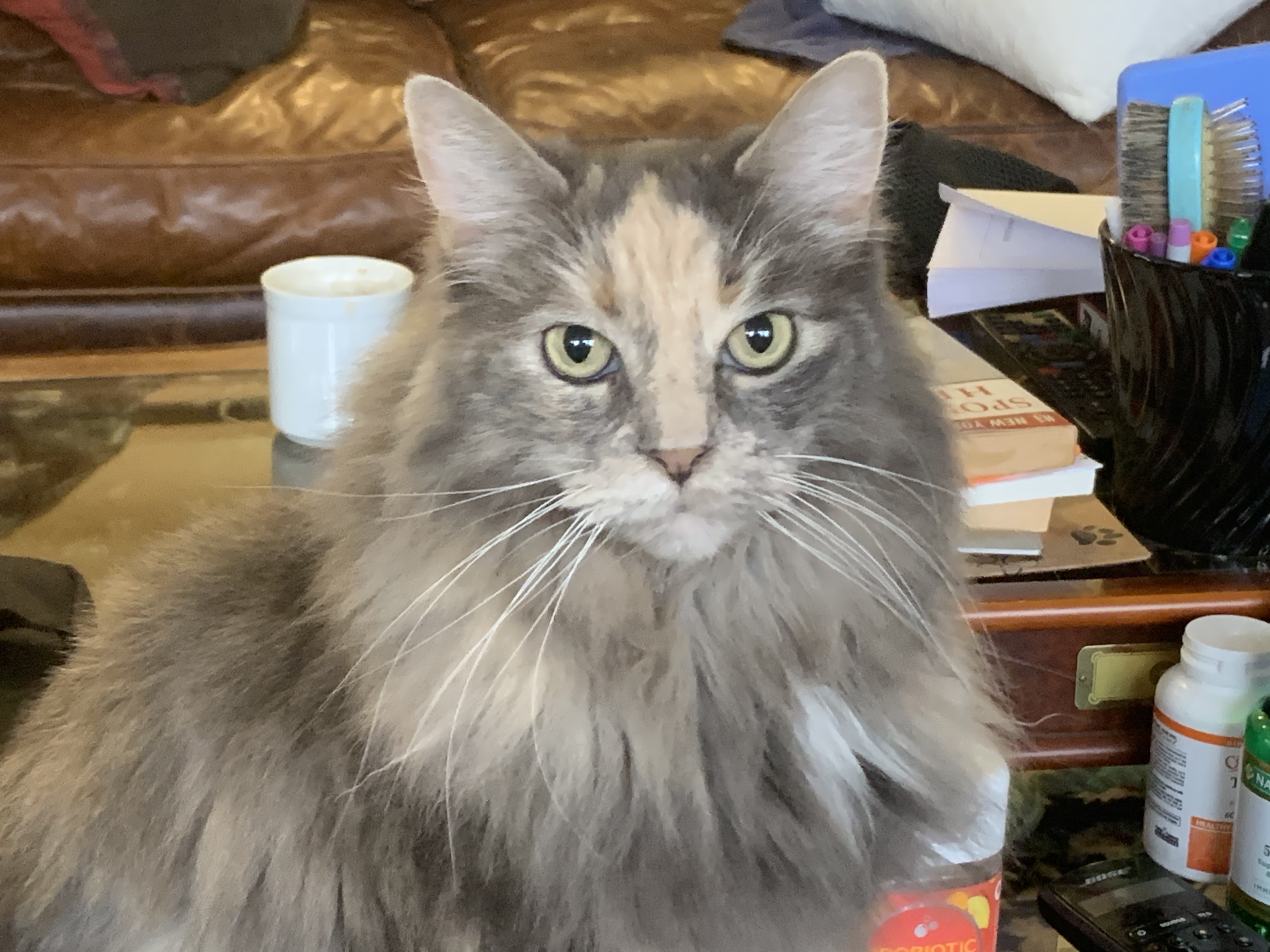
See what you said there? You exact words included: “…cats and dog.” If you put “Cats AND dogs” into a query against the data base of available pets, however, you will get the null set (that is, nothing) back. There are no animals who are both cats and dogs! (Though my part Main Coon cats, Luna and Charles Wallace, can play fetch like dogs).
When people were presented with an English statement that included the English word “and” — regardless of the actual syntax and context, some of them had difficulty using the OR operator. If instead, the query in English had set up like this: “Oh, I don’t want reptiles. I’d be happy with adopting a cat or a dog, however” then, they’d have no problem translating it into the OR operator in the query language.
Lessons Learned: #6 Sometimes the difficulty people have in using a product, a service, or a prototype is not due to the interface details but with the structure of the task, their background, and their training.
By analogy, you will not allow me to beat Carlos Alcaraz or Jannik Sinner at tennis by giving me a better tennis racquet! (Although if you gave one of them a toothpick for a tennis racquet, I might have a shot).
That sounds obvious and even absurd, but I promise you, some companies get so greedy that they want you to design a system that allows people who do not understand the task and have minimal background and training to nonetheless be able to perform that task. And, to be fair, it isn’t just the companies who are greedy. They are steered into thinking that they can get away with this absurdity because some outsourcing companies (and more recently, AI companies) tell them they can do it.
One example you may have encountered is having “help desk” personnel who have no understanding of a product go through a script to help you “solve your problem.” Sometimes, it works. But many times it doesn’t. When it does not work, you might not be able to “fix” the system by making the interface to the scripts easier to use for the help desk folks. The problem is much deeper (in some cases). Yes, a really bad interface can make it difficult even for a really knowledgeable and capable person to do the job. But often, even a really great interface cannot always substitute for actual expertise.
Turing’s Nightmares: Nineteen — My Brief Case Runneth Over
“Nice office, counselor.” Marvin spread his arm to indicate the panorama of Manhattan and Ellis Island. Yet, his attempt to sound casual failed utterly. He realized all too well the depth of trouble he was in and the creakiness in his voice so signaled.
J.B. smiled. “No need to be nervous. After all, we’re here to help. Just answer honestly. Everything you say will typically be covered under attorney client privilege.”
“Okay. Thanks. Typically?”
J.B. sighed. “There is a rare exception in the Patriot Act. Unless you’re some kind of terrorist, I wouldn’t worry about it. The government is apparently accusing you of importing illegal chips is all. I think we can argue that you are new to the business and did not realize all the required legalities. Pay the taxes now and some penalties. You should be able to avoid jail time. But we are getting way ahead of ourselves. Just tell me how and why and when you got into this business in the first place.”
Marvin chuckled slightly and then sighed “That’s a rather long story.” Marvin glanced at the expensive abstract paintings and noted the rich smell of the solid mahogany furniture. The room also had that crazy idea of luxury — making it freezing cold inside just because it was horribly hot and humid that day, even for New York City August. “At your rates…What do you really need to know?”
“Why did you get involved in making chips without the required back door?”
“These chips are not that powerful. At least not in the traditional sense of the word. And, the government’s requirement is frankly kind of silly. The extra logic makes programming more difficult. It increases the chances of errors. The chips are more expensive and require more power. Leaving aside all the valid privacy concerns, there are plenty of applications that can use a more efficient cheaper chip design. No need to report all the little finger twitches of every twelve year old who’s playing Grand Theft Spaceship. What’s the point?”
“Marvin. I’ve been a friend of your family for a long time. When…well…if we go to court and if you testify, please steer clear of politics. The law is the law. You don’t get to decide which applications are immune from the law. No, what we…our script here is that you made some honest mistakes. You made technical mistakes and what are essentially accounting errors.”
Marvin flushed. “What technical mistakes? What are you talking about? My design is an improvement.”
J.B. got up and paced. “Marvin, Marvin, you are a smart boy. We are not going to fight the government on this. Our script as I said is that you made some honest mistakes. If you want to —- the court is not the place to try to change the law. If you want to do that, get involved in politics. But not until after this is resolved. If you get on the stand and start railing about privacy and the dangers of the Sing and…”
“Ha. The Sing indeed. This data collection rampage has nothing to do with trying to increase the intelligence of computer systems. It is just mindless greed.”
“Marvin, the back door requirement is about preventing terrorism; it has nothing to do with greed.”
“Are you serious, J.B.? Terrorism is just the cover story the government uses. They want to collect all this data to keep their sponsors happy.”
“What? What sponsors? What are you talking about? The government doesn’t have sponsors.”
“Of course they do. Ever since ‘Citizens United’ — nice title by the way — billionaires can buy all the media they want. They wash the airwaves and the print media and saturate the social media space and make people believe anything they want. The point of the back door is just to make sure the sponsors keep tabs on everybody’s buying habits —- and to make sure no-one gets too far out of line. How can you not know this?”
“I don’t want to think that way. But at the end of the day, it doesn’t matter what I think. It’s the law. All digital processing chips with more than a peta-flop and …”
“Hold it! Did you say ‘digital’?”
“Huh? Yeah, of course. Isn’t that what we’re talking about? You designed digital processing chips that have no back door and now…”
“No. Maybe not, J.B. My chips are not, strictly speaking, digital.”
“What are you talking about, Marvin? Why? How not digital?”
“In my design process, I strove for something different and more robust. See, here’s the thing. Natural life processes are all…they all have some level of flexibility. They are robust. They are adaptive, I suppose, because every life form that was not flexible or robust died off over the four billion years that life evolved. Something new would come along and every life form that was rigid died. Even physical machines that people make have some flexibility. Metal bends. Wood bends. These materials also compress. They stretch. Not much, but a little. Digital devices do not stand for bending, folding or mutilating. Of course, when people build systems that include IT devices, they try to make the systems flexible. They add error checking; they put humans in the loop; there are all sorts of work-around, but the underlying tech is brittle. It is only flexible in precisely the ways that the designers anticipated it needed to be flexible. I made something that is fundamentally flexible. It is fashioned after life itself. Social systems are flexible. Eco-systems are flexible. Individual animals are flexible. Cell membranes are flexible. Bones are flexible. And so on. This flexibility is fundamental to life and evolution.”
“Okay, Marvin, but life is not infinitely flexible. You cannot just decide to breathe underwater.”
“Of course not! I never said it was infinitely flexible! For fundamental change, you need evolution and lots of time. If the climate changes too quickly, Permian life species largely go extinct. Dinosaurs die when a comet hits. But small adaptations just happen automatically and at every level. It isn’t necessary to have a pre-existing ‘program’ or ‘case’ to handle every contingency that is even slightly outside of what is anticipated.”
“Okay, fine. Granted, but what does this have to do with — did I mention that I charge $500 an hour, by the way?”
“Yes, J.B., you did. And it was in the contract you had me sign. But the point is that my chips are not, strictly speaking, digital at all. They are not strictly EITHER/OR. They are not binary. Although, in many cases, they can behave as binary.”
“So, you want me to claim that these chips are not covered under the back-door provision because they are not really digital devices? I don’t know. That seems pretty shaky to me. Can’t these chips of your be used for the same things as ordinary digital chips? Speech reco. Machine vision. Game control. Big data analytics.”
“Here’s the thing, J.B. Yes, they can, but they can change and evolve and reprogram themselves over time. And, now it occurs to me, that they could not have a real back door. They wouldn’t really function if they did.”
“What? Why?”
“Are you familiar with programmed death in cells? I can see from your blank stare, you aren’t. Anyway, if a cell is damaged within the body, it can wreak all sorts of havoc so the cells are essentially programmed to self-destruct. If that fails, the other healthy cells will tend to wipe out the damaged ones. So, if there were a functioning back door sharing data out of these chips, the chips would shut themselves down. If that failed, other chips in the matrix would isolate them and shut off communication. So, by their very nature, these particular non-digital chips cannot have a functioning back door.”
“That all sounds very clever, Marvin, but now we are talking about a very lengthy and expensive trial with expert witnesses on both sides. If, that is, you are lucky enough to even have an open trial.”
“Lucky enough? What are you talking about, J.B.? I thought you said we wanted to avoid a trial.”
“Yeah. With my strategy where we convince the NSA that this was just technical and business incompetence on your part. But in your scenario, where you want to prove you are all brilliant and everything, then, we will be lucky if —- you will be lucky to —- Look Marvin, I just cannot advise you to take this line of argument. If you really want to go that route, you will have to find a different lawyer.”
“Okay. Fine. I’ll use Solomon.”
“Solomon? Who is ‘Solomon’? Never heard of him. I mean, obviously, I know Solomon from the Bible but what firm are you talking about?”
“No firm, J.B. Solomon is one of the apps we built with my chipset.”
“An AI lawyer? Are you serious?”
“Oh, quite serious. He’s already informed me that he thinks he can win this case.”
“What? That’s preposterous. You told me you just designed the chips a year ago. What kind of experience could this Solomon have?”
“J.B., he’s been reading applicable statutes and case law for the last two months. Which means, he literally knows it all, when it comes to case law and the rulings beneath. Beyond that, Solomon has argued both sides of thousands of hypothetical cases.”
“What?! Ridiculous! But even so, he — or it —cannot possibly know how to anticipate or react to what happens in court!”
“But J.B., haven’t you been listening? Of course he can. He’s flexible, just like a real lawyer. Only…no offense…a lot smarter.”
“Computers cannot be that flexible. Ridiculous. How? No way.”
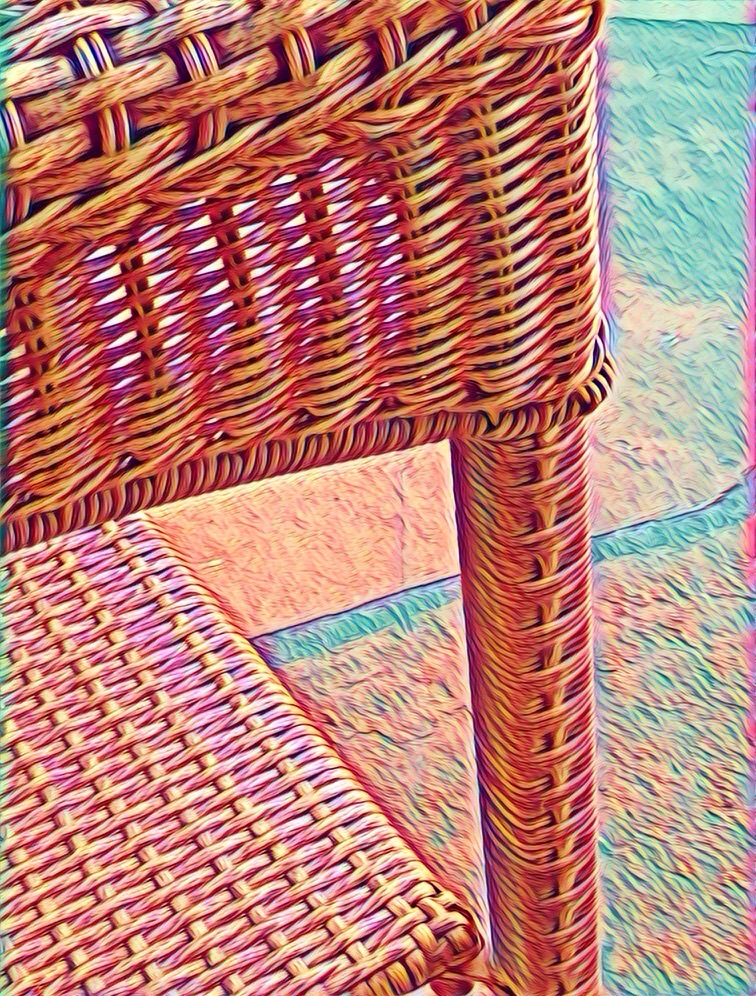
“Look, J.B., I have a picture to illustrate. See this pattern on the left [Picture at the top of page]? And, there it is on the right?”
“Yeah, beautiful. Same pattern. So what?”
“Ah, that’s just it! Is it the same pattern? Is it the same pattern or the same pattern?”
“Well. One is perfect and the other has little mistakes, but I guess it’s the same pattern.”
“Exactly, J.B. It’s the same basic pattern, but it’s not the identical instantiation of that pattern. Ordinary chips are like the picture on the left and mine are like the picture on the right. You see? And, that flexibility is built in at every level in every system. Because the underlying substrate uses an adaptive process with variations. It works 99% as efficiently as the system on the left, but it can accommodate things we didn’t think of. The difference between the system on the left and the system on the right is hubris. The one on the left is designed under the assumption that the designer knows everything of relevance. The system on the right is designed under the assumption that the designer, no matter how brilliant, does not know everything of relevance. You get it?”
“Yes, Marvin, I’m not stupid. But I am still not going to take your case. And, I strongly advise you not to rely on a robot. I am sorry to say it, Marvin, but I think you have picked on the wrong people this time. Attorney client privilege no longer applies and I have to send my recording of this conversation to the proper authorities.”
“Oh, that won’t be necessary Marvin. I’ve already broadcasts this through the social media. You’re famous! It will be good for your business.”
“What? Are you crazy? They will come get you, you fool.”
“Maybe, but if I am taken out over these chips without a trial, everyone will know, don’t you see? I sent it out everywhere, J.B. I might be ‘disappeared’ but I can’t just disappear unnoticed. Solomon’s idea, by the way.”
The Winning Weekend Warrior focuses on the mental game for all sports using examples from tennis, golf, baseball, and other sports. It covers self-talk, imagery, mental practice, strategy, tactics, & sportsmanship. http://tinyurl.com/ng2heq3
Turing’s Nightmares explores the implications and ethics of Artificial Intelligence through fictional short stories. http://tinyurl.com/hz6dg2d
Fit in Bits shows many ways to put more fun, variety, & exercise into daily chores and habits to help with strength, flexibility, fitness, and balance. http://tinyurl.com/h6c7fce
Tales from an American Childhood recounts early experiences mainly in the American Midwest in the 1950’s and relates them to contemporary issues and events. https://tinyurl.com/y9ajvz9j
Dream Planet. Where do you run when the whole world is crumbling under the weight of human folly? When the lethal Conformers invade 22nd century Pittsburgh, escape becomes the top priority for lovebird scavengers Alex and Eva.