• About PeterSIronwood

petersironwood

~ Finding, formulating and solving life's frustrations.

petersironwood

Tag Archives: reading

8. Deep Interlock & Ambiguity

19 Saturday Sep 2026

Posted by petersironwood in creativity, leadership, management, nature, psychology, Uncategorized, user experience

≈ Leave a comment

Tags

aesthetics, ambiguity, architecture, art, beauty, Design, HCI, interlock, photography, reading, usabiity, UX, writing

8. Deep Interlock & Ambiguity

In many cases, the various 15 properties that Christopher Alexander poses as characteristic of natural beauty seem to contradict each other. They don’t actually contradict each other. They are forces that sometimes oppose each other or work at angles to each other. This should not surprise us because the same is true of life in general. Of course, I want my bones to be bigger because that will make them stronger. But bigger bones will make me weigh more and demand more nutrition. I want the biggest brain I can have, but a big head makes childbirth almost impossible. One way out of the conundrum is to risk having human babies born way earlier in their development than for most animals. 

So, Good Shape plays off against Deep Interlock & Ambiguity. Partly, it solves this problem by asking a third character in this morality play to step onto the stage — Levels of Scale. If one focuses attention on a single leaf or flower or petal of a flower, one typically finds “Good Shape.” In clusters of well-shaped leaves, or well-shaped flowers, one often sees the flowers or leaves interleaving with the space of other well-shaped leaves or flowers. Thus, at one level of scale, there is Good Shape. But at a higher level, all of these Good Shapes interact with each other so as to interlock. 

Typically, when we design User Experiences, we try to make things clear, not provide “Deep Interlock and Ambiguity” — that sounds like something to be avoided. Perhaps we can see how some decorative elements might exhibit Deep Interlock & Ambiguity, but surely anything that is functional should be clear. 

I think there is a place for Deep Interlock & Ambiguity in design — even functional design. First, we need to distinguish two sorts of reasons for having Deep Interlock & Ambiguity. On the one hand, the application itself may require deep interlock and ambiguity. Insisting that the user make absolute or irrevocable decisions when inappropriate is not good design. The importance of pliant design I’ve mentioned before. Here’s the paper that first introduced me to the term.

https://dl.acm.org/doi/10.1145/302979.303003

Harris, Jed & Henderson, Austin. (1999). A Better Mythology for System Design.. 88-95. 10.1145/302979.303003. 

Consider the relationship between a father and son, or between spouses. Do you think such intimate relationships could be reduced to a black and white set of clear, consistent, precise rules? I doubt it. It’s a “natural relationship” and, as such, will be ill-suited to predefining everything. That doesn’t mean that there need be no rules or that each person themselves should not have a “Good Shape.” Multiple “Good Shapes” with the right spacing will include both “Boundaries” and “Deep Interlock and Ambiguity” and as a result help produce “Positive Space.” 
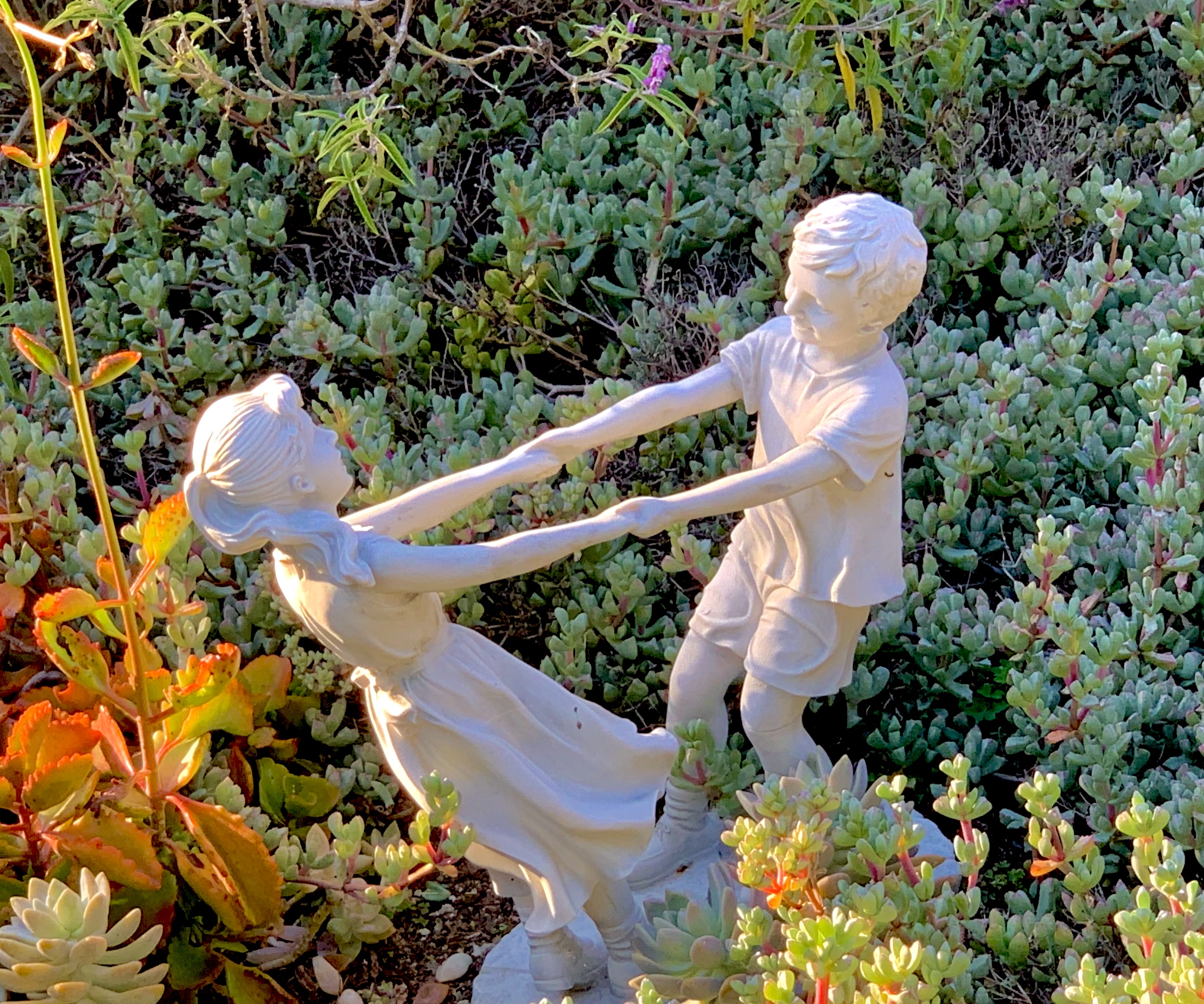
Who’s pulling whom?

On the other hand … (did you forget the first hand? It was quite a diversion. Well, the first hand was about revealing to the user the Deep Interlock and Ambiguity inherent in their particular context, task, and the field they are working in. That is much better than hiding that truth.

Photo by Nafis Abman on Pexels.com


On the other hand, it may well be worth asking yourself whether you adding ambiguity because you yourself are not really clear about how a function is supposed to work. Or, are you pushing decorative elements so hard that it is obscuring the relationship of functional elements? A decorative example of mis-using “Deep Interlock & Ambiguity” (which I doubt anyone would actually do) would be to interlace two different menus like interlocking fingers of the two hands. It might indeed look more interesting visually. Perhaps someone out there could even make a good argument for having interleaved menus in certain situations. One example that might make some sense would be interlocking food and wine menus. 

Deep Interlock & Ambiguity is not only a property of visual beauty. Good drama, poetry, and music exhibit them as well. In various ways, so also do most sports. Almost every sport allows and requires the athlete to make decisions that have tradeoffs. Should they attempt the riskier move or the safer one? Should they attempt a higher bar, the heavier weight, the faster start? In addition, many sports (soccer, basketball, baseball, American football, hockey, rugby, etc.) have the two teams interacting directly. In tennis and volleyball, the players stay on their own side of the net, but the players need to shift constantly depending on the positions & motions of everyone else and the position & trajectory of the ball and the capabilities of the various players. I think this qualifies as a sort of Deep Interlock and Ambiguity. Such sports seem not that different from a simplification and stylization of the kinds of interactions that take place in natural ecosystem interactions. 
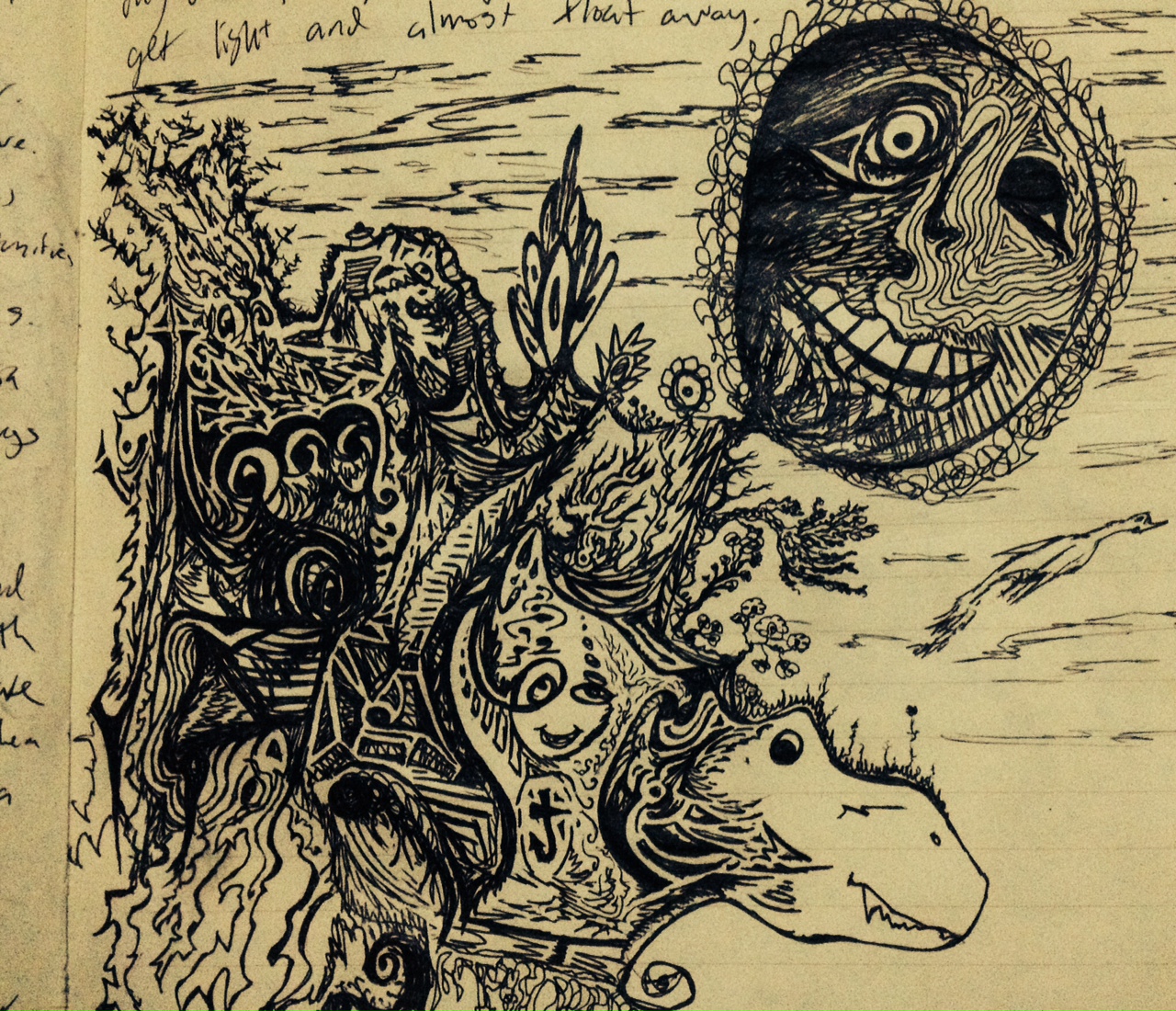
Original drawing by Pierce Morgan

Many simplified childhood games seem quite close to re-enactments of life and death struggles: Hide and Seek, Tag, Hare and Hounds, Cops and Robbers. In my neighborhood, when a new movie came out, the kids would typically go see it and then “play out” variations on the theme of the music. We would play in the setting of the movie (in our imaginations) and adopt characters from the movie. Movies aimed at children typically don’t exhibit quite as much Deep Interlock & Ambiguity as those aimed at older audiences when it comes to Character development. But the plot swings back and forth between apparent victory & defeat, loss & gain, life & death, honor & dishonor, etc. In that sense, the “experiencer” — whether adult or child — doesn’t know (or let themselves know) how things will turn out.

My childhood friends and I moved far beyond re-enacting the actual movie. We improvised entirely new plot lines, we created new lines of deep interlock and ambiguity. Were we taking actions we “really wanted to do” or merely taking actions we thought the characters in the movie would do if they were in the new situation? If we, as an actor, acted too “angry” with one of our friends, would it carry over into real life? If we, as ourselves, acted a certain way and liked it better than our ordinary way, could we “keep” the new behavior (or name, or hairdo, or way of dressing, or favorite expression, etc.?). 

Something like that continues throughout adulthood as well, both within our careers and in our personal lives. Or, at least it may. As you take on different “roles”, you begin to notice that you are better than most people at some things; worse at other things; and roughly average at still other things. You may also notice that doing certain kinds of things is very enjoyable while other activities leave you cold. Your preferences about what you want to do might stay fairly constant through your whole career. Or, your preferences might change quite a bit. If you allow yourself to really “get into a role,” you’ll have a better time deciding if it is a role you really relish. You might find yourself falling in love with your work, which of course is quite different from falling in love with the rewards or the trappings of work. If your life is like most, you’ll spend a lot more time working than enjoying the rewards or trappings of work.

When you read something such as this blog post, you allow for the possibility of interlock and ambiguity with the material, with the author, with another take on reality. The words can resonate (or not) with your own experience and possibly alter things. Moreover, you can leave a message or talk to others and set them on a different course. To read is an act of courage as is any other form of open-hearted and truth-based communication.

——————-

How the Nightingale Learned to Sing

Maybe it needs a new starter

The Joy of Juggling 

Life is a Dance

Choosing the Script

Who are the Speakers for the Dead

Take a Glance Join the Dance

Some recommended books:

The Winning Weekend Warrior focuses on the mental game for all sports using examples from tennis, golf, baseball, and other sports. It covers self-talk, imagery, mental practice, strategy, tactics, & sportsmanship. http://tinyurl.com/ng2heq3

Turing’s Nightmares explores the implications and ethics of Artificial Intelligence through fictional short stories. http://tinyurl.com/hz6dg2d

Fit in Bits shows many ways to put more fun, variety, & exercise into daily chores and habits to help with strength, flexibility, fitness, and balance. http://tinyurl.com/h6c7fce

Tales from an American Childhood recounts early experiences mainly in the American Midwest in the 1950’s and relates them to contemporary issues and events. https://tinyurl.com/y9ajvz9j

Dream Planet. Where do you run when the whole world is crumbling under the weight of human folly? When the lethal Conformers invade 22nd century Pittsburgh, escape becomes the top priority for lovebird scavengers Alex and Eva.

https://www.barnesandnoble.com/w/dream-planet-david-thomas/1148566558

————-

Tu-Swift Dreams of Drums

03 Friday Apr 2026

Posted by petersironwood in America, creativity, politics, Uncategorized, Veritas

≈ Leave a comment

Tags

AI, creativity, ethics, fiction, language, leadership, legends, myths, philology, psychology, reading, stories, trust, Veritas, writing

Tu-Swift Dreams of Drums.

brown wooden percussion instruments

Photo by Pixabay on Pexels.com

Tu-Swift’s lids felt heavy. As they fluttered shut, the strange markings on the hides swam before his eyes. In the distance, he could hear drumming. Drumming. Very pleasant. Very nice. Tu-Swift remembered hearing the drumming as She Who Saves Many Lives intoned a long poem for all of the people. It was a poem about animals, and people, and language. Tu-Swift, like all the Veritas, had memorized it at an early age. He knew the prose version as well. As She Who Saves Many Lives sung the ancient song, one of the braves, Stone Chipper, used sign language to portray the same story. Perhaps from working with stone, he looked like stone. The muscles of his chest, shoulders and arms writhed as he moved from position to position. It had been hard for Tu-Swift to follow as a child.

Now, in his half-dream state, Tu-Swift could slow the playing of the memory and the memory became the dream. He could see the positions that Stone Chipper used. Then, an odd thing happened (as they are wont to do in dreams). The arms of Stone Chipper became sticks. And every time that he moved them into a new position, he heard the voice of She Who Saves Many Lives saying the sounds of the animals. 

brown wolf standing on green grass

Photo by Pixabay on Pexels.com

The sounds. Did we steal them? Did we borrow them? How can we steal them? The snake still hisses. The owl still hoots. The bee still buzzes. And before his internal eyes, Tu-Swift saw the snake and the owl and a swarm of buzzing bees all dancing and playing together. Now, they lined up and came toward him. First, the snake flew toward his face hissing – ‘sssssss.’ Just as it reached him, it opened its mouth, sharp fangs, forked tongue, and then the snake veered off. The hoot owl hooted and stretched for Tu-Swift, talons first. The hooting sound became louder and louder: ‘ooooOOOO OOOO!’ But the owl also caromed away. Now, the swarm of bees zipped toward him buzzing all the while. Suddenly, one of the girls Tu-Swift fancied from home, Sooz, appeared before him smiling. Except now she had cat eyes. She said her name, ‘Sooz’,  and nodded to him just as she had when they first met. Now, she did something odd. She waved her right arm into the crook of her left elbow making the sign for snake; then, she quickly turned her hands outward making them into the claws that signified owl and then her fingertips all moved nervously like a swarm of buzzing bees. Now, she flew away from him and as she disappeared into a bright green cloud, she said, “Remember me. Remember Sooz.” 

Tu-Swift muttered in his sleep, “I will Sooz. I will.” 

Shadow Walker chuckled to himself. He looked down to see the fluttering eyes of Tu-Swift who obviously walked now in the shadow world of dreams. He recalled some of the times that Many Paths and Shadow Walker had spoken of each other’s dreams. He had been dreaming of her, in fact, when something inside him told him it was time for him to keep watch and let Tu-Swift sleep. 

Shadow Walker again turned his thought to the girl with the eyes like a cat. She seemed to be telling the truth even though her tale was amazing, if true. Still, she was definitely holding something back. There was something important that she had not yet told them, but he wasn’t sure what it was. Possibly, she herself had done something against the ways of the Veritas. Although…how could she help it if she were stolen as a child? 

Shadow Walker now heard Tu-Swift muttering again, first about drumming, and Cat Eyes, and language. Like all dream mutterings, it made little sense. He would ask him about it upon wakening. Shadow Walker had found that dreams were easily recalled if they were remembered upon waking but seldom recalled if one began the chores of the day. 

Meanwhile, quite oblivious to Shadow Walker, Tu-Swift now found himself dreaming of sitting astride a horse, a giant golden horse. He held ropes in his hands and he could control the horse via these ropes. Jaccim Nohan trotted alongside on another horse and spoke to him in Veritas. They now seemed friends, but that was not surprising in the dream world. Jaccim’s body turned into sticks of firewood, but he continued to talk…although…it wasn’t exactly talking. He was using his stick limbs to form sign language. Yet, Tu-Swift heard it as words spoken in the voice of Jaccim but the words were not ROI but Veritas. He listened to the words and kicked the giant horse firmly but not cruelly and lightly whipped the reins. The giant horse took off galloping up a hill, leapt up into the sky and Tu-Swift was flying atop his horse — sailing through the sky effortlessly though the steady drumming hooves continued even louder than before. 

C3DFBFC1-D938-40E4-861D-15FD4F0FEA65

Now, Tu-Swift had fallen off his horse into a pit of giant snakes – squeeze snakes – who were going to squeeze him to death. Where was his horse? He tried to slide the snakes off of his arms but they wouldn’t go. They could speak his name! “Tu-Swift! Tu-Swift! Wake up!”  

Tu-Swift shook his head and came awake. Shadow Walker was shaking him. “Wake up! Wake up! War drums. We must go. Now. Wake up!” 

“What? Whose war drums?” Tu-Swift tried to focus but it was difficult. 

Shadow Walker took Tu-Swift’s head in his hands and stared into his vacant eyes. “I don’t know. But it isn’t Veritas! Wake! We must go!” 

At last, Tu-Swift returned to this world and he saw Shadow Walker quickly putting their things together for a quick journey. “What of Cat Eyes and the others?” 

Shadow Walker sighed. “I think we may have to leave them here. Or at least Jaccim. He is too hurt to travel quickly.”

eagle in flight

Photo by David Dibert on Pexels.com

———————————-

Author Page on Amazon

Sci-Fi Scenarios about the Future of AI

Pattern Language for Teamwork and Cooperation: Overview

A Story of Early Work in Human Computer Interaction

The Creation Myth of the Veritas

The Myths of the Veritas: The First Ring of Empathy

The Myths of the Veritas: The Second Book

Where Does Your Loyalty Lie?

What About the Butter Dish?

You Bet Your Life

The Game

Dick-Taters

Labelism

Absolute is not Just a Vodka

Poker Chip

The Ailing King of Agitate

Roar, Ocean, Roar

Imagine All the People…

The Dance of Billions

An Open Sore From Hell

Tu-Swift Dreams of Drums

23 Friday Aug 2019

Posted by petersironwood in America, creativity, politics, Uncategorized, Veritas

≈ 1 Comment

Tags

AI, ethics, language, legends, myths, philology, reading, stories, trust

Tu-Swift Dreams of Drums.

brown wooden percussion instruments

Photo by Pixabay on Pexels.com

Tu-Swift’s lids felt heavy. As they fluttered shut, the strange markings on the hides swam before his eyes. In the distance, he could hear drumming. Drumming. Very pleasant. Very nice. Tu-Swift remembered hearing the drumming as She Who Saves Many Lives intoned a long poem for all of the people. It was a poem about animals, and people, and language. Tu-Swift, like all the Veritas, had memorized it at an early age. He knew the prose version as well. As She Who Saves Many Lives sung the ancient song, one of the braves, Stone Chipper, used sign language to portray the same story. Perhaps from working with stone, he looked like stone. The muscles of his chest, shoulders and arms writhed as he moved from position to position. It had been hard for Tu-Swift to follow as a child.

Now, in his half-dream state, Tu-Swift could slow the playing of the memory and the memory became the dream. He could see the positions that Stone Chipper used. Then, an odd thing happened (as they are wont to do in dreams). The arms of Stone Chipper became sticks. And every time that he moved them into a new position, he heard the voice of She Who Saves Many Lives saying the sounds of the animals. 

brown wolf standing on green grass

Photo by Pixabay on Pexels.com

The sounds. Did we steal them? Did we borrow them? How can we steal them? The snake still hisses. The owl still hoots. The bee still buzzes. And before his internal eyes, Tu-Swift saw the snake and the owl and a swarm of buzzing bees all dancing and playing together. Now, they lined up and came toward him. First, the snake flew toward his face hissing – ‘sssssss.’ Just as it reached him, it opened its mouth, sharp fangs, forked tongue, and then the snake veered off. The hoot owl hooted and stretched for Tu-Swift, talons first. The hooting sound became louder and louder: ‘ooooOOOO OOOO!’ But the owl also caromed away. Now, the swarm of bees zipped toward him buzzing all the while. Suddenly, one of the girls Tu-Swift fancied from home, Sooz, appeared before him smiling. Except now she had cat eyes. She said her name, ‘Sooz’,  and nodded to him just as she had when they first met. Now, she did something odd. She waved her right arm into the crook of her left elbow making the sign for snake; then, she quickly turned her hands outward making them into the claws that signified owl and then her fingertips all moved nervously like a swarm of buzzing bees. Now, she flew away from him and as she disappeared into a bright green cloud, she said, “Remember me. Remember Sooz.” 

Tu-Swift muttered in his sleep, “I will Sooz. I will.” 

Shadow Walker chuckled to himself. He looked down to see the fluttering eyes of Tu-Swift who obviously walked now in the shadow world of dreams. He recalled some of the times that Many Paths and Shadow Walker had spoken of each other’s dreams. He had been dreaming of her, in fact, when something inside him told him it was time for him to keep watch and let Tu-Swift sleep. 

Shadow Walker again turned his thought to the girl with the eyes like a cat. She seemed to be telling the truth even though her tale was amazing, if true. Still, she was definitely holding something back. There was something important that she had not yet told them, but he wasn’t sure what it was. Possibly, she herself had done something against the ways of the Veritas. Although…how could she help it if she were stolen as a child? 

Shadow Walker now heard Tu-Swift muttering again, first about drumming, and Cat Eyes, and language. Like all dream mutterings, it made little sense. He would ask him about it upon wakening. Shadow Walker had found that dreams were easily recalled if they were remembered upon waking but seldom recalled if one began the chores of the day. 

Meanwhile, quite oblivious to Shadow Walker, Tu-Swift now found himself dreaming of sitting astride a horse, a giant golden horse. He held ropes in his hands and he could control the horse via these ropes. Jaccim Nohan trotted alongside on another horse and spoke to him in Veritas. They now seemed friends, but that was not surprising in the dream world. Jaccim’s body turned into sticks of firewood, but he continued to talk…although…it wasn’t exactly talking. He was using his stick limbs to form sign language. Yet, Tu-Swift heard it as words spoken in the voice of Jaccim but the words were not ROI but Veritas. He listened to the words and kicked the giant horse firmly but not cruelly and lightly whipped the reins. The giant horse took off galloping up a hill, leapt up into the sky and Tu-Swift was flying atop his horse — sailing through the sky effortlessly though the steady drumming hooves continued even louder than before. 

C3DFBFC1-D938-40E4-861D-15FD4F0FEA65

Now, Tu-Swift had fallen off his horse into a pit of giant snakes – squeeze snakes – who were going to squeeze him to death. Where was his horse? He tried to slide the snakes off of his arms but they wouldn’t go. They could speak his name! “Tu-Swift! Tu-Swift! Wake up!”  

Tu-Swift shook his head and came awake. Shadow Walker was shaking him. “Wake up! Wake up! War drums. We must go. Now. Wake up!” 

“What? Whose war drums?” Tu-Swift tried to focus but it was difficult. 

Shadow Walker took Tu-Swift’s head in his hands and stared into his vacant eyes. “I don’t know. But it isn’t Veritas! Wake! We must go!” 

At last, Tu-Swift returned to this world and he saw Shadow Walker quickly putting their things together for a quick journey. “What of Cat Eyes and the others?” 

Shadow Walker sighed. “I think we may have to leave them here. Or at least Jaccim. He is too hurt to travel quickly.”

eagle in flight

Photo by David Dibert on Pexels.com

———————————-

Author Page on Amazon

Sci-Fi Scenarios about the Future of AI

Pattern Language for Teamwork and Cooperation: Overview

A Story of Early Work in Human Computer Interaction

The Creation Myth of the Veritas

The Myths of the Veritas: The First Ring of Empathy

The Myths of the Veritas: The Second Book

Subscribe

  • Entries (RSS)
  • Comments (RSS)

Archives

  • October 2026
  • September 2026
  • August 2026
  • July 2026
  • June 2026
  • May 2026
  • April 2026
  • March 2026
  • February 2026
  • January 2026
  • December 2025
  • November 2025
  • October 2025
  • September 2025
  • August 2025
  • July 2025
  • June 2025
  • May 2025
  • April 2025
  • March 2025
  • February 2025
  • January 2025
  • December 2024
  • November 2024
  • October 2024
  • September 2024
  • July 2024
  • April 2024
  • March 2024
  • February 2024
  • January 2024
  • December 2023
  • August 2023
  • July 2023
  • May 2023
  • April 2023
  • March 2023
  • February 2023
  • January 2023
  • December 2022
  • November 2022
  • October 2022
  • September 2022
  • August 2022
  • July 2022
  • June 2022
  • May 2022
  • April 2022
  • March 2022
  • February 2022
  • January 2022
  • December 2021
  • November 2021
  • October 2021
  • September 2021
  • August 2021
  • July 2021
  • June 2021
  • May 2021
  • April 2021
  • March 2021
  • February 2021
  • January 2021
  • December 2020
  • November 2020
  • October 2020
  • September 2020
  • August 2020
  • July 2020
  • June 2020
  • May 2020
  • April 2020
  • March 2020
  • February 2020
  • January 2020
  • December 2019
  • November 2019
  • October 2019
  • September 2019
  • August 2019
  • July 2019
  • June 2019
  • May 2019
  • April 2019
  • March 2019
  • February 2019
  • January 2019
  • December 2018
  • November 2018
  • October 2018
  • September 2018
  • August 2018
  • July 2018
  • June 2018
  • May 2018
  • April 2018
  • March 2018
  • February 2018
  • January 2018
  • December 2017
  • November 2017
  • October 2017
  • September 2017
  • August 2017
  • July 2017
  • June 2017
  • May 2017
  • April 2017
  • March 2017
  • February 2017
  • January 2017
  • December 2016
  • November 2016
  • October 2016
  • September 2016
  • August 2016
  • July 2016
  • June 2016
  • May 2016
  • April 2016
  • March 2016
  • February 2016
  • January 2016
  • December 2015
  • November 2015
  • October 2015
  • September 2015
  • August 2015
  • May 2015
  • January 2015
  • July 2014
  • January 2014
  • December 2013
  • November 2013

Categories

  • AI
  • America
  • apocalypse
  • cats
  • COVID-19
  • creativity
  • design rationale
  • dogs
  • driverless cars
  • essay
    • guns
  • family
  • fantasy
  • fiction
  • HCI
  • health
  • leadership
  • love
  • management
  • nature
  • pets
  • poetry
  • politics
  • psychology
  • Sadie
  • satire
  • science
  • sports
  • story
  • The Singularity
  • Travel
  • Uncategorized
  • user experience
  • Veritas
  • Walkabout Diaries

Meta

  • Create account
  • Log in

Blog at WordPress.com.

  • Subscribe Subscribed
    petersironwood
    Join 653 other subscribers

    Have a WordPress.com account? Log in now.

  • petersironwood
    View site in Reader
    Manage subscriptionsSign upLog in
    Report this content
    Collapse this bar
Loading Comments...