• About PeterSIronwood

petersironwood

~ Finding, formulating and solving life's frustrations.

petersironwood

Category Archives: science

Tools of Thought

14 Sunday Dec 2025

Posted by petersironwood in AI, creativity, design rationale, management, psychology, science, Uncategorized

≈ Leave a comment

Tags

AI, chatgpt, index, life, problem formulation, problem framing, problem solving, sense-making, summary, technology, thinking, tools of thought, writing

Tools of Thought (Summary and Index)

In December, 2018, I began writing a series of essays on “tools of thought.” I realize that many readers probably read these tools at the time they were first published. However, in times of great division such as those we now face, effective thinking is more important than ever yet every day in the news and in social media, I see many examples that overlook even the most basic tools of thought. I therefore decided that it would be worthwhile to reprint the index of such tools now.

I suppose many readers will already be familiar with many of these tools. Nonetheless, I think it’s worthwhile to have a compilation of tools. After all — plumbers, carpenters, programmers, piano tuners, sales people — they all have tool kits. I see at least three advantages to having them together in some one place.

Without a toolkit you may be prone to try to use the tool that just so happens to be nearest to hand at the time you encounter the problem. You need to tighten a screw and you happen to have a penny in your pocket. You don’t feel like walking all the way down into the garage to get your toolkit. A penny will do. I get it. But for more serious work, you are going to want to consider the whole toolkit and choose the tool that’s most appropriate to the situation at hand.

First, then, the existence of a toolkit serves as a reminder of all the tools at your disposal. This will help you choose appropriately. 

Second, you may only be familiar with one or two ways to use a tool. I may have thought of ways to use a tool that are different from the way you use it. In the same way, you undoubtedly know useful things about these tools of thought that I have never thought of. We can learn from each other. Readers are more than welcome to comment on uses, misuses, and variations.

Third, having all the tools together may stimulate people to invent new tools or see a way to use two or more in sequence and begin to think about the handoff between two tools. 

Here’s an index to the toolkit so far.

Many Paths(December 5, 2018). The temptation is great to jump to a conclusion, snap up the first shiny object that looks like bait and charge ahead! After all, “he who hesitates is lost!” But there is also, “look before you leap.” What works best for me in many circumstances is to think of many possible paths before deciding on one. This is a cousin to the Pattern: Iroquois Rule of Six. This heuristic is a little broader and is sometimes called “Alternatives Thinking.”

Many Paths

And then what?(Dec. 6, 2018). This is sometimes called “Consequential Thinking.” The idea is simple: think not just about how you’ll feel and how a decision will affect you this moment but what will happen next. How will others react? It’s pretty easy to break laws if you set your mind to it. But what are the likely consequences?

And, then what?

Positive Feedback Loops(December 7, 2018). Also known as a virtuous or vicious circle. If you drink too much of a depressant drug (e.g., alcohol or opioids), that can cause increased nervousness and anxiety which leads you to want more of the drug. Unfortunately, it also makes your body more tolerant of the drug so you need more to feel the same relief. So, you take more but this makes you even more irritable when it wears off.

Systems Thinking: Positive Feedback Loops

Meta-Cognition.(December 8, 2018). This is basically thinking about thinking. For example, if you are especially good at math, then you tend to do well in math! Over time, if your meta-cognition is accurate, you will know that you are good in math and you can use that information about your own cognition to make decisions about the education you choose, your job, your methods of representing and solving problems and so on.

Meta-Cognition

Theory of Mind(December 9, 2018). Theory of Mind tasks require us to imagine the state of another mind. It is slightly different from empathy, but a close cousin. Good mystery writers – and good generals – may be particularly skilled at knowing what someone else knows, infers, thinks, feels and therefore, how they are likely to act.

Theory of Mind

Regression to the Mean(December 10, 2018). This refers to a statistical artifact that you sometimes need to watch out for. If you choose to work with the “best” or “worst” or “strongest” or “weakest” and then measure them again later, their extreme scores will be less extreme. The tool is to make sure that you don’t make untoward inferences from that change in the results of the measurement.

Regression to the Mean

Representation(December 11, 2018): The way we represent a problem can make a huge difference in how easy it is to solve it. Of course, we all know this, and yet, it is easy to fall into the potential trap of always using the same representations for the same types of problems. Sometimes, another representation can lead you to completely different – and better – solutions.

 Representation 

Metaphor I (December 12, 2018): Do we make a conscious choice about the metaphors we use? How can metaphors influence behavior?

Metaphors We Live By and Die By

Metaphor II (December 13, 2018): Two worked examples: Disease is an Enemy and Politics is War.

Metaphors We Live and Die By: Part 2

Imagination (December 14, 2018): All children show imagination. Many adults mainly see it as a tool for increasing their misery; viz., by only imagining the worst. Instead of a tool to help them explore, it becomes a “tool” to keep themselves from exploring by making everything outside the habitual path look scary.

Imagination

Fraught Framing (December 16, 2018): Often, how we frame a problem is the most crucial step in solving it. In this essay, several cases are examined in which people presume a zero-sum game when it certainly need not be.

Fraught Framing: The Virulent “Versus” Virus

Fraught Framing II(December 17, 2018). A continuation of thinking about framing. This essay focuses on how easy it sometimes is to confuse the current state of something with its unalterable essence or nature. 

Fraught Framing: The Presumed Being-ness of State-ness

Negative Space(December 17, 2018). Negative space is the space between. Often we separate a situation into foreground and background, or into objects and field, or into assumptions and solution space. What if we reverse these designations?

Negative Space

Problem Finding(December 18, 2018). Most often in our education, we are handed problems and told to solve them. In real life, success is as much about being able to find problems or see problems in order to realize that there is even something to fix.

Problem Finding

More recently, I wrote a series of posts about the importance of Problem Finding, Problem Framing, and Problem Formulation. I haven’t yet put this in the form of “Tools of Thought” — these posts are specific experiences from my own life where I initially mis-formulated a problem or watched my friends do that. 

The Doorbell’s Ringing! Can you get it?
Reframing the Problem: Paperwork & Working Paper
Problem Framing: Good Point!
I Say: Hello! You Say: “What City Please?”
I Went in Seeking Clarity
Problem Formulation: Who Knows What?
Wordless Perfection
How to Frame Your Own Hamster Wheel
Measure for Measure
The Slow-Seeming Snapping Turtle
A Long Day’s Journey into Hangover
Training Your Professor for Fun & Profit
Astronomy Lesson: Invisible Circles
Tag! You’re it!
Ohayōgozaimasu
Career Advice from Polonius

——————————-

Author Page on Amazon

pastedGraphic.png

Photo by Pixabay on Pexels.com

Non-Linearity. (December 20, 2018). We often think that things are linear when they may not be. In some cases, they can be severely non-linear. Increasing the force on a joint may actually make it stronger. But if increased force is added too quickly, rather than strengthening the joint even further, it can destroy it. The same is true of a system like American democracy.

Non-Linearity

Resonance. (December 20, 2018). If you add your effort to something at the right time, you are able to multiply the impact of your effort. This is true in sports, in music, and in social change.

pastedGraphic_1.png

Photo by Kaboompics .com on Pexels.com

Resonance

Symmetry(December 23, 2018). There are many kinds of symmetry and symmetry is found in many places; it is rampant in nature, but humans in all different cultures also use symmetry. It exists at macro scales and micro scales. It exists in physical reality and in social relationships.

Symmetry

Other posts that are related to various mental errors you might want to avoid.

Labelism

Wednesday

The Stopping Rule

Finding the Mustard

What about the Butter Dish?

Where does your Loyalty Lie?

Roar, Ocean, Roar

The Update Problem

The Invisibility Cloak of Habit

The Impossible

Your Cage is Unlocked

We won the war! We won the war!

The self-made man

Measure for Measure

01 Monday Dec 2025

Posted by petersironwood in AI, essay, psychology, science, Uncategorized

≈ Leave a comment

Tags

art, context, decision making, Democracy, framing, HCI, photography, politics, problem formulation, problem framing, problem solving, technology, thinking, Travel, truth, USA, UX

(More or Less is only More or Less, More or Less)

Confusing. I know. Let’s unpack. 

We like to measure things. And, generally, that can be a very good thing. Once we measure and quantify, we can bring to bear the world’s most incredible toolbox of mathematical, engineering, and scientific methods. However…

Photo by Karolina Grabowska on Pexels.com

It often happens that we can’t really measure what we’d like to measure so instead we measure something that we can measure which we imagine to be a close cousin to what we’d really like to measure. That’s still not a bad thing. But it’s risky. And it becomes a lot more risky if we forget that we are measuring a close cousin at best. Sometimes, it’s actually a distant cousin. 

Here’s an example. Suppose a company is interested in the efficient handling of customer service calls (who isn’t?). A typical measure is the average time per call. So, a company might be tempted to reward their Customer Service employees based on having a short average time per call. The result would be that the customer would get back to whatever they were doing more quickly. AND — they wouldn’t have to be on hold in the service queue so long because each call would be handled, on average, more quickly. Good for the customer. The customer service reps would be saving money for the company by answering questions quickly. Some of the money saved will (hopefully) mean raises for the customer service reps. It’s a win/win/win! 

Or is it? 

Imagine this not unlikely scenario:

The managers of the CSR’s (customer service reps) say that there’s a big push from higher management to make calls go more quickly. They may hint that if the average service time goes down enough, everyone will get a raise. Or, they might set much more specific targets to shoot for. 

In either case, the CSR’s are motivated to handle calls more quickly. But how? One way might be for them to learn a whole lot more. They might exchange stories among themselves and perhaps they will participate in designing a system to help them find relevant information more quickly. It might really turn out to be a win/win/win.

On the other hand, one can also imagine that the CSR’s instead simply get rid of “pesky” users as quickly as possible.


“Reboot and call back if that doesn’t work.” 

“Sounds like an Internet issue. Check your router.” 

“That’s an uncovered item.” 

“What’s your account number? Don’t have it? Find it & call back.” 

With answers like this, the average time to handle a call will certainly go down!

But it won’t result in a win/win/win!

Users will have to call back 2, 3, 4 or even more times to get their issues adequately resolved. This will glut the hold queues more than if they had had their question answered properly in the first place. Endlessly alternating between raspy music and a message re-assuring the customer that their call is important to company XYZ, will not endear XYZ’s customers to XYZ.

Ultimately, the CSR’s themselves will likely suffer a drop in morale if they begin to view their “job” to get off the phone as quickly as possible rather than to be as helpful as possible. Likely too, sales will begin to decline. As word gets around that the XYZ company has lousy customer service and comparative reviews amplify this effect, sales will decline even more precipitously. 

Photo by Denniz Futalan on Pexels.com

There are two approaches executives often take in such a situation. 

Some executives (such as Mister Empathy) may be led to believe that quantification should be less emphasized and the important thing is to set the right tone for the CSR’s; to have them really care about their customers. Often, the approach is combined with better training. This can be a good approach.

Some executives (such as Mister Measure) may be led to believe that they need to do more quantification. In addition to average work time, measures will look at the percentage of users whose problem is solved the first time. Ratings of how effective the CSR was will be taken. Some users might even be called for in-depth interviews about their experience.  This can also be a good approach. 

There is no law against doing both, or trying each approach at different times or different places in order to learn which works better. 

There is a third approach however, which never has good results. That is the approach of Mister Misdirect.

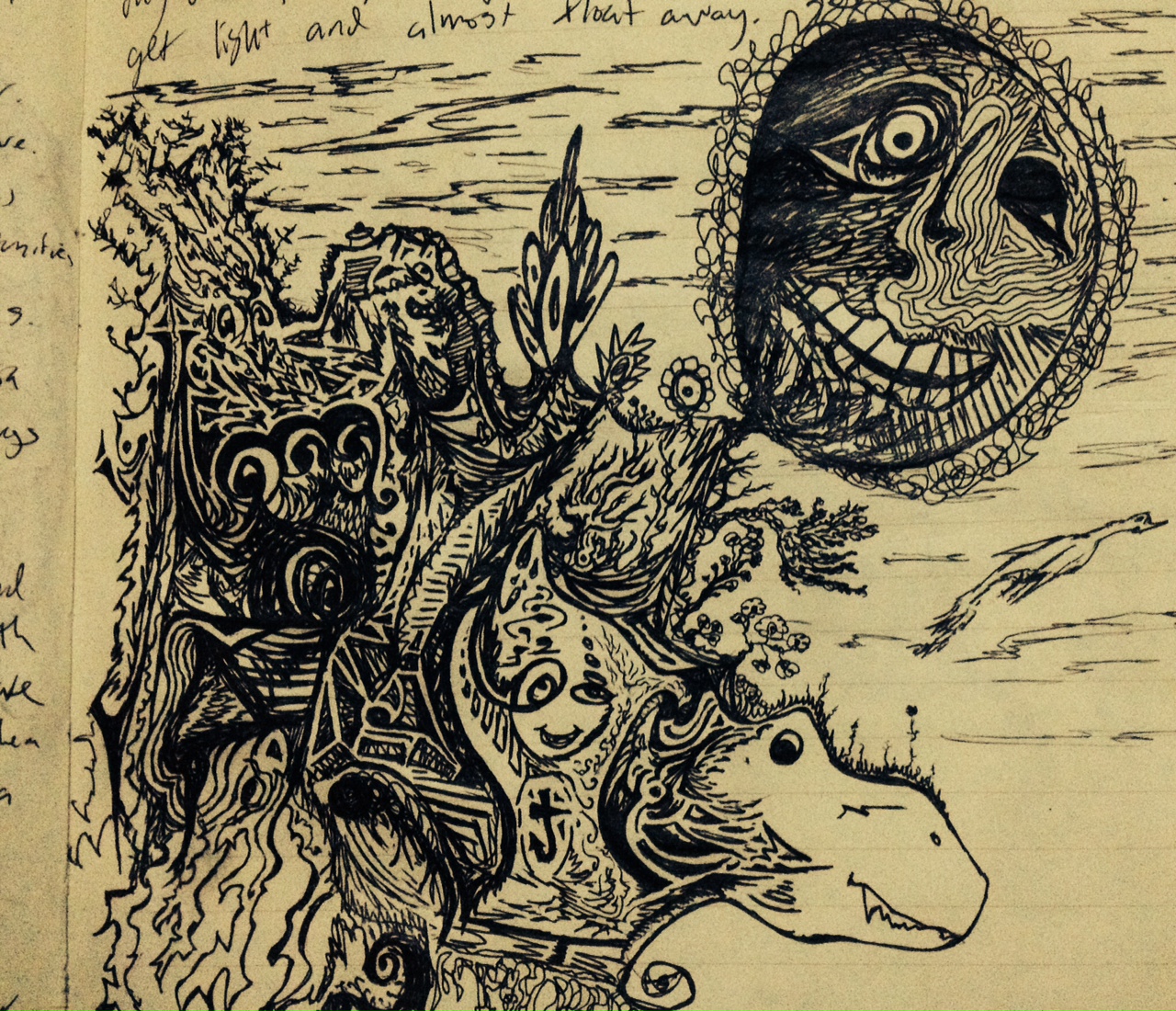
Original drawing by Pierce Morgan


Mister Misdirect’s approach is to deny that there is an issue. Mister Misdirect doesn’t improve training. Mister Misdirect doesn’t put people in a better frame of mind. Mister Misdirect does not add additional measures. Mister Misdirect simply demands that CSR’s continue to drive down the average call time of individual calls and that sales go up! In extreme cases, Mister Misdirect may even fudge the numbers and make it appear that things are much better than they really are. Oh, yes. I have seen this with my own eyes. 

Unfortunately, this way of handling things often makes Mister Misdirect an addict. Once an executive starts down the path of making things worse and denying that they did so, they are easily ensnared in a trap. Initially, they only had to take responsibility for instituting, say an incomplete measure and failed to anticipate the possible consequences. But now, having lied about it, they would have to not only admit that they caused a problem, but also that they lied about it.

The next day, when executive wakes up, they have a choice: 


1. Own up 


OR

2. Continue to deny

If they own up, the consequences will be immediately painful.
If they continue to deny, they will immediately feel relieved. Of course, if they have surrounded themselves with lackeys, they will feel more than simply relieved; they will feel vindicated or even proud. It’s not a “real pride” of course. But it’s some distant relative, I suppose. 

For a developer, UX person — or really any worker in an organization, the lesson from this is to anticipate such situations before they happen. If they happen anyway, try to call attention to the situation as quickly as possible. Yes, it may mean you lose favor with the boss. If that is so, then, you really might want to think about getting a new boss. Mister Misdirect will always ultimately fail and when he does, he will drag down a work team, a group, a division, or even an entire company. Mister Misdirect has one and only one framework for solving problems:

Try whatever pops into consciousness. 

If it works, take the credit. 

If it fails, blame an underling. 

But the real fun begins when he takes credit for something and then it turns out it was really a failure. Then, there is only one choice for Mister Misdirect and that is to claim that the false victory was real. From there on, it is Lose/Lose/Lose.

—————————————————-

  
Author Page on Amazon

————————————

Relevant essays, poems, & fiction about the importance of speaking truth to power:

Pattern Language: “Reality Check”

The Truth Train 

The Pandemic Anti-Academic

How The Nightingale Learned to Sing

Process Re-Engineering Comes to Baseball

——————————————————-

Posts on Problem Framing:

How to Frame Your Own Hamster Wheel

Wordless Perfection

Problem Formulation: Who Knows What?

I Went in Seeking Clarity

I Say Hello

Problem Framing: Good Point

Reframing the Problem: Paperwork & Working Paper

The Doorbell’s Ringing! Can you Get it?

Galactic Best

24 Wednesday Apr 2024

Posted by petersironwood in nature, poetry, science

≈ 3 Comments

Tags

earth, life, nature, photography, poem, poetry, science, space, truth

Photo by Pixabay on Pexels.com

Once upon a time I longed,

To be an astronaut in space.

Me: flying through the galaxy.

Exploring planets, moons, and stars. 

Photo by ZCH on Pexels.com

Was boosted by the Sputnik shock. 

I read of planets hot and cold.

And watched the tale of Spock unfold.

I never tired of voyaging bold.

Photo by Pixabay on Pexels.com

Humanoids are everywhere.

Diverse: each world a universe

That some day might just come to be.

Out beyond infinity.

A lifetime’s travel in my mind

Has brought me back at last to find:

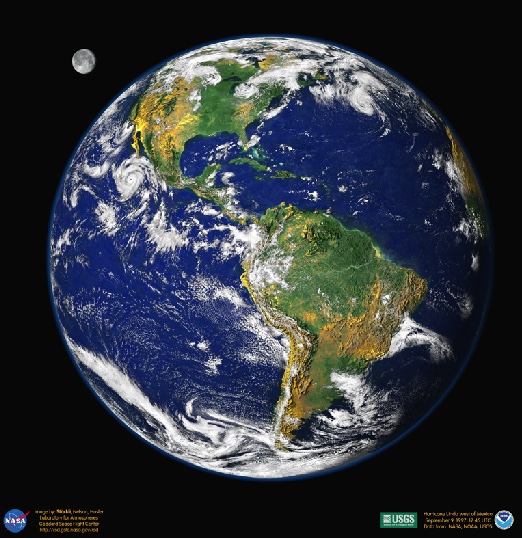
A planet ‘neath an azure dome. 

It’s blanketed with life—my home. 

Photo by Pixabay on Pexels.com

And here’s the lovely crazy cast:

A million species interact.

In ways surprising, subtle, vast

This network all a single clan.

This perfect planet filled with beauty, 

Spirals through the milky way.

My spaceship’s filled with luxury

Kaleidoscopic every day!

It is, quite simply put, the best.

And though I’ve not seen all the rest,

Each flower I see: creation swirled

A wonder whirling living world.

————————

How the Nightingale Learned to Sing

Life is a Dance

Take a Glance; Join the Dance

The Dance of Billions

Corn on the Cob

Author Page on Amazon

Family Matters: Part Four

13 Wednesday Mar 2024

Posted by petersironwood in family, nature, pets, psychology, science, Uncategorized

≈ 1 Comment

Tags

Democracy, family, family-reunion, life, truth

When we see that word “Family” most of us think of a relatively small number of people. Maybe when you saw it, you thought of your family of origin. Maybe you thought of your family of generation. Maybe you thought of the people who live in your home which may include some of each. When I was a kid, we had “Family Reunions” which included the extended family of my maternal grandmother. It did not extend to my maternal grandfather’s family nor to my dad’s relatives. Typically, there were 30-40 people who showed up. I know of “Family Reunions” which are much larger, involving hundreds of people. Years ago, when I wrote in this blog of “Family Matters” I mentioned a subset of people who attended my “Family Reunions.”

Occasionally, people think of humanity as their family. I have been lucky enough to visit a respectable number of countries (28) and I’ve met people from over a hundred and in every single instance, it’s very easy to see that they are basically like me both physically and mentally.

Like many people, I was brought up in a religious tradition that reinforced the idea that all of us are in this together. Beyond my personal experience, it is just plain fact that human beings share most of their history (4 billion years) before we began diverging slightly a hundred thousand years ago. Beyond that, we are all sharing the planet. While, borders may keep some people out (or more commonly, keeping them in), in the long run, the water, air, and pollution is shared world wide across all “boundaries” of religion, philosophy, or nation.

It may be difficult for some to accept that all humans are part of their extended family.

The truth is that our actual family is far broader and wider than the 8 billion people on the planet today. We share more than half of our “family history” with every single creature and plant on earth today. When you think about vertebrates, for instance, we have similar bodily systems. We mate. We eat food. We eliminate wastes. Even those who live in the water actually breathe air that’s dissolved in the water. We learn. We flee. We are curious. We are aggressive. We solve problems.

Photo by Tom Swinnen on Pexels.com

The earth is basically covered with living organisms. That is our family. It can be a source of inspiration and comfort if you let it be. And, you can love that family.

It’s up to you.


Family Matters: Part One

Family Matters: Part Two

Family Matters: Part Three

Life Will Find a Way

Math Class: Who are you?

Dance of Billions

Life is a Dance

The Walkabout Diaries: Bee Wise

The Forest

Author Page on Amazon

The Walkabout Diaries: Natural Variations

20 Wednesday Dec 2023

Posted by petersironwood in design rationale, nature, science

≈ 7 Comments

Tags

Democracy, flowers, life, nature, photography, plants, trees, truth, Walkabout Diaries

Weather in San Diego is typically nice almost every day. Today is no exception, but that doesn’t mean that the weather is boring. There is a lot of natural variation. There is variation in the humidity, in the wind, in the position of the sun, in the heat, in the (fairly rare) precipitation.

Reflecting on this reminded me of another kind of natural variation: the variation in organisms of the same species. Without that variation, evolution would be far less effective.

It also reminds me of several of the characteristics of natural beauty and good design that Christopher Alexander writes about.

Things that have zero variation are mechanical, predictable, repetitive, and generally not very pleasing aesthetically. Mindless, endless repetition is aligned with death. Variation is aligned with life, freedom, creativity, growth, and joy.

Among things that are non-living artifacts, there is still a variation in how variable they are. Walls made of stone, are by their nature, “rougher” and more variable (and more beautiful) than walls made of bricks. Walls made of bricks are more irregular and beautiful than one made of solid steel. Similarly, at least to me, fences made of wood are more variable and beautiful than fences made of metal.

Building elements that make up a wooden deck show grain and irregularities in the surface of the deck. In addition, however, they even have interesting variability below the deck as shown here.

You can also see in this photo below a variety of materials. The stucco, by its very nature, more interesting and variable than steel or plaster.

In these photos, you can see variation within leaves, among the leaves of a particular plant, and also among the plants themselves. Each plant and each part of the plant grows in accordance to its genetic blueprint. Except a “blueprint” is itself too fixed and unbending to be an appropriate metaphor. The growth will depend on the context–water sources, light sources, nutrients in the soil, other nearby plants and rocks will all play a part in how, precisely, a particular plant grows.

It would be absurd for one plant to say to itself: “Every plant should be just like me! I have a plan based on what works for me and everyone should do exactly what I do!”

Fifteen Properties of Beauty

Absolute is not just a vodka

Life is a dance

The Orange Man

Three Blind Mice

The Walkabout Diaries, symphony

The Walkabout Diaries, how beautiful

The Walkabout Diaries the life of the party

Author Page on Amazon

Captain Donny Boy Steers the Titanic (Luckily, the Iceberg was a Liberal Hoax*)

11 Saturday Jul 2020

Posted by petersironwood in America, apocalypse, COVID-19, family, health, politics, psychology, science, Uncategorized

≈ 4 Comments

Tags

fiction, IMPOTUS, leadership, pandemic, parable, parody, politics, psychology, Resistance, satire, story, undedided

white ice formation

Photo by Harrison Haines on Pexels.com

“What iceberg? There’s no iceberg! And, if there is, the sun will come out one day soon and melt it all away. It’s water! Did you know that? Most people don’t know about ice and water actually being the same. Cousins. Sisters. They are cousins. With cousins, it’s okay. But ice – water – and what about ice water? Who would’ve known? Very few people know that. But thank God I am the captain because — did you know this? Hillary would have — I can’t even say it. So crooked. So crooked.
Did I ever tell you about the time I was playing golf at Marlo’s Lango and I hit a hole in one on a par 5? 845 yards straight into the hole. Shattered the flagstaff — er — flagstick — er — maybe I should issue an executive order they should all be American Flags on the flagstaffs. But my shot! My shot! People couldn’t believe it. They said it was a miracle shot. That just happens with me. Miracles. One day the iceberg will just disappear. Poof! It’ll melt and — get this — it will turn into — you ready — water! Isn’t that something? Water. Ice. They’re like lovers, really. Like father and daughter, in a way. It’s really almost incestuous, you know? Ice and Water. But no-body says they have to be all PC and all that jazz. 
65796580-15DB-4130-9007-F40C680217D5
There’s no iceberg! None! It’s a liberal hoax. 
It’s the Chinaberg. The Whoa Floe! The Cuban Cube! But we have — all the life jackets — we have — Mikey, how many — we have trillions of life jackets. No, no, I don’t wear one. It’s not a good look for me. A good look for me is obese, old, wrinkled, and painted orange with my mouth open in a sucking position. Now, *that’s* a good look for me. I like to tilt forward a tad. It — well — off the record — it makes a whole lot more comfortable to walk with that damned cattle probe in there, what with the remote control and all. Anyway, the point is a Life Jacket is not a Good Look for … Me…

smiling man wearing blue framed eyeglasses

Photo by Kelly Lacy on Pexels.com

And besides, if I wear a life jacket, no one can see that vacant eyed suck expression. Or any of my fake expressions. They’re too hidden by the jacket. Not even Vlad could see. Okay, everyone — put on a — oh, I’m tired. Never mind. Have the staff decide for the people around them whether or not they need a life jacket.

What do you mean the ship is tilted? Ridiculous! Sinking? Who’s the captain? Me. So, who’s right? Not sinking. Not sinking. Fire anyone who says that!!

climate cold road landscape

Photo by Markus Spiske on Pexels.com

 
No, I take no responsibility. I am perfect. Did you know — did I ever tell you how smart I am? I am a — what they call a — stable genius. Stable. Genius. I’m so smart they made up a new word for me. Yeah. ‘Stable Genius’ — before that their top category was ‘Genius’ but then, they had to make a new one for me. It’s called — I am so smart — I am I am pretty sure I’m the only one in the Stable Genius category. It’s like — they had to make a new CAT-E-GOR-Y for me. The doctors couldn’t believe it! No! They were like — they thought those — what was that — they were amazed I was — like I got a perfect score. Better than perfect. They said, Mr. Captain, if you ever retire, will you please come be a subject so we can study you, Sir? I said that was very flattering, but I’m going to be needed as Captain here on this ship for a very long time. This ship? WTF? Where is my ship? 
No, I am not going down with the ship. That’s for people who join the service. That would be stupid. I’m needed elsewhere. What do you mean all the lifeboats are gone? Get me one!
Anyway, it doesn’t matter. Vlad promised a helicopter. It’ll be here any minute. Any minute.
 
Vlad? Vlad!?? VLAD!!!???”
* The term “liberal hoax” is simply the “Captain’s” way of saying, “Crap, they caught me red-handed again! Why don’t they just leave me alone & let me do Putin’s bidding.”
2E9EBFDF-8366-41E3-B9D1-47136A7D029B
———————————
Trumpism is a new religion.
You Bet Your Life.
It’s Just Tommy Being Tommy.
Rejecting Adulthood.
The Truth Train
The Pandemic Anti-Academic
The Watershed Virus
Unmasked
The Happy Talk Lies

Essays on America: Ice

04 Wednesday Sep 2019

Posted by petersironwood in America, apocalypse, psychology, science, Uncategorized

≈ 9 Comments

Tags

arctic, carbon dioxide, Climate change, environment, ice, life, methane, politics, science, truth

“Have a nice day.” 

IMG_3105

In the San Diego area, where I live, people really do often say, “Have a nice day.” And, generally, that happens, at least weather-wise. It is typically between 55 and 75 degrees Fahrenheit (13 to 24 degrees Celsius) year round. Right now, we are having a slight heat wave. When I went to play tennis this morning, I filled a cup 2/3 ice and 1/3 water to help me stay cool and hydrated on the court. Although we played at 8:30 am, the temperature on the tennis court was already high. As I filled my cup (to almost running over), I was once again struck by the odd properties of ice. 

One of those properties is that ice is less dense than water. Ice floats. That turns out to be a good thing. But it’s also an unusual thing. Many substances contract as they get colder and expand as they get warmer. 

iceberg during daytime

Photo by Pixabay on Pexels.com

There’s another weird thing about ice. It takes as much heat energy* to change a cup of ice at 32 degrees Fahrenheit (0 degrees Celsius) to a cup of water at 32 degrees Fahrenheit as it does to warm that water from 32 degrees F to 176 degrees F!! That is hot water! Exposure to water for two seconds that is only 150 degrees F will give you third degree burns. You do not want to touch water that is 176 degrees Fahrenheit (80 degrees Celsius)! 

Just contemplate that astounding fact. It takes as much heat energy to change a cup (or any other amount) of ice to water at that same temperature as it does to heat that ice cold water up to way beyond scalding. 

brown surface beside body of water in a distant of mountains under white clouds during daytime

Photo by Pixabay on Pexels.com

“Well, okay,” you might say. “But who really cares?” 

You do! Or at least you should. Because all that ice that is melting at the Arctic and in Iceland and in Greenland — that is a big frigging deal! 

And I think you would immediately know it’s a big frigging deal if Global Warming heated the ice cold water in the Arctic Ocean to scalding water that was so hot it killed all the fish, dolphins, whales, crabs, and seaweed in the ocean. It would kill you almost instantly if you tried to swim in it. 

pexels-photo-225869.jpeg

Photo by HAMID ELBAZ on Pexels.com

Actually, what is happening is worse than that. 

Why? Because although water is reflective, it is not nearly so reflective as ice covered with snow. Chances are, you may have heard the expression “snow blind” which is a temporary blindness caused by the sunlight bouncing off snow and hurting your retina. But you have not heard the expression “water blind.” Although there can be glare off the water, it is not nearly so severe. So, when the ice melts, it not only represents a huge change in heat energy; it also speeds up the further heating of the planet. The sunlight once reflected off of ice covered with snow and that helped keep the planet cooler. In those areas where the ice and snow have melted, much less of the sun’s energy is now reflected off into space. 

Actually, what is happening is worse than that. 

Why? Because the arctic heat is also thawing permafrost in arctic lands. This means that methane which is trapped beneath the permafrost is being released into the atmosphere. Alas, methane, like Carbon Dioxide, is a greenhouse gas. So, the increased level of Carbon Dioxide in the atmosphere is not only itself causing the planet to heat up; it is also releasing huge quantities of another greenhouse gas: methane. 

beach beautiful clouds countryside

Photo by Pixabay on Pexels.com

Unfortunately, in the first two decades after being released into the atmosphere, methane is 84 times as “effective” as Carbon Dioxide at trapping the heat energy in the earth’s atmosphere. Agro-business and manufacturing also produce methane. This means more warming and less ice. 

As it turns out, there are many possible variations of ice. The exact number of different types varies depending on what “counts” as another type. You know that “solid ice” is different from frost and snowflakes and candle ice. Under extreme pressures, many kinds can be produced in the laboratory. But none of them is Ice Nine. 

Ice Nine is a science fiction substance created by the mind of Kurt Vonnegut in his wonderful book, Cat’s Cradle, which is well worth the read. 

In Cat’s Cradle, a scientist discovers another form of ice which “freezes” at room temperature. Not only that; if even a tiny “seed” of this Ice Nine touches a larger body of water, that entire body of water will turn into Ice Nine. So, an over-arching suspense arc of the book is whether or not humanity will be able to “contain” Ice Nine or whether it will basically destroy life on earth. 

fullsizeoutput_1372

Ice Nine is fiction. But global climate change is not fiction. 

Whether we humans can get our act together in time to prevent turning Global Climate Change into Global Climate Disaster is not clear. Many people are working very hard to prevent that. But many other people apparently think it will happen after their individual life is over so they don’t really give a damn about how many of their descendants will suffer or how many other life forms they destroy. And a few people, those I call SHRUGS (Super Hyper Really Ultra-Greedy Swindlers), are actively trying to hasten the Global Climate Disaster by rolling back environmental regulations, setting forests afire, and denying that Climate Change is real. 

Why? 

That’s the subject of the next post. 

—————————————-

  • In actual practice, the amount of heat will vary depending on the insulation and ambient temperature. If you heat ice water up on your stove, for example, at first, in addition to the heat you provide from the gas flame or electric coil, your house temperature (perhaps around 72 degrees F) will also be heating up that water. But once the temperature of the water reaches a higher temperature than 72 degrees F, some of the heat you apply from the stove will “leak out” into the rest of your house. And the higher the temperature of the water, the more will leak out into the rest of your house. 

https://en.wikipedia.org/wiki/Cat%27s_Cradle

Author Page on Amazon

Thinking Tools: The Whole Enchilada

25 Thursday Jul 2019

Posted by petersironwood in America, politics, psychology, science, Uncategorized

≈ 5 Comments

Tags

alcohol, back pain, experiment, Feedback, learning, logic, politics, science, testing, truth

————————————-

Tools of Thought: The Whole Enchilada

B82CB493-B373-492D-90F9-71D8FA694458

A home made salad. NOT an enchilada.

This is NOT an enchilada.
This is a salad.
This is a salad.

Do you like enchiladas? I do. I like the combination. It’s much better than just the corn tortilla. It’s better than just eating sauce by itself. And, although I like the fillings, even the fillings are better to me when they are part of the whole enchilada. Sometimes, things only “work” when all the ingredients are present.

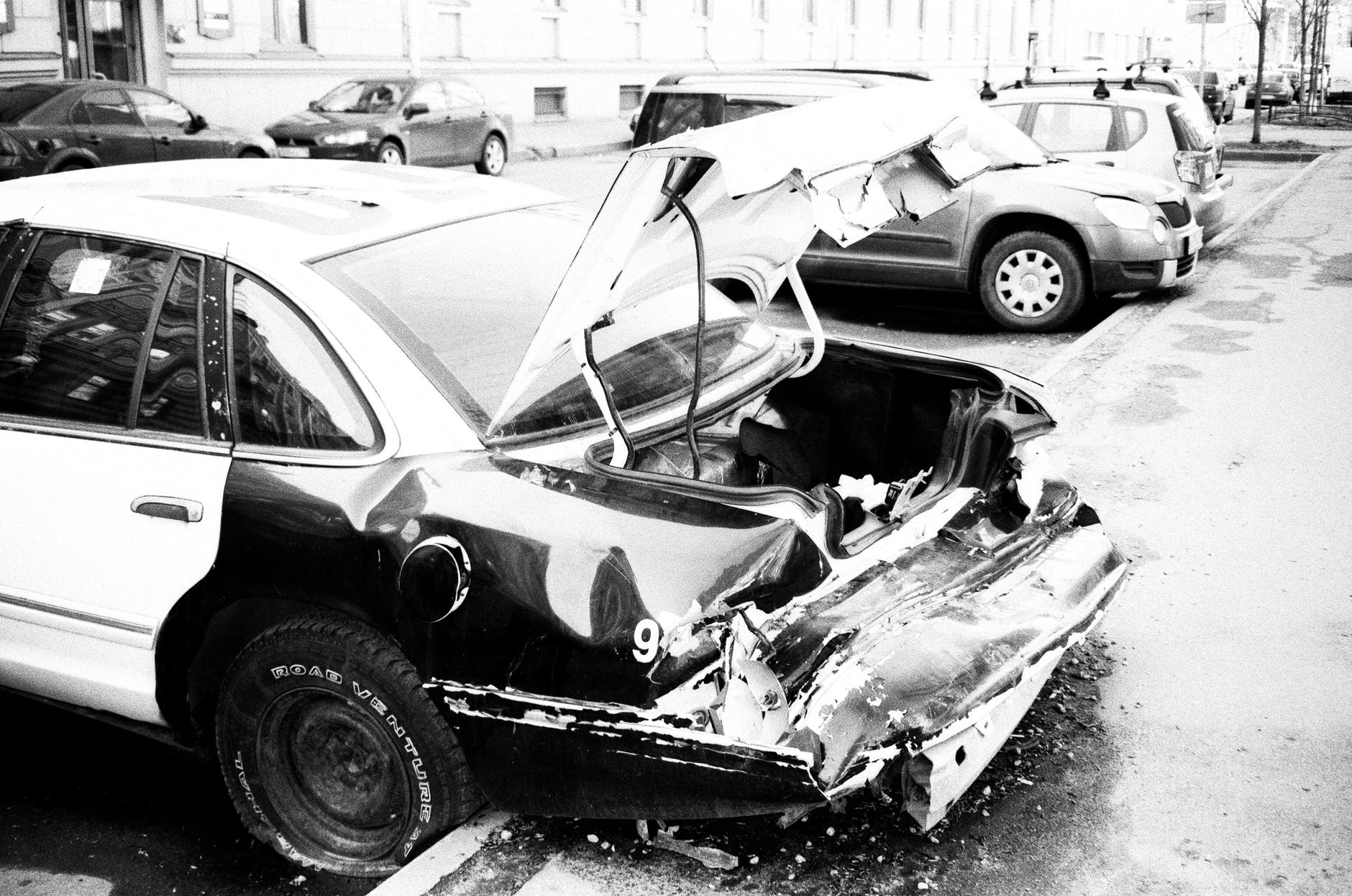
Do you think it’s safe to drink and drive? What if I told you that 13% of the drivers involved in fatal traffic accidents had been drinking? Would that convince you that drinking and driving don’t mix?

grayscale photo of wrecked car parked outside

Photo by Aleksandr Neplokhov on Pexels.com

It shouldn’t. Not by itself. Not only does that statistic, in and of itself, not show causality, it does not even show correlation! 

What else would you need in order to show that there was at least a correlation between drinking and driving? You would need to know what proportion of people who were not involved in fatal traffic accidents had been drinking. What if that percentage were 50%? What if it were only 1%? 

Let’s take another example. What is the cause of your back pain? Imagine that you went to the doctor and that you had an MRI and it showed that you had a bulging disc or some other back abnormality. Your doctor tells you that you need surgery to fix the bulging disc and that this will get rid of your pain. In fact, the doctor says that 50% of the people who have back pain have a bulging disc or other spine anomaly. What can you conclude from this about the relationship between spine abnormalities and back pain? Nothing. Not yet.

person holding x ray film

Photo by rawpixel.com on Pexels.com

You cannot logically conclude anything from this statistic in and of itself. You have to know what percentage of people who do not have back pain also have a spinal abnormality. What if it’s exactly 50%?

What if it’s only 1%? If it’s only 1%, it would seem that having a spine anomaly might be a good indicator (though not necessarily the cause) of potential back pain. 

What if 90% of the people without back pain have bulging discs? Then, it might seem that having a spine anomaly is a good thing! 

Once again, before we can even establish that there is a correlation or association between back pain and spine abnormalities, we must know four numbers:

How many people have back pain AND a spine abnormality. 

How many people have back pain and NO spine abnormality. 

How many people have NO back pain AND a spine abnormality. 

How many people have NO back pain AND NO spine abnormality. 

Then, we can test these numbers of find out whether there’s a statistical association between back pain and spine abnormality. Even if we find that there is a statistical association between the two, it would not prove that the abnormality causes the back pain. For example, it might be that some other factor is responsible for both. For instance, it might be that people who regularly run, swim, walk, or otherwise exercise have far less back pain and far fewer spine abnormalities. Conversely, it might be that people who experience back pain exercise far less and this lack of exercise is what causes more spinal abnormalities.

woman girl fitness

Photo by Scott Webb on Pexels.com

Or, it might be that older people have both more spine abnormalities and more back pain. It might really be age that causes an increase in both. 

But be careful. If you take a snapshot in time, it might be true that today’s old people have more spine abnormalities and more back pain than today’s young people. But does that prove that age itself is to blame? No. It might be that people who are old today were exposed to more pollutants than younger people. Or, it might be that people who are young today are exposed to many more artificial preservatives and that one of these actually helps prevent spine abnormalities and back pain. 

The point is not that science is impossible. It isn’t. But neither is it trivial. 

Most people who are scientists were good in science and math and they enjoyed it. While most people were struggling through science, some people, like me, loved it. In the first grade, we had a “science text book.” I found it fascinating. But I didn’t stop there. I went to our local public library on Arlington Street, and discovered that they had our textbook on the shelves — but right next to it, they also had the science text books for grades two through six. I read all of them in order and immediately the day I discovered them. 

fullsizeoutput_1375

My grandfather subscribed to Sky and Telescope, Scientific American, and The Natural History Magazine. I began reading these at an early age. If I didn’t understand something, Grandpa would explain it to me. By the third grade, I was very familiar with much of the simple “nomenclature” of anatomy, paleontology, astronomy, biology. I read 2-4 science books every week during my childhood. Mr. Wizard was one of my favorite TV shows. He was the “Bill Nye” of the 1950’s. I got a chemistry set and joined another “club” that sent a different science experiment every month. 

Most, but not all, people who are scientists today also loved science as kids. And, in high school, they — like me — continued to study and read about science. And most of them took further science and math courses in college. And most of the people who are “scientists” then went to graduate school and studied science for another four or more years. Graduate school  for science is the intense study of science. The grad student doesn’t take physical education or literature courses or “Western Civilization” courses. If they are in a science Ph.D. program, that is what they are studying. Most then do some sort of “Post-Doc” meaning that they get a job, but continue to learn on the job under the tutelage of someone already expert in the field. 

One of the things that I find fascinating about current American society is that a huge proportion of people no longer trust what scientists say. Most folks would never go to a forest ranger to have their teeth fixed. They would never go to a professional golfer to have their gall bladder removed. They would not rely on a car mechanic for open heart surgery. Yet, when it comes to climate change or the safety of vaccinations, they are willing to rely on very rich people with a vested interest to tell them what to think over a body of experts who have devoted their lives to learning about a particular field. And the “arguments” of those with vested interests are generally like the opening example. They do not tell the public all the facts or observations needed to make rational decisions.  

alcohol bar black background close up

Photo by Prem Pal Singh on Pexels.com

Let’s now return to our alcohol example. When I was an undergraduate, one of my part-time jobs was as a projectionist. One week I worked all week during spring break for a week-long conference at Case-Western Reserve on the effects of alcohol on driving. It turns out that (as you might expect), there is an association between drinking and being in an accident. People who are scientists not only collected data on this but also studied driving and performance under a wide variety of circumstances. 

This is also crucial to understand. Scientist do not typically just go work in a lab by themselves and come to a conclusion. They present and publish their work so that they get feedback from other experts. Of course, like other human beings, they would prefer that their work be “perfect” but at the same time they welcome feedback from these other experts. They don’t just keep asserting over and over and ever more loudly that they are “right.” A person who insists like that will soon find themselves shunned by the scientific community. 

So these scientists studying the impact of alcohol on driving came together from all over the world in order to get feedback from each other. Each became a teacher and a student. People who are done with school and don’t want to be students or teachers any more should not really become scientists. 

I am very good at finding other people’s typos. I am horrible at finding my own. That’s why I ask other people to proofread my work. 

It’s the same with science. Despite having worked for years as a scientist, individuals do still make mistakes in logic. That’s why the consensus of a large group of scientists means more than the conclusion of one scientist who has come to a conclusion. 

adult automotive blur car

Photo by JESHOOTS.com on Pexels.com

As for alcohol, some scientists at that conference at Case-Western measured the impact of alcohol on “reaction time” — how quickly a person reacted to a simple stimulus. They measured, for instance, how long it took people to push a button after a light came on. In more “realistic” tests, people sat in a driving simulator and scientists measured how quickly they put on the brakes when a red light came on. In those studies, it turned out that simple reaction time didn’t really become noticeably impacted until the person had three stiff drinks on an empty stomach! 

Someone from the insurance industry who had studied accidents in the real world, however, found that even a half drink significantly increased the chances of being the driver in an accident! That’s quite a discrepancy! 

But scientists do not throw up their hands at this point and say, “Oh, my! Science is hard! Let’s give up and go watch TV.” No. Scientists find this an interesting problem. Why is it that it takes three drinks to find a significant impairment in reaction time, but in the real world even having half a drink causes a significant increase in accidents? So, they begin to tease this apparent contradiction apart with more experiments. 

Does it have to do with particular people? People who agree to participate in lab experiments are not a random group of people from the whole population. They tend to be younger, healthier, and better educated. Could that be part of the apparent discrepancy? 

What about mood and motivation? When you come into a laboratory and people measure how quickly you can respond, you might tend to be in a “serious” mood and typically, in our competitive society, you are motivated to be as fast as possible. When you are out partying, you may be in a much different mood. Perhaps your motivation, especially if you are a teen-ager, is to “impress friends” that you are not “chicken.” So, maybe 1/2 drink might induce you to do stupid things that you wouldn’t do when you are sober. At the same time, if you’ve been drinking, chances are that your fellow passengers may have also been drinking so they may cheer you on in your choice to pass on a curve or engage in a high speed race or chase on the highway. Even if they don’t cheer you on, having friends there talking, laughing, and singing may distract you from your main task which is to keep everyone safe. Indeed, it does turn out that while simple reaction time takes three drinks to show a significant slowing, your ability to switch between tasks and to control your attention begins to suffer immediately under the influence of alcohol. 

What about back surgery to cure your back abnormality? I am not an expert on backs. Here’s a nice summary of things to think about before having back surgery. 

https://www.uofmhealth.org/health-library/aa6282

And I highly recommend the books by John Sarno. Reading this book completely cured my sciatica. Naturally, that doesn’t prove it will work for you, but you may want to try a $10 book before you go under the knife for $10,000, $100,000 or more! 

For instance: 

https://www.amazon.com/Healing-Back-Pain-Mind-Body-Connection/dp/0446557684

Take-aways: 

Don’t drink and drive. 

Science works. But it’s not trivial. Experts know more than you do. But the knowledge isn’t inaccessible. It’s not some secret hidden knowledge that scientists want to keep from you. You can become an expert in some field. But it will take time, effort, and an open mind. Or, you can take the word of experts. Or, you can decide that you’d really be okay with a forest ranger fixing your teeth or a car mechanic doing your open heart surgery. Or, you can decide to rely on people funded by fossil fuel companies to tell you whether climate change is real. 

Scientists mainly work together to seek the truth. Their “culture” is not to lie, cheat and steal in order to get rich. They get their kicks in other ways. 

If someone tries to imply a causal narrative about A causing X, you have to see the number of cases in FOUR categories before you even have evidence of an association. If they only tell you how many cases are in A & X, they are trying to convince you of something, not in having you see the truth. You need to find out how many: 

A & X

A & ~X

~A & X

~A & ~X. 

Even if A & X are statistically associated, it doesn’t prove causality. Proving causality depends on careful study using a variety of methods to converge on the truth. 

If all your doctor tells you is that you have a back abnormality and you have pain, and that therefore you need back surgery, get a second opinion. 

Of course, it’s a free country. So far. And, if you want to go to a Mexican restaurant, you’re free to order enchiladas and scrape all the sauce out and then scoop out all the ingredients and just eat the corn tortillas. You are missing out though. And if you then declare that Mexican food isn’t that great…? Well, you do the math. You really should have gone for the whole enchilada. 

————————————-

Author Page on Amazon.

Introduction to A Pattern Language for Collaboration.

Stories and Storytelling. 

The Pros and Cons of Artificial Intelligence.

The Myths of the Veritas: Book One. 

The Myths of the Veritas: Book Two.  

Subscribe

  • Entries (RSS)
  • Comments (RSS)

Archives

  • December 2025
  • November 2025
  • October 2025
  • September 2025
  • August 2025
  • July 2025
  • June 2025
  • May 2025
  • April 2025
  • March 2025
  • February 2025
  • January 2025
  • December 2024
  • November 2024
  • October 2024
  • September 2024
  • July 2024
  • April 2024
  • March 2024
  • February 2024
  • January 2024
  • December 2023
  • August 2023
  • July 2023
  • May 2023
  • April 2023
  • March 2023
  • February 2023
  • January 2023
  • December 2022
  • November 2022
  • October 2022
  • September 2022
  • August 2022
  • July 2022
  • June 2022
  • May 2022
  • April 2022
  • March 2022
  • February 2022
  • January 2022
  • December 2021
  • November 2021
  • October 2021
  • September 2021
  • August 2021
  • July 2021
  • June 2021
  • May 2021
  • April 2021
  • March 2021
  • February 2021
  • January 2021
  • December 2020
  • November 2020
  • October 2020
  • September 2020
  • August 2020
  • July 2020
  • June 2020
  • May 2020
  • April 2020
  • March 2020
  • February 2020
  • January 2020
  • December 2019
  • November 2019
  • October 2019
  • September 2019
  • August 2019
  • July 2019
  • June 2019
  • May 2019
  • April 2019
  • March 2019
  • February 2019
  • January 2019
  • December 2018
  • November 2018
  • October 2018
  • September 2018
  • August 2018
  • July 2018
  • June 2018
  • May 2018
  • April 2018
  • March 2018
  • February 2018
  • January 2018
  • December 2017
  • November 2017
  • October 2017
  • September 2017
  • August 2017
  • July 2017
  • June 2017
  • May 2017
  • April 2017
  • March 2017
  • February 2017
  • January 2017
  • December 2016
  • November 2016
  • October 2016
  • September 2016
  • August 2016
  • July 2016
  • June 2016
  • May 2016
  • April 2016
  • March 2016
  • February 2016
  • January 2016
  • December 2015
  • November 2015
  • October 2015
  • September 2015
  • August 2015
  • May 2015
  • January 2015
  • July 2014
  • January 2014
  • December 2013
  • November 2013

Categories

  • AI
  • America
  • apocalypse
  • cats
  • COVID-19
  • creativity
  • design rationale
  • driverless cars
  • essay
  • family
  • fantasy
  • fiction
  • HCI
  • health
  • management
  • nature
  • pets
  • poetry
  • politics
  • psychology
  • Sadie
  • satire
  • science
  • sports
  • story
  • The Singularity
  • Travel
  • Uncategorized
  • user experience
  • Veritas
  • Walkabout Diaries

Meta

  • Create account
  • Log in

Blog at WordPress.com.

  • Subscribe Subscribed
    • petersironwood
    • Join 664 other subscribers
    • Already have a WordPress.com account? Log in now.
    • petersironwood
    • Subscribe Subscribed
    • Sign up
    • Log in
    • Report this content
    • View site in Reader
    • Manage subscriptions
    • Collapse this bar
 

Loading Comments...