• About PeterSIronwood

petersironwood

~ Finding, formulating and solving life's frustrations.

petersironwood

Tag Archives: UX

Tools of Thought: Symmetry

07 Wednesday Jan 2026

Posted by petersironwood in management, psychology, Uncategorized

≈ Leave a comment

Tags

beauty, Business, Design, HCI, human factors, Human-Computer Interaction, poetry, politics, problem_solving, symmetry, truth, UX, Web design, writing

Symmetry

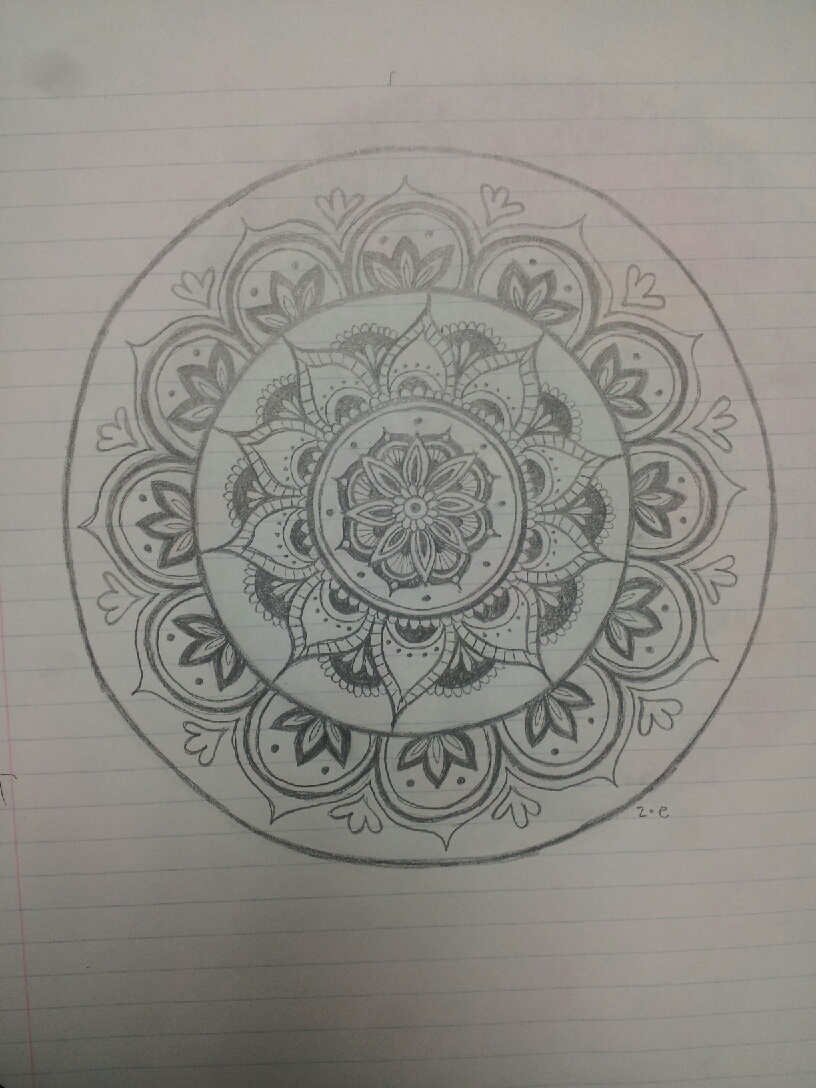
IMG_3316

(Original, free-hand drawing by Zoe Colier).

There are many varieties of symmetry. Symmetry exists rampantly in nature and symmetry is also incorporated into many human designs. In this short essay, I want to remind people of several varieties of symmetry and then show how symmetry may also be used as a tool of thought to help solve problems by simplifying the space of possibilities that must be considered. 

Symmetry is a concept with far broader application than cutting out paper snowflakes or choosing a nice looking Christmas Tree, Menorah or other Holiday decoration. It is fundamental in logic, mathematics, physics, chemistry, biology, and even in social science.

Symmetry exists at many different scales as well. Planets are generally roughly spherical and their orbits are roughly circular. 

IMG_5895

The human body, along with most other animals, exhibits rough bilateral symmetry in external appearance. If you examine your own fingerprints or the pattern of your moles, for instance, you will see that one side of your body looks slightly different from a mirror image. If, like me, you are a righty who play tennis, you will find the forearm muscles on your right arm are slightly larger than those on the left. What is remarkable to me is not that there are slight variations between left and right but just how slight those variations are. And, we are not alone. Fish, insects, flatworms, roundworms, snakes, turtles, lizards, horses, dogs, cats, apes, and humans are all roughly bilaterally symmetrical in appearance. I say “in appearance” because our internal arrangement of organs is not at all symmetrical.  

External Appearance and Internal Organs

In general, it seems to me that most animals possess more complete or “perfect” bilateral symmetry than do most plants. I suspect that this is because animals generally move through a physical environment. Since we can move around, the environmental forces are generally symmetrical and so our ability to react to those environmental forces is also symmetrical. A tree, on the other hand, may have a genetic “blueprint” to be bilaterally or (more likely) radially symmetrical, but it may be subject to strong asymmetrical forces such as wind, a water source, or sunlight versus shade. 

Our designed objects are also most often (at least) bilaterally symmetrical, and particularly for those objects which must interact and move through the physical world. Cars, boats, motorcycles, busses, trains, trucks, bikes, skis, surfboards, roller skates, ice skates, snowshoes and tennis shoes all tend to be bilaterally symmetrical. On the inside, however, again just like us, there are often some irregularities. The arrangement of controls of the car, for instance, are asymmetrical. (Each control in itself often does show symmetry. In some cases, this makes it easier to use, especially without looking. I suspect that the symmetry may often be for aesthetic reasons, for ease of manufacturing, for ease of maintenance or replacement or some combination.) The asymmetry of arrangement “works” because the arrangement of displays and controls does not interact with the natural world the way that the car body and wheels do. The controls are designed to interact with a human being. There are also rough conventions for where controls are laid out, how they operate, and what each type looks like. Asymmetry of arrangement is also evident under the hood. However, some of the components such as the engine, the battery, the radiator have symmetry within them. The radiator, which arguably has the most interaction with the outside world, is symmetrically placed though its plumbing is not. 

automobile car customized drive

Photo by Pixabay on Pexels.com

In the design of User Interaction and Experience, an argument can be made for certain kinds of symmetry. For example, in the Mac editor Pages, which I am using to write this, if the B for bold button background turns blue when bolding is turned on, I expect the background will turn back the way it was (white) when bolding is turned back off. I also expect that italics and underlining will behave the same way, especially because all three are in the same toolbar. 

Where possible, it also generally makes sense, I believe, to design so that the functionality of a system is symmetrical. This isn’t always possible. Some actions are necessarily irreversible. If you don’t believe me, ask anyone who has toddlers or who has pets. In the real world, if you shoot someone dead, you cannot “unshoot” them. Unlike a computer system who asks, “Do you really want to delete all your files?” before doing so, guns do not ask that. If you are designing what can be done with a toy robot however, if you can make it go forward, you want to make it so it can go back as well. If it can turn right 90 degrees, you would like to enable it to turn left 90 degrees. Saying, “Oh, yes, but don’t you see, you can, in effect, make it turn left 90 degrees by making it turn right 90 degrees three times?!” does not cut it, IMHO. 

Typically, you not only want the functionality to be symmetrical, you also want the control functions and appearances to mirror the symmetry of the functionality. For example, if you can issue the command: “MOVE ROBOT FORWARD THREE PACES” you want the symmetrical function to be evoked this way: “MOVE ROBOT BACKWARD THREE PACES” and not, “THREE PACES BACKWARD FOR ROBOT MOVE.” If you decide to give auditory feedback for the first command that says, “ROBOT MOVING FORWARD THREE PACES” you do not want the reverse command to provide feedback that says, “ROBOT THREE PACES BACKWARD MOVING.” (Oh, by the way, if you cannot provide symmetrical functionality, please do not pretend to do so with a facade of symmetrical looking commands that actually behave asymmetrically!)

action android device electronics

Photo by Matan Segev on Pexels.com

A lack of symmetry (or consistency) in the functionality, command structure, or visual appearance often arises because of a lack of communication within the development team. If different functions of the robot are to be implemented by different people, then it’s important that those various people use an agreed upon style guide or Pattern Language or that they  communicate frequently. Of course, this is not the only cause of asymmetry. Even if your team communicates really well, they can’t design an effective gun with an “unkill” function. 

There are, of course, various types of symmetry. Bilateral (mirror) symmetry is what the external appearance of our bodies has. There is also translational symmetry, where the same shape is repeated along a line. The string ABCCBA shows bilateral symmetry while ABCABC exhibits translational symmetry. Most human factors people now agree that hot water faucets (usually on the left) and cold water faucets (usually on the right) should both be turned off by turning to the right and turned on by turning to the left (translational symmetry) as opposed to having the faucet on the right turn off to the right and the left faucet turn off to the left. But you will definitely experience both types. 

In both music and poetry, at least in the culture I am most familiar with, translational symmetry is more common than mirror symmetry. It does sometimes happen that musical composers experiment with playing a tune backwards or even with the staff turned upside down. But this is far less common than repeating a theme or melody. Similarly, a rhyme scheme like ABCABC is much more common than is ABCCBA. {In this notation, ABCABC means that the first line rhymes with the fourth line, the second line rhymes with the fifth line and the third line rhymes with the sixth line.} 

black and brown millipede on a green and brown branch

Photo by Pixabay on Pexels.com

In biology, we also find translational symmetry or something close to it. The segments of a tape worm, the segments of the body of a millipede or centipede, the small legs of a lobster, and even our own vertebrae and ribs show translational symmetry. In social structures as well, we find both mirror symmetry and translational symmetry. For instance, the Golden Rule says to do unto others as you would have them do unto you. In addition, as it happens, if we are nicer to other people, then, generally speaking, they are also nicer to us. This is not always true, however. Some people simply take advantage and view all of life as a zero sum game. Whatever you gain, they lose and vice versa. This is a very limited, inaccurate, and self-defeating attitude in most social situations. Most social situations, are, of course, much more complicated. Generally speaking, there are a great many situations that both you and your “opponent” or even your “enemy” would agree are good and a great many others that both of you would agree are bad. If you are playing tennis or golf outdoors, for instance, you may be fiercely competitive but both of you would probably find a game that brings out the best play is better for both of you. Both of you would probably also agree that being rained out is a bad outcome.  

men in black and red cade hats and military uniform

Photo by Pixabay on Pexels.com

In the military and in many industrial settings, there is a great deal of translational symmetry. The “ideal” set-up is to have many groups at each of many levels and each group is meant to be as similar as possible to all the other groups at that level. The marching that military groups learn is both symbolic of this translational symmetry and practice in behaving as a unit composed of identical parts. Whether or not this is the best way to run a military is debatable. To me, it’s undeniable that this management style has been imported into a huge number of organizations where it is definitely not the best way to organize. 

The last thing to note is that symmetry also pops up in design. There is often a whole series of information exchanges from people who have quite different areas of expertise. These exchanges can result in mutual learning, solutions that work, and often patents, and occasionally, some really cool, transcendent, game-changing designs. In my experience, it is much better to have a design process based on symmetrical relationships founded in mutual respect than to have a design process based on having someone in a hierarchical power relationship make decisions that are to be implemented by an identical set of “underlings.”  

macro photography of snowflake

Photo by Egor Kamelev on Pexels.com

The Takeaway

Symmetry is everywhere. There are many forms. If you start looking for symmetry, you will find examples in nature, in mathematics, poetry, art, music, machine design, the military and even in design problems and design processes. Thinking quite consciously about the types of symmetry that exist in a problem space and what could or should exist in that problem space, can lead to novel solutions.


——————————————-

Author Page on Amazon. 

The Walkabout Diaries

Local Symmetries

Alternating Repetition

The First Ring of Empathy

Donnie Takes a Blue Ribbon for Spelling

Travels with Sadie

It was in his Nature

A Cat’s a cat

A Suddenly Springing Something

Hai-Cat-Ku

Hai-Ku-Dog-Ku

The Dance of Billions

Roar, Ocean, Roar


Negative Space

02 Friday Jan 2026

Posted by petersironwood in creativity, management, psychology, sports, Uncategorized

≈ Leave a comment

Tags

AI, art, creativity, Design, HCI, illustration, music, negative space, painting, poetry, problem formulation, problem framing, sports, thinking, thought, UX, writing

Negative Space

When you look at a scene, it is natural to concentrate on the objects in the scene. So too, when one begins to design, it is natural to concentrate your attention on the things you intentionally put into the design whether those are menus, icons, images, banners, buttons and so on. You tend to give little thought to what is not there because, after all, there’s nothing there! 

IMG_9815

As your expertise grows, you will find it useful to spend some time and resources thinking about what is not there; the “negative space” if you will. In art, the “negative space” refers to the space around and between the objects. Often, paying attention to the “negative space” can result in a much more interesting and aesthetically pleasing composition. It is a concept that has applications far beyond artistic visual composition however. 

Consider music for a moment, or better yet, listen to some and you will note that the silence is just as important as are the notes. Increase or decrease the silence in a tune by a factor of two and it becomes a different, and in most cases much worse, tune. 

printed musical note page

Photo by Pixabay on Pexels.com

The same can be said of great acting whether on stage or in a movie. The silence while we wait for the actor’s response to some news — while they are saying nothing and possibly even showing nothing or very little on their face, can often be the most poignant and moving parts of the picture. If the actor reacts “too quickly” with no space, we can tell that the stimulus presented is something that they “trigger” on because they are upset about it or trying to deny it. The leading man, for instance, asks a seemingly innocent question on a first date, such as, “So, do you like French Cuis…” “NO!” she cuts in. The audience’s attention is immediately drawn to see what comes next. The response that is too fast indicates a “sore spot.” Did the leading lady want to become a French chef? Did she just end a love affair with a Frenchman? What is going on here? 

IMG_6022

On the other hand, imagine the leading man, says, “So, do you like French Cuisine?” One beat, two beats go by. No answer. A long pause. The leading lady’s face shows nothing. Perhaps she tightens her lips ever so slightly or frowns to the slightest possible extent. The pause continues. The leading man tilts his head as though to ask whether she’s okay. Finally, we come to expect a tirade about the French or French Cuisine or French wine or … something. Instead, after this long pause, the leading lady says nothing but punctuates her silence with something that sounds like a cross between a humorless laugh and a karate grunt. There are probably no words she could have said which would have intrigued us more than the non-response. We think, “What the hell is going on with her and French Cuisine?”  

IMG_9504

Speaking of French Cuisine, when you go to a fine restaurant, your focus is on the food. So too is the focus on the chef and the server. But the space is important as well. It is annoying when you are paying good money to have a nice dining experience and you are shown to your table, given menus and then ignored for the next twenty-five minutes. On the other hand, it is equally annoying when your server comes back every 30 seconds and asks, “Are you ready to order yet or do you need more time?” The optimal time to wait between courses is not always obvious either. Some people need or want much more time between courses. Maybe this nice dinner is all they have planned for the evening. The patrons are having a nice quiet dinner with good conversation. They are in no hurry. Just as one of the diners launches into a complex story or joke, the server comes over and interrupts to tell about the specials. Conversely, another foursome may be planning on attending a play and long pauses between courses may mean missing the first act. 

The negative space in dining is not just about the timing of events. It is also about the spatial arrangement of the food, the spacing between textures and colors. Often, the artistic arrangement is as much about the negative space as the objects on the plate. 

Sometimes, the food itself has positive and negative elements. In a meal with varied and complex and contrasting tastes, for instance, the rice or the bread can provide a kind of “negative space” between the tastier and more salient constituents. These neutral or negative elements allow more contrast among the salient elements than if the more salient elements were enjoyed right after each other. I’m reminded of a line from Kahil Gibran’s The Prophet:

“Let there be spaces in your togetherness.”

Negative space is important in architecture, painting, typography, cinematography, the design of user interfaces, culinary arts, music, and the design of other stimuli. It is also important in activity.

IMG_2769


One of the first popular video games was called “Asteroids.” In this black and white vector graphics game, you controlled a small space ship that shut bullets in the direction the space ship was aimed. All you could control was the speed and direction of the space ship and whether it was shooting. The screen also showed a number of large, irregular “asteroids” that you were meant to hit. When you hit one of these large asteroids with a bullet, it split into two moderate asteroids. When you hit a moderately sized asteroid with a bullet, it split into two small asteroids. When you hit a small asteroid with a bullet, it disappeared. If you got hit by an asteroid, you would die. There was also a flying saucer who came to hassle you. Anyway, I found that if I focused on all these floating asteroids and trying to not to get hit by one, it was a difficult game. For me, at least, it was much better to visualize a path among the asteroids and try to follow that path. In a way, concentrating on the negative space, helped. 

action athletes ball blur

Photo by Pixabay on Pexels.com

The importance of negative space in sports can hardly be over-emphasized. In American football, the back tries to find the holes to run through. In soccer, players seek paths between. In baseball, the hitter wants to “hit it where they ain’t.” In tennis, beginners often play only during half a point. Their attention is focused on the ball and the opposing player(s). They choose a target on the other side of the court and watch to see how well they hit that target. Just as their opponent begins to hit the ball they shift their attention to their opponent and watch where that opponent hits the ball, scurrying there as quickly as possible so as to hit the next shot. What does such a player do between the time they hit the ball and their opponent hits the ball? They watch! They want to see where the next ball goes. If you are young and fast and your opponent is not well skilled, you can often get away with this process. However, what higher level players do is something quite different though it may look similar. The good player has a target in mind but watches the ball while their mind has the target clearly in mind. By watching the ball, they are much less likely to mis-hit the ball. Furthermore, they are not giving away their intended target with their body language. Perhaps most importantly, long before their opponent hits a return shot, the good player thinks about the open spaces on their side of the court and go to cover the most likely of those spaces. 

Many otherwise well-skilled athletes only focus on the game during play. For example, many hitters on amateur softball teams, pay little or no attention to the game while their team is batting until they are “on deck” (almost ready for a turn at bat). This is absurd in the majors, but it’s even more absurd in amateur games. You should be taking this time to learn about the opposing pitcher and about the weaknesses in the opponent team’s fielders. Just because you’re not in the batter’s box doesn’t mean you can’t improve your play. Similarly, in tennis, you can use the time between points to think about tactics and strategy, as well as to mentally “reset” yourself if necessary. Some players wave their hands in front of their face after a point as a reminder/trigger to forget about what just happened and focus on the next point. Some will even turn away from the play, seemingly to talk with their “imaginary friend.” 

To close, a very short, short story based on true events in my first trip to Japan. 

tokyo tower behind black and white dojo building during daytime

Photo by Pixabay on Pexels.com

The Touch of One Hand Clasping

Japan, Tokyo, 1977. I walk crowded streets and beautiful gardens where care is taken for spaces as well as things that grow. I struggle — try to speak Japanese language but usually mispronounce “Key-Ray-Ee-Des” (It is beautiful) as “Key-Rah-Ee-Des” (It is dirty). I tip-toe through minefields of culture steeped in subtlety; lose huge chunks of flesh and karma with my thunderous, blunderous New York strides.

Shin-Ju-Ku: lights dim Times Square into grandmother’s fruit cellar. Row on countless row of Japanese stare hypnotized at small vertical pin-ball game called Pah-Chinn-Koe. This bright hustle bustle hassle hides deeper subtlety, deeper calm, inside, beneath, where foreign eyes can peer not.

I enter Tokyo subway. Then — she enters — total stranger, totally beautiful, black hair, endless eyes. I, of course, having learned small little in my many minefield walks, look everywhere but at her. Better, she looks everywhere but at me. We ride, totally not looking at each other. She stands in middle — nowhere to hold on to — unprotected, beautiful, vulnerable.

Suddenly, train lurches. Simultaneously: she shoots hand out to only spot I can possibly reach while I shoot hand out to only spot she can reach. Our hands clasp strongly for instant and I save her from fall. 

Slowly, we release.

Next stop, she rushes out. But — just before the doors bang shut, she turns — looks straight into my eyes. “Kohn-bahn-wah” she says (“Good Evening”).

Thus, Japanese beauty touches beyond body into very soul of clumsy Westerner.

———————————-

woman holding pink petaled flower

Photo by Đàm Tướng Quân on Pexels.com

Negative space….

———————————————-

Author Page on Amazon 

The Void

After All

It was in his Nature

Life is a Dance

Take a Glance; Join the Dance

Life Will Find a Way

At Least he’s Our Monster

What About the Butter Dish?

The Gods of Old

The Truth about Clouds and Gods

The Bubble People

Comes the Dawn

Is a Dream?

Good Morning!

Camelot is in your Heart

The Tree of Life

Tools of Thought: Imagination

27 Saturday Dec 2025

Posted by petersironwood in America, creativity, management, psychology, Uncategorized

≈ Leave a comment

Tags

AI, art, chatgpt, creativity, Design, fun, HCI, human factors, imagination, innovation, life, neurosis, sports, testing, truth, UX, writing

Imagination. 

IMG_0052

It seems odd to bother to remind people that imagination is a tool of thought. I have four kids, thirteen grandkids, five great-grandkids and they all use their imaginations. I also worked as a camp counselor, Y leader, child care worker in a psychiatric hospital, and a sixth grade science teacher. Kids use their imaginations! In many cases, they do this for “fun” but they also are constantly using their imagination to do creative problem solving. 

IMG_9950

When I did therapy with adults however, I found that many had convinced themselves that they had no imagination. This is rather sad as well as being completely inaccurate. Furthermore, in the very ways that such adults exhibited neurotic symptoms, they were using their imaginations. But instead of using their imagination to further their enjoyment or to solve problems creatively, they mainly seemed to use their imaginations for one main purpose: to make themselves miserable. 

For example, few of us enjoy being stuck in stop and go traffic. As it turns out, you can actually impact the traffic flow around you by driving differently. You can read about how in this link, but you can come to much the same conclusion by using your imagination to empathize with the drivers around you. Instead, the neurotic train of thought goes something like this: “WHY oh WHY are all these people out on the road?! MOVE! Oh, crap, I am going to be late. My boss is going to scream at me. Probably fire me. CRAP! MOVE! I’m going to be late. I’m getting fired. Damn! It’s not my fault. My boss doesn’t care. He hates people who are late. I should have left earlier. Where will I get another job at my age? I’m sunk. Once I lose my job, my spouse will leave me too. Crap. He won’t write a good letter of recommendation. Should I get off the highway and take surface roads? That might make me later. Damn! I’m sunk. Life sucks!” 

asphalt automobile buildings cars

Photo by Dom J on Pexels.com

That train of thought certainly uses imagination. 

But in all the wrong ways. That person is not using imagination to enjoy the moment, but using imagination to quite literally make themselves miserable. And it isn’t just the commuter. Plenty of people use their imagination to “awfulize” about situations. They think of the worst possible outcome and then imagine that that worst possible outcome is bound to happen. Often, they continue the negative line of thought beyond the immediate consequences much like the teenager who is grounded for a day and screams to her parents, “Thanks! You guys just ruined my life!”

Instead, if you are in a situation that you can’t change, you could use your imagination to have some fun. So you’re stuck in traffic. There are literally a million things you could do instead of writing a tragic screenplay in your mind’s eye. I won’t list all million, but here are a few. You could design a better transportation system. You could construct a joke to put your boss in a better mood. You could turn on the radio or listen to a podcast or a book on tape. You could look at the scenery. You could make up a rather salacious spy thriller about the people around you who are also stuck in traffic. And so on. 

IMG_9606

So too, in solving problems….hold on… someone’s at the door. I’ll be right back. 

——————————

Well, that was weird! Two of the characters from my last blog series came to the door! They wanted me to hurry up and finish this series on tools of thought so they can come back to life. I had to explain to them that my translator is on vacation and that there’s nothing else to write until more of the myths can be decoded. Right now, there is growing interest in recent, though mythological, archeological digs that will give us further clues about the Veritas. My own command of the mythical Veritas language is extremely rudimentary and I’m not even absolutely sure I understood correctly what they were asking. But I am sure it was She-of-Many-Paths and Shadow-Walker. It was definitely them, more or less as I pictured them, but taller, and more ripped than I had imagined. It’s also clear that the two of them are more than friends. Anyway, they seem to be of the opinion that I need to write their myths so that we real humans can avoid making the same errors that people made in their mythical universe. I don’t quite see how that’s possible, but I will use my imagination to try to understand how it might be done. I hope they don’t bother my neighbors.

IMG_3320

—————————————

Meanwhile, back to the catalog of thinking tools in general and to the use of imagination in particular. Under some circumstances, of course, it is a useful skill to use imagination to think of what can go wrong. I use imagination in this vein for example, when asked to evaluate something from a user perspective. I try to imagine how various icons, words, transitions and so on can be problematic for users. Even though I am pretty good at that, when users are actually observed in real life, they still manage to demonstrate problems that neither I nor anyone else on the design team had thought of! 

Even in UX work, it is also important to use your imagination to think of additional opportunities. “You know, we’ve been thinking about this calendar application as a passive recipient of the user’s information. But some users might also like seeing a weekly summary of their activity in different categories.” Or, you might think, “Suppose we tie the calendar in with the message system. The system knows where the user is; we could send a reminder when it’s time for them to leave for an appointment.” Or, you might think, “In some places the time to drive somewhere depends on traffic and weather. We could tie this calendar and reminder in with the map and weather apps to give better estimates of when to send a reminder.” Such musings could result in a better product. Of course, timing is important as well. Your colleagues will tend to appreciate these thoughts a lot more if you are not currently in beta test but instead at the conceptual design phase! 

IMG_7683

Even knowing that, your imagination might be more likely to kick in later in the project because the application seems more real. You can imagine the reactions of your colleagues and frame your response this way, “Trying this app makes me realize that we can make a number of enhancements in version 2.0, 3.0 etc. I’m going to start this shared file of potential additions, changes, and enhancements that we can all contribute to. We should take a look at this when we are doing 2.0 brainstorming.”  

More generally, there are many possible triggers for using your imagination and you may find that some kinds of triggers are more fun for you. For example, you might read fiction and you enjoy following along with the story being presented. This requires a lot of imagination work. 

You can also start with a goal or even desire and work outward from this internal state to imagine ways you might accomplish your goal or fulfill your desire. But you can also work inward. You look at what is before you; e.g., a computer screen like the one I am looking at now and ask yourself how it might be different in the future. 

IMG_2734

Such musings can follow a thread based on the characteristics. The screen is flat, for instance. What if it were curved, or dynamically reconfigurable, or foldable or moldable? What if I could shrink the actual screen depending on circumstances? You can inject your screen (and possibly yourself) into a different and unusual situation. What if I had the screen available on the tennis court? Well, I could project things on my glasses; e.g., as I walk over to retrieve a ball, I could be reminded of how to hit a kick serve. What if I had special lenses that I could pass over any word or icon on the screen? One might give me the history of any given word. Another might give me the definition. Another might give me alternatives that are more esoteric or are easier to understand; more general or more specific; more positive or negative in tone. Another tool might enable you to select a sentence, a paragraph or an entire article and ask, “Who has written similar things before?” Even without AI, a purely statistical approach might lead you find out about people with similar interests. 

Another way to practice using your imagination is to pose a question or see how two things are or could be related. On the table beside me are a number of objects: a set of keys, an iPhone, a coffee cup, a checkbook, two of the books I wrote, copies of some papers that I reviewed for a recent conference, a quarter, some business cards. How could these be combined? It doesn’t necessarily matter at this point that the combination is feasible. Let’s just try it. 

Putting together a set of keys and an iPhone suggests to me having an app wherein I could photograph all my keys and then, if I lost any (or all!) of the keys, I could have one 3-D printed at a local store or my home 3-D printer. I can also imagine that for another layer of security (at a cost of inconvenience) my iPhone would not turn on unless I took a picture of a particular physical key. A coffee cup and a checkbook seem to belong to different worlds indeed, but that only makes it more of a fun challenge! I like coffee. I don’t particularly like writing bills. On the day before the bills are due, perhaps the coffee machine might not deliver coffee till I wrote the bills. This strikes me as too controlling. For me, it might work better to have an ironic message delivered on the coffee cup such as, “Have a nice day! And save the insane interest rates for paying $25 a day late by paying your bill on time! Or, make some rich banker even richer. The choice is yours!” This approach would not be everyone’s “cup of tea” but that doesn’t matter. The point is to reawaken your imagination. 

close up keys metal safety

Photo by George Becker on Pexels.com

What about a quarter and two books I wrote? I could offer a 25 cent rebate. I could write about about the history of the quarter. I could mail people books with a quarter inside. I could make an advertisement about The Winning Weekend Warrior that is aimed at tennis players and suggest that every time they lose a set, they put a quarter in a piggy bank. When they get to 40 quarters they can buy my book. I can design strategy and tactics sheets for different sports that are sold separately. The reader/user places quarters on the sheet to reinforce strategy. In tennis, for instance, such a sheet might be static and the user could use four quarters for the positions of the four players on the court. They could be asked to select smart shots, given the positions. Similarly, I might have 4 or even 18 sheets for golf and on these sheets I would show the slope and terrain and ask people to put the quarter on for their target. Eventually, I imagine, there is a way to capture the data of how the player actually hits the golf ball on real courses and that could be incorporated into what the best shot is for that particular player. This data could also be used as input to computer golf games so that a player might use the game to help select better clubs and targets. We are no longer necessarily talking about my book or about quarters. That doesn’t matter! All that really matters is that I have used these arbitrary objects to trigger my imagination. And you can do the same!

IMG_2541

I’m done. Hold on. Doorbell. II see that it’s the Veritas power couple again. I’m inviting them in for coffee. I wonder if they’ve ever had coffee before….     

—————————————-

Choose one of these four books for everyone on your gift list! (Better late than never!)

Roar, Ocean, Roar

The Dance of Billions

After All

All that We Have Lost

Halloween: A Horror Story

As Gold as it Gets

The Walkabout Diaries

The Ailing King of Agitate

Fifteen Properties

Cancer Always Loses in the End

It was in his Nature


Metaphors We Live and Die By: Part 2

26 Friday Dec 2025

Posted by petersironwood in America, health, management, psychology, Uncategorized

≈ Leave a comment

Tags

analogy, cancer, disease, HCI, health, human factors, innovation, metaphor, peace, politics, problem solving, testing, thinking, UX, war

Metaphors We Live and Die By: Part 2

men holding rifle while walking through smoke grenade

Photo by Pixabay on Pexels.com

Today, I want to delve further into the topic of metaphors that we often unconsciously adopt. In particular, I want to look at a common metaphor in four areas: disease, business, politics, and and the role of UX in the entire cycle of product development. 

Although I am fascinated by other cultures, my experience is overwhelmingly USA-centric. I am aware that all of the four areas I touch on may be quite different in other countries and cultures. If readers have examples of how different metaphors are used in their culture, I would love to hear about it. 

Disease is an Enemy to be Destroyed 

In most cases, American doctors view disease as an enemy to be destroyed. In fact, this metaphor is so pervasive that American readers are likely puzzled that I used the verb “view” rather than “is” in the previous sentence. In American culture, there is also a strong thread of another metaphor about disease: “Disease is a punishment.” This latter metaphor is behind such statements as, “Oh, they had a heart attack! Oh, my! Were they overweight? Did they smoke?” Perhaps I will consider this more fully another time, but for now, I want to examine the view that disease is an enemy to be destroyed. 

It seems as though it is an apt metaphor. After all, aren’t many diseases caused by other organisms invading our bodies and doing harm? There are many examples: bacteria (Lyme Disease, pneumonia, ulcers, TB, syphilis), viruses (herpes, Chicken Pox, flu, common cold),  protozoa (malaria, toxoplasmosis) or even larger organisms (trichinosis, tapeworms, hookworm). 

male bugs illness disease

Photo by Pixabay on Pexels.com

When it comes to considering causality, our thoughts usually travel along linear chains of causes. So, we may admit that while Lyme disease is “caused by” Borrelia bacteria, the “deer tick” that spreads the disease is also partly at fault. Similarly, although malaria is caused by a protozoa, the most effective prevention is to reduce the mosquito population or to use netting to keep the mosquitos from biting people. Similarly, you might try to prevent Lyme disease by wearing light clothing, using spray to keep the ticks off, checking for ticks after being in tick infested areas, etc. So, even in common practice, we realize that saying that the little organism causes the disease is an over-simplification. 

Once one “gets” a disease, however, the most commonly invoked metaphor is war. We know what the enemy is and we must destroy it! I grant you that is one approach that can be very effective, but consider this. The “human” body contains approximately as many bacterial cells as human cells. What you think of as your “human” body is only half human. It is half bacteria. Furthermore, since we all have trillions of bacteria in us when we are well, the picture of treating bacteria as an enemy to be destroyed is at best an over-simplification. In fact, more recently, medical science seems to indicate that under-exposure to bacteria in childhood can make you more not less susceptible to disease. If you use anti-antibiotics to “destroy” the “enemy” bacteria in your body, many of the “good” bacteria necessary for digestion are also destroyed. This sometimes, though rarely, requires exotic treatment to return to health. 

In cancer, both doctors and the general public mainly think of the cancer cells as “enemies” who must be destroyed. And yet, it seems that people may often have mutations that could lead to cancer but don’t. There are even very rare cases of spontaneous cures of cancer. What are some alternatives to thinking of cancer as an “enemy” that must be destroyed? 

Clearly, I don’t know of a definite answer or you would have already heard about it on the news. But let’s consider a couple alternatives. First, instead of thinking you have to “destroy” this enemy, imagine you thought of cancer cells as confused. People get confused all the time. Sometimes, we put them in jail. Sometimes we put them in mental hospitals. Sometimes, we simply teach them what they need to know. Sometimes, we do end up killing them. But it is not our approach to kill someone just because they make a mistake. So, we might seek a way to “re-educate” cancer cells so that they “realize” that they are part of something even larger and more wonderful – the human body. How would one go about this? Using the metaphor of a confused person, we would have to understand just why they were acting confused. Then we would have to provide situations so that they could learn (or re-learn) what they needed to know in order to become a productive member of “society.” We could “remind” a liver cell that, after all, they were born to be a liver cell and they’re potentially quite good at that. We could think of cancer as cells that are misinformed or have amnesia about their true nature. 

grey metal hammer

Photo by Pixabay on Pexels.com

We might also think along a different line. We could try to discover the best possible environment for these cancer cells to thrive – and then offer it to them somewhere else. For example, perhaps they really prefer an extremely acidic environment. Say you have a skin cancer on the back of your hand that thrives in a really acidic environment. We could provide a gradient of acidity next to the tumor and encourage all those acid-seeking cancer cells to migrate into a really acid tube that is next to the tumor. The farther away it gets from you, the more acidic the environment. 

You might also think of cancer cells as being rebellious. For whatever reason, they “feel” as though they are not experiencing enough of the “good life” being part of your body so they “take matters into their own hands” and begin leading a rebellion of cells out to steal the food supply and multiply in an unrestrained fashion. A solution might be to “convince” them that they are better off retaining their initial function rather than becoming a lawless gang of cells. I am not sure what the best metaphor for thinking about infection or cancer is, but surely it is worth imagining others rather than sticking to just one based on war as a metaphor. 

IMG_5572

Business is a Sport

I treat this at greater length in The Winning Weekend Warrior, but the basic idea is simple. Yes, there are many strategies and tactics from sports that apply to business. But there is at least one crucial difference. Sports are designed to be difficult. They typically require skill and training if you are to do well. The parameters of the sport are fixed at any given time though they will vary somewhat over time. In golf, for instance, the hole is small and the distances are great. Though the rules of golf are complex, there is one over-arching principle. If it would help you to do something, doing that thing is penalized.

woman playing golf during daytime

Photo by Pixabay on Pexels.com

If golf were a business, many CEO’s would nonetheless approach it as a sport. They would try to hire the “best people” – that is, people with a proven track record of good golfing. They would then proceed to offer incentives for people to do even better. If people shot a high score repeatedly, they would be fired. Eventually, such a CEO might get good results by having skilled people who are well motivated and well trained. But why? If putting a golf ball in the hole is what gained you profit, simply shorten the fairways, widen the hole, and eliminate the hazards. Of course, as a sport this would make golf no challenge and no fun. Everyone could win. But having everyone win is exactly what you should do to maximize profit. Yet many in management are so taken with the “business is a sport” metaphor that they do not change the situation. Some do “change he game” and with spectacular results. Google and Amazon come to mind. 

Politics is War 

If you belong to a political party and believe the “other” party or parties are enemies to be destroyed, you are failing to understand the dialectic value that parties with different views can bring to complex situations. Life is a balanced dance between strict replication and structure on the one hand, and variation, exploration, and diversity on the other hand. A species who had no replication of structure from one generation to the next would die off. But so too would a species that had no variation because the slightest change in environment would also cause the species to die off. So it is with human cultures. If every generation had to start from scratch in determining what was edible, how to get along, how to avoid predators and so on, humans would have died out long ago. On the other hand, if a culture were completely unable to evolve and change, they would also die out. Typically, “conservative” parties want to keep things the same for longer and “liberal” parties want to change things more quickly. There is no obvious answer here. But what is vital is that members of each party see that there is value in the debate; in the dialogue; in the dialectic. 

architecture bright building capitol

Photo by Pixabay on Pexels.com

The other party is not an enemy; it is the balance so that you can do what you do best. If you are predisposed toward exploration, science, new experiences, and so on, great! On the other hand, if you are more predisposed toward tradition and loyalty and repetition, great! If you did not have the people of the opposite predisposition, you would have to incorporate all that within yourself. Conservatives are what allows liberals to be liberal. And liberals are what allows conservatives to be conservatives. A huge problem arises, as it has recently in American politics, when one party decides they are just “right” all on their own and “victory” is worth lying, cheating, and stealing to get it. This is not unique to contemporary America of course. History is littered with administrations who were so convinced that they were “right” that they wanted to destroy all opposition. It has always ended badly. Politics is not war. (Though the failure of politics often leads to war.)

Of course, if a party really does treat all opposition as enemies to be jailed or executed, that’s no longer a  “party” at all–that’s a gang of thugs. Throughout history, such gangs of thugs have also attempted to discredit and destroy any honest reporting about what the gang is doing and how it affects others.

UX is All that Matters vs. UX Does Not Matter. Development is war!

As you might guess, neither of these extreme positions is useful. Price matters. Time to market matters. Marketing matters. Having good sales people matters. Having excellent service matters. Having a good user experience matters. It all matters. Depending on the situation, various factors matter relatively more or less. 

IMG_4214

(Original artwork by Pierce Morgan)

As in the case of political ideologies, it is just fine for UX folks to push for the resources to understand users more deeply; to test interaction paradigms more thoroughly; to collect and observe from more and more users under a wider variety of circumstances. Similarly, while you are pushing for all that and doing your best to argue your case, remember that the other people who are pushing for tighter deadlines, and more superficial testing are not evil; they simply have different perspectives, payoffs, and responsibilities. Naturally, I hope the developers and financial people do not view UX folks as simply “roadblocks” to getting the product out quickly and cheaply either. 

The first half of 2018, I tried to catalog many of the “best practices” in collaboration and teamwork. You might find some of these useful if you are embroiled in “UX wars.” You and your colleagues from other disciplines might also find it useful to consider that it is worth taking the time to affirm your common purpose and common ground. You are meant to work together. Development is not war. 

IMG_5216

Author Page on Amazon

Cancer Always Loses in the End

Where does your Loyalty Lie?

At Least he’s Our Monster

The Loud Defense of Untenable Positions

Essay on America: The Game

A Day From Hell

An Open Sore

All we Stand to Lose

Somewhere a Bird Cries

How the Nightingale Learned to Sing

The Ailing King of Agitate

After All

Roar, Ocean, Roar

The Dance of Billions


Regression to the Mean

21 Sunday Dec 2025

Posted by petersironwood in America, management, psychology, sports

≈ Leave a comment

Tags

AI, Business, Democracy, experiment, family, Feedback, HCI, learning, life, mental-health, personal-growth, politics, science, sports, testing, truth, USA, usability, UX, writing

Regression to the Mean

selective focus photography of yellow leaves

Photo by Haugenzhays Zhang on Pexels.com

While working full-time at IBM Research, I was also a Fellow at the Institute for Rational-Emotive Therapy in Manhattan. I wrote an article in 1978 for their Journal, Rational Living. The title was: “Why Do I Self-Down? Because I’m an Idiot?” Indeed, many people put themselves down and it is not helpful. I hypothesized several different causes for this kind of self-slamming behavior. Most of these causes you could probably figure out on your own. But one in particular is subtle and non-intuitive. It is based on a statistical phenomenon which few people know about despite the fact that it is extremely pervasive. This phenomenon is called “Regression to the Mean.” 

I want to define this term by explaining some examples. Imagine that you have a new soft drink which contains a combination of herbs that will purportedly make you smarter; e.g., gingko and bacopa. (There is some evidence these may actually work but let’s assume that they don’t or that your tea has too little to be effective). Here’s what you do to “prove” that it works anyway. You give an IQ test to 10,000 people and choose the 50 who score the lowest on the test and have them drink your tea for the next six months. At the end of that time, you give those 50 people an IQ test again and — Voila! The average (or mean) of the IQ scores has almost certainly gone up. Yay! It works! 

Or does it? One of your competitors is not too happy about your study. In fact, they aren’t even happy you put your tea on the market. They decide to prove that your tea is not only ineffective but that it makes people less smart. So what do they do? They give an IQ test to 10,000 people and they pick the 50 who score the highest. They have them drink your tea for six months and at the end of that time, they have them take another IQ test. In this case, the mean (average) score is lower than the first time! Ouch! They say your tea causes brain damage! 

photo of head bust print artwork

Photo by meo on Pexels.com

How can the same tea make people smarter and make them dumber? In this case, it does neither. What is going on? Here’s what is going on. When you measure something, there is always some error. Whether you are measuring your weight, your height, your blood pressure, or your IQ, the measurement is never exactly perfect. Your weight may vary slightly because of atmospheric pressure and more so because of water retention. If you take an IQ test, your score will partly reflect how well you do on such tests in general, but it will partly depend on luck. You may have felt particularly good that day, or a few of the questions might have been on topics you just heard about on TV the day before, or you may have made some lucky guesses. Or, you may have been unlucky on a particular day. You might have had a cold or misread one of the questions or forgotten your morning coffee. On any given day, some people will be a little lucky and some people will be a little unlucky. These things tend to balance out in a large group and if you tested all 10,000 people after six months, then assuming the tea has no real effect, no effect will be shown in the data. 

cards casino chance chip

Photo by Pixabay on Pexels.com

However, if you select the very best scores, you are partly picking smart people, of course, but you are also picking the people who were lucky that day. When you test just those people six months later, they will generally be just as smart but there is no reason to suppose they will be lucky again. Some will be lucky both times, most will not be particularly lucky or unlucky and a few will be unlucky. The average score will be lower. Conversely, if you choose the lowest scoring people, you will partly be choosing people who don’t do well on such tests in general. But you will also be choosing people who were tired, sick, guessed wrong or were otherwise unlucky that day. When you retest, those people will still tend to be people who do poorly on such tests, but they won’t necessarily all be unlucky again. Some will. Some won’t. On average, the scores will be higher than they were the first time. 

The phenomenon of “Regression to the Mean” was first noted by Francis Galton in the 1880’s. Tversky and Kahneman, so far as I know, were the first to note that this phenomenon could easily cause managers, coaches, and parents to end up being unnecessarily negative. Here’s how it works. Let’s say you are learning to hit tennis serve. Although you will likely improve in general, over time, there will also be a lot of variation in your performance. Sometimes, everything will work well together and you’ll hit an excellent serve, one that is above your average level. At first, the coach’s natural inclination will be to praise this by saying, “Wow! Great serve!” or something like that. Unfortunately, your next serve, due to regression to the mean is very likely not to be quite as good as that one was. Your coach’s praising behavior was thereby punished. On the other hand, if you hit a particularly poor serve for your level, your coach might say, “Oh, come on. You can do better than that!” If they choose to say such things only on your very worst performances, then, due to regression to the mean, your next serve is likely to be somewhat better. In other words, their slamming you will be rewarded by your doing better the next time. The same general tendencies will apply to managers and parents as well.  

adult athlete body bodybuilding

Photo by Pixabay on Pexels.com

The same applies to you! Whatever you are doing, your performance will vary somewhat over time. If you begin by praising yourself internally whenever you hit a particularly great shot, your next shot will most likely be not so great. On the other hand, if you put yourself down when you find your performance particularly bad, “You idiot! How could you miss that!?” Your next shot will tend to be somewhat better. Over time, your positive self-talk will tend to be punished and your negative self-talk will tend to be rewarded. 

It’s no wonder then that many managers, coaches, and parents end up saying very negative things about their charges. It’s also no wonder that many people say (or more likely think) many more negative things about themselves than they say positive things.


Is there anything to be done? First, simply be aware of this phenomenon. That is step one. If you are running a study, you need to be careful in selecting. The study about your tea could be fixed by re-testing the entire population; by selecting a random group of 50 rather than the best or worst; or by using a control group who did not drink tea but was retested anyway. When praising or punishing someone’s performance, do not bother with trying to reward or punish outcomes based on one trial. That’s actually a pretty poor way to coach yourself or others in any case. See The Winning Weekend Warrior for more on this. Also watch out for this when you read about various conclusions of other studies. Did the investigators select either the “best” or the “worst” for their study? If they did such a selection, did they talk about the bias this introduces? Did they have a control group? 

Meanwhile, treat your mistakes as opportunities to learn, not as opportunities to put yourself down. There’s really no point in self-downing. But if you do find yourself self-downing, remember that it’s common; relax; smile at this human foible; then quit doing it. At least give yourself a break for the holidays. 

beautiful christmas fashion female

Photo by freestocks.org on Pexels.com

————————————-

Tversky, A., & Kahneman, D. Judgment under uncertainty: Heuristics and biases. Science, 1974, 185, 1124-1131. 

Author Page on Amazon

My Cousin Bobby

The Update Problem

The Stopping Rule

Finding the Mustard

What about the Butter Dish?

The Self-Made Man

Labelism

Wednesday

Where does your loyalty lie?

After All

Roar, Ocean, Roar

Plans for US; some GRUesome

The Walkabout Diaries: Sunset

The First Ring of Empathy

Stoned Soup

The Tale of the Three Blind Mice

Fifteen Properties

A Pattern Language for Cooperation

Travels with Sadie: Cooperation


Madison Keys, Francis Scott Key, the “Prevent Defense” and giving away the Keys to the Kingdom. 

12 Friday Dec 2025

Posted by petersironwood in America, family, management, psychology, sports, Uncategorized

≈ Leave a comment

Tags

art, books, bravery, Business, career, choice, courage, HCI, human factors, IBM, life, school, sports, technology, Travel, UX

Madison Keys, Francis Scott Key, the “Prevent Defense” and giving away the Keys to the Kingdom. 

Madison Keys, for those who don’t know, is an up-and-coming American tennis player. In Friday’s Wimbledon match of July, 2018, Madison sprinted to an early 4-1 lead. She accomplished this through a combination of ace serves and torrid ground strokes. Then, in an attempt to consolidate, or protect her lead, or play the (in)famous “prevent defense” imported from losing football coaches, she managed to stop hitting through the ball – guiding it carefully instead — into the net or well long or just inches wide. 

IMG_2601

Please understand that Madison Keys is a wonderful tennis player. And, her “retreat” to being “careful” and playing the “prevent defense” is a common error that both professional and amateur players fall prey to. It should also be pointed out that what appears to be overly conservative play to me, as an outside observer, could easily be due to some other cause such as a slight injury or, even more likely, because her opponent adjusted to Madison’s game. Whether or not she lost because of using the “prevent defense” no-one can say for sure. But I can say with certainty that many people in many sports have lost precisely because they stopped trying to “win” and instead tried to protect their lead by being overly conservative; changing the approach that got them ahead. 

Francis Scott Key, of course, wrote the words to the American National Anthem which ends on the phrase, “…the home of the brave.” Of course, every nation has stories of people behaving bravely and the United States of America is no exception. For the American colonies to rebel against the far superior naval and land forces (to say nothing of sheer wealth) of the British Empire certainly qualifies as “brave.” 

IMG_8499

In my reading of American history, one of our strengths has always been taking risks in doing things in new and different ways. In other words, one of our strengths has been being brave. Until now. Now, we seem in full retreat. We are plunging headlong into the losing “prevent defense” borrowed from American football. 

American football can hardly be called a “gentle sport” – the risk of injury is ever present and now we know that even those who manage to escape broken legs and torn ligaments may suffer internal brain damage. But there is still the tendency of many coaches to play the “prevent defense.” In case you’re unfamiliar with American football, here is an illustration of the effect of the “prevent defense” on the score. A team plays a particular way for 3 quarters of the game and is ahead 42-21. If you’re a fan of linear extrapolation, you might expect that  the final score might be something like 56-28. But coaches sometimes want to “make sure” they win so they play the “prevent defense” which basically means you let the other team make first down after first down and therefore keep possession of the ball and score, though somewhat slowly. The coach suddenly loses confidence in the method which has worked for 3/4 of the game. It is not at all unusual for the team who employs this “prevent defense” to lose; in this example, perhaps, 42-48. They “let” the other team get one first down after another. 

red people outside sport

Photo by Pixabay on Pexels.com

America has apparently decided, now, to play a “prevent defense.” Rather than being innovative and bold and embracing the challenges of new inventions and international competition, we instead want to “hold on to our lead” and introduce protective tariffs just as we did right before the Great Depression. Rather than accepting immigrants with different foods, customs, dress, languages, and religions — we are now going to “hold on to what we have” and try to prevent any further evolution. In the case of American football, the prevent defense sometimes works. In the case of past civilizations that tried to isolate themselves, it hasn’t and it won’t. 

landscape photography of gray rock formation

Photo by Oleg Magni on Pexels.com

This is not to say that America (or any other country) should right now have “open borders” and let everyone in for every purpose. (Nor, by the way, has any politician of any party suggested that we do that). Nor should a tennis player hit every shot with all their might. Nor should a football team try the riskiest possible plays at every turn. All systems need to strike a balance between replicating what works–providing defense of what one has while also bravely exploring what is new and different. That is what nature does. Every generation “replicates” aspects of the previous generation but every generation also explores new directions. Life does this through sexual selection, mutation, and cross over. 

This balance plays out in career as well. You need to decide for yourself how much and what kinds of risks to take. When I obtained my doctorate in experimental psychology, for example, it would have been relatively un-risky in many ways to get a tenure-track faculty position. Instead, I chose managing a research project on the psychology of aging at Harvard Med School. To be sure, this is far less than the risk that some people take when; e.g., joining “Doctors without borders” or sinking all their life savings (along with all the life savings of their friends and relatives) into a start-up. 

At the time, I was married and had three small children. Under these circumstances, I would not have felt comfortable having no guaranteed income. On the other hand, I was quite confident that I could write a grant proposal to continue to get funded by “soft money.” Indeed, I did write such a proposal along with James Fozard and Nancy Waugh who were at once my colleagues, my bosses, and my mentors. Our grant proposal was not funded or rejected but “deferred” and then it was deferred again. At that point, only one month of funding remained before I would be out of a job. I began to look elsewhere. In retrospect, we all realized it would have been much wiser to have a series of overlapping grants so that all of our “funding eggs” were never in one “funding agency’s basket.” 

brown chicken egg

Photo by Pixabay on Pexels.com

I began looking for other jobs and had a variety of offers from colleges, universities, and large companies. I chose IBM Research. As it turned out, by the way, our grant proposal was ultimately funded for three years, but we only found out after I had already committed to go to IBM. During this job search, I was struck by something else. My dissertation had been on problem solving but my “post-doc” was in the psychology of aging. So far as I could tell, this didn’t bother any of the interviewers in industry in the slightest. But it really freaked out some people in academia. It became clear that one was “expected” in academia, at least by many, that one would choose a specialty and stick with it. Perhaps, one need not do that during their entire academic career, but anything less than a decade smacked of dilettantism. At least, that was how it felt to me as an interviewee. By contrast, it didn’t bother the people who interviewed me at Ford or GM that I knew nothing more than the average person about cars and had never really thought about the human factors of automobiles. 

Photo by Pixabay on Pexels.com

The industrial jobs paid more than the academic jobs and that played some part in my decision. The job at GM sounded particularly interesting. I would be “the” experimental psychologist in a small inter-disciplinary group of about ten people who were essentially tasked with trying to predict the future. The “team” included an economist, a mathematician, a social psychologist, and someone who looked for trends in word frequencies in newspapers. The year was 1973 and US auto companies were shocked and surprised to learn that their customers suddenly cared about gas mileage! These companies didn’t want to be shocked and surprised like that again. The assignment reminded me of Isaac Asimov’s fictional character in the Foundation Trilogy — Harry Seldon — who founded “psychohistory.” We had the chance to do it in “real life.” It sounded pretty exciting! 

antique auto automobile automotive

Photo by Pixabay on Pexels.com

On the other hand, cars seemed to me to be fundamentally an “old” technology while computers were the wave of the future. It also occurred to me that a group of ten people from quite different disciplines trying to predict the future might sound very cool to me and apparently to the current head of research at GM, but it might seem far more dispensable to the next head of research. The IBM problem that I was to solve was much more fundamental. IBM saw that the difficulty of using computers could be a limiting factor in their future growth. I had had enough experience with people — and with computers — to see this as a genuine and enduring problem for IBM (and other computer companies); not as a problem that was temporary (such as the “oil crisis” appeared to be in the early 70’s). 

airport business cabinets center

Photo by Pixabay on Pexels.com

There were a number of additional reasons I chose IBM. IBM Research’s population at the time showed far more diversity than that of the auto companies. None of them were very diverse when it came to male/female ratios. At least IBM Research did have people from many different countries working there and it probably helped their case that an IBM Researcher had just been awarded a Nobel Prize. Furthermore, the car company research buildings bored me; they were the typical rectangular prisms that characterize most of corporate America. In other words, they were nothing special. Aero Saarinen however, had designed the IBM Watson Research Lab. It sat like an alien black spaceship ready to launch humanity into a conceptual future. It was set like an onyx jewel atop the jade hills of Westchester. 

I had mistakenly thought that because New York City was such a giant metropolis, everything north of “The City” (as locals call it) would be concrete and steel for a hundred miles. But no! Westchester was full of cut granite, rolling hills, public parks of forests marbled with stone walls and cooled by clear blue lakes. My commute turned out to be a twenty minute, trafficless drive through a magical countryside. By contrast, since Detroit car companies at that time held a lot of political power, there was no public transportation to speak of in the area. Everyone who worked at the car company headquarters spent at least an hour in bumper to bumper traffic going to work and another hour in bumper to bumper traffic heading back home. In terms of natural beauty, Warren Michigan just doesn’t compare with Yorktown Heights, NY. Yorktown Heights even smelled better. I came for my interview just as the leaves began painting their autumn rainbow palette. Even the roads in Westchester county seemed more creative. They wandered through the land as though illustrative of Brownian motion, while Detroit area roads were as imaginative as graph paper. Northern Westchester county sports many more houses now than it did when I moved there in late 1973, but you can still see the essential difference from these aerial photos. 

YorktownHts-map

Warren-map

The IBM company itself struck me as classy. It wasn’t only the Research Center. Everything about the company stated “first class.” Don’t get me wrong. It wasn’t a trivial decision. After grad school in Ann Arbor, a job in Warren kept me in the neighborhood I was familiar with. A job at Ford or GM meant I could visit my family and friends in northern Ohio much more easily as well as my colleagues, friends and professors at the U of M. The offer from IBM felt to me like an offer from the New York Yankees. Of course, going to a top-notch team also meant more difficult competition from my peers. I was, in effect, setting myself up to go head to head with extremely well-educated and smart people from around the world. 

You also need to understand that in 1973, I would be only the fourth Ph.D. psychologist in a building filled with physicists, mathematicians, computer scientists, engineers, and materials scientists. In other words, nearly all the researchers considered themselves to be “hard scientists” who delved in quantitative realms. This did not particularly bother me. At the time, I wanted very much to help evolve psychology to be more quantitative in its approach. And yet, there were some nagging doubts that perhaps I should have picked a less risky job in a psychology department. 

The first week at IBM, my manager, John Gould introduced me to yet another guy named “John” —  a physicist whose office was near mine on aisle 19. This guy had something like 100 patents. A few days later, I overheard one of that John’s younger colleagues in the hallway excitedly describing some new findings. Something like the following transpired: 

“John! John! You can’t believe it! I just got these results! We’re at 6.2 x 10 ** 15th!” 

His older colleague replied, “Really? Are you sure? 6.2 x 10 ** 15th?” 

John’s younger colleague, still bubbling with enthusiasm: “Yes! Yes! That’s right. You know. Within three orders of magnitude one way or the other!” 

I thought to myself, “three orders of magnitude one way or the other? I can manage that! Even in psychology!” I no longer suffered from “physics envy.” I felt a bit more confident in the correctness of my decision to jump into these waters which were awash with sharp-witted experts in the ‘hard’ sciences. It might be risky, but not absurdly risky.

person riding bike making trek on thin air

Photo by Pixabay on Pexels.com

Of course, your mileage may differ. You might be quite willing to take a much riskier path or a less risky one. Or, maybe the physical location or how much of a commute is of less interest to you than picking the job that most advances your career or pays the most salary. There’s nothing wrong with those choices. But note what you actually feel. Don’t optimize in a sequence of boxes. That is, you might decide that your career is more important than how long your commute is. Fair enough. But there are limits. Imagine two jobs that are extremely similar and one is most likely a little better for your career but you have to commute two hours each way versus 5 minutes for the one that’s not quite so good for your career. Which one would you pick? 

In life beyond tennis and beyond football, one also has to realize that your assessment of risk is not necessarily your actual risk. Many people have chosen “sure” careers or “sure” work at an “old, reliable” company only to discover that the “sure thing” actually turned out to be a big risk. I recall, for example, reading an article in INC., magazine that two “sure fire” small businesses were videotape rental stores and video game arcades. Within a few years of that article, they were almost sure-fire losers. Remember Woolworths? Montgomery Ward?

At the time I joined IBM, it was a dominant force in the computer industry. But there are no guarantees — not in career choices, not in tennis strategy, not in football strategy, not in playing the “prevent defense” when it comes to America. The irony of trying too hard to “play it safe” is illustrated this short story about my neighbor from Akron: 

police army commando special task force

Photo by Somchai Kongkamsri on Pexels.com

Wilbur’s Story

Wilbur’s dead. Died in Nam. And, the question I keep wanting to ask him is: “Did it help you face the real dangers? All those hours together we played soldier?”

Wilbur’s family moved next door from West Virginia when I was eleven. They were stupendously uneducated. Wilbur was my buddy though. We were rock-fighting the oaks of the forest when he tried to heave a huge toaster-oven sized rock over my head. Endless waiting in the Emergency Room. Stitches. My hair still doesn’t grow straight there. “Friendly fire.”

More often, we used wooden swords to slash our way through the blackberry and wild rose jungle of The Enemy; parry the blows of the wildly swinging grapevines; hide out in the hollow tree; launch the sudden ambush.

We matched strategy wits on the RISK board, on the chess board, plastic soldier set-ups. I always won. Still, Wilbur made me think — more than school ever did.

One day, for some stupid reason, he insisted on fighting me. I punched him once (truly lightly) on the nose. He bled. He fled crying home to mama. Wilbur couldn’t stand the sight of blood.

I guess you got your fill of that in Nam, Wilbur.

After two tours of dangerous jungle combat, he was finally to ship home, safe and sound, tour over — thank God!

He slipped on a bar of soap in the shower and smashed the back of his head on the cement floor.

Wilbur finally answers me across the years and miles: “So much for Danger, buddy,” he laughs, “Go for it!”

Thanks, Wilbur.

Thanks.


Photo by GEORGE DESIPRIS on Pexels.com


—————————————-

And, no, I will not be giving away the keys to the kingdom. Your days of fighting for freedom may be over. Mine have barely begun.


Author Page on Amazon

Where does your loyalty lie? 

Essays on America: The Game

The Three Blind Mice

Roar, Ocean, Roar

Stoned Soup

The First Ring of Empathy

Math Class: Who are you?

The Last Gleam of Twilight

The Impossible

I Say: Hello! You Say: “What City Please?”

09 Tuesday Dec 2025

Posted by petersironwood in AI, creativity, design rationale, HCI, management, psychology, Uncategorized, user experience

≈ 1 Comment

Tags

art, communication, conversation, Design, efficiency, HCI, human factors, photography, primacy, problem framing, problem solving, sensemaking, technology, thinking, UX

Photo by Tetyana Kovyrina on Pexels.com

In the not so distant past, people would often call directory assistance operators. These operators would find a number for you. For an additional charge, they would dial it for you. In fact, this was a very commonly used system. Phone companies would have large rooms filled with such operators who worked very hard and very politely, communicating with what was often a hostile and irrational public. 

Photo by Moose Photos on Pexels.c

Customer: “I have to get the number of that bowling alley right near where the A&P used to be before they moved into that new shopping center.”

Operator: “Sir, you haven’t told me what town you’re in. Anyway…”

Customer: “What town?! Why I’m right here in Woburn where I’ve always been!” 

Photo by Johannes Plenio on Pexels.com

There were so many operators that the phone companies wanted their processes to be efficient. Operators were trained to be friendly and genial but not chatty. The phone companies searched for better keyboards and better screen layouts to shave a second here or there off the average time it took to handle a call. 

There are some interesting stories in that attempt but that we will save for another article, but here I want to tell you what made the largest single impact on the average time per call. Not a keyboard. Not a display. Not an AI system. 

It was simply changing the greeting. 

Photo by eberhard grossgasteiger on Pexels.com

Operators were saying something like: “New England Telephone. How can I help you?” 

After our intervention, operators instead said, “What city please?” It’s shorter and it’s takes less time to say. But the big change was not in how long the operator took to ask the question. The biggest savings was how this change in greeting impacted the customer’s behavior. 

When the operator begins with “How can I help you?” the customer, or at least some fraction of them, are put into a frame of mind of a conversation. They might respond thusly:

“Oh, well, you know my niece is getting married! Yeah! In just a month, and she still hasn’t shopped for a dress! Can you believe it? So, I need the number for that — if it were up to me, I would go traditional, but my niece? She’s — she’s going avant-garde so I need the number of that dress shop on Main Street here in Arlington.” 

Photo by Tuu1ea5n Kiu1ec7t Jr. on Pexels.com

With the “What City Please?” greeting, the customer was apparently put into a more businesslike frame of mind and answers more succinctly. They now understand their role as proving information in a joint problem solving task with the operator. A typical answer would now be:

“Arlington.” 

“In Arlington, what listing?” 

“Dress shop on Main Street.”

The way in which a conversation begins signals what type of conversation it is to be. We know this intuitively. Suppose you walked up to an old friend and they begin with: “Name?” You would be taken aback. On the other hand, suppose you walk up to the line at the DMV and the clerk says, “Hey, have you seen that latest blog post by J. Charles Thomas on problem framing?” You would be equally perplexed! 

Conversation can be thought of partly as a kind of mutual problem solving exercise. And, before that problem solving even begins, one party or the other will tend to “frame” the conversation. That framing can be incredibly important. 

Even the very first words can cause someone to frame what kind of a conversation this is meant to be.

Words matter.

The Primacy Effect and The Destroyer’s Advantage

https://petersironwood.com/2018/02/13/context-setting-entrance/

Essays on America: Wednesday

After the Fall

The Crows and Me

Cancer Always Loses in the End

Come Back to the Light

Imagine All the People…

Roar, Ocean, Roar

The Dance of Billions

How the Nightingale Learned to Sing

Travels with Sadie

The First Ring of Empathy

Donnie Visits Granny!

You Must Remember This

The Walkabout Diaries: Bee Wise

Author Page on Amazon 

Measure for Measure

01 Monday Dec 2025

Posted by petersironwood in AI, essay, psychology, science, Uncategorized

≈ Leave a comment

Tags

art, context, decision making, Democracy, framing, HCI, photography, politics, problem formulation, problem framing, problem solving, technology, thinking, Travel, truth, USA, UX

(More or Less is only More or Less, More or Less)

Confusing. I know. Let’s unpack. 

We like to measure things. And, generally, that can be a very good thing. Once we measure and quantify, we can bring to bear the world’s most incredible toolbox of mathematical, engineering, and scientific methods. However…

Photo by Karolina Grabowska on Pexels.com

It often happens that we can’t really measure what we’d like to measure so instead we measure something that we can measure which we imagine to be a close cousin to what we’d really like to measure. That’s still not a bad thing. But it’s risky. And it becomes a lot more risky if we forget that we are measuring a close cousin at best. Sometimes, it’s actually a distant cousin. 

Here’s an example. Suppose a company is interested in the efficient handling of customer service calls (who isn’t?). A typical measure is the average time per call. So, a company might be tempted to reward their Customer Service employees based on having a short average time per call. The result would be that the customer would get back to whatever they were doing more quickly. AND — they wouldn’t have to be on hold in the service queue so long because each call would be handled, on average, more quickly. Good for the customer. The customer service reps would be saving money for the company by answering questions quickly. Some of the money saved will (hopefully) mean raises for the customer service reps. It’s a win/win/win! 

Or is it? 

Imagine this not unlikely scenario:

The managers of the CSR’s (customer service reps) say that there’s a big push from higher management to make calls go more quickly. They may hint that if the average service time goes down enough, everyone will get a raise. Or, they might set much more specific targets to shoot for. 

In either case, the CSR’s are motivated to handle calls more quickly. But how? One way might be for them to learn a whole lot more. They might exchange stories among themselves and perhaps they will participate in designing a system to help them find relevant information more quickly. It might really turn out to be a win/win/win.

On the other hand, one can also imagine that the CSR’s instead simply get rid of “pesky” users as quickly as possible.


“Reboot and call back if that doesn’t work.” 

“Sounds like an Internet issue. Check your router.” 

“That’s an uncovered item.” 

“What’s your account number? Don’t have it? Find it & call back.” 

With answers like this, the average time to handle a call will certainly go down!

But it won’t result in a win/win/win!

Users will have to call back 2, 3, 4 or even more times to get their issues adequately resolved. This will glut the hold queues more than if they had had their question answered properly in the first place. Endlessly alternating between raspy music and a message re-assuring the customer that their call is important to company XYZ, will not endear XYZ’s customers to XYZ.

Ultimately, the CSR’s themselves will likely suffer a drop in morale if they begin to view their “job” to get off the phone as quickly as possible rather than to be as helpful as possible. Likely too, sales will begin to decline. As word gets around that the XYZ company has lousy customer service and comparative reviews amplify this effect, sales will decline even more precipitously. 

Photo by Denniz Futalan on Pexels.com

There are two approaches executives often take in such a situation. 

Some executives (such as Mister Empathy) may be led to believe that quantification should be less emphasized and the important thing is to set the right tone for the CSR’s; to have them really care about their customers. Often, the approach is combined with better training. This can be a good approach.

Some executives (such as Mister Measure) may be led to believe that they need to do more quantification. In addition to average work time, measures will look at the percentage of users whose problem is solved the first time. Ratings of how effective the CSR was will be taken. Some users might even be called for in-depth interviews about their experience.  This can also be a good approach. 

There is no law against doing both, or trying each approach at different times or different places in order to learn which works better. 

There is a third approach however, which never has good results. That is the approach of Mister Misdirect.

Original drawing by Pierce Morgan


Mister Misdirect’s approach is to deny that there is an issue. Mister Misdirect doesn’t improve training. Mister Misdirect doesn’t put people in a better frame of mind. Mister Misdirect does not add additional measures. Mister Misdirect simply demands that CSR’s continue to drive down the average call time of individual calls and that sales go up! In extreme cases, Mister Misdirect may even fudge the numbers and make it appear that things are much better than they really are. Oh, yes. I have seen this with my own eyes. 

Unfortunately, this way of handling things often makes Mister Misdirect an addict. Once an executive starts down the path of making things worse and denying that they did so, they are easily ensnared in a trap. Initially, they only had to take responsibility for instituting, say an incomplete measure and failed to anticipate the possible consequences. But now, having lied about it, they would have to not only admit that they caused a problem, but also that they lied about it.

The next day, when executive wakes up, they have a choice: 


1. Own up 


OR

2. Continue to deny

If they own up, the consequences will be immediately painful.
If they continue to deny, they will immediately feel relieved. Of course, if they have surrounded themselves with lackeys, they will feel more than simply relieved; they will feel vindicated or even proud. It’s not a “real pride” of course. But it’s some distant relative, I suppose. 

For a developer, UX person — or really any worker in an organization, the lesson from this is to anticipate such situations before they happen. If they happen anyway, try to call attention to the situation as quickly as possible. Yes, it may mean you lose favor with the boss. If that is so, then, you really might want to think about getting a new boss. Mister Misdirect will always ultimately fail and when he does, he will drag down a work team, a group, a division, or even an entire company. Mister Misdirect has one and only one framework for solving problems:

Try whatever pops into consciousness. 

If it works, take the credit. 

If it fails, blame an underling. 

But the real fun begins when he takes credit for something and then it turns out it was really a failure. Then, there is only one choice for Mister Misdirect and that is to claim that the false victory was real. From there on, it is Lose/Lose/Lose.

—————————————————-

  
Author Page on Amazon

————————————

Relevant essays, poems, & fiction about the importance of speaking truth to power:

Pattern Language: “Reality Check”

The Truth Train 

The Pandemic Anti-Academic

How The Nightingale Learned to Sing

Process Re-Engineering Comes to Baseball

——————————————————-

Posts on Problem Framing:

How to Frame Your Own Hamster Wheel

Wordless Perfection

Problem Formulation: Who Knows What?

I Went in Seeking Clarity

I Say Hello

Problem Framing: Good Point

Reframing the Problem: Paperwork & Working Paper

The Doorbell’s Ringing! Can you Get it?

Problem Formulation: Who Knows What?

28 Friday Nov 2025

Posted by petersironwood in AI, creativity, design rationale, psychology, Uncategorized

≈ 1 Comment

Tags

AI, browser, HCI, problem formulation, problem framing, problem solving, query, search, seo, technology, thinking, usability, UX

Photo by Nikolay Ivanov on Pexels.com

This post focuses on the importance of discovering who knows what. It’s easy to assume (without thinking!) that everyone knows what you know. 

At IBM Research, around the turn of the century, I was asked to look at improving customer satisfaction about the search function on IBM’s website. Rather than using someone else’s search engine, IBM used one developed at IBM’s Haifa Research lab. It was a very good search engine. Yet, customers were not happy. By way of background, it’s worth noting that compared with many companies who have websites, IBM’s website was meant for a wide variety of users and contained many kinds of information. It was meant to support people buying their first Personal Computer and IT experts at large banks. It had information about a wide variety of hardware, software, and services. The site was designed to serve as an attractor for investors, business partners, and potential employees. In other words, the site was vast and diverse. This made having a good search function particularly important.  

A little study of the existing data which had been collected showed that the mean number of search terms entered by customers was only 1.2. What?? How can that be? Here’s a website with thousands of products and services and designed for use by a huge diversity of users and they were only entering a mean of 1.2 search terms? What were they thinking?!


Of course, there were a handful of situations when one search term might work; e.g., if you wanted to find out everything about a specific product that had a unique one-word name or acronym (which was rare). For most situations though, a more “reasonable” search might be something like: “Open positions IBM Research Austin” or “PC external hard drives” or “LOTUS NOTES training.” 

We invited a sample of users of IBM products & services to come into the lab and do some tasks that we designed to illuminate this issue. In the task, they would need to find specified information on the IBM website while I observed them. One issue became immediately apparent. The search bar on the landing page was far too small. In actuality, users could enter as many search terms as they liked. Their terms would keep scrolling and scrolling until they hit “ENTER.” The developers knew this, but most of our users did not. They assumed they had to “fit” their query into the very small footprint that presented itself visually. Recommendation one was simply to make that space much larger. Once the search bar was expanded to about three times its original size, the number of search terms increased dramatically, as did user satisfaction. 

In this case, the users framed their search problem in terms of: “How can I make the best query that fits into this tiny box.” (I’m not suggesting they said this to themselves consciously, but the visual affordance led them to that self-imposed constraint). The developers thought the users would frame their search problem in terms of: “What’s the best sequence of terms I can put into this virtually infinite window to get the search results I want.” After all, the developers knew that any number of terms could be entered. 

Although increasing the size of the search bar made a big difference, the supposedly good search engine still returned many amazingly bad results. Why? The people at the Haifa lab who had developed the search engine were world class. At some point, I looked at the HTML of some of the web pages. Many web pages had masses of irrelevant metadata. I found some of the people who developed these web pages and discussed things with them. Can you guess what was going on?


Many of the developers of web pages were the same people who had been developing print media for those same products and services. They had no training and no idea about metadata. So, to put up the webpage about product XYZ, they would go to a nice-looking web page about something else, say, training opportunities for ABC. They would copy that entire page, including the metadata, and then set about changing the text about ABC to text about product XYZ. In many cases, they assumed that the strange stuff in angle brackets was some bizarre coding stuff that was necessary for the page to operate properly. They left it untouched. Furthermore, when they “tested” the pages they had created about XYZ, they looked okay. The information about XYZ was there. Problem solved.

Only of course, the problem wasn’t solved. The search engine considered the metadata that described the contents to be even more important than the contents themselves. So, the user would issue a query about XYZ and receive links about ABC because the XYZ page still had the “invisible” metadata about ABC. In this case, many of the website developers thought their problem was to put in good data when what they really needed to do was put in good data and relevant metadata. 

A third issue also revealed itself from watching users. In attempting to do their tasks, many of them suggested that IBM should provide a way for more than one webpage to appear side by side on the screen so that they could, for instance, compare features and functions of two different product models rather than having to copy the information from the web page about a particular model and then compare their notes to the second page. 

Good suggestion. 

Of course, IBM & Microsoft had provided this function. All one had to do was “Right Click” in order to bring up a new window. Remember, these were not naive users. These were people who actually used IBM products. They “knew” how to use the PC and the main applications. Yet, they were still unfamiliar with the use of Right Click. Indeed, allowing on-screen comparisons is one of the handiest uses of Right-Click for many people. 

This issue is indicative of a very pervasive problem. Ironically, it is an outgrowth of good usability! When I began working with computers, almost nothing was intuitive. No-one would even attempt to start programming in FORTRAN or SNOBOL, let alone Assembly Language or Machine Code without looking at the manual. But LOTUS NOTES? A browser? A modern text editor? You can use these without even looking at the manual. That’s a great thing. But — 

…there’s a downside. The downside is that you may have developed procedures that work, but they may be extremely inefficient. You “muddle through” without ever realizing that there’s a much more efficient way to do things. Generally speaking, many users formulate their problem, say, in terms like: “How do I create and edit a document in this editor?” They do not formulate it in terms of: “How do I efficiently create and edit a document in this editor?” The developers know all the splendid features and functions they’ve put into the hardware and software, but the user doesn’t. 

It’s also worth noting that results in HCI/UX are dependent on the context. I would tend to assume that in 2021 (when I first published this post), most PC users knew about right-clicking in a browser even though in 2000, none of the ones I studied seemed to realize it. But —

I could be wrong. 

————————————

The Invisibility Cloak of Habit

Essays on America: Wednesday

Index to a catalog of “best practices” in teamwork & collaboration. 

Author Page on Amazon

What about the butter dish?

Labelism

The Stopping Rule

The Update Problem

The Fault is in Defaults

27 Saturday Sep 2025

Posted by petersironwood in America, HCI, management, politics, Uncategorized, user experience

≈ Leave a comment

Tags

art, Customer experience, defaults, Design, google maps, HCI, printer, scanner, technology, UI, user experience, UX

“The fault, dear Brutus, is not in our stars,
But in ourselves, that we are underlings.”

Photo by egil sju00f8holt on Pexels.com

So Cassius says to Brutus in Shakespeare’s play, Julius Caesar. Cassius was trying to convince Brutus to join the plot to assassinate Caesar. As I recall, things did not turn out well for Julius Caesar. Or for Brutus. Or for Cassius. Or, ultimately, for Mark Anthony either, but that’s another story.

The point is that an interesting tension arises when we imagine that we ourselves are the masters of our fate. We like to imagine that it is our ability, or attitude, or grit that determines how much money or happiness or health we have. On the other hand, we also realize that many things are pretty much beyond our conscious control and due largely to our heredity, our environment, our upbringing, etc. Both views are partly true and both have their place.

If you are a user of a product and you want to get something accomplished, blaming the stupid product will not help you accomplish your goals. On the other hand, if you are a product developer, it will not help you to blame your user. You need to design thoughtfully.

I was reminded of this debate by trying to scan a document. In general, I am amazed how excellent scanners and printers are today, not to mention cheap! I was born in an era of expensive, heavy, noisy, dot matrix printers or teletypes. You’ve come a long way, baby! But the software that actually lets us use these marvelous machines? Here, there is still a lot of room for improvement.

Today, I repeatedly tried to scan a one page document to no avail. I think I finally diagnosed what the problem was. The scan screen came up with a default that said “custom size” and the defaulted “custom dimensions” were 0 by 0. Because, obviously, the development team had done a thorough study of users and found, I suppose somewhat surprisingly, that the most common size of image people wanted to scan was 0 by 0. I suppose such images have the advantage that you can store many more of them on your hard drive than images that are 8.5 by 11 inches or 3 inches by 5 inches, say.

This absurd default is not an isolated example. Often there seem to be “defaults” are rather odd, to say the least. My google map application, for no discernible reason, decided that a good default location for me is the geographical center of the continental United States. It was not “born” with this default but somewhere along the line “developed” it. Why? I have never travelled (knowingly) to the geographical center of the United States. I have never wanted to “find” the geographical center of the United States. Yet, for some mysterious reason, whenever I do try to find a route to say, the dentist who is ten miles away, the map app tries to send me from Southern California to the geographic center of the US and then back again. I can eventually get around this, but next time I open up the app, there we are again.

Of course, I am tempted every time to just to see the place (near the corners of Oklahoma, Kansas, Arkansas and Missouri. And, “with no traffic”, it only takes a little over 22 hours to get there. The phrase, “with no traffic” in Southern California is equivalent to “when pigs fly.” So, tempting as it is to drive 22 hours to the geographical center of the US and then 22 hours back (provided the sky if filled with flying pigs) in order to go to the dentist who is a few minutes away, I haven’t yet actually taken that particular trip.

I am tempted to rant about the absolute ludicrosity of “sponsored links” (which cheeringly informs me that I could take a side trip to a gynecologist on the way to the dentist) but I’ll try to stay on topic. Where do these defaults come from? Is this just a nerd’s nerd free choice as a perk of the job? Do they seriously conceptualize size in terms of a two dimensional grid with an origin at zero zero and therefore this is a “logical” default for paper size? Are they trying to do the user a favor by saving space?

I am hoping there is a product manager out there who can answer these questions. I am hoping things will turn out better than they did for Caesar and Brutus and Cassius.

Now, a more serious impact of “defaults” have insinuated their way into my daily life. That would be bad enough, but this insinuation has also found its way into the lives of my relatives, my friends, my neighbors, my countrymen, and even my fellow humans throughout the world.

For about 250 years, America had a default that different political parties would play by the same set of rules. Of course, parties sometimes pushed at these rules or interpreted them somewhat differently. They argued and debated about which criteria were most important for various offices. But the default for both parties was that we lived in a democracy; that the citizens choose their leaders; that the truth matters; that we keep our agreements; that our leaders don’t simply use their position of power to line their own pockets and settle their private grudges.

Those defaults are now out the window. All of them. The result will soon be inefficient and ineffective government but it won’t stop there. When government officials are open to bribery, then private businesses will tend to be led by people with lower standards of ethics. They, in turn, will tend to hire people with lower standards of ethics. They, in turn, will treat their customers more cavalierly, more contemptuously. Customers, in turn, will care less about being civil to the people whom they interact with. And so it goes.

Sometimes, there’s a good reason for defaults.


D4

Dick-taters

The Truth Train

The First Ring of Empathy

Pattern Language for Collaboration and Cooperation

Tools of Thought: What Comes Next?

Tools of Thought

Travels with Sadie 1

The Walkabout Diaries: Bee Wise

← Older posts

Subscribe

  • Entries (RSS)
  • Comments (RSS)

Archives

  • January 2026
  • December 2025
  • November 2025
  • October 2025
  • September 2025
  • August 2025
  • July 2025
  • June 2025
  • May 2025
  • April 2025
  • March 2025
  • February 2025
  • January 2025
  • December 2024
  • November 2024
  • October 2024
  • September 2024
  • July 2024
  • April 2024
  • March 2024
  • February 2024
  • January 2024
  • December 2023
  • August 2023
  • July 2023
  • May 2023
  • April 2023
  • March 2023
  • February 2023
  • January 2023
  • December 2022
  • November 2022
  • October 2022
  • September 2022
  • August 2022
  • July 2022
  • June 2022
  • May 2022
  • April 2022
  • March 2022
  • February 2022
  • January 2022
  • December 2021
  • November 2021
  • October 2021
  • September 2021
  • August 2021
  • July 2021
  • June 2021
  • May 2021
  • April 2021
  • March 2021
  • February 2021
  • January 2021
  • December 2020
  • November 2020
  • October 2020
  • September 2020
  • August 2020
  • July 2020
  • June 2020
  • May 2020
  • April 2020
  • March 2020
  • February 2020
  • January 2020
  • December 2019
  • November 2019
  • October 2019
  • September 2019
  • August 2019
  • July 2019
  • June 2019
  • May 2019
  • April 2019
  • March 2019
  • February 2019
  • January 2019
  • December 2018
  • November 2018
  • October 2018
  • September 2018
  • August 2018
  • July 2018
  • June 2018
  • May 2018
  • April 2018
  • March 2018
  • February 2018
  • January 2018
  • December 2017
  • November 2017
  • October 2017
  • September 2017
  • August 2017
  • July 2017
  • June 2017
  • May 2017
  • April 2017
  • March 2017
  • February 2017
  • January 2017
  • December 2016
  • November 2016
  • October 2016
  • September 2016
  • August 2016
  • July 2016
  • June 2016
  • May 2016
  • April 2016
  • March 2016
  • February 2016
  • January 2016
  • December 2015
  • November 2015
  • October 2015
  • September 2015
  • August 2015
  • May 2015
  • January 2015
  • July 2014
  • January 2014
  • December 2013
  • November 2013

Categories

  • AI
  • America
  • apocalypse
  • cats
  • COVID-19
  • creativity
  • design rationale
  • driverless cars
  • essay
  • family
  • fantasy
  • fiction
  • HCI
  • health
  • management
  • nature
  • pets
  • poetry
  • politics
  • psychology
  • Sadie
  • satire
  • science
  • sports
  • story
  • The Singularity
  • Travel
  • Uncategorized
  • user experience
  • Veritas
  • Walkabout Diaries

Meta

  • Create account
  • Log in

Blog at WordPress.com.

  • Subscribe Subscribed
    • petersironwood
    • Join 661 other subscribers
    • Already have a WordPress.com account? Log in now.

    • petersironwood
    • Subscribe Subscribed
    • Sign up
    • Log in
    • Report this content
    • View site in Reader
    • Manage subscriptions
    • Collapse this bar
 

Loading Comments...