• About PeterSIronwood

petersironwood

~ Finding, formulating and solving life's frustrations.

petersironwood

Tag Archives: creativity

Trees Die at the Edges

27 Friday Feb 2026

Posted by petersironwood in America, creativity, psychology, Uncategorized, Veritas

≈ Leave a comment

Tags

creativity, despression, fantasy, fear, fiction, hope, innovation, leadership, learning, legends, life, myths, politics, psychology, stories, story, thinking, truth, writing

When Tu-Swift had awakened after his first day of stable duty, he initially thought that these people who stand atop horses must have beaten him. When he considered the matter, he realized it was simply that his body was not used to the particular work. That did not lessen the pain. 

IMG_2607

When he awoke after the second day of duty with the horses, however, he was even sorer and his hands were blistered. As he awoke, and the dim light shattered his night dreams, the physical pain stabbed most when he first began moving. He had long ago learned, as had all the Veritas, to put physical pain out of mind. He chose not to do this. Focusing on his physical pain helped fuel his resolve to escape this place and to take his small companion with him. The aches and burns also kept a deeper, darker pain at bay — the doubt that he would ever be rescued. 

He imagined the voice of his sister, Many Paths, encouraging him not to fill his belly with the first plausible hypothesis that came to mind. Yes, it was possible that the Veritas had been utterly destroyed in the surprise attack, but was it likely? He reminded himself that the Veritas had not only defeated the surprisingly numerous Cupiditas, but also withstood two potential enemies — the Nomads of the South and the Fierce and Formidable Warriors of the North without even fighting them. 

The Veritas might still be engaged in battle with the horse people. Or, they may be on their way to rescue him but it would take longer on foot. They might have already been here with a small party and seen that this compound is too heavily guarded for a small force. That seemed somewhat unlikely, but still possible. Surely, if they had gotten close, they would have signaled or queried him with the modified calls of birds. And, he would have responded to let them know he was here. The modified bird call language was not sufficiently nuanced for him to know how to warn them that there was another child here in need of rescue. 

IMG_3606

He silently thanked his tribe for all that they had taught him about survival. But Day-Nah was a problem. It wasn’t his “fault” that he was so young and small, nor that he knew so little of the language of the Veritas. While even Fleet of Foot could surely not outrun a horse on open ground, Tu-Swift felt he stood a good chance to outrun his pursuers if he could find the right kind of terrain. But Day-Nah? A better option for him would probably be to hide high in a tree or in a small hole until they gave up looking for him. Tu-Swift realized he knew little about these people who stand on horses and steal children. Day-Nah was not much use as a slave so perhaps they would give up on the search without much persistence. 

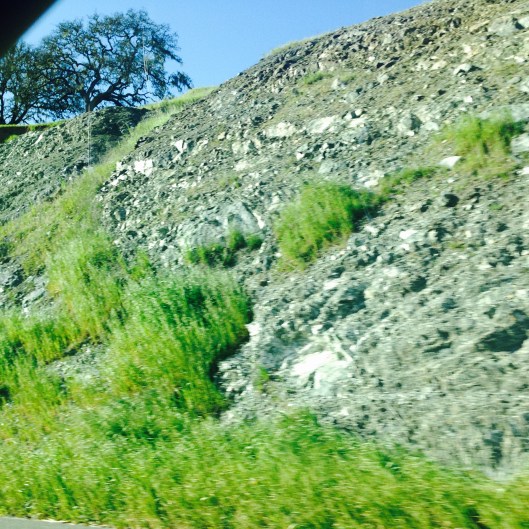
Three large, well-muscled men came to awaken the children and left them each a bowl of food. Soon, they were pushed and pulled out into the large open place with horses and foals again. The men gestured and made it clear that Tu-Swift should separate and catch more foals and tie them up. As they entered the clearing, Tu-Swift noticed that poison ivy vines hung heavy on the trees surrounding the paddock. 

He recalled the words of She-Who-Saves-Many-Lives when he had remarked to her a few summers ago about the poison ivy in his own village. The elder shaman had explained how trees needed each other to survive high winds and to kill off parasitic intruders such as poison ivy and boring insects. In the manner of such a teacher, she had gone on to say that it was the same with the Veritas. Each member of the tribe helped nurture and protect all the others.
fullsizeoutput_1977

“Trees die at the edges. That is the way of it. And, so it is with us. A person alone in the vast world is much more at risk than the tribe,” she had pointed out.

At the time, he had take much comfort in her words. 

Today, however, a great sadness and despair threatened to overwhelm him because now he himself was a “tree at the edge.” 

A memory now flashed into his mind — a huge spider web that he and Shadow Walker had happened upon. Shadow Walker had invited him to observe with him for a time. The spider hung out at the very center of his web. Whenever a flying insect strayed into its web, it would rush to the bug, bite it, and wrap it with webbing. Once, however, it happened that two bugs hit the trapping web at the same instant. The spider rushed off to wrap up the larger one for later consumption. Spider then returned to the center. Spider seemed unable to remember where the second insect had landed. One by one, he carefully and methodically thrummed the strings, one by one. At last, one of the strings caused a renewed struggling by the insect. Instantly, the spider travelled up that spine of his string to the hapless bug, bit it, and prepared it for later consumption. Shadow Walker had questioned Tu-Swift who at last saw that the bug’s fear had caused it to give away its position and hastened its own death. 

blur close up design focus

Photo by Pixabay on Pexels.com

Shadow Walker waited until Tu-Swift had seen this before putting it into words. “Fear is natural when one is trapped. But we are humans. We can wrap our fear in our own thoughts for a time and hide it – and ourselves – until we find a way to escape. To further cement the point, Shadow Walker grabbed Tu-Swift by the wrist and held him tight. “Get loose!” 

Tu-Swift had tried to jerk his hand away. He pulled and tugged, but Shadow Walker was much stronger. It seemed hopeless. Then, he realized that Shadow Walker was encouraging him to think — not simply to react. He looked at his wrist and noticed that it was more of an oblong than a circle across. And Shadow Walker’s hand was not a completed circle but a circle with a gap. Rather than struggle, Tu-Swift had relaxed. He imagined sliding the edge of his wrist out through the slight opening where Shadow Walker’s thumb and fingertips came together. Tu-Swift imagined a swift jerk of his wrist through that opening. He forced himself to relax still further. Then…zip! He slipped his wrist out through the gap before Shadow Walker could react.  

IMG_7215

Fear could kill you. And calm thought could save you. Tu-Swift had learned this lessons well. 

Tu-Swift took deep breaths of the cool clean air. Even the horses smelled good to him as he breathed in their sweet odor. He looked around at all the life that thrived around him. None of it survived and thrived through sadness. Feeling sorry for oneself might be “justified” but it was not the path to survival. The path offering promise, the path of resolve spoke to his inner heart of courage. He would wrap his fear and sadness up for now so that these captors of kids could not see it. He would think instead.

He gestured to one of the three burly ones who accompanied Dah-Nah and Tu-Swift to give him a switch such as they all carried to whip the horses with. The man complied assuming that Tu-Swift wished to use the whip to help separate mare and foal. Instead, Tu-Swift used the handle of the switch to draw his plan quickly in the sandy soil outside the paddock. When he began, one of the men reached to take the switch away, mumbling some words in anger. Then, the men began talking to each other in their odd and unfathomable language. At last, they allowed him to continue his drawing.

He first made a drawing in the shape of the current paddock. Then, he showed an addition with many narrow quick turns. Now, he used his hand as a horse to show that his hand was too big to fit through these narrow passages. He reinforced this analogy by making sounds mimicking the horses and whinnying when his hand was “stuck.” He gently took one of Day-Nah’s hands in his and showed how the small boy’s hand would fit through these narrow passages. Then, he gestured out to the horses. He pointed to one of the nearby mares, a beautiful palomino. Again, he showed how his hand unable to get through the passage. Next, he pointed to her foal and used Dah-Nah’s hand to go through the narrow passage. Dah-Nah’s face lit up. He understood. Surely, the men would as well, he hoped. 
Original Masks by Sarah Morgan

Original Masks by Sarah Morgan

And, slowly, one by one, the men’s faces revealed that they all “got” Tu-Swift’s idea. They felt a little chagrin that they had not thought of such an obvious ploy themselves, but the ROI were a practical lot. If they found an idea that they could use, they used it. They did not reject it out of hand as the Z-Lotz might have done simply because they had not thought of it themselves. 

The men made it clear that the boys themselves were to construct this addition. The largest of the burly men pointed to a large set of cut planks that had already been cut to use for fence repairs.

Tu-Swift nodded enthusiastically. He returned to his drawing. He showed how he would keep the existing fence in place while they constructed the maze addition and a smaller place for the foals to gather. When all that was finished, they could remove the piece of fence that would prevent the foals from entering. 

Tu-Swift had transformed his fear and despair into a plan. He thought to himself, “Not all trees die at the edges. Not these two.” 

IMG_2342

————————————————

Author Page on Amazon. 

The Winning Weekend Warrior focuses on strategy, tactics, and the ‘mental game’ for all sports including golf, tennis, baseball, and others. 

Turing’s Nightmares illustrates possible ethical issues around AI and robotics with 23 scenarios of the future. 

Fit in Bits suggests numerous ways for the ultra-busy to work more fun and exercise into daily activities such as sitting in meetings, walking to your car, shopping, traveling, playing with kids, etc. 

Tales from an American Childhood recounts early experiences and relates them to contemporary issues and events. 

Life Will Find a Way

The Walkabout Diaries: Life Will Find a Way

Your Cage is Unlocked

Somewhere a Bird Cries

Wednesday

Dog Trainers

Tools of Thought

Fish have no Word for “Water”

All We Stand to Lose

—————————————————-

The No-Rock Rock & the No-Door Door.

23 Monday Feb 2026

Posted by petersironwood in family, psychology, story, Uncategorized, Veritas

≈ Leave a comment

Tags

creativity, discovery, fantasy, fiction, innovation, leadership, myths, nature, ROI, short story, story, tracking, truth, Veritas, writing

Shadow Walker took the first watch along with Easy Tears. After their long day’s march, it would be too easy for a single sentry to fall asleep. Shadow Walker felt as though, for him, it was an unnecessary precaution but he realized that could be a delusion. He might be more prone to sleep than he realized. Easy Tears and Shadow Walker had known each other since childhood and they were comfortable with each other. The wolf pups lay beside them and helped stave off the chill of the night air. Though the pups appeared to be in a deep sleep, he suspected they would be awake in a flash if more ambushers tried to sneak up on their search party. 

bonfire burning camp campfire

Photo by Vlad Bagacian on Pexels.com

Quietly, Shadow Walker began to chat with Easy Tears, the better to keep them both awake. “We should watch out for snakes as well. They are drawn to body heat as well as the fire. I suspect this is the sort of place that many rattlesnakes may make their home.” 

Easy Tears responded, “I am not so much a friend to the snakes as you are. They aren’t always so easy to see either. I recall once almost stepping on a large snake who had a rattle-tail of ten rattles.” 

Shadow Walker considered this, allowing the silence to flow between them. “Those snakes can fool the eyes. That is true. A walking stick, a butterfly with the eyes of an owl. Many animals make themselves look or sound like something else…or just fade into the background.” 

white brown and orange moth

Photo by Pixabay on Pexels.com

A shooting star streaked across the sky. Shadow Walker had jerked his finger to share with Easy Tears and though she turned quickly, she only caught a brief glance. “Like those whom we pursue. They don’t hide their trail well at all. But then they simply disappear!” 

Shadow Walker considered this. “You’re right. I suspect that once we search in daylight we will find some sign of continuing trail. I’m impatient to continue but we need the rest and … the sunlight will show us the way.” Shadow Walker noticed that the soft glow of the firelight flickered on the eyes and hair of Easy Tears in a most pleasing way. Shadow Walker thought of Many Paths and the serious conversation that they had postponed. 

IMG_5044

Easy Tears shivered slightly. Shadow Walker considered sidling up to her and putting his arm around her so that they would both enjoy the warmth of the other. It would be all right. Pleasurable even. But sometimes, it is difficult to know what is around the next bend and the one after that. Instead, he stood and got another blanket and draped it around her shoulders, then added another log onto the fire. He sat back down and reflected on his discovery that snakes could sense the heat of their prey. If only they could train a snake to be a helper. That could prove useful. He wondered aloud, “Easy Tears, if people can train horses and wolves and eagles, do you think it is possible to train snakes?” 

Easy Tears chuckled slightly. “I wouldn’t think so, but you are the expert. I don’t really care for them, though I do appreciate their eating the rats and mice that try to steal our grain.” She considered for a time. “I suppose you could train them. Yes. I suspect you could train anything with enough love and patience. But you see how it is. Despite your love and patience, there is always a chance they would bite you or misunderstand your intention. I suppose it might be something that would take a long time. What would you train a snake to do?”

“I wish we could have their sense of heat. Perhaps we could use them to follow trails or find hidden enemies. Maybe we could even train them as guards. Ours did not work so well for some reason. That bothers me. How could such as these who do not cover their tracks elude our guards?”

“I don’t know. Perhaps they did not try to elude our guards at all, but simply overpowered them too quickly for them to sound the alarm. Or perhaps, they feigned being peaceful? Trunk of Tree will figure it out. I like him.” She smiled and glanced at Shadow Walker. “Do you think he likes me?” 

Shadow Walker considered this. Trunk of Tree had never said anything, but judging from the actions and looks of Trunk of Tree, probably so. “Yes, I think so. He looks at you…with longing. You are a beautiful woman, after all.” 

fullsizeoutput_120e

Easy Tears smiled and Shadow Walker realized that he really found her attractive, but not in the deep way that he loved Many Paths. The half moon set and it grew darker. “It’s time to wake the next guards. He calmed his mind and thought of their serious quest in order to cool his blood. Then, he stood and walked over to Lion Slayer. He stood almost on top of Lion Slayer but Lion Slayer appeared to be a sound sleeper. He snored loudly and Shadow Walker joked, “I wonder whether he actually slew the lion with a spear…or with that snore.” 

Easy Tears laughed aloud but all the others remained asleep. Shadow Walker squatted down on his haunches and shook Lion Slayer. The snoring continued. For a moment, he considered shaking Hudah Salah but decided against it. He shook Lion Slayer again and whispered his name. Hudah Salah suddenly sprang to his feet and pressed his thumbs against Shadow Walker’s windpipe. Shadow Walker smacked the hands away and jumped back, “Lion Slayer! It’s all right. It’s me. Time for your watch, as agreed.” 

Lion Slayer shook his head. He looked hard at Shadow Walker and mumbled something unintelligible. At last, he seemed to come to his senses. “Yes,” he said and awakened his wife. 

Easy Tears lay down and smiled at Shadow Walker. She moved her body so that sufficient space appeared next to her for the body of Shadow Walker to fit snugly. Shadow Walker sighed and lay down instead by himself and dreamt of Many Paths. 

aerial photo of mountain surrounded by fog

Photo by icon0.com on Pexels.com

The next thing Shadow Walker sensed was light. It was not yet dawn. The troop all awoke and had a small breakfast and then began exploring the cliffs for a sign or a path. As they explored, they continued to chew pemmican and some dried fruit. Shadow Walker had asked Fleet of Foot to explore with Easy Tears, who took the wolf pups with her. Shadow Walker walked with Eagle Eyes. It was understood now by the group that Lion Slayer and Hudah Salah were fairly inseparable. 

Although Eagle Eyes had the best vision, Shadow Walker’s eyes were also sharp but he found nothing but sheer cliffs. Eagle Eyes said, “Wait.” 

“What do you see?” asked Shadow Walker. 

“Nothing really. But something’s not right. It does not look right here. I’m not sure why.” Eagle Eyes stood with her hands on her hips staring at the sheer cliff face. She looked up the cliff face and noted various hand holds. “This wall might be scalable to a good climber.” 

“Yes, I can see that as well though it would be dangerous. But horses? They are horses, not mountain goats” Shadow Walker said without blame or sarcasm. 

“I know, but still, something is not right.” Eyes of Eagle shook her head and asked herself what she was missing.

Because the pair had stopped their systematic exploring, the rest of the search party converged on them. Fleet of Foot was the first to arrive. “Did you find something?” 

Eagle Eyes smiled at him. “Not really. But his does not look right.” 

canyon

Photo by Renata Cholpankulova on Pexels.com

Easy Tears arrived next with the wolf pups who immediately began jumping and whining. They sniffed around the base of the rocks and ran back and forth between the rocks and Easy Tears. They had clearly caught a scent of something.  “Perhaps Tu-Swift?” suggested Shadow Walker.

The pups took turns trying to stick their nose into a small cleft in the rock. On impulse, Shadow Walker, put his fingers in the cleft and tried pulling. He could not budge the rock, which did not surprise him. But the feel of the rock did surprise him. It was much like flint but harder and colder. Beyond that, there was no texture to the rock. It felt, somehow, dead, even more dead than the bleached bones of a long dead buffalo. Shadow Walker lay on his back and tried to push on the cleft with his feet. Soon, all six of them pushed and pulled on the rock face though they had no hope of moving it. 

And then, it did move, though very slightly. The group positioned themselves and pushed even harder. The rock slid more easily now like a smooth stick along the winter lake ice. Instead of the grinding sound of rock on rock, however, they heard an unearthly screeching sound like a very large eagle. 

At last, a huge slab of the cold rock had been moved aside and behind it, all could see a large, short passageway into a sunlit path beyond. The wolf pups bounded through and out into the sunlight. The people followed. Eagle Eyes looked back at the strange rock and noticed something stranger yet. The back of the rock had many handles. She supposed they were to replace the rock. But at the bottom of the rock, she saw something that made her gasp aloud. 

“What is this?” she asked. All of them turned and looked at the base of the weird rock. There were circles of rock on the bottom! What strange magic was this? Despite their hurry to find Tu-Swift and their excitement at finding the way out of the box canyon, each knelt down to marvel at the smooth circles of rock. 

After some time, Shadow Walker said. “We cannot solve the mystery of this rock. We must follow the trail. Should we close this … door? If we do not, it may be apparent to any of the Stands on Horses people that we are coming for Tu-Swift. But when we return, we may be in a hurry to go through this way.” 

Eagle Eyes spoke next. “We could leave it just slightly open so that we could squeeze through but no horses could. I think we could make this door, as you call it, harder yet to open or close.” 

Fleet of Foot spoke. “We should hurry up and get to Tu-Swift as quickly as possible. We have no idea how badly hurt he may be.” 

Shadow Walker: “We cannot know for certain the best course of action. I think it best to put it back the way it was. We are not going to be able to overwhelm our enemy with force. We must rely on secrecy. We may or may not be able to save Tu-Swift. But others of those who stand on horses find out we are on the way to their camp, they may go more swiftly and warn their people. That will make rescue impossible and even reconnaissance riskier. Let us move this back and follow the trail. We may also find another way back that is less familiar to those who ride on horses.” 

I proved difficult to move the rock back, but they succeeded and they then resumed their tracking, which was again an easy task. Perhaps, thought Shadow Walker, those who stood on horses felt they were so fast they would not be pursued. Or, perhaps, they had not learned to hide their trail. Or, perhaps they thought that odd rock door would cut short any pursuit. Eagle Eyes with Easy Tears led the team with the pups trotting along side them. Next came the pair from the Nomads of the South. Shadow Walker and Fleet of Foot carried the heaviest loads and kept looking for and erasing signs of their trail. They stayed within the confines of the large swaths of changed lands that the galloping horses provided. This made “covering” their trail fairly easy. Trackers of the Veritas might wonder at the paw prints of two wolf cubs traveling without a pack, but Shadow Walker felt it likely that these would not raise suspicions among those he was tracking since they seemed so unconcerned about their own trail. 

Shadow Walker was happy to concentrate on the trail ahead and to check to make sure there were no more of those who stand on horses behind them. In this way, he could avoid wondering about things that he could neither control nor prepare for. Many Paths was or was not okay with the rest of the Veritas. Tu-Swift was or was not okay. The only distraction that he really couldn’t block out was the smooth cold feel of the rock that was not rock and the circles of rock. There was also a very odd smell about that rock – something he had never smelled before, but it reminded him of death. 

IMG_2866

———————————————————

Books by the Author: 

The Winning Weekend Warrior focuses on strategy, tactics, & the mental game for all sports including golf, tennis, softball, basketball, etc., as well as business. 

Turing’s Nightmares consists of 23 fictional scenarios of humans interacting with technology for good or evil. 

Fit in Bits suggests numerous ways to work more fun and exercise into daily activities such as watching TV, sitting in meetings, shopping, playing with kids, traveling, etc. 

Tales from an American Childhood recounts early experiences and then relates them to contemporary issues and events.     


The Bonds of Horses and Humans

21 Saturday Feb 2026

Posted by petersironwood in family, psychology, Uncategorized, Veritas

≈ Leave a comment

Tags

creativity, ethics, family, fiction, grit, innovation, leadership, legend, life, myth, politics, Resistance, story, thinking, training, truth, writing

The Bonds of Horses and Humans

Tu-Swift awoke in pain. He began to panic. At first he wondered and suddenly became convinced that they must have beaten him again.

He slowed his breathing and forced himself to think. “Don’t jump to conclusions.” That’s what Many Paths would have said. Inventory. He quickly realized nothing was broken. No, it was just that his muscles were sore. Although he spent a lot of time running, playing, and working among the Veritas, his ride on the back of a horse and then spending a day shoveling manure used his muscles in new ways. His body was okay. As he thought of the Veritas, however, his heart sank. Up to now, he had secretly thought that he would soon be rescued. Now a new and uglier thought crept into his soul. He took deep slow breaths and tried to calm himself once again. Day-Nah was beginning to stir and Tu-Swift didn’t want to alarm him by appearing scared. But the truth was, all the Veritas may have been killed or enslaved. He might even be the only one to transmit their long years of accumulated wisdom. 

4B6A1004-D8CC-4D79-BD63-4AC265A4BD06

Painting by Jeremy Colier

That was the cold, bitter stab of doubt that clutched his heart. Though he had no idea whether or not the Veritas had survived the attack, he had been assuming that they had been alive. But there were many other possibilities. Tu-Swift set his jaw. He had always been one to leap before looking while Many Paths kept reminding him to consider other alternatives. But now — Many Paths was not here. He would have to rely on the Many Paths in his head. And, others. There were other voices among the Veritas whom he could use to help him find a means for escape. Meanwhile, he must keep his spirits up by reminding himself of what he liked; what he was grateful for. Tu-Swift realized that, among other things, he was actually grateful to have this small boy as a companion. Worrying about his small jail mate distracted Tu-Swift from his own predicament and uncertainty. 

Just then, Day-Nah stirred and whimpered. He suddenly sat up and yelled. Day-Nah’s eyes returned to that wild-eyed stare that Tu-Swift had first observed. Tu-Swift patted his own chest forcefully and said, “Tu-Swift! Tu-Swift!” Then, he gestured toward Day-Nah by opening his arms and hands outward toward the youngster and said, “Day-Nah. Day-Nah!” The young boy blinked several times and seemed to recall his present circumstances. His breathing slowed, but he pulled his legs up, wrapped his arms around his knees and began rocking and silently crying. 

IMG_2223

Like all of the youth of the Veritas, Tu-Swift knew how to comfort the young of his own tribe, but he felt uncertain about approaching the boy in this state. Though tempted to hug him, he decided distraction might be a wiser course and he reviewed the language lessons they had already gone through, being a little more particular about pronunciation, both in his attempts to mimic the sounds of Day-Nah and in Day-Nah’s repetition of of Veritas. This seemed to calm the boy and his silent tears abated. Once more Tu-Swift grew both angry and troubled that anyone would tear such a young boy from his family. 

The horses were stirring as well, though it was early morning, judging from the gray light that crept into the horse enclosure. In the distance, Tu-Swift could hear many people stirring and getting ready for the day. Again, he had the distinct feeling that it was like and yet very unlike mornings among the Veritas. There were footsteps, and there were voices. The accent and cadence of the voices was different, but something more profound was different. He heard birds chirping, squawking, crowing, cooing and so on, but some note was missing. Tu-Swift thought of a rainbow and imagined what it would be like to see a rainbow that was missing the blue or the red. But no! This rainbow was missing all color. Why did it sound like a colorless rainbow? That made no sense. Tu-Swift shook his head. He wished he could have a real conversation with Day-Nah, but he knew of no way to try to communicate such subtlety. 

IMG_2199

Three large, burly men came into the large horse room. One of them put down two dishes of food and a flask of water. He grumbled something at them. Tu-Swift noted that none of these people seemed very interested in trying to teach them their language. The other two stood nearby and all three watched as the boys ate whereupon they were led out to an open pit toilet and from there to a large field fenced in with logs. There were a large number of free running horses in this particular field and among them, Tu-Swift could see five foals. Working together, the three large men managed to separate one of the foals from its mother. Tu-Swift could see that the mare stomped around dangerously, whinnied, and that the whole herd seemed agitated. Every horse in the herd, however, shrunk back, terrified of the men and eventually one man managed to tie a rope around the foal’s two back legs and another around the forelegs. Tu-Swift looked to his own legs and those of Day-Nah and saw that they were in much the same predicament. They, like the foal, could walk, but not run or jump. 

Tu-Swift realized how much he loved to run free. He reveled in the feeling and he felt both sadness and anger at being prevented from running. He wondered whether he would ever be able to run free again. He begin to wonder whether he — or the foal — could ever be truly happy if they could not run free. Then, Tu-Swift thought of the snails that he had so often collected from the Veritas gardens. He had looked fairly closely at the creatures. They were fairly cute. Of course, as Many Paths would point out, he had no way to tell how a snail felt. But there was no reason to think they wouldn’t be happy. Finding something nice to chew on would probably make the snail happy just as it made him happy. But it was not in the nature of a snail to run. At imagining this, Tu-Swift laughed. 

slow slug snail shell

Photo by Chris Peeters on Pexels.com

Day-Nah tilted his head with his brows pinched together as he regarded the older boy. Tu-Swift smiled at the boy and at his situation. How could he explain that he had been imagining a snail trying to run? Then, it suddenly hit Tu-Swift that the “color” that was missing from all the morning sound of these captor-people was laughter — not just laughter itself, but any kind of fun, or enjoyment. So far as he could tell, they did the same things that the Veritas did (except for tying up other creatures), but they didn’t seem to enjoy any of it! What a strange, gray life that must be, thought Tu-Swift. And he suddenly realized that he actually felt sorry for his captors. He imagined telling Many Paths. 

Just then, all three men came over to them and shouted at the same time. Neither of the boys had even the slightest idea what they said and this must have been obvious to the three because they all switched to miming what the boys were to do. They were to do what the three grown men had just done. Somehow, they were to cull four more foals and tie their legs with rope. The Veritas had ropes, but Tu-Swift decided that it was a fair bet that Capture-People didn’t know that. The Veritas were all taught at an early age that those with more power seldom bother to learn even what would be of immense value to them if that knowledge lies with those out of power. The Capture-People had horses — and they had captured one, at least, of the Veritas. So, they would think themselves superior and be willing to believe any lack of intelligence or knowledge on the part of Tu-Swift. 

iPhoneDownloadJan152013 697

He acted quite incapable with the ropes at first, only slowly catching on. Tu-Swift had no idea how the two of them were supposed to accomplish what looked very difficult even for three large men, three who did not have their legs tethered. Cautiously, they sidled into the pen staying near the exit that only they could squeeze through. Oh, thought Tu-Swift, Eagle Eyes will love to hear about that. Although tinged with sadness, he realized that he wasn’t really away from his own village at all. They all lived in his own head. As long as he lived, the Veritas lived.

Most of the herd headed to the far end as the boys entered, but one mare and her foal chanced nearing. The mare seemed to like their company. Perhaps she could see that they were tethered as they were. Tu-Swift gently tugged at Day-Nah by the arm and positioned him so that the men could not get a clear view of the mare. The mare smelled something nice on the rope between Tu-Swift’s legs. It began chewing on the rope. Tu-Swift admired the teeth and jaws of the horse before him. He spoke to the horse in Veritas though he was under no illusion that the horse would understand him, at least in any detail or words. “I am Tu-Swift. You are?” 

At this point, the horse made a sound like “Kneeeeee -Kwah” 

Tu-Swift continued, “‘eee-qua’ it is then.”  

animal close up countryside farm

Photo by Francesco Ungaro on Pexels.com

“Tu-Swift likes to run. Ee-qua like to run. We don’t like ropes. (Here he made a show of waving the ropes in the air so the three men would think they were making progress.) “We want to run free. Tu-Swift and Ee-qua run free one day. Yes, we will.” 

Tu-Swift hobbled over to the foal and sat on the ground. “Hello little one. We have a predicament. I have these ropes on my legs. I don’t like them, but if we don’t wear them, they will beat us until we do. Your mother, Ee-qua chewed my ropes nearly through. So, I am going to put these ropes on you. But you will be able to run free in a few hours. I know you don’t understand a word I’m saying but maybe the sound of my voice will help you know that I am your friend regardless of how it seems.” Tu-Swift meanwhile, had succeeded in tying a rope around one of the young colt’s legs and “secured” it with a granny knot rather than the square not that the men had shown him. It was chancy to make life difficult for those that seemed to have power over him, but it had to be done; carefully, and never in the same way twice, but each day, Tu-Swift knew that he could find some way to make the lives of the Capture-People less pleasant, just as they were making his less pleasant. 

931D1948-69AF-4F80-94CC-8064833AEFB5

Hiding tools, wrecking tools, backing up sewage, polluting water, passing on disease, poisoning — these were just a few of the ways he might or might not be able to fight back. Meanwhile though, he also had to be careful not to be caught and to have a well-worked out and plausible excuse. As Tu-Swift tied more legs with granny knots, he planned that he would feign astonishment and excitedly show his captors how he had tied the knots. He would tie granny knots. They would smack him about a bit of course. But then they would show him the correct way. He would again copy but make a granny knot. The Capture-People would smack him around a bit, so he imagined, and then show him again. He would feign insight and make a true square knot the next time. This would serve two purposes. It would cause them grief, but it would also, he hoped, endear him to them in some perverse way. It would be as though he could learn their tricks — eventually — but being more stupid than they are — it would take him longer naturally to learn to do things correctly. And, then again, he thought, fastening the fourth leg with a granny know, I may never even be accused. 

Just then it occurred to Tu-Swift that the horses could chew through their own tethers. Why hadn’t the horses thought of that? Maybe that’s not the sort of thing horses “think of.” Maybe they need to be shown. If they will eat through my ropes — and she could have easily gone all the way through — they could eat through their own, but how can I get food to put on those ropes? 


Author Page on Amazon

Start of the Myths of the Veritas

Tools of Thought

What about the Butter Dish?

Where does your Loyalty Lie?

At Least he’s our Monster

Finding the Mustard

The Orange Man

The Invisibility Cloak of Habit

The Walkabout Diaries

Travels with Sadie

Labelism

Your Cage is Unlocked

If Only…

Imagine All the People

Roar, Ocean, Roar

The Dance of Billions

Life is a Dance


Many-Paths Constructs her Way

13 Friday Feb 2026

Posted by petersironwood in creativity, family, fantasy, fiction, psychology, story, Uncategorized, Veritas

≈ Leave a comment

Tags

books, creativity, culture, fantasy, fiction, governance, leadership, life, politics, short story, story, strategy, tactics, truth, Veritas, writing

Many-Paths knew that the Veritas needed to respond swiftly to this attack. A people who stood astride horses though! What else did they not know about these people? What purpose did they have in stealing Tu-Swift? Had they known that Tu-Swift was her closest kin? She quickly gathered her closest friends and advisors. Among them were Eagle Eyes, Shadow Walker, and She Who Saves Many Lives. 

fullsizeoutput_120e

Many-Paths noted that others were listening from a polite distance including the new friends of Fleet of Foot and Eagle Eyes, Lion Slayer and Hudah Salah, who were also close by. She had no reason to distrust these new friends. She looked at their faces and into their hearts and saw only a willingness to help. She spoke quickly and calmly. “I propose Eagle Eyes and Fleet of Foot to choose a number of good trackers to follow the trail of these thieves to their origin. If you see a very safe opportunity to recapture Tu-Swift, make use of it. But your main goal is to bring back information about this enemy and avoid capture yourself. Try to determine, if possible, why they did this and whether they have any allies. Find out what you can about how many horses they have and how they manage to stand astride them.” 

Lion Slayer bit his lip and glanced at Fleet of Foot and then back to Many Paths. He tilted his head at Fleet of Foot and looked questioningly at him. Fleet of Foot had learned to understand these gestures and spoke to Many Paths: “Many-Paths, I believe our friend Lion Slayer has something to say.” 

57876EA1-F41E-4B0C-9864-9D2F197141D3

Many-Paths could see that this was so. She nodded to him. “Yes, Lion Slayer?”

“I believe, though I cannot be sure, that your attackers are a tribe that call themselves the ROI.” 

“Please continue,” said Many-Paths. 

“According to legend, ROI were once a tribe we met with. The many tribes in our region got together each year for celebration, trade, and mate-finding. One portion of land, the many tribes fought over. We decided end fighting. Instead, we all agreed to a race to determine who would inhabit that highly desirable place. All tribes chose their fastest runner to compete. But when they returned for the contest, ROI did not have human runner. They used man on horseback. Of course, they won the “race” and won the prize though none of the other tribes thought this completely fair. The matter might have ended there, but the ROI did other things to annoy and challenge all the other tribes. At last, we drove them from their lands. Before doing so, we observed how badly they treated their horses. They tethered them and beat them until their spirits were broken. I cannot say for certain that these were ROI, but that is the one tribe that our wisdom said rides on horses. I had not seen this in person, but my grandfather’s grandfather did.” 

Many-Paths swallowed hard and bit her lip. “So, if they are indeed ROI, as you call them, we know two things. They are a cruel people and may also try to break the spirit of Tu-Swift. And, we know that they have had at least six generations to learn to control horses. Do you have any idea how numerous they are?” 

four assorted color horse on grass fields near tall trees during sunset

Photo by eberhard grossgasteiger on Pexels.com

“No, Many-Paths. I have no idea how they have fared since leaving our region. The only other thing I know about them from our stories is that they particularly held high value on doing things quickly. They cared far less for making things beautiful or taking pleasure in life. But again – that was long ago and I cannot be certain the attack was from them.”

“You have been very helpful. Thank you. I am sorry to cut your feast short and steal away your new friends for this mission.” 

“I understand, Many-Paths. I meet only small time Tu-Swift, but I like. We value much our friendship with Veritas. If you permit, we will go to aid. To find Tu-Swift. To understand ROI. This will be valuable to know for our tribe as well.” 

Many-Paths appreciated the offer, but she already felt overwhelmed. To trust strangers on such an important mission? This complicated a complicated situation. She glanced at Eagle Eyes who nodded in assent as did Fleet of Foot. 

“We have not heard from you, Hudah Salah. Do you wish to accompany as well?” 

Silence fell. Glances flitted about like mating butterflies. 

4B6A1004-D8CC-4D79-BD63-4AC265A4BD06

Original artwork by Jeremy Colier.

At last, Hudah Salah spoke, “My husband knows my heart, Many-Paths. I will go too if it you allow it.” 

Many-Paths considered reminding Hudah Salah of the dangers but decided this might be insulting. Danger was obvious and she had already said she wanted to go. 

“So be it then; gather provisions as you must and be off. Take two small drums so that you can communicate if need be. This may give away your position but you may also help give away theirs and let us know whether you need more help.” 

Eagle Eyes now added, I may also send back hawks with small maps attached. I believe that they will again come back to me after you find these maps and release them. We discovered that the Nomads of the South have already learned much about training birds and we have all improved our skills. 

“Make it so.” 

As the tracking band quickly prepared, Many-Paths next asked Trunk of Tree to set up double guard posts in case the ROI, if that’s who they indeed were, mounted another attack. She asked Shadow Walker to try to determine how the archers had slipped through their guards and to find the inward path to their center place should that prove different from their exit. 

8BFD7A8D-4941-4CB4-A2EC-7F26A793797F

At last, all the people were preparing in one way or another. Many-Paths realized she was tired, thirsty, and famished as well as deeply troubled in her heart. Would these ROI also use whips and ropes to try to break her brother’s spirit? But she would push all that aside for she had one more task. She needed to dialog with She Who Saves Many Lives and other tribal elders. Their world had been turned inside out and a joyous feast had been instead a time of great fear and disruption. What did it mean that tribes were using other animals in human wars? The Veritas too had done exactly that with hawks and wolves. It had seemed the right thing to do in defeating the Cupiditas, but now it seemed horses were being used as well. Beaten? Tethered? All to gain control over horses. But what might they do to Tu-Swift? How was the world changing? That is why she wanted the memories of those who had seen many more winters. That is why her own needs for sleep and food and thirst must be postponed. 

She turned once again to walk toward the cabin of She Who Saves Many Lives. And there she was!.Once again, She Who Saves Many Lives stood only a few feet away. Despite everything, or perhaps because of everything, Many-Paths laughed aloud. “How do you do that? Every time I need you, there you are. You are remarkable. I can never be what you are.” 

IMG_7975

“I should hope not. I am me. You are you, Many-Paths. You are not meant to be, nor can you be me.” 

“I just mean…can I be as good a leader as you are? You seem to be able to read minds.” 

“No more so than you, Daughter of the Tribe, Mother of the Tribe, Leader of the Tribe. There is no great trick. You did all this and more when you passed the seven trials. It is not so magical to understand that you are worried about Tu-Swift. You are worried about the tribe. You are disappointed that the feast did not go as planned. You are grateful yet worried about sending two of the Nomads on such a critical mission. You are worried whether you will be an adequate leader. You are worried whether the world seems to be a different place than the one you grew up in. Of course, you would be wise to seek my counsel and I will be glad to give it. And you seek the counsel of other elders in the tribe as well. There is no trick to understanding that beyond opening my heart to your heart and putting myself in your place. We will indeed have a dialogue about all that has happened. First, however, you need to eat, drink, and rest. Look upon this wonderful world and see it again with the eyes of youth. Let your heart drink in and fully enjoy some of the pleasures of life before dialogue. A dialogue based only on fear and, perhaps revenge, will not necessarily be one that results in wisdom. Wisdom needs to acknowledge both the reality of life and of the reality of death. The true path can never be based solely on one or the other.” 

———————————————————-

Author Page on Amazon. 

The First Ring of Empathy

Fish have no word for “water”

Absolute is not just a vodka

After the Reign

All We Stand to Lose

Somewhere a Bird Cries

An Open Sore to Hell

Poker Chips

My Cousin Bobby

Where Does Your Loyalty Lie?

The Update Problem

The Stopping Rule

The Invisibility Cloak of Habit

You Bet Your Life

Math Class: Who Are You?

Imagine All the People…

Roar, Ocean, Roar

The Dance of Billions

Resonance

06 Tuesday Jan 2026

Posted by petersironwood in America, management, psychology, Uncategorized

≈ 1 Comment

Tags

creativity, Design, echoes, Feedback, golf, harmonics, learning, life, politics, programming, resonance, sports, testing, thinking, timing, USA

Resonance

If you have ever pushed your kids on a swing, you know that timing is important. If you add the power of your next push just as the child reaches the apex and begins to fall back, you will swing your child higher and higher with little effort. On the other hand, if you add the power of your next swing at the bottom of the arc just as the swing is moving toward you at maximum speed, you will nearly stop the swing and likely injure yourself and/or your kid. Please don’t try it.

boy wearing blue shirt sitting on swing

Photo by Git Stephen Gitau on Pexels.com

In sports as well, the timing of when you add your effort is critical. In golf, for instance, many beginners think a lot about their hands, probably because we use our hands for many daily tasks such as texting, flipping burgers, playing video games, etc. While the hands are certainly important in the golf swing, they are the last thing to bring to bear on the golf swing, not the first. If you add your hands and wrists at the last moments right before you hit the ball, you will  be accelerating the club face as you hit the golf ball. You will have greater velocity and also more stability and hence more accuracy for the shot. 

woman playing golf

Photo by Jopwell x PGA on Pexels.com

The golf swing is a complex athletic move that I cannot describe in detail. Here’s what is important in this context. Some parts of the golf swing (notice the word: swing) are much like a pendulum. The longer parts of the body (e.g., the arms) take longer to swing on their own. The shorter parts of the body take a shorter time to swing on their own (e.g., the hands). In addition, the shortest pendulum (the hands) is at the end of the longer arm swing. This means that for the arm swing and the hand/wrist moves to multiply effectively, you must engage the hands and wrists toward the bottom of the arm swing when the arms are already moving at top speed. 

What is True in Mechanics and Sports is also True in Social Engineering.  

If you work in a highly competitive, even cut-throat sales environment, in which there is a long tradition of stealing commissions, grabbing each other’s customers, etc., having the sales manager say something like, “You know what? Let’s cooperate! Put the customer’s interests first, not your own commission” is pretty much useless. A manager’s exhortation to cooperate is a short term high frequency “push” but it will be just as ineffective as trying to start your golf swing with your hands, or trying to push a swing with all your might when your kid is swinging toward you at top speed. If the cultural milieu is cut-throat, the manager’s statement will not be sufficient to change that culture. What the sales people will do is make sure that they have a semi-plausible story ready about how stealing someone else’s commission was really best for the customer. 

group of people raising right hand

Photo by rawpixel.com on Pexels.com

On the other hand, imagine instead that sales people have shared commissions for years and that the company takes many steps to build social capital and cooperation among everyone on the sales force. Now, the manager may publicly praise an actual instance of cooperation. It doesn’t have to be heavy-handed or over the top. It is a gentle push that adds energy to what people are already doing. This is akin to adding the hands to a good golf swing or adding your swing push just as your kid begins to descend. 

Don’t get me wrong. If your house is on fire, you should leave. Grab your kids and pets but don’t bother with last weeks losing lottery tickets. 

But — you also need to understand why your house caught fire – perhaps faulty wiring – and why the fire was not immediately doused – e.g., your fire extinguishers are out of date. If you don’t fix underlying problems, your next house is likely to catch fire as well. 

If your culture is so materialistic and superficial that a blow-hard sleaze bag who seems to have great material wealth is celebrated no matter how he or she came by that wealth and fame, you may have to deal with the short term problem first, but unless you also deal with the underlying cultural, social, and economic problems, you’ll likely find yourself in precisely the same situation again. The same or other foreign enemies will attempt to exploit those same weaknesses again by finding a different celebrity with deep underlying character defects. Those enemies will push particularly hard during a crisis or an election and they will push particularly hard in the errant directions that society is already trending toward. 

The String’s the Thing Wherein We’ll Capture the Conscience of a King

Next time you have access to a piano, try the following experiment. Gently push down the C, E, and G keys above middle C. Keep them pressed down with your right hand and then strike middle C sharply with your left hand and let it go. What you will hear is that the strings of C major (C, E, G) will vibrate for quite a time after you release the middle C key. If instead, you gently push and hold down the D, F, and A keys above middle C, you will hear very little sound coming from them. Why? Because the harmonic resonance of  middle C is greater with the C, E, and G than it is the D, F and A keys. Similarly, some people will tend to “resonate” with certain messages more than others will. 

close up photo of person playing piano

Photo by Juan Pablo Arenas on Pexels.com

This is why, for example, Russian fake news that was meant to suppress the black vote carried false stories to indicate Democratic candidates didn’t care about the “Black Lives Matter” movement, while false stories about how Democratic candidates don’t care about gay rights were targeted toward the LGBTQ community. Of course, even putting Russian election interference aside, candidates typically target their messages to those that will “resonate” with particular voters. For instance, a candidate who believes in an isolationist foreign policy, forgiving student loans, low estate taxes, and better benefits for veterans might focus a speech to a group of veterans on their desire to see better benefits for veterans.  The same politician, when speaking to college students, will tend to focus on forgiving student loans. That has been “business as usual” for my entire adult life (and probably since the beginning of politics). What was really new to me in 2108 was this: an entire raft of Republican candidates promoted the idea that they were concerned about making sure that insurance companies covered pre-existing conditions. In fact, they had always voted against it and were suing to make this provision of Obamacare illegal. 

Prior to the existence of lying news networks and fake web sites who would echo such lies, politicians of either party would be reluctant to employ blatant lying about their positions because, even putting ethics aside, they would be easily discovered. However, if some of their constituents only believe fake news networks, then such politicians feel that they can lie with impunity The news presented on such networks resonates with what the lying politicians say and resonates with what those viewers want to hear and believe about the people toward whom they are already favorably disposed.

person woman music musician

Photo by Skitterphoto on Pexels.com

Resonance and the Overly Long Time                                                     Lag.

While managing a research project on the psychology of aging at Harvard Med School, I lived in a suburb called Woburn. This rented house had a hot water heating system, and at some point, during a particularly bitter cold New England winter, the furnace stopped working. I could have called in a professional, but instead, I tried to fix it myself. As a part of this system, there was a small gauge that looked a lot like the gauges in a level, but this one was upright and generally half filled with water. I noticed that now, instead of being half filled with water, it was only about 1/10 filled with water. I didn’t exactly understand why this could be problematic but the instructions said it should be half filled with water and there was a valve to let more water in. So, slowly and cautiously, I opened the valve. Nothing happened. I opened it a bit more. Nothing happened. I opened it a bit more. Nothing. I was about to give up and call a repair person. All at once, the little vial began to fill. Yay, me! I turned the valve off because the instructions also said the gauge should not be overfilled. But it kept filling. And filling. Damn! I made sure the valve was closed tightly. It kept filling anyway! Double damn! The gauge exploded! I had been the victim of — well hubris, of course, because I thought I could figure it out — but also a victim of delayed feedback. When feedback is delayed, all sorts of havoc can ensue. 

photography of green and red fire works display

Photo by Anna-Louise on Pexels.com

You may have experienced a similar time lag issue with hotel showers. You turn up the hot water and the shower water stays cold. You turn it up more. It stays cold. You turn it up more and it still stays cold. And then…all at once you’re being boiled to death in your own shower and you begin wondering who will find the naked body. 

Back in the early days of using LOTUS NOTES, there was a button on my screen that said, “REPLICATE.” And if I clicked on that button, a replication process would start. (Basically, it was downloading my email from the server to my ThinkPad). But sometimes, the mouse click did not register. This might not be a giant issue. In other cases, I would simply click again and this worked for most applications. But in this case, NOTES put up another button, in the same exact spot as the REPLICATE button, that said, “STOP REPLICATION.” The State of the Replication Process, however, was not accurately reflected by the State of the Button on the screen! This was endlessly annoying and could easily have been avoided. There was plenty of screen real estate to put a “REPLICATE” button along side the “STOP REPLICATION” button. Once connection speeds were faster and the computational facilities themselves were faster, this UX issue ceased to be an issue because there was no noticeable time lag between the state of the process and the state of the button. 

man holding remote control

Photo by JESHOOTS.com on Pexels.com

However, I still run into similar issues with Cable TV remotes. Do you? The time lags associated with clicking something on the remote and something happening on the screen is so long, that you begin to wonder whether the battery has gone dead or whether it is aimed wrong or whether the button was not fully depressed. Indeed, I sometimes wonder whether the entire system is truly electronic. I have begun to believe that the button press actually sends an ultrasonic dog whistle to a pack of hungry weasels who hear the whistle. To them, it’s a signal that they are about to be fed. They begin scampering in unseen cages toward their food dishes. The scampering of their feet is picked up by sensors under the floors of the cages. These sensors cause dials to change in a control room staffed by retired school janitors who push a series of buttons that change the channel or the input designation or turn on captioning, but only after they finish the New York Times crossword puzzle they are working on. Then, and only then, does the desired action take place. But if and only if you’ve been patient enough not to hit the button a second time. 

adult audio concert control panel

Photo by Roman Pohorecki on Pexels.com

Of course, if you are the user in this scenario, there is a fix. Push the button once and only once. Now, go outside and run around the neighborhood for fifteen minutes before interacting a second time with the remote. Sure, it takes a long time to get to your program but you’ll be in much better shape after just a few months of this regimen. 

On the other hand, if you are the designer of such systems, you might consider that it would be less expensive in the long run to replace the ultrasonic dog whistles, the weasels and the retired janitors with an actual system of electronics which, after all, is supposed to run at nearly the speed of light.

landscape photography of field with wind mill with rainbow

Photo by Paweł Fijałkowski on Pexels.com

The Takeaway

In comedy, timing, as in life, and UX design, and pushing your kid on the swing, and your golf swing, and social interventions, and election interference, and human short term memory limitations, is everything. 


—————————-

Author Page on Amazon. 

The Update Problem

What About the Butter Dish?

Wednesday

The Stopping Rule

That Long Walk Home

The Truth Train

Dream Planet

Siren Song

The Ailing King of Agitate

Somewhere a bird cries

How the nightingale learned to sing

After All

The Walkabout Diaries: Sunsets

The First Ring of Empathy

Fifteen Properties

Travels with Sadie Teamwork

Donnie Gets a Hamster

Tools of Thought: Problem Finding

03 Saturday Jan 2026

Posted by petersironwood in America, management, psychology, Uncategorized

≈ Leave a comment

Tags

AI, Business, creativity, Design, life, marketing, media, mental-health, problem finding, problem solving, research, thinking, thought, truth, writing

Problem Finding

IMG_5193

Today (18 December, 2018), I googled “problem solving” and it returned 287,000,000 results. In most of our school life as well as most people’s work life, we are given problems and asked to solve them. “Problem finding” only returned about 2.5 million or fewer than 1/100th as many hits. Solving problems can make processes more efficient and more effective. Solving problems can even save lives. We generally reward people both at school and at work for being good problem solvers. We seldom train people in problem finding. In fact, the reaction of many teachers and many managers when someone finds a problem is to dismiss it as being a non-problem. (FYI, Google now leads with an AI summary rather than links nor does it provide the number of “hits.”)

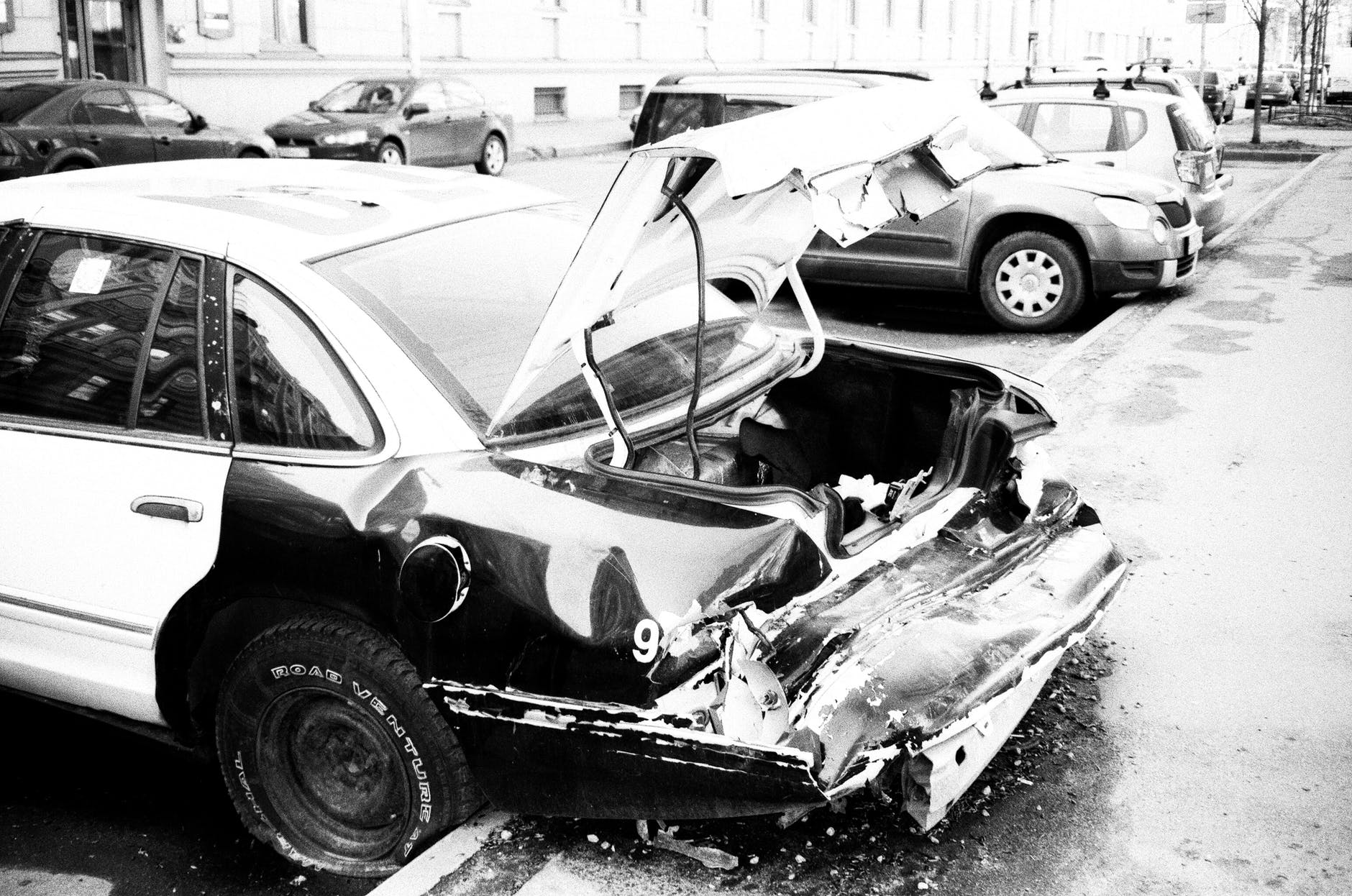
I can understand this sentiment; the emphasis on solving problems rather than finding them. As a teenager driving my dad’s car home from a date with my girlfriend, somebody beside me tried to make a right turn from the left lane and ran right into my dad’s blue Dodge. I heard what sounded like the voice of God say “NO!!” loud and clear. It was actually louder than the sound of crumpling metal. For a split second, I was in complete denial. Even some moments later, when we pulled over to assess the damage, to me, it looked minor enough to ignore and to just drive off. A more experienced guy from the corner gas station near where this happened said that while it may look minor, it would cost hundreds of dollars to fix and we therefore needed to trade information. I was stunned.

grayscale photo of wrecked car parked outside

Photo by Александр Неплохов on Pexels.com

In many cases, it is a human tendency to want to deny that a problem really exists. If you can get past that tendency however, and embrace problems and indeed, even learn to seek them out, you may be able to create tremendous value for yourself and for those around you. Problem solving can make your bookstore more profitable. Problem finding lets you invent Amazon. Problem solving lets you build a better internal combustion engine. Problem finding leads you to an electric vehicle.

What might you do to discover problems? First, you might take your own negative emotions as a jumping off place. If you find yourself angry, or anxious, or depressed, to the extent that you can trace back what is going on to the initiating event, you may be able to be consider whether that event is unique to you — or, more likely, that event is likely to trigger a negative reaction in many people. 

person holding white polaroid land camera

Photo by fotografierende on Pexels.com

If you found that waiting even 48 hours to have your photographs developed and printed — and you thought others might also be impatient to see the results–you might invent Polaroid instant photos. If you found cooking a casserole too time-consuming and messy for your taste, you might invent frozen dinners. If you drove a lot in hot, humid climates, you might be motivated to put air conditioning in cars. 

Of course, you do not have to limit yourself to your own misfortune. If you read about someone having a miserable time, you could dig a little deeper and ask yourself how a tragedy might have been prevented or how an accident could have been avoided. You can also look at a change that seems minor and ask yourself what will happen if this change becomes widespread. 

For example, if you read in the newspaper that a robot has been invented that harvests tomatoes, you might extrapolate to a more universal situation. What if all crops were harvested by machine? This might make groceries cheaper. But what else would it mean? Tomatoes are rather delicate, after all. You might wonder whether growers using a machine to harvest tomatoes would harvest them early to avoid them being mashed by the machine. You might wonder whether they would even genetically alter the tomatoes so that they were easier to harvest by machine (even if they were no longer as tasty). You might wonder what will happen to the tomato pickers. Politicians may tell you that they will all be retrained for higher paying jobs as machine inventors, machine programmers, and machine maintenance folks. But this makes no sense. If there were an equal number of IT jobs as there used to be tomato pickers but each of the new jobs came with a higher salary, why would the growers use robots? There will be fewer jobs after automation and in some cases, far fewer. 

close up of hands holding cherry tomatoes

Photo by rawpixel.com on Pexels.com

You might look at the global temperature trends and ask yourself what will happen if they continue. What will happen if global temperatures continue to rise? What can be done about it? Of course, once people start seriously mapping out the consequences, some people will react by saying, “Oh, it isn’t really happening!.” Why do they think that? Because it’s too scary to contemplate the truth; or too inconvenient to take the necessary actions. There are vested interests in old energy sources who will be happy to help you along in your fantasy of denial. In the short run, it’s often easier to imagine that problems do not exist, or are not that bad, or won’t get worse, or that there is just nothing to be done. 

Even most of the people who rail against what most of us think of as sensible gun regulation (requiring a license, showing ID, getting at least some training and testing the would-be gun owner’s knowledge, competency, and eyesight as we do with cars) don’t think that mass shootings of innocent children is a fine thing. They see it as a problem — just one that cannot be solved or one that can only be solved by adding cost and inconvenience to the potential victims. After such a tragedy, they may even send “thoughts and prayers.” 

black rifle

Photo by Specna Arms on Pexels.com

There is a possible “down side” to problem finding. The greedy may decide that they can make a lot of money by generating a solution to a problem that isn’t really a problem and making you believe it is a problem. My favorite, and so far made up, example is “Elbow Cream” for those unsightly skin wrinkles that appear on the back of your elbow when you straighten your arm. But that made up example is not too far off. You eat spicy food and it upsets your stomach? We can fix that! Of course, you could too by simply not eating overly spicy food! But nobody makes money that way. So they will sell you something that supposedly fixes the “problem.” While it might be fantasy to imagine “Elbow Cream” that will “fix” your “unsightly elbow wrinkles” it is not fantasy to imagine that people have been hoodwinked into spending money on “fixing” their faces and bodies. 

fullsizeoutput_11b5

Americans spent 16 billion dollars on cosmetic plastic surgery in 2017. There are 50 countries who each have a lower GDP than that. The beauty industry in the USA overall was supposedly around $445 billion in 2017. That’s more than the GDP of each of 151 countries! Both figures are also less than the federal government spends on reducing climate change. Or cancer research. 

Do you see that as a problem? I do. 

——————————————————

Author Page on Amazon. 

The Invisibility Cloak of Habit

Essays on America: The Game

One of the most enjoyable aspects of Science Fiction as a genre is that it often shows us problems that might occur in the future. In some cases, it suggests ways to prevent those problems and in some cases, it suggests how these future problems might be dealt with.

Turing’s Nightmares, for instance, comprises 23 short stories that explore the ethics and implications of AI. http://tinyurl.com/hz6dg2d

Dream Planet examines, among other things, the extrapolation of global warming and a radical attempt to stem it. https://www.barnesandnoble.com/w/dream-planet-david-thomas/1148566558

FaceGook

The Ides of February

A Day at the HR Department

Putin’s Favorite DOG-E

Silent Screams of Dead Men’s Dreams

Namble Mamble Jamble

May You Live in Interesting Times

Plastics!

The Last Gleam of Twilight

The “Not-See” Party

An Open Sore from Hell

Happy Talk Lies

Negative Space

02 Friday Jan 2026

Posted by petersironwood in creativity, management, psychology, sports, Uncategorized

≈ Leave a comment

Tags

AI, art, creativity, Design, HCI, illustration, music, negative space, painting, poetry, problem formulation, problem framing, sports, thinking, thought, UX, writing

Negative Space

When you look at a scene, it is natural to concentrate on the objects in the scene. So too, when one begins to design, it is natural to concentrate your attention on the things you intentionally put into the design whether those are menus, icons, images, banners, buttons and so on. You tend to give little thought to what is not there because, after all, there’s nothing there! 

IMG_9815

As your expertise grows, you will find it useful to spend some time and resources thinking about what is not there; the “negative space” if you will. In art, the “negative space” refers to the space around and between the objects. Often, paying attention to the “negative space” can result in a much more interesting and aesthetically pleasing composition. It is a concept that has applications far beyond artistic visual composition however. 

Consider music for a moment, or better yet, listen to some and you will note that the silence is just as important as are the notes. Increase or decrease the silence in a tune by a factor of two and it becomes a different, and in most cases much worse, tune. 

printed musical note page

Photo by Pixabay on Pexels.com

The same can be said of great acting whether on stage or in a movie. The silence while we wait for the actor’s response to some news — while they are saying nothing and possibly even showing nothing or very little on their face, can often be the most poignant and moving parts of the picture. If the actor reacts “too quickly” with no space, we can tell that the stimulus presented is something that they “trigger” on because they are upset about it or trying to deny it. The leading man, for instance, asks a seemingly innocent question on a first date, such as, “So, do you like French Cuis…” “NO!” she cuts in. The audience’s attention is immediately drawn to see what comes next. The response that is too fast indicates a “sore spot.” Did the leading lady want to become a French chef? Did she just end a love affair with a Frenchman? What is going on here? 

IMG_6022

On the other hand, imagine the leading man, says, “So, do you like French Cuisine?” One beat, two beats go by. No answer. A long pause. The leading lady’s face shows nothing. Perhaps she tightens her lips ever so slightly or frowns to the slightest possible extent. The pause continues. The leading man tilts his head as though to ask whether she’s okay. Finally, we come to expect a tirade about the French or French Cuisine or French wine or … something. Instead, after this long pause, the leading lady says nothing but punctuates her silence with something that sounds like a cross between a humorless laugh and a karate grunt. There are probably no words she could have said which would have intrigued us more than the non-response. We think, “What the hell is going on with her and French Cuisine?”  

IMG_9504

Speaking of French Cuisine, when you go to a fine restaurant, your focus is on the food. So too is the focus on the chef and the server. But the space is important as well. It is annoying when you are paying good money to have a nice dining experience and you are shown to your table, given menus and then ignored for the next twenty-five minutes. On the other hand, it is equally annoying when your server comes back every 30 seconds and asks, “Are you ready to order yet or do you need more time?” The optimal time to wait between courses is not always obvious either. Some people need or want much more time between courses. Maybe this nice dinner is all they have planned for the evening. The patrons are having a nice quiet dinner with good conversation. They are in no hurry. Just as one of the diners launches into a complex story or joke, the server comes over and interrupts to tell about the specials. Conversely, another foursome may be planning on attending a play and long pauses between courses may mean missing the first act. 

The negative space in dining is not just about the timing of events. It is also about the spatial arrangement of the food, the spacing between textures and colors. Often, the artistic arrangement is as much about the negative space as the objects on the plate. 

Sometimes, the food itself has positive and negative elements. In a meal with varied and complex and contrasting tastes, for instance, the rice or the bread can provide a kind of “negative space” between the tastier and more salient constituents. These neutral or negative elements allow more contrast among the salient elements than if the more salient elements were enjoyed right after each other. I’m reminded of a line from Kahil Gibran’s The Prophet:

“Let there be spaces in your togetherness.”

Negative space is important in architecture, painting, typography, cinematography, the design of user interfaces, culinary arts, music, and the design of other stimuli. It is also important in activity.

IMG_2769


One of the first popular video games was called “Asteroids.” In this black and white vector graphics game, you controlled a small space ship that shut bullets in the direction the space ship was aimed. All you could control was the speed and direction of the space ship and whether it was shooting. The screen also showed a number of large, irregular “asteroids” that you were meant to hit. When you hit one of these large asteroids with a bullet, it split into two moderate asteroids. When you hit a moderately sized asteroid with a bullet, it split into two small asteroids. When you hit a small asteroid with a bullet, it disappeared. If you got hit by an asteroid, you would die. There was also a flying saucer who came to hassle you. Anyway, I found that if I focused on all these floating asteroids and trying to not to get hit by one, it was a difficult game. For me, at least, it was much better to visualize a path among the asteroids and try to follow that path. In a way, concentrating on the negative space, helped. 

action athletes ball blur

Photo by Pixabay on Pexels.com

The importance of negative space in sports can hardly be over-emphasized. In American football, the back tries to find the holes to run through. In soccer, players seek paths between. In baseball, the hitter wants to “hit it where they ain’t.” In tennis, beginners often play only during half a point. Their attention is focused on the ball and the opposing player(s). They choose a target on the other side of the court and watch to see how well they hit that target. Just as their opponent begins to hit the ball they shift their attention to their opponent and watch where that opponent hits the ball, scurrying there as quickly as possible so as to hit the next shot. What does such a player do between the time they hit the ball and their opponent hits the ball? They watch! They want to see where the next ball goes. If you are young and fast and your opponent is not well skilled, you can often get away with this process. However, what higher level players do is something quite different though it may look similar. The good player has a target in mind but watches the ball while their mind has the target clearly in mind. By watching the ball, they are much less likely to mis-hit the ball. Furthermore, they are not giving away their intended target with their body language. Perhaps most importantly, long before their opponent hits a return shot, the good player thinks about the open spaces on their side of the court and go to cover the most likely of those spaces. 

Many otherwise well-skilled athletes only focus on the game during play. For example, many hitters on amateur softball teams, pay little or no attention to the game while their team is batting until they are “on deck” (almost ready for a turn at bat). This is absurd in the majors, but it’s even more absurd in amateur games. You should be taking this time to learn about the opposing pitcher and about the weaknesses in the opponent team’s fielders. Just because you’re not in the batter’s box doesn’t mean you can’t improve your play. Similarly, in tennis, you can use the time between points to think about tactics and strategy, as well as to mentally “reset” yourself if necessary. Some players wave their hands in front of their face after a point as a reminder/trigger to forget about what just happened and focus on the next point. Some will even turn away from the play, seemingly to talk with their “imaginary friend.” 

To close, a very short, short story based on true events in my first trip to Japan. 

tokyo tower behind black and white dojo building during daytime

Photo by Pixabay on Pexels.com

The Touch of One Hand Clasping

Japan, Tokyo, 1977. I walk crowded streets and beautiful gardens where care is taken for spaces as well as things that grow. I struggle — try to speak Japanese language but usually mispronounce “Key-Ray-Ee-Des” (It is beautiful) as “Key-Rah-Ee-Des” (It is dirty). I tip-toe through minefields of culture steeped in subtlety; lose huge chunks of flesh and karma with my thunderous, blunderous New York strides.

Shin-Ju-Ku: lights dim Times Square into grandmother’s fruit cellar. Row on countless row of Japanese stare hypnotized at small vertical pin-ball game called Pah-Chinn-Koe. This bright hustle bustle hassle hides deeper subtlety, deeper calm, inside, beneath, where foreign eyes can peer not.

I enter Tokyo subway. Then — she enters — total stranger, totally beautiful, black hair, endless eyes. I, of course, having learned small little in my many minefield walks, look everywhere but at her. Better, she looks everywhere but at me. We ride, totally not looking at each other. She stands in middle — nowhere to hold on to — unprotected, beautiful, vulnerable.

Suddenly, train lurches. Simultaneously: she shoots hand out to only spot I can possibly reach while I shoot hand out to only spot she can reach. Our hands clasp strongly for instant and I save her from fall. 

Slowly, we release.

Next stop, she rushes out. But — just before the doors bang shut, she turns — looks straight into my eyes. “Kohn-bahn-wah” she says (“Good Evening”).

Thus, Japanese beauty touches beyond body into very soul of clumsy Westerner.

———————————-

woman holding pink petaled flower

Photo by Đàm Tướng Quân on Pexels.com

Negative space….

———————————————-

Author Page on Amazon 

The Void

After All

It was in his Nature

Life is a Dance

Take a Glance; Join the Dance

Life Will Find a Way

At Least he’s Our Monster

What About the Butter Dish?

The Gods of Old

The Truth about Clouds and Gods

The Bubble People

Comes the Dawn

Is a Dream?

Good Morning!

Camelot is in your Heart

The Tree of Life

Fraught Framing: The Presumed Being-ness of State-ness

31 Wednesday Dec 2025

Posted by petersironwood in America, creativity, psychology, Uncategorized

≈ Leave a comment

Tags

#therapy, creativity, Democracy, education, flexibility, framing, fun, HCI, health, human factors, innovation, learning, life, politics, problem formulation, sports, therapy, USA, writing

Fraught Framing: The Presumed Being-ness of State-ness

OLYMPUS DIGITAL CAMERA

OLYMPUS DIGITAL CAMERA

As I understand it, in Spanish and Portuguese, for example, there is a linguistic distinction between current state of being and habitual state of being that is signaled by the use of different verbs. In English, we say, “That is an angry dog” to mean “That is a dog who is generally and habitually angry” and also to mean, “That dog is in an angry mood right now.” 

woman and man wearing brown jackets standing near tree

Photo by Vera Arsic on Pexels.com

But, regardless of what native languages we write and speak, we humans often make statements about something and treat that something according to the unstated and untenable presupposition that what is true about the current state of affairs is true about eternity. 

This habit of mind, sometimes reinforced by language, is often incredibly useful. For instance, near me right now are a table, and on the table, among other things are a coffee cup filled with coffee and a checkbook. The table is mainly composed of wood and marble. For many purposes, this is an adequate description. Of course, none of these so-called objects were always in their current state. Once, the wood was part of a tree. And, before that, the material in the tree was mainly rainwater and dirt. It was transformed into a tree by a mere seed of information using energy from the sun. 

close up colors dry nature

Photo by Pok Rie on Pexels.com

Meanwhile, even the marble portion of the table was not always in its current state. At one point, in the distant past, this marble was limestone. The limestone was transformed by temperature and pressure into marble. Before the limestone was limestone it was mainly the shells of tiny animals living in the ocean. If we trace the table back far enough we will come to the “Big Bang” that started the universe as we know it. The transformation of the table from one sort of thing into another did not end when it became a table nor when I bought the table. Some day, it will no longer be a table. Eventually, the material nature of the wood, and eventually even the marble will be different. The checkbook and the coffee cup will likely cease to be a checkbook and a coffee cup long before that. 

For the purpose of drinking my coffee, it is just fine to think of this cup as being a cup. It holds my coffee and keeps it somewhat warm. The table works just fine as a place to hold the coffee cup. I don’t need to think more deeply about the lifecycle of the table or the cup or the checkbook. 

Usually. 

But sometimes, it is useful to deconstruct these categories. A fairly common test of creativity, for example, is to think of alternative uses. What could this table be used for besides a table? It is a pretty sturdy looking table, so I would say it could be used as a seat by one or two people pretty safely. It could be used as a deadly if awkward weapon. The bracing cross-piece could be detached and used as less awkward weapon.  It could be used as a barrier. The wood part could be used as firewood. The thing that I habitually use as a coffee cup could be used as a container for many types of liquids or solids and even, with the help of the checkbook, could be used to hold gasses though not very effectively. The checkbook can be used as a weapon against a mosquito. In a very different way, the checkbook could be used as a weapon against a person or even as a weapon against a nation; e.g., by writing checks to steal an election. 

adult beverage breakfast celebration

Photo by Pixabay on Pexels.com

While all of these “objects” have histories, they also have futures. Generally speaking, the people I know give little thought to the future of the objects that they interact with. But slowly, and likely too slowly, this is gradually changing. We often now recycle or reuse objects. Thinking about the future of an object also influences my choices about what I buy.

Thinking about the future of objects is particularly important to when it comes to radioactive material which can pose very long term hazards or it can be stolen and used to cause fairly short term mayhem. Collectively, the plastic that we use gets discarded and then, does not vanish into nothingness. It finds its way into the air we breathe and the water we drink. Now that the population of the earth is 7 billion, [Update: 8.2 billion now in 2025!] we can no longer afford to ignore how the objects we interact with were created and we cannot afford to ignore what becomes of them. What we call a “table” or a “cup” or a “checkbook” is really only a “table for now”, “a cup for now” and a “checkbook for now.” 

The fluidity of things also applies to human beings. It should be pretty obvious to most adults that someone we call “a toddler” or a “teen-ager” is not in that category forever. Most people evolve over time both physically and mentally. The change from “toddler” to “teen-ager” takes many years. Physically, the person usually seems stable from one hour to the next (even physical stability is an illusion; we create over 200 billion new cells a day!). Socially and psychologically, however, we are unstable even at a macro level. A sixteen year old, for instance, may act very much like a mature adult in hundreds of different circumstances. Yet, if they are overly influenced by “friends” or under the influence of alcohol for the first time, their behavioral self-control may easily revert to that more like a ten year old or even a two year old. 

girls on white red jersey playing hand game

Photo by Pixabay on Pexels.com

We Limit Others by our Categories

It is human and common but not useful to observe a small slice of someone else’s behavior and thereby make inferences about their habitual behavior. Even if we know about someone’s habitual behavior, it doesn’t mean that they always behave that way and it doesn’t mean that they can’t change over time. When we say, “Oh, don’t pick Chuck for the baseball team; he’s such a spaz” or “No, I’m sure Sally wouldn’t like to join us; she’s really a loner” or “You can’t count on Jim; he never follows through” we are almost certainly over-generalizing. Perhaps Chuck never learned baseball as a kid and he simply needs to learn and practice basic skills. Maybe Sally has no real friends precisely because no-one asks her to join them because everyone thinks she’s a loner because she’s always alone – because no-one ever asks her to join them. Or maybe her idea of a good time is hiking and she’d be happy to do that, but she (like me!) has zero interest in going clubbing and getting drunk every day. Maybe Jim is completely overworked and/or needs to learn better time management skills. 

light light bulb bulb heat

Photo by Pixabay on Pexels.com

“How many psychologists does it take to change a light bulb? Only one, but the light bulb has to want to change.” 

People may be changed by circumstances but therapy often works too. As the joke implies, it won’t work very well if the main reason the “light bulb” goes to the therapist is to feel better rather than to get better, it’s an opportunity lost. Others who frequently interact with the “light bulb” often hold views and use names that subvert therapy. For example, a person who is never assertive and wants to change that may find that when they do so, their family and colleagues at work, who have been taking advantage of them for their own purposes may say things like this: “Oh, you used to be so nice!” {Translation: I used to be able to manipulate you for my own purposes so much more easily}.   

We Limit Ourselves by our Categories

While we unwittingly define others into boxes that may serve to limit what they can do, we humans are generally “equal opportunity destroyers” and also limit our own potential through self-talk as well. I like to play golf and have therefore asked many people over the course of my life, “Do you play golf?” 

Take a guess what response I have heard at least two dozen times. “Golf? Oh, no. I tried that a couple times. I’m no good.” 

silhouette of man playing golf during sunset

Photo by Pixabay on Pexels.com

After picking myself up off the floor, I try to explain as nicely and politely as possible that if you’ve literally tried it a couple times, you have no idea whether you would be any good at it. You very likely have no idea whether you would like it either. The same goes for painting, writing poetry, playing video games, eating healthy food, exercising regularly, and so on. In each case, your initial level of skill and your initial level of enjoyment are very poor predictors of the long term. It is most often, not our ability, but our self-definitional boundaries and self-talk that limits us. 

The US military spent a lot of time and effort on trying to predict who will become an ace pilot. There are people who probably won’t make good pilots (poor vision, poor coordination, or poor three-dimensional spatial reasoning) but predicting who among good fighter pilots will make a great fighter pilot is much more difficult. The computer industry similarly spent a lot of time and effort trying to predict who will become a super-programmer. Same lack of results, so far as I know. Predicting who will be extremely successful is very hard. That doesn’t mean that no-one believes that they intuitively know. They’re just dead wrong.

Exercises for Flexibility.

girl on beach

Photo by Tim Savage on Pexels.com

Life is complicated and complex so I understand that many folks may be reluctant to expand the scope of what they and others are capable of. But if you do want to become more flexible in your behavioral repertoire, there are several things you can do. 

First, you can become aware of your statements about yourself and others. When you find yourself thinking, “Jim never follows through,” try to restate that in terms of empirical evidence. It could be: “Well, once I asked Jim to help plan the office party and he never showed up for the first meeting. Another time, he said he would help teach my daughter how to parallel park, but nothing ever came of it.” You might immediately see that you have precious little evidence to back up your claim that Jim never follows through. You might also ask yourself whether you ever asked Jim about these incidents. There may be hundreds of legitimate reasons that he didn’t “follow through.” His name might have been left off the distribution list for the party planning meeting. And so on. Generating these alternatives is explored in more detail in “The Iroquois Rule of Six” which basically says before acting on an explanation that is inferred you should generate five alternative explanations. 

Second, you can read fiction, watch movies, attend stage plays, do some amateur theater or even answer a questionnaire from someone else’s perspective. In working with Heather Desurvire at NYNEX, on a usability evaluation of a prototype, we did a variation on heuristic evaluation in which we had people look for issues and offer suggestions from a variety of different perspectives; e.g., a behaviorist, a cognitive psychologist, a worried mother, a physical therapist and so on. With the total amount of time controlled for, people found more issues and offered more suggestions when they looked at the application from the perspectives of many different people. 

Third, and my current favorite, is “Attitude Dancing.” I’m not sure this is what Carly Simon and Jacob Brackman meant by their song title, but when I turn on music while I am cooking or cleaning, I spent part of my dancing time dancing as though I were in a completely different mood or even as though I were a completely different person. 

Give it a try! 

——————————

Author Page on Amazon. 

Desurvire, H. and Thomas, J.C. Enhancing the Performance of Interface Evaluators Using Non-Empirical Usability Methods. In the Proceedings of the Human Factors Society 37th Annual Meeting, October, l993

The Walkabout Diaries: Life Will Find a Way

How the Nightingale Learned to Sing

Your Cage is Unlocked

The Crows and Me

It was in his Nature

Axes to Grind

Silent Pies

The Invisibility Cloak of Habit

Where Does Your Loyalty Lie?

Wednesday

My Cousin Bobby

The Impossible

Labelism

The Update Problem


Fraught Framing: The Virulent “Versus” Virus

29 Monday Dec 2025

Posted by petersironwood in America, apocalypse, creativity, driverless cars, management, psychology

≈ Leave a comment

Tags

Climate change, creativity, Democracy, Design, environment, framing, history, innovation, IQ, life, peace, politics, problem formulation, problem solving, school, technology, testing, thinking, TRIZ, truth, USA, war

Fraught Framing: The Virulent “Versus” Virus

IMG_2349

Like most of us, I spent a lot of time in grades K through 12 solving problems that others set for me. These problems were to be solved by applying prescribed methods. In math class, for example, we were given long division problems and we solved them by doing — you guessed it — long division. We were given history questions and asked who discovered [sic] America and we had to answer “Christopher Columbus” because that’s what the book said and that’s what the teacher had said. 

Even today, as of this writing, when I google “problem solving” I get 332,000,000 results. When I google “problem formulation” I only get 1,430,000 results — less than 1%. (“Problem Framing,” which is a synonym, only returned 127,000). [2025 Update: Google no longer provides this information. Indeed, the only non-commercial link I see is one to Wikipedia. The first entry to any search is typically their AI answer.]

And yet, in real life, at least in my experience, far greater leverage, understanding, and practical benefit comes from attention to problem formulation or problem framing. You still need to do competent problem solving, but unless you have properly framed the problem, you will most often find yourself doing much extra work; finding a sub-optimal solution; being stymied and finding no solution; or solving completely the wrong problem. In the worst case scenario, which happens surprisingly often, you not only solve the “wrong problem.” You don’t even know that you’ve solved the wrong problem. 

IMG_0687

There are many ways to go wrong when you frame the problem. Here, I want to focus on one particularly common error in problem framing which is to cast a problem as a dichotomy, a contest, or a tradeoff between two seemingly incompatible values. We’ve all heard examples such as “Military Defense Spending versus  Foreign Aid” or “Dollars for Police versus After School Programs” or “Privacy versus Convenience” or “A Woman’s Right to Choose versus the Rights of the Unborn Fetus” or “Heredity versus Environment” or “Addressing Climate Change versus Growing the Economy.” 

One disadvantage of framing things as a dichotomy is that it tends to cause people to polarize in opinion. This, in turn, tends to close the minds on both sides of an issue. A person who defines themselves as a “staunch defender” of the Second Amendment “Gun Rights”, for instance, will tend not to process information or arguments of any kind. If they hear someone say something about training or safety requirements, rather than consider whether this is a good idea, they will instead immediately look for counter-arguments, or rare scenarios, or exceptional statistics. The divisive nature of framing things as dichotomies is not what I want to focus on here. Rather, I would like to show that these kinds of “versus” framings often lead even a single problem solver astray. 

Let’s examine the hidden flaws in a few of these dichotomies. At a given point in time, we may indeed only have a fixed pool of dollars to spend. So, at first blush, it seems to make sense that if we spend more money on Foreign Aid, we may have fewer dollars to spend on Military Defense and vice versa. Over a slightly longer time frame, however, relations are more complex. 

woman standing on sand dune throwing hat

Photo by The Lazy Artist Gallery on Pexels.com

It might be that a reasonable-sounding foreign aid program that spends dollars on food for those folks facing starvation due to drought is a good thing. However, it might turn on in a specific case, that the food never arrives at the destination but instead is intercepted by local War Lords who steal the food and use it get money to buy more weapons to enhance their power; in turn, this actually makes the starvation worse. Spending money right now on military operations to destroy the power of the warlords might be a necessary prerequisite to having an effective drought relief programs.  

Conversely, spending money today on foreign aid, particularly if it goes toward women’s education, will be very likely to result in the need for less military intervention in the future. That there is a “fixed pie” to be divided is one underlying metaphor that leads to a false framing of issues. In the case of spending on military “versus” foreign aid, the metaphor ignores the very real interconnections that can exist among the various actions. 

There are other problems with this particular framing as well. Another obvious problem is that how money is spent is often much more important than the category of spending. To take it to an absurd extreme, if you spend money on the “military” and the “military” money is actually to arm a bunch of thugs who subvert democracy in the region, it might not make us even slightly safer in the short run. Even worse, in the long run, we may find precisely these same weapons being used against us in the medium turn. Similarly, a “foreign aid” package that mostly goes to deforesting the Amazon rain forest and replacing it with land used to graze cows, will be ruinous in the long run for the very people it is supposedly aimed to help. In the slightly longer term, it speeds destructive (and anti-economic) climate change for everyone on the planet.

bird s eye view of woodpile

Photo by Pok Rie on Pexels.com

False dichotomies are not limited to the economic and political arena. Say for example that you are designing a car or truck for delivering groceries. If you design an axle that is too thin, it may be too weak and subject to breakage. But if you make it too thick, it will be heavy and the car will not accelerate or corner as well and will also have worse gas mileage. On the surface, it seems like a real “versus” situation: thick versus thin, right? Maybe. Let’s see what Altshuller has to say.

Genrich Altshuller was a civil engineer and inventor in the Stalin era of Soviet Russia. He wrote a letter to Stalin explaining how Russian science and engineering could become more creative. A self-centered dictator, Stalin took such suggestions for improvement as personal insults so Altshuller was sent to the Gulags. Here, he met many other scientists and engineers who had, one way or another, gotten on the wrong side of Stalin. He discussed technical issues and solutions in many fields and developed a system called TRIZ (a Russian acronym) for technical invention. He uses the axle as one example to show the power of TRIZ. It turns out that the “obvious” trade-off between a thick, strong but heavy axle and a thin, weak, but light axle is only a strict trade-off under the assumption of a solid axle. A hollow axle can weigh much less than a solid axle but have almost all the strength of the solid version. 

IMG_8612

One may question the design assumptions even further. For instance, why is there an axle at all? If you use electric motors, for example, you could have four smaller, independent electric motors and not have any axle. Every wheel could be independent in suspension, direction, and speed. No-one would have designed such a car because no human being is likely capable of operating such a complex vehicle. Now that people are developing self-driving vehicles, such a design might be feasible. 

The axle example illustrates another common limitation of the “versus” mentality. It typically presumes a whole set of assumptions, many of which may not even be stated. To take this example even further, why are you even designing a truck for delivering groceries? How else might groceries go from the farm to the store? What if farms were co-located with grocery stores? What if groceries themselves were unnecessary and people largely grew food on their own roofs, or back yards, or greenhouses? 

house covered with red flowering plant

Photo by Lisa Fotios on Pexels.com

For many years, people debated the relative impact of environment versus heredity on various human characteristics such as intelligence. Let us put aside for a moment the considerable problems with the concept of intelligence itself and how it is tested, and focus on the question as to which is more important in determining intelligence: heredity or environment. In this case, the question can be likened to asking whether the length or height of a rectangle is a more important determiner of its area. A rectangle whose length is one mile and whose height is zero will have zero area. Similarly, a rectangle that is a mile high but has zero length will have zero area. Similarly, a child born of two extremely intelligent parents but who is abandoned in the jungle and brought up by wolves or apes will not learn the concepts of society that are necessary to score well on a typical IQ test. At the other extreme, no matter how much you love and cherish and try to educate your dog or cat, they will never score well on a typical IQ test. Length and breadth are both necessary for a rectangle to have area. The right heredity and environment are both necessary for a person to score well on an IQ test. 

IMG_0423

This is so obvious that one has to question why people would even raise the issue. Sadly, the historical answer often points toward racism. Some people wanted to argue that it was pointless to spend significant resources on educating people of color because they were limited in how intelligent they might become because of their heredity. 

Similarly, it seems that in the case of framing dealing with climate change as something that is versus economic growth, the people who frame the issue this way are not simply falling into a poor thinking habit of dichotomous thinking. They are framing as a dichotomy intentionally in order to win political support from people who feel economically vulnerable. If you have lost your job in the steel mill or rubber factory, you may find it easy to be sympathetic to the view that working to stop climate change might be all well and good but it can’t be done because it kills jobs. 

scenic view of mountains

Photo by Zun Zun on Pexels.com

If the planet becomes uninhabitable, how many jobs will be left? Even short of the complete destruction of the ecosphere, the best estimates are that there will be huge economic costs of not dealing with global climate change. These will soon be far larger than costs associated with reducing carbon emissions and reforesting the planet. Much of the human population of the planet lives close to the oceans. As ice melts and sea levels rise, many people will be displaced and large swaths of heavily populated areas will be made uninhabitable. Climate change is also increasing the frequency and severity of weather disasters such as tornados and hurricanes. These cause tremendous and wide-spread damage. They kill people and cause significant economic damage. In addition, there will be more floods and more droughts, both of which negatively impact the economy. Rather than dealing with climate change being something we must do despite the negative impact on the economy, the opposite is closer to the truth. Dealing with climate change is necessary to save the world economy from catastrophic collapse. Oligarchs whose power and wealth depend on non-renewable energy sources are well aware of this. They simply don’t care. They shrug it off. They won’t be alive in another twenty years so they are willing to try to obfuscate the truth by setting up a debate based on a false versus. 

They don’t care. 

Do you? 

—————————-

Author Page on Amazon

The Dance of Billions

We Won the War! We Won the War!

Fish have no word for Water

After All

All we Have to Lose

Guernica

Love and Guns

You Must Remember This

Essays on America: The Game

Cancer Always Loses in the End

FREEDOM!

The Loud Defense of Untenable Positions

Where Does your Loyalty Lie?

The Crows and Me

Somewhere a Bird Cries

Roar, Ocean, Roar

Imagine All the People

Collide-o-scope


Tools of Thought: Imagination

27 Saturday Dec 2025

Posted by petersironwood in America, creativity, management, psychology, Uncategorized

≈ 3 Comments

Tags

AI, art, chatgpt, creativity, Design, fun, HCI, human factors, imagination, innovation, life, neurosis, sports, testing, truth, UX, writing

Imagination. 

IMG_0052

It seems odd to bother to remind people that imagination is a tool of thought. I have four kids, thirteen grandkids, five great-grandkids and they all use their imaginations. I also worked as a camp counselor, Y leader, child care worker in a psychiatric hospital, and a sixth grade science teacher. Kids use their imaginations! In many cases, they do this for “fun” but they also are constantly using their imagination to do creative problem solving. 

IMG_9950

When I did therapy with adults however, I found that many had convinced themselves that they had no imagination. This is rather sad as well as being completely inaccurate. Furthermore, in the very ways that such adults exhibited neurotic symptoms, they were using their imaginations. But instead of using their imagination to further their enjoyment or to solve problems creatively, they mainly seemed to use their imaginations for one main purpose: to make themselves miserable. 

For example, few of us enjoy being stuck in stop and go traffic. As it turns out, you can actually impact the traffic flow around you by driving differently. You can read about how in this link, but you can come to much the same conclusion by using your imagination to empathize with the drivers around you. Instead, the neurotic train of thought goes something like this: “WHY oh WHY are all these people out on the road?! MOVE! Oh, crap, I am going to be late. My boss is going to scream at me. Probably fire me. CRAP! MOVE! I’m going to be late. I’m getting fired. Damn! It’s not my fault. My boss doesn’t care. He hates people who are late. I should have left earlier. Where will I get another job at my age? I’m sunk. Once I lose my job, my spouse will leave me too. Crap. He won’t write a good letter of recommendation. Should I get off the highway and take surface roads? That might make me later. Damn! I’m sunk. Life sucks!” 

asphalt automobile buildings cars

Photo by Dom J on Pexels.com

That train of thought certainly uses imagination. 

But in all the wrong ways. That person is not using imagination to enjoy the moment, but using imagination to quite literally make themselves miserable. And it isn’t just the commuter. Plenty of people use their imagination to “awfulize” about situations. They think of the worst possible outcome and then imagine that that worst possible outcome is bound to happen. Often, they continue the negative line of thought beyond the immediate consequences much like the teenager who is grounded for a day and screams to her parents, “Thanks! You guys just ruined my life!”

Instead, if you are in a situation that you can’t change, you could use your imagination to have some fun. So you’re stuck in traffic. There are literally a million things you could do instead of writing a tragic screenplay in your mind’s eye. I won’t list all million, but here are a few. You could design a better transportation system. You could construct a joke to put your boss in a better mood. You could turn on the radio or listen to a podcast or a book on tape. You could look at the scenery. You could make up a rather salacious spy thriller about the people around you who are also stuck in traffic. And so on. 

IMG_9606

So too, in solving problems….hold on… someone’s at the door. I’ll be right back. 

——————————

Well, that was weird! Two of the characters from my last blog series came to the door! They wanted me to hurry up and finish this series on tools of thought so they can come back to life. I had to explain to them that my translator is on vacation and that there’s nothing else to write until more of the myths can be decoded. Right now, there is growing interest in recent, though mythological, archeological digs that will give us further clues about the Veritas. My own command of the mythical Veritas language is extremely rudimentary and I’m not even absolutely sure I understood correctly what they were asking. But I am sure it was She-of-Many-Paths and Shadow-Walker. It was definitely them, more or less as I pictured them, but taller, and more ripped than I had imagined. It’s also clear that the two of them are more than friends. Anyway, they seem to be of the opinion that I need to write their myths so that we real humans can avoid making the same errors that people made in their mythical universe. I don’t quite see how that’s possible, but I will use my imagination to try to understand how it might be done. I hope they don’t bother my neighbors.

IMG_3320

—————————————

Meanwhile, back to the catalog of thinking tools in general and to the use of imagination in particular. Under some circumstances, of course, it is a useful skill to use imagination to think of what can go wrong. I use imagination in this vein for example, when asked to evaluate something from a user perspective. I try to imagine how various icons, words, transitions and so on can be problematic for users. Even though I am pretty good at that, when users are actually observed in real life, they still manage to demonstrate problems that neither I nor anyone else on the design team had thought of! 

Even in UX work, it is also important to use your imagination to think of additional opportunities. “You know, we’ve been thinking about this calendar application as a passive recipient of the user’s information. But some users might also like seeing a weekly summary of their activity in different categories.” Or, you might think, “Suppose we tie the calendar in with the message system. The system knows where the user is; we could send a reminder when it’s time for them to leave for an appointment.” Or, you might think, “In some places the time to drive somewhere depends on traffic and weather. We could tie this calendar and reminder in with the map and weather apps to give better estimates of when to send a reminder.” Such musings could result in a better product. Of course, timing is important as well. Your colleagues will tend to appreciate these thoughts a lot more if you are not currently in beta test but instead at the conceptual design phase! 

IMG_7683

Even knowing that, your imagination might be more likely to kick in later in the project because the application seems more real. You can imagine the reactions of your colleagues and frame your response this way, “Trying this app makes me realize that we can make a number of enhancements in version 2.0, 3.0 etc. I’m going to start this shared file of potential additions, changes, and enhancements that we can all contribute to. We should take a look at this when we are doing 2.0 brainstorming.”  

More generally, there are many possible triggers for using your imagination and you may find that some kinds of triggers are more fun for you. For example, you might read fiction and you enjoy following along with the story being presented. This requires a lot of imagination work. 

You can also start with a goal or even desire and work outward from this internal state to imagine ways you might accomplish your goal or fulfill your desire. But you can also work inward. You look at what is before you; e.g., a computer screen like the one I am looking at now and ask yourself how it might be different in the future. 

IMG_2734

Such musings can follow a thread based on the characteristics. The screen is flat, for instance. What if it were curved, or dynamically reconfigurable, or foldable or moldable? What if I could shrink the actual screen depending on circumstances? You can inject your screen (and possibly yourself) into a different and unusual situation. What if I had the screen available on the tennis court? Well, I could project things on my glasses; e.g., as I walk over to retrieve a ball, I could be reminded of how to hit a kick serve. What if I had special lenses that I could pass over any word or icon on the screen? One might give me the history of any given word. Another might give me the definition. Another might give me alternatives that are more esoteric or are easier to understand; more general or more specific; more positive or negative in tone. Another tool might enable you to select a sentence, a paragraph or an entire article and ask, “Who has written similar things before?” Even without AI, a purely statistical approach might lead you find out about people with similar interests. 

Another way to practice using your imagination is to pose a question or see how two things are or could be related. On the table beside me are a number of objects: a set of keys, an iPhone, a coffee cup, a checkbook, two of the books I wrote, copies of some papers that I reviewed for a recent conference, a quarter, some business cards. How could these be combined? It doesn’t necessarily matter at this point that the combination is feasible. Let’s just try it. 

Putting together a set of keys and an iPhone suggests to me having an app wherein I could photograph all my keys and then, if I lost any (or all!) of the keys, I could have one 3-D printed at a local store or my home 3-D printer. I can also imagine that for another layer of security (at a cost of inconvenience) my iPhone would not turn on unless I took a picture of a particular physical key. A coffee cup and a checkbook seem to belong to different worlds indeed, but that only makes it more of a fun challenge! I like coffee. I don’t particularly like writing bills. On the day before the bills are due, perhaps the coffee machine might not deliver coffee till I wrote the bills. This strikes me as too controlling. For me, it might work better to have an ironic message delivered on the coffee cup such as, “Have a nice day! And save the insane interest rates for paying $25 a day late by paying your bill on time! Or, make some rich banker even richer. The choice is yours!” This approach would not be everyone’s “cup of tea” but that doesn’t matter. The point is to reawaken your imagination. 

close up keys metal safety

Photo by George Becker on Pexels.com

What about a quarter and two books I wrote? I could offer a 25 cent rebate. I could write about about the history of the quarter. I could mail people books with a quarter inside. I could make an advertisement about The Winning Weekend Warrior that is aimed at tennis players and suggest that every time they lose a set, they put a quarter in a piggy bank. When they get to 40 quarters they can buy my book. I can design strategy and tactics sheets for different sports that are sold separately. The reader/user places quarters on the sheet to reinforce strategy. In tennis, for instance, such a sheet might be static and the user could use four quarters for the positions of the four players on the court. They could be asked to select smart shots, given the positions. Similarly, I might have 4 or even 18 sheets for golf and on these sheets I would show the slope and terrain and ask people to put the quarter on for their target. Eventually, I imagine, there is a way to capture the data of how the player actually hits the golf ball on real courses and that could be incorporated into what the best shot is for that particular player. This data could also be used as input to computer golf games so that a player might use the game to help select better clubs and targets. We are no longer necessarily talking about my book or about quarters. That doesn’t matter! All that really matters is that I have used these arbitrary objects to trigger my imagination. And you can do the same!

IMG_2541

I’m done. Hold on. Doorbell. II see that it’s the Veritas power couple again. I’m inviting them in for coffee. I wonder if they’ve ever had coffee before….     

—————————————-

Choose one of these four books for everyone on your gift list! (Better late than never!)

Roar, Ocean, Roar

The Dance of Billions

After All

All that We Have Lost

Halloween: A Horror Story

As Gold as it Gets

The Walkabout Diaries

The Ailing King of Agitate

Fifteen Properties

Cancer Always Loses in the End

It was in his Nature


← Older posts
Newer posts →

Subscribe

  • Entries (RSS)
  • Comments (RSS)

Archives

  • October 2026
  • September 2026
  • August 2026
  • July 2026
  • June 2026
  • May 2026
  • April 2026
  • March 2026
  • February 2026
  • January 2026
  • December 2025
  • November 2025
  • October 2025
  • September 2025
  • August 2025
  • July 2025
  • June 2025
  • May 2025
  • April 2025
  • March 2025
  • February 2025
  • January 2025
  • December 2024
  • November 2024
  • October 2024
  • September 2024
  • July 2024
  • April 2024
  • March 2024
  • February 2024
  • January 2024
  • December 2023
  • August 2023
  • July 2023
  • May 2023
  • April 2023
  • March 2023
  • February 2023
  • January 2023
  • December 2022
  • November 2022
  • October 2022
  • September 2022
  • August 2022
  • July 2022
  • June 2022
  • May 2022
  • April 2022
  • March 2022
  • February 2022
  • January 2022
  • December 2021
  • November 2021
  • October 2021
  • September 2021
  • August 2021
  • July 2021
  • June 2021
  • May 2021
  • April 2021
  • March 2021
  • February 2021
  • January 2021
  • December 2020
  • November 2020
  • October 2020
  • September 2020
  • August 2020
  • July 2020
  • June 2020
  • May 2020
  • April 2020
  • March 2020
  • February 2020
  • January 2020
  • December 2019
  • November 2019
  • October 2019
  • September 2019
  • August 2019
  • July 2019
  • June 2019
  • May 2019
  • April 2019
  • March 2019
  • February 2019
  • January 2019
  • December 2018
  • November 2018
  • October 2018
  • September 2018
  • August 2018
  • July 2018
  • June 2018
  • May 2018
  • April 2018
  • March 2018
  • February 2018
  • January 2018
  • December 2017
  • November 2017
  • October 2017
  • September 2017
  • August 2017
  • July 2017
  • June 2017
  • May 2017
  • April 2017
  • March 2017
  • February 2017
  • January 2017
  • December 2016
  • November 2016
  • October 2016
  • September 2016
  • August 2016
  • July 2016
  • June 2016
  • May 2016
  • April 2016
  • March 2016
  • February 2016
  • January 2016
  • December 2015
  • November 2015
  • October 2015
  • September 2015
  • August 2015
  • May 2015
  • January 2015
  • July 2014
  • January 2014
  • December 2013
  • November 2013

Categories

  • AI
  • America
  • apocalypse
  • cats
  • COVID-19
  • creativity
  • design rationale
  • dogs
  • driverless cars
  • essay
    • guns
  • family
  • fantasy
  • fiction
  • HCI
  • health
  • leadership
  • love
  • management
  • nature
  • pets
  • poetry
  • politics
  • psychology
  • Sadie
  • satire
  • science
  • sports
  • story
  • The Singularity
  • Travel
  • Uncategorized
  • user experience
  • Veritas
  • Walkabout Diaries

Meta

  • Create account
  • Log in

Blog at WordPress.com.

  • Subscribe Subscribed
    petersironwood
    Join 653 other subscribers

    Have a WordPress.com account? Log in now.

  • petersironwood
    View site in Reader
    Manage subscriptionsSign upLog in
    Report this content
    Collapse this bar
Loading Comments...