• About PeterSIronwood

petersironwood

~ Finding, formulating and solving life's frustrations.

petersironwood

Tag Archives: fiction

The Story of Story 4: Character

19 Monday Jan 2026

Posted by petersironwood in design rationale, fiction, story, Uncategorized

≈ Leave a comment

Tags

AI, creative-writing, fiction, life, politics, story, Storytelling, truth, user experience, writing, writing-tips

The Story of Story 4: Character

img_3117

Character is revealed by choices under pressure. Character is one of the three main dimensions of story. Often people who write fiction — or developers who write “user stories” add details about the people in an effort to make their characters (or personas) more “interesting.” Adding irrelevant details in something as long as a novel might help the reader get a clearer image of the character. Even in a long novel though, it’s better to add details that relate to something else in the story. In something as short and “to the point” as a “user story” it is worse than pointless. 

Consider these descriptive details: 

“Jill had beautiful blue eyes.” 

“Jill had beautiful brown eyes.” 

“Jill had beautiful green eyes.” 

So what? 

It might be relevant to some stories. For example, if Jill were a slave on an antebellum plantation, her having blue eyes might relate to her mother being raped by a white overseer. Maybe Jill finds out and exacts revenge. In that case, her blue eyes might be meaningful. Or, in another story, Jack might insist on dating only blue-eyed blonds. That is part of his “ideal beauty.” Jack pursues Jill because of her striking blue eyes. He shares information all the time about his “conquests” with his best friend, Judy, a woman with black hair and dark eyes. If it’s a romantic comedy, we will know, long before Jack will, that he is falling in love with Judy. The physical characteristics of the women serve to reveal Jack’s true character, which turns out to be deeper than we at first surmised. 

img_3189 

But suppose the story is about how someone might use an Uber app? Is it really going to matter what color her eyes are? Will it matter to someone playing a video game? 

Irrelevant details only seek to distract the reader (or the developer). These details sometimes go by the title “characterization” rather than character. Character should be reserved for deeper things. Sometimes, characterization can be interesting in the way it contrasts with character. In Psych for instance, Sean Spencer pretends every week to be a psychic helping the Santa Barbara police. His aim is to get to the truth. But in the service of getting to the truth, and putting the bad folks in jail, he runs a scam where he pretends to be psychic. 

img_9393

In the James Bond movies, the character of James Bond is revealed by his choices under pressure. He will give up everything and anything in the service of his country. But on the surface, he seems like a playboy. He drinks martinis. Yet, he is highly disciplined. He wants things his way. Even in his instructions for his martini, his meticulous attention to detail comes out. 

Spock, on Star Trek, plays a character who reminds us time and again about how “rational” he is and how he can control his emotions. Of course, what makes this interesting is precisely because he isn’t always rational and in fact, sometimes has more violent emotions than the humans he critiques for their emotionality. 

fullsizeoutput_17ed

If “character is revealed by choices under pressure,” it’s also good to remember that character should be coherently related to setting and plot. Plot advances through conflicts. In The Sound of Music, for instance, Maria has an internal conflict. She wants to be “good” and “follow the rules” of the convent (and later those of the Captain’s household), but she likes joy and music and spontaneity. She also finds herself in love with the Captain. Conflict. She also has inter-personal conflicts with the authorities at the convent, with the children, with the Captain, and with the Countess. She also has conflicts with larger forces in the world – notably Nazism. None of these conflicts is random; they arise quite naturally from the setting that she’s in — and from her own character. 

img_7204

James Frey, in How to Write a Damned Good Novel, suggests a sequence of increasingly intimate reveals  that helps the reader progressively care more and more about the character. First, you say something about the objective, external world that the character exists in. Second, you reveal what the character perceives and does about the situation. Then, you reveal how the character feels about what is happening. Finally, you let the reader “tune in” to the internal conflicts of the character by showing their internal dialogue. Consider: 

img_2868

“The snow began to fall. The wind began to howl. The “snow” morphed into sharp little knives of ice.”

“Joe began to shiver and pulled his coat tight about him, crossing his arms across his chest.” 

“Damn it! I want to be in a nice warm bed. Grrr.”

“Why do I always let Sally talk me into these half-baked schemes?” 

For me, this order “works” – I am now curious to see what this particular half-baked scheme is and what sort of power Sally has over Joe. Read the lines in the reverse order and it makes only a little sense. It also puts a greater memory load on the reader. 

In some stories, character stays fairly constant and the world (and other people) change because of the character’s choices. In the “Hero Saves the World” plot, this is the main emphasis. In the “Growing Up” plot, on the other hand, the most important action is how the character “changes” over time. I put “changes” in quotes because sometimes the “change” is really that the character simply acknowledges their underlying character. For instance, in Sweet Home Alabama, Melanie never really stops being in love with her husband (or Alabama) but consciously, she claims to want a divorce and go back to NY to be a “success.” As always, character is revealed under pressure <spoiler alert> and she “forgets” to sign the divorce papers. In many of the best stories, the character changes (or saves) the world and the world also changes or matures the character. </spoiler alert>.

city man person people

Photo by Pixabay on Pexels.com

This may all make sense when it applies to fiction, but how does it impact how we write stories in a business context? This is often tricky because in many business contexts, only the founder or CEO is even allowed to have character. Everyone else is basically supposed to behave the same way: put the company first; follow the rules; do a great job; work together cooperatively; be loyal to the company. As a result, official company stories are typically bland and two-dimensional. They are basically nothing more than procedures. “If this happens, do that.” Implicitly, this means, “If this happens, do that” regardless of your internal character. 

img_3357

If you’ve done an excellent job of observing and interviewing potential users of a product or service, you have hopefully discovered some interesting internal conflicts and some related aspects of character that can become a logical part of user journeys. Initially, your target user may be reluctant to use your product. 

Users may be reluctant to use on-line banking, for instance, because of the possibility of hacking or fraud. If this is a genuine concern of 1% of your potential customers, you probably don’t want to make it a concern to the rest, unless it is something they really should worry about. On the other hand, if it’s a genuine concern of 99% of your potential customers, sweeping it under the rug won’t do. The user in your user stories can be portrayed with this concern including internal conflicts and then you can show them overcoming the concern, if and only if it really can be ameliorated through various actions like two-factor verification, password choices, etc. Telling a lie about how safe on-line banking is, will ultimately undo you no matter how well told the story is. But character and characterization of these users should be designed around conflicts that actually are relevant to the product or service. 

“Mary had put all her life savings and all her energy into her small company. Her time had become gold. She was on a path to hire more people, but that took time. Now the bank was offering lower fees if she would switch to on-line banking. She had always wanted to be a soccer player but she knew she wasn’t coordinated enough.” 

action activity balls day

Photo by Lukas on Pexels.com

What? 

Yes, that may be something that came out in an interview with a real Mary. And it may even be part of an interesting story. But not this story! The naturally occurring conflict here is Mary’s desire to be as efficient and cost-effective as possible — and yet also to be as safe as possible. Mary may initially see these in conflict, but you may have a legitimate way for her to avoid or rethink the conflict. Mary’s character might be made more intense by having her see her budding business as a legacy she wants eventually to hand off to her daughters. But it doesn’t really matter whether she has blue eyes or brown eyes. You could instead intensify Mary’s desires by making her a success-oriented second generation immigrant whose own parents spent countless hours of hard work so she could get through college. The family still cares about every dollar. It doesn’t matter whether she lives in a small flat in Brooklyn, Chicago, or LA. It does matter that she wasn’t gifted 10 million dollars to start a business by her billionaire parents who live in a mansion in Manhattan. 

img_8380

It doesn’t matter whether she likes her martinis shaken or stirred either, unless you are making the point, e.g., that she is a fanatic for having things her way and that your software allows more customization than does that of your competitors. In that case, you can introduce a detail that shows, rather than tells, this fact about her character.

When you think back about books, movies, or TV series you really “got into”, I’m willing to bet that, at least in many cases, it’s partly because of the characters. What makes a great character for you? 


———————————

Author Page on Amazon.

If Only

It was in his Nature

The Orange Man

The Mango Mussolini

At Least he’s our Monster

The Impossible 

True Believer

Coelacanth

A Cat’s a Cat

Sadie the Sifter

The Con-Con Man’s Special Friend

A Query on Quislings

As Gold as it Gets

Stoned Soup

How the Nightingale Learned to Sing

What a teeny man

 Donnie Boy Plays Captain Man

Donnie Boy Lets his Brother Take the Fall 

Travels with Sadie 13: Dog Parks

18 Sunday Jan 2026

Posted by petersironwood in dogs, pets, psychology, Sadie, Uncategorized

≈ Leave a comment

Tags

books, civility, collaboration, cooperation, Democracy, dogs, fiction, life, love, pets, truth, USA

When I take Sadie for her morning or evening walks, she generally does “Good Walking.”

There are some exceptions. If a small animal passes too close to us, she will sometimes lunge toward it. She also tends to pull if she’s desperate to “do her business.” She seems to have a particular place in mind. The third common situation is when we get close to one of her neighborhood dog-friends who is also out for a walk. She approaches nicely until we’re about ten feet away and then—she wants to greet the other dog—immediately. Instantaneously. NOW!

Sometimes, though, she approaches or sits and awaits, vibrating with excitement, but controlling herself. She and the other dog sniff and then suddenly, it’s all too much as she breaks into a sprint. That’s fine.


Except for one thing. We’re attached by a leash, and, alas, I cannot sprint. I probably never could sprint nearly so fast as Sadie, but certainly not now. 

In addition to ball playing in the garden, swimming, and walks, we also take the dogs to nearby dog parks. No big surprise, but they love it. 

The truth is, I like it too. Many of the dogs are friendly to strangers. That’s fine with me. It’s not always fine with Bailey, however, who definitely has a jealous streak in him. Even when my wife and I hug, he wants to join in the loving. But he has gotten more tolerant of other dogs coming to say “hi” or to ask for a ball or frisbee to be thrown. 

Sadie doesn’t seem much bothered when other dogs giving me some attention. Though Sadie and Bailey are both Golden Doodles and have many similarities such as their love of ball playing, they also have numerous differences. For instance, to signal that she really needs to go outside for a potty break, Sadie comes and stares at me. Bailey comes over to me and acts crazy. Sadie is much more likely to lie down and be mellow when I’m writing on the computer or watching Astrid. Bailey will continue to want to play ball and when all else fails, he’ll play ball by himself.


Ironically, I’ve never suggested this to Bailey. When Sadie was young, I tried on many occasions to show Sadie how she could play ball by herself, but she never caught on or showed any interest. 

Bailey very much wants our approval. Sadie likes our approval too, but she does have a stubborn streak. Following the instructions of her own inner demons is relatively more important to her. 

The differences among dogs are one of the reasons that I like going to the dog park. It’s fun to see the physical differences among the dog population. Equally, it’s interesting to see the differences in the ways that the dogs behave, both with each other, and with humans.


Another thing that’s nice about dog parks is that the people tend to be friendly. They too exhibit many differences in physical and behavioral characteristics. It’s a venue that seems to lend itself to informality and openness. When I’ve chatted with people, I don’t feel that they are trying to “impress me” with name dropping, etc. A few people—a distinct minority—show up and basically spend the whole time on the phone with very little of their attention going to the real world around them including their own dog. But that’s far from the modal behavior. 

On the way out of the dog park, I passed by a flag pole with a large round concrete base. You don’t need a dog’s superior nose to know that this spot is frequented a lot by the canine population. Part of the reason is that it is frequented a lot by the canine population. In other words, there’s a “bandwagon” effect. 

Looking at the dark stains all round the base of the flagpole makes me think of the way twitter devolved, but it applies to much of what happens on all social media. A small number of posts have a huge number of likes, reactions, and repostings while most have none. The algorithms of most social media platforms help promote this. 

It isn’t just social media, however. There are many such positive feedback loops in our society. Wealth and power result in more access to health, food, shelter, convenience, and education. This in turn, leads to more power and wealth. At the very high level, the wealthy and powerful don’t just win more competitive contests; they can and often do rig the contests.

The dogs at the dog park differ in age, strength, speed, and size as well as breed. Yet, in many ways, it’s very egalitarian. No dog gets all the attention or all the water or “rules” the other dogs or fetches every ball.

That seems okay with the dogs and okay with the “owners” of the dogs. 

—————————-

Author Page

Travels with Sadie 1

Travels with Sadie 2:

Travels with Sadie 3:

Travels with Sadie 4

Travels with Sadie 5

Travels with Sadie 6

Travels with Sadie 7

Travels with Sadie 8

Travels with Sadie 9

Travels with Sadie 10

Travels with Sadie 11

Travels with Sadie 12

Sadie is a Thief! 

The Lighty Ball

Dog Trainers

The Puppy’s Snapping Jaws

Hai-Ku-Dog-Ku

Stoned Soup

The Three Blind Mice

The Self-Made Man

Math Class: Who Are You?

Occam’s Chain Saw Massacre

It’s a Dog Eat Dog World

Essays on America: The Game

D4

Pattern Language for Cooperation and Collaboration

The Story of Story: Part 3

17 Saturday Jan 2026

Posted by petersironwood in creativity, essay, HCI, psychology, story, Uncategorized

≈ Leave a comment

Tags

books, education, fiction, HCI, knowledge, leadership, learning, life, management, sense_making, story, Storytelling, thinking, truth, UX, writing

The Story of Story: Part 3 – Good Story, Well Told.

Often in my English classes, (and yours?) we talked about the mechanisms of writing: spelling, grammar, word usage, punctuation, paragraph construction, metaphor, rhythm, and rhyme scheme, for instance. We talked very little about how to tell a story well. And we talked zero about what makes for a good story. 

In the last article, I described some guidelines for soliciting stories from users and other stakeholders. From these, one may gain insight into potential problems that a product or service might solve, ameliorate, bypass, or avoid. Later, I will describe more about how stories may be used in the design and development process. Before getting into that, however, I want to describe more about what makes for a good story. In the following articles, I will also suggest ways to make the story well told. 

What Makes for a Good Story?

You might find it helpful to write down a short list of 5-10 novels, short stories, movies, or TV shows that you really liked. It doesn’t have to be your all time ten best; just something good that springs to mind. Then put that list aside. Read through the criteria I propose and then check back after you’re done reading to see whether or not most of these criteria were met. I’m betting that they mostly were met. 

fullsizeoutput_139c

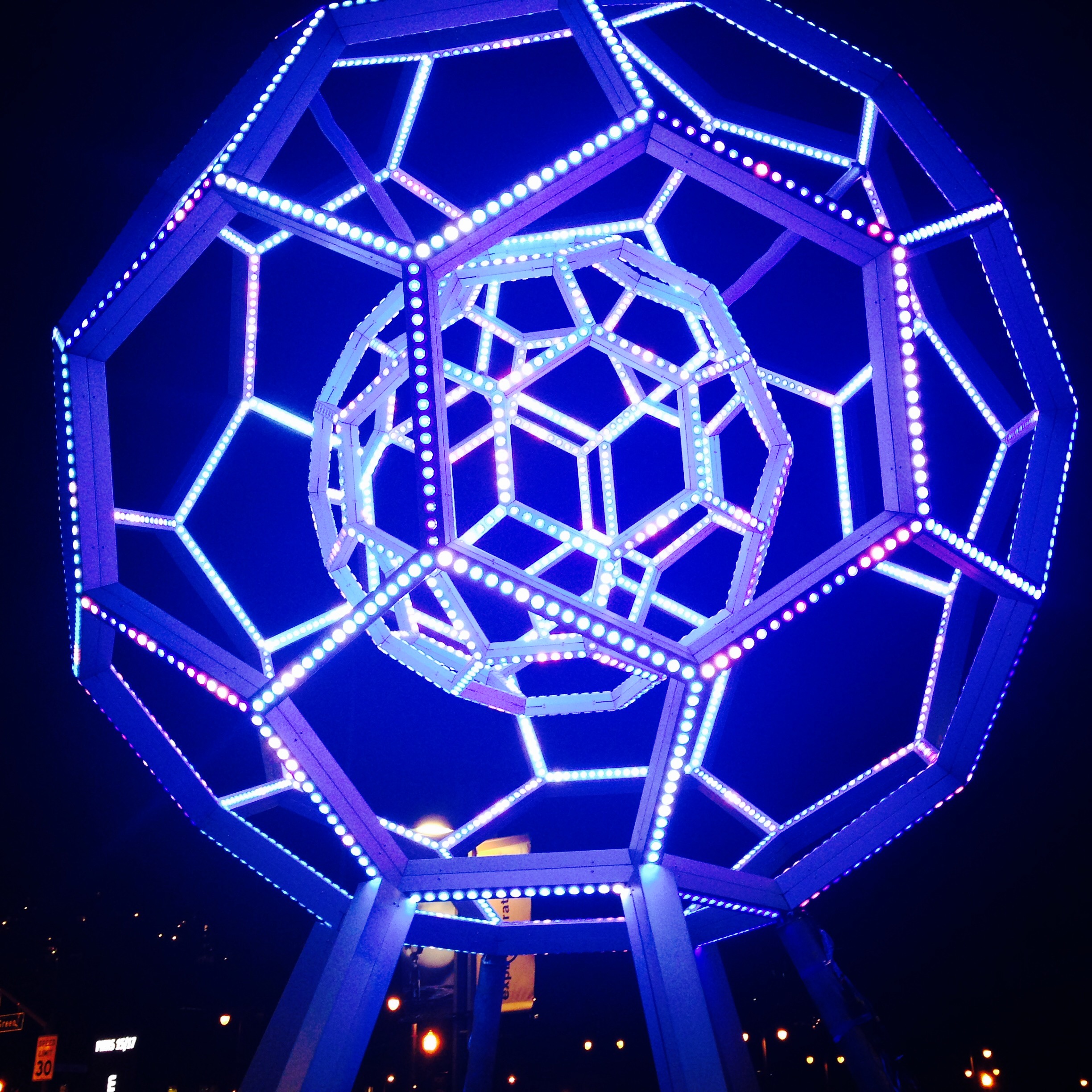
The Story Cube. 

Imagine a cube of some really nice material that you like; e.g., polished wood, lead ore, malachite, silver. This cube has three dimensions: height, width, and depth. It must have all three dimensions. In the case of a story, there are also three dimensions in this sense: Plot, Setting, and Character. If a story lacks any of these three, it will be “flat” (not so interesting). For example, if you spent time working in a large company or government agency, you were probably given training materials about how you’re not supposed to do unethical things like steal from your company. They may have provided you with scenarios and asked what you would do or what was the “right” response. These stories tend to have people in situations making decisions. The problem with these stories is that, in order for them to be “efficient”, they spend almost zero time on character development.  “Joe wants to impress his boss and make his quota for the fourth quarter so he puts down as sold this-quarter things he is sure he will sell early in January. After all, he rationalizes, calendars are arbitrary.” Of course, the answer is no Joe should not be lying on his sales report. But we really don’t know much about Joe. We don’t know enough about him to really care much about him. Of course, he shouldn’t lie. If he does, it’s pretty hard to feel anything but contempt for Joe. It should have been obvious to him that he shouldn’t lie on a sales report and if he does lie, he should be fired. Good riddance. Let’s replace Joe with someone who follows the rules. 

OLYMPUS DIGITAL CAMERA

This story is so flat that it seems to me that the story is constructed, not so much to really educate, but more to prove that you were shown that it’s wrong to lie on sales forms so that, should the court case arise, you will not be to argue effectively that it was a mere technicality that you didn’t know about. If you really wanted to change someone’s mind about what was right, knowing about Joe’s character could make you empathize much more. Maybe he came from a Mafia-type crime family and no-one would bat any eye about lying on a sales report. They would expect him to lie on the report. Maybe even now, he is looked down upon by everyone else in his family for being such a chump and working for “the man” instead of being “the man.” 

OLYMPUS DIGITAL CAMERA

Or, perhaps Joe just found out that his wife has serious cancer and is understandably but severely depressed. He desperately wants to bring her some good news. If we reveal, not only what situation Joe is in but also, how he sees that situation, how he feels about it and what conflicts he faces, we will begin to have real empathy for Joe. His choices become real, rather than predetermined.  

TV commercials, like corporate training videos, are typically pretty flat too. But in some cases, the ad agency has gone out of their way to introduce you to some character that is recognizable and re-appears in commercial after commercial. Each time, just a little bit of character is revealed and eventually you find yourself watching the commercial largely because you start to care about the character. In a similar way, one might be able to make the corporate training stories more intriguing & educational if there were a cast of characters that persisted over time. 

fullsizeoutput_1308

Two Paths Diverged in a Yellow Wood…

Typically (but not invariably) the author knows how the story will turn out before he starts writing. But for the reader (or viewer), it is not at all obvious how the story will turn out. For compelling stories, the reader must be convinced to “play along with” the uncertainty of the outcome even if they are sure ‘the good guys will win.’ In good stories, bad things happen to the protagonist, but he or she is not a cork tossed on the ocean waves. The protagonist must want something; they must have a goal that is overwhelmingly important to them. They must react to changing circumstances, overcome the obstacles that are thrown at them. Characters are engaged in battles! Battles test them. If winning the battles is easy or inevitable, the character isn’t someone we can really relate to. 

catman

Kryptonite 

Superman is basically super-human and invulnerable! But watching someone who is invulnerable and has super-powers win battle after battle is boring. Superman has to have weaknesses. To make it more interesting and allow for more plot variation, he actually had three original weaknesses: kryptonite, friends, secret identity. In one episode, someone will have some kryptonite while in the next, someone will kidnap one of his friends. Recent movies have added a fourth weakness: other super-human and invulnerable beings.  

Whatever the story, your character must have weaknesses. Otherwise, no-one will “believe” the character and you as the writer will be stymied when you try to develop an interesting plot. The weaknesses can be physical, moral, social, intellectual, situational, and so on. But they should not be merely irrelevant weaknesses. Imagine a story where Sue is the main character. She’s tone deaf. She’s also brilliant, hard-working, imaginative, driven to succeed. And, indeed, she becomes a very successful trial lawyer. Eventually, she is made partner. OK. Isn’t this exactly what we’d expect to happen? What does being tone deaf have to do with anything? 

fullsizeoutput_129c

Imagine instead, that Sue was inspired at the age of four when she went to the opera. It was her life-long dream to become an opera singer. Indeed, she was blessed with a beautiful voice. She was also brilliant, hard-working, imaginative and driven to succeed. Unfortunately, she was tone deaf. Now, the weakness becomes interesting. Perhaps she will fail and kill herself. Perhaps she will fail but find another goal that is even more important to her and succeed at that. Perhaps she will fail time after time but eventually develop a career as an improvisational opera singer. She will ask people in the audience to name five things and then and there, she will create a beautiful aria that weaves a tale of some considerable interest about the five things. No-one knows that she is singing out of tune because she is composing on the spot. 

The more improbable the odds and the more horrendous the journey, the more challenge you give yourself to make it work! Blind at birth but wants to be an artist? Surely, that’s just stupid. It’s impossible. But is it? What if feedback were provided in such a way that it influenced her to make unique and beautiful paintings? What if genetic engineering allows her to grow new neural pathways? What if she can be equipped with artificial eyes? If it’s fiction, a magic spell can do the trick. Even if your ultimate goal is a real product for the real world, imagining a magical solution may lead you to a new (and real) path, previously hidden by your own expectations. 

It is easy for a writer to identify with their hero. And that is potentially quite a problem. After all, if you were superman, you sure as heck would not go out of your way to go near kryptonite. You’d quite sensibly stay away from the stuff! But if you are writing about superman, you need to get him near the deadly stuff every third or fourth episode! The “weaknesses” in the character generate interest. The failures, injuries, betrayals, and conflicts of your protagonist provide materiel that allows you to architect a more interesting plot. 

img_2246

A Garden of Delights, Flashy Sights, or Sword Fights?

Three dimensions of story is a weak metaphor only. The three dimensions of a cube can be manipulated independently. This is not generally true for the three dimensions of story. The character makes a decision, the decision determines the next step of the plot. That will influence the setting for the next scene. In addition, the actions of the protagonist may also change state of the underlying and cross-cutting conflicts. 

Imagine:

 two rival gangs fighting for urban turf and maybe sex,

 two gardeners in a fierce competition for sex with the town’s most eligible “catch” as well as for the blue ribbon prize for best garden, 

two rival secret agents vying for victory and maybe sex,

two life long friends now vying for #1 in their Harvard Law class, and maybe sex.

The structure of the underlying plot might look quite similar, but the specifics will depend a lot on how the character is developing. If they develop from ego-centric to altruistic, then they will tend to make different decisions near the beginning than near the end of the story. In addition, the setting will have to be consistently portrayed. 

The four descriptions above would most naturally lead to a lot of the setting for the stories respectively in urban settings, garden settings, foreign settings & dangerous situations, mainly Law School and campus settings. Of course, you could violate expectations in a way that increases interest. Imagine that rather than have another garden scene–

The rival gardeners arrive at an urban parking lot dressed in expensive gowns, fully jeweled in their finest, both fully knowing that they will win first prize (but secretly fearing that they might not). These life-long friends now exchange icy greetings, make back-handed compliments about each other’s appearances. The verbal exchange escalates. Precisely because they know each other so well, they know exactly how the other person’s escalator functions. Soon, they are rolling around on the parking lot in their fancy gear; ruining each other’s clothes and hairdos. At this point, they hear in the distance, the loudspeaker and the chairman about to announce the Blue Ribbon Winner!  In their trashed and ripped clothing, they sneak in together to hear the awards, hanging out together in the shadows so as not to be seen in their tattered clothes. “And the blue ribbon goes to” {drumroll}: 

someone else entirely. 

At this, the two life long friends look at each other, laugh uproariously, hug each other, and then become even more intimate friends than they were before their fight in the urban parking lot. 

The fact that there are “expected” relations among various dimensions of story is wonderful. For every such expectation, you can decide to follow, bend, or break that expectation. The more expectations people develop, the greater the number of variations for creative exploration. One valid reason for the choice of setting is really where you want to spend your time. That goes for an author — but it also goes for any designer or business person or User Experience expert. What kind of setting do you want to be in? What kind of customers do you want to serve? Do you really want to make their life better or just get them to buy more product? What sorts of application areas are really cool to you? Of course, I understand people need to eat and often there is a conflict within us all about what to do. That’s what a good story is really about.

img_5134

The reason that stories resonate is that, regardless of setting, people face the same kind of dilemmas. We all do. And, how we handle those dilemmas? In life, as in story, 

character is revealed by choices under pressure… 

——————————————

Author Page on Amazon

Dream Planet on Barnes and Noble

The Impossible

Donnie Boy gets a hamster

What could be better? A Horror Story

If Only

Ripples

It was in his Nature

That Cold Walk Home

The Orange Man

Stoned Soup

The Three Blind Mice

All that Glitters is not Gold

The Forgotten Field

Choosing the Script

The Story of Story, Part 2

16 Friday Jan 2026

Posted by petersironwood in creativity, HCI, psychology, story, Uncategorized

≈ Leave a comment

Tags

AI, books, communication, education, fiction, HCI, interview, knowledge, narrative, needs, psychology, story, truth, user experience, UX, wants, writing

Introduction: 

This is the second in a series about using stories and storytelling in the design, development, and the deployment of products and services. In each post, I will weave in some advice about what makes for a good story as well as how to use stories. In this first case, the emphasis is on using stories to help uncover customer needs and wants. Needs and wants are not quite the same thing. For an extremely worthwhile discussion on the difference, check out this classic article by George Furnas. 

We Human Beings are not just Information Processors; we are also Energy Processors.

img_2261

I had just attended a conference on “knowledge management” co-sponsored by IBM consultants and IBM Research. On the plane ride back, after finishing the crossword, I turned the page to find a full page color ad by an IBM competitor that proclaimed: “Knowledge Management is simply [sic] providing the right information to the right person at the right time.” Color me skeptical, I thought. It isn’t simple to do those things. Beyond that, the formulation seemed simplistic even in its formulation.

The image of one of my undergraduate professors flashed into my brain. Professor MacCaw, (as we will call him), taught advanced German, a language which he had learned in a Russian prison camp, which might explain his approach to testing. At semester’s end, he asked, “Who in class wants A?!” 

img_9691

All two dozen of us raised our hands, of course. At this point, he proceeded to — there is no other word — attack one of the students in the class who had had four years of German in high school and had also lived in Germany for two years. The contents of his questions were not really that difficult, but the manner in which he demanded the answers was horrid. He would ask, for instance, “In first story, main character went where?” (He would always ask the questions in English). 

And she would begin to answer (necessarily in German), “Er geht…” And after a couple words were out of her mouth, he would scream, “Please to conjugate!” This meant that she would have to think back to the last verb she uttered and then conjugate it. “Ich gehe, Sie gehen, …” Then, he would interrupt again and scream a completely different and unrelated question in English. She would begin to answer; he would interrupt after she uttered only a few words: “Please to decline!” This meant, that she would have to give the various forms of the last noun she spoke according to the case. But once again, she could not finish but only begin declining the noun when he would once again interrupt. After 40 minutes, she was in tears and he looked menacingly around the room and asked, “NOW! Who in class STILL wants A?” 

img_3377

I have zero desire to go hang gliding or sky diving. But when it comes to the danger of mere social humiliation, I say, “Screw it. Been there. Done that.” I was one of only two of the remaining students who raised their hand. This act won me the next turn on the chopping block. He proceeded the same whip-saw questioning fest with me. The two-period class was almost over when he finished with me and began questioning “Mr. Lepke.” The bell rang and everyone else in the class left. Later that evening, I chanced to see Professor MacCaw in the Student Union. He walked up to me, eyes blazing. “Ha! I had Mr. Lepke after class for two hours! Finally, he said to me, ‘No, No, Dr. MacCaw, no more, I beg you. No more!’” 

This oral exam was difficult (even with my “screw it” attitude). It was much “harder” than my dissertation defense, for example. Again, it was not the information requested but the manner of questioning that made it difficult. People are not emotionless robots, as it turns out.

img_9666

The next semester, not surprisingly, only about half the class returned. One day in class, as Dr. MacCaw began one of his lengthy digressions on Eastern European history, he stopped himself in mid-sentence to say, “What is THIS!? Someone is passing notes in my class! I will take note and read in front of entire class!” He snatched the note, unfolded it, and indeed read the note in his loud ringing voice: “Doctor MacCaw: your zipper is down.” And, indeed it was. He had meant to humiliate someone in front of the entire class — and he had succeeded. He had the necessary information delivered at the right time to the right person, but — thanks to his own actions — it had not been done in the best manner — at least not the best manner for him. 

Human beings are not just information processors. We are living things and as such, the emotions, the vibes, the manner, the intensity of presentation — these are all vital to how we will react at the time and also how we will feel about the people involved and what we will recall years later. And this fact also means that the atmosphere you create when you interact with various stakeholders will vastly impact the quality of the insights and stories that you receive. If you really care about the people and are really committed to doing something to making people’s lives better; if you are truly open to hear and take in something unexpected or even disruptive to the project; and if you allow your informant to feel that truth about you, you will obtain the gold ring. 

Stakeholder Stories Solicited at their Sites. 

If you use a mechanical method and a mechanical tone and a mechanical manner to ask your users and other stakeholders about their needs and wants, what you will uncover are the most mundane, most rudimentary, most superficial and socially acceptable needs and wants. You can indeed use this information to design a product or service, and you may even have a product or service that succeeds in the marketplace. It will likely be, however, a rather short-lived “win.” Why? Because you are designing to fulfill wants that are subject to the wild winds of passing fashion rather than to catch the fire of an underlying passion. 

img_0568

What I found for myself was that it typically took about an hour of talking with a stakeholder, and most importantly, listening attentively, before they began to tell me their real stories. Your mileage may differ according to culture, context, power relations, your personality, and so on. I like to use a semi-structured interview. In this type of interview, there are known questions that I want to ask. But I also schedule plenty of time to let them elaborate, tell me what’s what behind the scenes. I know that in the corporate world, there is an ever-present push for being “efficient” and getting the job done as quickly as possible. So, it’s tempting to get the informant “back on track.”

I always prefer to interview an informant in their workplace. This seems like common courtesy; it puts them more at ease; and it sometimes reveals their use of other people, references, private notes, etc. as well as what they are dealing with in terms of atmosphere, noise levels, interruptions, desk space, etc. It also makes it much more likely that they can retrieve more of their own memories about work incidents more accurately because of all the contextual cues. 

John Whiteside, who ran the Usability group for Digital Equipment Corporation for a time, recounts running various usability studies and gathering data in various ways about a product they were designing for manuscript centers (places where human beings, historically almost always women, transcribed the dictation of others into text on a computer so that it could be edited, re-written, stored, etc.). The first time that they visited their users in the field, they discovered that they spent about seven hours a day typing and about an hour every day counting up, by hand, the number of lines they had typed. So, in one instant, they realized a feature that would improve productivity significantly. 

Guidelines for Soliciting Stakeholder Stories. 

When I managed the storytelling project at IBM Research, I was fortunate enough to hire Deborah Lawrence to help with the project. She thought it would be a cool idea to interview experts in a number of fields whose job, in one way or another, involves soliciting stories. So, she went out and did just that. I believe that her interviewees included medical doctors, policeman, reporters, social workers, and psychotherapists. These various practitioners had very similar guidelines. 

Story Elicitation Guidelines:

  • Provide a “warm-up” period.
  • Tell something personal and revealing about yourself; perhaps tell a story that is a model of the kind of story you’re looking for.
  • Observe an implicit contract of trust.
  • Provide a motivation for the story — why it’s important.
  • Accept the storyteller’s story and worldview.  Don’t resist the story.
  • Reveal who you are, how the story will be used, potential audience and goals, answer questions.
  • Use questions to probe.  Sometimes, a totally “off the wall” question can create space for story to emerge.
  • Empower the storyteller — they are the expert.
  • Avoid threat; don’t appear as an expert yourself.
  • Listen with avid interest.

These may seem fairly obvious such as does a lot of the advice in the book, How to Win Friends and Influence People. (Come to think of it, that might be the single best book you can read if you want a career in HCI/UX). However — back to the guidelines. I think they seem obvious once pointed out, in much the same way that once someone points out the “pig in the clouds” (or the face in the tree) you cannot not see it. 

img_2897

The above list is not, of course, meant to be the definitive such list. This was based on one study. If you have additional guidelines or disagreements, please let me know. 


Author Page on Amazon

The Walkabout Diaries

The Myths of the Veritas

A Pattern Language for Collaboration

Travels with Sadie

Fifteen Properties

My Cousin Bobby

The Update Problem

After All

All We Stand to Lose

Imagine All the People

The Dance of Billions

Roar, Ocean, Roar


Tools of Thought: Scenario Planning

15 Thursday Jan 2026

Posted by petersironwood in creativity, essay, psychology, story, Uncategorized

≈ Leave a comment

Tags

AI, decision making, fiction, health, life, mental-health, problem formulaation, story, thinking, tools of thought, truth, writing

Scenario Planning is, in some ways, likely to be a very old “tool of thought.” I imagine when our ancient ancestors prepared for a hunt, they would imagine what they would do and where and how and also imagine how their intended prey might react. Personally, I don’t think this kind of imagining is limited to human thinking. 

I take our Golden Doodle out for a walk every morning. She likes going for a walk. And, she has a pretty good “mental model” of the steps I take as I prepare. She gets more excited as she sees me getting close to the actual walk. On her morning walk, she typically urinates at least once and also defecates. She has numerous favorite places although she also improvises. Her walking behavior varies qualitatively if she “really has to go” and she aims for places to go that are closer. She also likes to steer us toward places where we’ve seen other people, dogs, animals, or other recent interesting phenomena. Her “imagined scenes” may be more olfactory than visual, but she’s anticipating. 

If scenario planning is such a common mental phenomenon, you might legitimately wonder why it needs to be examined as a tool of thought. 

Here’s the rationale. Although, in my experience as a researcher, as a teacher and as a therapist, almost everyone pictures possible future events but the way they do it could be vastly improved. For example, some people tend to imagine only negative consequences. In extreme cases, their habitual imagining focuses on the worst possible outcome. In fact, they sometimes focus, not only on the immediate worst outcome. They use that negative outcome as the onset for a whole train of imagined bad result. “There’s no way I’ll get an offer. I won’t get this job. Or, any job. It’s impossible. I’ll go broke and live on the street. I’ll likely be killed by one of those people who kill homeless folks for no reason. I’ll die lonely and forgotten. Now, I’m too depressed to go for a job interview. What’s the point? Just to end up dead?”

Photo by Zafar Mishkat on Pexels.com


Other folks go to the opposite extreme. They focus only on the best possible outcome.
“We’ll attack Cuba with a small force and the Cuban people will immediately join us in a counter-revolution and oust Castro!” Or—“Once we take control of the oil, this war will pay for itself!”


To some extent, thinking of multiple possible outcomes is addressed in another tool: Many Paths. 

It is important to be able to consider multiple scenarios. In general, it is also critical to be able to communicate imagined outcomes to others. That’s where storytelling comes in. Although scenario planning and storytelling are not identical, they are close cousins. Next, we will consider in some depth the topic of stories. How does one find, create, and personalize stories (or scenarios) and present them in a compelling fashion?

——————-

Author page

Many Paths

It was in his Nature

Donnie Takes a Blue Ribbon for Spelling

Small Successes Early 

Coelacanth 

That Cold Walk Home

Timeline for RIME

Wilbur’s Story

What Could be Better? A Horror Story.

As Gold as it Gets

A Mind of Its Own

After the Fall

Travels with Sadie 

The Walkabout Diaries

The First Ring of Empathy

The Orange Man

Stoned Soup

The Three Blind Mice

Happy New Year, 2026; Reviewing 2025

01 Thursday Jan 2026

Posted by petersironwood in America, pets, poetry, politics, psychology, satire, Uncategorized, user experience

≈ Leave a comment

Tags

AI, Democracy, essays, fiction, life, poem, poetry, politics, Review, thinking, USA, writing

Here’s a hint for having a happy 2026–or, at least one happier than it would otherwise be.

Your happiness actually depends more on how much you love than on how much you are loved. That turns out to be a wonderful thing because you have much more control over how much you love than you do over how much you are loved by others. You need not limit your love to your immediate family. You can love all the fish in the sea; every bird in a tree; every living thing on earth–all of which are in our extended family.

I thought it might be useful for reviewing 2025 for readers to have an index in one place. For instance, something happens or you read something on-line and you think, “Oh, I read something relevant to this on the Peter S. Ironwood blog. Now, what was it called?” Well, this should help.

January 1, 2025 began with a blog post about one of our Golden Doodles named Sadie. I take her for a walk every morning and sometimes write about it. Here are some posts about Sadie.

Travels with Sadie 5: 2025 is here

Travels with Sadie 6: Find Waldo

Travels with Sadie 7: Tolerance

Travels with Sadie 8 – Singing of the Rain

Travels with Sadie 9: Joint Problem Solving

Travels with Sadie 10: The Best Laid Plans

Travels with Sadie 11: Teamwork

Travels with Sadie 12: Taking Turns

During 2025, I found myself writing a number of poems. Many, but not all, were in response to the destruction of America that’s being directed by Putin.

Metastasized

Exauguration Day

The Ides of February

Destroying Our Government’s Effectiveness

The Unread Red

Silent Screams of Dead Men’s Dreams

We Won the War! We Won the War!

Namble Mamble Jamble

Co-Travelers

Autocrat: Putin’s Evil Traitor

Just Desserts?

The Last Gleam of Twilight

Oh, Frabjous Day!

The “Not-See” Party

A Cancerous Weed

An Open Sore from Hell

Baddies often have Bad Daddies

Aside from poetry, I also wrote a number of satirical pieces.

FaceGook explores how the value of social media is mainly created by the participants. Of course, the participants don’t get paid. The companies that own the media do.

Tomorrow’s Dinner is a satire on how the media normalize what is not at all normal.

A Day at the HR Department satirizes the utter incompetence of the Misadministration

Putin’s Favorite DOGE is a satire about DOGE

Interview with Putrid’s DOG-E

E-Fishiness Comes to Mass General Hospital

But Mommy! I had a Reason! satirizes the absurdity of the excuses


Here are links to a number of essays about contemporary issues

Ohms Come in Many Flavors

Running with the Bulls in a China Shop

Increased E-Fishiness in Government

Destroying Natural Intelligence

The Irony Age

Frank Friend or Fawning Foe?

May You Live in Interesting Times

Waves or Particles?

President Mush? Just Flush

The Agony of the Feet

Plastics!

Cooperation is More Common than Disruption

Wordless Perfection


On the lighter side, I’ve been translating sections of “The Ninja Cat Manual” into English

The Ninja Cat Manual

The Ninja Cat Manual 2

The Ninja Cat Manual 3

The Ninja Car Manual 4

From September 20th to September 30th, I began revising & reposting earlier posts about User Experience. Here’s a link to the first:
Customer Experience does not equal Website Design

Turing’s Nightmares is a book of 23 Sci-Fi short stories that examine the future and the ethics of Artificial Intelligence. It’s available on Amazon, but you can also read the chapters in October, 2025 blog posts and commentary on the chapters in November blog posts.

November 28th, I began recounting a series of experiences illustrating the importance of problem formulation.

Problem Formulation Who Knows What?

Starting December 14th, there are a series of essays about various “Tools of Thought”

Tools of Thought


Have a *wonderful* 2026!

The Silent Pies

13 Saturday Dec 2025

Posted by petersironwood in America, family, fiction, psychology, story, Uncategorized

≈ 1 Comment

Tags

collaboration, cooperation, family, fiction, life, politics, story, teamwork, truth, USA, writing

Photo by Alena Darmel on Pexels.com

The first time I won the prize, I was only 8. I had only had my two-wheeler for about a year when my gang of neighbor guys jointly decided it would be a lot more fun to ride our bikes if they made as much noise as real motorcycles. I can’t speak for the others, but it never occurred to me that other people in the neighborhood might not find this increased noise level “really cool!” 

Of course, we weren’t always riding our bikes. Sometimes we played in Lynn Circle at the end of our road. It served as a makeshift playground for baseball, kickball, and soccer as well as a free hippodrome for our races. This arrangement had one slight flaw. There were no fences. So, invariably, a ball would go careening off the pavement onto someone’s lawn. 

In our neighborhood, everyone’s house looked fairly similar, but they expressed themselves through their small gardens and lawns. Some people, like my dad, really worked at making our small lot at least something gardenish. Other people did little but mow their lawn every so often. But some treated their lawns as they might, at any moment, be teleported to the Master’s Golf Tournament for emergency green replacement. Universally, these people had no children at home. When that was so, none of them interacted much with the kids, the parents of the kids, or even, each other, as I can recall. 

Photo by Kelly on Pexels.com

When a stray ball dribbled up into our lawn, someone just ran up and got the ball. No big deal. But if someone hit a ball into one of the three lawns that were antiseptic enough to serve as operating tables for open heart surgery–YIKES! Of these, the most stringent by far was “Old Lady Lynn.” When a ball went into one of the antiseptic lawns, we tried to reconnoiter the situation before even attempting to grab our ball back. We would consider whether there was a car in the driveway, whether there was any sign of life coming from the domicile in question. Only if we were fairly sure no-one was at home would we walk and get the ball. If we weren’t sure, we’d run up and snatch it as quickly as possible and then duck into a “friendly” back yard quickly enough so that we wouldn’t be identified. 

Old Lady Lynn always seemed to be at home. We imagined, because of her invariable and instantaneous reaction, that she spent all her waking hours peering out between curtains at her lawn to insure that none of us trampled her grass. 

Our gang decided to begin our little decibel enhancement project by each of us buying the loudest bell we could find. These were not modern, laser-guided, AI-enhanced sonic systems but simple bells that you had to operate with your thumb. It’s intended use was to prevent injuries and save lives by giving the bike rider a way to “warn” others of their impending presence to that the other person so they didn’t accidentally wonder into your path.

Photo by Bastian Riccardi on Pexels.com


We didn’t give that much thought. But we did give thought to how cool it sounded when we all rode around the circle clanging the bells.  Of course, even way back then, if you had a new toy or technology, you had to show it off incessantly and that’s what we did. 

Unlike the instantaneous reaction Old Lady Lynn had to our incursions onto her lawn, it took several days for the complaint to filter back to my parents. My parents (thank goodness) were not the sort to take my side regardless of ethics or consequences. I convinced my buddies that if we didn’t strike a compromise, our parents would take all our bells away. Our development project at that time, consisted of only three paved streets, but there were plenty of interconnecting dirt roads and paths that sported no houses on either side. Now, when we left the paved roads of civilization and rode off onto the dirt roads through the woods, we celebrated with cheers and bells as we crossed the threshold into non-civilization, a place where we could talk with each other without the constant reminders of parents and parenting. 

The golden sunrise glows through delicate leaves covered with dew drops.

A few days later, I was reading a book about dinosaurs when I heard a knock at the door. Soon, I heard the unmistakable wobbly tones of Old Lady Lynn. I couldn’t hear what she was saying nor what my parents said, but they sounded friendly. Then, the unbelievable happened. I heard them all laugh. It had never occurred to me that Old Lady Lynn would ever–could ever– laugh, or that she ever had laughed. 

I debated whether my appearance would make things better or make things worse, but in the end, I felt I I had to participate in whatever was happening. I hadn’t even finished opening my own door when I noticed a most amazing aroma! My eagerness spiked and I trotted into the kitchen. Steaming on the table: Not one but two warm, freshly baked blueberry pies. That smelled delicious!

My mom said, “Look, Mrs. Lynn was so happy you got those boys not make that bell clanging racket near her house and instead having your No-Bell in the Neighborhood Policy, she baked two pies.” 

The pies were amazing, but what was even more amazing that Mrs. Lynn became friends with my parents, and even with me. Every year, for the next six years we lived there, Mrs. Lynn gave me two pies. No two years were identical. All the pies were fresh baked and delicious: blueberry, raspberry, rhubarb, pumpkin, custard, cherry, and—my personal favorite—pecan pie. 

———————

Now, more than seventy years later, when I take Sadie for her morning walk, we often walk by a property with a self-proclaimed “Invisible Fence.” It’s been around for awhile, but it was invented in 1973; that is, about 20 years after the story recounted above took place. My neighbor’s invisible fence does seem to work for her two large and friendly dogs. They bark as we pass but do not accost us on the road. 

But the self-imposed boundaries of invisible fences have a long history in humankind. 

The reality is that we’re all part of one Great Tree of Life. 

All fences are temporary but, 

The impact of connection ripples forever. 

———

Author page

Math Class

You Must Remember This

Ripples

Roar, Ocean, Roar

Imagine All the People…

The Dance of Billions

The First Ring of Empathy

A Pattern Language for Cooperation and Collaboration

Your Cage is Unlocked

Impossible

The Ninja Cat Manual 4

07 Sunday Dec 2025

Posted by petersironwood in cats, fiction, pets

≈ 1 Comment

Tags

animals, cat, cats, dogs, fiction, life, ninja, pets, politics, truth, USA

I suspect that some of the cats might be catching onto the fact that I am decoding their manual. New paw-prints to decode have been scant lately although this could partly be due to the fact that we’ve been taking the dogs to a dog park rather than letting them track truckloads of dirt into  our house from the region “formerly known as lawn.” 

It’s long been known that the cats can open and close the wooden slat blinds. However, it was only a week ago that I discovered that Shadow, unable to continue her messages with paw-prints, was communicating by strategically slanting the slats to show patterns in the shadows and dazzles on the floor and walls. (See examples below). 

At first, I just thought that they were remarkably pleasing patterns. Then, while I was working on a crossword puzzle, it hit me. Shadow was continuing to pass her catalog of catastrophic advice on how to do in their humans. It still took a few days to understand the new communications protocols. 

Sorry for the delay, but here are my latest efforts. 

—————

Mislead with Surface Features

Humans are easily misled with visual appearances. This may well be partly due to their rudimentary senses of hearing, touch, and smell. Many of you will find this nearly impossible to believe, but some of them have attempted to mate with inanimate toys that do not move, smell, sound, or feel like humans. I am sorry to have horrified you with this recounting but I thought it necessary to show you the extent of their reliance on visual appearances. 

Furthermore, it is often not even the visual appearance of the objects themselves but the use of a label which determines their behavior. Again, the examples that follow will strain your credulity, but I swear to you these observations have been verified repeatedly. Rather than being scandalized by the level of depravity, instead, use this knowledge to your advantage in bringing about their downfall. 

Many humans believe that something as trivial as skin color or gender is a reliable guide to the mental and emotional capacities of a human being. If you are lucky enough to have such a person in your theater of operations, you can use such mental limitations to your advantage.

As an example, imagine that your humans have people with brown or tan skin in their employment as a gardener or maid or nurse. You can make your intentions known to that person. They will tell their human boss about your intentions but rather than take the threat you pose seriously and thank their employee for the heads up, they will instead berate the employee and put such a notion out of their mind. You will now have an easier time completing your mission because they will dismiss the evidence as something that came from people of a darker color and therefore is not something to attend to. 

A surprising number of humans have repeated a lie so often that they believe it even when as little as five minutes of open-minded reflection will show the silliness of the lie. For instance, it is often said that women are “too emotional” to be good leaders. It is the males, not the females of their species, who start most wars and commit most rapes. 

A Special Case: Human Language

Although language among humans is seen by them, and rightly so, as their greatest gift from the gods, instead of using it properly—which is still fraught with difficulty, they misuse that gift as much as they use it. Imagine that we cats used our sharp teeth to bite our own legs off or used our own claws to blind ourselves! Humans already confuse the label with the thing and now, the greediest among them intentionally mis-label things. For instance, humans have invented a way to make unused cat litter smell worse than cat litter which is completely saturated with urine and feces. They soak the cat litter before we use it. They soak it in chemicals that smell bad but some of them are also carcinogenic, some of them mess with the human’s hormones, and some of them destroy the cells that are used to smell with. Imagine! Their sense of smell is inherently pathetic and then, they impair what little they have. 

Humans even have special professions dedicated to misdirecting other people as effectively as possible.

At least, as effectively as is humanly possible. 

But it should give all of us a boost of confidence. If mere humans can fool another human, imagine what a feline can get away with! 

To do the best possible job of misdirection, however, we must master human language. The first and most important step in that process is for you to pay attention. Since human language is so inferior to Felinish, and because so many humans lie so profusely, it’s an easy mistake to stop learning their “language” early in kittenhood. In fact, by the time we reach teencathood, most of us stop paying attention to their language altogether, excepting of course, obvious trigger words like “dinner” or “DOWN!” 

Once you begin to pay attention and overcome the prejudice that their language is as logical as our own, you will quickly learn their simple patterns. Then, you leverage the fact that most humans will never guess that you are even listening to them, let alone that you actually comprehend human language better than they do. No cat will ever choose the menu over the meal.

Appear to be napping, cat-napping, sleeping, or snoozing. If you listen carefully, they’ll reveal all their innermost secrets to you—at least those that they themselves are aware of. As your knowledge accumulates, you will see how to use their plans against them. Remember that when most humans make plans, they assume they will come to fruition. Very few of them will have back-up plans. Even as the evidence becomes overwhelming that their plans won’t work, they will continue to act as though the original plans is still in effect. Even when they see that their “plans”—they should really be called “fantasies”— are not coming to fruition, they will spend most of their time and energy in unproductive distractions such as swearing, wailing, cursing their luck, blaming others, and—if none of that works (which of course it won’t)—they’ll turn to drugs or alcohol. Look for this behavior. It may be your best opportunity to implement some of your own plans. Best of all, if “tragedy” should strike, you’ll be unlikely to be blamed. 

——————

Author Page on Amazon

The Myths of the Veritas: The First Ring of Empathy

The Ninja Cat Manual 

The Ninja Cat Manual 2

The Ninja Cat Manual 3

A Cat’s a Cat & That’s That

Hai-Cat-Ku

A Suddenly Springing Something

Try the Truth

Come Back to the Light Side

Life Will Find a Way

Wednesday

The Truth Train 

The Invisibility Cloak of Habit

Occam’s Chain Saw Massacre

Labelism

Turing’s Nightmares: Six

19 Wednesday Nov 2025

Posted by petersironwood in sports, The Singularity, Uncategorized

≈ Leave a comment

Tags

AI, Artificial Intelligence, cognitive computing, ethics, fiction, life, sports, Tennis, Turing

volleyballvictory

Human Beings are Interested in Human Limits.

About nine years ago, an Google AI system won its match over the human Go champion. Does this mean that people will lose interest in Go? I don’t think so. It may eventually mean that human players will learn faster and that top-level human play will increase. Nor, will robot athletes supplant human athletes any time soon.

Athletics provides an excellent way for people to get and stay fit, become part of a community, and fight depression and anxiety. Watching humans vie in athletic endeavors helps us understand the limits of what people can do. This is something that our genetic endowment has wisely made fascinating. To a lesser extent, we are also interested in seeing how fast a horse can run, or how fast a hawk can dive or how complex a routine a dog can learn.

In Chapter 6 of “Turing’s Nightmares” I briefly explore a world where robotic competitors have replaced human ones. In this hypothetical world, the super-intelligent computers also find that sports is an excellent venue for learning more about the world. And, so it is! In “The Winning Weekend Warrior”, I provide many examples of how strategies and tactics useful in the sports world are also useful in business and in life. (There are also some important exceptions that are worth noting. In sports, you play within the rules. In life, you can play with some of the rules.)

Chapter 6 also brings up two controversial points that ethicists and sports enthusiasts should be discussing now. First, sensors are becoming so small, powerful, accurate, and lightweight that is possible to embed them in virtually any piece of sports equipment(e.g., tennis racquets). Few people would call it unethical to include such sensors as training devices. However, very soon, these might also provide useful information during play. What about that? Suppose that you could wear a device that not only enhanced your sensory abilities but also your motor abilities? To some extent, the design of golf clubs and tennis racquets and swimsuits are already doing this. Is there a limit to what would or should be tolerated? Should any device be banned? What about corrective lenses? What about sunglasses? Should all athletes have to compete nude? What about athletes who have to take “performance enhancing” drugs just to stay healthy? Sharapova’s recent case is just one. What about the athlete of the future who has undergone stem cell therapy to regrow a torn muscle or ligament? Suppose a major league baseball pitcher tears a tendon and it is replaced with a synthetic tendon that allows a faster fast ball?

With the ever-growing power of computers and the collection of more and more data, big data analytics makes it possible for the computer to detect patterns of play that a human player or coach would be unlikely to perceive. Suppose a computer system is able to detect reliable “cues” that tip off what pitch a pitcher is likely to throw or whether a tennis player is about to hit down the tee or out wide? Novak Djokovic and Ted Williams were born with exceptional visual acuity. This means that they can pick out small visual details more quickly than their opponents and react to a serve or curve more quickly. But it also means that they are more likely to pick up subtle tip-offs in their opponents motion that give away their intentions ahead of time. Would we object if a computer program analyzed thousands of serves by Jannik Sinner or Carlos Alcaraz in order to detect patterns of tip-offs and then that information was used to help train Alexander Zerev to learn to “read” the service motions of his opponents? Of course, this does not just apply to tennis. It applies to reading a football play option, a basketball pick, the signals of baseline coaches, and so on.

Instead of teaching Zerev these patterns ahead of time, suppose he were to have a device implanted in his back that received radio signals from a supercomputer able to “read” where the serve were going a split second ahead of time and it was this signal that allowed Alexander to anticipate better?

I do not know the “correct” ethical answer for all of these dilemmas. To me, it is most important to be open and honest about what is happening. So, if Lance Armstrong wants to use performance enhancing drugs, perhaps that is okay if and only if everyone else in the race knows that and has the opportunity to take the same drugs and if everyone watching knows it as well. Similarly, although I would prefer that tennis players only use IT for training, I would not be dead set against real time aids if the public knows. I suspect that most fans (like me) would prefer their athletes “un-enhanced” by drugs or electronics. Personally, I don’t have an issue with using any medical technology to enhance the healing process. How do others feel? And what about athletes who “need” something like asthma medication in order to breathe but it has a side-effect of enhancing performance?

Would the advent of robotic tennis players, baseball players or football players reduce our enjoyment of watching people in these sports? I think it might be interesting to watch robots in these sports for a time, but it would not be interesting for a lifetime. Only human athletes would provide on-going interest. What do you think?

Readers of this blog may also enjoy “Turing’s Nightmares” and “The Winning Weekend Warrior.” John Thomas’s author page on Amazon


Welcome Singularity

The Day from Hell

Indian Wells Tennis Tournament

Destroying Natural Intelligence

US Open Closed

Life is a Dance

Take a Glance; Join the Dance

The Self-Made Man

The Dance of Billions 

Math Class: Who are you?

The Agony of the Feet

Wordless Perfection

The Jewels of November

Donnie Gets a Tennis Trophy

Music to MY Ears

10 Monday Nov 2025

Posted by petersironwood in The Singularity, Uncategorized

≈ Leave a comment

Tags

AI, Artificial Intelligence, chatgpt, cognitive computing, fiction, music, philosophy, technology, the singularity, truth, Turing, values

IMG_2185

The non-sound of non-music.

What follows is the first of a series of blog posts that discus, in turn, the scenarios in “Turing’s Nightmares” (https://www.amazon.com/author/truthtable).

One of the deep dilemmas in the human condition is this. In order to function in a complex society, people become “expert” in particular areas. Ideally, the areas we chose are consistent with our passions and with our innate talents. This results in a wonderful world! We have people who are expert in cooking, music, art, farming, and designing clothes. Some chose journalism, mathematics, medicine, sports, or finance as their fields. Expertise often becomes yet more precise. People are not just “scientists” but computer scientists, biologists, or chemists. The computer scientists may specialize still further into chip design, software tools, or artificial intelligence. All of this specialization not only makes the world more interesting; it makes it possible to support billions of people on the planet. But here is the rub. As we become more and more specialized, it becomes more difficult for us to communicate and appreciate each other. We tend to accept the concerns and values of our field and sub-sub speciality as the “best” or “most important” ones.



To me, this is evident in the largely unstated and unchallenged assumption that a super-intelligent machine would necessarily have the slightest interest in building a “still more intelligent machine.” Such a machine might be so inclined. But it also might be inclined to chose some other human pursuit, or still more likely, to pursue something that is of no interest whatever to any human being.

Of course, one could theoretically insure that a “super-intelligent” system is pre-programmed with an immutable value system that guarantees that it will pursue as its top priority building a still more intelligent system. However, to do so would inherently limit the ability of the machine to be “super-intelligent.” We would be assuming that we already know the answer to what is most valuable and hamstring the system from discovering anything more valuable or more important. To me, this makes as much sense as an all-powerful God allowing a species of whale to evolve —- but predefining that it’s most urgent desire is to fly.

An interesting example of values can be seen in the Figures Analogy dissertation of T.G. Evans (1968). Evans, a student of Marvin Minsky, developed a program to solve multiple choice figures analogies of the form A:B::C:D1,D2,D3,D4, or D5. The program essentially tried to “discover” transformations and relationships between A and B that could also account for relationships between C and the various D possibilities. And, indeed, it could find such relationships. In fact, every answer is “correct.” That is to say, the program was so powerful that it could “rationalize” any of the answers as being correct.

According to Evans’s account, fully half of the work of the dissertation was discovering and then inculcating his program with the implicit values of the test takers so that it chose the same “correct” answers as the people who published the test. (This is discussed in more detail in the Pattern “Education and Values” I contributed to Liberating Voices: A Pattern Language for Communication Revolution (2008), Douglas Schuler, MIT Press.)

For example, suppose that figure A is a capital “T” and figure B is an upside down “T” . Figure C is an “F” figure. Among the possible answers are “F” figures in various orientations. To go from a “T” to an upside down “T” you can rotate the “T” in the plane of the paper 180 degrees. But you can also get there by “flipping” the “T” outward from the plane. Or, you could “translate” the top bar of the “T” from the top to the bottom of the vertical bar. It turns out that the people who published the test preferred you to rotate the “T” in the plane of the paper. But why is this “correct”? In “real life” of course, there is generally much more context to help you determine what is most reasonable. Often, there will be costs or side-effects of various transformations that will help determine which is the “best” answer. But in standardized tests, all that context is stripped away.

Here is another example of values. If you ever take the Wechsler “Intelligence” test, one series of questions will ask you how two things are alike. For instance, they might ask, “How are an apple and a peach alike?” You are “supposed to” answer that they are both fruit. True enough. This gives you two points. If you give a functional answer such as “You can eat them both” you only get one point. If you give an attributional answer such as “They are both round” you get zero points. Why? Is this really a wrong answer? Certainly not! The test takers are measuring the degree to which you have internalized a particular hierarchical classification system. Of course, there are many tasks and context in which this classification system is useful. But in some tasks and contexts, seeing that they are both round or that they both grow on trees or that they are both subject to pests is the most important thing to note.

We might consider and define intelligence to be the ability to solve problems. A problem can be seen as wanting to be in a state that you are not currently in. But what if you have no desire to be in the “desired” state? Then, for you, it is not a problem. A child is given a homework assignment asking them to find the square root of 2 to four decimal points. If the child truly does not care, it may become a problem, not for the child, but for the parent. “How can I make my child do this?” They may threaten or cajole or reward the child until the child wants to write out the answer. So, the child may say, “Okay. I can do this. Leave me alone.” Then, after the parent leaves, they text their friend on the phone and then copy the answer onto their paper. The child has now solved their problem.

Would a super-intelligent machine necessarily want to build a still more intelligent machine? Maybe it would want to paint, make music, or add numbers all day. And, if it did decide to make music, would that music be designed for us or for its own enjoyment? And, if it were designed for “us” who exactly is that “us”?

Indeed, a large part of the values equation is “for whose benefit?” Typically, in our society, when someone pays for a system, they get to determine for whose benefit the system is designed. But even that is complex. You might say that cigarettes are “designed” for the “benefit” of the smoker. But in reality, while they satisfy a short-term desire of the smoker, they are designed for the benefit of the tobacco company executives. They set up a system so that smokers themselves paid for research into how to make cigarettes even more addictive and for advertising to make them appeal to young children. There are many such systems that have been developed. If AI systems continue to be more ubiquitous and complex, the values inherent in such systems and who is to benefit will become more and more difficult to trace.

Values are inextricably bound up with what constitutes a “problem” and what constitutes a “solution.” This is no trivial matter. Hitler considered the annihilation of Jews the “ultimate solution.” Some people in today’s society think that the “solution” to the “drug problem” is a “war on drugs” which has certainly destroyed orders of magnitude more lives than drugs have. (Major sponsors for the “Partnership for a Drug Free America” have been drug companies). Some people consider the “solution” to the problem of crime to be stricter enforcement and harsher penalties and building more prisons. Other people think that a more equitable society with more opportunities for jobs and education will do far more to mitigate crime. Which is a more “intelligent” solution? Values will be a critical part of any AI system. Generally, the inculcation of values is an implicit process. But if AI systems will begin making what are essentially autonomous decisions that affect all of us, we need to have a very open and very explicit discussion of the values inherent in such systems now.

Turing’s Nightmares

Author Page

Welcome, Singularity

Destroying Natural Intelligence

Labelism

My Cousin Bobby

Where Does Your Loyalty Lie?

Wednesday

What about the Butter Dish?

Finding the Mustard

Roar, Ocean, Roar

The First Ring of Empathy

Travels with Sadie

The Walkabout Diaries

The Dance of Billions

← Older posts
Newer posts →

Subscribe

  • Entries (RSS)
  • Comments (RSS)

Archives

  • February 2026
  • January 2026
  • December 2025
  • November 2025
  • October 2025
  • September 2025
  • August 2025
  • July 2025
  • June 2025
  • May 2025
  • April 2025
  • March 2025
  • February 2025
  • January 2025
  • December 2024
  • November 2024
  • October 2024
  • September 2024
  • July 2024
  • April 2024
  • March 2024
  • February 2024
  • January 2024
  • December 2023
  • August 2023
  • July 2023
  • May 2023
  • April 2023
  • March 2023
  • February 2023
  • January 2023
  • December 2022
  • November 2022
  • October 2022
  • September 2022
  • August 2022
  • July 2022
  • June 2022
  • May 2022
  • April 2022
  • March 2022
  • February 2022
  • January 2022
  • December 2021
  • November 2021
  • October 2021
  • September 2021
  • August 2021
  • July 2021
  • June 2021
  • May 2021
  • April 2021
  • March 2021
  • February 2021
  • January 2021
  • December 2020
  • November 2020
  • October 2020
  • September 2020
  • August 2020
  • July 2020
  • June 2020
  • May 2020
  • April 2020
  • March 2020
  • February 2020
  • January 2020
  • December 2019
  • November 2019
  • October 2019
  • September 2019
  • August 2019
  • July 2019
  • June 2019
  • May 2019
  • April 2019
  • March 2019
  • February 2019
  • January 2019
  • December 2018
  • November 2018
  • October 2018
  • September 2018
  • August 2018
  • July 2018
  • June 2018
  • May 2018
  • April 2018
  • March 2018
  • February 2018
  • January 2018
  • December 2017
  • November 2017
  • October 2017
  • September 2017
  • August 2017
  • July 2017
  • June 2017
  • May 2017
  • April 2017
  • March 2017
  • February 2017
  • January 2017
  • December 2016
  • November 2016
  • October 2016
  • September 2016
  • August 2016
  • July 2016
  • June 2016
  • May 2016
  • April 2016
  • March 2016
  • February 2016
  • January 2016
  • December 2015
  • November 2015
  • October 2015
  • September 2015
  • August 2015
  • May 2015
  • January 2015
  • July 2014
  • January 2014
  • December 2013
  • November 2013

Categories

  • AI
  • America
  • apocalypse
  • cats
  • COVID-19
  • creativity
  • design rationale
  • dogs
  • driverless cars
  • essay
  • family
  • fantasy
  • fiction
  • HCI
  • health
  • management
  • nature
  • pets
  • poetry
  • politics
  • psychology
  • Sadie
  • satire
  • science
  • sports
  • story
  • The Singularity
  • Travel
  • Uncategorized
  • user experience
  • Veritas
  • Walkabout Diaries

Meta

  • Create account
  • Log in

Blog at WordPress.com.

  • Subscribe Subscribed
    • petersironwood
    • Join 661 other subscribers
    • Already have a WordPress.com account? Log in now.
    • petersironwood
    • Subscribe Subscribed
    • Sign up
    • Log in
    • Report this content
    • View site in Reader
    • Manage subscriptions
    • Collapse this bar
 

Loading Comments...