Many Paths frowned. She looked down at the wrinkly old lady who had been — and still was — her mentor, her shaman, her friend. She Who Saves Many Lives was drifting off to sleep but with a smile on her face, despite the difficulties and discomfort of the Red Spider Plague. Many Paths herself smiled. Even in sleep, the old Shaman made her feel better.
She decided to let her mentor sleep. Many Paths had been about to ask for a hint about the puzzle she had just been given. Many Paths laughed to herself thinking, Just as well. Her “hints” are just as likely to lead the student astray as they are to bring sunlight to the right path.
Many Paths left the old shaman’s cabin and walked about the Center Place of the Veritas. She greeted various members of the tribe warmly, and once she had greeted everyone in sight and reassured them that she was cured and that The Old Grandmother was resting comfortably. She had discovered that greeting everyone and having a short conversation with them allowed the maximum chance for uninterrupted thought. So, she settled herself at the porch of her own cabin. She reviewed what the old shaman had said to see if there was a clue to this seemingly impossible problem.
“There are two locked boxes. Each contains the other’s one and only key. Yet, I am able to use the keys to open both boxes. How is that possible?”
First of all, why had she brought this up? Was it just something that bubbled up in the overheated brain because of the fever? Perhaps. But Many Paths reckoned it more likely that She Who Saves Many Lives had intentionally chosen this puzzle because it held something useful for the problem at hand.
Well, thought Many Paths, to be more precise — not the only problem at hand — there were so many. But the one she had shared with her mentor was how to bring together all the nearby tribes and broker a peace deal amongst them. Fires. Wars. Killing Sticks. Stealing children. It was all madness. And the Z-Lotz? Bringing the Red Spiders Plague on purpose? Giving them a gift which was really meant to sicken them? How could there peace with such as that? And yet — and yet, somehow her lover Shadow Walker and one of her closest friends, Eagle Eyes had become the leaders of the Z-Lotz! If, she reminded herself, the note brought by the Eagle could be believed.
Many Paths sighed. She wished she could talk it through with someone. Yet…she had a feeling that She Who Saved Many Lives didn’t give her the puzzle because she wanted the answer. The old shaman already knew the answer. It was specifically designed to move something within Many Paths. Many Paths laughed aloud at her own train of thought. She shook her head and muttered to herself, “Here I am. I can’t solve the puzzle she gave me so instead, I’ve given myself a still harder problem — trying to read the mind of She Who Saves Many Lives! I think if I know why she gave me the puzzle, it would help me figure out the answer. The much more sensible approach is to solve the puzzle and then it will be much easier to solve why she gave it to me.”
Many Paths closed her eyes and put her fingers to her temple. With her eyes closed, she became much more aware of the warmth of the sun on her face. She quite consciously relaxed her muscles and slowed her breathing.
She thought: Inventory. What do I know? There are two boxes. There they are. Many Paths pictured two large wooden boxes side by side. They were identical. What are they made of? Are there holes? Is it still a box if there are holes? Maybe it’s still a box, but they are locked boxes. Locked boxes are not really locked boxes if their are large enough holes for me to slide my hand through and simply grab the keys. They are supposed to be locked boxes. But why are they made of pine wood? No-one said anything about pine or even wood. They could be carved out of stone, I suppose or even of ice. The boxes could melt! But she said ‘use the keys’ — well, I suppose you could take the keys and warm them in a fire and then, use that heat to melt the ice…but no, I wouldn’t yet have the keys. I could wait till they melt naturally. Then I could grab the keys, but I wouldn’t be using them to open the boxes. Is melting a box really opening it?
So, how do I know the boxes are identical? Suppose I am one of the boxes? I am in the tribe but I am also myself — my own person — even though I lead the tribe. Something is nearby. I can hear the answer rustling in the bushes but it is still too dark to see it clearly. Two boxes. Not necessarily the same. One could be the tribe. One could be me. If I had the key to the tribe … and the tribe had the key to me….they could me the key I need to open me and I could give them the key to open them.
In the mind of Many Paths, the two boxes began playing with each other. She made them mentally chase each other in circles. Then, when she grew tired of that game, she had them continue their roles to the end. One of the boxes opened its giant “mouth” — a hinged side — and “eat” the other box.
Many Paths stopped breathing. Her eyes snapped open. “Of course!” She said aloud. Her first inclination was to run back to continue her conversation with She Who Saves Many Lives. But she shook her head. She’s likely still asleep, thought Many Paths, and besides. There’s the other half of the problem. Why did she…? Ah, of course!
Many Paths saw that the second puzzle — why she had been given this puzzle when she had been telling She Who Saves Many Lives how much she wanted to bring peace to the tribes but she couldn’t even control Trunk of Tree — that wasn’t a puzzle at all. It was obvious. If she wanted to change the external world to be more peaceful, she herself would have to be changed — perhaps more peaceful — perhaps not. The puzzle didn’t specify exactly what about herself she would have to change. A puzzle merely illustrates a principle. It never dictates real world action. All the Veritas were taught this early, including Many Paths.
Her intuition led her to believe the two “keys” were different in her dilemma just as they had been in the puzzle. But —she also believed that they would be closely related. Many Paths wanted to the tribes to be more peaceful, more truthful, kinder, more cooperative. She sighed and issued a short laugh.
Many Paths said to herself, I want all the tribes to be more like the Veritas. I want them all to be Veritas. But — I can’t bring six tribes together and explain that they should all be just like me … or even more like me.
Again, Many Paths had a sudden impulse to run back to She Who Saves Many Lives to share her new insight. And, once again, she immediately suppressed that sudden urge. Instead, she sighed. She did wish that she could discuss this with one of her friends. It was clear that she needed to make a change, but it also seemed obvious to her that it was just the sort of change that friends could help with.
She thought, My friends will see in the moment that I am assuming everyone wants to be a Veritas and point it out. Eventually, the new way will permeate my thinking. But which friends? My most trusted friends were all unavailable at the moment. I’m not ready to allow the spread of rumors about a meeting with all the tribes. It can’t be just anyone. Could I talk about it with Trunk of Tree?
Many Paths took a deep breath. She reckoned she could talk about it with Trunk of Tree, but first, she needed to really see and understand his point of view.
She thought, Prior to seeing him, I need to make a guess at his perspective and then I need to check it out with him. I can’t just assume it’s right, but I might make a start. He’s always thought he should be the leader because he’s the strongest. In his mind being strongest is the most important thing. I need to make him see that we all do think it’s important. We value his strength and all wish we had more of your strength. We also believe that other things are also important. And, it may be the case, that in some instances, being the strongest is the very most important thing for a leader to have. And, it may be the case, that in some other instances, being able to see the best, or hear the best, or speak the most convincingly, or think the most creatively. Who knows? We have a way to choose a leader. And in that way, I was chosen. It doesn’t mean that you are not the strongest. It does not mean that we care nothing about you or your strength. It just means that for now, the shaman judges that the seven rings of empathy were the best trials. Of course, the people are the final judge and if everyone wants to change the way we choose leaders, so be it. Perhaps everyone will decide a wrestling match should determine the leader — or, as with the Z-Lotz and Cupiditas, — a fight to the death. If the people decide that, then so be it, and I will support you. And so will Shadow Walker and Eagle Eyes and Tu-Swift. But as it is, I am the chosen leader. That doesn’t make me your ruler. I come to you as a friend and I need your advice precisely because you and I don’t always see eye to eye. Here’s what I’m thinking….
Her thoughts continued: Of course, I must be open to many paths of conversation. Perhaps I should suggest that I speak uninterrupted for a time. Trunk of Tree could be a good confidant if he will hear me out first. It requires so much work though to work with him. Of course, the same can be said of getting the six tribes together. It’s like trying to weave…yes…it is like weaving! The tribes can all be different. We can do things differently. But the question is, what do we want to work on together. And let us move in different directions and make the whole basket stronger.
Many Paths felt relieved somehow and looked forward to having an honest conversation with Trunk of Tree. She circled through the village looking for him but he was nowhere to be found. She wondered if he had gotten so made that he had injured himself or even left the tribe. She shook her head. She was having a bad day of fishing or hunting. She chuckled to herself and thought: I was actually looking forward to talking with Trunk of Tree and he’s not here. Oh, I miss Shadow Walker!
Just then, the attention of Many Paths turned to the air. She heard a distinct drumbeat pattern that someone safe was approaching. She thought: It looks as though I will have my conversation with Trunk of Tree after all.
Shadow Walker sat in silence at the edge of the dimly lit “Royal Chamber.” It was his turn to “stand watch” and though he had trained his mind to concentrate, his mind nonetheless wandered from time to time. He thought of many things, but mainly of Many Paths. Despite the myriad talents of Eagle Eyes, he wished Many Paths were there instead. The mind of Many Paths was well suited to thinking through the current dilemma. Shadow Walker and Eagle Eyes had agreed to provisionally treat his three chosen ministers as confidants. He had hated to do it, but he fed each one of them different “confidential” information which he asked that they not share with anyone else. In this way, he could eventually success whom he could really trust.
In the “Royal Bed”, as it was known, they had folded extra blankets to make it appear that two people were sleeping cuddled together. Meanwhile, he and Eagle Eyes had agreed to take turns watching to see whether any assassin would appear. This much, at least, seemed like a good plan for now, but they needed their sleep. It wasn’t sustainable to stay alert on short sleep indefinitely. And besides, it wasn’t only in their sleep they could be assassinated. Even if they managed to avoid death at night, could they be on their guard sufficiently to protect themselves the entire rest of the day? Day after Day?
At least being potentially beset on all sides helped Shadow Walker stay awake for his shift. He could see the form of Eagle Eyes lying asleep on the floor near the opposite wall. He cared for her. She had already saved his life at least twice since arriving at the City of the Z-Lotz. For now at least, the Z-Lotz as well as the remnants of the ROI treated him as king and bowed down deeply to him. This was a move which invariably sickened Shadow Walker inwardly, but he tried to portray the face of someone who would find such actions pleasant. For this image, he chose his memory of Trunk of Tree whom he imagined would like it if people bowed down to him.
Trunk of Tree. There was another dilemma. Trying to convince Many Paths that I was dead? Trying to take her for his own mate though — what about Eagle Eyes? He was good in a battle. That much was so. Perhaps, he … he takes actions that might lead to war because that is what he’s good at? This will not help me here though…although, it does relate to trust. Trust.
Trust is hard! That much seems certain. Trunk of Tree and I have been friends our whole lives and yet…
Suddenly, Shadow Walker stopped breathing to listen better. He had thought he heard a commotion outside. This “City” as the Z-Lotz called it, was always noisy, even at night. But the noise was not a harmonious, peaceful song as given by the birds, bugs and bullfrogs of night. For a moment, it was too quiet and then … a disconcerting noise. So, maybe it was nothing. He heard nothing more and gradually relaxed his muscles. His mind turned back to trust.
(Weaving in different directions makes it stronger.)
He did actually trust Tree Vines, and to some extent, Tree Vine’s wife, Gathers Acorns, as well. And, that degree of trust may have slowed his hand just enough as he leapt to his feet and nearly beheaded her. In an instant, Eagle Eyes was awake and on her feet as well, bow in hand and drawn.
Shadow Walker was so taken aback by his nearly killing one of the few people they could trust, he stood speechless. Eagle Eyes hissed, “What are you doing here? You sneak into someone’s chamber in the middle of the night? You could have been killed! How would that be? How would we explain that to Cat Eyes? How … “
Gathers Acorns held up her hand and shook her head slowly. “Stop! Listen! You must hear my tale and then you can decide whether I acted stupidly.”
Shadow Walker and Eagle Eyes looked at each other a moment and sighed. Shadow Walker calmed his breathing but his mind was still not totally convinced she wasn’t there to assassinate him. He tightened his jaw and nodded for her to speak.
“No time for long explanations, but many, many Z-lotz are coming to kill you tonight just before dawn. You must leave now. Immediately. Tree Vines and I will accompany you if we may. We have provisions. Take whatever is close to hand. Your weapons. We must go quickly!”
Shadow Walker and Eagle Eyes again looked to each other for guidance. Then, they realized they were both doing it and it struck both of them as funny. In different circumstances, they might have laughed. As it was, however, Eagle Eyes spoke, “We don’t have time to destroy — or take — all the killing sticks! Should we take a few?”
In Shadow Walker’s mind a picture flashed: As a young brave, he had been looking over the edge of a deep well. His dad held him tight across his waist. Far below, he thought he could see a reflection of himself, but it was dim. He wasn’t sure. So, he waved to the reflection to see whether it would wave back. In his excitement, he had forgotten that his waving hand held his favorite rock — a gray crystal of galena — lead ore. The rock slid from his hand. He realized in an instant it was gone forever. Inaccessible.
Shadow Walker looked at Eagle Eyes and said, “We don’t need to destroy them. Let’s make them all inaccessible.”
“How?” Eagle Eyes shook her head and shrugged her shoulders.
For all we know, no-one but us actually knows how to move the partition or even that the weapons are there. It would be just like NUT-PI not to tell anyone about it. He would have that special lever made and then likely killed the carpenter who did it. Or, perhaps, the threat of death would be enough. In any case, we can likely destroy the link between the knob and the partition. We can’t count on no-one knowing. Or, breaking through the wall if necessary.”
Gathers Acorns drew near and put one hand on each of their shoulders. “We can also make them inaccessible another way. It won’t take long. I’ll see to it while you pack up. Don’t make a disturbance and keep whatever you take to a minimum.”
Shadow Walker strode to the knob on the back of the bed. He thought it possible that yanking hard might break the connection. He didn’t feel it had actually broken, but a narrow wooden rod now stuck out a few inches. Shadow Walker drew his sword and hacked straight through the rod. He could hear a clattering down below the floor.
Eagle Eyes looked at Shadow Walker. “You realize, we can’t get them either.”
“I know. I know that I made a decision for the whole tribe.”
Gathers Acorns reappeared with Tree Vines. She said breathlessly, “It is done! Let us go!”
For a brief moment, it occurred to Shadow Walker that it could all be a trap.
“Trust”, he whispered to himself, “a difficult puzzle. For another time and place.”
Out into the night, lit only by a few oil lamps, they sped to the edge of the city, whereupon they vanished into an even darker night lit only by stars. Traveling fast at night held its own dangers, but they wanted to put as much distance as possible between their party and, what they imagined would be, much larger search parties.
This is satire. Gravity is not a hoax. And, should you feel compelled to jump out of an airplane from high in the sky, you will definitely want a parachute and not rely instead on a Faux News commentator’s words to cushion your fall.
I love walking. According to my parents, I began early at 9 months. I love walking in nature best because it’s almost always the most beautiful. But when I travel, I enjoy walking around wherever I am. In fact, when I have time, I often walk in the airport.
As you may or may not know, I even wrote a book about how to put more exercise into daily life. I developed a fairly complete upper body work-out to do while you’re walking.
Aside from playing tennis, walking is my chief form of exercise. Recently, I began monitoring my steps and upped my goal.
Often, when I play tennis, I come home and ice my left ankle afterwards. If I don’t, it gets stiff & painful when I finally stand up and take a few steps. After walking around for awhile, it feels better. Sometimes, when I’m playing it helps my feet to change shoes after the first set. That’s what I did on Monday, but I had a lot of trouble getting my left shoe on. I had to really push hard to get my shoe on. Finally. I was ready for more tennis.
Or, not.
Because something didn’t feel right. I retired and walked home (a short distance). To be more accurate, I limped home until I had to hobble home. I could basically put no weight on my left leg at all. We went to one of those 7 days a week clinic but they were closed. Then, my wife drove me to the UCSD Medical Center. They were awesome. An X-Ray showed that I had no (new!) Ankle break. But apparently, I had broken it at some point in the past.
Anyway, I got some crutches and am following the RICE instructions: Rest, Ice, Compress, and Elevate. Luckily the US Open is on TV and I’ve already seen a dozen amazing matches!
I suddenly get an alert on my phone! Oh, who could it be?
It is from a health app! Maybe it’s checking up on my ankle?
No. It just wants me to know that it’s thinking of me and it wants to remind me how important it is to walk! What a great exercise it is!
Isn’t that sweet? Could you imagine visiting a friend who just sprained their ankle and telling them how much fun you had playing tennis or basketball or telling them all the reasons they should walk or that they’re really missing out by not being able to play sports? You don’t say such things! You realize that while, what you’re saying may be true, in the current context, it’s unhelpful and for some, hurtful.
I had to laugh out loud at the ineptitude of the message about walking. Imagine instead of a hopefully temporary injury, I had just lost a leg due to an accident or from diabetes? Suppose I had lived my life in a wheelchair and I got this message?
There’s a reason that sane people don’t walk up to strangers and say something with no preamble that presumes some sort of shared context! But marketeers and advertisers do it all the time! The have pop-up ads, “crucial” and “last chance” emails all the time and send it to millions of people. They blast it to you on TV and radio. Because of whatever is going on in someone’s life, these various messages will always be wildly inappropriate for a small percentage (but a large number) of people.
Even though my mom died more than 20 years ago, I still get many admonitions every year about how she’d really like me to wire her some flowers.
The marketing folks seem to want to have it two ways. On the one hand, they want you to believe that they care about you like a friend might. They care about your family. They keep track of time for you and have helpful reminders about people’s birthdays. They are on your side. But they don’t want to pay for actual sales people to do this. The can’t afford “Personal Shoppers” like Nordstrom’s does. Since everything is just cheaply generated by computer, of course they are often going to be dead wrong in their suggestions, their timing, and their message.
Guess what? They don’t care. Why? Because when they do something inappropriate, we will say to ourselves, “Well, it’s just an algorithm. Of course, it’ll make mistakes.” WIth everything else going on in the world, it’s small potatoes and not worth caring about.
When they chance to hit upon showing us something that is actually appropriate and appealing, we’re likely to buy it.
Meanwhile, I have to wonder what the impact is on our society of emotionally tone deaf and inappropriate messages being spewed out by the billions. Is it possible that part of the reason so many people go crazy in department stores, airports, and even medical facilities insisting on their “rights” to kill other Americans with their germs is that everyone sees inappropriate messages sent by bots? There is no real consequence to the companies who send inappropriate messages and often there is no real consequence to those who scream and threaten violence at school board meetings if their toddlerhood is not automatically catered to.
Is it possible these pandemics of inappropriateness are related? Is it possible that the toxic rhetoric of a hate-mongerer finds resonance in so many partly because they have been bombarded with so many tone deaf messages?
And, when I do hear them, it seems to me it has a definitely different set of connotations. The first statement, “He won her.” Is un-marked. At least for me, I don’t feel I know any more about the person than I did before that statement. But all of the immediate connotations, vague as they are, are positive. He may have won her by a show of strength or competence. Maybe he slew a dragon. Maybe he outwitted all his rivals (notice their implicitly has to be at least one). Maybe he won her by being open and honest or showing how much he cared. It’s all good.
Now, what stories come to my mind when I see, “She won him.” First, to be honest, there is a bit of a double take. Did I read that right? OK, well, sure, that can happen. Probably far more than men realize. What did she do? Did she use deception? And, what about him? Why didn’t he win her? I’m not saying I can’t overcome these connotations.
Notice, I don’t think she did use deception. I don’t have any evidence about that. And there are many other ways to “win” someone. But why does it come to mind? It did not come to mind when I read the first sentence. Yet, I can think of numerous instances where men have used all kinds of deception, not to mention, cruelty, gaslighting, murder, drugs, kidnapping, rape to “win” someone.
It is really an upstream swim not to fall for the bull$hit your culture inculcates into you about age, gender, race, etc.
Do you think there is any practical significance to this?
Let’s consider one recent example. In the “2016” campaign for US President, you may recall that the democrats chose one of the best-qualified candidate in US History on the basis of her intellect, experience, and character. Yet, her opponent, one of the very least qualified in US history on the basis of what he actually accomplished (mainly losing millions of dollars), his character, or his intellect, called her “Crooked Hillary” and it stuck for many people.
You may notice that in the previous paragraph, I put “2016” in scare quotes. Why? Because both sides began the Hilary (or Anti-Hilary) campaign years before 2016. The Republicans realized early on she was their best candidate and attacked her character mercilessly and with zero evidence. Zero. But it worked.
But what if Hillary would have called Donald Trump “Crooked Donald” first? Would that have helped her? No. About 40 % of America, as we now know, would have simply said, “Yeah, so?” They don’t care that he is a tax-evader. They don’t care that he is a pu$$y grabber. They don’t care that he had a fake university or that he defrauded a kid’s cancer charity. They don’t care. It’s what guys do. There’s winners and losers. And a guy’s gotta do what he’s gotta do to win or he’s not really a man. So if he’s stupid, maybe he has to bend a few rules to win. So what. That just makes him street smart. Since he’s a guy, all that is just fine. It’s fine to be a real crook if you’re a guy, but not okay to be untruthfully branded as a crook if you’re a woman.
Gee. That sounds fair.
The thing is this. It isn’t just unfair to Hillary. It was unfair to America. And every time our presumptions trump reality, we all lose. We are all the poorer because we have not made the best decision in accordance with reality but merely comforted ourselves with the lie that we were right all along.
It seems odd to specify a property of natural order in terms of what it is not. On the other hand, I cannot come up with a positive alternative that doesn’t bring other connotations with it. I think it’s related to “unified” or “integral” or “belonging” or “inter-related” but none of those seem quite so on the mark as does “Not-Separateness.”
Christopher Alexander’s degree from MIT was in architecture. Part of the reason he may have chosen this particular term is in reaction to some examples of architecture in which the architect seems to be in the business of constructing a building whose primary purpose is to make them famous regardless of what that building does to the neighborhood or the occupants.
Imagine Mr. Bigg designs a house that is a perfect black cube set on on vertex. In effect, this design says to me: “I am BIG. I am Mr. Bigg! I am a genius! You would have never been brilliant enough to design a house that is a cube on its vertex! You would have wasted your time and done something mundane like placed the cube on the ground on one of its faces. Anyone could think of that! But I put it on a vertex!” Indeed, we may easily imagine that he says words to this effect when his interview is reported on in the (mythical) architectural journal, Things that look different!
“Mr. Bigg, you made the Bigg House out of black steel and black glass. Some critics have argued that this doesn’t fit with the existing neighborhood of stone cottages with thatched roofs.”
“Of course, little minds will always criticize Bigg ideas.”
“Yes, yes. It also means that the construction costs of the house were quite high. And, the estimated costs of heating and cooling are much higher as well.”
“Nothing that a worthwhile (i.e., wealthy) client can’t afford.”
“Some have also argued that it is inconvenient for the occupants who have to walk up and down at a steep angle and that furniture such as dressers, tables, chairs, and beds do not accommodate well to the tilted walls.”
“Let me ask you aquestion. Would you have ever thought of putting a cube on its corner? No. I didn’t think so!”
Of course, this is exaggeration. But not much.
We would hope that User Experience designers take into account the users, their tasks, their contexts, and the way in which their designs interact with other related artifacts, people and processes. We would hope that applications and artifacts and services are all designed with the property of “Not-Separateness.”
In the early 1980’s, I worked in the IBM Office of the Chief Scientist. My main assignment was to get IBM to pay more attention to the usability of its products. As part of that process, I visited quite a few IBM development labs around the world and spoke to many development teams. On many of these visits, I was accompanied by the Chief Scientist, a brilliant physicist, who “got” usability.
On one occasion, we watched a new printing technology. Instead of printing out black printing on a white sheet of paper sized 8.5” x 11” or A4, this printout was of no standard size. The printing was black on a shiny silver sheet that curled severely. The Chief Scientist asked the head of the development team how they envisioned this being used.
Chief Scientist: “Once someone printed this out, what would they do with it?”
Answer: “Oh, anything they liked.”
Chief Scientist: “I mean, would people tape this into a notebook or paste it? Or would you imagine notebooks that would bind such paper?”
Answer: “It’s not up to me to decide how people would use it. Doesn’t it look cool?”
Another type of answer we heard more than once to the question, “How would this be used?”
— “Oh, it’s a (replacement/upgrade) for this other IBM product.”
“But who would use it and for what?”
“It has three main components. Would you like a description of the components?”
Of course, there is a place for “playing around” with technology and thereby discovering things which someone else may find a use for. But in design and development of a product or service, having a clear notion of context of use and the users and tasks is fundamental. Of course, other users may appropriate a product or service for purposes beyond those envisioned by the original designers. That’s cool.
What’s not cool is designing a device that is to be used in the bright outdoor sunlight and then testing the display in a typical office environment. Have you ever run across something like that? I have.
A more subtle lack of contextualization in design occurs when the design team fails to realize how many interruptions happen to the user while they are trying to accomplish a single task with the new application. If you “test” the application while the user is in a quiet “usability lab” and can give your tasks their undivided attention, then necessitating them to remember the invisible internal state of “Insert” versus “Edit” mode may not be a big deal at all. They will simply remember. But in their office environment, they may be interrupted by a phone call, a message, or their boss entering their office and asking a series of detailed questions. If they now go back to the task at hand, there is about a 50-50 chance that they will correctly guess whether they are in “Edit” mode or “Insert” mode.
A design which shows the property of Not-Separateness is the natural result of a process which shows not-separateness. Here are a few common ways to help ensure the design process grows organically from the users and their goals & contexts.
* Put people on the design team who are familiar with the users, and/or their tasks, and/or their contexts.
* People on the design team observe people engaging in the relevant processes, whenever possible, not — or not only — in a “Usability Lab” but in the actual work environment.
Jointly develop a product or service with the group who will use the product or service.
Observe people actually using product P (or service S), version N so that version N+1 will be better attuned to the needs of the users.
Gather and understand feedback from service calls and help desks and customer complaints in order to improve over time.
There will be benefits to a company who takes such approaches beyond initial sales. If you’ve done any gardening, you will appreciate that the quality of the tomatoes you enjoy eating is related to the quality of the soil and the quality of the care you give the tomatoes. Similarly, a product or service that has the quality of Not-Separateness will not only be useful — users will fight to keep your product or service. It becomes integrated with the environment. To change the brand means that they will have to change the way they work; possibly even with whom they work. Not-Separateness is likely a path to what business people like to call a “Cash Cow.”
If you’ve ever walked through a neighborhood after a hurricane, you’ve likely seen many uprooted trees. When you look at the roots of an uprooted tree, what do you see? Of course, you see roots. But what else? You see rocks and soil all around and embedded into the roots. They are Not-Separate. In a hurricane, there are typically not only high winds. There is also a lot of rain. The trees are hit with a double whammy. The wind pushes the tree but the rain weakens the solid soil in which the tree is embedded. It is the combination that makes it very difficult for the tree to “hold on” and keep from falling over.
Living things, just like us, have a 4.5 billion year history of living. The living things adapt over time to their environment and they mold the environment to their needs. They are not separate. Flowers appeal to the insects who pollinate them. The insects who pollinate them are adapted to the characteristics of the flower. A horse adapts to their rider and the rider adapts to their horse. A product or service must have a design that serves the needs of its stakeholders. For a product or service to have maximum beauty, utility, and longevity, it must also have a way to adapt to the changing needs of the users and other stakeholders. At the same time, if the users and their organizations adapt to the product or service, then true Not-Separateness is achieved.
If you want to skimp on designing your product or service, you can make it more separate, more divorced from its context, its users, and its tasks. Of course, if you do that, you also make much easier for your users to abandon your product and switch to a new one.
Another way to think about this in terms of systems theory is where you draw the boundary. If you draw a sharp boundary around your product, you may find that, over time, your product becomes ever more peripheral to the community you’re trying to support and your product is ever more fungible with others in its class. On the other hand, if you draw the boundary around the product or service and the people and organizations who provide the product or service then, you are on the path of ever tighter interconnect.
Not-Separateness is not only a quality of good design in terms of not overly separating the context and users from the product or service. It is also a good quality for the organization that produces products & services. Of course, some people today must manage a giant amorphous “organization” of tens of thousands of people so they set up divisions, and departments, and groups, and teams, and positions etc. There may indeed be a “UX Department” and a “Software Department” and a “Hardware Department.” That’s all fine. But it is counter-productive if the UX Department sees itself as separate from the rest of the company. To a great extent the success of the UX Department depends on the success of the Hardware and Software Departments. The Sales Department’s success will, of course, depend partly on the skills of the Sales Department. But it will also depend on the success of the UX Department, HW, SW and Services.
Have you ever had a paper cut? It isn’t just the skin on a quarter inch of the inside of your ring finger that’s cut. You’re cut! It isn’t just that the finger feels pain. You feel pain! That causes you to take steps to ameliorate the pain and to try to make sure it doesn’t happen again. That’s why empathy in leadership is important. A leader must feel empathy for all, or the organization will disintegrate from lack of Not-Separateness. At some point, a raccoon may chew off its own arm in order to escape a trap.
But it isn’t the first thing that occurs to them every time they experience a thorn in the paw!
The raccoon doesn’t say to itself: — “that paw is giving me pain! I’m going to chew it off! Then, it won’t hurt any more.”
Evolution did not evolve a raccoon that acts that way. Self-mutilation exists but it is typically a last resort.
But not for corporations. It is the first thing they think of:
“Our (you name it) Department is not performing well. Let’s lay them off and outsource it.”
What does that say to every thinking employee in the entire corporation? It says:
“You know what? All this talk about teamwork and pulling together is a total bunch of bull$hit. You cannot trust management to do what’s best for everyone. You can only trust them to do what’s best for them.”
Living forms in nature are living forms. Their parts have severe Not-Separateness with the other parts of that form. Often, as in well-functioning families or teams, that extends to all members of the group.
Not-Separateness is essentially deep cooperation. I give to the larger community by becoming a part of it and doing my part in it. I lend strength to the community. In return, I gain strength from that community. It is not a zero sum game, of course. The community, if it is functional, is much stronger than the sum of the individuals in that community.
This is so deeply embedded in 4.5 billion years of evolution that it does not surprise me that we recognize beauty as being even more beautiful if it is not separate. Not-Separate enhances beauty because, like all the other properties, it is essential to life.
Eventually, if humanity is to survive, we will realize that Not-Separateness applies to all of us. We are not there yet. But that doesn’t mean we cannot appreciate and design Not Separateness in our products, in our services, and our lives.
Thomas, J.C. and Kellogg, W.A. (1989). Minimizing ecological gaps in interface design, IEEE Software, January 1989.
Thomas, J. C. (2012). Patterns for emergent global intelligence. In Creativity and Rationale: Enhancing Human Experience By Design J. Carroll (Ed.), New York: Springer.
Thomas, J. C. (2001). An HCI Agenda for the Next Millennium: Emergent Global Intelligence. In R. Earnshaw, R. Guedj, A. van Dam, and J. Vince (Eds.), Frontiers of human-centered computing, online communities, and virtual environments. London: Springer-Verlag.
Thomas, J.C. (1985). Human factors in IBM. IBM Research Report. RC-11267. Yorktown Heights, NY: IBM Corporation.
(Christopher Alexander, architect and city planner, proposed fifteen properties as characteristic of natural order. I’m considering them one by one in terms of society, design generally, and user experience in particular. “Simplicity and Inner Calm” is number 14.)
“Send me $50,000 and I’ll enroll you in a two year course in Simplicity and Inner Calm. All you have to do then is follow the twenty-five hundred rules on the Path to Enlightenment while renouncing everything else.”
Somehow, that does not seem to be in the spirit of simplicity and inner calm. Some of the properties I discussed earlier are closer to being about something “out there” that is somewhat measurable; e.g., levels of scale, boundaries, alternating repetition, roughness. Simplicity and Inner Calm are characteristics of things “out there” but they cause or at least resonate with simplicity and inner calm in a person.
I don’t think it’s reasonable to expect a place to enforce a particular emotional state. If someone arrives at a beautiful still lake with hate and rage in their heart and possesses a determination to stay mad by God because he deserves to be mad! Then the mere presence of beautiful scenery won’t calm them in some immediate and magical way. But, I would bet money that they would be less upset an hour later than when they arrived.
Meanwhile, let’s imagine their identical twin also had an identical quantity of rage in their heart and arrived at a loud buzzing booming construction site and had to sit there for an hour. Such a setting, I would imagine, would do nothing to calm them and might make them even more enraged.
Of course, as any therapist can tell you, what you do inside your head often has more to do with how you feel than does the objective situation. I certainly believe that. Yet, I also believe that situations out there make a difference on average. In my experience, being in a safe situation surrounded by natural beauty tends to make nearly everyone feel better.
Not all situations “work” equally well for everyone, but for most of the people I have interacted with, views of distant mountains; calm clear lakes; ocean shores; a clearing in the woods — especially if there is a calm animal there; a single tree on a small hilltop — these tend to induce a feeling of simplicity and inner calm.
There are two things that have amazed me for a long time about natural settings. I think they both relate to why natural settings seem to produce more simplicity and inner calm.
The first mystery is auditory. I have heard the calls of many creatures in nature. Most are, in and of themselves, attractive. Some are beautiful. A few are more annoying sounds. But for me, at least, they never seem to clash. Walking through a field and forest, I may hear insects, frogs, and a dozen species of birds. But none of them clash. That adds to inner calm.
The second mystery is visual. I’ve walked through many natural settings and have seen what must be every color possible to see. But the colors never “clash.” How can that be? It’s one thing to mix and match greens and blues. They don’t really seem to clash that much even in artificial settings. But what about pinks, reds, oranges? I’ve seen plenty of people wearing clothing that clashes and likely been guilty of it myself. But autumn leaves? They are all over the place, but they don’t clash. This also adds to inner calm.
I think the genetic reason that clashes are not prevalent in nature is that we co-evolved with the environment. Perceiving harmony in what is would have been adaptive in two important ways. First, since harmony is the natural state, feeling good while surrounded by harmony would mean that you would feel good most of the time. As Harry Potter once put it, you would have something worth fighting for. If you enjoy life, then, when the going gets tough, you are more likely to tough it out.
Second, when things go sideways in external reality, you would quickly notice the disharmony. While normally, you would feel peaceful, when the birds suddenly starting fleeing in one direction and squawking, your feeling would change and you would be more likely to survive whatever comes next.
These reasons are manifest in some of the other fifteen properties. For example, the roughness of shape of autumn leaves means that there will be natural variation in color as seen even if they are actually identical (which of course, they are not). Having distributions of color is a kind of “roughness” characteristic of nature’s colors. Clothing on the other hand is another matter. The goal of mass production is lack of variability. So, 10,000 items are precisely the same color (or as close as humanly possible). If one is slightly off, it is noticeable. If each of the 10,000 items were part of a very broad, multidimensional distribution, being slightly more extreme than most would not produce a perception of clash.
That, to me, is also the problem with monoculture as a social philosophy. I delve into this in more detail in the blog post — “A tight flock united by division.”
Briefly, the more everyone is supposed to “toe the line” to a particular way of doing things; e.g., which restaurants to go to, which shows to watch, which religion to believe in, what clothes to wear, what food to eat, etc., the more intolerant it becomes. And the more intolerant it becomes, the more people try desperately to adhere to the middle of the crowded road they share with everyone they know. Everyone who does anything differently comes to be seen as a reproach to the lack of individuality in the middle of the road. And the people who insist that everyone must stay in the middle do not want to move. Not only that. They insist that they are exercising their freedom of choice by being exactly in the middle as determine by everyone else and not at all by them. It is kind of humorous at one level.
But just as such sharp and arbitrary boundaries in artificially produced goods mean clashes are more common, so too in human societies, when there is a group that insists everyone be exactly like them and, at the same time, insist that they are expressing their freedom, clashes are inevitable. Harmony and truth are no longer conceived of as being desirable. When people reject the resolution of conflict via agreed upon rules of law, what results is inevitably chaos and death. It is almost the polar opposite of Life.
Some epidemiologists think the various recent explosion in the variety of pollutants that we are all subject to has resulted in a much higher incidence of auto-immune diseases and allergies. The immune system sees so many different invaders, it has trouble distinguishing real threats (streptococcus, covid, cancer cells) from imaginary ones (peanut oil, cat dander, tree pollen).
In similar fashion, people stuck on a thin sliver of what they feel is “normal” feel assailed from all sides. They can no longer distinguish real threats (COVID 19, Climate catastrophes, racial inequities) from imaginary ones (chip implantation via needles, Medicare for all, mask mandates). Clash. Clash. Clash. No “Simplicity and inner calm.”
But from their perspective, there would be “Simplicity and inner calm” if only everyone were just like them! They will deny this, when put so baldly, but that is essentially what they strive toward.
There can be many such factions, all with different rigid and implacable beliefs or only two (Right/Left; Catholic/Protestant; Striders/Walkers) or really, only one. It only takes one faction to reject all connection to truth in order to destroy simplicity and inner calm — even though, ironically, that is what they are actually trying to achieve.
Moving from societal beauty to user interfaces, for the most part, I would have to say most UIs lack simplicity and inner calm. They seem to be splattered with functions and features everywhere. This is not surprising since most product managers believe that sales will be greater with more functions and features.
When I use pages, I would say my user experience is mainly one of simplicity and inner calm. That mainly comes from the fact that my attention is almost entirely on writing and I ignore everything else the interface offers “around the edges” of my vision. Sometimes, something untoward happens and the “harmony” of my environment is temporarily destroyed. Then, I have to stop writing and pop out to the interface level in order to diagnose and fix the problem. Once I do that and return to writing, I again feel “simplicity and inner calm.”
On much rarer occasions, I will wish to do something “unusual”; e.g., I might want to put a table in the text to illustrate a point. Then, before I can word on the task at hand — creating the proper table — I must first search for the proper functionality. Since I do not typically do this, I am like the creature in the forest suddenly alerted to the presence of possible “predators” (such as accidentally destroying my file).
I have found very few UI’s that, in and of themselves, are conducive to feelings of simplicity and inner calm on first use. I have often come to feel that way fairly quickly after I become conversant with the basic functions.
We evolved for millions of years to resonate with the simplicity and inner calm of peaceful natural settings. It’s not surprising that it would be difficult to reproduce that feelings with an artificial interface. But familiarity does move us in that direction. When I glance at the toolbar across the top of the “Pages” page, e.g., I see a set of pull-down menus. I don’t recall exactly how the entire menu structure is laid out, but I do know how to use it and explore it. This familiarity, in and of itself, helps me feel more serene, more secure, safer.
Although I am very interested in seeing new ideas in UI, I am more likely to use a different sort of UI if I am seeing a completely new kind of functionality or access to new kinds of data. I would be far less interested in trying a completely new UI for writing, say, or an application that had the same features and functions as twitter but with a completely different UI.
Sometimes, even radicals are conservative.
If you wanted to design something that evoked simplicity and inner calm, would you yourself want to be in such a state while you were designing? Would that help or hinder you? Or, perhaps you would use the design experience itself to force yourself to experience simplicity and inner calm. Do you have any examples of a UI with simplicity and inner calm? I don’t refer here to an application whose sole purpose is to guide you through meditation. There are surely many things available whose content is meant to evoke simplicity and inner calm. But are there UI’s which, in and of themselves, evoke simplicity and inner calm?
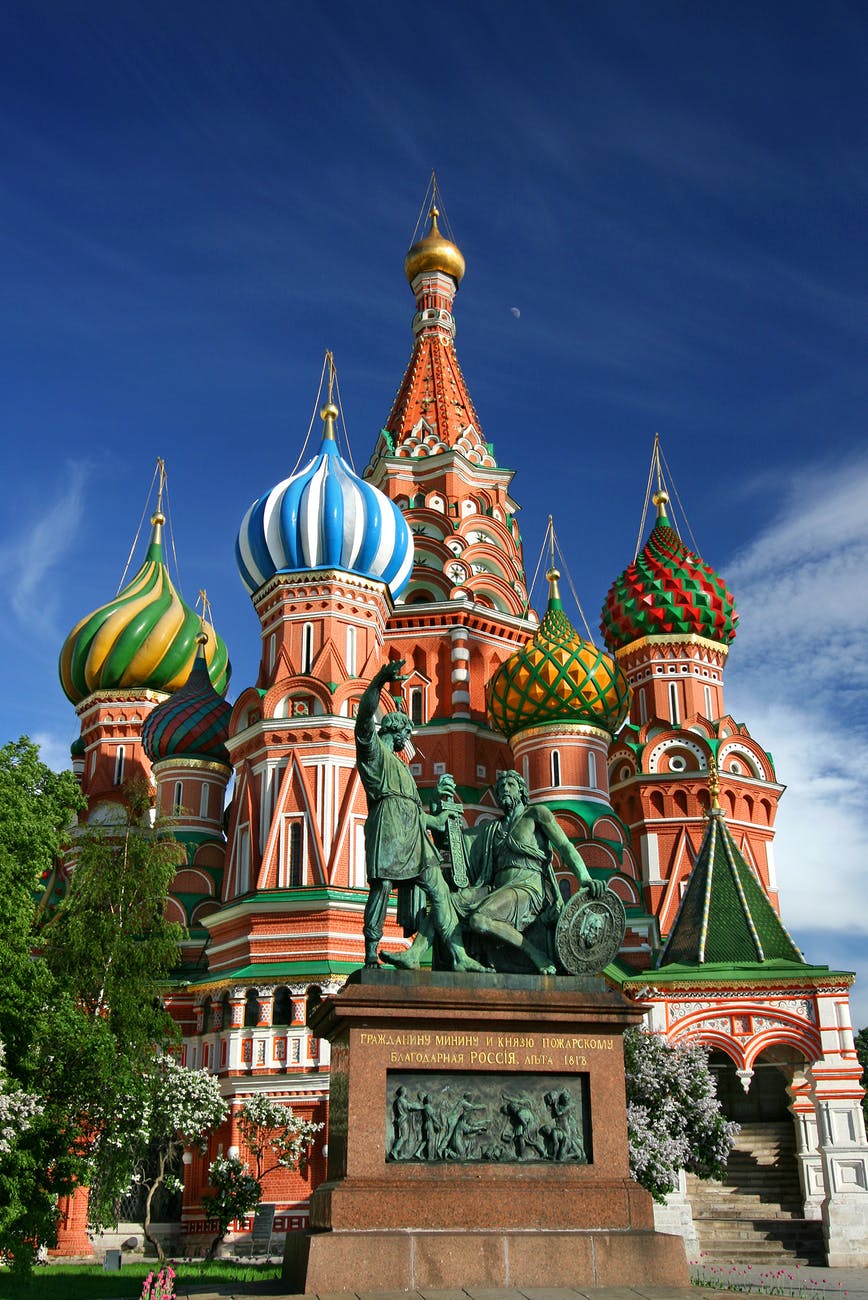
Photo by Markus Spiske temporausch.com on Pexels.com




































 petersironwood