
Tags
empathy, fiction, greed, leadership, learning, myths, peace, politics, science, story, strategy, trust, truth, Veritas, war, writing
The Battle of the Southern Path

POND MUD awoke with a start. He had heard something that didn’t sound right. Something was out of place. His cabin walls had disappeared! He sat up and saw campfires arranged in a strange pattern. He shook the sleep from his head and remembered that he was not in the Center Place of the Veritas. He was out on a raiding party with the Cupiditas; that he had joined up with them. They were about to have a battle, he reminded himself. It was time to keep his wits about him. He took out a small leather pouch from beneath his tunic and felt for his rings of empathy.
Oh, right, he thought. He grimaced ruefully as he remembered those are gone as well. He was with the Cupiditas now. About to have a battle. Which they would win. And, then, he could be king with ALT-R and have She-of-Many-Paths as his slave.
He went to relieve himself and returned to the campfire, still in a bad mood. Every day, he had to remind himself that he had chosen his path and now he was committed to it. These Cupiditas, a strong lot, on the whole, constituted his new tribe. Their food might be primitive, but it filled his belly. Though not generally interested in small talk, he ventured to ask the four Cupiditas who shared his small fire and breakfast, whether they had ideas about why fish did not drown in the water and whether it had anything to do with their blowing bubbles. None of them had ever noticed fish blowing bubbles and none of them found it to be a question that held the least interest. But it was NUT-PI’s captain, HANK man-GER, who took it upon himself to poke fun of POND MUD.
“So, POND MUD, do all the people of the Veritas speculate on such meaningless and stupid questions or is it only you?”
POND MUD was not even so skilled as ALT-R in speaking and listening to the strange and toneless language of the Cupiditas, but he knew he was being insulted. He was not in the mood for it.
“I’ll show you what we do,” roared POND MUD. He leapt across the small space between them and used a hip throw to toss the Cupiditas captain on the ground. All he had meant to do was blow off some steam and hopefully garner some respect from the Cupiditas. POND MUD had no thought to follow up and hit a man while down. But HANK man-GER now felt his pride had been wounded. From the suddenness and force of the throw, he knew he could not overpower POND MUD, but he did have a trick or two. He lay on his back moaning, rolling slightly from side to side.
At first, POND MUD felt good to have thrown him down but now he began to worry that he had actually injured his captain. He walked over and knelt beside him asking, “Are you okay?”
HANK man-GER shook his head piteously, “No, it’s my ankle. I think you broke it!”
POND MUD felt the ankle with both of his yet skillful hands, looking away from HANK toward his feet and feeling carefully. “No, I don’t feel any….”
“ARGH!” POND MUD screamed and whirled to see HANK man-GER leaping at him, dagger point first. POND MUD knocked his hand aside but he was a fraction late. HANK had cut him in the side, though not deeply. With a yell, POND MUD, grabbed the hapless fellow around the head and snapped his neck. “Oh, hell! It was self-defense! You all saw it!” POND MUD expected the men to rush at him and kill him or at least imprison him for slaying their captain. But this was not the way of the Cupiditas. POND MUD had ousted HANK in a fair fight — or at least in a fight as fair as they ever were among the Cupiditas. For this reason, despite their underlying contempt for POND MUD, they immediately bowed their heads toward POND MUD and chanted something that could only mean he was their new leader. POND MUD found this extremely odd. Though he had turned traitor to the Veritas, he had grown up among them and he found this custom of replacing a leader by killing odd, exciting, disgusting, and yet it had all worked out. Good, he thought, now I can be their leader.
Through gestures and grunts as well as the few words he had picked up, he explained that he was going to show them some of the typical moves of Veritas warriors. Every so often, he glanced at the lifeless crumpled body of HANK man-GER and wondered that no-one seemed concerned with burying the body. With a flush, POND MUD realized that they were waiting for his order. Fine, he thought. “You two! Take this body and bury it so neither bear, nor wolf, nor Veritas may defile it.” So it was done. With some sweat, they dug a fairly shallow grave in the rocky soil and piled many more rocks atop. While they were engaged in this task, POND MUD searched for some medicinal herbs and boiled up a poultice for his wound which was fairly minor. He strapped it tightly to promote healing and prevent infection.

Photo by Nacho Juárez on Pexels.com
POND MUD continued training his new charges in the fighting ways of the Veritas through the afternoon. Concentrating thus, he suddenly realized that the nomads of the south were everywhere. They had come into camp noiselessly, invisibly. Each man wore a long, hooded robe whose shape was difficult to discern because of the camouflage pattern on their robes.
“Who among you is the leader, for I am now the leader of this band of Cupiditas and will be leading our joint foray. For I know the Veritas and all the paths and byways and will lead us to victory!” He said this in both the tongues of the Veritas and in his broken, nearly unintelligible Cupiditas. He supplemented both of his speeches with sign language. Eventually, he made himself clear whereupon the entire contingent of nomads began laughing. One stepped forward toward POND MUD.
“I am DAN-ergo CREEP, leader of the southern nomads.” He spoke Veritas! He spoke it well. POND MUD found himself wondering at this, but now at least he could speak more easily. Yet, no matter how he argued or presented his case, the DAN-ergo CREEP kept coming back to a very simple point. The southern nomads greatly outnumbered the small band of Cupiditas and he would therefore be the leader of the army, not POND MUD, the chieftain carefully explained. If he wanted to relay orders to the Cupiditas, fine, but the battle plan would come from DAN-ergo CREEP. On the other hand, the chieftain was glad to have POND MUD’s input on the lay of the land and where the weak points of the Veritas were. POND MUD had enjoyed his brief reign as leader. But he saw that he would have to subordinate himself to this stranger for now or risk losing the help of all the nomads of the south. That would not be something he wanted to explain to NUT-PI or to ALT-R. They would need all their combined strength to enslave the Veritas once and for all. He assented to being under the command of the southern nomad leader and found himself wondering how the advances under KAVA-NUT and NUT-PI were coming. The attack was scheduled for pre-dawn the following morning. Once more, POND MUD found himself relishing the form of She-of-Many-Paths and reminded himself that he would soon own her. Each time he thought of her, he recalled how awkward and stupid she had made him feel. This made him feel angry toward her. And, he also felt guilty about not telling the truth to ALT-R about their accidental encounter. But what would have been the point? ALT-R & NUT-PI would simply have berated him and made him feel stupid. His rage toward She-of-Many-Paths redoubled and he gritted his teeth and clenched and unclenched his fist. He fantasized about all the things he would make her do.
——————————————
Meanwhile, the Veritas were making their plans in light of new information received from KAVA-NUT. In Dialog, they examined the question as to whether they might not find a peaceful way with regard to the nomads of the south, with whom they had generally had good relations. Someone mentioned that “unfortunate incident with Dares-and-Cares.”
“Unfortunate.” began She-Who-Saves-Many-Lives, “My that is an interesting word. Anyway, that murderer was a murderer and he happened to be from the tribe of the nomads. I think it would be worth a try to cleave them off from the Cupiditas. But consider, none of us speaks their language with subtlety. If we approach them in numbers, we may very well instigate the very war we seek to avoid. And if we approach with one or a few, we invite capture and torture for information.”
She-of-Many-Paths sensed that She-Who-Saves-Many-Lives had more in her heart than what she spoke with her words. But the shaman always showed wisdom in what she said and in what she did not say. She-of-Many-Paths made a mental note to ask her further but in private. However, and much to her surprise, She-Who-Saves-Many-Lives rose and continued speaking while pacing back and forth. “I see that She-of-Many-Paths knows there is more in my heart than what I have said. That is true. Before most of you were born, I loved a man whom the tribe called Dares-and-Cares for he was both extremely brave and extremely caring. Before we could become one, he agreed to a dangerous errand for the tribe, traveling alone to the land where dwell the nomads of the south in order to advance the idea of further trade. Before he reached their center space, however, he was attacked and murdered by a band of such nomads. They stole his possessions and stole the heart of my heart as well.”
After a respectful silence, Shadow Walker asked, “Then, why did you not tell us so that we may be forewarned of the Nomads of the South?”
Photo by RAUL REYNOSO on Pexels.com
“Exactly for that reason. There are important lessons to be learned from such events, but under such circumstances of sorrow and deep hurt, it is easy to draw the wrong lesson. It is easy to conclude, though logic would not support it, that all the Nomads of the South are bad just based on this one incident. That is precisely how wars start. One stupid over-generalization leads to another. Such a path of reasoning was even more likely because, you see, I partly blamed myself. I had seen such possible danger, but could not convince him to go with many guards. He was concerned that such a show of force might encourage attack. I saw the wisdom in this. After all, he was called Dares-and-Cares. This was his nature. And though I am called “She-Who-Saves-Many-Lives”, you see, I was unable to save the one life I cared most about. It would be very easy under such a circumstance to fear and therefore hate all the Nomads of the South. Yet, this would be an error. Such is not the way of the Veritas.
“Nor is such the way of the Nomads either, for they considered the attack a crime and the responsible thieves were killed and both the body and possessions were returned to us. The truth is almost never so simple as we might like it to be. Some among the Veritas were then roused to anger for Dares-and-Cares was well beloved by the tribe and not only by me.”
Photo by Pixabay on Pexels.com
She-Who-Saves-Many-Lives now turned to speak directly to She-of-Many-Paths. “Luckily, cooler heads prevailed. I tell you this now because I know that your mind and your heart, are prepared to accept truth in its complexity and not in some over-simple version. You see how it is. It’s important to know that water flows downhill. Yet, it is also the nature of water to bend and turn this way and that, thus avoiding obstacles. Trees grow up toward the sun. Yet, as we proved with the experiment in hiding the cave, trees may be bent away from their natural predisposition. We cannot tell about a whole people from a few examples. Imagine that other tribes thought that KAVA-NUT, ALT-R and POND MUD proved the nature of the Veritas. Three blackberries rotten with mold do not mean one must never eat of any blackberries whatsoever. Though it is important to remove the moldy ones quickly or they may indeed rot the whole.”
She-of-Many-Paths offered to go and parley with POND MUD and the nomads of the south. She-Who-Saves-Many-Lives looked long and hard into the heart of She-of-Many-Paths. “You have already shown yourself to be fine thinker and a fine leader. The people need you as a leader even more than they need your bravery.”
“I do see the wisdom of your words, She-Who-Saves-Many-Lives. Yet, how could I lead my people into a possibly fatal battle if I am unwilling to risk my own life. I will not be a leader who puts others at risk but never puts myself at risk. Such a person is not a true leader. And, if I ever need to ask the people on a difficult path, they must believe I am willing myself to walk any such difficult path.”
Shadow Walker spoke next, “Let us go together then, She-of-Many-Paths. If there is trouble, I can hold them off perhaps until you can retreat to safety.”
“I will fight beside you if necessary, Shadow Walker. I have no desire to… I would be greatly troubled if you died in battle and particularly so if I used that opportunity to escape. I wish we could call POND MUD as easily as the wolves can call each other. I feel his heart is troubled. But approaching him is indeed dangerous in this current circumstance.”
Eagle Eyes added, “I wish I could call to him, as easily as I do the eagles.” All in earshot thought on this image in silence.
Trunk-of-Tree then stood up suddenly and spoke, “But we can!”
She-of-Many-Paths said, “What do you mean, Trunk-of-Tree? Scream like an eagle? Howl like a wolf?”
“No,” said Trunk-of-Tree, “but we all learn to speak with drums!”
“This is true!” said She-of-Many-Paths. “We can encourage POND MUD to come parley with us and hopefully to bring the head of the nomads of the south. If the two of them come alone, we will parley. If they do not come, we wait for their advance or wait them out and attack them first. But in neither case, must one or two go alone and put themselves in grave danger.”
Fleet-of-Foot spoke thus, “You are brilliant, She-of-Many-Paths!”
“Thanks you for saying so, Fleet-of-Foot, but this idea came from Trunk-of-Tree, not me. Where shall we set up our signal drum?”
Eagle Eyes chimed in eagerly, “I know just the spot! Up on that cliff is the perfect place. Too far from the enemy to be shot by an arrow. It’s above the tree line so the sound will carry across that plain below. Also, behind where I point, the rock is curved and this somehow makes the sound stronger and travel farther. If one plays loudly and slowly, POND MUD cannot fail to hear it, though what he might or might not do is anyone’s guess.”

“So,” asked She-of-Many-Paths, “What, exactly, do we tell POND MUD? He is the only one who will know what the drums mean. At least, I am fairly sure of that. Do we offer him a chance to rejoin the tribe?”
Shadow-Walker snorted, “None have been banished and then rejoined the tribe. None banished have ever been heard from again. They all should have died. We cannot offer him a place back in the tribe. This has never been done in memory. Has it?” Here he looked at She-Who-Saves-Many-Lives.
“I have not heard of such,” said the Shaman. “That does not mean it is not here the correct path. Would it encourage others to bear false witness as POND MUD and ALT-R have done? I do not judge it so. But I question whether we could ever actually trust any of them again. It is good to try to trust, but that trio has broken our trust many times now.”
“Indeed,” said Eagle Eyes. “It seems to me that the shape of their soul is too defined now for change. And, worse, as you pointed out, one moldy blackberry can spoil everything. For everyone.”

Photo by Ir Solyanaya on Pexels.com
“I think it would have been more merciful to have killed all three of them outright,” said Fleet-of-Foot. “Had we done that, we wouldn’t be on this precipice of disaster. And they deserved to die. That’s surely what happens to most who are banished anyway.”
Eagle Eyes spoke softly. “I cannot say that I have no desire to see them dead — all three of them — and not only for what they tried to do to me, but also — and more so — for betraying our people. On the other hand, we have learned much important intelligence from POND MUD’s conversation with She-of-Many-Paths and from the angry ravings of KAVA NUT. I find that it pleases me greatly to see him hanging there eyeless. But I do not like being pleased by his suffering, however much he deserves it. I do not want to become the kind of monster that they are.”
She-of-Many-Paths spoke next, “Time is not our friend. We do not know when the Cupiditas will attack on the Middle Path. We must act quickly. Since we do not know our own mind, why not simply avoid making any specific promises? We tell POND MUD the truth — that we do not yet know whether he can ever be a member of our tribe again; that some speak for it and some speak against it. It will depend on what transpires, what he tells us, and upon what the nomads of the south do, and upon what all of the people of the Veritas decide. We can only promise that if he comes to parley, we will not ambush and kill him. I think he will know from his long years of experience with us that we will be true to our words, for that is the very essence of the Veritas. He will be free to rejoin his new tribe and fight with them; to fight with us, under supervision, or indeed, to walk his own way. We should begin by reminding POND MUD that he is one of us, and therefore once beloved among the Veritas.”
————————————————————-
So, it came to pass that the drumming began and was easily heard in the camp where the nomads of the south worked with POND MUD and a handful of warriors of the Cupiditas on their plans for conquest.
DAN-ergo CREEP was the first to comment. “What is this noise? Where is that drumming coming from?” He stared directly and POND MUD as he said this.
POND MUD answered, “Probably just trying to annoy us and keep us up all night to weaken us for battle, but that’s a stupid plan because it will keep them up as well.”
DAN-ergo CREEP thought perhaps there was more to it than annoyance. “If it’s just to annoy, why is it so regular? Not quite a dance, but … does it mean anything?”
POND MUD again felt obliged to answer, “No, it’s just stupid. They are drumming about our nice warm cabins and about the quest for the rings of empathy and how … “ And, here he broke off from embarrassment. For the drums were now calling to him specifically and reminding him of how much fun he had had with his friends when they were learning to stalk, and learn the ways of plants and how they healed. And POND MUD realized that She-of-Many-Paths had been the one to show him the plantain and witch hazel leaves that he had used a few hours ago to help prevent infection. The drums now spoke of how POND MUD had won many contests of strength and how all his friends had cheered for him.

“WELL?!” DAN-ergo CREEP asked loudly. “What are they drumming on about? If they are telling their battle plans to their scouts, say so! Or, are they signaling only you?”
“I have no idea what their purpose is, Sire. Partly they are just drumming on about my childhood. Nothing has been mentioned about strategy yet.”
On and on, the drumming continued. All practice had stopped among the Cupiditas and the Nomads. Everyone became fascinated by the on-again, off-again rhythm and patterns that folded into other patterns. And just when the brain began to predict what might come next, the melody and rhythm would drift off into yet another unexpected dimension.
POND MUD gave a fairly accurate rendition about the drums but didn’t go into the details about his childhood that he was reminded of. Nor, did he transmit the idea that some, though not all, of the Veritas would consider reinstating him in the tribe. Were they trying to trick him? Could it be true? Maybe they just want to use me to find out about their enemies and then they’ll toss me out again. POND MUD suddenly became aware that he hadn’t said anything out loud for awhile. All the men were staring at him, waiting for him to continue his explanation of the drumming. So, he resumed his real-time and uncommented translation into the Veritas that DAN-ergo CREEP well understood. He in turn, translated into their own tongue. So far as POND MUD could tell, the few Cupiditas among them had no idea what was being transmitted by the drumming.
“They want me to ask you, that is, the Southern Nomads, what your quarrel is with the Veritas and why you go to war and what you hope to gain from such a war even if successful. They say that they are a peaceful people who have never attacked you and have no desire to do so. The Veritas are a peaceful people. You know this from your own experience. We have never attacked you. And, until now, you have never attacked us. So, why now? What could you possibly gain that you could not gain in trade? Also, consider this; you have also not been attacked by the fierce warriors of the north nor by the Cupiditas. Why? A large part of that reason is that they would have to go through us to get to you, at least by any whatsoever direct route. Though we have no formal agreement, we actually make things more peaceable. Also please consider this. Whatever you have been told as to what you might or might not gain, you have no guarantee that you will gain any of that. The leader of the Cupiditas, NUT-PI cannot be trusted. Nor can the…the…the … don’t know that drumming. Whereas if we promised you something, we would keep that promise. This you know in your heart to be true. All we ask is that POND MUD and the leader of the nomads come parley with two of us alone and let us speak as true siblings about what each other might gain or lose from fighting or not fighting. We drummed to POND MUD because we were afraid to send just a few people into your camp. You might capture such and torture them for information. And, we didn’t want to send a large force into your camp because that might spark the very war we hope to avoid. If you come into the large clearing beneath the flat-topped hill, and stand near the sharp blue rock, you will be able to see that just two of us will approach you for parley. Come now. Come before dark. If you come, we may be able to avoid a war where many will die on both sides. We may fail. But what is the harm in trying? If there is no war, POND MUD can plead his case to rejoin the Veritas though we cannot guarantee that he will be successful. If he prefers, he may live with the Southern Nomads. Or, he may go live with the Cupiditas though it seems the Cupiditas have set their hearts on war. This is a war of their making. Not ours. What they can possibly gain will be little. What they can possibly lose is everything. But of the little they may gain, they will only give any such who help them a small fraction of that tiny gain, regardless of what they may have told you.” The drumming paused for a time and then began the entire message again.
“WELL!?” demanded DAN-ergo CREEP.
“Well, what?” countered POND MUD. “What is your question?”
DAN-ergo CREEP gritted his teeth and shook his head, but then he spoke quietly to POND MUD. “Do you think they are telling the truth? And do you think we should go to this parley or is it just a trap? What do you think about what they said? You are from there?”
POND MUD spoke quickly. “Oh, they are telling the truth. Or, at least a part of it. They would consider it a huge dishonor to invite you to a parley and then ambush you. So, it’s not a trick in that way. Though I don’t know why they want to avoid war. But I am pretty sure they do want to avoid it.”
DAN-ergo CREEP stared at POND MUD, “Well, maybe they just want to avoid it because they don’t like killing people and being killed. But I am concerned about one thing. They seem to know about us and about the fierce warriors of the north. Yet, NUT-PI’s envoy told us that the Veritas would know nothing about our involvement. And, how did they know you were here, POND MUD? Answer me that?”
“The Veritas are clever. They have good scouts. And some have good eyes. Very good eyes. I’m … well, I’m easy to spot … and everyone from the Veritas would recognize me. As for the rest, I have no idea. My best guess would be the same: the foreword scouts recognized you by your garb and the same for the Northern Warriors.”
DAN-ergo CREEP stared hard at POND MUD. “You sure you are not sending some kind of signal back to them?”
“No! Of course not! I have had no contact since I was exiled. I saw one of the Veritas, but she didn’t see me. And, I didn’t say anything to her. I don’t like them. They exiled me!”
DAN-ergo considered, “So you say. But I don’t have any independent evidence of that. Do I?”
POND MUD thought about it. “Well, why would we go to the Cupiditas in the first place if we hadn’t been exiled? It’s much nicer … I mean … we just wouldn’t have any reason to leave the Veritas. She-of-Many…I mean, She-Who-Saves-Many-Lives is a good leader and…I think we should go and hear what they have to say. I myself could take any two of the other Veritas in a fight and you’ll be there as well. They won’t ambush us. This I know.”
After another half hour’s discussion, it was agreed that POND MUD and DAN-ergo CREEP would go to parley. There was some considerable objection raised by the Cupiditas among them but it was short-lived. POND MUD reminded them that he was their leader now. Having a parley would almost certainly not mean no war. But it might give them an opportunity to judge the weaknesses of the Veritas; to plant false information; to intimidate them.
So it was that POND MUD and DAN-ergo CREEP walked off to the designated place in the clearing. While the chosen spot, it was true, would afford a clear view in all directions, in order to arrive there, they would have to traverse many dangerous places. POND MUD took very little precaution for he was quite sure that the Veritas would not ambush them. He strongly suspected that the entire message of the drums was in earnest, including the part about possibly letting him rejoin the tribe. Did he really want to do that though? Among the Veritas, his strength was just seen as an asset, both to POND MUD himself, and to the tribe as a whole. Among the Cupiditas, however, strength was king. And, he would never be leader of the Veritas. That would be one of the other men like Fleet-of-Foot or Trunk of Tree or Shadow Walker. Even if they accepted him back, he would never be Ruler of the Veritas. But with ALT-R’s plan, he could be a pretty near thing to a King. And, everyone would have to respect him. Even She-Who-Saves-Many-Lives. Although She-of-Many-Paths says she was just trying to teach me, not humiliate me. He gritted his teeth and thought: She drives me crazy! They both do! Anyway, ALT-R made the war seem an important and inevitable path. But then, She-of-Many-Paths said I could never trust ALT-R. That he was always out for himself. She doesn’t know!
“Are you sure you’re on the right path, POND MUD?”
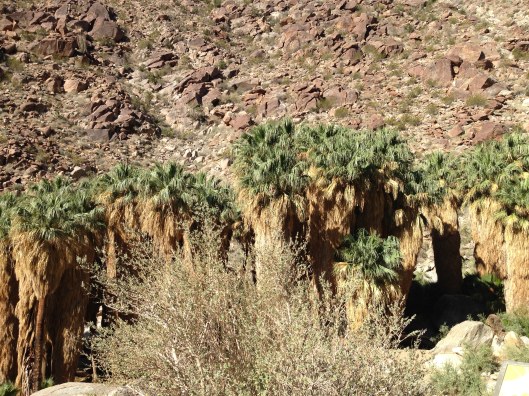
“WHAT?” DAN-ergo’s question had broken his reverie. “Oh. Let’s see. Yes, see the light through that line of trees? Once we pass through there, we will descend into that flat plain that the drums spoke of. We’ll be there momentarily.”
They walked in silence for a moment, when POND MUD spoke to his companion. “I have a question, Sire. In the lands that we call the Southern Nomads, are there any fish that seem to blow bubbles?”
“Yes. Strange fish in the ocean that raise their young and feed them milk. Yet, they breathe air as do we. Why do you ask?”
“Well, if you were stuck in quicksand, what would you do to stay alive?”
“Quicksand? You know of such places? There are some indeed in the driest part of the desert. You may walk across a dune and suddenly, you find yourself falling and suffocate under the sand. One of our own seems to have vanished this way just the spring before last.”
POND MUD thought this answer odd. He decided not to pursue it just then because people always thought it strange when he asked about quicksand and blowing bubbles to stay alive. Why would his friend, ALT-R, make him blow bubbles with his face in the mud unless it was necessary? But how had ALT-R learned about it when no-one else seemed to know anything about this method of defeating quicksand?
———————-
Soon, POND MUD and DAN-ergo CREEP found themselves in an open space which afforded an easy and unobstructed view in each direction. DAN-ergo CREEP did not seriously doubt that he could outrun an approaching ambush unless somehow it came from behind them. They would have a long head start to return to the camp of the Southern Nomads. DAN-ergo had his doubts about POND MUD however. True enough, POND MUD was stocky and looked as though he could sprint quickly if his life depended on it. Whether he could run for some distance though – that seemed in doubt. And, though his wound was superficial, it would slow him down. DAN-ergo did not much care for this stranger and if it came to it, he supposed he must run back to the camp of his people. It would be stupid and useless to try to defend POND MUD against so many.
In the distance, DAN-ergo could see two lone forms emerging from the forest and traveling down a grassy knoll toward the open plain. They came alone and seemingly unarmed.
As they drew nearer, POND MUD recognized the two as She-of-Many-Paths and Shadow Walker. They are no match for the two of us, thought POND MUD. But how are they going to trick us? As they drew nearer, She-of-Many-Paths hailed them.
“Thank you for agreeing to parley, POND MUD and you sir, whatever your name might be. Rest assured, we mean you no harm and none of our countrymen are even within bowshot.” Again, this was strictly true though another flicker of conscience batted at She-of-Many-Paths for they had arranged for Eagle Eyes and Fleet of Foot, among others, to be watching closely and if it looked as though harm were about to befall the two Veritas, wolves and eagles would be upon the group very quickly, though possibly not so quickly as to prevent the loss of two so beloved as were She-of-Many-Paths and Shadow Walker. “I am known as She-of-Many-Paths.”

“And I am known among my people as Shadow Walker.”
“Well met,” began DAN-ergo CREEP. “I am called DAN-ergo CREEP among my people. I am the leader of those among the Nomads of the South who chose to follow the wishes of NUT-PI of the Cupiditas. We call our people SABRA. And, I believe you already know my companion, so named POND MUD.”
“Well met, indeed.” She-of-Many-Paths had now approached the two quite closely. She nodded to POND MUD and then to DAN-ergo. “POND MUD. DAN-ergo CREEP. Before our armies launch their bodies at each other, I thought we should take a moment even on this precipice of war to understand whether this is indeed something we really and truly wish to do. For, DAN-ergo CREEP, we have no quarrel with the SABRA. None. And, for our part, we are frankly astounded that you should want to have war with us. As we communicated with our drums…I assume POND MUD told you what they said? Is this correct?” Her penetrating eyes darted between their faces and she could see that it was so though DAN-ergo nodded his assent.
“Indeed. That is why I am here,” he said. “Why we are here. You say you have no quarrel with us, yet your leader, as I understand it, may well have a grudge against us because some few of us attacked and killed one that she found favor with.”
“You are correct, DAN-ergo CREEP, that she found favor with the one we called Dares-and-Cares. But her understanding, and therefore the understanding of the Veritas, is that this was not the act of your people but of a few criminals amongst you. Is this so?”
“It is so. And we found and punished the murderers and returned the body and the stolen goods to the Veritas.”
“Exactly so. She-Who-Saves-Many-Lives holds no grudge against a people based upon the acts of a few. She encouraged us to try to find a path to our mutual benefit that does not cross a quicksand of war that will swallow so many of both our countrymen. So, I ask you, please tell me, quite frankly, what you hope to gain.”
“NUT-PI said — I should say swore — promised — that we would learn the craft of making water skins that will not leak but keep water fresh and cool for long travels.”
She-of-Many-Paths nodded, and asked, “Is that all?”
“It may seem a simple thing but you have water in your lands in every season. For us, it is important.”
“I don’t doubt it. It can be easily arranged without war. Is that all he promised?”
“Well, he said that we could be overlords of the Veritas and have first choice of the spoils of war and the many fine foods that are in your storehouses. And, as well, have first choice of slaves from among the women and children.”
“I suspected as much,” DAN-ergo CREEP, for he promised the same exact thing to the fierce and formidable warriors of the north. And, I would well imagine, though I know it not for a fact, that he has also promised this to his own warriors as well. Do you not also think this likely?”
POND MUD’s face grew cloudy and he knit his brows together and frowned. He clenched his teeth. DAN-ergo had ordered POND MUD to stay silent in these negotiations, but he could not help himself from breaking in.
“That’s a lie! You are quite wrong, She-of-Many-Paths! He promised that to ALT-R and me. We will be overlords of the Veritas and take you as my slave! Just as I told you when we met!”
DAN-ergo regarded POND MUD. “Met? When did you two meet?”
She-of-Many-Paths answered, “Oh, we chanced to meet some days ago while POND MUD was scouting out our guard positions. I assume he told you about that. I am not lying, POND MUD. I do not think you are lying either in that NUT-PI made such promises to you and ALT-R. But now it appears that he promised this as well to the fierce and formidable warriors of the north and to the nomads of the south, the SABRA. I must add something else here, DAN-ergo CREEP. I do not well know the ways of your people, but among the Veritas, all are prepared to fight to the death and die rather than become slaves. That includes all the women and children as well. If you capture any Veritas and make them slaves, your booty will be small indeed consisting only of a score of infants who would be quite useless to you until you had fed and clothed them for at least five or six years. We have some food in storage. That much is true. But I promise you that we are poised to make such food of much less value than you might think should it appear that you are going to win victory over the Veritas.”
She-of-Many-Paths then added, “I have presented you with much information, I see. I have a proposal. Shadow Walker and I shall go now and return presently with several such water skins as you seek filled with cool and refreshing water. This will give you time to think upon what I have said. When we return, we may parley further. Meanwhile, you two may hold your own council. Ask POND MUD whether he thinks I speak true. Is this acceptable?”
“It is.” DAN-ergo CREEP admitted to himself that he was impressed with this — woman — of such a young age — yet so filled with clarity and confidence. The two Veritas turned and walked away. DAN-ergo began to think that if they really returned with such water skins, that in itself could be seen as a kind of victory when he returned to his people. He questioned POND MUD and found that nothing he said indicated that the Veritas were a duplicitous people. In fact, the more he spoke with POND MUD, the less it made any sense to him that he voluntarily left his people in order to throw his lot in with the Cupiditas. But why, he wondered, were they banished?
Presently, as promised, the same two of the Veritas returned with three water-tight containers filled with fresh water and hauled on a travois. While the water skins had been filled and the travois had been loaded, She-of-Many-Paths and Shadow Walker quickly relayed the intelligence they had learned including most importantly that NUT-PI had promised the same “spoils of war” to everyone he could think of and that the SABRA, or at least one such, had a very shifty camouflage outfit.

Photo by Pixabay on Pexels.com
She-of-Many-Paths began, “Here as promised are some water skins filled with cool water. These are a gift, plain and simple. But as you say, we have plenty of fresh water and would be glad to trade you for many more. Refresh yourselves and we may talk further.”
DAN-ergo CREEP looked at Shadow Walker carefully as he made his next comment. “Among the SABRA, it would be rude for us to drink first. You, fine lady, show us the way. You must drink first. That is polite.”
She-of-Many-Paths smiled. She was not in the least fooled by this charade, but was prepared. “Of course! Thank you! It was, I must admit, hard work to drag this water out here and I am thirsty.” She deftly began to unseal one of the water skins, but stopped. “Oh, DAN-ergo, which one would you like me to partake of?”
He silently pointed, still watching carefully the face of Shadow Walker. “That one.” No reaction. “Wait, wait. That one, I should think.” She-of-Many-Paths began to unseal another. “NO! Wait. That one!” Now, She-of-Many-Paths laughed. “You are right to be cautious DAN-ergo CREEP. We need to learn to trust each other. That takes time. But I shall take a small sip from each of the three as will Shadow Walker. You watch us carefully and you will see no sign, however small, of poison. You will simply see us slake our thirst as you might.” The two from the Veritas so drank and then motioned for their counterparts to drink as well. “By the way,” she added. You may keep the travois as well to transport this back to your camp.”
She-of-Many-Paths continued, saying that after the Cupiditas are vanquished, one or two of the Nomads of the South would be welcome to come and stay with the Veritas to learn the way of making such water skins and other such craft as they might find useful.
“And in return?” asked DAN-ergo after he took a sip and handed the skin to POND MUD.
“In return, simply live in peace,” said She-of-Many-Paths. Though I believe that two of our people might choose to come and live with you for a time to learn some of your ways such as those very tricky camouflage robes you have. I have in mind two such that might prove mutually beneficial. Among us is one we call, Eyes of Eagle who has long studied birds of prey and could teach you how to use them for messages and even to fight. She is quite talented in the ways of shapes and there is much to be learned from her if she would so choose to join you for a time. Also, the one we call “Fleet of Foot” might want to visit for a time as well. As you might guess from his name, he is a very fast runner. Aside from that, he has a talent for making things that appeal to popular taste. The two of them are friends, so they might wish to come together. Since you trade with many other tribes, he might prove valuable in these trades and how to make your wares appeal to those who might want them, especially when cleverly arranged.”
“That’s it? We simply exchange and learn from each other? You want nothing more?”
She-of-Many-Paths tilted her head. “You say, ‘nothing more’ but to the Veritas, exchanging knowledge hard won over many generations is no small thing. It is much more precious gift than any possible spoils of war. Even if you were to take every ear of corn and every cassava root in our storehouse, it would last you less than a year. Knowledge though? That can help your people for all time. That is how the Veritas think.”
“She-of-Many-Paths, you are far too wise for one so young. But nothing more?”

Photo by Pixabay on Pexels.com
“It is a small thing but our leader, She-Who-Saves-Many-Lives gave me once a taste of that spice which I believe you call cinnamon. It is quite delicious! But it need not be a gift. We would be happy to trade with you: such a spice for that which you may find pleasing among our wares, medicines, or foods. Perhaps you also have other interesting and wonderful spices. I think that there is much we could learn from each other. We have no real quarrel with you; nor, so far as I can see, you have no real quarrel with us either. It is only a manufactured quarrel for the good of neither us nor you. It only benefits NUT-PI whose purpose, I ken, is to weaken all other tribes, not just the Veritas, but also the Fierce and Formidable warriors of the north and your own tribe as well. The Cupiditas themselves are a proud strong people, but it seems that they have no love of the truth and therefore they find it very hard to learn from one generation to the next. They forever change their stories to make their leader look much better than he in fact is. POND MUD, you have been living with them and planning with them. Do you agree with my assessment?”
POND MUD turned red. “You’re asking for my advice? You?”
She-of-Many-Paths chucked. “Does this surprise you so? You know more about the Cupiditas than I do. Or DAN-ergo. I think all of us would like to hear of your observations.”
POND MUD looked about him as though the correct answer might appear among the scattered rocks. “I don’t know. They have many weapons. Their leader is chosen by feats of strength which suits me just fine. Instead of stupid tests. But their head leader, NUT-PI appears neither strong nor quick though he is plenty cruel. I can vouch for that. They do not really have cabins such as ours. They have little more than lean-tos which are forever falling down. I could push down any one of them with one smash of my arm. Our cabins are stronger. Much stronger. And just because I can’t push one down — it doesn’t mean I am not stronger than an ant!”
She-of-Many-Paths sighed and shook her head slowly from side to side. Is there no end to POND MUD’s obsession with his own power in comparison to others, she thought to herself. Aloud, however, she said this: “I have no doubt you are very strong indeed POND MUD. I have never doubted that. But the question is, what can you tell us of the Cupiditas? And, you must decide who are your real people. If you come back to the Veritas now, you must needs be imprisoned until this battle is won or lost. If the Veritas lose, perhaps your friends will find you and set you free, through I must tell you frankly that I doubt it will come to be the case. If the Veritas win, we will soon hold a council and decide whether to annul your banishment. If you prefer, you may go back the way you came and join up with the Cupiditas for I sense that DAN-ergo and the Nomads of the South have no real purpose in this war. Do you agree, DAN-ergo?”
“I do indeed. I could use your help, POND MUD, in taking these water skins back to my people. After that, you may follow us back to our lands and join us, or walk back here to join with the Veritas or if you so choose, join up with and lead your small band of Cupiditas to attack your former homeland. That choice, I leave to you. But the path of peace is a place of cool, fresh water. The path of war in this strange land is a path of heat and death unneeded. I shall counsel my people to be at peace with your people, She-of-Many-Paths, though they are a free people and I cannot compel them to leave off war-making.”
“I don’t know what to do,” said POND MUD. “I want to rejoin the Veritas, but you have no such guarantee. I am the leader of a band of Cupiditas. They respect me. But…I do not trust their leader. I need to talk with ALT-R. He would advise me well. I will go back with you two. But no, I should go back to the Cupiditas. I am their captain. I don’t know! Why do you always confuse me so, She-of-Many-Paths!?”
She-of-Many-Paths tried to look into the heart of POND MUD and she could see that his confusion was genuine. He still put his faith in ALT-R though he had tricked POND MUD many times that she knew of and probably many other times she did not know of. For that was the way of ALT-R. “POND MUD, how about this plan. Help DAN-ergo CREEP take this water back to his people. If you return alone here before darkness descends on this day, you may find your way back to the Veritas through the gap in that line of trees. You have that long to make up your mind. If we see you tomorrow or the next day, we will have to assume you are an enemy and that will be unfortunate. I give you no guarantees because, as the drums foretold, there are some among the Veritas who have no desire to see you at all let alone to annul your banishment. Yet, you are not without friends among the Veritas and some will argue for your reintroduction into the tribe. So, take a chance on the verdict or don’t. You are no longer a child, POND MUD. You must make your own decision, just as DAN-ergo CREEP has done.”

POND MUD and DAN-ergo began pulling the travois back toward camp. When they reached the camp, DAN-ergo quickly recounted what had transpired with regards to his own people. He said nothing of the words that had to do with POND MUD and his decision. The people of SABRA looked at each other and at their leader as they enjoyed taking turns with the cool water. They left the camp late that very afternoon, to a man. They did not want to be anywhere near the camp of the Cupiditas when fighting began on the morrow.
POND MUD revealed nothing to the Cupiditas regarding his offer of possible reintegration with the Veritas. Why should he? Of course, it was demoralizing to the Cupiditas for the southern nomads to leave which they did quickly and efficiently, seeming to vanish as quietly and invisibly as they had come. They looked for reassurance to their new leader, POND MUD. POND MUD said that he was going to sneak into the camp of the Veritas which he could easily do because he knew these lands so well. He would overhear their plans and return before dawn and lead his small contingent to where it would do the most good until they met up with the much larger force on the Middle Path. He stole away under a starry sky, still not sure what he would do.
When first light came, a small band of the Cupiditas found themselves alone in a strange land with no allies and no leader and no plan. A glow in the east grew rosy and then orange and then a bright yellow. They argued amongst themselves as to what to do. Many plans were advanced. But without a leader, they had no way to settle on a plan or to test their ideas. At last, one of their number, a man named NINA-TOP declared himself the leader and said that they would march due North until they met up with the main force of the Cupiditas and there they would no doubt receive further instructions.
AILS-HER, challenged this plan as being too little too late. He argued that they should charge as planned along the Southern Path. Soon, the two were locked in mortal combat to see who should lead this small band. Whereas the Veritas knew many methods of deciding among alternative paths, the Cupiditas only knew one: Might makes Right. In this case, neither emerged as victor; they murdered each other, as sometimes happened among that tribe.
None of the few remaining Cupiditas, however, felt like fighting to the death with the most recent such deadly incident fresh in their minds. One suggested a path they all agreed on however. They decided that since their force was too small to make much difference, they would make their way slowly along the Southern Path. If they found strong resistance, they would retreat. But if they found no resistance, they would wander into the Central Place of the Veritas and steal, enslave, or rape as they could. If NUT-PI questioned their late arrival, they would simply say they were overwhelmed by a strong force of the Veritas. It was so agreed, and around mid-day, they began a slow march on the Southern Path. By evening, they had come to the great flat plain of the parley that had taken place earlier in the day. As they marched up the gentle slope toward the line of large white oaks, swords drawn in case of any approaching enemy, they suddenly found themselves assailed by deadly arrows. In an instant, more than half their number began screaming and thrashing on the ground. The few remaining Cupiditas turned and ran back down the slope. Another hail of arrows found their mark. A handful of remaining Cupiditas threw down their weapons and begged that their unseen enemy show them mercy.
Thus ended the battle of the Southern Path. A great battle was avoided because some few of the Veritas had pursued peace up to the very precipice of war. Yet, a powerful force of Cupiditas still strove forward on the Middle Path toward the Center Place of the Veritas. In this Center Place, were many women and children of the Veritas though if the Cupiditas thought they were helpless, they would be seriously mistaken. And there too was POND MUD in his stockade where he could look out and see a blue sky and the thin, eyeless figure of KAVA-NUT. He awaited the outcome of the coming battle to see who his true people were; that is, the victors. For POND MUD now very much subscribed to the central doctrine of the Cupiditas that might makes right. He liked feeling strong whereas thinking instead of pros and cons and consequences of this plan and that plan made him feel weak. He wanted always to know what path to take for certain. He wished ALT-R would get here soon and release him so they could rule Veritas together. The words of She-of-Many-Paths kept returning to his mind and when they did, he shouted, “SHUT UP! SHUT UP! SHUT UP!” His screams were heard by many and they puzzled at them for no-one was speaking to POND MUD and very few would speak for him.
————————————————————-
The beginning of “The Myths of the Veritas”
The Walkabout Diaries — Photoessays on flowers, wildlife, and nature
Stories of a Completely Mythical and Totally Made Up Child Sociopath
Donnie‘s Last Gift
Donnie Boy Watches a Veteran’s Day Parade
Donnie Lets his Brother Take the Fall









































 petersironwood