• About PeterSIronwood

petersironwood

~ Finding, formulating and solving life's frustrations.

petersironwood

Tag Archives: poetry

When GREED’S the only Creed

09 Friday Jan 2026

Posted by petersironwood in America, apocalypse, poetry, politics, psychology

≈ 2 Comments

Tags

autocracy, Democracy, greed, life, oligarchy, poem, poetry, politics, truth, USA

When greedy Greeder GREED

Is a person’s unifying creed

Then a person’s life’s defined

By its aging shrinking skin

Nothing won is really win

You rape instead of mutual love

You’re touching with cold metal glove

And wormy parasitic mind

When greedy Greeder GREED

Is a nation’s unifying creed

Then killing of another’s fine

The country falls to ash and mud

It splashes with a thick’ning thud

Fear and hate destroy what’s great

Stupidity becomes its fate

And blood’s a favored flavored wine

When greedy, Greeder, GREED

Is the world’s unifying creed

When everyone’s so cowed by cash

That love and life itself are seen

As merely meeker forms of screen

And forests die there is no why

The cancer spreads and all must die

The ugliness and stench obscene

AI-generated image to: ugly clown

There’s nothing left but useless gold

An unheard wind and endless cold

Congratulate your ego’s need

You bowed your head and prayed to GREED

———

Author Page

The First Ring of Empathy

The Walkabout Diaries: Variation

Travels with Sadie Teamwork

After All

Guernica

Essays on America: The Game

The Ailing King of Agitate

The Truth Train

D4

Dick-tater$hit

Absolute is not Just a Vodka

Where does your Loyalty Lie?

All we Stand to Lose

The Twilights Last Gleaming

The Crows and Me

The Isle of Right

Imagine All the People…

The Dance of Billions

Roar, Ocean, Roar


Tools of Thought: Symmetry

07 Wednesday Jan 2026

Posted by petersironwood in management, psychology, Uncategorized

≈ Leave a comment

Tags

beauty, Business, Design, HCI, human factors, Human-Computer Interaction, poetry, politics, problem_solving, symmetry, truth, UX, Web design, writing

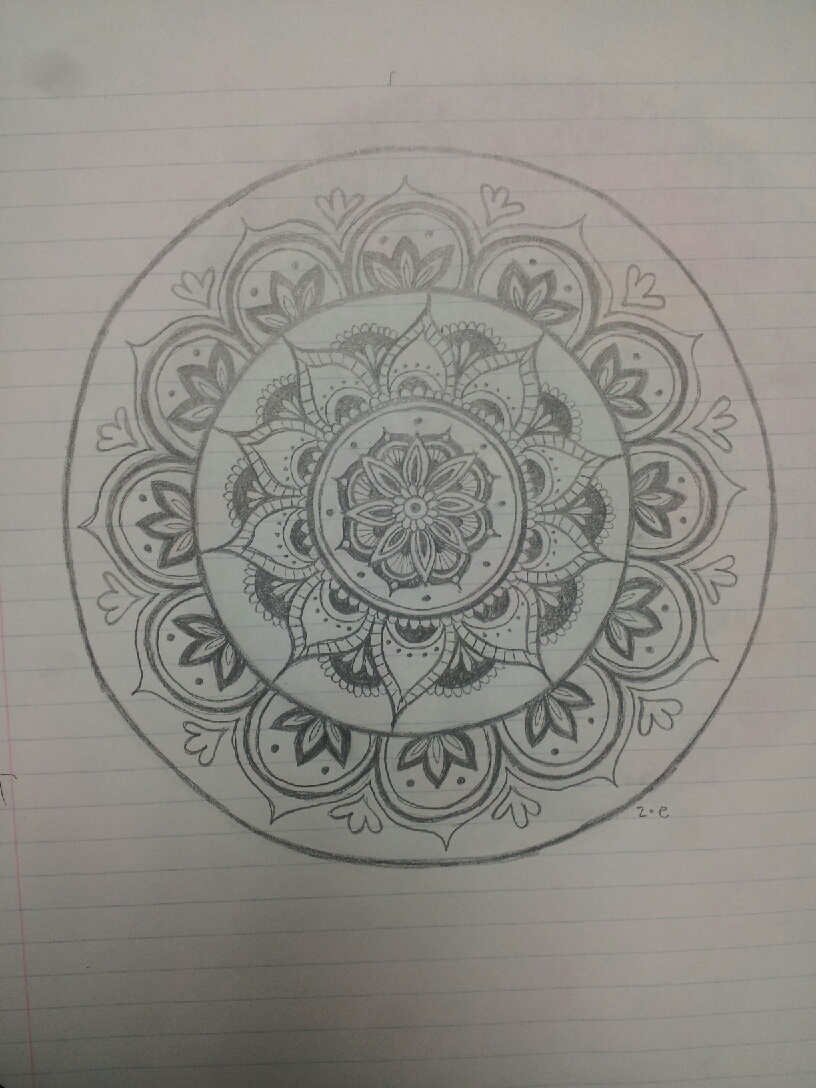
Symmetry

IMG_3316

(Original, free-hand drawing by Zoe Colier).

There are many varieties of symmetry. Symmetry exists rampantly in nature and symmetry is also incorporated into many human designs. In this short essay, I want to remind people of several varieties of symmetry and then show how symmetry may also be used as a tool of thought to help solve problems by simplifying the space of possibilities that must be considered. 

Symmetry is a concept with far broader application than cutting out paper snowflakes or choosing a nice looking Christmas Tree, Menorah or other Holiday decoration. It is fundamental in logic, mathematics, physics, chemistry, biology, and even in social science.

Symmetry exists at many different scales as well. Planets are generally roughly spherical and their orbits are roughly circular. 

IMG_5895

The human body, along with most other animals, exhibits rough bilateral symmetry in external appearance. If you examine your own fingerprints or the pattern of your moles, for instance, you will see that one side of your body looks slightly different from a mirror image. If, like me, you are a righty who play tennis, you will find the forearm muscles on your right arm are slightly larger than those on the left. What is remarkable to me is not that there are slight variations between left and right but just how slight those variations are. And, we are not alone. Fish, insects, flatworms, roundworms, snakes, turtles, lizards, horses, dogs, cats, apes, and humans are all roughly bilaterally symmetrical in appearance. I say “in appearance” because our internal arrangement of organs is not at all symmetrical.  

External Appearance and Internal Organs

In general, it seems to me that most animals possess more complete or “perfect” bilateral symmetry than do most plants. I suspect that this is because animals generally move through a physical environment. Since we can move around, the environmental forces are generally symmetrical and so our ability to react to those environmental forces is also symmetrical. A tree, on the other hand, may have a genetic “blueprint” to be bilaterally or (more likely) radially symmetrical, but it may be subject to strong asymmetrical forces such as wind, a water source, or sunlight versus shade. 

Our designed objects are also most often (at least) bilaterally symmetrical, and particularly for those objects which must interact and move through the physical world. Cars, boats, motorcycles, busses, trains, trucks, bikes, skis, surfboards, roller skates, ice skates, snowshoes and tennis shoes all tend to be bilaterally symmetrical. On the inside, however, again just like us, there are often some irregularities. The arrangement of controls of the car, for instance, are asymmetrical. (Each control in itself often does show symmetry. In some cases, this makes it easier to use, especially without looking. I suspect that the symmetry may often be for aesthetic reasons, for ease of manufacturing, for ease of maintenance or replacement or some combination.) The asymmetry of arrangement “works” because the arrangement of displays and controls does not interact with the natural world the way that the car body and wheels do. The controls are designed to interact with a human being. There are also rough conventions for where controls are laid out, how they operate, and what each type looks like. Asymmetry of arrangement is also evident under the hood. However, some of the components such as the engine, the battery, the radiator have symmetry within them. The radiator, which arguably has the most interaction with the outside world, is symmetrically placed though its plumbing is not. 

automobile car customized drive

Photo by Pixabay on Pexels.com

In the design of User Interaction and Experience, an argument can be made for certain kinds of symmetry. For example, in the Mac editor Pages, which I am using to write this, if the B for bold button background turns blue when bolding is turned on, I expect the background will turn back the way it was (white) when bolding is turned back off. I also expect that italics and underlining will behave the same way, especially because all three are in the same toolbar. 

Where possible, it also generally makes sense, I believe, to design so that the functionality of a system is symmetrical. This isn’t always possible. Some actions are necessarily irreversible. If you don’t believe me, ask anyone who has toddlers or who has pets. In the real world, if you shoot someone dead, you cannot “unshoot” them. Unlike a computer system who asks, “Do you really want to delete all your files?” before doing so, guns do not ask that. If you are designing what can be done with a toy robot however, if you can make it go forward, you want to make it so it can go back as well. If it can turn right 90 degrees, you would like to enable it to turn left 90 degrees. Saying, “Oh, yes, but don’t you see, you can, in effect, make it turn left 90 degrees by making it turn right 90 degrees three times?!” does not cut it, IMHO. 

Typically, you not only want the functionality to be symmetrical, you also want the control functions and appearances to mirror the symmetry of the functionality. For example, if you can issue the command: “MOVE ROBOT FORWARD THREE PACES” you want the symmetrical function to be evoked this way: “MOVE ROBOT BACKWARD THREE PACES” and not, “THREE PACES BACKWARD FOR ROBOT MOVE.” If you decide to give auditory feedback for the first command that says, “ROBOT MOVING FORWARD THREE PACES” you do not want the reverse command to provide feedback that says, “ROBOT THREE PACES BACKWARD MOVING.” (Oh, by the way, if you cannot provide symmetrical functionality, please do not pretend to do so with a facade of symmetrical looking commands that actually behave asymmetrically!)

action android device electronics

Photo by Matan Segev on Pexels.com

A lack of symmetry (or consistency) in the functionality, command structure, or visual appearance often arises because of a lack of communication within the development team. If different functions of the robot are to be implemented by different people, then it’s important that those various people use an agreed upon style guide or Pattern Language or that they  communicate frequently. Of course, this is not the only cause of asymmetry. Even if your team communicates really well, they can’t design an effective gun with an “unkill” function. 

There are, of course, various types of symmetry. Bilateral (mirror) symmetry is what the external appearance of our bodies has. There is also translational symmetry, where the same shape is repeated along a line. The string ABCCBA shows bilateral symmetry while ABCABC exhibits translational symmetry. Most human factors people now agree that hot water faucets (usually on the left) and cold water faucets (usually on the right) should both be turned off by turning to the right and turned on by turning to the left (translational symmetry) as opposed to having the faucet on the right turn off to the right and the left faucet turn off to the left. But you will definitely experience both types. 

In both music and poetry, at least in the culture I am most familiar with, translational symmetry is more common than mirror symmetry. It does sometimes happen that musical composers experiment with playing a tune backwards or even with the staff turned upside down. But this is far less common than repeating a theme or melody. Similarly, a rhyme scheme like ABCABC is much more common than is ABCCBA. {In this notation, ABCABC means that the first line rhymes with the fourth line, the second line rhymes with the fifth line and the third line rhymes with the sixth line.} 

black and brown millipede on a green and brown branch

Photo by Pixabay on Pexels.com

In biology, we also find translational symmetry or something close to it. The segments of a tape worm, the segments of the body of a millipede or centipede, the small legs of a lobster, and even our own vertebrae and ribs show translational symmetry. In social structures as well, we find both mirror symmetry and translational symmetry. For instance, the Golden Rule says to do unto others as you would have them do unto you. In addition, as it happens, if we are nicer to other people, then, generally speaking, they are also nicer to us. This is not always true, however. Some people simply take advantage and view all of life as a zero sum game. Whatever you gain, they lose and vice versa. This is a very limited, inaccurate, and self-defeating attitude in most social situations. Most social situations, are, of course, much more complicated. Generally speaking, there are a great many situations that both you and your “opponent” or even your “enemy” would agree are good and a great many others that both of you would agree are bad. If you are playing tennis or golf outdoors, for instance, you may be fiercely competitive but both of you would probably find a game that brings out the best play is better for both of you. Both of you would probably also agree that being rained out is a bad outcome.  

men in black and red cade hats and military uniform

Photo by Pixabay on Pexels.com

In the military and in many industrial settings, there is a great deal of translational symmetry. The “ideal” set-up is to have many groups at each of many levels and each group is meant to be as similar as possible to all the other groups at that level. The marching that military groups learn is both symbolic of this translational symmetry and practice in behaving as a unit composed of identical parts. Whether or not this is the best way to run a military is debatable. To me, it’s undeniable that this management style has been imported into a huge number of organizations where it is definitely not the best way to organize. 

The last thing to note is that symmetry also pops up in design. There is often a whole series of information exchanges from people who have quite different areas of expertise. These exchanges can result in mutual learning, solutions that work, and often patents, and occasionally, some really cool, transcendent, game-changing designs. In my experience, it is much better to have a design process based on symmetrical relationships founded in mutual respect than to have a design process based on having someone in a hierarchical power relationship make decisions that are to be implemented by an identical set of “underlings.”  

macro photography of snowflake

Photo by Egor Kamelev on Pexels.com

The Takeaway

Symmetry is everywhere. There are many forms. If you start looking for symmetry, you will find examples in nature, in mathematics, poetry, art, music, machine design, the military and even in design problems and design processes. Thinking quite consciously about the types of symmetry that exist in a problem space and what could or should exist in that problem space, can lead to novel solutions.

 

——————————————-

Author Page on Amazon. 

The Walkabout Diaries

Local Symmetries

Alternating Repetition

The First Ring of Empathy

Donnie Takes a Blue Ribbon for Spelling

Travels with Sadie

It was in his Nature

A Cat’s a cat

A Suddenly Springing Something

Hai-Cat-Ku

Hai-Ku-Dog-Ku

The Dance of Billions

Roar, Ocean, Roar


Negative Space

02 Friday Jan 2026

Posted by petersironwood in creativity, management, psychology, sports, Uncategorized

≈ Leave a comment

Tags

AI, art, creativity, Design, HCI, illustration, music, negative space, painting, poetry, problem formulation, problem framing, sports, thinking, thought, UX, writing

Negative Space

When you look at a scene, it is natural to concentrate on the objects in the scene. So too, when one begins to design, it is natural to concentrate your attention on the things you intentionally put into the design whether those are menus, icons, images, banners, buttons and so on. You tend to give little thought to what is not there because, after all, there’s nothing there! 

IMG_9815

As your expertise grows, you will find it useful to spend some time and resources thinking about what is not there; the “negative space” if you will. In art, the “negative space” refers to the space around and between the objects. Often, paying attention to the “negative space” can result in a much more interesting and aesthetically pleasing composition. It is a concept that has applications far beyond artistic visual composition however. 

Consider music for a moment, or better yet, listen to some and you will note that the silence is just as important as are the notes. Increase or decrease the silence in a tune by a factor of two and it becomes a different, and in most cases much worse, tune. 

printed musical note page

Photo by Pixabay on Pexels.com

The same can be said of great acting whether on stage or in a movie. The silence while we wait for the actor’s response to some news — while they are saying nothing and possibly even showing nothing or very little on their face, can often be the most poignant and moving parts of the picture. If the actor reacts “too quickly” with no space, we can tell that the stimulus presented is something that they “trigger” on because they are upset about it or trying to deny it. The leading man, for instance, asks a seemingly innocent question on a first date, such as, “So, do you like French Cuis…” “NO!” she cuts in. The audience’s attention is immediately drawn to see what comes next. The response that is too fast indicates a “sore spot.” Did the leading lady want to become a French chef? Did she just end a love affair with a Frenchman? What is going on here? 

IMG_6022

On the other hand, imagine the leading man, says, “So, do you like French Cuisine?” One beat, two beats go by. No answer. A long pause. The leading lady’s face shows nothing. Perhaps she tightens her lips ever so slightly or frowns to the slightest possible extent. The pause continues. The leading man tilts his head as though to ask whether she’s okay. Finally, we come to expect a tirade about the French or French Cuisine or French wine or … something. Instead, after this long pause, the leading lady says nothing but punctuates her silence with something that sounds like a cross between a humorless laugh and a karate grunt. There are probably no words she could have said which would have intrigued us more than the non-response. We think, “What the hell is going on with her and French Cuisine?”  

IMG_9504

Speaking of French Cuisine, when you go to a fine restaurant, your focus is on the food. So too is the focus on the chef and the server. But the space is important as well. It is annoying when you are paying good money to have a nice dining experience and you are shown to your table, given menus and then ignored for the next twenty-five minutes. On the other hand, it is equally annoying when your server comes back every 30 seconds and asks, “Are you ready to order yet or do you need more time?” The optimal time to wait between courses is not always obvious either. Some people need or want much more time between courses. Maybe this nice dinner is all they have planned for the evening. The patrons are having a nice quiet dinner with good conversation. They are in no hurry. Just as one of the diners launches into a complex story or joke, the server comes over and interrupts to tell about the specials. Conversely, another foursome may be planning on attending a play and long pauses between courses may mean missing the first act. 

The negative space in dining is not just about the timing of events. It is also about the spatial arrangement of the food, the spacing between textures and colors. Often, the artistic arrangement is as much about the negative space as the objects on the plate. 

Sometimes, the food itself has positive and negative elements. In a meal with varied and complex and contrasting tastes, for instance, the rice or the bread can provide a kind of “negative space” between the tastier and more salient constituents. These neutral or negative elements allow more contrast among the salient elements than if the more salient elements were enjoyed right after each other. I’m reminded of a line from Kahil Gibran’s The Prophet:

“Let there be spaces in your togetherness.”

Negative space is important in architecture, painting, typography, cinematography, the design of user interfaces, culinary arts, music, and the design of other stimuli. It is also important in activity.

IMG_2769


One of the first popular video games was called “Asteroids.” In this black and white vector graphics game, you controlled a small space ship that shut bullets in the direction the space ship was aimed. All you could control was the speed and direction of the space ship and whether it was shooting. The screen also showed a number of large, irregular “asteroids” that you were meant to hit. When you hit one of these large asteroids with a bullet, it split into two moderate asteroids. When you hit a moderately sized asteroid with a bullet, it split into two small asteroids. When you hit a small asteroid with a bullet, it disappeared. If you got hit by an asteroid, you would die. There was also a flying saucer who came to hassle you. Anyway, I found that if I focused on all these floating asteroids and trying to not to get hit by one, it was a difficult game. For me, at least, it was much better to visualize a path among the asteroids and try to follow that path. In a way, concentrating on the negative space, helped. 

action athletes ball blur

Photo by Pixabay on Pexels.com

The importance of negative space in sports can hardly be over-emphasized. In American football, the back tries to find the holes to run through. In soccer, players seek paths between. In baseball, the hitter wants to “hit it where they ain’t.” In tennis, beginners often play only during half a point. Their attention is focused on the ball and the opposing player(s). They choose a target on the other side of the court and watch to see how well they hit that target. Just as their opponent begins to hit the ball they shift their attention to their opponent and watch where that opponent hits the ball, scurrying there as quickly as possible so as to hit the next shot. What does such a player do between the time they hit the ball and their opponent hits the ball? They watch! They want to see where the next ball goes. If you are young and fast and your opponent is not well skilled, you can often get away with this process. However, what higher level players do is something quite different though it may look similar. The good player has a target in mind but watches the ball while their mind has the target clearly in mind. By watching the ball, they are much less likely to mis-hit the ball. Furthermore, they are not giving away their intended target with their body language. Perhaps most importantly, long before their opponent hits a return shot, the good player thinks about the open spaces on their side of the court and go to cover the most likely of those spaces. 

Many otherwise well-skilled athletes only focus on the game during play. For example, many hitters on amateur softball teams, pay little or no attention to the game while their team is batting until they are “on deck” (almost ready for a turn at bat). This is absurd in the majors, but it’s even more absurd in amateur games. You should be taking this time to learn about the opposing pitcher and about the weaknesses in the opponent team’s fielders. Just because you’re not in the batter’s box doesn’t mean you can’t improve your play. Similarly, in tennis, you can use the time between points to think about tactics and strategy, as well as to mentally “reset” yourself if necessary. Some players wave their hands in front of their face after a point as a reminder/trigger to forget about what just happened and focus on the next point. Some will even turn away from the play, seemingly to talk with their “imaginary friend.” 

To close, a very short, short story based on true events in my first trip to Japan. 

tokyo tower behind black and white dojo building during daytime

Photo by Pixabay on Pexels.com

The Touch of One Hand Clasping

Japan, Tokyo, 1977. I walk crowded streets and beautiful gardens where care is taken for spaces as well as things that grow. I struggle — try to speak Japanese language but usually mispronounce “Key-Ray-Ee-Des” (It is beautiful) as “Key-Rah-Ee-Des” (It is dirty). I tip-toe through minefields of culture steeped in subtlety; lose huge chunks of flesh and karma with my thunderous, blunderous New York strides.

Shin-Ju-Ku: lights dim Times Square into grandmother’s fruit cellar. Row on countless row of Japanese stare hypnotized at small vertical pin-ball game called Pah-Chinn-Koe. This bright hustle bustle hassle hides deeper subtlety, deeper calm, inside, beneath, where foreign eyes can peer not.

I enter Tokyo subway. Then — she enters — total stranger, totally beautiful, black hair, endless eyes. I, of course, having learned small little in my many minefield walks, look everywhere but at her. Better, she looks everywhere but at me. We ride, totally not looking at each other. She stands in middle — nowhere to hold on to — unprotected, beautiful, vulnerable.

Suddenly, train lurches. Simultaneously: she shoots hand out to only spot I can possibly reach while I shoot hand out to only spot she can reach. Our hands clasp strongly for instant and I save her from fall. 

Slowly, we release.

Next stop, she rushes out. But — just before the doors bang shut, she turns — looks straight into my eyes. “Kohn-bahn-wah” she says (“Good Evening”).

Thus, Japanese beauty touches beyond body into very soul of clumsy Westerner.

———————————-

woman holding pink petaled flower

Photo by Đàm Tướng Quân on Pexels.com

Negative space….

———————————————-

Author Page on Amazon 

The Void

After All

It was in his Nature

Life is a Dance

Take a Glance; Join the Dance

Life Will Find a Way

At Least he’s Our Monster

What About the Butter Dish?

The Gods of Old

The Truth about Clouds and Gods

The Bubble People

Comes the Dawn

Is a Dream?

Good Morning!

Camelot is in your Heart

The Tree of Life

Happy New Year, 2026; Reviewing 2025

01 Thursday Jan 2026

Posted by petersironwood in America, pets, poetry, politics, psychology, satire, Uncategorized, user experience

≈ Leave a comment

Tags

AI, Democracy, essays, fiction, life, poem, poetry, politics, Review, thinking, USA, writing

Here’s a hint for having a happy 2026–or, at least one happier than it would otherwise be.

Your happiness actually depends more on how much you love than on how much you are loved. That turns out to be a wonderful thing because you have much more control over how much you love than you do over how much you are loved by others. You need not limit your love to your immediate family. You can love all the fish in the sea; every bird in a tree; every living thing on earth–all of which are in our extended family.

I thought it might be useful for reviewing 2025 for readers to have an index in one place. For instance, something happens or you read something on-line and you think, “Oh, I read something relevant to this on the Peter S. Ironwood blog. Now, what was it called?” Well, this should help.

January 1, 2025 began with a blog post about one of our Golden Doodles named Sadie. I take her for a walk every morning and sometimes write about it. Here are some posts about Sadie.

Travels with Sadie 5: 2025 is here

Travels with Sadie 6: Find Waldo

Travels with Sadie 7: Tolerance

Travels with Sadie 8 – Singing of the Rain

Travels with Sadie 9: Joint Problem Solving

Travels with Sadie 10: The Best Laid Plans

Travels with Sadie 11: Teamwork

Travels with Sadie 12: Taking Turns

During 2025, I found myself writing a number of poems. Many, but not all, were in response to the destruction of America that’s being directed by Putin.

Metastasized

Exauguration Day

The Ides of February

Destroying Our Government’s Effectiveness

The Unread Red

Silent Screams of Dead Men’s Dreams

We Won the War! We Won the War!

Namble Mamble Jamble

Co-Travelers

Autocrat: Putin’s Evil Traitor

Just Desserts?

The Last Gleam of Twilight

Oh, Frabjous Day!

The “Not-See” Party

A Cancerous Weed

An Open Sore from Hell

Baddies often have Bad Daddies

Aside from poetry, I also wrote a number of satirical pieces.

FaceGook explores how the value of social media is mainly created by the participants. Of course, the participants don’t get paid. The companies that own the media do.

Tomorrow’s Dinner is a satire on how the media normalize what is not at all normal.

A Day at the HR Department satirizes the utter incompetence of the Misadministration

Putin’s Favorite DOGE is a satire about DOGE

Interview with Putrid’s DOG-E

E-Fishiness Comes to Mass General Hospital

But Mommy! I had a Reason! satirizes the absurdity of the excuses


Here are links to a number of essays about contemporary issues

Ohms Come in Many Flavors

Running with the Bulls in a China Shop

Increased E-Fishiness in Government

Destroying Natural Intelligence

The Irony Age

Frank Friend or Fawning Foe?

May You Live in Interesting Times

Waves or Particles?

President Mush? Just Flush

The Agony of the Feet

Plastics!

Cooperation is More Common than Disruption

Wordless Perfection


On the lighter side, I’ve been translating sections of “The Ninja Cat Manual” into English

The Ninja Cat Manual

The Ninja Cat Manual 2

The Ninja Cat Manual 3

The Ninja Car Manual 4

From September 20th to September 30th, I began revising & reposting earlier posts about User Experience. Here’s a link to the first:
Customer Experience does not equal Website Design

Turing’s Nightmares is a book of 23 Sci-Fi short stories that examine the future and the ethics of Artificial Intelligence. It’s available on Amazon, but you can also read the chapters in October, 2025 blog posts and commentary on the chapters in November blog posts.

November 28th, I began recounting a series of experiences illustrating the importance of problem formulation.

Problem Formulation Who Knows What?

Starting December 14th, there are a series of essays about various “Tools of Thought”

Tools of Thought


Have a *wonderful* 2026!

Baddies often had Bad Daddies

26 Friday Dec 2025

Posted by petersironwood in America, poetry, politics, psychology, Uncategorized

≈ 1 Comment

Tags

Democracy, life, poem, poetry, politics, USA

Baddies often had bad Daddies 

Abusive, drunkard, dullard Daddies

Who beat their kids and beat kids’ Mummies

Thinking: “Love’s for Dummies!”


Baddies who are Iceholes too

Do not care a whit ‘bout you

So long as they can shout “Woo hoo!”

They pretend they’re tending to

Security for you.

They’re too scared of actual crooks

Or even nasty liberal looks. 

They go after toddler brothers

And also after pregnant mothers;

They dress up like real live armies

Then hunt workers on potato farmies

While the ICEholes shout: “Woo hoo!”

ICE’re always feelin’ icky

Cause they got dealt a teeny dicky.

But bossman says they licky

His grossest parts of pricky

They’ll grow a giant dicky!

They’ve seen no growth just yet.

But they never know regret 

As they insanely scream “Woo hoo!”

Lucifer’s erecting 

Deeper rings of hell

For ICEholes who’re protecting

The Orange Con-Man ne’er do well:

Tortures that seem to last forever 

Just because indeed they do.

And though there’s respite never,

At least they get to scream “Woo hoo!” 


Author Page

The Ailing King of Agitate

After All

All We Stand to Lose

Essays on America: The Game

Essays on America: Wednesday

Essays on America: Labelism

Where Does Your Loyalty Lie?

My Cousin Bobby

Stoned Soup

The Three Blind Mice

Timeline for RIME

A NICE circle of friends

That Cold Walk Home

Somewhere a Bird Cries

The Walkabout Diaries: The Life of the Party

Travels with Sadie: Teamwork

The First Ring of Empathy

Tools of Thought

A Pattern Language for Collaboration and Cooperation

Plans for US; some GRUesome

Donnie Gets a Hamster

Tools of Thought: Theory of Mind

19 Friday Dec 2025

Posted by petersironwood in America, management, psychology, Uncategorized

≈ Leave a comment

Tags

"Theory of Mind", AI, cooperation, Design, education, empathy, life, mental-health, poetry, politics, psychology, religion, sports, teamwork, truth, writing

Theory of Mind. 

“Theory of Mind” refers to the ability of most humans to imagine, at least to a degree, what another person is likely to do based on their knowledge of what the other person knows. Here is a simple test used to determine whether someone has this ability. 

You are the “subject” being tested and you are in a room with me (the “experimenter”). Your friend Vlad is in the room too. In full view of you and Vlad, I hide a giant luscious chocolate chip cookie (such as you might purchase from Panera, but won’t because you realize that if you buy it there is no way you aren’t going to eat it!). I “hide” this cookie in the top drawer of my desk. Now, Vlad walks out of the room. He’s well out of sight. Now, I take the cookie out of my drawer, and using great self-control, do not eat the cookie myself but instead put it in my pocket. 

two cookies beside white metal mug

Photo by rawpixel.com on Pexels.com

Now, I turn to you and ask, “When Vlad comes back, where will he look for the cookie?” If you are 2, 3, or 4 years old, you would say, “In your pocket!” I rephrase this a few times to make sure you understand that I am not asking you where the cookie actually is but where Vlad will search. You again insist that Vlad will look in my pocket. At such a young age, kids do not distinguish their state of knowledge from someone else’s. Most adults will have no problem with this task. They have a “theory of mind” that allows them to know that their state of knowledge is not the same as Vlad’s. Some adults diagnosed with autism will have trouble with this task however.

An interesting question arises as to whether other animals have a “theory of mind.” It is not a settled question. My purpose here however, is to explain what the term means and show how it’s useful for humans. Despite the fact that most adult humans have the capacity to do “theory of mind” tasks and that it is useful, they nonetheless often fail to evoke their capacity.

animal beautiful blonde daylight

Photo by Pixabay on Pexels.com

A closely related concept is “empathy.” Empathy generally refers to being able to feel what another person feels emotionally. I see the distinction as one of perspective or emphasis rather than two different entities. These two concepts (empathy and Theory of Mind) are explored in much greater detail in the “Myths of the Veritas” series in this blog. For now, suffice it to say that you might empathize with another person by relating to their facial expressions, posture, or regarding what they say and how they say it. You might see a picture of a small, terrified four-year old alone in a cage and know that they are terrified without having any verified knowledge or detailed knowledge of what they “know” or “don’t know.” They might or might not know any English. And you might or might not know their language or even what their language is. But you can tell that they are in great distress just by looking at them. If you actually feel what it is like to be a small child separated from your parents and being trapped in a cage in a strange place, that is generally called “empathy.” 

IMG_4410

If I were to ask you what kind of pleading this four year old is likely to make in court, if you have  the capacity for a “Theory of Mind,” you might well ask, “Well…I don’t know. What do they know about courts or proceedings? What could they know? They are only four years old.”  You’d be correct, of course, to question whether it was meaningful to have a four year old acting for themselves in court. This would be particularly true if they had to plead in a court where they were unfamiliar with the culture, the venue, and the language. But even a really smart four year old who had been brought up in America and spoke excellent English would not be capable of really understanding the consequences. This kind of understanding demonstrates a deeper theory of mind than simply knowing that because a specific piece of information is in your own head doesn’t mean it’s in someone else’s head. 

In The Myths of the Veritas, people are given a range of tasks that involve what is called empathy. To me, although one can draw a conceptual distinction between understanding another person’s knowledge and feeling an echo of another person’s feelings, when it comes to many practical situations, it’s more important to put oneself in another person’s shoes, than to correctly label the process. 

Writers must often deal with multi-level theories of mind. There is what the writer knows about the events that are being written about in a story. There are the spheres of knowledge that various characters have. Most often, different characters have critically different states of knowledge. What the reader knows is yet again different. And all of these spheres of knowledge change throughout the course of the narrative. 

In The Myths of the Veritas, for example, the author knows throughout that ALT-R is making POND MUD put his face in the mud purely to humiliate him and keep power over him. ALT-R knows it as well. Over time, most readers will come to the same conclusion but not necessarily at exactly the same place in the narrative. Most of the Veritas tribe initially know nothing about this incident, but She-Of-Many-Paths intuits it and eventually many of the Veritas come to understand it. At first POND MUD is fairly certain ALT-R saved his life by making him do it. But as he observes and interacts with ALT-R and others, he begins to doubt that and then goes about actively seeking information from others that would help clarify ALT-R’s true motives. 

mudface

In Othello, the writer knows from the beginning that Iago is an evil sociopath. The audience knows quite early that Iago is an evil sociopath and learns more about his schemes through speeches that Iago delivers directly to the audience. Othello himself, on the other hand, has his state of “knowledge” manipulated by Iago. The audience knows that Othello is being duped by Iago but Othello himself does not know of it or of Desdemona’s innocence when he murders her though at that point, the writer, the audience, Desdemona, Iago, Cassio and other characters all know that Desdemona is innocent. We have some sympathy for Othello because we realize that he is operating on false information. 

Let’s turn to a happier piece of fiction, The Gift of the Magi by O’Henry (William Sydney Porter). In this story, a couple with financial struggles each gives up their most prized possession to buy a gift for the other. The functional value of the gifts is destroyed by what they gave up. Della knows that Jim’s most prized possession is his gold watch so she sells her beautiful hair to get money to buy him a watch chain. Jim knows that Della’s most prized possession is her beautiful hair so he sells his watch in order to buy her some jeweled combs for her hair. Of course, the real gifts they give are not diminished by their being no longer functional. The real gift is the gift of love. The author obviously knows all this from the beginning. Readers “catch on” to what is happening at various points in the narrative, but Jim and Della are the last to learn of the full irony. 

woman wearing white long sleeved shirt

Photo by Element5 Digital on Pexels.com

Sadly, many people seem not to bother trying to understand the situation and capabilities of others. In one of the simplest cases, people are apparently unable to understand how very basic physical properties of the universe result in various people having various states of knowledge. On the tennis court, in a “friendly game,” the players themselves make the calls and keep track of the score. The server is supposed to announce the score before every serve. Some people actually “announce” the score by saying it so softly that only they can hear it! 

In other cases, novice drivers will follow a semi truck so closely that the truck drive cannot see the car behind them. Another trick of drivers is to turn their blinkers on – but only as they begin making the turn. In another post, I explain how one person’s driving behavior in “stop and go traffic” can influence many other people’s. In particular, if you leave a large space between your car and the one in front of you, it makes it easier for many people around you to drive more smoothly because they have a much more complete view of what is happening in front of them. 

buildings cars city cross harbour tunnel

Photo by Pixabay on Pexels.com

A more subtle failure in “Theory of Mind” occurs when a person assumes that everyone is motivated in the same way that they are. For example, a person may be so partisan that they will always defend and promote people in their own political party no matter how heinous the crimes of that person. This is an error, but a concomitant error is that such people assume everyone who doesn’t defend the criminal, and certainly anyone who actively resists such a crooked politician is doing so from a purely partisan perspective because that’s what they would do. Sociopaths who cheat may assume that everyone would cheat and the only reason they don’t cheat is because those non-cheaters are not smart enough to get away with it. 

When teamwork is operating at a high level, whether it’s hockey, soccer, tennis doubles, basketball, families, or design teams, people exhibit excellent “Theory of Mind” skills. How are yours? Have you experienced such high functioning teams? How can you improve your skills at “Theory of Mind”? 

One way to improve your “Theory of Mind” skills is to become aware of the kinds of perceptual, memory, and problem solving errors that people are generally prone to. Many of the posts linked to below explore some aspect of human psychology.

group of woman playing on green field during daytime

Photo by Pixabay on Pexels.com


Author Page on Amazon

The Primacy Effect

Labelism

Wednesday

The Update Problem

The Stopping Rule

My Cousin Bobby

Where does your Loyalty Lie?

The Invisibility Cloak of Habit

How the Nightingale Learned to Sing

Roar, Ocean, Roar

The Iroquois Rule of Six

Happy Talk Lies

The Loud Defense of Untenable Positions

Cancer Always Loses in the End

Who Won the War?

After All

The Last Gleam of Twilight

E-Fishiness Mass General Hospital

Me Too


An Open Sore from Hell

16 Sunday Nov 2025

Posted by petersironwood in America, poetry

≈ 9 Comments

Tags

coward-ICE, cowardice, Democracy, Dictatorship, fascism, history, life, poem, poetry, politics, truth, USA

Everything is swell

There’s an open sore from hell

Knocking on the door

Don’t bother with the bell

Monsters with a mask

Have a thrilling vital task

Tear apart our nation 

Feel the thrill of their elation

Parading as a patriotic posse pod

Parading as the very voice of God

Knocking down the door

Acting as the whore

Of the petty orange melon 

Of the child rapist felon

The Puppeteer of Puke

Acting like a Duke

Imagining he’s King

Because his teeny thing-a-ling

The ICEholes just deprave

Nothing noble, nothing brave

To tear apart our should and could

Nothing holy, nothing good

Not the smallest jot of joy 

The monster that’s the Monster of Destroy

Thinking its his toy

To militarily deploy

Addictive greed his only creed

In his crusade of self-destruction

Hate and fear and no construction

And the open sore from hell

Doesn’t bother with the bell

Knocking down the walls

Builds a cage of gilded halls

Photo by Pixabay on Pexels.com

But the people, ah, the people

Can see the void beneath the steeple

Will not go gently into that blank night

Will not forsake the shining light

Will not let the greedy rapists win

Veneers of lies are wearing thin

And soon the king of agitate

Minions spewing lies and hate

Grow weary of their dreary ways

Grow leery of their dead-eyed days

And the people, ah, the people see

What the Not-See Party cannot see

That cancer always loses in the end

The light of love soon will mend

The open sores of cancerous greed

They’re but a self-destructive weed

Who wilts and whines and whinges 

When their chief departs his hinges

—————

The Ailing King of Agitate

At Least He’s Our Monster

Absolute is not Just a Vodka

Cancer Always Loses in the End

D4

Dick-Tater-$hits

Imagine All the People

Roar, Ocean, Roar

The Dance of Billions

Destroying Natural Intelligence

Peace

Who Won the War? 

We Won the War! We Won the War!

The US Extreme Court

Come to the Light Side

Where Does Your Loyalty Lie?

What About the Butter Dish? 

My Cousin Bobby

Labelism

The Game

The Walkabout Diaries

The First Ring of Empathy

Travels with Sadie

The Truth Train 

The “Not-See” Party

A Cancerous Weed

24 Wednesday Sep 2025

Posted by petersironwood in America, poetry, Uncategorized

≈ 1 Comment

Tags

Democracy, fantasy, life, poem, poetry, politics, truth, USA, writing

Like poisonous vines

Of cancerous deeds

Whose only needs

Are parasitic hate

And never-ending whines.

Cancer-weed grows darkly while it lies in wait.

Photo by Roman Pohorecki on Pexels.com

Be a reed;

Be a fire;

Be a seed—

A seed of love.

Star above.

Tuneful lyre. 

A ray of light.

Destroys the blight.

The parasitic worm of hate

Cannot survive when bathed in light

It fears both fight and flight

It knows not love

Only a hurtful shove

And rusty metal glove.

Photo by Pixabay on Pexels.com

Be a seed

Be a reed

Be a light 

In darkest night.

A bloated orange tick;

Ever envies normal dick; 

Ever scoffs at those who earn;

Ever scorns those who learn;

Divides to conquer and to kill;

It’s its one and only skill.

Be the fire;

Be the light;

Light the night;

Juice the wire.

Empty stalks of uncut grains.

Empty talk from worm-fueled brains.

Families broken on wheels of greed.

The Rule of Law is sold for song.

A pedophile’s pathetic need

Trumps anyone knowing right from wrong.

Photo by Matheus Bertelli on Pexels.com

Be the spark

That lights the dark.

Be the throng.

Who rights the wrong.

But my 401K is doing okay!

Who cares if it all goes south one day?

I’m so straight—not one bit gay!

I’m all white and no bits black!

I love a fight when none hit back!

Photo by Marco Milanesi on Pexels.com

Be a reed.

Be a seed.

In darkest night,

Ignite your light.

Who cares if millions die in endless war?

Our minds can’t think ahead so far. 

Even though a thousand years of tyrants are the same.

Their cruelty and greed is insane shame. 

Be the fire; 

Be the light;

Light the night.

Juice the wire. 

Be the fire; 

Juice the wire.

Light the night.

Be the light.


Roar, Ocean, Roar
Imagine All the People

After the Fall

After All

Dance of Billions

All We Stand to Lose

The Game

Peace

The Only Them that Counts is All of Us

Math Class: Who Are You?

Where does your Loyalty Lie?

Absolute is not Just a Vodka

My Cousin Bobby

That Cold Walk Home

Donnie Gets a Blue Ribbon

The First Ring of Empathy

The Orange Man

The Three Blind Mice

The “Not-See” Party

02 Tuesday Sep 2025

Posted by petersironwood in America, poetry, politics

≈ 3 Comments

Tags

Democracy, life, poem, poetry, politics, truth, USA

They pretend they can Not See:

Polluting of the rivers

The browning of the skies

The wailing and the cries 

Of children ripped from givers.

They pretend they can Not See:

The children shot in schools

The children needless dead

The smirking orange head

Dementia’s pooling drools. 

They pretend they can Not See:

America’s plummeting rep

Demoralizing troops

The empty-headed whoops

The flashy trashy goose-step.

They pretend they can Not See:

As airplanes fall from skies

The rotting fruit in fields

The thugs with masks, not shields

America’s freedom dies.

They pretend they can Not See:

That crime is on the rise

They cyber truck in lies

Kill wisdom with the wise

American excellence dies.

—————————

After All

The Crows and Me

After the Fall

Where does your loyalty lie?

Siren Song

The Game

Imagine all the people

Roar, Ocean, Roar
Peace

Dance of Billions

Oh, Frabjous Day!

23 Saturday Aug 2025

Posted by petersironwood in America, poetry, politics

≈ 3 Comments

Tags

Democracy, life, poem, poetry, politics, truth, USA

Oh, hear the big drum bang-a-lang!

And hear the bugles bray all day!

See every tooth devolve to fang!

And watch small children cheat at play!

It was not at all a frabjous day.

Who says dictatorships aren’t fun?

At first it’s just a few who die,

But cancer spreads to everyone,

And all begin to spread The Lie.

It was not at all a frabjous day.

Photo by Denniz Futalan on Pexels.com

Though crime explodes while felons rule,

We hide these facts with sharpie pens.

Though prices spike & pedos drool,

The greedy feast on pus-filled wens.

It was not at all frabjous day

Uncaring that the Shining City on the Hill.

Became the Pyre of the Vengeful Kill,

The Garden withers; fruit rots in unpicked lands,

The pickers jailed with handcuffed hands.

King screams Chaos in loud unrhythmic blands.  

We try not to see the cruelty seep, then flood, then fill 

Till many millions die

Why?

It was not at all a frabjous day

Photo by judit agusti aranda on Pexels.com


Despite the cancerous cosplay

It was not a frabjous day

It was not a frabjous day

Not in the least or teeniest way

When Democracy dribbled and drabbled away.

It was not a frabjous day


The Truth Train

Roar, Ocean, Roar

The Dance of Billions

The Last Gleam of Twilight

How the Nightingale Learned to Sing

Timeline for RIME

Essays on America: The Game

D4

Essays on America: Labelism

Where Does Your Loyalty Lie?

The Stopping Rule

My Cousin Bobby

Peace

Corn on the Cob

The Self-Made Man

Happy Talk Lies

That Cold Walk Home

Imagine All the People

← Older posts

Subscribe

  • Entries (RSS)
  • Comments (RSS)

Archives

  • January 2026
  • December 2025
  • November 2025
  • October 2025
  • September 2025
  • August 2025
  • July 2025
  • June 2025
  • May 2025
  • April 2025
  • March 2025
  • February 2025
  • January 2025
  • December 2024
  • November 2024
  • October 2024
  • September 2024
  • July 2024
  • April 2024
  • March 2024
  • February 2024
  • January 2024
  • December 2023
  • August 2023
  • July 2023
  • May 2023
  • April 2023
  • March 2023
  • February 2023
  • January 2023
  • December 2022
  • November 2022
  • October 2022
  • September 2022
  • August 2022
  • July 2022
  • June 2022
  • May 2022
  • April 2022
  • March 2022
  • February 2022
  • January 2022
  • December 2021
  • November 2021
  • October 2021
  • September 2021
  • August 2021
  • July 2021
  • June 2021
  • May 2021
  • April 2021
  • March 2021
  • February 2021
  • January 2021
  • December 2020
  • November 2020
  • October 2020
  • September 2020
  • August 2020
  • July 2020
  • June 2020
  • May 2020
  • April 2020
  • March 2020
  • February 2020
  • January 2020
  • December 2019
  • November 2019
  • October 2019
  • September 2019
  • August 2019
  • July 2019
  • June 2019
  • May 2019
  • April 2019
  • March 2019
  • February 2019
  • January 2019
  • December 2018
  • November 2018
  • October 2018
  • September 2018
  • August 2018
  • July 2018
  • June 2018
  • May 2018
  • April 2018
  • March 2018
  • February 2018
  • January 2018
  • December 2017
  • November 2017
  • October 2017
  • September 2017
  • August 2017
  • July 2017
  • June 2017
  • May 2017
  • April 2017
  • March 2017
  • February 2017
  • January 2017
  • December 2016
  • November 2016
  • October 2016
  • September 2016
  • August 2016
  • July 2016
  • June 2016
  • May 2016
  • April 2016
  • March 2016
  • February 2016
  • January 2016
  • December 2015
  • November 2015
  • October 2015
  • September 2015
  • August 2015
  • May 2015
  • January 2015
  • July 2014
  • January 2014
  • December 2013
  • November 2013

Categories

  • AI
  • America
  • apocalypse
  • cats
  • COVID-19
  • creativity
  • design rationale
  • dogs
  • driverless cars
  • essay
  • family
  • fantasy
  • fiction
  • HCI
  • health
  • management
  • nature
  • pets
  • poetry
  • politics
  • psychology
  • Sadie
  • satire
  • science
  • sports
  • story
  • The Singularity
  • Travel
  • Uncategorized
  • user experience
  • Veritas
  • Walkabout Diaries

Meta

  • Create account
  • Log in

Blog at WordPress.com.

  • Subscribe Subscribed
    • petersironwood
    • Join 661 other subscribers
    • Already have a WordPress.com account? Log in now.
    • petersironwood
    • Subscribe Subscribed
    • Sign up
    • Log in
    • Report this content
    • View site in Reader
    • Manage subscriptions
    • Collapse this bar
 

Loading Comments...