November 24, 1859, The Origin of Species was published.
So, which date do we use to mark the beginning of evolution?
LOL. Neither!
Life has been evolving on earth for 4.5 billion years! You and I and everyone else on earth and every Redwood, Monarch Butterfly, Rose Bush, Siberian tiger, and Honeybee; every Porpoise, Sailfish, Snail, Hummingbird and Eagle evolved in an unbroken line from our common ancestors.
Every single one of your direct ancestors stayed alive long enough to procreate.
The study of life has always fascinated me. I found it astounding as a kid. I find it astounding today after 3/4 of a century. In honor of Charles Darwin Day — February 12th — I thought I’d point to some earlier essays and poems that have touched on life, evolution, or genetics.
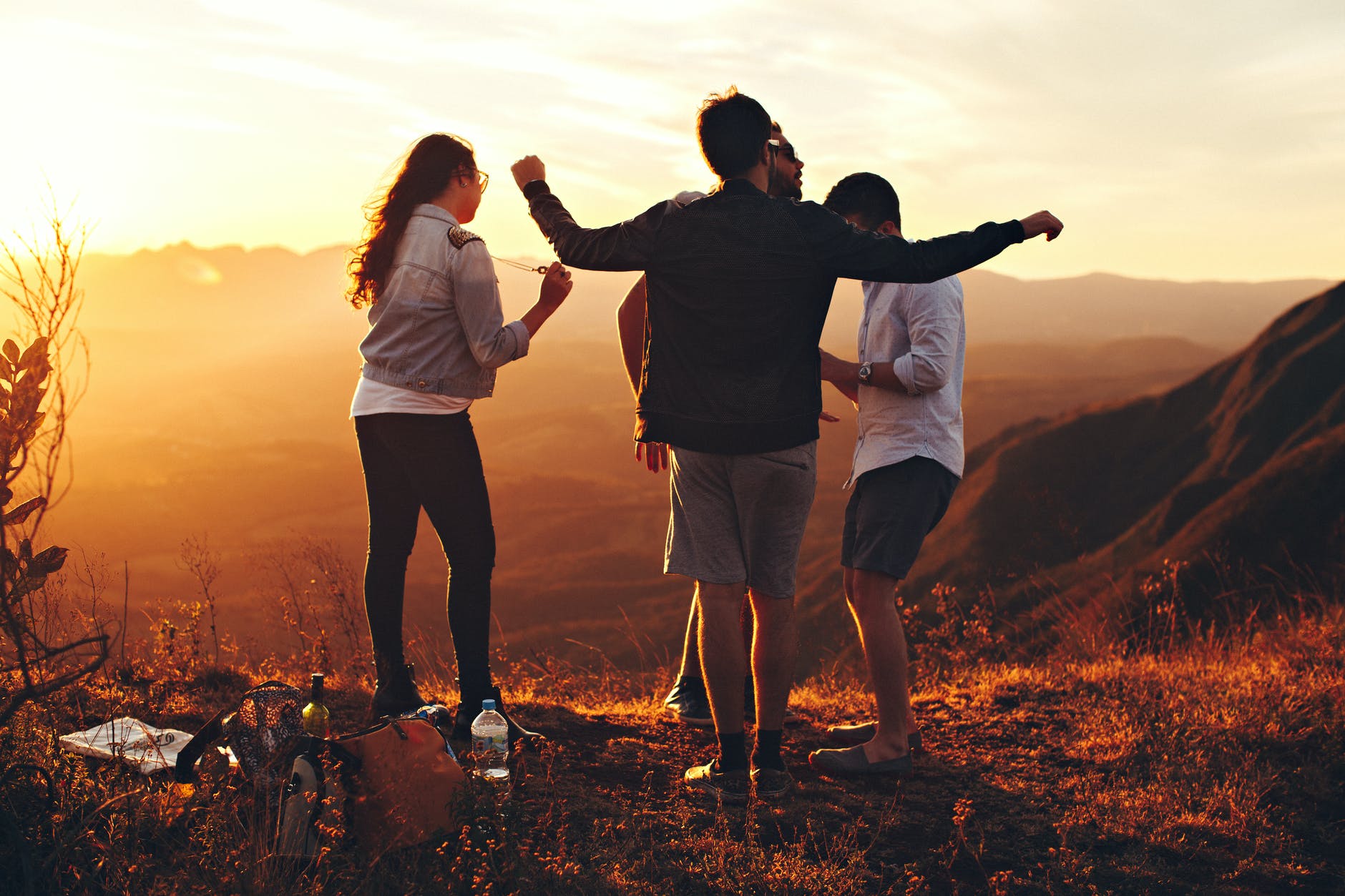
Photo by u041eu043bu0435u0433 u042fu043au043eu0432u043bu0435u0432 on Pexels.com
Math Class: Who are you?
Many people act in their “self-interest.” Others act altruistically. What might a balance between self-interest and altruism look like?
It seems to me at least worth considering that the genes that make you be the being that you are are not only within the boundaries of your own skin. Those genes are all over the place! Some are in trees. Some are in bees. Many are in a porcupine. And the vast majority are in all humankind. There’s way more of “you” out there than just what is in your own skin.
Ever notice how much many people rush about? I am too. Or, at least, I used to be. As I write this, none of our six cats is rushing about. Not even close. Charles Wallace is curled up in a cat bed on the window sill. Luna is curled up on the bed next to my wife. The other four are all in the living room lying in the sun. If I approached any one of them, they would know it instantly. They are not in deep sleep. They are just taking a … well … a cat nap
Cats are also quite willing to be demonstrative when it comes to reminding you that they have their own agency; that their life is every bit as precious to it as yours is to you.
Ripples
Actions have consequences.
We generally think of evolution in terms of a species, over time, adapting to whatever circumstances it finds itself in. But consider this: the choices we make determine what kind of environment we will live in and ultimately, how an organism (including humanity) will evolve.
Life is a dance between endless repetition on the one hand and chaos on the other hand. Life is not a printing press. Each copy is a little different. Because of that, it can change, and bend, and learn, and change.
It’s diverse; it’s abundant; it’s everywhere. When humans come in and change the landscape? Sometimes, we make it marginally better or add something that is as beautiful as nature but very different. But that’s rare. If we’re honest about it, most of the things humans make are not nearly so beautiful as the natural things they replace. The manufactured items are often more convenient. For instance, it’s easier and more affordable and more convenient for most people to own a car rather than a horse. But beauty? Despite hiring really good designers and putting in lots of time & energy into making a good design and then selling that design, I’ve never seen a car that approaches a horse in terms of beauty. And, aside from the “nice tries” but you didn’t get there category and the “well at least it works and is blah” category, let’s not forget the many occasions when humans replace natural beauty with unabashed and stunning ugliness. These poems, I suppose, were partly written in the hopes that humanity would see natural beauty and work together to leave the world more beautiful than we found it — and not just more “efficient.”
You Must Remember This
Ah Wilderness!
The Tree of Life
Take a Glance; Join the Dance
The Forest
It was his nature
It isn’t only a matter of how things look, of course. I wish that our actions and interactions could be more beautiful as well.
When I was trained as an experimental psychologists, thinking about the experience of other species was not encouraged. It was actively discouraged. I have a very different view of the world now. I think it is much more parsimonious to presume that other organisms do have some sort of experience and in many cases, similar.
In addition to poems, I also like to celebrate the nature of nature by sharing thoughts and pictures, many in a series I call “The Walkabout Diaries.” Why? Because I literally walk about, generally the garden, and observe things there.
Dictatorship is the opposite of life. It hates freedom, truth, cooperation, and love. It isn’s satisfied with “motivating” people to do things with cogent rationale. It wants to force people to do things under threat of death or pain. It wants what is good for one person to substitute for the messy processes of negotiating what’s good enough for everyone. It wants to replace the thinking of millions of people to decide what to do with the thinking of one person and when mistakes are made hide those mistakes so well that no-one will learn from them. It’s the opposite of life. Or, at least, it is the opposite of healthy life. It’s cancer run amok. Like all cancers, it’s doomed. But that doesn’t mean there can’t be a lot of pain before it runs its course.
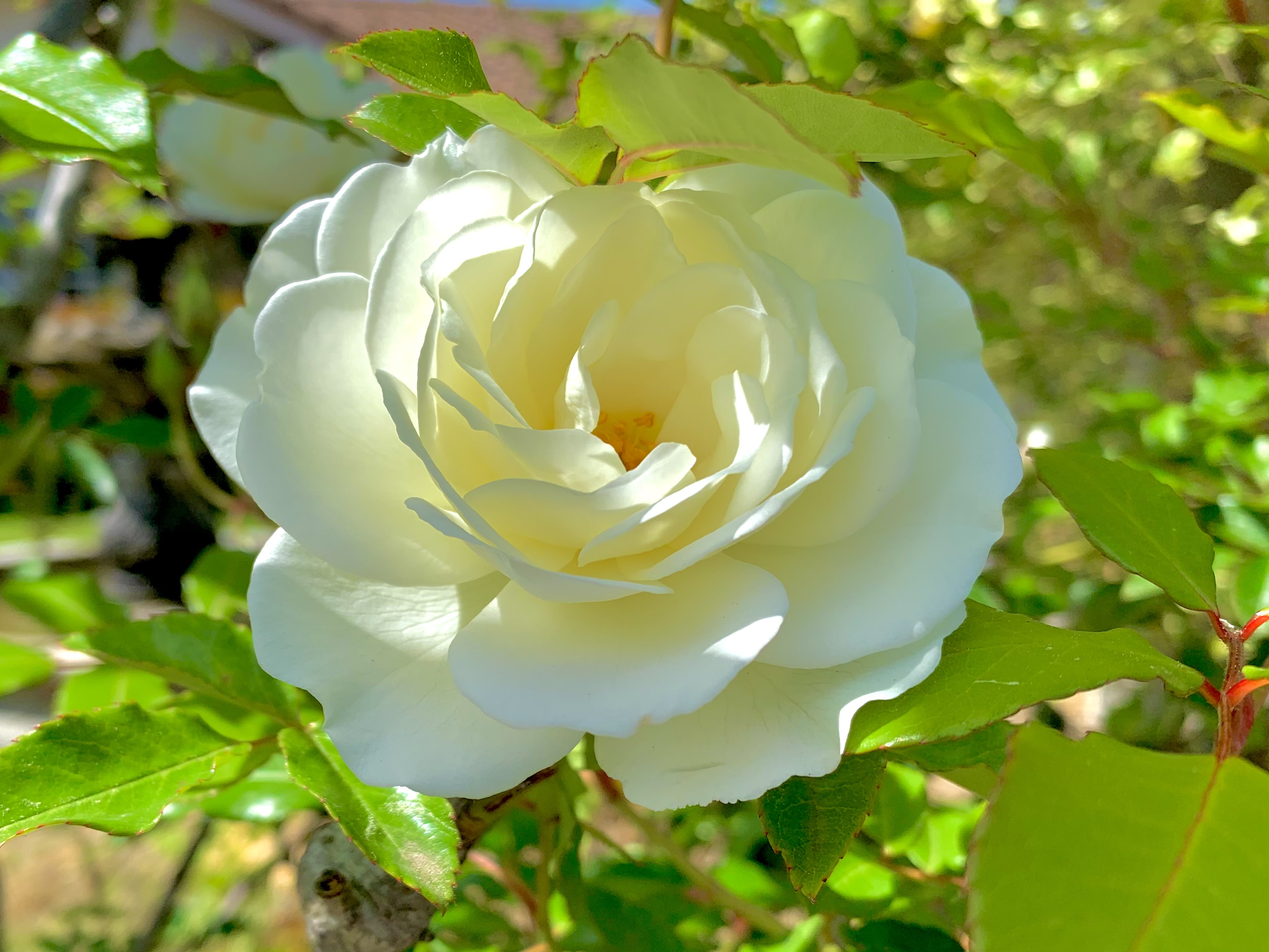
She sensed that she was surrounded by others — some very like her and many very unlike her. Yet — she couldn’t shake the feeling that something was not right.
She felt — bound up. She wasn’t free to grow in the way she really wanted to. And now she was moving in a most peculiar way. Her ancestors had seldom moved in such a way as this except in times of great catastrophe such as an earthquake. Suddenly, she found herself completely disconnected from the nourishing earth. Beneath her was nothing but cold hard metal and a whirring vibration.
Now the warming sun disappeared, not as a gentle sunset. No. This was a sudden and violent transition from warm noon sun to complete and utter darkness. She sensed that she was not alone in this sunless prison. All of her fellow prisoners were also in a panic. Again, she sensed the cold hard metal beneath her and a deeper rumble of whirring vibration.
Then, and completely without warning, the sunlight again began to beat upon her with its full force.
Soon, she felt herself unbound. She struggled to understand. She tried to stretch her roots out, tentatively at first, as you might begin to wiggle your toes after waking from a deep coma. She felt an unslakable thirst, Then, she sensed moisture nearby and minerals.
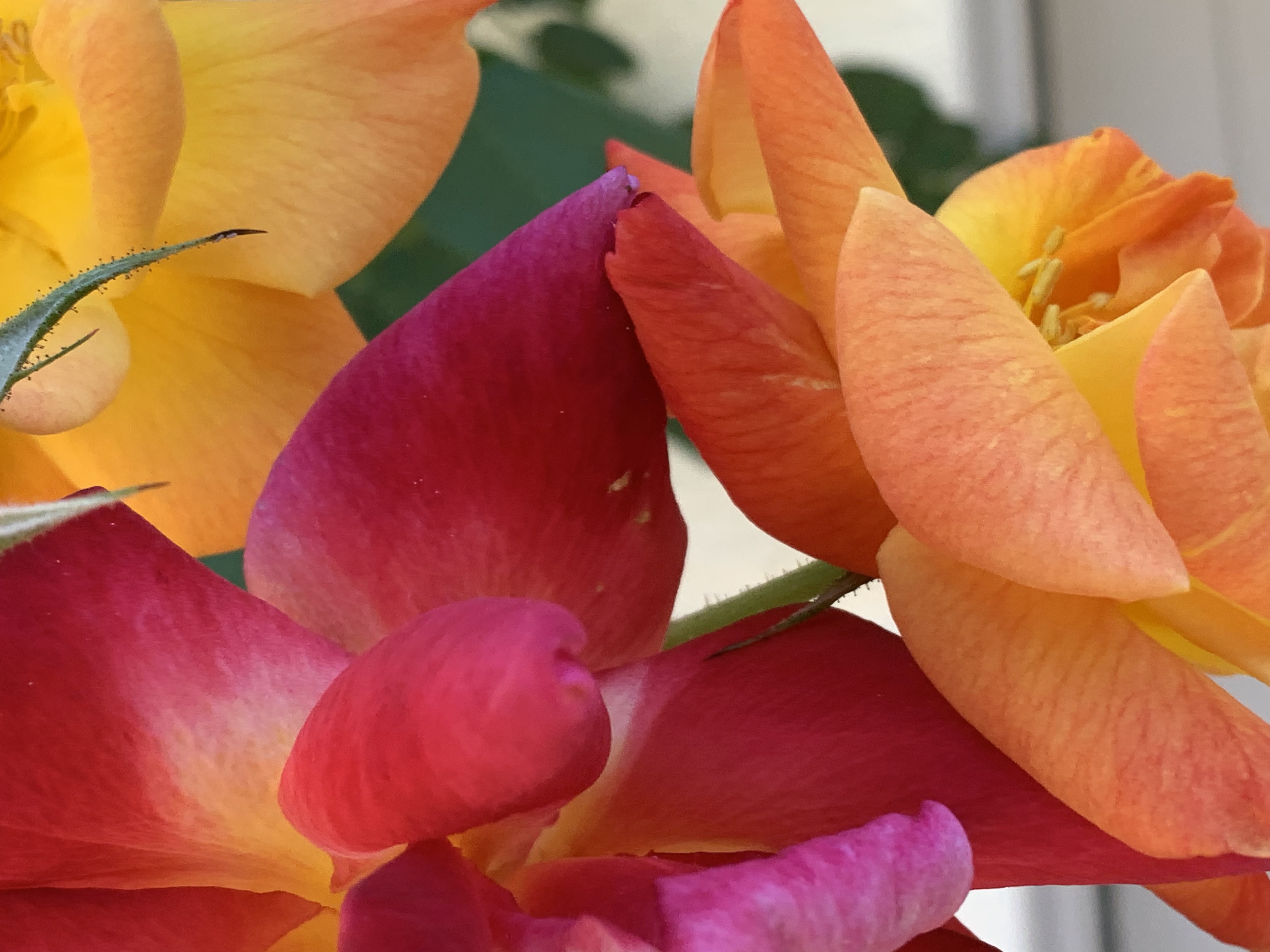
She still felt as though she were in a very strange place. Had she formed her thoughts into words, she might have thought: “I have no idea why they would place me here of all places.” If rose had been human, that would have bothered her a great deal. But among her many distant aunts, uncles, and cousins, those who spent their energy decrying their placement, few survived. Her strategy, like those of her successful ancestors, was rather to spend her energy being as beautiful and varied as possible.
Her faith was strong. Had she had a verbal creed, it might have been something like this:
“I believe in the bees and the breeze.
I believe in my own heritage.
Like all other living things on earth today, my ancestry is 4.5 billion years old.
I believe in the power of my roots to seek out and find the nourishment I need; to keep in mind my goals of water and minerals. I push and push, and when I reach the impenetrable, I seek a way around. I dance the dance of life. I don’t avoid the strife. I relish it.”
In the next few days, visiting bees told her that there was plenty of sunshine around even though Rose herself was mainly in shade. That bee-speak was enough to give Rose all the hope she needed to grow tall and wide. She explored in every direction.
The bees that buzzed near Rose told her, in their own way, of the vibrant and varied colors of her many other neighbors. She found their descriptions exotic and evocative. From time to time, she attempted to emulate those neighbors. The buzzing bees would pause in their busyness on occasion to give her feedback on how well she matched the colors of her unseen neighbors.
Over time, she sensed the vibrations of other beings besides the bees. Feathering beings and furry beings, some large and some small. Mainly, they were friendly beings who admired her artwork. But there were also those who cared little for her artwork and instead simply came to feast upon her. Rose’s body became sustenance for mites and snails and aphids. Sometimes, other creatures came to protect her. She liked that. Sometimes, they failed to protect her and the pain became unbearable. But bear it she did.
Rose resolved to use the pain to make her creations more beautiful still.
Before we discuss the answer to that one, let’s move on to the American House of Representatives. There are 435 people in the House of Representatives. What is the probability that at least two folks in the House share a birthday?
We will return to these two puzzles shortly. Meanwhile…
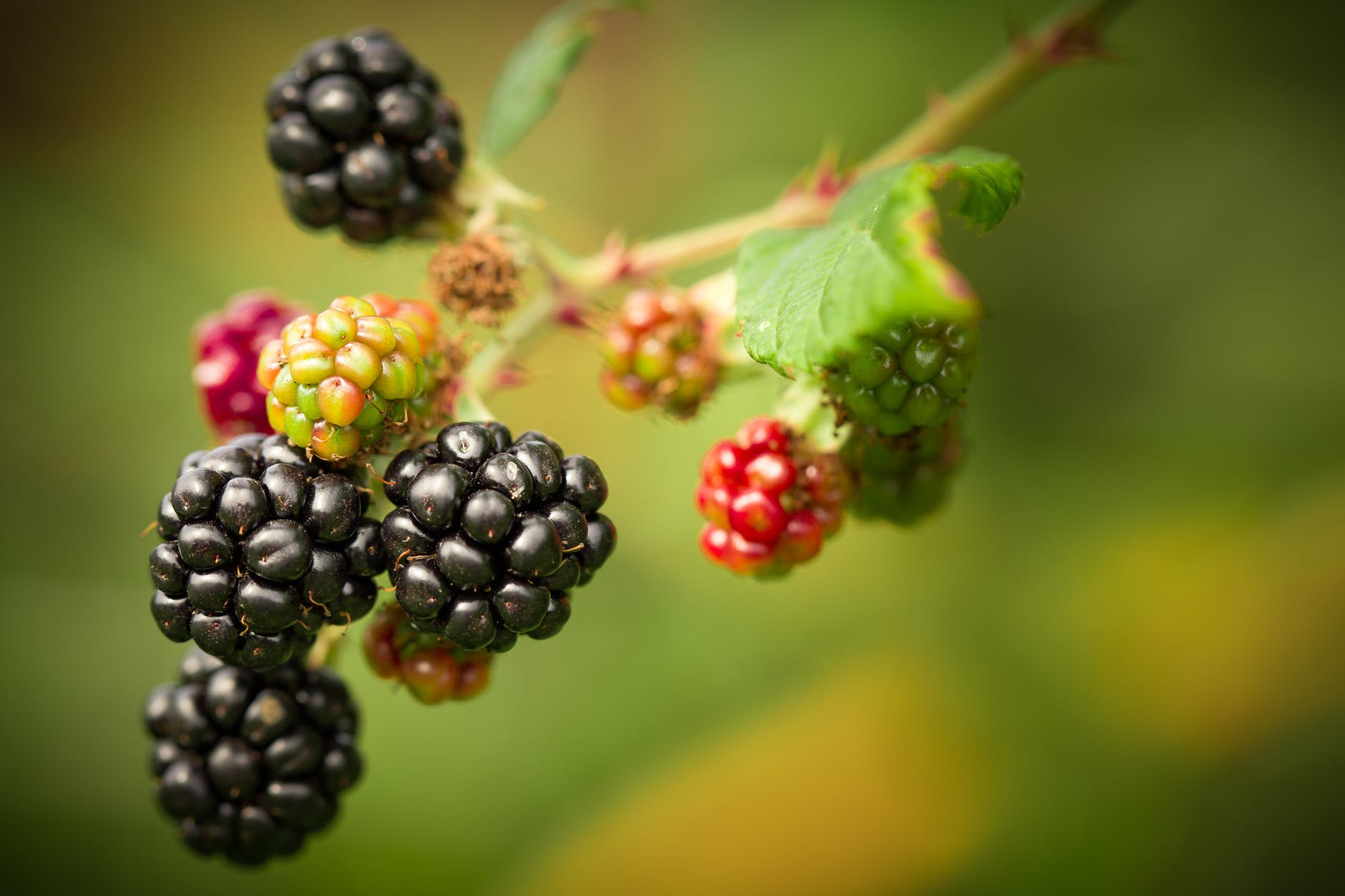
Imagine that you are one of our distant ancestors foraging for food. You come across something that looks just like a blackberry bush. On it are what appear to be nice ripe blackberries. They feel like blackberries so you pick one. You pop it in your mouth and it tastes like a blackberry. It has the same seeds that you are used to being in a blackberry fruit. It smells like a blackberry. Chances are extremely good that it is, in fact, a blackberry.
Don’t get me wrong. There are some plants out there that could give you trouble! The deadly poisonous amanita mushrooms are said to taste good. And, the white “death angel” has been mistaken for an ordinary field mushroom with deadly results. A single mushroom will kill you but a half a mushroom may only make you wish you were dead.
In general, however, plants, animals, and situations are redundantly coded right at the surface. A blackberry plant has leaves that look like blackberry leaves. It has thorns that look like blackberry thorns and also feel like blackberry thorns. The fruits look like blackberries! They have a texture of blackberry. They smell like blackberries. They taste like blackberries. Though there are some deadly exceptions, in the natural environment, we are generally clued in to what something is by multiple senses. If it looks like a blackberry and smells like a blackberry and feels like a blackberry and tastes like a blackberry, chances are excellent that it really is a blackberry.
When it comes to things produced by human beings, however, we must be much more cautious.
In some cases, such as the puzzles at the beginning of this blog post, the intention is pedagogic. But in other cases, people mislead you for much more nefarious purposes. Someone could intentionally spray the blackberry patch where you go with an odorless, tasteless, invisible poison. It could poison your body and kill you stone cold dead. Or, they could poison you and make you so sick you wish you were dead. Who would do such a thing? Well, the name “Vladimir Putin” springs to mind. He has arranged for the poisoning of his political foes and critics.
It isn’t only your body that is at risk, however. So is your brain. The tricks that people play are not necessarily all deadly. Often, they just want to take your money. So, they will tell you a drink is “All Natural Fruit Drink” because they know that most people care about their health and the health of their families and “All Natural Fruit Drink” sounds like something natural, healthy, and nutritious. But legally, as it turns out, those words mean absolutely nothing in America. That “all natural” drink may be anything but! It could be mainly water and corn syrup! It might have as little as 5% fruit juice.
What do you think is in “Air Freshener”? “Air Freshener” sounds wonderful, doesn’t it? After all, who doesn’t like fresh air? If you’ve been in a musty cabin waiting for the rain to abate and you step outside into the cool, crisp, fresh air, that is a wonderful sensation. Ah! Breathe in that fresh air. And, of course, when you see a commercial for “Air Freshener” on TV, or read the title which might say, “Ocean Breezes Air Freshener” it reminds your brain perhaps of your first trip to the ocean.
What is really in air fresheners is, in many cases, anything but an air freshener. Do you know what a really good air freshener is? Opening your windows. But the sprays that you buy in the store can contain:
Carcinogens Perfumes Chemicals that mess with your hormones
Chemicals that deaden your sense of smell
Huh!?
Not exactly an “Air Freshener” is it?
In the puzzles above, the description is also misleading, not because I want to steal your money or poison you, but because I care about my fellow citizens being sold their death warrants packaged as something wonderful. Hopefully, if we become aware of how the surface features of a situation can mislead us, we’ll be less prone to fall for such tricks.
The tobacco companies were good at such tricks. They would sell you something deadly and addictive but advertised to make you think that smoking their product would make you “manly” or “sexy” or “sophisticated” or “urbane” or “adult.” It wouldn’t make you any of those things. It would harm your lungs and your heart and turn your skin gray and make your breath smell bad. But those aren’t very good selling points, you see. Eventually, the government required cigarette companies to put health warnings on the packages. Do you think that the cigarette companies eagerly complied? Guess again. They fought tooth and nail and paid off politicians for years so they wouldn’t have to own up to what their product was really doing to you.
So, let’s return to the puzzles. In the first puzzle, many people are led by the structure of the language presented to answer wrongly.
“If a chicken and a half can lay an egg and a half in a day and a half, how long does it take ONE chicken to lay ONE egg?” The first answer that will likely pop into many minds is “ONE day!” It “seems logical.”
But it’s dead wrong. Consider this analogy: “If nine women can have nine babies in nine months, how long does it take ONE woman to have ONE baby?” One month? No, of course not. It takes nine months. And it will take a day and a half for the one chicken to lay one egg. (Or, a hundred chickens to lay a hundred eggs).
The second puzzle will probably only cause problems if you have been educated about probability.
What? Yes. If you ask a smart ten year old, they will figure it out. Basically, there are only 365 days in a year (or 366 in a leap year). Since the number of Representatives in the House is 435, even if the first 365 people in the House have different birthdays, the next person you look at has to overlap with someone. It’s just like this: Suppose you only have some identical black sox and identical white sox. If you pick three sox in the dark, you have to have at least one match.
If, however, you studied statistics, you may have come across “The Birthday Problem.” As it turns out, if as few as 30 people are in a room, the chances are greater than 50:50 that at least two share a birthday. If the puzzle reminds you of this, your mind runs along lines like this: “Oh, yes, I remember this. It’s “The Birthday Problem” and with even 30 people the odds are good, so with 435 people the probability must be really high. I’d say the odds are 99:1.” No. Wrong. Close, but wrong. There must be at least one match.
It’s very easy for us to rely on the surface of things — including its label or what advertisers say about that thing — as a valid indicator of what’s underneath. And, in nature, that is often true. But in modern society, if you simply believe what someone says, you will certainly lose some money and at some point, you may also lose your entire fortune, your freedom, and your family. It’s happened before. Hitler, to name one famous example, told people he was going to make Germany great and that the “Third Reich” would last a thousand years.
He killed himself in the end. But not before causing the deaths of millions — including millions of Germans. He told people lies that they wanted to hear. He divided people and made people believe that all their troubles would be over if he just had complete power over their lives. Don’t fall for it.
While all the previous properties of natural order seem positive, clear, and obvious, this one seems mildly scary. It reminds me of death, somehow. It’s true that individual death is part of the overall reality of life, it still seems scary. It’s reminiscent of whirlpools, caverns, the abyss. I suppose some of our tiny distant ancestors may have faced the dark mouth cavity of a large predator — a shark, a cave bear, a saber toothed tiger. And a few of those who were terrified enough to flood their bodies with adrenalin may have escaped to reproduce and pass on the terror of utter darkness genes to their offspring, including me.
In a friendlier interpretation, the void could be thought of as “empty” space, or more accurately, extra space not filled with functional items. From that perspective, The Void promotes rest, relaxation, rebirth, regeneration. Your day should include “The Void” in terms of activity — sleep, certainly, but also times that are unscheduled and restorative. If you are scheduling a day long meeting and every minute is accounted for ahead of time, there is no “margin” for something which catches the passion of participants to spill over. There is no time for unanticipated contingencies or for people to reflect on what is happening.
Similarly, a space (whether computer memory or physical space) that is completely “taken up” with data or things becomes inflexible. In extreme cases, nothing can be done because there is no room to move things.
When I was a kid, I used to enjoy puzzles that consisted of 15 square pieces and one blank space. The idea was to move the pieces around until the pieces were arranged into a particular numeric sequence (or made a picture). It’s immediately obvious that if there is no space, there is no way to move the pieces and whatever order they are in is the order that they will stay in.
It seems that people who want to control everything want exactly that — no space — no void — no possibility for change. It may be related to the mystery of overworking so many people with long hours despite decades of research showing people are more productive with shorter hours.
In a living human being, there is typically “space” in our respiratory system and our digestive system. To have zero space means we cannot eat and we cannot breathe. We do have spaces within our body — ventricles in the brain, sinuses in the head, and — crucially — females have a place that can accommodate the creation of a new life within.
A hive, or a garden, or a city may indeed be crowded, but if it literally has zero space, it dies, just as we would. The void allows flow — in the case of the individual human body, space allows for the flow of food and the flow of air.
A science that has no void, no space, has no flexibility. It is no longer science but dogma.
A budget with no space, no void, means every penny has been pre-assigned and this is not an effective way to budget.
Games typically have space (Go, Chess, Checkers, Monopoly) as do sports (Tennis, Baseball, Soccer, Basketball). Play often consist of using, changing, and manipulating space. The baseball pitcher tries to throw the ball so that it crosses through spaces where the hitter cannot easily hit it well. The hitter tried to hit the ball where the fielders cannot reach the ball. The tennis player tries to “build a point” by creating more space; e.g., by pulling their opponent progressively wider so that a shot can be hit into such a large space that it cannot be reached at all. In most games and sports, the amount of empty space, particularly at the beginning of play is relatively large. In chess, as in American football, play begins with a large space between the teams. In many games, there are special terms for spaces. A “Luft” in chess is a place for your King to go if attacked on the back rank by a queen or rook. In American football, the quarterback throws passes from the “pocket” which is supposed to protect them from tacklers.
Under Umbrage, everything living and loving was smothered by a rule, or at least she wished it were.
To me, “The Void” connotes more than space, however. “The Void” seems to refer to a relatively large, concentrated space. In music, for example, without any space, there is just a long, annoying noise. But “The Void” isn’t just the space between notes. It seems as though it must be a significant silence such as after the tuning and before the first note is played or the space between movements in a symphony.
Of course, we can contemplate things at different scales. If we see Alternating Repetition from a distance that allows us to see the alternating repetition, we might see gaps as spaces, but not as examples of “The Void.” If we moved our point of view so that only one such gap were visible, it might become an example of “The Void” at another scale.
Most of our everyday reality is physically made up of empty space. Every atom is more than 99.999 % empty space. At that scale, it’s mostly void or at least mostly space. And, at the other extreme, although it may seem that space is crowded when you see the Starship Enterprise go through the universe at “Warp 9” that’s an illusion to make it more interesting. Most of the universe (and our solar system) is empty space. The sun which is by far the largest object in our solar system has a diameter of 865,000 miles. That’s big! But the nearest planet, Mercury, is 40 million miles away. And, that planet is the only thing in its orbit.
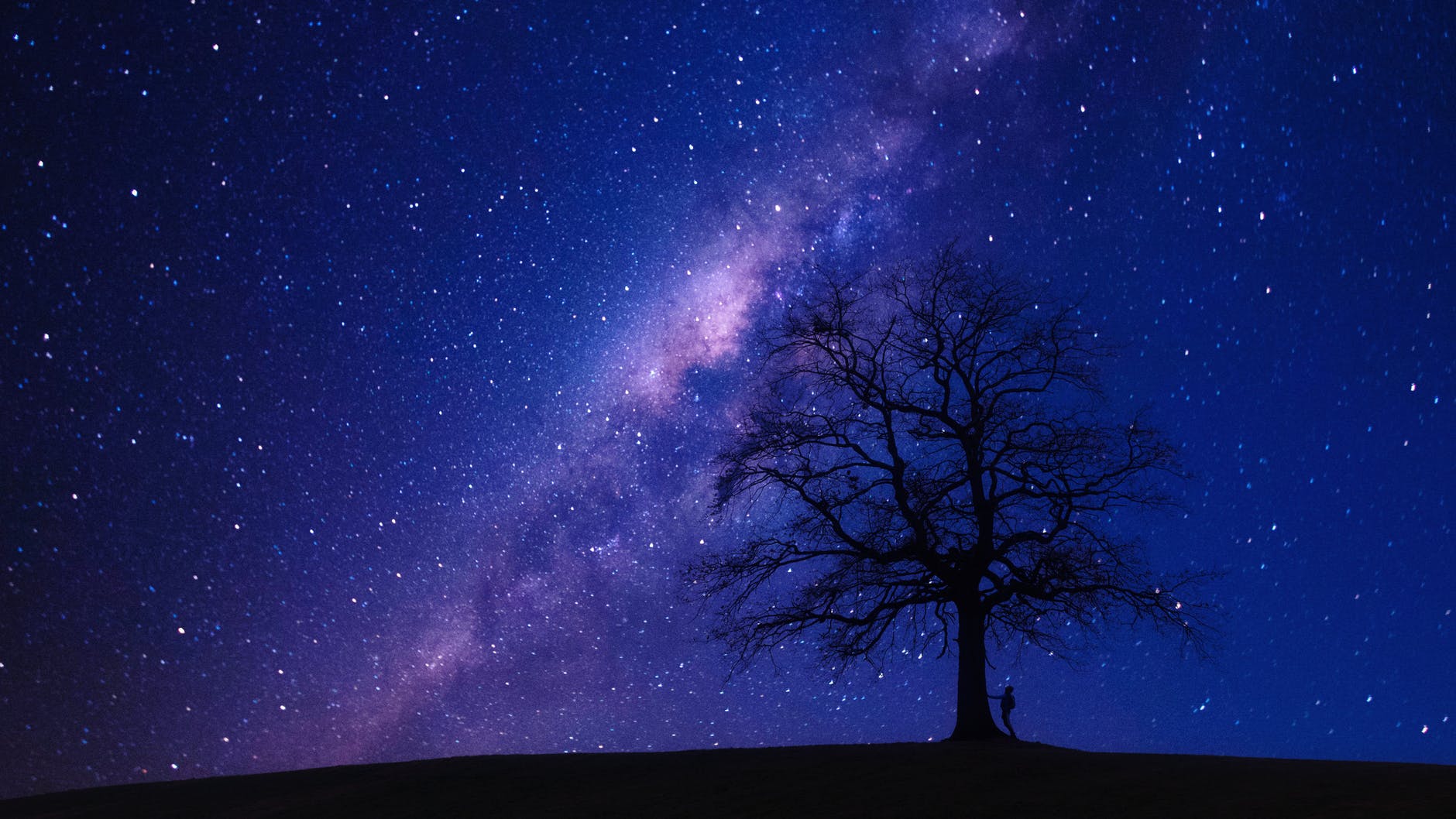
Once I was driving with my family from San Francisco to Salt Lake City. Around 3 am, in the absolute middle of nowhere with no lights and no moon, I stopped the car and ran a quarter mile from the road into the desert to look up at the stars. It doesn’t “look” empty of course. Far from it. Yet the sheer blackness of the background and the vastness of it made it seem like a true void. In fact, because of contrast with the sharp and sparkling stars, the vast void was made into even more of a vast void.
An atrium, a central courtyard, a reflecting pool — can these be voids that strengthen the center?
If we look at a void, does that produce a different aesthetic feeling from when we are in a void that surrounds us? If you and your family or friends or tribe huddle around a campfire at night, the fire is a center. You can see the faces of people in the firelight. But you are aware that each of you knows that surrounding your little group is darkness. Sometimes, in movies, someone will remark, “Well, it’s quiet.” To which, the proper response is, “Yeah. Too quiet!” When the frogs and crickets stop making noise, the heaviness of the silence becomes oppressive. It might mean that large predators are about, each with their own maw of void. Being in a large space that has no perceptible features is awe-inspiring or even fear-inspiring. Looking at a large space that is situated in the context of a pattern may echo that feeling slightly, but to me, it feels very different.
The same tune can be played on a piccolo or a base vile.
When it comes to user experience, what comes to mind for me is the empty page or the empty canvas or the empty spreadsheet. These are large unfilled spaces. To compose, whatever the medium, requires of us a kind of courage. We must “enter” the empty space. In order to write, we must also allow for empty space within us. As I write, I find that there is always a rhythm of “describing” things that have “come up” for explication and then pausing — staring as it were into the blackness, the void, of my own consciousness. I allow things to arise from that inner void and show themselves. I don’t always know what it will be.
I think that process (and not wanting it disrupted) is one reason that I, like so many others, found “Clippy” to be so annoying. Whenever I was allowing for the void to reveal to me what I wanted to say, “Clippy” would imagine I was stuck and offer a suggestion (invariably irrelevant).
Perhaps you or one of your kids has played “8-ball.” You ask it a question then you shake it a little and an answer “appears” in a little window. The most enthralling time is that space between when you ask the question and the answer appears. Of course, it’s fun thinking of the questions and interpreting the answers, but the most dramatic part is waiting for the answer to appear. In that moment, you may suddenly realize what answer you want to appear.
If an application is to support any kind of creative activity, it should not “rush” the user and it should provide the user empty space in which to create. That emptiness can be intimidating, but I still think it’s necessary.
My desktop has many icons, tool bars, and windows. The only true void is the blank part of the writing pane in Pages. Visually, since the blank part of the page is white, it doesn’t seem much like a void. There is enough space between the icons and menu items to make them legible, but there is no “void” there. Visually, the only thing that really strikes me as a void is the totally black rounded rectangle beside the color sphere in the Format window. It’s black because that is the color of the text I’m writing in. Its function is nothing like that of an actual void.
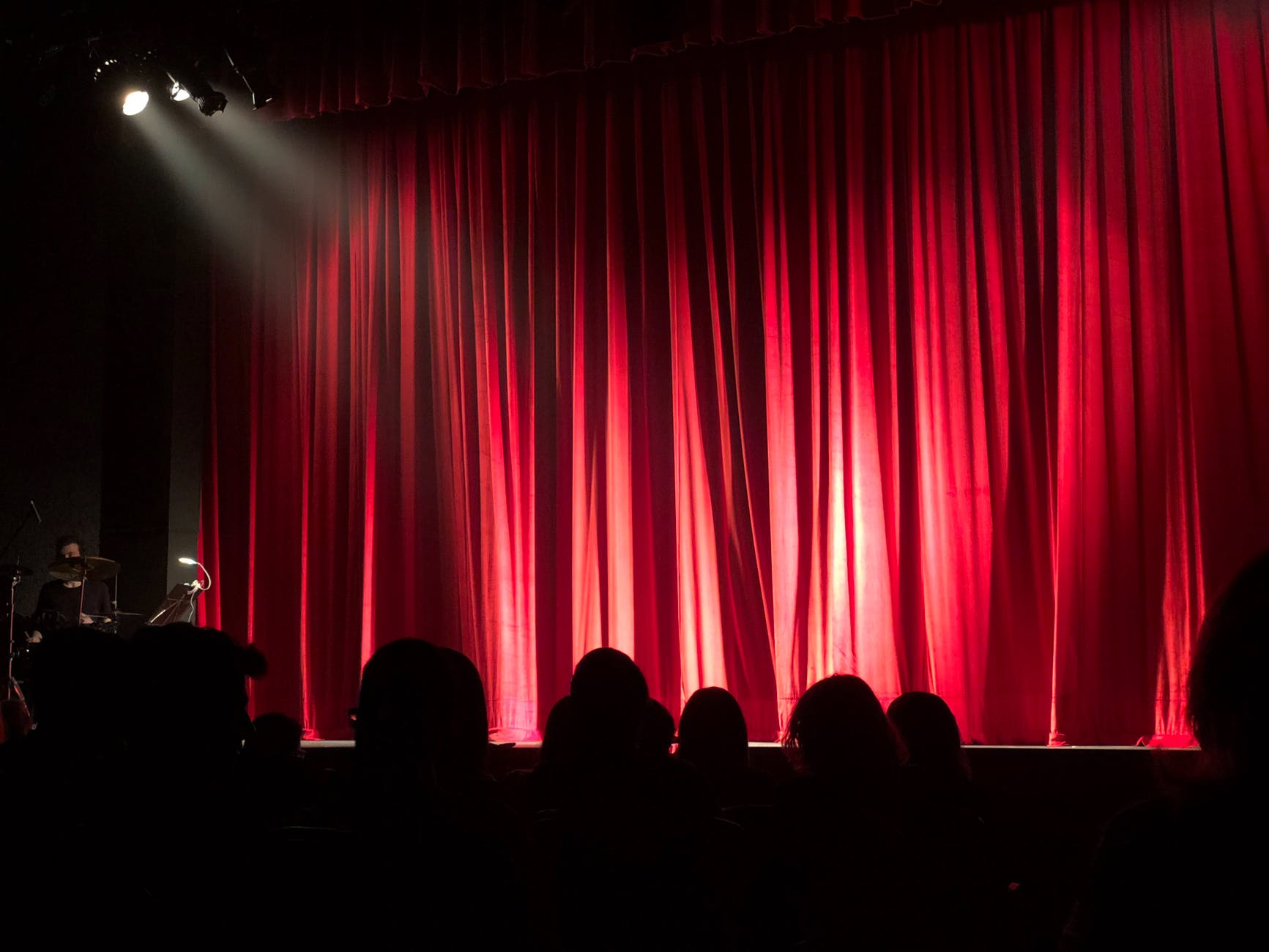
The void may symbolize death, but it also symbolizes life. It is the happening place. It is the dance floor. It is the game board. It is the playing field. It is waiting for the curtain to rise. It is the movie theater when the lights go out but the movie has not begun. It is also the movie theater when the credits have done rolling but before the house lights have come up. If it is death, it is also rebirth. If it is birth, it is also the end.
As every moment of our existence and our attention becomes commoditized and sold to the highest bidder, there is ever more pressure to eliminate the “wasted space” inherent in the void.
Running into the ocean; diving into a pool; deciding to have a child; moving; divorcing; falling in love; losing a loved one; starting a composition; beginning a design — these are moments when we brush up against the void or enter it or avoid it or incorporate it into ourselves. We like to fool ourselves that there is some process or routine or formula or piece of software that can take all the uncertainty out of these transitions into the unknown.
That’s all illusion. It’s the very nature of life itself — that dance on the razor edge between chaos and repetition — to embrace the void. We try always to “avoid” The Void.
Nature doesn’t “abhor a vacuum.” Nature is mostly vacuum.
But we abhor a vacuum. Our productivity tools are geared toward reducing “The Void” as much as possible. Children are shuttled from one high intensity activity to another to ensure that when they apply to college, they will get in one which will ensure that they will get a high-paying job that will enable to them to work their entire lives so that there will be no uncertainty.
I am also a product of that “Avoid The Void” culture, so I find it hard to imagine what it would mean to design a tool or UI or app that embraced and encouraged The Void. There are some specific mobile apps that support meditation or listening to music or breathing. What of composition though? Whether it is programming, writing, drawing, or creating a business plan, is there a place for The Void to be supported? How would you encourage it? What visual elements or other sensory elements could be used to support it? How would you measure how well you did?
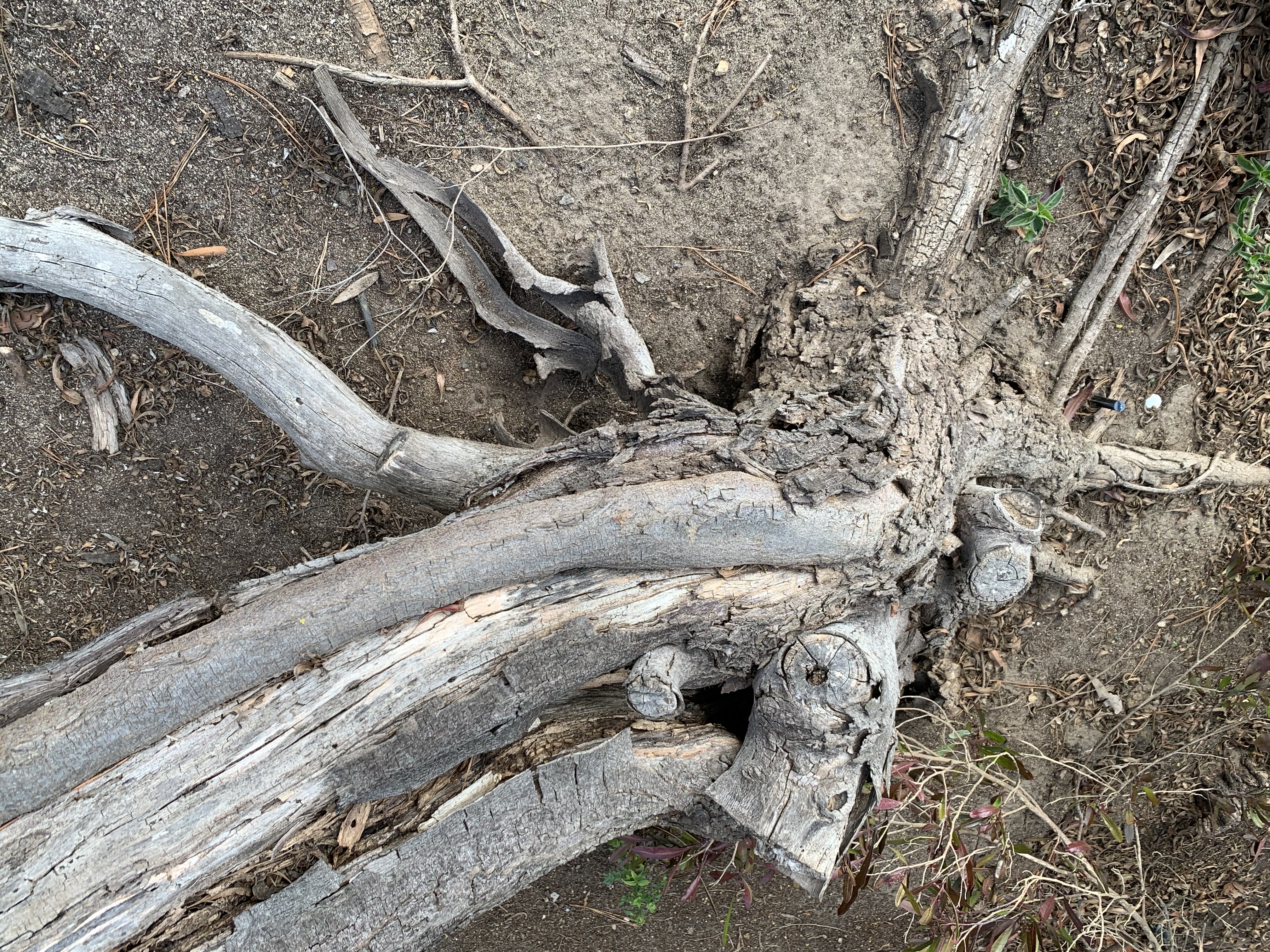
Check this out. What is this? It’s obviously the stump of a dead tree. Or, perhaps more accurately, it’s the dead and broken trunk of a tree.
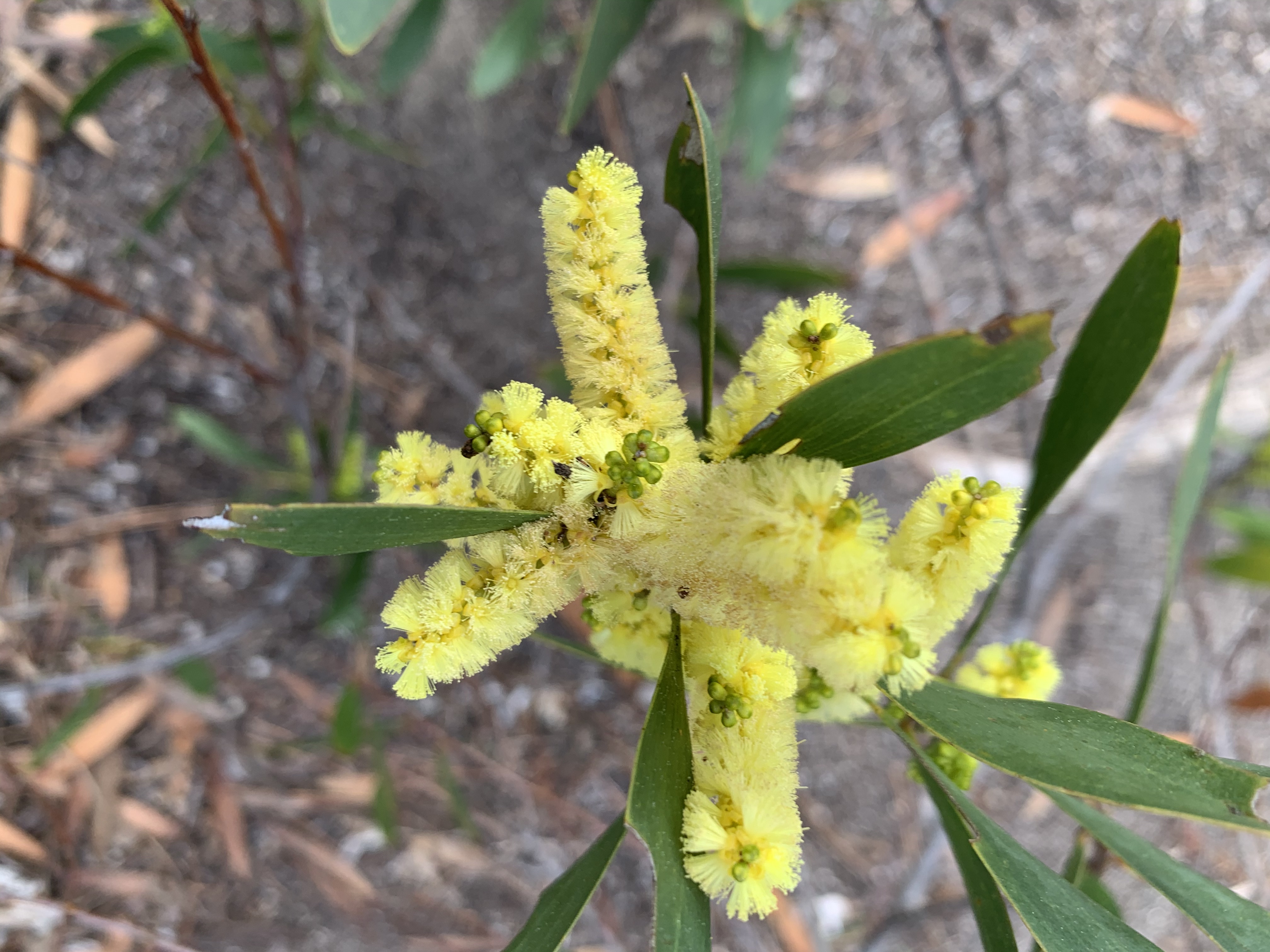
Or, is it?
It took me about five minutes to convince myself that all of those yellow flowers and associated green leaves are part of that same tree!
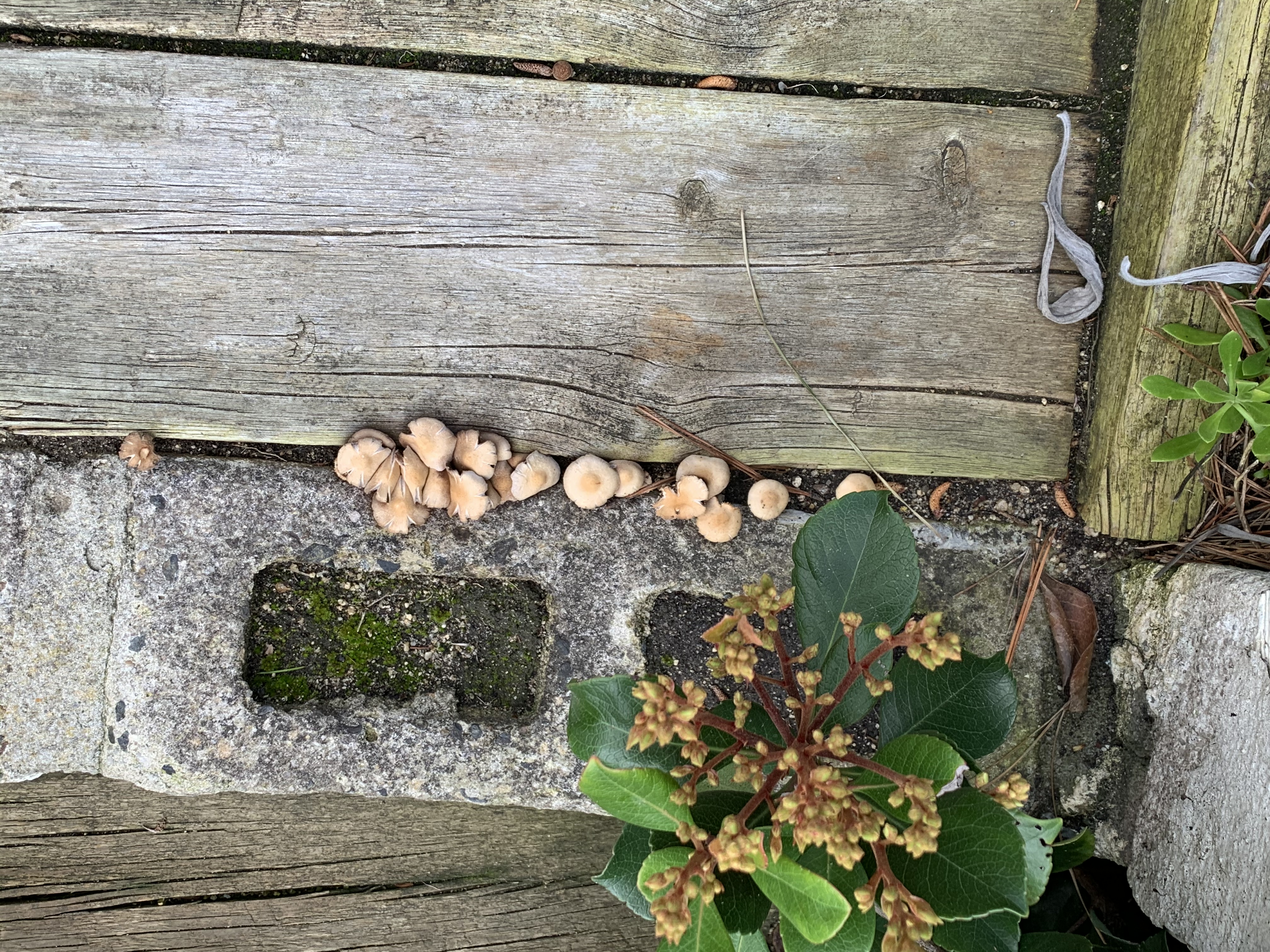
Here’s another example. Where did these mushrooms come from? As you likely know, they grow from spores. But where did these spores come from? I didn’t plant them. There are no mushrooms nearby. But somehow, a puff of spores wafted on the wind and found an appreciative stretch of well-shaded damp ground.
Life is amazing. Well, after all, it’s been doing its thing for 4.5 billion years. And, when I say “it”, of course, I really mean “we” because all of life — you, me, and everyone else and every other life form on this planet, like it or not, are on this same spaceship earth.
Aren’t they synonyms? Aren’t both these words applied to adults who have some of the characteristics of a child?
No. And … yes.
Both words are typically applied to adults. And both words are typically applied to indicate that the adult in question has some characteristic(s) in common with a child.
But the sense of these words is quite different.
I spent two wonderful summers in my mid-teens working as a counselor at a camp for kids with special needs. Many of these kids had been paralyzed from polio. Some were confined to a wheelchair. But polio was not the only cause of issues. One week was dedicated to kids who were severely hearing impaired. One of the great joys of that particular week was a camp tradition that the cook would “chase” the senior counselor while clanking a cow bell very loudly through the mess hall. Only two of the group of 50-60 kids were totally unable to hear. (Who knows? Maybe even those two have been since able to hear a little with cochlear implants). Anyway, although the rest couldn’t hear well enough to understand spoken speech, they could hear that very loud bell. People differ in all sorts of capabilities; most often the kids at the camp — and adults as well — have some mobility, or some hearing, or some coordination. The so-called “deaf kids” squealed with delighted laughter at the antic.
Generally speaking, the weeks that the kids came were not organized by their particular special needs but by age range. The first campers to appear were young; perhaps 5-7. The next group were 8-10. There was a huge difference in the way these two groups approached things. The younger kids had a kind of … openness. A light burned behind their eyes. They were fully there. The second group were already wary. Instead of plunging ahead to answer a question based on what they themselves thought and felt, they would look at my face, or the face of another authority figure and try to read what they were supposed to think and feel. They had, it seemed, surrendered some of their soul to schools, and rules, and requirements. They knew how to be cagey. The light behind their eyes had dimmed.
Inside every adult however, that wild well-lit child still lingers and sometimes he or she will come out to play. For some folks, that requires drugs or alcohol. Others save it for special occasions like Mardi Gras or having their team win the World (sic) Series. And some adults are lucky (or unlucky) enough to be in a profession that actually rewards creativity — at least up to a point. Painters, writers, actors, therapists, scientists, dancers — often need to draw on that inner child to see afresh; to play; to dance; to interact with the world while minimizing preconceptions. That is being child-like. And, it is generally thought to be a good thing. Some adults find any hint of play annoying in other adults. Children almost universally like it — although they want the adults to be adult when a real danger is afoot.
Once, when my daughter was about four, she and I and my wife all sat on the floor listening to Leonard Bernstein’s introduction to the orchestra. We “adults” mimicked playing all of the various instruments. After a few minutes of this, my daughter looked back and forth between the two of us and said, “Oh! I get it! You two are really just little kids!” My wife and I burst out laughing. We took it as a great compliment.
In graduate school at Michigan, one of my favorite courses was “Complex Adaptive Systems” taught by Professor John Holland. Most of the course consisted of his showing various mathematical models of complex adaptive systems. One modeling effort in particular I found interesting. It explored this question:
“If you are a complex adaptive systems (we humans are one example; so are cows, crayfish, corporations, and clans) how much of your resources should you spend on optimizing based on how much you already know and learning more about the environment (and then you can use that knowledge to optimize even more effectively later).”
Under a wide range of assumptions, it turns out that it is just about 50-50. That is, you should spend roughly half of your resources learning more about the world around you and half using what you already know to get more of what you need to survive and thrive; e.g., in the case of a person, food, water, love, etc.
Half.
How many organizations do this? How many adults do this? And, if an adult does learn, is it really open learning? In my experience, even when most adults do try to learn new skills, they are their own worst enemies. They have a highly evolved network of constraints, rules, assumptions and — yes, they do try to improve their skills — but only so long as it does not require a change in those constraints, rules, and assumptions.
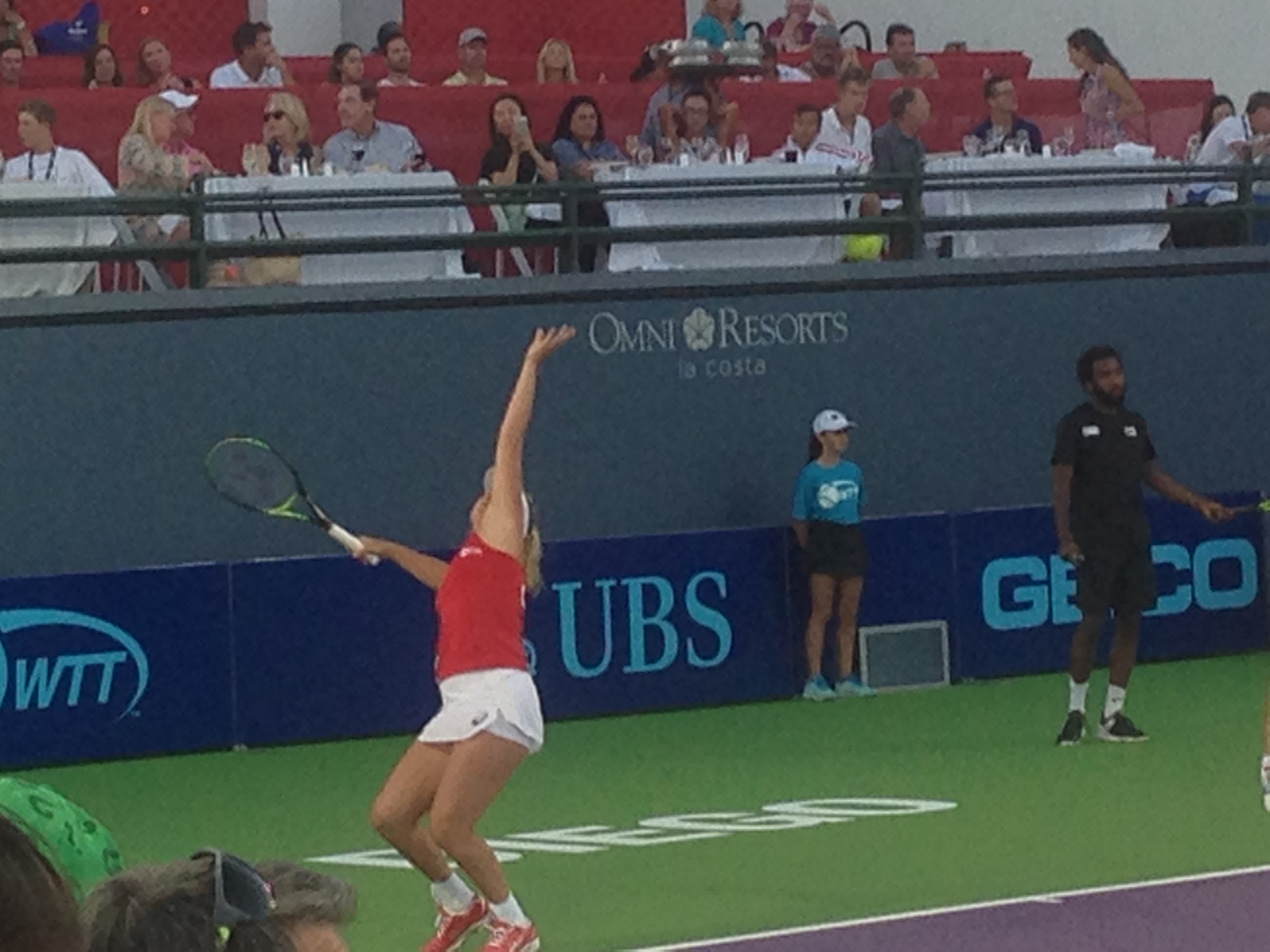
To take a trivial example, people will go on to the tennis court and attempt to improve their game. But they often do it by making the same mistakes over and over. For fundamental improvement at tennis (or almost anything else), you will need to be open to fundamental change. By the way, making a fundamental change means that your performance will get slightly worse before it gets better. For instance, one of the people I sometimes play with exhibits a common error. He doesn’t bring his racquet back soon enough. He runs to hit a shot and only brings the racquet back after the ball bounces. As a result, he often rushes the shot, does not have any power, or mis-hits the ball. He’s trying to improve his skill, but he won’t improve much until he changes his approach.
For fundamental change, we need to dig deep and find that way of being in the world in which we are open to what is happening. Unfortunately, if a player does manage to “remember” to bring the racquet back father, his or her first few attempts will likely be worse than the way he or she usually hits the ball. Why? Because the timing of the shot will be quite different. The positioning and the weight transfer will also be different. A child seems to enjoy the movement itself and they seem to grasp intuitively that bringing the racquet back farther will naturally result in more powerful ground strokes. If you can be or become child-like while you learn, you will free yourself to learn at a deeper level.
To be childish is a quite different thing altogether. Someone who is childish is often not interested in learning or adapting or changing at all. They insist that they are already perfect and if they didn’t win the Monopoly game or the Chess Game or the Tic-Tac-Toe game, it’s not their fault (and therefore, there is no reason to learn to do better).
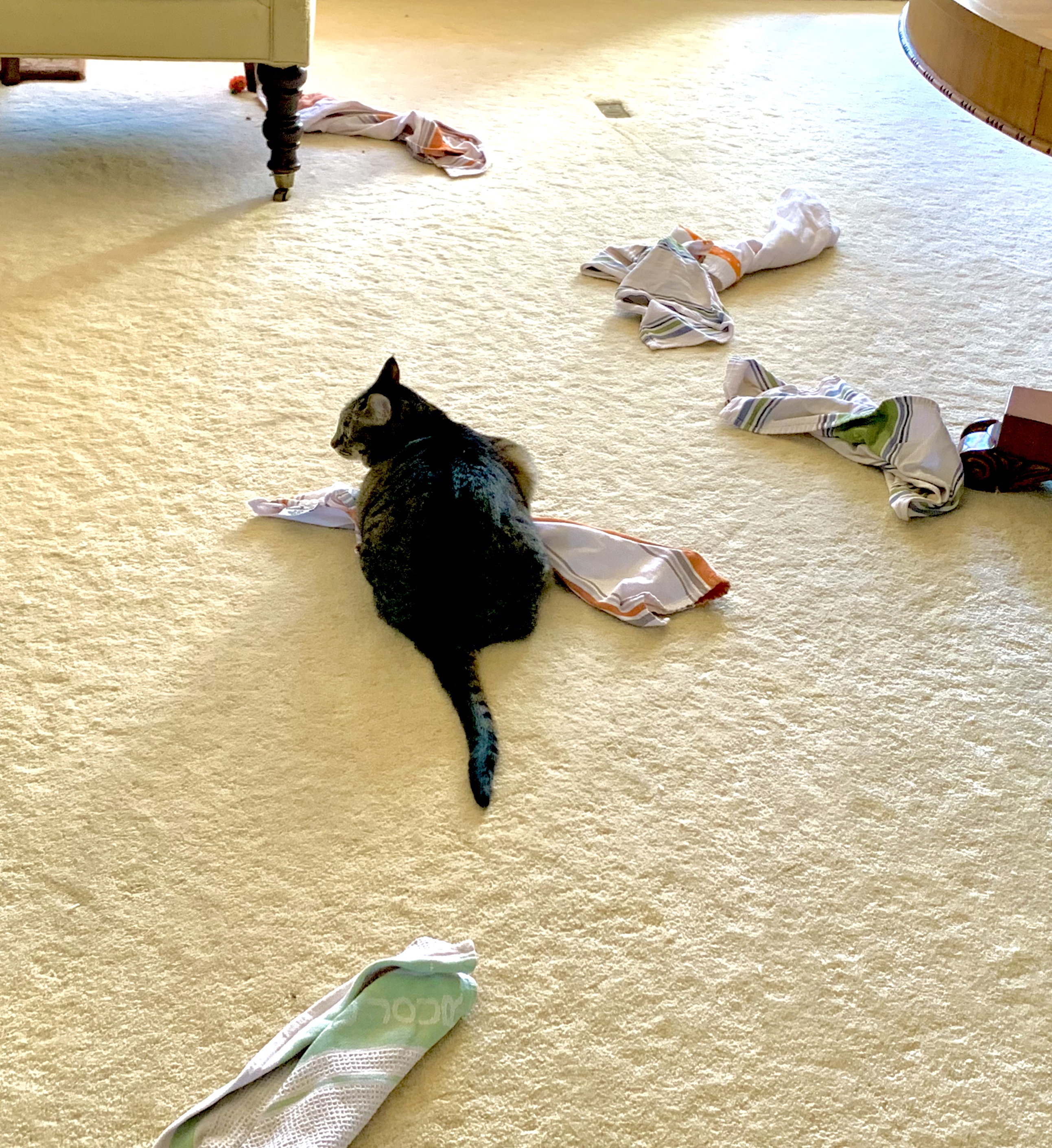
(one of my cats, Shadow, arranging the used dish towels she stole from the kitchen)
While I ran an AI lab at NYNEX, for a time, I had a pretty long commute. I listened to many “Books on Tape” during the commute including the autobiographies of many CEO’s of companies. Many of them were childish rather than child-like. Perhaps because they were rich and powerful, people told them what they wanted to hear all too often. As a result, these CEO’s often blamed their failures on factors beyond their control: the weather, government regulation, foreign competition, bad luck, fickle customers, etc. When they had successes, that was because they were smart enough to hire good people, make excellent decisions, provide superb leadership. That attitude of taking all credit for success and zero responsibility for failure is being childish — not child-like.
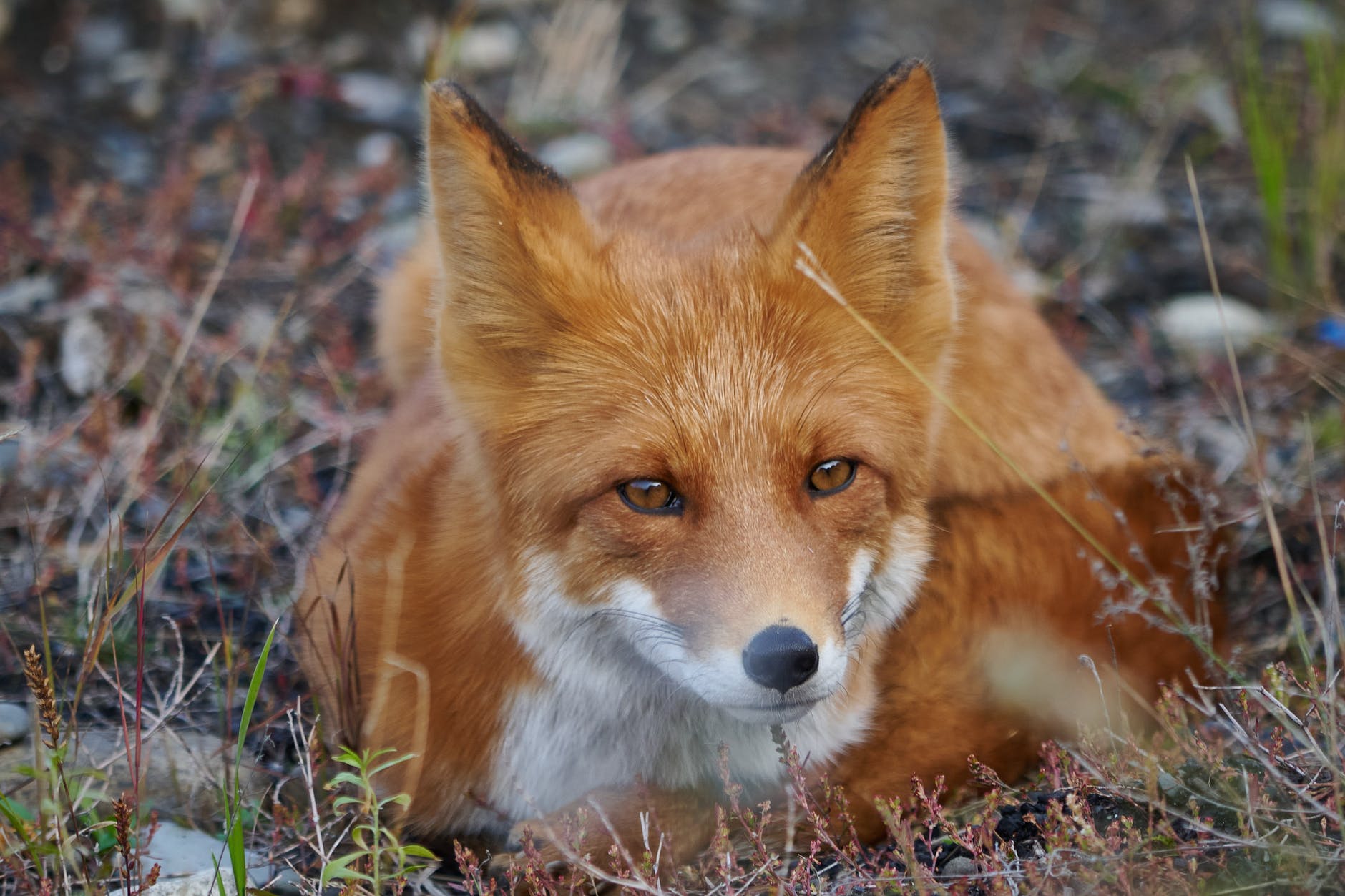
Incidentally, other animals can be stubborn (like a mule) and refuse to try something new — or they can be child-like and explore, play, and innovate. Play is not something that humans invented. We’ve all seen dogs play, but so do cats, otters, crows, ravens, horses, foxes, etc. In a very real sense, life itself is play. The replication and reproduction of life always allows for some variance. Life is always exploring the new and well as sticking with the old. Life itself is a balance between work (using what we already know to defend or acquire) and play (exploring new places, new ways of doing things). It is a balance between being an adult and letting that inner child continue to play. That is being child-like.
Being childish is however quite different. That refers to a situation in which an adult (by chronological age) refuses to consider alternatives or the consider consequences; they refuse to think about the impact of their actions on others and even on themselves. Wearing a mask that has a Star Trek emblem or the likeness of a Skull or that’s colored like a rainbow — these are examples of being child-like. Refusing to wear a mask at all because someone doesn’t “feel like it”? That is being childish.
Wearing a condom that has a rocket ship on it is being child-like but not wearing one at all might be childish (unless you know you’re disease free and willing and able to raise a child). Putting on some of your favorite music and dancing while you’re doing the dishes is child-like; smashing the dishes on the floor because you’re fed up with washing them every day — that is childish. Making up a song so your students can learn math better is being child-like while being adult in taking your responsibilities seriously. Telling your students not to bother learning math — that is abdicating your responsibility to be an adult and being childish. Making up a funny protest sign and voting for the candidate whose policies you honestly think are good for the country is being an adult and being child-like. Refusing to learn about both candidates and voting for the one who makes absurd promises is being childish. Stubbornly refusing to learn the truth about your candidates failures and lies is being childish.
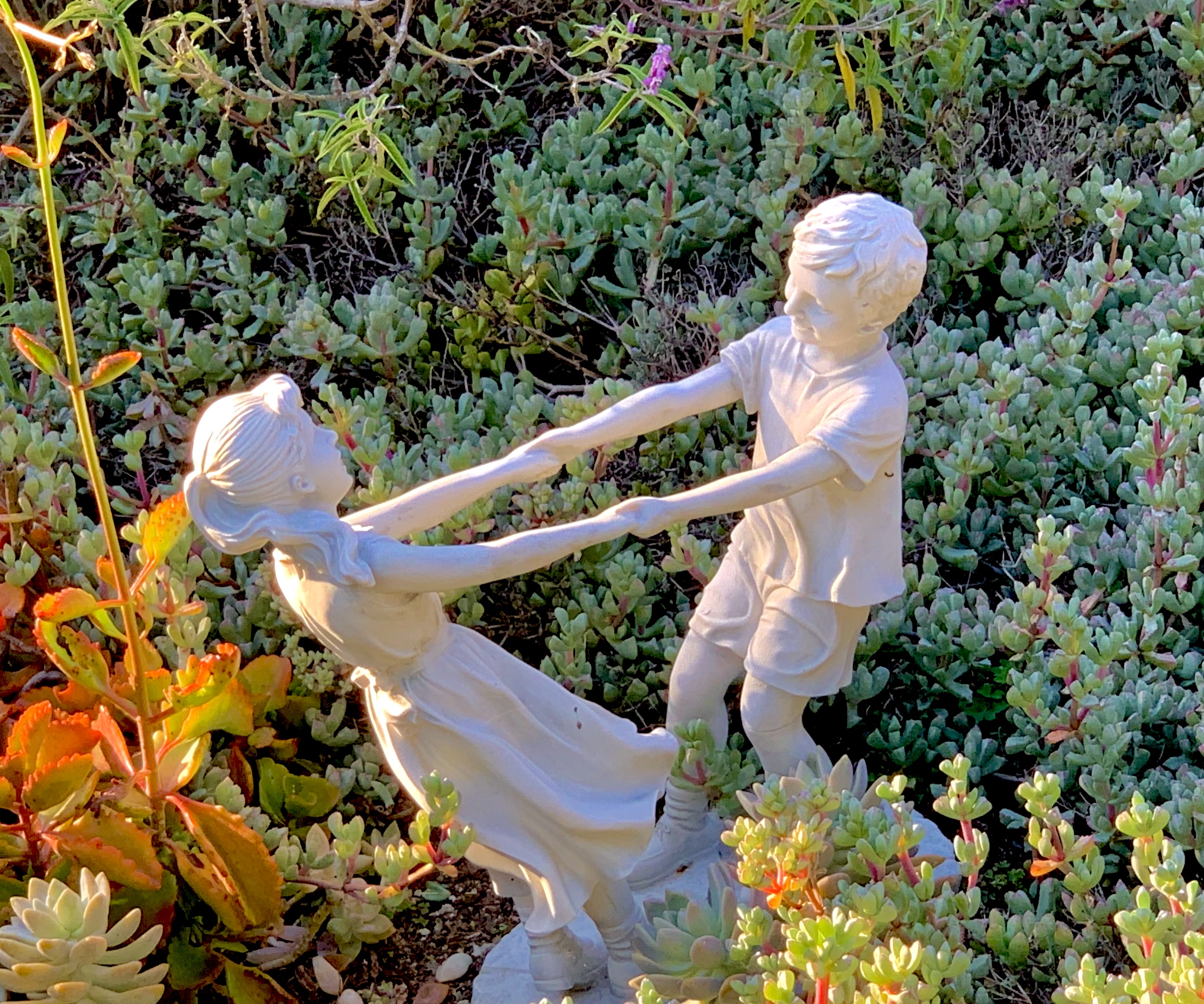
Life is a dance. Joining the dance and being child-like — that’s a really good thing for an adult’s health and well-being. It’s also good for society. Without any adults being child-like, there would be little or no math, science, art, music, or innovation. Of course, not all situations lend themselves to being child-like. You might have a job where the culture is so damned serious that any levity or joy will get you fired. If you have a family to feed, you might have to put on hold your desire to be child-like. If you give in to it and get fired, you’re being childish. First, get yourself a new job — hopefully one where you can be more child-like. Then, dance at the bank. If you are driving your car in bad weather, it’s not the time to “see what this baby can really do!”
Most people exhibit a mix of serious adult behavior, being child-like, and being childish. If a responsible adult “loses it” and smashes all the dishes, they will apologize; clean up the mess; buy new dishes. Rarely, we find a person who acts in a purely childish fashion. They will break the dishes and then, instead of apologizing, cleaning up the mess and buying new dishes, they will deny that they broke the dishes, blame others, and refuse to take any responsibility. Abusive parents and spouses fit into this category. But so do politicians who take a solemn oath of office to uphold the Constitution and then seek to overturn that Constitution that they swore to uphold. That is not being child-like. That is being childish.
And so is supporting such a person. To do so is to reject your own adult responsibilities.































 petersironwood