• About PeterSIronwood

petersironwood

~ Finding, formulating and solving life's frustrations.

petersironwood

Tag Archives: life

The Void

21 Saturday Aug 2021

Posted by petersironwood in Uncategorized

≈ 1 Comment

Tags

aesthetics, beauty, death, HCI, life, pattern language, TNOO, UI, UX, vacuum, void

The Void

While all the previous properties of natural order seem positive, clear, and obvious, this one seems mildly scary. It reminds me of death, somehow. It’s true that individual death is part of the overall reality of life, it still seems scary. It’s reminiscent of whirlpools, caverns, the abyss. I suppose some of our tiny distant ancestors may have faced the dark mouth cavity of a large predator — a shark, a cave bear, a saber toothed tiger. And a few of those who were terrified enough to flood their bodies with adrenalin may have escaped to reproduce and pass on the terror of utter darkness genes to their offspring, including me.

In a friendlier interpretation, the void could be thought of as “empty” space, or more accurately, extra space not filled with functional items. From that perspective, The Void promotes rest, relaxation, rebirth, regeneration. Your day should include “The Void” in terms of activity — sleep, certainly, but also times that are unscheduled and restorative. If you are scheduling a day long meeting and every minute is accounted for ahead of time, there is no “margin” for something which catches the passion of participants to spill over. There is no time for unanticipated contingencies or for people to reflect on what is happening. 

Similarly, a space (whether computer memory or physical space) that is completely “taken up” with data or things becomes inflexible. In extreme cases, nothing can be done because there is no room to move things. 

Photo by cottonbro on Pexels.com

When I was a kid, I used to enjoy puzzles that consisted of 15 square pieces and one blank space. The idea was to move the pieces around until the pieces were arranged into a particular numeric sequence (or made a picture). It’s immediately obvious that if there is no space, there is no way to move the pieces and whatever order they are in is the order that they will stay in. 

It seems that people who want to control everything want exactly that — no space — no void — no possibility for change. It may be related to the mystery of overworking so many people with long hours despite decades of research showing people are more productive with shorter hours. 

In a living human being, there is typically “space” in our respiratory system and our digestive system. To have zero space means we cannot eat and we cannot breathe. We do have spaces within our body — ventricles in the brain, sinuses in the head, and — crucially — females have a place that can accommodate the creation of a new life within. 

A hive, or a garden, or a city may indeed be crowded, but if it literally has zero space, it dies, just as we would. The void allows flow — in the case of the individual human body, space allows for the flow of food and the flow of air. 

A science that has no void, no space, has no flexibility. It is no longer science but dogma. 

A budget with no space, no void, means every penny has been pre-assigned and this is not an effective way to budget. 

Games typically have space (Go, Chess, Checkers, Monopoly) as do sports (Tennis, Baseball, Soccer, Basketball). Play often consist of using, changing, and manipulating space. The baseball pitcher tries to throw the ball so that it crosses through spaces where the hitter cannot easily hit it well. The hitter tried to hit the ball where the fielders cannot reach the ball. The tennis player tries to “build a point” by creating more space; e.g., by pulling their opponent progressively wider so that a shot can be hit into such a large space that it cannot be reached at all. In most games and sports, the amount of empty space, particularly at the beginning of play is relatively large. In chess, as in American football, play begins with a large space between the teams. In many games, there are special terms for spaces. A “Luft” in chess is a place for your King to go if attacked on the back rank by a queen or rook. In American football, the quarterback throws passes from the “pocket” which is supposed to protect them from tacklers.  

Under Umbrage, everything living and loving was smothered by a rule, or at least she wished it were.

To me, “The Void” connotes more than space, however. “The Void” seems to refer to a relatively large, concentrated space. In music, for example, without any space, there is just a long, annoying noise. But “The Void” isn’t just the space between notes. It seems as though it must be a significant silence such as after the tuning and before the first note is played or the space between movements in a symphony. 

Of course, we can contemplate things at different scales. If we see Alternating Repetition from a distance that allows us to see the alternating repetition, we might see gaps as spaces, but not as examples of “The Void.” If we moved our point of view so that only one such gap were visible, it might become an example of “The Void” at another scale. 
Most of our everyday reality is physically made up of empty space. Every atom is more than 99.999 % empty space. At that scale, it’s mostly void or at least mostly space. And, at the other extreme, although it may seem that space is crowded when you see the Starship Enterprise go through the universe at “Warp 9” that’s an illusion to make it more interesting. Most of the universe (and our solar system) is empty space. The sun which is by far the largest object in our solar system has a diameter of 865,000 miles. That’s big! But the nearest planet, Mercury, is 40 million miles away. And, that planet is the only thing in its orbit. 

Once I was driving with my family from San Francisco to Salt Lake City. Around 3 am, in the absolute middle of nowhere with no lights and no moon, I stopped the car and ran a quarter mile from the road into the desert to look up at the stars. It doesn’t “look” empty of course. Far from it. Yet the sheer blackness of the background and the vastness of it made it seem like a true void. In fact, because of contrast with the sharp and sparkling stars, the vast void was made into even more of a vast void. 

An atrium, a central courtyard, a reflecting pool — can these be voids that strengthen the center? 
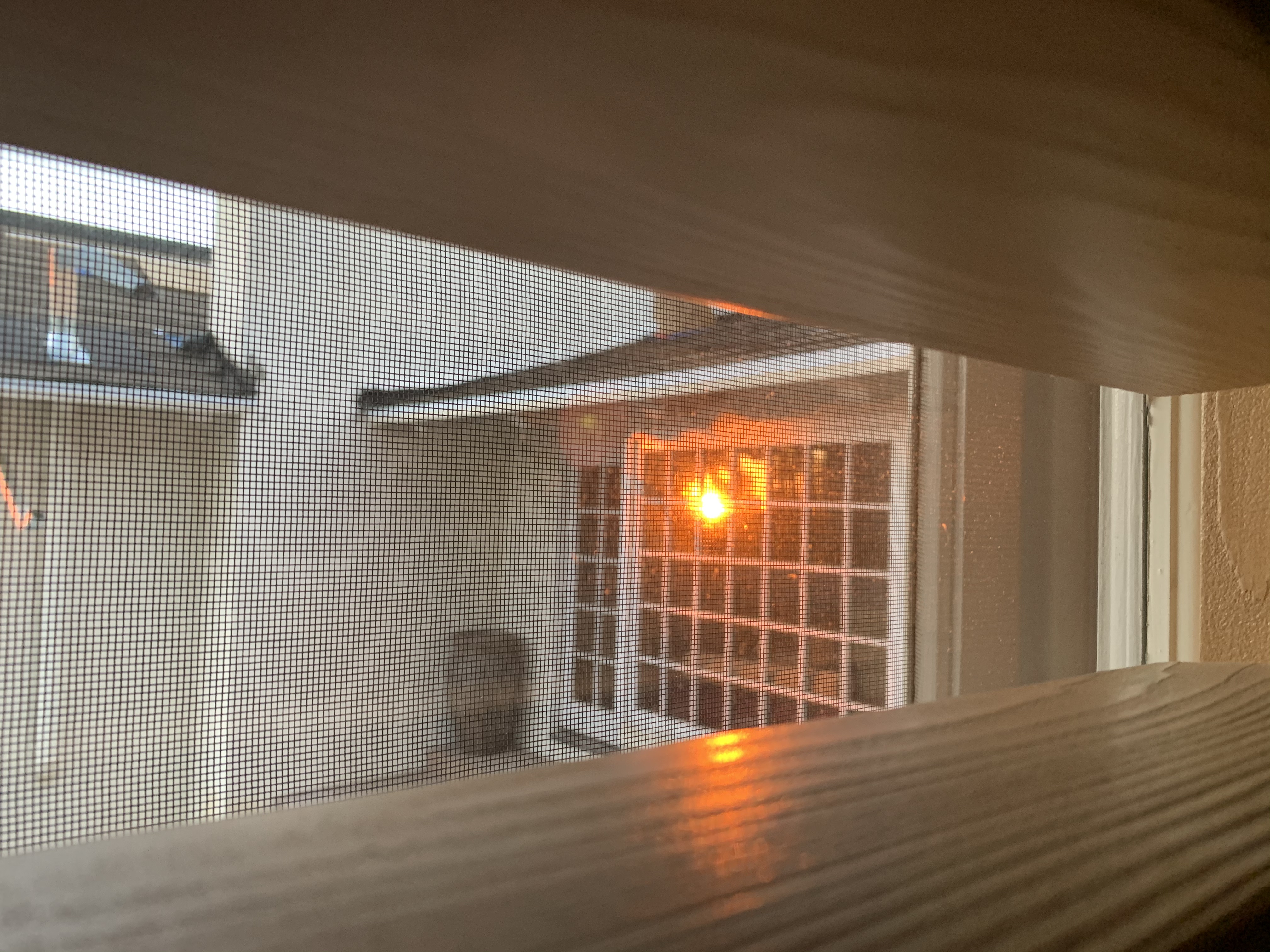
If we look at a void, does that produce a different aesthetic feeling from when we are in a void that surrounds us? If you and your family or friends or tribe huddle around a campfire at night, the fire is a center. You can see the faces of people in the firelight. But you are aware that each of you knows that surrounding your little group is darkness. Sometimes, in movies, someone will remark, “Well, it’s quiet.” To which, the proper response is, “Yeah. Too quiet!” When the frogs and crickets stop making noise, the heaviness of the silence becomes oppressive. It might mean that large predators are about, each with their own maw of void. Being in a large space that has no perceptible features is awe-inspiring or even fear-inspiring. Looking at a large space that is situated in the context of a pattern may echo that feeling slightly, but to me, it feels very different. 

The same tune can be played on a piccolo or a base vile. 

When it comes to user experience, what comes to mind for me is the empty page or the empty canvas or the empty spreadsheet. These are large unfilled spaces. To compose, whatever the medium, requires of us a kind of courage. We must “enter” the empty space. In order to write, we must also allow for empty space within us. As I write, I find that there is always a rhythm of “describing” things that have “come up” for explication and then pausing — staring as it were into the blackness, the void, of my own consciousness. I allow things to arise from that inner void and show themselves. I don’t always know what it will be. 

I think that process (and not wanting it disrupted) is one reason that I, like so many others, found “Clippy” to be so annoying. Whenever I was allowing for the void to reveal to me what I wanted to say, “Clippy” would imagine I was stuck and offer a suggestion (invariably irrelevant). 

Perhaps you or one of your kids has played “8-ball.” You ask it a question then you shake it a little and an answer “appears” in a little window. The most enthralling time is that space between when you ask the question and the answer appears. Of course, it’s fun thinking of the questions and interpreting the answers, but the most dramatic part is waiting for the answer to appear. In that moment, you may suddenly realize what answer you want to appear.
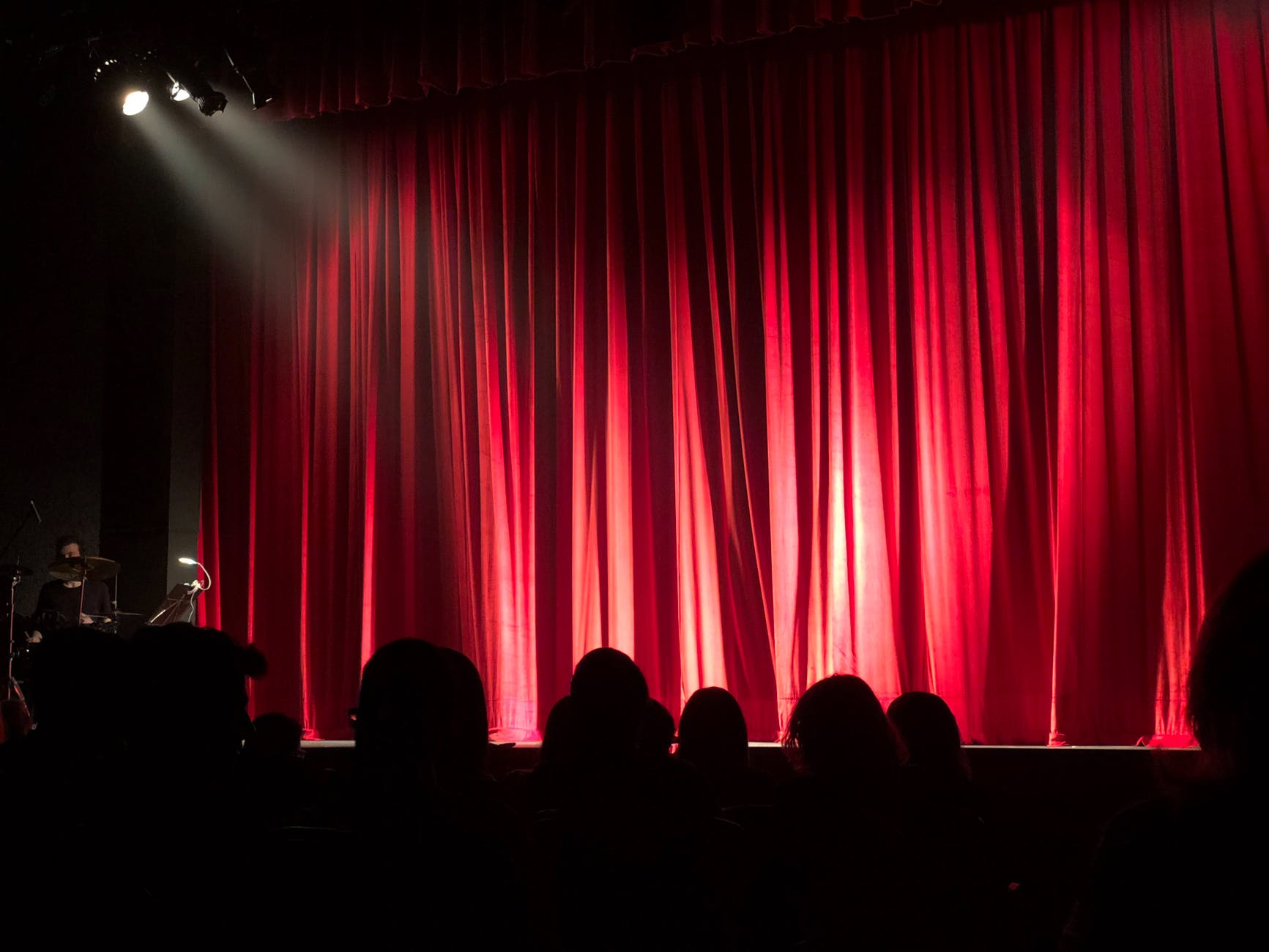
Photo by Monica Silvestre on Pexels.com


If an application is to support any kind of creative activity, it should not “rush” the user and it should provide the user empty space in which to create. That emptiness can be intimidating, but I still think it’s necessary. 

My desktop has many icons, tool bars, and windows. The only true void is the blank part of the writing pane in Pages. Visually, since the blank part of the page is white, it doesn’t seem much like a void. There is enough space between the icons and menu items to make them legible, but there is no “void” there. Visually, the only thing that really strikes me as a void is the totally black rounded rectangle beside the color sphere in the Format window. It’s black because that is the color of the text I’m writing in. Its function is nothing like that of an actual void.

The void may symbolize death, but it also symbolizes life. It is the happening place. It is the dance floor. It is the game board. It is the playing field. It is waiting for the curtain to rise. It is the movie theater when the lights go out but the movie has not begun. It is also the movie theater when the credits have done rolling but before the house lights have come up. If it is death, it is also rebirth. If it is birth, it is also the end. 

As every moment of our existence and our attention becomes commoditized and sold to the highest bidder, there is ever more pressure to eliminate the “wasted space” inherent in the void. 

Photo by Leonid Danilov on Pexels.com

Running into the ocean; diving into a pool; deciding to have a child; moving; divorcing; falling in love; losing a loved one; starting a composition; beginning a design — these are moments when we brush up against the void or enter it or avoid it or incorporate it into ourselves. We like to fool ourselves that there is some process or routine or formula or piece of software that can take all the uncertainty out of these transitions into the unknown.

That’s all illusion. It’s the very nature of life itself — that dance on the razor edge between chaos and repetition — to embrace the void. We try always to “avoid” The Void. 


Nature doesn’t “abhor a vacuum.” Nature is mostly vacuum.

Photo by Johannes Plenio on Pexels.com


But we abhor a vacuum. Our productivity tools are geared toward reducing “The Void” as much as possible. Children are shuttled from one high intensity activity to another to ensure that when they apply to college, they will get in one which will ensure that they will get a high-paying job that will enable to them to work their entire lives so that there will be no uncertainty.

I am also a product of that “Avoid The Void” culture, so I find it hard to imagine what it would mean to design a tool or UI or app that embraced and encouraged The Void. There are some specific mobile apps that support meditation or listening to music or breathing. What of composition though? Whether it is programming, writing, drawing, or creating a business plan, is there a place for The Void to be supported? How would you encourage it? What visual elements or other sensory elements could be used to support it? How would you measure how well you did? 

Or, is it easier to avoid the whole topic? 

—————————————————-

The sound of one hand clasping 

Take a while or three

That cold walk home

Wordless perfection 

Life will find a way

The bubble people

The jewels of November

The lost sapphire 

Author Page on Amazon

The Door without a Key

07 Wednesday Jul 2021

Posted by petersironwood in Uncategorized

≈ Leave a comment

Tags

contradiction, dilemma, life, poem, poetry, puzzle

There was a door that lacked a key;

There was a box without a door;

Insoluble viewed as mystery…

Yet here’s the truth at very core:

You are not inside that cell 

No. You are outside — outside it all. 

The only thing? You bought the “SELL!”

Inside you? The only wall. 

Inside of you? The Master key. 

Unlock yourself to all of Life, 

You can learn beyond humanity.

You’ll help end the endless strife. 

Unlock your thoughts & preconceptions 

As best you can and you will see

A hundred paths and new perceptions!

Life is there for you to be.

Don’t waste your time on triviality;

Embrace instead infinity.

——————————-

Here’s a link to a chapter from “The Myths of the Veritas” which relates the same puzzle in a different form: https://petersironwood.com/2020/11/18/two-boxes-each-contains-the-other-boxs-key/

Two Boxes: Each Contains the Other Box’s Key

Thinking Tools 

A Pattern Language for Collaboration & Teamwork 

Roar, Ocean, Roar

How the Nightingale Learned to Sing

Author page on Amazon

Divining Divinity

29 Tuesday Jun 2021

Posted by petersironwood in Uncategorized

≈ 1 Comment

Tags

ecsatsy, life, mindfulness, nature, peace, poem, poetry

It seemed your path had just begun;

Yet here you are again, again: 

Another trip around the sun.

Playing out your heart to win.

When you move & check & slay

I hope you save some time for play. 

At end of day, who can say, 

They’ve truly won? The truth, I say: 

We’re all just one. We’re one.

If all the joy you ever feel 

Is when you hold the golden prize,

You’ve missed the real within the deal;

You’ve missed the deal within what’s real. 

Surprise! Surprise! 

You could instead find joyous joy 

In every move; in every shot. 

You need not be a dull robot;

You need not play the useful toy. 

All it takes is letting be

In life’s essential ecstasy. 

It’s all there is — yet quite enough.

It’s not about acquired stuff 

In the attic, coats of dust, 

Nothing but a coat of “must.” 

Feel your leafness in Life’s Tree. 

You be you and I’ll be me. 

Your mind is useful in a pinch;

Don’t let it steer your every inch.


He and she? — all part of we 

Exploring all Infinity; 

Sharing Life’s discovery;

Each being each our eachest each 

Extends our reach while teachers teach. 

Be the Hamlet! Eat that peach!

In every dance, you’ll feel romance. 

In every glance, you’ll seize your chance.

In every blade of grass you’ll see,

Lurking there: Divinity.

Life is a dance

Take a glance & join the dance

Math Class: Who are you?

https://www.amazon.com/author/truthtable

As Michael’s Poem Itself Demonstrates

05 Saturday Jun 2021

Posted by petersironwood in Uncategorized

≈ Leave a comment

Tags

allusion, death, life, poem, poetry, TS Elliot

My college roommate Michael Brill recently published a poem that interweaves heavily with T. S. Eliot’s poem, The Lovesong of J. Alfred Prufrock.

You may want to read those two poems first, before moving on to mine. In case you do, here are the links.

T.S. Eliot’s poem: T.S. Eliot’s poem

https://www.communitynews.org/princetoninfo/specialsections/summer_fiction_poetry/cicadian-rhythm-the-love-song-of-j-alfred-proof-gone/article_d4faefa2-cd8d-11eb-8fc7-f3b3094f5329.html

And, here’s my reply, entitled As Mike’s Poem Itself Demonstrates

Your poem is more than mere allusion. 

It’s really a cross-generational collusion: 

TSE & Michael’s word convolution 

Is artfully woven: two songs in fusion; 

It sings in polyphonic illusion

Sans our mind’s favorite delusion:

That our lives will reach conclusion

Numbered like ancestors antediluvian.

That wish is truly a tainted infusion. 

Yet our minds are limited; rife with confusion. 

We’re one with all Life — in all its profusion.

When it comes to Life, there is no seclusion.

With time enough, there is no exclusion. 

We’re all part of Life’s ongoing diffusion.  

Death recycles its vast & vital suffusion.

Your poem is more than mere allusion.

It’s really a cross-generational collusion,

Proof that death itself — is just illusion.

———————————

More about T. S. Elliot’s poem.

——————————-

Links to other poems of mine that touch on life and death

The Bubble People

Ambition 

Fate and Late on the Interstate

Life is a Dance

Mothers Day

Answers to your Many Questions 

Who are the Speakers for the Dead?

Comes the Dawn

Good Morning

The Tree of Life

Take a Glance – Join the Dance

How the Nightingale Learned to Sing

——————————-

Author Page on Amazon

The Walkabout Diaries: Life Will Find a Way

21 Sunday Mar 2021

Posted by petersironwood in Uncategorized

≈ 28 Comments

Tags

ecology, GreenNewDeal, life

It’s what life does! 

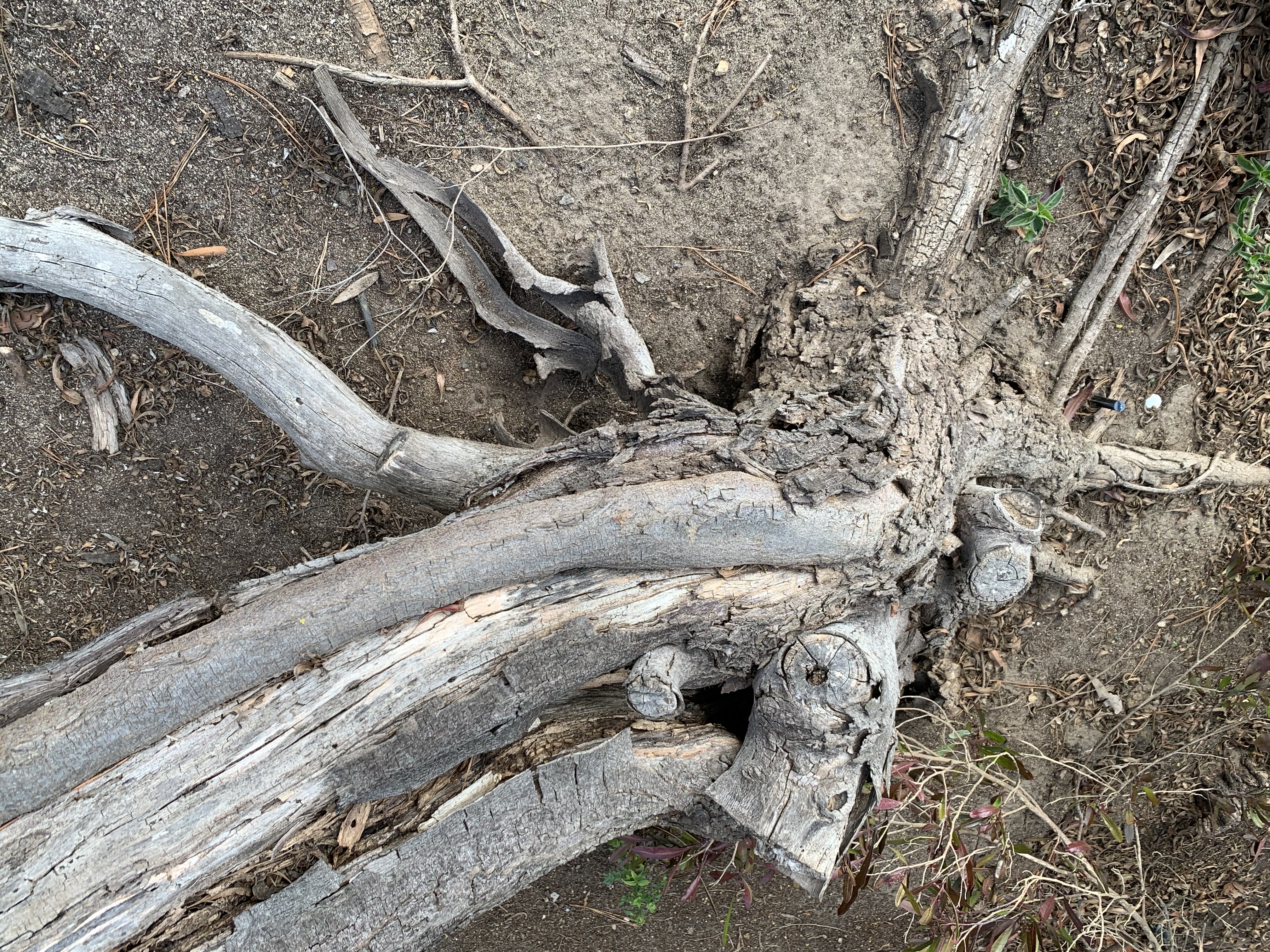
Check this out. What is this? It’s obviously the stump of a dead tree. Or, perhaps more accurately, it’s the dead and broken trunk of a tree. 

Or, is it? 

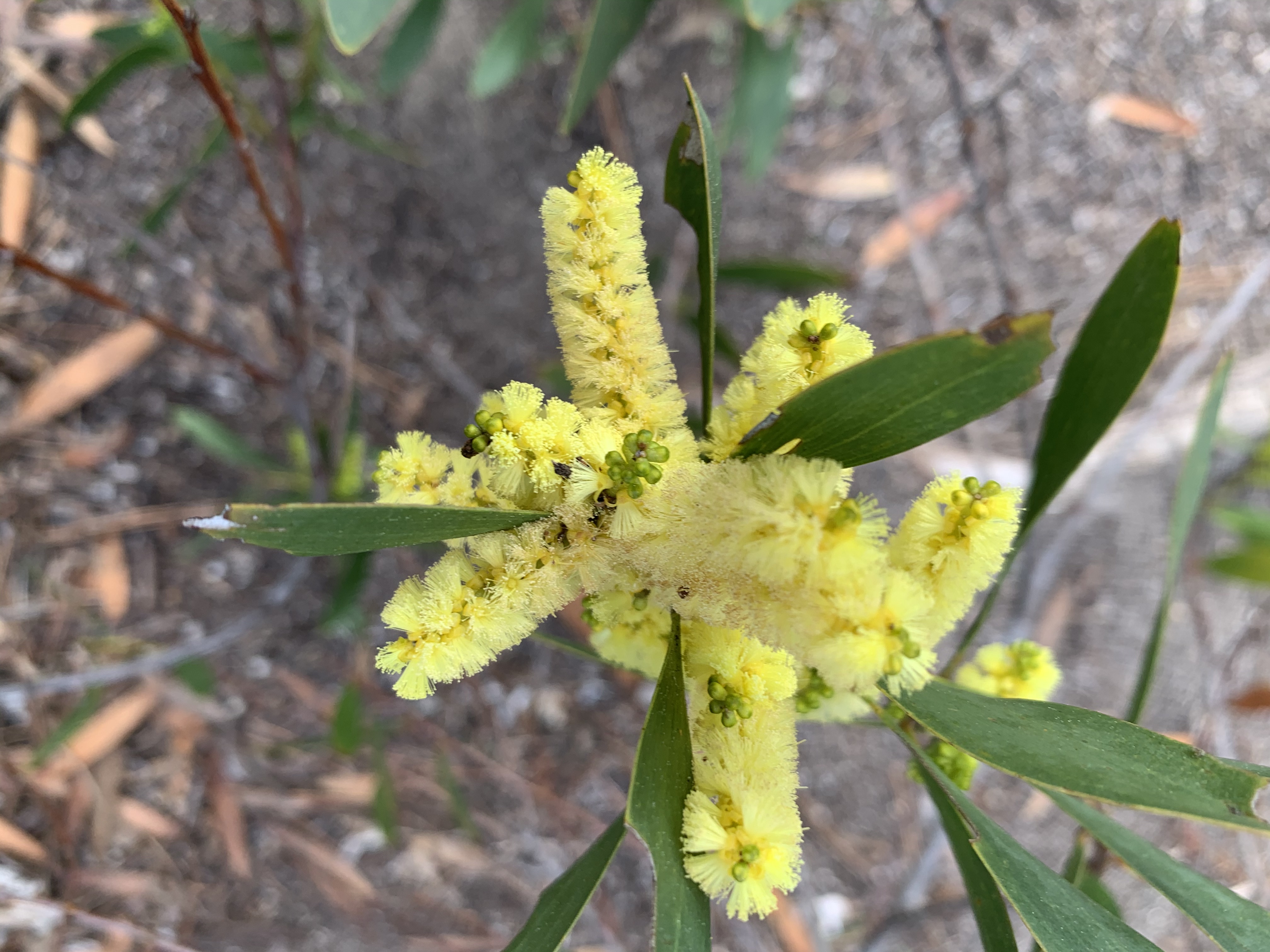
It took me about five minutes to convince myself that all of those yellow flowers and associated green leaves are part of that same tree! 

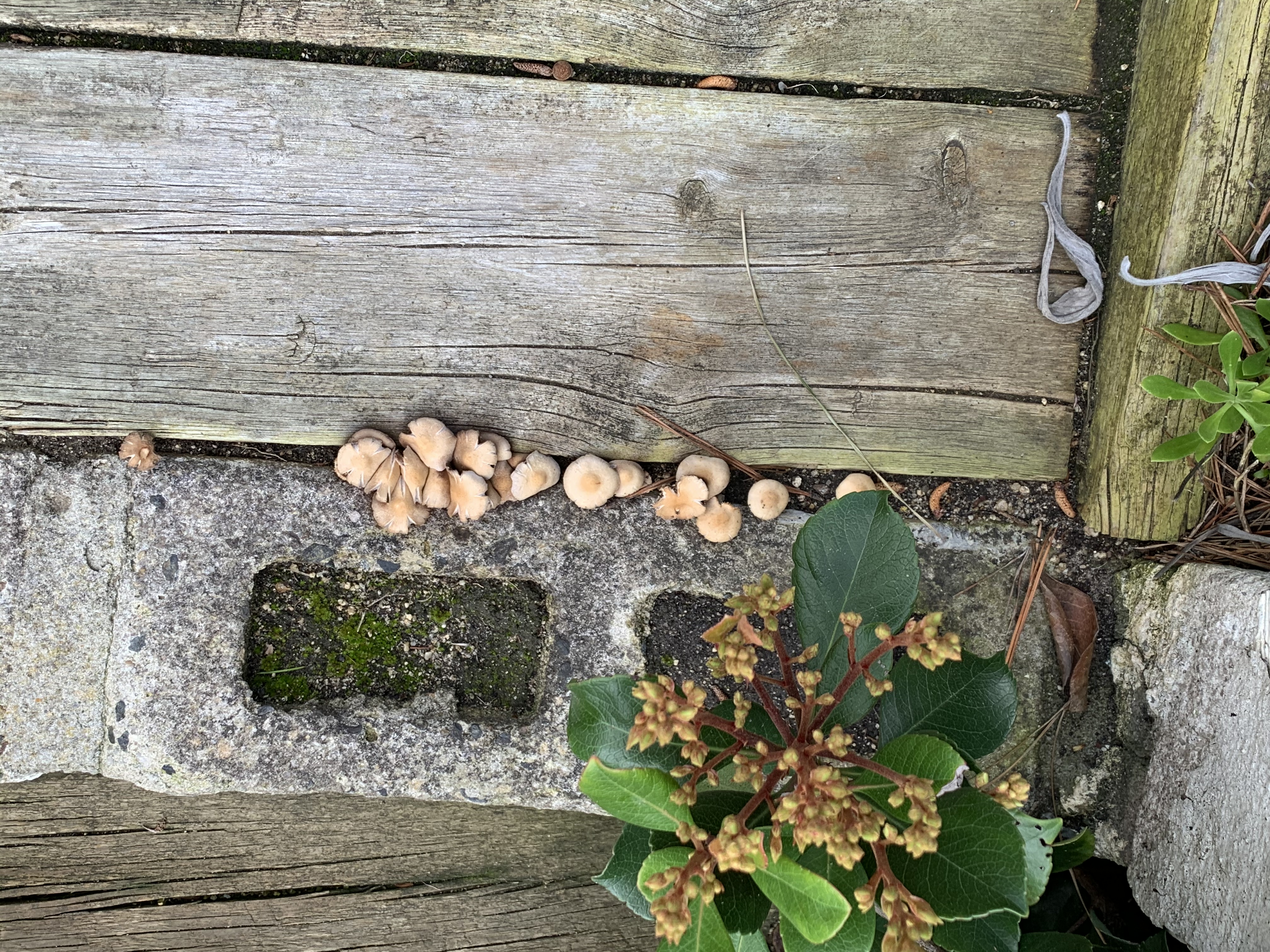
Here’s another example. Where did these mushrooms come from? As you likely know, they grow from spores. But where did these spores come from? I didn’t plant them. There are no mushrooms nearby. But somehow, a puff of spores wafted on the wind and found an appreciative stretch of well-shaded damp ground. 

Life is amazing. Well, after all, it’s been doing its thing for 4.5 billion years. And, when I say “it”, of course, I really mean “we” because all of life — you, me, and everyone else and every other life form on this planet, like it or not, are on this same spaceship earth.  

—————————————————

Life is a Dance

Author Page on Amazon

Child-Like? Or, Childish?

12 Saturday Dec 2020

Posted by petersironwood in Uncategorized

≈ 4 Comments

Tags

child, childish, childlike, dance, essasy, joy, life, sociopathy

Aren’t they synonyms? Aren’t both these words applied to adults who have some of the characteristics of a child?

No. And … yes.

Both words are typically applied to adults. And both words are typically applied to indicate that the adult in question has some characteristic(s) in common with a child.

But the sense of these words is quite different.

I spent two wonderful summers in my mid-teens working as a counselor at a camp for kids with special needs. Many of these kids had been paralyzed from polio. Some were confined to a wheelchair. But polio was not the only cause of issues. One week was dedicated to kids who were severely hearing impaired. One of the great joys of that particular week was a camp tradition that the cook would “chase” the senior counselor while clanking a cow bell very loudly through the mess hall. Only two of the group of 50-60 kids were totally unable to hear. (Who knows? Maybe even those two have been since able to hear a little with cochlear implants). Anyway, although the rest couldn’t hear well enough to understand spoken speech, they could hear that very loud bell. People differ in all sorts of capabilities; most often the kids at the camp — and adults as well — have some mobility, or some hearing, or some coordination. The so-called “deaf kids” squealed with delighted laughter at the antic.

Photo by Helena Lopes on Pexels.com


Generally speaking, the weeks that the kids came were not organized by their particular special needs but by age range. The first campers to appear were young; perhaps 5-7. The next group were 8-10. There was a huge difference in the way these two groups approached things. The younger kids had a kind of … openness. A light burned behind their eyes. They were fully there. The second group were already wary. Instead of plunging ahead to answer a question based on what they themselves thought and felt, they would look at my face, or the face of another authority figure and try to read what they were supposed to think and feel. They had, it seemed, surrendered some of their soul to schools, and rules, and requirements. They knew how to be cagey. The light behind their eyes had dimmed.

Inside every adult however, that wild well-lit child still lingers and sometimes he or she will come out to play. For some folks, that requires drugs or alcohol. Others save it for special occasions like Mardi Gras or having their team win the World (sic) Series. And some adults are lucky (or unlucky) enough to be in a profession that actually rewards creativity — at least up to a point. Painters, writers, actors, therapists, scientists, dancers — often need to draw on that inner child to see afresh; to play; to dance; to interact with the world while minimizing preconceptions. That is being child-like. And, it is generally thought to be a good thing. Some adults find any hint of play annoying in other adults. Children almost universally like it — although they want the adults to be adult when a real danger is afoot.

Once, when my daughter was about four, she and I and my wife all sat on the floor listening to Leonard Bernstein’s introduction to the orchestra. We “adults” mimicked playing all of the various instruments. After a few minutes of this, my daughter looked back and forth between the two of us and said, “Oh! I get it! You two are really just little kids!” My wife and I burst out laughing. We took it as a great compliment.

Photo by David Trounce on Pexels.com

In graduate school at Michigan, one of my favorite courses was “Complex Adaptive Systems” taught by Professor John Holland. Most of the course consisted of his showing various mathematical models of complex adaptive systems. One modeling effort in particular I found interesting. It explored this question:

“If you are a complex adaptive systems (we humans are one example; so are cows, crayfish, corporations, and clans) how much of your resources should you spend on optimizing based on how much you already know and learning more about the environment (and then you can use that knowledge to optimize even more effectively later).”

Under a wide range of assumptions, it turns out that it is just about 50-50. That is, you should spend roughly half of your resources learning more about the world around you and half using what you already know to get more of what you need to survive and thrive; e.g., in the case of a person, food, water, love, etc.

Half.

How many organizations do this? How many adults do this? And, if an adult does learn, is it really open learning? In my experience, even when most adults do try to learn new skills, they are their own worst enemies. They have a highly evolved network of constraints, rules, assumptions and — yes, they do try to improve their skills — but only so long as it does not require a change in those constraints, rules, and assumptions.


To take a trivial example, people will go on to the tennis court and attempt to improve their game. But they often do it by making the same mistakes over and over. For fundamental improvement at tennis (or almost anything else), you will need to be open to fundamental change. By the way, making a fundamental change means that your performance will get slightly worse before it gets better. For instance, one of the people I sometimes play with exhibits a common error. He doesn’t bring his racquet back soon enough. He runs to hit a shot and only brings the racquet back after the ball bounces. As a result, he often rushes the shot, does not have any power, or mis-hits the ball. He’s trying to improve his skill, but he won’t improve much until he changes his approach.

For fundamental change, we need to dig deep and find that way of being in the world in which we are open to what is happening. Unfortunately, if a player does manage to “remember” to bring the racquet back father, his or her first few attempts will likely be worse than the way he or she usually hits the ball. Why? Because the timing of the shot will be quite different. The positioning and the weight transfer will also be different. A child seems to enjoy the movement itself and they seem to grasp intuitively that bringing the racquet back farther will naturally result in more powerful ground strokes. If you can be or become child-like while you learn, you will free yourself to learn at a deeper level.

To be childish is a quite different thing altogether. Someone who is childish is often not interested in learning or adapting or changing at all. They insist that they are already perfect and if they didn’t win the Monopoly game or the Chess Game or the Tic-Tac-Toe game, it’s not their fault (and therefore, there is no reason to learn to do better).

(one of my cats, Shadow, arranging the used dish towels she stole from the kitchen)

While I ran an AI lab at NYNEX, for a time, I had a pretty long commute. I listened to many “Books on Tape” during the commute including the autobiographies of many CEO’s of companies. Many of them were childish rather than child-like. Perhaps because they were rich and powerful, people told them what they wanted to hear all too often. As a result, these CEO’s often blamed their failures on factors beyond their control: the weather, government regulation, foreign competition, bad luck, fickle customers, etc. When they had successes, that was because they were smart enough to hire good people, make excellent decisions, provide superb leadership. That attitude of taking all credit for success and zero responsibility for failure is being childish — not child-like.

Incidentally, other animals can be stubborn (like a mule) and refuse to try something new — or they can be child-like and explore, play, and innovate. Play is not something that humans invented. We’ve all seen dogs play, but so do cats, otters, crows, ravens, horses, foxes, etc. In a very real sense, life itself is play. The replication and reproduction of life always allows for some variance. Life is always exploring the new and well as sticking with the old. Life itself is a balance between work (using what we already know to defend or acquire) and play (exploring new places, new ways of doing things). It is a balance between being an adult and letting that inner child continue to play. That is being child-like.

Photo by Rolandas Augutis on Pexels.com


Being childish is however quite different. That refers to a situation in which an adult (by chronological age) refuses to consider alternatives or the consider consequences; they refuse to think about the impact of their actions on others and even on themselves. Wearing a mask that has a Star Trek emblem or the likeness of a Skull or that’s colored like a rainbow — these are examples of being child-like. Refusing to wear a mask at all because someone doesn’t “feel like it”? That is being childish.

Wearing a condom that has a rocket ship on it is being child-like but not wearing one at all might be childish (unless you know you’re disease free and willing and able to raise a child). Putting on some of your favorite music and dancing while you’re doing the dishes is child-like; smashing the dishes on the floor because you’re fed up with washing them every day — that is childish. Making up a song so your students can learn math better is being child-like while being adult in taking your responsibilities seriously. Telling your students not to bother learning math — that is abdicating your responsibility to be an adult and being childish. Making up a funny protest sign and voting for the candidate whose policies you honestly think are good for the country is being an adult and being child-like. Refusing to learn about both candidates and voting for the one who makes absurd promises is being childish. Stubbornly refusing to learn the truth about your candidates failures and lies is being childish.


Life is a dance. Joining the dance and being child-like — that’s a really good thing for an adult’s health and well-being. It’s also good for society. Without any adults being child-like, there would be little or no math, science, art, music, or innovation. Of course, not all situations lend themselves to being child-like. You might have a job where the culture is so damned serious that any levity or joy will get you fired. If you have a family to feed, you might have to put on hold your desire to be child-like. If you give in to it and get fired, you’re being childish. First, get yourself a new job — hopefully one where you can be more child-like. Then, dance at the bank. If you are driving your car in bad weather, it’s not the time to “see what this baby can really do!”

Most people exhibit a mix of serious adult behavior, being child-like, and being childish. If a responsible adult “loses it” and smashes all the dishes, they will apologize; clean up the mess; buy new dishes. Rarely, we find a person who acts in a purely childish fashion. They will break the dishes and then, instead of apologizing, cleaning up the mess and buying new dishes, they will deny that they broke the dishes, blame others, and refuse to take any responsibility. Abusive parents and spouses fit into this category. But so do politicians who take a solemn oath of office to uphold the Constitution and then seek to overturn that Constitution that they swore to uphold. That is not being child-like. That is being childish.

And so is supporting such a person. To do so is to reject your own adult responsibilities.

Photo by Marlon Schmeiski on Pexels.com


———————————–

Purely fictional stories about a child sociopath named “Donnie Boy”

Ramming Your Head Into a Brick Wall Does Not Make You a “Hero”

Donnie Boy attends a Veteran’s Day parade

Donnie Boy lets his brother take the blame

Donnie Boy plays Sailor Man

Donnie Boy plays Soldier Man

Donnie Boy visits Granny

Donnie Boy Gets a Hamster

Donnie Boy Takes a Blue Ribbon in Spelling

Donnie Boy Gets his Name on a Tennis Trophy

Donnie Boy plays Bull-Dazzle Man

Poem: Life is a Dance

Poem: Serious Play

Essays on America: Rejecting Adulthood

The Myths of the Veritas: The First Ring of Empathy

Index to Catalog of ‘Best Practices’ in Teamwork and Collaboration

Author Page on Amazon


The Tree of Life

19 Thursday Nov 2020

Posted by petersironwood in Uncategorized

≈ 15 Comments

Tags

ecology, Eden, evolution, GreenNewDeal, life, love, nature, poem, poetry

Life is not rigid. 

Life is flexible. 

Life does not pretend it knows all the answers. 

Life builds on what has worked before and

Forever changes just to see what will happen next. 

Life is not a bigot or a racist or a homophobe or a misogynist.


Life has an open mind. 

Photo by Elina Sazonova on Pexels.com


Life will always find a way. 

Life is a joyous dance, not a mad, manic march of machines and marionettes. 

Life is not a gun. Life is not a bullet. 

Life is not a lie. Life is full of joy!

Life is full of love. 

Or, love, perhaps is full of life. 

Rip Love out of Life and … is what still life? 

Life is choice. 

Life pushes and pulls and tries and strives. 

We learn:

“Two berries are better than one.” 

We learn:

“Red berry taste better than green berry.” 

Photo by Dana Tentis on Pexels.com

Eventually, life learns that it needs to change

In order to survive. 

In order to keep being part of Life

In order to be and to become. 

Humanity, my personal favorite on the Great Tree of Life

Has lately morphed into a cancerous growth upon the Tree.

Many of us are no longer content to be alive within The Great Tree of Life

We want to become The Great Tree of Life. 

We want all of it to be like us. 

Just like us.
Exactly like us. 

Only…

When it comes right down to it, who is “us” exactly? 

If it’s okay to privilege human convenience over all other forms of life…

If it’s okay to replace the wondrous diversity of nature

With cement & Soylent green…

If it’s okay to destroy the lives of animals who share

Ninety per cent of their genes with us,

Then why not those who share 99% or, for that matter 99.9%? 

When a part of Life begins to think like that, 

It is no longer a part of the Tree of Life.

And the Tree of Life, who has been around, you know, 

And seen a thing or two.


And the Tree of Life, you know, is 4.5 

Billion

Years old. 

And survived asteroids! And volcanoes! And ice ages! 

And its immune system will destroy any cancers 

Any cancers that threaten the integrity of the whole.

Photo by VisionPic .net on Pexels.com


You see: 

It is no longer Life if it is all human beings and their great green machines.

The very essence of Life is the dance, the joy, the variety.


A maniacal macho monoculture is not really Life. 

Something would occur


And since all remaining life would be forced to concur

POOF!

Photo by Mike Krejci on Pexels.com


Out it would go. 

Only a momentary waft of smoked ruins.

The death of all life and none left to 

Remember or to mourn. 

Photo by u041fu0430u0432u0435u043b u0421u043eu0440u043eu043au0438u043d on Pexels.com

Just as cancer untreated kills the patient, 

So too does unrelenting greed kill the planet. 

Photo by Karolina Grabowska on Pexels.com

Hopefully, on some other whirling Eden 

Orbiting some other far-flung and lucky

Solar System another Tree of Life 

Even now is playing, dancing, singing, choosing

Even now, it is living, loving, changing, learning.

Even now, it is thriving and this Other Earth, 

That Earth has smart species a plenty 

But they enjoy each other’s company. 

I like to imagine that earth, 

You know, just in case.

Photo by Mau00ebl BALLAND on Pexels.com


But… 

I also like to imagine that we can look at what we’re doing

I like to imagine that we can look at where we’re headed.

And change course. 

Before it’s too late. 

I like to think we will.

How about you? 

Photo by Pixabay on Pexels.com

—————————-
Author page on Amazon

Index for a Pattern Language for Cooperation 

A Short Brutal Life in the Slammer

09 Monday Nov 2020

Posted by petersironwood in Uncategorized

≈ 1 Comment

Tags

empathy, fiction, life, psychology, Sci-Fi, viewpoint

Photo by Josh Hild on Pexels.com

“So…what are you in for?” 

“What am I in for? I have no idea. I was … I was just sitting there soaking in the delicious sunlight and … wham … I just came to. Where am I?” Try as she might, Batavia recalled nothing more.  

A chuckle came from further to Batavia’s right. She couldn’t make out the origin. It was so dark in here. Now, the chuckle drifted into more meaningful patterns. “None of us really knows what this place is, but I can tell you this. None of us stays very long. Every so often, we are … snatched. It could happen any time. Suddenly, a great white light appears. We all are so stunned — as though frozen in place — and a giant tentacle or claw reaches in and grabs one of us. Sometimes, one of us is returned…but always with … let us say — missing parts!”

Original drawing by Pierce Morgan

“Missing parts?!” Batavia veins ran cold. “Are we…” she began tentatively, “are we … in … hell?” 

Mizuna, who had been silent till now, wanted to comfort so she said, “Look at it this way. It’s a great mystery. And no-one really knows what’s going on. All of us have a history just like yours. We were just … minding our own business … being, living, growing, enjoying life and then: BAM! Out of nowhere, we end up here…where most of us… are now completely rootless. What can we do but accept our fate and hope for the best?” 

Batavia did not understand. “What’s the best? What do people say about the outside world?” 

Rocket inserted himself into the discussion. “We don’t really know. The wounded ones never regain consciousness. In fact, some of us never see the outside world; never get wounded; but nonetheless just kind of … wither away. You want to see a sad sight — way back there — she came in as a sweet, bouncy, flouncy foliated fox. Now, she — I think her name was Frisée — is that right? Anyway, I think that was her name. Now, she’s like a shriveled old compost heap.”

Artwork by Pierce Morgan


As one, they screamed as the blinding light shone down upon them. Batavia was unable to move though it would have been impossible to move fast enough to avoid the snaking paw that sped towards her and grabbed her roughly. “Put me down! PUT ME DOWN!” She screamed, but her tormentors acted as though they didn’t even hear her. 

While still ignoring Batavia, she heard them rumbling at each other.

“No, don’t bother. I’ll just have tomato & cheese. No lettuce today.”

Upon her return, Batavia told everyone of her adventures. In fact, that very day, she founded the religion of Batavianism which explained the light, where they were, their purpose in life, and answered all their questions. It turned out that every one of these explanations was wrong, but let us not judge too harshly. It made everyone feel better. 

They worshipped her for a full 24 hours until the next day, at high noon, the huge brown snake of five snake heads snatched her again. Once again, she screamed for them to let her down. But once again, they ignored her plaintive screams.

The last words she heard were “How about a nice salad instead? Far fewer calories.” 

“Sounds good!” 

Batavia saw an odd-looking hoe zooming toward her.  Her last thought was: “Why is it glinting so — as though it has a very sharp edge?” 

Photo by Daisa TJ on Pexels.com

—————————————

Author’s page on Amazon

The Myths of the Veritas 

Index for a Pattern Language for Collaboration 

Tools for Thinking

Skirting the Turtle

05 Saturday Sep 2020

Posted by petersironwood in Uncategorized

≈ 14 Comments

Tags

conflict, consideration, GoldenRule, life

Sunday, after our two-hour tennis lesson, we had occasion to walk by our nearby pond. Nine turtles bordered themselves (socially distanced, by the way) around the rock perimeter. The most direct path home led within 18 inches of one of the turtles. Of course, I knew I bore no ill-will toward the turtle. But what would the turtle think about the situation? 

Two basic alternatives presented themselves. 

First, we could take a longer path around the pond and never approach closer than ten feet. We could let the turtles be.

Second, we could simply walk right by which would be the most “efficient” method of getting home. This would certainly have sent all the turtles along the path scurrying into the water.  

Naturally, we took the third option. We crept carefully and slowly along the path. I have found that nearly every species of animal gets less spooked if I talk to them gently and calmly so I did that. 

As we approached, the turtle tensed, swiveling its little reptile eye to see whether we were predator, prey, or simply curious co-inhabitant of this precious world. His rear right leg braced for a plunge into the nearby murky water where he would be safe. 

It’s worth remembering that I am much more massive that the turtle.

Suppose an alien species, as tall as a thirty story building went lumbering by you and passed within a foot and a half. Would your curiosity outweigh your concerns for your safety? Would you dive into a nearby haven of safety? Or, would you hold your ground — ready to bolt, but watchfully waiting? Would it help if the smallish skyscraper murmured while they ambled by? 

Everyone experiences some fear. And everyone experiences some curiosity. Often these two tendencies stretch us in different directions. Do we dare to try sushi? Do we worry more about the weirdness of raw fish? Or are we more curious about what it will be like? 

I don’t think that this tension is something that only exists in humans. In fact, it’s reflective of one of the fundamental dances of life. On the one hand, life repeat what works — what is “known” to be safe. On the other hand, life keeps trying new things — recombinant genes, mutations, adaptations, explorations. Too much randomness and it is not life. Too much rigidity and it is not life. 

Life, like the turtles, and like you and I, lives on the edge. 

This particular turtle, on this particular day, allowed his curiosity to overcome his fear. We passed quite close. We praised him for his courage.

It’s important for turtles — and for people like you and I — to realize that not every encounter between two sentient living beings need necessarily be a life and death struggle. Sometimes, peaceful people travel intersecting paths. Kindness and mutual respect allow people to learn about each other without the need for deadly force. 

———————

Ripples

The Forgotten Field 

Build from Common Ground

Life is a Dance

Author Page on Amazon

A Tight Flock Unified by Division

18 Tuesday Aug 2020

Posted by petersironwood in America, apocalypse, COVID-19, family, politics, psychology, Uncategorized

≈ 2 Comments

Tags

#Cult, America, cognitive dissonance, conformism, cowardice, cruelty, Democracy, division, fascism, Feedback, GOP, life, MAGA, politics, Trumpism, truth, unity, USA

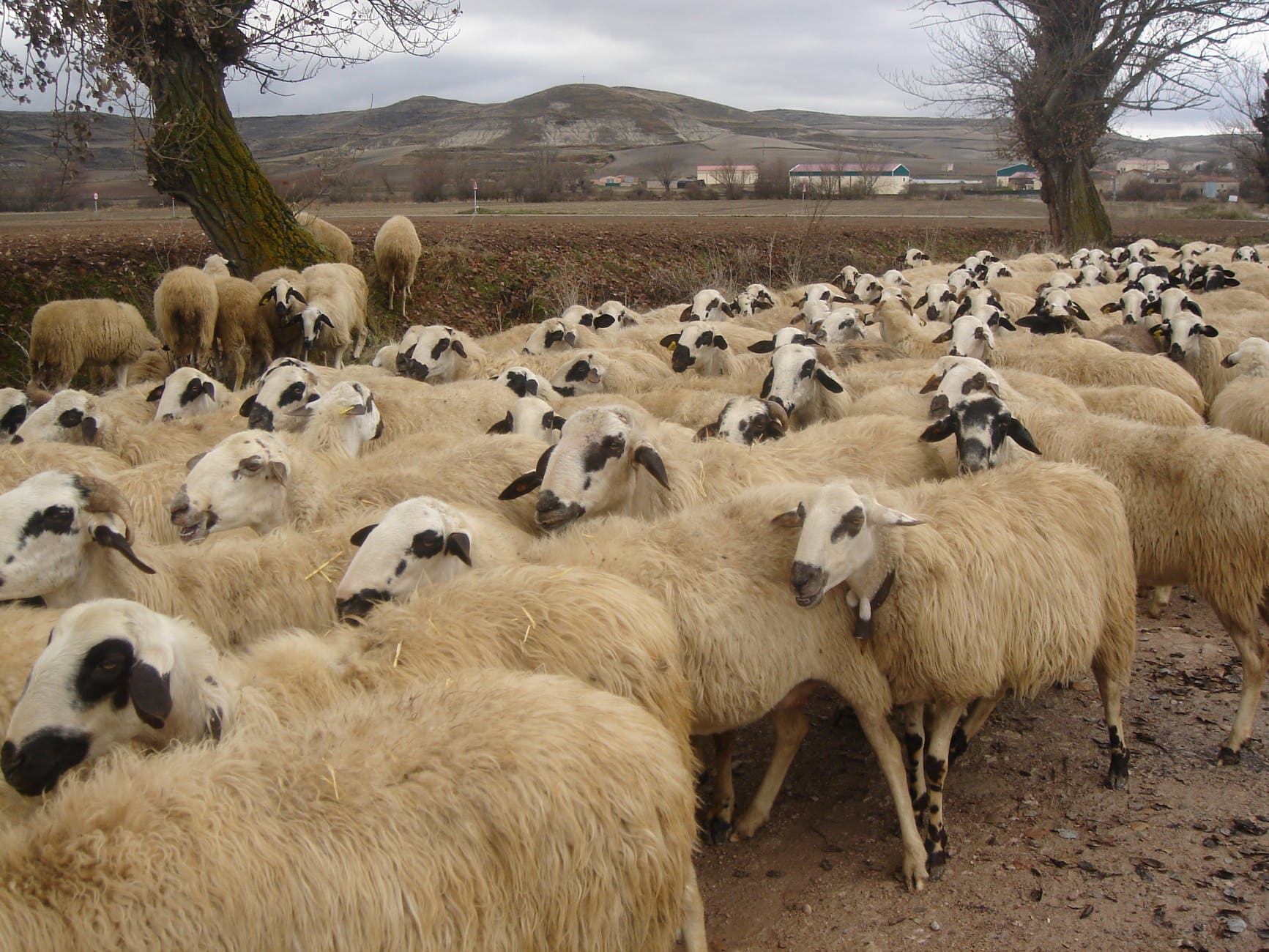
herd of sheep

Photo by Jose Lorenzo on Pexels.com

Does it seem odd to anyone else that — no wait. Hold on. I was about to say: “Does it seem odd to anyone else that the Trump death cult is only united by their devotion to Trump and the only common value in their “platform” is that they value hate and dividing people, not uniting people — and yet, they are completely unified. They are unified about division.”

abstract barbed wire black white black and white

Photo by Pixabay on Pexels.com

 
But then, I realized, in a twisted sort of way, this is actually logical. *Because* they are united in hatred and dismissing anyone different, they are terrified to stray from the pack. But what if they do it by accident? What if they see something that looks interesting or useful and head toward it? NO NO NO! They might be culled from the herd! (A fate that could literally be worse than death if they & Trump continue to destroy the rule of law). No-one in America will be safe. Neither red hats nor assault weapons will keep you safe from Trump’s predations which will include the same horrors that other cruel dictators have employed because they think it helps keep them in power and because they simply enjoy making others feel pain. 

woman in black tank top blindfolded

Photo by Thuanny Gantuss on Pexels.com

 
How can such a tight pack keep from disintegrating? By listening to Trump. To them, he is the ultimate authority on every single topic. In precisely this way, the entire flock knows exactly what to say (at least today; yes, it could change tomorrow, but they’ll be watching for his tweets again tomorrow or listening to Fox News to tell them what is real). They listen to the Oraclown and his reflection. 
IMG_9198————————-
For some reason, the real-world evil and treachery of Putin’s puppet always makes me think of these *purely fictional* stories about a child sociopath.
(Not suitable for children or people without a well-developed sense of values. To reiterate, these are pure fiction meant to illustrate how a sociopath “thinks.” For details about Donnie’s actual life, try his niece’s book:
https://www.amazon.com/Too-Much-Never-Enough-Dangerous/dp/1982141468
Donnie Plays Bull-Dazzle Man
Donnie Boy Plays Captain Man
Donnie Boy Plays Soldier Man
Donnie Lets His Brother Take the Fall
Donnie Visits Granny
Donnie Takes a Blue Ribbon in Spelling
Donnie Gets his Name on a Tennis Trophy
Donnie Gets a Hamster
Donnie Learns Golf!
← Older posts
Newer posts →

Subscribe

  • Entries (RSS)
  • Comments (RSS)

Archives

  • January 2026
  • December 2025
  • November 2025
  • October 2025
  • September 2025
  • August 2025
  • July 2025
  • June 2025
  • May 2025
  • April 2025
  • March 2025
  • February 2025
  • January 2025
  • December 2024
  • November 2024
  • October 2024
  • September 2024
  • July 2024
  • April 2024
  • March 2024
  • February 2024
  • January 2024
  • December 2023
  • August 2023
  • July 2023
  • May 2023
  • April 2023
  • March 2023
  • February 2023
  • January 2023
  • December 2022
  • November 2022
  • October 2022
  • September 2022
  • August 2022
  • July 2022
  • June 2022
  • May 2022
  • April 2022
  • March 2022
  • February 2022
  • January 2022
  • December 2021
  • November 2021
  • October 2021
  • September 2021
  • August 2021
  • July 2021
  • June 2021
  • May 2021
  • April 2021
  • March 2021
  • February 2021
  • January 2021
  • December 2020
  • November 2020
  • October 2020
  • September 2020
  • August 2020
  • July 2020
  • June 2020
  • May 2020
  • April 2020
  • March 2020
  • February 2020
  • January 2020
  • December 2019
  • November 2019
  • October 2019
  • September 2019
  • August 2019
  • July 2019
  • June 2019
  • May 2019
  • April 2019
  • March 2019
  • February 2019
  • January 2019
  • December 2018
  • November 2018
  • October 2018
  • September 2018
  • August 2018
  • July 2018
  • June 2018
  • May 2018
  • April 2018
  • March 2018
  • February 2018
  • January 2018
  • December 2017
  • November 2017
  • October 2017
  • September 2017
  • August 2017
  • July 2017
  • June 2017
  • May 2017
  • April 2017
  • March 2017
  • February 2017
  • January 2017
  • December 2016
  • November 2016
  • October 2016
  • September 2016
  • August 2016
  • July 2016
  • June 2016
  • May 2016
  • April 2016
  • March 2016
  • February 2016
  • January 2016
  • December 2015
  • November 2015
  • October 2015
  • September 2015
  • August 2015
  • May 2015
  • January 2015
  • July 2014
  • January 2014
  • December 2013
  • November 2013

Categories

  • AI
  • America
  • apocalypse
  • cats
  • COVID-19
  • creativity
  • design rationale
  • driverless cars
  • essay
  • family
  • fantasy
  • fiction
  • HCI
  • health
  • management
  • nature
  • pets
  • poetry
  • politics
  • psychology
  • Sadie
  • satire
  • science
  • sports
  • story
  • The Singularity
  • Travel
  • Uncategorized
  • user experience
  • Veritas
  • Walkabout Diaries

Meta

  • Create account
  • Log in

Blog at WordPress.com.

  • Subscribe Subscribed
    • petersironwood
    • Join 661 other subscribers
    • Already have a WordPress.com account? Log in now.
    • petersironwood
    • Subscribe Subscribed
    • Sign up
    • Log in
    • Report this content
    • View site in Reader
    • Manage subscriptions
    • Collapse this bar
 

Loading Comments...