(First appeared as part of The Poetry Exchange’s Featured Poet, Spring, 1997 under the title: “Deforested”)
Gray day wasted while the whippoorwill Wishes that the slushy city sewers Had not replaced the only lonely home he knew. The groggy foggy unfocussed hurly-burly rushing Of splashing autos on the gray macadam roadways That gnarl through the neighborhoods Is vaguely deja vu. Silhouetted smokestacks shadowly seen, Limned in gray on gray-green, Remind the mind how poor people pass the day after day. Where no home fire hearth lighted cabin In the winter woods beckons, beacons, hearkens Heartily a red sunset glow on white snow For a day’s work done.
One hardly knows.
Here, where machine clouds of steam unsentiently sip, sap the soul, You wonder as the rain water wanders, Then rushes through the gurgling gutters, What foul trick man played upon his own brave soul, To have forsaken all the fiery emotion that makes life great To sit at desks, to stand in lines, to wait. Where are the country color and The rich thick loves hidden Beneath the inventions, interventions, and pretensions of society?
We wander in our own gray-glass cages In a lurching kind of mock-precision, Like the nightmare dream of a psychotic technician. And the only color the commuter encounters In his travels to and from, Is the scarlet and the gold of a raccoon Too stupid to stay off the highways of modern civilization.
————
Pet Sematary (A relevant book by Stephen King which was a partial inspiration for the poem)
What mainly distinguishes the two major American political parties has varies tremendously within the course of my own lifetime. And, while I’m not ancient, my life so far is about 31% of the time since The Declaration of Independence. That’s not most of the time, but it is all of the most recent 31%. Of course, if you did pay much attention in American History and weren’t just spending time surreptitiously carving your initials, passing notes, or throwing spitballs, you likely remember that the US began as rather disunited States under the “Articles of Confederation.” It wasn’t until June 21st, 1788 that it was ratified. Thus, my life so far is roughly 1/3 of the time we’ve lived under that Constitution.
The first time I became consciously aware of politics was when Eisenhower won in 1952. The principal of our school arranged to have the radio broadcast of Eisenhower. I don’t really know whether it was his acceptance speech or his inaugural speech, but I suspect the latter. Anyway, I was leading the class in cheering through much of the speech. At some point, my teacher said maybe the people I was getting to cheer didn’t really know what they were cheering for. That was probably true. It was definitely true that I had no idea why I was cheering except for two things:
1. Eisenhower had been a general partly responsible for our winning the war. My dad & all my mom’s brothers fought in WWII.
2. Eisenhower was a Republican and they were the “good guys.” I don’t recall having much of a discussion about it before hand. But I had certainly picked up that vibe.
After the teacher’s comment though, I got to wondering why everyone in my family liked the Republicans rather than the Democrats. As I recall, the basic reason given was that Republicans believed more in personal responsibility.
Later, there were entirely different reasons for disliking the Democrats; viz., the Vietnam War and beating up the protestors in Chicago.
But now? What has happened to the “Grand Old Party”?
Forget politics for a moment. In what area of life is perpetual lying a good way for people to cooperate? If the scientists & engineers lied like the Trumputinists, we would still be shivering in caves. How would you like farmers to send you poisonous bulbs and call them onions?
The fish rots from the head. That was bad enough. But that rotten fish head has been out of power for two years. But the putrefaction continues.
No platform. No policies. No allegiance to the Constitution. No sense of fair play. No limit to cruelty. No allegiance to the rule of law.
Who benefits from all that lack of governing?
Who benefits from a weaker, less effective US government?
Shadow Walker wondered whether the sense of foreboding he felt simply reflected the cool, damp weather. He took a deep breath. It felt good so he intentionally calmed himself with more deep breaths and rather than chase after an explanation, which, in his experience often scared explanations away, he determined to be more like a hunter waiting in a blind for the prey to come. He sat on a cold flat rock and let his thoughts drift. As he did so, his eyes chanced upon the Sixth Ring of Empathy — the one that only he and his love, Many Paths, had won. Touching it often seemed to give him comfort and he tried that, grinning as he did so. He immediately felt sunnier. Better, he knew exactly why he had felt morose. Many Paths had been worried for days about the upcoming meeting among the tribes. He had felt left out of her worry. She had not really sought his counsel, and he realized that, so far as he knew, she had not sought anyone’s counsel lately; not even that of her predecessor, She Who Saved Many Lives.
A smile came upon the face of Shadow Walker. A plan came to him and his smile broadened. Confidence returned to his step as he marched back to the Center Place of the Veritas. Immediately upon entering The Sacred Circle, he spied the younger brother of Many Paths, Tu-Swift. He and Cat Eyes spoke quietly and seriously. Beside them on an oaken table, a number of what he now knew to call “books” were spread out in front of them. They were concentrating so intently they failed to see him approach. While all of the Veritas were trained in the ability to walk silently, Shadow Walker had perfected the skill better than anyone else in the tribe. He felt no need to startle his friends, so he announced his presence intentionally. “I see you two are continuing your studies.”
Tu-Swift and Cat Eyes both smiled and moved so as to allow space and offer invitation to Shadow Walker. He smiled back, but rather than join them, he quickly explained his insight and suggestion. They both assented quickly. Cat Eyes nodded vigorously while Tu-Swift said aloud, “Wonderful idea! We’re leaving now. But — are you sure that’s where she is?”
“No, not completely sure. But reasonably sure. If you find her, can you bring her back here? Meanwhile, I’ll see whether She Who Saved Many Lives will join us presently.”
Cat Eyes glanced up at the grey clouds and decided to put the books into boxes and cover them with the rock-weighted rawhide cover. Then, the three dispersed. The youngsters strode off to find Many Paths while Shadow Walker walked over to the cabin of the Elder Shaman. Halfway there, he saw the slightly bent figure of She Who Saved Many Lives walking toward him. He chuckled. Many Paths had several times mentioned how often she had sought to find the Elder and gain her advice only to discover that She Who Saved Many Lives was already en route to her.
Shadow Walker approached and bowed his head slightly out of respect. “Well met, Mother of the Tribe, I had something I wanted to ask you about.”
“Yes, I also think it’s time to help She Who Finds Many Paths to Avoid Asking for Help.”
Shadow Walker was taken aback. “She Who…? Ah, yes. Exactly. But how…?”
“Oh, my, Shadow Walker. Books are not the only things which may be read.” She said this in such a kindly tone and with such a twinkle in her eye, that Shadow Walker could do nothing but shake his head and chuckle again. “Many Paths has cautioned me that you can read minds. Now, I see she is right.”
“Would that I could! I cannot read the mind of a tree, but if there has been no rain for days the leaves are all wilting, I know the tree wants water, and so too, do you, as signified by the Rings of Empathy you earned. I should think. It’s not much different with reading people than it is with trees. You and I both know Many Paths is rightly concerned that this upcoming meeting go smoothly. There is a time to keep one’s own counsel, surely, but now, I think, like you, it is time to stir the pot!”
Shadow Walker offered his elbow to the Elder and they slowly made their way back to the Center Place of the Veritas.
“Stupid crappy mutt! She smells like butt! What the hell were you thinking? To get a dog so stinking!”
Steve undid the leash and threw it into his catch-all corner. “Do you know what she was trying to eat out there? Do you?! Poop! It’s goop! Who wanted a dog? You! And now I’m walking her to pee? Me! I don’t care how sick you supposedly are. You take her!”
While Steve towered and glowered, the dog cowered in the corner and emitted a quiet “woof, woof.”
Mary sighed. “Sorry. I didn’t mean to get sick. She’s a dog. Vet said she doesn’t yet know any better.”
Mary’s attempts to placate Steve touched a gentle part of him inside. A part he gated and hated. As always, it made him angrier. “I don’t need a damned dog! I have you!I work hard all day to put a roof over your head. Roof! Roof! Last month, she tried to eat that poison philanderer plant. She’ll put anything in her mangy mouth. If she doesn’t stop eating turds, mark my words! I’ll make you cook her for dinner!”
Mary waited for Steve’s rant to ebb. “I read on the web today about a dog who ate corn cobs. Surgeon had to cut him open. You’d think dogs would know what was good for them, but apparently, they don’t.”
“Naturally I’m right! I’m bright. She’s just one more bitch too stupid to know what’s good for her! Reminder: last week, I bought a meat grinder for her food.”
“Thank you, Steve. I’m sure I’ll be able to make really good use of that. And, it will save money on dog chow. And how!”
Steve sneered and growled and uttered something unintelligible.
The puppy chanced a growl of her own. Steve ignored it. Instead he snarled at Mary. “What in the Holy Name of Hell are you watching now?”
Mary replied, “A movie. Almost over. Do you … ?”
Steve barked, “Another damned True Crime Docudrama? Jesus, Mary. Turn on the realnews!”
Mary bit her lip and then obeyed; flipped on White Nation. She shook her head. She couldn’t get over how ugly the man being interviewed was. She wondered again why so many seemed to adore him. She had long ago learned not to share her opinion. Steve was absolutely certain White Nation News was the one source to be believed. He’d thrown her entire inheritance into a “sure-fire” White Nation get rich quick scheme. Hadn’t panned out as planned. Steve’s addiction to “Tricks to Get Rich Quick” showed no signs of relief. Not satisfied with enough, he remained sure the next scheme would make him wealthy beyond belief.
Mary saw something dark and evil behind the interviewee’s dead eyes and painted orange face. But Steve was dead sure he was America’s salvation, or at least White America, the “Real” America, as Steve liked to say, not the “gay, black, liberal, smart-ass, immigrant, foreigners trying to take over the country.”
Steve leaned forward, face glowing blood red. Mary glanced over; saw it as lit by the TV. Steve, eyes ever glued to the tube, barked another order: “Beer Here!”
Mary gathered her strength. No matter how she explained it, Steve couldn’t conceive of “Long COVID.” He didn’t really believe in COVID; he thought it all a hoax invented by liberal folks. That’s what his favorite podcasts claimed. Yet he bought ivermectin, “just in case.”
Mary sat up; nearly fainted; rose and traipsed to the fridge. Steve didn’t notice the Oxy capsule she emptied into his beer. She quietly placed his Bud on the end table. She fell back again in her chair, too exhausted to continue her Agatha Christie. She couldn’t stand White Nation News. From beginning to end, she thought it in bad taste; noxious and possibly poisonous. She tried to think back to an earlier time when Steve was nice. She couldn’t think of such a time. She decided maybe that was a good thing, under the circumstances.
After a few doctored beers, Steve sprawled comatose. Although they had agreed to share dog duties, it was always Mary who fed her.
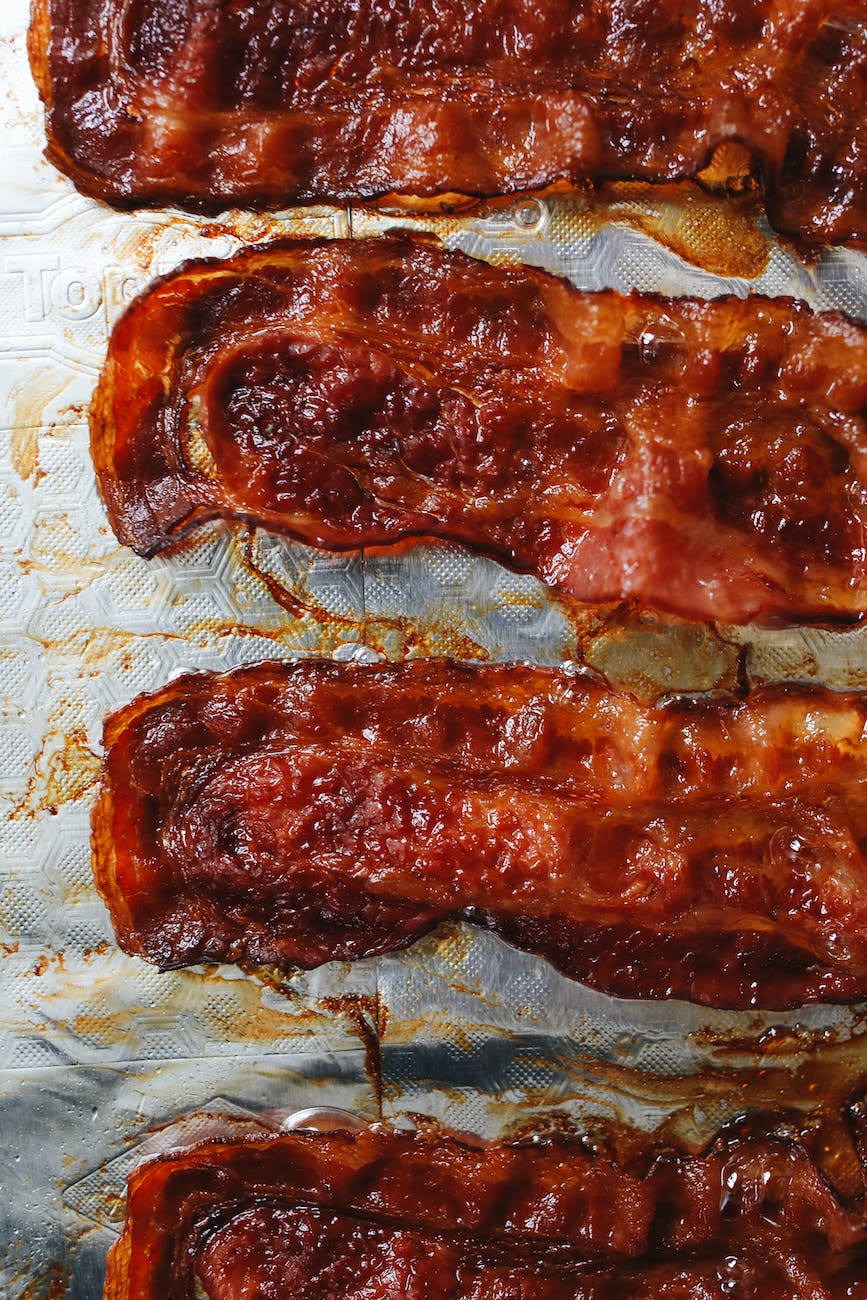
Mary stopped the microwave before it beeped; shuffled over to the snoring Steve and poured the Pyrex beaker of hot bacon grease into his torn polka-dot boxer shorts. Hungry puppy didn’t even wait for it to cool before chowing down like a hungry hog.
“Good dog!” Choking back tears, Mary whispered, “Good dog!”
At least, most forms of life need water. Indeed, most forms of life are mostly made of water.
Water is some amazing stuff. It’s one of the few things that ordinary people in ordinary circumstances see in solid, liquid, and gaseous phases. One thing that’s unusual about water is that when it freezes, it expands. It also has a high “heat capacity.” This means that water takes a lot of heat energy, relative to most materials, to increase its temperature. It also means that, once heated, it takes a long time for the water to cool to the ambient temperature. It’s why land areas that are near the oceans tend to be more moderate in temperature than similar places inland.
A hundred miles inland from where I live is a place called “Palm Desert.” The average night temp in the coldest month is 41 degrees Fahrenheit while the average daytime temperature in the warmest month is 107 degrees Fahrenheit. That’s a difference of 66 degrees! I live near San Diego, a few miles from the ocean. For San Diego, the average coldest temperature is 51 degrees and the average for the high is 77. That’s a difference of 26 degrees. Quite a difference. That difference is due to the high heat capacity of water.
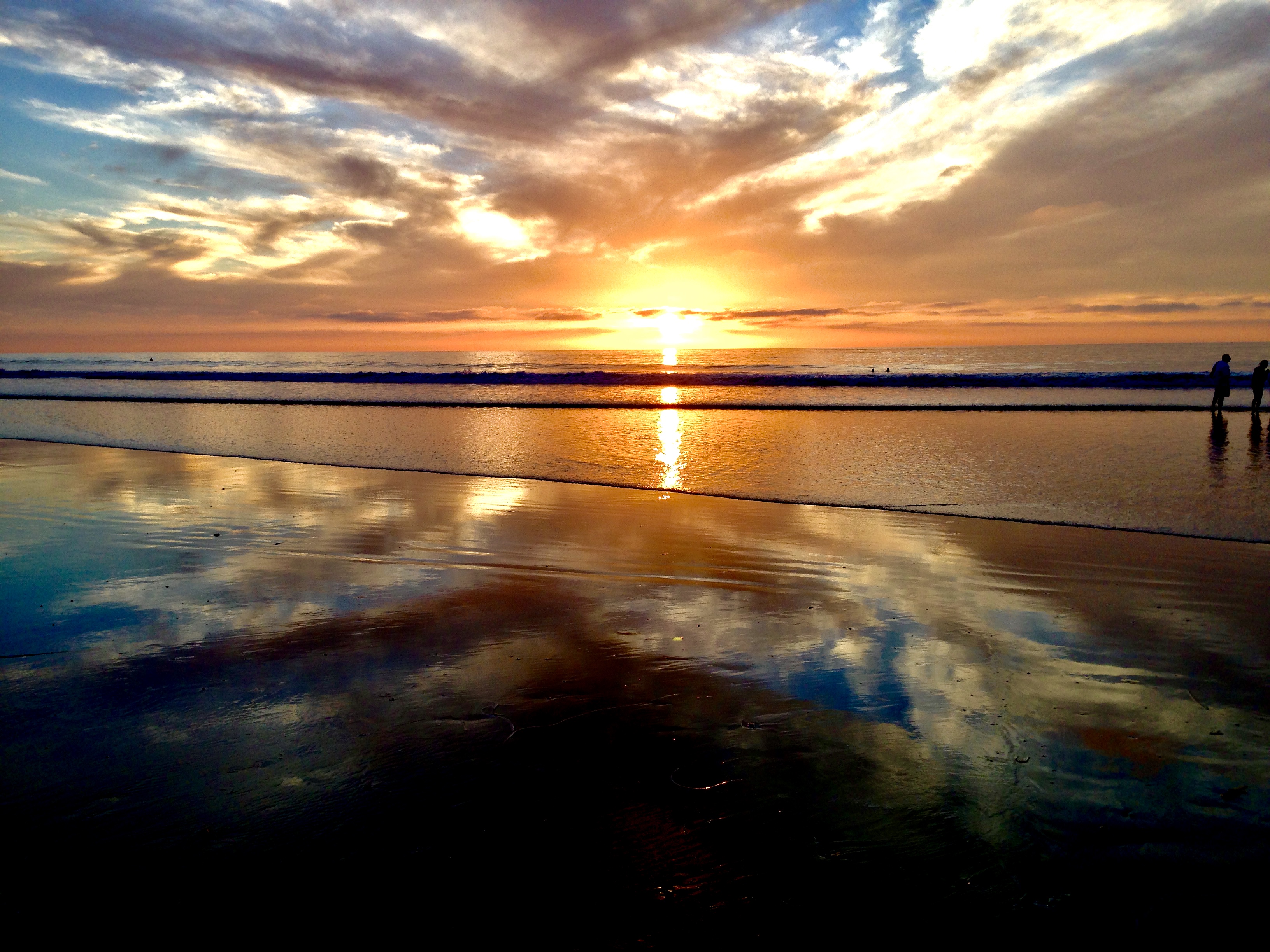
Water is beautiful in many forms: rivers, springs, waterfalls, clouds, rainbows, dew, rainstorms, ocean waves are just a few of the many ways that water strikes us as beautiful.
A well-fed adult human can last weeks without food but only a few days without water. I wonder whether we also need the beauty of water. It shows that the region we’re in may be survivable. It also indicates there is other life as well nearby. Perhaps as a corollary to these, water may remind us as well that what is “out there” and beautiful to look at is also “in here” — inside us.
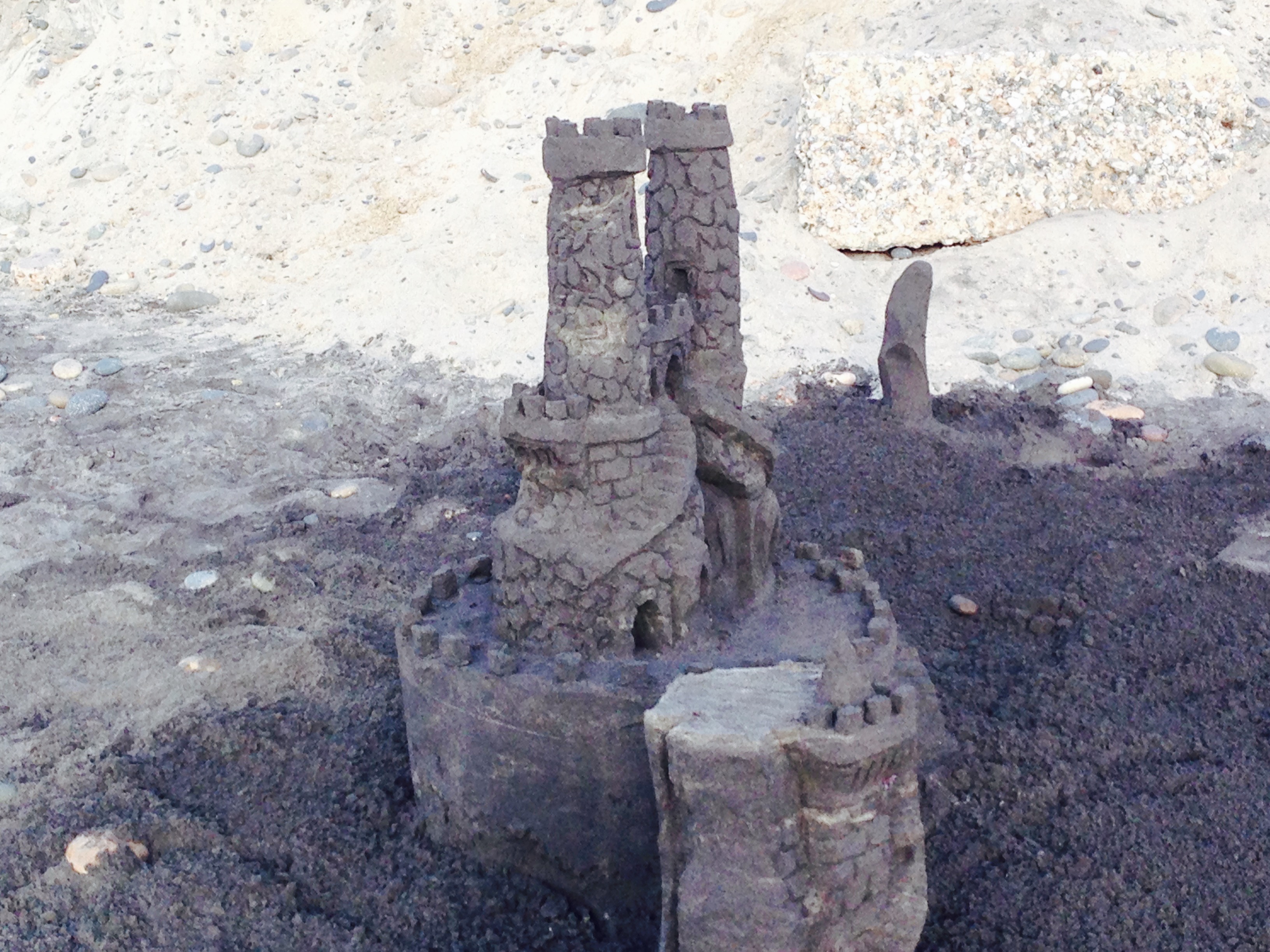
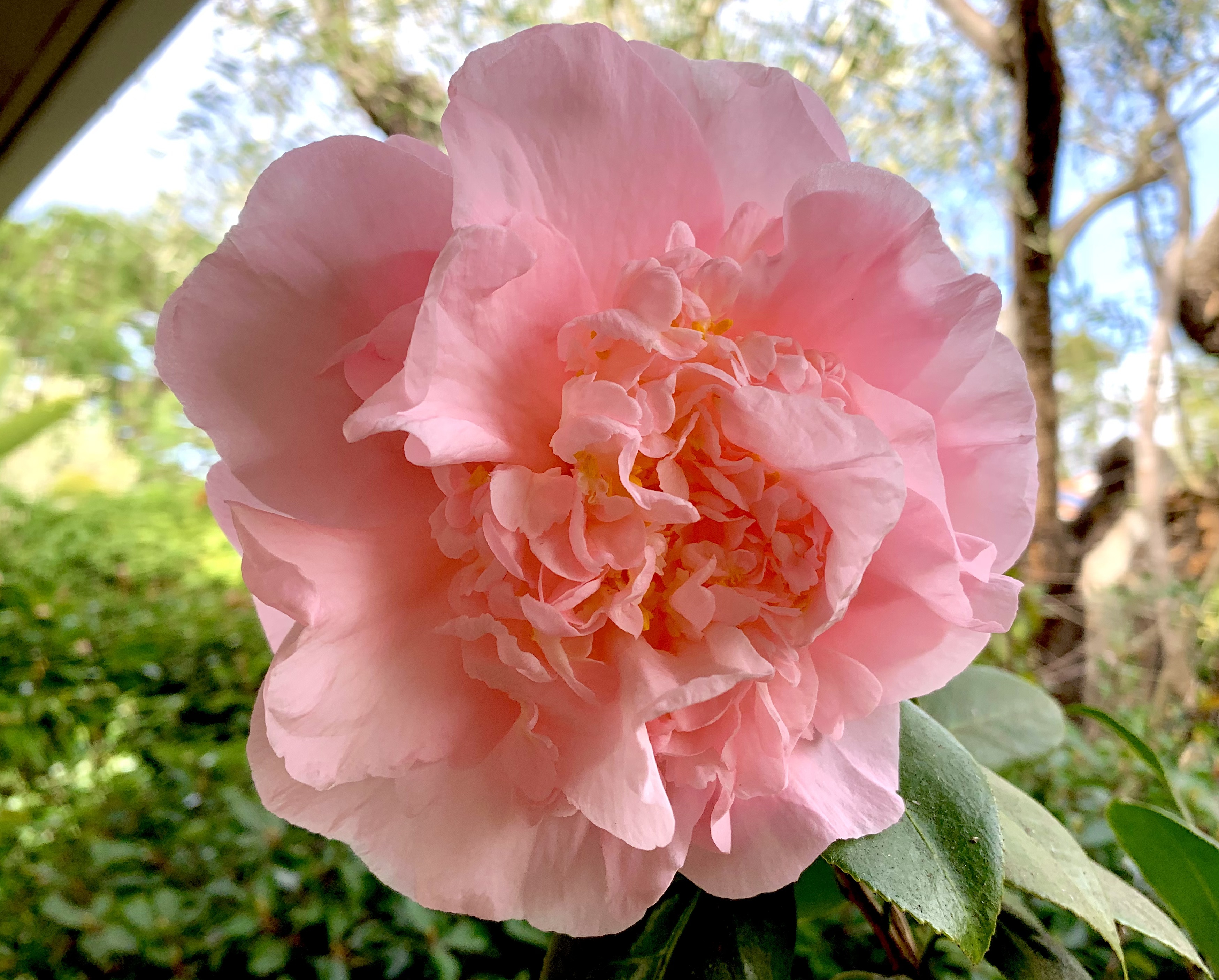
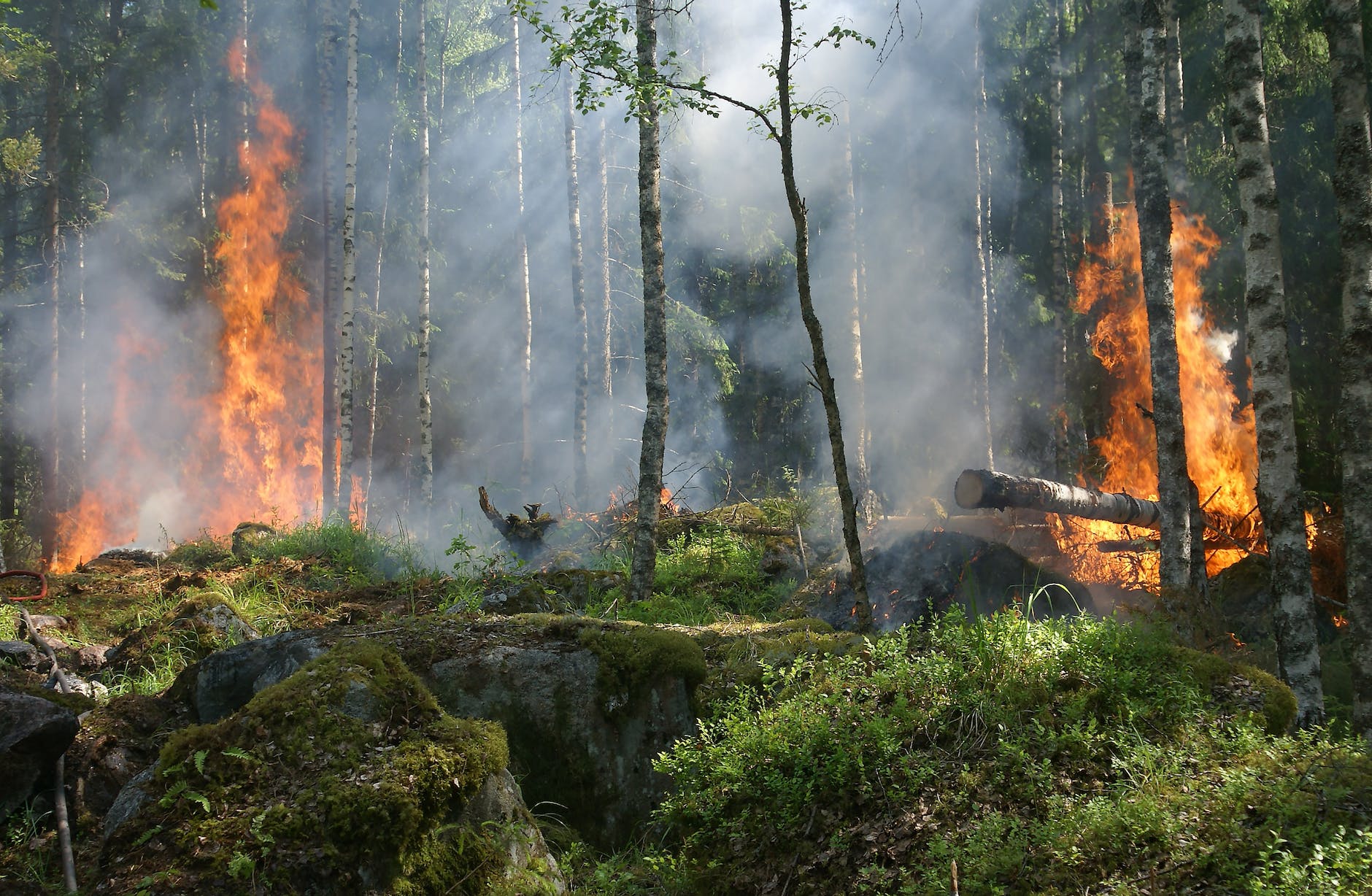
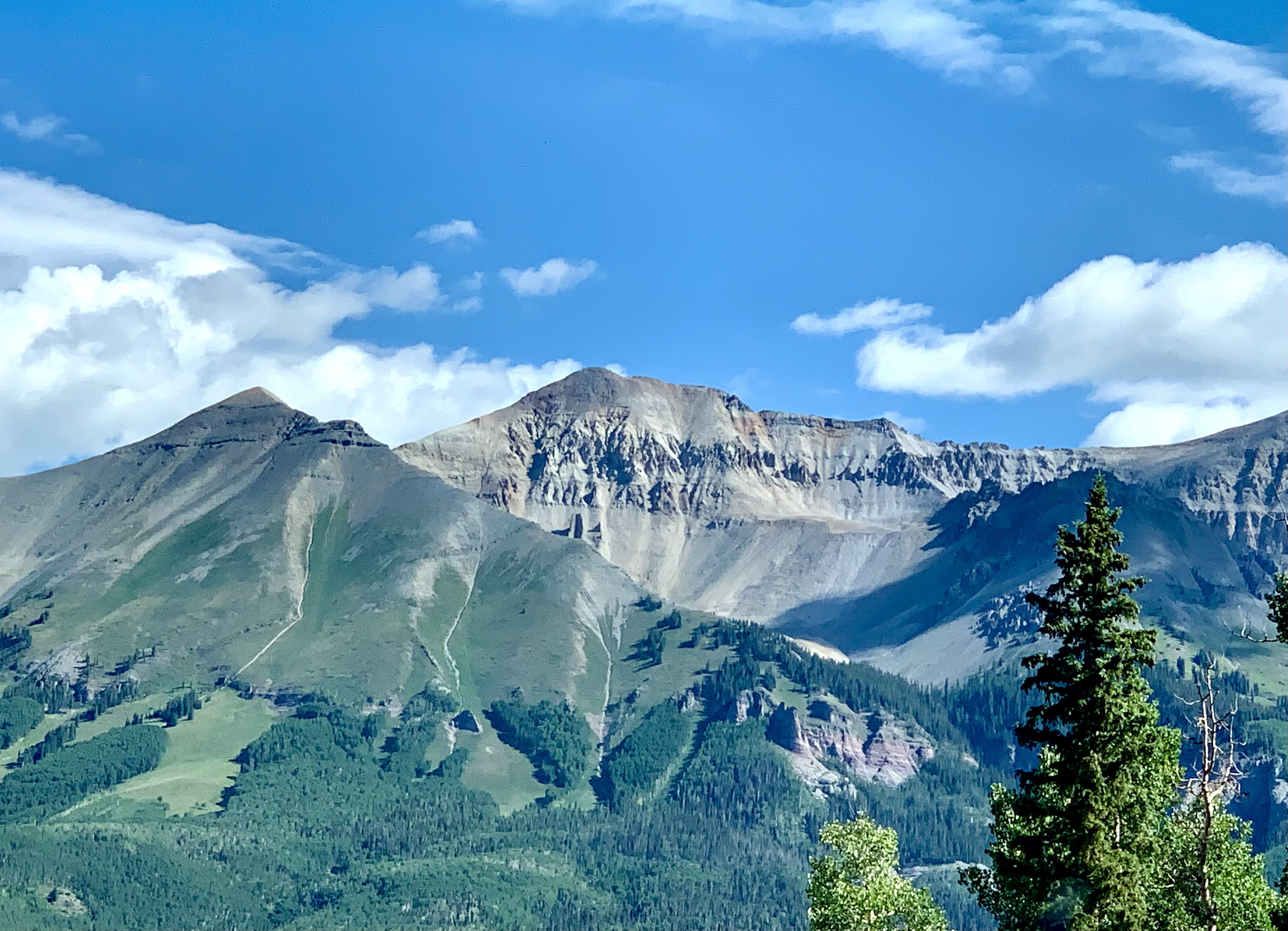
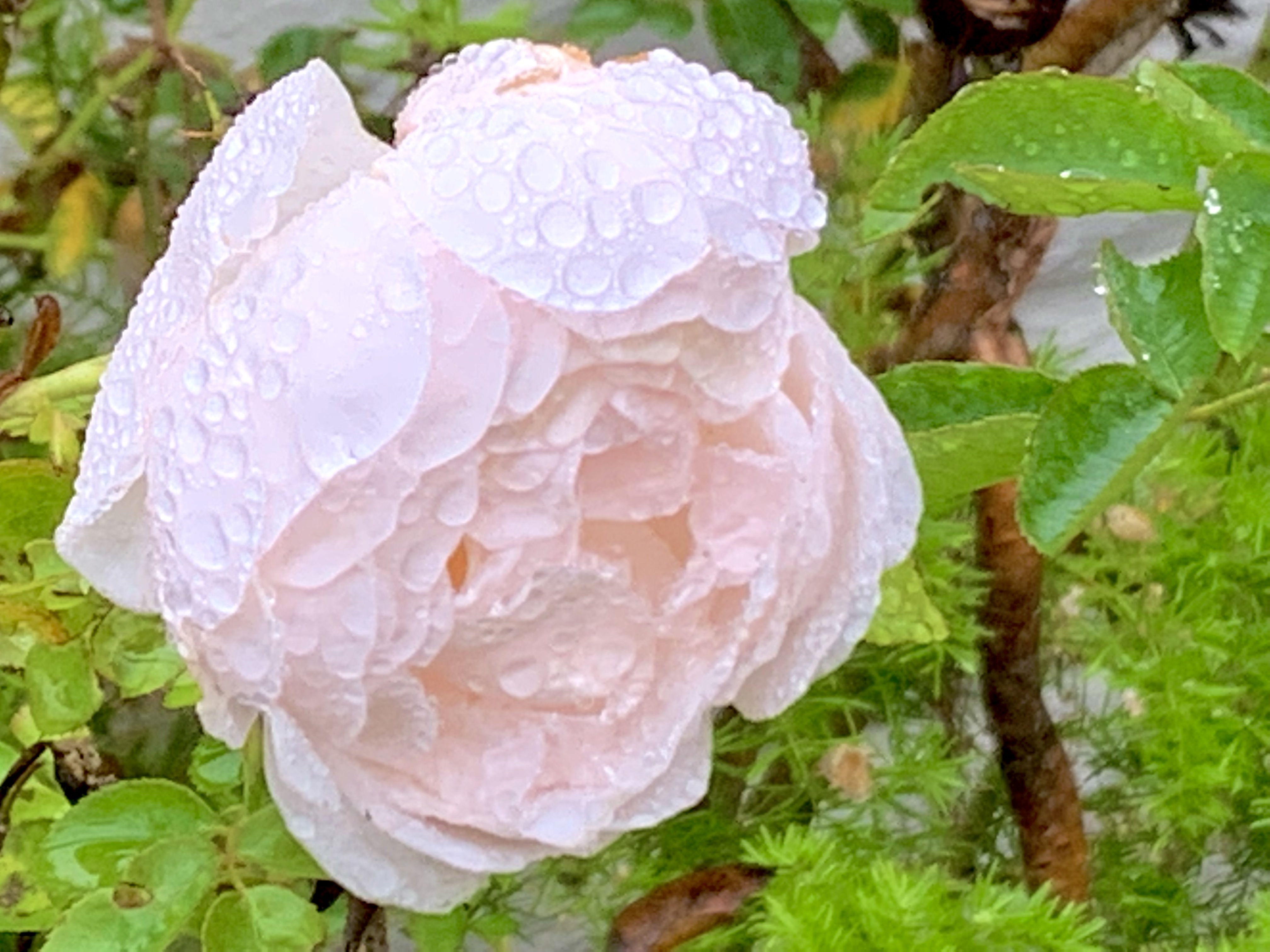
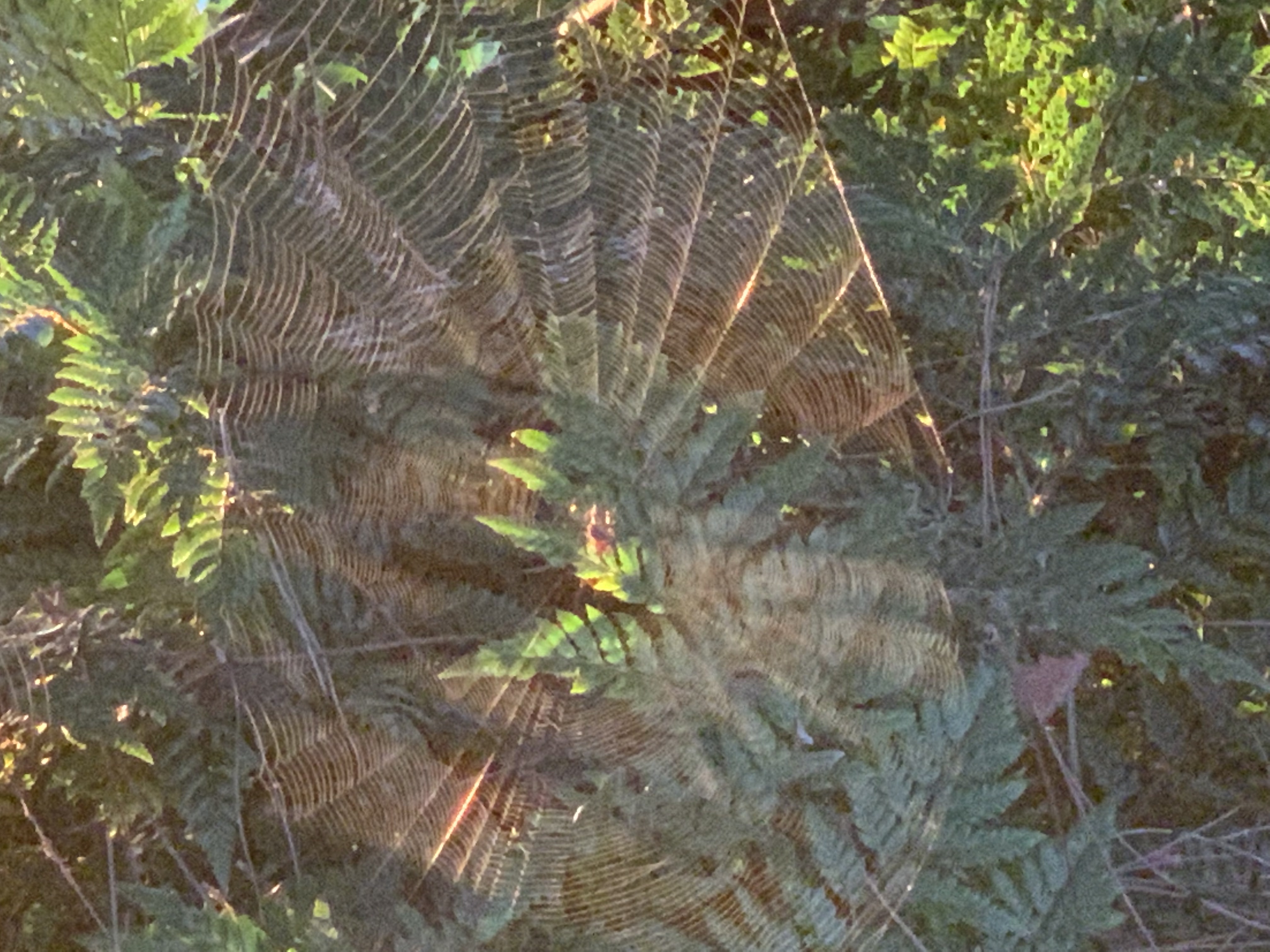
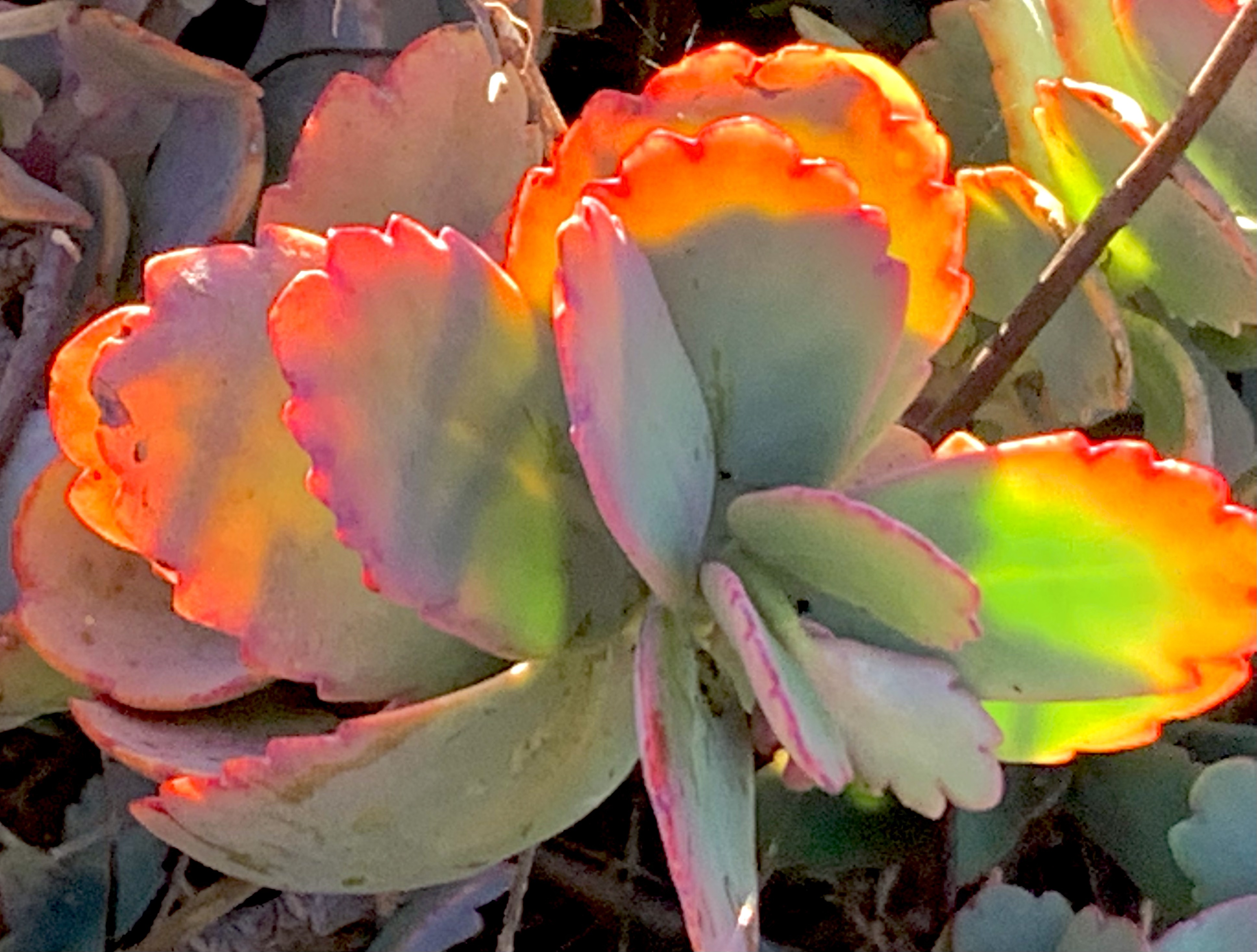
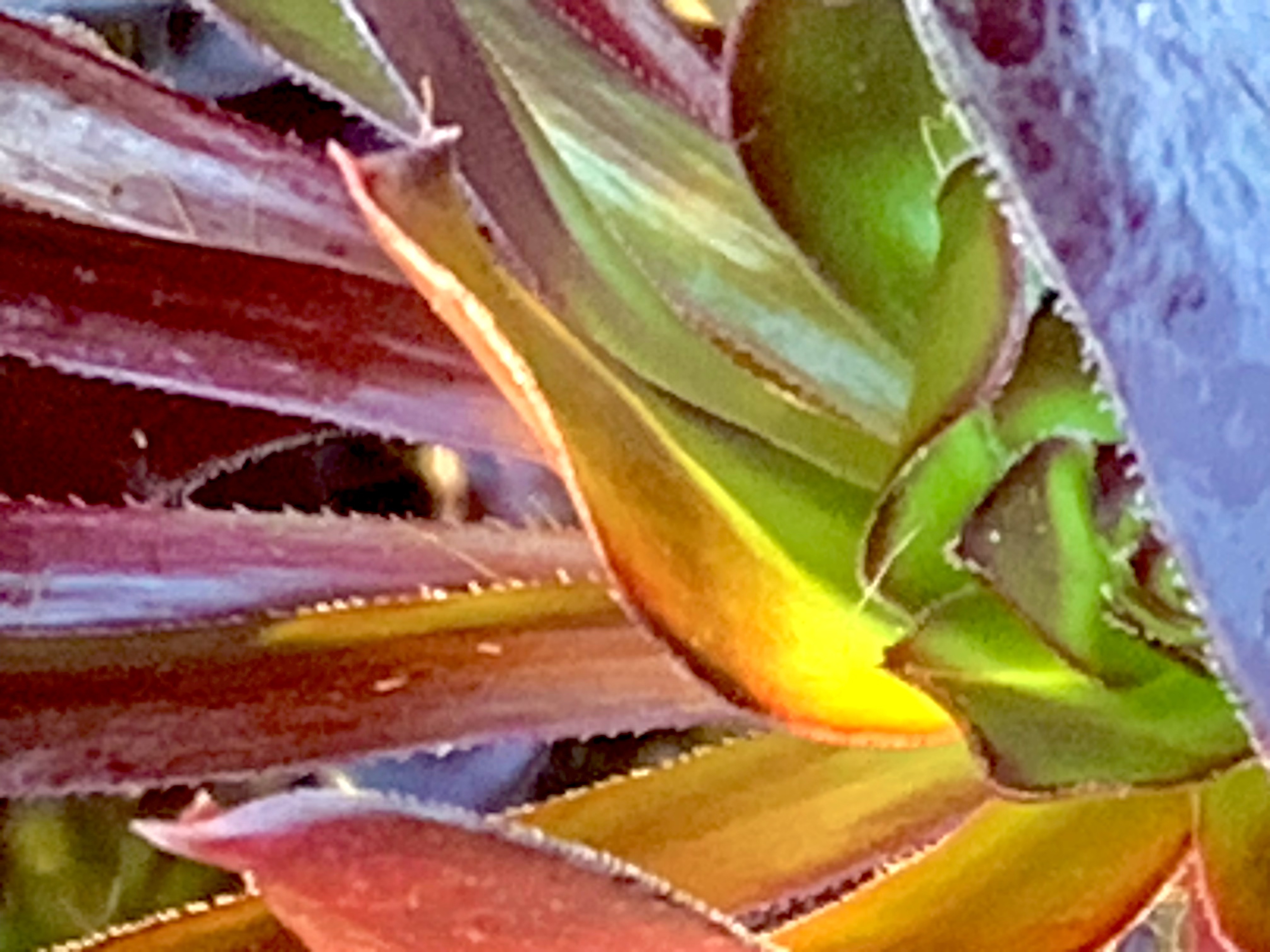
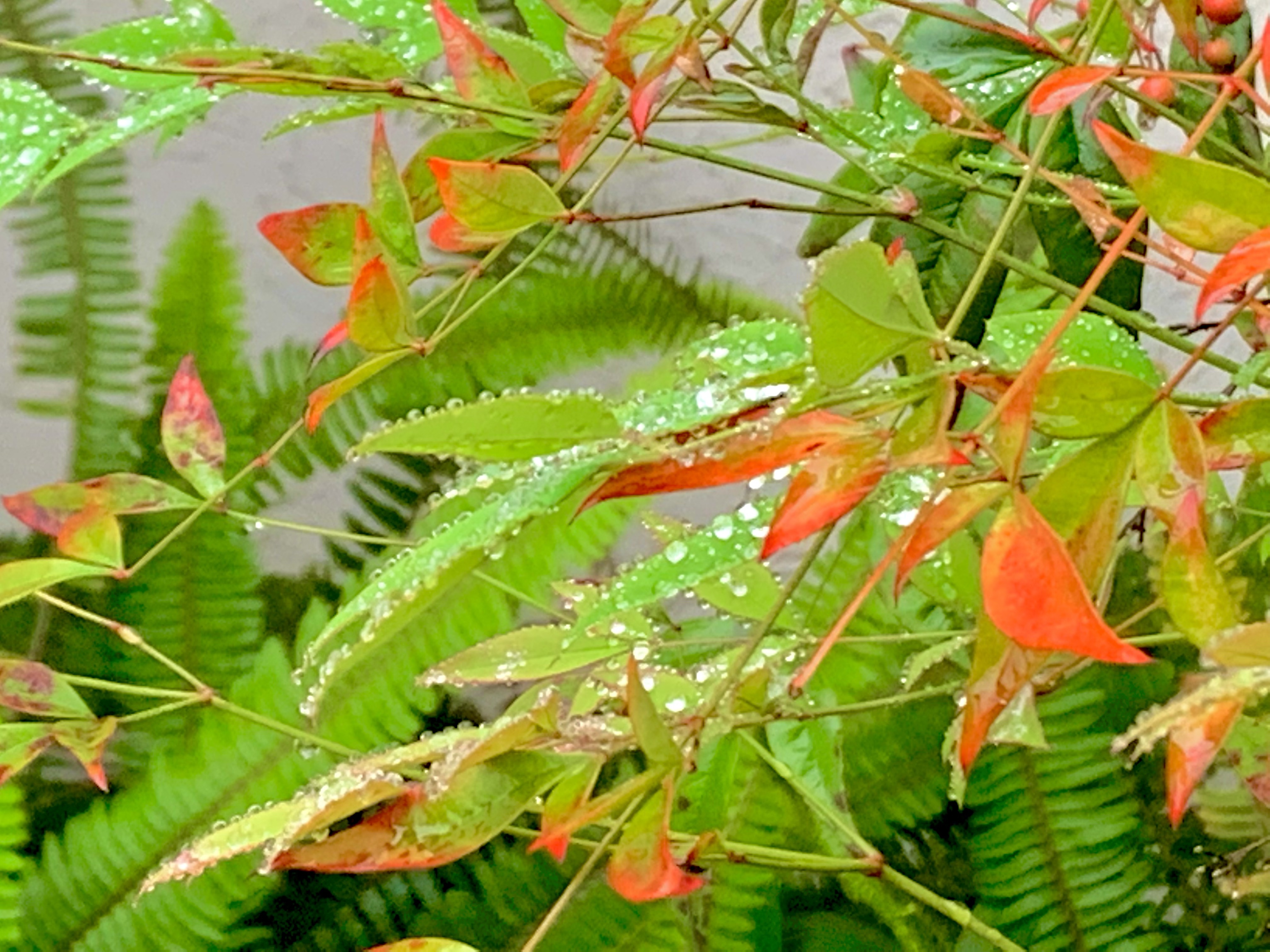
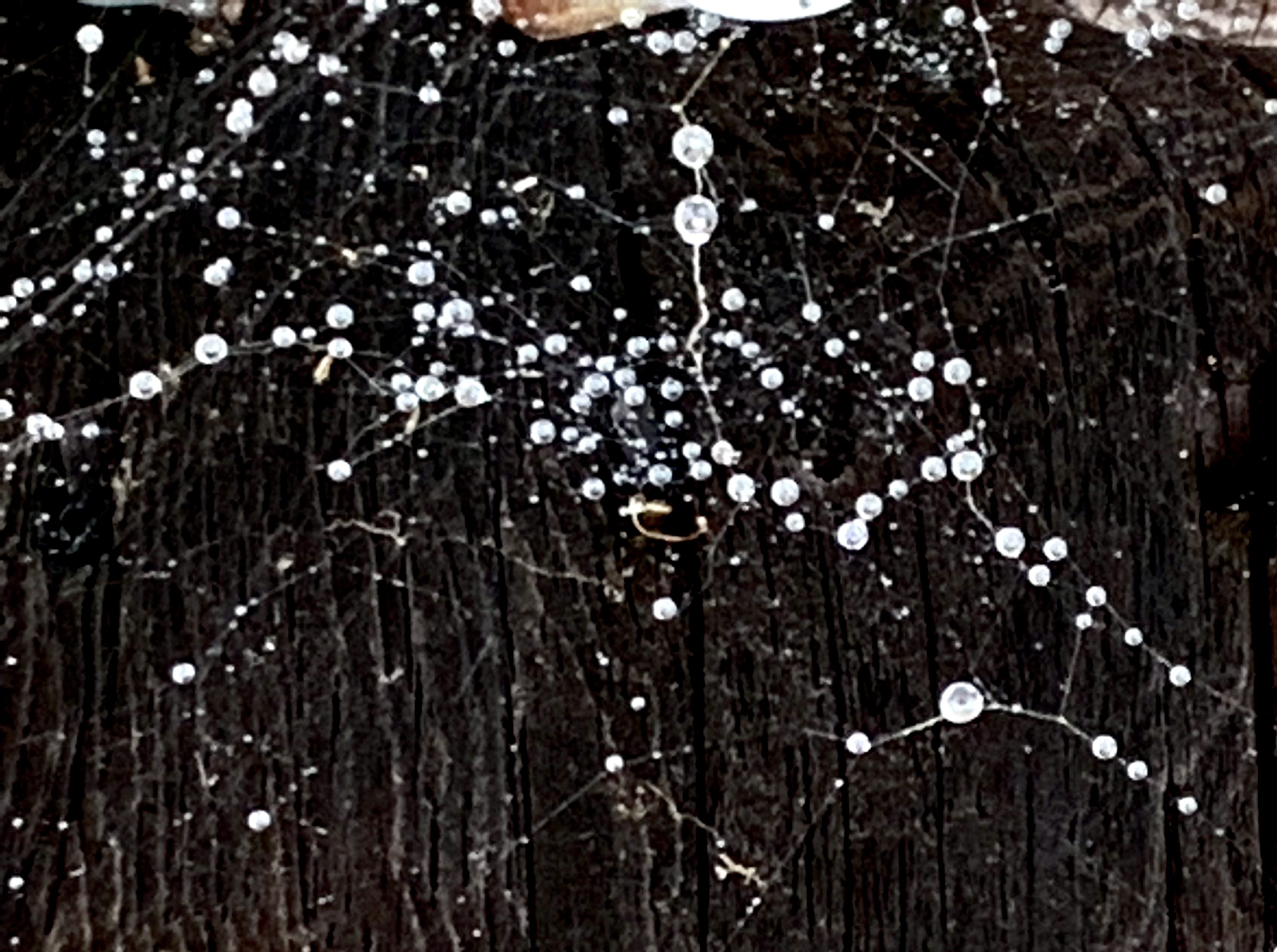
Water also plays with and transforms light. When water shows itself as droplets, as shown in the pictures here, it demonstrates two aspects of its nature: it adheres to other surfaces and it coheres to itself. A drop of water on a flower or leaf demonstrates its dual nature. This is also our own dual nature. We must play our part for a time as a separate droplet, but such a droplet does not keep that form forever. Each one of these water droplets has been part of a cloud, part of a river, part of an ocean. We too change. We too need to be coherent. But we also need to interact with and adhere, at least for a time, to aspects of our environment.
A drop of water does not obscure the form of the leaf or petal it finds itself on. Rather, the droplet enhances the form of the leaf or petal upon which it rests.




























 petersironwood