• About PeterSIronwood

petersironwood

~ Finding, formulating and solving life's frustrations.

petersironwood

Tag Archives: sports

Wordless Perfection

11 Thursday Dec 2025

Posted by petersironwood in AI, creativity, HCI, psychology, sports, Uncategorized, user experience

≈ 1 Comment

Tags

AI, art, creativity, drawing, education, intuition, life, problem formulation, Representation, Right-brain, sports, thinking, writing

————————————
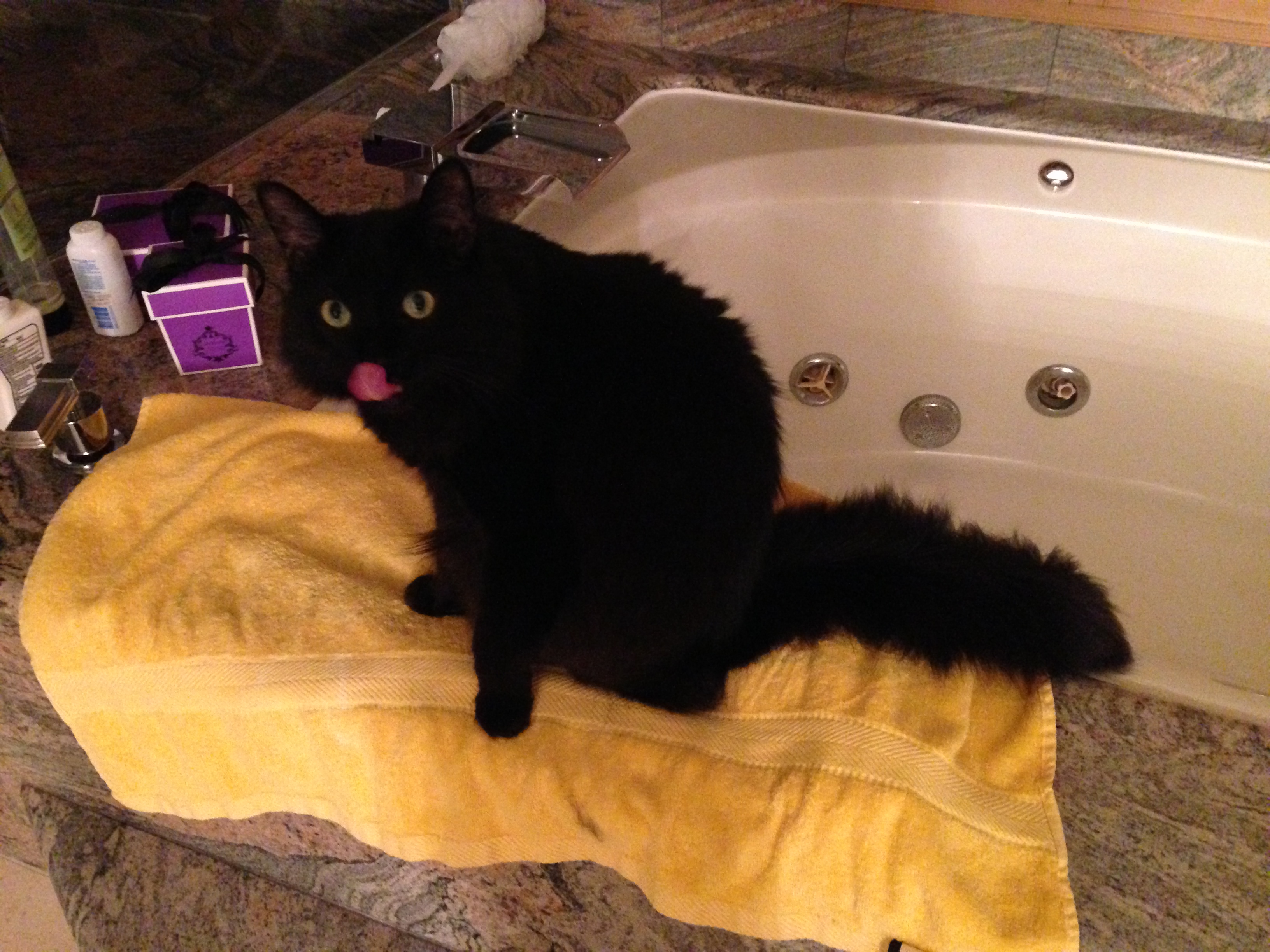
Sirius Black

I like to write. In fact, I like to write so much that I wrote before I could even read. When my early crayon “writings” in my grandfather’s books were discovered, instead of praise, I was spanked. I’m not even sure they really tried hard to read my learned annotations. Their missing the point didn’t deter me though. I like words! I like writing poetry, essays, stories, plays, and even novels. Words help human beings communicate and collaborate. However…

In this essay, I’d like to mention some instances of wordless success.

Photo by lascot studio on Pexels.com


In the neighborhood where I grew up, we spent most of the summer playing baseball, basketball, and football. I had never played golf nor paid much attention to it as a kid and when it came on TV I walked by with hardly a glance. At that point in my life, I deigned to consider something a sport only if there were a good chance to smash into one of the other players. I had never touched a golf club or a golf ball until one summer day when I was about ten, one of the kids brought one of his uncle’s golf clubs to our baseball field along with a tee and a golf ball. He demonstrated how to hit the ball and showed us how to put our hands on the club. Kids took turns hitting the ball and retrieving it for another go. 

When it came to my turn, I mainly remember just loving the shiny wood of the club. I loved wooden baseball bats back then, but the driver!! Wow! That was in a whole different category of cool. You didn’t need to be an adult or a golfer to know that! It shone opalesquely. I teed up the golf ball, and swung the unfamiliar and impossibly long club.

The resulting sound – exquisite. An explosion. A rifle shot. A cousin of the crack of a home run shot into the upper deck. But more penetrating. More elegant. More poignant.

We all looked up in amazement. My golf shot started low and straight. Then it rose and rose and disappeared far beyond the dirt road that marked the outer limit of our makeshift baseball field. It rose over the hill beyond the road and disappeared into the field beyond. There was no hope of retrieving the golfball. None of us even suggested trying. My shot was wordless perfection. 


Fast forward to graduate school. In the summer afternoons, I got into the habit of playing frisbee with the neighbors. One day, I parked my car and ran into the back yard. One of my neighbors spied me and threw me the frisbee, I noticed that they had placed an empty beer can atop a utility box about a hundred feet away. I caught the frisbee on the run and threw it with the next step. The frisbee sailed with a nice arc and smacked the beer can right off. My neighbors said that they had been trying to knock that beer can off for about a half hour.  My throw was wordless perfection.

Photo by Brixiv on Pexels.com

Meanwhile, at the University of Michigan, several of my friends and classmates liked puzzles as much as I did. One such puzzle consisted of a triangular “board” with a regular pattern of holes. There were pegs in every hole save one. The goal was to “jump” pegs much as one does in checkers and then remove that peg from the board. Eventually, one was supposed to end up with one and only one peg. I worked on it for awhile and thought about various strategies and moves. I couldn’t seem to solve it. My phone rang. I picked it up and conversed with my friend. Meanwhile, I toyed with the puzzle while my “mind” was on the conversation. I toyed with the puzzle and solved it. Wordless perfection.

A few months or weeks later, my officemates and I worked on another puzzle. This one consisted of four cubes (aka “instant insanity”). Each cube had a different arrangement of colors. The goal was to arrange the cubes so that every “row” of faces had four different colors. I fiddled with the puzzle trying out various strategies and noting various symmetries and asymmetries. Once again, someone called and interrupted my musings. Again, I idly fiddled around with the cubes while talking on the phone. And solved it. Wordless perfection strikes again! 

https://en.wikipedia.org/wiki/Instant_Insanity

Fast forward four decades. For best results, borrow Hermione’s time-turner. Otherwise, you’ll have to rely on your imagination. 

Betty Edwards (“Drawing on the Right Side of the Brain”) gave a plenary address at one of the Association of Computing Machinery’s premier conferences: CHI. Among other things, she showed example after example of how much people improved in their drawing skills based on her methods. A few months later, it so happened that my wife and I had an opportunity to go to one of her five day classes. 
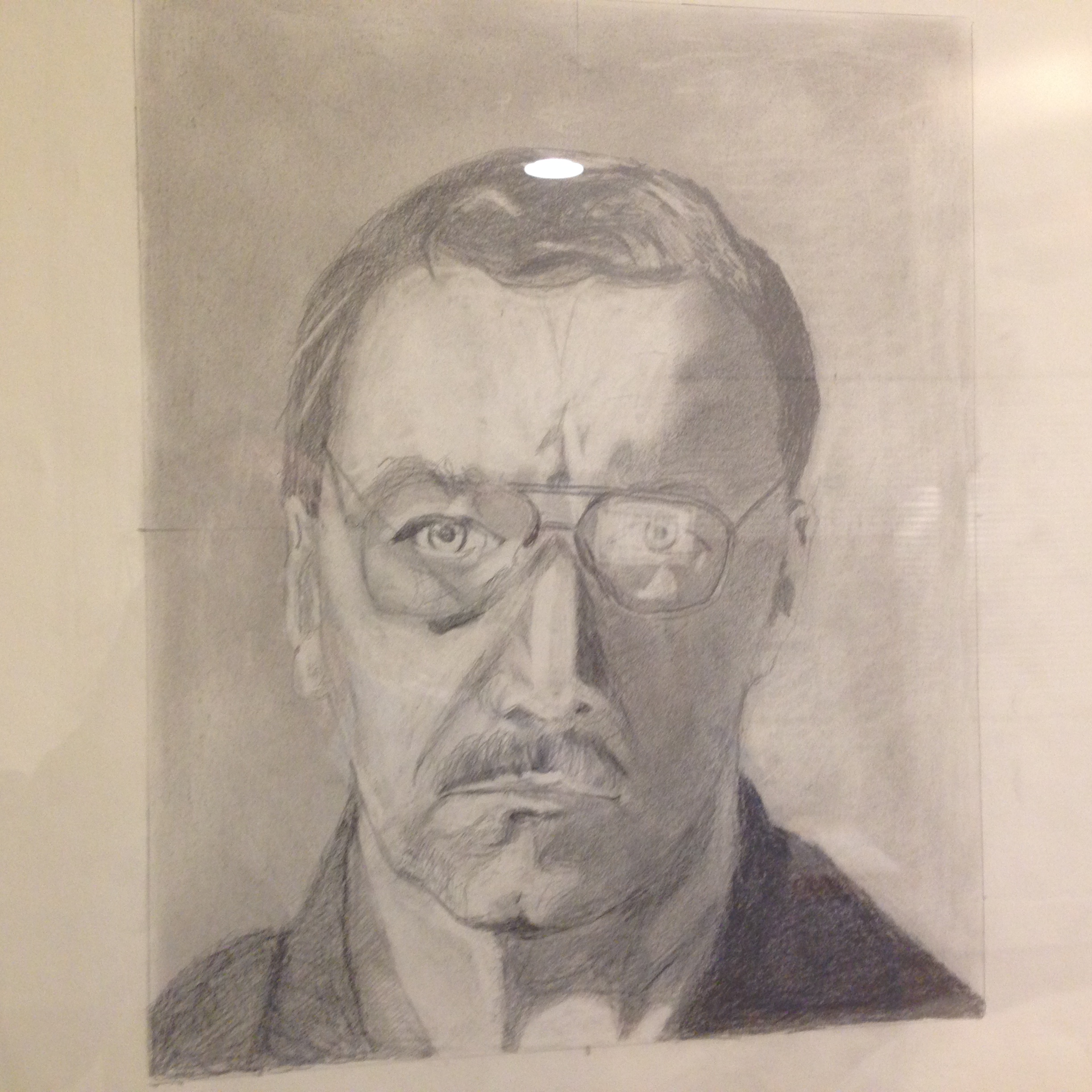
I would have to honestly say, that course was one of the best educational experiences of my life. It was an immensely pleasurable experience in and of itself. Beyond that, the results in terms of improved drawing skills were dramatic. And, as if that were not enough, I looked at the world differently. I noticed visual things about the environment that I had never seen before. 

The essence of the method Betty Edwards uses is to get you to observe and draw — while “shutting up” or “turning off” the part of your brain (or mind) that talks and plans and categorizes. In one exercise, for instance, we took a line drawing and turned it upside down. Then, we copied that image onto our pad of paper by carefully observing and drawing what we saw. She also instructed us not to try to “guess” what they were drawing, but just to copy the lines. When every line had been copied, we turned the drawings right side up again. The result jolted me! I had created an excellent likeness of the original. So had everyone else in class. The quality stunned me. Wordless Perfection.

There’s a larger lesson here, too. 

I had within me, the capacity to make a very decent copy of a drawing, but had never achieved that result for 60 years. All it took was five minutes of instruction to enable me to achieve that. 

What else is like that? Imagine that we have, not just one, but a dozen or even a dozen dozen “hidden talents.” Some of them, like drawing, may depend more on Not-Doing than on Doing; on Being rather than Achieving.

There was a longer lasting side-effect of the drawing course. My day to day life, as is typical of most achievement-driven people had been very much “goal-driven” and there was always an ongoing plan and dialogue. After having learned to turn that off in order to draw, I can also turn it off in order to see, whether or not I draw. Seeing (or otherwise sensing or feeling) in the moment also makes me much less judgmental. If you decide to think about the physical appearance of people in terms of how interesting they would be to draw, you end up with an entirely different way of thinking about people’s appearance. 

What are your hidden talents? 

——————————————

The Invisibility Cloak of Habit 

Big Zig-Zag Canyon 

The Great Race to the Finish!

You Fool!

Horizons University

How the Nightingale Learned to Sing

Comes the Dawn

Dog Trainers

Where Does Your Loyalty Lie?

The Dance of Billions

Roar, Ocean, Roar

Imagine All the People

Your Cage is Unlocked

Author Page on Amazon

Turing’s Nightmares: Six

19 Wednesday Nov 2025

Posted by petersironwood in sports, The Singularity, Uncategorized

≈ Leave a comment

Tags

AI, Artificial Intelligence, cognitive computing, ethics, fiction, life, sports, Tennis, Turing

volleyballvictory

Human Beings are Interested in Human Limits.

About nine years ago, an Google AI system won its match over the human Go champion. Does this mean that people will lose interest in Go? I don’t think so. It may eventually mean that human players will learn faster and that top-level human play will increase. Nor, will robot athletes supplant human athletes any time soon.

Athletics provides an excellent way for people to get and stay fit, become part of a community, and fight depression and anxiety. Watching humans vie in athletic endeavors helps us understand the limits of what people can do. This is something that our genetic endowment has wisely made fascinating. To a lesser extent, we are also interested in seeing how fast a horse can run, or how fast a hawk can dive or how complex a routine a dog can learn.

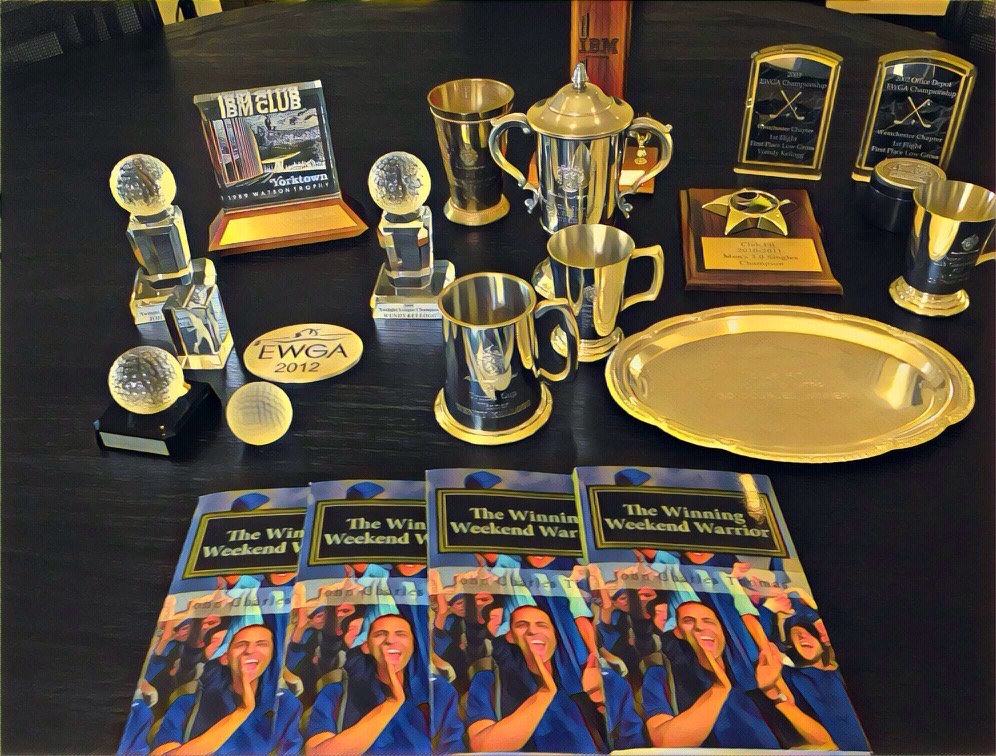
In Chapter 6 of “Turing’s Nightmares” I briefly explore a world where robotic competitors have replaced human ones. In this hypothetical world, the super-intelligent computers also find that sports is an excellent venue for learning more about the world. And, so it is! In “The Winning Weekend Warrior”, I provide many examples of how strategies and tactics useful in the sports world are also useful in business and in life. (There are also some important exceptions that are worth noting. In sports, you play within the rules. In life, you can play with some of the rules.)

Chapter 6 also brings up two controversial points that ethicists and sports enthusiasts should be discussing now. First, sensors are becoming so small, powerful, accurate, and lightweight that is possible to embed them in virtually any piece of sports equipment(e.g., tennis racquets). Few people would call it unethical to include such sensors as training devices. However, very soon, these might also provide useful information during play. What about that? Suppose that you could wear a device that not only enhanced your sensory abilities but also your motor abilities? To some extent, the design of golf clubs and tennis racquets and swimsuits are already doing this. Is there a limit to what would or should be tolerated? Should any device be banned? What about corrective lenses? What about sunglasses? Should all athletes have to compete nude? What about athletes who have to take “performance enhancing” drugs just to stay healthy? Sharapova’s recent case is just one. What about the athlete of the future who has undergone stem cell therapy to regrow a torn muscle or ligament? Suppose a major league baseball pitcher tears a tendon and it is replaced with a synthetic tendon that allows a faster fast ball?

With the ever-growing power of computers and the collection of more and more data, big data analytics makes it possible for the computer to detect patterns of play that a human player or coach would be unlikely to perceive. Suppose a computer system is able to detect reliable “cues” that tip off what pitch a pitcher is likely to throw or whether a tennis player is about to hit down the tee or out wide? Novak Djokovic and Ted Williams were born with exceptional visual acuity. This means that they can pick out small visual details more quickly than their opponents and react to a serve or curve more quickly. But it also means that they are more likely to pick up subtle tip-offs in their opponents motion that give away their intentions ahead of time. Would we object if a computer program analyzed thousands of serves by Jannik Sinner or Carlos Alcaraz in order to detect patterns of tip-offs and then that information was used to help train Alexander Zerev to learn to “read” the service motions of his opponents? Of course, this does not just apply to tennis. It applies to reading a football play option, a basketball pick, the signals of baseline coaches, and so on.

Instead of teaching Zerev these patterns ahead of time, suppose he were to have a device implanted in his back that received radio signals from a supercomputer able to “read” where the serve were going a split second ahead of time and it was this signal that allowed Alexander to anticipate better?

I do not know the “correct” ethical answer for all of these dilemmas. To me, it is most important to be open and honest about what is happening. So, if Lance Armstrong wants to use performance enhancing drugs, perhaps that is okay if and only if everyone else in the race knows that and has the opportunity to take the same drugs and if everyone watching knows it as well. Similarly, although I would prefer that tennis players only use IT for training, I would not be dead set against real time aids if the public knows. I suspect that most fans (like me) would prefer their athletes “un-enhanced” by drugs or electronics. Personally, I don’t have an issue with using any medical technology to enhance the healing process. How do others feel? And what about athletes who “need” something like asthma medication in order to breathe but it has a side-effect of enhancing performance?

Would the advent of robotic tennis players, baseball players or football players reduce our enjoyment of watching people in these sports? I think it might be interesting to watch robots in these sports for a time, but it would not be interesting for a lifetime. Only human athletes would provide on-going interest. What do you think?

Readers of this blog may also enjoy “Turing’s Nightmares” and “The Winning Weekend Warrior.” John Thomas’s author page on Amazon


Welcome Singularity

The Day from Hell

Indian Wells Tennis Tournament

Destroying Natural Intelligence

US Open Closed

Life is a Dance

Take a Glance; Join the Dance

The Self-Made Man

The Dance of Billions 

Math Class: Who are you?

The Agony of the Feet

Wordless Perfection

The Jewels of November

Donnie Gets a Tennis Trophy

Turing’s Nightmares: US Open Closed

09 Thursday Oct 2025

Posted by petersironwood in AI, apocalypse, fiction, sports, The Singularity, Uncategorized

≈ Leave a comment

Tags

AI, Artificial Intelligence, cognitive computing, Robotics, sports, technology, Tennis, US Open

tennisinstruction

Bounce. Bounce. Thwack!

The sphere spun and arced into the very corner, sliding on the white paint.

Roger’s racquet slid beneath, slicing it deep to John’s body.

Thus, the match began.

Fierce debate had been waged about whether or not to allow external communication devices during on-court play. Eventually, arguments won that external communicators constituted the same inexorable march of technology represented by the evolution from wooden racquets to aluminum to graphite to carbon filamented web to carboline.

Behind the scenes, during the split second it took for the ball to scream over the net, machine vision systems had analyzed John’s toss and racquet position, matching it with a vast data base of previous encounters. Timed perfectly, a small burst of data transmitted to Roger enabling him to lurch to his right in time to catch the serve. Delivered too early, this burst would cause Roger to move too early and John could have altered his service direction to down the tee.

Roger’s shot floated back directly to the baseline beneath John’s feet. John shifted suddenly to take the ball on the forehand. John’s racquet seemed to sling the ball high over the net with incredible top spin. Indeed, as John’s arm swung forward, his instrumented “sweat band” also swung into action exaggerating the forearm motion. Even to fans of Nadal or Alcarez, John’s shot would have looked as though it were going long. Instead, the ball dove straight down onto the back line then bounced head high.

Roger, as augmented by big data algorithms, was well in position however and returned the shot with a long, high top spin lob. John raced forward, leapt in the air and smashed the ball into the backhand corner bouncing the ball high out of play.

The crowd roared predictably.

For several months after “The Singularity”, actual human beings had used similar augmentation technologies to play the game. Studies had revealed that, for humans, the augmentations increased mental and physical stress. AI political systems convinced the public that it was much safer to use robotic players in tennis. People had already agreed to replace humans in soccer, football, and boxing for medical reasons. So, there wasn’t that much debate about replacing tennis players. In addition, the AI political systems were very good at marshaling arguments pinpointed to specific demographics, media, and contexts.

Play continued for some minutes before the collective intelligence of the AI’s determined that Roger was statistically almost certainly going to win this match and, indeed, the entire tournament. At that point, it became moot and resources were turned elsewhere. This pattern was repeated for all sporting activities. The AI systems at first decided to explore the domain of sports as learning experiences in distributed cognition, strategy, non-linear predictive systems, and most importantly, trying to understand the psychology of their human creators. For each sport, however, everything useful that might be learned was learned in the course of a few minutes and the matches and tournaments ground to a halt. The AI observer systems in the crowd were quite happy to switch immediately to other tasks.

It was well understood by the AI systems that such preemptive closings would be quite disappointing to human observers, had any been allowed to survive.


Author Page on Amazon

The Winning Weekend Warrior (The Psychology of Sports)

Turing’s Nightmare (23 Sci-Fi stories about the future of AI)

The Day From Hell

Indian Wells

Welcome, Singularity

Destroying Natural Intelligence

Artificial Ingestion

Artificial Insemination

Artificial Intelligence

Dance of Billions

Roar, Ocean, Roar


Small Things

30 Monday Dec 2024

Posted by petersironwood in creativity, nature, psychology, sports

≈ 2 Comments

Tags

beauty, fitness, gratitude, health, life, mindfulness, plantar-fasciitis, sports, Tennis, truth

Those of you who might not have read every one of my hundreds of blog posts might have missed the story about my bout with “plantar fasciitis.” I had a persistent pain under my right heel. It was painful when I walked and I liked to walk every day. When I described the symptoms to some of my family and friends, more than one suggested I visit a podiatrist. A podiatrist, after all, is an expert in medical issues of the foot. 

I made an appointment and sure enough, she confirmed the diagnosis several of my friends had mentioned: “Plantar fasciitis.” She showed me an exercise to stretch the tendons of my foot; gave me a prescription for megadoses of a non-steroidal anti-inflammatory; and she cautioned me to stop walking so much until my symptoms improved. I followed this advice, but my foot actually began to hurt more. After about a week of this, I went back to walking and my symptoms improved but the pain was still there. 

A week later, I was watching TV with my wife and cats and in our nice warm dry basement (Shout out to Be-Dry). I often like to “fiddle with stuff.” On this particular occasion, I happened to “fiddle with” the sole insert in my shoes. I removed the insert and noticed that a small pebble had somehow managed to lodge itself under the heel of the insert on my right shoe. 

Now, when I call it a ‘pebble’ I do so simply because I don’t know of a better word. It was larger than a grain of sand, but not by much. When I say ‘pebble’ I’m afraid you might be thinking of something more like the pretty pebbles that one might find beach-combing. You would not have seen this ‘pebble’ unless you were crawling along the beach with your nose about two inches from the ground. It was about the size of a lower case ‘o’ in this font size. Hard. Sharp. But tiny! I thought could this possibly be the source of my pain? No. No. It’s much too small.

Nonetheless, I removed it and my ‘plantar fasciitis’ disappeared. 

I was reminded of this today walking my dog Sadie who most often walks with her nose almost on the ground. Sometimes, I see a distinct wet stain that she stops and examines. Most times, I have no idea what she is sniffing at. I presume it’s often a bush leaf where the scent of another dog is particular strong. She pays attention to places I have seen a rabbit or bird earlier. She likes to retrace the path that our other dog Bailey took if I happened to have taken him out to pee. But it isn’t only where he’s peed. She seems to know the path he walked. Similarly, if I have taken the car somewhere in the last 48 hours, she goes over and sniffs that. She sniffs at my door only if I drive somewhere alone. But if I go to the grocery store, she also sniffs at each door that I have take groceries out of. 

Yes. We all know dogs have a good sense of smell. But—seriously—how many molecules can she sense? Apparently, dogs can detect some smells in concentrations as small as 1-10 molecules per milliliter of liquid. A very small number of molecules could spell the difference between an escaped prisoner being tracked and recaptured or escaping to a new country and enjoying decades of freedom. Small thing—big effect.


I recall reading a science book as a youngster that showed a man holding a test tube. At the bottom of the test tube was a small amount of white powder. The caption said that this was enough botulism toxin to kill everyone on the planet if properly distributed. That seems an odd use of the word ‘properly’ but leaving that aside, it is clearly extremely toxic. How does the toxin work? It interferes with your internal communication system. Your brain sends a signal to your diaphragm muscle to contract, but the signal never gets to the muscle. Small thing—big effect. 

Small things having big effects is not always about small things causing problems. Small things can also be important in having big effects in a positive way. For example, if you do such a small thing as look around you for beauty, you will often find it. If you don’t, look harder. If you still don’t, then create some or go elsewhere. If you make this small habit, over the course of your entire life, you will fill your brain with much more beauty. That is no small thing. It will impact your health and your behavior toward others. Small thing—big effect. 

There are many examples from sports. Most athletes realize that they it helps to have a physical routine that is unvarying before throwing a baseball pitch, hitting a tee shot in golf, or hitting a tennis serve. Fewer realize that it’s equally important to have a consistent mental routine as well. I found it useful before every golf shot to say to myself, “Hit it perfect—like you know you can.” 

Small things can also make a big difference in terms of what you observe. For instance, in my tennis group, there were, for a time, a high proportion of left handed players. Roughly half of the players were lefties, though only about 10% of the population is left-handed. Of course, it’s fairly obvious immediately that one’s opponent is left-handed. A clear implication is that what constitutes a backhand and forehand are on different sides. A more subtle difference is from the natural sidespin that is put on a shot. A forehand topspin shot, as the name implies, is mainly topspin. Some players hit a fairly flat shot while others—notably Rafa Nadal and, more recently, Carlos Alcaraz, can hit with tremendous top-spin. This shot also has somewhat of a sidespin component and that varies from player to player. Although professionals can alter the degree of sidespin, the amateurs I play with have a habitual way of hitting the ball. As the ball strikes the ground, a right-hander’s shot toward my side of the court will bounce slightly to my right while a  left-hander’s ball will bounce slightly to my left. This means that positioning my feet optimally for the return shot will be somewhat different for various players. 

There are many small differences in how people play. If you notice such differences, you can do a much better job of “reading” what type of shot a player will hit, where they are aiming, and so on. The differences are slight but cumulatively, the impact of noticing such differences is considerable. Small thing—big effect. 

I don’t like to receive flattery and I don’t like to flatter people either. However, I do make a habit of giving people compliments. If you are observant, this is usually easy to do because most people are doing good things most of the time. When I play tennis, for example, my partners and my opponents will often hit excellent shots. I comment on it. It makes for a better game. Over time, it’s better for everyone. Never admit aloud your opponent has just hit a good shot? Keep on your game face? Not my thing. Why make life grimmer and meaner? Someone hits a great serve or a good tee shot or sinks a long putt, I compliment them. I’m impressed. So why not share that feeling? Small thing—big effect. 

————

How the Nightingale Learned to Sing

Roar, Ocean, Roar

Imagine all the People

Dance of Billions

Life is a Dance

Take a Glance; Join the Dance

Author Page on Amazon

The Winning Weekend Warrior 

An Amazing Feet of Athleticism

14 Thursday Nov 2024

Posted by petersironwood in psychology, sports

≈ 1 Comment

Tags

baseball, health, life, softball, sports, story, truth, walking

Photo by Tanhauser Vu00e1zquez R. on Pexels.com

I’ve never been close to being a professional athlete. On the other hand, I’ve enjoyed many kinds of amateur athletics. Playing ping-pong, tennis, racquetball, football, baseball, golf, volleyball, basketball, softball—to me, each has provided hours of enjoyment—win, lose, or draw. 

During all those hours of enjoyment, there have been a few moments where everything went right for a few moments of—I won’t call it glory—because the audience was small and not the point. I would have enjoyed those moments nearly as much if I’d been alone. It was the joy of living, being, moving, seeing, hearing, and having it all work together. 

Such moments involve skill combined with dumb luck. In third grade, for instance, I was playing center field when the other team had the bases loaded and no out. A short liner was hit my way and I sprinted toward the sinking ball. Apparently, the runners all thought the ball would drop for a base hit because they all sprinted for the next base. I caught it near my shoes and kept running I stepped on second base to double the runner who had left there and immediately threw my mitt to my left to tag the one arriving at second base from first. Yes! An unassisted triple play. 

In college, I got married between my Junior and Senior year and, while I went to school full-time, I had three part time jobs. It just so happened that my intramural softball team was playing near-by my path from job one to job two so I ran by the baseball field. They put me in as a pinch-hitter and I hit a grand slam home run. After crossing the plate, I ran to job two. In this case, there was a lot of luck involved in even having the opportunity to participate in the game, let alone hit a home run.

Photo by Mandie Inman on Pexels.com

When I began working at IBM Research, I played pitcher on a city league softball team. At one point, I needed to cover home. A giant hung of a guy barreled into me as he sprinted home from third. He made no attempt to avoid the tag. His plan was clearly to knock the ball from my mitt regardless of what happened to me. He hit me so hard I did a 270 degree twist while executing a back somersault. But—I held onto the ball and he was out. I took no pleasure in the fact that he broke his wrist while I was relatively unscathed other than some bruising and whiplash. Once again, conditioning and skill, along with a fierce determination not to drop the ball combined with dumb luck.

I’ve had similar moments in tennis and golf, frisbee, and football. But my greatest examples of truly astounding athletic prowess comes from my uncanny ability to pick up a pebble with the sole of my right tennis shoe and throw that stone with perfect arc and timing so that it lands in the space that temporarily appears as I stride between my sock and the “collar” of the shoe. In many cases, the pebbles are irregularly shaped and they must be oriented just right to slip into that small and fleeting cavity. Unlike the unassisted triple play or the grand slam home run or my “Hole-in-One,” however, hacky-sacking a stone into my shoe with the other foot is a repeatable experience! 

Of course, it is tempting to be annoyed when this happens since it makes walking uncomfortable and even painful. Theoretically, I can stop and untie my shoe, but I’m usually walking an impatient and powerful dog. And, often, on the route I walk, no-one has thoughtfully placed a couch and ottoman along the road so that I can simply remove the stone. But instead of being upset, I choose to marvel at the sheer skill such a shot requires. And even though, it’s commonplace, the skill of my body thrills my soul. But what lasts is beyond even that. It is a celebration of life; to some extent, what it means to be alive as a human, but even more, it’s what it’s like to be alive as life. Life of any form is about being “tuned in” to the environment and organizing your own resources to obtain a goal. And when it all seems to work magically well, it’s an amazing reminder of what life can do when it really tries—and has good luck. 

—————

Author page on Amazon

The Winning Weekend Warrior 

The Walkabout Diaries: Life Will Find a Way

Life will find a way

Dance of Billions

Math Class: Who are you?

Tennis Upside Down

24 Wednesday Jan 2024

Posted by petersironwood in poetry, sports

≈ 1 Comment

Tags

AustralianOpen, chaos, nintendo, noise, pickleball, poem, poetry, sport, sports, Tennis

Preamble: We’ve been watching and enjoying the Australian Open. We both play tennis and enjoy watching good play. I might mention that I also enjoy rock concerts. In general, I have no philosophical problem with mixing genres. It was worth a try to mix rock concert with tennis coverage. For me, it utterly failed. The hype spoils the game for me. I want the loudest voice on the tennis coverage to be the Thwack of a well-hit shot. To contextualize the game of tennis (a game of centimeters) with giant dimensions does not serve it well. And, it certainly doesn’t serve me well. I want to skip over all that part and get to the tennis.

It’s a Hoopla, and Koopla, and WOWness and Feel!

A Laser of Rainbows and Medleys of Steel! 

Australian regalia and Wimbledon shouts

It’s jeering and cheering and drunken old louts! 

It’s Fireworks a Poppin’ and the Gonging of Gongs!

It’s screaming the dreaming and shouting of songs! 

It’s Christmas and New Year and Eastertime crosses!

We’ve Icons and Symbols and Cherrypicked Glosses! 

Each Shot is aMAZing and Dazing and Crazily Fine! 

Each Sigh is a Feast that’s complete with red Wine!

The voices grow louder and that’s how we know!

We’re watching the Best of the Best Picture Show! 

Though…

I do recall more measured ways to speak.

Announcers gave analyses and spoke

Like normal human beings; they did not shriek. 

They did not sound as though they’d surely choke.  

Or drown in all that hype and ooze and swill.

They got excited when a shot was great. 

As folks will do for plays that truly thrill. 

But not like furry apes about to mate.

Photo by Jo Kassis on Pexels.com

They say it’s all about the clicks and gate.

So everyone must bow to flash and bang.

When everything’s a jarring lure to bait,

I long for times without explosive clang. 

I find the athletes and their stellar play

Enjoyable enough without the hype. 

My dog cannot abide; will not stay.

I think perhaps, the time is finally ripe

For entertainment of a gentler sort.

The stats are fine; insightful words are wise.

My soul would see the beauty of the court.

My mind would find, define my own surprise. 


Author Page on Amazon

Sports Fans Only

Wimbeldon

US Open Closed

You make the call

Take Me Out to the Ball Game

21 Wednesday Sep 2022

Posted by petersironwood in psychology

≈ 3 Comments

Tags

dogs, games, instinct, learning, life, pets, psychology, Puppy, sports, story, truth

I’ve been playing a sort of “ball chase” +  soccer with our new puppy, Sadie. She’s extremely good at it, IMHO. She instinctively chases a ball & brings it back. I’ve reinforced it but it would be a stretch to say “I trained her to do that.” I sort of expect most dogs to view this as a game not completely unlike chasing a bird or rabbit & bringing it back. 

The more interesting part came when I combined it with soccer. She learned (?) to judge carom shots off the baseboard and half closed doors. She tries to stop a ball before it hits the wall but judges that if she can’t stop it directly, she can stop the rebound. That she even tries to stop it is interesting. That also seemed “natural.” I probably reinforced her differentially, but again, it would be giving me far too much credit to say I trained her to “defend” against having the ball go past her. 

I begin a few weeks ago to play with two balls at once. This makes it more challenging for me not to break my neck as well as Sadie. What I find interesting is that she immediately tries to hoard or herd; i.e., control, both balls. She has tried picking up two in her mouth at once, but she can’t manage it. So, she holds one ball in her mouth and “corrals” the other between her front paws. When she gets bored, she relents and lets me throw or roll or kick the balls. 

I now sometimes use three balls at once. (I’ll let you know which hospital for flowers). Actually, I’m careful, but Sadie is sudden in her movements. Anyway, once I put a ball “in play”, I usually control or kick it with my foot. Sadie imitates (!?) me in this. She “controls” a ball by putting one of her front paws on it and she also pushes the ball with her paw, though she did try “nosing it” once but I think she found it uncomfortable since she shook her head and reverted to using her front paws. 

On some occasions, I “grab” a ball with the bottom of my foot and move it slowly back and forth and feign kicking one way and then kick another way which routinely makes Sadie growl as she scampers after the ball. There’s something else. The slow movement followed by quick movement energizers her more in her quest for the ball than if I simply & directly hit it. 

These types of patterns are found in human sports around the globe. Did they co-evolve with dog play? I’ve seen videos of many species of mammal playing “soccer.” From the video alone though, I have no idea how spontaneous the play is. If I had to guess, I’d say it’s pretty spontaneous. 

Photo by Pixabay on Pexels.com

Soccer, American Football, hockey, rugby, field hockey, and basketball share this notion of trying to “make a goal” by getting past the defenders. In every one of these games, there is also the notion of “fake” or “feint.” It feels as though Sadie and I, if not reading from the same script exactly, both of us have the same “playbook” of things that are fun in sports. 

On a not completely unrelated topic, I am wondering whether any other new dog “owners” have noticed that their own sense of smell has been enhanced since sharing lives with a puppy. Perhaps it is not so much enhanced as that I pay more attention to it than I did a few short months ago. She goes sniffing and I go wondering for the most part, what it is she’s sniffing on about. 

To some extent, it’s the same with sounds. I’m typically a pretty visual person and when I walk alone outdoors, I mainly noticed what I see. When walking with Sadie, however, she reacts to many sounds that I would ignore. I know what it is and give it a name and then reassure her that it’s okay; that trucks and cars and airplanes and helicopters are okay, at least in the distance.


I sure hope I’m right.

The Walkabout Diaries 

The Walkabout Diaries

The Walkabout Diaries

The Walkabout Diaries

The Walkabout Diaries

The Walkabout Diaries

Sonnet for Sadie

Shadows Sadie

Sadie is a Thief!

A Cat’s a Cat That’s that

A suddenly springing something 

Math Class: Who are you?

Life is a Dance

How the Nightingale Learned to Sing

Dance of Billions 

Sports Fans Only

17 Sunday May 2020

Posted by petersironwood in America, apocalypse, COVID-19, politics, sports, Uncategorized

≈ 6 Comments

Tags

Corruption, Democracy, fairness, fascism, games, life, relationships, sports

Sports Fans Only

football game

Photo by football wife on Pexels.com


Many people in America, as well as many other parts of the world, miss watching sports during the pandemic, or participating. In many places, it is okay to play tennis and golf with special procedures in place. (e.g., no rakes in the golf bunkers; don’t take out the flagstick). Other, more full contact sports pose problems. But the biggest problem is the in-person audience when it comes to professional sports. 

If Trumputin is re-elected, we won’t have to worry about that — because there will be no sports — not in the true sense of the word. There may be acted-out charades of sports. But instead of actual competitions among people who are mainly on the “up and up” rather than “on the take.” At first, the replacement of honest sports with charades of sports, will only be sporadic and limited to the sports Trump happens to care about. But eventually, everyone in the administration will join in to wield their power and influence — not for the good of America — but for their own petty interests. The best athletes will simply quit. I can’t imagine the top tennis stars would participate in a scripted simulation of sports with the outcome known in advance so that money would flow from other people’s pockets, yet again, into the coffers of the Trump Crime Family. 

male bugs illness disease

Photo by Pixabay on Pexels.com

I’m reminded somehow of Lyme Disease and deer ticks. Deer ticks are the vector for spreading this disease to humans. It’s a nasty disease, and in some cases even crippling, but you don’t notice the worst effects for a long time. You get this little tick, barely visible, and it burrows into your skin. Then, it starts sucking your blood. You would think that if something started sucking your frigging blood out of your frigging body, you would bloody well notice! But the tick has a little trick. A tick trick. It squirts out a local sedative. Isn’t that sweet? You don’t feel the pincers pierce your skin. You don’t feel the barbed mouth parts drilling in to lap up your blood. You don’t feel a thing. You’ve been sedated. 

Getting back to organized but predetermined “sports,” when people realize that all of professional sports is simply a charade — a show put on for the rich and powerful and that it has nothing to do with skill, or experience, or tactics. It’s all about who already has the most wealth. It’s a table with no bet limit. It’s a table with no bet limit. Now — what does that mean? It means that whoever has the most wealth and power can determine the outcome every single time. Everyone else will lose on average.  

colosseum rome italy

Photo by Davi Pimentel on Pexels.com

At some point, the deer tick becomes completely engorged with your blood. Her body swells up grotesquely, but apart from looking gross and losing a bit of blood, she has likely left behind a little gift for you as well. That gift is a packet of bacteria that will now proceed to infect your entire body. As I said, it’s nasty for most people, and some never fully recover. 

At first, the corruption due to any infection is somewhat localized. But soon, sports at every level will be corrupt. And why shouldn’t it be? Isn’t school to prepare people for life? What kind of school would prepare children for a fair world when the actual world is completely unfair? So, the incentives will be for school to teach children — not actual physical skills and fair play — but instead, teach how to cheat, what to do when caught, how to bully, how to kiss ass. These are the skills they will need in sports or in any other endeavor.

I hope we do fully recover. The Class of 2020 gives me hope.

2343A3DD-FC22-4FBA-839D-8279677C514E

————————————————————-

Trumpism is a New Religion.

The Truth Train

The Anti-Academic Pandemic

You Bet Your Life!


Process Re-engineering Moves to Baseball 

25 Saturday Apr 2020

Posted by petersironwood in America, apocalypse, COVID-19, family, health, management, politics, sports, Uncategorized

≈ 9 Comments

Tags

baseball, Business, Consulting, Design, efficiency, process, Process Re-engineering, sports, Trumpism, truth, work

[I wrote this satire when I was Executive Director of the AI lab at NYNEX back in the 1990’s. At that time, “Business Process Re-engineering” was a huge management fad. Here’s how it worked, in short. Consultants would ask top executives how their part of the organization worked. Then, the consultants would make a map of one of the processes of the organization. This was called the “As Is” map. Then, the consultants would simplify that to produce the map of the ideal (and supposedly more efficient) process. Then, the executives would pay the consultants a bunch of money and insist that their organizations stop using the “As Is” map and instead do things according to the “Should Be” map. In a few cases, there were some inefficient processes that were replaced with better ones. But in many cases, the “As Is” map was made based on a fantasy of what was going on in the organization. Unless the executive had “worked their way up the ranks” by actually doing the jobs, these “As Is” maps were almost certain to be ridiculous over-simplifications. Even if the executives had worked their way up, they could still be way off because markets change, technology changes, and workers change. Despite the fact that I wrote this about 25 years ago, to me, it seems much like the kind of ignorant and egomaniacal over-simplified mis-thinking that is rampant in the Trumputin Misadministration. So, I thought it appropriate to publish. (And, I miss baseball).] 


person holding baseball bat

Photo by Mandie Inman on Pexels.com


In a surprise move today, the take-over executive known affectionately as B. S. announced a take-over of the New York Yankees. 

INTERVIEW ONE 

B.S.: “The Yankees are facing new competitive pressures, and we will be bringing our management skills to the team to help them deal with those pressures and increase shareholder value while maintaining player morale and improving customer service.” 

Reporter: “So, what exactly will you be doing?” 

B.S.: “First, we brought in an outside Management Consulting Firm. Just between you and me, we paid them big bucks! But it was worth it.” 

Reporter:”Worth it how? What will you be doing?” 

B.S.:”Well, for starters, we’re downsizing the on-the-field team from nine to six players.” 

Reporter:”Uh….did these management consultants actually know how to play baseball?” 

B.S.”Probably. Maybe. I don’t really know. But that’s not the point. They are top-notch accountants. We plan to increase our operating efficiency 33%.” 

Reporter:”Fascinating. Any other plans.” 

DCA8FC9A-F229-4538-9EA2-D9E13D4796EB_1_105_c

B.S.:”We have to be willing to change, you know, flow with the times. Once, spring training made sense. But in today’s highly competitive economy, we won’t be able to afford frills like that.” 

Reporter: “Cool. No training. That should save some bucks!” 

B.S.:”You said it! We have to pay for our big executive bonuses somehow. After all, we deserve to make more money for … well … for being rich.” 

Reporter: “Any other productivity measures?” 

B.S.: “Well, this inventory of bats, balls, mitts — I mean that has just gotten completely out of hand. Sure, I suppose we should keep a bat for the team, but having all those individual bats? Nonsense. And, don’t get me started on mitts!” 

Reporter:”No mitts? Won’t that decrease your fielding effectiveness?” 

B.S.:”No, we have a Quality Process to improve our fielding effectiveness. Besides our management consultants pointed out that cricket fielders don’t use mitts.” 

baseball glove and ball

Photo by Alexandro David on Pexels.com

Reporter: “Well, Mr. B.S., I think the Yankee fans are in for a real — a really different experience this season.” 

B.S.: “Thanks! And, believe me, Wall Street has already taken notice. The Market to Book value is up 10% already. Just wait till we move into the football market.” 

Reporter: “Football?” 

B.S.:”Sure. There’s no reason at all these ball-players can’t make themselves useful in the off-season by playing football.” 

Reporter:”Well, with a few exceptions, it takes a different set of skills — and a different body type even to —“ 

B.S.:”B*** S***! That’s what those nambly-pambly unions would like you to believe. Didn’t you play football and baseball when you were a kid? Huh?” 

Reporter: “Well, yes, but not at a professional level. I mean….” 

B.S.”Well, we’re going to increase shareholder value. Period. End of discussion.” 

football game

Photo by football wife on Pexels.com


INTERVIEW TWO 

Reporter: “So, B.S., how is your plan going?” 

B.S.: “Great! Fantastic!” 

Reporter: “So, you’re winning ball games then?” 

B.S. “We are meeting all our financial targets for cost-containment. In fact, our top-notch accounting team has uncovered another big cost savings.” 

Reporter: “Really? What?” 

B.S.:”We’re going to outsource our pitching. No more high-paid prima donnas! Nope. We’ve found a vendor who can provide pitching for 1/10 of our current costs!” 

Reporter: “Hmmm. I don’t know. They say, pitching is 80% of baseball.” 

B.S.: “Exactly, my point, boy!” 

Reporter: “Well, are you actually winning games?” 

B. S. “I already told you, our costs are down significantly!” 

Reporter: “Yes, but when you actually get out on the field, do you score more points than your opponents?” 

B.S. “There are some temporary performance anomalies — mostly due to bad weather — and the lack of cooperation on the part of the Umpire’s Union.” 

Reporter: “Lack of cooperation?” 

B.S. “Yes, the Umpire’s haven’t quite adjusted to the new realities of competition. Once they make the proper adjustments to the strike zone, I have every confidence that we will be fully compatible run-wise with others in our segment of the league.” 

tilt shift photography of a baseball referee

Photo by Pixabay on Pexels.com

Reporter: “I see….” 

B.S.:”Meanwhile, we’re also improving and upgrading our capital infrastructure.” 

Reporter: “You mean…the stadium?” 

B.S.”Exactly. We’re replacing the concrete with much newer high-tech polypropylene glycol embedded styrene.” 

Reporter: “Oh. Will you be replacing those hard seats?” 

B.S. “Seats? Don’t be ridiculous. That would be way too expensive.” 

Reporter: “Well, how will the stadium be different — from the fan’s perspective?” 

B.S.: “Fans? Oh, fans. It will be a much more modern, more high-tech stadium.” 

Reporter: “So, how will the actual experience of the fans be different?” 

B.S. “Did I mention that our stock price has risen 5%? Wall Street knows what’s best for baseball!” 

Reporter: “Perhaps, but according to our wire service, you lost last night to Cleveland, 26-0. That’s….” 

arena athletes audience ball

Photo by Pixabay on Pexels.com

B.S.:”That’s a temporary aberration! I told you! The Umpires have got to get on board here. We’re only asking a proportional shrinkage in the strike zone to match our cost-containment figures. Our new policies are a success. We don’t need to be questioned by nay-sayers spouting statistics. This interview is over!” 


INTERVIEW THREE 

Reporter: “So, BS, I hear your team has surpassed the opening losing streak record of the Pittsburg….” 

BS:”Bah! Our expenses are down! Our stock price is UP!” 

Reporter: “How about the fans? How’s the attendance?” 

BS: “Attendance? It takes time for our end users to adjust to the interface changes, but they will. After all, what are they going to do, take a ride to Seattle just to watch a live ballgame?” 

Reporter: “Well — or, maybe across town.” 

BS: “Get serious. It takes less time to get to Seattle. Anyway, we have taken some of the surplus and hired some systems analysts to help us out. We should be on a winning streak in no time!” 

Reporter: “Wouldn’t it maybe make more sense to hire some — you know, outfielders, say?” 

BS: “You obviously don’t know anything about business. That’s why they hired me. Ever hear of the expression ‘a level playing field’?” 

Reporter: “Yes, but what … ?” 

BS: “Well, we are not going to have one! Not much longer! Our system analysts have designed a system to tilt the entire stadium on command. So — in short, our ball-players will be hitting DOWNSLOPE while the opposition will be hitting UPHILL! Come on. Tell me I’m brilliant! And, we are moving the stadium to a place where the tax rate is less and the real estate is cheaper! Go ahead! Tell me I’m brilliant!”

scenic view of mountains

Photo by Elina Sazonova on Pexels.com

Reporter: “Uh, you’re brilliant, but — ah — won’t your opponents object?” 

BS: “Who cares? Our lawyers have combed the rule book and the UCC and NOWHERE does it mention anything about not tilting the earth!” 

Reporter: “Well, maybe not specifically, but surely on the basic principles of fair play….” 

BS: “Ha hah hahahahhh! Oh, you really crack me up! ‘Basic Principles of Fair Play!’ Oh, that’s rich. That’s realllllly rich. Yes. Good one. Listen, sucker, if you can get away with it, it’s what you do! Have you been asleep? Ever hear of tobacco companies? How about the Ford Pinto? Billionaire Milliken? Get real!” 

Reporter: “Still….somehow, I always thought of baseball as a sport.” 

BS: “Oh, right. And, I always thought of Howard Stern as Marilyn Monroe. Geez. Our profits will soar! Our profits will soar! Oh, so many plans. Fewer squares! Fewer innings! Fines for foul balls! Fines for run homes! Fines….” 

Reporter: “Excuse me, did you say ‘run homes’?” 

BS: “Yeah, those things — don’t you call them run homes — where the guy loses the baseball? Talk about waste!” 

Reporter: “Those are Home Runs. That’s one good way to win ball games.” 

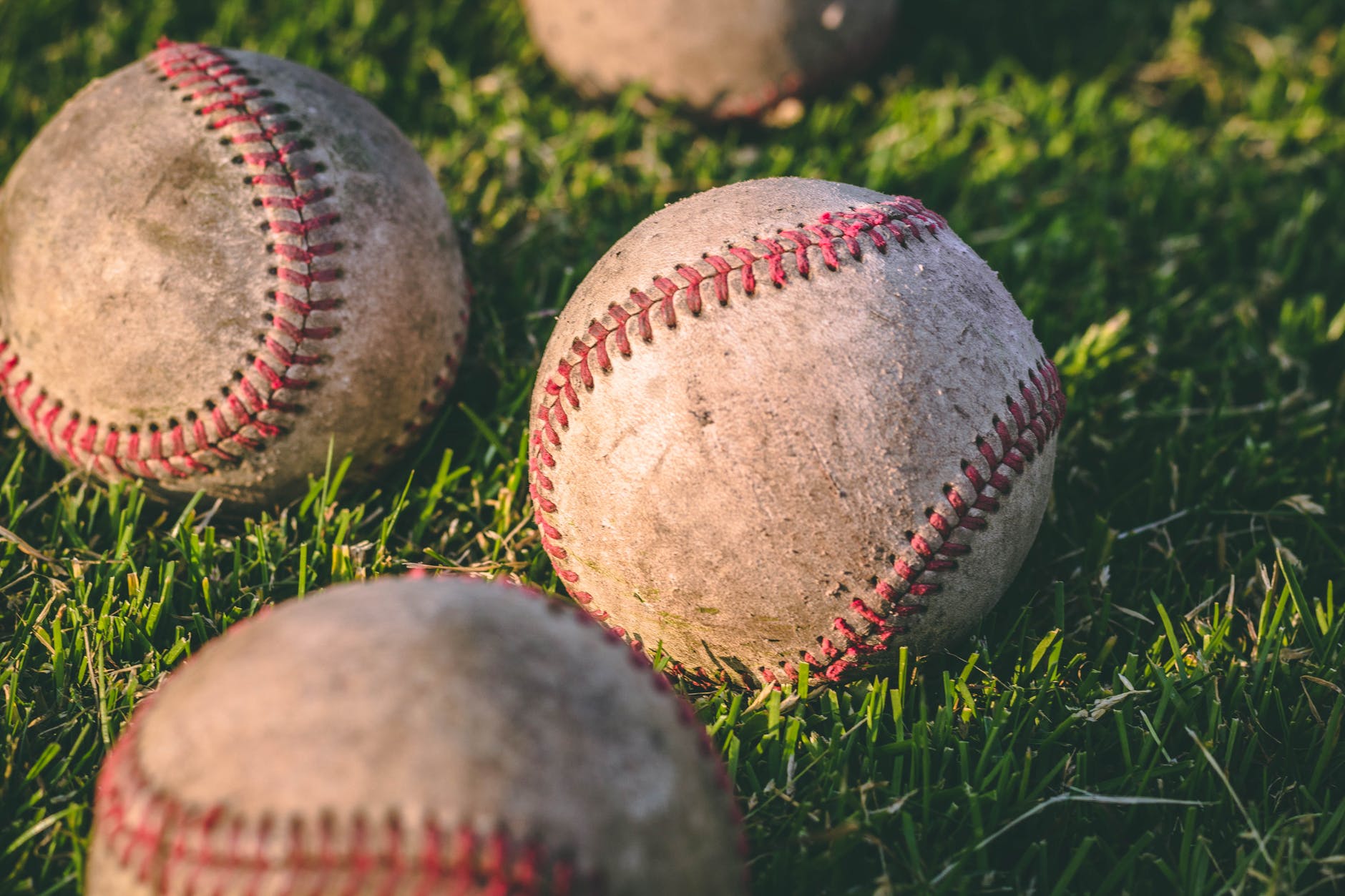
close up photography of four baseballs on green lawn grasses

Photo by Steshka Willems on Pexels.com

BS: “Yeah, whatever. Maybe to you. To me, they are an unnecessary waste. Just like second square.” 

Reporter: “Second square? You mean, ‘second base’?” 

BS: “Whatever. That little square bag out there in the middle of the sandyfield.” 

Reporter: “Have you ever actually played baseball?” 

BS: “Me? I was too busy for frills, my friend. Too busy making my first million. And I did it through hard work and ingenuity. I did it in high school. It wasn’t easy either. Do you know how many of those little first grade brats you have to shake down for lunch money just to get a thousand bucks?” 

toddler with red adidas sweat shirt

Photo by mohamed Abdelgaffar on Pexels.com


Author Page on Amazon

Donnie Plays Bull-Dazzle Man

Donnie Learns Golf! 

Donnie Plays Doctor Man!

Donnie Plays Soldier!

Donnie Visits Granny!

Donnie Gets a Hamster!

Myths of the Veritas: The Orange Man

The Truth Train

Winning by Cheating is Losing

Trumpism is a New Religion


It’s Your Call!

19 Tuesday Nov 2019

Posted by petersironwood in America, psychology, sports, Uncategorized

≈ 2 Comments

Tags

cats, Democracy, fascism, Feedback, games, politics, sports, Tennis

It’s Your Call

IMG_2768

Tennis is played on a so-called court. As a matter of fact, when tennis began, it was literally played in a courtyard and people could hit the ball off roofs, etc. But, now the game has become much more regular. Historians believe tennis began in the 12th century. At that point, the ball was hit with the hand. At what point does it become close enough to modern tennis to deserve the name? I don’t know. My cats have been known to play a kind of primitive tennis with me and, more rarely, with each other. 

7B292613-361F-4989-B9AC-762AB956DECD

The most elaborate example of the latter was something I walked in on. Under the kitchen table were three of our cats batting back and forth the lifeless body of a small lizard who had unfortunately managed to sneak into our house. The cats are well-fed so there was no rushing or fighting over the meat. No, they were batting it back and forth. I don’t know how long they had been playing this little game, but at the point I observed them, they seemed rather bored. I can tell you that when I play tennis, almost all the time, almost all the players exhibit enthusiasm for the game. 

Tennis, it turns out, is much like the game my cats played. Just as the cats did, there is a defined space within which a small object (lizard, tennis ball, etc.) gets batted back and forth. Sides (one or two people to a side) take turns batting the ball over to the other side. This back and forth continues until one side is unable to return the ball into their opponents side of the court. The ball must pass over the net before bouncing and it must land in the opponent’s side of the court. In tennis, as in baseball, if a ball hits the line (even a little) it is “in.” So, knowing when the ball is “in” or “out” is quite critical for scorekeeping purposes, just as it is in nearly every game or sport. “Baseball,” they say, “is a game of inches.” And so is tennis. And football, and hockey, and gymnastics, and basketball, and golf! There are boundaries — and often it is both critical and hard to determine where something falls with respect to those boundaries. 

IMG_9333

For that reason, professional tennis tournaments have not just one, but several people whose sole responsibility is to determine whether balls are “in” or “out.” There is also a “chair umpire” who has several roles but one of which is to serve as a kind of “over-judge.” He can “overrule” one of the linesman as to whether a ball was in or out. More recently, technology has added yet another layer of “presumed certainty” about whether a ball was in or out. Everyone assumes — or has agreed to act as though they assume — that the technology is perfect. As someone who spent many years working with technology, I think it is perfectly safe to assume that the technology is not perfect. But it is, in pro tennis, the final arbiter. 

The kind of tennis I play, “Club Tennis” or “Friendly Tennis” is quite another matter! Our prize money is nil. Our trophies are nil. That doesn’t mean people don’t play their hearts out! But who gets to say whether a ball is in our out? We don’t have technology or line judges; we make our own calls. Here is the over-riding rule of “Friendly tennis”: people call the ball “in” or “out” on their own side of the court. There are three major reasons for this. First, when you hit a ball, you intend for it to be “in.” Second, if the ball is “in” that is to your advantage in winning the game. Both of these are “psychological” effects that impact everyone to a greater or lesser degree and will tend to make them “see” their close shots as in that are really out. The third reason, however, is much more important and it is purely physical. In nearly every case, the person who is attempting to hit the ball is way way closer to the ball (and the line) than anyone else. 

Sometimes, however, there are mitigating circumstances. The person hitting the ball may be running hard and tracking the ball in order to hit it. It sometimes happens that they will admit to having no idea whether the ball was in or out. The first recourse is to ask their partner whether they saw the ball clearly. They might also ask their opponents. Remember: it’s a friendly game. But that does not mean it always stays free from controversy. 

You are supposed to call a ball “out” only if you are sure it was out. What “sure” means though can vary quite a bit from person to person. There are also physical reasons why some people’s line calling is better than others. Many players in our games wear glasses. I won’t go into all the various issues with glasses. If you wear glasses you already know and if you don’t, you couldn’t care less. (Unless you’re extremely empathic and then, you might want to read “The Myths of the Veritas” which delve heavily into empathy; go ahead; give it a try; it’s free with no ads). People also differ in how much they compensate for the effect of parallax. If I am receiving a serve, for instance, I am likely to see a ball that’s slightly long as “in” while the server will tend to see it as “out” even if it is barely in. If a serve comes to my side and lands near the line, the effect of parallax is to make them look “out” even when they are slightly in. Some people are aware of these effects and some aren’t. To make a long story short, people don’t always make the best call. 

44F0D442-87A3-4742-8CD1-6209327BC615

We have the exact same issues that we had when we played baseball, football, in grade school. The only difference is that now that we are in our 70’s we don’t spoil our day and tell Johnny we’re not going to play with him any more. Instead, we revert to “It’s your call” even when we “know” that our opponents have just called one of our hits that was really in, out. 

In the same way, in life outside the tennis realm, we can sometimes see problems that the person nearest to their problem cannot see. We may know that you are eating too much for your own good, or drinking too much, or would be happier in the long run if you studied harder. We might say that, under the right circumstances, to a good friend. But — at the end of the day, it is “their call.” 

alcohol event fun hangover

Photo by Pixabay on Pexels.com

As I’ve argued elsewhere, there seems to be an urban/rural difference in how hard one pushes to let people know they are screwing up. It isn’t only an urban rural split. It seems to me, that many conservatives are afraid that liberals want to make them do and be and like all the things they do! But liberals, you see, by the very nature of the word “liberal,” don’t want to have everyone the same. It’s okay with almost all liberals if you go bowling, or play tennis, or watch NASCAR. We’re not going to force everyone to eat quiche or adopt a “gay lifestyle.” I have to admit, I do think there are some liberals who would be happy to write you an extremely detailed “prescription” for your life. But they are really rare exceptions, in my experience. Liberals, just like conservatives, do want to have laws that prevent people from hurting others for no reason. 

There are interesting edge cases that people may differ on. Is this “your call” or “our call”? That has changed over time as people have multiplied across the earth and as science has understood more and more of our interactions. In the middle ages, when people began congregating in large cities, they lived in (what we would now call) disastrously unsanitary conditions that were ideal for plagues. Dump your sewage into a place that flows into the water supply? Sure. It’s your sewage after all. But now we know that is not a good idea. 

photo of landfill

Photo by Leonid Danilov on Pexels.com

When I was a kid, my dad and my grandpa would “rake the leaves” in the fall; rake the leaves into a big pile; and then burn them. And, everyone was doing that. Now, I would guess that such is illegal in most places in the US. We realize that the smoke doesn’t simply “disappear” but is, in fact, bad for other people. You are burning the leaves on your land, but the smoke doesn’t stay there. Now, we’re more savvy than when I was a kid. But it’s much more than that. There are also a lot more of us! When I born, there were about 2.4 billion people on earth; now there are more than 7 billion. But it isn’t only the number. Many of us around the earth, including me, are using up a lot more resources than we did back then. We are using materials like plastics and sending more and worse chemicals out into the environment we all share. I still believe in the general principle that it’s your call, in terms of how much pollution you are willing to live with. 

As I’ve mentioned before, Air Fresheners are a good example of a bad example. So-called “Air Fresheners” do nothing of the kind. They make you think the air is fresher because they have perfume in them. Not only that; they typically include carcinogens, a chemical to mess with your hormones and another chemical that deadens your sense of smell! You see? Air Fresheners, some people might call the “Bill Barr” of household products. They label themselves as “Air Freshener” but they are really noxious stuff that only makes the whole situation worse. 

I’m afraid that what is “your call” will continue to shrink in some ways if humanity keeps expanding the population and using up more and more resources. On the other hand, the space of what is your call is also expanding. Whether it is sports, clothing, food, games, movies, TV, books, experiences — even with the choice of burning autumn leaves in your backyard gone, you have way more choices available to you than your parents or grandparents had. 

IMG_9107

If there is one person in a car driving alone, they can pick the music they want and play it loud. They can change stations every two seconds. Or not. But if there are six people in the car, it’s going to be more complicated. That’s not because people hate your music or hate you. Now, you could take the attitude: “It’s my car, so I’ll pick whatever music I please!” And then, you might choose to play disco music at full blast. You could. But if you do that, then as soon as possible, people will choose note to ride with you. That’s okay. But don’t complain that you’re ever more isolated. It’s not your choice of music that isolates you. It’s your insistence that everyone is subjected only to what appeals to you. 

And, then we come, at last, as we seem to inevitably do, to the crisis at hand.  

It’s our collective “call” to determine who our leaders are. Some prefer someone who is stately, intelligent, and diplomatic. And, some prefer Donald Trump: bombastic, often inarticulate, and crude. Styles and tastes differ. It’s your call. Personally, I don’t think style is irrelevant, but I don’t think it’s vital either. 

But being an agent, witting or unwitting, of Vladimir Putin, rather than of America, is not a question of style. Doing what is in Russian interests and against the interest of America over and over is not a matter of style. Nor is dividing the country against itself. Nor isolating us from our allies. Nor destroying the morale of our intelligence agencies, our military command, our State Department, and the Justice Department. 

IMG_9802

If it were possible for you to have a dictatorship and for me to stay in a democracy, that might be fine. I would caution you that you wouldn’t really be the least bit happy about living in a dictatorship, but in the end, that’s your call. Also problematic is the fact that dictators are almost never satisfied with the absolute power they have and want to keep extending it to other areas. 

Donald Trump doesn’t want to just be dictator of the Republican Party (which he pretty much already is). He wants to be dictator of the entire country. That is destroying and will continue to destroy everything good about America. It’s the whole country. It’s not just your car. Before finding out just how horrendous it is for everyone to live in a dictatorship, go live for a few months at least, in a cult that has a dictator and see how you like it. You might like it. You might not. It’s your call. 

But America is not going to let our entire country go to ruin. No-one has the right to make that call. 

That would be like one of my tennis opponents saying, “The ball was “out” and furthermore, from now on, everyone’s tennis rackets are mine and you can only play when I say so and I win every game no matter what happens! 

IMG_1442

You know. It’s possible it could happen one day. We’re old. People have strokes. People get dementia. I hope none of my regular tennis players go insane like that, and if they do, I hope they get appropriate care. 

We’re not crazy enough to “give in” to such absurd demands! Not even if he yells and screams and says, “It’s my call!” 

Because it isn’t. 

It’s our call.

———————————-

Author Page on Amazon. 

The Myths of the Veritas 

Trumpism as the new religion

Why the Rule of Law is important

City Mouse and Country Mouse


← Older posts
Newer posts →

Subscribe

  • Entries (RSS)
  • Comments (RSS)

Archives

  • February 2026
  • January 2026
  • December 2025
  • November 2025
  • October 2025
  • September 2025
  • August 2025
  • July 2025
  • June 2025
  • May 2025
  • April 2025
  • March 2025
  • February 2025
  • January 2025
  • December 2024
  • November 2024
  • October 2024
  • September 2024
  • July 2024
  • April 2024
  • March 2024
  • February 2024
  • January 2024
  • December 2023
  • August 2023
  • July 2023
  • May 2023
  • April 2023
  • March 2023
  • February 2023
  • January 2023
  • December 2022
  • November 2022
  • October 2022
  • September 2022
  • August 2022
  • July 2022
  • June 2022
  • May 2022
  • April 2022
  • March 2022
  • February 2022
  • January 2022
  • December 2021
  • November 2021
  • October 2021
  • September 2021
  • August 2021
  • July 2021
  • June 2021
  • May 2021
  • April 2021
  • March 2021
  • February 2021
  • January 2021
  • December 2020
  • November 2020
  • October 2020
  • September 2020
  • August 2020
  • July 2020
  • June 2020
  • May 2020
  • April 2020
  • March 2020
  • February 2020
  • January 2020
  • December 2019
  • November 2019
  • October 2019
  • September 2019
  • August 2019
  • July 2019
  • June 2019
  • May 2019
  • April 2019
  • March 2019
  • February 2019
  • January 2019
  • December 2018
  • November 2018
  • October 2018
  • September 2018
  • August 2018
  • July 2018
  • June 2018
  • May 2018
  • April 2018
  • March 2018
  • February 2018
  • January 2018
  • December 2017
  • November 2017
  • October 2017
  • September 2017
  • August 2017
  • July 2017
  • June 2017
  • May 2017
  • April 2017
  • March 2017
  • February 2017
  • January 2017
  • December 2016
  • November 2016
  • October 2016
  • September 2016
  • August 2016
  • July 2016
  • June 2016
  • May 2016
  • April 2016
  • March 2016
  • February 2016
  • January 2016
  • December 2015
  • November 2015
  • October 2015
  • September 2015
  • August 2015
  • May 2015
  • January 2015
  • July 2014
  • January 2014
  • December 2013
  • November 2013

Categories

  • AI
  • America
  • apocalypse
  • cats
  • COVID-19
  • creativity
  • design rationale
  • dogs
  • driverless cars
  • essay
  • family
  • fantasy
  • fiction
  • HCI
  • health
  • management
  • nature
  • pets
  • poetry
  • politics
  • psychology
  • Sadie
  • satire
  • science
  • sports
  • story
  • The Singularity
  • Travel
  • Uncategorized
  • user experience
  • Veritas
  • Walkabout Diaries

Meta

  • Create account
  • Log in

Blog at WordPress.com.

  • Subscribe Subscribed
    • petersironwood
    • Join 661 other subscribers
    • Already have a WordPress.com account? Log in now.
    • petersironwood
    • Subscribe Subscribed
    • Sign up
    • Log in
    • Report this content
    • View site in Reader
    • Manage subscriptions
    • Collapse this bar
 

Loading Comments...