• About PeterSIronwood

petersironwood

~ Finding, formulating and solving life's frustrations.

petersironwood

Tag Archives: politics

Myths of the Veritas: The Fifth Ring of Empathy

25 Sunday Jan 2026

Posted by petersironwood in America, management, psychology, Uncategorized, Veritas

≈ 2 Comments

Tags

accuracy, beauty, diversity, empathy, fantasy, fiction, leadership, legend, life, myth, peace, planning, politics, power, religion, speed, story, style, truth, USA, Veritas, writing

IMG_4324

The day after the Prophesy Dream of She-Who-Saves-Many-Lives dawned clear and clean. The air smelled as sweet as ever and sweeter still to the shaman who had dreamt of a world of dirty air. The clear morning sun rainbowed on raindrops on every bush. Trees sported their first leaves of spring which are as various in colors as those of autumn but because the leaves are yet babies, She-Who-Saves-Many-Lives could see much more deeply into the land about her. It filled her heart with gladness even more deeply on this spring morn. She decided that she would share her dream with all of the Veritas, but only after she took the time to craft the telling so that each would receive the gift as she had — the gift of great gratitude. For she well knew that experiencing that dead white world as she had made her redouble her appreciation for the real world but that simply telling others about her dream would not be enough to gift them the same great gratitude. It would take time to decide how best to share her gift. 

Meanwhile, She-Who-Saves-Many-Lives walked to the main village to see who among “The Six Who See Through Animal Eyes” was already at work on their various tasks. The eyes of the shaman, though old, remained clear and her mind remained retentive so that as she passed through the village greeting this person and that person from among the Veritas, she observed many things both small and large. And, among the small things she noticed were a number of crushed ants. She looked around for Pond Mud but he was nowhere near. On a hunch, she decided to visit the place where she had shown Pond Mud the strength of ants. As always among the Veritas, and as she had been trained all her life, her footsteps were as silent as those of bobcat. Before she reached the clearing with the broken cabin, she could hear the angry voice of Pond Mud. And though the eyes of She-Who-Saves-Many-Lives were as clear as ever, she well knew that her hearing was not so good as that of a youth such as Pond Mud. As she approached, she could hear the tone of voice of Pond Mud become sweet and she greatly suspected that he had heard her coming despite her silent way of walking. 

He met her at the entrance to the clearing and spoke first, “Ah, She-Who-Saves-Many-Lives, it is good to see you. I am headed back to the village. I was just trying to learn more about ants though I well understand that I am no longer in contention for another ring of empathy. Such learning is still a good thing. Anyone can see that.” 

“I am glad to hear you say that. The statement is correct. Anyone can see that. Though some choose not to see. I hear that you have become still better friends with Alt-R. Is this so?” 

“Yes, She-Who-Saves-Many-Lives, we have been training together to become still better hunters. And, that skill, as you well know, also requires seeing through the eyes of animals. May I accompany you back to the village and I will tell you something of what I have learned?”

She-Who-Saves-Many-Lives wished to examine the clearing but decided it could be better done later while Pond Mud busied himself with other tasks. So, she returned to the village still feeling great gratitude for the fullness of the life around her. 

During this day, she observed the Six-Who-See-With-Animal-Eyes at their various tasks as well as much more. When Alt-R and Pond Mud, along with several other hunters, went to practice spear throwing, she returned to the clearing. Alas, her hunch had been correct. Pond Mud had not simply been observing ants; he had been systematically killing them. Even more disturbing, many had been tortured. And, even more disturbing than those actions, had been the dissembling of Pond Mud. He had known what she would like to have heard — that he had taken her lessons to heart. Her mood soured for this was the sort of deception that could destroy a village or indeed an entire tribe. It would have to be curbed very soon and most likely shared with the entire tribe. She held out some hope however, that the heart of Pond Mud could yet be turned to good. For if not, he would certainly be exiled, a rare and severe punishment which invariably lead to  a short and lonely life. 

fullsizeoutput_192b

As the delicate beginnings of spring gave way to the fullness of another summer, the tasks of the Six-Who-See-With-Animal-Eyes gave way from planning to building. Soon, the time came for all to recount their learning. When She-Who-Saves-Many-Lives saw that this was so, she called each of The Six to her as one. She asked each pair in turn to describe their experiences for she wanted to judge not only the maker but also the mentor as well as how they recalled events differently, as people do, and how such differences were resolved. The shaman also knew that each of The Six could learn from all these experiments in trying to use the way of how-to of another.

The first to report on their experience together were the hammock-builder, Fleet-of-Foot and his mentor, Trunk-of-Tree. According to Trunk-of-Tree, he first tried to show Fleet-of-Foot how he would make a hammock with great thought as to its longevity and strength so that it would last against time and some misuse. Fleet-of-Foot had resisted such advice and had immediately begin building the hammock. Six such hammocks had Fleet-of-Foot constructed over three days time and each such hammock had collapsed.

photo of hammock

Photo by Voicu Oara on Pexels.com


Fleet-of-Foot admitted that these hammocks had broken but he claimed it was because Trunk-of-Tree had given him faulty materials and bad advice. At long last, in frustration, Fleet-of-Foot had challenged Trunk-of-Tree to show him how he would build a hammock and instead, Trunk-of-Tree had spent an entire morning making tools, and laying things out, and not even starting on the hammock. Fleet-of-Foot grew impatient because obviously, Trunk-of-Tree had had no intention of showing Fleet-of-Foot how to build a hammock. When Fleet-of-Foot came back a few hours later, the hammock was finished. This they agreed upon, and as to its sturdiness, but Fleet-of-Foot was sure that Trunk-of-Tree had cheated by getting others to help him make his hammock. Otherwise, argued Fleet-of-Foot, how could slow Trunk-of-Tree make a hammock in a day when fast Fleet-of-Foot finished no hammocks in three days? 

She-Who-Saves-Many-Lives had much to say about this experiment, but she held her tongue and first asked the others from among The Six what they thought. After some long silence, Shade Walker said this, “I have known both all my life and have never known Trunk-of-Tree to cheat or lie. Fleet-of-Foot is fast; of this, there is no question. But he also sometimes rushes into things so quickly that he ends up taking more time. I have myself only made three hammocks so I am not so expert as Trunk-of-Tree and perhaps mine are not quite so sturdy but they were all finished in one day.” 

She-of-Many-Paths spoke next. “I have never made a hammock. But I have been listening to many expert craftsman in our village and every such has cautioned me to take the time to plan the work carefully. Whether it is making spears, making spearheads, making pottery, or baking bread, it is critical to ensure that you have a good plan; that you have chosen your materials well; that you have prepared and tested at each step along the way. So, I can well believe that Too-Fleet-of-Foot could charge off along the wrong path six times in three days while Trunk-of-Tree could take a more deliberate path to create a hammock in one day.” 

Easy Tears knew it was his turn to speak but did not wish to offend anyone. “I cannot really tell because I was not a witness to these recounted events. I believe that each told us of their own experiences as they now recall them. And, ultimately, both were successful because now there is a hammock that was not there before and Trunk-of-Tree served as mentor and judge.” 

She-Who-Saves-Many-Lives nodded to Eyes-of-Eagle who spoke carefully, molding the shape of her argument and the shape of each sentence and each word. “I find that trying to create something in the way of another how-to is a difficult task. So, it was with Trunk-of-Tree and Fleet-of-Foot. Fleet-of-Foot grew too quickly impatient and rather than trying to build in the way of Trunk-of-Tree instead built in his own way of how-to which was not sufficient to the task. Rather than learn another, more careful way from someone who knows and uses the careful way, he insisted on sticking with his own way though that way did not work. However, Trunk-of-Tree, though he took his time with the hammock, was likewise impatient with Fleet-of-Foot and ended up building the hammock himself which was not his assigned task.”   

{Translator’s Note}: In the original, these recountings, have apparently been preserved in great detail. Though scholars differ, I tend to believe the details are correct despite their being passed down orally because the Veritas developed many methods to ensure the accuracy of their traditional learning stories and because the details of their skills were vital to their survival. Since most modern readers have little little experience weaving baskets or making a hide tent, I omit much of those details in my summaries. Instead, I focus on the lessons learned and the decisions of She-Who-Saves-Many-Lives. 

Now, as was her way, She-Who-Saves-Many-Lives asked Fleet-of-Foot and Trunk-of-Tree whether they had found any further learning while listening to the comments of his compatriots. 

Fleet-of-Foot immediately began, “Wonderful comments. I learned much. However, the important thing is that I was asked to produce a hammock in the way of how-to of Trunk-of-Tree and such a hammock was indeed constructed. I caused that to happen by my actions so I believe I completed my task. Fast is good. But sometimes, the fastest way to accomplish something is to have someone else who is even faster do the job. Either way, faster is better.” 

IMG_3510

She-Who-Saves-Many-Lives stared at Fleet-of-Foot and sighed. Still, she did not speak. Instead, she turned to Trunk-of-Tree. The latter’s face flushed as he said, “Fleet-of-Foot is indeed impatient, but so was I. My job was to mentor Fleet-of-Foot in the way of how-to for strength and longevity yet after three days, I gave up and made the hammock myself. I believed that if I demonstrated to him that I could make the hammock more quickly by being careful and planning each step that Fleet-of-Foot would learn the lesson. I made this judgement based on my own way of how-to. I would have learned the lesson this way. But this is not the way of learning of Fleet-of-Foot. He is too impatient to learn in this way. He left even before I finished; in fact, barely after I had made preparations for the work. He believes I encouraged or cajoled others to help me, which I did not do, because I failed to teach him the slow and methodical way of how-to. So, I too failed in my task.” 

She-Who-Saves-Many-Lives again turned to “Fleet of Foot” and prompted, “And…?” Fleet-of-Foot answered thusly, “Trunk-of-Tree may have failed but I did not. We should see who else besides me deserves the next ring of empathy.” 

She-Who-Saves-Many-Lives chuckled. “I have dreamed of such a one as you, Fleet-of-Foot, and when the time comes, I will indeed, shrink our group as is befitting, as well as sharing my dream. I would now observe, however, that Trunk-of-Tree has shared a great learning for all of us. What would have sufficed for him to have learned the lesson of patience did not work for you. On the other hand, you have shown no learning whatever. The tree of your learning has not added a single branch or leaf so far as I can see. Fleet-of-Foot, you wished to win a race; lost the race; then showed no interest in discovering how you could have won the race. This is the way of “Fast-at-First-and-Slow-at-Last.” 

So, in turn, did each of the pairs recount their experiences and learnings. 

girl s orange dried fruits

Photo by Min An on Pexels.com

Trunk-of-Tree made a basket very slowly and carefully. Yet, no-one wanted to trade very much for such a basket; not nearly enough to satisfy Trunk-of-Tree’s desire for compensation for so much time spent. Easy-Tears had been quite content to watch the strong hands of Trunk-of-Tree working the reeds over and under and through. It had been quite mesmerizing. She had said almost nothing during the making, but when Trunk-of-Tree found no-one willing to trade much for his basket, she showed Trunk-of-Tree how the addition of a some brightly colored dyes in a pleasing pattern changed such luck and how such additions made his sturdy basket much more desirable in the eyes of the clan. Trunk-of-Tree had been quite surprised at this common reaction. He had thought the purpose of a basket was to hold things and this goal he had accomplished quite well. However, Easy-Tears had shown him how just a little extra work, though not making the basket stronger or more functional, could greatly increase how badly others wanted such a useful basket. 

Shade-Walker and Eagle-Eyes recounted their adventures in jug making. At first, Shade Walker had mainly loved the feel of the wet clay spinning through his hands. With the hands of Eagle Eyes guiding his, however, he learned to enjoy the sight of the evolving shape as well. In the end, both had gone on to make a series of beautiful jugs. Eagle Eyes had ended up loving the feel of the wet clay, although what she had loved the most was the feel of Shade Walker’s fingers, she admitted. 

Eyes-of-Eagle explained that she found if very difficult to make a dream catcher under the tutelage of Fleet-of-Foot since she herself had wanted the end result to be beautiful and Fleet-of-Foot kept encouraging her to proceed more and more quickly. However, as Fleet-of-Foot at last perceived that his constant encouragement toward ever more speed made Eyes-of-Eagle both more error prone and more testy with him, he instead encouraged her by telling her that she was amazingly fast. Everyone could see that Fleet-of-Foot was again interested in speed; however, in this case, his interest had been more in speed of becoming more intimate with Eyes-of-Eagle than in the speed of making a dream catcher. 

background beautiful cloud clouds

Photo by Pixabay on Pexels.com

She-of-Many-Paths told of how she had wanted to make a tent for Shade Walker. Shade Walker had liked watching her and had asked if she were enjoying the process of making the tent. She had blushed — and had said that she was very much enjoying herself. After they get over their awkwardness, they had talked about the various ways of how-to and had decided together that being grounded and having a satisfying process are very much akin. Though these are different ways of how-to, one helps provide the other, they had surmised. This they shared with The Six and the shaman and all had agreed. 

Upon recounting and subsequent questioning, all learned that Easy-Tears had wanted the travois to be popular and had difficulty even understanding what She-of-Many-Paths meant by constructing a travois so that it encouraged a “grounded” view of life. Easy-Tears had been watching She-of-Many-Paths and Shade-Walker for some time however, and decided that what She-of-Many-Paths really wanted was Shade-Walker. Easy-Tears suggested that if She-of-Many-Paths wanted Shade-Walker, it would be best for everyone to be done quickly with the travois project so that She-of-Many-Paths could spend more time with Shade-Walker who had lately been spending much time with Eagle-Eyes, their long fingers inter-twined with those in the wet clay which they shaped together. In return, Easy-Tears had promised to teach She-of-Many-Paths the path to popularity and thereby to further increase the interest with which Shade-Walker would view She-of-Many-Paths. 

At the end of day, after every such recounting and dialogue, She-Who-Saves-Many-Lives quietly took out a small, folded deerskin. This deerskin held a number of rings of hemp woven into a complex, repeating, yet ever-changing pattern. “The time has come,” she began, “to chose which among all the Veritas is ready to take on the next challenge. All of you have done well and should now be more of a contributor than ever to the Veritas. I have challenged you in many ways to see and feel as others do. In this, you have all shown much skill in the ways of empathy.”

“As you know, each of us is a small leaf on the very large Tree of Life, a tree that has been growing and expanding through all of earth. We are all connected: the people who are the Veritas, other people, other animals, every bird, every plant. We are all connected. With empathy, you may be able to tune in to the tree itself. As you have observed, when we sing and play music and dance, the self-same beat is in everyone and every drum vibrates. If two strings are of the same length, and one is plucked the other may also vibrate. The life in all is in all.

“Learning to tune in to the music, to the beat of another person, or to the great Tree of Life is a great gift to be greatly encouraged. However, you must understand that this is the Tree of Life itself that you are tuning into in order to understand others. When you do such tuning in, you must do so for the good of others, for this great Tree of Life. If instead, you tune in only to serve your own ends, you are using the Tree of Life in a way that destroys the tree itself. Empathy is a way to make us whole. It should never be used to divide us. 

IMG_5295

“Fleet-of-Foot, you had some ability to understand the way of Trunk-of-Tree. This knowledge you used to subvert the task at hand. You therefore emerged from the womb of this great opportunity for you to have learned patient working instead unchanged. You also used your understanding of Eyes-of-Eagle, not to help her learn other ways, but to flatter her to try to get her to become closer to you. Ultimately, this way of using empathy always pushes others away. Some may understand quickly and some may take years. But ultimately, tuning in to the Tree of Life in order to bend it to your own purpose will fail for you. It may also, as shown in my dream, cause the Tree of Life itself to fail. 

“Easy-Tears, you were honest and helpful in your work with Trunk-of-Tree. You helped him to understand in a deep way that the surface beauty of something, while it may not be of much value to him, is nonetheless of value to others. In this, you did well. However, you tried to use your knowledge of the affection that She-of-Many-Paths has for Shade-Walker to try to get her to accept your lack of being able to understand the way of how-to of grounding every action. She-of-Many-Paths saw through this ruse and told us honestly of what happened. Yours was also a misuse of empathy. You were not primarily interested in helping She-of-Many-Paths as you claimed, but were more interested in getting your task finished. Moreover, if you really understood deeply Trunk-of-Tree and She-of-Many-Paths, you would see that a surface popularity is not what draws them together. Rather, they are being drawn together by the Tree of Life itself; e.g., their own future children.

“Please understand. Your own ways of how-to are each valuable. And you are all skilled in empathy. For now, I bestow the Fourth and Fifth Rings of Empathy on only those who tune in to the great Tree of Life to help the great Tree of Life. If I become convinced at some future time that others have also learned this great lesson, they too may receive the Fourth and Fifth Rings. For now, please come to me to receive your rings for you have earned them.”

Trunk-of-Tree, Shade-Walker, Eyes-of-Eagles, and She-of-Many-Paths each came in turn, knelt before the shaman and received their double rings. Each such person had much to think about and they walked back to their lodgings in silence.  

IMG_3518

  ——————————————————

Author Page on Amazon

How the Nightingale Learned to Sing

Roar, Ocean, Roar

Imagine All the People

The Dance of Billions

The Orange Man

Pattern Language Summary

At Least He’s Our Monster

The First Ring of Empathy

The Second Ring of Empathy

The Third Ring of Empathy

The Fourth Ring of Empathy

Travels with Sadie Teamwork

The Walkabout Diaries How Beautiful and Green

Somewhere a Bird Cries

Corn on the Cob

The Self-Made Man

Math Class: Who Are you?

Myths of the Veritas: The Second Ring of Empathy. 

22 Thursday Jan 2026

Posted by petersironwood in America, management, psychology, story, Uncategorized

≈ 4 Comments

Tags

#compassion, #ethics, #leadership, #management, Bohm Dialogue, collaboration, competition, cooperation, empathy, fiction, learning, life, myth, politics, trial, truth, Veritas, writing

Myths of the Veritas: The Second Ring of Empathy. 

IMG_9409

[My photo of masks created by Sarah Morgan].

“She Who Saves Many Lives” began the very next dawn to craft ten of The Second Ring of Empathy. This she fashioned from bronze as well but each ring sported a small but fiery opal. Each was beautiful and ever-changing yet each was different from each of its kin. 

After caressing the final touches on the first such ring, she summoned that one of “The Ten Who Can Count Mountaintops with the Eyes of Others” who was known among the Veritas as “She of Many Paths.” She had been named this because of her penchant for trying many paths before settling on the way to take. 

The instructions to this first such were to immediately begin fasting. On the dawn of the fourth day, “She of Many Paths” was instructed to travel to the twisted oak near the waterfall that sings and to sit quietly by the dark pool at the bottom of the falls and notice all that she saw. When the sun was high she was to return to “She Who Saves Many Lives” and tell all that he had observed. And, it was so. And so she did.

MythofVeritas-2-1

{Translator’s Note}: It isn’t said in this part of the legend that the initiates were explicitly told to be silent, but those familiar with the Veritas will see that such secrecy was indeed implicitly assumed. Naturally, the young Veritas were sorely tempted to share their experiences with each other. However, they most probably did not. If they did, the narrative below makes it clear that any such sharing was well disguised. 

“She Who Saves Many Lives” had not been idle. While “She of Many Paths” had been fasting and observing, the shaman had been crafting another opal ring set in bronze. After “She of Many Paths” shared her observations, “She Who Saves Many Lives” summoned another of “The Ten Who Can Count Mountaintops with the Eyes of Others.” The girl was called “Eyes of Eagle” for her superior eyesight. “She Who Saves Many Lives” told “Eyes of Eagle” that she was to drink nothing and eat nothing for the whole next day. When the dawn of the next day came, she was to travel to the twisted oak, rest, reflect, and observe. When the sun was high, she was to return to “She Who Saves Many Lives” and tell all that she had observed. And, it was so. And so she did. 

MythofVeritas-2-2

From the time of the crescent moon to the first quarter, no more were called from among “The Ten Who Can Count Mountaintops with the Eyes of Others.” It happened then, that a day became hotter than any could remember. No-one wanted to do anything besides sleep and swim. At noon, “She Who Saves Many Lives” summoned another of “The Ten Who Can Count Mountaintops with the Eyes of Others.” He was called by the Veritas “Shade Walker” for his definite preference to stalk, walk, and sit in the shade. “She Who Saves Many Lives” instructed “Shade Walker” to trek the journey to the twisted oak; to sit by the dark pool (but not partake of its refreshing waters); instead to observe and reflect and then relate it all back to “She Who Saves Many Lives.” And, it was so. And so he did. 

{Translator’s Note}: In the recounting of the next part of the narrative, I have slightly shortened the repetitive structure of the original since the modern reader is much more impatient than were the Veritas.

One by one, “She Who Saves Many Lives” called each of the remaining from among “The Ten Who Can Count Mountaintops with the Eyes of the Others” and gave them a task. Each such task, “She Who Saves Many Lives” constructed to be especially apt for that particular person. Each such task was different. Each such task was designed quite deliberately to put each particular person in a different frame of mind. Just as the first three had been hungry, thirsty and unbearably hot, so too were the successive candidates from “The Ten Who Can Count Mountaintops with the Eyes of Others” variously exhausted from physical labor, desirously aroused by tales, angry, fearful, over-filled with food, in pain, and, finally, in a happy and hilarious mood. “She Who Saves Many Lives” knew well that each person would see, smell, hear, feel, and recall different things because of these different states of mind. And, as she heard their various recountings, her judgment on this was confirmed. 

IMG_9136

On the day when Winter and Summer balance each to each and Summer promises to give way to Winter, since all had now accomplished their tasks, “She Who Saves Many Lives” invited all them to a council fire. They were now asked to dialogue about their observations of the deep pool, the spraying cataract, the twisted oak and the nearby surrounds. “She Who Saves Many Lives” did not speak but listened carefully to all that was said.

{Translator’s Note}: Here the word “dialogue” is used to convey a process much like Bohm Dialogue. The English word “dialogue” is often erroneously thought to connote a two-sided debate because of the apparent Latin root “di” meaning “two.” However, the English word “dialog” actually comes from the Greek roots, “dia” meaning “through” and “logos” meaning “meaning.” A dialogue is not properly a debate with two sides. Rather it refers to a process of developing meaning through the processes of the group: recounting experiences, listening respectfully, and reflecting upon what was said. No-one “wins” and on-one “loses.” It is much like group problem solving except that there is no specified problem to solve. More on Bohm Dialogue can be found here. Again, with a nod to the great impatience of the modern people, I have taken the liberty to summarize much of what was actually related.

“She of Many Paths” spoke first of the many frogs, rabbits, and insects she had seen by the dark pool. She spoke of how tasty they would be and what manner one could cook frog, rabbit, and dragonfly but she had been instructed only to observe and thus had not eaten any though she was quite hungry. She also observed how frogs lay just beneath the surface of the water jutting their quick tongues out to capture fly or mosquito. She had also observed rabbits eating the large ripe blackberries she would have rather had for herself. 

IMG_9659

“Eyes of Eagle” said she had not noticed any rabbits at all though she had seen a few dragonflies skimming the water eating mosquitos. There may also have been frogs but mainly, she had noticed that the water falling over the cataract fell mainly into the deep pool but many drops also hit upon the rocks at the sides of the waterfall and that such drops splattered high into the air. At some times of the day, these made rainbows. Several times, wonderful cool breezes wafted mist onto her thirsty tongue. 

IMG_2889

“Shade Walker” had also noticed such lucky sprays. He recounted that when he first arrived beside the deep pool, he could think of little else than how wonderful it would be to dive into the depths of that cooling pool. Five fish jumped into the air from the pool and then dove back in. “Shade Walker” had imagined five times that he had been such a lucky fish. He had thought he might go mad with the heat and began silently cursing his ancestors for ever leaving the water. As the sun continued its sky journey however, he noticed the shadow of the twisted oak approaching him. Soon, his knees and feet were in the cool shade of the twisted oak. Soon, his torso and finally his face and head were also in shade. Still the water splattered off the rocks making a cooling mist. When the sun was half-way between its high point and sunset, a cool breeze flitted through the glade. 

desert under yellow sunset

Photo by Fabio Partenheimer on Pexels.com

So in turn, did each of “The Ten Who Can Count Mountaintops with the Eyes of Others” recount to the others their observations. Each of “The Ten Who Can Count Mountaintops with the Eyes of Others” listened respectfully. Occasionally, one would make a brief comment. “She Who Saves Many Lives” sat in silence, neither speaking word, nor gesture, nor grin nor grimace.

IMG_2540

Now it came to pass that each of the ten sat silently reflecting a long while on the experiences of the others. At last, “Shade Walker” spoke: “It seems that perhaps the same place seems quite different depending on whether it was day or night.” All nodded. 

“Eyes of Eagles” spoke next. “As well, the hungry see food; the thirsty see water; the hot, see shade; the fearful hear enemies; the exhausted see little but ways to rest.

The one known as “Bent Finger” claimed that his observations had been the best and encompassed the whole of what everyone else had seen. 

“She of Many Paths” asked whether he had noticed dragonflies catching mosquitos or rabbits eating blackberries. 

“Bent Finger” scoffed, “I meant important things. I saw all the important things.” 

“She of Many Paths” then proceeded to tell a story about her own experiences the point of which was that it is sometimes difficult to know at the time what is an important observation.

“Many Muscles” opined that he had had the most difficult task for “She Who Saves Many Lives” had sent him exhausted from three day’s worth of hard labor to sit and observe. “In such a state, it is very difficult to observe anything.” 

“She of Many Paths” observed that she had probably never been so exhausted as “Many Muscles” had been and therefore it would be difficult for her to know exactly how “Many Muscles” had been feeling just as it would be difficult for someone without three days hunger to know just how she had felt. 

“That’s my point exactly!” added “Bent-Finger.” I was probably the only one in a good mood and that’s why I saw the most.

Their dialog continued for many hours until at last “She Who Saves Many Lives” spoke. 

“I thank you each for your many observations and as well for your thoughtful reflections each to each on what each of you said. I think the future generations of the tribe will be well served by such as you. Indeed, no one person can feel and see and hear what many can. Hopefully, you will now be in a slightly better position to know what it’s like to be hungry, thirsty, hot, tired, aroused, angry, fearful, over-sated, in pain, or happy. I have made my decision.” 

IMG_3316

At this, “She Who Saves Many Lives” stood and began walking around the outside of the circle, handing each of eight among “The Ten Who Can Count Mountaintops with the Eyes of Others” one of the rings of opal. “Many Muscles” and “Bent-Finger” received no such ring.  

“She Who Saves Many Lives” waved her hand and extinguished the remaining embers. She spoke thus: “Arise now, rest, and further contemplate the teachings that each of you has provided to the others. And, know that it is hard to know what someone else is feeling be they hungry, thirsty, hot, tired, aroused, angry, fearful, over-sated, in pain, or over-happy. Soon, there will be another task for you who would earn the Third Ring of Empathy.” 

———————————–

Magic Portal: Touch this and you may then cause a book to be delivered to your door should you so wish it. 

Pattern Language Summary 

Myths of the Veritas: The First Ring of Empathy

If Only

As Gold as it Gets

Travels with Sadie: Teamwork

The Dance of Billions

Tales from an American Childhood

It Was in his Nature

Tools of Thought: Many Paths


Myth of the Veritas: The First Ring of Empathy. 

21 Wednesday Jan 2026

Posted by petersironwood in management, psychology, Uncategorized, Veritas

≈ 10 Comments

Tags

competition, contest, empathy, environment, fantasy, fiction, love, myth, politics, shaman, truth, Veritas, writing

Myth of the Veritas: The First Ring of Empathy. 

fullsizeoutput_1a4c

In the heyday of the Veritas, when the people had prospered and spread far beyond the lake of reeds and bubbling streams, yet long before they forgot the field of flowers, there lived among them many who dedicated their lives to learning and teaching. The people of the Veritas sometimes variously called them “Shaman,” or “Wise One,” or “Great Leader.” And among these, one in particular they called, “She Who Saves Many Lives.” They devised this name because of many wise insights she had but also because she literally saved individual lives with her knowledge of healing herbs and ways but also because she helped to save even the lowliest creatures in the forest, field, and stream. Of course, none of the Veritas chose to kill any of the creatures wantonly but only for need. For all of the Veritas saw that the lives of the Veritas all depended on the prosperity of all of life. “She Who Saves Many Lives” went beyond this and developed ways to encourage many of the creatures of forest, field, and stream to be healthy and fruitful. In this way, the Veritas themselves were also healthy and fruitful. 

{Translator’s Note}: Try as I might, I find this part difficult to translate into modern English. I seem hamstrung by our modern notions of “agency” and “responsibility” and “choice.” It wasn’t that the Veritas “decided” it would be in their “long term interests” not to kill creatures for no purpose other than to show that they could. Such actions were out of harmony and out of character with their very existence. Consider the following modern metaphor. People who are gifted musically spend much of their lives improving their skill. The very best of them may be able to play in a symphony orchestra. The whole point of their playing is to be part of the creation/recreation of beautiful music. A flautist in such an orchestra does not “decide” not to make horrid screeching noises rather than participate in making beauty. Theoretically, of course, they could. Or, they could bring fire-crackers and set them off in the middle of the symphony. But why would a person who dedicates their life to making beautiful music do such a thing? In a similar way, insofar as I can tell from artifacts, scholarship, and the entire mythic structure of the Veritas, these people did not consciously “decide” not to wantonly kill their cousins in other parts of the Great Tree of Life for no reason. Any person of the Veritas would gladly want to help the forests, fields, and streams to flourish. However, one of the talents of “She Who Saves Many Lives” was that she apparently saw many new ways to facilitate such flourishing. 

sparks of firecracker

Photo by Suvan Chowdhury on Pexels.com

The other phrase I’m not entirely satisfied with is the name of the Shaman herself. A more literal and more accurate translation of her name would be: “She Who Fosters the Entire Tree of Life with a Focus on Her People but Who is Ever Mindful of the Music of the Entire Tree” I think you can see why I chose the shorter name!

“She Who Saves Many Lives,” though strong and healthy and young, yet foresaw that while the Great Tree of Life would grow and prosper for many, many moons, her individual life would, at some point, come to that same end that awaits all individual lives. Thus it was that she wished to help choose and prepare the next Great Shaman. And thus it was that she devised a series of seven tests. The tests would be carried out in public and any who thought they would like to dedicate their lives to learning and teaching and healing could try their hand at these tests. 

“She Who Saves Many Lives” crafted seven types of beautiful rings. Each type of ring was studded with a different type of beautiful polished stone. Each such ring would be given as a prize to those who passed the tests she devised. Each such type of ring, “She Who Saves Many Lives” called a “Ring of Empathy.” The first type of such rings were known to be made of bronze and each bronze ring sported a crystal of clear calcite. These she made openly and all could see her exquisite craftsmanship. Those who wished to try their skill at the trials came to her before the spring rains began and let her know their intention. Each time another initiate wished to be admitted to the trials, she made another ring. However, she said nothing whatever about the nature of the first trial, nor indeed any of the trials. She created them all in her own mind. When various would-be contestants came to her to watch her work, they tried a number of clever ploys to try to learn the nature of the trial so that they might better prepare themselves. “She Who Saves Many Lives” merely smiled at each such person and wished them good luck. 

IMG_6737

At last the spring rains came and spring flowers bloomed all around the end of the lake of reeds where “She Who Saves Many Lives” made her home when she was not traveling amongst the many villages of the Veritas. At last, the spring rains gave way to the hot dry period. When the new moon first began to show its crescent, it signaled the appointed day of the trial. A dozen came to try their skill in the trial but many more from all the lands of the Veritas came as well in order to see who would prevail. “She Who Saves Many Lives” gave each contestant a small piece of deer hide with a rough map of the area. On each map, the symbol of each of the contestants was designated at a particular nearby and noteworthy place. Each of the participants knew each of these symbols and recognized the places as well, for all people in those days wished and worked to know the location of every tree, path, stream, and boulder. 

{Translator’s Note}: The Veritas, so far as I can tell, did not at this point have what we would call a “written language” but they did make maps, some of which have survived to this day. Many (but by no means all) of the symbols on these maps would be interpretable by modern humans of most cultures. In addition, everyone not only had one or more spoken names, but also had at least one unique symbol. Such symbols typically reflected something of the physical or behavioral aspects of that person and were therefore much easier to remember than most modern names are for us to remember. 

Each contestant was well aware of the symbol for each of the others. Each of the twelve maps were identical and showed the location that each of the twelve contestants was to go to as quickly as possible. Once there, further instructions would be sent by drumbeat. Having the final instructions sent in this way was not only the most practical method of distant communication; it also increased the drama for everyone. 

brown wooden percussion instruments

Photo by Pixabay on Pexels.com

{Translator’s Note}: No-one knows the precise coding for the drumbeat language of the Veritas. I can, however, say with a high degree of certainty that it was nothing like Morse Code. The drumbeats were more like a hierarchical description of the instructions and each series of beats further refined the instructions. In what follows, I try to give some sense of that, but it’s largely a guess as to specifics though the details are unimportant as to the outcome for the participants. The only necessary point is that each contestant understood what the instructions meant.   

Welcome. Contest. Be smart. Be accurate. Be quick. Mark on the map. Numbers. How many do you see? How many do each of you see? Mountaintops. Begin! Run back with your map. Filled with 12 sets of marks. 

In this way, the first contest of the Veritas began. As you can see, although “She Who Saves Many Lives” called this an empathy test, it really required a number of skills in addition to empathy. It required a knowledge of the terrain, good eyesight, the ability to understand a new task quickly, good spatial visualization, and good foot speed.

Within ten minutes of the end of the drumbeats, some of the contestants could be seen entering the outermost ring of the sacred circle, running swiftly with their maps. Soon, all twelve of the contestants had breathlessly handed their maps to “She Who Saves Many Lives” who had so far given no hint as to how many contestants would be entered into the next phase of the contest. All the contestants gathered in a semi-circle around “She Who Saves Many Lives” and at her instruction, everyone in the crowd sang a song of praise for all who had attempted the task. Then, without a word, “She Who Saves Many Lives” bestowed bronze rings adorned with a calcite crystal on the ring fingers of those she deemed worthy to continue on to the next contest. There were ten, who collectively came to be known by the Veritas as “Those Who May See Through the Eyes of Others.” All ten had correctly and perfectly counted, not only the mountaintops that they themselves could see from their own assigned positions, but had also accurately counted how many each one of the other contestants could see as well.

landscape nature night relaxation

Photo by Pixabay on Pexels.com

“She Who Saves Many Lives” did not herself use that designation for the ten. For this had only been the first, and easiest of all the tasks she had devised for being able to see through the eyes of others. When she thought of them collectively, she privately called them, “The Ten Who Can Count Mountaintops with the Eyes of Others.”  

————————————————-

Now, dear reader, you may now see that I have included these translations of the Myths of the Veritas because they very much relate to the fields of “User Experience”, “Human Factors,” or “Human-Computer Interaction” despite the fact that these tales quite apparently predate modern technology. To the Veritas, choosing a new leader for their people was never a matter to be left to chance, or visions, or a contest to see who could lift the most or lie the most. A leader of all the people should be able to see the world through the eyes of any of the people. How else might such a leader help insure a decision was for all the people and not just for a few? 

—————————————————

Magic Portal that Allows Books to be Delivered to Your Porch! 

The Orange Man

The Forgotten Field

The Impossible

Somewhere a Bird Cries

The Last Gleam of Twilight

They Lost the Word for War

After All

All We Stand to Lose

Guernica

Where Does your Loyalty Lie?

My Cousin Bobby

The Update Rule

What About the Butter Dish

You Bet Your Life

Essays on America: The Game

Essays on America: Wednesday

When Greed is the Only Creed

Facegook

The Dance of Billions

Roar, Ocean, Roar

Imagine All the People

The Story of Story 4: Character

19 Monday Jan 2026

Posted by petersironwood in design rationale, fiction, story, Uncategorized

≈ Leave a comment

Tags

AI, creative-writing, fiction, life, politics, story, Storytelling, truth, user experience, writing, writing-tips

The Story of Story 4: Character

img_3117

Character is revealed by choices under pressure. Character is one of the three main dimensions of story. Often people who write fiction — or developers who write “user stories” add details about the people in an effort to make their characters (or personas) more “interesting.” Adding irrelevant details in something as long as a novel might help the reader get a clearer image of the character. Even in a long novel though, it’s better to add details that relate to something else in the story. In something as short and “to the point” as a “user story” it is worse than pointless. 

Consider these descriptive details: 

“Jill had beautiful blue eyes.” 

“Jill had beautiful brown eyes.” 

“Jill had beautiful green eyes.” 

So what? 

It might be relevant to some stories. For example, if Jill were a slave on an antebellum plantation, her having blue eyes might relate to her mother being raped by a white overseer. Maybe Jill finds out and exacts revenge. In that case, her blue eyes might be meaningful. Or, in another story, Jack might insist on dating only blue-eyed blonds. That is part of his “ideal beauty.” Jack pursues Jill because of her striking blue eyes. He shares information all the time about his “conquests” with his best friend, Judy, a woman with black hair and dark eyes. If it’s a romantic comedy, we will know, long before Jack will, that he is falling in love with Judy. The physical characteristics of the women serve to reveal Jack’s true character, which turns out to be deeper than we at first surmised. 

img_3189 

But suppose the story is about how someone might use an Uber app? Is it really going to matter what color her eyes are? Will it matter to someone playing a video game? 

Irrelevant details only seek to distract the reader (or the developer). These details sometimes go by the title “characterization” rather than character. Character should be reserved for deeper things. Sometimes, characterization can be interesting in the way it contrasts with character. In Psych for instance, Sean Spencer pretends every week to be a psychic helping the Santa Barbara police. His aim is to get to the truth. But in the service of getting to the truth, and putting the bad folks in jail, he runs a scam where he pretends to be psychic. 

img_9393

In the James Bond movies, the character of James Bond is revealed by his choices under pressure. He will give up everything and anything in the service of his country. But on the surface, he seems like a playboy. He drinks martinis. Yet, he is highly disciplined. He wants things his way. Even in his instructions for his martini, his meticulous attention to detail comes out. 

Spock, on Star Trek, plays a character who reminds us time and again about how “rational” he is and how he can control his emotions. Of course, what makes this interesting is precisely because he isn’t always rational and in fact, sometimes has more violent emotions than the humans he critiques for their emotionality. 

fullsizeoutput_17ed

If “character is revealed by choices under pressure,” it’s also good to remember that character should be coherently related to setting and plot. Plot advances through conflicts. In The Sound of Music, for instance, Maria has an internal conflict. She wants to be “good” and “follow the rules” of the convent (and later those of the Captain’s household), but she likes joy and music and spontaneity. She also finds herself in love with the Captain. Conflict. She also has inter-personal conflicts with the authorities at the convent, with the children, with the Captain, and with the Countess. She also has conflicts with larger forces in the world – notably Nazism. None of these conflicts is random; they arise quite naturally from the setting that she’s in — and from her own character. 

img_7204

James Frey, in How to Write a Damned Good Novel, suggests a sequence of increasingly intimate reveals  that helps the reader progressively care more and more about the character. First, you say something about the objective, external world that the character exists in. Second, you reveal what the character perceives and does about the situation. Then, you reveal how the character feels about what is happening. Finally, you let the reader “tune in” to the internal conflicts of the character by showing their internal dialogue. Consider: 

img_2868

“The snow began to fall. The wind began to howl. The “snow” morphed into sharp little knives of ice.”

“Joe began to shiver and pulled his coat tight about him, crossing his arms across his chest.” 

“Damn it! I want to be in a nice warm bed. Grrr.”

“Why do I always let Sally talk me into these half-baked schemes?” 

For me, this order “works” – I am now curious to see what this particular half-baked scheme is and what sort of power Sally has over Joe. Read the lines in the reverse order and it makes only a little sense. It also puts a greater memory load on the reader. 

In some stories, character stays fairly constant and the world (and other people) change because of the character’s choices. In the “Hero Saves the World” plot, this is the main emphasis. In the “Growing Up” plot, on the other hand, the most important action is how the character “changes” over time. I put “changes” in quotes because sometimes the “change” is really that the character simply acknowledges their underlying character. For instance, in Sweet Home Alabama, Melanie never really stops being in love with her husband (or Alabama) but consciously, she claims to want a divorce and go back to NY to be a “success.” As always, character is revealed under pressure <spoiler alert> and she “forgets” to sign the divorce papers. In many of the best stories, the character changes (or saves) the world and the world also changes or matures the character. </spoiler alert>.

city man person people

Photo by Pixabay on Pexels.com

This may all make sense when it applies to fiction, but how does it impact how we write stories in a business context? This is often tricky because in many business contexts, only the founder or CEO is even allowed to have character. Everyone else is basically supposed to behave the same way: put the company first; follow the rules; do a great job; work together cooperatively; be loyal to the company. As a result, official company stories are typically bland and two-dimensional. They are basically nothing more than procedures. “If this happens, do that.” Implicitly, this means, “If this happens, do that” regardless of your internal character. 

img_3357

If you’ve done an excellent job of observing and interviewing potential users of a product or service, you have hopefully discovered some interesting internal conflicts and some related aspects of character that can become a logical part of user journeys. Initially, your target user may be reluctant to use your product. 

Users may be reluctant to use on-line banking, for instance, because of the possibility of hacking or fraud. If this is a genuine concern of 1% of your potential customers, you probably don’t want to make it a concern to the rest, unless it is something they really should worry about. On the other hand, if it’s a genuine concern of 99% of your potential customers, sweeping it under the rug won’t do. The user in your user stories can be portrayed with this concern including internal conflicts and then you can show them overcoming the concern, if and only if it really can be ameliorated through various actions like two-factor verification, password choices, etc. Telling a lie about how safe on-line banking is, will ultimately undo you no matter how well told the story is. But character and characterization of these users should be designed around conflicts that actually are relevant to the product or service. 

“Mary had put all her life savings and all her energy into her small company. Her time had become gold. She was on a path to hire more people, but that took time. Now the bank was offering lower fees if she would switch to on-line banking. She had always wanted to be a soccer player but she knew she wasn’t coordinated enough.” 

action activity balls day

Photo by Lukas on Pexels.com

What? 

Yes, that may be something that came out in an interview with a real Mary. And it may even be part of an interesting story. But not this story! The naturally occurring conflict here is Mary’s desire to be as efficient and cost-effective as possible — and yet also to be as safe as possible. Mary may initially see these in conflict, but you may have a legitimate way for her to avoid or rethink the conflict. Mary’s character might be made more intense by having her see her budding business as a legacy she wants eventually to hand off to her daughters. But it doesn’t really matter whether she has blue eyes or brown eyes. You could instead intensify Mary’s desires by making her a success-oriented second generation immigrant whose own parents spent countless hours of hard work so she could get through college. The family still cares about every dollar. It doesn’t matter whether she lives in a small flat in Brooklyn, Chicago, or LA. It does matter that she wasn’t gifted 10 million dollars to start a business by her billionaire parents who live in a mansion in Manhattan. 

img_8380

It doesn’t matter whether she likes her martinis shaken or stirred either, unless you are making the point, e.g., that she is a fanatic for having things her way and that your software allows more customization than does that of your competitors. In that case, you can introduce a detail that shows, rather than tells, this fact about her character.

When you think back about books, movies, or TV series you really “got into”, I’m willing to bet that, at least in many cases, it’s partly because of the characters. What makes a great character for you? 


———————————

Author Page on Amazon.

If Only

It was in his Nature

The Orange Man

The Mango Mussolini

At Least he’s our Monster

The Impossible 

True Believer

Coelacanth

A Cat’s a Cat

Sadie the Sifter

The Con-Con Man’s Special Friend

A Query on Quislings

As Gold as it Gets

Stoned Soup

How the Nightingale Learned to Sing

What a teeny man

 Donnie Boy Plays Captain Man

Donnie Boy Lets his Brother Take the Fall 

245

10 Saturday Jan 2026

Posted by petersironwood in America, politics, psychology

≈ Leave a comment

Tags

Democracy, history, life, politics, truth, USA

Two hundred and forty five

Years 

And millions of patriot tears

That’s how long there has been American democracy 

Is it too much to ask

If you want to install a dictator, wow

Is it too much to ask 

That you set yourself a task

To find out how you’d really feel

Live for a year in Pyongyang or Moscow

You could see how you would you feel

When power seals every deal

And truth means nothing 

And merit means nothing

And everyone lives in suspicion of everyone 

And even sweet love is slathered in salt

Who does what and fingers find fault

Not an exercise in doing better

An exercise only in pointing a finger

After each swallow the bitter will linger

Such as these 

Laugh at destroying trees

Care nothing for generations yet to come

It simplifies life – that much is true 

Freedom of choice is taken from you

A regimen, no acumen, and you become a cog

Step out of line, you’re beaten like a dog

No matter how stupid the rule

You lick it up like drool

Come back after just one year 

Oh, wait, that’s right

You can’t come near

People can’t leave dictatorship you see

Everyone would follow the light 

Eschew dictatorship 

Embrace democracy

Poor old cruel dictator would be all alone 

Unable to work, he’d soon be skinless bone

No slaves to heed his lie-filled drone


All would honor the two four five

Do well to honor the two four five

Keep the dream alive 

Help the nation thrive 

And honor the two four five

Photo by Element5 Digital on Pexels.com

————-

Author Page

Where Does your Loyalty Lie?

My Cousin Bobby

Absolute is not Just a Vodka

Poker Chip

The Truth Train

The Ailing Kind of Agitate

After All

All We Stand to Lose

It’s Just the Way we Were

Somewhere a Bird Cries

The Broken Times

Essays on America: The Game

D4

Dick-taters

The US Extreme Court

Stoned Soup

The Orange Man

Three Blind Mice

What About the Butter Dish?

Wednesday

The Loud Defense of Untenable Positions

Happy Talk Lies

An Open Sore from Hell

The Declaration of Interdependence

The Bill of Obligations

When GREED’S the only Creed

09 Friday Jan 2026

Posted by petersironwood in America, apocalypse, poetry, politics, psychology

≈ 4 Comments

Tags

autocracy, Democracy, greed, life, oligarchy, poem, poetry, politics, truth, USA

When greedy Greeder GREED

Is a person’s unifying creed

Then a person’s life’s defined

By its aging shrinking skin

Nothing won is really win

You rape instead of mutual love

You’re touching with cold metal glove

And wormy parasitic mind

When greedy Greeder GREED

Is a nation’s unifying creed

Then killing of another’s fine

The country falls to ash and mud

It splashes with a thick’ning thud

Fear and hate destroy what’s great

Stupidity becomes its fate

And blood’s a favored flavored wine

When greedy, Greeder, GREED

Is the world’s unifying creed

When everyone’s so cowed by cash

That love and life itself are seen

As merely meeker forms of screen

And forests die there is no why

The cancer spreads and all must die

The ugliness and stench obscene

AI-generated image to: ugly clown

There’s nothing left but useless gold

An unheard wind and endless cold

Congratulate your ego’s need

You bowed your head and prayed to GREED

———

Author Page

The First Ring of Empathy

The Walkabout Diaries: Variation

Travels with Sadie Teamwork

After All

Guernica

Essays on America: The Game

The Ailing King of Agitate

The Truth Train

D4

Dick-tater$hit

Absolute is not Just a Vodka

Where does your Loyalty Lie?

All we Stand to Lose

The Twilights Last Gleaming

The Crows and Me

The Isle of Right

Imagine All the People…

The Dance of Billions

Roar, Ocean, Roar


Don’t Throw Out the Baby with the Bathwater!

08 Thursday Jan 2026

Posted by petersironwood in creativity, essay, psychology, Uncategorized

≈ Leave a comment

Tags

AI, leadership, life, management, mental-health, politics, Problem_finding, problem_solving, thinking, truth, USA, writing

On Throwing Out the Baby with the Bathwater. 

adorable baby beautiful bed

Photo by Pixabay on Pexels.com

Babies are a pain. Let’s face it. Of course, they are. But they are also a joy. Not only that, they are the future of humanity. Yet, it’s true that they require a lot of attention. And, they have unpleasant by-products, bathwater being one of the least unpleasant. But we say, “Don’t throw out the baby with the bathwater” because we humans do have a tendency to over-emphasize whatever the negative aspects of something are and take for granted the good parts. 

For example, let’s say that your furnace goes out. You are sitting there one cold, wet November evening, before winter’s knife edge of cold is softened by the splendor of a snowfall’s sparkle. No, this is an evening for complete relaxation; it’s the end of a frustrating day at work. Time to settle down with a little Jack Daniels on the minimal rocks and watch the next episode of your favorite TV show. But you find yourself thinking: “It’s cold in here!” So, up you go to see whether someone — certainly not you — has set the thermostat too low. No, you see that it’s set to 72F. But the actual temp is only 67F. No wonder it’s chilly. You put on your slippers and pad down the basement stairs to look at the furnace. It’s not running. 

burning campfire

Photo by Berend de Kort on Pexels.com

You feel that you have been cheated out of your richly deserved and eagerly awaited evening of relaxation. Instead, through no real fault of your own, you find these plans and dreams in shambles and you have to go through a series of hoops, each of which will steal some of your money, and equally important, steal some of your time away from activities you’d prefer. The path in thinking that is tempting to take is to “throw out the baby with the bathwater” and decide that the company or the manufacturer is evil. (They might be, of course; my point is simply that deciding that on the basis of the evidence at hand is not warranted). You might even decide that all heating companies or even all companies or, in extreme cases, everyone else is evil. 

A similar line of thinking, again completely understandable, is something like the following. “Well, when I grew up, we just put everything in the trash. You know. We didn’t have to recycle things. If it was good enough for my parents not to recycle, it should be good enough for my kids.” It really doesn’t seem fair. After all, you were just doing what you had been taught was right and now, all of a sudden, like an infomercial embedded in a sit-com, you are supposed to do something different that does take some extra time. And why? 

assorted plastic bottles

Photo by mali maeder on Pexels.com

As the population of earth grows and grows, our own behavior will inevitably be influenced by a greater and greater number of people. That would be true even without the fact that nearly half of earth’s 7 billion human beings [That was early in 2019; now, it’s 8.3 billion and 68% have access].  now have access to the Internet. Sometimes, that interconnectedness puts constraints on your behavior or makes you feel uncomfortable. On the other hand, that same interconnectedness is what allows so many people (hopefully you included) to live in far better circumstances than did any Medieval king. 

Because we humans trade skills, and natural resources, and cultural strengths, and ideas, and money throughout this whole diverse world, our standard of living is a symphony of glorious possibilities instead of a tuning fork forever singing the monotone of “Sing, Johnny One Note.” But we tend to take for granted the affordable laptop, the central heating and air conditioning, the car now fitted with life-saving seat belts and air bags, the cancer treatment that saved your life, or the pollution regulation that prevented you from getting the cancer you would have gotten without those regulations. You have access, I hope, to a public library and the Internet where you can find out about the world’s great architecture, the world’s great ideas, the world’s great art. Think about that. The world’s knowledge is at your fingertips. Not just the knowledge of your family, or your town, or your state, or your country — the world’s knowledge. And, of course, it isn’t just you. More than 5.5 billion people on earth have this access. And, they can invent, and learn, and dialogue together to create a much better world. 

fullsizeoutput_1372

And that much better world will necessarily be different from the world of today. Being different means that people such as you and I will need to change; learn; and sometimes we will be uncomfortable. It’s understandable that it’s somewhat disconcerting. But we need to look at this in balance. The modern world gives us many good things. Yes, it has some unpleasant side-effects. If we work together though, with the knowledge of the world at hand, we should be able to find ethical and effective paths forward. 

It isn’t only in terms of world-wide cooperation (or lack thereof) that we need to take a balanced look. It’s easy to get frustrated with an actual baby and temporarily forget how wonderful it is. It’s easy to get frustrated with college courses, or roommates, or spouses, or co-workers, or technology, or stop lights, or —- when what is really causing that frustration is not the totality of any one of those things. Stop lights actually speed you on your way! If you’ve ever been to a busy intersection when the traffic light stopped functioning, you’ll quickly see how much worse off things are without the traffic light. 

black traffic light

Photo by Davis Sanchez on Pexels.com

So, please, let’s all have the best 2026 that we can. But when you encounter one of the many frustrations of modern life, let’s try to do a better job of seeing the totality of the system, not just the bothersome part. It’s not easy. When your down jacket, usually so comfortable and warm, happens to send the spiky end of a feather into your neck, it’s natural to focus for a moment on the sharp spike. Okay. We all do that. But let’s also remember that ancestors, not so long ago, would have loved to have a down jacket against the winter freeze. 

beautiful blowing cold cute

Photo by Pixabay on Pexels.com

Don’t throw the baby out with the bathwater! 

————————————

Author Page on Amazon. 

Corn on the Cob

Finding the Mustard

What about the Butter Dish?

The Invisibility Cloak of Habit

You Bet Your Life!

Essays on America: The Game

The Self-Made Man

Wednesday

The Stopping Rule

OOPS!

The Update Problem

Roar, Ocean, Roar

Tools of Thought: Symmetry

07 Wednesday Jan 2026

Posted by petersironwood in management, psychology, Uncategorized

≈ 1 Comment

Tags

beauty, Business, Design, HCI, human factors, Human-Computer Interaction, poetry, politics, problem_solving, symmetry, truth, UX, Web design, writing

Symmetry

IMG_3316

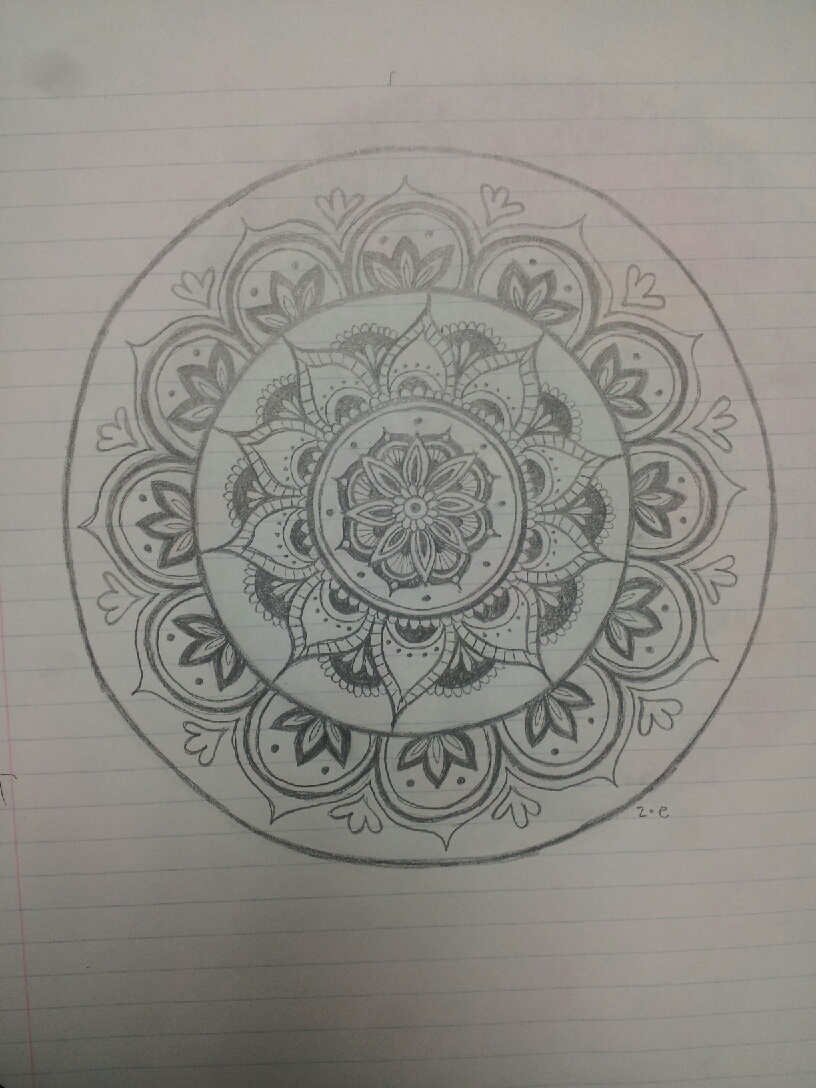
(Original, free-hand drawing by Zoe Colier).

There are many varieties of symmetry. Symmetry exists rampantly in nature and symmetry is also incorporated into many human designs. In this short essay, I want to remind people of several varieties of symmetry and then show how symmetry may also be used as a tool of thought to help solve problems by simplifying the space of possibilities that must be considered. 

Symmetry is a concept with far broader application than cutting out paper snowflakes or choosing a nice looking Christmas Tree, Menorah or other Holiday decoration. It is fundamental in logic, mathematics, physics, chemistry, biology, and even in social science.

Symmetry exists at many different scales as well. Planets are generally roughly spherical and their orbits are roughly circular. 

IMG_5895

The human body, along with most other animals, exhibits rough bilateral symmetry in external appearance. If you examine your own fingerprints or the pattern of your moles, for instance, you will see that one side of your body looks slightly different from a mirror image. If, like me, you are a righty who play tennis, you will find the forearm muscles on your right arm are slightly larger than those on the left. What is remarkable to me is not that there are slight variations between left and right but just how slight those variations are. And, we are not alone. Fish, insects, flatworms, roundworms, snakes, turtles, lizards, horses, dogs, cats, apes, and humans are all roughly bilaterally symmetrical in appearance. I say “in appearance” because our internal arrangement of organs is not at all symmetrical.  

External Appearance and Internal Organs

In general, it seems to me that most animals possess more complete or “perfect” bilateral symmetry than do most plants. I suspect that this is because animals generally move through a physical environment. Since we can move around, the environmental forces are generally symmetrical and so our ability to react to those environmental forces is also symmetrical. A tree, on the other hand, may have a genetic “blueprint” to be bilaterally or (more likely) radially symmetrical, but it may be subject to strong asymmetrical forces such as wind, a water source, or sunlight versus shade. 

Our designed objects are also most often (at least) bilaterally symmetrical, and particularly for those objects which must interact and move through the physical world. Cars, boats, motorcycles, busses, trains, trucks, bikes, skis, surfboards, roller skates, ice skates, snowshoes and tennis shoes all tend to be bilaterally symmetrical. On the inside, however, again just like us, there are often some irregularities. The arrangement of controls of the car, for instance, are asymmetrical. (Each control in itself often does show symmetry. In some cases, this makes it easier to use, especially without looking. I suspect that the symmetry may often be for aesthetic reasons, for ease of manufacturing, for ease of maintenance or replacement or some combination.) The asymmetry of arrangement “works” because the arrangement of displays and controls does not interact with the natural world the way that the car body and wheels do. The controls are designed to interact with a human being. There are also rough conventions for where controls are laid out, how they operate, and what each type looks like. Asymmetry of arrangement is also evident under the hood. However, some of the components such as the engine, the battery, the radiator have symmetry within them. The radiator, which arguably has the most interaction with the outside world, is symmetrically placed though its plumbing is not. 

automobile car customized drive

Photo by Pixabay on Pexels.com

In the design of User Interaction and Experience, an argument can be made for certain kinds of symmetry. For example, in the Mac editor Pages, which I am using to write this, if the B for bold button background turns blue when bolding is turned on, I expect the background will turn back the way it was (white) when bolding is turned back off. I also expect that italics and underlining will behave the same way, especially because all three are in the same toolbar. 

Where possible, it also generally makes sense, I believe, to design so that the functionality of a system is symmetrical. This isn’t always possible. Some actions are necessarily irreversible. If you don’t believe me, ask anyone who has toddlers or who has pets. In the real world, if you shoot someone dead, you cannot “unshoot” them. Unlike a computer system who asks, “Do you really want to delete all your files?” before doing so, guns do not ask that. If you are designing what can be done with a toy robot however, if you can make it go forward, you want to make it so it can go back as well. If it can turn right 90 degrees, you would like to enable it to turn left 90 degrees. Saying, “Oh, yes, but don’t you see, you can, in effect, make it turn left 90 degrees by making it turn right 90 degrees three times?!” does not cut it, IMHO. 

Typically, you not only want the functionality to be symmetrical, you also want the control functions and appearances to mirror the symmetry of the functionality. For example, if you can issue the command: “MOVE ROBOT FORWARD THREE PACES” you want the symmetrical function to be evoked this way: “MOVE ROBOT BACKWARD THREE PACES” and not, “THREE PACES BACKWARD FOR ROBOT MOVE.” If you decide to give auditory feedback for the first command that says, “ROBOT MOVING FORWARD THREE PACES” you do not want the reverse command to provide feedback that says, “ROBOT THREE PACES BACKWARD MOVING.” (Oh, by the way, if you cannot provide symmetrical functionality, please do not pretend to do so with a facade of symmetrical looking commands that actually behave asymmetrically!)

action android device electronics

Photo by Matan Segev on Pexels.com

A lack of symmetry (or consistency) in the functionality, command structure, or visual appearance often arises because of a lack of communication within the development team. If different functions of the robot are to be implemented by different people, then it’s important that those various people use an agreed upon style guide or Pattern Language or that they  communicate frequently. Of course, this is not the only cause of asymmetry. Even if your team communicates really well, they can’t design an effective gun with an “unkill” function. 

There are, of course, various types of symmetry. Bilateral (mirror) symmetry is what the external appearance of our bodies has. There is also translational symmetry, where the same shape is repeated along a line. The string ABCCBA shows bilateral symmetry while ABCABC exhibits translational symmetry. Most human factors people now agree that hot water faucets (usually on the left) and cold water faucets (usually on the right) should both be turned off by turning to the right and turned on by turning to the left (translational symmetry) as opposed to having the faucet on the right turn off to the right and the left faucet turn off to the left. But you will definitely experience both types. 

In both music and poetry, at least in the culture I am most familiar with, translational symmetry is more common than mirror symmetry. It does sometimes happen that musical composers experiment with playing a tune backwards or even with the staff turned upside down. But this is far less common than repeating a theme or melody. Similarly, a rhyme scheme like ABCABC is much more common than is ABCCBA. {In this notation, ABCABC means that the first line rhymes with the fourth line, the second line rhymes with the fifth line and the third line rhymes with the sixth line.} 

black and brown millipede on a green and brown branch

Photo by Pixabay on Pexels.com

In biology, we also find translational symmetry or something close to it. The segments of a tape worm, the segments of the body of a millipede or centipede, the small legs of a lobster, and even our own vertebrae and ribs show translational symmetry. In social structures as well, we find both mirror symmetry and translational symmetry. For instance, the Golden Rule says to do unto others as you would have them do unto you. In addition, as it happens, if we are nicer to other people, then, generally speaking, they are also nicer to us. This is not always true, however. Some people simply take advantage and view all of life as a zero sum game. Whatever you gain, they lose and vice versa. This is a very limited, inaccurate, and self-defeating attitude in most social situations. Most social situations, are, of course, much more complicated. Generally speaking, there are a great many situations that both you and your “opponent” or even your “enemy” would agree are good and a great many others that both of you would agree are bad. If you are playing tennis or golf outdoors, for instance, you may be fiercely competitive but both of you would probably find a game that brings out the best play is better for both of you. Both of you would probably also agree that being rained out is a bad outcome.  

men in black and red cade hats and military uniform

Photo by Pixabay on Pexels.com

In the military and in many industrial settings, there is a great deal of translational symmetry. The “ideal” set-up is to have many groups at each of many levels and each group is meant to be as similar as possible to all the other groups at that level. The marching that military groups learn is both symbolic of this translational symmetry and practice in behaving as a unit composed of identical parts. Whether or not this is the best way to run a military is debatable. To me, it’s undeniable that this management style has been imported into a huge number of organizations where it is definitely not the best way to organize. 

The last thing to note is that symmetry also pops up in design. There is often a whole series of information exchanges from people who have quite different areas of expertise. These exchanges can result in mutual learning, solutions that work, and often patents, and occasionally, some really cool, transcendent, game-changing designs. In my experience, it is much better to have a design process based on symmetrical relationships founded in mutual respect than to have a design process based on having someone in a hierarchical power relationship make decisions that are to be implemented by an identical set of “underlings.”  

macro photography of snowflake

Photo by Egor Kamelev on Pexels.com

The Takeaway

Symmetry is everywhere. There are many forms. If you start looking for symmetry, you will find examples in nature, in mathematics, poetry, art, music, machine design, the military and even in design problems and design processes. Thinking quite consciously about the types of symmetry that exist in a problem space and what could or should exist in that problem space, can lead to novel solutions.


——————————————-

Author Page on Amazon. 

The Walkabout Diaries

Local Symmetries

Alternating Repetition

The First Ring of Empathy

Donnie Takes a Blue Ribbon for Spelling

Travels with Sadie

It was in his Nature

A Cat’s a cat

A Suddenly Springing Something

Hai-Cat-Ku

Hai-Ku-Dog-Ku

The Dance of Billions

Roar, Ocean, Roar


Resonance

06 Tuesday Jan 2026

Posted by petersironwood in America, management, psychology, Uncategorized

≈ Leave a comment

Tags

creativity, Design, echoes, Feedback, golf, harmonics, learning, life, politics, programming, resonance, sports, testing, thinking, timing, USA

Resonance

If you have ever pushed your kids on a swing, you know that timing is important. If you add the power of your next push just as the child reaches the apex and begins to fall back, you will swing your child higher and higher with little effort. On the other hand, if you add the power of your next swing at the bottom of the arc just as the swing is moving toward you at maximum speed, you will nearly stop the swing and likely injure yourself and/or your kid. Please don’t try it.

boy wearing blue shirt sitting on swing

Photo by Git Stephen Gitau on Pexels.com

In sports as well, the timing of when you add your effort is critical. In golf, for instance, many beginners think a lot about their hands, probably because we use our hands for many daily tasks such as texting, flipping burgers, playing video games, etc. While the hands are certainly important in the golf swing, they are the last thing to bring to bear on the golf swing, not the first. If you add your hands and wrists at the last moments right before you hit the ball, you will  be accelerating the club face as you hit the golf ball. You will have greater velocity and also more stability and hence more accuracy for the shot. 

woman playing golf

Photo by Jopwell x PGA on Pexels.com

The golf swing is a complex athletic move that I cannot describe in detail. Here’s what is important in this context. Some parts of the golf swing (notice the word: swing) are much like a pendulum. The longer parts of the body (e.g., the arms) take longer to swing on their own. The shorter parts of the body take a shorter time to swing on their own (e.g., the hands). In addition, the shortest pendulum (the hands) is at the end of the longer arm swing. This means that for the arm swing and the hand/wrist moves to multiply effectively, you must engage the hands and wrists toward the bottom of the arm swing when the arms are already moving at top speed. 

What is True in Mechanics and Sports is also True in Social Engineering.  

If you work in a highly competitive, even cut-throat sales environment, in which there is a long tradition of stealing commissions, grabbing each other’s customers, etc., having the sales manager say something like, “You know what? Let’s cooperate! Put the customer’s interests first, not your own commission” is pretty much useless. A manager’s exhortation to cooperate is a short term high frequency “push” but it will be just as ineffective as trying to start your golf swing with your hands, or trying to push a swing with all your might when your kid is swinging toward you at top speed. If the cultural milieu is cut-throat, the manager’s statement will not be sufficient to change that culture. What the sales people will do is make sure that they have a semi-plausible story ready about how stealing someone else’s commission was really best for the customer. 

group of people raising right hand

Photo by rawpixel.com on Pexels.com

On the other hand, imagine instead that sales people have shared commissions for years and that the company takes many steps to build social capital and cooperation among everyone on the sales force. Now, the manager may publicly praise an actual instance of cooperation. It doesn’t have to be heavy-handed or over the top. It is a gentle push that adds energy to what people are already doing. This is akin to adding the hands to a good golf swing or adding your swing push just as your kid begins to descend. 

Don’t get me wrong. If your house is on fire, you should leave. Grab your kids and pets but don’t bother with last weeks losing lottery tickets. 

But — you also need to understand why your house caught fire – perhaps faulty wiring – and why the fire was not immediately doused – e.g., your fire extinguishers are out of date. If you don’t fix underlying problems, your next house is likely to catch fire as well. 

If your culture is so materialistic and superficial that a blow-hard sleaze bag who seems to have great material wealth is celebrated no matter how he or she came by that wealth and fame, you may have to deal with the short term problem first, but unless you also deal with the underlying cultural, social, and economic problems, you’ll likely find yourself in precisely the same situation again. The same or other foreign enemies will attempt to exploit those same weaknesses again by finding a different celebrity with deep underlying character defects. Those enemies will push particularly hard during a crisis or an election and they will push particularly hard in the errant directions that society is already trending toward. 

The String’s the Thing Wherein We’ll Capture the Conscience of a King

Next time you have access to a piano, try the following experiment. Gently push down the C, E, and G keys above middle C. Keep them pressed down with your right hand and then strike middle C sharply with your left hand and let it go. What you will hear is that the strings of C major (C, E, G) will vibrate for quite a time after you release the middle C key. If instead, you gently push and hold down the D, F, and A keys above middle C, you will hear very little sound coming from them. Why? Because the harmonic resonance of  middle C is greater with the C, E, and G than it is the D, F and A keys. Similarly, some people will tend to “resonate” with certain messages more than others will. 

close up photo of person playing piano

Photo by Juan Pablo Arenas on Pexels.com

This is why, for example, Russian fake news that was meant to suppress the black vote carried false stories to indicate Democratic candidates didn’t care about the “Black Lives Matter” movement, while false stories about how Democratic candidates don’t care about gay rights were targeted toward the LGBTQ community. Of course, even putting Russian election interference aside, candidates typically target their messages to those that will “resonate” with particular voters. For instance, a candidate who believes in an isolationist foreign policy, forgiving student loans, low estate taxes, and better benefits for veterans might focus a speech to a group of veterans on their desire to see better benefits for veterans.  The same politician, when speaking to college students, will tend to focus on forgiving student loans. That has been “business as usual” for my entire adult life (and probably since the beginning of politics). What was really new to me in 2108 was this: an entire raft of Republican candidates promoted the idea that they were concerned about making sure that insurance companies covered pre-existing conditions. In fact, they had always voted against it and were suing to make this provision of Obamacare illegal. 

Prior to the existence of lying news networks and fake web sites who would echo such lies, politicians of either party would be reluctant to employ blatant lying about their positions because, even putting ethics aside, they would be easily discovered. However, if some of their constituents only believe fake news networks, then such politicians feel that they can lie with impunity The news presented on such networks resonates with what the lying politicians say and resonates with what those viewers want to hear and believe about the people toward whom they are already favorably disposed.

person woman music musician

Photo by Skitterphoto on Pexels.com

Resonance and the Overly Long Time                                                     Lag.

While managing a research project on the psychology of aging at Harvard Med School, I lived in a suburb called Woburn. This rented house had a hot water heating system, and at some point, during a particularly bitter cold New England winter, the furnace stopped working. I could have called in a professional, but instead, I tried to fix it myself. As a part of this system, there was a small gauge that looked a lot like the gauges in a level, but this one was upright and generally half filled with water. I noticed that now, instead of being half filled with water, it was only about 1/10 filled with water. I didn’t exactly understand why this could be problematic but the instructions said it should be half filled with water and there was a valve to let more water in. So, slowly and cautiously, I opened the valve. Nothing happened. I opened it a bit more. Nothing happened. I opened it a bit more. Nothing. I was about to give up and call a repair person. All at once, the little vial began to fill. Yay, me! I turned the valve off because the instructions also said the gauge should not be overfilled. But it kept filling. And filling. Damn! I made sure the valve was closed tightly. It kept filling anyway! Double damn! The gauge exploded! I had been the victim of — well hubris, of course, because I thought I could figure it out — but also a victim of delayed feedback. When feedback is delayed, all sorts of havoc can ensue. 

photography of green and red fire works display

Photo by Anna-Louise on Pexels.com

You may have experienced a similar time lag issue with hotel showers. You turn up the hot water and the shower water stays cold. You turn it up more. It stays cold. You turn it up more and it still stays cold. And then…all at once you’re being boiled to death in your own shower and you begin wondering who will find the naked body. 

Back in the early days of using LOTUS NOTES, there was a button on my screen that said, “REPLICATE.” And if I clicked on that button, a replication process would start. (Basically, it was downloading my email from the server to my ThinkPad). But sometimes, the mouse click did not register. This might not be a giant issue. In other cases, I would simply click again and this worked for most applications. But in this case, NOTES put up another button, in the same exact spot as the REPLICATE button, that said, “STOP REPLICATION.” The State of the Replication Process, however, was not accurately reflected by the State of the Button on the screen! This was endlessly annoying and could easily have been avoided. There was plenty of screen real estate to put a “REPLICATE” button along side the “STOP REPLICATION” button. Once connection speeds were faster and the computational facilities themselves were faster, this UX issue ceased to be an issue because there was no noticeable time lag between the state of the process and the state of the button. 

man holding remote control

Photo by JESHOOTS.com on Pexels.com

However, I still run into similar issues with Cable TV remotes. Do you? The time lags associated with clicking something on the remote and something happening on the screen is so long, that you begin to wonder whether the battery has gone dead or whether it is aimed wrong or whether the button was not fully depressed. Indeed, I sometimes wonder whether the entire system is truly electronic. I have begun to believe that the button press actually sends an ultrasonic dog whistle to a pack of hungry weasels who hear the whistle. To them, it’s a signal that they are about to be fed. They begin scampering in unseen cages toward their food dishes. The scampering of their feet is picked up by sensors under the floors of the cages. These sensors cause dials to change in a control room staffed by retired school janitors who push a series of buttons that change the channel or the input designation or turn on captioning, but only after they finish the New York Times crossword puzzle they are working on. Then, and only then, does the desired action take place. But if and only if you’ve been patient enough not to hit the button a second time. 

adult audio concert control panel

Photo by Roman Pohorecki on Pexels.com

Of course, if you are the user in this scenario, there is a fix. Push the button once and only once. Now, go outside and run around the neighborhood for fifteen minutes before interacting a second time with the remote. Sure, it takes a long time to get to your program but you’ll be in much better shape after just a few months of this regimen. 

On the other hand, if you are the designer of such systems, you might consider that it would be less expensive in the long run to replace the ultrasonic dog whistles, the weasels and the retired janitors with an actual system of electronics which, after all, is supposed to run at nearly the speed of light.

landscape photography of field with wind mill with rainbow

Photo by Paweł Fijałkowski on Pexels.com

The Takeaway

In comedy, timing, as in life, and UX design, and pushing your kid on the swing, and your golf swing, and social interventions, and election interference, and human short term memory limitations, is everything. 


—————————-

Author Page on Amazon. 

The Update Problem

What About the Butter Dish?

Wednesday

The Stopping Rule

That Long Walk Home

The Truth Train

Dream Planet

Siren Song

The Ailing King of Agitate

Somewhere a bird cries

How the nightingale learned to sing

After All

The Walkabout Diaries: Sunsets

The First Ring of Empathy

Fifteen Properties

Travels with Sadie Teamwork

Donnie Gets a Hamster

Non-Linearity

04 Sunday Jan 2026

Posted by petersironwood in America, management, psychology, Uncategorized

≈ Leave a comment

Tags

AI, environment, equilibrium, feedback loops, life, ping pong, politics, research, science, sports, story, systems thinking, table tennis, testing, truth, writing

Non-linearity

A Chessboard Full of Rice

According to myth, the Emperor’s wise adviser once did him a great favor. So grateful was the Emperor that he begged his wise advisor to take any gift she might like from the vast treasures of gold or jewels, any lands or gardens, any of the Emperor’s many male children to be her companion. However, the advisor answered as follows: “Thank you for your generosity, oh mighty Emperor. I have no need of great material wealth. My needs and wants are simple. I do get hungry and thirsty, of course, as do we all, and sometimes my household runs short of rice. You see this fine chessboard?”

battle black blur board game

Photo by Pixabay on Pexels.com

“Oh, yes, my wise counselor, it is indeed finely made of gold and silver and I would gladly give you twenty such!” 

“Thank you again for your generosity, but I only wish for a some grains of rice. Give me one grain on this space and tomorrow, two grains on this space and the next day, four grains on this space. Each day for 64 days, double the number of grains of rice you gave me the day before. At the end of the 64 days, I will ask for no more.” 

The Emperor looked puzzled. “Surely, you must have something more valuable than rice! Name it!” 

“No, Sire, that is all I desire. Just the doubled rice will do quite nicely.” 

“Well, it shall be so!” And thus the Emperor told his staff that they were to provide a grain of rice for the first day, two grains of rice for the next day and to double the amount each day until all 64 days had passed. At first, it seemed such a pathetic gift for such a great favor. 

Even after 8 days, the wise counselor only received 128 grains of rice – not even a bowlful. 

Readers familiar with exponential growth realize that on the 64th day, the Emperor has promised to deliver 2**63 grains of rice. This is not only more rice than the Emperor had at his disposal. It is more grains of rice than exist in all the kingdoms of earth. To be exact, the last payment is meant to be 9,223,372,036,854,775,808 grains of rice while the total is one less than 2**64. To put the matter scientifically — it’s a lot of rice! Much more than exists in the world. 

How would you like the story to end? A wise Emperor, to my mind, would thank the counselor after a couple weeks and say, “I see, oh wise Counselor, that you used my gift to give me another gift to enhance my wisdom. For I now understand that what seemed at first an easy thing to do is actually quite hard. Doubling soon undoes even the richest king. I will keep this in mind when I think about interest rates and population growth.” 

A crummy Emperor, on the other hand, might say, “I offer you a gift and you see fit to embarrass me by making me agree to an impossible task? Boil her in oil!”

The Lily Pad Pond Puzzle. 

Beside my house is a pond. In this pond, a lily pad began to grow. Every day, it doubled in size. On day 20, it completely covered the surface of the pond. The surface of the pond is 400 square feet. How many days did it take to cover half of the pond? 

red and green lily pads focus photography

Photo by Skitterphoto on Pexels.com

At first glance, you might think this problem is insoluble because you don’t know how big the lily pad was initially. In fact, you don’t even need to know how large the pond is. It will cover half the pond on day 19.  

The Ping Pong Table Ping Pong Player Population

When I began at IBM Research in 1973, I soon discovered that a fair number of researchers were avid table tennis players. At lunch time, somewhere between six and twenty researchers would show up to play. There were two tables and some small amount of room for spectators to stand on the edges of the two ping-pong rooms and watch. Our rule was that if a person won, they would stay at the table and a new challenger would play. However, if you won three times in a row, you had to sit down regardless. I didn’t go over every lunch time, but I went over quite a few times over the course of my first ten years there and there was invariably someone to play with. Sometimes, I had a longer wait time than others, but it was never too long a wait. 

Then, because management wanted to use one of the two ping-pong rooms for other purposes, they repurposed one of the rooms. Now, there was only one ping pong table. In the two ping-pong table case, remember, I never had to wait too long nor did I ever go there and have no-one to play. As I said, the number of players varied between somewhere around six to twenty. What is your prediction about how many players showed up when there was only one ping pong table? 

Here’s what happened. The first day after this change happened, I went over and about fifteen people showed up. I, like everyone else, waited a long time for a game. Our “official” lunch hour was actually 42 minutes and the building was a five minute walk away. So, if you had to wait a half hour for your chance to play, it really wasn’t that much fun. In addition, there were some more subtle effects. All the players were good, but there some substantial differences in skill level. People tried to arrange it so that they played someone at about the same level. WIth only one table, this was trickier. In addition, when a relatively large number of people showed up, it was too crowded for everyone to see the match without interfering with play. It happened that I was too busy to go for a few days. The next time I showed up, no-one was there. Some of us talked about trying to “organize” the ping pong to insure that enough people showed up but everyone was busy and no-one wanted to take this on. Scheduling researchers is harder than you might think. It was hard for people to make a commitment to show up at noon because a meeting might run over, their manager might give them extra work, etc. The number of people showing up swung wildly for about two weeks and then stabilized. 

At zero. 

What had been a vibrant community with two ping pong tables did not stay the same size, or shrink to half when we were limited to one table. It went to zero. 

Warring Positive Feedback Loops. 

We’ve already talked about “positive feedback loops” which are also known as “vicious circles.” Sometimes, there are actually (at least) two positive feedback loops hiding beneath what appears to be a stable system. In the Case of the Missing Ping Pong Table described above, one positive feedback loop was simply that when you went there and had a good time through some combination of watching good matches or playing yourself, you were more likely to go there again. There was also a positive feedback loop that was more of a social nature. The more people who were there, the more likely it was you would find a good or interesting match. It was also more likely to be able to find someone you wanted to have a conversation with although the venue prevented this from being a big part of the adventure. Another way that having more people there increased the chances that more people would be there the next day was that it was kind of exciting to have a larger audience watching, cheering, throwing the ball back when the ball crept under the radiator after pin-balling around for awhile after a decent slam. 

IMG_1075

At the same time, there were other feedback loops, sometimes of the same factors but in a different range. For instance, beyond the point of having the periphery of the playing field covered one or two deep, additional spectators added only a little excitement and they were more likely to infringe on the needed space around the table. In addition, while the first ring of spectators felt very much a part of the action, the experience for the second ring of spectators was far less engaging. While I mentioned above that more players meant a better change of finding a good match, it also meant that one had to wait longer between matches. The worst case scenario, of course, is that you are the only one who shows up. 

Behind Every Abstraction are a Host of Personal Stories. 

Yes, you can practice against the wall, and I did this a few times, but it is significantly less fun than a real match. I love to serve, for instance. I have a raft of difficult serves. Just to give you one example, with most set-ups, I can hit the right side of the ball so thinly that I put enough side-spin for the ball to appear as though it isn’t even going to hit the table on the second side, but it does; it curves radically back around to the left. Sometimes people are so surprised that they miss it entirely. Even if they get there, the sidespin often makes them hit it off the table or the curve causes them to mis-hit the ball on their thumb or finger. I can also add a fair amount of top-spin or under-spin as well. Anyway, I didn’t get to do any of that just hitting the ball against the wall. The wall was not perfectly smooth either. So I might hit three of four shots and then the ball would hit a little imperfection in the plaster and careen off to scribble scrabble along the floor and then crawl under the radiator. It’s the kind of annoyance that everyone has experienced. And if someone else is there, you can kind of glance at your friend who nods nearly imperceptibly as you get down on your hands and knees and stretch your fingers into the territory of God-knows what spiders or broken glass and feel around through the grit and dust until you retrieved the ball. And that little glance and that little nod actually make quite a difference. If you’re on your own, it’s not any fun at all. It’s just an annoyance. The only reason I even bother to hit against the wall is to learn to keep focus for extended periods of time. For this, it is good practice and a good challenge. But, if I’m interrupting this to go fish my hand into a pile of dust every couple minutes, it isn’t so likely I’ll come back. 

close up portrait of owl against sky

Photo by Pixabay on Pexels.com

These various factors were all in a dynamic balance so long as there were two tables. When the tables went from two to one, however, what had been a stable equilibrium became a very unstable one. Eventually, of course, it did find a new equilibrium point and that was zero. To crawl out of that, one person might show up. But most of the time, they were the only one. So, they would be less likely to come again. Even if two showed up, since no-one could play every day, you might still find yourself wondering whether someone would be there the next time. 

bandwidth close up computer connection

Photo by panumas nikhomkhai on Pexels.com

You might have read this whole story and wondered why the hell this building full of Ph.D.’s couldn’t get their act together and arrange some matches. It’s an interesting question and here is my personal opinion. When it came to these brilliant scientists and engineers, they came from every part of the globe and they came in all shapes and sizes. Some were vastly overweight and others were ultra marathoners. But the ones who liked to play table tennis were, by and large, athletic and “hyper” – an impatient lot. What all of us really loved was working to find out the truth. And, these truths that we sought were ones the company that we worked for wanted us to seek. True enough, but by the same token, that meant the truth found and utilized would make people’s lives better in some way in the not too distant future. But working in a corporation also meant doing a bunch of administrivia. So, the ping pong set of people, in particular, wanted to get up from their intense sedentary mental and administrative work and play hard at something completely physical and different. The last thing any of us wanted to do was add more administriva to our lives. 

The Takeaway

 It’s easy and common to assume implicitly that the systems you deal with are linear.

They often aren’t. 

Things can go out of control extremely quickly (into a dominant positive feedback loop) once the dynamic equilibrium is disturbed. 

Would the invention of the iPhone have kept the ping pong community going? 

Another takeaway: there are two quite distinct ways of analyzing that are going on in the essay above: a fairly abstract one (even if it uses concrete examples like rice and lily pads) and a very concrete and experiential one. In my experience, both of these modes are useful and valid and if taken together give a fuller picture of what’s going on. My experience in this was mainly in human computer interaction but I think it is equally true for many in law, medicine, management and many other fields. What’s your experience? 

———————————

Author’s Page on Amazon.  

The Update Problem

What About the Butter Dish?

A Little is Not a Lot

The Jewels of November

The Stopping Rule

Wednesday

We Won the War! We Won the War!

Roar, Ocean, Roar

Destroying Government Efficiency

E-Fishiness Comes to Mass General Hospital

Small Things

← Older posts
Newer posts →

Subscribe

  • Entries (RSS)
  • Comments (RSS)

Archives

  • April 2026
  • March 2026
  • February 2026
  • January 2026
  • December 2025
  • November 2025
  • October 2025
  • September 2025
  • August 2025
  • July 2025
  • June 2025
  • May 2025
  • April 2025
  • March 2025
  • February 2025
  • January 2025
  • December 2024
  • November 2024
  • October 2024
  • September 2024
  • July 2024
  • April 2024
  • March 2024
  • February 2024
  • January 2024
  • December 2023
  • August 2023
  • July 2023
  • May 2023
  • April 2023
  • March 2023
  • February 2023
  • January 2023
  • December 2022
  • November 2022
  • October 2022
  • September 2022
  • August 2022
  • July 2022
  • June 2022
  • May 2022
  • April 2022
  • March 2022
  • February 2022
  • January 2022
  • December 2021
  • November 2021
  • October 2021
  • September 2021
  • August 2021
  • July 2021
  • June 2021
  • May 2021
  • April 2021
  • March 2021
  • February 2021
  • January 2021
  • December 2020
  • November 2020
  • October 2020
  • September 2020
  • August 2020
  • July 2020
  • June 2020
  • May 2020
  • April 2020
  • March 2020
  • February 2020
  • January 2020
  • December 2019
  • November 2019
  • October 2019
  • September 2019
  • August 2019
  • July 2019
  • June 2019
  • May 2019
  • April 2019
  • March 2019
  • February 2019
  • January 2019
  • December 2018
  • November 2018
  • October 2018
  • September 2018
  • August 2018
  • July 2018
  • June 2018
  • May 2018
  • April 2018
  • March 2018
  • February 2018
  • January 2018
  • December 2017
  • November 2017
  • October 2017
  • September 2017
  • August 2017
  • July 2017
  • June 2017
  • May 2017
  • April 2017
  • March 2017
  • February 2017
  • January 2017
  • December 2016
  • November 2016
  • October 2016
  • September 2016
  • August 2016
  • July 2016
  • June 2016
  • May 2016
  • April 2016
  • March 2016
  • February 2016
  • January 2016
  • December 2015
  • November 2015
  • October 2015
  • September 2015
  • August 2015
  • May 2015
  • January 2015
  • July 2014
  • January 2014
  • December 2013
  • November 2013

Categories

  • AI
  • America
  • apocalypse
  • cats
  • COVID-19
  • creativity
  • design rationale
  • dogs
  • driverless cars
  • essay
  • family
  • fantasy
  • fiction
  • HCI
  • health
  • management
  • nature
  • pets
  • poetry
  • politics
  • psychology
  • Sadie
  • satire
  • science
  • sports
  • story
  • The Singularity
  • Travel
  • Uncategorized
  • user experience
  • Veritas
  • Walkabout Diaries

Meta

  • Create account
  • Log in

Blog at WordPress.com.

  • Subscribe Subscribed
    • petersironwood
    • Join 662 other subscribers
    • Already have a WordPress.com account? Log in now.
    • petersironwood
    • Subscribe Subscribed
    • Sign up
    • Log in
    • Report this content
    • View site in Reader
    • Manage subscriptions
    • Collapse this bar
 

Loading Comments...