• About PeterSIronwood

petersironwood

~ Finding, formulating and solving life's frustrations.

petersironwood

Tag Archives: Design

3. Boundaries

13 Sunday Sep 2026

Posted by petersironwood in Uncategorized

≈ Leave a comment

Tags

beauty, boundary, Design, ethics, greed, HCI, life, limit, nature, privacy, truth, usability, user_experience, UX, writing

3. Boundaries

Here are a few thoughts about “Boundaries” and how they apply in User Experience. 

I decided to gift a copy of of Volume One on The Nature of Order to my daughter earlier today. I logged on to Amazon and looked at my address book. I am aware that she moved fairly recently. So, I was scrolling through my earlier text conversations with her to see whether she had told me of her new address. I couldn’t find a text about her new address so I texted her to get the new address. 

Suddenly, a popup window appeared from SIRI. It had her new address. I hadn’t said anything aloud. I thought of SIRI as a voice-activated service on my iPhone. It was disconcerting to have it “notice” my text message and then suggest an answer (which turned out to be correct). 

Last week, after physical therapy, my therapist & I began to discuss the time for my next appointment. I pulled up the calendar application on my iPhone and went to a particular day and began to type in her name. After the first two characters were typed in, the “type-ahead” function suggested three possible “completions” the first of which was the time we had been orally discussing (which was not a common time nor the time of any of my recent appointments with her). It also filled in her complete name and the purpose of the appointment, but that was more understandable. 

Photo by Nikolay Ivanov on Pexels.com

One sense of “Boundaries” in User Experience connects with a notion of “boundaries” that is much discussed in contemporary mental health. We are advised to “establish boundaries” with co-workers, family, friends, and strangers. We don’t necessarily want to share personal information with everyone or let everyone touch us in any way they choose to. If intimate details are shared in a recovery group or group therapy, it is generally agreed that such details will not be shared with others. 

We sometimes extend the idea of informational boundaries to written materials as well. If, for instance, we keep a personal diary, we do not expect other people to “search for it” or to read it. In the short story, “Jennifer’s Invitation,” (link below) about my shy attempt as a third-grader to invite my girlfriend to my birthday party, I relied on my expectation that she would read a paper I “accidentally” dropped on the sidewalk. But she was so protective of my privacy that she wouldn’t even glance at my paper. I lost track of Jennifer, but I’m pretty sure she never became CEO of an IT company.

On the other hand, if we write and publish an autobiography, then we can expect that other people will feel justified in discussing the contents. To me, it would seem odd for an author to feel “violated” if people start talking about the contents of their autobiography (or their blog).

When it comes to modern interactions with computer software however, the boundaries are invisible — and sometimes non-existent. It can feel as though I write a private diary on paper; lock it up in a safe immediately; and then — without any sign that the safe has been broken into, I suddenly find details of my personal life revealed! 

There appear to be boundaries between applications, and certainly between devices but these boundaries may be illusory. I find that troubling and confusing. I think the first application of “Boundaries” as a property of UX is that apparent boundaries should be real. There may be exceptions for exceptional circumstances; e.g., the police may get a search warrant to search your house if there is reasonable suspicion that you have committed a crime. 

When a social media site analyzes your reactions, relationships, and word usage to determine what to try to sell you and what type of approach is most likely to succeed, that does not strike me as a reasonable response to an “emergency.” As most readers know by now, such information is not only used to try to sell you more stuff; it was also used to manipulate public opinion; for example, to convince some US voters to stay away from the polls on election day in 2016; to convince voters in the UK to vote for Brexit; to convince people not to get vaccinated. 

Living things do have boundaries. Breaching those boundaries is typically something to be avoided. We call such breaches by names like “bites”, “wounds”, “diseases”, “gunshots”, “parasites.” Living cells typically have a cell wall. Within the cell are tinier organelles such as the mitochondria. The mitochondria have boundaries. The nucleus of a cell has a boundary. Within the nucleus, the nucleolus has a boundary. Larger structures often have boundaries. Motor neurons have a myelin sheath which allows neural impulses to travel faster. Almost our entire body is covered in layers of skin which serve for us a boundary.

 

The formation of boundaries does not stop with our physical body. Organizations of humans — nuclear families, clans, nation-states, counties, cities, townships, teams, corporations — they have boundaries. A bank, for instance, might have a safe for the money, but the building itself also functions as a boundary — not an impermeable boundary — customers are allowed to come in during banking hours. There are also legal boundaries. If you have “an account” at a bank, you will be allowed to do things that non-customers cannot. Similarly, if you are an employee of a company or a member of a sports team, you will be allowed to do things and go places that you couldn’t if you were outside that boundary. 

All boundaries are semi-permeable. Boundaries change over time. A thorn tears your skin. Your boundary is broken. If you’re not careful, bacteria can get in and cause an infection. Your white blood cells destroy the invading bacteria. Your body heals. If the cut was bad enough, you may get a scar and the scar is now part of your “boundary.” It isn’t only at the level of the body that changes occur. Your social boundaries change too.

You get married. You get divorced. You are born. You join a team. You quit the team. You sell your house and other people buy it. Now, you are no longer allowed to come into the house without an invitation. Meanwhile, you buy another house. You have acquired new boundaries. Or, perhaps, you have no home. You are homeless and your boundaries are not so secure. 

Most of our possessions have clearly defined boundaries. Your hammer is separate from your saw which is separate from your drill. They come from an earlier time and the “boundary” of such objects are determined by their shape. More recently, such tools (and nearly everything else!) comes packaged in bubble wrap which forms an additional boundary. This makes it harder for people to hide one under their clothes and walk out without paying. Such packaging has the added advantage that it will require time and energy on your part before you can actually start using the tool for its intended purpose. Not only that — such packaging helps pollute our world beyond the pollution required by “old style” tools.

Photo by cottonbro on Pexels.com


Once you have separated your new tool purchase from its packaging, if you have any energy left, you can saw a board, or drill a hole, or hammer a nail. But you do not expect (not yet, at least), the saw to “communicate” behind the scenes with your drill. Or to communicate with you. You’d be surprised if it piped up and said, “Gee, Gene, you just sawed a board. Now, you have taken up the drill. Would you like suggestions on how to build a dog house?” (That’s what Clippy would do). 

(Link to Wikipedia article on “Clippy” and how it was parodied). https://en.wikipedia.org/wiki/Office_Assistant

Clippy tried to be helpful. But it didn’t really have enough information about my tasks, goals, and context to actually be helpful. But today’s behind-the-scenes information sharing with dark forces is not trying to be helpful. It’s trying to get you to change your behavior for someone else’s benefit — and you don’t even know who those someones are. 

Notice that if you buy a house (which typically comes with doors and keys), you can lock the house and the default is that it keeps everyone else out — except those you’ve given a key to or those who have rung your doorbell or otherwise asked for permission to come in. Typically, if a rare visitor comes to your house, you make arrangements for a time and a place. The piano tuner comes to tune your piano. You might let them use your bathroom or even offer them something to drink. But you don’t expect the piano tuner to redecorate your study or to spend the night uninvited. 

Photo by Mike on Pexels.com

That’s kind of what does happen in the electronic world though. In many cases, you cannot visit a website or use an application unless you give permission for the “guest” to rifle through the choices you make. Just to be clear, these “choices” are not only explicit choices; your “choices” can include how long you linger over a particular message or video clip. In many cases, you have not just given a key to a specific vendor, application, or website — in many cases, you have also given them rights, essentially, to make as many copies of your front door key as they care to make and hand them out to whomever they like. 

These are missing boundaries, not so much in the user interface design, but in the socio-technical context in which we use our technology. 

In the physical world in which we evolved, invasion of privacy typically involved symmetry. If I can see your eyes, you can see mine. Conversely, if I can’t see anyone, chances are that they can’t see me. Of course, this isn’t literally true. A tiger’s camouflaging stripes may mean that they can see the gazelles even though the gazelles cannot see them. The astounding eyesight of the eagle allows them to see a mouse on the ground and start their deadly dive before the mouse can see the eagle. 

In the electronic world, it isn’t genetically coded asymmetries of information that allows other people to invade your boundaries — in many cases without your permission or even knowledge. It is an asymmetry that comes from money and time. You don’t have anything like the fortune that rich companies have. They can hire experts at subverting your boundaries. They can hire an entirely different set of experts to convince you that it’s all okay. They can afford to hire still other experts to defend themselves in a court of law should you seek redress for any particularly unethical behavior. They can afford to (and do) hire politicians as well in order to make laws to protect their unfettered access to your data. You typically cannot afford to hire politicians to protect your right to privacy. 

You probably don’t have 10,000 to 100,000 people working for you. Companies not only have the money to spy on you. They also have to time to collect and analyze your behavior & make sense of it. You don’t. Perhaps, every once in a while, you take the time to wade through a “privacy policy.” In most cases, since experts were hired to make the text as incomprehensible as possible, you likely didn’t see much value in reading the document. 

The Nature of Order is about aesthetics, not ethics. And, this post was meant to be about aesthetics, not ethics. 

The poem by Keats, Ode on a Grecian Urn, 

https://www.poetryfoundation.org/poems/44477/ode-on-a-grecian-urn

ends thusly: 

“Beauty is truth, truth beauty,—that is all

                Ye know on earth, and all ye need to know.”

Life includes differences in sensory capability. And life includes camouflage. Generally, however, when you get to the end a cliff and step off, you have a pretty good idea what’s going to happen. The boundary is visible to you, to a bison, to a mouse, to a lemming, to an eagle. 

Photo by Pixabay on Pexels.com

When we walk through the woods in northeastern USA where I lived for many years, we run the risk of being attacked by a deer tick. The dear tick makes a hole in you and starts sucking your blood (oh, while they’re at it, they may inject a large does of Lyme disease bacteria into your blood stream). You don’t notice it, because the deer tick is “kind enough” to administer a local anesthetic so you don’t feel any pain from this invasion of your person; this breaking of boundaries. It’s a one-sided breach. The deer tick is well aware of the invasion. It’s the whole point! But you do not perceive the breach. At least, I didn’t. Twice. Thankfully, I don’t seem to have any long-lasting effects though I have several friends who are still suffering from the effects. 

A one-sided boundary breach, doesn’t seem “aesthetic” to me. Nor does it seem “truthful.” The little orange deer tick, is, in a very real sense, lying to me. It uses its narcotic to tell me, “No worries! There’s no wound here! There’s no deer tick sucking your blood. There’s no deer tick injecting a serious disease into your blood. No, no. All is well!” It seems the opposite of beauty and the opposite of truth.

I suppose if I had been born a deer tick, I might view things differently. 

———————-

Myths of the Veritas: The Orange Man

Pattern Language for Collaboration and Teamwork

Jennifer’s Invitation

Your Cage is Unlocked

What Line?

Roar, Ocean, Roar!

Stoned Soup

How the Nightingale Learned to Sing

Some recommended books:

The Winning Weekend Warrior focuses on the mental game for all sports using examples from tennis, golf, baseball, and other sports. It covers self-talk, imagery, mental practice, strategy, tactics, & sportsmanship. http://tinyurl.com/ng2heq3

Turing’s Nightmares explores the implications and ethics of Artificial Intelligence through fictional short stories. http://tinyurl.com/hz6dg2d

Fit in Bits shows many ways to put more fun, variety, & exercise into daily chores and habits to help with strength, flexibility, fitness, and balance. http://tinyurl.com/h6c7fce

Tales from an American Childhood recounts early experiences mainly in the American Midwest in the 1950’s and relates them to contemporary issues and events. https://tinyurl.com/y9ajvz9j

Dream Planet. Where do you run when the whole world is crumbling under the weight of human folly? When the lethal Conformers invade 22nd century Pittsburgh, escape becomes the top priority for lovebird scavengers Alex and Eva.

https://www.barnesandnoble.com/w/dream-planet-david-thomas/1148566558

https://www.goodreads.com/en/book/show/222376640-enshittification

Strong Centers

12 Saturday Sep 2026

Posted by petersironwood in Uncategorized, psychology, creativity, nature, design rationale, user experience, HCI

≈ Leave a comment

Tags

aesthetics, architecture, art, beauty, Christopher Alexander., Design, HCI, human factors, usability, UX

This is the second posting in a series of fifteen which examine Christopher Alexander’s “Fifteen Properties” of natural beauty and suggests how these properties might apply to user experience design. 

Photo by Dominika Greguu0161ovu00e1 on Pexels.com

2. “Strong centers” is probably one of the most overlooked properties of design in UX/HCI. Often, what exists for the user, from their perspective, is a “sprawl” of functions, tool bars, and icons with no obvious overall or subsidiary organization. A better design would allow the user to quickly find a “home base” from which, it would be obvious where to find subsidiary home bases. There is some sense in which hyperbolic trees, fisheye lenses, and home pages partly begin to address this issue. 

Instead of “strong centers”, the impression I often get in looking at applications for word processing, organizing photos, searching, or dealing with settings is that the designers are given or generate a long list of functions to be supported. Which ones are related to which though? Which ones are central? In many cases, UX practitioners give users (or, more often, potential users), a set of cards with one function each and ask the users to sort these into piles. I am not against such studies, but they are unlikely to lead to a coherent design with a strong center. The users are not, in most cases, professional designers. In many cases, an application is supposed to support many different specific actions. For example, I use word processors to write essays, poems, and fiction. I also use a word processor to proofread something, to re-organize ideas, to “jot down” a bunch of ideas, or to write an outline. These are very different tasks, at least to me. If asked to sort cards, I would do it differently depending on which type of task and which type of material I’m thinking about. 

As I type this, I glance at the “Pages” tool bar which includes: Pages, File, Edit, Insert, Format, Arrange, View, Share, Window, and Help. None of these seems like “home” to the task of writing an essay. I know from experience that if I want to write any kind of material, I must go to the “File” menu even though, as best I can recall, my initial impression of this label was that it would be something to do after I was “done” with the tasks of composing and proofreading. The toolbar gives no impression of their being any “center” at all, let alone a “strong center.” 

In my native language (English), I read from top to bottom, left to right. In that sense, the Apple Icon is first and the “Pages” item is next and it is in bold print. That could be considered a subtle clue that it’s the “most important.” In a way, the items on the “Pages” menu are “meta-items.” In that sense, I suppose you could argue that they are “important” — though as a writer, none of the items seem that important. In fact, if we get right down to it, nothing in Pages really seems designed to support the actual writing process. And, I’m not trying to single out Pages because it’s the only one or the worst one. Lack of a “strong center” seems true of nearly all applications. 

Different people use different processes for writing — and I myself use different processes for different types of writing, so perhaps trying to organize the features and functions so that there is a “strong center”reflective of the “strong center” of the task of writing is just not feasible. I am certainly not advocating for resurrecting “Clippy.” 

Ideally, it should be possible for users to “know where the action is” upon entering an application or a web page.

In another interpretation, “strong centers” refers more to underlying architecture and points to the need for a core of functionality that transcends a specific release or even a specific application. A good underlying architecture will communicate this essential center (related to central purpose or style) to the user.

All too often, the processes involved in developing an application or system themselves have no “strong center.” If the development process is itself a hodgepodge political process of accommodating to a portfolio of features and functions that are advocated for by diverse and uncoordinated stakeholders, then, what one has are a long, unorganized list artificially shoved into menus and sub-menus and toolbars. It should not be surprising then, that the user finds it difficult to know where to begin when first encountering an application — even if the user knows exactly what they want to accomplish. 

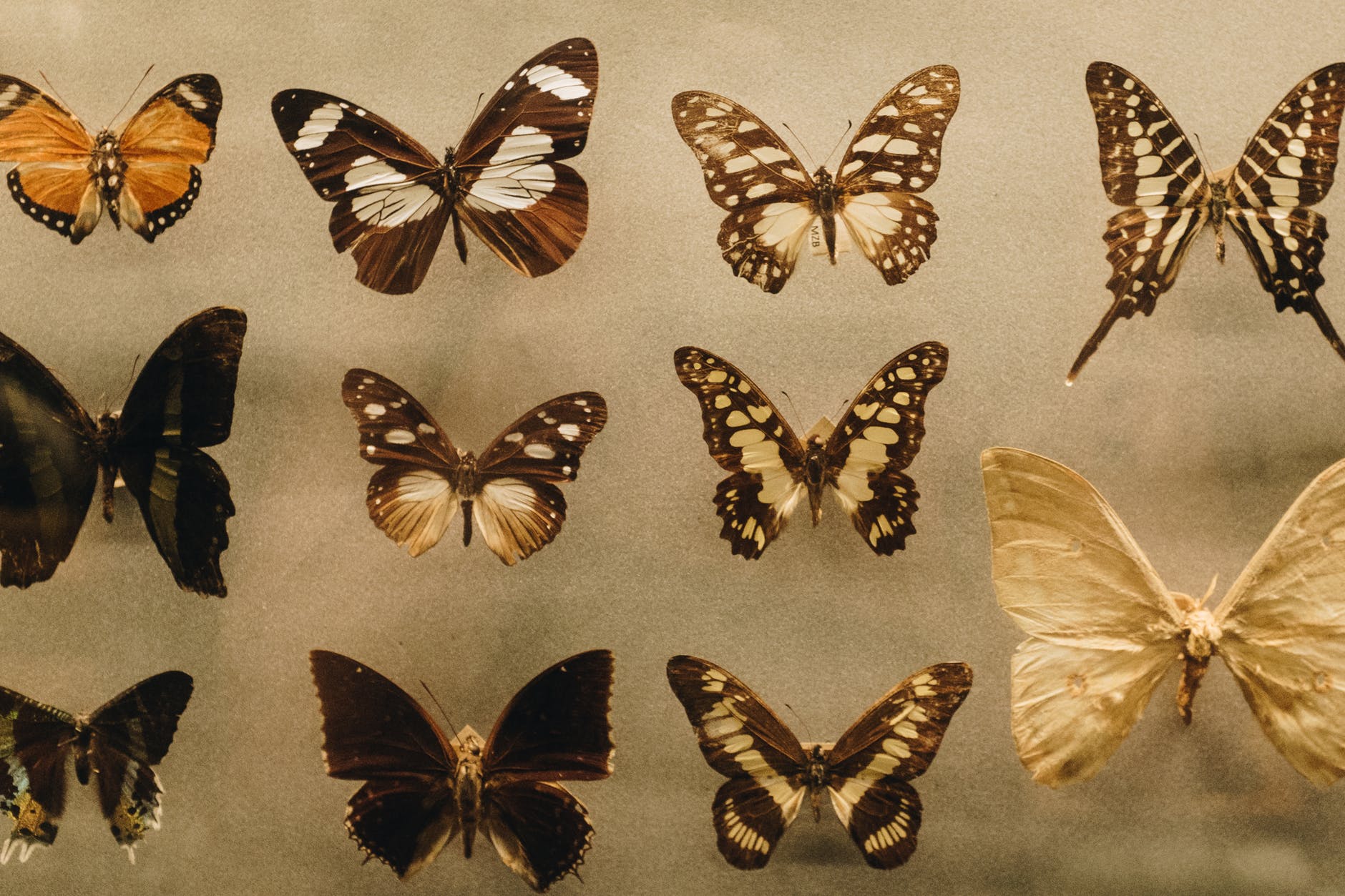
Compare and contrast most menu structures and user interfaces with the “strong centers” that are extremely common in life forms. Here are some examples of butterflies. 

Photo by Cu00e1tia Matos on Pexels.com

The central axis includes the head, the thorax and the abdomen. These are in a line in the strong center. Typically, they are colored differently from the wings. The bilateral symmetry of the wings as well as the overall shape reinforces the strong center. Wing patterns, and even the antennae and legs lead the eye back to the strong center. 

Most people think of butterflies as beautiful — and I agree. When asked, however, most people will say they are “brightly colored.” Some are; some are not. But “bright colors” don’t necessarily give rise to beauty!

Strong Centers doesn’t just apply to butterflies. Look at most birds, fish, mammals, insects and you will see how the symmetries and smaller centers reflect and strengthen the major center. Indeed, Strong Centers are not limited to the animal kingdom. The trunk of a tree provides a strong center. Each branch is itself a center and the connection of the branches to the trunk reinforces the strength of the central trunk. 
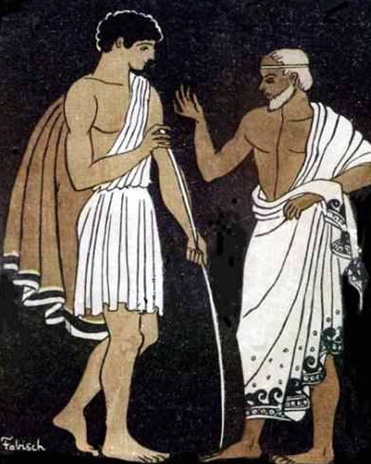
Photo by Snapwire on Pexels.com
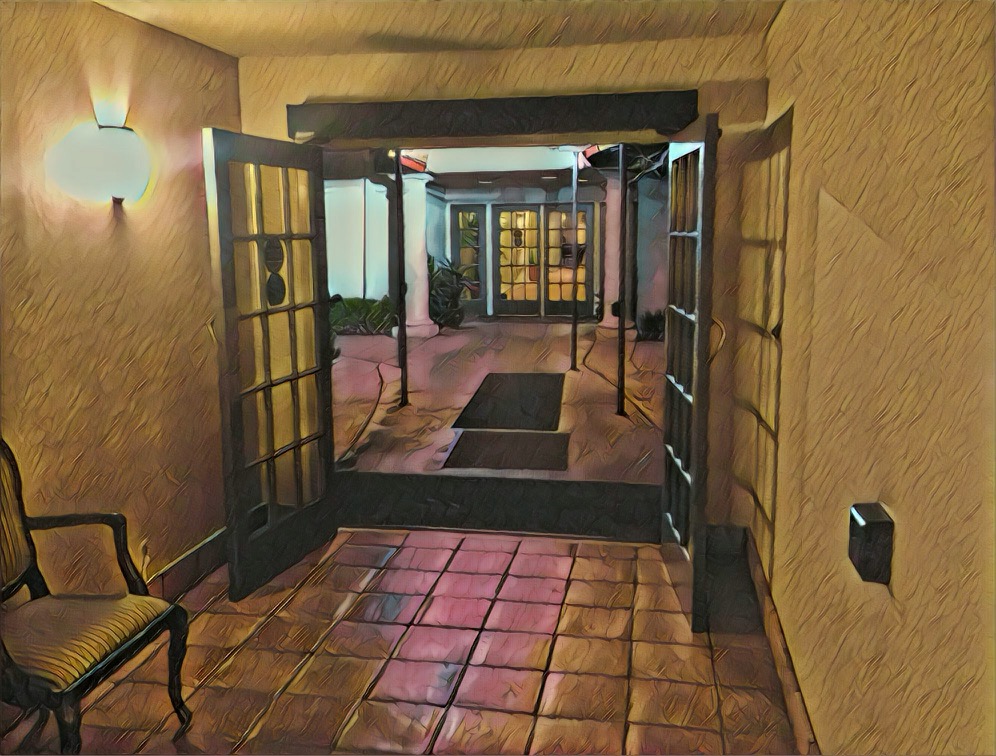
Even single cells often exhibit strong centers (and many of the other 15 properties, by the way). 
It would love to be able to provide you with a process or checklist or formula so you could design user experiences with “strong centers.” I cannot really do that. Nor can anyone else. If you keep it in mind, even at the back of your mind, you may see opportunities to help make that happen with regard to whatever you’re working on. I’m curious to hear your thoughts about “Strong Centers.” 

One technique that may be of some use was shared at a workshop by someone who worked at a car company. In the design of a specific car, the team decided the car would reflect “a professional soccer player out for a night on the town.” This is obviously not a “formula” or “checklist” but it offers a metaphor that designers of car interiors, exteriors, and the drive train could all relate to. A similar method is sometimes used in film — some specific person is responsible for the artistic integrity of the whole.

There is no one way to produce strong centers. Here are some examples from flowers.

———————

Here we see that each flower has a strong center and the central stem provides a strong center for the entire plant.

Some useful links to more information, discussion, and examples relevant to “strong centers” or to the fifteen properties.

Christopher Alexander – Fundamental Property 2: Strong Centers

https://www.archdaily.com/626429/unified-architectural-theory-chapter-11

Roar, Ocean, Roar!

Imagine All the People

The Dance of Billions

Somewhere a Bird Cries

How the Nightingale Learned to Sing

Piano!

Unite!

Fifteen Properties of Natural Beauty & UX/HCI

09 Wednesday Sep 2026

Posted by petersironwood in Uncategorized, psychology, creativity, nature, design rationale, user experience, HCI

≈ 1 Comment

Tags

architecture, art, books, Design, gratitude, HCI, human factors, mindfulness, photography, Travel, UX

Photo by Dominika Greguu0161ovu00e1 on Pexels.com

This is an introduction to a series of blog posts on the “Nature of Beauty.” 

Christopher Alexander was an architect and city planner. In his MIT dissertation, Alexander took a very mathematical approach to design. In our studies at IBM Research on the “Psychology of Design” I first ran across that work (Notes on the Synthesis of Form). Later in his career, however, he took a quite different approach to design. With an international team, he visited many different parts of the world to see what “worked” in terms of architecture and city planning. The results were documented in the form of a “Pattern Language.” In this sense, a “Pattern” is the named solution to a recurring problem. A “Pattern Language” is a connected lattice of Patterns that together, “cover” a field. 

Others (including me) have emulated his approach for other fields such as pedagogy, organizational change, object-oriented programming, software development processes, and human-computer interaction. A few years ago, I suggested such Patterns for collaboration and teamwork. Here’s a link to the introduction of that effort. Here’s a link to the index of those Patterns. 

Still later in life, Christopher Alexander embarked on a project called The Nature of Order. This work is documented in a series of four books. In the first book, he proposes fifteen properties of good form in nature — and in beautiful artifacts. Explication and example will be needed to appreciate what these properties mean. In this post, I list the fifteen and will attempt to explain the first one with respect to UX and Human Computer Interaction.

OLYMPUS DIGITAL CAMERA

First, you might be wondering what relevance these fifteen properties of nature might have to interface design. After all, can’t the designer just test out their ideas empirically until a UX design is shown to be usable, learnable, and perhaps enjoyable as well? Well, sure. Ideally, every possibility could be explored and tested empirically. 

But how many possibilities are there? Without any guiding principles, there are not only more possibilities than can be tested by you. There are more possibilities than there are atoms in the universe. Imagine a very simple interface on a small mobile device. Let’s say there are only ten screens in your whole application. The iPhone 12, for instance, has nearly 3 million pixels. 24-bit color allows over 16 million colors per pixel. If you literally tested out every possible arrangement, this would mean 16 million to the 3 millionth power for each of the ten screens!! The number of atoms in the universe is estimated to be between 10**78 and 10**82. Obviously, this is far less than 16,000,000**3,000,000 !! 

Of course, I’m not suggesting that anyone would attempt a pixel by pixel test of an interface, but the general point remains: you need some way to limit testing to reasonable alternatives. The notion of using these fifteen properties is not that they dictate a particular design nor that you don’t need to do any empirical testing. Rather, the fifteen properties could be used to help guide design. The properties could be thought of as reducing the search space. 

Here are the fifteen properties: 

  1. Levels of Scale
  2. Strong Centers
  3. Boundaries
  4. Alternating Repetition
  5. Positive Space
  6. Good Shape
  7. Local Symmetries
  8. Deep Interlock and Ambiguity
  9. Contrast
  10. Gradients
  11. Roughness
  12. Echoes
  13. The Void
  14. Simplicity and Inner Calm
  15. Not-separateness

Perhaps the names themselves might resonate with your own sense of aesthetics for design and composition, but let’s review them one by one. 

The first is “Levels of Scale.” 

Photo by Roney John on Pexels.com

When it comes to natural beauty, a few moments reflection may provide you with many examples. Christopher Alexander claims this property is also present in traditional art and architecture across many cultures. As you see something such as, e.g., the Taj Mahal or the Parthenon in the distance, you see a beautiful shape. As you approach it, you will see more and more levels of scale. By contrast, many modern buildings are largely featureless between the overall shape and the texture of the building material. 

If your design has multiple levels of scale, it will be easier for your user to orient themselves; to know “where they are” in the application and therefore easier to take appropriate action. Not only are you making their “task” more doable, you are providing a kind of entertainment. If it works well, they will be thinking of the building and perhaps its significance the entire time they approach the building. By contrast, if I approach a modern no-scales building, I bore quickly and, like most people, there are a whole host of things waiting to be thought about. So, I’ll mainly be thinking of one or my problems and largely ignoring your building and what it stands for. Reflect on your own experiences and see whether you agree. Lincoln Memorial, Winchester Cathedral, Temple in Kyoto: they are completely different from each other and yet in this way, they are all the same: they keep your attention focused on the moment. In other words, they help you be fully alive and awake. In the best circumstance, they also elicit some awe and gratitude not only for the geniuses who designed but also for the many laborers who found and mined the materials, constructed something from it, and even those whose taxes paid those workers.

Levels of Scale is something to keep in mind with respect to your design — whether hardware, software, documentation, story, or a building. 

How could you use or see “Levels of Scale” as a desirable property of what you are doing right now? 

———————————-

Some references to Pattern Languages in HCI. 

Pan, Y., Roedl, D., Blevis, E. and Thomas, J. (2012), Re-conceptualizing Fashion in Sustainable HCI. Designing Interactive Systems conference.  New Castle, UK, June 2012.

Thomas, J. C. (2012).   Patterns for emergent global intelligence.   In Creativity and Rationale: Enhancing Human Experience By Design J. Carroll (Ed.), New York: Springer.

Thomas, J. (2012). Edging Toward Sustainability. CHI Workshop Position Paper for Simple Sustainable Living. CHI 2012, Austin, Texas.

Thomas, J. (2012), Enhancing Collective Intelligence by Enhancing Social Roles and Diversity. CSCW Workshop Position Paper for Collective Intelligence and Community Discourse and Action. CSCW 2012, Bellvue, WA.

Thomas, J. (2011), Toward a pattern language for socializing technology for seniors. Workshop position paper accepted for CSCW 2011 workshop: Socializing technology among seniors in China, Hangzhou, China, March 19-23.

Thomas, J. (2011). Toward a Socio-Technical Pattern Language for Social Systems in China and the World. Workshop position paper accepted for CSCW 2011 workshop: Designing social and collaborative systems for China. Hangzhou, China, March 19-23.

Thomas, J. (2011). Toward a Socio-Technical Pattern Language for Social Media and International Development. Workshop position paper accepted for CSCW 2011 workshop: Social media for development, Hangzhou, China, March 19-23.

Bonanni, L., Busse, D. Thomas, J., Bevis, E., Turpeinen, M. & Jardin, N. (2011). Visible, actionalble, sustainable: Sustainable interactin design in professional domains.  Workshop accepted for CHI 2011. Vancouver, B.C., May 7-12.

Thomas, J. (2011). Focus on Ego as Universe and Everyday Sustainability. Workshop position paper accepted for CHI 2011 workshop: Everyday practice and sustainable HCI: Understanding and learning from cultures of (un)sustainability.  Vancouver, B.C., May 7-12.

https://www.researchgate.net/publication/2242380_A_Pattern_Approach_to_Interaction_Design

Click to access dearden-patterns-hci09.pdf

https://www.mit.edu/~jtidwell/common_ground.html

Thomas, J. C. (2018), Building common ground in a wildly webbed world: a pattern language approach. Journal of Information, Communication and Ethics in Society, 16 (3), 338-350.

——————————-

Some recommended books:

The Winning Weekend Warrior focuses on the mental game for all sports using examples from tennis, golf, baseball, and other sports. It covers self-talk, imagery, mental practice, strategy, tactics, & sportsmanship. http://tinyurl.com/ng2heq3

Turing’s Nightmares explores the implications and ethics of Artificial Intelligence through fictional short stories. http://tinyurl.com/hz6dg2d

Fit in Bits shows many ways to put more fun, variety, & exercise into daily chores and habits to help with strength, flexibility, fitness, and balance. http://tinyurl.com/h6c7fce

Tales from an American Childhood recounts early experiences mainly in the American Midwest in the 1950’s and relates them to contemporary issues and events. https://tinyurl.com/y9ajvz9j

Dream Planet. Where do you run when the whole world is crumbling under the weight of human folly? When the lethal Conformers invade 22nd century Pittsburgh, escape becomes the top priority for lovebird scavengers Alex and Eva.

https://www.barnesandnoble.com/w/dream-planet-david-thomas/1148566558

The Walkabout Diaries are photo-essays inspired by walks in nearby neighborhoods, gardens, and parks.

The Walkabout Diaries

“The Psychology of Design”

22 Wednesday Jul 2026

Posted by petersironwood in creativity, design rationale, HCI, management, politics, psychology, science, Uncategorized, user experience

≈ Leave a comment

Tags

AI, creativity, Design, education, HCI, human factors, IBM, leadership, research, technology, UX

“The Psychology of Design” 

I worked at IBM, all told, about 28 years. During that time, management put increasing pressure on us to make our work “relevant” to the business. In fact, the pressure was always there, even from the beginning. Over the years, however, we were “encouraged” to shorten evermore the time gap between doing the research and having the results of that research impact the bottom line. This was not an IBM-only phenomenon. 

I was a researcher, not a politician, but it seemed to me that at the same time researchers in industrial labs were put under pressure to produce results that could be seen in terms of share price (and therefore payouts to executives in terms of stock options), academia was also experiencing more and more pressure to publish more studies more quickly — and to make sure “intellectual property” was protected to make sure the university could monetize your work. This was about the same time that, at least in America, increasing productivity and the wealth that sprung from that increased productivity stopped being shared between the workers and the owners.

Photo by Dmitry Demidov on Pexels.com

In the late 1970’s, the “Behavioral Sciences” group at IBM Research began to study the “psychology of design.” For the first few months, this was an extremely pleasurable & productive group, due mainly to  my colleagues. Over the next few blogs, I’ll focus on some specific techniques and methods that you may find useful in your own work. 

In this short recounting though, I want to focus instead on some broader issues relevant to “technology transfer”, “leadership” and “management.” Even if you are or aspire to be an expert in UX or HCI or design, I assure you that these broader issues will impact you, your work and your career. I wouldn’t suggest becoming obsessed with them, but being aware of their potential impact could help you in your own work and career. 

It is telling that, almost invariably, whenever I told someone inside IBM (or, for that matter, outside IBM) that I was studying the “psychology of design,” people responded by asking, “the design of what?” So, I would explain that we were interested in the generic processes of design and how to improve them. I would explain that we were interested in understanding, predicting, and controlling these processes to enable them to be more effective. I would explain that we could apply these findings to any kind of design: software design, hardware design, organizational design, and (see last post about IBM) communication design. I would explain that design was a quintessentially human activity. I would also explain that design was an incredibly leveraged activity to improve. 

Looking back on it, I still think all these things are true. I also see that I missed the “signal” people were giving me that, while I thought of design as something that could be studied as a process, that most people did not think of it that way. To them, it was never the “psychology of design,” but only the design of something. 

Don’t get me wrong. I agree that somewhat different skills are involved in designing a great advertising campaign, a great building, and a great application. I agree that different communities of practice treat various common issues differently. I still think it’s worth studying commonalities across domains. For one thing, we may find an excellent way of generating ideas, say, that the advertising community of practice uses that neither architects nor applications developers had ever tried. Or, vice versa.

My own academic background was in “Experimental Psychology.” We were forever doing experiments that we believed were about psychological processes that were thought to be invariant regardless of the domain. It was an axiom of our whole enterprise that studying memory for any one thing also shed light on how we remember every other thing. Similar studies looked at decision making or problem solving or multi-tasking. We came to understand that there were some interesting exceptions to being able to separate content from process. For instance, it is much easier to multi-task a spatial task and a verbal task than it is to multi-task two independent spatial tasks or two independent verbal tasks. 

In our Behavioral Sciences lab, we used a spectrum of techniques to study “design” ranging from laboratory studies of toy problems, to observing people doing real-world design problems while thinking aloud. After about 3-4 months of very productive work, we were told that we had to make our work relevant to software development. That one domain should be the focus of our work. We were told that this command came from higher-ups in IBM. That might have been true, or perhaps partly true. 

It might also be relevant that someone in our management chain might have been the recipient of a grant from ONR which was specifically focused on software development. So far as I can tell, nothing had been done on that grant. So, our past, present, and future work could have been co-opted to be “results” done under the auspices of the ONR grant. 

In any case, regardless of the “reasons,” the group began to focus specifically on software design. In one study, we used IBM software experts as subjects. Each person was given information that was geared toward a specific transformation that occurred in software development. One person was presented with the description of a “situation” that included a number of “issues” and they were asked to write a requirements document. In real life, I would hope that this would be done in a dialogue (and, indeed, in other studies, we recorded such dialogues). Absent such dialogues, what we found was that different software experts — all from IBM research — and all given the same documentation about a set of problems generated vastly different problem statements and overall approaches. 

Photo by ELEVATE on Pexels.com

In other parts of the study, other experts were variously given requirements documents and asked to do an overall, high level system design, or given a high level design and asked to design an algorithm, or given an algorithm and asked to code a section. There was always diversity but the initial phases showed the greatest diversity of behavior. The initial stage is also the one that can cause the most expensive errors. If you begin with a faulty set of requirements — a misreading about how to even go about the problem — then, the overall project is almost certain to incur schedule slip, cost overruns, or outright failure. 

While the vital importance of the initial stages of design is true in software development, I would argue that it is likely also true for advertising campaigns, building designs — and even true for the design of research programs. We designed our research agenda under the assumption that we had a long time; that we were studying design processes independently of specific communities of practice or the nature of the problems people were attempting to address. We assumed that there was no “hidden agenda.” Although we believed we would eventually need to show some relevance to IBM business, we had no idea, when we began, that only relevance to software design would be “counted.”


—————-

Some of our studies on the “Psychology of Design.” 

Carroll, J. and Thomas, J.C. (1982). Metaphor and the cognitive representation of computer systems. IEEE Transactions on Man, Systems, and Cybernetics., SMC-12 (2), pp. 107-116.

Thomas, J.C. and Carroll, J. (1981). Human factors in communication. IBM Systems Journal, 20 (2), pp. 237-263.

Thomas, J.C. (1980). The computer as an active communication medium. Invited paper, Association for Computational Linguistics, Philadelphia, June 1980. Proceedings of the 18th Annual Meeting of the Association for Computational Linguistics., pp. 83-86.

Malhotra, A., Thomas, J.C. and Miller, L. (1980). Cognitive processes in design. International Journal of Man-Machine Studies, 12, pp. 119-140.

Carroll, J., Thomas, J.C. and Malhotra, A. (1980). Presentation and representation in design problem solving. British Journal of Psychology/,71 (1), pp. 143-155.

Carroll, J., Thomas, J.C. and Malhotra, A. (1979). A clinical-experimental analysis of design problem solving. Design Studies, 1 (2), pp. 84-92.

Thomas, J.C. (1978). A design-interpretation analysis of natural English. International Journal of Man-Machine Studies, 10, pp. 651-668.

Thomas, J.C. and Carroll, J. (1978). The psychological study of design. Design Studies, 1 (1), pp. 5-11.

Miller, L.A. and Thomas, J.C. (1977). Behavioral issues in the use of interactive systems: Part I. General issues. International Journal of Man-Machine Studies, 9 (5), pp. 509-536.

——————————

Blog posts about the importance of solving the “right” problem. 

The Doorbell’s Ringing. Can you get it?

https://petersironwood.com/2021/01/13/reframing-the-problem-paperwork-working-paper/

Problem Framing. Good Point. 

https://petersironwood.com/2021/01/16/i-say-hello-you-say-what-city-please/

Problem formulation: Who knows what. 

How to frame your own hamster wheel.

The slow seeming snapping turtle. 

Author Page on Amazon. 

Serious Fun and Games

15 Friday May 2026

Posted by petersironwood in America, apocalypse, psychology, Uncategorized, Veritas

≈ Leave a comment

Tags

#leadership, #perspective, #sense_making, #Veritas, codes, Design, fiction, games, greed, legend, life, love, myth, politics, relationships, story, truth, Veritas, writing

woman holding white plumeria flower

Photo by The Lazy Artist Gallery on Pexels.com

Tu-Swift watched the small party leave and chewed the inside of his lips. Though he understood the “rationale” that Many Paths had given for the composition of the search party, he suspected that her real reason for leaving him out was more personal. She wanted to keep Tu-Swift close at hand. True enough, his knee still didn’t act quite right. He would walk along just fine for a time and then, he would just slightly misjudge the ground and a rock might slide a little to one side or the other and his knee would suddenly “give out.” Riding wasn’t much better. Although he was now second only to Jaccim in skill, he couldn’t ride for long. Tu-Swift wanted to be among those who first encountered the Veritas beyond the twin peaks. He had dreamed of being there when she was reunited. What, he wondered, if she never returned here? He stared at the long and beautiful ebony hair of Cat Eyes and remembered how it had pleasurably whipped his face on that wild flume ride. She turned back and grinned at him; waved; he could see the sunlight making a kind of dark rainbow in her hair. He waved back. Tu-Swift hadn’t noticed Sooz walk up behind him so that when she spoke it startled him. 

“You like her, don’t you?” 

“What?! Oh, Sooz, sorry. I … well, yes. I mean, don’t you?” 

Sooz smiled with her mouth but her eyes remained tight. “Oh, yes, she’s quite smart. It’s been fun working with her — and you — to better understand that game she brought with her from the ROI. Want to play?”

IMG_0673

Indeed, many of the Veritas had made some contribution to understanding the game, but Cat Eyes had been crucial in understanding. True enough, thought Tu-Swift, she was smart, but mainly, she had helped the most because she had seen the game played. Although, as a slave, they had never asked her to participate in the giant city of the Z-Lotz, she had in the last few weeks, under the direction of Many Paths, been able to calm her mind, shut her eyes, and systematically “revisit” memories of watching the game played. She had not only seen in her mind’s eye what the throws and moves were; she could also recall what had been said and note the reactions on people’s faces. Playing the game proved to be fun for those Veritas patient enough to learn it including Tu-Swift and Sooz. And playing the game improved the speed with which they could decode the characters written on the many leaves that Eagle Eyes and Lion Tamer had returned with. 

“I would like to play with you, Sssooz. How about another game instead?” 

Sooz blushed. Tu-Swift and Sooz had been working on a secret code for communicating between the two of them. They said the same word, but in different ways. They would change how long they held on to one of the sounds that nature had long ago given the Veritas and that variation would change the meaning. The also said the words with a slightly different tone structure. They had worked together for several weeks on a kind of magic trick and were about to perform it in front of Many Paths and She Who Saves Many Lives. Tu-Swift and Sooz had made a pact not to let anyone else in on the secret quite yet. If they could pull off the trick in front of those two — and Eagle Eyes — then, they would reveal it to everyone. 

A7A8D582-4B4A-4A7C-99CD-F4B9ADB9E82A

Tu-Swift believed this could prove useful as one of the new weapons of the Veritas. Many Paths had asked Tu-Swift to lead an effort to develop weapons that could be used without anyone noticing, including, if it came to that, the Z-Lotz who might try to kill or capture all of the Veritas. Tu-Swift had not wanted to contemplate being captured again, and the idea that all of the Veritas might be enslaved was horrendous. And yet, he could see the wisdom of preparation for such an eventuality. He reckoned that if he and Sooz could fool Eagle Eyes, Many Paths and She Who Saves Many Lives, they would be able to communicate secretly even if the worst came to be. 

Tu-Swift pulled a piece of birchbark from inside his tunic, walked over to a nearby charred log and broke off a small piece of charcoal. He carefully wrote a few strokes on the birch bark and handed it to Sooz. She read aloud, “Kiss me.”  

close up photo of woman s face

Photo by Charry Jin on Pexels.com

Tu-Swift leaned over and whispered, “If you insist.” He kissed her lightly on the lips. It felt good. He wanted to write her some more when a small and very familiar voice called his name. 

“Hi Tu-Swift! Are you two playing a game? Can I join?” 

It was Day-Nah. Day-Nah was gradually becoming more friendly with all of the Veritas but  still felt most comfortable when he was with Tu-Swift. Usually, Tu-Swift enjoyed his company but he scrunched his face up at the current interruption. I will have other opportunities, I suppose, thought Tu-Swift. He glanced at Sooz who noted the chagrin on the visage of Tu-Swift and chuckled. She smiled at Dah-Nah and said aloud, “Ssssure, Day-Nah, we wouldddd love to have you join in our reading game.” She winked at Tu-Swift with an eye that was hidden from Day-Nah. 

Despite the momentary disappointment, Tu-Swift had to smile at her hidden message which promised much more later. He looked at Day-Nah and smiled at him as well. “We’re practicing making marks and saying them. Here. You put some marks down. Let’s see whether we can say what you meant.” Tu-Swift gently took the birchbark from Sooz, stroking her hand as he did so and surreptitiously smudging what he had just written. He handed the birchbark and piece of charcoal to Day-Nah. He had expected Day-Nah to put down one word. Instead, Day-Nah was making a whole forest of marks. At last he handed the birch bark back to Tu-Swift. 

Tu-Swift shifted position so that he now saw shoulder to shoulder with Sooz. Together they looked and read aloud. “?We go? ?See the whole collection? ?Again?” Tu-Swift sighed and glanced at Sooz. She made the slightest nod. They stood and walked across the cleaning and over to one of the many storerooms of the Veritas. Many Paths had asked for the table acorn-smashing table to be cleared. Several stumps already provide sitting. In the early spring, this table was used for mashing acorns that had been softened and de-bittered over-winter in the swamp. For now, people of the Veritas at various times came in and practiced decoding the marks. Everyone had been instructed to be very careful not to harm the delicate leaves of bark.  

It took a moment for the trio to become adjusted to the dim light. Day-Nah, the youngest, had adjusted the most quickly. He took the first leaf and stared at it. It seemed laid out differently from all the others. This first leaf of thin bark had many large spaces in it while all the other leaves were largely filled from top to bottom. Only a few spaces popped up here and there. Day-Nah began to turn his head this way and that. 

Tu-Swift’s inner eye suddenly showed him that flash of the long dark rainbow hair of Cat Eyes and he sighed. He said aloud, “I hope our searchers are able to find our cousins — there is no map. Jaccim says he knows the way, but I think his horse may know the way better. You know, horses are pretty amazing Sooz. I hope you someday get to ride one. They are big, but there’s no need to be scared.” 

horse near trees

Photo by KML on Pexels.com

Day-Nah muttered, “Map?”  

Tu-Swift shook his head. “What map? They don’t have any map. We’re taking about horses now.” 

Day-Nah, who generally seemed quite attuned to Tu-Swift’s every move, ignored Tu-Swift. He furrowed his brow and said again, “Map?” 

Sooz said kindly, “What map are you talking about, Day-Nah?” 

Day-Nah lifted up the first leaf and said, “This map.” 

Tu-Swift’s brows furrowed and he shook his head. “That’s not a map Day-Nah. It’s just the first leaf.” 

Day-Nah ignored them and put the first page up against a nearby pot so that it was nearly vertical at one end of the table. Then, he began arranging the leaves on the table. After about half of them were arranged on the table, Tu-Swift said, “Come Day-Nah, what is this nonsense. I thought we were going to practice. What are you doing?”

Day-Nah said again, “It’s a map.” He continued arranging the leaves carefully. “Now, go over to the door and tell me what you see.”

Tu-Swift sighed. “I won’t be able to see the marks from there. I mean, I will be able to see them but I won’t be able to tell which mark is which.” 

Day-Nah, said with some insistence in his voice, “Try it.” 

Tu-Swift sighed. He tried to be lenient with Day-Nah. As traumatic as it had been for he himself to have been stolen from his tribe, he imagined it had to be even more traumatic for Day-Nah. But now the kid was being annoying. He shook his head and walked over to the door. He stared at the leaves carefully laid out on the table. 

FE330504-4067-401B-9EAA-E0B393F875CE

“Are you happy now, Day-Nah, just as I suspected, I cannot decode a single one of those marks from here. I almost have them memorized but I cannot actually discern them. They are just … just … Turtle in the sky!!” 

Sooz looked at the wide-eyed expression on Tu-Swift’s face. “What are you talking about? Have you both gone crazy?”

Tu-Swift gestured frantically. “Come over here! Come over here, Sooz! Look!” 

Sooz dutifully stood though she shook her head and slowly walked over. “My eyesight’s not any better than yours, Tu-Swift. I don’t even think Eagle Eyes could…” 

And then Sooz saw it too. The small markings could not be discriminated from each other but when the leaves were arranged thus, larger characters stood out. Those characters could be made out. She said them aloud: 

“Life must balance. Freedom and discipline. Work for self and work for tribe. Work for self alone ended the world for Orange Man and then greed ended the world. Now, we rebuild.” 

Tu-Swift swallowed hard. That was the essence of the story contained in the pages. The Orange Man had destroyed a tribe — and himself. But — the world? Everyone knew that too much greed was very strong and very bad medicine. How did Day-Nah know this was a map? With a sudden inspiration, Tu-Swift opened the shutters of one of the storehouse windows and walked outside. He peered in at the leaves arranged on the table. Now, he could see yet another pattern of characters that stunned him into a long silence. 

“Love/Unity makes Life. Greed/Division makes Death.”

shirtless man sitting on a rock

Photo by Darren Lawrence on Pexels.com

—————————————————-

Author Page on Amazon

Start of the First Book of The Myths of the Veritas

Start of the Second Book of the Myths of the Veritas

Table of Contents for the Second Book of the Veritas

Table of Contents for Essays on America 

Index for a Pattern Language for Teamwork and Collaboration  

How the Nightingale Learned to Sing

Imagine All the People

Roar, Ocean, Roar!

The Dance of Billions

Life Will Find a Way

Travels with Sadie Teamwork


Dialogue and Discovery

20 Friday Feb 2026

Posted by petersironwood in story, Veritas

≈ Leave a comment

Tags

Bohm Dialogue, Defense, Design, dialogue, empathy, fiction, horse, horses, innovation, leadership, life, myth, myths, peace, politics, story, strategy, tactics, teamwork, truth, war, writing

Many Paths had let the word spread that she wanted to dialog after supper. {Translator’s Note}: In good weather, the people often dialogued around the campfire. In this way, each told of their experiences and listened to the experiences of others during the day and what they had learned. They asked questions, shared insights, and allowed many moments of careful reflection. On this day, however, it appeared that by “calling for” a Dialogue, she was encouraging all to come and to be especially thoughtful. Apparently, though the word was the same (so far as we can tell) there was some linguistic or behavioral marking that emphasized the importance of this particular Dialogue.  

Though the day had been warm, the sun left the sky early at this time of year, and the people wrapped themselves in blankets and gathered around the fire. Apart from the search party, only Trunk of Tree and a dozen other braves were absent, serving as guards. Trunk of Tree was still talking with them and trying to understand how this surprise attack had come. As expected, Many Paths spoke first. 

CAC8B9BD-6155-4D8B-9213-2B5AE94AABE9

“So far as we can tell, no-one was seriously hurt and nothing was stolen of value excepting only my brother, Tu-Swift. A search party has been sent but we have not heard from them.”

A woman of the muskrat clan spoke, “Can people stand atop horses?” 

A woman of the deer clan said, “Apparently so. Perhaps this is not so surprising. We have learned to work with wolves and eagles. Why not horses?” 

Many Paths spoke up. “Our guests from the Nomads of the South confirm that at least one tribe to their knowledge does use horses. They call themselves the ROI.” 

A child of the bobcat clan said, “I saw a man on a horse once.” 

silhouette of person riding horse on body of water under yellow sunset

Photo by Pixabay on Pexels.com

Many Paths could see that the child had struggled to say this out loud in this big meeting and she did not want to scare him off. “Interesting. Please. Say more.” 

“We were camping near the North River and looking for stones four days ago. Stones to make sharp. And it grew dark. So we slept. And I had a dream and awoke. And I looked across the river and I thought there was a buffalo with a tree and I saw it was really a man. A man on a horse. And I was scared I might be crazy. My parents and brother slept. And I didn’t want to wake them.” 

“Do you think this man saw you?”  asked Many Paths.

“Oh, yes. I think so. He and his horse looked right at me. Then, the horse took him away. I’m sorry.” The child looked bewildered. 

“You did nothing wrong. There’s no need to be sorry.” 

“I should have told someone. But I was afraid it would sound odd.” 

IMG_5105

Many Paths spoke gently. “Can you recall anything else about this horse and man as one?” 

The child thought for a moment and added, “They ran fast. Not so fast as eagle falls, but much faster than anyone of our tribe runs.” 

“And…? Anything else?”

“Well,” the child said, “when the horse ran away, it sounded like a drum. The-duh-RUM, the-duh-RUM.”

“Thank you, Horse Viewer.” Many Paths looked upon the people encouraging others to speak with her eyes and her smile and her voice. 

“Oh, Many Paths, there is one more thing,” said Horse Viewer. “Right before they ran as one, the man made a noise like the running horse.” The boy closed his eyes in concentration. ‘Giddy-UP, Giddy-UP!’ he had shouted and off they ran.”

“Thank you, Horse Viewer,” Many Paths said warmly. 

Next, She Who Saves Many Lives spoke, “Many years ago, I heard stories of people on horses, but I had never seen it first hand. Thank you.” 

IMG_5124

Many Paths spoke again, “The Nomads of the South said that these horses were tamed with cruelty, whips, and tethering. That seems a strange way to me, but perhaps it works. I had to use love to train the wolves. At least, I should say, I thought to train them that way. I began by studying them and as I learned more about them, I loved them more and as I loved them and they became used to me, I could arrange things so that they understood me and I understood them. They could see that I was the tallest of the wolves though not the one with the sharpest teeth. This they did not test though.” 

The father of Horse Viewer, Stone Chipper spoke next. “I travel quite often as far as the North River. Only recently did I begin taking the children in order for them to help me find the sharpening rocks and learn to set free the weapon inside the rock. On my many long walks through the forest, I saw many creatures such as deer, squirrels, song birds, and I always speak to them kindly for they were my only friends on such journeys. Over the years, they became quite friendly. I never really tried to “train” them for battle, but gradually, their curiosity overcame their fear. Though not for the bobcats. They stayed wary. I cannot imagine beating an animal to train it though.”

Upon this, they contemplated for a silent, unhurried time. 

“Sometimes, a little one can be annoying. It is easy to swat a fly away and sometimes… as well, a child. This is always wrong though.” A large, aging man, thick muscled and large boned, like POND MUD had spoken. Now, he continued. “Eventually, you drive them away so they actually want to annoy you and then you punish them more and they become more distant and you hit them harder….it seems as though it works, because you can get your way at that moment. But the moment your back is turned…you are creating war in your own house.” 

IMG_5184

A tall young woman with dark, penetrating eyes and long luxurious silken hair said, “We must all treat each other with respect.” Here she looked deliberately into the eyes of everyone there. “Especially the weakest amongst ourselves. Cruelty is against the grain of the tree of life. It will cause great damage, in the end. Great damage, indeed.”

Many Paths waited, not wanting to rush the people. After a long silence she spoke again. “It is clear that there is much that we do not know about these people. We do not know why they stole Tu-Swift. We do not know how many of these people there are and we do not know how many horses they have. We do not know how long it takes to train a horse, or exactly how they do it. They seem very confident indeed. But cruel. After all, they stole Tu-Swift. They attacked us at feast. And, it sounds as though they may use cruelty to train these horses. Though we have never trained horses. So, perhaps this is necessary for horses though not for wolves, nor eagles, nor children.”

A-OC of the Deer Clan spoke. “We know that they are capable of speed. And we know they did at least one thing bad by stealing a child. And, they must have some stealth as well because our guards did not warn us.”

Now, her sister, P-OC spoke along similar lines, “Perhaps we can arrange to make our paths more hospitable to those on foot and less so to those astride a horse.”

“Indeed,” said a man from the Muskrat Clan, “though some day we ourselves may learn to stand atop horses.” 

P-OC nodded. “Yes, we should make any such alteration a temporary thing in case we might someday use these horses in such a way as to run so fast.”  

abstract antelope canyon arid art

Photo by Belle Co on Pexels.com

The people began to imagine various possible ways to do this. AO-C mentioned one idea. “For all but the eldest among us, it is easy to stand but also to crawl and get back to standing. If a tree were bent across a path at about this height” she said, as she drew her hand from left to right across her belly, our runners could easily duck under such a barrier. But I don’t think a horse would have such an easy time.” 

Stone Chipper spoke, “Yes, and a person may turn sideways, and sidle through a slim opening. Horses though are big. There is the cool-place path, near the entrance to the great forest. It narrows between the two cliffs, beneath the raspberry bushes. If we made other paths encouraging others to take that entrance, we could narrow it still more and it would be impossible for horses to get through. Then, our would-be invaders and child-stealers would find this out and have to retrace their steps to approach us in a different way.” 

All the people knew the place he meant. Even now, people would struggle to walk two abreast. Many Path sensed a commotion near the riverbank. Someone approached the edge of the circle. It was Trunk of Tree and he was helping another man. Friend of Squirrel! He appeared hurt. Many Paths said to Trunk of Tree, “What news? What happened to Friend of Squirrel? He seems off, somehow.”

2A8EFB65-636C-4D9D-93DB-130987D184FE

Trunk of Tree nodded, and said, “Yes. Indeed.” Then he asked his companion more quietly, “Are you okay to tell your story now?” 

Friend of Squirrel nodded. The crowd quieted even more so that he could be heard. They could tell he was not able to shout. “There were three guards and we were posted together at the north entrance to the great forest. We were imagining the feast and tempting the squirrels to approach us for small treats. Suddenly we heard a great commotion. A host of men standing on horses appeared. The first opened his hands to show he had no weapons. He spoke gently though we did not understand his words. His gestures made it clear that they came in peace, and to trade, or so we thought. Several of the men – and I believe they were all men – opened some clothing on the side of the horse and brought out some fine looking skins. We gathered round and that is the last thing I remember. When I awoke, I tried to stagger to my feet but fell back to the earth. I slept until Trunk of Tree came upon me.”

Trunk of Tree nodded, “I am sorry to say that the companions of Friend of Squirrel are both dead, their heads smashed in with a club of some kind.Two other braves are retrieving their bodies now as well, but Friend of Squirrel should rest. I believe all of our attackers came through that path.”  

Friend of Squirrel spoke again, “I am sorry. We were foolish to have been so incautious. They seemed so friendly. And we were taken aback to see such men atop horses. One of us should have stayed hidden with bow drawn. And now, Trunk of Tree has told me how calamity has struck.” 

animal close up country countryside

Photo by Pixabay on Pexels.com

“Trunk of Tree, thank you. Friend of Squirrel, go now and rest. What is done cannot be undone, but can be learned from. We are going to make our paths less friendly to horses for now. And, we must learn much more of these people. And, then, we must see what do do about such people that kill without battle and steal children from a feast.” 

The Dialogue continued till the great fire became embers. Many ideas were shared. At last, a great weariness came upon Many Paths. She had only been leader a short time and now, not only was Tu-Swift stolen, but two fine braves had been killed and another injured. Her people needed reassurance and they needed sleep, but they also needed to be better prepared for another attack. This time, the ROI, if that’s what they were, would not have the element of surprise. Or, at least not those surprises. Many Paths supposed if they could run with horses, there may be other surprising kinds of danger they could wreak upon us. She wished she could speak with Shadow Walker now, but of course she couldn’t. The search party was now far beyond the hearing even of their drums.

She rose and ended the Dialogue though several stayed and continued to discuss how to make it harder for horses to penetrate to their center place. On the one hand, she wanted to encourage such ideas, but she was tired to the bone. She found herself listening but not contributing and even drumming her ring on the side of a log. She wondered how the search party was doing and how long it would take to find Tu-Swift. She worried about all of her tribe and especially about Tu-Swift. But dwelling on that would just make her less effective as a leader. So, instead, she fantasized that she could talk with Shadow Walker. She drifted off to sleep imagining she could. She toyed with the First Ring of Empathy and reminded herself that Shadow Walker had one as well.


Author Page on Amazon

Tools of Thought: Bohm Dialogue

Fifteen Properties

Travels with Sadie

The Walkabout Diaries

Essays on America: The Game

Essays on America: At Least he’s our Monster

Where does your Loyalty Lie?

My Cousin Bobby

The Update Problem

The Stopping Rule

What about the Butter Dish?

Wednesday

The Invisibility Cloak of Habit

Labelism

Roar, Ocean, Roar

The Dance of Billions


The Story of Story, Part 1

15 Thursday Jan 2026

Posted by petersironwood in creativity, management, psychology, story, Uncategorized, user experience

≈ 1 Comment

Tags

AI, Design, development, HCI, knowledge, leadership, life, management, persuasion, story, thinking, thought, truth, UX

The Story of Story, Part 1

Background.

img_2386

Right around the turn of the century, I managed a research project at IBM’s T. J. Watson Research Center on the business uses of stories and story-telling. The project was part of a larger effort on “knowledge management.” One of IBM’s major reasons for being interested arose from their increasing revenue stream from services. However, services such as consulting required a lot of labor; it was competitive. Therefore, the margins on this business were not so high as, for instance, in hardware or system software. IBM invested a lot in tools so that they can make hardware very cheaply and effectively using relatively little labor. The company wanted to be able to something similar with consulting services. The idea was that we could use knowledge management so that the knowledge assets of top-level consultants could be, captured, organized, and then re-used by more junior (and less expensive) people thus rendering higher margins for the company. The success of this approach was fairly limited partly because the knowledge management methods were geared toward explicit rule-based knowledge and specific facts. Much of what experts “know”, including IBM’s top-level business consultants was tacit knowledge. Stories provided a natural way to capture tacit knowledge. Thus, the story project began. 

fullsizeoutput_1232

My simplistic initial idea was to build a story platform that would enable consultants to write stories about their experiences. After all, sharing stories orally is what experts naturally do anyway. Since I enjoy writing stories, I failed to realize initially all the reasons consultants would not want to share their experiences by writing stories. Writing stories is not so natural or fun for most folks. Partly because of the medium and partly because of higher expectations, it also takes more time. Perhaps, even more importantly, it takes extra time. When consultants share stories, they are often traveling, eating dinner, having drinks together. Sharing stories is something done in a friendly off-hand way, and importantly, it does not take extra time in the way that writing a story would.

In addition, when a consultant says something out loud it is not typically recorded. So, if they misspeak or said something untoward, they have plausible deniability. When someone tells a story live, they also can sense how the story is being received in real time. If the listeners are “into it” the teller can draw things out and make it more vivid. On the other hand, if they are starting to play “Candy Crush” on their phones, you can cut it short. In writing, typically, first you write and then you get feedback. Of course, professional writers often improve things considerably with the help of a copy editor, beta readers and a proofreader. Anyway, over the course of time, we did develop a feasible way to have people tell stories and from those stories, provide information of use to other knowledge workers. 

img_3152

Three Patterns for using stories. 

Narrative Insight Method describes techniques for gathering valuable knowledge from experts through the use of storytelling.

Fostering Group Cohesion through Common Narratives is another storytelling technique: in this case, one focuses on building and disseminating stories that illustrate common values.

Fostering Community Learning via Transformed Narratives. This helps solve a dilemma. For organizational learning, it’s crucial to learn from people’s mistakes. Ordinarily though, mistakes are not just used for learning but can bar one from advancement, or from getting raises, and lessen the esteem one’s colleagues might have of the teller. 

In this post, however, I want to describe some of the things I found interesting about stories from personal observations and, to a lesser extent by reading. Here are just a few examples of interesting aspects of stories.

  • Good story writing is not magic. It’s craft. Mastery is a life-long quest, but one can quickly learn a few important things that will help you to write better stories as well as to enjoy more thoroughly the stories you see or read.
  • Stories are memorable and motivating. If you watch people telling stories, they are animated and engaged in a way that is rare when people are discussing facts, pronouncements, or pleasantries. 
  • Business-speak is grey, toneless, neutral, abstract and speaks to the intersection of people’s experiences. Stories on the other hand, can be colorful, concrete, emotional, and, collectively they add to the union of people’s experiences.  
  • Although stories are generally presented in a linear sequence, beneath that, the story actually has a hierarchical structure. Most stage plays have three acts. Within each act, there are a number of sequences. Within each sequence, there are scenes. Within each scene, there are “beats.” 
  • The three major dimensions of story are setting (where, when), plot structure (what happens), and character (the people; what they are like and what they want).  
  • Story lives on conflict; a story explores the edges of human experience; it takes us on an empathic roller coaster ride.

In the next essay, we will begin to see more specifically how to use stories to help us discover problems and issues. Later, we will see that stories are a tool of thought that can be used in many different contexts and in many phases of problem solving and development.


———————————————

Author Page

There’s a Pill for That

Inventing a New Color

The First Ring of Empathy

The Forgotten Field

The Sound of One Hand Clasping

Stoned Soup

The Three Blind Mice

Finding the Mustard

What About the Butter Dish?

How the Nightingale Learned to Sing

After All

Guernica

Dick-Taters

The Impossible

Absolute is not Just a Vodka

My Cousin Bobby

If Only


Tools of Thought: Symmetry

07 Wednesday Jan 2026

Posted by petersironwood in management, psychology, Uncategorized

≈ 1 Comment

Tags

beauty, Business, Design, HCI, human factors, Human-Computer Interaction, poetry, politics, problem_solving, symmetry, truth, UX, Web design, writing

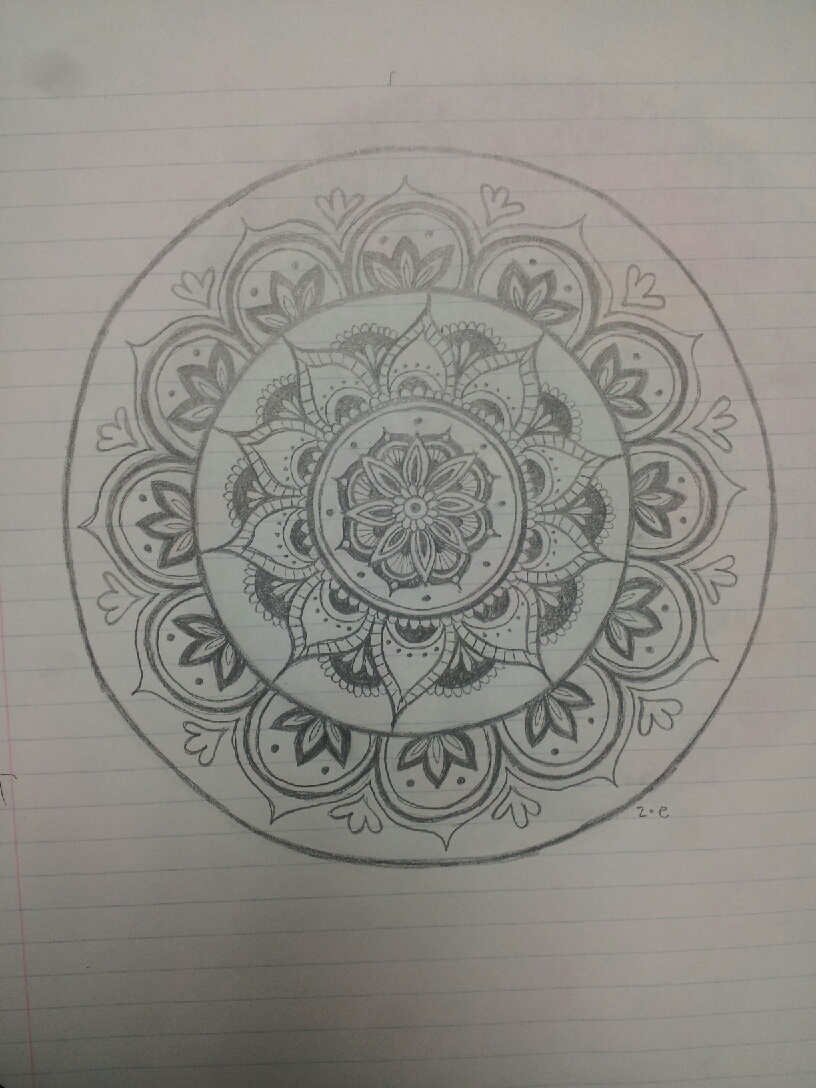
Symmetry

IMG_3316

(Original, free-hand drawing by Zoe Colier).

There are many varieties of symmetry. Symmetry exists rampantly in nature and symmetry is also incorporated into many human designs. In this short essay, I want to remind people of several varieties of symmetry and then show how symmetry may also be used as a tool of thought to help solve problems by simplifying the space of possibilities that must be considered. 

Symmetry is a concept with far broader application than cutting out paper snowflakes or choosing a nice looking Christmas Tree, Menorah or other Holiday decoration. It is fundamental in logic, mathematics, physics, chemistry, biology, and even in social science.

Symmetry exists at many different scales as well. Planets are generally roughly spherical and their orbits are roughly circular. 

IMG_5895

The human body, along with most other animals, exhibits rough bilateral symmetry in external appearance. If you examine your own fingerprints or the pattern of your moles, for instance, you will see that one side of your body looks slightly different from a mirror image. If, like me, you are a righty who play tennis, you will find the forearm muscles on your right arm are slightly larger than those on the left. What is remarkable to me is not that there are slight variations between left and right but just how slight those variations are. And, we are not alone. Fish, insects, flatworms, roundworms, snakes, turtles, lizards, horses, dogs, cats, apes, and humans are all roughly bilaterally symmetrical in appearance. I say “in appearance” because our internal arrangement of organs is not at all symmetrical.  

External Appearance and Internal Organs

In general, it seems to me that most animals possess more complete or “perfect” bilateral symmetry than do most plants. I suspect that this is because animals generally move through a physical environment. Since we can move around, the environmental forces are generally symmetrical and so our ability to react to those environmental forces is also symmetrical. A tree, on the other hand, may have a genetic “blueprint” to be bilaterally or (more likely) radially symmetrical, but it may be subject to strong asymmetrical forces such as wind, a water source, or sunlight versus shade. 

Our designed objects are also most often (at least) bilaterally symmetrical, and particularly for those objects which must interact and move through the physical world. Cars, boats, motorcycles, busses, trains, trucks, bikes, skis, surfboards, roller skates, ice skates, snowshoes and tennis shoes all tend to be bilaterally symmetrical. On the inside, however, again just like us, there are often some irregularities. The arrangement of controls of the car, for instance, are asymmetrical. (Each control in itself often does show symmetry. In some cases, this makes it easier to use, especially without looking. I suspect that the symmetry may often be for aesthetic reasons, for ease of manufacturing, for ease of maintenance or replacement or some combination.) The asymmetry of arrangement “works” because the arrangement of displays and controls does not interact with the natural world the way that the car body and wheels do. The controls are designed to interact with a human being. There are also rough conventions for where controls are laid out, how they operate, and what each type looks like. Asymmetry of arrangement is also evident under the hood. However, some of the components such as the engine, the battery, the radiator have symmetry within them. The radiator, which arguably has the most interaction with the outside world, is symmetrically placed though its plumbing is not. 

automobile car customized drive

Photo by Pixabay on Pexels.com

In the design of User Interaction and Experience, an argument can be made for certain kinds of symmetry. For example, in the Mac editor Pages, which I am using to write this, if the B for bold button background turns blue when bolding is turned on, I expect the background will turn back the way it was (white) when bolding is turned back off. I also expect that italics and underlining will behave the same way, especially because all three are in the same toolbar. 

Where possible, it also generally makes sense, I believe, to design so that the functionality of a system is symmetrical. This isn’t always possible. Some actions are necessarily irreversible. If you don’t believe me, ask anyone who has toddlers or who has pets. In the real world, if you shoot someone dead, you cannot “unshoot” them. Unlike a computer system who asks, “Do you really want to delete all your files?” before doing so, guns do not ask that. If you are designing what can be done with a toy robot however, if you can make it go forward, you want to make it so it can go back as well. If it can turn right 90 degrees, you would like to enable it to turn left 90 degrees. Saying, “Oh, yes, but don’t you see, you can, in effect, make it turn left 90 degrees by making it turn right 90 degrees three times?!” does not cut it, IMHO. 

Typically, you not only want the functionality to be symmetrical, you also want the control functions and appearances to mirror the symmetry of the functionality. For example, if you can issue the command: “MOVE ROBOT FORWARD THREE PACES” you want the symmetrical function to be evoked this way: “MOVE ROBOT BACKWARD THREE PACES” and not, “THREE PACES BACKWARD FOR ROBOT MOVE.” If you decide to give auditory feedback for the first command that says, “ROBOT MOVING FORWARD THREE PACES” you do not want the reverse command to provide feedback that says, “ROBOT THREE PACES BACKWARD MOVING.” (Oh, by the way, if you cannot provide symmetrical functionality, please do not pretend to do so with a facade of symmetrical looking commands that actually behave asymmetrically!)

action android device electronics

Photo by Matan Segev on Pexels.com

A lack of symmetry (or consistency) in the functionality, command structure, or visual appearance often arises because of a lack of communication within the development team. If different functions of the robot are to be implemented by different people, then it’s important that those various people use an agreed upon style guide or Pattern Language or that they  communicate frequently. Of course, this is not the only cause of asymmetry. Even if your team communicates really well, they can’t design an effective gun with an “unkill” function. 

There are, of course, various types of symmetry. Bilateral (mirror) symmetry is what the external appearance of our bodies has. There is also translational symmetry, where the same shape is repeated along a line. The string ABCCBA shows bilateral symmetry while ABCABC exhibits translational symmetry. Most human factors people now agree that hot water faucets (usually on the left) and cold water faucets (usually on the right) should both be turned off by turning to the right and turned on by turning to the left (translational symmetry) as opposed to having the faucet on the right turn off to the right and the left faucet turn off to the left. But you will definitely experience both types. 

In both music and poetry, at least in the culture I am most familiar with, translational symmetry is more common than mirror symmetry. It does sometimes happen that musical composers experiment with playing a tune backwards or even with the staff turned upside down. But this is far less common than repeating a theme or melody. Similarly, a rhyme scheme like ABCABC is much more common than is ABCCBA. {In this notation, ABCABC means that the first line rhymes with the fourth line, the second line rhymes with the fifth line and the third line rhymes with the sixth line.} 

black and brown millipede on a green and brown branch

Photo by Pixabay on Pexels.com

In biology, we also find translational symmetry or something close to it. The segments of a tape worm, the segments of the body of a millipede or centipede, the small legs of a lobster, and even our own vertebrae and ribs show translational symmetry. In social structures as well, we find both mirror symmetry and translational symmetry. For instance, the Golden Rule says to do unto others as you would have them do unto you. In addition, as it happens, if we are nicer to other people, then, generally speaking, they are also nicer to us. This is not always true, however. Some people simply take advantage and view all of life as a zero sum game. Whatever you gain, they lose and vice versa. This is a very limited, inaccurate, and self-defeating attitude in most social situations. Most social situations, are, of course, much more complicated. Generally speaking, there are a great many situations that both you and your “opponent” or even your “enemy” would agree are good and a great many others that both of you would agree are bad. If you are playing tennis or golf outdoors, for instance, you may be fiercely competitive but both of you would probably find a game that brings out the best play is better for both of you. Both of you would probably also agree that being rained out is a bad outcome.  

men in black and red cade hats and military uniform

Photo by Pixabay on Pexels.com

In the military and in many industrial settings, there is a great deal of translational symmetry. The “ideal” set-up is to have many groups at each of many levels and each group is meant to be as similar as possible to all the other groups at that level. The marching that military groups learn is both symbolic of this translational symmetry and practice in behaving as a unit composed of identical parts. Whether or not this is the best way to run a military is debatable. To me, it’s undeniable that this management style has been imported into a huge number of organizations where it is definitely not the best way to organize. 

The last thing to note is that symmetry also pops up in design. There is often a whole series of information exchanges from people who have quite different areas of expertise. These exchanges can result in mutual learning, solutions that work, and often patents, and occasionally, some really cool, transcendent, game-changing designs. In my experience, it is much better to have a design process based on symmetrical relationships founded in mutual respect than to have a design process based on having someone in a hierarchical power relationship make decisions that are to be implemented by an identical set of “underlings.”  

macro photography of snowflake

Photo by Egor Kamelev on Pexels.com

The Takeaway

Symmetry is everywhere. There are many forms. If you start looking for symmetry, you will find examples in nature, in mathematics, poetry, art, music, machine design, the military and even in design problems and design processes. Thinking quite consciously about the types of symmetry that exist in a problem space and what could or should exist in that problem space, can lead to novel solutions.


——————————————-

Author Page on Amazon. 

The Walkabout Diaries

Local Symmetries

Alternating Repetition

The First Ring of Empathy

Donnie Takes a Blue Ribbon for Spelling

Travels with Sadie

It was in his Nature

A Cat’s a cat

A Suddenly Springing Something

Hai-Cat-Ku

Hai-Ku-Dog-Ku

The Dance of Billions

Roar, Ocean, Roar


Resonance

06 Tuesday Jan 2026

Posted by petersironwood in America, management, psychology, Uncategorized

≈ 1 Comment

Tags

creativity, Design, echoes, Feedback, golf, harmonics, learning, life, politics, programming, resonance, sports, testing, thinking, timing, USA

Resonance

If you have ever pushed your kids on a swing, you know that timing is important. If you add the power of your next push just as the child reaches the apex and begins to fall back, you will swing your child higher and higher with little effort. On the other hand, if you add the power of your next swing at the bottom of the arc just as the swing is moving toward you at maximum speed, you will nearly stop the swing and likely injure yourself and/or your kid. Please don’t try it.

boy wearing blue shirt sitting on swing

Photo by Git Stephen Gitau on Pexels.com

In sports as well, the timing of when you add your effort is critical. In golf, for instance, many beginners think a lot about their hands, probably because we use our hands for many daily tasks such as texting, flipping burgers, playing video games, etc. While the hands are certainly important in the golf swing, they are the last thing to bring to bear on the golf swing, not the first. If you add your hands and wrists at the last moments right before you hit the ball, you will  be accelerating the club face as you hit the golf ball. You will have greater velocity and also more stability and hence more accuracy for the shot. 

woman playing golf

Photo by Jopwell x PGA on Pexels.com

The golf swing is a complex athletic move that I cannot describe in detail. Here’s what is important in this context. Some parts of the golf swing (notice the word: swing) are much like a pendulum. The longer parts of the body (e.g., the arms) take longer to swing on their own. The shorter parts of the body take a shorter time to swing on their own (e.g., the hands). In addition, the shortest pendulum (the hands) is at the end of the longer arm swing. This means that for the arm swing and the hand/wrist moves to multiply effectively, you must engage the hands and wrists toward the bottom of the arm swing when the arms are already moving at top speed. 

What is True in Mechanics and Sports is also True in Social Engineering.  

If you work in a highly competitive, even cut-throat sales environment, in which there is a long tradition of stealing commissions, grabbing each other’s customers, etc., having the sales manager say something like, “You know what? Let’s cooperate! Put the customer’s interests first, not your own commission” is pretty much useless. A manager’s exhortation to cooperate is a short term high frequency “push” but it will be just as ineffective as trying to start your golf swing with your hands, or trying to push a swing with all your might when your kid is swinging toward you at top speed. If the cultural milieu is cut-throat, the manager’s statement will not be sufficient to change that culture. What the sales people will do is make sure that they have a semi-plausible story ready about how stealing someone else’s commission was really best for the customer. 

group of people raising right hand

Photo by rawpixel.com on Pexels.com

On the other hand, imagine instead that sales people have shared commissions for years and that the company takes many steps to build social capital and cooperation among everyone on the sales force. Now, the manager may publicly praise an actual instance of cooperation. It doesn’t have to be heavy-handed or over the top. It is a gentle push that adds energy to what people are already doing. This is akin to adding the hands to a good golf swing or adding your swing push just as your kid begins to descend. 

Don’t get me wrong. If your house is on fire, you should leave. Grab your kids and pets but don’t bother with last weeks losing lottery tickets. 

But — you also need to understand why your house caught fire – perhaps faulty wiring – and why the fire was not immediately doused – e.g., your fire extinguishers are out of date. If you don’t fix underlying problems, your next house is likely to catch fire as well. 

If your culture is so materialistic and superficial that a blow-hard sleaze bag who seems to have great material wealth is celebrated no matter how he or she came by that wealth and fame, you may have to deal with the short term problem first, but unless you also deal with the underlying cultural, social, and economic problems, you’ll likely find yourself in precisely the same situation again. The same or other foreign enemies will attempt to exploit those same weaknesses again by finding a different celebrity with deep underlying character defects. Those enemies will push particularly hard during a crisis or an election and they will push particularly hard in the errant directions that society is already trending toward. 

The String’s the Thing Wherein We’ll Capture the Conscience of a King

Next time you have access to a piano, try the following experiment. Gently push down the C, E, and G keys above middle C. Keep them pressed down with your right hand and then strike middle C sharply with your left hand and let it go. What you will hear is that the strings of C major (C, E, G) will vibrate for quite a time after you release the middle C key. If instead, you gently push and hold down the D, F, and A keys above middle C, you will hear very little sound coming from them. Why? Because the harmonic resonance of  middle C is greater with the C, E, and G than it is the D, F and A keys. Similarly, some people will tend to “resonate” with certain messages more than others will. 

close up photo of person playing piano

Photo by Juan Pablo Arenas on Pexels.com

This is why, for example, Russian fake news that was meant to suppress the black vote carried false stories to indicate Democratic candidates didn’t care about the “Black Lives Matter” movement, while false stories about how Democratic candidates don’t care about gay rights were targeted toward the LGBTQ community. Of course, even putting Russian election interference aside, candidates typically target their messages to those that will “resonate” with particular voters. For instance, a candidate who believes in an isolationist foreign policy, forgiving student loans, low estate taxes, and better benefits for veterans might focus a speech to a group of veterans on their desire to see better benefits for veterans.  The same politician, when speaking to college students, will tend to focus on forgiving student loans. That has been “business as usual” for my entire adult life (and probably since the beginning of politics). What was really new to me in 2108 was this: an entire raft of Republican candidates promoted the idea that they were concerned about making sure that insurance companies covered pre-existing conditions. In fact, they had always voted against it and were suing to make this provision of Obamacare illegal. 

Prior to the existence of lying news networks and fake web sites who would echo such lies, politicians of either party would be reluctant to employ blatant lying about their positions because, even putting ethics aside, they would be easily discovered. However, if some of their constituents only believe fake news networks, then such politicians feel that they can lie with impunity The news presented on such networks resonates with what the lying politicians say and resonates with what those viewers want to hear and believe about the people toward whom they are already favorably disposed.

person woman music musician

Photo by Skitterphoto on Pexels.com

Resonance and the Overly Long Time                                                     Lag.

While managing a research project on the psychology of aging at Harvard Med School, I lived in a suburb called Woburn. This rented house had a hot water heating system, and at some point, during a particularly bitter cold New England winter, the furnace stopped working. I could have called in a professional, but instead, I tried to fix it myself. As a part of this system, there was a small gauge that looked a lot like the gauges in a level, but this one was upright and generally half filled with water. I noticed that now, instead of being half filled with water, it was only about 1/10 filled with water. I didn’t exactly understand why this could be problematic but the instructions said it should be half filled with water and there was a valve to let more water in. So, slowly and cautiously, I opened the valve. Nothing happened. I opened it a bit more. Nothing happened. I opened it a bit more. Nothing. I was about to give up and call a repair person. All at once, the little vial began to fill. Yay, me! I turned the valve off because the instructions also said the gauge should not be overfilled. But it kept filling. And filling. Damn! I made sure the valve was closed tightly. It kept filling anyway! Double damn! The gauge exploded! I had been the victim of — well hubris, of course, because I thought I could figure it out — but also a victim of delayed feedback. When feedback is delayed, all sorts of havoc can ensue. 

photography of green and red fire works display

Photo by Anna-Louise on Pexels.com

You may have experienced a similar time lag issue with hotel showers. You turn up the hot water and the shower water stays cold. You turn it up more. It stays cold. You turn it up more and it still stays cold. And then…all at once you’re being boiled to death in your own shower and you begin wondering who will find the naked body. 

Back in the early days of using LOTUS NOTES, there was a button on my screen that said, “REPLICATE.” And if I clicked on that button, a replication process would start. (Basically, it was downloading my email from the server to my ThinkPad). But sometimes, the mouse click did not register. This might not be a giant issue. In other cases, I would simply click again and this worked for most applications. But in this case, NOTES put up another button, in the same exact spot as the REPLICATE button, that said, “STOP REPLICATION.” The State of the Replication Process, however, was not accurately reflected by the State of the Button on the screen! This was endlessly annoying and could easily have been avoided. There was plenty of screen real estate to put a “REPLICATE” button along side the “STOP REPLICATION” button. Once connection speeds were faster and the computational facilities themselves were faster, this UX issue ceased to be an issue because there was no noticeable time lag between the state of the process and the state of the button. 

man holding remote control

Photo by JESHOOTS.com on Pexels.com

However, I still run into similar issues with Cable TV remotes. Do you? The time lags associated with clicking something on the remote and something happening on the screen is so long, that you begin to wonder whether the battery has gone dead or whether it is aimed wrong or whether the button was not fully depressed. Indeed, I sometimes wonder whether the entire system is truly electronic. I have begun to believe that the button press actually sends an ultrasonic dog whistle to a pack of hungry weasels who hear the whistle. To them, it’s a signal that they are about to be fed. They begin scampering in unseen cages toward their food dishes. The scampering of their feet is picked up by sensors under the floors of the cages. These sensors cause dials to change in a control room staffed by retired school janitors who push a series of buttons that change the channel or the input designation or turn on captioning, but only after they finish the New York Times crossword puzzle they are working on. Then, and only then, does the desired action take place. But if and only if you’ve been patient enough not to hit the button a second time. 

adult audio concert control panel

Photo by Roman Pohorecki on Pexels.com

Of course, if you are the user in this scenario, there is a fix. Push the button once and only once. Now, go outside and run around the neighborhood for fifteen minutes before interacting a second time with the remote. Sure, it takes a long time to get to your program but you’ll be in much better shape after just a few months of this regimen. 

On the other hand, if you are the designer of such systems, you might consider that it would be less expensive in the long run to replace the ultrasonic dog whistles, the weasels and the retired janitors with an actual system of electronics which, after all, is supposed to run at nearly the speed of light.

landscape photography of field with wind mill with rainbow

Photo by Paweł Fijałkowski on Pexels.com

The Takeaway

In comedy, timing, as in life, and UX design, and pushing your kid on the swing, and your golf swing, and social interventions, and election interference, and human short term memory limitations, is everything. 


—————————-

Author Page on Amazon. 

The Update Problem

What About the Butter Dish?

Wednesday

The Stopping Rule

That Long Walk Home

The Truth Train

Dream Planet

Siren Song

The Ailing King of Agitate

Somewhere a bird cries

How the nightingale learned to sing

After All

The Walkabout Diaries: Sunsets

The First Ring of Empathy

Fifteen Properties

Travels with Sadie Teamwork

Donnie Gets a Hamster

Tools of Thought: Problem Finding

03 Saturday Jan 2026

Posted by petersironwood in America, management, psychology, Uncategorized

≈ Leave a comment

Tags

AI, Business, creativity, Design, life, marketing, media, mental-health, problem finding, problem solving, research, thinking, thought, truth, writing

Problem Finding

IMG_5193

Today (18 December, 2018), I googled “problem solving” and it returned 287,000,000 results. In most of our school life as well as most people’s work life, we are given problems and asked to solve them. “Problem finding” only returned about 2.5 million or fewer than 1/100th as many hits. Solving problems can make processes more efficient and more effective. Solving problems can even save lives. We generally reward people both at school and at work for being good problem solvers. We seldom train people in problem finding. In fact, the reaction of many teachers and many managers when someone finds a problem is to dismiss it as being a non-problem. (FYI, Google now leads with an AI summary rather than links nor does it provide the number of “hits.”)

I can understand this sentiment; the emphasis on solving problems rather than finding them. As a teenager driving my dad’s car home from a date with my girlfriend, somebody beside me tried to make a right turn from the left lane and ran right into my dad’s blue Dodge. I heard what sounded like the voice of God say “NO!!” loud and clear. It was actually louder than the sound of crumpling metal. For a split second, I was in complete denial. Even some moments later, when we pulled over to assess the damage, to me, it looked minor enough to ignore and to just drive off. A more experienced guy from the corner gas station near where this happened said that while it may look minor, it would cost hundreds of dollars to fix and we therefore needed to trade information. I was stunned.

grayscale photo of wrecked car parked outside

Photo by Александр Неплохов on Pexels.com

In many cases, it is a human tendency to want to deny that a problem really exists. If you can get past that tendency however, and embrace problems and indeed, even learn to seek them out, you may be able to create tremendous value for yourself and for those around you. Problem solving can make your bookstore more profitable. Problem finding lets you invent Amazon. Problem solving lets you build a better internal combustion engine. Problem finding leads you to an electric vehicle.

What might you do to discover problems? First, you might take your own negative emotions as a jumping off place. If you find yourself angry, or anxious, or depressed, to the extent that you can trace back what is going on to the initiating event, you may be able to be consider whether that event is unique to you — or, more likely, that event is likely to trigger a negative reaction in many people. 

person holding white polaroid land camera

Photo by fotografierende on Pexels.com

If you found that waiting even 48 hours to have your photographs developed and printed — and you thought others might also be impatient to see the results–you might invent Polaroid instant photos. If you found cooking a casserole too time-consuming and messy for your taste, you might invent frozen dinners. If you drove a lot in hot, humid climates, you might be motivated to put air conditioning in cars. 

Of course, you do not have to limit yourself to your own misfortune. If you read about someone having a miserable time, you could dig a little deeper and ask yourself how a tragedy might have been prevented or how an accident could have been avoided. You can also look at a change that seems minor and ask yourself what will happen if this change becomes widespread. 

For example, if you read in the newspaper that a robot has been invented that harvests tomatoes, you might extrapolate to a more universal situation. What if all crops were harvested by machine? This might make groceries cheaper. But what else would it mean? Tomatoes are rather delicate, after all. You might wonder whether growers using a machine to harvest tomatoes would harvest them early to avoid them being mashed by the machine. You might wonder whether they would even genetically alter the tomatoes so that they were easier to harvest by machine (even if they were no longer as tasty). You might wonder what will happen to the tomato pickers. Politicians may tell you that they will all be retrained for higher paying jobs as machine inventors, machine programmers, and machine maintenance folks. But this makes no sense. If there were an equal number of IT jobs as there used to be tomato pickers but each of the new jobs came with a higher salary, why would the growers use robots? There will be fewer jobs after automation and in some cases, far fewer. 

close up of hands holding cherry tomatoes

Photo by rawpixel.com on Pexels.com

You might look at the global temperature trends and ask yourself what will happen if they continue. What will happen if global temperatures continue to rise? What can be done about it? Of course, once people start seriously mapping out the consequences, some people will react by saying, “Oh, it isn’t really happening!.” Why do they think that? Because it’s too scary to contemplate the truth; or too inconvenient to take the necessary actions. There are vested interests in old energy sources who will be happy to help you along in your fantasy of denial. In the short run, it’s often easier to imagine that problems do not exist, or are not that bad, or won’t get worse, or that there is just nothing to be done. 

Even most of the people who rail against what most of us think of as sensible gun regulation (requiring a license, showing ID, getting at least some training and testing the would-be gun owner’s knowledge, competency, and eyesight as we do with cars) don’t think that mass shootings of innocent children is a fine thing. They see it as a problem — just one that cannot be solved or one that can only be solved by adding cost and inconvenience to the potential victims. After such a tragedy, they may even send “thoughts and prayers.” 

black rifle

Photo by Specna Arms on Pexels.com

There is a possible “down side” to problem finding. The greedy may decide that they can make a lot of money by generating a solution to a problem that isn’t really a problem and making you believe it is a problem. My favorite, and so far made up, example is “Elbow Cream” for those unsightly skin wrinkles that appear on the back of your elbow when you straighten your arm. But that made up example is not too far off. You eat spicy food and it upsets your stomach? We can fix that! Of course, you could too by simply not eating overly spicy food! But nobody makes money that way. So they will sell you something that supposedly fixes the “problem.” While it might be fantasy to imagine “Elbow Cream” that will “fix” your “unsightly elbow wrinkles” it is not fantasy to imagine that people have been hoodwinked into spending money on “fixing” their faces and bodies. 

fullsizeoutput_11b5

Americans spent 16 billion dollars on cosmetic plastic surgery in 2017. There are 50 countries who each have a lower GDP than that. The beauty industry in the USA overall was supposedly around $445 billion in 2017. That’s more than the GDP of each of 151 countries! Both figures are also less than the federal government spends on reducing climate change. Or cancer research. 

Do you see that as a problem? I do. 

——————————————————

Author Page on Amazon. 

The Invisibility Cloak of Habit

Essays on America: The Game

One of the most enjoyable aspects of Science Fiction as a genre is that it often shows us problems that might occur in the future. In some cases, it suggests ways to prevent those problems and in some cases, it suggests how these future problems might be dealt with.

Turing’s Nightmares, for instance, comprises 23 short stories that explore the ethics and implications of AI. http://tinyurl.com/hz6dg2d

Dream Planet examines, among other things, the extrapolation of global warming and a radical attempt to stem it. https://www.barnesandnoble.com/w/dream-planet-david-thomas/1148566558

FaceGook

The Ides of February

A Day at the HR Department

Putin’s Favorite DOG-E

Silent Screams of Dead Men’s Dreams

Namble Mamble Jamble

May You Live in Interesting Times

Plastics!

The Last Gleam of Twilight

The “Not-See” Party

An Open Sore from Hell

Happy Talk Lies

← Older posts
Newer posts →

Subscribe

  • Entries (RSS)
  • Comments (RSS)

Archives

  • September 2026
  • August 2026
  • July 2026
  • June 2026
  • May 2026
  • April 2026
  • March 2026
  • February 2026
  • January 2026
  • December 2025
  • November 2025
  • October 2025
  • September 2025
  • August 2025
  • July 2025
  • June 2025
  • May 2025
  • April 2025
  • March 2025
  • February 2025
  • January 2025
  • December 2024
  • November 2024
  • October 2024
  • September 2024
  • July 2024
  • April 2024
  • March 2024
  • February 2024
  • January 2024
  • December 2023
  • August 2023
  • July 2023
  • May 2023
  • April 2023
  • March 2023
  • February 2023
  • January 2023
  • December 2022
  • November 2022
  • October 2022
  • September 2022
  • August 2022
  • July 2022
  • June 2022
  • May 2022
  • April 2022
  • March 2022
  • February 2022
  • January 2022
  • December 2021
  • November 2021
  • October 2021
  • September 2021
  • August 2021
  • July 2021
  • June 2021
  • May 2021
  • April 2021
  • March 2021
  • February 2021
  • January 2021
  • December 2020
  • November 2020
  • October 2020
  • September 2020
  • August 2020
  • July 2020
  • June 2020
  • May 2020
  • April 2020
  • March 2020
  • February 2020
  • January 2020
  • December 2019
  • November 2019
  • October 2019
  • September 2019
  • August 2019
  • July 2019
  • June 2019
  • May 2019
  • April 2019
  • March 2019
  • February 2019
  • January 2019
  • December 2018
  • November 2018
  • October 2018
  • September 2018
  • August 2018
  • July 2018
  • June 2018
  • May 2018
  • April 2018
  • March 2018
  • February 2018
  • January 2018
  • December 2017
  • November 2017
  • October 2017
  • September 2017
  • August 2017
  • July 2017
  • June 2017
  • May 2017
  • April 2017
  • March 2017
  • February 2017
  • January 2017
  • December 2016
  • November 2016
  • October 2016
  • September 2016
  • August 2016
  • July 2016
  • June 2016
  • May 2016
  • April 2016
  • March 2016
  • February 2016
  • January 2016
  • December 2015
  • November 2015
  • October 2015
  • September 2015
  • August 2015
  • May 2015
  • January 2015
  • July 2014
  • January 2014
  • December 2013
  • November 2013

Categories

  • AI
  • America
  • apocalypse
  • cats
  • COVID-19
  • creativity
  • design rationale
  • dogs
  • driverless cars
  • essay
    • guns
  • family
  • fantasy
  • fiction
  • HCI
  • health
  • leadership
  • love
  • management
  • nature
  • pets
  • poetry
  • politics
  • psychology
  • Sadie
  • satire
  • science
  • sports
  • story
  • The Singularity
  • Travel
  • Uncategorized
  • user experience
  • Veritas
  • Walkabout Diaries

Meta

  • Create account
  • Log in

Blog at WordPress.com.

  • Subscribe Subscribed
    petersironwood
    Join 653 other subscribers

    Have a WordPress.com account? Log in now.

  • petersironwood
    View site in Reader
    Manage subscriptionsSign upLog in
    Report this content
    Collapse this bar
Loading Comments...