• About PeterSIronwood

petersironwood

~ Finding, formulating and solving life's frustrations.

petersironwood

Category Archives: management

9. Contrast

21 Monday Sep 2026

Posted by petersironwood in creativity, design rationale, essay, HCI, leadership, management, nature, psychology, Uncategorized, user experience

≈ Leave a comment

Tags

aesthetics, art, beauty, HCI, human_factors, leadership, nature, order, photography, poetry, usability, user_experience, UX, writing

9. Contrast

With zero contrast, nothing can be seen at all. Beyond that however, it is interesting how many plants and animals as well as good designs show the property of Contrast. Plants “use” contrast, if I may speak in teleological terms, to attract pollinators such as butterflies and bees to their flowers. Plants also use contrast to “announce” to animals who spread seeds that their fruit is ripe and ready to be eaten. If the fruit part of a plant did not make such an obvious “announcement,” a forager might damage a plant by eating all of it rather than just the sugar-rich fruit. 
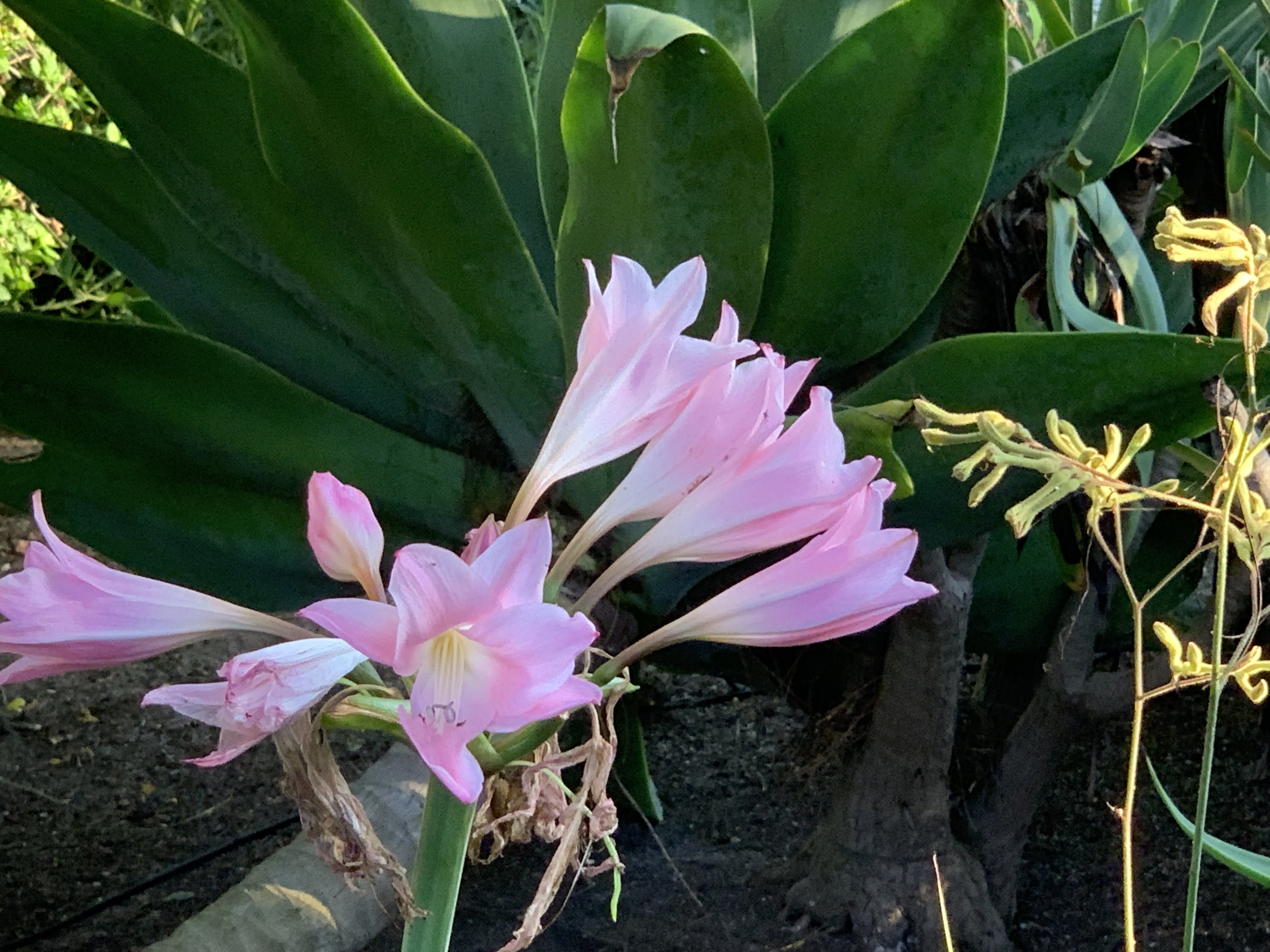
By contrast, fall leaves show high contrast which adds to their beauty, but this is probably just a “side-effect” of the leaves “saving” their water & chlorophyl and leaving other colorful compounds in the leaf. I suppose there could be an evolutionary advantage to a tree that is beautiful in the fall. I could imagine that bright colors attract animals and birds to “hang out” nearby and this means that the soil will be enriched by animal excretions and occasionally by deaths. In some cases, the color might “signal” animals that fall is coming and if the animals take more appropriate actions, this makes for a healthy ecosystem that in turn is good for the trees. I know of no such evidence however. It seems likely the bright colors are a beautiful side-effect of the tree breaking down the no-longer-useful chlorophyl to components that are stored in the roots. The more we learn about trees though, the more “clever” they seem so I wouldn’t put it past them to have “reason.”

Some animals, such as zebras and tigers, use contrast as a kind of camouflage. If you see a picture of a zebra or tiger out of context, you may think, “What? How is that camouflage?” But in the bright sun, grazing in tall grass (or lurking there, hoping for dinner), it actually does serve such a purpose. 

Photo by Sayantan Kundu on Pexels.com

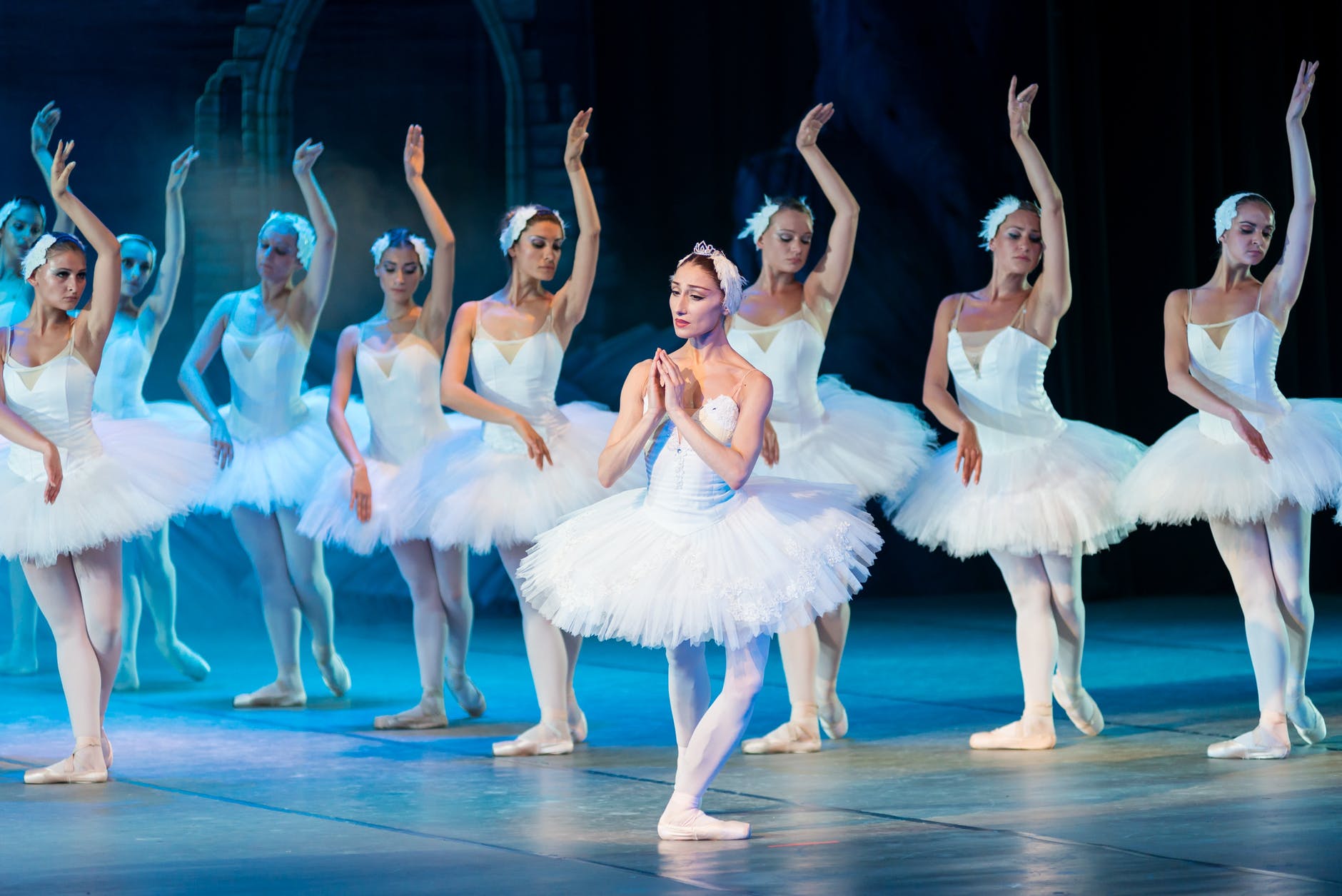
There is also a more subtle kind of camouflage that some animals employ. High contrast can make it difficult for a potential predator or prey to “parse” the visual image. I believe some of the professional tennis outfits, for instance, make it harder for an opponent to “read” the actual body positions from across the court, especially with non-foveal vision. Is that what’s going on in the picture below? 

Considered separately, the shadow of the fence in the photo below strikes me as more beautiful than the fence itself. This is largely due to the higher Contrast in the shadow. I think another property “Roughness” also plays a part. The fence is machine milled and regular. The shadow falls on uneven ground. Rather than obscuring the Contrast, the Roughness actually enhances it. In addition, the fence appears quite separate and distinct from the greenery behind it. However, the shadow is partly determined by the fence and partly determined by the uneven ground. This means the shadow exhibits more “Deep Interlock and Ambiguity.” 

I do think the combination of fence and shadow is more beautiful than either taken alone. Taken together, there is an additional layer of Contrast between the “mechanical” regularity of the fence and the rougher feel of the shadow. 

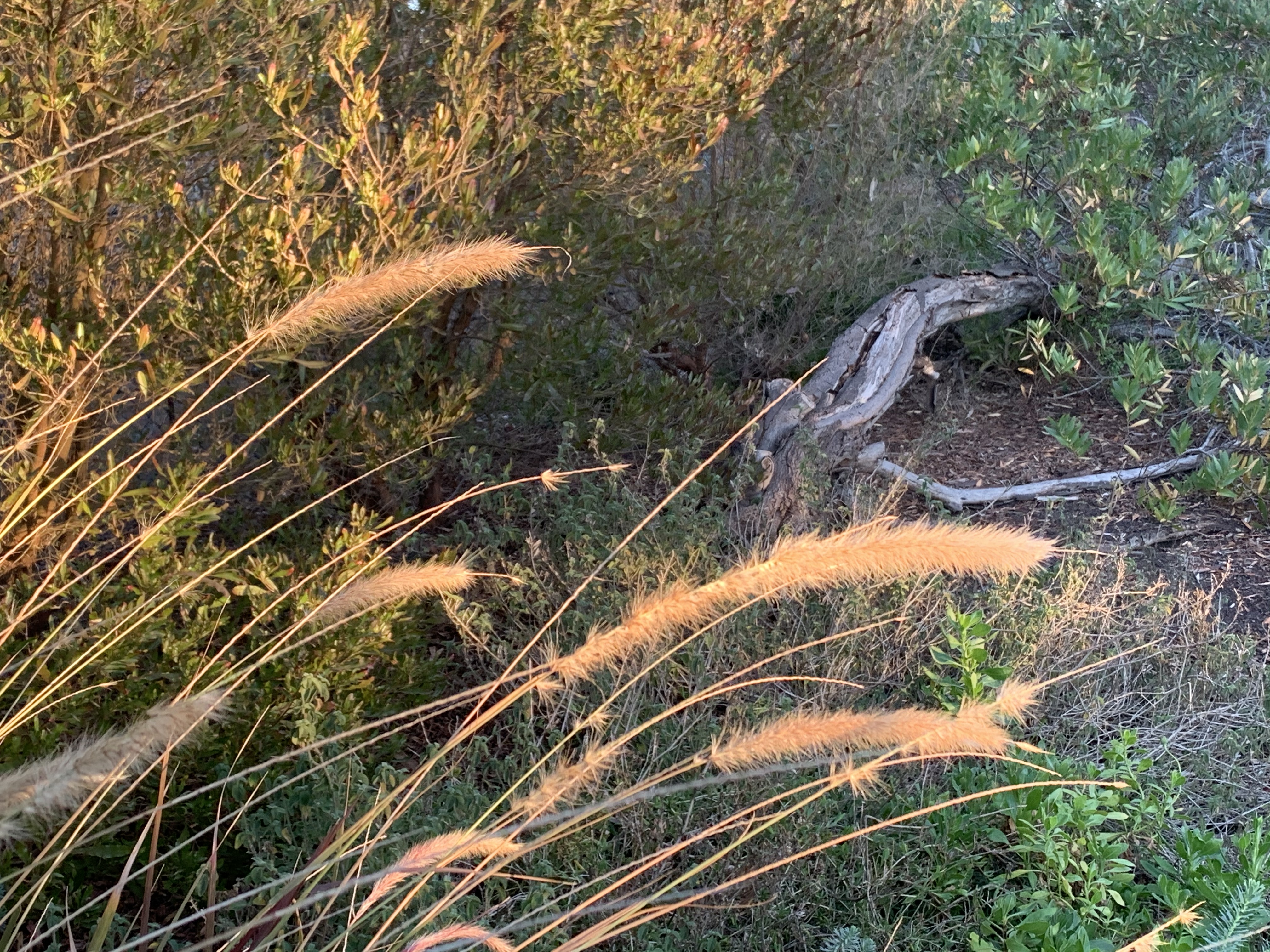
One of the things that trees do is add contrast by virtue of the branches and leaves casting irregular shadows in many places but letting bright light through in other places. Here is a simple case. 
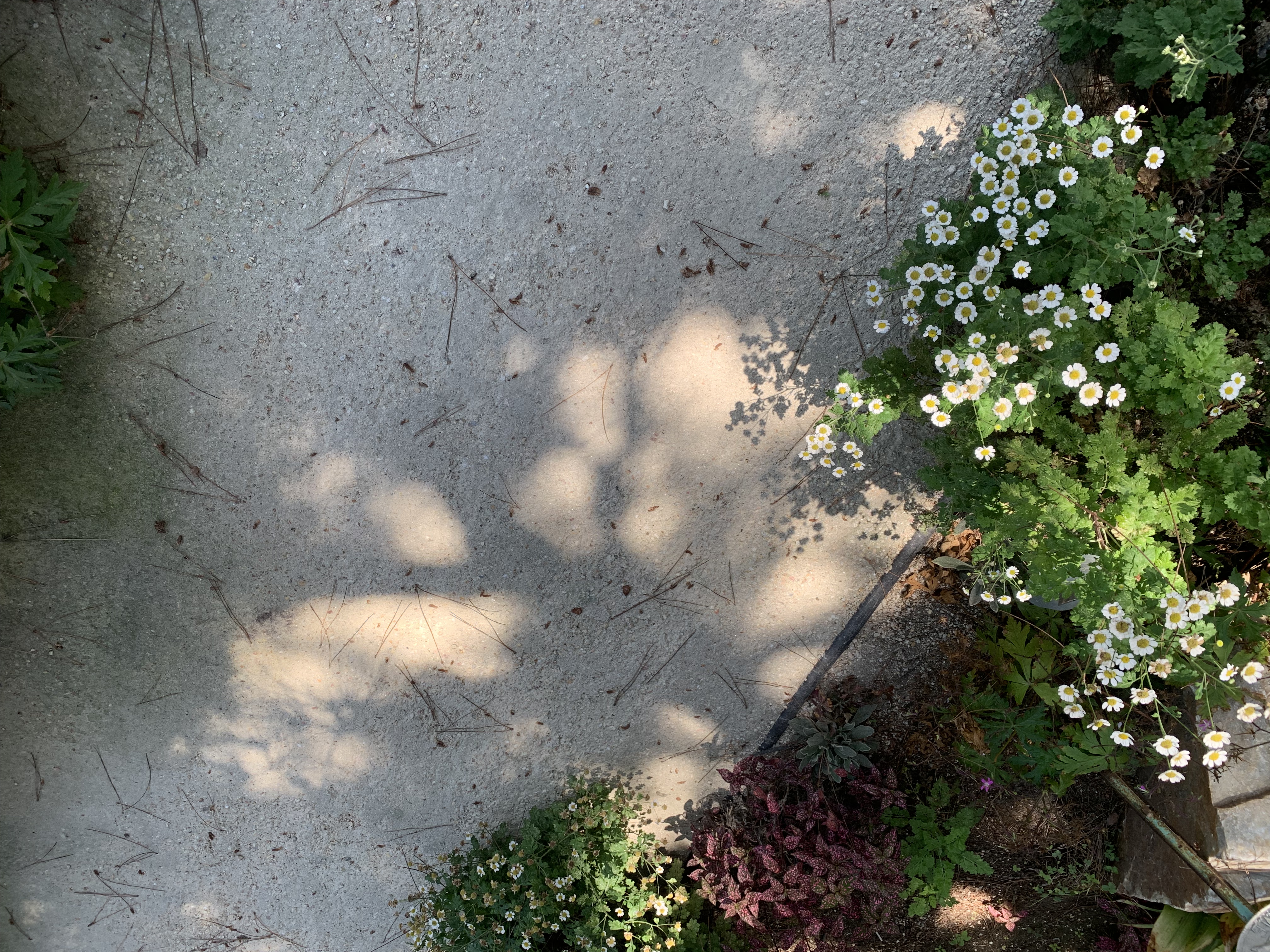
In the photo below, the landscape architect has likely intentionally designed this arbor partly with contrasts in mind. Dark vs. Light; Horizontal vs. Vertical; Straight vs. Bent; Built vs. Growing. What other contrasts do you see? 

Contrast is often desirable not just in terms of vision, but also for other senses. A good salad, for instance, shows contrast in color, but also in terms of textures and tastes. Orchestral music shows contrast in terms of loudness, timbre, harmony, melody, etc. 

Living things also exhibit contrast, not only in their visual appearance, but also in terms of the rhythms of life. Many plants and animals exhibit both daily cycles such as sleep and wakefulness, but also yearly cycles (hibernation, aestivation, migration, mating season, losing fall leaves, blooming & fruiting, etc.). In fact, many animals & plants only live one year. 

Photo by Zaw Win Tun on Pexels.com

Stories typically exhibit contrasts of various sorts. A story (whether play, movie, novel, or short story) is often more interesting when set in both wartime and peacetime, in both country and city, in two different times, etc. In addition, a good story often has contrasting characters such as hero and villain, or two less extreme characters, one of whom is a “foil” for the other. The plot itself is constructed of contrasts in value. The hero loses an athletic contest. Then, the hero wins! Then, the judges unfairly strip the hero of the medals. Then, an investigation reveals that the hero was framed and the hero prevails after all. Love may conquer all — but never without a struggle. 

This succulent pictured below seems beautiful to me partly because of Contrast. Is there an aesthetic “purpose” to the contrast shown? Or, is the real “point” to provide the sharp spikes on the edge of the plant and in order to make those spikes effective, the plant needs to be drier near the edges or have a yellow pigment that somehow facilitates the growth of spikes? Perhaps the plant’s growth is limited (in the Southwestern US) by the available water and not at all by sunshine (which is plentiful). Therefore, there is no “point” to having the entire plant green. 

If it seems too far-fetched to imagine a plant exhibiting contrast because it’s more beautiful, it is not to far-fetched to imagine animals exhibiting contrast to attract other animals; most notably, a mate. Insects, birds, mammals, fish, sometimes exhibit “displays” of high contrast color in order to attract mates. Typically, such displays are only used during actual mating season. 

In addition to seasonal and daily “contrasts” in behavior and appearance, animals often exhibit contrast at a finer temporal granularity. As humans, we breathe several times a minute and our heart beats about once a second. Some aspects of our anatomy and physiology have evolved to provide antagonistic forces and processes. We have, for instance, our sympathetic nervous system that prepares us for “Fight or Flight” reactions. The para-sympathetic nervous system turns on a “rest and digest” mode also called “feed and breed.” Our sensory and motor systems use both excitatory and inhibitory processes to “sharpen” what we perceive and the actions we take. Our musculature often has muscles that produce “opposite” results. Our biceps bends our arm and our triceps straightens our arm. The adductors in our legs move our legs inward toward our trunk and the abductors move our legs apart. 

Contrast is so prevalent in the natural order of things “out there” and in the structure and function of our own bodies that it is hardly surprising that our conceptual structures often exaggerate contrasts. We often think, for instance, in terms like these: “Up or Down? Liberal or Conservative? Good or Evil? Strong or Weak? Black or White? Growth or Decay? Orderly or Disorderly?” 

If we return to the photo of the fence and its shadow, for example, we are tempted to describe the darkest parts of the shadow as being places without light while the spaces between have light. Of course, there is light, even in those shadows. Light is reflecting off the nearby trees, houses, grape vines, sand, cars, etc. There is nothing shown in this photo that has no light.

As Amanda Gorman pointed out in a Presidential Inauguration — 

“For there is always light,

if only we’re brave enough to see it

If only we’re brave enough to be it.”

When it comes to User Interface Design, contrast has many uses. For example, contrast is often used to signal whether an item is chosen or not, or whether an action is available or not. Interfaces often include text and the text is easier to read if the contrast is higher. In the early days of human computer interaction, text was composed of a relatively small number of bits that were either on or off. High contrast came with the technological limitations of the devices. More recently, text often appears as dark gray on light gray rather than as black on white.

Why? I have no idea. People sometimes claim that low contrast is “easier on the eye.” So far, no-one has been able to point to empirical evidence. However, text is harder to read when the contrast is low. If the user is old, or trying to read in glare, or has limited vision, or the reader or device is moving or vibrating, low contrast text can become illegible. The “worst” cases I’ve seen are on devices such as CD players or smoke alarms. To simplify (and therefore cheapen) manufacture, the letters are not painted at all but simply embossed as white on white or (even worse) black on black. From my personal experience, few things in modern life are as pleasant as being awakened around 3 am by a screaming smoke alarm which has cryptic and unreadable directions in white on white. 

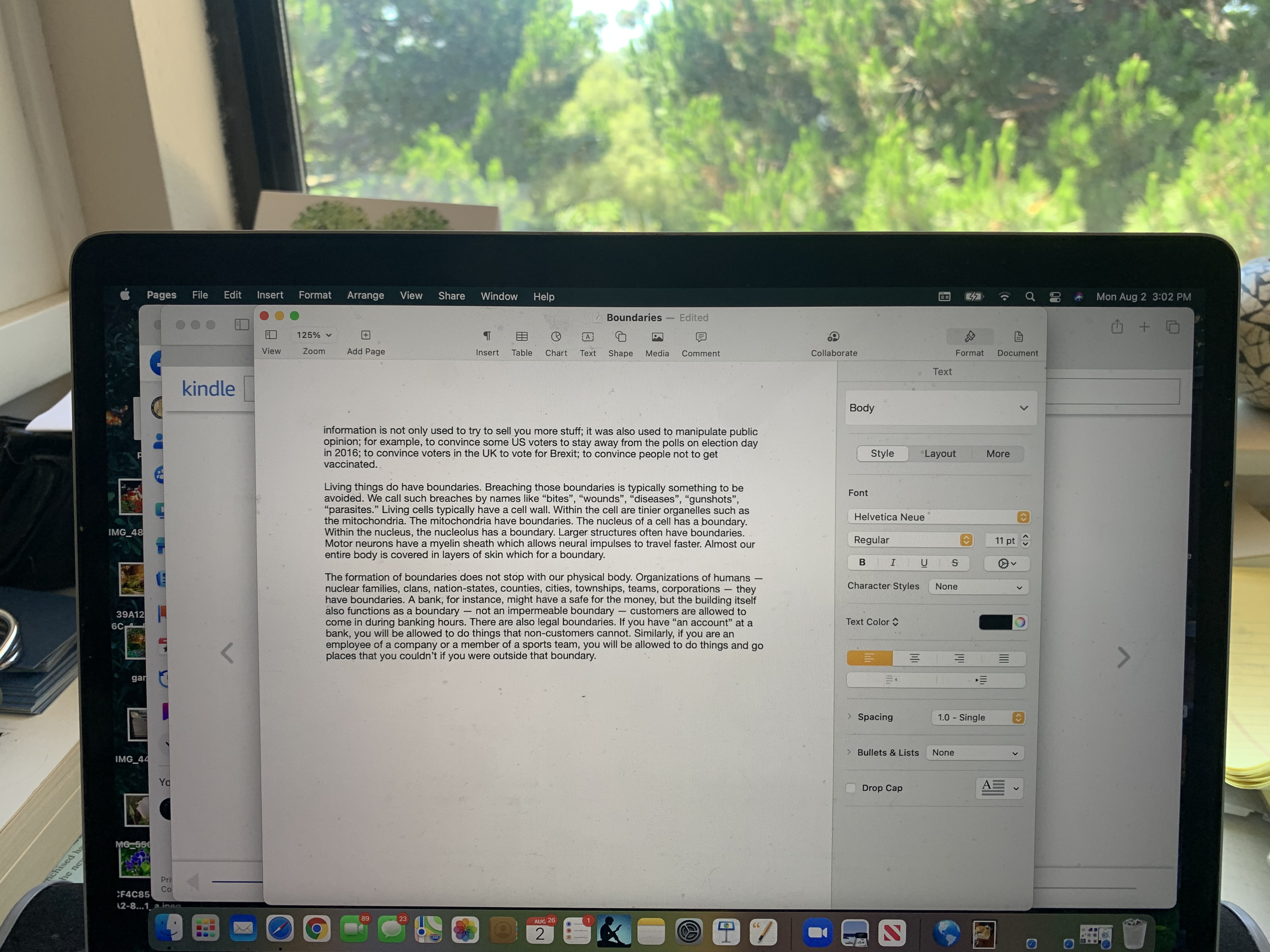
At a more abstract level, a high level of conceptual contrast can often make the user experience less frustrating, more enjoyable, and more productive. What do I mean by “conceptual contrast?” In this context, I mean that two related actions or situations that are clearly differentiated in the commands, the explanations, the terms etc. are less prone to confusion. Let’s pick on what I see right before me: the high level “Pages” tool bar. “File Edit Insert Format Arrange View Share Window Help” At a visual level, these are nearly white on a black background; i.e., easy to read. But what is the conceptual contrast between “Format” and “Arrange”? How about “View” and “Window”? Are there other terms that would be better cues as to what these groups of functions do? 

The same for menus within the document. I see above the material I am actually typing another use of the words “Insert” and “Text” appears right next to it. But how is this different from “Text” on the right? It’s not that any of these items are so confusing that they cannot be learned. “Style” when you are writing (as opposed to “word processing”) generally refers to something much more abstract that the type of font and the size or color of the text or the spacing between lines. 

I think a more fundamental issue is that typical text editors, after the “Clippy” fiasco, have steered away from explicitly supporting the process of actual writing. Developing a truly useful aid would be much more difficult. I’m not going to try to design such a system here. To give a hint of the kind of thing I mean though, suppose that a text editor explicitly supported writing a short story. Embarking on writing a short story, the user might be presented with a choice for guidance. Perhaps this hypothetical writer wants to try writing a “locked room” mystery. And, maybe they want lots of guidance. So, the software leads them through an idea generation phase. In that phase, perhaps it is more productive to turn off various kinds of “autocorrect.” Perhaps the author is encouraged to “solve” the basic problem (how was the murder committed) before actually beginning the writing. Maybe there is a high level of visual Contrast which serves as a constant reminder to the author that they are, at this point, generating ideas. 

Von Oech suggests that problem solving involves four stages that he illustrates with four “hats” — an explorer’s pith helmet for the Exploration phase; an artists beret for the Creation Phase; a judge’s wig for the Editing or testing phase; and a Viking warrior’s horned helmet for the marketing and sales phase. If such a model were supported by the software, you might expect a strongly contrasted visual interface to reinforce the phase of writing that the user was in. The Exploration phase might consist visually of cards evocative of various fields that would support research. The artistic phase might be a mind-mapping tool. And, so on. The user would know at every glance which phase of the overall writing process they were “in.” 

It may be that any such process involves too much overhead or is too rigid. But what is the alternative? At present, the author must either keep almost all the information about their goals, ideas, and processes in their head or in a separate document or spreadsheet. As I look at the screen in writing there is almost no clue about “where I am” in the process of writing. Whether or not you buy into the specific four-stage model of Von Oech, I do believe that various phases of writing do offer contrasts in terms of how that phase should be supported. I only chose writing as one example. 

Nearly any task that the user is engaged in has some structure to it. Scientific research, learning a foreign language, organizing a tennis tournament, planning a trip, finding a house, buying a book on-line, etc. All of these have different sub-tasks. In some cases, the user wants more flexibility; in some cases, less flexibility is actually helpful. But most “application programs” seem to me to be deficient in terms of guiding the user through a process; giving any visual indication of where the user is in the overall process, or of tailoring actions to which subtask the user is engaged in. If a user is generating ideas, for example, pointing out grammatical errors, typos, and spelling errors is distracting and not that helpful. On the other hand, if the user has finished writing a first draft and is proofreading, then such suggestions may be helpful and appreciated. 

How do you see the use of Contrast in User Experience? Is Contrast best thought of as a visual property which may be nice to have but is not crucial? Or, does Contrast also apply to different subtasks or phases which need to be reflected in both the appearance of the UI and in the functionality? 

———————-

The 4 Roles of Creativity: Explorer, Artist, Judge, Warrior

http://creativethink.com

Some poems that provide Contrast. 

Here is a poem that contrasts a “before” and “after” state. 

How the Nightingale Learned to Sing

Here’s a poem that contrasts two different views about how powerful you are. 

Roar, Ocean, Roar

Here’s a poem that contrasts natural beauty with mechanical sameness.

The Forest

Here’s a poem about music that contrasts various acoustic elements to mirror changes in music. 

Piano 

Here’s a poem that contrasts the gentle and caring beginnings of love with becoming jaded. 

Wonder, wonder, who kept the wonder? 

Here’s a poem that contrasts the importance of adult work with the importance of a child’s play. 

The Most Serious Work

Here’s a poem that contrasts two ways to frame resistance to tyranny

Roar, Ocean, Roar!

Here’s a poem that contrasts love and guns

Love and Guns

8. Deep Interlock & Ambiguity

19 Saturday Sep 2026

Posted by petersironwood in creativity, leadership, management, nature, psychology, Uncategorized, user experience

≈ Leave a comment

Tags

aesthetics, ambiguity, architecture, art, beauty, Design, HCI, interlock, photography, reading, usabiity, UX, writing

8. Deep Interlock & Ambiguity

In many cases, the various 15 properties that Christopher Alexander poses as characteristic of natural beauty seem to contradict each other. They don’t actually contradict each other. They are forces that sometimes oppose each other or work at angles to each other. This should not surprise us because the same is true of life in general. Of course, I want my bones to be bigger because that will make them stronger. But bigger bones will make me weigh more and demand more nutrition. I want the biggest brain I can have, but a big head makes childbirth almost impossible. One way out of the conundrum is to risk having human babies born way earlier in their development than for most animals. 

So, Good Shape plays off against Deep Interlock & Ambiguity. Partly, it solves this problem by asking a third character in this morality play to step onto the stage — Levels of Scale. If one focuses attention on a single leaf or flower or petal of a flower, one typically finds “Good Shape.” In clusters of well-shaped leaves, or well-shaped flowers, one often sees the flowers or leaves interleaving with the space of other well-shaped leaves or flowers. Thus, at one level of scale, there is Good Shape. But at a higher level, all of these Good Shapes interact with each other so as to interlock. 

Typically, when we design User Experiences, we try to make things clear, not provide “Deep Interlock and Ambiguity” — that sounds like something to be avoided. Perhaps we can see how some decorative elements might exhibit Deep Interlock & Ambiguity, but surely anything that is functional should be clear. 

I think there is a place for Deep Interlock & Ambiguity in design — even functional design. First, we need to distinguish two sorts of reasons for having Deep Interlock & Ambiguity. On the one hand, the application itself may require deep interlock and ambiguity. Insisting that the user make absolute or irrevocable decisions when inappropriate is not good design. The importance of pliant design I’ve mentioned before. Here’s the paper that first introduced me to the term.

https://dl.acm.org/doi/10.1145/302979.303003

Harris, Jed & Henderson, Austin. (1999). A Better Mythology for System Design.. 88-95. 10.1145/302979.303003. 

Consider the relationship between a father and son, or between spouses. Do you think such intimate relationships could be reduced to a black and white set of clear, consistent, precise rules? I doubt it. It’s a “natural relationship” and, as such, will be ill-suited to predefining everything. That doesn’t mean that there need be no rules or that each person themselves should not have a “Good Shape.” Multiple “Good Shapes” with the right spacing will include both “Boundaries” and “Deep Interlock and Ambiguity” and as a result help produce “Positive Space.” 

Who’s pulling whom?

On the other hand … (did you forget the first hand? It was quite a diversion. Well, the first hand was about revealing to the user the Deep Interlock and Ambiguity inherent in their particular context, task, and the field they are working in. That is much better than hiding that truth.

Photo by Nafis Abman on Pexels.com


On the other hand, it may well be worth asking yourself whether you adding ambiguity because you yourself are not really clear about how a function is supposed to work. Or, are you pushing decorative elements so hard that it is obscuring the relationship of functional elements? A decorative example of mis-using “Deep Interlock & Ambiguity” (which I doubt anyone would actually do) would be to interlace two different menus like interlocking fingers of the two hands. It might indeed look more interesting visually. Perhaps someone out there could even make a good argument for having interleaved menus in certain situations. One example that might make some sense would be interlocking food and wine menus. 

Deep Interlock & Ambiguity is not only a property of visual beauty. Good drama, poetry, and music exhibit them as well. In various ways, so also do most sports. Almost every sport allows and requires the athlete to make decisions that have tradeoffs. Should they attempt the riskier move or the safer one? Should they attempt a higher bar, the heavier weight, the faster start? In addition, many sports (soccer, basketball, baseball, American football, hockey, rugby, etc.) have the two teams interacting directly. In tennis and volleyball, the players stay on their own side of the net, but the players need to shift constantly depending on the positions & motions of everyone else and the position & trajectory of the ball and the capabilities of the various players. I think this qualifies as a sort of Deep Interlock and Ambiguity. Such sports seem not that different from a simplification and stylization of the kinds of interactions that take place in natural ecosystem interactions. 

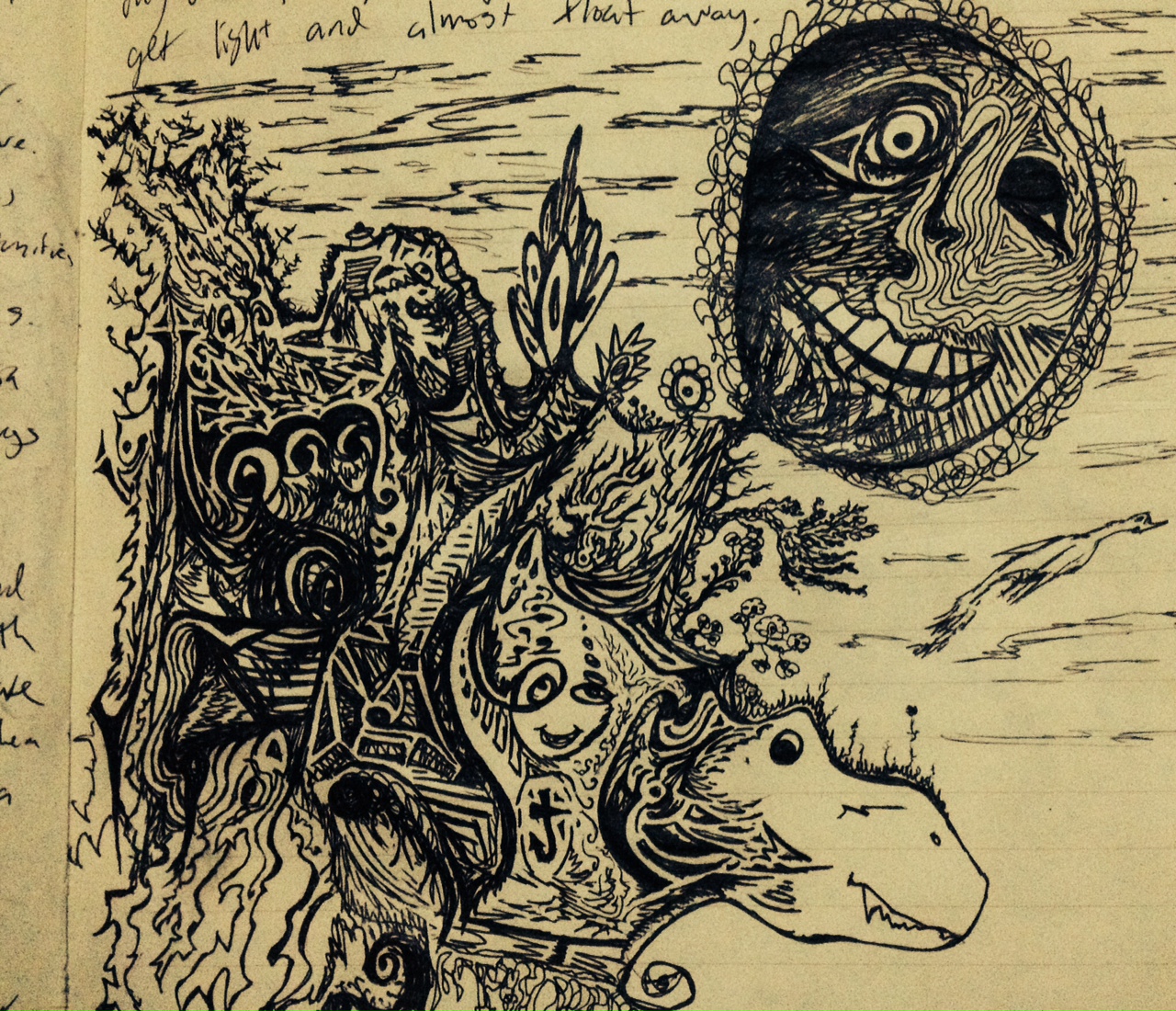
Original drawing by Pierce Morgan

Many simplified childhood games seem quite close to re-enactments of life and death struggles: Hide and Seek, Tag, Hare and Hounds, Cops and Robbers. In my neighborhood, when a new movie came out, the kids would typically go see it and then “play out” variations on the theme of the music. We would play in the setting of the movie (in our imaginations) and adopt characters from the movie. Movies aimed at children typically don’t exhibit quite as much Deep Interlock & Ambiguity as those aimed at older audiences when it comes to Character development. But the plot swings back and forth between apparent victory & defeat, loss & gain, life & death, honor & dishonor, etc. In that sense, the “experiencer” — whether adult or child — doesn’t know (or let themselves know) how things will turn out.

My childhood friends and I moved far beyond re-enacting the actual movie. We improvised entirely new plot lines, we created new lines of deep interlock and ambiguity. Were we taking actions we “really wanted to do” or merely taking actions we thought the characters in the movie would do if they were in the new situation? If we, as an actor, acted too “angry” with one of our friends, would it carry over into real life? If we, as ourselves, acted a certain way and liked it better than our ordinary way, could we “keep” the new behavior (or name, or hairdo, or way of dressing, or favorite expression, etc.?). 

Something like that continues throughout adulthood as well, both within our careers and in our personal lives. Or, at least it may. As you take on different “roles”, you begin to notice that you are better than most people at some things; worse at other things; and roughly average at still other things. You may also notice that doing certain kinds of things is very enjoyable while other activities leave you cold. Your preferences about what you want to do might stay fairly constant through your whole career. Or, your preferences might change quite a bit. If you allow yourself to really “get into a role,” you’ll have a better time deciding if it is a role you really relish. You might find yourself falling in love with your work, which of course is quite different from falling in love with the rewards or the trappings of work. If your life is like most, you’ll spend a lot more time working than enjoying the rewards or trappings of work.

When you read something such as this blog post, you allow for the possibility of interlock and ambiguity with the material, with the author, with another take on reality. The words can resonate (or not) with your own experience and possibly alter things. Moreover, you can leave a message or talk to others and set them on a different course. To read is an act of courage as is any other form of open-hearted and truth-based communication.

——————-

How the Nightingale Learned to Sing

Maybe it needs a new starter

The Joy of Juggling 

Life is a Dance

Choosing the Script

Who are the Speakers for the Dead

Take a Glance Join the Dance

Some recommended books:

The Winning Weekend Warrior focuses on the mental game for all sports using examples from tennis, golf, baseball, and other sports. It covers self-talk, imagery, mental practice, strategy, tactics, & sportsmanship. http://tinyurl.com/ng2heq3

Turing’s Nightmares explores the implications and ethics of Artificial Intelligence through fictional short stories. http://tinyurl.com/hz6dg2d

Fit in Bits shows many ways to put more fun, variety, & exercise into daily chores and habits to help with strength, flexibility, fitness, and balance. http://tinyurl.com/h6c7fce

Tales from an American Childhood recounts early experiences mainly in the American Midwest in the 1950’s and relates them to contemporary issues and events. https://tinyurl.com/y9ajvz9j

Dream Planet. Where do you run when the whole world is crumbling under the weight of human folly? When the lethal Conformers invade 22nd century Pittsburgh, escape becomes the top priority for lovebird scavengers Alex and Eva.

https://www.barnesandnoble.com/w/dream-planet-david-thomas/1148566558

————-

6. Good Shape

16 Wednesday Sep 2026

Posted by petersironwood in creativity, design rationale, HCI, leadership, management, nature, politics, psychology, Uncategorized, user experience

≈ Leave a comment

Tags

art, beauty, creativity, Design, flowers, Good shape, HCI, painting, photography, UX, writing

6. Good Shape.

Good Shape. Positive Space. These seem to be highly related concepts. Most of the pictures I used as illustrations of Positive Space could equally well illustrate Good Shape. A Positive Space is often composed of multiple good shapes arranged in a “balanced way.” 

In order to illustrate “Good Shape,” I decided to take some pictures to illustrate “Bad Shape.” Since I have surrounded myself mainly with nature or with artifacts that were intentionally designed to be aesthetically pleasing, it turned out to be more difficult than I imagined at first. The other issue is that when I take photographs, I (like most people) “frame” the picture so that “Good Shape” is clear. I began to intentionally brake that habitual way of framing with pictures of flowers that overlap. The natural beauty of flowers is so rich that, to me, even a quasi-random framing still results in a beautiful picture. 

This turns out not to be the case with artifacts however. 

Although some of the elements of this seem to have “Good Shape,” the overall composition lacks a coherent center. It seems to me to be an artificial “kludge” of colors, textures, and shapes and there is no overall “Good Shape.” 

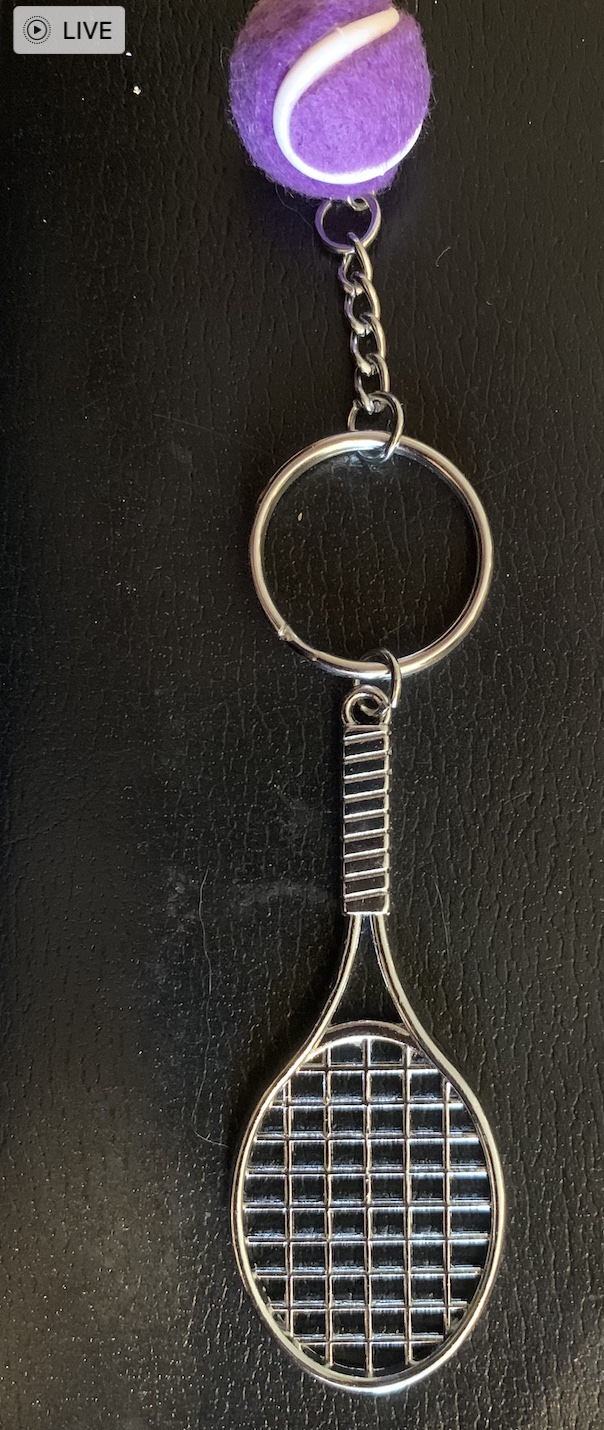
By re-arranging the elements into this form (above), to me, it seems to get closer to “Good Shape” but the purple “tennis ball” seems ill-proportioned and out of place. In “real tennis” there is a physical reason for the ball to be fuzzy but here, the fuzziness of the ball seems added on and arbitrary. 

Here too (above), the overall composition lacks “Good Shape.” The large semi-random dark blob in the middle has no real “Center.” The elements around the edges do not cohere or reflect off of each other. None of the elements around the edges are complete enough to have “Good Shape” except possibly the links of the small chain. 

Here is another example of quasi-random elements brought together into a single picture. Though to me, both the wood and the stone are in and of themselves beautiful, there is nothing about the composition that integrates into a whole. There is no center, no echoes, no alternating repetition, no levels of scale, and despite the nice texture of the stone and wood, the overall effect, to me, is lacking in “Natural Order” and in beauty. 

By way of contrast, the flower here seems to have a good overall shape reinforced by a Strong Center, Alternating Repetition, and each of the petals themselves has Good Shape. Around the flower, to me, is a “Positive Space.” Note that one of the petals seems slightly out of place. To me, however, this does not spoil the “Good Shape.”

The same can be said of these flowers. 

It isn’t necessary to have overall “simplicity” in order to have “Good Shape.” These flowers are not “simple” in shape, but they still have “Good Shape.” 

The bird on a branch shown above seems to me to have “Good Shape” even though it is (in outline) lacking symmetry. Though lacking symmetry in profile, the shape strikes me as “balanced.” I don’t perceive the bird as having to exert a lot of energy to keep from “falling off the branch.” The bird’s shape, like the shapes of most animals and plants is the result of 4.5 billion years of evolutionary history. 

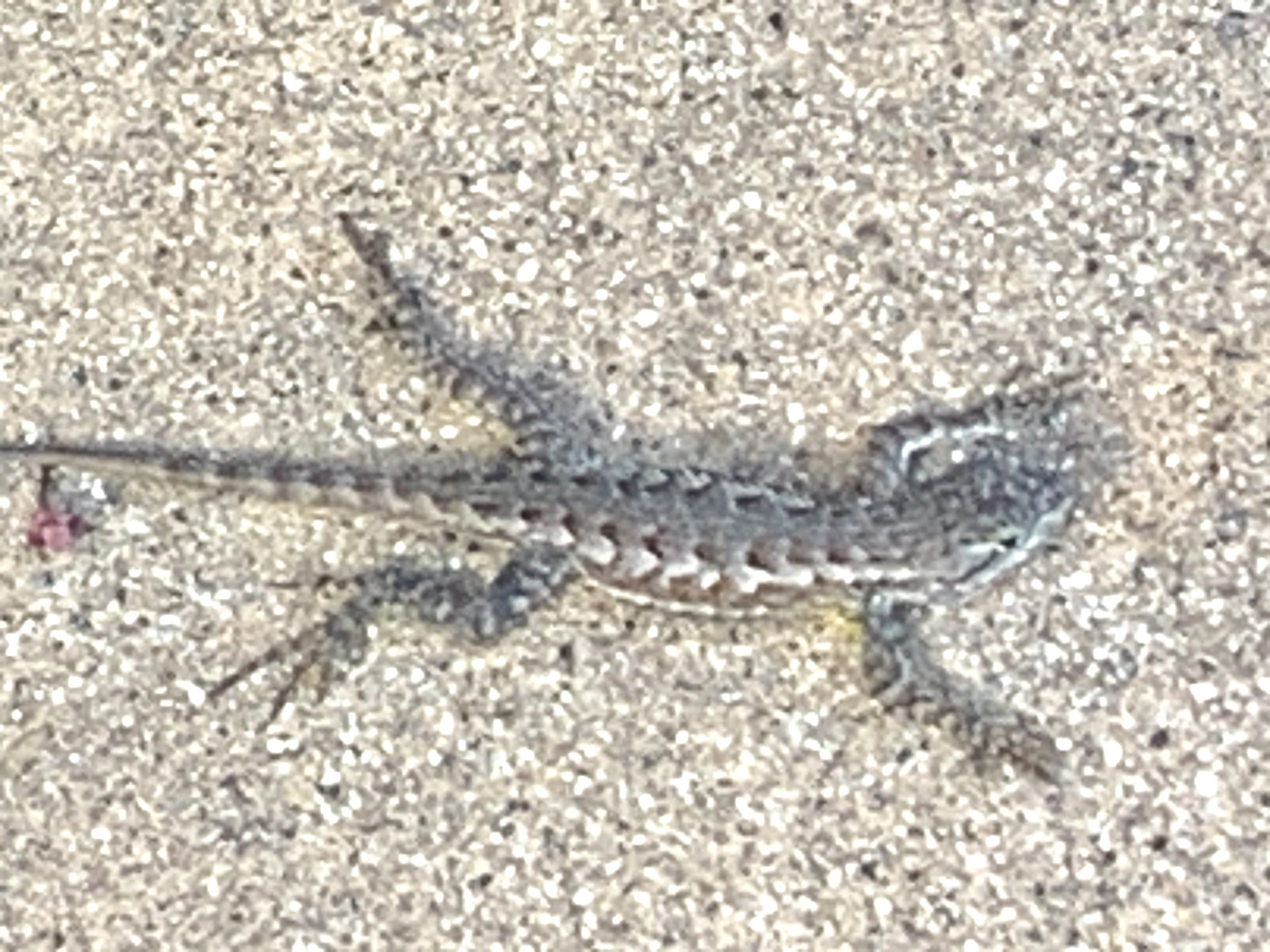
Many people view some creatures as “enemies” and therefore “creepy” or “yucky” or perhaps even as dangerous. If you can set that aside and simply look though, I think you can see that “Good Shape” characterizes all sorts of animals (as well as plants). 

At a more abstract level, it even seems that natural animal behavior often shows beauty. That also seems characteristic of skilled human behavior. The Olympics show plenty of examples. It is hard to imagine an “ugly” baseball swing resulting in a home run. The runners, jumpers, throwers, gymnasts, tennis players, and so on produce “Good Shape” in three spatial dimensions and one temporal dimension. 

I play tennis several times a week. I’m not averse to winning a point even if the ball hits my frame, skids off to the net cord and drops over for a winner. But — I never feel as pleased by such outsized luck as when I hit a good shot that results from proper choice, preparation, and execution (and a history of practice and reflection). I never think of a lucky mis-hit as “beautiful.” 

The concept of “Good Shape” even applies to more complex human organizations and endeavors. Racism, for instance, to me is truly ugly. It is not based on truth, but on a kludge of lies masquerading as truth. White Supremacy for instance, basically says, “We’re white! That makes us superior! In fact, we’re so superior, that we insist every aspect of our society be tilted so we can be guaranteed a win!” 

Huh? 

Bad logic is never beautiful. 

The “Good Shape” exhibited by most plants and animals reflects both a long evolutionary balance of forces (phylogeny) and the development of a particular organism (ontogeny). When biology goes awry, as in cancer, the result is not beauty. The “logic” of cancer is that billions of years of evolution that allows our bodies to work harmoniously is put aside for short-sighted egotism. A random cell says, in effect, “I’m no longer going to do my part for the body as a whole. Instead, I’m going to grab all I can for myself and grow in an unrestricted way!” 

Such a cell, by making that decision, signs its own death warrant. Either the body destroys the cancer and therefore the cancer dies — or, the cancer prevails and in that case it destroys the life of the organism it was supposed to be a part of — and then it dies anyway! It’s an “ugly” decision both because it is disproportionate and because it is illogical. It aims to be self-serving, but it is not even self-serving. It guarantees its own death and kills more life along the way. 

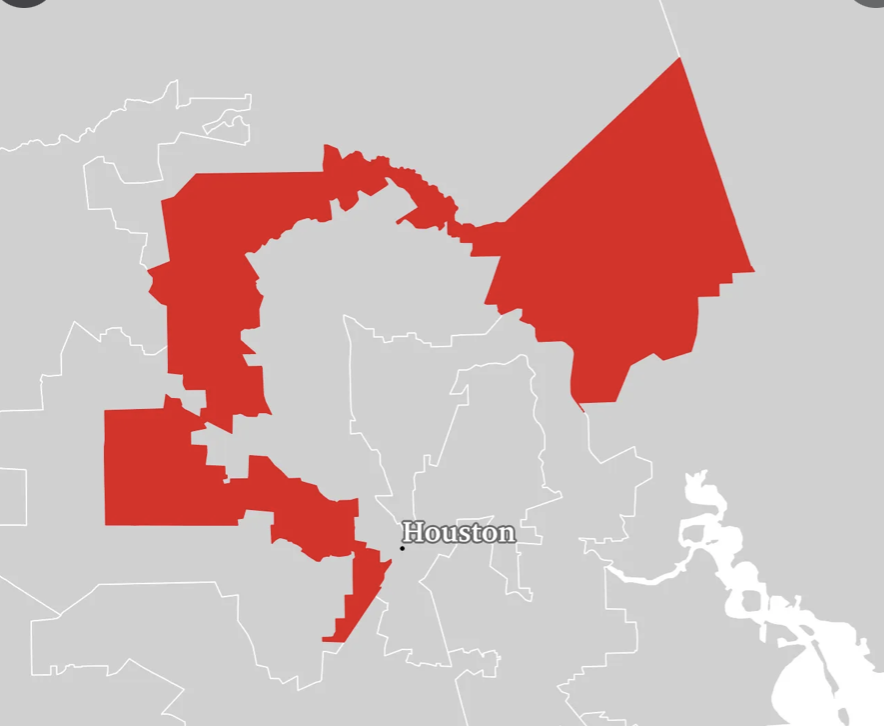
It’s the same, to me, with any dysfunctional human organization. If democracy is perverted by some people demanding that decisions be made so that they can have their way regardless of how it impacts the overall tree of life and the overall health of a city, state, or nation, it lacks “Good Shape” and instead becomes a distorted kludge lacking symmetry, lacking balance, lacking life. It is no accident that “Gerrymandered” districts do not have “Good Shape.” 

In extreme cases, not surprisingly, dictatorships have resulted in a war on truth, beauty, and life itself. It’s no “accident” that Hitler, Stalin, and Mao were each responsible for millions of human deaths. Their activities also show utter disregard for the beauty of the natural environment and the plants and animals of the planet. 

When it comes to User Experience, the most obvious way to apply “Good Shape” is to the visual elements of the interface — icons, windows, menus, tool bars etc. However, I think it also applies to the design process. Are the needs of all stakeholders taken into consideration? 

Do the various disciplines involved in design respect each other? Do people tell the truth and show trust? Does the company treat its users with respect and tell the truth in its various communications? 

If a company provides “free games” or “free services” that are purportedly for entertainment or education but the real purpose is to gather data to sell to advertisers or foreign powers trying to use the data to destroy democracy, it would seem to me that business model itself — the raison d’êtrefor the entire project is an “ugly shape” regardless of how pretty the icons are. 

What do you think? Do the concepts of natural beauty apply to the design of organizations and even governments?

—————————————

Christopher Alexander – Fundamental Property 6: Good Shape

Cancer always loses in the end

Fascism Leads to Chaos

Who Speaks for Wolf? 

Voter Suppression is Life Suppression

The Orange Man

Stoned Soup

The Broken Times

All We Stand to Lose

After All

Imagine All the People

Roar, Ocean, Roar!

The Dance of Billions

Photo by Pixabay on Pexels.com

4. Alternating Repetition

14 Monday Sep 2026

Posted by petersironwood in creativity, design rationale, HCI, leadership, management, nature, psychology, Uncategorized, user experience

≈ Leave a comment

Tags

aesthetics, architecture, art, beauty, Design, diversity, HCI, human factors, leadership, order, repetition, UX, writing

(This is the fourth post in a series of 15 which aim to examine the fifteen properties of natural order postulated by Christopher Alexander. I wonder whether the property of “Alternating Repetition” could be more frequently incorporated into User Experience and what the pros and cons might be).

4. Alternating Repetition

In nature, whether we look at clouds, waves, mountain ranges, forests, plants, the leaves of plants, or almost any animal, we see alternating repetition. Such natural repetition is almost never a precise and complete replication. Just as every reproductive act of life introduces an element of recombination as well as the possibility of mutation, so too the repetitions we see in life are not mathematical. We indeed see patterns repeated in a line or in a circle, but the instances in living things show variation. Similarly, human artifacts made with the hands; e.g., weaving or poetry or rock walls or tennis strokes show repetition but with slight and subtle variations. 

If you look at modern industrial society, you see many examples of exact repetition. It’s true that if you looked at 10,000 examples of the same brand and model pen, or notebook, or scissors, or streak knives under a microscope, you could likely find small differences. To the naked eye, however, they would appear identical. Seeing 10,000 pebbles, leaves, or waves you would always see slight to moderate differences. To me, it makes a difference in terms of beauty. Handmade items and human actions naturally show more variation than things produced by machines. 

Photo by Pixabay on Pexels.com

The various “elements” of a User Interface generally have the feel of something made by machine. The size of all the application icons on the tool bar, for instance, are the same. They are all almost the same exact shape and size. On my tool bar the icons for Finder, Launchpad, Mail, Safari, Chrome, FaceTime, Messenger, Maps, Photos, Contacts, Calendar, Reminders, Notes, System Preferences, Keynote, Pages, Preview, and News are the same. However, the Kindle icon is slightly larger and more square. The Zoom icon is very slightly rounder. [NOTE: This is no longer true in 2026]. The icon for Facebook is still circular, however. In other words, there is some slight variation, but mainly the icons are the same in outline, but different inside. But the set of icons on the tool bar has no sense of “harmony” whatsoever–at least, not to me.

Note that the tool bar is both abnormally homogeneous in terms of positioning and size but completely disconnected in terms of the images which differ in a random disharmony seldom exhibited in nature.

Instead, each icon seems to scream out its individuality without regard to its neighbors. (Which reminds me of things like not masking, getting vaccinations, or telling the truth, for instance, because you don’t feel like it so who cares what the consequences to others are). Anyway, the layout of the toolbar, to me, it’s reminiscent of driving down the highway and seeing a sequence of billboards, each advertising some random product or service in no particular order. Often, each billboard is the same size but they are independent of each other. The one exception I can think of were the “Burma Shave” signs along the highway. Each sign was a small rectangle with several words on it. About a quarter mile down the road, another sign would appear. They were meant to be seen in a specific order and together, they made a kind of “story” which usually rhymed. Typically, the signs touted the joys of the product — “Burma Shave” — or, provided public service announcements about safe driving. 

In the early days of computing, putting in “variation” might have been insanely wasteful of space and processing time. This is no longer true. Yet, the “look and feel” of User Interfaces remains, for the most part, quite “mechanical” or “mechanistic” rather than “natural.” Sometimes modern computer games include naturalistic looking variations in how repeated plants, rocks, clouds, etc. are represented. Look at the palm trees and you will see variations among the trees that are reminiscent of the real palm trees I see every day in the San Diego area. In addition, each tree contains a number of fronds that repeat a generic theme; yet, each front is somewhat different. The fronds themselves each contain alternating repetition, just as do real palm tree fronds. 

We might consider whether it would make sense to put more natural looking alternating repetition into the more utilitarian aspects of user experience. For example, could it be both more beautiful and more useful to allow more variation in the way files are represented visually?  Will Hill, James Hollan, Dave Wrobleski, & Tim McCandless suggested (in a CHI ’92 paper) that physical documents such as manuals naturally show wear in places where they are most used. They suggested that the visual representation of computer documents might be altered slightly to show which documents have been used or edited more and also that such cues within a document might also be useful. 

Hill, William; Hollan, James; Wrobleski, Dave; McCandless, Tim; “Edit Wear and Read Wear,” Human factors in computing systems: Striking a balance. Proceedings of the 9th annual conference. SIGCHI ’92 Proceedings (Monterey, CA), Addison-Wesley, 1992, pp. 3-9.

One of the few cookbooks I use with some regularity is entitled, Fat Free and Flavor Full. The recipe I’ve used many times is the black bean salad. If I open the physical book, it naturally falls open to that particular recipe. “Open Recent” I find a very useful features of the Pages application, but I don’t see a way to look at files based on overall frequency of use. It could be the case that there are some applications for which you would want specific files to be easily found depending on the season or the date. The authors of “Edit Wear and Read Wear” were mainly talking about the utility of encoding information about a file into its visual representation. There might well be aesthetic reasons to do so as well. 

The wooden blinds shown below exhibit alternating repetition in several ways. First, there is the matter of perspective. Some variation almost always presents itself simply by virtue of the fact that I typically view the blinds at an angle and some are closer to me than others. This means that the size, and the retinal shape are slightly different. Second, there is variation caused by slight changes in the angle of the slats relative to vertical. Third, each slat is made of wood. The wood itself shows rings (or more commonly a planar projection of the concentric cylinders. 

The wooden blinds, because they are illuminated from the outside by tree-filtered sunlight also show further variation; however I don’t think that is typically “alternating repetition.” Perhaps not coincidentally, although I find it a little interesting, I can’t say I find that source of variation to be beautiful to me. The other three all add to the aesthetics, at least to me. 

Is it feasible to introduce alternating repetition with slight variation into User Interfaces? Would it be desirable? What negative side-effects might arise? Do you even agree with Christopher Alexander that Alternating Repetition is an aspect of natural beauty and beautiful design? One thing that occurs to me is that if some element of the UI is more variable in outline etc., it may mean that the actions upon that object must deal with that variability. If designed greenfield, that might not be too difficult. But if, for example, the code for dragging and dropping was written under a presumption of zero variability, that might be problematic. What do you think?

——————-

Discussion of Alternating Repetition with additional visual examples can be found here: 

The Fifteen Fundamental Properties of Living Structure. 4. Alternating Repetition

Because Christopher Alexander wrote a book, about the 15 properties, his examples are mainly visual. But alternating repetition as an element of beauty is also clearly present in music and in dance. There is a little of it, it seems to me, in culinary arts as well. I am also reminded of the smelling actions of my dog, Sadie. As she watches an animal without charging it, she waves her nose back and forth quite deliberately in a kind of “sampling” of the surrounding air. A bear will sometimes move sideways with alternating repetition to provide better depth perception of a far away target (like me!). But that’s a story for another time.

Use Diversity as a Resource

The Tree of Life

Life is a Dance

Take a Glance; Join the Dance

Piano

The Winning Weekend Warrior focuses on the mental game for all sports using examples from tennis, golf, baseball, and other sports. It covers self-talk, imagery, mental practice, strategy, tactics, & sportsmanship. http://tinyurl.com/ng2heq3

Turing’s Nightmares explores the implications and ethics of Artificial Intelligence through fictional short stories. http://tinyurl.com/hz6dg2d

Fit in Bits shows many ways to put more fun, variety, & exercise into daily chores and habits to help with strength, flexibility, fitness, and balance. http://tinyurl.com/h6c7fce

Tales from an American Childhood recounts early experiences mainly in the American Midwest in the 1950’s and relates them to contemporary issues and events. https://tinyurl.com/y9ajvz9j

Dream Planet. Where do you run when the whole world is crumbling under the weight of human folly? When the lethal Conformers invade 22nd century Pittsburgh, escape becomes the top priority for lovebird scavengers Alex and Eva.

https://www.barnesandnoble.com/w/dream-planet-david-thomas/1148566558

Query By Example

08 Tuesday Sep 2026

Posted by petersironwood in AI, design rationale, HCI, leadership, management, psychology, science, Uncategorized, user experience

≈ Leave a comment

Tags

AI, Artificial Intelligence, expertise, HCI, human factors, IBM, leadership, QBE, research, technology, usability, UX, writing

Photo by RF._.studio on Pexels.com

This is part of a series on experiences in my career in Human Computer Interaction and some lessons learned.

I joined IBM Research on the winter solstice of 1973. I had earned a Ph.D. in Experimental Psychology from the University of Michigan and for the previous few years, I had managed a research project at Harvard Medical School on the “Psychology of Aging.” At the time, I was married and had three small children. I mention this because I was funded by so-called “soft money” which basically meant that my salary depended on a research grant. I helped write a renewal of the grant but the decision was “deferred”; that is, it was neither funded nor unfunded. Then, it was deferred again. This meant that if the grant were not funded, I would only have a few weeks to find a new job. That seemed far too short so I began to look other places for a job. 

Lessons Learned: #1 If you want continuity of personnel in your laboratory, make sure you have overlapping and multiple grants or other sources of income. 

In this case, the grant actually was ultimately approved, but by that time, I had already agreed to join IBM Research. That turned out to be fine, by the way. It was a wonderful place to work.

One of the reasons that I got the job at IBM was that I already knew something about computers. I had taken several computer science courses in grad school along with the needed psych courses. More importantly, our “Psychology of Aging” study was run by a PDP-8 and I had programmed the computer to run our suite of experiments and to do data analyses on the results. I had taken a week-long course at DEC in Maynard, Massachusetts on the assembly language, another week-long course on the machine language, and another week-long course actually tracing the circuitry with a probe and oscilloscope. I felt I “understood” the PDP-8 at a fairly deep level. 

At IBM, I did not have that familiar machine. Instead, I was connected to a mainframe via a dumb terminal. The first day at IBM, I got my userid and tried to log on to APL (A programming language I had not used before). I tried following the manual but I could not seem to get logged on. After hours of trying, I finally gave up and went down to the computer room and found someone willing to help. I showed him the logon instructions I was trying to follow and he immediately said, “Oh, yeah, that doesn’t work any more. We changed that months ago. Here’s how you need to do it now.” The manual I had may have looked new, but it was out of date. 

Lessons Learned: #2 Manuals can be wrong. These days, most are online. But they can still be wrong.

Lessons Learned: #3 Someone who knows how to do something can save you hours with a few minutes of their time. 

Of course, it’s more respectful, efficient, and a better learning experience if you can figure it out on your own. But sometimes you can’t. My stumbling block was not due to an error in logic, or a lack of in-depth knowledge. It was simply that the computer center administrators had changed something arbitrary so that the documentation I was given about how to log on for the first time was no longer accurate. 

In order to teach myself APL, I wrote a very small program to “predict” how long I was going to live “based on” some behaviors that I was interested in controlling. My main goal was to learn APL. My secondary goal was to motivate myself, for instance, to exercise more, lose weight, and not drink too much alcohol. I had no intention or pretensions of making this prediction “accurate.” If I had been doing a consulting gig for an insurance company setting life insurance rates, for example, I would have given far more attention to see precisely what the real data were and incorporated many more variables into the regression model. 

Here’s a link, 

https://www.death-clock.org

by the way, to a more accurate model than the one I used, but it’s still simple to use. Note that my goal was to motivate myself and so I intentionally exaggerated the impact of those behaviors I was trying to change. I had programmed it. I knew how “bogus” the calculation was — nonetheless — here’s the interesting thing though: 

Lessons Learned #4: Even an over-simple model that the user knows is over-simple can still motivate change. 

Photo by Mike on Pexels.com

At last we come to the actual project I worked on — the usability and learnability of Query By Example. One of my colleagues, Moshe Zloof, invented the language for relational data bases. He had designed the language but not yet implemented it. I did not immediately test the design; first, I sought to understand it. In seeking to understand it in depth, prior to testing it, the two of us had some sense-making discussions. Moshe improved the design; in particular, our discussions uncovered some ambiguities and inconsistencies that were not at all obvious when he simply gave talks about the design. This brings me to the next lesson learned which has proven true in nearly every study of early stage designs that I’ve been involved with over the course of six decades.

Lessons Learned #5: Don’t just accept a surface description of something; understand it as deeply as you can before designing a study.  

In this particular case, it was possible for me to understand it in some depth. Relational data bases and second order logic are things I was capable of understanding. If it had been an interface to running a nuclear reactor or using the artificial heart that Moshe had designed earlier in his career, that would have been a much more difficult task for me.

I wanted to understand, not just the “logic” of Query By Example, but also possible contexts of use. For instance, my manager & I visited Burlington, Vermont to talk with IBMer’s who actually used query languages to understand what was happening in chip production lines. At one point, a particular production line that had been producing nearly 100% perfect chips starting having a much higher error rate. Using their query facility, they were quickly able to diagnose the cause of the change which was a supplier of one of the raw materials using a different source. In turn, this meant a slightly different profile of trace impurities in the substrate. Of course, this is only one example, but to me, understanding something in depth means not only understanding its internal logic but also understanding real users, their real tasks, and their context of use. 

Photo by Chokniti Khongchum on Pexels.com

I won’t go into all the details of the pencil & paper study or the results. High School students and then college students were taught the basics of the language and then given a simple relational data base and a set of questions stated in English which they had to translate into Query By Example. Briefly, the bottom line was that Query By Example was easy to learn and easy to use. However, there were still questions that people had difficulty with. In analyzing the data and doing some further experiments, the difficulties that people tended to have, stemmed not so much from Query By Example per se, but from what I much later came to call “labelism” — that is, confusing a label with the thing that label refers to. 

Here’s a simple example of the type of confusion we saw. In Query By Example (and other query languages) there is usually an OR operator and an AND operator. (These operators can be important for doing advanced queries with search engines as well). If you are interested in getting a list of pets you might adopt and you’re willing to adopt dogs or cats, you might ask for “cat OR dog.”  If you only want long-haired cats, you might ask for “cat” AND “long hair.” 

English, however, can be tricky.

If you and I (as opposed to you and a query language) are having a conversation, you might say, “I hear there are many pets that need to be adopted.” 

I say, “Yes, there are all kinds of pets. There are snakes, dogs, turtles, rabbits, cats…” 

You say, “Let me stop you right there. I’m only interested in adopting cats and dogs. Those are the only animals I’d want to adopt.” 

See what you said there? You exact words included: “…cats and dog.” If you put “Cats AND dogs” into a query against the data base of available pets, however, you will get the null set (that is, nothing) back. There are no animals who are both cats and dogs! (Though my part Main Coon cats, Luna and Charles Wallace, can play fetch like dogs). 

When people were presented with an English statement that included the English word “and” — regardless of the actual syntax and context, some of them had difficulty using the OR operator. If instead, the query in English had set up like this: “Oh, I don’t want reptiles. I’d be happy with adopting a cat or a dog, however” then, they’d have no problem translating it into the OR operator in the query language. 

Lessons Learned: #6 Sometimes the difficulty people have in using a product, a service, or a prototype is not due to the interface details but with the structure of the task, their background, and their training.  

By analogy, you will not allow me to beat Carlos Alcaraz or Jannik Sinner at tennis by giving me a better tennis racquet! (Although if you gave one of them a toothpick for a tennis racquet, I might have a shot).

Photo by Isabella Mendes on Pexels.com


That sounds obvious and even absurd, but I promise you, some companies get so greedy that they want you to design a system that allows people who do not understand the task and have minimal background and training to nonetheless be able to perform that task. And, to be fair, it isn’t just the companies who are greedy. They are steered into thinking that they can get away with this absurdity because some outsourcing companies (and more recently, AI companies) tell them they can do it.

One example you may have encountered is having “help desk” personnel who have no understanding of a product go through a script to help you “solve your problem.” Sometimes, it works. But many times it doesn’t. When it does not work, you might not be able to “fix” the system by making the interface to the scripts easier to use for the help desk folks. The problem is much deeper (in some cases). Yes, a really bad interface can make it difficult even for a really knowledgeable and capable person to do the job. But often, even a really great interface cannot always substitute for actual expertise.

——————————————————-

Essays on America: Labelism 

Other posts on problem formulation: 

The Doorbell’s Ringing

Reframing the Problem

I Say Hello

I Went in Seeking Clarity

Who Knows What?

Measure for Measure

Labelism

Destroying Natural Intelligence

Some relevant Books I recommend:

Turing’s Nightmares explores the implications and ethics of Artificial Intelligence through fictional short stories. http://tinyurl.com/hz6dg2d

https://us.macmillan.com/books/9780374619336/enshittification

https://us.macmillan.com/books/9780374621575/thereversecentaursguidetolifeafterai

Seed, Ground, Water, Light, Love

09 Sunday Aug 2026

Posted by petersironwood in creativity, design rationale, fantasy, fiction, leadership, love, management, politics, psychology, Uncategorized, Veritas

≈ Leave a comment

Tags

books, cooperation, council, Democracy, fiction, legend, life, myth, peace, politics, story, Veritas, war, writing

——————

After some delicate and delicious love-making with Shadow Walker, Many Paths decided to check on She Who Saved Many Lives. If she seemed well enough, it might also be good to see whether her mentor had any further wisdom to share about Many Path’s plan to gather all the tribes. Her goal was to bring about peace but she realized that in trying to accomplish that, she might trigger the evil things she hoped to avoid. Her tentative plan was therefore to gather as much wisdom as she might from many sources — but not to wait overlong. As the story goes, she thought to herself, if you waste the entire warm season deciding where to plant, you will starve in the season of great ice and snow.

Many Paths called out to her friend and mentor and received a surprisingly strong and cheery response. “Come in, Many Paths. Come in! I’ve been meaning to ask your advice about something. Do sit down. I will get you a cup of tea this time.” 

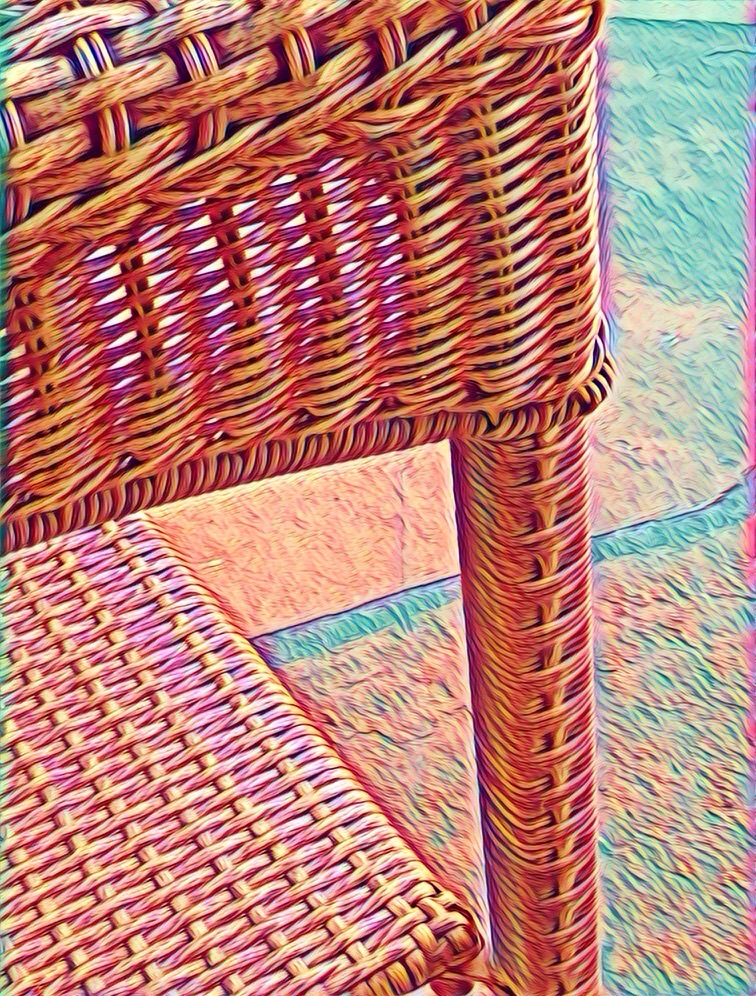
Not for the first time, Many Paths wondered whether it was actually possible for She Who Saved Many Lives to see into her heart and mind. After serving them both a cup of spicebush tea, ever so slightly flavored with mint, She Who Saved Many Lives went to her work area and brought over two patches of weaving. She placed one on each knee of Many Paths. The older woman smiled and said, “It never fails to amaze me how strong a weave of reeds is! It’s so wonderful. Just as I hope our community is.”

“I have had that exact same though,” Many Paths replied. Then, she laughed and added, “Likely because you pointed that out to me before I was even old enough to remember.”

The Elder Shaman tilted her head and nodded ever so slightly. “Perhaps. But you have made so many wonderful discoveries. And, not only you but our entire tribe. That’s because you have been open to learning and seeing what is there. But enough of that. I did have a question for you. Which of these two do you think is better?”

Many Paths frowned. “Better for what? What are you making?”

She Who Saved Many Lives considered, “A basket to carry things.” 

Many Paths nodded, “What things and how many? This weave has these stiffer switches to help support the weight. If you’re making a small bag to collect mint, for example, you wouldn’t have any need. If you’re making a large bag to collect apples, however, you would want the extra structuring support.”

Photo by Pierpaolo Riondato on Pexels.com

She Who Saved Many Lives nodded. “Yes, yes. It sounds obvious when you say it. I guess the fever must have addled my brain a bit. Anyway, thank you for reminding me. Soon, I will have to decide on what I want to use the bag for; then I will know which one is likely correct. Now, what did you want to ask my advice on?”

Many Paths took in a deep breath and slowly let it out. “I am quite sure I didn’t say anything about asking your advice.” 

She Who Saved Many Lives nodded. “I think you’re right. Sometimes I confuse us.” She laughed. “I know it sounds crazy but any way, I will get back to my weaving — or at least deciding why I’m weaving and let you go about your business — unless, of course, there was something else you wanted to talk about.” 

Many Paths chuckled. “As it turns out, I did want to ask your advice about something. You know I want to convene a  — Let me ask you another question first. Are you going to teach me how to see into another person’s mind?”

She Who Saved Many Lives laughed surprisingly long. At last, she caught her breath and said, “Many Paths! You won all seven rings of empathy! Of course, you can see into others. Of course, you can never be perfect at it. But you already do it. I knew you were busy. Yet you came to see me. You probably wanted to see whether I was dead or not, but even your footsteps and the way you called out told me you had something else on your mind. In fact, whether you knew it or not, you assumed I was alive. There was no edge of anxious worry in your voice. It was friendly — but also a bit — plaintive. I knew you wanted something from me. Now, you can see I have very few possessions. I find that having too many things about is intolerably distracting and makes cleaning and finding much more difficult. I am not going to help you with any arduous physical task. What is left? You want to offer me the opportunity to share my experiences; that is a great gift. For once we die, what else is left? So, naturally, I am more than willing to try to see what grows from our discussion.” 

Many Paths looked down and slowly shook her head. She realized that she could read people. She simply forgot sometimes to do it. If you really take the time to put yourself in their sandals, of course, you can make a good guess at what they’re thinking, she thought. Aloud, she said, “Yes. You’re right. So, I want to convene the tribes and I am wondering how, exactly, to go about it. How can I make sure it helps bring greater peace and doesn’t somehow spark off violence. Maybe it’s better not to try?” 

She Who Saved Many Lives replied, “I can say that no-one has attempted to bring all the tribes we know about together — not in my lifetime or the lifetime of my mother or the lifetime of my mother’s mother. During that time, there have been many wars and other atrocities. People stealing other people’s children? Even in our own tribe, we had some who forgot they were not the Tree of Life but a small and temporary part of the Tree of Life. I judge it’s worth the attempt.”

Many Paths. “As to how…?” 

She Who Saved Many Lives said, “What comes to mind for what you are trying to do is more akin to growing things than it is to making things. I am making a basket, and I will use it for a time. I don’t ever imagine that it will live forever any more than that I will or you, my dear. But if I know your heart correctly, you don’t want to make a thing, which will at some time break or dissolve. You want to make something grow for a hundred years, like a giant oak. Ideally, it would be an oak that would seed still more oaks when old mother oak also died.” 

Many Paths nodded. She realized that her mentor had described her desires precisely even though she herself could not have articulated them so succinctly. “Yes, that’s exactly right.”

She Who Saved Many Lives nodded. “Let’s suppose then that you want to plant something so that it’s likely to grow. What do you need?” 

“A seed. Fertile ground. Water. Sun. That’s it. Is there more? Love! It’s all more likely to grow with love.” 

She Who Saved Many Lives nodded. “Yes. That’s it. I would start with the love. You already have that. Then, you need to know what seed. The seed determines what will grow though not exactly how. But you will need the ground, water, and sun so it can grow at all.” 

Many Paths continued the thought stream. “If you know what the seed is, then, you know what kind of place to look for. You know whether you need to plant it in bright sunlight or in shade. You know whether it needs very fertile ground or if it can grow in dirt and rocks. And, you know whether it needs to be in very wet ground or if arid ground will do.”

“Yes,” Many Paths, “and it occurs to me, that you might choose a place with enough light first, because, you can make the ground more fertile and bring more water, if need be. But brining light is more difficult.” She Who Saved Many Paths sighed. “Once, apparently, we knew how to bring light as those which lit the tunnel that leads to the Veritas on the … on the other side of the mountain.” 

“I do wonder, Old Mother, whether such light is strong enough to grow plants. And then, Shadow Walker used reflections of the sun, along with other captives, to escape from the City of the Z-Lotz. It seems too contrived and elaborate for growing plants, but … perhaps writing is a little like that when it comes to providing enough truth so that peace can grow. It allows you to bring the light of wisdom to places that are many days walk from where they started. More importantly, you can place the light in a different time as well. We have all learned so much from the books uncovered in the great library. But, as usual, you are right. We must determine what type of thing we want to grow. That decision will determine the type of seed. The type of seed will determine the proper material, sunshine, and water.”


Many Paths arose and began pacing around in the Old Leader’s shelter. “Of course, since the outcome could impact everyone, I need to know how everyone believes it should be. Or, at least, find out as much as they know about how they want it to be.”

She Who Saved Many Lives considered for a moment before answering. “Yes. I suspect some will have many ideas about that while others may not care that much. Nearly everyone wants peace. On other matters, there may be great differences.” 

Many Paths sat back down. The two sat in a comfortable silence for a time. Many Paths rose at last and said, “Thank you for sharing your wisdom. I will look for some to walk with me a bit and contemplate the plants and their nature and try to see among them what it is that the people may be seeking. I’m glad you seem so much better.” 

“As am I, Many Paths. You know, you give me much to live for.” She Who Saved Many Lives smiled and added, “But I do think I will lie down for a nap now. Though some time in the near future, I might accompany you on such a walk.”

Many Paths left and saw Shadow Walker coming toward her. From the look on his face, Many Paths judged he had some news. His smile broadened as he approached and he said, “Hello my love! Can we go for a bit of a walk?” 

———————

Author Page on Amazon

Myths of the Veritas: The Orange Man

Myths of the Veritas: The Forgotten Field

Myths of the Veritas: The First Ring of Empathy

We won the war! We won the war!

Who won the war?

Somewhere a Bird Cries

How the Nightingale Learned to Sing

The Broken Times

The Silent Screams of Dead Mens Dreams

After All

When Greed is the Only Creed

A Pattern Language for Collaboration & Cooperation

Imagine All the People…

Roar, Ocean, Roar!

The Dance of Billions

Small Steps

Take Me For A Ride in the Car Car!

06 Thursday Aug 2026

Posted by petersironwood in America, apocalypse, essay, family, leadership, management, politics, psychology, story, Uncategorized

≈ Leave a comment

Tags

collaboration, cooperation, Democracy, Dictatorship, essay, news, politics, problem solving, Ukraine, USA, writing

Do you remember the song, “Take me for a ride in the car car”? Here’s a link to one popular version. Peter, Paul, & Mary also sang it. Nice song. But you may have experienced it being repeated too often. At a certain age, some kids seem to discover that they can be really annoying simply by singing a song over and over and over and over. 

When I was in my early teens, I took a car trip with my Uncle Paul and his wife and three (at that time) kids out to see his brother Bob who headed up a psychiatric hospital in Pennsylvania. It was a long drive. At some point, to pass the time, we sang some songs. When the last song was over, Paul’s youngest son began to make up new verses for one of the songs. At first, it was rather cute to watch him try to build a story, rhyme, and keep in tune. He actually succeeded at none of these, but it was still cute.

At first.

Photo by Lorenzo Manera on Pexels.com

But after about a quarter hour, he began to annoy a few people with his off-key, non-rhyming, senseless continuations of the song. After about a half hour he was annoying everyone. After an hour, we began to discuss leaving him by the side of the road and returning in another ten years to see whether he was still there. 

On car trips, we used to play a number of games to pass the time; e.g., seeing how many different states license plates we found find. Later, I learned to play “The Alphabet Game.” There are several versions, but basically, you must find, in order, the letters of the alphabet from passing cars, signs, etc. Stuff inside your own car cannot be used. (You could easily find all the letters in a book or magazine). I’ve learned to know where to look for J, Q, and Z. I’ve been in cars where we played twenty questions, Botticelli, Buzz, and Ghost. When I was a kid, I also simply looked out the window to entertain myself. Sometimes, I would imagine that the dotted lines that divide the lanes were like tracer bullets shot from our car. Then, I would watch to see whether another car got “blown up” because they crossed our fire. I would also imagine myself “flying” alongside the car, having to bob and weave to avoid telephone poles, trees, signposts, etc. 

Traveling in a car with a family or with a group of friends or your car pool is potentially a social opportunity as well as an opportunity to save money. Since you’re in the same car, you need to agree on destination. To some extent, you need to agree on temperature & what to do about the windows. As a kid, everyone also lived in the same “sonic space.” We would have to “agree” on a game or on a radio station. This is no longer the case. Now, often times, everyone in the family may have their own individual entertainment. Is that a good thing or a bad thing? 

Even in the modern day, driving in a car with others is different from driving in a car on your own. If you’re by yourself, you can decide on the temperature and entertainment without having to take into account anyone else’s wishes. If others are in the car, some kind of negotiations have to take place. 

At least, that’s what most people do. You could decide: “Hey! It’s my car so I’m going to drive and I get to determine everything about our common space — temperature, entertainment, windows, whether we stop, etc.” This is what is known in academic circles as the “A$$hole theory of cooperation”: Get everything you possibly can for yourself and to hell with everyone else. And after all, they’re doing the same exact thing. 

Notice too that to some degree, the amount of accommodation you have to do depends on how much humanity is in the car besides yourself. It also depends on how “luxurious” your vehicle is. If you have a tour bus or a camper, six people might be relatively comfortable. If it’s a VW bug, you won’t be. You’ll not only be crowded; you’ll have to be careful every time you move not to accidentally elbow someone in the eye. Have you ever been in that crowded of a situation for hours at a time or even days at a time? 

Photo by Life Matters on Pexels.com

It isn’t just cars. In general, the more people occupy a given space, the more they are going to have to cooperate in order to survive and thrive. You can provide individuality support with technology, up to a point. In a way, clothing is like that. We can peacefully co-exist in a car without either of us compromising our comfort because I can wear a sweater and you can wear a thin shirt. You can provide everyone an iPhone and everyone can play their own game without having to agree on a common game. Of course, there’s a downside to that. First, we don’t have practice getting along with others. Second, we don’t share a common experience. 

Even if the “typical” family of four interrupts their car trip and stops for lunch and agrees to talk, they are likely coming from very different places. Dad has been listening to Mozart and was in good mood until he suddenly remembered he was supposed to have sent out a memo to everyone in the department about last month’s sales figures. Damn. Maybe he can do it from the Motel but it will take longer than it would have at work. His son Sam, meanwhile, was trying to use sexting to convince his girlfriend to “take their relationship to the next level.” As a result, they just broke up. Dad doesn’t know a thing about that; nor does Sam know anything about why Dad suddenly seems put out. Mom meanwhile, was listening to Fox “News” where she “learned” that it’s Biden’s fault Putin “had to” attack the Ukraine because Biden was too tough on Russia and also too easy. Her daughter Sally, on the other hand, has spent the last 45 minutes on twitter learning about the Putin invasion. She is wondering whether atomic war might start. 

Now, they stop for lunch. That’s nice. And, maybe they’ll talk about something common; perhaps the weather, or the scenery or the food. But they might just revert to what they were doing before they got together at the restaurant. Even if they all have the willpower to put away their personal devices, they are still coming from very different places emotionally and experientially. Dad might make a comment about how he forgot to write an important e-mail and he’ll have to do it from the Motel. Sam just shakes his head and says, “Important e-mail? My life is ruined! What do you care?” 

Dad might say, “What do you mean by saying that your life is ruined?”

Sam might even share, “Jackie broke up with me!” 

Dad, meaning well, and wanting to offer a solution before he starts reminiscing about his own high school days, blurts out: “Oh, Sam, don’t worry about it! You’ll have another girlfriend in a week.” 

That may well be empirically true. But to Sam? He feels he has just lost the love of his life. His father’s comment seems to him to be dismissive of his feelings to the point of cruelty.  

Sally pipes up, “How can you be worried about such trivial things as e-mail and dates when we might be blown to smithereens at any moment? Do you ever pay any attention to the world outside yourself? Putin is a monster killing innocent civilians so he can slake the thirst of his pathetic ego!” 

Mom is taken aback. The only news she doesn’t dismiss as “lies that are out to get Trump” has been Fox “News” for the last few years. She says, “Don’t be saying bad things about Putin! He’s a nice man who just wants his Ukraine back.” 

Sally’s jaw drops. “Are you serious! He kills journalists who write the truth about him. He’s a corrupt crime lord. He played Trump like a fiddle … no … not that complicated … played him like a drum … no … still too complicated … played him like the triangle. You know. Bang it every once in awhile and it reverberates. Anyway, it isn’t “his” Ukraine. It belongs to the Ukrainian people!”

Some families are better at getting through all this than others. These four have not shared a common experience and are coming from very different places. If they have no practice playing a game according to a common set of rules, what chance to they have to settle deeper differences? 

Maybe avoiding little conflicts by giving everyone their own personal entertainment device means that when much bigger and more difficult conflicts arise, no-one remembers how to resolve things. Why shouldn’t everything by how I want it? Let others do the same! Let the best man win!

Except, of course, it isn’t the best man or woman who actually wins in a land where no-one plays by the rules. It’s the most corrupt. And the net result of everyone spending so much time competing and so little, if any, time cooperating is that nothing much is actually accomplished. It doesn’t even work very well in a small group. In a large nation, a dictatorship is almost invariably associated with less for everyone except the dictator and the immediate surround. Dictatorships do sometimes manage to steal from neighbors who are productive because they are cooperative. If all countries were dictatorships, they would all perish, probably in atomic war, but possibly in ecological collapse or just mass suicide. 

In 2018, I worked on a “Pattern Language” for collaboration and cooperation. Here’s a link to an index of the Patterns. One of them is called “Small Successes Early.” Should I be worried that we seem to be moving into a world where there are fewer and fewer opportunities for peacefully resolving small conflicts? Avoiding unnecessary conflict seems like a good thing. But … is the downside that people have no practice resolving conflicts? And, is the further downside that people eventually end up with huge differences in their notions of reality when it really matters? It seems to be the very thing that Faux News has been counting on; that people would not only listen to them but not listen or dismiss any other views. As a result, people end up with very different models and explanations of the world. That is always a bad thing, but in a world where people are unpracticed at resolving conflicts, it’s even more problematic.

There is always a tradeoff between cooperating as a whole and letting each individual do as they wish. One thing seems crystal clear. As the number of people in your car increases, their individual freedom to do just as they please decreases. So, too, with the world. In my own lifetime, the population of the world has quadrupled. Of course, it’s not equally distributed. People are more concentrated in cities than ever before. Many of these cities are located on ocean coasts. What does the continuation of global warming mean to population migration and crowding?

Remember the COVID pandemic? I’m not sure how many people realize this, but we’re likely to see other pandemics. If people were very sparsely populated, we probably wouldn’t be at risk. But as we continue to get more crowded, humanity will become more susceptible to pandemics. That in turn, means people will have to accommodate to each other’s needs. As a background rule, a person can choose to wear what they want. There are, of course, many exceptions to that. In many situations, you have to wear a shirt and shoes. In some situations, you have to wear a suit and tie or a uniform. If you might be spraying germs at other people, it seems totally reasonable to change your behavior or clothing to minimize that spread. But some people apparently think that they should be able to do exactly as they want regardless of the consequences to others.

Toddlerhood Nation

As the earth becomes more crowded, we need to be more cooperative, not less. The presence of a large number of deadly weapons also makes it more important to cooperate. The race to ensure survival by having ever larger numbers of ever more deadly weapons is not a path toward that greater cooperation. Dictators, for instance, tilt toward war to consolidate their power. A world with zero dictators wouldn’t necessarily be at peace, but when there are dictators or people seeking to become dictators, there will certainly be wars.

In a crowded car, people need to accommodate each other. Under a dictatorship, you quite possibly won’t own a car, but even if you do, there will only be a few or even one channel of “entertainment.” One song will be sung: a song of praise for “Der Fooler” and more than likely, it won’t be high quality in terms of rhyme, logic, music, or lyrics. The singer will be the one who bribes or cajoles the parasite(s) in charge.


Create Peace

Author Page on Amazon

Absolute is not just a vodka

Where does your loyalty lie? 

My Cousin Bobby

The Stopping Rule

The Update Problem

Essays on America: Wednesday

Myths of the Veritas: The Orange Man

Myths of the Veritas: The Three Blind Mice

Myths of the Veritas: Stoned Soup

When Greed is the only Creed

At Least he’s Our Monster

Roar, Ocean, Roar!

The Dance of Billions

Myths of the Veritas: Love Notes

04 Tuesday Aug 2026

Posted by petersironwood in fantasy, fiction, leadership, love, management, nature, psychology, story, Uncategorized, Veritas

≈ Leave a comment

Tags

books, empathy, ethics, fantasy, fiction, language, love, myth, short story, Veritas, writing

Shadow Walker awoke before dawn. He looked over at Many Paths, grateful for her, for the healing of life that had finally mended his leg, for the people he lived among. His imprisonment in the Great Walled City of the Z-Lotz had shown him that not all tribes are built on love and trust and truth. 

He smiled at Many Paths. He was sorely tempted to gently awaken her, but instead decided to treat her to some fresh blackberries. He had noticed some along the long, hidden path that now connected the Veritas here with those who lived on the other side of the mountain. He arose quietly and slipped out the front of their cabin when a thought occurred to him. The writing that Tu-Swift had discovered need not be limited to books. 

Shadow Walker softly stole back inside and wrote a simple note and put it beside Many Paths. He smiled as he imaged her awakening, not seeing Shadow Walker but then noticing that he had left a token of his love that could actually be read by his love. Every time he thought of it, he felt amazed all over again at this new world of writing and reading. 

He stopped by Tu-Swift’s cabin on the off chance Tu-Swift was also up early. Shadow Walker thought that perhaps he should really think of it now as the cabin of Tu-Swift and Cat Eyes. They were obviously in love, but, perhaps more importantly, Shadow Walker could see that the two of them worked well as a team. He smiled and thought of Many Paths. He whispered to himself, “Yes, Many Paths. We also make a good team.” 

The cabin of Tu-Swift and Cat Eyes was empty of people, but Shadow Walker immediately spied a piece of birchbark with writing symbols on it. The two of them had gotten up early and started on their translation work at a nearby overlook which caught the rays of the rising sun. Behind a natural rock table, what was nearly a perfect semi-circle of granite cliff reflected the rays making it a pleasant place where the dew lifted more quickly than other places. So, it was here they made their workshop for their most serious work. Sometimes, they did their work in the most public parts of the Veritas villages so that others could see what they were up to, ask questions, and learn. They didn’t mind having their work interrupted to answer questions. At the same time, to them, the quest for knowledge was a passion, not just because they of their thirst for knowledge, but multiplied by the overwhelming premonition they shared that just as terrible things had happened before, they would again — unless, perhaps — they might be able to piece things together so as to prevent making the same mistakes yet again. Some plants do well in full sunlight and much water. Others do better in shade with little water. Sometimes, Cat Eyes and Tu-Swift needed to focus on understanding in a deep way. Those deep roots would not grow with constant interruption; hence, the special area. 

Shadow Walker picked his blackberries that morning without human companionship. That hardly means he was alone. He picked early enough to hear a concert of his songful birdish cousins. Shadow Walker could see many of his smaller cousins as well {Translator’s Note: This is what we would call:} : ants, spiders, aphids, ladybugs, butterflies, a walking stick, several snails, and a cricket. When berry picking is a full time job, the experience is, no doubt, completely different. What Shadow Walker experienced, as an adult, was precisely the joy that any small child feels as they pick berries for the first time, marveling in the fresh, sweet, rich taste as the teeny bubbles burst syrupy goodness onto the tongue.

Shadow Walker also still felt the joy of the attention-demanding weave of hands so as to capture the berry but avoid the sharp prickers, and he still felt joy from the knowledge that he was doing his part; contributing something to family, community, and himself. In Shadow Walker’s experience of the moment, all of that was still fully there. In addition, he thought of it also as a present for the woman he loved with all his heart. 

Perhaps that is partly why, when he had plenty of berries to fulfill his contribution to the anticipated breakfast with Many Paths, he continued to pick berries until late morning. Plenty of other people in the village could share in the fruit and some might dry some of the berries for much later. 

Photo by Thierry Fillieul on Pexels.com

When Shadow Walker did arrive back, much later than he had originally intended, he heard soft crying from within. His mood slid from a bright yellow joy to a dark purple sadness because that is what he received from Many Paths. 

He knelt down beside her, took her hands gently into his and asked, “What on earth is wrong?”

She looked up, sighed, and looked into Shadow Walker’s face. She knelt down and wrapped her arms around him, holding him tightly to her, not with the energy necessary to signal another person that you like them or even the energy of a hug that lingers because it feels good. This was more like the hug of someone holding onto a tree limb or an overhang — holding on for dear life.

Shadow Walker knew the difference. At last, Many Paths released her hold, sat back up and smiled at him. She began,  

“Thank you for leaving me the note!” 

—————————

The Myths of the Veritas: The Forgotten Field

The Myths of the Veritas: The Orange Man

The Myths of the Veritas: The Tale of the Three Blind Mice

The Myths of the Veritas: Stoned Soup

The Myths of the Veritas: The First Ring of Empathy

A Pattern Language for Collaboration and Cooperation

It was in his Nature

Is a Dream

How the Nightingale Learned to Sing

Somewhere a Bird Cries

Fish Have no Word for Water

The Dance of Billions

Corn on the Cob

Doing the Dishes Pounding the Corn

Author Page on Amazon

Myths of the Veritas: Stories, then Plans

28 Tuesday Jul 2026

Posted by petersironwood in fiction, leadership, management, nature, politics, psychology, story, Uncategorized, Veritas

≈ Leave a comment

Tags

books, fantasy, fiction, homecoming, legends, myths, short story, stories, strategy, Veritas, writing

There are some things whose memory we retain throughout our lifetime. Some remember their first look through a telescope or a microscope. Some remember their first taste of alcohol or coffee. Many remember their first kiss. All remember the first time they held their newborn baby and grandchild. So too, was it among the Veritas. 

Tree Vines and Gathers Acorns immediately recognized the voice of their daughter despite their many years apart. They began to run toward the sound, but when they came within sight of her, they stopped. The couple held hands, and stared at their daughter who had now blossomed into a young woman. 

Tree Vines thought of so many wasted years, also of so many stories to tell and listen to. He would make it up to her — make up for ever allowing her to be stolen in the first place. 

Gathers Acorns regretted never have had a chance to talk with her daughter about so many important things. And who had raised her daughter exactly? And, what kind of a person was she? But she’s my daughter, she thought.  I want to hold her at long last. 

Cat Eyes bit her lip. She thought: Could these be my parents? I have a family? Why did they let me get stolen? Of course, they had no choice. Tu-Swift doesn’t hate Many Paths for letting them steal him. I shouldn’t be mad at them but at the Z-Lotz and the ROI. That’s who I’m really mad at. But I am mad at my parents as well. It’s crazy. I wish I could have talked with Tu-Swift before I met them so suddenly. That didn’t happen so…I do feel like hugging them though.

All this flashed through each person’s mind in a split second of awkwardness and indecision. Then, the three of them melted into one six-legged, six-armed god-tree of love. There were tears of joy and there were tears of regret and there were tears of anger and frustration as well. 

Many Paths approached the reunited family holding hands with both Eagle Eyes and Shadow Walker. Soon, Many Paths noticed that the gaze of Eagle Eyes had shifted away from Family Together at Last to Trunk of Tree. She ran toward him and flung her arms around him. Many Paths noticed that Trunk of Tree smiled with true happiness. She was happy for him. She let out a little chuckle. 

Shadow Walker then smiled as well and tilted his head at Many Paths in a clear sign of query. The smile upon the face of Many Paths broadened. She rested her head on the shoulder of Shadow Walker. She spoke quietly so only he could hear. “I love you so much. I missed you. Among other things….” She paused and looked up at his large, warm & smiling eyes. “Among other things, I missed your wise counsel. I was just thinking how desperate I was to talk with you or Eagle Eyes or Tu-Swift. And, you were all gone. She Who Saves Many Lives is still sick and she’s asleep, so I didn’t want to disturb her. And, I’m not sure…well, sometimes she seems delirious. The other night in her sleep, she sat upright suddenly and said something like:

“It’s all happened before! This has all happened before!” 

I was about to start a conversation with her but she fell back down into a deep sleep. I mean what does that mean? So, I’m not sure I can trust her judgement right now. And everyone I really wanted to talk with was gone. And, now, you’re all back. And I don’t know … I know what I want to do. But there’s so much to do with the tribe. Can you wait a few hours while we deliberate?” 

“Wait for what?” Shadow Walker pretended not to have any idea what she was talking about. 

Many Paths simply hugged him tighter and said, “I must ask you this though. Are you all right? Did they harm you?”


Shadow Walker winced. He didn’t want to think about how he and Eagle Eyes had been ambushed so easily when they thought they were sneaking in unseen. “Not really. It’s no fun being in prison, and they were going to torture all of us. If it hadn’t been for Eagle Eyes, I’d be dead. She’d be dead. The parents of Cat Eyes would be dead. We really cannot thank her enough.”

Many Paths laughed. “Let’s let Trunk of Tree thank her first.” She smiled at him coquettishly.

Shadow Walker laughed with her for a polite period and then said, “Well, if they are going to have a private thanking session, then we … and well met, Trunk of Tree. Well met.” 

Trunk of Tree went straight to the point. “There is much to discuss and many people to thank. But right now, we must prepare for war.” 

Many Paths took on a serious tone as well. “I agree. We need to prepare for war — but not in such a way that it makes war more likely. We don’t know what the Z-Lotz will do. First, let us delve into what we have learned. Then, we may prepare more completely and thoughtfully. We must hear all the relevant stories first and then make plans.” 

Eagle Eyes, who had accompanied Trunk of Tree, said, “Don’t wait too long. But I don’t think we are in immediate danger. They seem to have lost their horses. And, I think they will be preoccupied for a time choosing their leader. I can’t tell how long, but the very people who would argue that Shadow Walker wasn’t a “real” king because he hadn’t by himself slain NUT-PI now face a situation in which no-one can claim to have killed NUT-PI or Shadow Walker. So, to regain legitimacy, they may well try to kill Shadow Walker, but they must first fight amongst themselves about who should do it. I think it will delay their plans. You see, none of the would-be kings wants to share the killing with any of the others.”

Many Paths shook her head and muttered, “What a lovely system. And I suppose no-one else gets hurt in the process?” 

Eagle Eyes and Shadow Walker exchanged glances. He spoke thus: “People — innocent people — do get hurt in the process. Of course. How could it be otherwise? NUT-PI, in his attempt to kill the eagles, instead killed several of the Z-Lotz. I’m sure he didn’t care, but I felt bad for them. That’s one reason — I hope I did the right thing — I destroyed the killing stick and then later, when I had a chance to take one or two, I took none. It may not have been … we have no idea how they work. I was afraid if we tried to take one apart to understand better how it works, we might have killed some of our own. Also, I remembered our “imagining exercise” where people pretended to have them to think about their uses. And two of our tribe were about to use the killing sticks over nothing. I mean over something so trivial that I cannot recall what it was. And, I guess that they don’t recall either. There is a reason that they are called “killing sticks.” Because that is what they do. Kill.”

Many Paths said, “I think we must continue to debate this, but not now. Now, we must focus on hearing the stories about the Z-Lotz and their likely tactics. And … but, Trunk of Tree, where did you come from? How did you get Tu-Swift and Cat Eyes?” 

“I discovered a very short path to the Veritas on the other side of the mountain. I was hunting deer and the deer led me to this place that was a narrow cleft and then, I was at their village and there also were Tu-Swift and Eagle Eyes. These two are … well, they know more about bawks than anyone else! You should see it.” 

Tu-Swift, who had also joined the small group, said, “He means ‘books’ — it’s ‘books’ Trunk of Tree. Anyway, there is so much in those books, so many stories, no much information … and so much we still don’t understand. But this much we do understand. I have to tell you something. It is amazing and wonderful, but also … difficult. But we must understand the true story of how we got here before we plan what to do next. Do you agree?”

Many Paths shrugged. “I cannot disagree, at least not until I know more about what it is you’ve learned. What is it?” 

Tu-Swift took a giant sigh. He looked down at the ground for a moment and then right into the eyes of his sister, Many Paths. 

“This has all happened before.” 

——————————————————

The Myths of the Veritas: The Orange Man

The Myths of the Veritas: The Forgotten Field

The Myths of the Veritas: The First Ring of Empathy

You Must Remember This

Ah Wilderness

The Forest 

The Broken Times

They Lost the Word for War

The Silent Screams of Dead Men’s Dreams

After All

Somewhere a Bird Cries

The Isle of Right

All We Stand to Lose

Life Will Find a Way

Imagine All the People

The Dance of Billions

Roar, Ocean, Roar!

Author Page on Amazon

Myths of the Veritas: Homecoming

27 Monday Jul 2026

Posted by petersironwood in creativity, essay, family, fiction, leadership, management, politics, psychology, story, Uncategorized, Veritas

≈ Leave a comment

Tags

books, empathy, fantasy, fiction, leadership, legend, love, myths, narrative, short story, story, Veritas, writing

Many Paths trotted over to the location specified by the drum rolls. Her eyes skimmed over the path ahead, skipping from one good landing spot to another. She gave a little chuckle as she reminded herself that there was no need for another sprain in the family. Images of her brother Tu-Swift and her lover Shadow Walker both loomed into her mind’s eye. She missed both of them so much. She believed it likely that Tu-Swift was fine but Shadow Walker was another matter. She felt he was okay, but being surrounded by ROI and Z-Lotz…? That was inherently dangerous and unstable. She really wanted both of them to be with her. 

Then she sighed and thought to herself, If I am really going to attempt to bring peace to the tribes — or bring the tribes to peace — I must be able to master my own feelings. Trunk of Tree is not the person whose counsel I most wish for, but still he does have a different perspective on things and I should tell him that I value that. But … 

She stopped in the path and listened to the drum signals. There were four people approaching. So far as Many Paths knew, Trunk of Tree had stomped off by himself. Who were the other three? She frowned and bit her lower lip, but she took a deep breath and waited for the drumbeats to signal who his companions might be. Soon, she knew, the signal drums would inform her of names for known people and transmit descriptions for unknown people. 

Her eyes widened. The drums did not speak of Trunk of Tree. No! It was Shadow Walker! She began sprinting toward the spot the drums indicated. And, Eagle Eyes! And two more Veritas! Her strong legs now propelled her forward even faster, fueled by a mixture of gratitude, longing, joy, and curiosity. At last, she came around a bend in the path, went up a slight rise and saw a party ahead on the path. Shadow Walker!

She screamed his name, “Shadow Walker!” 

Shadow Walker saw Many Paths and began running as well. They came together in a rib-bruising clasp. They closed their eyes and kissed each other wordlessly. Many Paths chided herself for forgetting how wonderful her partner smelled. And tasted. She pushed him away at arm’s length to allow herself a good long look at him and then hugged him to her again. “Shadow, Shadow, Shadow!” 

She again pushed him away and smiled at him. “You have no idea. What? We thought… Dear Eagle Eyes.” She embraced her as well. “Who —? I’m sorry. Forgive me, visitors. I am Many Paths of the Veritas tribe.” 

Shadow Walker’s smile of joy seemed to illuminate the nearby sheaves of grass. “Many Paths, allow me to introduce Tree Vines and Gathers Acorns. These are the parents of Cat Eyes! We — there is so much to tell, but we must save much for another time. We must — I am afraid that we suspect the Z-Lotz may come after us. I am sorry to say, we must be prepared for another attack.” 

Many Paths greeted Tree Vines and Gathers Acorns with a genuinely warm smile. “I am very happy to meet you. Come. Let us go to our Center Place where we may prepare guards so that we may tell each other our stories in peace and safety!” Many Paths took the hands of Eagle Eyes in her own and then hugged her. “I missed you too! I could really use your advice on so much. There is so much. But wait! Are you sick? Are any of you sick? You don’t look sick. But very recently we have had a plague here.” 

Shadow Walker quickly explained that he believed all four of them to be well though there were many among the Z-Lotz and ROI who were quite sick and many had died. As the small group proceeded toward the village, many other Veritas came out to greet them as well for all had heard the drum signals. By the time they came to the Center Place of the Veritas, a great crowd had assembled. 

Many Paths strode up to the speaking stone that stood at one end of the clear open space in the middle of the village. She called out in strong, happy voice: “As you can see, Shadow Walker and Eagle Eyes have returned! And, these two companions are Tree Vines and Gathers Acorns and all have tales to tell. But first, we must make sure the guards are on alert. Although they do not believe they were followed, they have reason to think we must be ready for another attack by the Z-Lotz, the people who steal children.” 

When she had finished her short speech a thousand questions began to be whispered while the drummers pounded out their message of caution to the guards that had been posted at the outskirts of the Veritas lands. When the drumbeat signals stopped, Many Paths held her hand out to Eagle Eyes. Many Paths desperately wanted to hear what Shadow Walker had to say, but she felt that Eagle Eyes should likely tell her tale first. 

She ascended the rock and described how she and Shadow Walker had quite easily tracked the recent envoys from the Z-Lotz. She told how the men they tracked had all fallen quite ill with red dots and how they had buried their bodies in rocks. She began to describe how unclean she and Shadow Walker had felt after. As she thought back on that, she felt the color rising in her neck so she quickly skipped ahead. “In any case, we snuck into the city of the Z-Lotz and thought we were unseen. We were captured and held separately. We had all been on the verge of being murdered in public by the King of the Z-Lotz, NUT-PI. He had a killing stick which he was going to use to torture and kill us along with many other prisoners. As she looked out on her tribe, she could see that they were spellbound. She nodded briefly and went on. “I looked up into the sky and saw eagles. I closed my eyes and imagined their calls.” By now, Eagle Eyes animated every aspect of her story. When she closed her eyes, she saw eagles right here and now. So did most of her audience.

Photo by Nigam Machchhar on Pexels.com

She continued, “I called them to me. They began to circle and then swooped down in a flash to attack NUT-PI. He tried to kill them with his killing stick but he was too slow. And…we had another weapon!” 

She paused, enjoying the expectant looks on the faces before her. “Not so long ago, some of you may have seen that we were playing with reflections and found that enough reflections of the sun, concentrated on one place, could cause small sticks to catch fire. The Z-Lotz put a shiny collar on us. While we were imprisoned, Gathers Acorns and I hatched a plan that, if we had a chance, we would shine the sun into the eyes of our enemies. Shadow Walker and the other men prisoners had similar collars. He quickly caught on to what we were doing and added their reflections. Since NUT-PI was the immediate threat, we all reflected our little suns onto him and his head burst into flames!” 

The eyes of the Veritas widened as they pictured someone bursting into flames. She let this image sit for a moment in the collective imagination of her tribe. Then, she resumed.


“Different tribes choose their leaders in various ways. The Z-Lotz choose by assassination! Since Shadow Walker, so we claimed, had killed NUT-PI, he should become their leader. As you might imagine, many objected to this, but, at least initially, since it was their habit, and the people were afraid, most accepted him — us really — as rulers. I can tell you more about how that went later, but first, there were several attempts to overthrow Shadow Walker by assassination. Last night, Tree Vines came at night and told us there was going to be an attack by many in the morning so we had to leave immediately. We came here. Obviously, the Z-Lotz already know where we are. But we didn’t see any signs that we were being followed. Still, prudence would say that we need to be careful. From the Z-Lotz standpoint, Shadow Walker is actually still king…so long as he’s alive, that is. But even apart from that, it’s clear that they would not mind exploiting us and possibly even destroying us.”

Many Paths spoke next. “Did you bring NUT-PI’s killing stick back with you? Were there more?” 

Eagle Eyes glanced at Shadow Walker. Then, their eyes locked. It was clear that Eagle Eyes wanted him to explain why he had made the killing sticks inaccessible. He nodded, almost imperceptibly and ascended the rock, unafraid to take a helping hand from his friend. “By sheer accident, we discovered a stash of killing sticks. By the way, I destroyed the one NUT-PI had. It was a thing of much violence, clearly, but beyond that, I knew nothing about how to operate it. So, I destroyed it. If I had kept it, it might have been used against me. I could not picture myself killing a human being in such a way with such a thing.” He paused as though reliving how difficult the decision had been.

Then, Shadow Walker continued his narrative.”We found a stash of killing sticks. By accident. We don’t know who among the Z-Lotz knew of its existence. We had not yet decided what to do with them when Gathers Acorns and Tree Vines told us we must leave with as little as possible. I made it so the Z-Lotz could not easily get to these killing sticks. If they know about them, they will eventually get them but, Gathering Acorns also poured a combination of fermenting acorns and sewage atop the killing sticks. She believes this will render them useless, not to mention disgusting, but we are not really sure.” 

Many Paths regained the gray granite stage, and said, “Now, here is another thing. These helpers of Shadow Walker and Eagle Eyes — Tree Vines and Gathers Acorns — are the parents of Cat Eyes. They have been apart for many years. And, as soon as these two are rested from their journey, we will have a group quickly take them to their village on the other side of the mountain so they can be re-united at last with their daughter.”

A clear voice rang out from the edge of clearing. 

“That won’t be necessary!”

——————————————

The Myths of the Veritas: Stoned Soup

The Myths of the Veritas: The Forgotten Field

The Myths of the Veritas: The Orange Man

The Myths of the Veritas: The First Ring of Empathy

The Myths of the Veritas: Feast and Fire

The Broken Times

After All

Somewhere a Bird Cries

All We Stand to Lose

The Isle of Right

The Silent Screams of Dead Men’s Dreams

We Won the War! We Won the War!

How the Nightingale Learned to Sing

Imagine All the People

Dance of Billions

Roar, Ocean, Roar!

—————————————-

Author page on Amazon

← Older posts
Newer posts →

Subscribe

  • Entries (RSS)
  • Comments (RSS)

Archives

  • October 2026
  • September 2026
  • August 2026
  • July 2026
  • June 2026
  • May 2026
  • April 2026
  • March 2026
  • February 2026
  • January 2026
  • December 2025
  • November 2025
  • October 2025
  • September 2025
  • August 2025
  • July 2025
  • June 2025
  • May 2025
  • April 2025
  • March 2025
  • February 2025
  • January 2025
  • December 2024
  • November 2024
  • October 2024
  • September 2024
  • July 2024
  • April 2024
  • March 2024
  • February 2024
  • January 2024
  • December 2023
  • August 2023
  • July 2023
  • May 2023
  • April 2023
  • March 2023
  • February 2023
  • January 2023
  • December 2022
  • November 2022
  • October 2022
  • September 2022
  • August 2022
  • July 2022
  • June 2022
  • May 2022
  • April 2022
  • March 2022
  • February 2022
  • January 2022
  • December 2021
  • November 2021
  • October 2021
  • September 2021
  • August 2021
  • July 2021
  • June 2021
  • May 2021
  • April 2021
  • March 2021
  • February 2021
  • January 2021
  • December 2020
  • November 2020
  • October 2020
  • September 2020
  • August 2020
  • July 2020
  • June 2020
  • May 2020
  • April 2020
  • March 2020
  • February 2020
  • January 2020
  • December 2019
  • November 2019
  • October 2019
  • September 2019
  • August 2019
  • July 2019
  • June 2019
  • May 2019
  • April 2019
  • March 2019
  • February 2019
  • January 2019
  • December 2018
  • November 2018
  • October 2018
  • September 2018
  • August 2018
  • July 2018
  • June 2018
  • May 2018
  • April 2018
  • March 2018
  • February 2018
  • January 2018
  • December 2017
  • November 2017
  • October 2017
  • September 2017
  • August 2017
  • July 2017
  • June 2017
  • May 2017
  • April 2017
  • March 2017
  • February 2017
  • January 2017
  • December 2016
  • November 2016
  • October 2016
  • September 2016
  • August 2016
  • July 2016
  • June 2016
  • May 2016
  • April 2016
  • March 2016
  • February 2016
  • January 2016
  • December 2015
  • November 2015
  • October 2015
  • September 2015
  • August 2015
  • May 2015
  • January 2015
  • July 2014
  • January 2014
  • December 2013
  • November 2013

Categories

  • AI
  • America
  • apocalypse
  • cats
  • COVID-19
  • creativity
  • design rationale
  • dogs
  • driverless cars
  • essay
    • guns
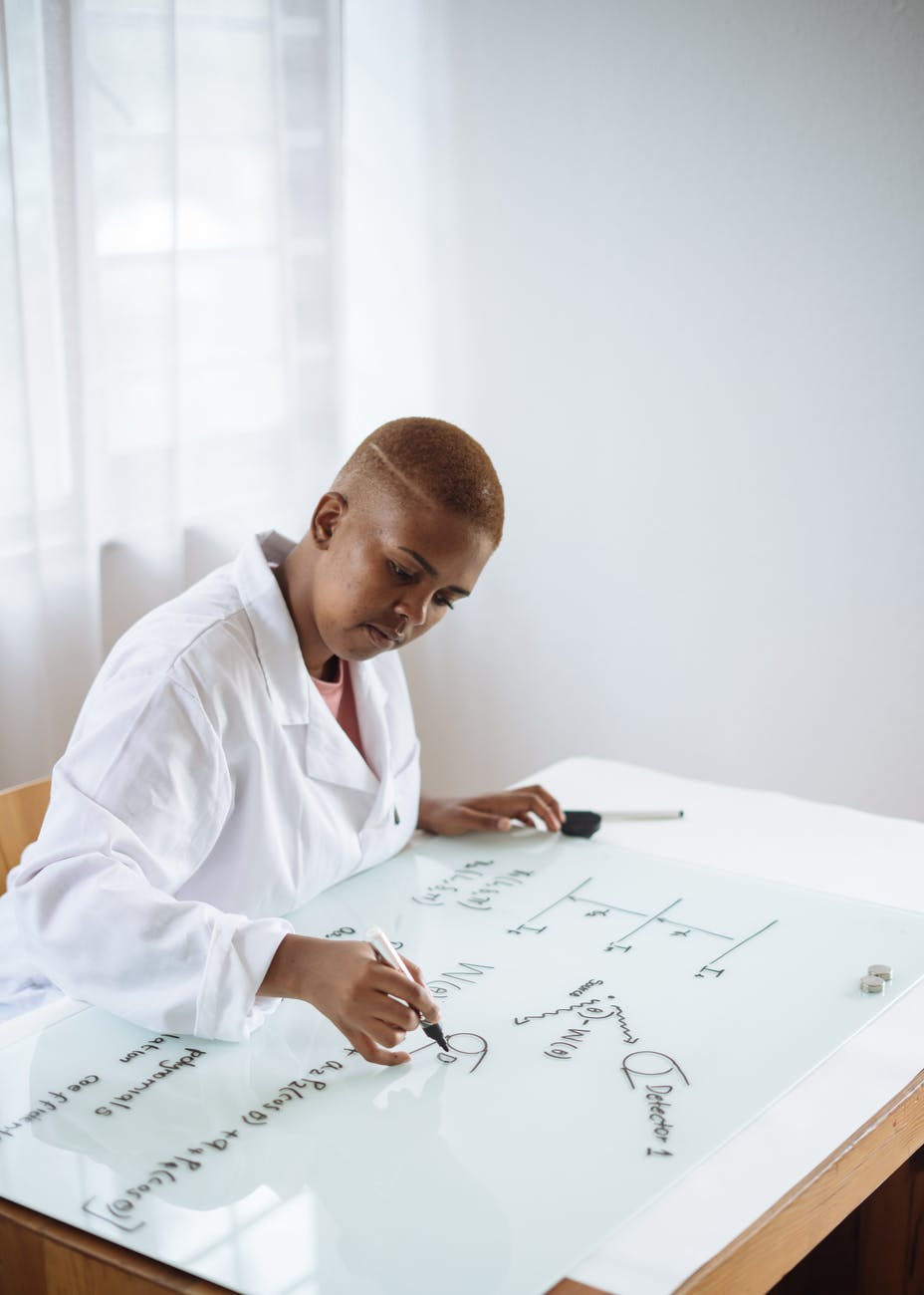
  • family
  • fantasy
  • fiction
  • HCI
  • health
  • leadership
  • love
  • management
  • nature
  • pets

  • poetry
  • politics
  • psychology
  • Sadie
  • satire
  • science
  • sports
  • story
  • The Singularity
  • Travel
  • Uncategorized
  • user experience
  • Veritas
  • Walkabout Diaries

Meta

  • Create account
  • Log in

Blog at WordPress.com.

  • Subscribe Subscribed
    petersironwood
    Join 653 other subscribers

    Have a WordPress.com account? Log in now.

  • petersironwood
    View site in Reader
    Manage subscriptionsSign upLog in
    Report this content
    Collapse this bar
Loading Comments...