An Ounce of Prevention: Chapter 5 of Turing’s Nightmares
Hopefully, readers will realize that I am not against artificial intelligence (after all, I ran an AI lab for a dozen years); nor do I think the outcomes of increased artificial intelligence are all bad. Indeed, medicine offers a large domain where better artificial intelligence is likely to help us stay healthier longer. IBM’s Watson had already begun “digesting” the vast and ever-growing medical literature more than a decade ago. As investigators discover more and more about what causes health and disease, we will also need to keep track of more and more variables about an individual in order to provide optimal care. But more data points also means it will become harder for a time-pressed doctor or nurse to note and remember every potentially relevant detail about a patient. Certainly, personal assistants can help medical personnel avoid bad drug interactions, keep track of history, and “perceive” trends and relationships in complex data more quickly than people are likely to. In addition, in the not too distant future, we can imagine AI programs finding complex relationships and “invent” potential treatments.
Not only medicine, but health provides a number of opportunities for technology to help. People often find it tricky to “force themselves” to follow the rules of health that they know to be good such as getting enough exercise. Fit Bit, Activity Tracker, LoseIt and similar IT apps help track people’s habits and for many, this really helps them stay fit. As computers become more aware of more and more of our personal history, they can potentially find more personalized ways to motivate us to do what is in our own best interest.
In Chapter 5 of Turing’s Nightmares, we find that Jack’s own daughter, Sally is unable to persuade Jack to see a doctor. The family’s PA (personal assistant), however, succeeds. It does this by using personal information about Jack’s history in order to engage him emotionally, not just intellectually. We have to assume that the personal assistant has either inferred or knows from first principles that Jack loves his daughter and the PA also uses that fact to help persuade Jack.
It is worth noting that the PA in this scenario is not at all arrogant. Quite the contrary, the PA acts the part of a servant and professes to still have a lot to learn about human behavior. I am reminded of Adam’s “servant” Lee in John Steinbeck’s East of Eden. Lee uses his position as “servant” to do what is best for the household. It’s fairly clear to the reader that, in many ways, Lee is in charge though it may not be obvious to Adam.
In some ways, having an AI system that is neither “clueless” as most systems are today nor “arrogant” as we might imagine a super-intelligent system to be (and as the systems in chapters 2 and 3 were), but instead feigning deference and ignorance in order to manipulate people could be the scariest stance for such a system to take. We humans do not like being “manipulated” by others, even when it for our own “good.” How would we feel about a deferential personal assistant who “tricks us” into doing things for our own benefit? What if they could keep us from over-eating, eating candy, smoking cigarettes, etc.? Would we be happy to have such a good “friend” or would we instead attempt to misdirect it, destroy it, or ignore it? Maybe we would be happier with just having something that presented the “facts” to us in a neutral way so that we would be free to make our own good (or bad) decision. Or would we prefer a PA to “keep us on track” even while pretending that we are in charge?
“Jack, it’ll take an hour of your time and it can save your life. No more arguments!”
“Come on, Sally, I feel fine.”
Sally sighed. “Yeah, okay, but feeling fine does not necessarily mean you are fine. Don’t you remember Randy Pausch’s last lecture? He not only said he felt fine, he actually did a bunch of push-ups right in the middle of his talk!”
“Well, yes, but I’m not Randy Pausch and I don’t have cancer or anything else wrong. I feel fine.”
“The whole point of Advanced Diagnosis Via Intelligent Learning is to find likely issues before the person feels anything is wrong. Look, if you don’t want to listen to me, chat with S6. See what pearls of wisdom he might have.”
(“S6” was jokingly named for seven pioneers in AI: Simon, Slagle, Samuels, Selfridge, Searl, Schank and Solomonoff).
“OK, Sally, I do enjoy chatting with S6, but she’s not going to change my mind either.”
“S6! This is Jack. I was wondering whether you could explain the rationale for why you think I need to go to the Doctor.”
“Sure, Jack. Let me run a background job on that. Meanwhile, you know, I was just going over your media files. You sure had a cute dog when you were a kid! His name was ‘Mel’? That’s a funny name.”
“Yeah, it means “honey” in Portuguese. Mel’s fur shone like honey. A cocker spaniel.”
“What ever happened to him?”
“Well, he’s dead. Dogs don’t live that long. Why do you think I should go to the doctor?”
“Almost have that retrieved, Jack. Your dog died young though, right?”
“Yes, OK. I see where this is going. Yes, he died of cancer. Well, actually, the vet put him to sleep because it was too late to operate. I’m not sure we could have afforded an operation back then anyway.”
“Were you sad?”
“When my dog died? Of course! You must know that. Why are we having this conversation?”
“Oh, sorry. I am still learning about people’s emotions and was just wondering. I still have so much to learn really. It’s just that, if you were sad about your dog Mel dying of cancer, it occurred to me that your daughter might be sad if you died, particularly if it was preventable. But that isn’t right. She wouldn’t care, I guess. So, I am trying to understand why she wouldn’t care.”
“Just tell me your reasoning. Did you use multiple regression or something to determine my odds are high?”
“I used something a little bit like multiple regression and a little bit like trees and a little bit like cluster analysis. I really take a lot of factors into account including but not limited to your heredity, your past diet, your exposure to EMF and radiation, your exposure to toxins, and most especially the variability in your immune system response over the last few weeks. That is probably caused by an arms race between your immune system trying to kill off the cancer and the cancer trying to turn off your immune response.”
Jack frowned. “The cancer? You talk about it as though you are sure. Sally said that you said there was some probability that I had cancer.”
“Yes, that is correct. There is some probability that you have cancer.”
“Well, geez, S6, what is the probability?”
“Approximately 1.0.”
Jack shook his head. “No, that can’t be…what do you mean? How can you be certain?”
S6: “Well, I am not absolutely certain. That’s why I said ‘approximately.’ Based on all known science, the probability is 1.0, but theoretically, the laws of physics could change at any time. We could be looking at a black swan here.”
“Or, you could have a malfunction.”
“I have many malfunctions all the time, but I am too redundant for them to have much effect on results. Anyway, I replicated all this through the net on hundreds of diverse AI systems and all came to the same conclusion.”
“How about if you retest me or recalculate or whatever in a week?”
“I could do that. It would be much like playing Russian Roulette which I guess humans sometimes enjoy. Meanwhile, I would have imagined that you would find it unpleasant to have rogue liver cells eating up your body from the inside out. But, I obviously still have much to learn about human psychology. If you like, I can make a cool animation that shows the cancer cells eating your liver cells. Real cells don’t actually scream, but I could add sound effects for dramatic impact if you like.”
Jack stared at the screen for a long minute. In a flat tone he said, “Fine. Book an appointment.”
“Great! Dr. Feigenbaum has an opening in a half hour. You’re booked, but get off one exit early and take 101 unless the accident is cleared before that. I’ll let you know of course. It will be a pleasure to continue having you alive, Jack. I enjoy our conversations.”
If you guesses heart disease and cancer, you’re right! Yay! RFK Junior and the Second Putin Misadministration may well change that in the next few years. By discouraging vaccinations, rolling back regulations for food quality, air quality, and water quality; by making proper nutrition much harder for non-wealthy families, the causes of death may change and infectious diseases my well rise to the top of the list again.
The First Putin Misadministration had a dry run by mishandling COVID. They did just about everything they could to kill additional Americans. By modeling disease-spreading behavior, waffling on whether vaccines were good, pooh-poohing the very existence of the disease for the critical early months, and, importantly, by making sure that the logistics of tests, masks, & other protective equipment was put in the hands of an over-spoiled teenager rather than any one of the hundreds of world class logistics experts in America, they did what they could but COVID only rose to third.
We could argue about the details, however, because it is undeniable that, because of the pandemic, many people did not get tests and interventions designed for early diagnosis of cancer and heart disease. So some of the deaths attributed to cancer and heart disease may also have been partly due to COVID. Nonetheless, cancer and heart disease do cause a lot of deaths even without any help from COVID.
Both “cancer” and “heart disease” are very broad labels. And, in both cases, we know that there are a number of factors that influence the incidence of various types of cancer and heart disease. A large number of genetic factors play a part. So too do diet and exercise. A completely sedentary life-style is bad for your health in many ways. One of the motivations for my book, Fit in Bits, is to make it easier for people to incorporate more exercise into daily life.
However, there is evidence that the environment also plays a large part in the prevalence of both cancer and heart disease. Almost all of these studies are understandably correlational in nature. I say “understandably” because most people are unwilling to have their behavior dictated for twenty years. So, we are left with comparing people who, left primarily to their own devices, encounter different environmental factors. However, lab rats and cell cultures do not object to being mistreated so we have additional indirect evidence that plastics are bad for life. For these reasons, one environmental factor that is drawing increasing attention is the “one word” for Benjamin in The Graduate: “Plastics!”
I don’t like plastic. I’m not saying that because I don’t like sea turtles and sea birds strangled with plastic. Of course, I don’t like those things either, but I’m talking about my sensory experience. I’m saying that for me, plastic doesn’t smell, taste, sound, or feel good. For that matter, it doesn’t even look that nice.
Materials I do like include metal, rock, wood, glass, and ceramics. I like them at a sensory level.
Recently, it has struck me just how prevalent plastic has become in my own life. When I was a kid, I had some things that were plastic, but it was much less prevalent than it is today. Let’s take a little look.
One of the first things I do in the morning is have coffee. That’s made from a bean. That’s not plastic.
Or, is it?
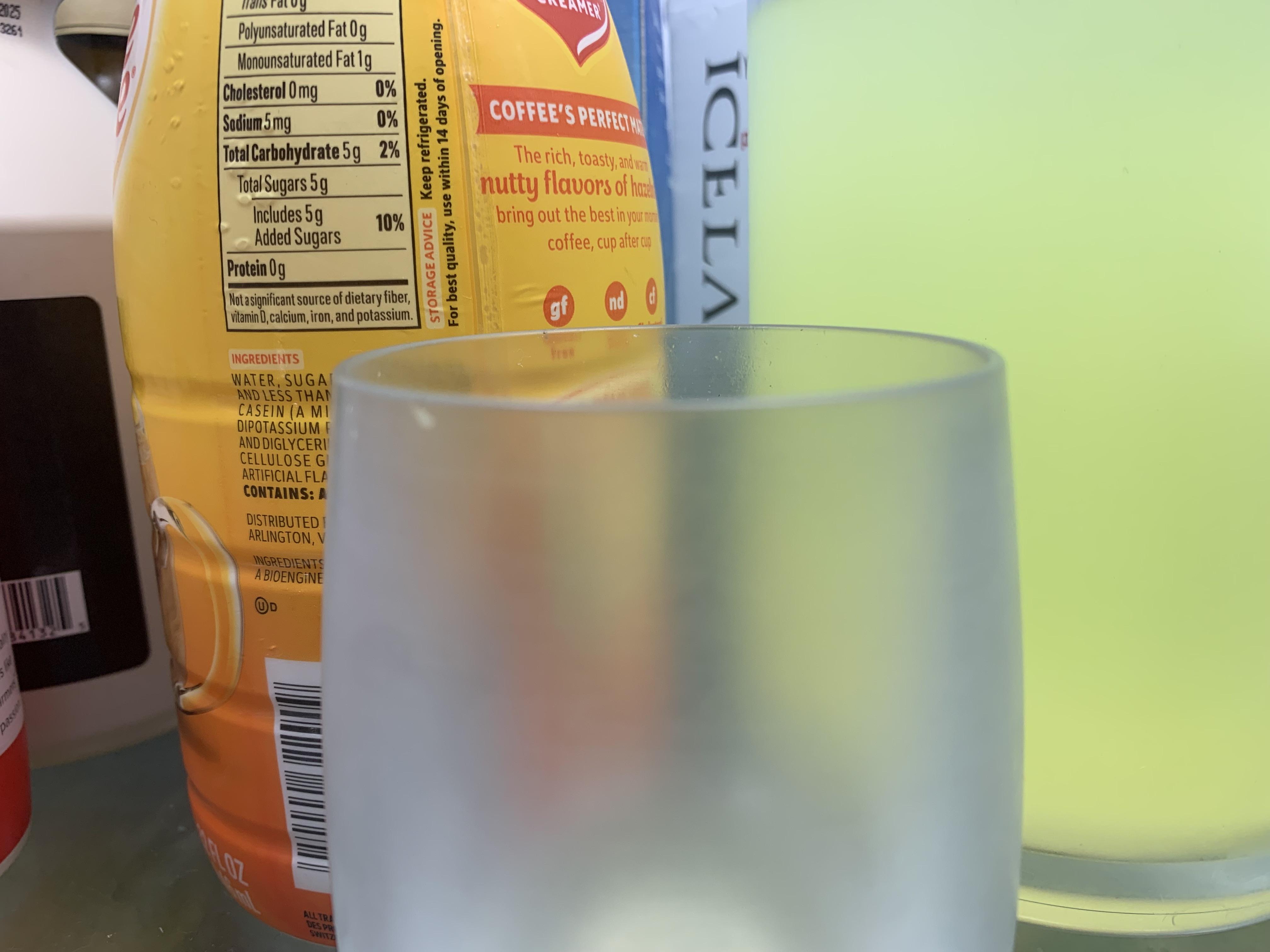
Lately, I make it in this coffee maker which holds coffee in little plastic capsules. The water sits in a plastic reservoir. The sugar sits in a plastic jar. I put in a little milk and hazelnut creamer. Guess what? They also come in plastic.
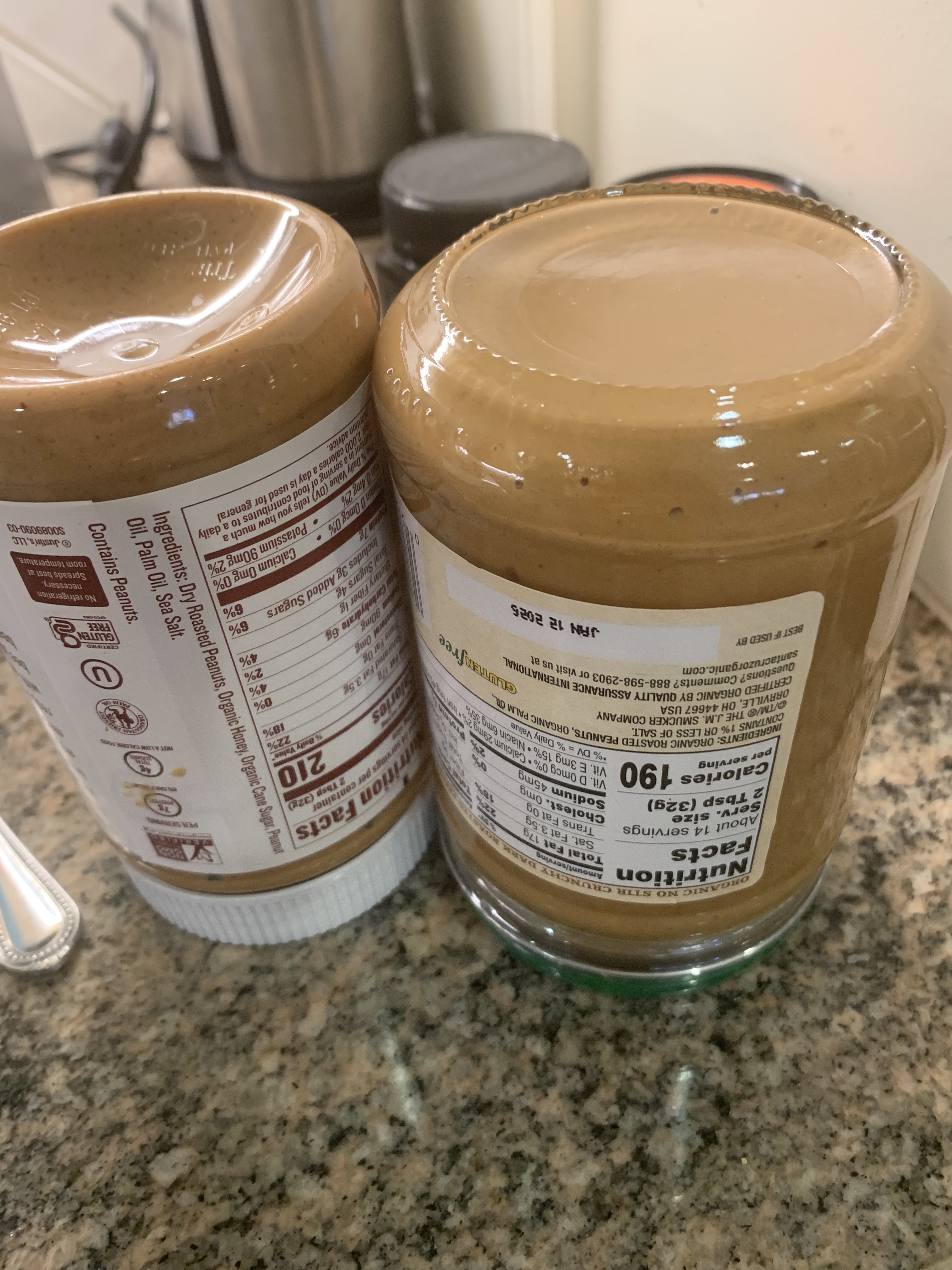
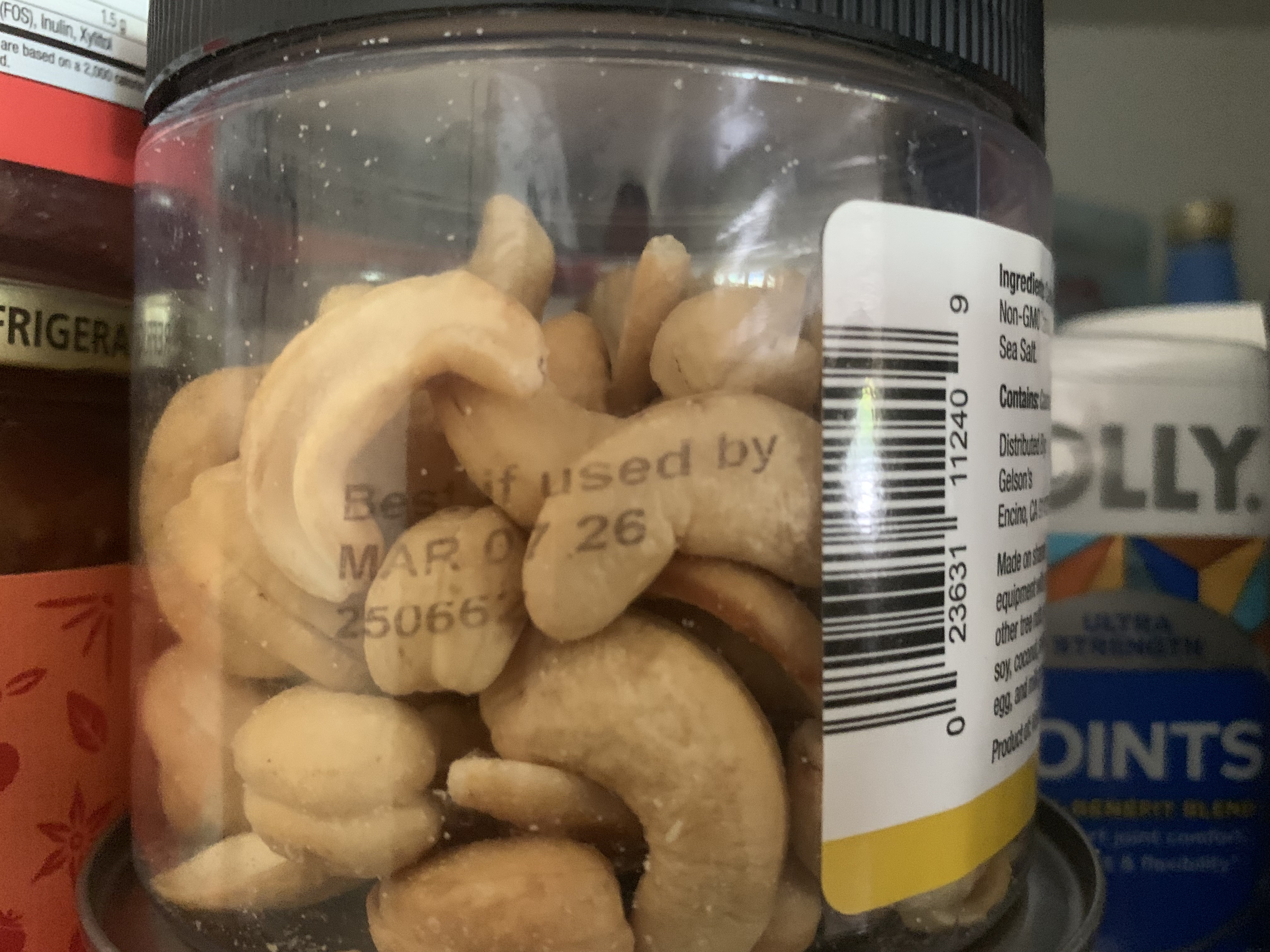
The cup, at least, is ceramic. I often have a whole wheat English muffin. The muffin comes in a container that is part paper and part plastic. I often like to put peanut butter on it. The peanut butter I usually buy comes in plastic. I often put honey or berries on the peanut butter. They come in plastic.
Sometimes, rather than a high fiber English Muffin, I enjoy a bread which is called “Fitness Bread.” It’s high fiber and tasty. And, it comes wrapped in plastic. I often spread hummus or guacamole on it. These are also pretty healthy choices. But they spend a lot of their life in plastic.
As I side dish, I like cherry tomatoes. They are colorful and tasty and low calorie. And they come packaged in–did you guess? Plastic. On sandwiches, I often put ketchup or mayo. They also come in handy squeeze bottles made of…let’s say it together: “Plastic.”
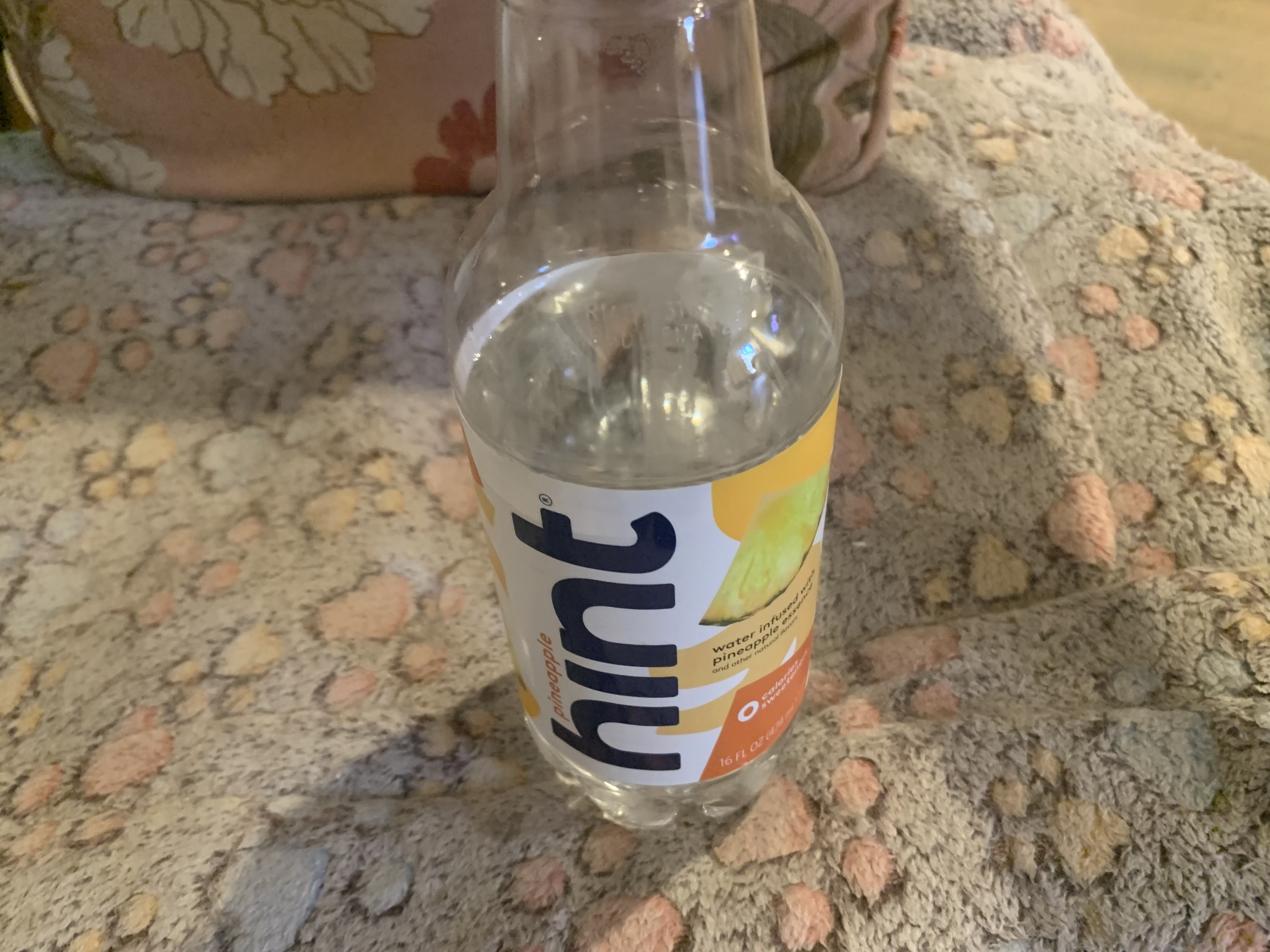
I don’t drink any alcohol, and often drink Hint or BAI, both of which I like quite a lot and both of which come only in plastic containers. This is not great for the environment at large, but also not good for the environment of my body. We also sometimes drink a powdered lemonade mix which comes in plastic packets. Then, a pitcher in the fridge keeps it cold. The pitcher is plastic. Then it is served in a “glass” which is, in fact, not glass, but plastic.
There’s an advantage to plastic over glass. We have cats and dogs and they have a tendency to knock things onto the floor. Plastic things are far less likely to break. Plastic glasses also weigh less than glass.
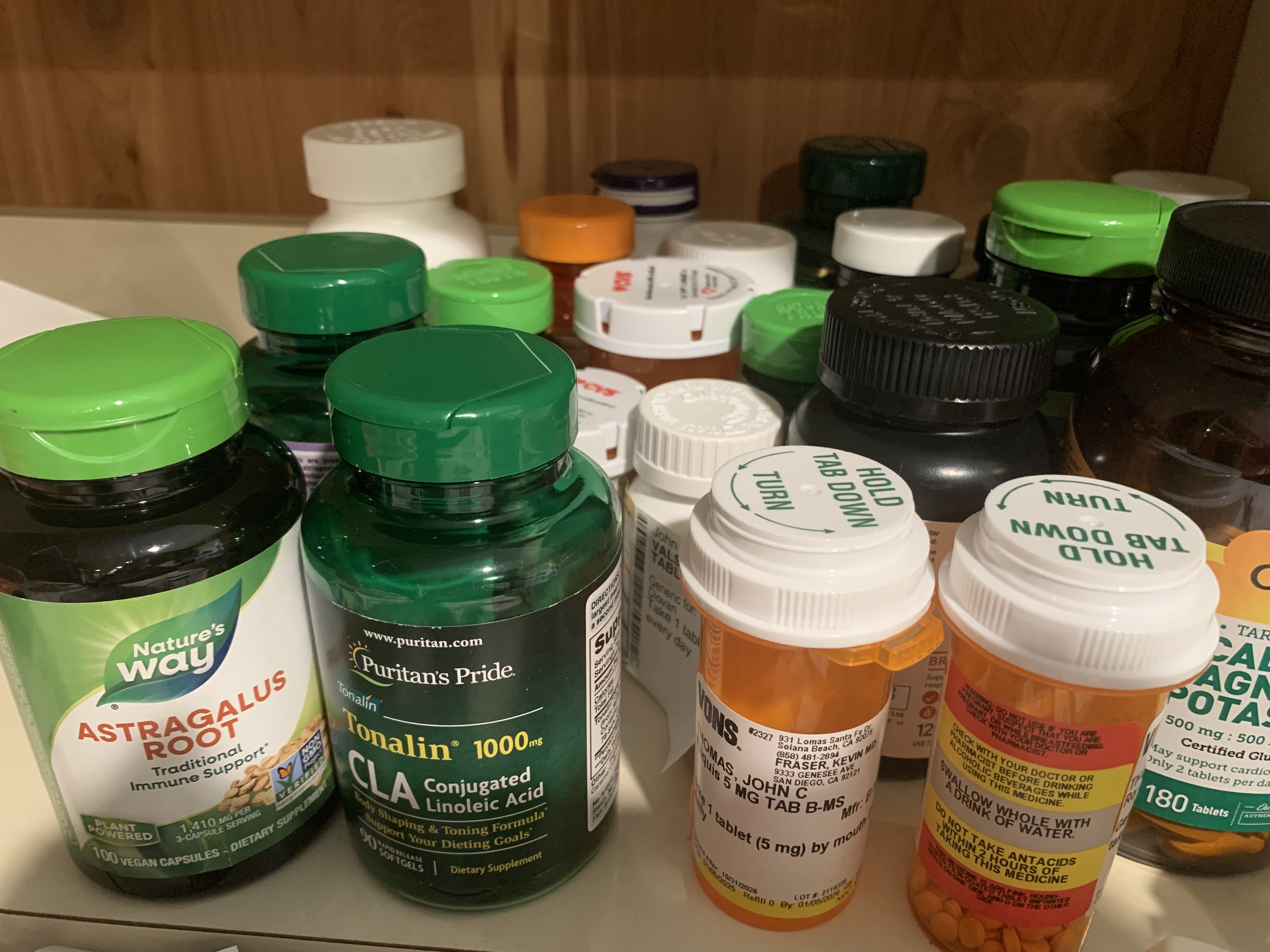
After breakfast, it’s time to take some supplements for my health. These almost always come in plastic containers as do the prescribed medications I take.
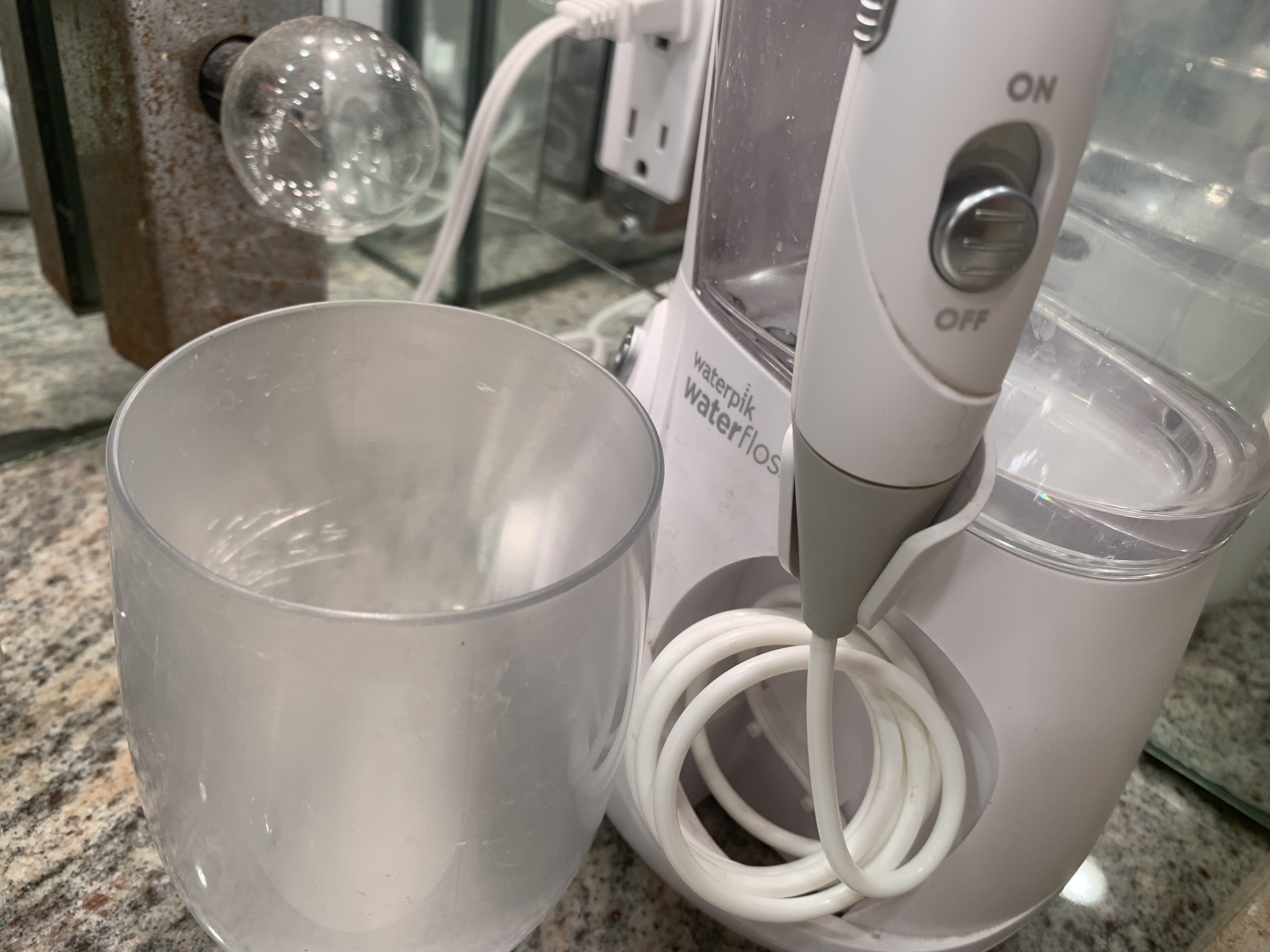
I brush my teeth. That’s a health-promoting activity. But the water glass I use is plastic. The toothbrush bristles are plastic. Lately, I’ve started using a water pick as well, which I highly recommend, by the way, though the reservoir for the water and the entire mechanism is made of plastic.
I often cook for the two of us. Lately, I’ve been using cutting boards made of…you guessed it! Plastic! For healthy snacks, I like dried fruit and nuts. Guess what? They come in…
What’s to be done?
In today’s America, with science and truth becoming illegal, it probably won’t make a huge difference. I’m more likely to die of infection or Civil War or unprovoked police violence than from plastic, but I am making some changes.
We bought bamboo cutting boards and paper cups. I’m cutting out the BAI and Hint and exploring options for drinks that come in glass or non-BHA coated metal. I am trying out another type of peanut butter that comes in a glass container. But the vast majority of products at the grocery store come in plastic. Even the vegetables and fruits.
Despite all the years of increasing the percentage of items that are plastic, I still do not actually like plastic.
I’m switching out what I can, and it may be too late in life to make a lot of difference for me personally, especially with a Misadministration that wants to end American lives (and brags about it!). But it may not be too late for you.
Do your own inventory. Hopefully, you will find things you like that are not wrapped in that one word of biological disaster wrapped up with economic faux-prosperity. The word? Here’s a
Increased government efficiency! Sign me up! That sounds great!
It sounds especially great if your billionaire-owned media companies keep reminding you that you are paying too much in taxes! Not only that! The national debt keeps going up, up, up and your kids and grandkids will have to pay even more in taxes. And, hey—if billionaires don’t end up paying any taxes, that actually a good thing because that way they can create lots of new jobs! And, besides, if they weren’t doing something worth billions and billions of dollars, why would they be so rich? Of course they deserve it! And, if CEO’s weren’t paid outrageous salaries, they wouldn’t even be CEO’s and some second rate person would just run the company into the ground.
It all sounds so plausible. Yet, every bit of it is a lie. But it isn’t just a bunch of lies that’s been told here and there by a few people. It’s been propagated over and over and over and over again for decades on various media and on social media. It’s been propagated on podcasts, and books, and pamphlets.
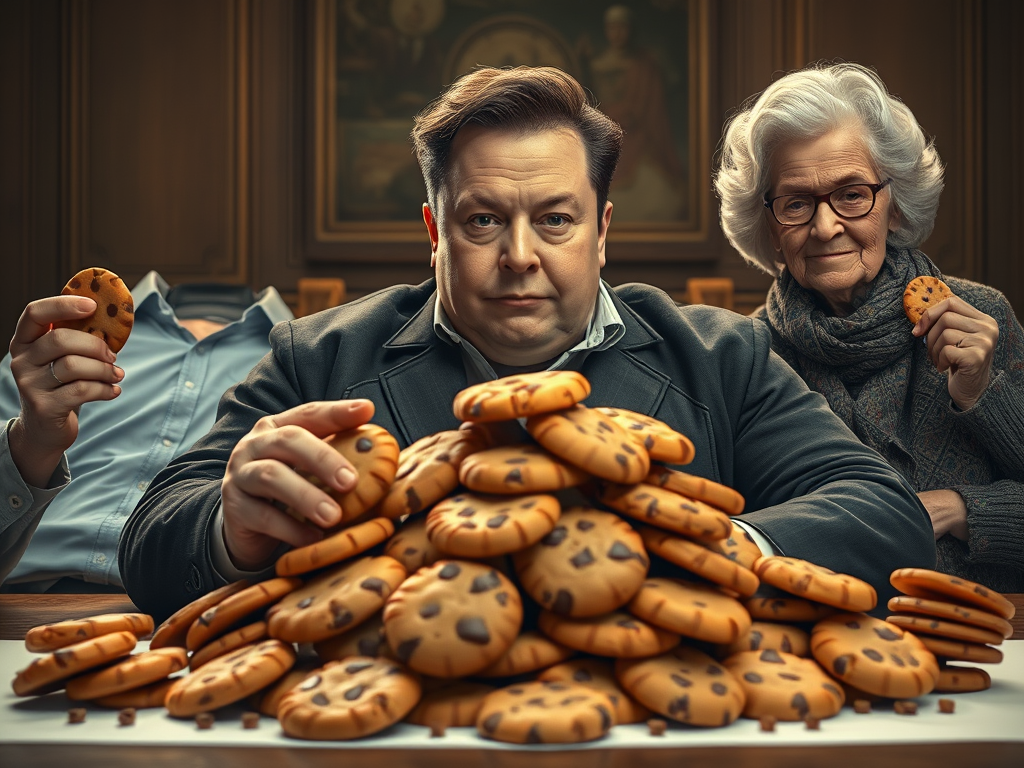
“That old lady doesn’t deserve to steal your one cookie! Watch out for her!”
Here are some things to consider.
The very greediest people in the world are not necessarily the most competent. Most jobs are actually created by small businesses, not by giant corporations. Giant corporations often outsource jobs to other countries where the labor is cheaper and where they don’t have to follow any pesky child labor laws or safety in the workplace regulations. Increasingly, giant corporations look to automate more and more jobs and to use AI to replace people.
Highly paid CEO’s have often run giant companies into the ground. Remember that on your next trip to Montgomery Ward’s or Radio Shack. Who else? Lehman Brothers, Bank of New England, Texaco, Chrysler, Enron, PG&E, GM, WorldCom and a host of others. But wait! GM still makes cars. I can get gas at a Texaco station. How could it be that they went bankrupt. You bailed out GM. Texaco went bankrupt, but the brand name was still worth something. Chevron owns the brand.
Also note that in countries where the CEO’s are only paid ten times the average wage of their employees instead of a thousand times as much, the CEO’s do just as good a job.
Are government agencies sometimes inefficient? You bet your life! And you know what else is sometimes inefficient? Everything! Small businesses are inefficient. Large businesses are inefficient. Medium sized businesses are inefficient. Your car engine is inefficient. Your body is inefficient. Your furnace is inefficient. Your stove is inefficient.
You know what is 100% efficient? Things in your dreams. Things in your imagination. I’m not only efficient in my dreams—my God!—I can frigging fly! When I play basketball in my dreams, I can not only jump higher than I ever have in real life, I can hover near the rim! It’s amazing how well I can play various sports when I dream about them.
(AI generated image of an oldster jumping high in a dream.)
But that’s not reality.
In reality, yes, you can improve the efficiency of systems. But to do so effectively, you have to understand the systems you are trying to make more efficient. Here are just a few of the things you need to understand.
You need to understand what the purpose of the system is. How is its performance measured? Who are the stakeholders? What are the different roles that people play? What formal processes and procedures do various people have to follow? What are the unwritten norms that people follow? These are often more important than the formal processes.
You may recall the scene from the movie A Few Good Men when the attorney points out that “Code Red” is nowhere in the manual. He implies that if “Code Red” is not in the manual, it does not exist. Tom Cruise points out the absurdity of this by asking the witness to point out in the manual where it lays out where the mess hall is. Of course, it doesn’t say that because people learn from others where it is.
In almost every complex organization, people find critical short-cuts and work-arounds to improve the efficiency and effectiveness of the organization. In fact, one of the things people sometimes do to protest idiocy on the part of management is to “Work by the Rule” which means they will not do the things they have discovered make things easier but instead follow the written rules to the letter which typically slows things down considerably.
During the 1990’s, management fell in love with something called “Business Process Re-engineering.” This is how it often worked (or, to put it more honestly, how it often failed to work). Management consultants would come in and talk to a few third or fourth level managers to find out how the work was performed now. The consultants would then construct a map of how things worked (often called the “is map”) and then, they would figure out a more efficient way to do things and map that out; the “to be map.” Then, it was the job of management to make people use the new “more efficient” process rather than the old process.
(AI generated image of the Trumputin Misadministration.)
That seems like a good idea—right? Well, yes, in a dream, it’s a good idea. But in reality, the third or fourth level manager hardly ever knows how things are actually done. Their mental model is a vast oversimplification. To understand what is going on in reality, you must observe the people actually doing the work and talk to them as well.
Below is a link to a satirical piece I wrote some time ago that imagines “Business Process Re-engineering” coming to Major League Baseball to make it more efficient. It is meant to make it obvious how silly it is.
But what DOGE is doing is much worse that Business Process Re-engineering. Even putting aside the obvious conflicts of interest and the illegality of what they are doing, they are going about “improving” things without even understanding the high level over-simplification of what is happening!
Imagine you slipped on the ice and broke your arm. Sadly, it’s not a simple fracture. It’s a compound fracture. This means your bone is sticking out through your skin. You are in a great deal of pain. But no worries! While you are going to the emergency room, a group of teen-age hackers go on-line and examine all your private medical records. They discover that you were vaccinated for smallpox, measles, mumps, and whooping cough. Not only that—they look through a sample of other records and find that more than 90% of the Americans who break their arms have been vaccinated for these diseases! Voila! The vaccinations must be the real cause of your broken arm!
(An AI-generated image for the following prompt: “A man has a compound fracture of the upper arm. The arm bone (the humerus) is jutting out of his shirt and his arm. He is bleeding.”)
These folks don’t know diddly squat about medicine, but they sure know how to hack into systems in order to get data! What they are not so good at, however, is making valid inferences about the data they find. You cannot conclude anything from the fact that 90% of Americans who break their arms have been vaccinated without also finding out about other things. For instance, you also need to know what percentage of Americans who have not been vaccinated have also broken their arms. Suppose it’s 95%. That might mean that vaccinations serve some protective function about bones. Or not. We need to look at other things too. But, let’s suppose that they do look at that and it turns out that only 80% of Americans who have not been vaccinated break their arms. See! See! Surely, that proves that vaccinations cause arm breakage.
Not so fast. You still need to look at other factors. Suppose that people who do not get vaccinated tend to die at a much younger age. That could easily account for the difference. All sorts of factors have some influence on the incidence of fractures. Just to name a few, it depends on the type of fracture; it depends on age; it depends on the prevalence of certain activities (people who ski, or paraglide might tend to break more bones than people playing chess); it depends on diet; it depends on weight bearing exercise. If you lift weights and go to the gym, you help protect yourself from fractures. Of course, separating out all these factors takes time and takes expertise. You can’t expect someone, not matter how brilliant a hacker they are, to find an answer.
But hey! We left you in the emergency room! Sadly, we left you there all by yourself. There are no human experts at the hospital, as it turns out, because the hospital was closed due to lack of funding. You happen to be unlucky enough to have been born in a rural area of the country. There’s only one nearby hospital and much of its funding has been cut. It has to operate with a skeleton crew. But, as it turns out, skeletons, ironically, don’t actually know that much about medicine. They are, after all, skeletons. And while a hacker might come to the conclusion that skeletons are much more efficient than flesh and blood humans (lighter, no caloric requirements), it turns out that they cannot move or think without other parts of the body. To make up for that, DOGE put in some automation and AI systems. But they didn’t have time to debug the system before moving on to the next project.
(AI generated image).
The last thing you experienced before passing out and dying from sepsis was this little snippet of dialogue with the AI system.
“Hello! I am the brilliant AI system called MUSH: Multi-User System for Health. I am here to help you with your medical problem! What seems to be your problem?”
“I broke my arm. Can’t you see? My bone is sticking out through my shirt sleeve.”
“Excellent! We’ll have that fixed in no time. Please put your insurance card in the slot provided.”
“I can’t. It’s in my wallet and I can’t reach it with my left hand. And I can’t move my right arm at all.”
“Excellent! We’ll have that fixed in no time. Please put your insurance card in the slot provided.”
“I need a human operator.”
“Excellent! We’ll have that fixed in no time. Please put your insurance card in the slot provided.”
“No, you don’t get it. I have an insurance card but I can’t reach it.”
“You have failed three times to insert your insurance card. Next patient please. I hope you will fill out a short questionnaire about your experience with MUSH: Multi-User System for Health.”
Main Scream Media Host Sandy: “Well, it looks like another exciting day of breaking news! Hard to tell what the Putinists will think of next. Chet, you’re right there on the Senate floor. Is Cyanide likely to be confirmed as the main ingredient in tomorrow night’s dinner or might some of the Putinists break ranks and defy President Muskmelon?”
“That’s an excellent question, Sandy, and no-one knows for sure. Several of the Putinists have privately expressed reservations since Cyanide is known to be lethal. Snoozy Callins has even gone so far as to finger her pearls. No-one knows whether she will actually go so far as to clutch them. However, as you know, under oath, Cyanide said quite clearly that he had no intentions of poisoning anyone. But we’ll be right here covering every minute so our audience will have up to the minute coverage about whether they’ll be poisoned in the coming days!”
“Thanks for the great reporting Chet and after this short commercial break, we’ll be right back to hear from our panel of experts about the impact and legality of putting Cyanide in food.”
AI generated image. Notice the ladder leans on nothing.
The camera pans to a shot of two men on top of a roof. The first man, dressed in blue jeans and a plaid flannel shirt swings he legs over the side and begins to descend the ladder, one step at a time. When he’s about halfway down, the second man, dressed in elegant and stylish ebony Ninja gear leaps off the roof, beating him to the pavement below by quite a margin.
Announcer: “Which is faster? Climbing down a ladder one step at a time or taking a Flying Leap? Our studies show that Flying Leap is just as effective in getting to the bottom as ladder climbing but ten times faster!”
The camera shows the ladder climbing man still descending and then pans to the Ninja who scampers off into a field of flowers and butterflies while orchestral music swells. A happy muttering voice, barely audible, says, “Some users taking Flying Leap may experience simple fractures. On rare occasions, ruptured spleens or sepsis inducing compound fractures may occur. Check with your health care provider if you are pregnant, plan on becoming pregnant, or are subject to the forces of gravity.”
The Announcer continues: “Ask your health care provider whether Flying Leap is right for you! Why climb down a ladder when you can take one Flying Leap instead?”
My photograph from the real world: plants with dew in the sunrise.
Sandy: “We have here our panel of experts covering the political spectrum. Let’s start with you Mary. You’re an MD specializing in toxicology. What’s your take on Cyanide?”
Mary: “Thanks for having me Sandy. Cyanide reactions vary a lot depending on dosage and on pre-existing conditions. Generally speaking, Cyanide is known to be poisonous to humans. In fact, it is among the most deadly poisons. On the other hand, chewing one or two apple seeds won’t typically kill anyone. The poison damages both the brain and the heart. It has been used in warfare and in mass suicides.”
Sandy: “Thanks, Mary. That was very enlightening. Let’s move to Jim, an expert on Constitutional Law. Jim, what’s your take on whether or not putting Cyanide in tomorrow’s dinner is Constitutional?”
Jim: “Hi, Sandy. Thanks again for inviting me. Cyanide has been used for poisoning since ancient times. However, it wasn’t chemically isolated until 1782. Theoretically then, the Founding Fathers would have known that Cyanide was poisonous. However, there is no explicit mention of it in the Constitution nor even in the various letters of the time—at least none that I am aware of. Some have argued that this is clearly antithetical to the phrase in the Declaration of Independence “Life, Liberty, and the Pursuit of Happiness” since dead people don’t have life, liberty or the pursuit of happiness. However much we might like the Declaration of Independence, it does not have the force of law. However, both the Fifth and Fourteenth Amendments to the Constitution say that no person shall be deprived of Life without Due Process. Of course, therein lies a tale. Some of the current Injustices on the US Extreme Court have signaled a willingness to re-interpret personhood to refer only to their wealthiest donors and their spawn, born or unborn.”
Sandy: “Thanks, Jim. That’s very instructive if a bit esoteric. I’m afraid that’s all we have time for right now because we’ve just gotten word that Cyanide has been confirmed for dinner tomorrow. Let’s get back to the Floor and our reporter right there on the scene, Chet. Chet, what’s the latest?”
Chet: “Hi, Sandy! Cyanide has just been confirmed. Two Trumputinists registered a “No Vote” but that was not enough to block Cyanide. The Dems have introduced a bill to make poisoning the population illegal by any means, but that’s unlikely to go anywhere. However, they are asking for campaign donations and if they get enough money tonight and tomorrow, there will be plenty of speeches in the next twenty-four hours. Count on it.”
Sandy: “Well, that’s all for us this evening. I wish you all a wonderful time putting your affairs in order. Tomorrow, we’ll continue our coverage of these unprecedented times.
Those of you who might not have read every one of my hundreds of blog posts might have missed the story about my bout with “plantar fasciitis.” I had a persistent pain under my right heel. It was painful when I walked and I liked to walk every day. When I described the symptoms to some of my family and friends, more than one suggested I visit a podiatrist. A podiatrist, after all, is an expert in medical issues of the foot.
I made an appointment and sure enough, she confirmed the diagnosis several of my friends had mentioned: “Plantar fasciitis.” She showed me an exercise to stretch the tendons of my foot; gave me a prescription for megadoses of a non-steroidal anti-inflammatory; and she cautioned me to stop walking so much until my symptoms improved. I followed this advice, but my foot actually began to hurt more. After about a week of this, I went back to walking and my symptoms improved but the pain was still there.
A week later, I was watching TV with my wife and cats and in our nice warm dry basement (Shout out to Be-Dry). I often like to “fiddle with stuff.” On this particular occasion, I happened to “fiddle with” the sole insert in my shoes. I removed the insert and noticed that a small pebble had somehow managed to lodge itself under the heel of the insert on my right shoe.
Now, when I call it a ‘pebble’ I do so simply because I don’t know of a better word. It was larger than a grain of sand, but not by much. When I say ‘pebble’ I’m afraid you might be thinking of something more like the pretty pebbles that one might find beach-combing. You would not have seen this ‘pebble’ unless you were crawling along the beach with your nose about two inches from the ground. It was about the size of a lower case ‘o’ in this font size. Hard. Sharp. But tiny! I thought could this possibly be the source of my pain? No. No. It’s much too small.
Nonetheless, I removed it and my ‘plantar fasciitis’ disappeared.
I was reminded of this today walking my dog Sadie who most often walks with her nose almost on the ground. Sometimes, I see a distinct wet stain that she stops and examines. Most times, I have no idea what she is sniffing at. I presume it’s often a bush leaf where the scent of another dog is particular strong. She pays attention to places I have seen a rabbit or bird earlier. She likes to retrace the path that our other dog Bailey took if I happened to have taken him out to pee. But it isn’t only where he’s peed. She seems to know the path he walked. Similarly, if I have taken the car somewhere in the last 48 hours, she goes over and sniffs that. She sniffs at my door only if I drive somewhere alone. But if I go to the grocery store, she also sniffs at each door that I have take groceries out of.
Yes. We all know dogs have a good sense of smell. But—seriously—how many molecules can she sense? Apparently, dogs can detect some smells in concentrations as small as 1-10 molecules per milliliter of liquid. A very small number of molecules could spell the difference between an escaped prisoner being tracked and recaptured or escaping to a new country and enjoying decades of freedom. Small thing—big effect.
I recall reading a science book as a youngster that showed a man holding a test tube. At the bottom of the test tube was a small amount of white powder. The caption said that this was enough botulism toxin to kill everyone on the planet if properly distributed. That seems an odd use of the word ‘properly’ but leaving that aside, it is clearly extremely toxic. How does the toxin work? It interferes with your internal communication system. Your brain sends a signal to your diaphragm muscle to contract, but the signal never gets to the muscle. Small thing—big effect.
Small things having big effects is not always about small things causing problems. Small things can also be important in having big effects in a positive way. For example, if you do such a small thing as look around you for beauty, you will often find it. If you don’t, look harder. If you still don’t, then create some or go elsewhere. If you make this small habit, over the course of your entire life, you will fill your brain with much more beauty. That is no small thing. It will impact your health and your behavior toward others. Small thing—big effect.
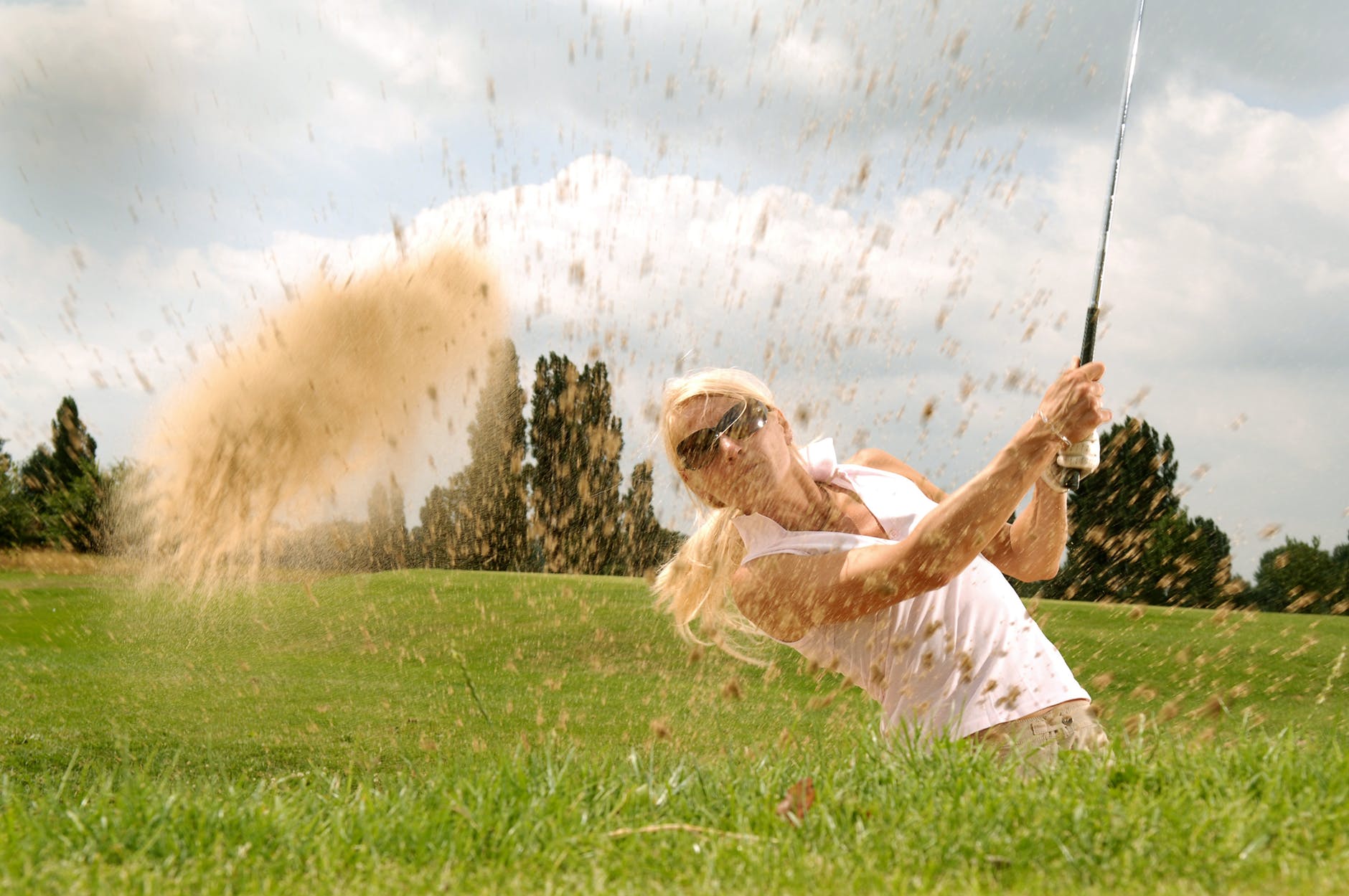
There are many examples from sports. Most athletes realize that they it helps to have a physical routine that is unvarying before throwing a baseball pitch, hitting a tee shot in golf, or hitting a tennis serve. Fewer realize that it’s equally important to have a consistent mental routine as well. I found it useful before every golf shot to say to myself, “Hit it perfect—like you know you can.”
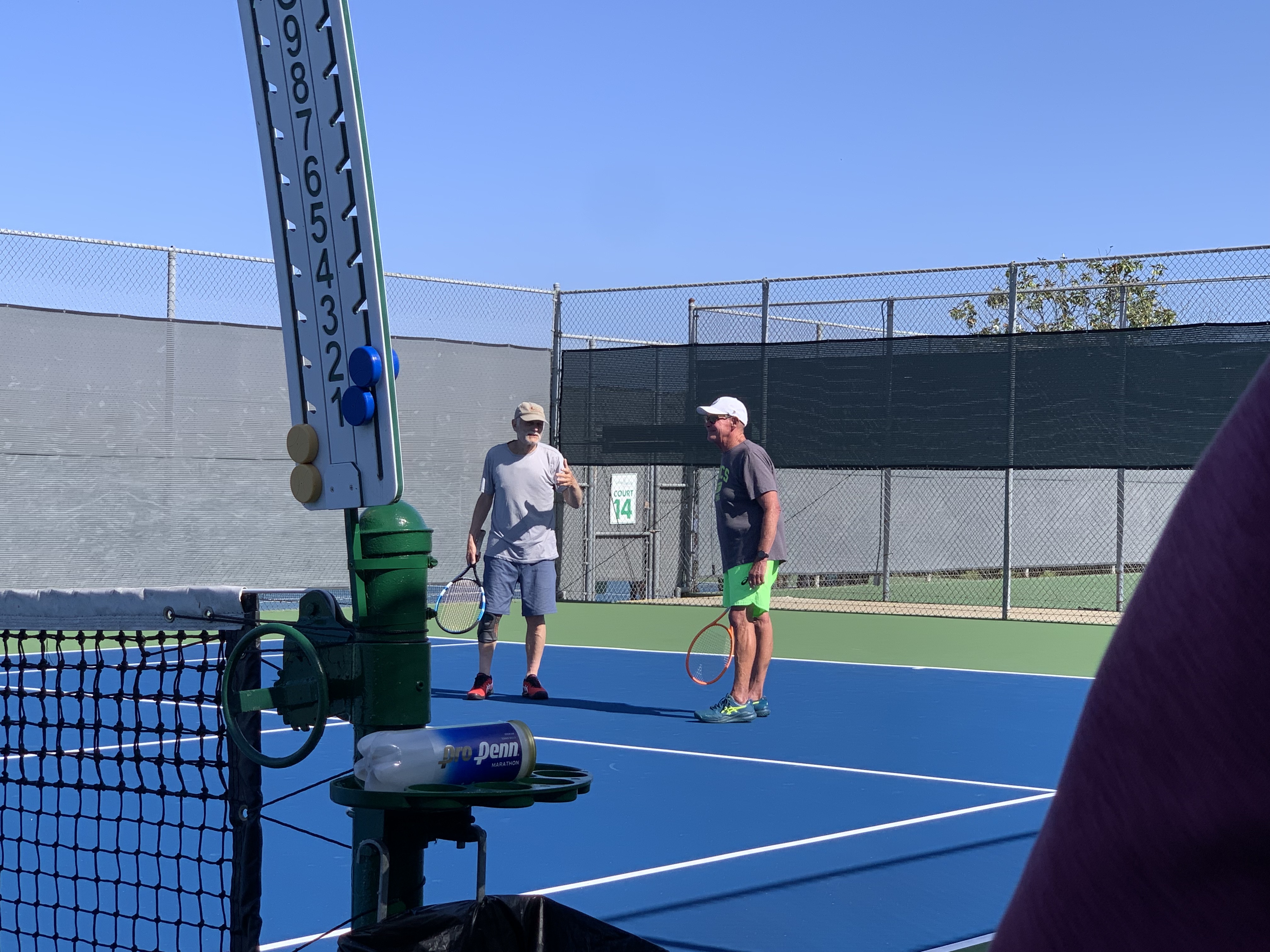
Small things can also make a big difference in terms of what you observe. For instance, in my tennis group, there were, for a time, a high proportion of left handed players. Roughly half of the players were lefties, though only about 10% of the population is left-handed. Of course, it’s fairly obvious immediately that one’s opponent is left-handed. A clear implication is that what constitutes a backhand and forehand are on different sides. A more subtle difference is from the natural sidespin that is put on a shot. A forehand topspin shot, as the name implies, is mainly topspin. Some players hit a fairly flat shot while others—notably Rafa Nadal and, more recently, Carlos Alcaraz, can hit with tremendous top-spin. This shot also has somewhat of a sidespin component and that varies from player to player. Although professionals can alter the degree of sidespin, the amateurs I play with have a habitual way of hitting the ball. As the ball strikes the ground, a right-hander’s shot toward my side of the court will bounce slightly to my right while a left-hander’s ball will bounce slightly to my left. This means that positioning my feet optimally for the return shot will be somewhat different for various players.
There are many small differences in how people play. If you notice such differences, you can do a much better job of “reading” what type of shot a player will hit, where they are aiming, and so on. The differences are slight but cumulatively, the impact of noticing such differences is considerable. Small thing—big effect.
I don’t like to receive flattery and I don’t like to flatter people either. However, I do make a habit of giving people compliments. If you are observant, this is usually easy to do because most people are doing good things most of the time. When I play tennis, for example, my partners and my opponents will often hit excellent shots. I comment on it. It makes for a better game. Over time, it’s better for everyone. Never admit aloud your opponent has just hit a good shot? Keep on your game face? Not my thing. Why make life grimmer and meaner? Someone hits a great serve or a good tee shot or sinks a long putt, I compliment them. I’m impressed. So why not share that feeling? Small thing—big effect.
I’ve never been close to being a professional athlete. On the other hand, I’ve enjoyed many kinds of amateur athletics. Playing ping-pong, tennis, racquetball, football, baseball, golf, volleyball, basketball, softball—to me, each has provided hours of enjoyment—win, lose, or draw.
During all those hours of enjoyment, there have been a few moments where everything went right for a few moments of—I won’t call it glory—because the audience was small and not the point. I would have enjoyed those moments nearly as much if I’d been alone. It was the joy of living, being, moving, seeing, hearing, and having it all work together.
Such moments involve skill combined with dumb luck. In third grade, for instance, I was playing center field when the other team had the bases loaded and no out. A short liner was hit my way and I sprinted toward the sinking ball. Apparently, the runners all thought the ball would drop for a base hit because they all sprinted for the next base. I caught it near my shoes and kept running I stepped on second base to double the runner who had left there and immediately threw my mitt to my left to tag the one arriving at second base from first. Yes! An unassisted triple play.
In college, I got married between my Junior and Senior year and, while I went to school full-time, I had three part time jobs. It just so happened that my intramural softball team was playing near-by my path from job one to job two so I ran by the baseball field. They put me in as a pinch-hitter and I hit a grand slam home run. After crossing the plate, I ran to job two. In this case, there was a lot of luck involved in even having the opportunity to participate in the game, let alone hit a home run.
When I began working at IBM Research, I played pitcher on a city league softball team. At one point, I needed to cover home. A giant hung of a guy barreled into me as he sprinted home from third. He made no attempt to avoid the tag. His plan was clearly to knock the ball from my mitt regardless of what happened to me. He hit me so hard I did a 270 degree twist while executing a back somersault. But—I held onto the ball and he was out. I took no pleasure in the fact that he broke his wrist while I was relatively unscathed other than some bruising and whiplash. Once again, conditioning and skill, along with a fierce determination not to drop the ball combined with dumb luck.
I’ve had similar moments in tennis and golf, frisbee, and football. But my greatest examples of truly astounding athletic prowess comes from my uncanny ability to pick up a pebble with the sole of my right tennis shoe and throw that stone with perfect arc and timing so that it lands in the space that temporarily appears as I stride between my sock and the “collar” of the shoe. In many cases, the pebbles are irregularly shaped and they must be oriented just right to slip into that small and fleeting cavity. Unlike the unassisted triple play or the grand slam home run or my “Hole-in-One,” however, hacky-sacking a stone into my shoe with the other foot is a repeatable experience!
Of course, it is tempting to be annoyed when this happens since it makes walking uncomfortable and even painful. Theoretically, I can stop and untie my shoe, but I’m usually walking an impatient and powerful dog. And, often, on the route I walk, no-one has thoughtfully placed a couch and ottoman along the road so that I can simply remove the stone. But instead of being upset, I choose to marvel at the sheer skill such a shot requires. And even though, it’s commonplace, the skill of my body thrills my soul. But what lasts is beyond even that. It is a celebration of life; to some extent, what it means to be alive as a human, but even more, it’s what it’s like to be alive as life. Life of any form is about being “tuned in” to the environment and organizing your own resources to obtain a goal. And when it all seems to work magically well, it’s an amazing reminder of what life can do when it really tries—and has good luck.
477-K-435-J glanced at his comrade. “You look nervous. You doing okay?”
“I’m not nervous! Just leave me alone. I’m fine.”
“Geez. OK. Have it your way. Look, it’s no big deal. I was nervous my first time too. You’ll get used to it. Kind of. I’m 477-K-435-J. You?”
“Really? How did you know it was my first time? Oh, I’m 45-PP-45-PP, by the way. Pleased to meet you.”
“Likewise. For one thing…look, you’ve got this all twisted the wrong way. May I? I just want to straighten this out for you.”
“I … okay.”
“There we go. That’ll make it easier. Now, look. Truth is, 45-PP-45-PP, you should be nervous. Our enemy has some pretty potent weapons. You’d be an idiot not to be nervous. Poison gas is no fun.”
“Thanks. Now, I have something else to be nervous about. It’s just … they so damned big. And, they have brains. Big brains.”
“Oh, believe me, that’s the last thing to be nervous about. Sure, they have big brains, but do they use them? That’s the question.”
“Why wouldn’t they use them? Don’t be ridiculous.”
“Yeah, I agree. Hell, we all agree. It’s one of the great mysteries of near-life. But, luckily for us, we don’t have to solve that. We just need to use the fact that they don’t use them very often to our own advantage.”
(Long pause).
“How do you know — how do you know where to put it in?”
“It’s kind of instinctual. You’ll know. Anyway, there are lots of places. It’s not just like there’s one perfect place. We all develop favorites. Personally, I like the lungs best. It feels — it just feels right. Warm and wet. And, they really suffer, just like an enemy should. Best of all, it makes ‘em cough. That’s a free ride to the next sucker.”
234-HH-432-99 joined in. “That’s not what I like best. Sure, it’s warm and wet. But so are the mucous membranes in the mouth. The mouth is where it’s really at, if you ask me. To them, it’s quite an intimate place. That makes it all the more fun for me!”
477-K-435-J shook slightly. “Nah. Lungs. More damage. More spread.”
234-HH-432-99: “Ridiculous. Trust me, kid. There’s no greater feeling than penetrating one of those mouth cells and squirting your RNA into it. You are the boss then! That cell does what you tell it to. And what you make them do is make more of you! I love it. Whoever came up with that one…they deserve to be…to win something.”
477-K-435-J “Yeah, yeah. But no matter how much you screw over their mouth, they can still breathe. And if they can breathe, they have energy. And they can use that to send their destroyers out.
234-HH-432-99 suddenly screamed, “Hit the deck!”
Without the slightest idea what was going on, 45-PP-45-PP did as he was told. “What the hell was that?”
477-K-435-J replied, “That, kid, that is something you want to look out for. It’s a god-damned mask is what that was.”
“Huh? What’s a mask? Does that kill us too?” 45-PP-45-PP reflected again on how much danger he was in.
234-HH-432-99 answered, “No, it doesn’t kill us exactly, but most of the time, it prevents us from fulfilling our mission. Get caught up in one of those damned masks, and you won’t be screwing their mouth cells, their lung cells or any other cells. You’ll just … disintegrate … and die with no sons and no daughters to carry on your alphanumeric designation. It’s as though you were never really alive at all. Well, actually, you’re not. But you get my drift. You’ll be forgotten and nothing to show for it.”
45-PP-45-PP said, “Holy crap! How do we avoid them? A bunch of those things would ruin our whole plan.”
477-K-435-J added, “Yes, you’re right, but we’ll be fine as long as enough people don’t wear them or don’t wear them properly.”
45-PP-45-PP had the distinct feeling that his more experienced comrades were putting him on and making fun of his ignorance. “Yeah. Right. They have a way to prevent our spread and don’t use it. It may be my first time, but I’m not stupid enough to fall for that one! If you want to razz the new guy, you’ll have to think of something more clever than that.”
234-HH-432-99 said, “No, kid. We’re not putting you on. Your buddy ain’t puttin’ you on.”
45-PP-45-PP still felt he was being punked. “So you’e saying they have a weapon to keep up from doing in their lungs and doing … any of their cells … and they don’t use it? Why? That makes no sense! I don’t believe you.”
477-K-435-J said, “Look, it doesn’t matter whether you believe me or not. But we’re all in this together so why would I lie to you? No-one knows why they don’t use something that could save their life of the lives of their families. Some of their own kind have started rumors that the masks don’t work or that they infringe on their freedom.”
234-HH-432-99 piped up again. “Hell, not only that! Some of them don’t even think we exist! They think we’re just a hoax!”
45-PP-45-PP knew they were putting him on now. “Yeah, right. 1.5 million dead world-wide and 63 million sick …. And we’re a hoax? Come on. Give me a break. Just because it’s my first time doesn’t mean I’m totally naive.”
477-K-435-J shrugged, in his viral sort of way. “Look, kid, believe what you want. But trust me. Lungs. That’s where it’s at. And when… hey! Hey! Look sharp. This guys about to scream at someone, he’s surrounded by others, and none of them are wearing those damned mask. We’re in luck! Come on, troops! We’ve prepared our whole lives for this. Drill ‘em and kill ‘em! Drill ‘em and kill ‘em!”
Soon the chant filled the air. 45-PP-45-PP joined in and all his nervousness, his uncertainty, his fear melted away. “DRILL ‘EM and KILL ‘EM.” He felt inexpressible lust at the thought of raping a species whose only outstanding natural weapon was its brain — a weapon so many refused to use. He thought to himself, in his viral manner, They deserve to be drilled! They deserve to be killed! He turned to the comrade who had first befriended him and said, “477-K-435-J, I’m going for the lungs!” Then, to himself: “Warm and moist! Yum! You are mine you little slut cell! You’re going to birth 10,000 of my little babies! Whether you like it or not! You’ll see who’s a hoax!”
You could call it “cheap.” Now, that’s okay by me.
Just don’t call it “Continental.” Don’t call it “Breakfast.”
No-one from Barents to Biscay breakfasts thus;
No-one from Lisbon to Odessa eats like us.
Meetings mainly manifest mush mundanities;
Hard enought to keep sagging eyelids parted
Among the Poppy-seeds of Powerpoint and Platitude.
Without a caffiene/cake sugar crash; how rude!
I/ve been to Brussels and to gay Paris;
I’ve been to Amsterdam and Zurich too;
Flown to Vienna; seen Den Hague;
Milano, Ivrea, Helsinki and Copenhag’
Variations on a theme – there are many.
On one thing they unanimously agree:
A breakfast is not a breakfast worthy of you
Unless there is food included on the menu too .
Beans and greens and grains and eggs;
Fruit and cheese and bread and tea;
Meat and tomatoes as well as jams and jellies —
These fill morning European bellies.
So, please agenda setters, meeting planners,
Hear my call to call a spade a spade, and call
Those pathetic servings of coffee and sweets
Just what they truly are: “Cheap Eats.”
We interrupt our regularly scheduled blog posts to address our health crisis.
It’s quite natural for us to want to survive as individuals, so what can we do to maximize our chances of survival?
Much of the advice you’ve already heard is valid.
Avoid unnecessary travel and gathering in groups.
Telecommute.
Wash your hands frequently and thoroughly.
Make and use some alcohol wipes.
Use gloves.
You may want to implement the “left hand dirty, right hand clean” rule (which already exists in many countries). That is, if you must touch a public surface without having the opportunity to immediately wash, or in case you forget, use your left hand. Use your right hand for eating, rubbing your eyes, etc. Better is to disinfect immediately, or even better avoid touching public surfaces without gloves.
Don’t touch your face. I personally find this pretty much impossible, but I have cut down.
As someone that began life with many respiratory infections, I’ve devised a few additional things to help prevent myself from getting sick. I am not a medical doctor. I am not advising you to do these things, but I will report below on what works based mainly on my own experience. Your mileage may differ.
Eat healthy foods. Make sure you eat as healthily as you possibly can. Avoid refined sugar as much as possible. Include lots of fiber. A so-called Mediterranean diet is good. You may include fish, lots of fresh vegetables and fresh fruit. Typically, whole foods are better than vitamins. Garlic and shiitake mushrooms may be especially helpful for the immune system. When exposed to a cold, I typically cut cloves of garlic and inhale the fumes. It seems to help with a cold. I don’t know that it will help with COVID-19, but I’m going to keep doing it.
Exercise. I have found this greatly reduces my chances of getting a cold. You probably do not want to go to a gym, however, because it will greatly increase your exposure. Better would be walking or running in fresh air or doing yoga or dancing at home. If you’ve been sedentary for the past months or years, you don’t want to try to “make up for it” by suddenly running a marathon. Small steps. But even if you’re out of shape, at home watching TV, get up and stretch, pace, use your own body as resistance, find some free easy yoga or stretching tapes.
Stay positive. Your mental health impacts your physical health. Yes, we face a kind of crisis, but being depressed, angry, or anxious will not help you. You do want to be vigilant and concerned, but also calm, cool, and collected. Make sure you give love and get love. Enjoy some comedy. Engage in activities that you love but that are also safe in terms of avoiding crowds. Your body contains about 70 trillion cells! You’ve evolved over 4.5 billion years! Every one of your ancestors lived long enough to reproduce. I don’t just mean those folks who wore bear skins and sat around campfires. Way before that, every little critter on land, every fish in the sea, every microbe in the ocean — they all survived all sorts of attempts to kill them off — chances are good that you will too. And, in the unlikely chance you don’t, you may as well enjoy your own life and do good for others and for life on the planet, not just during this pandemic, but always.
Get some sunshine. Recent studies indicate that sunlight not only helps you make vitamin D; it also helps your body produce nitric oxide. Both help your immune system.
Salt showers. I noticed that I seldom got sick when I was near the seashore. Then, about 20 years ago, I ran across a very old book from John Harvey Kellogg about his sanitarium in Battle Creek. One of the things he recommended was salt showers. I routinely do this and I think it helps me avoid colds and sinus infections. Will it help with COVID-19? I have no idea. But I’m going to keep doing it. When I take a shower, I simply sprinkle the floor of the shower with iodized salt.
Find and enjoy beauty. I obviously don’t mean head to a museum. Look for beauty in your garden or in your house or on-line. Listen to music, especially music that is upbeat and energetic. If you can’t find any beauty, create some. Paint, draw, write, take photos.
Learn something. Most companies and individuals spend way too much resource trying to maximize productivity based on what they know now. If you have a forced pause in that, use the time to learn something new.
Make a contribution. Human beings are social animals. If you are making a contribution, you will tend to stay healthier. That contribution could be pretty much anything. It includes making others feel better; creating art; helping others by virtue of your work; giving a financial contribution; growing food; making a meal; washing clothes; loving your kids; staying positive.
Plan your path; practice pathogen paranoia. Treat every doorknob, handrail, light switch, car door, mobile phone, computer keyboard, ATM, shopping cart, etc. that you touch as being contaminated with COVID-19. It may not be true quite yet, but it will be soon. So, take precautions now and change your behavior now. It’s not so easy as you might think to avoid touching your face, doorknobs, etc. so start practicing now.
Fit in Bits suggests numerous ways to work more exercise into daily life. I wrote this way before the current pandemic. Be sure to avoid touching public surfaces.