• About PeterSIronwood

petersironwood

~ Finding, formulating and solving life's frustrations.

petersironwood

Tag Archives: art

Madison Keys, Francis Scott Key, the “Prevent Defense” and giving away the Keys to the Kingdom. 

12 Friday Dec 2025

Posted by petersironwood in America, family, management, psychology, sports, Uncategorized

≈ Leave a comment

Tags

art, books, bravery, Business, career, choice, courage, HCI, human factors, IBM, life, school, sports, technology, Travel, UX

Madison Keys, Francis Scott Key, the “Prevent Defense” and giving away the Keys to the Kingdom. 

Madison Keys, for those who don’t know, is an up-and-coming American tennis player. In Friday’s Wimbledon match of July, 2018, Madison sprinted to an early 4-1 lead. She accomplished this through a combination of ace serves and torrid ground strokes. Then, in an attempt to consolidate, or protect her lead, or play the (in)famous “prevent defense” imported from losing football coaches, she managed to stop hitting through the ball – guiding it carefully instead — into the net or well long or just inches wide. 

IMG_2601

Please understand that Madison Keys is a wonderful tennis player. And, her “retreat” to being “careful” and playing the “prevent defense” is a common error that both professional and amateur players fall prey to. It should also be pointed out that what appears to be overly conservative play to me, as an outside observer, could easily be due to some other cause such as a slight injury or, even more likely, because her opponent adjusted to Madison’s game. Whether or not she lost because of using the “prevent defense” no-one can say for sure. But I can say with certainty that many people in many sports have lost precisely because they stopped trying to “win” and instead tried to protect their lead by being overly conservative; changing the approach that got them ahead. 

Francis Scott Key, of course, wrote the words to the American National Anthem which ends on the phrase, “…the home of the brave.” Of course, every nation has stories of people behaving bravely and the United States of America is no exception. For the American colonies to rebel against the far superior naval and land forces (to say nothing of sheer wealth) of the British Empire certainly qualifies as “brave.” 

IMG_8499

In my reading of American history, one of our strengths has always been taking risks in doing things in new and different ways. In other words, one of our strengths has been being brave. Until now. Now, we seem in full retreat. We are plunging headlong into the losing “prevent defense” borrowed from American football. 

American football can hardly be called a “gentle sport” – the risk of injury is ever present and now we know that even those who manage to escape broken legs and torn ligaments may suffer internal brain damage. But there is still the tendency of many coaches to play the “prevent defense.” In case you’re unfamiliar with American football, here is an illustration of the effect of the “prevent defense” on the score. A team plays a particular way for 3 quarters of the game and is ahead 42-21. If you’re a fan of linear extrapolation, you might expect that  the final score might be something like 56-28. But coaches sometimes want to “make sure” they win so they play the “prevent defense” which basically means you let the other team make first down after first down and therefore keep possession of the ball and score, though somewhat slowly. The coach suddenly loses confidence in the method which has worked for 3/4 of the game. It is not at all unusual for the team who employs this “prevent defense” to lose; in this example, perhaps, 42-48. They “let” the other team get one first down after another. 

red people outside sport

Photo by Pixabay on Pexels.com

America has apparently decided, now, to play a “prevent defense.” Rather than being innovative and bold and embracing the challenges of new inventions and international competition, we instead want to “hold on to our lead” and introduce protective tariffs just as we did right before the Great Depression. Rather than accepting immigrants with different foods, customs, dress, languages, and religions — we are now going to “hold on to what we have” and try to prevent any further evolution. In the case of American football, the prevent defense sometimes works. In the case of past civilizations that tried to isolate themselves, it hasn’t and it won’t. 

landscape photography of gray rock formation

Photo by Oleg Magni on Pexels.com

This is not to say that America (or any other country) should right now have “open borders” and let everyone in for every purpose. (Nor, by the way, has any politician of any party suggested that we do that). Nor should a tennis player hit every shot with all their might. Nor should a football team try the riskiest possible plays at every turn. All systems need to strike a balance between replicating what works–providing defense of what one has while also bravely exploring what is new and different. That is what nature does. Every generation “replicates” aspects of the previous generation but every generation also explores new directions. Life does this through sexual selection, mutation, and cross over. 

This balance plays out in career as well. You need to decide for yourself how much and what kinds of risks to take. When I obtained my doctorate in experimental psychology, for example, it would have been relatively un-risky in many ways to get a tenure-track faculty position. Instead, I chose managing a research project on the psychology of aging at Harvard Med School. To be sure, this is far less than the risk that some people take when; e.g., joining “Doctors without borders” or sinking all their life savings (along with all the life savings of their friends and relatives) into a start-up. 

At the time, I was married and had three small children. Under these circumstances, I would not have felt comfortable having no guaranteed income. On the other hand, I was quite confident that I could write a grant proposal to continue to get funded by “soft money.” Indeed, I did write such a proposal along with James Fozard and Nancy Waugh who were at once my colleagues, my bosses, and my mentors. Our grant proposal was not funded or rejected but “deferred” and then it was deferred again. At that point, only one month of funding remained before I would be out of a job. I began to look elsewhere. In retrospect, we all realized it would have been much wiser to have a series of overlapping grants so that all of our “funding eggs” were never in one “funding agency’s basket.” 

brown chicken egg

Photo by Pixabay on Pexels.com

I began looking for other jobs and had a variety of offers from colleges, universities, and large companies. I chose IBM Research. As it turned out, by the way, our grant proposal was ultimately funded for three years, but we only found out after I had already committed to go to IBM. During this job search, I was struck by something else. My dissertation had been on problem solving but my “post-doc” was in the psychology of aging. So far as I could tell, this didn’t bother any of the interviewers in industry in the slightest. But it really freaked out some people in academia. It became clear that one was “expected” in academia, at least by many, that one would choose a specialty and stick with it. Perhaps, one need not do that during their entire academic career, but anything less than a decade smacked of dilettantism. At least, that was how it felt to me as an interviewee. By contrast, it didn’t bother the people who interviewed me at Ford or GM that I knew nothing more than the average person about cars and had never really thought about the human factors of automobiles. 

Photo by Pixabay on Pexels.com

The industrial jobs paid more than the academic jobs and that played some part in my decision. The job at GM sounded particularly interesting. I would be “the” experimental psychologist in a small inter-disciplinary group of about ten people who were essentially tasked with trying to predict the future. The “team” included an economist, a mathematician, a social psychologist, and someone who looked for trends in word frequencies in newspapers. The year was 1973 and US auto companies were shocked and surprised to learn that their customers suddenly cared about gas mileage! These companies didn’t want to be shocked and surprised like that again. The assignment reminded me of Isaac Asimov’s fictional character in the Foundation Trilogy — Harry Seldon — who founded “psychohistory.” We had the chance to do it in “real life.” It sounded pretty exciting! 

antique auto automobile automotive

Photo by Pixabay on Pexels.com

On the other hand, cars seemed to me to be fundamentally an “old” technology while computers were the wave of the future. It also occurred to me that a group of ten people from quite different disciplines trying to predict the future might sound very cool to me and apparently to the current head of research at GM, but it might seem far more dispensable to the next head of research. The IBM problem that I was to solve was much more fundamental. IBM saw that the difficulty of using computers could be a limiting factor in their future growth. I had had enough experience with people — and with computers — to see this as a genuine and enduring problem for IBM (and other computer companies); not as a problem that was temporary (such as the “oil crisis” appeared to be in the early 70’s). 

airport business cabinets center

Photo by Pixabay on Pexels.com

There were a number of additional reasons I chose IBM. IBM Research’s population at the time showed far more diversity than that of the auto companies. None of them were very diverse when it came to male/female ratios. At least IBM Research did have people from many different countries working there and it probably helped their case that an IBM Researcher had just been awarded a Nobel Prize. Furthermore, the car company research buildings bored me; they were the typical rectangular prisms that characterize most of corporate America. In other words, they were nothing special. Aero Saarinen however, had designed the IBM Watson Research Lab. It sat like an alien black spaceship ready to launch humanity into a conceptual future. It was set like an onyx jewel atop the jade hills of Westchester. 

I had mistakenly thought that because New York City was such a giant metropolis, everything north of “The City” (as locals call it) would be concrete and steel for a hundred miles. But no! Westchester was full of cut granite, rolling hills, public parks of forests marbled with stone walls and cooled by clear blue lakes. My commute turned out to be a twenty minute, trafficless drive through a magical countryside. By contrast, since Detroit car companies at that time held a lot of political power, there was no public transportation to speak of in the area. Everyone who worked at the car company headquarters spent at least an hour in bumper to bumper traffic going to work and another hour in bumper to bumper traffic heading back home. In terms of natural beauty, Warren Michigan just doesn’t compare with Yorktown Heights, NY. Yorktown Heights even smelled better. I came for my interview just as the leaves began painting their autumn rainbow palette. Even the roads in Westchester county seemed more creative. They wandered through the land as though illustrative of Brownian motion, while Detroit area roads were as imaginative as graph paper. Northern Westchester county sports many more houses now than it did when I moved there in late 1973, but you can still see the essential difference from these aerial photos. 

YorktownHts-map

Warren-map

The IBM company itself struck me as classy. It wasn’t only the Research Center. Everything about the company stated “first class.” Don’t get me wrong. It wasn’t a trivial decision. After grad school in Ann Arbor, a job in Warren kept me in the neighborhood I was familiar with. A job at Ford or GM meant I could visit my family and friends in northern Ohio much more easily as well as my colleagues, friends and professors at the U of M. The offer from IBM felt to me like an offer from the New York Yankees. Of course, going to a top-notch team also meant more difficult competition from my peers. I was, in effect, setting myself up to go head to head with extremely well-educated and smart people from around the world. 

You also need to understand that in 1973, I would be only the fourth Ph.D. psychologist in a building filled with physicists, mathematicians, computer scientists, engineers, and materials scientists. In other words, nearly all the researchers considered themselves to be “hard scientists” who delved in quantitative realms. This did not particularly bother me. At the time, I wanted very much to help evolve psychology to be more quantitative in its approach. And yet, there were some nagging doubts that perhaps I should have picked a less risky job in a psychology department. 

The first week at IBM, my manager, John Gould introduced me to yet another guy named “John” —  a physicist whose office was near mine on aisle 19. This guy had something like 100 patents. A few days later, I overheard one of that John’s younger colleagues in the hallway excitedly describing some new findings. Something like the following transpired: 

“John! John! You can’t believe it! I just got these results! We’re at 6.2 x 10 ** 15th!” 

His older colleague replied, “Really? Are you sure? 6.2 x 10 ** 15th?” 

John’s younger colleague, still bubbling with enthusiasm: “Yes! Yes! That’s right. You know. Within three orders of magnitude one way or the other!” 

I thought to myself, “three orders of magnitude one way or the other? I can manage that! Even in psychology!” I no longer suffered from “physics envy.” I felt a bit more confident in the correctness of my decision to jump into these waters which were awash with sharp-witted experts in the ‘hard’ sciences. It might be risky, but not absurdly risky.

person riding bike making trek on thin air

Photo by Pixabay on Pexels.com

Of course, your mileage may differ. You might be quite willing to take a much riskier path or a less risky one. Or, maybe the physical location or how much of a commute is of less interest to you than picking the job that most advances your career or pays the most salary. There’s nothing wrong with those choices. But note what you actually feel. Don’t optimize in a sequence of boxes. That is, you might decide that your career is more important than how long your commute is. Fair enough. But there are limits. Imagine two jobs that are extremely similar and one is most likely a little better for your career but you have to commute two hours each way versus 5 minutes for the one that’s not quite so good for your career. Which one would you pick? 

In life beyond tennis and beyond football, one also has to realize that your assessment of risk is not necessarily your actual risk. Many people have chosen “sure” careers or “sure” work at an “old, reliable” company only to discover that the “sure thing” actually turned out to be a big risk. I recall, for example, reading an article in INC., magazine that two “sure fire” small businesses were videotape rental stores and video game arcades. Within a few years of that article, they were almost sure-fire losers. Remember Woolworths? Montgomery Ward?

At the time I joined IBM, it was a dominant force in the computer industry. But there are no guarantees — not in career choices, not in tennis strategy, not in football strategy, not in playing the “prevent defense” when it comes to America. The irony of trying too hard to “play it safe” is illustrated this short story about my neighbor from Akron: 

police army commando special task force

Photo by Somchai Kongkamsri on Pexels.com

Wilbur’s Story

Wilbur’s dead. Died in Nam. And, the question I keep wanting to ask him is: “Did it help you face the real dangers? All those hours together we played soldier?”

Wilbur’s family moved next door from West Virginia when I was eleven. They were stupendously uneducated. Wilbur was my buddy though. We were rock-fighting the oaks of the forest when he tried to heave a huge toaster-oven sized rock over my head. Endless waiting in the Emergency Room. Stitches. My hair still doesn’t grow straight there. “Friendly fire.”

More often, we used wooden swords to slash our way through the blackberry and wild rose jungle of The Enemy; parry the blows of the wildly swinging grapevines; hide out in the hollow tree; launch the sudden ambush.

We matched strategy wits on the RISK board, on the chess board, plastic soldier set-ups. I always won. Still, Wilbur made me think — more than school ever did.

One day, for some stupid reason, he insisted on fighting me. I punched him once (truly lightly) on the nose. He bled. He fled crying home to mama. Wilbur couldn’t stand the sight of blood.

I guess you got your fill of that in Nam, Wilbur.

After two tours of dangerous jungle combat, he was finally to ship home, safe and sound, tour over — thank God!

He slipped on a bar of soap in the shower and smashed the back of his head on the cement floor.

Wilbur finally answers me across the years and miles: “So much for Danger, buddy,” he laughs, “Go for it!”

Thanks, Wilbur.

Thanks.


Photo by GEORGE DESIPRIS on Pexels.com


—————————————-

And, no, I will not be giving away the keys to the kingdom. Your days of fighting for freedom may be over. Mine have barely begun.


Author Page on Amazon

Where does your loyalty lie? 

Essays on America: The Game

The Three Blind Mice

Roar, Ocean, Roar

Stoned Soup

The First Ring of Empathy

Math Class: Who are you?

The Last Gleam of Twilight

The Impossible

Wordless Perfection

11 Thursday Dec 2025

Posted by petersironwood in AI, creativity, HCI, psychology, sports, Uncategorized, user experience

≈ Leave a comment

Tags

AI, art, creativity, drawing, education, intuition, life, problem formulation, Representation, Right-brain, sports, thinking, writing

————————————

Sirius Black

I like to write. In fact, I like to write so much that I wrote before I could even read. When my early crayon “writings” in my grandfather’s books were discovered, instead of praise, I was spanked. I’m not even sure they really tried hard to read my learned annotations. Their missing the point didn’t deter me though. I like words! I like writing poetry, essays, stories, plays, and even novels. Words help human beings communicate and collaborate. However…

In this essay, I’d like to mention some instances of wordless success.

Photo by lascot studio on Pexels.com


In the neighborhood where I grew up, we spent most of the summer playing baseball, basketball, and football. I had never played golf nor paid much attention to it as a kid and when it came on TV I walked by with hardly a glance. At that point in my life, I deigned to consider something a sport only if there were a good chance to smash into one of the other players. I had never touched a golf club or a golf ball until one summer day when I was about ten, one of the kids brought one of his uncle’s golf clubs to our baseball field along with a tee and a golf ball. He demonstrated how to hit the ball and showed us how to put our hands on the club. Kids took turns hitting the ball and retrieving it for another go. 

When it came to my turn, I mainly remember just loving the shiny wood of the club. I loved wooden baseball bats back then, but the driver!! Wow! That was in a whole different category of cool. You didn’t need to be an adult or a golfer to know that! It shone opalesquely. I teed up the golf ball, and swung the unfamiliar and impossibly long club.

The resulting sound – exquisite. An explosion. A rifle shot. A cousin of the crack of a home run shot into the upper deck. But more penetrating. More elegant. More poignant.

We all looked up in amazement. My golf shot started low and straight. Then it rose and rose and disappeared far beyond the dirt road that marked the outer limit of our makeshift baseball field. It rose over the hill beyond the road and disappeared into the field beyond. There was no hope of retrieving the golfball. None of us even suggested trying. My shot was wordless perfection. 


Fast forward to graduate school. In the summer afternoons, I got into the habit of playing frisbee with the neighbors. One day, I parked my car and ran into the back yard. One of my neighbors spied me and threw me the frisbee, I noticed that they had placed an empty beer can atop a utility box about a hundred feet away. I caught the frisbee on the run and threw it with the next step. The frisbee sailed with a nice arc and smacked the beer can right off. My neighbors said that they had been trying to knock that beer can off for about a half hour.  My throw was wordless perfection.

Photo by Brixiv on Pexels.com

Meanwhile, at the University of Michigan, several of my friends and classmates liked puzzles as much as I did. One such puzzle consisted of a triangular “board” with a regular pattern of holes. There were pegs in every hole save one. The goal was to “jump” pegs much as one does in checkers and then remove that peg from the board. Eventually, one was supposed to end up with one and only one peg. I worked on it for awhile and thought about various strategies and moves. I couldn’t seem to solve it. My phone rang. I picked it up and conversed with my friend. Meanwhile, I toyed with the puzzle while my “mind” was on the conversation. I toyed with the puzzle and solved it. Wordless perfection.

A few months or weeks later, my officemates and I worked on another puzzle. This one consisted of four cubes (aka “instant insanity”). Each cube had a different arrangement of colors. The goal was to arrange the cubes so that every “row” of faces had four different colors. I fiddled with the puzzle trying out various strategies and noting various symmetries and asymmetries. Once again, someone called and interrupted my musings. Again, I idly fiddled around with the cubes while talking on the phone. And solved it. Wordless perfection strikes again! 

https://en.wikipedia.org/wiki/Instant_Insanity

Fast forward four decades. For best results, borrow Hermione’s time-turner. Otherwise, you’ll have to rely on your imagination. 

Betty Edwards (“Drawing on the Right Side of the Brain”) gave a plenary address at one of the Association of Computing Machinery’s premier conferences: CHI. Among other things, she showed example after example of how much people improved in their drawing skills based on her methods. A few months later, it so happened that my wife and I had an opportunity to go to one of her five day classes. 

I would have to honestly say, that course was one of the best educational experiences of my life. It was an immensely pleasurable experience in and of itself. Beyond that, the results in terms of improved drawing skills were dramatic. And, as if that were not enough, I looked at the world differently. I noticed visual things about the environment that I had never seen before. 

The essence of the method Betty Edwards uses is to get you to observe and draw — while “shutting up” or “turning off” the part of your brain (or mind) that talks and plans and categorizes. In one exercise, for instance, we took a line drawing and turned it upside down. Then, we copied that image onto our pad of paper by carefully observing and drawing what we saw. She also instructed us not to try to “guess” what they were drawing, but just to copy the lines. When every line had been copied, we turned the drawings right side up again. The result jolted me! I had created an excellent likeness of the original. So had everyone else in class. The quality stunned me. Wordless Perfection.

There’s a larger lesson here, too. 

I had within me, the capacity to make a very decent copy of a drawing, but had never achieved that result for 60 years. All it took was five minutes of instruction to enable me to achieve that. 

What else is like that? Imagine that we have, not just one, but a dozen or even a dozen dozen “hidden talents.” Some of them, like drawing, may depend more on Not-Doing than on Doing; on Being rather than Achieving.

There was a longer lasting side-effect of the drawing course. My day to day life, as is typical of most achievement-driven people had been very much “goal-driven” and there was always an ongoing plan and dialogue. After having learned to turn that off in order to draw, I can also turn it off in order to see, whether or not I draw. Seeing (or otherwise sensing or feeling) in the moment also makes me much less judgmental. If you decide to think about the physical appearance of people in terms of how interesting they would be to draw, you end up with an entirely different way of thinking about people’s appearance. 

What are your hidden talents? 

——————————————

The Invisibility Cloak of Habit 

Big Zig-Zag Canyon 

The Great Race to the Finish!

You Fool!

Horizons University

How the Nightingale Learned to Sing

Comes the Dawn

Dog Trainers

Where Does Your Loyalty Lie?

The Dance of Billions

Roar, Ocean, Roar

Imagine All the People

Your Cage is Unlocked

Author Page on Amazon

I Say: Hello! You Say: “What City Please?”

09 Tuesday Dec 2025

Posted by petersironwood in AI, creativity, design rationale, HCI, management, psychology, Uncategorized, user experience

≈ 1 Comment

Tags

art, communication, conversation, Design, efficiency, HCI, human factors, photography, primacy, problem framing, problem solving, sensemaking, technology, thinking, UX

Photo by Tetyana Kovyrina on Pexels.com

In the not so distant past, people would often call directory assistance operators. These operators would find a number for you. For an additional charge, they would dial it for you. In fact, this was a very commonly used system. Phone companies would have large rooms filled with such operators who worked very hard and very politely, communicating with what was often a hostile and irrational public. 

Photo by Moose Photos on Pexels.c

Customer: “I have to get the number of that bowling alley right near where the A&P used to be before they moved into that new shopping center.”

Operator: “Sir, you haven’t told me what town you’re in. Anyway…”

Customer: “What town?! Why I’m right here in Woburn where I’ve always been!” 

Photo by Johannes Plenio on Pexels.com

There were so many operators that the phone companies wanted their processes to be efficient. Operators were trained to be friendly and genial but not chatty. The phone companies searched for better keyboards and better screen layouts to shave a second here or there off the average time it took to handle a call. 

There are some interesting stories in that attempt but that we will save for another article, but here I want to tell you what made the largest single impact on the average time per call. Not a keyboard. Not a display. Not an AI system. 

It was simply changing the greeting. 

Photo by eberhard grossgasteiger on Pexels.com

Operators were saying something like: “New England Telephone. How can I help you?” 

After our intervention, operators instead said, “What city please?” It’s shorter and it’s takes less time to say. But the big change was not in how long the operator took to ask the question. The biggest savings was how this change in greeting impacted the customer’s behavior. 

When the operator begins with “How can I help you?” the customer, or at least some fraction of them, are put into a frame of mind of a conversation. They might respond thusly:

“Oh, well, you know my niece is getting married! Yeah! In just a month, and she still hasn’t shopped for a dress! Can you believe it? So, I need the number for that — if it were up to me, I would go traditional, but my niece? She’s — she’s going avant-garde so I need the number of that dress shop on Main Street here in Arlington.” 

Photo by Tuu1ea5n Kiu1ec7t Jr. on Pexels.com

With the “What City Please?” greeting, the customer was apparently put into a more businesslike frame of mind and answers more succinctly. They now understand their role as proving information in a joint problem solving task with the operator. A typical answer would now be:

“Arlington.” 

“In Arlington, what listing?” 

“Dress shop on Main Street.”

The way in which a conversation begins signals what type of conversation it is to be. We know this intuitively. Suppose you walked up to an old friend and they begin with: “Name?” You would be taken aback. On the other hand, suppose you walk up to the line at the DMV and the clerk says, “Hey, have you seen that latest blog post by J. Charles Thomas on problem framing?” You would be equally perplexed! 

Conversation can be thought of partly as a kind of mutual problem solving exercise. And, before that problem solving even begins, one party or the other will tend to “frame” the conversation. That framing can be incredibly important. 

Even the very first words can cause someone to frame what kind of a conversation this is meant to be.

Words matter.

The Primacy Effect and The Destroyer’s Advantage

https://petersironwood.com/2018/02/13/context-setting-entrance/

Essays on America: Wednesday

After the Fall

The Crows and Me

Cancer Always Loses in the End

Come Back to the Light

Imagine All the People…

Roar, Ocean, Roar

The Dance of Billions

How the Nightingale Learned to Sing

Travels with Sadie

The First Ring of Empathy

Donnie Visits Granny!

You Must Remember This

The Walkabout Diaries: Bee Wise

Author Page on Amazon 

Problem Framing: Good Point!

08 Monday Dec 2025

Posted by petersironwood in AI, America, design rationale, HCI, management, psychology, story, Uncategorized, user experience

≈ Leave a comment

Tags

AI, art, life, politics, problem finding, problem formulation, problem framing, problem solving, technology, thinking, tools, USA

Photo by Pixabay on Pexels.com

You have probably heard variations on this old saw, “To a hammer, everything looks like a nail.” I’ve also heard, “If you have a hammer, everything looks like a nail.” There is also this popular anecdote:

One night, I took my dog out for a walk and I noticed one of my neighbors under a nearby street lamp crawling around on his hands and knees, apparently looking for something. I walked over and asked, “What are you looking for?”

Photo by Photo:N on Pexels.com


“My car keys!” He replied.

I have pretty good vision, so I helped him. I didn’t see any car keys so after a minute or so I asked, “Where exactly did you lose your keys?” 

He stood up, cracked his back, and pointed back to a nearby park. “Over there.”

“Over there?! Then, why are you looking under the street lamp? Why aren’t you looking over at the park entrance?”

“Oh, that’s obvious! The light is so much better here!” 

For a time, I had to very interesting and challenging job in the mid 1980’s at IBM Headquarters to try to get the company to pay more attention to the usability of their products and services. As a part of this, I visited IBM locations throughout the world. At one fabrication plant, our tour guide took us by an inspection station. This was not an inspection statement for chips. It consisted of one person whose job was to look through a microscope and make sure that two silver needles were perfectly aligned.

After we left the station, our tour guide confided that they were strongly considering replacing the person with a machine vision system. The anticipated cost would be substantial, but they hypothesized that the system would be more accurate and faster. It was, our host, insisted, just the nature of humans to be slow and inaccurate.

Maybe. 

When I looked at the inspection station however, with my background in human factors, I had a completely different impression of the situation. The inspector sat on a fixed height stool and had to bend his neck at an absurd angle to look into the microscope. He was trying to align these silver needles against a background that had almost the same hue, brightness and saturation. 

Photo by Wesley Carvalho on Pexels.com

Other than blindfolding the man, I’m not sure what they could have done to make the task more unnecessarily difficult. I suggested, and eventually, they implemented, a few inexpensive ergonomic changes and time and accuracy improved.

Like other companies in the technology segment, IBM often saw problems as ones that could be solved by technology. At that time, technology systems was their main business. Since then, they have expanded more fully into software and services. In fact, those services now include experience design.

If you find yourself enamored of technology in general, or some specific class of technology such as machine vision, speech recognition, or machine learning, you might overlook much simpler and cheaper ways to solve problems or ameliorate situations. Of course, you might lose some revenue doing that, but you can also win long term customer loyalty. 

Even if you are a hammer, everything is not a nail. 

That applies as well to User Experience. You might design the most wonderful UX imaginable for a particular product or service. But if it is shoddily made so that it is error prone; if it lacks important functionality; if the sales force is inept; or if service is horrible, those failures can completely overwhelm all the good work you have done on the UX. Because of the nature of UX, you might learn important knowledge or suggestions for other functions as well. It often requires finesse to have such suggestions taken seriously, but with some thought you can do it. 

During my second stint at IBM, I worked for a time in a field known at that time as “Knowledge Management.” One of our potential clients was a major Pharma company who felt that their researchers should do a better job of sharing knowledge across products. They wanted us to design a “knowledge management system” (by which they meant hardware and software) to improve knowledge sharing. 

Simply building a “Knowledge Management System” would be looking under the streetlamp. They knew how to specify a technology solution from IBM and have it installed.

However — they were unwilling to provide any additional space, time, or incentives for their employees to share knowledge with their colleagues!  

Photo by Chokniti Khongchum on Pexels.com

They were convinced that technology would be the silver bullet, the solution, the answer, the Holy Grail, the magic pill. They viewed technology as less disruptive than it would have been to change employee incentives, or space layout, or give them time to actually learn and use the technology system. 

This reaction to “knowledge management” was not unique. It was common.

To me, this seems very similar to the notion that health problems can all be solved with a magic pill. What do you think? 

—————————————

Since originally writing, we have had the spectacle of DOGE: Destroying Our Government’s Effectiveness under the excuse of making it “more efficient.” It might be (as I strongly suspect) that the destruction was quite intentional. It might be (as some think) that it was accidental. In either case, the result was predictable because the method was guaranteed not to work to actually make things more efficient. If you really wanted to do that, you would take the time to understand a system before trying to redesign it. You would identify all relevant stakeholders and get their input. You would not redesign a system using a gang of young hackers but instead use an interdisciplinary team of experienced experts. You would check out your redesign both with those who were doing the work and with at least one group who were not familiar but had similar experience. Then, on the basis of feedback, you would redesign. When you were sure that you had the design right, you would not then institute it everywhere but in one small trial installation.

There’s a pill for that. 

The Pandemic Anti-Academic.

What about the butter dish? 

The invisibility cloak of habit. 

Process re-engineering comes to Baseball

E-Fishiness in Government

Author Page on Amazon

Measure for Measure

01 Monday Dec 2025

Posted by petersironwood in AI, essay, psychology, science, Uncategorized

≈ Leave a comment

Tags

art, context, decision making, Democracy, framing, HCI, photography, politics, problem formulation, problem framing, problem solving, technology, thinking, Travel, truth, USA, UX

(More or Less is only More or Less, More or Less)

Confusing. I know. Let’s unpack. 

We like to measure things. And, generally, that can be a very good thing. Once we measure and quantify, we can bring to bear the world’s most incredible toolbox of mathematical, engineering, and scientific methods. However…

Photo by Karolina Grabowska on Pexels.com

It often happens that we can’t really measure what we’d like to measure so instead we measure something that we can measure which we imagine to be a close cousin to what we’d really like to measure. That’s still not a bad thing. But it’s risky. And it becomes a lot more risky if we forget that we are measuring a close cousin at best. Sometimes, it’s actually a distant cousin. 

Here’s an example. Suppose a company is interested in the efficient handling of customer service calls (who isn’t?). A typical measure is the average time per call. So, a company might be tempted to reward their Customer Service employees based on having a short average time per call. The result would be that the customer would get back to whatever they were doing more quickly. AND — they wouldn’t have to be on hold in the service queue so long because each call would be handled, on average, more quickly. Good for the customer. The customer service reps would be saving money for the company by answering questions quickly. Some of the money saved will (hopefully) mean raises for the customer service reps. It’s a win/win/win! 

Or is it? 

Imagine this not unlikely scenario:

The managers of the CSR’s (customer service reps) say that there’s a big push from higher management to make calls go more quickly. They may hint that if the average service time goes down enough, everyone will get a raise. Or, they might set much more specific targets to shoot for. 

In either case, the CSR’s are motivated to handle calls more quickly. But how? One way might be for them to learn a whole lot more. They might exchange stories among themselves and perhaps they will participate in designing a system to help them find relevant information more quickly. It might really turn out to be a win/win/win.

On the other hand, one can also imagine that the CSR’s instead simply get rid of “pesky” users as quickly as possible.


“Reboot and call back if that doesn’t work.” 

“Sounds like an Internet issue. Check your router.” 

“That’s an uncovered item.” 

“What’s your account number? Don’t have it? Find it & call back.” 

With answers like this, the average time to handle a call will certainly go down!

But it won’t result in a win/win/win!

Users will have to call back 2, 3, 4 or even more times to get their issues adequately resolved. This will glut the hold queues more than if they had had their question answered properly in the first place. Endlessly alternating between raspy music and a message re-assuring the customer that their call is important to company XYZ, will not endear XYZ’s customers to XYZ.

Ultimately, the CSR’s themselves will likely suffer a drop in morale if they begin to view their “job” to get off the phone as quickly as possible rather than to be as helpful as possible. Likely too, sales will begin to decline. As word gets around that the XYZ company has lousy customer service and comparative reviews amplify this effect, sales will decline even more precipitously. 

Photo by Denniz Futalan on Pexels.com

There are two approaches executives often take in such a situation. 

Some executives (such as Mister Empathy) may be led to believe that quantification should be less emphasized and the important thing is to set the right tone for the CSR’s; to have them really care about their customers. Often, the approach is combined with better training. This can be a good approach.

Some executives (such as Mister Measure) may be led to believe that they need to do more quantification. In addition to average work time, measures will look at the percentage of users whose problem is solved the first time. Ratings of how effective the CSR was will be taken. Some users might even be called for in-depth interviews about their experience.  This can also be a good approach. 

There is no law against doing both, or trying each approach at different times or different places in order to learn which works better. 

There is a third approach however, which never has good results. That is the approach of Mister Misdirect.

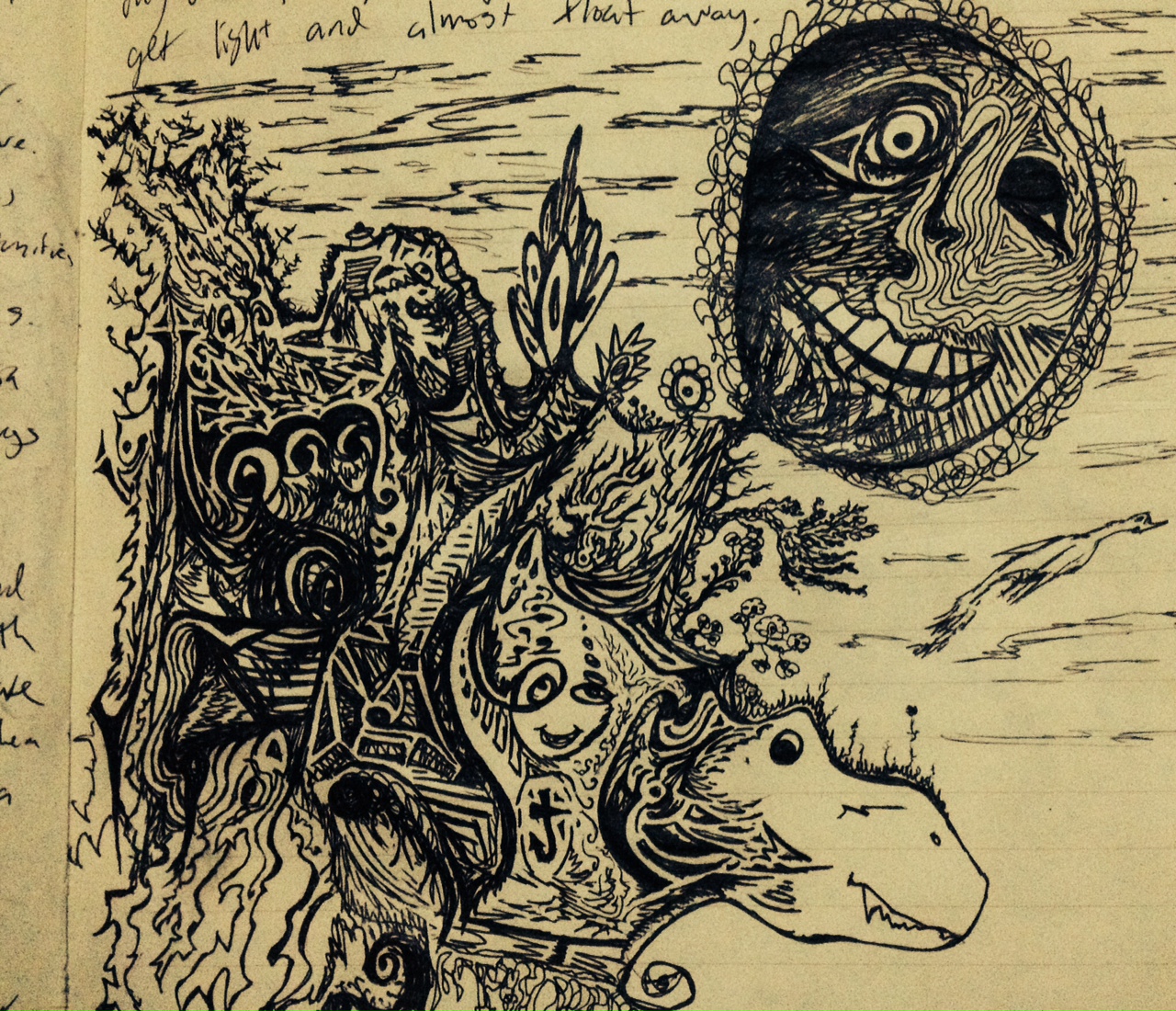
Original drawing by Pierce Morgan


Mister Misdirect’s approach is to deny that there is an issue. Mister Misdirect doesn’t improve training. Mister Misdirect doesn’t put people in a better frame of mind. Mister Misdirect does not add additional measures. Mister Misdirect simply demands that CSR’s continue to drive down the average call time of individual calls and that sales go up! In extreme cases, Mister Misdirect may even fudge the numbers and make it appear that things are much better than they really are. Oh, yes. I have seen this with my own eyes. 

Unfortunately, this way of handling things often makes Mister Misdirect an addict. Once an executive starts down the path of making things worse and denying that they did so, they are easily ensnared in a trap. Initially, they only had to take responsibility for instituting, say an incomplete measure and failed to anticipate the possible consequences. But now, having lied about it, they would have to not only admit that they caused a problem, but also that they lied about it.

The next day, when executive wakes up, they have a choice: 


1. Own up 


OR

2. Continue to deny

If they own up, the consequences will be immediately painful.
If they continue to deny, they will immediately feel relieved. Of course, if they have surrounded themselves with lackeys, they will feel more than simply relieved; they will feel vindicated or even proud. It’s not a “real pride” of course. But it’s some distant relative, I suppose. 

For a developer, UX person — or really any worker in an organization, the lesson from this is to anticipate such situations before they happen. If they happen anyway, try to call attention to the situation as quickly as possible. Yes, it may mean you lose favor with the boss. If that is so, then, you really might want to think about getting a new boss. Mister Misdirect will always ultimately fail and when he does, he will drag down a work team, a group, a division, or even an entire company. Mister Misdirect has one and only one framework for solving problems:

Try whatever pops into consciousness. 

If it works, take the credit. 

If it fails, blame an underling. 

But the real fun begins when he takes credit for something and then it turns out it was really a failure. Then, there is only one choice for Mister Misdirect and that is to claim that the false victory was real. From there on, it is Lose/Lose/Lose.

—————————————————-

  
Author Page on Amazon

————————————

Relevant essays, poems, & fiction about the importance of speaking truth to power:

Pattern Language: “Reality Check”

The Truth Train 

The Pandemic Anti-Academic

How The Nightingale Learned to Sing

Process Re-Engineering Comes to Baseball

——————————————————-

Posts on Problem Framing:

How to Frame Your Own Hamster Wheel

Wordless Perfection

Problem Formulation: Who Knows What?

I Went in Seeking Clarity

I Say Hello

Problem Framing: Good Point

Reframing the Problem: Paperwork & Working Paper

The Doorbell’s Ringing! Can you Get it?

The Fault is in Defaults

27 Saturday Sep 2025

Posted by petersironwood in Uncategorized, management, America, politics, user experience, HCI

≈ Leave a comment

Tags

art, Customer experience, defaults, Design, google maps, HCI, printer, scanner, technology, UI, user experience, UX

“The fault, dear Brutus, is not in our stars,
But in ourselves, that we are underlings.”

Photo by egil sju00f8holt on Pexels.com

So Cassius says to Brutus in Shakespeare’s play, Julius Caesar. Cassius was trying to convince Brutus to join the plot to assassinate Caesar. As I recall, things did not turn out well for Julius Caesar. Or for Brutus. Or for Cassius. Or, ultimately, for Mark Anthony either, but that’s another story.

The point is that an interesting tension arises when we imagine that we ourselves are the masters of our fate. We like to imagine that it is our ability, or attitude, or grit that determines how much money or happiness or health we have. On the other hand, we also realize that many things are pretty much beyond our conscious control and due largely to our heredity, our environment, our upbringing, etc. Both views are partly true and both have their place.

If you are a user of a product and you want to get something accomplished, blaming the stupid product will not help you accomplish your goals. On the other hand, if you are a product developer, it will not help you to blame your user. You need to design thoughtfully.

I was reminded of this debate by trying to scan a document. In general, I am amazed how excellent scanners and printers are today, not to mention cheap! I was born in an era of expensive, heavy, noisy, dot matrix printers or teletypes. You’ve come a long way, baby! But the software that actually lets us use these marvelous machines? Here, there is still a lot of room for improvement.

Today, I repeatedly tried to scan a one page document to no avail. I think I finally diagnosed what the problem was. The scan screen came up with a default that said “custom size” and the defaulted “custom dimensions” were 0 by 0. Because, obviously, the development team had done a thorough study of users and found, I suppose somewhat surprisingly, that the most common size of image people wanted to scan was 0 by 0. I suppose such images have the advantage that you can store many more of them on your hard drive than images that are 8.5 by 11 inches or 3 inches by 5 inches, say.

This absurd default is not an isolated example. Often there seem to be “defaults” are rather odd, to say the least. My google map application, for no discernible reason, decided that a good default location for me is the geographical center of the continental United States. It was not “born” with this default but somewhere along the line “developed” it. Why? I have never travelled (knowingly) to the geographical center of the United States. I have never wanted to “find” the geographical center of the United States. Yet, for some mysterious reason, whenever I do try to find a route to say, the dentist who is ten miles away, the map app tries to send me from Southern California to the geographic center of the US and then back again. I can eventually get around this, but next time I open up the app, there we are again.

Of course, I am tempted every time to just to see the place (near the corners of Oklahoma, Kansas, Arkansas and Missouri. And, “with no traffic”, it only takes a little over 22 hours to get there. The phrase, “with no traffic” in Southern California is equivalent to “when pigs fly.” So, tempting as it is to drive 22 hours to the geographical center of the US and then 22 hours back (provided the sky if filled with flying pigs) in order to go to the dentist who is a few minutes away, I haven’t yet actually taken that particular trip.

I am tempted to rant about the absolute ludicrosity of “sponsored links” (which cheeringly informs me that I could take a side trip to a gynecologist on the way to the dentist) but I’ll try to stay on topic. Where do these defaults come from? Is this just a nerd’s nerd free choice as a perk of the job? Do they seriously conceptualize size in terms of a two dimensional grid with an origin at zero zero and therefore this is a “logical” default for paper size? Are they trying to do the user a favor by saving space?

I am hoping there is a product manager out there who can answer these questions. I am hoping things will turn out better than they did for Caesar and Brutus and Cassius.

Now, a more serious impact of “defaults” have insinuated their way into my daily life. That would be bad enough, but this insinuation has also found its way into the lives of my relatives, my friends, my neighbors, my countrymen, and even my fellow humans throughout the world.

For about 250 years, America had a default that different political parties would play by the same set of rules. Of course, parties sometimes pushed at these rules or interpreted them somewhat differently. They argued and debated about which criteria were most important for various offices. But the default for both parties was that we lived in a democracy; that the citizens choose their leaders; that the truth matters; that we keep our agreements; that our leaders don’t simply use their position of power to line their own pockets and settle their private grudges.

Those defaults are now out the window. All of them. The result will soon be inefficient and ineffective government but it won’t stop there. When government officials are open to bribery, then private businesses will tend to be led by people with lower standards of ethics. They, in turn, will tend to hire people with lower standards of ethics. They, in turn, will treat their customers more cavalierly, more contemptuously. Customers, in turn, will care less about being civil to the people whom they interact with. And so it goes.

Sometimes, there’s a good reason for defaults.


D4

Dick-taters

The Truth Train

The First Ring of Empathy

Pattern Language for Collaboration and Cooperation

Tools of Thought: What Comes Next?

Tools of Thought

Travels with Sadie 1

The Walkabout Diaries: Bee Wise

The Opportunity of Disaster

22 Monday Sep 2025

Posted by petersironwood in essay, management, psychology, Uncategorized

≈ 1 Comment

Tags

art, Customer experience, customer service, customerexperience, Design, HCI, humanfactors, userexperience, UX

After moving from Westchester County New York to the San Diego area, we were asleep (again) on an air mattress awaiting almost all of our material possessions to arrive the next day.  We were awakened by a call from our moving company that our things would not be arriving tomorrow morning as promised.  Or ever.  Indeed, our furniture, clothes, electronics, papers, photographs, paintings, kitchenware, bedding, etc. had all been destroyed in a truck fire near Albuquerque, New Mexico.  This was something of a disaster for us, and, from a positive “customer experience” standpoint, a disaster for the moving company.

But the point of this post is to point out that in this disaster, there is an opportunity for the moving company to be proactive and excellent and greatly ameliorate or even turn around this customer service disaster. They could, for example, send us a personal apology.  They could be in constant contact about the status of any remains.   They could arrange for us to visit the site of the fire at their expense.  They could arrange to quickly reimburse us at least for the full amount of our insurance with the moving company so that we could get on with our lives as best we could.  Obviously, photo albums, the drawings my kids made, letters from friends, my grandfather’s paintings, and souvenirs from a lifetime of travel could not really be replaced.  But what *could* be replaced needed to be so quickly.  And, given that we were in a somewhat vulnerable state, this disaster really offered an opportunity for the company to provide the very best customer service they possibly could under the circumstances. 


That was the opportunity.  What did they do instead?  They basically refused to communicate with us.  At every opportunity, they balked; did not answer emails; did not answer phone calls; did not offer reimbursement.  As we found out later, they did not even pay the towing company who moved their van off the Interstate.  Instead, they focused on how to limit their potential liability by withholding as much information as humanly possible.  They refused to let us even come to the site and examine our stuff.  We found out the day before, thanks to our insurance company, that we would be able to see our stuff on Friday if we flew to Albuquerque and rented a car to drive to Continental Divide.  There we discovered the charred remains of our things.  And, we discovered that nothing had been done for an entire month to protect our things (or those of the other two ex-patrons who shared the misfortune of choosing this moving company).  What was left of our clothes, photos, furniture, etc. was all open to rain, wind, and passersby for over a month.  

Continental Divide is a fitting metaphor for the choice that a company faces when they make a BIG mistake.  They can admit the mistake and do everything in their power to make it right to the customer.  Or, they can do everything in their power to continue to screw the customer in order to save costs, face, and limit liability.  

Image

Of course, the same choice also faces government. Any government will make mistakes. But then what? Do they admit those mistakes and try to ameliorate the damage? Or, do they deny, minimize, lie, obfuscate, point fingers elsewhere?

————

Try the Truth

The Truth Train

D4

Dick-Taters

The Last Gleam of Twilight

Come to the Light Side

Cancer Always Loses in the End

Dance of Billions

You Bet Your Life

Wednesday

Travels with Sadie 6: Find Waldo

02 Thursday Jan 2025

Posted by petersironwood in creativity, nature, pets, psychology

≈ 4 Comments

Tags

art, beauty, life, mindfulness, photography, truth

It’s kind of a fun game. “Find Waldo.”  Or, “Find the Pig in the Clouds.” And—once you find it, you typically find it immediately the next time. 

Here’s a variant that I like: “Find the Beauty.” 

The idea is simple. You go to an art gallery or a museum and it’s fairly easy to find the beauty. No big surprise there. 

Go into a natural setting and you’re often absolutely surrounded by beauty at many different levels of scale. 

Go to see a world-famous architectural achievement, and you will see beauty. 

But—you know what? There’s also beauty to be found in many ordinary and every day places and circumstances. Since you can’t always control where you are, it’s a good skill to find that beauty wherever you are. 

Today, Wendy and I took Sadie and Bailey out to one of our favorite dog-friendly restaurants. We had a very long wait. None of the four of us is high on the scale of patience. When we finally sat down, however, the dogs were very well-behaved. 

While we waited for our food to arrive, I looked around for Waldo.

He wasn’t there. In fact, no-one even had a checkered shirt on. 

So, instead, I looked around for beauty. 

As usual, I found it, at least to my eye. 

Give it a shot. You’d be surprised where you can find beauty. 

—

——————-

Author Page on Amazon

Fit in Bits suggests many ways to work more fun, variety, and exercise into daily chores. 

Corn on the Cob is an essay on mindfulness and gratitude for simple things.

Fifteen Properties begins a series of posts about the fifteen properties that architect Christopher Alexander said characterized both natural beauty and good design. 

Maybe it Needs a New Starter is a poem about the beauty that might be found even in malfunction.

Levels of Beauty is a short picture essay about how you may find beauty at different levels.

Not Long the Daze is a short poem about finding beauty.

The Jewels of November is a longer poem about how sometimes simple beauty can be obscured by flash and dazzle.

Galactic Best is a short poem about the most wonderful planet we know of.

Kinda Crazy is a short poem about how one might perceive the world.

The Puppy’s Snapping Jaws is a short poem about a beautiful sound.

First Things First is a short poem about priorities.

What Line? Is a short poem about an important decision.

The Gods of Old

30 Tuesday Jan 2024

Posted by petersironwood in America, poetry

≈ Leave a comment

Tags

art, Democracy, inspirational, life, love, poem, poetry, politics, USA

The gods of old had seemed to lurk and shirk.

The people bowed instead to cons who screamed:

“To solve your problems won’t take thought or work!

King ME and you’ll have all you ever dreamed!”

“For ME you kill and die! I never lie!”

So many played the stupid game of crime.

So many named the crime ‘a loving sigh.’

So many ate the fearful hate filled chyme.

Photo by Ben Phillips on Pexels.com

And when (as always) karma killed them dead,

They had a glimpse (but far too late) that hate

Can never plant a flower bed; instead,

It opens wide a hellish galling gate

It tears apart the bonds of love and life;

It teaches each that no-one dared or cared.

Like ravenous wolves in endless strife that’s rife

With treason, lies and dead-eyed stares; teeth bared. 

Photo by bigworldinalens on Pexels.com

Yet far in the distance a different song wafts on the wind.

The sigh of the evergreens sings from the souls of the dead:

“Oh, please don’t be fooled yet again by the lies that are ginned.

Don’t feed on the meat of the losers who lie and instead:

“Join up with the legions of peace and of love and of light.  

Regain your adulthood and hold with the healers of hearts;

With rainbows and those who are weaving a world of delight;

Just love those around you; surround you with builders and arts.”

And thus at long last, world peace came to pass on this earth;

The days routinely filled with joy and mirth. 

The people felt a planetary birth.

The water flowed in bubbling crystal streams.

The air smelled clean and fresh and filled with dreams.

The dancers danced; a million hugs it seems

Went round this green and loving earth that teems

With trout and robin, spruce and sparkling gleams.

Photo by Trace Hudson on Pexels.com

The Dance of Billions

All we Stand to Lose

How the Nightingale Learned to Sing

The Only Them that Counts

Life Will Find a Way

After All

Math Class

Take a Glance; Join the Dance

The Forest

The Crows and Me

So Much More

Guernica

Who Can Tell The Dancer from the Dance

Author Page on Amazon

Wordless Perfection

20 Wednesday Jan 2021

Posted by petersironwood in Uncategorized

≈ 6 Comments

Tags

art, drawing, education, intuition, problem formulation, Representation, Right-brain, thinking

————————————

Sirius Black

I like to write. In fact, I like to write so much that I wrote before I could even read. When my early crayon “writings” in my grandfather’s books were discovered, instead of praise, I was spanked. I’m not even sure they really tried hard to read my learned annotations. Their missing the point didn’t deter me though. I like words! I like writing poetry, essays, stories, plays, and even novels. Words help human beings communicate and collaborate. However…

In this essay, I’d like to mention some instances of wordless success.

Photo by lascot studio on Pexels.com


In the neighborhood where I grew up, we spent most of the summer playing baseball, basketball, and football. I had never played golf nor paid much attention to it as a kid and when it came on TV I walked by with hardly a glance. At that point in my life, it was really only a sport if there was a good chance to smash into one of the other players. I had never touched a golf club or a golf ball until one summer day when I was about ten, one of the kids brought one of his uncle’s golf clubs to our baseball field along with a tee and a golf ball. He demonstrated how to hit the ball and showed us how to put our hands on the club. Kids took turns hitting the ball and retrieving it for another go. 

When it came to my turn, I mainly remember just loving the shiny wood of the club. I loved wooden baseball bats back then, but the driver!! Wow! That was in a whole different category of cool. You didn’t need to be an adult or a golfer to know that! It shone opalesquely. I teed up the golf ball, and swung the unfamiliar and impossibly long club.

The resulting sound – exquisite! An explosion! A rifle shot. A cousin of the crack of a home run shot into the upper deck. But more penetrating. More elegant. More poignant.

We all looked up in amazement. My golf shot started low and straight. Then it rose and rose and disappeared far beyond the dirt road that marked the outer limit of our makeshift baseball field. It rose over the hill beyond the road and disappeared into the field beyond. There was no hope of retrieving the golfball. None of us even suggested trying. My shot was wordless perfection. 


Fast forward to graduate school. In the summer afternoons, I got into the habit of playing frisbee with the neighbors. One day, I parked my car and ran into the back yard. My neighbor saw me and threw me the frisbee, I noticed that they had placed an empty beer can atop a utility box about a hundred feet away. I caught the frisbee on the run and threw it with the next step. The frisbee sailed with a nice arc and smacked the beer can right off. My neighbors said that they had been trying to knock that beer can off for about a half hour.  My throw was wordless perfection.

Photo by Brixiv on Pexels.com

Meanwhile, at the University of Michigan, several of my friends and classmates like puzzles as much as I did. One such puzzle consisted of a set of triangular “board” with a regular pattern of holes. There were pegs in every hole save one. The goal was to “jump” pegs much as one does in checkers and then remove that peg from the board. Eventually, one was supposed to end up with one and only one peg. I worked on it for awhile and thought about various strategies and moves. I couldn’t seem to solve it. My phone rang. I picked it up and conversed with my friend. Meanwhile, I toyed with the puzzle while my “mind” was on the conversation. I toyed with the puzzle and solved it. Wordless perfection.

A few months or weeks later, we worked on another puzzle. This one consisted of four cubes (aka
“instant insanity”). Each cube had a different arrangement of colors. The goal was to arrange the cubes so that every “row” of faces had four different colors. I fiddled with the puzzle trying out various strategies and noting various symmetries and asymmetries. Once again, someone called and interrupted my musings. Again, I idly fiddled around with the cubes while talking on the phone. And solved it. Wordless perfection strikes again! 

https://en.wikipedia.org/wiki/Instant_Insanity

Fast forward four decades. For best results, borrow Hermione’s time-turner. Otherwise, you’ll have to rely on your imagination. 

Betty Edwards (“Drawing on the Right Side of the Brain”) gave a plenary address at one of the Association of Computing Machinery’s premier conferences: CHI. Among other things, she showed example after example of how much people improved in their drawing skills based on her methods. A few months later, it so happened that my wife and I had an opportunity to go to one of her five day classes. 

I would have to honestly say, that course was one of the best educational experiences of my life! It was an immensely pleasurable experience in and of itself. Beyond that, the results in terms of improved drawing skills were dramatic. And, as if that were not enough, I looked at the world differently. I noticed visual things about the environment that I had not seen before. 

The essence of the method Betty Edwards uses is to get you to observe and draw — while “shutting up” or “turning off” the part of your brain (or mind) that talks and plans and categorizes. In one exercise, for instance, we took a line drawing and turned it upside down. Then, we copied that image onto our pad of paper by carefully observing and drawing what we saw. She also instructed us not to try to “guess” what they were drawing, but just to copy the line. When every line had been copied, we turned the drawings right side up again. The result jolted me! I had created an excellent likeness of the original! The quality stunned me. Wordless Perfection.

There’s a larger lesson here, too. 

I had within me, the capacity to make a very decent copy of a drawing, but had never achieved that result for 60 years! All it took was five minutes of instruction to enable me to achieve that. 

What else is like that? Imagine that we have, not just one, but a dozen or even a dozen dozen “hidden talents.” Some of them, like drawing, may depend more on Not-Doing than on Doing; on Being rather than Achieving.

There was a longer lasting side-effect of the drawing course. My day to day life, as is typical of most achievement-driven people had been very much “goal-driven” and there was always an ongoing plan and dialogue. After having learned to turn that off in order to draw, I can also turn it off in order to see, whether or not I draw. Seeing (or otherwise sensing or feeling) in the moment also makes me much less judgmental. If you decide to think about the physical appearance of people in terms of how interesting they would be to draw, you end up with an entirely different way of thinking about people’s appearance. 

What are your hidden talents? 

——————————————

The Invisibility Cloak of Habit 

Big Zig-Zag Canyon 

The Great Race to the Finish!

You Fool!

Horizons University

How the Nightingale Learned to Sing

Comes the Dawn

Author Page on Amazon

← Older posts

Subscribe

  • Entries (RSS)
  • Comments (RSS)

Archives

  • December 2025
  • November 2025
  • October 2025
  • September 2025
  • August 2025
  • July 2025
  • June 2025
  • May 2025
  • April 2025
  • March 2025
  • February 2025
  • January 2025
  • December 2024
  • November 2024
  • October 2024
  • September 2024
  • July 2024
  • April 2024
  • March 2024
  • February 2024
  • January 2024
  • December 2023
  • August 2023
  • July 2023
  • May 2023
  • April 2023
  • March 2023
  • February 2023
  • January 2023
  • December 2022
  • November 2022
  • October 2022
  • September 2022
  • August 2022
  • July 2022
  • June 2022
  • May 2022
  • April 2022
  • March 2022
  • February 2022
  • January 2022
  • December 2021
  • November 2021
  • October 2021
  • September 2021
  • August 2021
  • July 2021
  • June 2021
  • May 2021
  • April 2021
  • March 2021
  • February 2021
  • January 2021
  • December 2020
  • November 2020
  • October 2020
  • September 2020
  • August 2020
  • July 2020
  • June 2020
  • May 2020
  • April 2020
  • March 2020
  • February 2020
  • January 2020
  • December 2019
  • November 2019
  • October 2019
  • September 2019
  • August 2019
  • July 2019
  • June 2019
  • May 2019
  • April 2019
  • March 2019
  • February 2019
  • January 2019
  • December 2018
  • November 2018
  • October 2018
  • September 2018
  • August 2018
  • July 2018
  • June 2018
  • May 2018
  • April 2018
  • March 2018
  • February 2018
  • January 2018
  • December 2017
  • November 2017
  • October 2017
  • September 2017
  • August 2017
  • July 2017
  • June 2017
  • May 2017
  • April 2017
  • March 2017
  • February 2017
  • January 2017
  • December 2016
  • November 2016
  • October 2016
  • September 2016
  • August 2016
  • July 2016
  • June 2016
  • May 2016
  • April 2016
  • March 2016
  • February 2016
  • January 2016
  • December 2015
  • November 2015
  • October 2015
  • September 2015
  • August 2015
  • May 2015
  • January 2015
  • July 2014
  • January 2014
  • December 2013
  • November 2013

Categories

  • AI
  • America
  • apocalypse
  • cats
  • COVID-19
  • creativity
  • design rationale
  • driverless cars
  • essay
  • family
  • fantasy
  • fiction
  • HCI
  • health
  • management
  • nature
  • pets
  • poetry
  • politics
  • psychology
  • Sadie
  • satire
  • science
  • sports
  • story
  • The Singularity
  • Travel
  • Uncategorized
  • user experience
  • Veritas
  • Walkabout Diaries

Meta

  • Create account
  • Log in

Blog at WordPress.com.

  • Subscribe Subscribed
    • petersironwood
    • Join 664 other subscribers
    • Already have a WordPress.com account? Log in now.
    • petersironwood
    • Subscribe Subscribed
    • Sign up
    • Log in
    • Report this content
    • View site in Reader
    • Manage subscriptions
    • Collapse this bar
 

Loading Comments...