We like to measure things. And, generally, that can be a very good thing. Once we measure and quantify, we can bring to bear the world’s most incredible toolbox of mathematical, engineering, and scientific methods. However…
It often happens that we can’t really measure what we’d like to measure so instead we measure something that we can measure which we imagine to be a close cousin to what we’d really like to measure. That’s still not a bad thing. But it’s risky. And it becomes a lot more risky if we forget that we are measuring a close cousin at best. Sometimes, it’s actually a distant cousin.
Here’s an example. Suppose a company is interested in the efficient handling of customer service calls (who isn’t?). A typical measure is the average time per call. So, a company might be tempted to reward their Customer Service employees based on having a short average time per call. The result would be that the customer would get back to whatever they were doing more quickly. AND — they wouldn’t have to be on hold in the service queue so long because each call would be handled, on average, more quickly. Good for the customer. The customer service reps would be saving money for the company by answering questions quickly. Some of the money saved will (hopefully) mean raises for the customer service reps. It’s a win/win/win!
Or is it?
Imagine this not unlikely scenario:
The managers of the CSR’s (customer service reps) say that there’s a big push from higher management to make calls go more quickly. They may hint that if the average service time goes down enough, everyone will get a raise. Or, they might set much more specific targets to shoot for.
In either case, the CSR’s are motivated to handle calls more quickly. But how? One way might be for them to learn a whole lot more. They might exchange stories among themselves and perhaps they will participate in designing a system to help them find relevant information more quickly. It might really turn out to be a win/win/win.

On the other hand, one can also imagine that the CSR’s instead simply get rid of “pesky” users as quickly as possible.
“Reboot and call back if that doesn’t work.”
“Sounds like an Internet issue. Check your router.”
“That’s an uncovered item.”
“What’s your account number? Don’t have it? Find it & call back.”
With answers like this, the average time to handle a call will certainly go down!
But it won’t result in a win/win/win!
Users will have to call back 2, 3, 4 or even more times to get their issues adequately resolved. This will glut the hold queues more than if they had had their question answered properly in the first place. Endlessly alternating between raspy music and a message re-assuring the customer that their call is important to company XYZ, will not endear XYZ’s customers to XYZ.
Ultimately, the CSR’s themselves will likely suffer a drop in morale if they begin to view their “job” to get off the phone as quickly as possible rather than to be as helpful as possible. Likely too, sales will begin to decline. As word gets around that the XYZ company has lousy customer service and comparative reviews amplify this effect, sales will decline even more precipitously.
There are two approaches executives often take in such a situation.
Some executives (such as Mister Empathy) may be led to believe that quantification should be less emphasized and the important thing is to set the right tone for the CSR’s; to have them really care about their customers. Often, the approach is combined with better training. This can be a good approach.
Some executives (such as Mister Measure) may be led to believe that they need to do more quantification. In addition to average work time, measures will look at the percentage of users whose problem is solved the first time. Ratings of how effective the CSR was will be taken. Some users might even be called for in-depth interviews about their experience. This can also be a good approach.
There is no law against doing both, or trying each approach at different times or different places in order to learn which works better.
There is a third approach however, which never has good results. That is the approach of Mister Misdirect.
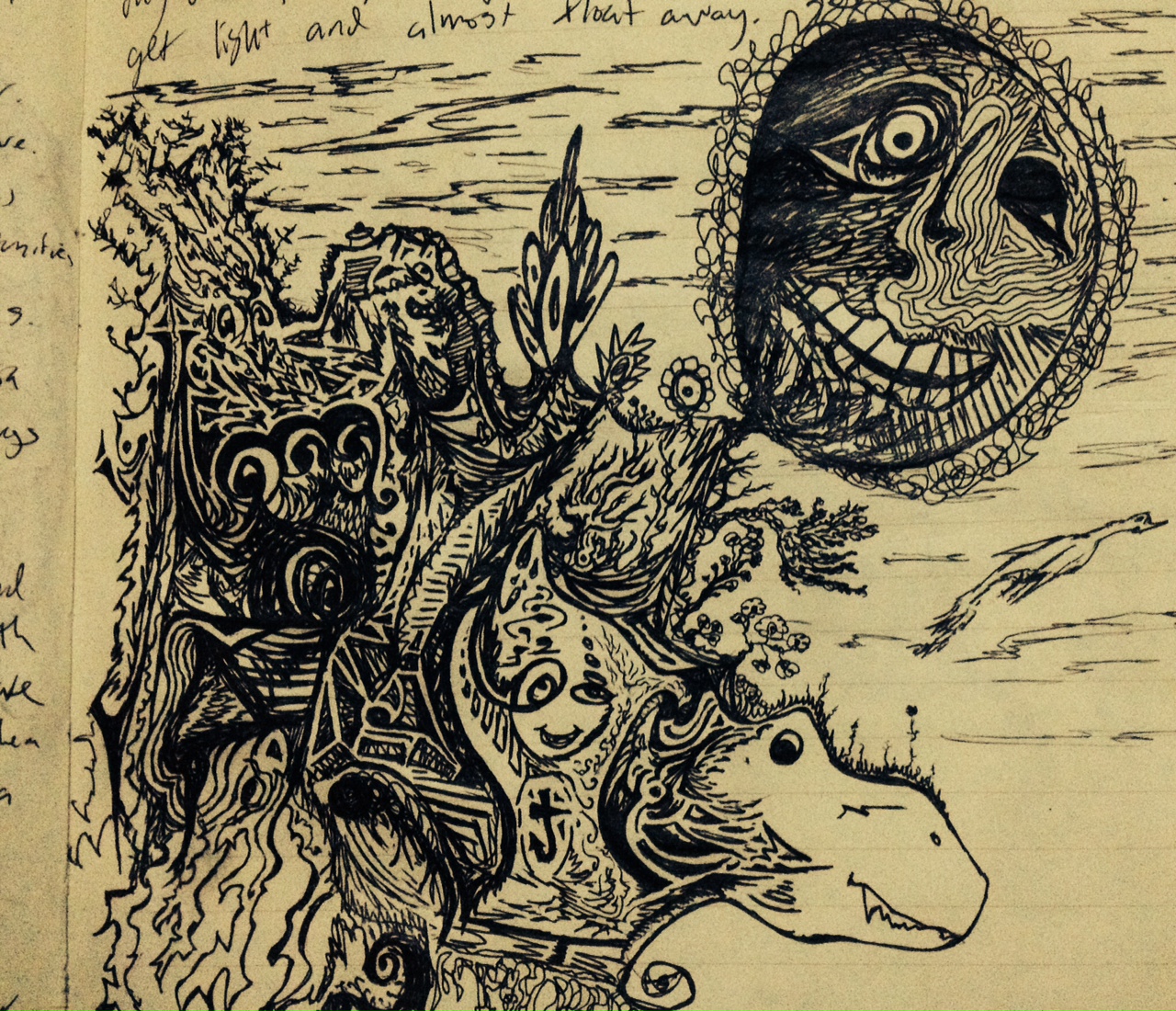
Original drawing by Pierce Morgan
Mister Misdirect’s approach is to deny that there is an issue. Mister Misdirect doesn’t improve training. Mister Misdirect doesn’t put people in a better frame of mind. Mister Misdirect does not add additional measures. Mister Misdirect simply demands that CSR’s continue to drive down the average call time of individual calls and that sales go up! In extreme cases, Mister Misdirect may even fudge the numbers and make it appear that things are much better than they really are. Oh, yes. I have seen this with my own eyes.
Unfortunately, this way of handling things often makes Mister Misdirect an addict. Once an executive starts down the path of making things worse and denying that they did so, they are easily ensnared in a trap. Initially, they only had to take responsibility for instituting, say an incomplete measure and failed to anticipate the possible consequences. But now, having lied about it, they would have to not only admit that they caused a problem, but also that they lied about it.
The next day, when executive wakes up, they have a choice:
1. Own up
OR
2. Continue to deny
If they own up, the consequences will be immediately painful. If they continue to deny, they will immediately feel relieved. Of course, if they have surrounded themselves with lackeys, they will feel more than simply relieved; they will feel vindicated or even proud. It’s not a “real pride” of course. But it’s some distant relative, I suppose.
For a developer, UX person — or really any worker in an organization, the lesson from this is to anticipate such situations before they happen. If they happen anyway, try to call attention to the situation as quickly as possible. Yes, it may mean you lose favor with the boss. If that is so, then, you really might want to think about getting a new boss. Mister Misdirect will always ultimately fail and when he does, he will drag down a work team, a group, a division, or even an entire company. Mister Misdirect has one and only one framework for solving problems:
Try whatever pops into consciousness.
If it works, take the credit.
If it fails, blame an underling.
But the real fun begins when he takes credit for something and then it turns out it was really a failure. Then, there is only one choice for Mister Misdirect and that is to claim that the false victory was real. From there on, it is Lose/Lose/Lose.
If you’ve been reading any of these blog posts about my dogs, Sadie and Bailey, you must know by now that both of them are avid “ball players” — given the nature of dogs, especially ones that are half Golden Retrievers—this is probably not a big surprise. To further seal the deal, their “human dad” is also an avid “ball player.”
Many human sports involve balls of one sort or another and I have, at various times, been “into” baseball, football, basketball, golf, tennis, ping-pong, softball, soccer, racquetball, volleyball, and even croquet. Looking back on my life, I realize there are many human sports that do not involve a ball; e.g., varieties of running, jumping, skating, diving, swimming, cycling, skiing, wrestling, boxing, and gymnastics. Although I have done all of these a little bit—mainly for fitness—I have historically been much more interested in sports that involve using a ball. The only one I enjoy as much as a ball-based sports is frisbee which is arguably much like throwing and catching a ball. A ball introduces an entire layer of complexity in tactics, strategy, and experience that I enjoy. For one thing, the ball can move faster and in modes quite different from those a human can perform. A ball can be in anywhere in large two (and often three) dimension-space. Furthermore, how the ball gets from one point in space to another can happen in a variety of ways. The ball generally has spin and spin alters the flight path of the ball as well as the way it reacts to the next thing it touches.
Sadie and Bailey, by the way, do a pretty good job of predicting what a tennis ball (or a squeaky ball) will do when it hits, say, concrete or dirt. They can, for instance, catch balls in the air that are angled rebound shots off the garage door at some fair speed. They also exhibit intelligent metacognition in their leaping and catching behavior. They have a mental model of their capabilities. It’s not perfect and Sadie’s is much better than Bailey’s, but even Bailey doesn’t mistake his own capabilities much. I wonder whether they too enjoy balls partly because they’re complex in their behavior. The only thing better would be a small animal like a lizard, squirrel, rabbit, etc. Of course, it is this hunting behavior that predisposes them to enjoy (and be good at) playing ball or frisbee.
My dogs have both nature and nurture leading them toward ball playing.
Sadie and I have spent many hours playing ball in jointly invented games. As I’ve explained elsewhere, it’s much more to my liking to let our games evolve than to “teach her how” to play ball a certain way that comes entirely from my own human imagination.
Most dogs, for example, learn to go fetch a ball and bring it back to the thrower and drop it at the thrower’s feet so that they may pick it up and throw it again. Sadie instead evolved a somewhat different style which was to incorporate a variant of “snatch the handkerchief” into our ball playing. She would typically bring the ball to me, drop it at my feet, watch me try to pick up the ball and then suddenly snatch it away just before I could pick it up. I quickly adapted to her style by using a “grabber” because I enjoy having all ten fingers.
Since early puppyhood, Sadie has challenged herself by trying to catch or at least stop and touch multiple balls on the same turn.
She typically begins her version of ball playing by dropping a retrieved ball directly beneath her snout. I will try to grab the ball before she can snatch it again but she’s always too fast for me. Then, she will begin dropping the ball farther and farther from her rows of shiny canines until, at some point, I have a fighting chance of snatching the ball away with the grabber before she can grab it. Sadie and I played this game many times in the course of the first two years of her life.
Then, we brought her little brother Bailey into the mix. Bailey learned many things from Sadie, and a few from me. He, like Sadie, loves to play ball. For a variety of reasons that I won’t recount just now, Bailey generally prefers to drop the ball so that I can more quickly throw it to him again. When he did this, however, Sadie would sometimes snatch the ball before I could and run off with it.
Sadie (L) and Bailey (R) illustrating the type of “fighting” they do when Bailey tries to steal a ball from Sadie.
At first, I didn’t think much about this ball stealing, and, if Bailey objected, he did not yet know how to present a formal written complaint about it. Within a few months, however, Bailey was as large as his kid sister and their “play-fights” became pretty intense. Neither one has ever (so far as I know) injured the other, but to this human observer, it looks pretty rough. They take turns running at each other. Our “back yard” is mostly garden, but there was a small patch of grass which has been completely torn into a black dirt field.
When it comes to humans, most of us learn to “take turns” in nursery school or, at the latest, Kindergarten. There are eight billion people on the planet and not everyone has access to their own object of every description that they want. We, as toddlers, teens, and adults, take it for granted that we will “take turns” and share various things. At a public pool, there may only be one diving board so people cue up and “take turns” diving off the board. At a playground, there may be only one sliding board so kids take turns sliding down. In tennis, we “take turns” serving games. In baseball, we “take turns” as individuals batting, and the whole team “takes turns” hitting versus fielding. In playing neighborhood poker, it’s quite common to “take turns” dealing, and, along with that, many people play “dealer’s choice” which means the dealer also chooses the specific game; e.g., five card draw with jokers wild. In chess, the two sides take turns. In Risk and Monopoly and many other board games, players take turns.
Ferris Wheel is just one of thousands of situations where we take turns.
We take turns for positive things, but also for chores. A couple may decide to “take turns” taking out the trash or doing the dishes. Or, if there are five kids in the family, the five may take turns doing the various chores. “Taking turns” is so ubiquitous that it blends into the background in most cases and we don’t even consciously think about it. Life works better in a thousand ways, large and small, when we take turns.
Last night, my wife and I attended a birthday dinner at an Italian restaurant. When it was time to order, we “took turns” giving our orders to the waiter. Imagine how inefficient and contentious it would be instead if we all shouted are orders at the waiter at the same time! Less pleasant for everyone and far more likely to result in mistaken orders. When we drove home, we came to several stop signs where we took turns with other drivers. We took turns merging onto the highway. When we came home, we took turns coming through the door! Then, the dogs took turns going out for a walk with me. I often feed them treats and share by having them take turns.
Nonetheless, I can’t seem to get Bailey to take turns when it comes to her “catching a ball”as her default behavior. I can throw one ball into the deep end of the pool while I say “This is for Bailey” and throw another one in the shallow end saying “This is for Sadie” and the dogs will swim to their respective balls and collect them, but then, Bailey will drop his ball and run over to Sadie and steal hers.
Similarly, I can gather up two balls in the garden and throw them in opposite directions and get them to run in different directions (though not always). Nonetheless, as soon as Bailey scores a catch of “his” ball, he drops it and rushes back to grab the ball out of Sadie’s mouth.
Sadie (L) and Bailey (R) are both Golden Doodles. Here, Sadie is about 3 1/4 and Bailey’s about 1 1/4 years old.
Why is it apparently so hard for Bailey to learn to take turns? Partly, no doubt, there’s some inborn tendency to want things for himself. And partly, there are positive reinforcement structures at play that I haven’t yet figured out how to break or how to shape up incompatible behaviors. Sadie, for her part, sometimes fights to keep the ball. I suspect Bailey finds this positively reinforcing because the “fight” itself is fun. Most of the time, when she sees him approaching in a “ball-stealing” situation, she simply drops the ball and Bailey snatches it. Bailey also likely finds this positively reinforcing too. I try praising other behaviors that are more in the direction of better cooperation, but such opportunities are rare and difficult to read so far.
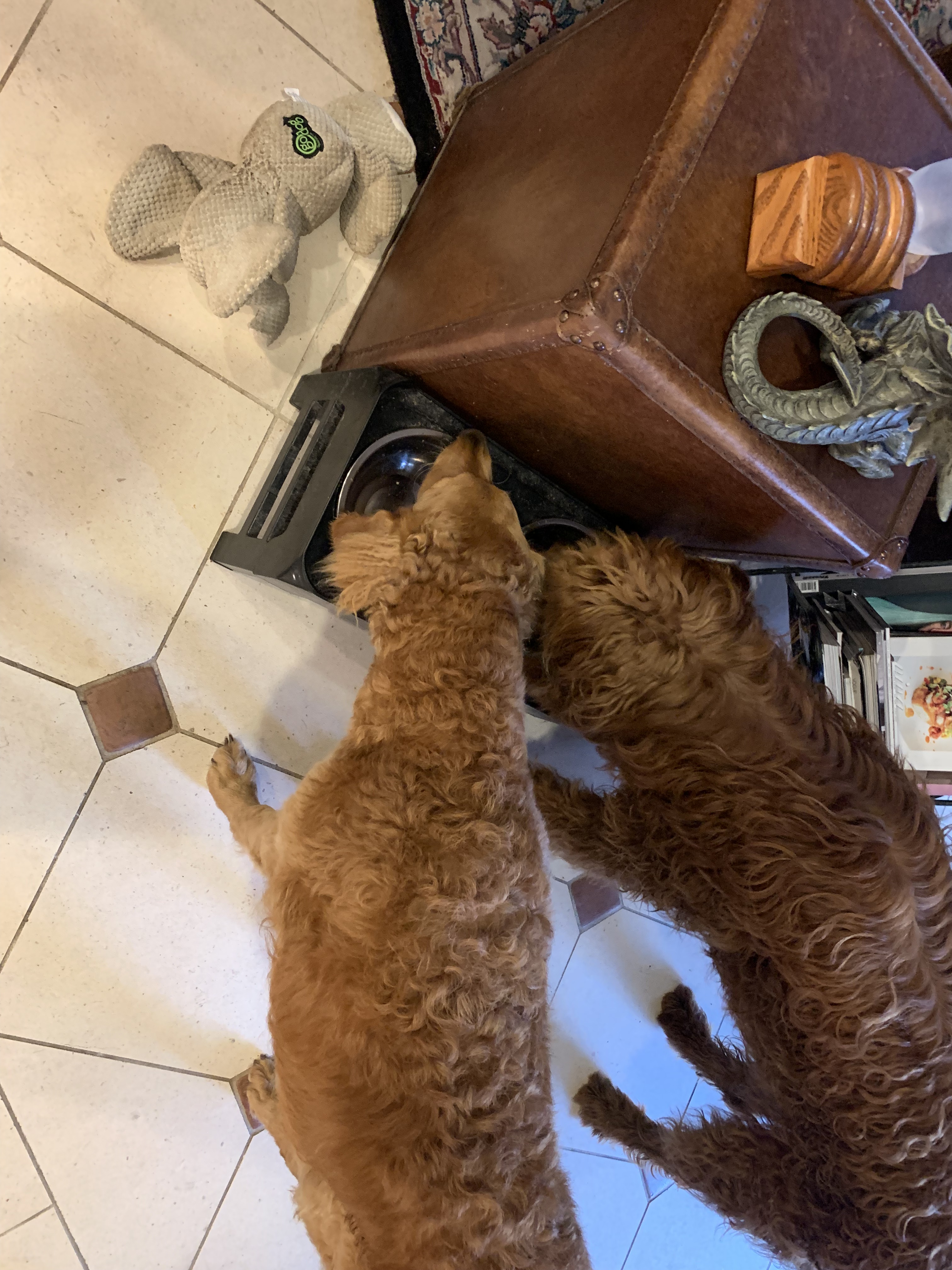
Initially, when I fed the dogs side by side, Bailey would often try to steal some of Sadie’s food. But Sadie herself growled fairly intensely when this happened and I often intervened as well. Here, Bailey was somewhat positively reinforced by moving her attention back to her own bowl, because, after all there was food there too. Even if he has finished his own dinner, he gets enjoyment from licking the “empty” bowl. So, in contrast to the case of turn-taking with tennis balls, the eating situation itself makes it easier for cooperation to emerge. I don’t ever recall Sadie trying to steal some of Bailey’s food.
I have been hoping that watching the dogs might give me some insight into the ultra-greedy behavior of many (though not all) of the ultra-wealthy billionaires. Just to review the general situation America now finds itself in, the productivity of labor has increased tremendously since the beginning of the industrial revolution. Until the mid-1970’s the increased wealth that came from the increased productivity was split between owners of the means of production and the workers. In other words, the rich got richer, but so did the workers. Since the mid-1970’s however, the rich generally, and especially the extremely wealthy, have taken almost all the increased wealth that has been created by increased productivity.
Part of the answer as to how they have done this is to use their wealth to buy power in the form of bribing politicians who make policy decisions. In some cases, they’ve done this through outright illegal bribes and in other cases, they’ve used slightly more subtle and sometimes legal methods but the result is the same. In addition—actually, I should say “in multiplication” because the impacts have been more than additive, they have largely taken over mass media and social media where they promulgate heroic cartoon versions of themselves and their desires while lying about and denigrating people who are not insanely wealthy.
Much like Bailey’s behavior, there is not a huge mystery in how they have done it. But, there is a mystery in why they have done it. Studies show that once you have your basic necessities taken care of, additional income doesn’t raise your personal happiness. While this result seems true in terms of aggregate happiness, it ignores the little dopamine hit that the animal (human or dog) gets when they immediately grab a fourth yacht or steal another ball from their sister. It doesn’t last long, but apparently long enough to serve as a positive reinforcement.
In the larger scheme of things, it’s not to Bailey’s benefit to keep stealing the ball from his sister. It make the whole ball-playing scene less pleasurable for me and I play less often. I also play with Sadie by herself more often because I want her to have a chance to play too. In the larger scheme of things, it’s not really to the benefit of billionaires to have sick, tired, uneducated workers either, nor ones so desperate to feed their families that they’ll start eating the rich. But somehow, dogs and such are prone to overlook longer term consequences. Some of the extremely wealthy delude themselves into thinking that they can replace their workers with AI and protect themselves & their families with firearms. They’re not thinking things through any more than Bailey is. This human tendency for self-defeating greed has been recognized at least since the time that Aesop told his fables. Maybe the choice of a dog in the following fable was quite intentional.
A dog found a bone and was happily trotting along with the bone in his mouth. He came to a bridge and began happily trotting over the bridge. He happened to look down at his own reflection and saw the image of a dog with a bone. He thought to himself that he wanted both bones so he growled at the dog in the pond, intending that he drop the bone so he could have two. But the dog in the pond just growled back! So, the dog on the bridge barked angrily to bully the other dog into dropping its bone. Of course, what happened was that the dog on the bridge dropped his own bone into the pond.
That’s from 2000 years ago. But now, we’re in a situation that warrants a third round of foolishness. Here’s my addition:
The dog was angry that he had lost both bones so he attacked the dog in the water. He promised himself he’d fight to the death to get both bones. Of course, there was only one bone and he ended up exhausted and drowned in the pond.
Unlike some of today’s ultra-wealthy, Bailey is much too smart for that third round. The ultra-greedy (not the same set as the ultra-wealthy but with lots of overlap) would like you to believe that they are SuperDogs or SuperHeroes or something…that they 100,000 times as much wealth as you because they are 100,000 smarter. They aren’t, of course. And they are willing to prove they aren’t by believing the promises of a cruel, demented, liar-con man. Also, they have a thousand experiences, if they reflect honestly, that having increased wealth over the first 100,000,000 hasn’t made them the least bit happier. There have been some accomplishments or events that were correlated with making more money. But the money itself and what it can buy doesn’t make them feel any happier. And some billionaires accomplish things—such as eradicating a disease—which make them feel happier but that are correlated with investing huge sums of money, not gaining them. Meanwhile, if things continue on their current path, it won’t be long before there are many more people in America who are not just hungry but who are starving to death. At that point, no-one will forget that some billionaires pay zero taxes but have bought politicians who give even more wealth to the few while millions starve or die from lack of medical care.
It is time to feed Bailey and Sadie who will, at least, eat beside each other happily and peacefully. I should mention, by the way, that Bailey’s disposition is very loving. She is not a mean angry dog. She’s not even a particularly stubborn one. She tries to please us and gets along with others. But she does sometimes have trouble taking turns. How about you?
The title of this series of blogs is a play on a nice little book by Alan Lightman called “Einstein’s Dreams” that explores various universes in which time operates in different ways. This first blog lays the foundation for these variations on how “The Singularity” might play out.
For those who have not heard the term, “The Singularity” refers to a hypothetical point in the future of human history where a super-intelligent computer system is developed. This system, it is hypothesized, will quickly develop an even more super-intelligent computer system which will in turn develop an even more super-intelligent computer system. It took a fairly long time for human intelligence to evolve. While there may be some evolutionary pressure toward bigger brains, there is an obvious tradeoff when babies are born in the traditional way. The head can only be so big. In fact, human beings are already born in a state of complete helplessness so that the head and he brain inside can continue to grow. It seems unlikely, for this and a variety of other reasons, that human intelligence is likely to expand much in the next few centuries. Meanwhile, a computer system designing a more intelligence computer system could happen quickly. Each “generation” could be substantially (not just incrementally) “smarter” than the previous generation. Looked at from this perspective, the “singularity” occurs because artificial intelligence will expand exponentially. In turn, this will mean profound changes in the way humans relate to machines and how humans relate to each other. Or, so the story goes. Since we have not yet actually reached this hypothetical point, we have no certainty as to what will happen. But in this series of essays, I will examine some of the possible futures that I see.
Of course, I have substituted “Turing” here for “Einstein.” While Einstein profoundly altered our view of the physical universe, Turing profoundly changed our concepts of computing. Arguably, he also did a lot to win World War II for the allies and prevent possible world domination by Nazis. He did this by designing a code breaking machine. To reward his service, police arrested Turing, subjected him to hormone treatments to “cure” his homosexuality and ultimately hounded him literally to death. Some of these events are illustrated in the recent (though somewhat fictionalized) movie, “The Imitation Game.”
Turing is also famous for the so-called “Turing Test.” Can machines be called “intelligent?” What does this mean? Rather than argue from first principles, Turing suggested operationalizing the question in the following way:
A person communicates with something by teletype. That something could be another human being or it could be a computer. If the person cannot determine whether or not he is communicating with a computer or a human being, then, according to the “Turing Test” we would have to say that machine is intelligent.
Despite great respect for Turing, I have always had numerous issues with this test. First, suppose the human being was able to easily tell that they were communicating with a computer because the computer knew more, answered more accurately and more quickly than any person could possibly do. (Think Watson and Jeopardy). Does this mean the machine is not intelligent? Would it not make more sense to say it was more intelligent?
Second, people are good at many things, but discriminating between “intelligent agents” and randomness is not one of them. Ancient people as well as many modern people ascribe intelligent agency to many things like earthquakes, weather, natural disasters plagues, etc. These are claimed to be signs that God (or the gods) are angry, jealous, warning us, etc. ?? So, personally, I would not put much faith in the general populous being able to make this discrimination accurately.
Third, why the restriction of using a teletype? Presumably, this is so the human cannot “cheat” and actually see whether they are communicating with a human or a machine. But is this really a reasonable restriction? Suppose I were asked to discriminate whether I were communicating with a potato or a four iron via teletype. I probably couldn’t. Does this imply that we would have to conclude that a four iron has achieved “artificial potatoeness”? The restriction to a teletype only makes sense if we prejudge the issue as to what intelligence is. If we define intelligence purely in terms of the ability to manipulate symbols, then this restriction might make some sense. But is that the sum total of intelligence? Much of what human beings do to survive and thrive does not necessarily require symbols, at least not in any way that can be teletyped. People can do amazing things in the arenas of sports, art, music, dance, etc. without using symbols. After the fact, people can describe some aspects of these activities with symbols.But that does not mean that they are primarily symbolic activities. In terms of the number of neurons and the connectivity of neurons, the human cerebellum (which controls the coordination of movement) is more complex that the cerebrum (part of which deals with symbols).
Fourth, adequately modeling or simulating something does not mean that the model and the thing are the same. If one were to model the spread of a plague, that could be a very useful model. But no-one would claim that the model was a plague. Similarly, a model of the formation and movement of a tornado could prove useful. But again, even if the model were extremely good, no-one would claim that the model constituted a tornado! Yet, when it comes to artificial intelligence, people seem to believe that if they have a good model of intelligence, they have achieved intelligence.
When humans “think” things, there is most often an emotional and subjective component. While we are not conscious of every process that our brain engages in, there is nonetheless, consciousness present during our thinking. This consciousness seems to be a critical part of what it means to have human intelligence. Regardless of what one thinks of the “Turing Test”, per se, there can be no doubt that machines are able to act more accurately and in more domains than they could just a few years ago. Progress in the practical use of machines does not seem to have hit any kind of “wall.”
In the following blog posts, we began exploring some possible scenarios around the concept of “The Singularity.” Like most science fiction, the goal is to explore the ethics and the implications and not to “argue” what will or will not happen.
Turing’s Nightmares is available in paperback and ebook on Amazon. Here is my author page.
One issue with human intelligence is that we often use it to rationalize what we find emotionally appealing though we believe we are using our intelligence to decide. I explore this concept in this post.
This post explores how humans use their intelligence to rationalize.
This post shows how one may become addicted to self-destructive lies. A person addicted to heroin, for instance, is also addicted to lies about that addiction.
This post shows how we may become conned into doing things against our own self-interests.
This post questions whether there are more insidious motives behind the current use of AI beyond making things better for humanity.
Soon after I began the Artificial Intelligence Lab at a major telecom company, we heard about an opportunity for an Expert System. The company wanted to improve the estimation of complex, large scale, inside wiring jobs. We sought someone who qualified as an expert. Not only could we not locate an expert; we discovered that the company (and the individual estimators) had no idea how good or bad they were. Estimators would go in, take a look at what would be involved in an inside wiring job, make their estimate, and then proceed to the next estimation job. Later, when the job completed, no mechanism existed to relate the estimate back the actual cost of the job. At the time, I found this astounding. I’m a little more jaded now, but I am still amazed at how many businesses, large and small, have what are essentially no-learning, zero feedback, open loops.
As another example, some years earlier, my wife and I arrived late and exhausted at a fairly nice hotel. Try as we might, we could not get the air-conditioning to do anything but make the room hotter. When we checked out, the cashier asks us how our stay was. We explained that we could not get the air conditioning to work. The cashier’s reaction? “Oh, yes. Everyone has that trouble. The box marked “air conditioning” doesn’t work at all. You have to turn the heater on and then set it to a cold temperature.” “Everyone has that trouble”? Then, why hasn’t this been fixed? Clearly, the cashier has no mechanism or no motivation to report the trouble “upstream” or no-one upstream really cares. Moreover, this exchange reveals that when the cashier asks the obligatory question, “How was your stay?” what he or she really means is this: “We don’t really care what you have to say and we won’t do anything about it, but we want you to think that we actually care. That’s a lot cheaper and doesn’t require management to think.” Open Loop.
Lately, I have been posting a lot in a LinkedIn forum called “project management” because I find the topic fascinating and because I have a lot of experience with various projects in many different venues. According to some measure, I was marked as a “top contributor” to this forum. When I logged on the last time, a message surprised me that my contributions to discussions would no longer appear automatically because something I posted had been flagged as “spam” or a “promotion.” However, there is no feedback as to which post this was or why it was flagged or by whom or by what. So, I have no idea whether some post was flagged by an ineffectual natural language processing program or by someone with a grudge because they didn’t agree with something I said, or by one of the “moderators” of the forum.
LinkedIn itself is singularly unhelpful in this regard. If you try to find out more, they simply (but with far more text) list all the possibilities I have outlined above. Although this particular forum is very popular, it seems to me that it is “moderated” by a group of people who actually are using the forum, at least in many cases, as rather thinly veiled promotions for their own set of seminars, ebooks, etc. So, one guess is that the moderators are reacting to my having simply posted too many legitimate postings that do not point people back to their own wares. Of course, there are many other possibilities. The point here is that I do not have, nor can I easily assess what the real situation is. I have discovered however, that many others are facing this same issue. Open loop rears its head again.
The final example comes from trying to re-order checks today. In my checkbook, I came to that point where there is a little insert warning me that I am about to run out and that I can re-order checks by phone. I called the 800 number and sure enough, a real audio menu system answered. It asked me to enter my routing number and my account number. Fine. Then, it invited me to press “1” if I wanted to re-order checks. I did. Then, it began to play some other message. But soon after the message began, it said, “I’m sorry; I cannot honor that request.” And hung up. Isn’t it bad enough when an actual human being hangs up on you for no reason. This mechanical critter had just wasted five minutes of my time and then hung up. Note that no reason was given; no clue was provided to me as to what went wrong. I called back and the same dialogue ensued. This time, however, it did not hang up after I pressed “1” to reorder checks. Instead, it started to verify my address. It said, “We sent your last checks to an address whose zip code is “97…I’m sorry I’m having trouble. I will transfer you to an agent. Note that you may have to provide your routing number and account number again.” And…then it hung up.
Now, anyone can design a bad system. And, even a well designed system can sometimes mis-behave for all sorts of reasons. Notice however, that designers have provided no feedback mechanism. It could be that 1% of the potential users are having this problem. Or, it could be that 99% or even 100% of the users are having these kinds of issues. But the company lacks a way to find out. Of course, I could call my Credit Union and let them know. However, anyone that I get hold of at the Credit Union, I can guarantee, will have no possible way to fix this. Moreover, I am almost positive that they won’t even have a mechanism to report it. The check printing and ordering are functioned that are outsourced to an entirely different company. Someone in corporate, many years ago, decided to outsource the check printing, ordering, and delivery function. So people in the Credit Union itself are unlikely to even have a friend, uncle or sister-in-law who works in that “department” (as may have been the case 20 years ago). So, not only does the overall system lack a formal feedback mechanism; it also lacks an informal feedback mechanism. Tellingly, the company that provides the automated “cannot order your checks system” provides no menu option for feedback about issues either. So, here we have a financial institution with a critical function malfunctioning and no real process to discover and fix it. Open loop.
Some folks these days wax eloquent about the up-coming “singularity.” This refers to the point in human history where an Artificial Intelligence (AI) system will be significantly smarter than a human being. In particular, such a system will be much smarter than human beings when it comes to designing ever-smarter systems. So, the story goes, before long, the AI will design an even better AI system for designing better AI systems, etc. I will soon have much to say about this, but for now, let me just say, that before we proceed to blow too many trumpets about “artificial intelligence systems,” can we please first at least design a few more systems that fail to exhibit “artificial stupidity”? Ban the Open Loop!
Notice that sometimes, there may be very long loops that are much like open loops due to the nature of the situation. We send out radio signals in the hopes that alien intelligences may send us an answer. But the likely time frame is so long that it seems open loop. That situation contrasts with those above in the following way. There is no reason that feedback cannot be obtained, and rather quickly, in the case of estimating inside wiring, fixing the air conditioning signs, providing feedback on why there is “moderation” or in the faulty voice response system. Sports must provide a wonderful venue that is devoid of open loops. In sports, you see or feel the results of what you do almost immediately. But you underestimate the cleverness with which human beings are able to avoid what could be learned by feedback. Next time, we will explore that in more detail.
As I reconsider the essay above from the perspective of 2025, I see a federal government that has fully embraced “Open Loop” as a modus operandi — in some cases, they simply ignore the impact of their actions. In other cases, they do claim a positive impact but it is simply lies. For instance, it is claimed that tariffs are “working” in that foreign countries are paying money to America. That’s just an out and out lie. So, the entire government is operating with no real feedback. We are told that ICE will target violent gang members and dangerous criminals. The reality of their actions is completely disconnected from that.
The Trumputin Misadministration works with no loop at all that correctly relates stated goals, actions taken supposedly to achieve those goals, and the actual effects of those actions. That can only happen when the government accepts and celebrates corruption. But the destruction will not be limited to government actions and effects. It will tend to spread to private enterprise as well. Just to take one example, if unchecked by courageous and ethical individuals, sports events will become corrupted.
There’s money to be made by “fixing” events and there will be pressure on athletes, managers, referees, to “fix” things so that the very wealthy can steal more money. Outcomes will no longer primarily be determined by training, skill, and heart. Of course, as fans learn over time that everything is fixed, the audience will diminish, but not to zero. Some folks will still find it interesting even if the outcome is fixed like the brutal conflicts in the movie Idiocracy, the lions eating Christians in the Roman circuses, or the so-called “sport” of killing innocent animals with high power guns. It’s not a sport when the outcome is slanted. Not only is it less interesting to normal folks but it doesn’t push people to test their own limits. There’s nothing “heroic” about it. Nothing is learned. Nothing is really ventured. And nothing is really gained.
I really need someone to explain to me the strategy behind the following types of communications. I get things in email and in snail mail and they start out with something like, “In response to your recent enquiry…”, or “Here is the information you requested.” or “Congratulations! Your application was approved!” More recently, I’ve gotten text messages giving my “secret code” (which I shouldn’t share with anyone) which will allow me to access my account with unexplained riches of cryptocurrency.
And…they are all LIES! I understand that sometimes people lie. And I understand that companies are sometimes greedy. But I do not understand how it can possibly be in their interest to start their communications with a potential customer with a complete and easily discovered lie. What is up with that? So far, the only explanation I can gather is that they only want a very small number of very very gullible (perhaps even impaired?) customers that they can soak every penny out of so the initial contact is a kind of screening device. ?? Any other suggestions?
In the eleven years since I first published this post, the level of lying and misdirection has only increased. It has spread like a cancer to every segment of American society. Perhaps that is not surprising given that the we have a convicted felon (for fraud) in the “Whites Only House.” Many politicians of the past have bent the truth (encouraged a certain “spin” on the facts). But typically, this has done in a way that’s hard to trace or hard to prove or is targeted to specific issues. The lie of “trickle down economics” is one that has transcended Republican and even many Democratic administrations for decades.
In essence, trickle down economics is the lie that by giving special breaks to the very wealthiest individuals and corporations in the country, it will increase their wealth but that increased wealth will actually benefit everyone because the very richest people will spend that extra money and stimulate demand and everyone will get richer. In case you’ve been asleep for the last fifty years, that’s a lie.
Increased wealth in America happened largely because of increased productivity. People invented tools and processes that were more efficient. Some of these innovations and improvements were due to inventions. Many of these inventions were driven by breakthroughs in science and technology. Other improvements were simply because workers learned how to do things better from experience and we as a people got better at sharing those improved ways of doing things. Increased productivity led to increased wealth which was shared by owners and workers. Profits went up faster than costs but so did wages. Nice.
Until about the mid 1970’s. Since then, productivity has continued to increase, but nearly all of the increased wealth has gone to the greediest people on the planet. Along with the lie of “trickle-down economics” several ancillary lies have been told over and over. One is the myth of the “Self-Made Man” which suggests that billionaires shouldn’t have to pay taxes because, after all, they earned their money by working 100,000 times harder and smarter than everyone else. Bunk. See link below.
Another ancillary lie is that we must pay CEO’s and people who own stuff lots and lots of money because otherwise they won’t invest their money in America or work for American companies. Again, balderdash. It’s been studied.
Another ancillary lie is that lowering taxes on poor people will only be bad for them because they will waste the extra money on drugs and cigarettes and alcohol and pornography while lowering taxes on rich people is good because they will spend their money on the fine arts and supporting charities and science. Nonsense. Of course, sometimes poor people will spend their money on “vices” and sometimes rich people are very charitable. However, there’s no general such phenomenon that characterizes all of these groups. Generally, rich people actually are less generous in their giving than poor people and the studies of Dan Ariely (Predictably Irrational) show that they typically cheat more than poor people.
Politicians have been “spinning” or downright lying about the impact of their economic policies for quite some time now. Recently, however, the scope of lying has extended to everything. Putin’s Puppet doesn’t just lie about the impact of his economic policies (“foreign countries pay us for the tariffs I’m imposing). The Trumputin Misadministration lies about science, medicine, history, crime, geography, technology and everything else. It is a war on truth itself. Not only does the Misadministration itself lie; it wants to censor anyone who tells the truth.
Make no mistake. This is not simply a difference of opinion about how to govern. Fascism is a philosophy that replaces governing with absolute control. In effect, everyone in a fascist state is a slave. It destroys humanity and life itself.
To ignore the truth and refuse to admit to your mistakes is not just “anti-democratic” — it is anti-life. Life only exists and persists when it is able to sense what is happening in the environment and make adjustments based on that input. Logically, the only possible ultimate outcome of complete fascism is complete death.
But we don’t have to rely on logic alone. We have historical examples. Hitler, Stalin, and Mao sought absolute power and ended up killing millions of their own people. A dictatorship is a liarship and as such, it necessarily destroys everyone. If you think you’re safe because you’re male, or straight, or white, or “conservative” or rich, you’re deluding yourself. Nearly all of Stalin’s closest associates were destroyed by Stalin. The record of the Felon is the same. He’s betrayed his contractors, his business partners, his wives, his own VP, and even his decade-long rape buddy.
In such an ocean of lies as we now find ourselves, it may seem even more tempting for businesses and organizations and individuals to lie as well. “After all, everyone’s doing it!” No. The opposite. It’s more important than ever for individuals, organizations, and businesses to uphold the highest ethical standards; to be honest about and to learn from mistakes; to champion the truth and not to encourage the growth of cancer.
If you and your organization or team cave in to the current trend of lies, you will ruin your organization and your team — as well as your own personal integrity — for the long term. If lying for profit is the spirit you follow, you will hire dishonest people and honest people will quit. Your policies, your allies, your suppliers, your customers will not be conducive to having a productive and thriving organization. Of course, your reputation will suffer, but the disease is much deeper and more lasting than that. Now is the time to be more determined than ever to show honesty and integrity in your hiring, your management, your policies, and your choice of business partners.
Newsflash: Playing really low quality Musak while the customer is on hold for 40 minutes does not improve the customer experience. Nor, does always playing the message that you are experiencing “unusually heavy volumes” right now improve your credibility. Now, I admit that someone in marketing who thought about for about 15 seconds *might* think that playing really bad music would be a good thing. After all, people do pay money to listen to music. Not everyone is a pirate. And, people spend a lot of time listening to music. Here’s the thing that might come to you if you study the rocket science surrounding this situation for about 20 or 30 seconds. People pay to listen to the music they choose. They do not pay to hear the music you choose. Furthermore, people pay to listen to music that is high quality. Granted, sometimes, when nothing else is available some of the people some of the time would prefer low quality music to no music at all. But no-one chooses absurdly bad quality music over silence. One more thing: unless you are a love-struck pre-teen, you do not listen to the same short sequence of music over and over and over and over for an hour at a time. No. You listen to a piece of music. Then, you listen to a different piece of music. Then, you listen to a different piece of music.
Now, I do grant that it is somewhat useful if you are going to put your customers on hold for 40 minutes that you give some sort of signal other than complete silence to show that you are still there and haven’t had the system “hang up” on them (which happens all too often but is another topic). But playing loud, obnoxious, very low fidelity music is not the answer.
Back to credibility. If you are really monitoring the call volume and the customer calls at a time of really unusual high call volume, you may want to tell them that they would have better luck another time. But if you always play this message, what do you think it does to your credibility? I am amazed to find that my credit union, an otherwise fine institution, always plays this message. And every single time, it makes me think twice about whether I can really trust my funds to an organization that clearly lies every single day.
You might think that it’s bad for business to lose credibility. Of course, it is. But it’s far more than that. It’s a betrayal of the very thing that makes us human. We did not succeed in covering so much of the planet by having the sharpest claws or teeth. Nor is it because of our great strength. It’s because our language enables us to learn from each other across time and space and culture. That happens when people trust each other and are trustworthy. Of course, one may gain a short-term advantage by lying. But the long term impact of enough lies is nothing less than the complete breakdown of human civilization.
After moving from Westchester County New York to the San Diego area, we were asleep (again) on an air mattress awaiting almost all of our material possessions to arrive the next day. We were awakened by a call from our moving company that our things would not be arriving tomorrow morning as promised. Or ever. Indeed, our furniture, clothes, electronics, papers, photographs, paintings, kitchenware, bedding, etc. had all been destroyed in a truck fire near Albuquerque, New Mexico. This was something of a disaster for us, and, from a positive “customer experience” standpoint, a disaster for the moving company.
But the point of this post is to point out that in this disaster, there is an opportunity for the moving company to be proactive and excellent and greatly ameliorate or even turn around this customer service disaster. They could, for example, send us a personal apology. They could be in constant contact about the status of any remains. They could arrange for us to visit the site of the fire at their expense. They could arrange to quickly reimburse us at least for the full amount of our insurance with the moving company so that we could get on with our lives as best we could. Obviously, photo albums, the drawings my kids made, letters from friends, my grandfather’s paintings, and souvenirs from a lifetime of travel could not really be replaced. But what *could* be replaced needed to be so quickly. And, given that we were in a somewhat vulnerable state, this disaster really offered an opportunity for the company to provide the very best customer service they possibly could under the circumstances.
That was the opportunity. What did they do instead? They basically refused to communicate with us. At every opportunity, they balked; did not answer emails; did not answer phone calls; did not offer reimbursement. As we found out later, they did not even pay the towing company who moved their van off the Interstate. Instead, they focused on how to limit their potential liability by withholding as much information as humanly possible. They refused to let us even come to the site and examine our stuff. We found out the day before, thanks to our insurance company, that we would be able to see our stuff on Friday if we flew to Albuquerque and rented a car to drive to Continental Divide. There we discovered the charred remains of our things. And, we discovered that nothing had been done for an entire month to protect our things (or those of the other two ex-patrons who shared the misfortune of choosing this moving company). What was left of our clothes, photos, furniture, etc. was all open to rain, wind, and passersby for over a month.
Continental Divide is a fitting metaphor for the choice that a company faces when they make a BIG mistake. They can admit the mistake and do everything in their power to make it right to the customer. Or, they can do everything in their power to continue to screw the customer in order to save costs, face, and limit liability.
Of course, the same choice also faces government. Any government will make mistakes. But then what? Do they admit those mistakes and try to ameliorate the damage? Or, do they deny, minimize, lie, obfuscate, point fingers elsewhere?
But let’s not forget that most people, most of the time cooperate. It’s much more pleasant for normal people to cooperate and the results are also much more pleasant.
Is there road rage? Does that exist? Yes, but statistically, the vast majority of people cooperate when they drive.
And, when they do anything else. We depend on many people from many places cooperating in order to eat. First, the efficiency and effectiveness of our food growing, harvesting, transporting and preparing depends on the cooperation of millions of people in the past who found out what was edible, how to grow it, which crops worked best in various conditions, how to irrigate, how to fertilize, how to harvest and so on. The food we have available today depends on the collaborative efforts of many previous generations. These dependencies are not just on food per se, but also depend on scientific advances, transportation advances, financial advances, and so on.
Much of our food also depends on people from many parts of the world cooperating today. The prevalence of cooperation is not just true of driving and food production but also on the construction of buildings and cities; it’s true of our clothing, our medical care, our learning.
Despite the fact that cooperation is much more prevalent than criminality, evil, and violence, there are at least three reasons that the evil of human behavior seems much more prevalent than it really is. These are: 1. Effect Size, 2. Cognitive Bias, and 3. Media Bias.
Effect Size:
First of all, it takes many people working smart and hard over a long period of time to provide value through cooperation. By contrast, it only takes a few people working stupidly over a short period of time to destroy something. The effort to make a pane of glass is immense. To make it efficiently takes a large number of people with different skills. To destroy a pane of glass requires only one second of bad action by one unskilled bratty child.
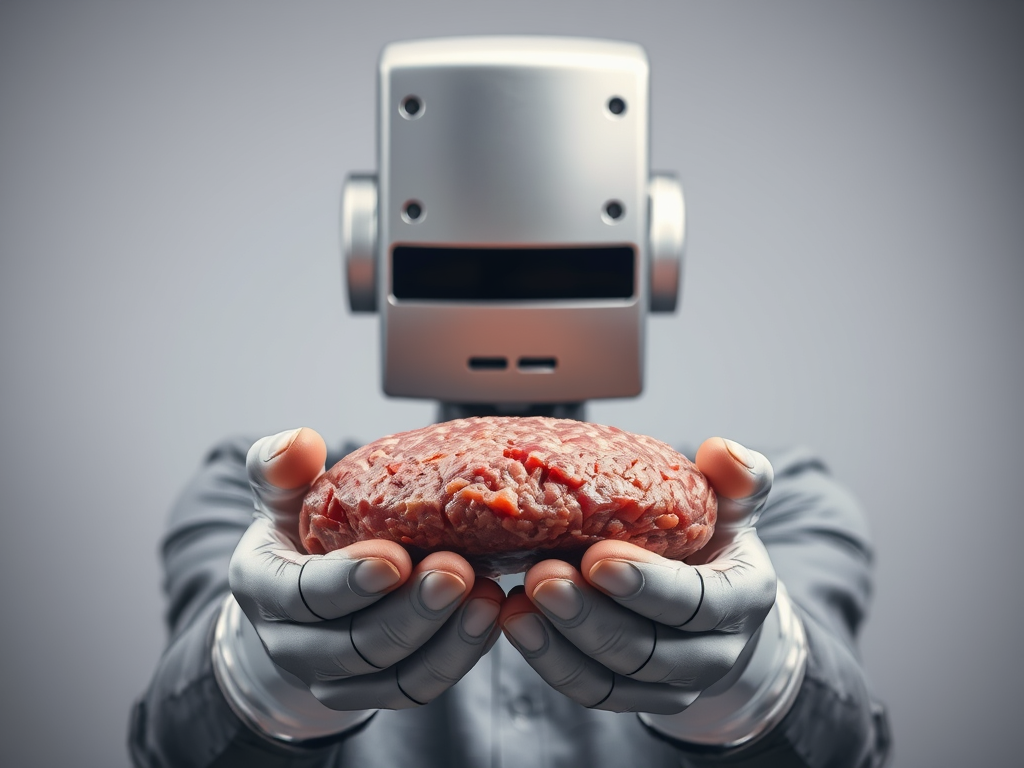
AI-generated image
Think about how much work goes into planting, growing, and harvesting an acre of corn versus what it takes to burn it down. Think about how much time and effort it takes to raise a child for the first ten years of their life versus destroying that life with an assault weapon. Think about what was required to build a functioning democracy over the course of hundreds of years by cooperation versus how easy it is for a very small group of greedy stupid people to destroy it. The examples are endless. Writing a novel versus burning a book; training to become a world class figure skating versus putting an ice pick in someone’s knee; becoming a skilled artist and painting the Mona Lisa versus splashing it with black paint.
It’s the same with a functioning human body. To be healthy requires the coordination of trillions of cells. The kind of cooperation found in the human body (or an eagle or wolf or whale) took billions of years of evolution. To destroy the health of the body only takes a few stupidly greedy cancer cells. So, although evil destruction is far less prevalent than constructive cooperation, evil destruction can undo the effort of many over the course of a long time.
Second, because destruction can so quickly undo so much good work, our nervous system is very reactive to evil and violence. We perceive it more easily and we remember it more easily. In a crowded city, you might pass by hundreds of people every day. Most of them, most of the time, you don’t notice. But if one of them robs you at gunpoint, you will notice and remember.
Media Bias:
The first two reasons we perceive evil to be more common than it really have existed for millions of years. Now, however, in our modern society, we have people whose job is to report on the news.
When is the last time you saw a headline like: “Two hundred thousand people drove into San Diego from Mexico yesterday with zero fatalities!” Or, “Three million people ate dinner in San Diego county last night! Zero died of food poisoning!”
It is sometimes said that “No news is good news.” It’s also generally the case that good news is no news. There are some exceptions. When World War Two ended, there were headlines. What we don’t see is this headline: “Canada, for the 57,670th consecutive day did not attack the United States of America.” Understanding this, a complete sociopath with an audience might try to increase their own fame by declaring: “America should annex Canada!” An actual war will definitely result in a headline. But threatening war, especially with a friendly country might also result in a headline.
The tendency to report bad news over good news has always been a “feature” of the media. But now that much of our news is basically click-bait for advertisements, the tendency is worse than ever. When I was on the school newspaper, we were taught to put the most important information in the headline; add the most important details in the first paragraph and add more detail in the rest of the article. Now, most headlines are fairly meaningless and important information is hidden behind a paywall or an advertisement.
“Is Earth About to Plunge into the Sun?!”
AI-generated image to prompt: “The earth plunges into the sun.”
Ka-ching!
(No, but we could sure use some extra cash, so click here to find out.)
“Does T-Rump have Proof that Obama was Born in Kenya!?”
An AI-generated image
Ka-ching!
(No, actually, but if you want to find out, click here and pay us money.)
“Could Space Invaders have Brought Life to Earth?!”
AI-generated image to prompt: “A fleet of UFOs hovers over the earth”
Ka-ching!
(Well, sure, anything’s possible. And, while we have no evidence of that, thanks for making one of the greediest people on earth a little richer!)
Dishonesty, greed, and mistrust work in a vicious circle. As you discover that more people are lying; that more people are evil, you yourself become more cynical and more tempted to lie, cheat, and steal. If you succumb to that temptation, it makes others more likely to lie, cheat, and steal.
Here’s the important thing to remember about a positive feedback loop though. It works in both directions. To the extent you can behave in a trustworthy fashion and be kind to others, it increases the chances that others will be inspired also to behave well. Cooperating is the natural and normal course for humanity. You will be happier doing that and you’ll help build a better world.
If you guesses heart disease and cancer, you’re right! Yay! RFK Junior and the Second Putin Misadministration may well change that in the next few years. By discouraging vaccinations, rolling back regulations for food quality, air quality, and water quality; by making proper nutrition much harder for non-wealthy families, the causes of death may change and infectious diseases my well rise to the top of the list again.
The First Putin Misadministration had a dry run by mishandling COVID. They did just about everything they could to kill additional Americans. By modeling disease-spreading behavior, waffling on whether vaccines were good, pooh-poohing the very existence of the disease for the critical early months, and, importantly, by making sure that the logistics of tests, masks, & other protective equipment was put in the hands of an over-spoiled teenager rather than any one of the hundreds of world class logistics experts in America, they did what they could but COVID only rose to third.
We could argue about the details, however, because it is undeniable that, because of the pandemic, many people did not get tests and interventions designed for early diagnosis of cancer and heart disease. So some of the deaths attributed to cancer and heart disease may also have been partly due to COVID. Nonetheless, cancer and heart disease do cause a lot of deaths even without any help from COVID.
Both “cancer” and “heart disease” are very broad labels. And, in both cases, we know that there are a number of factors that influence the incidence of various types of cancer and heart disease. A large number of genetic factors play a part. So too do diet and exercise. A completely sedentary life-style is bad for your health in many ways. One of the motivations for my book, Fit in Bits, is to make it easier for people to incorporate more exercise into daily life.
However, there is evidence that the environment also plays a large part in the prevalence of both cancer and heart disease. Almost all of these studies are understandably correlational in nature. I say “understandably” because most people are unwilling to have their behavior dictated for twenty years. So, we are left with comparing people who, left primarily to their own devices, encounter different environmental factors. However, lab rats and cell cultures do not object to being mistreated so we have additional indirect evidence that plastics are bad for life. For these reasons, one environmental factor that is drawing increasing attention is the “one word” for Benjamin in The Graduate: “Plastics!”
I don’t like plastic. I’m not saying that because I don’t like sea turtles and sea birds strangled with plastic. Of course, I don’t like those things either, but I’m talking about my sensory experience. I’m saying that for me, plastic doesn’t smell, taste, sound, or feel good. For that matter, it doesn’t even look that nice.
Materials I do like include metal, rock, wood, glass, and ceramics. I like them at a sensory level.
Recently, it has struck me just how prevalent plastic has become in my own life. When I was a kid, I had some things that were plastic, but it was much less prevalent than it is today. Let’s take a little look.
One of the first things I do in the morning is have coffee. That’s made from a bean. That’s not plastic.
Or, is it?
Lately, I make it in this coffee maker which holds coffee in little plastic capsules. The water sits in a plastic reservoir. The sugar sits in a plastic jar. I put in a little milk and hazelnut creamer. Guess what? They also come in plastic.
The cup, at least, is ceramic. I often have a whole wheat English muffin. The muffin comes in a container that is part paper and part plastic. I often like to put peanut butter on it. The peanut butter I usually buy comes in plastic. I often put honey or berries on the peanut butter. They come in plastic.
Sometimes, rather than a high fiber English Muffin, I enjoy a bread which is called “Fitness Bread.” It’s high fiber and tasty. And, it comes wrapped in plastic. I often spread hummus or guacamole on it. These are also pretty healthy choices. But they spend a lot of their life in plastic.
As I side dish, I like cherry tomatoes. They are colorful and tasty and low calorie. And they come packaged in–did you guess? Plastic. On sandwiches, I often put ketchup or mayo. They also come in handy squeeze bottles made of…let’s say it together: “Plastic.”
I don’t drink any alcohol, and often drink Hint or BAI, both of which I like quite a lot and both of which come only in plastic containers. This is not great for the environment at large, but also not good for the environment of my body. We also sometimes drink a powdered lemonade mix which comes in plastic packets. Then, a pitcher in the fridge keeps it cold. The pitcher is plastic. Then it is served in a “glass” which is, in fact, not glass, but plastic.
There’s an advantage to plastic over glass. We have cats and dogs and they have a tendency to knock things onto the floor. Plastic things are far less likely to break. Plastic glasses also weigh less than glass.
After breakfast, it’s time to take some supplements for my health. These almost always come in plastic containers as do the prescribed medications I take.
I brush my teeth. That’s a health-promoting activity. But the water glass I use is plastic. The toothbrush bristles are plastic. Lately, I’ve started using a water pick as well, which I highly recommend, by the way, though the reservoir for the water and the entire mechanism is made of plastic.
I often cook for the two of us. Lately, I’ve been using cutting boards made of…you guessed it! Plastic! For healthy snacks, I like dried fruit and nuts. Guess what? They come in…
What’s to be done?
In today’s America, with science and truth becoming illegal, it probably won’t make a huge difference. I’m more likely to die of infection or Civil War or unprovoked police violence than from plastic, but I am making some changes.
We bought bamboo cutting boards and paper cups. I’m cutting out the BAI and Hint and exploring options for drinks that come in glass or non-BHA coated metal. I am trying out another type of peanut butter that comes in a glass container. But the vast majority of products at the grocery store come in plastic. Even the vegetables and fruits.
Despite all the years of increasing the percentage of items that are plastic, I still do not actually like plastic.
I’m switching out what I can, and it may be too late in life to make a lot of difference for me personally, especially with a Misadministration that wants to end American lives (and brags about it!). But it may not be too late for you.
Do your own inventory. Hopefully, you will find things you like that are not wrapped in that one word of biological disaster wrapped up with economic faux-prosperity. The word? Here’s a
Apparently, everyone else knew I was supposed to go head first.
The instructions, however, were far from clear.
And, although I didn’t know much, four billion years of evolution had taught me to take a few things rather seriously—such as: “Gravity is real!” And: “Don’t dive hard onto something head first.” So, the vague instruction to come out head first made no sense.
I considered whether feet first seemed a sensible option. I decided “yes” but only for someone with a well-developed set of quads and a months of practice in balancing. Otherwise, a being such as myself would simply topple over and smash their head anyway.
Thinking about it as best I could, coming out butt first seemed by far the most sensible way to enter this world.
The only problem was that I didn’t fit that way. So—I was at odds with authority figures such as my mother and her doctors before I was even born.
After 72 hours of labor, I finally let them win that argument and came out head first.
All of us could have been saved a lot of time and effort had the instructions been clearer to start with.
Is that why I ended up with a career in “Human-Computer Interaction” AKA “Human Factors” AKA “User Experience”?
Probably not.
More likely, it has something to do with the agony of the feet.
I inherited “flat feet” and that has been something of a life-long inconvenience. For example, beneath my ankle is another bone that sticks out much more than it does for other people. That bone often rubs against the side of my shoes and boots and that causes a source of both bruises and blisters. The lack of a working arch also contributes to my never being able to jump very well. In high school, when I was very fit, I was capable of jumping up high enough to touch the bottom of a basketball net. On my best days.
I never got close to being able to jump and touch the rim, let alone being able to dunk the ball.
Nonetheless, I spent many years of enjoyment while on my feet—playing basketball, tennis, golf, table tennis, football, baseball, softball, racquetball, running, and walking. Running speed was never a strong point but I do have good eye-hand coordination and know how to concentrate and adjust my play to the opponent(s). As I sometimes like to say, I’be been violating expectations since 1945. I’ve enjoyed every sport I’ve ever tried. I’ve also seen many people with much more natural talent than I have enjoy sports less. That’s one reason I wrote “The Winning Weekend Warrior” which discusses the “mental game”; that is, “Sports Psychology.”
I’ve also discovered some things about mitigating the negative impact of the feet I was born with.
For one thing, I never buy shoes without trying them on.
Another surprise is that all hard surfaces are not equally damaging. A basketball floor, a dirt track, an asphalt road, concrete, and steel all seem pretty damned hard. But it turns out that running on concrete sidewalks is much harder on my arches (and shins) than running on asphalt. It also turns out that standing still for a half hour is harder on my arches than is walking for an hour.
I’ve learned a number of obvious things like: losing weight helps a lot! Strengthening the legs helps. Having good supportive shoes helps. Wearing cushy sox helps. Avoid (when possible) walking on stone, concrete, or metal.
I’ve tried a number of supplements too. For me, the ones that seem to help slightly are: turmeric, ginger, and sour cherries. I find that B12 seems to worsen joint pain. Elevation seems to help and so does ice. Of course, the trade-off is that ice and elevation are typically things that limit mobility.
I also use acetaminophen. I also use arnica gel which seems to help.
If there’s a real “solution” though, I haven’t found it. I was born with a bad design.
Everyone is.
Life is not, never was, and never will be about a “perfect design.” The environment keeps changing and organisms who adapt to the environment are always changing. That happens at the cellular level, the learning/behavioral level, and on a longer time scale, at the evolutionary level.
Not only that: change begets change. If, in response to one change in the environment, you make one adjustment, you might cause another problem. It’s the same with the design of physical artifacts, software systems, user interfaces, social systems, games, strategies, tactics, poetry, stories…
One can use knowledge to shrink a design space. Of course, there is always the chance that by shrinking the space, you are deleting the part of the space that has the very best designs. It took evolution billions of years to create multicellular organisms. Our own human bodies have a large variety of different types of cells. Within many of those types there are sub-types and sub-sub types.
Even within a sub-sub type, no two cells are precisely identical. They have different histories and they have different environments.
The feet that are “bad” are only “bad” in a certain set of circumstances. I’m sure that there’s some circumstance in which it’s better to have flat feet and pronated ankles. For example, it’s probably only a matter of time before there’s a top-rated “reality TV” show dedicated to the implications of odd body parts. That would be a show I would get to try out for because of my feet.
Recently, I got hearing aids. That’s a whole different story for another time, but they fit quite snugly and comfortably behind my ears. But we’ve all seen people who look like Alfred E. Newman from Mad Magazine. What do they do about hearing aids? Do they need a different type? Do they tape them behind their ears? What would be the best genre for the show about unusual feet or ears? Doctor Odds? Opera? Shure-Vivor? America’s Got Metatarsals?
Needless to say, we would have to make it extremely competitive and a little bit cruel. Maybe people with broken feet could run a race and the winner would live for another week and face a greater challenge the following week. The whole thing would be set in someplace chosen to be especially challenging for those with sore feet; e.g., uneven cobblestones, slippery concrete, on fallen tree trunks. Gorse, of course. Background music would be composed to add to the drama. Or, if the budget doesn’t permit human composers, we could ask an AI system to copy some Puccini or Bizet and change it just enough not be sued for copyright infringement.
The formula importunes for interviews. They need to be short, shallow, but filled with rage or tears. “So John, when did you first learn that your feet were…what is the PC term here?…Different? Weird? Horrific?” Before each competition, the contestants would be introduced with fireworks and flashing lights along with extremely loud and echoing words of exaggeration. We should get the same kind of introduction once reserved only for “Professional Wrestling” but now common in introducing contestants in Golf and Tennis. Why not insanely dramatic foot-offs in “America’s Got Metatarsals!”
It might be a bit expensive, but we can always cut costs to the bone. And then, just keep cutting!Who even needs real contestants? They can all be CGI. That, in turn, means there’s no need to limit contestants to the kinds of variations that actually occur. Flat feet? Okay. We’ve all heard about that. But how about flatiron feet? Elephant feet? Eagle feet! Grizzly bear paws! Duck-billed platypus feet! Amoebic pseudopods! Insect legs with pollen sacs!
Why stop there? Mice with elephant ears! Elephants with mouse ears! Whales stalking their prey on the Savannah, cleverly camouflaged in the tall yellow grass!Tigers leaping on Great White Sharks! It’s no more out of place than putting a thoughtless human being in a safari hunt And, the best part of CGI players is that we can interview them regardless of species and regardless of their native language. At long last, we can entertain ourselves to death while the actual ecosystem around us is being destroyed by the greediest members of the greediest species who ever existed.
What happens when greed exceeds needs and vital functions of society are left to the unfit, untrained, uncaring, uncouth, criminals? They’ll be about as effective as the Whales of the Serengeti and the Elephant-Eared Mice of Siberia.