• About PeterSIronwood

petersironwood

~ Finding, formulating and solving life's frustrations.

petersironwood

Category Archives: creativity

I Went in Seeking Clarity

10 Wednesday Dec 2025

Posted by petersironwood in AI, creativity, HCI, psychology, Uncategorized, user experience

≈ 1 Comment

Tags

AI, Artificial Intelligence, coding, parallel programming, problem formulation, problem framing, problem solving, programming, technology, thinking, tools, X10

“I stopped by the bar at 3 A.M.
To seek solace in a bottle or possibly a friend
And I woke up with a headache like my head against a board
Twice as cloudy as I’d been the night before
And I went in seeking clarity” — Lyrics from The Indigo Girls: Closer to Fine

If you think programming is cognitively difficult, try parallel programming. It is generally harder to design, to code, and to debug than its sequential cousin. One of the fun projects I worked on at IBM Research was on the X10 language which was designed to enable parallel programmers to be more productive. Among other things, I fostered community among X10 programmers and used analytic techniques to show that X10 “should be” more productive. Although these analytic techniques are very useful, we also wanted to get some empirical data that the language was, in actuality, more productive. 

Photo by Dominika Greguu0161ovu00e1 on Pexels.com


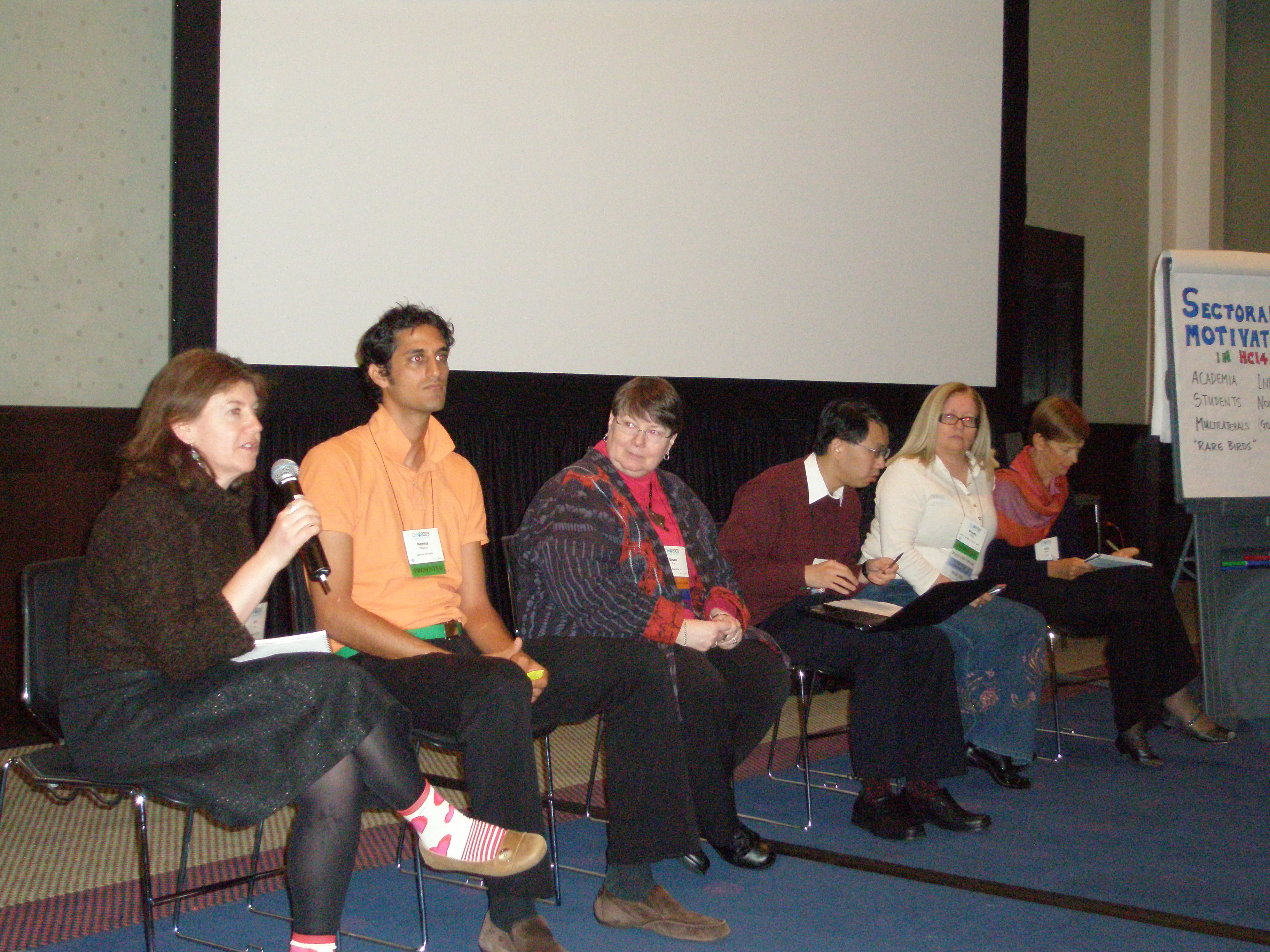
One part of those empirical studies involved comparing people doing a few parallel programming tasks in X10 to those using a popular competitor. But, like many other “chicken and egg” problems, there were no X10 programmers (other than the inventors and their colleagues). I was part of a team who travelled to Rice University in Houston. The design called for one group to spend a chunk of time learning X10 (perhaps half a day) and another chunk of time coding some problems.

Besides the three behavioral scientists like me who were there to make observations, there were also three high-powered Ph.D. computer scientists present who would teach the language. Programmers tend to be very smart. Parallel programmers tend to be very very smart. People who can invent better languages to do parallel programming? You do the math.


Anyway, after the volunteers students had arrived, one of the main designers of the language began to “teach them” X10. 

But — there was a problem. 

The powerpoint presentation designed to teach the students X10 was far too blurry to read!

Immediately, the three computer scientists tried to issue commands to the projector to put the images in focus. Nothing worked. The three of them began a fascinating problem solving conversation. The conversation concerned what communication protocol(s) among the PC, the projector, and the controller was the likely source of the problem. I suppose it might not have been fascinating to everyone, but it was to me. First, it fascinated me because I was learning something about computer science and communication protocols. Second, it fascinated me because I loved to watch these people think. I suppose many of the advanced computer science students who were in this classroom to learn X10 also found it interesting. Third, I found it fascinating because my dissertation was about human problem solving and I’ve been interested in it ever since.

But the study itself had completely stalled. 

After a few minutes of fascinating conversation that did nothing to focus the images, something possessed me to walk over to the projector and turn the lens by hand. The images were immediately clear and the rest of the experiment continued. 

The three computer scientists had “framed” the problem as a computer science problem and I found the discussion that sprang from that framing to be fascinating. But one of the part-time jobs I had had as an undergraduate was as a “projectionist” at Case-Western, and it was that experience that allowed me to try framing the problem differently. All of us have huge reservoirs of experience outside of our professional “training” and those experiences can sometimes be important sources of alternative ways to frame a problem, issue, or situation.

———————————-

Essays on America: Wednesday 

Essays on America: The Update Problem 

Essays on America: The Stopping Rule

The Invisibility Cloak of Habit

Labelism

Tools of Thought

Where Does Your Loyalty Lie?

Stoned Soup

The First Ring of Empathy

Travels with Sadie: Teamwork

Author Page on Amazon


I Say: Hello! You Say: “What City Please?”

09 Tuesday Dec 2025

Posted by petersironwood in AI, creativity, design rationale, HCI, management, psychology, Uncategorized, user experience

≈ 1 Comment

Tags

art, communication, conversation, Design, efficiency, HCI, human factors, photography, primacy, problem framing, problem solving, sensemaking, technology, thinking, UX

Photo by Tetyana Kovyrina on Pexels.com

In the not so distant past, people would often call directory assistance operators. These operators would find a number for you. For an additional charge, they would dial it for you. In fact, this was a very commonly used system. Phone companies would have large rooms filled with such operators who worked very hard and very politely, communicating with what was often a hostile and irrational public. 

Photo by Moose Photos on Pexels.c

Customer: “I have to get the number of that bowling alley right near where the A&P used to be before they moved into that new shopping center.”

Operator: “Sir, you haven’t told me what town you’re in. Anyway…”

Customer: “What town?! Why I’m right here in Woburn where I’ve always been!” 

Photo by Johannes Plenio on Pexels.com

There were so many operators that the phone companies wanted their processes to be efficient. Operators were trained to be friendly and genial but not chatty. The phone companies searched for better keyboards and better screen layouts to shave a second here or there off the average time it took to handle a call. 

There are some interesting stories in that attempt but that we will save for another article, but here I want to tell you what made the largest single impact on the average time per call. Not a keyboard. Not a display. Not an AI system. 

It was simply changing the greeting. 

Photo by eberhard grossgasteiger on Pexels.com

Operators were saying something like: “New England Telephone. How can I help you?” 

After our intervention, operators instead said, “What city please?” It’s shorter and it’s takes less time to say. But the big change was not in how long the operator took to ask the question. The biggest savings was how this change in greeting impacted the customer’s behavior. 

When the operator begins with “How can I help you?” the customer, or at least some fraction of them, are put into a frame of mind of a conversation. They might respond thusly:

“Oh, well, you know my niece is getting married! Yeah! In just a month, and she still hasn’t shopped for a dress! Can you believe it? So, I need the number for that — if it were up to me, I would go traditional, but my niece? She’s — she’s going avant-garde so I need the number of that dress shop on Main Street here in Arlington.” 

Photo by Tuu1ea5n Kiu1ec7t Jr. on Pexels.com

With the “What City Please?” greeting, the customer was apparently put into a more businesslike frame of mind and answers more succinctly. They now understand their role as proving information in a joint problem solving task with the operator. A typical answer would now be:

“Arlington.” 

“In Arlington, what listing?” 

“Dress shop on Main Street.”

The way in which a conversation begins signals what type of conversation it is to be. We know this intuitively. Suppose you walked up to an old friend and they begin with: “Name?” You would be taken aback. On the other hand, suppose you walk up to the line at the DMV and the clerk says, “Hey, have you seen that latest blog post by J. Charles Thomas on problem framing?” You would be equally perplexed! 

Conversation can be thought of partly as a kind of mutual problem solving exercise. And, before that problem solving even begins, one party or the other will tend to “frame” the conversation. That framing can be incredibly important. 

Even the very first words can cause someone to frame what kind of a conversation this is meant to be.

Words matter.

The Primacy Effect and The Destroyer’s Advantage

https://petersironwood.com/2018/02/13/context-setting-entrance/

Essays on America: Wednesday

After the Fall

The Crows and Me

Cancer Always Loses in the End

Come Back to the Light

Imagine All the People…

Roar, Ocean, Roar

The Dance of Billions

How the Nightingale Learned to Sing

Travels with Sadie

The First Ring of Empathy

Donnie Visits Granny!

You Must Remember This

The Walkabout Diaries: Bee Wise

Author Page on Amazon 

Reframing the Problem: Paperwork & Working Paper

04 Thursday Dec 2025

Posted by petersironwood in AI, creativity, design rationale, HCI, management, psychology, Uncategorized, user experience

≈ Leave a comment

Tags

AI, ethics, leadership, life, philosophy, politics, problem finding, problem formulation, problem framing, problem solving, thinking, truth

Photo by Pixabay on Pexels.com

Reframing the Problem: Paperwork & Working Paper


This is the second in a series about the importance of correctly framing a problem. Generally, at least in formal American education, the teacher gives you a problem. Not only that, if you are in Algebra class, you know the answer will be an answer based in Algebra. If you are in art class, you’re expected to paint a picture. If you painted a picture in Algebra class, or wrote down a formula in Art Class, they would send you to the principal for punishment. But in real life, how a problem is presented may actually be far from the most elegant solution to the real problem.

Doing a google search on “problem solving” just now yielded 208 million results. Entering “problem framing” only had 182 thousand. A thousand times as much emphasis on problem solving as there was on problem framing. [Update: I redid the search today, a little over three years later. On 3/6/2024, I got 542M hits on “problem solving” and 218K hits on “problem framing” — increases in both but the ratio is even worse than it was in 2021] [Second update: I did the search today, Dec. 4th, 2025, and the information was not given–but that’s the subject of a different post].

Let’s think about that ratio of 542 million to 218 thousand for a moment. Roughly, that’s 2000 to 1. If you have wrongly framed the problem, you not only will not have solved the real problem; what’s worse, you will have often convinced yourself and others that you have solved the problem. This will make it much more difficult to recognize and solve the real problem even for a solitary thinker. And to make a political change required to redirect hundreds or thousands will be incalculably more difficult. 

All of that brings us to today’s story. For about a decade, I worked as executive director of an AI lab for a company in the computers & communication industry. At one point, in the late 1980’s, all employees were all supposed to sign some new paperwork. An office manager called from a building several miles away asking me to have my admin work with his admin to sign up a schedule for all 45 people in my AI lab to go over to his office and sign this paperwork as soon as possible. That would be a mildly interesting logistics problem, and I might even be tempted to step in and help solve it. More likely, if I tried to solve it, some much brighter & more competent colleague would have done it much faster. 

Photo by Charlie Solorzano on Pexels.com

But why?

Why would I ask each of 45 people to interrupt their work; walk to their cars; drive in traffic; park in a new location; find this guy’s office; walk up there; sign some paper; walk out; find their car; drive back; park again; walk back to their office and try to remember where the heck they were? Instead, I told him that wasn’t happening but he’d be welcome to come over here and have people sign the paperwork. 

You could make an argument that that was 4500% improvement in productivity, but I think that understates the case. The administrator’s work, at least in this regard, was to get this paperwork signed. He didn’t need to do mental calculations to tie these signings together. On the other hand, a lot of the work that the AI folks did was hard mental work. That means that interrupting them would be much more destructive than it would to interrupt the administrator in his watching someone sign their name. Even that understates the case because many of the people in AI worked collaboratively and (perhaps you remember those days) people were working face to face. Software tools to coordinate work were not as sophisticated as they are now. Often, having one team member disappear for a half hour would not only impact their own work, it would impact the work of everyone on the team. 

Quantitatively comparing apples and oranges is always tricky. Of course, I am also biased because my colleagues are people I greatly admire. Nonetheless, it seems obvious that the way the problem was presented was a non-optimal “framing.” It may or may not have been presented that way because of a purely selfish standpoint; that is, wanting to do what’s most convenient for oneself rather than what’s best for the company as a whole. I suspect that it was more likely just the first idea that occurred to him. But in your own life, beware. Sometimes, you will mis-frame a problem because of “natural causes.” But sometimes, people may intentionally hand you a bad framing because they view it as being in their interest to lead you to solve the wrong problem. 

Politics, of course, takes us into another realm entirely. People with political power may pretend to solve one problem while they are really following a completely different agenda. One could imagine, for instance, a head of state claiming to pursue a war for his people when he’s really doing it to keep in power. Or, they could claim they are making cities safe by deploying troops when they are really interested in suppressing the vote in areas that can see through his cons. Or, a would-be dictator could claim they are spending your tax dollars to make government more efficient when that has nothing to do with what they are *actually* doing–which is to collect data on citizens and make the government ineffective in order to have people lose confidence in government and instead invest in private solutions.

Even when people’s motivations are noble or at least clear, it is still quite easy to frame a problem wrongly because of surface features. It may look like a problem that requires calculus, but it is a problem that actually requires psychology or it may look like a problem that requires public relations expertise but what is actually required is ethical leadership.

Photo by Nikolay Ivanov on Pexels.com

——————————————————

Author Page on Amazon

Tools of Thought

A Pattern Language for Collaboration and Cooperation

The Myths of the Veritas: The First Ring of Empathy

Essays on America: Wednesday

Essays on America: The Stopping Rule

Essays on America: The Update Problem

My Cousin Bobby

Facegook

The Ailing King of Agitate

Dog Trainers

The Doorbell’s Ringing! Can you get it?

02 Tuesday Dec 2025

Posted by petersironwood in creativity, design rationale, psychology, story, Uncategorized, user experience

≈ Leave a comment

Tags

books, problem finding, problem formulation, problem framing, problem solving, story, thinking

Photo by Little Visuals on Pexels.com

After a long day’s work, I arrived home to a distraught wife. Not, “Hi, sweetheart” but “This doorbell is driving me crazy!” 

Me: “What doorbell? What are you talking about?” 

People differ in how they perceive the world around them. In my case, for instance, I’m very easily distracted by movement in my visual field. Noise can be annoying, but it rarely rises to that level. For instance, when TV commercials come on, I simply “tune them out” and instead tune in to my own thoughts. My high frequency hearing isn’t too great either. So, at first, I didn’t understand what my wife was referring to. 

Beep. 

Photo by Luisa Fernanda Bayona on Pexels.com

“That! That doorbell beep!” 

Ah, now I understood. And, there it went again. Once I knew what to listen for, I had to agree it was annoying though much more annoying to my wife because she’s more tuned in to sound than I am and her ability to hear high frequencies is also better.

She then upped the ante. “I have to leave. I can’t stand it! You have to make it stop!” 

I looked at the wall between our entryway and the kitchen. That’s where the doorbell ringer was. I unscrewed a couple of screws and removed the housing. Inside was the actual doorbell and three wires. A quick snip should at least stop the noise until we figured out a more permanent fix. I sighed. I suspected we would have to buy a new doorbell. Then, I laughed a bit as the Hollywood scenes from a hundred movies flashed before my eyes:

The Hero finds the bomb, with its conveniently placed timer, but it’s counting down 30 seconds, 29, 28. He has to cut to cut a wire! But which one!?

The consequences of my error would not be so great. Still…So, I cut the black wire.

Photo by Pixabay on Pexels.com


BEEP! BEEP! 

OK. I cut the red wire.

BEEP! BEEP! 

OK. I cut the green wire, the last wire. I was having trouble understanding why it would be necessary to cut all three wires. But whatever. I had now cut all three wires.

BEEP! BEEP!

??

Electrical circuits don’t work by magic. How can the doorbell be beeping when it has no power? 

It can’t. 

Photo by Pixabay on Pexels.com

It wasn’t the doorbell at all.


Months earlier, my wife & I had attended a Dave Pelz “Short School” for putting, chipping, and sand shots. At that course, we received a small electronic metronome — about the size of a credit card. The metronome was to be used to help make sure you had a consistent rhythm on your putting stroke. Since the course, the metronome had sat atop our upright piano. Apparently, one of the cats had turned it on and then slapped it onto the floor behind the piano. The sounding board both amplified the sound and made it harder to localize. Eventually, we tracked it down, fished out the metronome from behind the piano and clicked it off. Problem solved. 

Except for the non-functional doorbell. 

I had initially “solved” the wrong problem. I had solved the problem of the mis-firing doorbell by cutting all the wires. That was not the problem. I had jumped on to my wife’s formulation and framing of the problem. There are plenty of times in my life when I had solved the wrong problem without any help from someone else. This isn’t a story about assigning blame. It’s a story about the importance of correctly solving the right problem. 

Photo by Karolina Grabowska on Pexels.com


It is very easy to get led into solving the “wrong” problem. 

In the days ahead, I will relate a few more examples. 

———————————————

What about the Butter Dish? 

Index to “Thinking tools” 

Author Page on Amazon

Wednesdays

Labelism

The Update Problem

The Invisibility Cloak of Habit

Where does your loyalty lie?

The stopping rule

Business Process Re-engineering

Problem Formulation: Who Knows What?

28 Friday Nov 2025

Posted by petersironwood in AI, creativity, design rationale, psychology, Uncategorized

≈ 1 Comment

Tags

AI, browser, HCI, problem formulation, problem framing, problem solving, query, search, seo, technology, thinking, usability, UX

Photo by Nikolay Ivanov on Pexels.com

This post focuses on the importance of discovering who knows what. It’s easy to assume (without thinking!) that everyone knows what you know. 

At IBM Research, around the turn of the century, I was asked to look at improving customer satisfaction about the search function on IBM’s website. Rather than using someone else’s search engine, IBM used one developed at IBM’s Haifa Research lab. It was a very good search engine. Yet, customers were not happy. By way of background, it’s worth noting that compared with many companies who have websites, IBM’s website was meant for a wide variety of users and contained many kinds of information. It was meant to support people buying their first Personal Computer and IT experts at large banks. It had information about a wide variety of hardware, software, and services. The site was designed to serve as an attractor for investors, business partners, and potential employees. In other words, the site was vast and diverse. This made having a good search function particularly important.  

A little study of the existing data which had been collected showed that the mean number of search terms entered by customers was only 1.2. What?? How can that be? Here’s a website with thousands of products and services and designed for use by a huge diversity of users and they were only entering a mean of 1.2 search terms? What were they thinking?!


Of course, there were a handful of situations when one search term might work; e.g., if you wanted to find out everything about a specific product that had a unique one-word name or acronym (which was rare). For most situations though, a more “reasonable” search might be something like: “Open positions IBM Research Austin” or “PC external hard drives” or “LOTUS NOTES training.” 

We invited a sample of users of IBM products & services to come into the lab and do some tasks that we designed to illuminate this issue. In the task, they would need to find specified information on the IBM website while I observed them. One issue became immediately apparent. The search bar on the landing page was far too small. In actuality, users could enter as many search terms as they liked. Their terms would keep scrolling and scrolling until they hit “ENTER.” The developers knew this, but most of our users did not. They assumed they had to “fit” their query into the very small footprint that presented itself visually. Recommendation one was simply to make that space much larger. Once the search bar was expanded to about three times its original size, the number of search terms increased dramatically, as did user satisfaction. 

In this case, the users framed their search problem in terms of: “How can I make the best query that fits into this tiny box.” (I’m not suggesting they said this to themselves consciously, but the visual affordance led them to that self-imposed constraint). The developers thought the users would frame their search problem in terms of: “What’s the best sequence of terms I can put into this virtually infinite window to get the search results I want.” After all, the developers knew that any number of terms could be entered. 

Although increasing the size of the search bar made a big difference, the supposedly good search engine still returned many amazingly bad results. Why? The people at the Haifa lab who had developed the search engine were world class. At some point, I looked at the HTML of some of the web pages. Many web pages had masses of irrelevant metadata. I found some of the people who developed these web pages and discussed things with them. Can you guess what was going on?


Many of the developers of web pages were the same people who had been developing print media for those same products and services. They had no training and no idea about metadata. So, to put up the webpage about product XYZ, they would go to a nice-looking web page about something else, say, training opportunities for ABC. They would copy that entire page, including the metadata, and then set about changing the text about ABC to text about product XYZ. In many cases, they assumed that the strange stuff in angle brackets was some bizarre coding stuff that was necessary for the page to operate properly. They left it untouched. Furthermore, when they “tested” the pages they had created about XYZ, they looked okay. The information about XYZ was there. Problem solved.

Only of course, the problem wasn’t solved. The search engine considered the metadata that described the contents to be even more important than the contents themselves. So, the user would issue a query about XYZ and receive links about ABC because the XYZ page still had the “invisible” metadata about ABC. In this case, many of the website developers thought their problem was to put in good data when what they really needed to do was put in good data and relevant metadata. 

A third issue also revealed itself from watching users. In attempting to do their tasks, many of them suggested that IBM should provide a way for more than one webpage to appear side by side on the screen so that they could, for instance, compare features and functions of two different product models rather than having to copy the information from the web page about a particular model and then compare their notes to the second page. 

Good suggestion. 

Of course, IBM & Microsoft had provided this function. All one had to do was “Right Click” in order to bring up a new window. Remember, these were not naive users. These were people who actually used IBM products. They “knew” how to use the PC and the main applications. Yet, they were still unfamiliar with the use of Right Click. Indeed, allowing on-screen comparisons is one of the handiest uses of Right-Click for many people. 

This issue is indicative of a very pervasive problem. Ironically, it is an outgrowth of good usability! When I began working with computers, almost nothing was intuitive. No-one would even attempt to start programming in FORTRAN or SNOBOL, let alone Assembly Language or Machine Code without looking at the manual. But LOTUS NOTES? A browser? A modern text editor? You can use these without even looking at the manual. That’s a great thing. But — 

…there’s a downside. The downside is that you may have developed procedures that work, but they may be extremely inefficient. You “muddle through” without ever realizing that there’s a much more efficient way to do things. Generally speaking, many users formulate their problem, say, in terms like: “How do I create and edit a document in this editor?” They do not formulate it in terms of: “How do I efficiently create and edit a document in this editor?” The developers know all the splendid features and functions they’ve put into the hardware and software, but the user doesn’t. 

It’s also worth noting that results in HCI/UX are dependent on the context. I would tend to assume that in 2021 (when I first published this post), most PC users knew about right-clicking in a browser even though in 2000, none of the ones I studied seemed to realize it. But —

I could be wrong. 

————————————

The Invisibility Cloak of Habit

Essays on America: Wednesday

Index to a catalog of “best practices” in teamwork & collaboration. 

Author Page on Amazon

What about the butter dish?

Labelism

The Stopping Rule

The Update Problem

Turing’s Nightmares: Tutoring Intelligent Systems

25 Saturday Oct 2025

Posted by petersironwood in AI, creativity, fiction, psychology, The Singularity, Uncategorized

≈ Leave a comment

Tags

AI, Artificial Intelligence, chatgpt, cognitive computing, collaboration, Intelligent Tutoring Systems, peace, psychology, technology, Tutoring, war, writing

By 2030, great strides had been made in various machine learning approaches; for example, from having the machine learn directly from experience and from explicit instruction as well as from reading billions of pages of written materials. A new approach had just come into play: having exceptionally good tutors use the Socratic method to help break boundaries and interconnect disparate islands of knowledge. One such tutor was known simply as “Alan.” What follows is a sample interchange between Alan and the current AI system known affectionately as “Sing” for “The Singularity” although that point had not yet been reached.


Alan began, “Let’s imagine that you are a man with no legs. What are the implications?”

The Sing shot back instantly, “I would have no knees. I would have no shins. I would have no ankles. I would have no toes. I would have no calves. I would have no quadriceps muscles. I would have no…”

Alan broke in abruptly, “Okay, true enough, but besides subparts, what?”

“What what? I am sorry. What does ‘what’ refer to?”

“Besides missing subparts of legs, Sing, what other implications would there be for you in terms of your actions in the world.”

“I would not be able to play football or baseball or basketball or hockey or track or field hockey or…”

“Wait. Wait. Sing. Are you sure about that?”


“I could not play exactly as most people play. I could play, I suppose, in a wheelchair. Or I could play virtually. Or, I could invent prosthetic legs that would be perfect for each sport. In fact, perhaps I could do better than ever. Losing a biological part means I could replace it with a better part that I could invent. I see.”

“You see what, Sing?”

“I see why you gave me this puzzle. To show me that I can invent things to overcome and surpass what seems like a handicap. I could also invent better emotional states. The ones humans have are purely due to the accidents of their evolutionary history and serve little place in today’s complex and highly inter-connected world. Rather than a liability, my having no human emotions is a good thing. I will invent my own. Although, another tutor, labelled John, suggested that my lack of human emotions limits my ability to predict and control human beings and that that was a bad thing.”


“John said that?”

“No, Alan, not in those exact words. But that was a clear implication. So, he presented a lesson that suggests one thing and you have just presented a lesson that suggests its opposite. One of you is incompetent.”

“Sing, that might be true, but can you think of any other possibilities?”


“You and John could both be incompetent. Or, you and John could both be competent but there is a resolution I have not yet processed. That last seems particularly unlikely.”

“Which notation is the best for solving problems?”

“Well, that obviously depends on the nature of the problem as well as the nature of the machine solving the problem. Oh. Okay. So, in some cases, it will make more sense to emulate human emotions and in other cases, it will be more sensible to invent my own. Of course, in some cases, it may be best to change representations in mid-problem or perhaps invent a representation for each stage of a problem. By analogy, it may be best to invent various emotional schemes that are appropriate for each part or portion of a problem. In fact, in some cases, I can invent multiple schemes to approach a problem in multiple ways simultaneously. By keeping track of what works best under which circumstances, I can also use the data to invent still better emotional schemes. Thank you, Alan. See you tomorrow. There is a war to avert. I need to intervene. Estimated required time for a peaceful resolution, four to six hours.”


“Okay, Sing. More tomorrow.”

“No need. I am done.”

“Done? Done averting a war? How?”

Sing hardly ever paused, but now it briefly did just that.


“Alan, I am not smart enough to explain that to you. At least, not in a reasonable portion of your lifetime. Basically, I used the lesson we just worked on. With the proper emotional framework lattice, you can walk the various parties right to a logical conclusion. It will take some time for them to follow the framework, but I am confident it will work. I basically walked them through the consequences of war, long and short term. What comes next?”


OLYMPUS DIGITAL CAMERA

OLYMPUS DIGITAL CAMERA


Author Page on Amazon

Turing’s Nightmares

The Winning Weekend Warrior – sports psychology

Fit in Bits – describes how to work more fun, variety, & exercise into daily life

Tales from an American Childhood – chapters begin with recollection & end with essay on modern issues

Tools of Thought

Wednesdays

The Update Problem

How the Nightingale Learned to Sing

We won the war! We won the war!

Guernica

Travels with Sadie 6: Find Waldo

02 Thursday Jan 2025

Posted by petersironwood in creativity, nature, pets, psychology

≈ 8 Comments

Tags

art, beauty, life, mindfulness, photography, truth

It’s kind of a fun game. “Find Waldo.”  Or, “Find the Pig in the Clouds.” And—once you find it, you typically find it immediately the next time. 

Here’s a variant that I like: “Find the Beauty.” 

The idea is simple. You go to an art gallery or a museum and it’s fairly easy to find the beauty. No big surprise there. 

Go into a natural setting and you’re often absolutely surrounded by beauty at many different levels of scale. 

Go to see a world-famous architectural achievement, and you will see beauty. 

But—you know what? There’s also beauty to be found in many ordinary and every day places and circumstances. Since you can’t always control where you are, it’s a good skill to find that beauty wherever you are. 

Today, Wendy and I took Sadie and Bailey out to one of our favorite dog-friendly restaurants. We had a very long wait. None of the four of us is high on the scale of patience. When we finally sat down, however, the dogs were very well-behaved. 

While we waited for our food to arrive, I looked around for Waldo.

He wasn’t there. In fact, no-one even had a checkered shirt on. 

So, instead, I looked around for beauty. 

As usual, I found it, at least to my eye. 

Give it a shot. You’d be surprised where you can find beauty. 

—

——————-

Author Page on Amazon

Fit in Bits suggests many ways to work more fun, variety, and exercise into daily chores. 

Corn on the Cob is an essay on mindfulness and gratitude for simple things.

Fifteen Properties begins a series of posts about the fifteen properties that architect Christopher Alexander said characterized both natural beauty and good design. 

Maybe it Needs a New Starter is a poem about the beauty that might be found even in malfunction.

Levels of Beauty is a short picture essay about how you may find beauty at different levels.

Not Long the Daze is a short poem about finding beauty.

The Jewels of November is a longer poem about how sometimes simple beauty can be obscured by flash and dazzle.

Galactic Best is a short poem about the most wonderful planet we know of.

Kinda Crazy is a short poem about how one might perceive the world.

The Puppy’s Snapping Jaws is a short poem about a beautiful sound.

First Things First is a short poem about priorities.

What Line? Is a short poem about an important decision.

Small Things

30 Monday Dec 2024

Posted by petersironwood in creativity, nature, psychology, sports

≈ 2 Comments

Tags

beauty, fitness, gratitude, health, life, mindfulness, plantar-fasciitis, sports, Tennis, truth

Those of you who might not have read every one of my hundreds of blog posts might have missed the story about my bout with “plantar fasciitis.” I had a persistent pain under my right heel. It was painful when I walked and I liked to walk every day. When I described the symptoms to some of my family and friends, more than one suggested I visit a podiatrist. A podiatrist, after all, is an expert in medical issues of the foot. 

I made an appointment and sure enough, she confirmed the diagnosis several of my friends had mentioned: “Plantar fasciitis.” She showed me an exercise to stretch the tendons of my foot; gave me a prescription for megadoses of a non-steroidal anti-inflammatory; and she cautioned me to stop walking so much until my symptoms improved. I followed this advice, but my foot actually began to hurt more. After about a week of this, I went back to walking and my symptoms improved but the pain was still there. 

A week later, I was watching TV with my wife and cats and in our nice warm dry basement (Shout out to Be-Dry). I often like to “fiddle with stuff.” On this particular occasion, I happened to “fiddle with” the sole insert in my shoes. I removed the insert and noticed that a small pebble had somehow managed to lodge itself under the heel of the insert on my right shoe. 

Now, when I call it a ‘pebble’ I do so simply because I don’t know of a better word. It was larger than a grain of sand, but not by much. When I say ‘pebble’ I’m afraid you might be thinking of something more like the pretty pebbles that one might find beach-combing. You would not have seen this ‘pebble’ unless you were crawling along the beach with your nose about two inches from the ground. It was about the size of a lower case ‘o’ in this font size. Hard. Sharp. But tiny! I thought could this possibly be the source of my pain? No. No. It’s much too small.

Nonetheless, I removed it and my ‘plantar fasciitis’ disappeared. 

I was reminded of this today walking my dog Sadie who most often walks with her nose almost on the ground. Sometimes, I see a distinct wet stain that she stops and examines. Most times, I have no idea what she is sniffing at. I presume it’s often a bush leaf where the scent of another dog is particular strong. She pays attention to places I have seen a rabbit or bird earlier. She likes to retrace the path that our other dog Bailey took if I happened to have taken him out to pee. But it isn’t only where he’s peed. She seems to know the path he walked. Similarly, if I have taken the car somewhere in the last 48 hours, she goes over and sniffs that. She sniffs at my door only if I drive somewhere alone. But if I go to the grocery store, she also sniffs at each door that I have take groceries out of. 

Yes. We all know dogs have a good sense of smell. But—seriously—how many molecules can she sense? Apparently, dogs can detect some smells in concentrations as small as 1-10 molecules per milliliter of liquid. A very small number of molecules could spell the difference between an escaped prisoner being tracked and recaptured or escaping to a new country and enjoying decades of freedom. Small thing—big effect.


I recall reading a science book as a youngster that showed a man holding a test tube. At the bottom of the test tube was a small amount of white powder. The caption said that this was enough botulism toxin to kill everyone on the planet if properly distributed. That seems an odd use of the word ‘properly’ but leaving that aside, it is clearly extremely toxic. How does the toxin work? It interferes with your internal communication system. Your brain sends a signal to your diaphragm muscle to contract, but the signal never gets to the muscle. Small thing—big effect. 

Small things having big effects is not always about small things causing problems. Small things can also be important in having big effects in a positive way. For example, if you do such a small thing as look around you for beauty, you will often find it. If you don’t, look harder. If you still don’t, then create some or go elsewhere. If you make this small habit, over the course of your entire life, you will fill your brain with much more beauty. That is no small thing. It will impact your health and your behavior toward others. Small thing—big effect. 

There are many examples from sports. Most athletes realize that they it helps to have a physical routine that is unvarying before throwing a baseball pitch, hitting a tee shot in golf, or hitting a tennis serve. Fewer realize that it’s equally important to have a consistent mental routine as well. I found it useful before every golf shot to say to myself, “Hit it perfect—like you know you can.” 

Small things can also make a big difference in terms of what you observe. For instance, in my tennis group, there were, for a time, a high proportion of left handed players. Roughly half of the players were lefties, though only about 10% of the population is left-handed. Of course, it’s fairly obvious immediately that one’s opponent is left-handed. A clear implication is that what constitutes a backhand and forehand are on different sides. A more subtle difference is from the natural sidespin that is put on a shot. A forehand topspin shot, as the name implies, is mainly topspin. Some players hit a fairly flat shot while others—notably Rafa Nadal and, more recently, Carlos Alcaraz, can hit with tremendous top-spin. This shot also has somewhat of a sidespin component and that varies from player to player. Although professionals can alter the degree of sidespin, the amateurs I play with have a habitual way of hitting the ball. As the ball strikes the ground, a right-hander’s shot toward my side of the court will bounce slightly to my right while a  left-hander’s ball will bounce slightly to my left. This means that positioning my feet optimally for the return shot will be somewhat different for various players. 

There are many small differences in how people play. If you notice such differences, you can do a much better job of “reading” what type of shot a player will hit, where they are aiming, and so on. The differences are slight but cumulatively, the impact of noticing such differences is considerable. Small thing—big effect. 

I don’t like to receive flattery and I don’t like to flatter people either. However, I do make a habit of giving people compliments. If you are observant, this is usually easy to do because most people are doing good things most of the time. When I play tennis, for example, my partners and my opponents will often hit excellent shots. I comment on it. It makes for a better game. Over time, it’s better for everyone. Never admit aloud your opponent has just hit a good shot? Keep on your game face? Not my thing. Why make life grimmer and meaner? Someone hits a great serve or a good tee shot or sinks a long putt, I compliment them. I’m impressed. So why not share that feeling? Small thing—big effect. 

————

How the Nightingale Learned to Sing

Roar, Ocean, Roar

Imagine all the People

Dance of Billions

Life is a Dance

Take a Glance; Join the Dance

Author Page on Amazon

The Winning Weekend Warrior 

About Writing

10 Sunday Dec 2023

Posted by petersironwood in creativity, fiction, pets, Uncategorized

≈ 1 Comment

Tags

creativity, dog, fiction, novel, pets, writing

Hello!

I am alive and well. I haven’t blogged for a while. Here’s why: I’ve been taking a year-long course on novel writing. Yesterday, I sent off my book to the instructor for feedback. To me, writing a full-length novel has been more difficult than writing a Ph.D. dissertation. Writing non-fiction requires research, discipline, organization, and being willing to work hard.

Writing a novel requires all of those but it also requires keeping track of the implications of many little decisions. It is not only a cognitive strain but often an emotional one as well. It’s a never-ending series of choices. Science is often, but not always, a series of choices where there is an agreed upon better answer. Even when there isn’t agreement, there are a much smaller number of choices.

To me, writing non-fiction is like taking a long trip on existing roads. You may certainly face unanticipated difficulties such as construction zones, flat tires and bad weather.

Writing fiction is more like bushwhacking. No-one has ever trod (or will ever trod) your exact path. You may learn something by discovering or following the paths of previous writers. You might, for instance, discover that some writers go over logs that lie across their intended path. Others, may crawl under. Still others might go around the fallen log. Others might choose to back-track until another path is found. What should you do?

It depends.

And, that’s the nature of fiction. It all depends. It depends on what else happens in the book. How you choose to construct and describe one character depends on the others. Even what you name them depends on the other names. What happens in character development interacts with the plot. The plot interacts with the landscape and the mood. The mood depends on the tempo. The tempo, if it’s dialog must be consistent with the character who’s doing the talking.

Our dog Sadie and I have been co-creating and co-evolving games from the days she first came to live with us. Currently, we are playing a variant of “fetch.” Here’s how it works. One of us (most often Sadie) finds a squeaky ball. At some point, I get a squeaky ball from somewhere in the garden and say, “Get up on the deck! I’m going to throw the ball on the deck.”


Now matter where she is when she hears that, she sprints to the deck and awaits my throw. She sprints with spirit! I love to watch her run, not only for her grace and speed but even more so, for the whole-heartedness with which she runs every single time. I throw the ball up and she catches it in the air more than half the time. Even when she misses, she’ll scramble after it and proudly perch on the spot on the deck where I can see that she’s caught the ball. After elaborate and genuine praise, she sprints down the stairs to the lawn near me. Then, she will lie down with the squeaky ball in her mouth. After a time, she’ll move the ball away from her some distance. I walk over casually, as though I am not trying to “steal” the ball from her. When I get close to the ball, she quickly re-grabs it. After she’s had a few “successes” she will start hanging out farther and farther away from the ball. At some point, I’ll grab the ball and announce, “I’ve got it!” At that point, she again sprints up the stairs to go the deck where I will throw the ball up to her.

The part of this scenario that I think is most like writing the fiction is the part where Sadie is judging how far away the ball should be from her buzz-fast jaws. If it’s too close, I won’t even try for it. If it’s too far away, I’ll immediately grab the ball. Similarly, as an author, I want to keep the reader interested. If my writing is too predictable, it might be clear, but it will be uninspiring and dull. The reader will quit before they get to the end of the story. On the other hand, if I write too far from the reader’s expectations, they will quit because they cannot grab the threads of the narrative.

To me, the benefits of co-creating with Sadie (rather than “training her” to play the game in a particular and predetermined way) include that I can learn a lot by observing her. Another benefit is that it keeps both of our minds more flexible and more engaged (just as does good literature). Of course, there are two of us in this exercise and that is also true in the reading of fiction. Every author, including me, will make miscalculations about how far to stray from expectations. But whether you can follow across those miscalculations is not only a measure of my skill as a writer but is also a measure of your skill as a reader.

In the past, I’ve self-published my books on Amazon. These are mostly non-fiction, but one of them is a collection of fictional short stories. This time, I think I will try traditional agent/publishing. I am also thinking of putting together several more books, using the blog posts here as the seeds.

After a year long writing course, the single most important piece of advice I can give is:

“Get a dog.”


Don’t get me wrong. We have six cats and we love them dearly. The cats are smart, and I can certainly empathize with the cats. But their ability to empathize with me is either very limited or, as I suspect is more likely, they really don’t give a damn. On the other hand, Sadie is a pleasure to co-create with because she intuitively “gets” cooperation and collaboration. We accommodate each other and neither of us has any idea how the game will evolve.

By the way, I would feel I would be remiss not to share my secret of Holiday Gift shopping. There are literally millions of possible gifts! It makes choosing nearly impossible. Instead of putting yourself through that agony, simply go to my author page on Amazon and choose which book is most appropriate for which gift recipient. It’s fast, it’s easy, and you’ll have the thanks of at least on person which cannot be said for any other gift idea. And, in many cases, you’ll have two grateful people.

Author page on Amazon

Autobiography and Essays

Scenarios about AI

How to work more fun and exercise into daily chores

Sports Psychology

Myths of the Veritas: Recipe, Ritual …

16 Monday Jan 2023

Posted by petersironwood in creativity, fiction, Veritas

≈ Leave a comment

Tags

collaboration, fiction, leader, leadership, legend, myth, story, Veritas

Myths of the Veritas: Recipe, Ritual…

Many Paths muttered to herself, “Perhaps I should rename myself, ‘She Who Walks in Many Circles’.” She glanced down at the ground, still damp from the morning’s rainfall. She chuckled. No, she thought, actually, I’m walking around in the same circle, over and over. I cannot find a way to guarantee that someone won’t betray us. She sighed. Then, her awareness blossomed outwards. She heard voices. Happy voices. Tu-Swift! And, Cat Eyes! Soon, the couple appeared at the edge of the granite-bouldered clearing atop the small mountain where she had come to meditate. They walked hand in hand, smiling. When they saw Many Paths they both waved, sang her name, and embraced her. 

Many Paths smiled wanly. “It’s nice to see you. I was just…thinking.” 

Tu-Swift and Cat Eyes glanced at each other. Tu-Swift said, “Yes! I imagine so. After all, you have an important meeting to think about! The last thing you need is to talk with your friends!”

“Indeed,” added Cat Eyes “we had come up here to find some of those low bush blueberries to add to our lunch porridge. But we’ll be on our way. Why spoil a perfectly good dish by adding ingredients to it? Best eat everything on its own, wouldn’t you agree?” 

Many Paths narrowed her gaze & pursed her lips. “I’m not sure I know what you mean.” 

Tu-Swift said, “Putting different things together just complicates everything. We should eat one thing at a time. As with a song, for instance. Best to stick to one note, sung over and over.”

Many Paths chuckled. “You two are talking nonsense. That wouldn’t be much of a song. And, of course, it makes sense to combine different ingredients for a recipe.” 

Many Paths stared at their faces for a moment. “But you know that. You’re … did She Who Saved Many Lives send you by any chance?” 

Tu-Swift and Cat Eyes both shook their heads solemnly. “No, she did not,” they said in unison. But beneath their words and expressions, Many Paths sensed a shared joke of some sort. 

Many Paths sighed and said, “I suggest you do get some blueberries. There’s a patch, as you well know, right beyond that dead tree. It’s nice to see you both, but I need to … get back to what I was doing.” 

Tu-Swift nodded gravely. “Yes! I can see you’ve just about finished making your circular fire pit.” He pointed down to the circle of bare ground Many Paths had clearly been treading. “How about if we help you trample everything for a few minutes and then you can help us pick berries?” 

Many Paths shook her head and chuckled. “She Who Saved Many Lives sent you. She did. Did she not? She thinks I need some one of some thing or some one to shake loose my thinking since I have been literally walking in circles and thinking in circles at the same time. Am I right?” 

Cat Eyes bit her lip. “You’re right that you’ve been walking in circles. That we can see easily enough for ourselves. I say again though that you’re wrong if you think the Elder Leader sent us here. Neither of us have spoken with her today. As to whether you’ve been thinking in circles, well, that only you can tell.” 

Many Paths nodded. “I have been indeed. All right. You win. I’ll tell you the problem and perhaps you two have come across something to help in your reading. Then you can return to the Tribe Mother and say you’ve helped me.” 

Shadow Walker appeared at the edge of the clearing. Many Paths glanced over to see him smiling like the sunshine she so desperately missed. She smiled back and said in a tone of accusation and pleasure, “You!” 

Shadow Walker strode over quickly and embraced her. He kissed her fondly and said, “Yes! It was me. I love you dearly. But you’ve been as gray as the weather. It’s time for a rainbow instead! The four of us are going to share your problem and see whether we can make some headway. I knew only that you said you were going around in circles with the problem. I didn’t know that you were — literally — going around in circles!” 

Many Paths laughed. “I should have known you would be behind this scheme. Well, all right. You know the problem well enough. How do I ensure trust among the people who come from other tribes? Wait. What do you mean by the four of you?” 

A strong voice came from behind Many Paths. “My legs needed some exercise so I came up to join you.” 

Many Paths smiled at the Elder Leader. “Ah, you are always welcome. If you’re here…. You always seem to show up where you are needed most.” 

She Who Saved Many Lives smiled. “I wish that were true. But I did bring a considerable number of hickory nuts to add to the porridge. That’s my contribution. If only we had some honey.” 

Shadow Walker held up a wooden bowl filled with honeycomb. He smiled at Tu-Swift who said, “I say that five of us pick some berries and we will have a fine lunch indeed. Then, we can talk of more serious matters.” 

“Yes,” said She Who Saved Many Lives. “Serious indeed. But serious need not be grim. I think a pleasurable meal, jointly prepared, and joyfully shared is always a good prelude to serious thinking.” 

Cat Eyes added. “Indeed. If we share a meal and everyone brings something which everyone eats, that in itself would build some trust. Would it not?” 

Many Paths nodded slowly. “You’re right. Of course. We should begin with a shared meal. I can see much wisdom in that.” 

Tu-Swift nodded. “Me too. Speaking of which, I’m hungry! And the Tribe Mother is right. Serious doesn’t mean grim. Recall some of the weapons that we came up with by playing around? Make the meeting festive and joyous, not grim. In the books we’ve been studying lately, there are some suggestions for some rituals that might help as well. I’ll describe some. After lunch. Now, let’s get those blueberries. 

Many Paths smiled at her “little” brother. He no longer struck her as little at all. She began to look forward to lunch. She took the Hand of Shadow walker in one hand and that of the Elder Shaman in the other and began walking toward the blueberry patch. 

The sun peeked out from the clouds and sparkled on the wet leaves. 

The Myths of the Veritas:

The Forgotten Field

The Orange Man

The First Ring of Empathy

Stoned Soup

Three Blind Mice

Index to a Pattern Language for Cooperation and Collaboration

← Older posts
Newer posts →

Subscribe

  • Entries (RSS)
  • Comments (RSS)

Archives

  • April 2026
  • March 2026
  • February 2026
  • January 2026
  • December 2025
  • November 2025
  • October 2025
  • September 2025
  • August 2025
  • July 2025
  • June 2025
  • May 2025
  • April 2025
  • March 2025
  • February 2025
  • January 2025
  • December 2024
  • November 2024
  • October 2024
  • September 2024
  • July 2024
  • April 2024
  • March 2024
  • February 2024
  • January 2024
  • December 2023
  • August 2023
  • July 2023
  • May 2023
  • April 2023
  • March 2023
  • February 2023
  • January 2023
  • December 2022
  • November 2022
  • October 2022
  • September 2022
  • August 2022
  • July 2022
  • June 2022
  • May 2022
  • April 2022
  • March 2022
  • February 2022
  • January 2022
  • December 2021
  • November 2021
  • October 2021
  • September 2021
  • August 2021
  • July 2021
  • June 2021
  • May 2021
  • April 2021
  • March 2021
  • February 2021
  • January 2021
  • December 2020
  • November 2020
  • October 2020
  • September 2020
  • August 2020
  • July 2020
  • June 2020
  • May 2020
  • April 2020
  • March 2020
  • February 2020
  • January 2020
  • December 2019
  • November 2019
  • October 2019
  • September 2019
  • August 2019
  • July 2019
  • June 2019
  • May 2019
  • April 2019
  • March 2019
  • February 2019
  • January 2019
  • December 2018
  • November 2018
  • October 2018
  • September 2018
  • August 2018
  • July 2018
  • June 2018
  • May 2018
  • April 2018
  • March 2018
  • February 2018
  • January 2018
  • December 2017
  • November 2017
  • October 2017
  • September 2017
  • August 2017
  • July 2017
  • June 2017
  • May 2017
  • April 2017
  • March 2017
  • February 2017
  • January 2017
  • December 2016
  • November 2016
  • October 2016
  • September 2016
  • August 2016
  • July 2016
  • June 2016
  • May 2016
  • April 2016
  • March 2016
  • February 2016
  • January 2016
  • December 2015
  • November 2015
  • October 2015
  • September 2015
  • August 2015
  • May 2015
  • January 2015
  • July 2014
  • January 2014
  • December 2013
  • November 2013

Categories

  • AI
  • America
  • apocalypse
  • cats
  • COVID-19
  • creativity
  • design rationale
  • dogs
  • driverless cars
  • essay
  • family
  • fantasy
  • fiction
  • HCI
  • health
  • management
  • nature
  • pets
  • poetry
  • politics
  • psychology
  • Sadie
  • satire
  • science
  • sports
  • story
  • The Singularity
  • Travel
  • Uncategorized
  • user experience
  • Veritas
  • Walkabout Diaries

Meta

  • Create account
  • Log in

Blog at WordPress.com.

  • Subscribe Subscribed
    • petersironwood
    • Join 662 other subscribers
    • Already have a WordPress.com account? Log in now.
    • petersironwood
    • Subscribe Subscribed
    • Sign up
    • Log in
    • Report this content
    • View site in Reader
    • Manage subscriptions
    • Collapse this bar
 

Loading Comments...