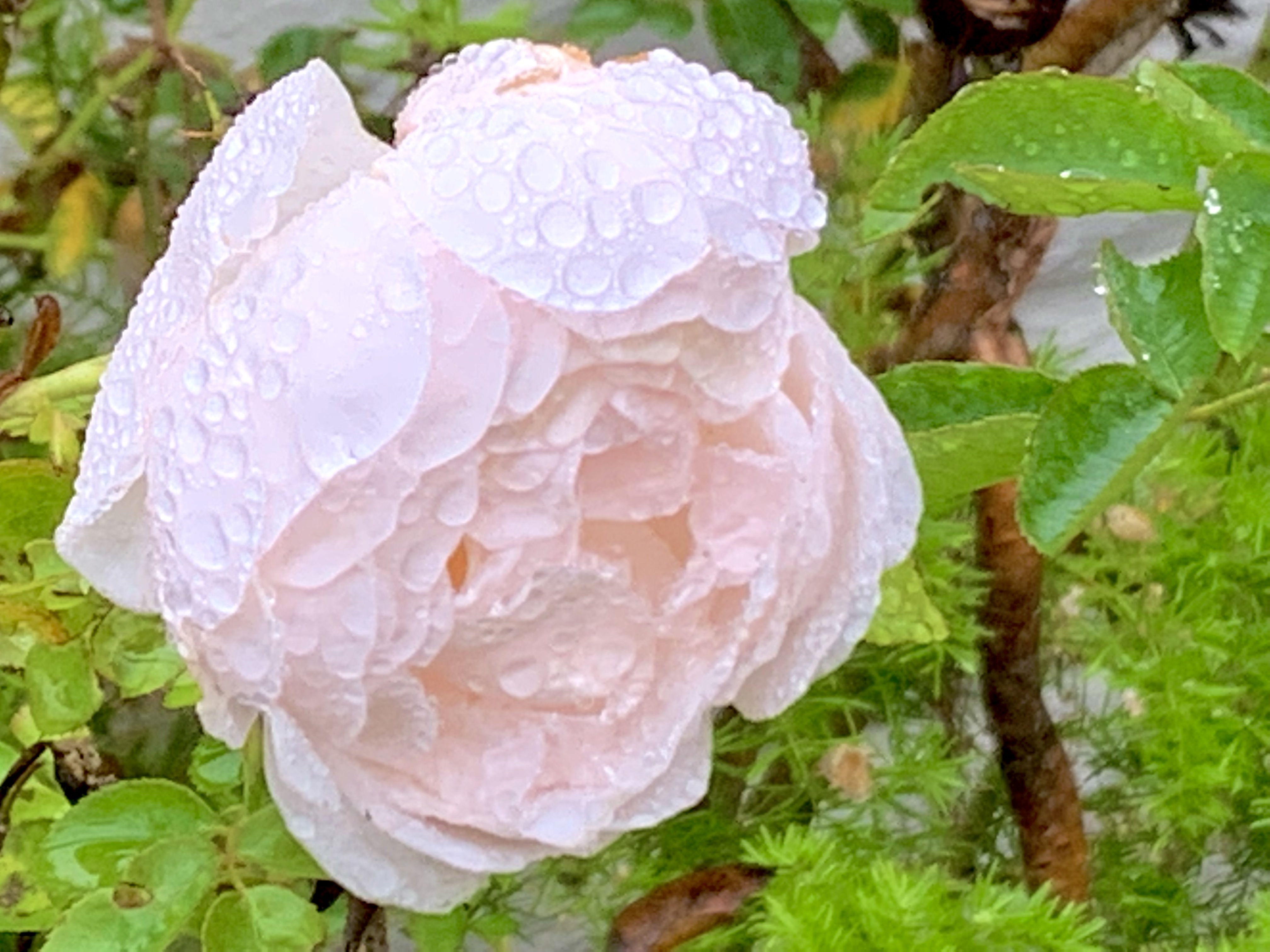
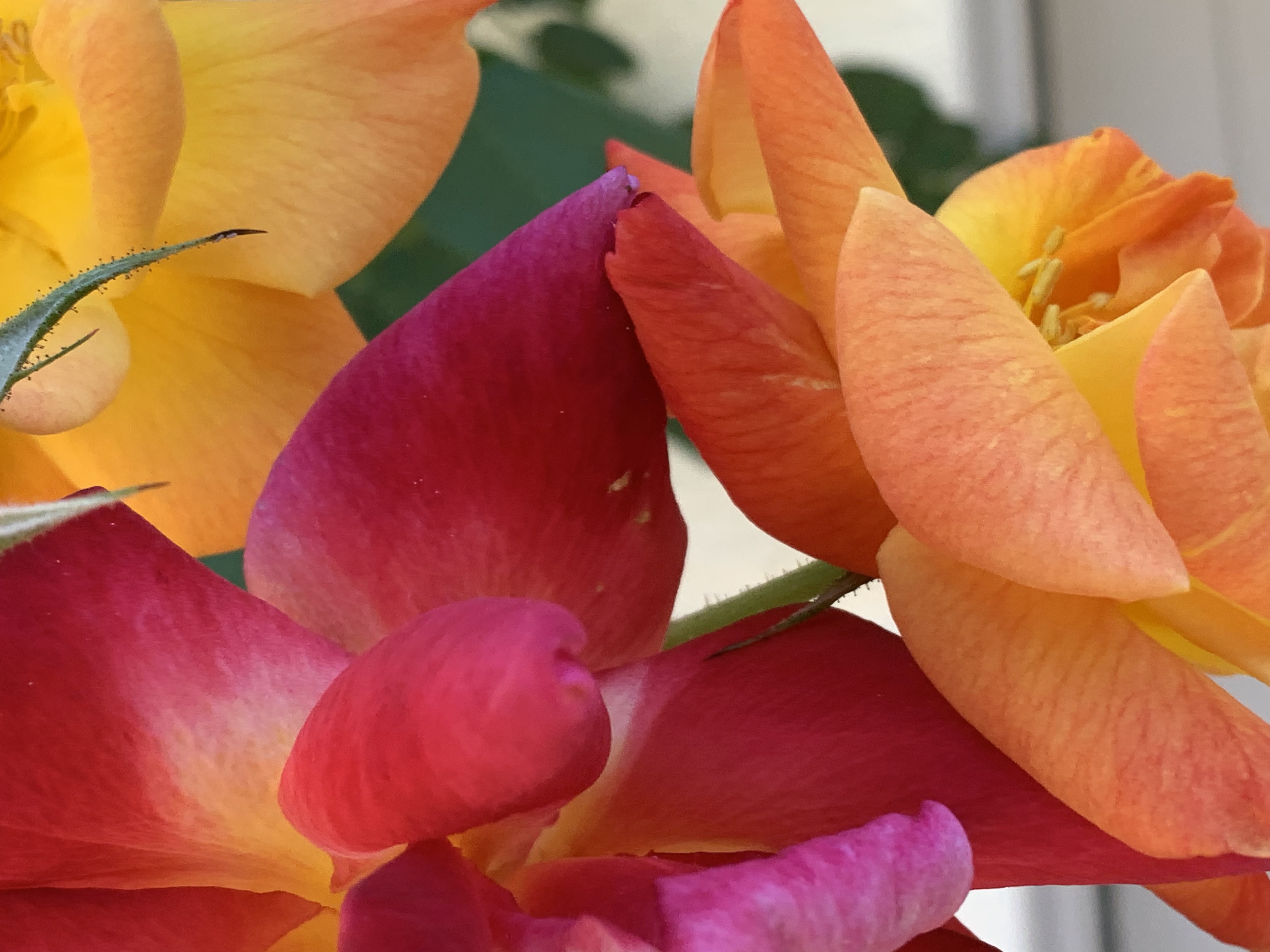
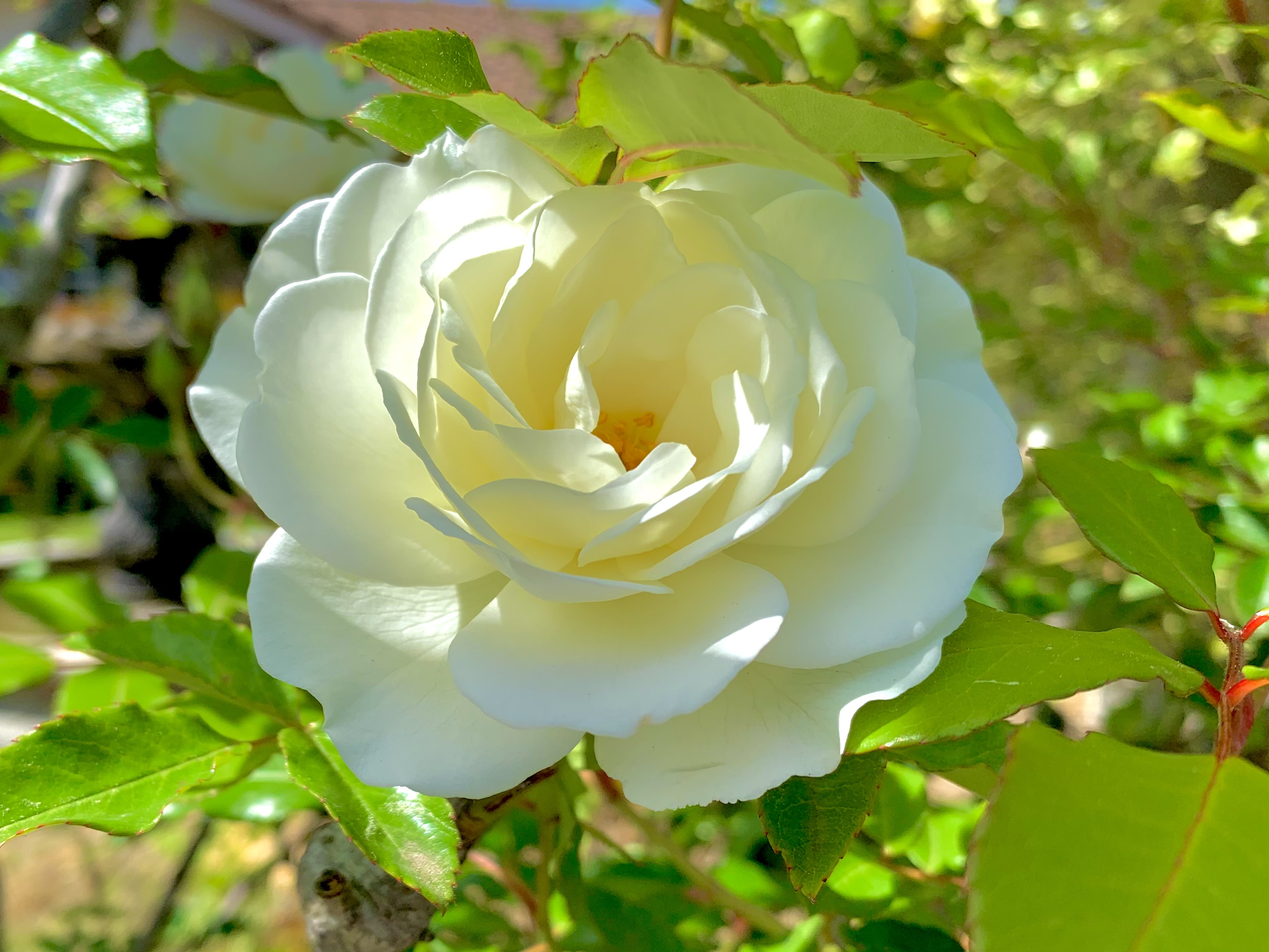
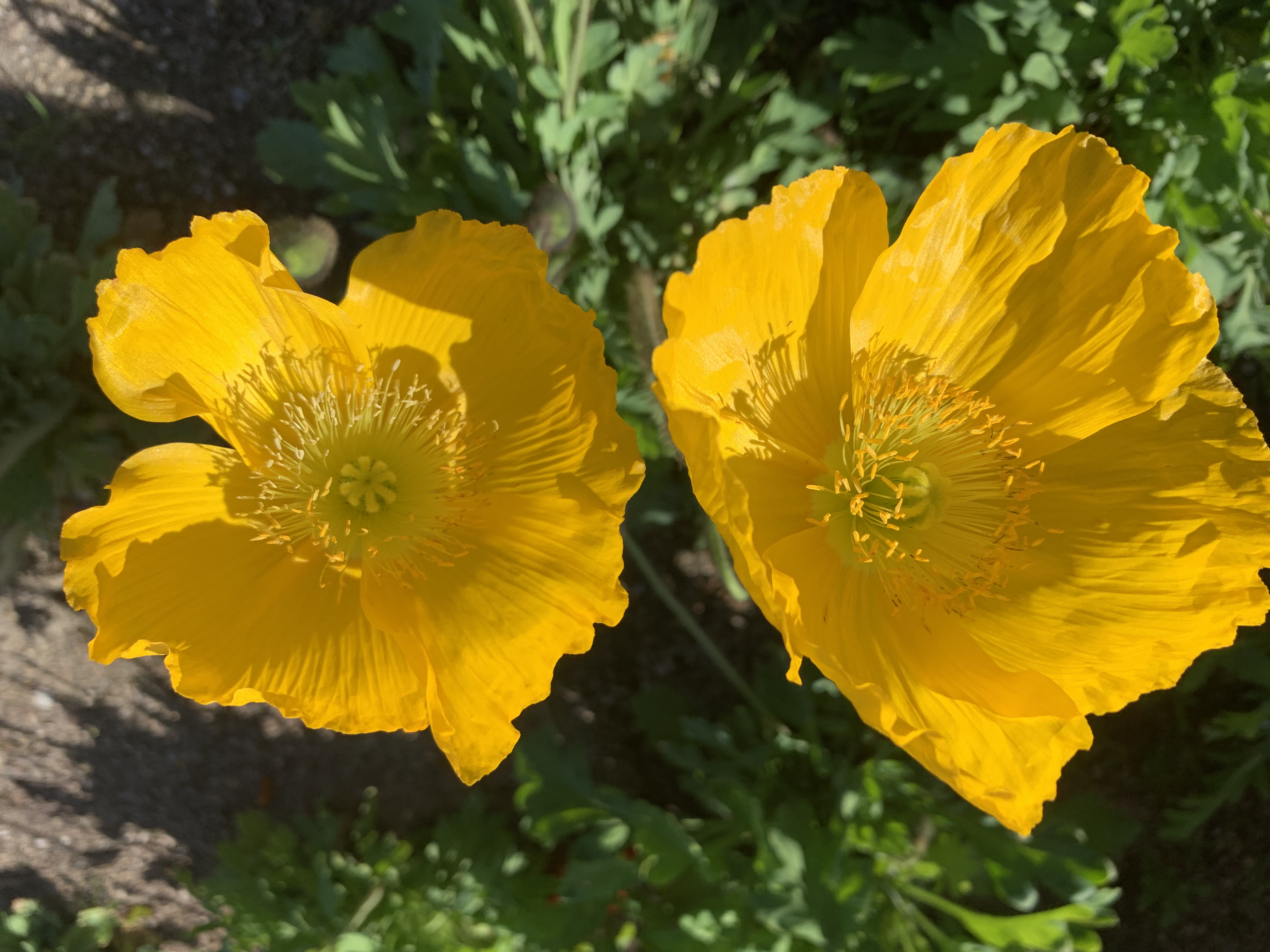
Today, I decided to change up the photo scene so I walked to a nearby State Park. Some nice flowers presented themselves on route. For instance, the bright yellow flowers under the bright blue sky reminded me of the bravery of Ukraine.
When I arrived at the park, two flags I am proud of greeted me. Of course, it doesn’t mean the State of California is perfect — nor is the USA. But most of us at least are trying to make them better.
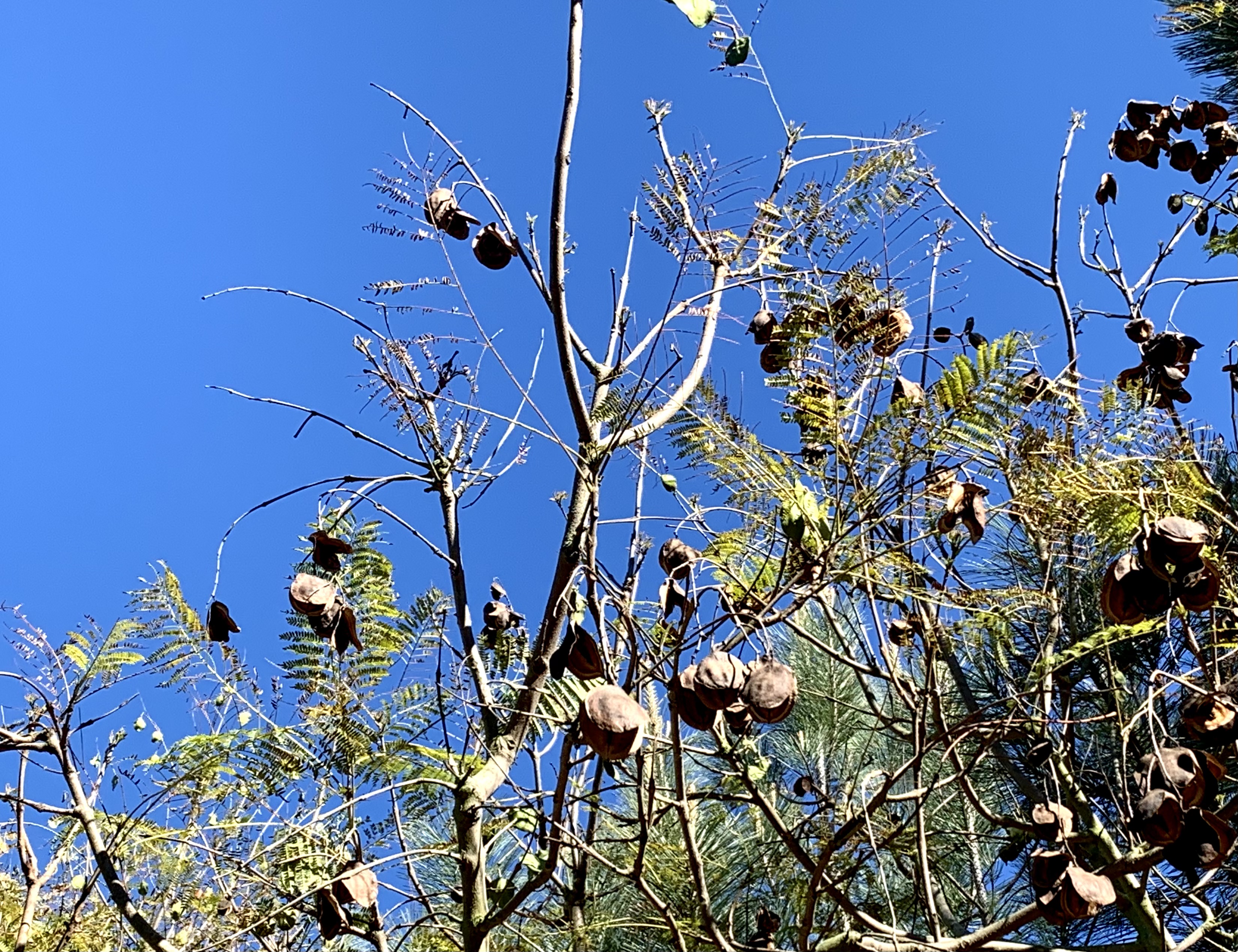
I was also rewarded with beautiful flowering trees on my walk on the park.
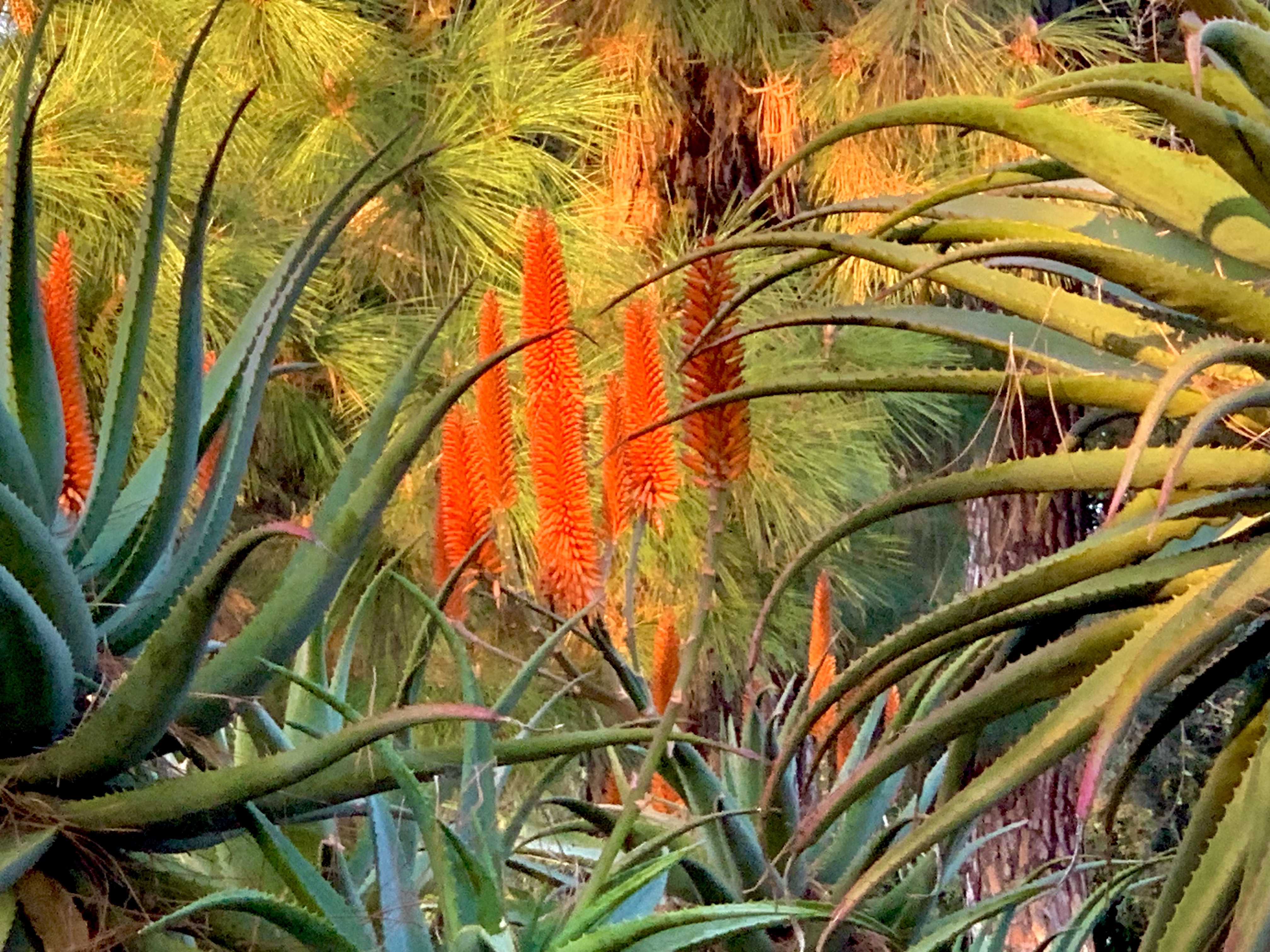
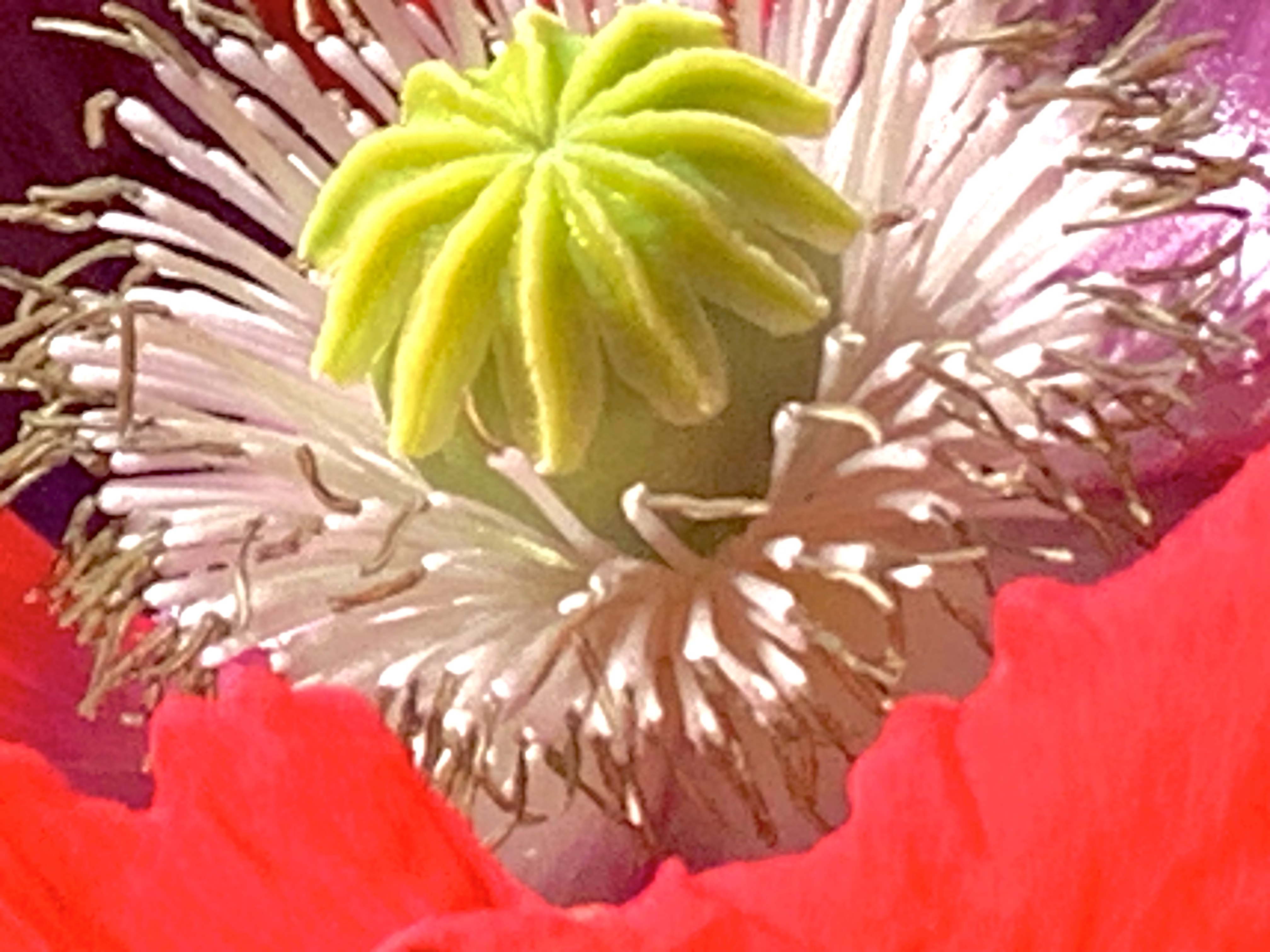
Many bright beautiful flowers also greeted me in my walk in the park.
Some of the beautiful flowers who greeted me on my walk in the park (as well as on the way there) showed their support for Ukraine and the bravery of her people.
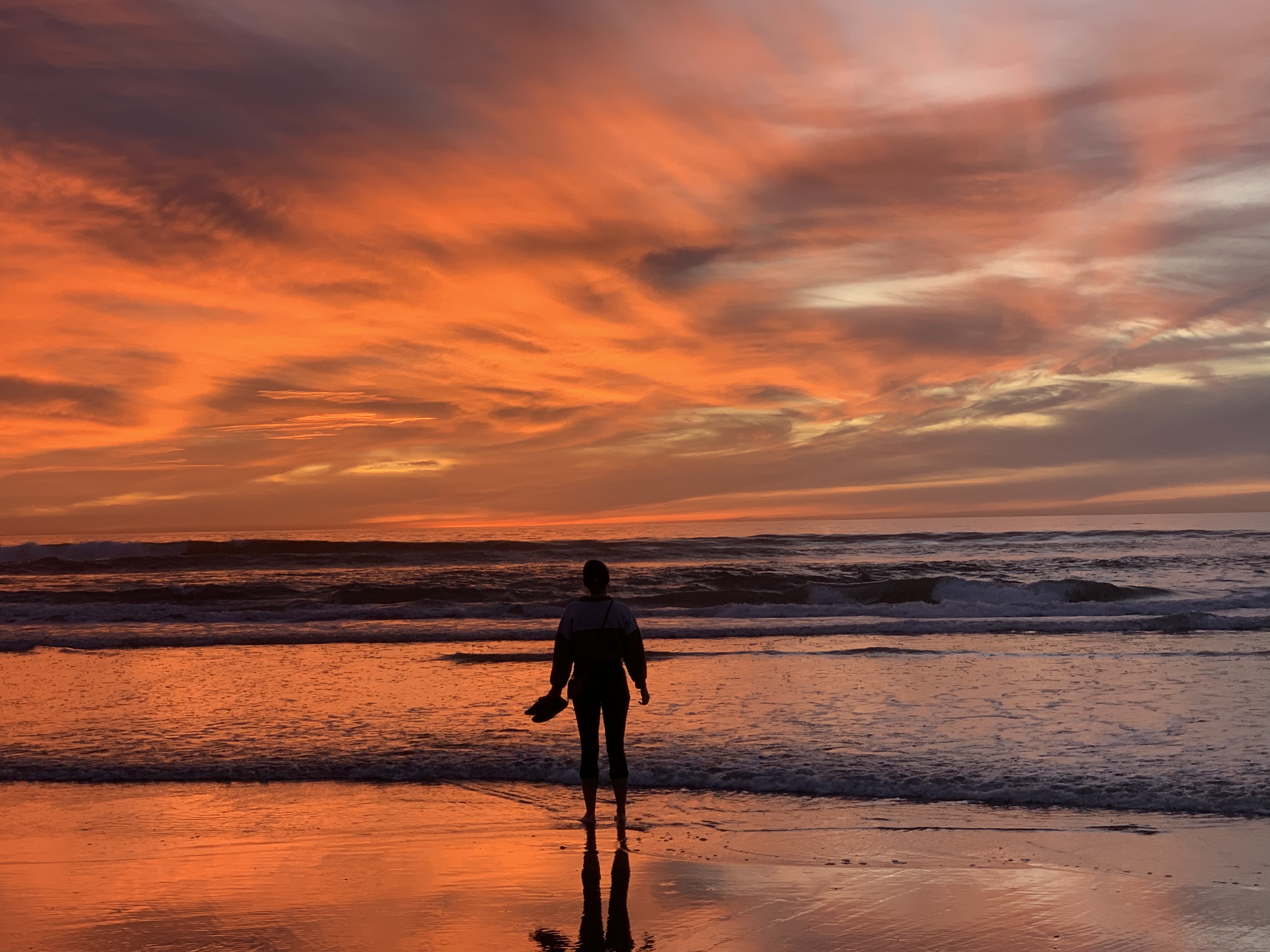
The most beautiful gift of my walk was completely unexpected— a very large & very colorful celebration in an Indian tradition. I strongly suspect it was a wedding since I noticed a nearby restroom said “grooms”; people were in a good mood; the celebration included all ages; and everyone looked beautiful.
In addition to the color fest, a band arrived and played beautiful music beautifully! I thought about trying to record some. Where this picture was taken isn’t far from the highway. Since it was behind me, it was easy to block that noise out with my brain. It would be far harder for you listening to it on your device though.
The walk in the park also reminded me how wonderful is the music made by little children. It is the same music regardless of language if you listen with your heart.
Once more, I find myself grateful that humanity survived & thrived in so many diverse ways. So many solutions to so many problems! Amazing wealth of experience! We can become wise at a whole new level — if we are respectful and kind to each other. Is that too much to ask? I really don’t think it is too much to ask.
I love also the way plants have invented so many solutions to so many problems. We have much more to learn from them — and each other — than we can currently even imagine.
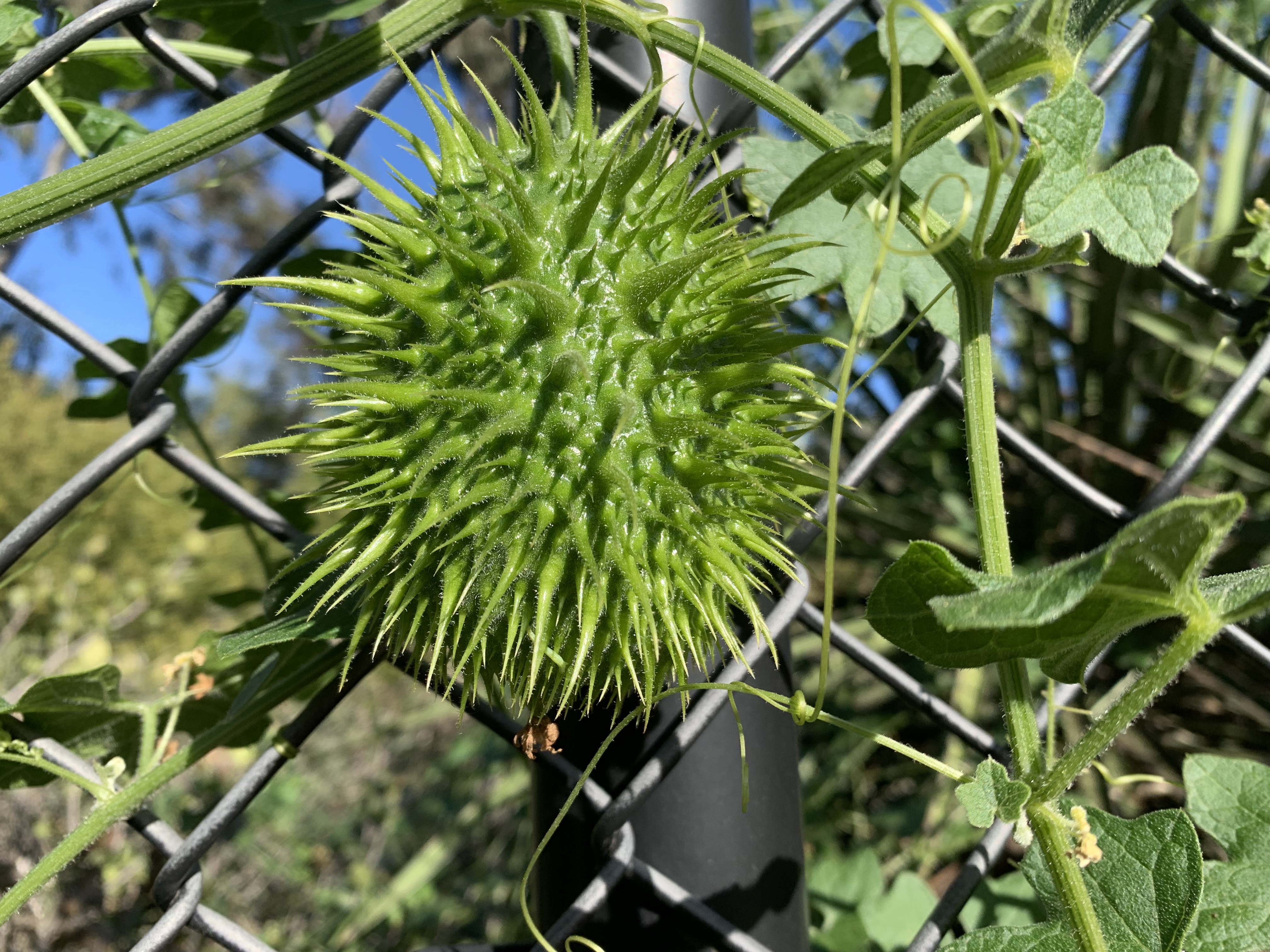
For example, I saw this “Wild Cucumber” as I began my walk home, still enjoying the music & the chattering children. This plant uses hydrostatic pressure to shoot its seeds out at 11 meters/sec. We can learn much from every living thing — including other humans.
She sensed that she was surrounded by others — some very like her and many very unlike her. Yet — she couldn’t shake the feeling that something was not right.
She felt — bound up. She wasn’t free to grow in the way she really wanted to. And now she was moving in a most peculiar way. Her ancestors had seldom moved in such a way as this except in times of great catastrophe such as an earthquake. Suddenly, she found herself completely disconnected from the nourishing earth. Beneath her was nothing but cold hard metal and a whirring vibration.
Now the warming sun disappeared, not as a gentle sunset. No. This was a sudden and violent transition from warm noon sun to complete and utter darkness. She sensed that she was not alone in this sunless prison. All of her fellow prisoners were also in a panic. Again, she sensed the cold hard metal beneath her and a deeper rumble of whirring vibration.
Then, and completely without warning, the sunlight again began to beat upon her with its full force.
Soon, she felt herself unbound. She struggled to understand. She tried to stretch her roots out, tentatively at first, as you might begin to wiggle your toes after waking from a deep coma. She felt an unslakable thirst, Then, she sensed moisture nearby and minerals.
She still felt as though she were in a very strange place. Had she formed her thoughts into words, she might have thought: “I have no idea why they would place me here of all places.” If rose had been human, that would have bothered her a great deal. But among her many distant aunts, uncles, and cousins, those who spent their energy decrying their placement, few survived. Her strategy, like those of her successful ancestors, was rather to spend her energy being as beautiful and varied as possible.
Her faith was strong. Had she had a verbal creed, it might have been something like this:
“I believe in the bees and the breeze.
I believe in my own heritage.
Like all other living things on earth today, my ancestry is 4.5 billion years old.
I believe in the power of my roots to seek out and find the nourishment I need; to keep in mind my goals of water and minerals. I push and push, and when I reach the impenetrable, I seek a way around. I dance the dance of life. I don’t avoid the strife. I relish it.”
In the next few days, visiting bees told her that there was plenty of sunshine around even though Rose herself was mainly in shade. That bee-speak was enough to give Rose all the hope she needed to grow tall and wide. She explored in every direction.
The bees that buzzed near Rose told her, in their own way, of the vibrant and varied colors of her many other neighbors. She found their descriptions exotic and evocative. From time to time, she attempted to emulate those neighbors. The buzzing bees would pause in their busyness on occasion to give her feedback on how well she matched the colors of her unseen neighbors.
Over time, she sensed the vibrations of other beings besides the bees. Feathering beings and furry beings, some large and some small. Mainly, they were friendly beings who admired her artwork. But there were also those who cared little for her artwork and instead simply came to feast upon her. Rose’s body became sustenance for mites and snails and aphids. Sometimes, other creatures came to protect her. She liked that. Sometimes, they failed to protect her and the pain became unbearable. But bear it she did.
Rose resolved to use the pain to make her creations more beautiful still.
With zero contrast, nothing can be seen at all! Beyond that however, it is interesting how many plants and animals as well as good designs show the property of Contrast. Plants “use” contrast, if I may speak in teleological terms, to attract pollinators such as butterflies and bees to their flowers. Plants also use contrast to “announce” to animals who spread seeds that their fruit is ripe and ready to be eaten. If the fruit part of a plant did not make such an obvious “announcement,” a forager might damage a plant by eating all of it rather than just the sugar-rich fruit.
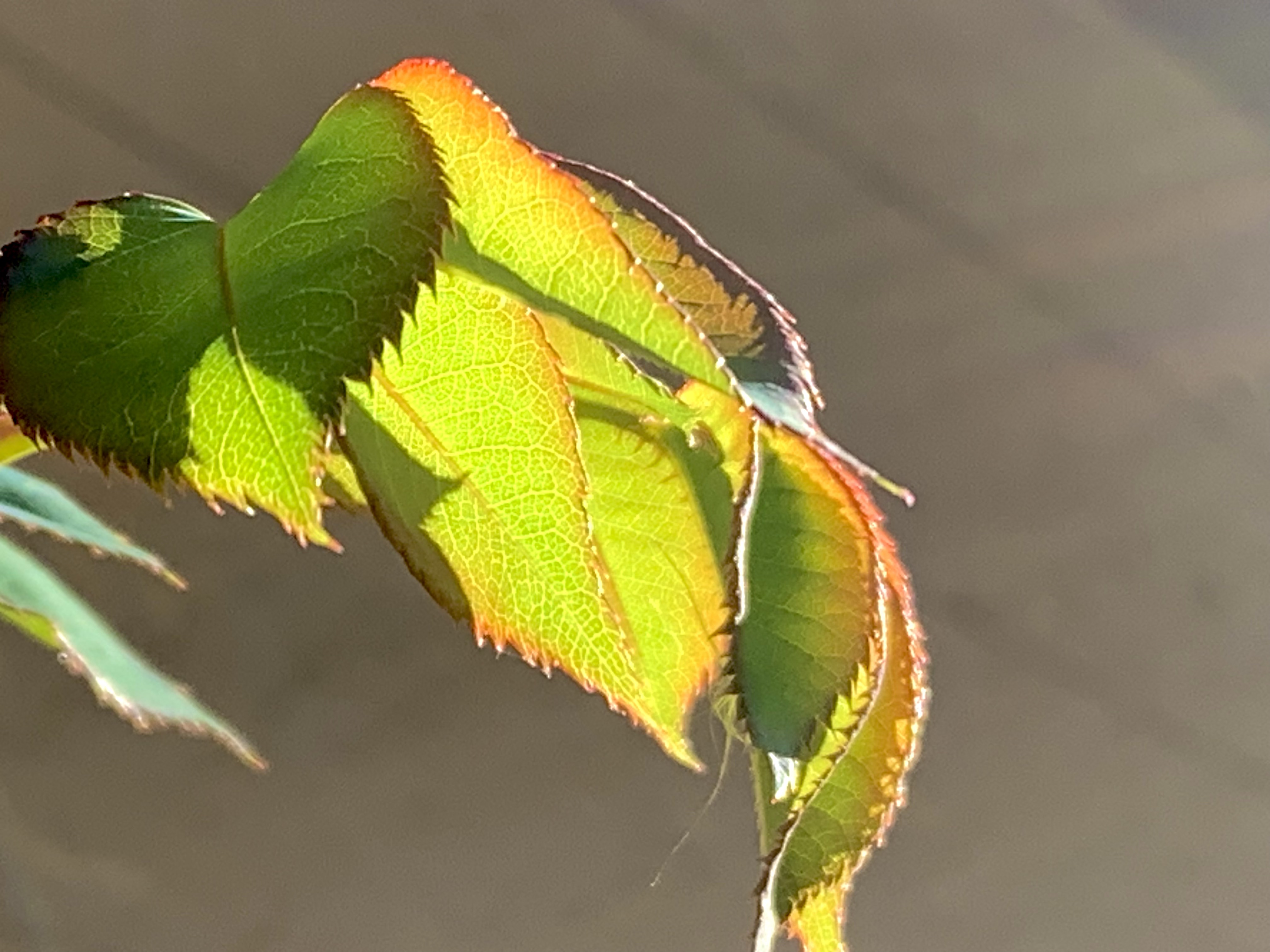
By contrast, fall leaves show high contrast which adds to their beauty, but this is probably just a “side-effect” of the leaves “saving” their water & chlorophyl and leaving other colorful compounds in the leaf. I suppose there could be an evolutionary advantage to a tree that is beautiful in the fall. I could imagine that bright colors attract animals and birds to “hang out” nearby and this means that the soil will be enriched by animal excretions and sometimes deaths. In some cases, the color might “signal” animals that fall is coming and if the animals take more appropriate actions, this makes for a healthy ecosystem for the trees. I know of no such evidence however. It seems likely the bright colors are a beautiful side-effect of the tree breaking down the no-longer-useful chlorophyl to components that are stored in the roots. The more we learn about trees though, the more “clever” they seem so I wouldn’t put it past them to have “reason.”
Some animals, such as zebras and tigers, use contrast as a kind of camouflage. If you see a picture of a zebra or tiger out of context, you may think, “What? How is that camouflage?” But in the bright sun, grazing in tall grass (or lurking there, hoping for dinner), it actually does serve such a purpose.
There is also a more subtle kind of camouflage that some animals employ. High contrast can make it difficult for a potential predator or prey to “parse” the visual image. I believe some of the professional tennis outfits, for instance, make it harder for an opponent to “read” the actual body positions from across the court, especially with non-foveal vision. Is that what’s going on in the picture below?
Considered separately, the shadow of the fence in the photo below strikes me as more beautiful than the fence itself. This is largely due to the higher Contrast in the shadow. I think another property “Roughness” also plays a part. The fence is machine milled and regular. The shadow falls on uneven ground. Rather than obscuring the Contrast, the Roughness actually enhances it. In addition, the fence appears quite separate and distinct from the greenery behind it. However, the shadow is partly determined by the fence and partly determined by the uneven ground. This means the shadow exhibits more “Deep Interlock and Ambiguity.”
I do think the combination of fence and shadow is more beautiful than either taken alone. Taken together, there is an additional layer of Contrast between the “mechanical” regularity of the fence and the rougher feel of the shadow.
One of the things that trees do is add contrast by virtue of the branches and leaves casting irregular shadows in many places but letting bright light through in other places. Here is a simple case.
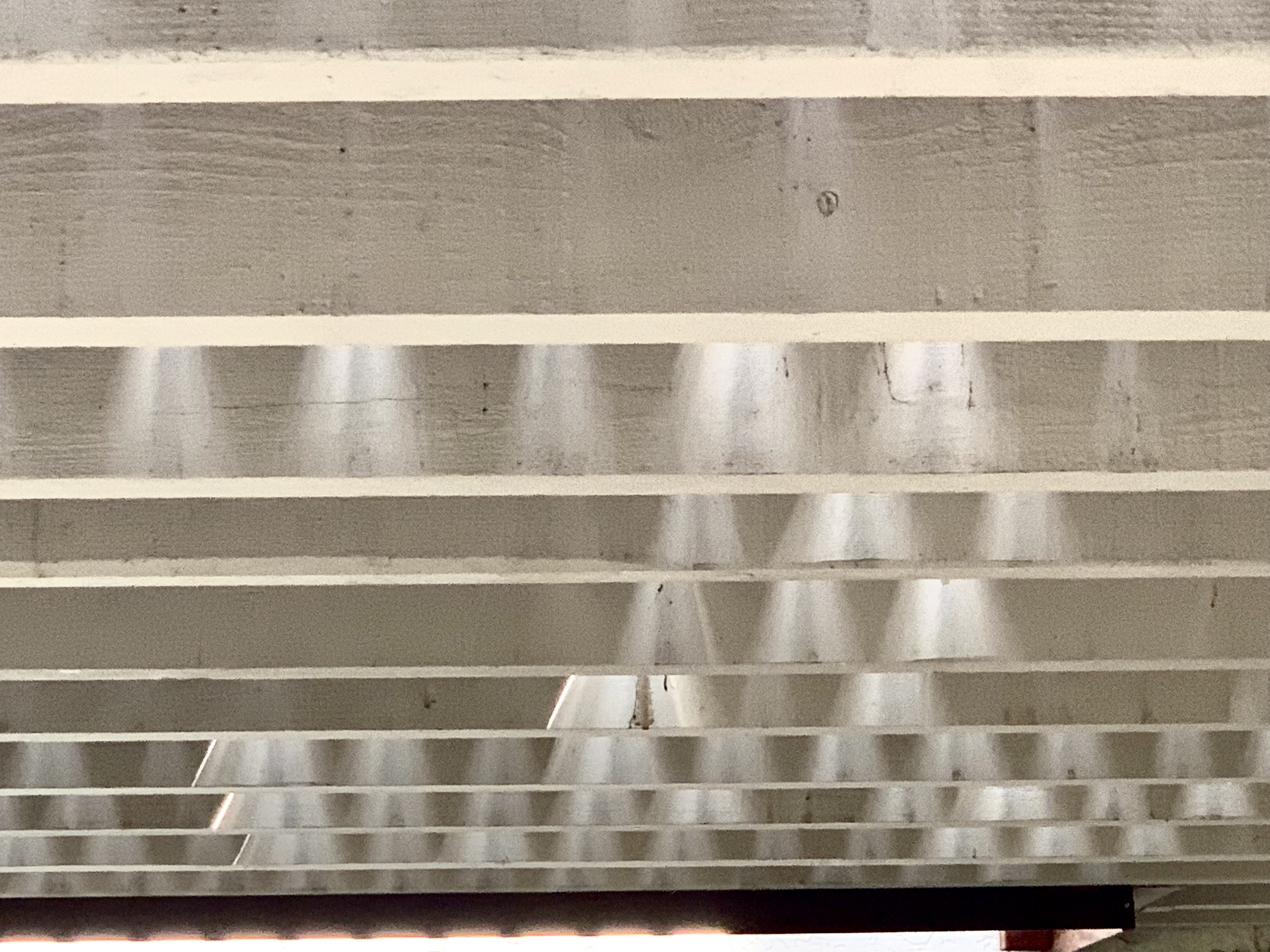
In the photo below, the landscape architect has likely intentionally designed this arbor partly with contrasts in mind. Dark vs. Light; Horizontal vs. Vertical; Straight vs. Bent; Built vs. Growing. What other contrasts do you see?
Contrast is often desirable not just in terms of vision, but also for other senses. A good salad, for instance, shows contrast in color, but also in terms of textures and tastes. Orchestral music shows contrast in terms of loudness, timbre, harmony, melody, etc.
Living things also exhibit contrast, not only in their visual appearance, but also in terms of the rhythms of life. Many plants and animals exhibit both daily cycles such as sleep and wakefulness, but also yearly cycles (hibernation, aestivation, migration, mating season, losing fall leaves, blooming & fruiting, etc.). In fact, many animals & plants only live one year.
Stories typically exhibit contrasts of various sorts. A story (whether play, movie, novel, or short story) is often more interesting when set in both wartime and peacetime, in both country and city, in two different times, etc. In addition, a good story often has contrasting characters such as hero and villain, or two less extreme characters, one of whom is a “foil” for the other. The plot itself is constructed of contrasts in value. The hero loses an athletic contest. Then, the hero wins! Then, the judges unfairly strip the hero of the medals. Then, an investigation reveals that the hero was framed and the hero prevails after all. Love may conquer all — but never without a struggle!
This succulent pictured below seems beautiful to me partly because of Contrast. Is there an aesthetic “purpose” to the contrast shown? Or, is the real “point” to provide the sharp spikes on the edge of the plant and in order to make those spikes effective, the plant needs to be drier near the edges or have a yellow pigment that somehow facilitates the growth of spikes? Perhaps the plant’s growth is limited (in the Southwestern US) by the available water and not at all by sunshine (which is plentiful). Therefore, there is no “point” to having the entire plant green.
If it seems too far-fetched to imagine a plant exhibiting contrast because it’s more beautiful, it is not to far-fetched to imagine animals exhibiting contrast to attract other animals; most notably, a mate. Insects, birds, mammals, fish, sometimes exhibit “displays” of high contrast color in order to attract mates. Typically, such displays are only used during actual mating season.
In addition to seasonal and daily “contrasts” in behavior and appearance, animals often exhibit contrast at a finer temporal granularity. As humans, we breathe several times a minute and our heart beats about once a second. Some aspects of our anatomy and physiology have evolved to provide antagonistic forces and processes. We have, for instance, our sympathetic nervous system that prepares us for “Fight or Flight” reactions. The para-sympathetic nervous system turns on a “rest and digest” mode also called “feed and breed.” Our sensory and motor systems use both excitatory and inhibitory processes to “sharpen” what we perceive and the actions we take. Our musculature often has muscles that produce “opposite” results. Our biceps bends our arm and our triceps straightens our arm. The adductors in our legs move our legs inward toward our trunk and the abductors move our legs apart.
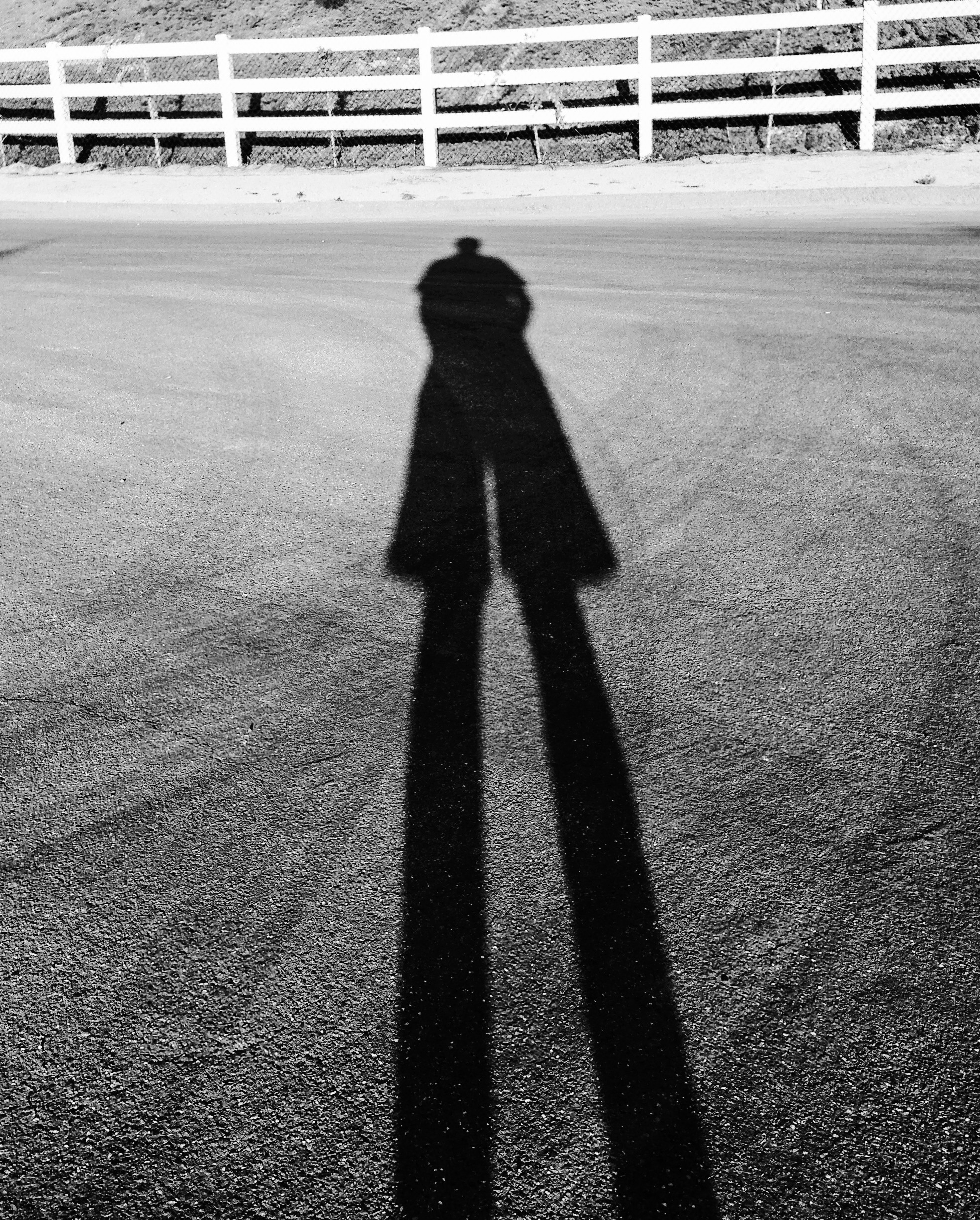
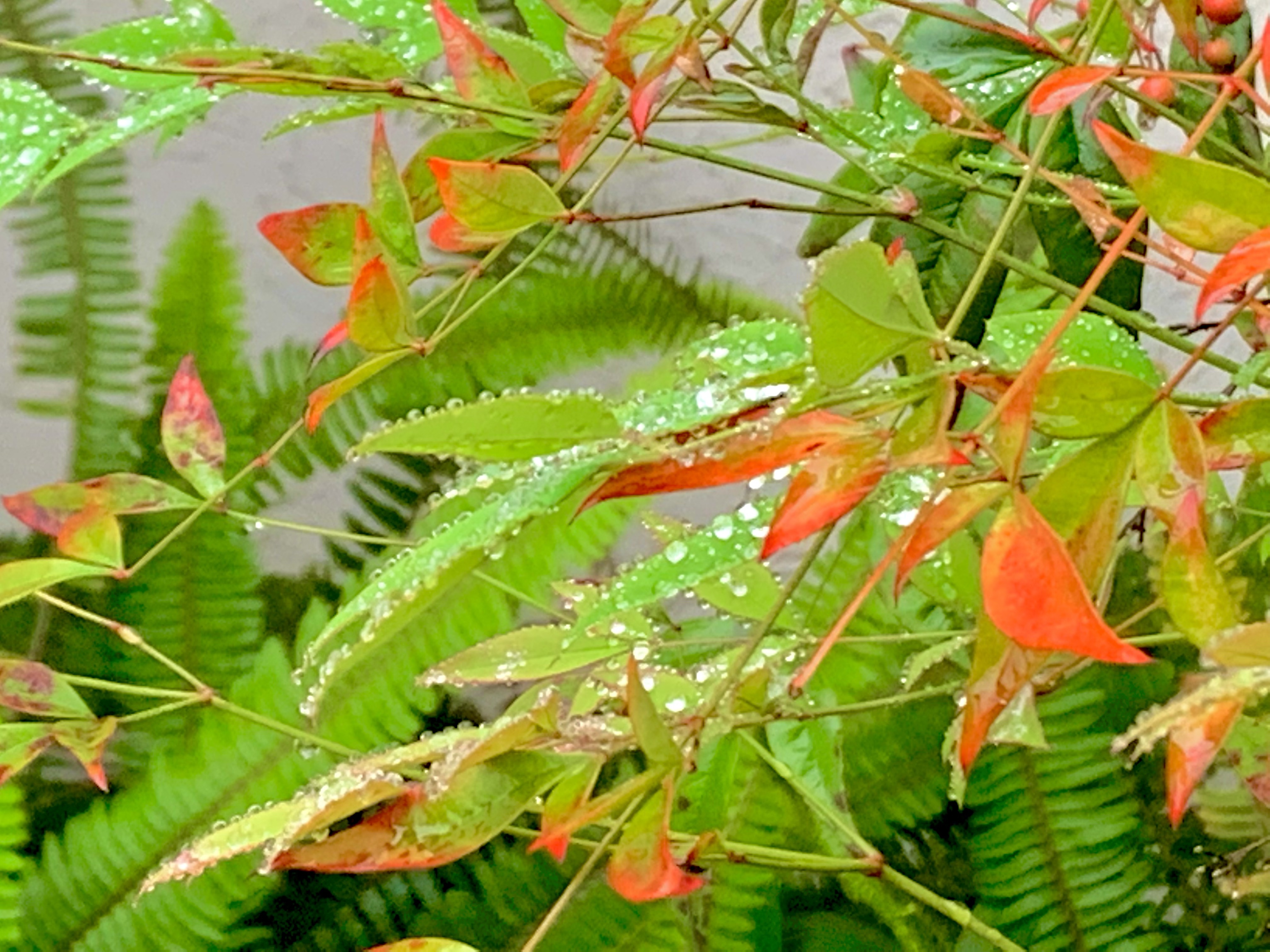
Contrast is so prevalent in the natural order of things “out there” and in the structure and function of our own bodies that it is hardly surprising that our conceptual structures often exaggerate contrasts. We often think, for instance, in terms like these: “Up or Down? Liberal or Conservative? Good or Evil? Strong or Weak? Black or White? Growth or Decay? Orderly or Disorderly?”
If we return to the photo of the fence and its shadow, for example, we are tempted to describe the darkest parts of the shadow as being places without light while the spaces between have light. Of course, there is light, even in those shadows. Light is reflecting off the nearby trees, houses, grape vines, sand, cars, etc. There is nothing shown in this photo that has no light.
As Amanda Gorman pointed out in the recent Presidential Inauguration —
“For there is always light,
if only we’re brave enough to see it
If only we’re brave enough to be it.”
When it comes to User Interface design, contrast has many uses. For example, contrast is often used to signal whether an item is chosen or not, or whether an action is available or not. Interfaces often include text and the text is easier to read if the contrast is higher. In the early days of human computer interaction, text was composed of a relatively small number of bits that were either on or off. High contrast came with the technological limitations of the devices. More recently, text often appears as dark gray on light gray rather than as black on white. Why? I have no idea. People sometimes claim that low contrast is “easier on the eye.” So far, no-one has been able to point to empirical evidence. However, text is harder to read when the contrast is low. If the user is old, or trying to read in glare, or has limited vision, or the reader or device is moving or vibrating, low contrast text can become illegible. The “worst” cases I’ve seen are on devices such as CD players or smoke alarms. To simplify (and therefore cheapen) manufacture, the letters are not painted at all but simply embossed as white on white or (even worse) black on black. From my personal experience, few things in modern life are as pleasant as being awoken around 3 am by a screaming smoke alarm which has cryptic and unreadable directions in white on white.
At a more abstract level, a high level of conceptual contrast can often make the user experience less frustrating, more enjoyable, and more productive. What do I mean by “conceptual contrast.” In this context, I mean that two related actions or situations that are clearly differentiated in the commands, the explanations, the terms etc. are less prone to confusion. Let’s pick on what I see right before me: the high level “Pages” tool bar. “File Edit Insert Format Arrange View Share Window Help” At a visual level, these are nearly white on a black background; i.e., easy to read. But what is the conceptual contrast between “Format” and “Arrange”? How about “View” and “Window”? Are there other terms that would be better cues as to what these groups of functions do?
The same for menus within the document. I see above the material I am actually typing another use of the words “Insert” and “Text” appears right next to it. But how is this different from “Text” on the right? It’s not that any of these items are so confusing that they cannot be learned. “Style” when you are writing (as opposed to “word processing”) generally refers to something much more abstract that the type of font and the size or color of the text or the spacing between lines.
I think a more fundamental issue is that typical text editors, after the “Clippy” fiasco, have steered away from explicitly supporting the process of actual writing. That would be much more difficult. I’m not going to try to design such a system here. To give a hint of the kind of thing I mean though, suppose that a text editor explicitly supported writing a short story. Embarking on writing a short story, the user might be presented with a choice for guidance. Perhaps this hypothetical writer wants to try writing a “locked room” mystery. And, maybe they want lots of guidance. So, the software leads them through an idea generation phase. In that phase, perhaps it is more productive to turn off various kinds of “autocorrect.” Perhaps the author is encouraged to “solve” the basic problem (how was the murder committed) before actually beginning the writing. Maybe there is a high level of visual Contrast which serves as a constant reminder to the author that they are, at this point, generating ideas.
Von Oech suggests that problem solving involves four stages that he illustrates with four “hats” — an explorer’s pith helmet for the Exploration phase; an artists beret for the Creation Phase; a judge’s wig for the Editing or testing phase; and a Viking warrior’s horned helmet for the marketing and sales phase. If such a model were supported by the software, you might expect a strongly contrasted visual interface to reinforce the phase of writing that the user was in. The Exploration phase might consist visually of cards that various fields that would support research. The artistic phase might be a mind-mapping tool. And, so on. The user would know at every glance which phase of the overall writing process they were “in.”
It may be that any such process involves too much overhead or is too rigid. But what is the alternative? At present, the author must either keep almost all the information about their goals, ideas, and processes in their head or in a separate document or spreadsheet. As I look at the screen in writing there is almost no clue about “where I am” in the process of writing. Whether or not you buy into the specific four-stage model of Von Oech, I do believe that various phases of writing do offer contrasts in terms of how that phase should be supported. I only chose writing as one example.
Nearly any task that the user is engaged in has some structure to it. Scientific research, learning a foreign language, organizing a tennis tournament, planning a trip, finding a house, buying a book on-line, etc. All of these have different sub-tasks. In some cases, the user wants more flexibility; in some cases, less flexibility is actually helpful. But most “application programs” seem to me to be deficient in terms of guiding the user through a process; giving any visual indication of where the user is in the overall process, or of tailoring actions to which subtask the user is engaged in. If a user is generating ideas, for example, pointing out grammatical errors, typos, and spelling errors is distracting and not that helpful. On the other hand, if the user is finished writing and is proofreading, then such suggestions may be helpful and appreciated.
What do you see as the uses of Contrast in User Experience? Is it best thought of as a visual property which may be nice to have but is not crucial? Or, does Contrast also apply to different subtasks or phases which need to be reflected in both the appearance of the UI and in the way the functionality works?
Our garden has plenty of flowers and plenty of bees. Obviously, the two are not unrelated. The flowers (and fruit trees) do better because there are so many bees. And the bees do better because there are so many flowers. And, here I am — mainly not working so hard as either one but enjoying them both.
It was not always so. As a child, I was stung a few times by bees and wasps and became quite wary of them. At one point, my family moved and my walk to school the very first day took me through a field of September wildflowers that was filled with bees and wasps of various types. (By the way, there are noticeably fewer insects in the world than when I was a child.) Anyway, I walked through that field very carefully, afraid with each step that I might get stung. Then, one day as I stood there calculating whether to slowly move a goldenrod stem with its huge blue wasp or whether it would be better to wait until the wasp flew away. But even if I waited, it was pretty likely that some other species of stinging insect would soon alight.
It occurred to me that I was causing myself more pain by worrying about getting stung than the pain would be if I actually got stung. From then on, I still tried not to annoy the bees, but I walked through the field swiftly and without fear.
I never did get stung.
Fast forward nearly 70 years, and I now talk to the bees in the garden when I happen upon one. They are fun to watch. In their own way, they are every bit as remarkable in their performances as is a professional dancer, or a professional tennis player, or an Olympic gymnast. Just as required by those humans, their beauty is crafted in three dimensions and in real time. The bee, however, is simultaneously working six limbs, not four; she is also working her antenna, and often her mandibles as well.
The other day, I was out taking pictures of flowers and I happened to notice a honeybee fly into the thick green foliage of our mulberry bush. I said to her, “Well, you’re a bit late. The flowers are all gone and now there’s fruit but it’s not ripe yet.” Then, I began to wonder whether she was there simply to take a nap. On several occasions, I had come across bees napping in flowers. But no. As I began to watch her, it was apparent that she was quite busy doing…
…something. But what? I had never seen a bee act like this. Why not watch this short movie and see what you think she’s up to? Then, you might want to watch again. This time, instead of doing your detective work, just enjoy the show. Imagine this cute little bee as a professional dancer or athlete. Revel in her speed, rhythm, coordination and beauty.
Then come back, to learn a little more about bees.
I posted the movie on various fora that know about bees and from looking at the answers posted (thank you!) and reading on-line, I have come to the conclusion that she is most likely collecting plant resin that will be helpful in producing propolis. Have you ever heard of propolis? I had not. Here’s a bit about it.
Propolis is a natural resinous mixture produced by honey bees from substances collected from parts of plants, buds, and exudates. Due to its waxy nature and mechanical properties, bees use propolis in the construction and repair of their hives for sealing openings and cracks and smoothing out the internal walls and as a protective barrier against external invaders like snakes, lizards, and so forth, or against weathering threats like wind and rain. Bees gather propolis from different plants, in the temperate climate zone mainly from poplar. Current antimicrobial applications of propolis include formulations for cold syndrome (upper respiratory tract infections, common cold, and flu-like infections), wound healing, treatment of burns, acne, herpes simplex and genitalis, and neurodermatitis.
Look at that list of uses of propolis! That alone should encourage us to want to save the bees. Not to mention that they benefit us by making our world yummier and more beautiful! In reading about bees and propolis, I also discovered that the worker bees in a hive have a regular sequence of jobs. They are not just foragers. They are cleaners, child-bee care workers, builders, defenders, and finally foragers. Here’s a link that describes that and more about honeybees.
When it comes to life, the more I learn about a particular type of animal or plant, the more remarkable I realize it is. And, that does not just apply to the honeybee. It’s true of all life. Recently, scientists have discovered that trees communicate and cooperate in very sophisticated ways! We know honeybees communicate information to other members of the tribe about food sources, plentifulness, and type. Do they tell stories as well? In the middle of the night, right before the hive goes to sleep, do the foragers tell their tales about the joys and wonders and dangers of the world outside the hive to the janitors, nurse-maids, plumbers, and plasterers? When a bee graduates to hive defender, that is when they have their first glance at the outside world. While they’re doing that — defending the hive — are they eager with anticipation of the time that they will become foragers? Caterpillars can be taught things that the butterfly remembers.
The pleasure of discovery is not only about wild forms; it is also true of people, all of whom are filled with remarkable stories. Not everyone shares their stories, and some people lie about their experiences. I find, however, that the vast majority of folks are willing to recount their experiences fairly truthfully.
If you watch and listen, there are many-splendored somethings to be gleaned from every story.
Maybe it is the bulb itself that needs to be replaced.
Or, maybe it needs a new starter.
Whatever the cause,
It is flickering again,
That kitchen cylinder of Noble Gas.
And, my wife — she much prefers
To have no light at all.
The on-again, off-again
Bothers her that much.
In truth, visitors are the same,
Commenting with a wince:
“Did you notice there’s something wrong with your light?”
Perhaps I kind of like some variability in this indoor world, our new universe —
This universe of manufactured items,
Rolled off the assembly line
Somewhere — I don’t know where,
Pittsburg, Brussels, or Bombay —
Who can tell?
Is something so wrong with a light
That glows with a twilight dimness
Humming, droning, for lazy minutes,
Then flashes white hot brilliance — and
Then finds contentment yet again with a dull orange glow?
Yes, I suppose it shall have to be replaced.
Ending its life in a landfill somewhere far from home
Or maybe in my own back yard.
But meanwhile, I wonder why no-one but me
Ever seems to wonder why it brightens now?
What causes it to flicker so?
Cosmic rays? Voltage fluctuations?
And, in either case, isn’t this sparkly tiny tube
Quite a rather remarkable little instrument indeed?
Registering either:
The Big Bang that began it all
Or
Summarizing the million little habits of my unseen fellow citizens
As they turn on and off their electric shavers, hair dryers, and stovetops?
It shall have to be replaced, of course,
(Someday, when we are out and about again) —
(And shelves are brimming full again) —
But meanwhile:
One could do worse than be a swinger of birches.
Many Paths led the small group back toward the Center Place of the Veritas. She contrived to walk near Cat Eyes and Cat Eyes walked behind Jaccim. Thus, Many Paths continued a sort of dialogue with Jaccim.
“Ask him if the mother horse loves her baby horse.”
Cat Eyes quickened her step till she walked close to Jaccim. She noticed that he seemed fairly recovered from his injuries.
“Oh, yes! Very much!” Cat Eyes translated back to Many Paths who then elaborated this idea by asking about all sorts of animals. When she judged that the mind and heart of Jaccim were both prepared, she shifted to a related but different topic.
“It seems to me the natural order of things. The natural place of adults is to care for children, not to enslave them. We want to teach them but we don’t want to harm them. Ever. Every living thing has a pattern. A pine tree grows in the pine tree pattern. An oak tree grows in the oak pattern. A grape vine grows in the grape vine pattern.”
A long conversation ensued between Cat Eyes and Jaccim. At last, Cat Eyes looked back over her shoulder to Many Paths. “I think he understands. He understood after I gave your specific examples. I don’t know of a way to say ‘the natural order’ or ‘the natural place’ in ROI. That doesn’t surprise me. They have little respect for the way things are in nature.”
Cat Eyes walked another hundred yards in silence. At last, she spoke again, loudly enough for all of them to hear. “It is as though everything in nature is there for them to use…to steal for their own use. So, perhaps it is not surprising that they also steal children away from their parents.”
Many Paths furrowed her brow. She shook her head. She thought about it and thought about her dream and the dream of She Who Saves Many Lives. She looked out over the beautiful plain below and felt a hollow in her chest much as she felt when Shadow Walker and Tu-Swift were away and possibly dead. Her sorrow and worry now were not for the two people she most loved, but for her the entire tribe whom she loved. If these people who cared not for nature — these people who stole other people’s children… if they had killing sticks and they were numerous and cruel, this might all be destroyed — all the beauty, all of nature, all of the Veritas. Everyone and everything that she loved. Gone.
For a moment, she pointed her hand toward Jaccim’s back. Her nostrils flared and she saw flames shoot from her hands and burn him badly. Then, Many Paths shook her head to wipe the fantasy from her mind. She felt she had reason to hate these ROI and the only one in sight was Jaccim. Yet, she may need him in more ways than one.
A more central reason for her sudden anger was that she seemed completely unable to understand this man’s heart. She had all seven rings of empathy and she still had no idea how he could look at the world the way it seemed he did. But she must try. What if there were some useful truth in the way he looked at the world even though it was distasteful to her? And, even if that turned out not to be the case, it was certainly the case that understanding the way he thought would be of enormous use in case of war, or, in case of slavery. She had to try, for the sake of everyone she loved, to try to understand this man’s heart and mind. It is clear, Many Paths suddenly thought to herself — I must learn this man’s language. “Cat Eyes!”
“Yes?”
“I want you to teach me ROI. Will you?”
“Certainly. But really, you should learn from Jaccim. He knows it much better and he speaks with the … the flourish of the way the words are spoken. Perhaps…perhaps it would be good for everyone to know all the languages, at least some. Do you think so, Many Paths?”
“Yes. I certainly do.” Then, Many Paths thought to herself, how can the people do all that needs to be done though? She had taken the lead for awhile and suddenly a hart leapt across her path only a short distance ahead. She was thrilled with the beauty of the deer — as though all the parts worked together with the single goal of staying alive. That’s what we need to do with the Tribe as well, I think. Yes. I must explain all the plans, but different persons of the Veritas will be responsible for different parts. But we will all know the whole of it. And I may not even know all the parts we need, but there’s already a fair number.
There is the matter of the Killing Sticks. We need to know more about them, but we also need to begin thinking about other weapons in case we cannot get them. Eagle Eyes would be good for that. But…she’d also be important in leading reconnaissance to the Walled Camp of the Z-Lotz, both because she’d been there and because of her superior eyesight. I could lead the thinking on alternative weapons, at least until we know more about the nature of the Killing Sticks. Some of the Veritas, but not all, should put energies into knowing as much as possible about these people who seem not to care about nature. But they are of nature. How can this be? How can this be? It is like a child hating his own mother. Perhaps that is why they steal people’s children. Perhaps such a child hates their own mother for not protecting them. Then, such a person might also not feel the truth of their connection to the Tree of Life. Yet, Cat Eyes seems all right. She’s not … disconnected. I think it’s time for a talk with She Who Saves Many Lives.
Many Paths reflected ruefully that her usual joy in walking back toward the Center Place of the Veritas was marred by her own thoughts. Once she decided to lead the group that would think about weapons, she could not turn that stream off. Instead of noticing the brilliant pink glow of some Lady Slippers growing near a stream, she thought of their medicinal properties as a soporific. She began to wonder how much would be required to poison opposing warriors, or, if it came to that, slave-owners. Poppy Pods could be used the same way. Cat Eyes had said that some of the slave children of the Z-Lotz had found ways to thwart their overseers. She herself had managed to sicken those who “owned” her. She had never used enough poison to kill anyone, not because she would feel guilty, but because it would increase the chances of being found out. She would typically contrive, not to sicken everyone in a family, but one person at a time, so that every few weeks, one or the other would find themselves retching all day or unusually tired. That way, her captors had simply assumed an illness was working its way through the family. She would feign these symptoms herself so as to avoid suspicion.
And, now, instead of enjoying the delicate blooms of the Lady Slippers for their own sake, Many Paths found herself eyeing everything in the field and the forest as a possible tool — a weapon of defense or offense. Wasn’t this frame of mind exactly what the ROI themselves did? And, according to Cat Eyes, this was also the true way that the most powerful and richest among the Z-Lotz viewed the world. Though they would put on a show of being consumed with piety, they were constantly scheming to get more through work or artifice or treachery.
Many Paths wondered if she was simply feeding the bad wolf within herself. Would she become so consumed with how to destroy the lives of those who would kill or enslave the Veritas that she herself would lose the capacity to feel for others? Was there a path to peace that did not run through the fire of war? I must speak of this with She Who Saves Many Lives, she thought again. And, I will speak of this with Shadow Walker as well. Perhaps he and I can help each other keep the light of love alive through the coming trials.
Shadow Walker had said that the People Who Steal Children had made no effective attempt to cover their trail. Perhaps they had spent so long plotting and scheming to get more that they no longer saw the impact of their own actions on the world. Or, perhaps, they could still cover their trail but believed so much in the superiority of their numbers and their weapons that they didn’t bother. Maybe hiding hoof prints is just too difficult and time consuming. She did not want to become a person who saw nothing, heard nothing, felt nothing except for how it furthered or did not further her plans to hurt others.
Maybe, she reflected, there is a way to turn the minds of the Z-Lotz back to pleasurable things and back toward harmony. She Who Saves Many Lives had tried to do this with POND MUD and ALT-R. But they were somehow beyond — it seemed they had fallen in some way. Tu-Swift had hurt his knee fleeing the flames. He might — or might not — be permanently marred in his running. Perhaps ALT-R and POND MUD had been marred in their souls to such an extent that they could not ever have been healed. She had tried. Others had tried. And, what of this man NUT-PI? From all accounts, he seemed to actually enjoy inflicting pain on others. That might be a type of wound of the soul that festers and never recovers. In rare cases, she knew that the infection of a wound could sometimes festers and the sickness of the wound spreads until it destroys the human body of a person, no matter what medicines are given, or how many healing songs are sung. Is this what had happened with ALT-R and POND MUD? And, NUT-PI? Could this happen to Many Paths herself if she kept dwelling on all the different ways to sicken, maim, hurt, thwart the Z-Lotz?
Original drawing by Pierce Morgan
She hoped not. Yet, even as she walked this path, one of her favorites, she looked at a different forest, a different field — one less filled with life. It was a path on which things of use rather than things of beauty stood out for her. Saplings became spears in waiting. Thorn Apples became possible two-part weapons. She could coat the thorns in a poison from the leaves and then arrange for the thorns to penetrate the skin. Rocks along the path reminded her of slings. Slings and rocks. These were weapons that could always be ready to hand for a people who were captured. Tu-Swift himself had used a small rock to sabotage some of the weapons of the ROI.
Many Paths tried to drink in the beauty surrounding her with the eyes of her youth, and she could, but now it seemed an effort. After all, if she could not help lead her people so as to prevent the destructive war that seemed inevitable, there might not be any beauty left to drink. In the Battle of the Three Paths, two would-be enemies had been persuaded not to fight. But they had had to fight the Cupiditas. Those people could not be deterred, at least in any way that anyone had yet discovered. She resolved to spend some part of each day reminding herself of the way of seeing which was to feel the inner beating heart that she shared with all living things. But for the rest, she would dedicate herself to finding many weapons of war, the most important among those weapons being yet the way of peace. Perhaps, thought Many Paths, if the way of the Z-Lotz and the ROI is to stop seeing the harmony of nature, we can use the harmony of nature that they no longer see as a kind of weapon to destroy them. Or, maybe we can somehow rekindle that love-sight in their souls.
Many Paths began to sing the legend of the Forgotten Field of Flowers and soon Cat Eyes and Tu-Swift began to sing along. Jaccim improvised a humming beat to accompany. Singing one of the songs of her people put Many Paths in a more harmonious mood and as she glanced to the northern horizon, the flashes of lightning in the dark clouds filled her with awe. The storm was headed their way, but she relished the smell of summer rain and looked forward to the downpour.
Many Paths came to the end of her song. To her surprise, Cat Eyes kept singing! She sang verses that Many Paths had never before heard. Cat Eyes sang with a beautiful clear voice. She sang with joy and she sang with a profound sadness at the same time. The voice of Cat Eyes filled the heart of Many Paths and she wondered yet again what deep wounds had been cut into the very heart of Cat Eyes and how those wounds had been healed. Perhaps that was also a weapon whose secrets must be discovered.