Tags
AI, environment, ethics, fiction, legend, life, myth, nature, politics, Resistance, short story, story, tale, truth, Veritas, weapons, writing

Photo by Elina Sazonova on Pexels.com
Many Paths led their foursome back toward the Center Place of the Veritas. She contrived to walk near Cat Eyes and Cat Eyes walked behind Jaccim. Thus, Many Paths continued a sort of indirect dialogue with Jaccim.
“Ask him if the mother horse loves her baby horse.”
Cat Eyes quickened her step till she walked close to Jaccim. She noticed that he seemed fairly recovered from his injuries.
“Oh, yes! Very much!” Cat Eyes translated back to Many Paths who then elaborated this idea by asking about all sorts of animals. When she judged that the mind and heart of Jaccim were both prepared, she shifted to a related but different topic.
“It seems to me the natural order of things. The natural place of adults is to care for children, not to enslave them. We want to teach them but we don’t want to harm them. Ever. Every living thing has a pattern. A pine tree grows in the pine tree pattern. An oak tree grows in the oak pattern. A grape vine grows in the grape vine pattern.”

Photo by Sebastian Beck on Pexels.com
A long conversation ensued between Cat Eyes and Jaccim. At last, Cat Eyes looked back over her shoulder to Many Paths. “I think he understands. He understood after I gave your specific examples. I don’t know of a way to say ‘the natural order’ or ‘the natural place’ in ROI. That doesn’t surprise me. They have little respect for the way things are in nature.”
Cat Eyes walked another hundred yards in silence. At last, she spoke again, loudly enough for all of them to hear. “It is as though everything in nature is there for them to use…to steal for their own use. So, perhaps it is not surprising that they also steal children away from their parents.”
Many Paths furrowed her brow. She shook her head. She thought about it and thought about her dream and the dream of She Who Saves Many Lives. She looked out over the beautiful plain below and felt a hollow in her chest much as she felt when Shadow Walker and Tu-Swift were away and possibly dead. Her sorrow and worry now were not for the two people she most loved, but for her the entire tribe whom she loved. If these people who cared not for nature — these people who stole other people’s children… if they had killing sticks and they were numerous and cruel, this might all be destroyed — all the beauty, all of nature, all of the Veritas. Everyone and everything that she loved. Gone.

For a moment, she pointed her hand toward Jaccim’s back. Her nostrils flared and she saw flames shoot from her hands and burn him badly. Then, Many Paths shook her head to wipe the fantasy from her mind. She felt she had reason to hate these ROI and the only one in sight was Jaccim. Yet, she may need him in more ways than one. And, was it his fault to be born among and learn the ways of the ROI? She might as well be angry at a flea for biting a dog or an eagle for snatching a fish.
A more central reason for her sudden anger, she realized, was that she seemed completely unable to understand this man’s heart. She had all seven rings of empathy and she still had no idea how he could look at the world the way it seemed he did. But she must try. What if there were some useful truth in the way he looked at the world even though it was distasteful to her? And, even if that turned out not to be the case, it was certainly the case that understanding the way he thought would be of enormous use in case of war, or, in case of slavery. She had to try, for the sake of everyone she loved, to try to understand this man’s heart and mind. It is clear, Many Paths suddenly thought to herself — I must learn this man’s language. “Cat Eyes!”
“Yes?”
“I want you to teach me ROI. Will you?”
“Certainly. But really, you should learn from Jaccim. He knows it much better and he speaks with the … the flourish of the way the words are spoken. Perhaps…perhaps it would be good for everyone to know all the languages, at least some. Do you think so, Many Paths?”
“Yes. I certainly do.” Then, Many Paths thought to herself: How can the people do all that needs to be done though? She had taken the lead for awhile and suddenly a hart leapt across her path only a short distance ahead. She was thrilled with the beauty of the deer — as though all the parts worked together with the single goal of staying alive. Many Paths thought: That’s what we need to do with the Tribe as well, I think. Yes. I must explain all the plans, but different persons of the Veritas will be responsible for different parts. But we will all know the whole of it. And I may not even know all the parts we need, but there’s already a fair number.

She continued her planning: There is the matter of the Killing Sticks. We need to know more about them, but we also need to begin thinking about other weapons in case we cannot get them. Eagle Eyes would be good for that. But…she’d also be important in leading reconnaissance to the Walled Camp of the Z-Lotz, both because she’d been there and because of her superior eyesight. I could lead the thinking on alternative weapons, at least until we know more about the nature of the Killing Sticks. Some of the Veritas, but not all, should put energies into knowing as much as possible about these people who seem not to care about nature. But they are of nature. How can this be? How can this be? It is like a child hating his own mother. Perhaps that is why they steal people’s children. Perhaps such a child hates their own mother for not protecting them. Then, such a person might also not feel the truth of their connection to the Tree of Life. Yet, Cat Eyes seems all right. She’s not … disconnected. I think it’s time for a talk with She Who Saves Many Lives.
Many Paths reflected ruefully that her usual joy in walking back toward the Center Place of the Veritas was now marred by her own thoughts. Once she decided to lead the group that would think about weapons, she could not turn that stream off. Instead of noticing the brilliant pink glow of some Lady Slippers growing near a stream, she thought of their medicinal properties as a soporific. She began to wonder how much would be required to poison opposing warriors, or, if it came to that, slave-owners. Poppy Pods could be used the same way. Cat Eyes had said that some of the slave children of the Z-Lotz had found ways to thwart their overseers. She herself had managed to sicken those who “owned” her. She had never used enough poison to kill anyone, not because she would feel guilty, but because it would increase the chances of being found out. She would typically contrive, not to sicken everyone in a family, but one person at a time, so that every few weeks, one or the other would find themselves retching all day or unusually tired. That way, her captors had simply assumed an illness was working its way through the family. She would feign these symptoms herself so as to avoid suspicion.
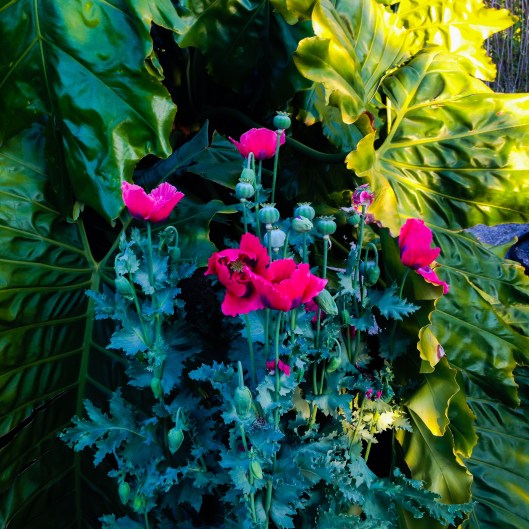
And, now, instead of enjoying the delicate blooms of the Lady Slippers for their own sake, Many Paths found herself eyeing everything in the field and the forest as a possible tool — a weapon of defense or offense. Wasn’t this frame of mind exactly what the ROI themselves did? And, according to Cat Eyes, this was also the true way that the most powerful and richest among the Z-Lotz viewed the world. Though they would put on a show of being consumed with piety, they were constantly scheming to get more through work or artifice or treachery.
Many Paths wondered if she was simply feeding the bad wolf within herself. Would she become so consumed with how to destroy the lives of those who would kill or enslave the Veritas that she herself would lose the capacity to feel for others? Was there a path to peace that did not run through the fire of war? I must speak of this with She Who Saves Many Lives, she thought again. And, I will speak of this with Shadow Walker as well. Perhaps he and I can help each other keep the light of love alive through the coming trials.
Shadow Walker had said that the People Who Steal Children had made no effective attempt to cover their trail. Perhaps they had spent so long plotting and scheming to get more that they no longer saw the impact of their own actions on the world. Or, perhaps, they could still cover their trail but believed so much in the superiority of their numbers and their weapons that they didn’t bother. Maybe hiding hoof prints is just too difficult and time consuming. She did not want to become a person who saw nothing, heard nothing, felt nothing except for how it furthered or did not further her plans to hurt others.
Maybe, she reflected, there is a way to turn the minds of the Z-Lotz back to pleasurable things and back toward harmony. She Who Saves Many Lives had tried to do this with POND MUD and ALT-R. But they were somehow beyond — it seemed they had fallen in some way. Tu-Swift had hurt his knee fleeing the flames. He might — or might not — be permanently marred in his running. Perhaps ALT-R and POND MUD had been marred in their souls to such an extent that they could not ever have been healed. She had tried. Others had tried. And, what of this man NUT-PI? From all accounts, he seemed to actually enjoy inflicting pain on others. That might be a type of wound of the soul that festers and never recovers. In rare cases, she knew that the infection of a wound sometimes festers and the sickness of the wound spreads until it destroys the human body of a person, no matter what medicines are given, or how many healing songs are sung. Is this what had happened with ALT-R and POND MUD? And, NUT-PI? Could this happen to Many Paths herself if she kept dwelling on all the different ways to sicken, maim, hurt, thwart the Z-Lotz?

Original drawing by Pierce Morgan
She hoped not. Yet, even as she walked this path, one of her favorites, she looked at a different forest, a different field — one less filled with life. It was a path on which things of use rather than things of beauty stood out for her. Saplings became spears in waiting. Thorn Apples became possible two-part weapons. She could coat the thorns in a poison from the leaves and then arrange for the thorns to penetrate the skin. Rocks along the path reminded her of slings. Slings and rocks. These were weapons that could always be ready to hand for a people who were captured. Tu-Swift himself had used a small rock to sabotage some of the weapons of the ROI.
Many Paths tried to drink in the beauty surrounding her with the eyes of her youth, and she could, but now it seemed an effort. After all, if she could not help lead her people so as to prevent the destructive war that seemed inevitable, there might not be any beauty left to drink. In the Battle of the Three Paths, two would-be enemies had been persuaded not to fight. But they had had to fight the Cupiditas. Those people could not be deterred, at least in any way that anyone had yet discovered. She resolved to spend some part of each day reminding herself of the way of seeing which was to feel the inner beating heart that she shared with all living things. But for the rest, she would dedicate herself to finding many weapons of war, the most important among those weapons being yet the way of peace. Perhaps, thought Many Paths, if the way of the Z-Lotz and the ROI is to stop seeing the harmony of nature, we can use the harmony of nature that they no longer see as a kind of weapon to destroy them. Or, maybe we can somehow rekindle that love-sight in their souls.
Many Paths began to sing the legend of the Forgotten Field of Flowers and soon Cat Eyes and Tu-Swift began to sing along. Jaccim improvised a humming beat to accompany. Singing one of the songs of her people put Many Paths in a more harmonious mood and as she glanced to the northern horizon, the flashes of lightning in the dark clouds filled her with awe. The storm was headed their way, but she relished the smell of summer rain and looked forward to the downpour.

Photo by Johannes Plenio on Pexels.com
Many Paths came to the end of her song. To her surprise, Cat Eyes kept singing! She sang verses that Many Paths had never before heard. Cat Eyes sang with a beautiful clear voice. She sang with joy and she sang with a profound sadness at the same time. The voice of Cat Eyes filled the heart of Many Paths and she wondered yet again what deep wounds had been cut into the very heart of Cat Eyes and how those wounds had been healed. Many Paths nodded and made an effort to remember her next thought: Perhaps that soul-healing was also a weapon–or anti-weapon– whose secrets must be discovered.
———————————————-
Start of the First Book of The Myths of the Veritas
Start of the Second Book of the Myths of the Veritas
Table of Contents for the Second Book of the Veritas
Table of Contents for Essays on America
Index for a Pattern Language for Teamwork and Collaboration
Destroying Natural Intelligence
The Silent Screams of Dead Men’s Dreams
The Dance of Billions