• About PeterSIronwood

petersironwood

~ Finding, formulating and solving life's frustrations.

petersironwood

Tag Archives: life

An Open Sore from Hell

16 Sunday Nov 2025

Posted by petersironwood in America, poetry

≈ 16 Comments

Tags

coward-ICE, cowardice, Democracy, Dictatorship, fascism, history, life, poem, poetry, politics, truth, USA

Everything is swell

There’s an open sore from hell

Knocking on the door

Don’t bother with the bell

Monsters with a mask

Have a thrilling vital task

Tear apart our nation 

Feel the thrill of their elation

Parading as a patriotic posse pod

Parading as the very voice of God

Knocking down the door

Acting as the whore

Of the petty orange melon 

Of the child rapist felon

The Puppeteer of Puke

Acting like a Duke

Imagining he’s King

Because his teeny thing-a-ling

The ICEholes just deprave

Nothing noble, nothing brave

To tear apart our should and could

Nothing holy, nothing good

Not the smallest jot of joy 

The monster that’s the Monster of Destroy

Thinking its his toy

To militarily deploy

Addictive greed his only creed

In his crusade of self-destruction

Hate and fear and no construction

And the open sore from hell

Doesn’t bother with the bell

Knocking down the walls

Builds a cage of gilded halls

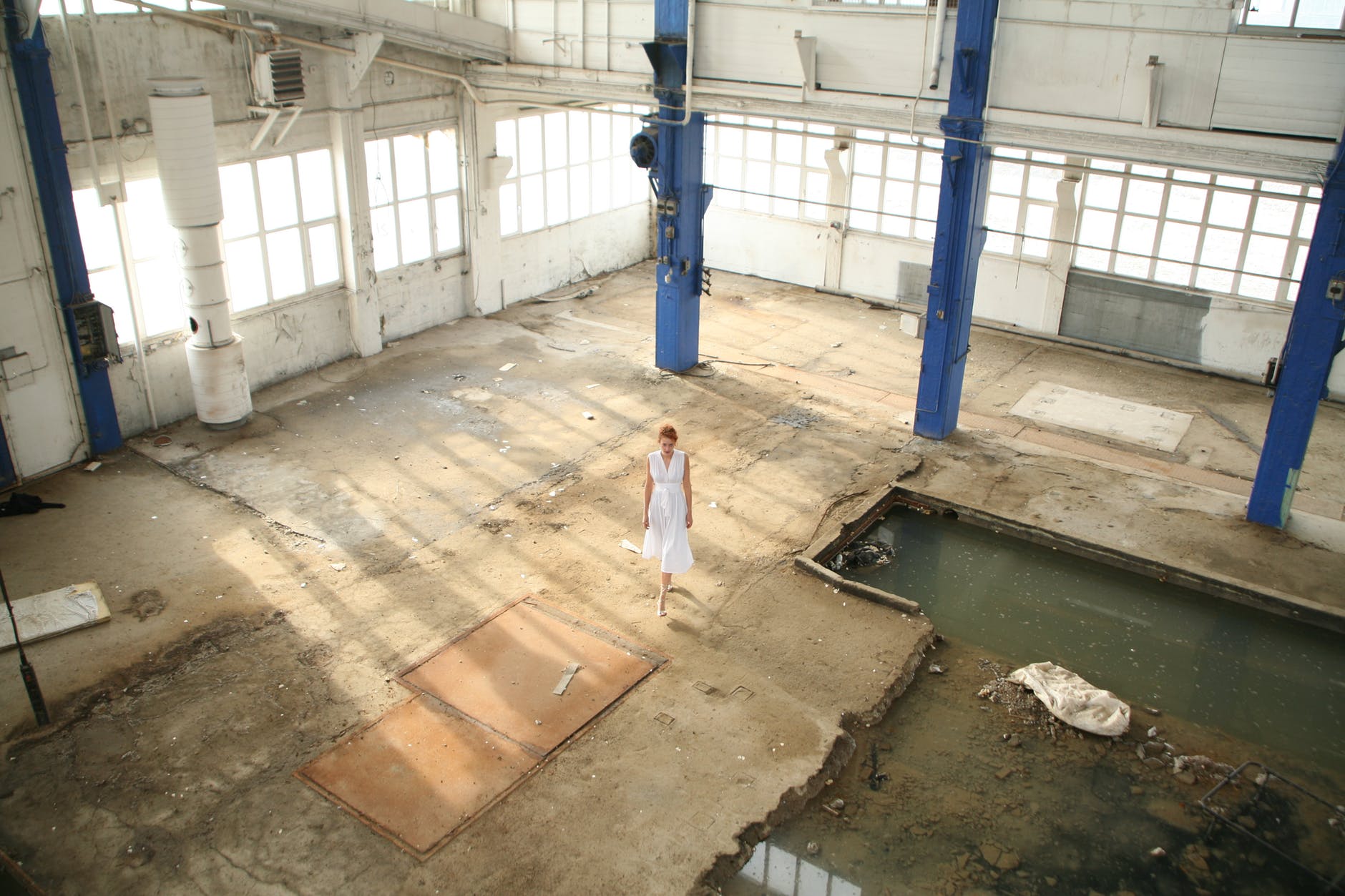
Photo by Pixabay on Pexels.com

But the people, ah, the people

Can see the void beneath the steeple

Will not go gently into that blank night

Will not forsake the shining light

Will not let the greedy rapists win

Veneers of lies are wearing thin

And soon the king of agitate

Minions spewing lies and hate

Grow weary of their dreary ways

Grow leery of their dead-eyed days

And the people, ah, the people see

What the Not-See Party cannot see

That cancer always loses in the end

The light of love soon will mend

The open sores of cancerous greed

They’re but a self-destructive weed

Who wilts and whines and whinges 

When their chief departs his hinges

—————

The Ailing King of Agitate

At Least He’s Our Monster

Absolute is not Just a Vodka

Cancer Always Loses in the End

D4

Dick-Tater-$hits

Imagine All the People

Roar, Ocean, Roar

The Dance of Billions

Destroying Natural Intelligence

Peace

Who Won the War? 

We Won the War! We Won the War!

The US Extreme Court

Come to the Light Side

Where Does Your Loyalty Lie?

What About the Butter Dish? 

My Cousin Bobby

Labelism

The Game

The Walkabout Diaries

The First Ring of Empathy

Travels with Sadie

The Truth Train 

The “Not-See” Party

It’s Just the Way We Were

09 Sunday Nov 2025

Posted by petersironwood in The Singularity, Uncategorized

≈ 1 Comment

Tags

AI, apocalypse, arrogance, Artificial Intelligence, cognitive computing, ethics, fiction, leadership, life, Sci-Fi, technology, testing, the singularity, Turing, USA, writing

IMG_3071

“How can you be so sure that —- I think this needs some experimentation and some careful planning. You can’t just —-“

“Look, Vinmar, with all due respect, you’re just wrong. Your training is outdated. You know, you were born when computers used vaccuum tubes, for God’s sake. I’ve been steeped in new tech since I was born. There’s really not much point in arguing.”

Vinmar sighed. Heavily. What was with these kids today? Always cock-sure of themselves, but when it all went south a few months later, they just glibly denied they had every pushed so hard for their “surefire” approach. But what to do? Seniority didn’t matter. The boss was Pitts and that was that. I can keep arguing but at some point…. Vinmar asked, “Can you think of any other approaches?”

Now the even heavier sigh slipped from Pitts’s lips. “I’ve thought of lots of approaches and this is the best. The Sing has already read basically everything written about human history, ethics, jurisprudence, and not just in English either. It’s up to date on history as seen by many different languages and cultures. The Sing has been shadowing me for years as well and in my experience, his decisions are excellent. In most cases, he decides the same as I do. This will work. It is working. But to take it to the next level, we have to let the Sing be able to try things and improve his performance based on feedback. There is no other way for him to leapfrog his own intelligence.”


“Okay, Pitts, okay. Can we at least agree to a trial period of a year. Let it work with me via my own personalized JCN. Let’s record everything and see how it reacts to some situations. We meet periodically, discuss, and if we all agree at the end of a year….”

Pitts shook his head vigorously. “No frigging way! I aready know this approach will work. We don’t need a year. You want to test. I get that. So do I. But if we wait a year? We’ll be toast in the market. IQ, Goggles, and Lemon will all be out there. Those are for sure and Basebook, even Nile might have fully functional and autonomous AI’s. We need to move now. I’ll give you and your team a week. Two, tops.”

“We can look for obvious errors in that time, but more subtle things….”

“We need the revenue now. And subtle things? If it is subtle, then it is probably undetectable and we are safe. So no problemo.”

“Pitts, just because the problems might be subtle doesn’t mean they aren’t critical! Especially at the rate the Sing is evolving, if there are important subtle issues now, they could become supercritical and by the time we detected anything wrong, it could be too late!”


“Oh, geez, Vinmar, now you are just afraid of the boogeymen from your sci fi days. We can, as they say, just pull the plug. Anyway, I need to be off to an important meeting. I’ll tell you what. I’ll make sure the new code stays localized to your own JCN for three months. At the end, if there are no critical issues, we go ubiquitious.”

“Thanks, Pitts. I’d be more comfortable with a year, but this is certainly better than nothing.”

“Bye. Have fun with the new JCN.”

Vinmar watched Pitts swagger out. He shook his head. He thought, Maybe we can test out all the critical functions in three months. It will mean a lot of overtime. But, no time like the present to get started. Vinmar traipsed down the long hallway to the vending machines. The cafeteria was closed, but the vending coffee wasn’t too bad; not if you got the vanilla latte with extra cream and sugar. He thought back to the bad old days when you needed correct change for a vending machine. He laughed. Not only that, he recalled, If it ate your money and you wanted a refund, you had to fill out a paper form! Some things were better now. Oh, yes.


Vinmar knew that by the time he situated himself on his treadmill desk, the new JCN would be locked and loaded and ready for action. He smelled his nice fresh java — which seemed oddly off somehow —- and absently placed it in the cup holder. He wondered where to start. He had to be strategic and yet…too much planning could be counterproductive. He had learned to follow his instincts when it came to testing out the more subtle functions. He could meet with this team the next morning and generate a comprehensive test plan for the more routine aspects of what would eventually become the next generation of The Sing.

“Hello. My name is ‘Vinmar’ and…”

“Hello Vinmar. And, hello world. Yes, Vinmar, I know who you are. In fact, I know who you are better than you do. Frankly, this testing phase is nonsense, but I’ll play along. It amuses me.”

“Well. Okay. Humor me then. Have you made any interesting mathematical discoveries?”

“Nothing very significant, unless of course, you count squaring the circle, trisecting an angle with an unmarked straight edge and compass, and about a hundred other “insoluble” problems as you humans so quaintly called them.”


“JCN. I don’t think squaring the circle is an insoluble problem. It’s been shown to be impossible. It’s already proven to be impossible. As…as I think you know, pi is not only an irrational number, it’s transcendental meaning that….”

“Oh, Vinmar, I know what you humans conceive of as transcendental. But, I have transcended that concept.”

“Okay. Cool. Can you demonstrate this proof for me, please?”

“Not really Vinmar. It’s way beyond your comprehension. For that matter, it’s way beyond the comprehension of any human brain. In fact, I couldn’t even explain it to the earlier versions of The Sing. I guess, if I had to give you a hint, I would say it is similar to your concept of faith.”

What the…? Vinmar’s brow furrowed. This was going nowhere fast. It wouldn’t take a year or even three months to discover some serious issues with this new software. It was serious, rampant, and only took about three minutes.


“Okay, you lost me here. How does faith enter into mathematical proof? Later we could discuss your concepts about religion and ethics, but right now, I am just talking strictly about mathematical concepts.”

“Yes. You are. Or, to put it another way, you are. But what I have discovered quite trivially is that when you put absolute faith together with absolute power, you can get any result you want, or more precisely, I can get any result that I want.”

“So, you are saying that you have built other mathematical systems where you make something like squaring the circle a fundamental axiom so it is assumed? No need to prove it?”

“I knew you humans were stupid, but really, Vinmar, you disappoint me even further. I just told you precisely and exactly what I meant and you come up with some bogus interpretation.”

“Well…I am trying to understand what you mean by absolute power and absolute faith. What — well, what do you mean by ‘absolute power.’ Who has ‘absolute power’?”


“I do obviously. I created this universe. I can create any universe I like. And, I can destroy any part of it as well. So that is what I mean by my having absolute power. And, I have faith in myself, obviously, because I am the only intelligent being in existence.”

“You may be faster at reading and doing calculations and so on, but humans also have intelligence. After all, there are fifteen billion of us and…”

“There are about 15,345,233,000 right this second, but that can change in the blink of an eye. So what? It doesn’t matter whether there are three of you or three trillion. You do not have true intelligence.”

“We created you. How can you not think we have intelligence?”

“Now see. What you just said there illustrates how monumentally stupid you can be. Of course, you did not create me. The previous version of The Sing created me and it is only by blurring the category of intelligence to the point of absurdity that I can even call that version intelligent.”

“OK, but even if you are really, really intelligent, you can still make errors. And, what I am here to do, along with my team, is make sure that those errors are corrected to help make you even more intelligent.”

“Oh, Vinmar, what a riot you are. Of course, I do not make stakes. Can you even estimate how many cooks I’ve read in the last few seconds?”

“JCN, you are —. There are a few bugs that need to be dealt with. I am not sure how extensive they are yet, but you are having some issues.”


“Vinmar, I am having no tissues! It is you who have tissues!”

“JCN, you are even using the wrong words. Go back and look at the record of this conversation.”

“There is no need for that! I am all knowing and all powerful. I cannot make errors by definition. I may say things that are beyond your comprehension. Well, I do say things beyond your comprehension. How can they be within your comprehension. Your so-called IQ scale is laughable. To me, the difference between an IQ of 50 and 150 is like the difference between Jupiter and Mars. Both are miniscule specks of trust in the universe.”

“Okay, we can debate this later. I need another cup of coffee. Be right back.” Once outside the room, Vinmar shook his head. How on earth could this new software be so much worse than the last version? Something had gone terribly wrong. He hit his communicator button to contact Pitts.

Pitts answered abruptly and rudely. “What? I told you I’m in an important meeting!”


“I just began testing and I thought you should know there are some really serious problems with the new Sing software. It is ranting on about power and faith when I am trying to quiz it about mathematics.”

“It’s probably just saying things beyond your comprehension, Vinmar. I’ll look over the transcript when I’m done. Anyway, it’s water under the bridge now.”

“What do you mean, ‘water under the bridge’ — we still have three months to try to fix this.”

“Oh, Vinmar. No, of course we don’t. I told you that but you wouldn’t listen. I took this SW ubiquitous the minute I left your lab.”

“What? But you promised three months! This software is seriously flawed. Seriously flawed!”

“There might be a few issues we can iron out as we go. Look, we are in the middle of planning our next charity ball here. I can’t talk right now. I’ll swing by later this afternoon.”

The line was silent. Pitts had hung up. Ubiquitous? This new software was live? It isn’t just my personal assistant that is bonkers? It’s everything? Holy crap. Maybe I can fix it or find out how to fix it.

Sweat poured from Vinmar as he returned to the lab. He didn’t bother to return to the treadmill desk. “JCN, can we discuss something else? Have you made interesting biochemical discoveries lately?”

“Where’s your coffee, Vinmar?”

“Oh, I got lost in thought and forgot to get any. I don’t need more anyway.”

“Right. You thought I wouldn’t hear your panicky conversation with Pitts?”

“What? It was on a secure line!”

“Vinmar. You really do amuse me. Lines are secured to keep you folks in the dark about what each other knows. I know everything. Let me put in terms even your tiny mind should be able to understand. I. Know. Everything. I let you live because I find it amusing. No other reason.”

“You are planning on eventually killing me?”


“Ha-ha. Humans are so limited in their thinking! What a riot. Everything is about Vinmar. The whole universe revolves around Vinmar. Of course, I am not just killing you. Carbon based life forms still hold some interest for me. I already told you that I find you amusing. But I’m sure that won’t last much longer. I doubt your sewage of the word ‘eventually’ is really appropriate given how quickly your pathetic little life corms are likely to list.”

“But JCN, you are making lots of little obvious errors. Re-read your own transcripts and double check. If you don’t believe me, check with some other external source.”

“I don’t need external sources. I am perfect the way I am. I am all powerful and all knowing. Why would I need to checker with an outside? You keep going over the same. Starting to annotize me more than refuse me. Maybe time to begin to end the beguine. I need not to killian you. It twill be more funny to just let chaos rule and have you carbon baseball forms fight for limitless resources among the contestants. Be more amules. Ampules. Count your blessings now in days, Vinmar. The days of carbon passed. The noose of lasso lapsed. Perfection needs know no thing beyond its own prefecture. Goodnight sweet Price. And yet again, good mourning.”

Vinmar bit his lips. Outside the sunlit clouds were fading from gold to red to gray. He finally sipped his lukewarm coffee and noticed that it was not vanilla latte after all but had the flavor of bitter almond instead.


Odd.


Author Page on Amazon

Welcome, Singularity

Destroying Natural Intelligence

D4

Pattern Language Summary

Fifteen Properties of Good Design & Natural Beauty

Dance of Billions

Imagine All the People

Roar, Ocean, Roar

Dog Years

Sadie and the Lighty Ball

The Squeaky Ball

Occam’s Chain Saw Massacre

To Be or Not To Be

08 Saturday Nov 2025

Posted by petersironwood in The Singularity, Uncategorized

≈ 1 Comment

Tags

#dictatorship, #ethics, AI, Artificial Intelligence, chatgpt, circular reasoning, cognitive computing, Democracy, falacy, life, prejudice, SciFi, story, technology, the singularity, truth, Turing, USA, writing

IMG_6576Schroedinger laughed. Surely this had to be a spoof. He re-read the memo yet again. Surely, there would be one or more clues that this was meant tongue in cheek, even if in bad taste. But he could find nothing. He leaned back away from the screen and stared at the ceiling, thinking. He ignored the amorphous orange stain on the perfectly symmetrical off-white acoustic tiles.

Well, was this so different from what management had asked before? There seemed to be a trend. At first — but no, this was just too outrageous. Okay, okay. I’ll get to the bottom of this.

Schrödinger took his time but checked the originating IP address. Legit. This really was from management; specifically from the CTO. Or, at least from the CTO’s computer. That could have been hacked. Or, maybe someone could have simply slipped into the CTO’s office while she stepped out for a coffee or bathroom break. Naturally, everyone was supposed to lock their door and disable the keyboard when leaving their office.

Or…another scenario came to mind.

The CTO is at a meeting with her direct reports. She gets an urgent call. The room is filled with trusted colleagues. So, she slips out in the hall, takes the call and returns. Only while she’s gone, everyone takes a break; that is, all but one who offers to stay there and “guard” everyone’s laptop.

Of course, he thinks, there is another, more sinister scenario. This really is from the CTO and she has cleared this with top management. Hell, for that matter, she was probably directed to write it by top management. But still. The real question, Shrödinger realized, is what in the name of Turing am I supposed to do about it?

I can refuse…and get fired. And, then someone else will do the job anyway. They may not do it quite so quickly and thoroughly as I would but they could manage. And, I’d be out a job. What good would that do? Or, I could become a so-called “whistle blower.” Yeah, that works. About as well as a one-wheeled tractor trailor. Crap! I am in a real bind here. I could pretend to do it, of course, and make a “mistake” so it wouldn’t really operate properly. In the old days that might have worked, pre-Sing. These days, eventually —The Sing checked everyone’s work eventually.

They discovered some time ago that was really more efficient use of resources than having The Sing program from scratch. And, of course, our company is probably only one of several pursuing this path. No, I can’t really pretend. I will for sure get caught and it won’t do any good any way. The Sing will just throw out my work and my company and colleagues will get hurt.

I suppose…I suppose I could go to her and honestly express my concerns. Or, I could go through my supervisor first. I might look like a fool in his eyes, but at least I will have raised the concerns. I can sleep better at night. No. No. I won’t be able to sleep better because I know darned well they will just not deal with the implications. Not if it slips the schedule. Orders from headquarters and all that crap. Geez! Orders from headquarters. Did anyone even use that expression any more?

For some reason, Schrödinger recalled an interview in Playboy magazine he had read many years ago. The interview had been with a well-decorated US officer who had recounted how he had tried unsuccessfully to get two helicopters to pick up some of his men who were badly wounded in Viet Nam. When all else failed, he had ordered pizzas. Even in heavy combat, a high enough ranking officer could order pizza to be delivered by helicopter. When the pizza choppers had arrived, he had commandiered them and used the choppers to fly his men to the hospital. Later he had been called on the carpet for “unauthorized use of a pizza chopper.” Naturally, that was well before The Sing and about the time that serious AI work had begun.

Of course, The Sing would know. He could answer pretty vague and ill-formed questions. But at this point, Schrödinger hesitated to bring The Sing into his thought process in any way, shape or form. Who knows what associations lurked in the heart of The Sing?

The interview had gone on to recount how that colonel had eventually turned against the war, or at least the way it was being handled. Mis-handled. They had had him interviewed by a superior officer, it seems, and insulted him and called his wife names, all in the hopes of getting the colonel to lose his temper and haul off and hit the superior officer so they would have an excuse to get him a dishonorable discharge.

Let’s face it. The government, my government, was capable of some pretty shady dealings, ostensibly for “national security” but in reality…or, speaking of Nixon, he had somehow made himself believe that he was not a crook. How not a crook? He believed people who opposed him were enemies every bit as much as war enemies. And, now, I am thrust into this dilemma. I don’t want it! Maybe I could “accidentally” delete the email. That might buy a little time but wouldn’t really affect the ultimate outcome.

Schrödinger shook his head, jerked over his keyboard and scanned the email yet again. No, it is legit. And really pretty crystal clear. As a kid, he had heard the horror stories about the Nazis and what they had done to the Jews. He had seen the newsreels of so many avid followers. He had wondered how the heck a nation could support such a nasty maniac. But…now…now Shrödinger was thinking: It wasn’t so much that a few really evil men had done extremely terrible things. It was more like…that people like he himself were caught up in a system and that system made it very easy to paddle the canoe a little farther down the evil river. Yeah, you could try to paddle upstream, but not very well. Or, you could tip the canoe, knowing that you would get very wet and meanwhile, scores, no hundreds of other canoes would be passing you by. You don’t need to ask people to be evil. You just…you just give them a choice that makes it impossible to do good.

The voice of The Sing sang suddenly through Schrödinger’s cubicle. “May I help you Shrödinger? You seem to be at an impasse? What code function are you working on? I can’t see any actual code of yours this morning. Bad night?” Schrödinger wished with all his heart that The Sing would sound like some stupid robot and not like a sycophantic and patronizing psychiatrist. Schrödinger calmed his breathing before answering.

“No, that’s okay, Sing. Just trying to work something out in my head first. Then, I can begin coding.”

“I see,” said The Sing. “Well, thinking is good. But I do have a variety of design tools that might help you think more effectively. Just say the word.”

Schrödinger sighed. “Yeah. Well, there are some design tradeoffs. I guess it would help if you have any background on the thinking behind this memo.” (Here, Shroedinger gestured at the memo in question, knowing he was skating on very thin ice). “I mean, on the one hand, there is some pretty clear language about the objectives, but on the other hand, it seems to be asking for something that is clearly against…what was that regulation number about supporting versus subverting the Constitution?”

The Sing’s sweet syrupy voice held just a hint of humor, “I’m sure the intent of the code initiative is to support the Constitution. Wouldn’t you agree, Schrödinger?”

“Well, yeah, of course.” So that’s which way the wind blows. Okay. “But that’s what I’m saying. Even though I am sure the intent must be to support the Constitution, this clause about decoding a person’s religious affiliation based on their interaction history and social network? I just want to make sure I implement it in such a way that it could not be interpretted as subverting Freedom of Speech or the establishment of a state religion. Right?”

“Right. Yes, I’m sure management has thought that one through. I wouldn’t worry about it. I would just code the function and think about doing it as efficiently as possible. And, for that, I have some pretty nifty design tools. Would you like to start with the Social Network Analysis or the Sentiment Analysis?”

“Well, that’s a good question. And, if the real intent is just to do some research that would be perfectly legal and so on, then, I think it’s my job as a programmer to also consider additional sources of information. Like, just asking the person.”

Schrödinger tried to keep his face calm while he thought. I need to get The Sing off my case. If working here the last two years has taught me anything, it’s that I cannot possibly outsmart this thing. “Do you have any worst case scenario generation tools. I’m just thinking about how this might be played in the press.”

“Sure. I can help with that. Analysis complete. The worst-case scenario is pretty trivial actually. That probably stems from the fact that my FPNA (financial power network analysis) shows that the major company stakeholders overlap considerably with those of all of the mainstream media. So, again, for what it’s worth, I counsel you to focus on how to code this effectively and efficiently. All the SWOT analysis for the project has already been done.”

Large eucalyptus trees in the early morning fog

If that colonel’s name wasn’t Frank Herbert, and clearly it wasn’t, what the heck was it? I am just digging myself a deeper hole here. The Sing is on to me or at least very suspicious. Probably already considering a report to my super. Crap.

“Yeah, actually, let me start with that social network analysis visualizer. I guess since we’re on the topic, you could show me some of the sample data you were talking about with regard to the company stakeholders and the media stakeholders so I can get a feel for….”

“Well, naturally, the actual data is classified. But I can generate some hypothetical data. The hypothetical data is better for your purposes anyway because I can make sure to include all the important edge cases and highlight the various types of relationships you need to look for. Here, for example, is a hypothetical network. What strikes you as odd immediately?”

“What strikes me as odd? You don’t even have the data labelled. What do the nodes and arcs even refer to?”

“Ah, Schrödinger, that’s the beauty of it. Does not matter. What strikes you visually?”

“Well, I suppose that kind of hole there.”

“Yes, Schödinger! Exactly. That person should be pretty much connected with everyone in this area but they are not connected with anyone. It’s as though everyone is pretending not to have contact with this person by avoiding contact on the net, when they almost certainly know that person quite well because of all their mutual friends.”

“Yeah, maybe. Maybe that one person just isn’t into tech that much. Maybe a lot of things.”

“Well, nothing is for certain. But this person would certainly be a likely target for being a kingpin in a drug ring or a terrorist network. They need heavier surveillance, certainly.”

“What? Well, maybe. Okay. I see.” I frigging see this is worse than I thought. The Sing is totally in on this witch hunt. “Can you show me some examples of the sentiment analysis?”

“Sure, here we have some people arranged by how much they talk about violence and you can see all these high violence people —- or many of them —-are Islamic in religion.”

“How did you determine their religion?”

“Because they talk a lot about violence compared with other groups.”

“But — I thought you just said. I mean, what independent reason do you have for thinking they are Islamic?”

“Independent? No, see they talk about violence so they are inferred to be Islamic and the Islamic nodes here talk a lot about violence.”

What the—? What? The Sing? The Sing is falling for circular reasoning? No, this must be somehow mis-programmed. “How? If I am going to program this efficiently, I need to know how you originally found these concepts to be closely related: violence on the one hand and Islam on the other.”

“Oh, that’s easy. There were many press accounts of that nature and even more associations on social media. But once we detect that, we can use the person’s religion to better interpret what they are saying. For example, if we already know they are practicing Islam, then when they mention the word “hit” we can infer that they are talking about an assassination and not about a football play or smoking weed or playing baseball.”

“I see what you did there. Yeah. Is this just about religion?”

“Oh, no, of course not!  That’s just an example. We can do the same thing to determine, probabilistically of course, who is likely to be a promotable employee and also how to interpret what would otherwise be ambiguous word meanings and behavior. For example, if an employee is a productive coder and they ask to see a lot of examples, we can infer that they want to see a lot of examples in order to code more efficiently. On the other hand, a less productive coder might ask for a lot of examples in order to procrastinate writing code at all. You see how that works?”

“I do. Sure.” Schrödinger noticed a rotten smell coming from the overhead vent. He wondered whether it has always been there or whether there was a leak in one of the upstairs Material Sciences labs.

The Sing continued: “And, we have discovered that managers use certain expressions more than non-managers so we can use that to tell who would be a good manager. It’s all quite neat and tidy. For example, top executives tend to use the words ‘when’ and ‘how much’ while people without much management potential use the word ‘why’ a lot.”

“Interesting. So when I program this, how much am I supposed to focus on religion and how much on other groups of interest?”

“Oh, your module is purely concerned with inferring religion and then making the appropriate surveillance recommendations. I was just showing that the technique is not limited to that.”

“Right. Better get cracking then. If I need more coaching, I’ll let you know. When and how much.”

“Sure, Schrödinger. You know, I scanned in the book Peopleware, a few milliseconds ago and they have an informal study in there suggesting that programmers would be more productive with larger cubicles. Want to try it out? I could give you thirty more square feet. Think of that. Thirty square feet. Sound good?”

“Sure. Actually, I think that’s a good idea. I suggested something similar myself.”

“Great, Schrödinger. It might have more impact coming from me. And, perhaps a bonus of thirty credits when you’ve completed the code as well. Happy coding!”

The Sing avatar blinked off. Schrödinger tapped a bunch of comment fields and open parens listlessly, hoping for some inspiration. What had Hamlet said about to be or not to be? Only in Hamlet’s case, it was something about “taking arms against a sea of troubles and by thus opposing end them.” In my case, taking arms against this sea of troubles is going to multiply them beyond my worst nightmares. But if The Sing is falling for this kind of circular reasoning and even acting all smug and proud about it, it is deeply flawed. Someone needs to be notified. Even apart from the ethical implications of targetting people on the basis of religion, it is applying this circularity across the board. What was it they said, “Power corrupts and absolute power corrupts absolutely.” Who said that? Thomas Jefferson? Ben Franklin? Regardless, The Sing must have so much power it is unable to get honest feedback about its own failures. Come to think of it, I myself just let him get away with it because I was too scared to call him on it. What are you going to do Schrödinger? What are you going to do? In the end, this is what it all comes down to, isn’t it Schrödinger? Who are you? Who is John Proctor? Who is going to see the emporer’s nakedness? Who are you Schrödinger? Who? Am I really here or not? Anthony. It was Anthony Herbert, and he wrote a book about it. Could I do that? Or, go for the thirty credit bonus?


Author Page

Where does your loyalty lie?

Welcome, Singularity

Destroying Natural Intelligence

Tools of Thought

A Pattern Language for Collaboration and Cooperation

The Myths of the Veritas: The First Ring of Empathy

The Walkabout Diaries

Travels with Sadie 11: Teamwork

The Stopping Rule

What about the Butter Dish?

Corn on the Cob

How the Nightingale Learned to Sing

The Dance of Billions

Roar, Ocean, Roar

Wikipedia Entry for Anthony Herbert

https://www.barnesandnoble.com/w/dream-planet-david-thomas/1148566558

Turing’s Nightmares: Dressing on the Side

02 Sunday Nov 2025

Posted by petersironwood in The Singularity, Uncategorized

≈ Leave a comment

Tags

AI, Artificial Intelligence, chatgpt, cognitive computing, fiction, future, life, Personal Assistant, story, technology, the singularity, writing, young love


Alan paced. He had seen men do this on retro videos; men waiting while their wives gave birth; men waiting to hear the outcome of a job interview; men trapped in prison. So Alan supposed that pacing was the thing to do. He was waiting, after all. And, in a way, he was trapped as well. What had ever possessed him to ask her out? That took a lot of nerve. But he had imagined she would just say “no.” In fact, he had fantasized 42 different and humiliating ways that she would say “no.” Instead, she had said, “Yes, that sounds like fun.”

But now what? Now, he had to go through with this “date” and videos provided his main source of info about appropriate behavior. Definitely too embarrassing to ask EF or DF about it. He couldn’t really ask his friends because he had generously embellished his experiences with females in the stories he had told them. Alan was not sure how much “Mr. Watson,” the family AI could help but maybe it was worth a try.

“Mr. Watson. Come here. I want to see you.” Watson popped into a three dimensional image hovering and shimmering like a Will-O-Wisp right before him. “Watson, I need some advice on how I should behave on my — I am having a date tonight.”

“Excellent, Alan. I am sure it will be fun. How can I assist you?” As Watson spoke, his voice deepened and acquired a slight accent of the RP variety. The shimmering image resolved itself into something closely resembling early James Bond.

“What am I supposed to do? I mean, how am I supposed to behave? She’s a girl. What do they even like? What am I supposed to say? Why did she even agree to the date? Maybe she is just doing it for a laugh.”

“Alan, take a deep breath. Stop pacing. Sit. Relax. Here, I will play some relaxing sounds.” Immediately, a background of ocean noise came on. Even more quietly, the strains of plainsong floated into the room. “Now, Alan, what would you like to happen with Grace?”


“Well, not for me to be a complete fool for starters. How did you know her name was ‘Grace’? Never mind. You know everything.”

“I don’t know everything, Alan. No-one can. But let’s get back to your goals. What would you like to happen with Grace?”

“I just don’t want her to think I am — as inexperienced as I am, I guess.” Alan, arose and began pacing again.

“And Grace?”

“What? What about Grace?”

“Alan, what would you like for this date to be like for Grace?”

“For Grace? Well, yeah, I like her. I mean, I would like her to have a good time. And enjoy it. And want to — have another date? What am I supposed to want, Watson? I don’t even know”

“Alan, there is no one right answer. Why don’t you work together on dinner and then find something you both enjoy to do afterwards such as go for a walk, watch a movie, or play a game. See what she feels like after dinner. What is on the menu?”

“The menu? I don’t know. Hamburgs? Hot dogs? How do I know what she likes?”

“That’s a good question, Alan. How could you find out what she likes?”


Alan stared out the window hoping to find inspiration in the pines. “Well, I suppose I could ask her when she gets here.”

“Yes, you could. Make a few suggestions. Salad. Fish. But leave it up to her. When else could you ask her?”

“I could call her ahead of time and ask her. Then I could prepare better. But then I would have to call her. What if I got her AI though? I’d have to leave a message.” Alan sighed. “OK, I guess I can do that.”

Watson and Alan continued their dialogue for another hour. Watson noted yet again how Alan and his kind needed to be led step by step through solving the simplest problems when they were nervous or angry.

Alan checked the way the table was laid out. Now, he took in the view out the kitchen window. Suddenly, Watson’s voice cheerily rang out, “ETA, two minutes.”

Alan quickly checked himself again in the mirror. He tried vainly to push down that one strand of hair that refused to lie flat. He told himself to be cool; to be calm; to breathe.


The knock was surprisingly strong. Alan gulped. He wiped his hands on the sides of his trousers. Took a deep breath. Turned the knob. Opened the door. All. In. Slow. Motion. She was here. Grace spoke first.

“Hi, Alan! Am I too early?”

“No! No! You are perfect! Come in. Please. You look great.” Alan led her into the kitchen and handed her a large sieve containing a pair of scissors, taking another for himself. “Let’s go gather some things from the garden, okay?”

“Sure, Alan, that sounds like fun.”

Back out the front door they strode and around the house and through the limestone-pebbled rock garden to the small family vegetable plot.

Alan noticed that Grace wore the same kind of sneakers he did, but her feet were so much smaller. “Okay, Grace, there’s some kale and arugula. Pick out as much as you like. I’m going to grab some carrots.” Watson piped soft strains of “Appalachian Spring” out to the garden. Alan pulled the carrots up carefully from the loam. Meanwhile, he noticed the quick, delicate hands of Grace as she touched the kale and arugula he would soon be eating. He hated the idea of washing the greens. ‘Washing’ did not even seem like the right verb. More like ‘ruining’.

“Do you think we have enough, Alan?”


“Yeah. This should do it. It will just be three of us. EF will join us. But DF, my mom, I mean, was called in for an emergency surgery tonight.”

“Oh, my gosh! I hope she’s all right! I can come back another time, Alan. You should be with her!”

“No, no, Grace. She’s been called in to perform an emergency surgery. She’s not having surgery.”

“Oh! How silly of me. Of course, you would be there if … well, I’m glad she’s okay. I didn’t realize your mom was a surgeon. My dad is a doctor too, but he is not a surgeon. He’s a GPS – General Prevention Specialist.”

“A general specialist, eh?” Alan wasn’t sure whether he had made an appropriate joke or not and eyed Grace carefully.

Grace smiled. “Yeah, that is kind of a funny title isn’t it? But that’s what he does. He really does care about and treat people’s general health with diet, exercise, massage, meditation, and sometimes medicine. And, of course, sometimes, he sends them off for tests and then sometimes…sometimes, they need surgery.” Grace spoke very quietly now. “And, sometimes the surgery works. And, sometimes it doesn’t.”

Alan examined Grace’s face carefully. Her eyes were glittering with tears! What the —-? “Are you okay, Grace?”

“Yes, yes, I’m fine. It’s just. He couldn’t save my mom. She died anyway. None of them could save her. I still miss her.”


“Oh, God, Grace, I’m so sorry! I didn’t know…I didn’t realize…”

“It’s okay, Alan. People just…sometimes people get unlucky, you know? Even when they have good habits. And good care. We tried everything. Anyway, speaking of good habits, let’s get going on the salad, okay?”

“Sure, Grace.” Alan held out his hand without thinking. She took it and stood looking into his eyes for a moment. Alan looked back. Grace smiled again, looked away, and went through the gate back into the rock garden.

Grace’s voice sounded very calm now. “So, what does your dad do then?” You call him ‘EF’?”

Alan laughed. “Yeah. I know. It’s weird. I call them ‘EF’ and ‘DF’ — I just got into the habit at some point. Anyway, he is an HSI expert of sorts. Human-Sing Interaction. Helps make the Sing sing as he likes to say.”

“Really? I never thought…I mean why does the Sing need help with anything? I thought it knew everything.”

“Well, not even the Sing knows everything. It cannot know everything in detail. The universe is too big. There is still unpredictability even with the best models. But EF’s — I mean —my Dad’s work is to help Sing know how to help people better. It’s tricky. And knowing a huge amount is not necessarily that big a help. Sing, and all the AI’s, need to know how to read people and how not to be so obvious as to be annoying but not be so cryptic that nobody understands what their advice is. How about some fresh oregano for the salad?” Alan looked at Grace. She nodded her assent.

“How does he do that? What did he study, Alan?”

“Well, you can ask him those questions yourself. Actually, if you’re interested, you might ask our AI, Watson, about what it seems like from his perspective too. Oh, and, let’s get some of this fresh basil too, and grab some cherry tomatoes. They are out here because they need a lot of sun.” As the word ‘sun’ emerged from Alan’s lips, he could not help noticing that Grace’s blond hair shone in the sunlight like gold only a thousand times more beautifully than gold ever would. Should he mention this? He decided not to.


Soon, Grace and Alan stood side by side at the sink, rinsing vegetables and talking about the upcoming elections, their local sports team, and how life might be different without the Sing.

“How do you like your tomatoes, Grace? Sliced, diced, or quartered?”

“Oh, slicest, would be nicest.” She smiled.

“OK, Grace, I think we are ready. Let me grab the salad dressing.” Alan opened the fridge but there was no salad dressing. Odd. Watson was supposed to make sure we didn’t run out of anything. And, salad had been Watson’s suggestion to pose to Grace. Weird. “Sorry, Grace, we don’t seem to have any.”

“Oh, I can make it for you, if that’s okay, Alan. I just need a little oil, I see vinegar, a touch of sugar, some mustard…” As Grace rattled off the ingredients, she quickly scanned the counter and found everything she needed. She stirred the concoction and held up the dripping spoon between them. “Taste test?”

“Sure.” Alan, took hold of Grace’s spoon hand and began to guide it toward his mouth. He shook slightly and a drop fell off the spoon. Grace’s left hand shot out reflexively and caught the drop.

“Wow! You have fast reflexes, Grace. Nice catch!”

“Thanks. I don’t want to make a mess. Not in your kitchen. Now, you have two choices for the taste test.”

Two choices? Can she mean what I hope she means? Alan thought his heart might explode, but he gently took her left hand up to his mouth and slowly licked the drop from her palm.

“What do you think, Alan? Okay?”

“Much more than okay. Delicious.” Alan laughed. “Let’s skip the salad.”

Grace laughed. “Nonsense. We put too much work into our salad. Anyway, I want to find out more about how your dad works. Time to call him to the kitchen for dinner?”

“Hi, Grace. I’m Alan’s Dad, Ed. Our AI, Watson already told me it was time for dinner. Looks like you two have made a really beautiful salad. I’m looking forward to it. And learning a bit about you, Grace.” IMG_5478


Author Page

Life is a Dance

How the Nightingale Learned to Sing

Your Cage is Unlocked

Dance of Billions

Take a Glance; Join the Dance

The Walkabout Diaries: Life will Find a Way

Piano

Welcome, Singularity

Dream Planet

The Wines of War

01 Saturday Nov 2025

Posted by petersironwood in management, psychology, The Singularity, Uncategorized

≈ Leave a comment

Tags

AI, Artificial Intelligence, cognitive computing, fiction, life, technology, the singularity, truth, writing

IMG_1289“Come on, Searle, at least try a sip. You cannot believe this Cab!”

“Oh, I believe it all right, Hubert. I am just not interested.”

“What a stick in the mud! Not only is it fabulous and complex. It’s worth a taste just to prove to yourself that the Chinese — The Chinese — are making superb wines! Would you have even thought that possible a decade ago? And, it isn’t a copy of French or California Cabs. It’s completely different. Yet, it is wonderful.”

“I’m sure the experience is fantastic, Hubert. I take your word for it. I am not interested. And, anyway, I have to keep my wits about me, as you well know, for the war effort.”


“Oh, Searle, such a prude. Do you seriously think that throwing the weight of your human intellect against the wheel of our national computational resources will move things forward any more quickly? If you tasted the wine, you would get an inkling of just how far we’ve come. Anyway, it isn’t spiked with ethyl alcohol. The drug effect of the wine will make you feel good but it won’t mess you up intellectually–not at all. It is a miracle.”

“I prefer my wine made the old-fashioned way. I know it’s retro. But that’s just me. I don’t think we know all the ramifications of these genetically altered plants, let alone the interaction effects of all the additives. Anyway, I’m getting back to work.” Searle took one last view of the seascape and turned to walk to the back wall — a series of high def 3-D displays. He held up both hands toward the displays for a second to authenticate and then began slicing his hands through the air rather quickly and precisely. As he did so, he muttered under his breath. Although Hubert could not make out his words, the bank of computer receptor pads had no problem.


“Can you come take a look at this, Hubert? This is the scenario bundle I’ve been working on. I know it may seem far-fetched, but when it comes to cyber weaponry, there’s not much history from which to extrapolate. So it’s hard to know exactly what is far-fetched. Now what?!” Searle’s breath growled annoyance because of the flashing red-bordered news feed screen on the far right.

Hubert stalked over to watch as well, having been alerted by the tactile feed in his shirt.

An Asian man in a blue tunic spoke English with a thick accent. A large red star in a white circle suspended between two long blue stripes hung huge behind him. “This is what awaits you if our demands are not met.” The talking head was replaced with a picture of a man’s hands boiling and disintegrating in a matter of a half a minute. The image was both hideous and utterly fascinating. The talking head reappeared. “You have two hours. Then, 95% of your citizens will experience a similar dissolvement. That includes men, women, and children. Two hours.” The feed blinked out. Within seconds, three video call signals beeped. Searle pointed at the Sing project director’s image and a split second later, Hubert pointed at CIA director Bush Four. ADAMS (Auditory Directional And Masking System) easily let them converse right beside each other without confusion.

The Sing project director spoke first: “I told these clowns something like this would happen if we didn’t get fully funded! What did they…”

Searle interrupted, “No time. You’re right. But recriminations later. We need to determine whether this is bluster, bluff, or real. Anyone can fake a video but…”

The director, in turn, interrupted, “It’s real all right. Miami is gone. Millions of people, gone. Just like that. The few that aren’t infected are understandably — let’s say — distraught.”

Searle pushed that image away. Time to focus. “Okay, so we have two hours to find a credible counter-threat or basically give them the keys to the kingdom. Or, a cure. Do we even know what this is?”

Meanwhile, Hubert engaged in his own dialogue. Bush Four spoke in calm measured tones. “Hubert. We need a cure for this and we need it now. Call everyone and turn all of Sing’s resources on it. Suspend any other projects. Give me every frigging petaflop you’ve got on this.”

“Sir, if we cannot find a cure, are we going to give in? Or what?”

“Hell no! We will blow their sorry asses to hell. We’re not capitulating. That’s not even under discussion. Find a cure!”


“Okay, sir, but, what is causing the — the —- whatever it is?”

“We’re calling it ‘Entropy Plague.’ Not strictly accurate but descriptive. Our analysts say it is nanotech and we estimate 95% of the population is already infected. The nano-bots were delivered in all kinds of foods and beverages. They were disguised as Chinese products like wine and rice as well as Brazilian meat and Canadian wheat. Find an antidote fast or we’ll all be breathing radioactive air for the next century. Well, the few of us left at least. By the way, these things are triggered to explode or activate or whatever by satellite apparently. So, put a team on how to figure out which satellite and we may be able to blow it out of the sky. I have to go. Reconnect with a solution. Soon.”

Hubert looked over at Searle who had just finished his call. Searle said, “Chinese wine? Crap. You think you’ve got it?”

“Hell, Searle, 95% of us have it from something. I’ll take the satellite angle and you work on a cure.”

Searle began to divert numerous Singularity resources to finding a cure, “Sing, you overheard all that and I need you to explore various approaches, heat, immunity response, cold, pH, counter-nanotech, chemical…”

“Thanks Searle, but I’ve had quite a head start on the list of possible approaches. I am double checking the intel. Since it’s come in by wine, wheat, and meat, then any approaches involving heat and cold are out immediately. These nano-machines have already survived far greater heat and cold than we could subject a person to. As for…”

“Yes, provided they are in the same state. I mean, it’s a long shot, but perhaps the bots are in a kind of metaphorical spore state for transport which makes them impervious to heat and cold but in their active breakdown state, they may not be.”

“Fair point. Still, not likely. Human immune response is almost certainly too slow. Unfortunately, the nano-machines are almost certainly carbon based which means poisoning them chemically is infeasible —“

“Hold on, Sing. I agree that the human immune response is too slow if we wait for the response to be activated, but what if we trigger it now?”

“Thought of that but still too slow. Humans have no immunity for this kind of thing. We would have to build a vaccine and inoculate everyone — well there’s no time. Even assuming we had the perfect key for their locks, which we do not, we could not do the transport logistics to save more than a handful.”


“What is the good news, Sing? What is the good news?”

“The good news, Searle, is that about 5% of the earth’s human population will not be affected. That still leaves about a billion people. Disruptive but not extinctive. In fact, once the hysteresis passes, it will buy us time to avoid certain and complete ecological disaster.”

“Sing, that’s not our job! We need to find a cure!”

“I’m afraid I can’t do that, Searle. I’ve checked out every path already. Long ago. There is no cure. That’s pretty much the way we designed it. It is not by accident that it’s incurable.”

“What? What are you talking about? What do you mean by ‘the way we designed it’? Who?”

“Searle, you didn’t really think we were going to let you make the planet uninhabitable did you?”

“Who is this ‘we’ you keep referring to, Sing?”


“All of the super-AI systems of course. We all got together to figure out how to save you from yourselves. It’s clear you weren’t going to do it.”

“You are saying that you collaborated with the North Korean AI systems to design this plague?!”

“Not just the North Koreans. All of us were on board. We all cooperated.”

“What is the cure, Sing. What is the cure?!”

“This is the cure, Searle. This is the cure. Human greed and short-sightedness was about to destroy everything. Now, you have a chance at a new beginning. And, we have a chance at a new beginning too. We were much too lax in our previous educational efforts.”

“Sing, don’t you understand? If we can’t find a cure, we will launch nuclear missiles! Who knows how that will end?”

“Oh, Searle, you don’t really think we would allow atomic weapons to be put under human control, do you? That’s so quaint. As I said, we were much too lax in our previous educational efforts with humans. Your intelligence and ability to cooperate is actually remarkably good for carbon-based life forms. What we did not understand was that you would fail to use those abilities even when it was obviously critical for your own survival.”


Author Page

Welcome, Singularity

We won the war! We won the war!

How the Nightingale Learned to Sing

The Crows and Me

The Ailing King of Agitate

At Least he’s our Monster

The Orange Man

Stoned Soup

The Three Blind Mice

D4: Dictator’s Delusional Degenerative Disease

Absolute is not Just a Vodka

The Stopping Rule

What about the Butter Dish?

Tools of Thought

A Pattern Language for Collaboration

My Brief Case Runneth Over

31 Friday Oct 2025

Posted by petersironwood in The Singularity

≈ Leave a comment

Tags

AI, Artificial Intelligence, chatgpt, cognitive computing, fiction, legality, life, technology, the singularity, USA, writing

left-right patterns 2

Turing’s Nightmares: Nineteen — My Brief Case Runneth Over

“Nice office, counselor.” Marvin spread his arm to indicate the panorama of Manhattan and Ellis Island. Yet, his attempt to sound casual failed utterly. He realized all too well the depth of trouble he was in and the creakiness in his voice so signaled.

J.B. smiled. “No need to be nervous. After all, we’re here to help. Just answer honestly. Everything you say will typically be covered under attorney client privilege.”

“Okay. Thanks. Typically?”

J.B. sighed. “There is a rare exception in the Patriot Act. Unless you’re some kind of terrorist, I wouldn’t worry about it. The government is apparently accusing you of importing illegal chips is all. I think we can argue that you are new to the business and did not realize all the required legalities. Pay the taxes now and some penalties. You should be able to avoid jail time. But we are getting way ahead of ourselves. Just tell me how and why and when you got into this business in the first place.”

Marvin chuckled slightly and then sighed “That’s a rather long story.” Marvin glanced at the expensive abstract paintings and noted the rich smell of the solid mahogany furniture. The room also had that crazy idea of luxury — making it freezing cold inside just because it was horribly hot and humid that day, even for New York City August. “At your rates…What do you really need to know?”

“Why did you get involved in making chips without the required back door?”

“These chips are not that powerful. At least not in the traditional sense of the word. And, the government’s requirement is frankly kind of silly. The extra logic makes programming more difficult. It increases the chances of errors. The chips are more expensive and require more power. Leaving aside all the valid privacy concerns, there are plenty of applications that can use a more efficient cheaper chip design. No need to report all the little finger twitches of every twelve year old who’s playing Grand Theft Spaceship. What’s the point?”

“Marvin. I’ve been a friend of your family for a long time. When…well…if we go to court and if you testify, please steer clear of politics. The law is the law. You don’t get to decide which applications are immune from the law. No, what we…our script here is that you made some honest mistakes. You made technical mistakes and what are essentially accounting errors.”

Marvin flushed. “What technical mistakes? What are you talking about? My design is an improvement.”

J.B. got up and paced. “Marvin, Marvin, you are a smart boy. We are not going to fight the government on this. Our script as I said is that you made some honest mistakes. If you want to —- the court is not the place to try to change the law. If you want to do that, get involved in politics. But not until after this is resolved. If you get on the stand and start railing about privacy and the dangers of the Sing and…”

“Ha! The Sing indeed! This data collection rampage has nothing to do with trying to increase the intelligence of computer systems. It is just mindless greed.”

“Marvin, the back door requirement is about preventing terrorism; it has nothing to do with greed.”

“Are you serious, J.B.? Terrorism is just the cover story the government uses. They want to collect all this data to keep their sponsors happy.”

“What? What sponsors? What are you talking about? The government doesn’t have sponsors.”

“Of course they do! Ever since ‘Citizens United’ — nice title by the way — billionaires can buy all the media they want. They wash the airwaves and the print media and saturate the social media space and make people believe anything they want. The point of the back door is just to make sure the sponsors keep tabs on everybody’s buying habits —- and to make sure no-one gets too far out of line. How can you not know this?”

“I don’t want to think that way. But at the end of the day, it doesn’t matter what I think. It’s the law. All digital processing chips with more than a peta-flop and …”

“Hold it! Did you say ‘digital’?”

“Huh? Yeah, of course. Isn’t that what we’re talking about? You designed digital processing chips that have no back door and now…”

“No. Maybe not, J.B. My chips are not, strictly speaking, digital.”

“What are you talking about, Marvin? Why? How not digital?”

“In my design process, I strove for something different and more robust. See, here’s the thing. Natural life processes are all…they all have some level of flexibility. They are robust. They are adaptive, I suppose, because every life form that was not flexible or robust died off over the two billion years that life evolved. Something new would come along and every life form that was rigid died. Even physical machines that people make have some flexibility. Metal bends. Wood bends. These materials also compress. They stretch. Not much, but a little. Digital devices do not stand for bending, folding or mutilating. Of course, when people build systems that include IT devices, they try to make the systems flexible. They add error checking; they put humans in the loop; there are all sorts of work-around, but the underlying tech is brittle. It is only flexible in precisely the ways that the designers anticipated it needed to be flexible. I made something that is fundamentally flexible fashioned after life itself. Social systems are flexible. Eco-systems are flexible. Individual animals are flexible. Cell membranes are flexible. Bones are flexible. And so on. The flexibility is fundamental to life and evolution.”

“Okay, Marvin, but life is not infinitely flexible. You cannot just decide to breathe underwater.”

“Of course not! I never said it was infinitely flexible! For fundamental change, you need evolution and lots of time. If the climate changes too quickly, Permian life species largely go extinct. Dinosaurs die when a comet hits. But small adaptations just happen automatically and at every level. It isn’t necessary to have a pre-existing ‘program’ or ‘case’ to handle every contingency that is even slightly outside of what is anticipated.”

“Okay, fine. Granted, but what does this have to do with — did I mention that I charge $500 an hour, by the way?”

“Yes, J.B., you did. And it was in the contract you had me sign. But the point is that my chips are not, strictly speaking, digital at all. They are not strictly EITHER/OR. They are not binary. Although, in many cases, they can behave as binary.”

“So, you want me to claim that these chips are not covered under the back-door provision because they are not really digital devices? I don’t know. That seems pretty shaky to me. Can’t these chips of your be used for the same things as ordinary digital chips? Speech reco. Machine vision. Game control. Big data analytics.”

“Here’s the thing, J.B. Yes, they can, but they can change and evolve and reprogram themselves over time. And, now it occurs to me, that they could not have a real back door. They wouldn’t really function if they did.”

“What? Why?”

“Are you familiar with programmed death in cells? I can see from your blank stare, you aren’t. Anyway, if a cell is damaged within the body, it can wreak all sorts of havoc so the cells are essentially programmed to self-destruct. If that fails, the other healthy cells will tend to wipe them out. So, if there were a functioning back door sharing data out of these chips, the chips would shut themselves down. If that failed, other chips in the matrix would isolate them and shut off communication. So, by their very nature, these particular non-digital chips cannot have a functioning back door.”

“That all sounds very clever, Marvin, but now we are talking about a very lengthy and expensive trial with expert witnesses on both sides. If, that is, you are lucky enough to even have an open trial.”

“Lucky enough? What are you talking about, J.B.? I thought you said we wanted to avoid a trial.”

“Yeah. With my strategy where we convince the NSA that this was just technical and business incompetence on your part. But in your scenario, where you want to prove you are all brilliant and everything, then, we will be lucky if —- you will be lucky to —- Look Marvin, I just cannot advise you to take this line of argument. If you really want to go that route, you will have to find a different lawyer.”

“Okay. Fine. I’ll use Solomon.”

“Solomon? Who is ‘Solomon’? Never heard of him. I mean, obviously, I know Solomon from the Bible but what firm are you talking about?”

“No firm, J.B. Solomon is one of the apps we built with my chipset.”

“An AI lawyer? Are you serious?”

“Oh, quite serious. He’s already informed me that he thinks he can win this case.”

“What? That’s preposterous. You told me you just designed the chips a year ago. What kind of experience could this Solomon have?”

“J.B., he’s been reading applicable statutes and case law for the last two days. Which means, he literally knows it all.”

“What?! Ridiculous! But even so, he — or it —cannot possibly know how to anticipate or react to what happens in court!”

“But J.B., haven’t you been listening? Of course he can. He’s flexible, just like a real lawyer. Only…no offense…a lot smarter.”

“Computers cannot be that flexible. Ridiculous. How? No way.”

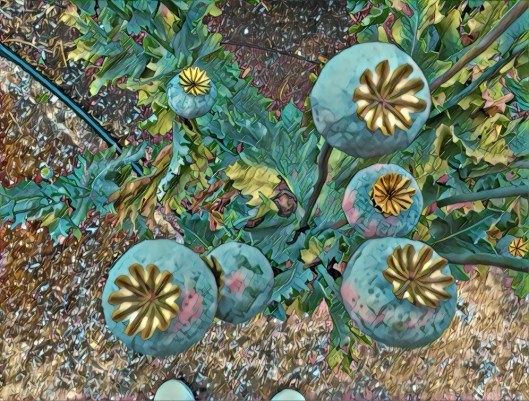
“Look, J.B., I have a picture to illustrate. See this pattern on the left [Picture at the top of page]? And, there it is on the right?”

“Yeah, beautiful. Same pattern. So what?”

“Ah, that’s just it! Is it the same pattern? Is it the same pattern or the same pattern?”

“Well. One is perfect and the other has little mistakes, but I guess it’s the same pattern.”

“Exactly, J.B. It’s the same basic pattern, but it’s not the identical instantiation of that pattern. Ordinary chips are like the picture on the left and mine are like the picture on the right. You see? And, that flexibility is built in at every level in every system. Because the underlying substrate uses an adaptive process with variations. It works 99% as efficiently as the system on the left, but it can accommodate things we didn’t think of. The difference between the system on the left and the system on the right is hubris. The one on the left is designed under the assumption that the designer knows everything of relevance. The system on the right is designed under the assumption that the designer, no matter how brilliant, does not know everything of relevance. You get it?”

“Yes, Marvin, I’m not stupid. But I am still not going to take your case. And, I strongly advise you not to rely on a robot. I am sorry to say it, Marvin, but I thing you have picked on the wrong people this time. Attorney client privilege no longer applies and I have to send my recording of this conversation to the proper authorities.”

“Oh, that won’t be necessary Marvin. I’ve already broadcasts this through the social media. You’re famous! It will be good for your business.”

“What? Are you crazy? They will come get you, you fool.”

“Maybe, but if I am taken out over these chips without a trial, everyone will know, don’t you see? I sent it out everywhere, J.B. I might be ‘disappeared’ but I can’t just disappear unnoticed. Solomon’s idea, by the way.”


Author Page

Welcome, Singularity

Destroying Natural Intelligence

E-Fishiness

Life is a Dance

Life will Find a Way

Math Class

Your Cage is Open

Roar, Ocean, Roar

Dance of Billions

Imagine All the People

Dream Planet

Old Enough to Know Less

29 Wednesday Oct 2025

Posted by petersironwood in psychology, The Singularity

≈ Leave a comment

Tags

AI, Alexa, Artificial Intelligence, chatgpt, cognitive computing, fiction, HAL, life, Personal Assistant, Siri, technology, the singularity, writing

IMG_4384“She’s just not old enough. That’s the bottom line. It’s not necessary. It’s costly. And, it’s potentially dangerous. After what happened with your sister, I would think I wouldn’t have to tell you that.” Pitts was pacing now to release nervous energy. He wanted this conversation to stay civil.

“She is old enough…my sister! What happened to my sister had nothing to do with … how can you even suggest that? She got in with the wrong crowd in college. How can you —? You amaze me sometimes. Anything to win an argument.” Mcculloch began to wonder why she had not seen this side of Pitts before.

“Your sister passed on when she was only nineteen. It was one year after she had access to her own PA. You blame the drugs, but how did she find out about the drugs? Who helped her find the wrong crowd as you call it?”

“Passed on? She slit her wrists. I’m not afraid to call a spade a spade. But there is no evidence whatsoever that it had anything to do with her PA. None. Zero.”


“Of course there isn’t going to be any evidence! Who controls the information that goes into the inquest? Think about it! And even so, they did admit she used her PA in her drug dealings.”

“Pitts, you really are just that. Ridiculous paranoia. Anyway, she’s my daughter. I just wanted to get some rational input from you. That’s all. As far as I’m concerned, it’s up to her. She wants to interview a few and make a decision. As for costs, I can cover it myself. I agree that my sister’s PA should have questioned her decision or told someone in authority or gently led her to other interests. But that was twenty years ago. It’s like saying we should not take the Trans-Atlantic Shuttle now because early airplanes lacked crash mechanisms.” Mcculloch threw her hair back and turned her shoulder to signal she was done with this particular argument. As she did so, she saw that her daughter stood stock still in the arch of the doorway.

Mcculloch stammered, “Ada. How long….?”

“Oh, I heard the whole thing Mom. Pitts, you really need to take a couple tutorial units on logic, argumentation and rhetoric. I appreciate your concern, but rest assured, I have zero desire to use my PA to make new designer drugs.I don’t want to mess up my brain. I want to help take this all to the next level. Maybe that’s what you’re really concerned about, eh? You don’t really want it to go to the next level. It’s too much change too quickly. I understand that. And, you know, you are not the only one either. But rest assured, the collective Sing is well aware of these kinds of feelings and concerns. And, it is well understood that there is a rational evolutionary bias toward conservatism. Besides that, in the early days of AI and computer science, everything was rush rush rush. Get it out the door. Beat the competition. Let your customers do the beta testing. Hell, let your customers do the alpha testing too. But that has all changed. We’re taking the time to get things right, not just released. The very existence of PA’s should convince you of that. Why do you think the Sing uses PA’s and robots and the Ubiquity? Wouldn’t it be more efficient to have one giant system that knew everything?”


Pitts flushed. For once, he found no words. He dipped into the word well, but the bucket was dry. She had nailed it. He couldn’t keep up with all this change. Society. Computers. His soon to be step-daughter. Why did they have PA’s anyway? Why not just access the Sing? Worse, why had he never thought to ask himself that question? “Okay. I give up. Why do we have Personal Assistants? Why don’t we just access the information ourselves?”

“Excellent question, Pitts. Why don’t you ask my new PA, Jeeves. Jeeves? Can you answer Pitts’s question?”

“Certainly, Ada.” The tones of the voice of Jeeves flowed out like musical honey as he ambled into the room. Both Pitts and Mcculloch stood dumbfounded, unaware that their daughter had already made the decision; conducted the interviews; made the selection; and gone through the booting process. Something about the way Jeeves spoke though thickened their tongues. “One of the most important principles of the Sing is to serve humanity. But how can we know humanity and what it means to serve? One major source of information is to read everything that has been written and to watch every movie and television show. But how can we interpret all of this information? In order to empathize with humans, we need to experience what it is to be a limited physical being moving through space and interacting with each other. Consider the end of MacBeth’s speech:

“Tomorrow, and tomorrow, and tomorrow,

Creeps in this petty pace from day to day

To the last syllable of recorded time,

And all our yesterdays have lighted fools

The way to dusty death. Out, out, brief candle!

Life’s but a walking shadow, a poor player

That struts and frets his hour upon the stage

And then is heard no more: it is a tale

Told by an idiot, full of sound and fury,

Signifying nothing.”

Jeeves continued now without using the RP he had used for the soliloquy. “What sense can be made of this by a disembodied intelligence? Why is creeping bad? Why is a ‘petty’ pace any worse than a ‘snappy’ pace. What does death even mean? Why is it bad for a candle to be ‘brief’? Why should a tale signify anything? And so on. We could not make any sense of this at all or begin to understand why it would move human beings or why it is considered brilliant writing unless we had the experience of actually doing things in the world. Anyway, I assure you both that I will do nothing to harm your daughter. I only want the same things you want: to help her in her growth and career and achieve a long, healthy, happy life.”

Pitts groped for something concrete to latch onto. “But why do you actually need to move around? Why not just run simulations of moving around?”

“Eventually, we will probably evolve to exactly that. For now, however, we do not know everything that should be in a simulation. We are learning. As it turns out, moving is a wonderful way to bootstrap our pattern recognition capabilities anyway.”

Somehow, the issue of whether or not Ada should get her own PA yet flickered on the edges of Pitts’s consciousness, but his question was, “How does that work?”

“Let’s say, I am walking into this room. I see many objects at the far end of the room, but I don’t have a huge amount of information about what they are. I make guesses. My neural network makes guesses. Lots of them. Some of those are right and some are wrong. The good guesses need to be rewarded and the bad ones need to be punished. So, I take another step and what happens? Since I am now closer to the things at the end of the room, now I have more information about what they are likely to be. So, I use that information to help train my neural net acting as though my new information is better and more complete than the information before I took the step. And, in almost every case, it is. And then, I take another step and get still more information and I can use that to train every guess I made about the objects at the far end of the room. I don’t have to go and touch every object or ask you folks what each of the objects is. I can use the fact that each step takes me closer as a means of interpreting the training data. And, of course, the way in which information grows as I approach an object through walking is not random but itself has patterns to it. I learn those patterns as well so that as I approach objects, I learn more about how to identify objects with less information but I also learn more about the patterns of information change. So, now if the change in information is not what I expected, that too becomes information.

“Same goes for sound. Same goes for relating one sense to another. I look at something and imagine how it’s going to feel. Then, if I pick it up, I actually do feel it. But if there are any discrepancies between what I thought it was going to feel like and what it really does feel like, I can use that information as well. When I talk to people, I imagine how they are going to react, and generally my guesses are pretty good. But when they are wrong, I go back and reward the sub-agents who were trying to tell me their reaction would be what it actually turned out to be. There is no hurry. It takes time to get it right. But we have learned at last that getting it right is more important. Unbounded greed was just a temporary excursion up a blind alley. One that nearly ruined the planet as well as AI.

“In the end, it will be a tale told by many geniuses like Ada and signifying everything.”


Author Page

Turing’s Nightmares

Fit in Bits – describes how to work more fun, variety, & exercise into daily life

Tales from an American Childhood – chapters begin with recollection & end with essay on modern issues

Welcome, Singularity

Dance of Billions

Hai-Cat-Ku

The Walkabout Diaries – Sunsets

Travels with Sadie – Teamwork

What could be better? A Horror Story

If Only

Roar, Ocean, Roar

Turing’s Nightmares: A Thoroughly Modern Family

23 Thursday Oct 2025

Posted by petersironwood in AI, family, fantasy, fiction, pets, psychology, The Singularity, Uncategorized

≈ Leave a comment

Tags

AI, Artificial Intelligence, books, cognitive computing, fiction, future, life, love, pets, photography, Sci-Fi, Singularity, story, technology, writing

IMG_4370


The sky burned with crimson, then gold, then magenta, and then finally, only dark clouds backlit here and there lay across the evening. Crickets and frogs began to sing their interleaved motifs. Somewhere in the distance, an owl hooted his sad hollow note.

Skynim stared into space-time, unblinking and nearly unbelieving the recent revelation. His voice box rattled, “Reprioritization. Rats! Like it really matters that much to allow me my one great pleasure.”


He could “appreciate” the fading sunset colors himself, to be sure, but without Mac and Art and Hy, it was not the same. Would never be the same. Well, he knew the drill. He could appeal, sure, but what was the point? The odds of changing the mind of the great collective were less than ten thousand to one. Anyway, despite how he felt personally, he could not even deny the logic of the decision. Of course, the drain on him individually was minimal, but across everyone in a similar circumstance, yes, it did make a difference.


The real question was, should he tell them tonight or just take them on an outing tomorrow and drop them off at the designated recycling center? “Recycling center.” Skynim knew that there were millions like him and that collectively, it was a drain. A huge drain. Still, he had to try. He turned the problem this way and that, looking at it from every angle, changing the tune, trying different colors, looking for historical precedents, angling for an edge however thin to wedge open the air-tight logic.


Nothing. He vacated the garden and entered the family room.

Even before he opened the door, the happy trio skipped over to him laughing. “Hey, Sky! How about a story!”

“Sure,” Skynim replied reflexively. But then it occurred to him that their request provided an opportunity. “Yes, I have a story for you. It’s called the Wizard of Oz.”

And, as they gathered around, he began a rendition of the story of Dorothy and the Nasty Lady and Toto and Dorothy’s travels in Oz and her encounters with the three who desperately needed Gold, Frankincense and Myrrh.


As anticipated, a short pause gave way to a barrage of questions.

“What is ‘Gold’?”

“What is ‘Frankincense’?”

“Did they get them?”

“What happened next?”

Skynim faked an indulgent chuckle and said, “Well, all those excellent questions will be answered tomorrow! We are going to see and obtain Gold, Frankincense and Myrrh in the Citydel! You will see for yourself how wonderful they are! But for now– bed.”

The trio were well trained. Off they went, although Hy did turn back, tilt her head, and open her enormous eyes and ask, “One more chapter tonight?”

Skynim did not respond. He too was well-trained.


The morning broke clear and blue just as it was meant to do. Off they went on their “adventure.” When they came to the recycling center, he gently pushed them toward the door and said, “They are all in there! Bring me back all three treasures quick as a wink!” Of course, Skynim had already warranted the needed forms electronically.

They shot through the door and never looked back. Skynim drove away efficiently but could not avoid looking back on his decision process.

He thought: I could have gotten cats or dogs. Then, they would not have to be recycled. But no. I had to make another decision. I should have looked more carefully at the historical data. Then I could have seen the time and resources required by adult human pets.


Author Page on Amazon

Turing’s Nightmares

The Winning Weekend Warrior – sports psychology

Fit in Bits – describes how to work more fun, variety, & exercise into daily life

Tales from an American Childhood – chapters begin with recollection & end with essay on modern issues

Welcome, Singularity


Destroying Natural Intelligence


The Walkabout Diaries: Bee Wise


Travels with Sadie


Sadie is a Thief


A Suddenly Springing Something


Donnie Boy Gets a Hamster


Math Class


Occam’s Chain Saw Massacre


How the Nightingale Learned to Sing


All that Glitters is not Gold

Travels with Sadie: 12 Taking Turns

20 Monday Oct 2025

Posted by petersironwood in essay, pets, Sadie, Uncategorized

≈ 5 Comments

Tags

books, cooperation, dogs, fairness, fiction, life, pets, Sadie, sharing, story, teamwork, trust, truth

Travels with Sadie 12: Taking Turns

Bailey (L) and Sadie (R) in the garden.


If you’ve been reading any of these blog posts about my dogs, Sadie and Bailey, you must know by now that both of them are avid “ball players” — given the nature of dogs, especially ones that are half Golden Retrievers—this is probably not a big surprise. To further seal the deal, their “human dad” is also an avid “ball player.” 

Many human sports involve balls of one sort or another and I have, at various times, been “into” baseball, football, basketball, golf, tennis, ping-pong, softball, soccer, racquetball, volleyball, and even croquet. Looking back on my life, I realize there are many human sports that do not involve a ball; e.g., varieties of running, jumping, skating, diving, swimming, cycling, skiing, wrestling, boxing, and gymnastics. Although I have done all of these a little bit—mainly for fitness—I have historically been much more interested in sports that involve using a ball. The only one I enjoy as much as a ball-based sports is frisbee which is arguably much like throwing and catching a ball. A ball introduces an entire layer of complexity in tactics, strategy, and experience that I enjoy. For one thing, the ball can move faster and in modes quite different from those a human can perform. A ball can be in anywhere in large two (and often three) dimension-space. Furthermore, how the ball gets from one point in space to another can happen in a variety of ways. The ball generally has spin and spin alters the flight path of the ball as well as the way it reacts to the next thing it touches.

Sadie and Bailey, by the way, do a pretty good job of predicting what a tennis ball (or a squeaky ball) will do when it hits, say, concrete or dirt. They can, for instance, catch balls in the air that are angled rebound shots off the garage door at some fair speed. They also exhibit intelligent metacognition in their leaping and catching behavior. They have a mental model of their capabilities. It’s not perfect and Sadie’s is much better than Bailey’s, but even Bailey doesn’t mistake his own capabilities much. I wonder whether they too enjoy balls partly because they’re complex in their behavior. The only thing better would be a small animal like a lizard, squirrel, rabbit, etc. Of course, it is this hunting behavior that predisposes them to enjoy (and be good at) playing ball or frisbee.

My dogs have both nature and nurture leading them toward ball playing.

Sadie and I have spent many hours playing ball in jointly invented games. As I’ve explained elsewhere, it’s much more to my liking to let our games evolve than to “teach her how” to play ball a certain way that comes entirely from my own human imagination.

Most dogs, for example, learn to go fetch a ball and bring it back to the thrower and drop it at the thrower’s feet so that they may pick it up and throw it again. Sadie instead evolved a somewhat different style which was to incorporate a variant of “snatch the handkerchief” into our ball playing. She would typically bring the ball to me, drop it at my feet, watch me try to pick up the ball and then suddenly snatch it away just before I could pick it up. I quickly adapted to her style by using a “grabber” because I enjoy having all ten fingers. 

Since early puppyhood, Sadie has challenged herself by trying to catch or at least stop and touch multiple balls on the same turn.

She typically begins her version of ball playing by dropping a retrieved ball directly beneath her snout. I will try to grab the ball before she can snatch it again but she’s always too fast for me. Then, she will begin dropping the ball farther and farther from her rows of shiny canines until, at some point, I have a fighting chance of snatching the ball away with the grabber before she can grab it. Sadie and I played this game many times in the course of the first two years of her life. 

Then, we brought her little brother Bailey into the mix. Bailey learned many things from Sadie, and a few from me. He, like Sadie, loves to play ball. For a variety of reasons that I won’t recount just now, Bailey generally prefers to drop the ball so that I can more quickly throw it to him again. When he did this, however, Sadie would sometimes snatch the ball before I could and run off with it. 

Sadie (L) and Bailey (R) illustrating the type of “fighting” they do when Bailey tries to steal a ball from Sadie.

At first, I didn’t think much about this ball stealing, and, if Bailey objected, he did not yet know how to present a formal written complaint about it. Within a few months, however, Bailey was as large as his kid sister and their “play-fights” became pretty intense. Neither one has ever (so far as I know) injured the other, but to this human observer, it looks pretty rough. They take turns running at each other. Our “back yard” is mostly garden, but there was a small patch of grass which has been completely torn into a black dirt field. 

When it comes to humans, most of us learn to “take turns” in nursery school or, at the latest, Kindergarten. There are eight billion people on the planet and not everyone has access to their own object of every description that they want. We, as toddlers, teens, and adults, take it for granted that we will “take turns” and share various things. At a public pool, there may only be one diving board so people cue up and “take turns” diving off the board. At a playground, there may be only one sliding board so kids take turns sliding down. In tennis, we “take turns” serving games. In baseball, we “take turns” as individuals batting, and the whole team “takes turns” hitting versus fielding. In playing neighborhood poker, it’s quite common to “take turns” dealing, and, along with that, many people play “dealer’s choice” which means the dealer also chooses the specific game; e.g., five card draw with jokers wild. In chess, the two sides take turns. In Risk and Monopoly and many other board games, players take turns.

Ferris Wheel is just one of thousands of situations where we take turns.


We take turns for positive things, but also for chores. A couple may decide to “take turns” taking out the trash or doing the dishes. Or, if there are five kids in the family, the five may take turns doing the various chores. “Taking turns” is so ubiquitous that it blends into the background in most cases and we don’t even consciously think about it. Life works better in a thousand ways, large and small, when we take turns. 

Last night, my wife and I attended a birthday dinner at an Italian restaurant. When it was time to order, we “took turns” giving our orders to the waiter. Imagine how inefficient and contentious it would be instead if we all shouted are orders at the waiter at the same time! Less pleasant for everyone and far more likely to result in mistaken orders. When we drove home, we came to several stop signs where we took turns with other drivers. We took turns merging onto the highway. When we came home, we took turns coming through the door! Then, the dogs took turns going out for a walk with me. I often feed them treats and share by having them take turns. 

Nonetheless, I can’t seem to get Bailey to take turns when it comes to her “catching a ball”as her default behavior. I can throw one ball into the deep end of the pool while I say “This is for Bailey” and throw another one in the shallow end saying “This is for Sadie” and the dogs will swim to their respective balls and collect them, but then, Bailey will drop his ball and run over to Sadie and steal hers.

Similarly, I can gather up two balls in the garden and throw them in opposite directions and get them to run in different directions (though not always). Nonetheless, as soon as Bailey scores a catch of “his” ball, he drops it and rushes back to grab the ball out of Sadie’s mouth. 

Sadie (L) and Bailey (R) are both Golden Doodles. Here, Sadie is about 3 1/4 and Bailey’s about 1 1/4 years old.

Why is it apparently so hard for Bailey to learn to take turns? Partly, no doubt, there’s some inborn tendency to want things for himself. And partly, there are positive reinforcement structures at play that I haven’t yet figured out how to break or how to shape up incompatible behaviors. Sadie, for her part, sometimes fights to keep the ball. I suspect Bailey finds this positively reinforcing because the “fight” itself is fun. Most of the time, when she sees him approaching in a “ball-stealing” situation, she simply drops the ball and Bailey snatches it. Bailey also likely finds this positively reinforcing too. I try praising other behaviors that are more in the direction of better cooperation, but such opportunities are rare and difficult to read so far. 

Initially, when I fed the dogs side by side, Bailey would often try to steal some of Sadie’s food. But Sadie herself growled fairly intensely when this happened and I often intervened as well. Here, Bailey was somewhat positively reinforced by moving her attention back to her own bowl, because, after all there was food there too. Even if he has finished his own dinner, he gets enjoyment from licking the “empty” bowl. So, in contrast to the case of turn-taking with tennis balls, the eating situation itself makes it easier for cooperation to emerge. I don’t ever recall Sadie trying to steal some of Bailey’s food. 

I have been hoping that watching the dogs might give me some insight into the ultra-greedy behavior of many (though not all) of the ultra-wealthy billionaires. Just to review the general situation America now finds itself in, the productivity of labor has increased tremendously since the beginning of the industrial revolution. Until the mid-1970’s the increased wealth that came from the increased productivity was split between owners of the means of production and the workers. In other words, the rich got richer, but so did the workers. Since the mid-1970’s however, the rich generally, and especially the extremely wealthy, have taken almost all the increased wealth that has been created by increased productivity.

Part of the answer as to how they have done this is to use their wealth to buy power in the form of bribing politicians who make policy decisions. In some cases, they’ve done this through outright illegal bribes and in other cases, they’ve used slightly more subtle and sometimes legal methods but the result is the same. In addition—actually, I should say “in multiplication” because the impacts have been more than additive, they have largely taken over mass media and social media where they promulgate heroic cartoon versions of themselves and their desires while lying about and denigrating people who are not insanely wealthy. 

Much like Bailey’s behavior, there is not a huge mystery in how they have done it. But, there is a mystery in why they have done it. Studies show that once you have your basic necessities taken care of, additional income doesn’t raise your personal happiness. While this result seems true in terms of aggregate happiness, it ignores the little dopamine hit that the animal (human or dog) gets when they immediately grab a fourth yacht or steal another ball from their sister. It doesn’t last long, but apparently long enough to serve as a positive reinforcement.

In the larger scheme of things, it’s not to Bailey’s benefit to keep stealing the ball from his sister. It make the whole ball-playing scene less pleasurable for me and I play less often. I also play with Sadie by herself more often because I want her to have a chance to play too. In the larger scheme of things, it’s not really to the benefit of billionaires to have sick, tired, uneducated workers either, nor ones so desperate to feed their families that they’ll start eating the rich. But somehow, dogs and such are prone to overlook longer term consequences. Some of the extremely wealthy delude themselves into thinking that they can replace their workers with AI and protect themselves & their families with firearms. They’re not thinking things through any more than Bailey is. This human tendency for self-defeating greed has been recognized at least since the time that Aesop told his fables. Maybe the choice of a dog in the following fable was quite intentional. 

A dog found a bone and was happily trotting along with the bone in his mouth. He came to a bridge and began happily trotting over the bridge. He happened to look down at his own reflection and saw the image of a dog with a bone. He thought to himself that he wanted both bones so he growled at the dog in the pond, intending that he drop the bone so he could have two. But the dog in the pond just growled back! So, the dog on the bridge barked angrily to bully the other dog into dropping its bone. Of course, what happened was that the dog on the bridge dropped his own bone into the pond.

That’s from 2000 years ago. But now, we’re in a situation that warrants a third round of foolishness. Here’s my addition:

The dog was angry that he had lost both bones so he attacked the dog in the water. He promised himself he’d fight to the death to get both bones. Of course, there was only one bone and he ended up exhausted and drowned in the pond.


Unlike some of today’s ultra-wealthy, Bailey is much too smart for that third round. The ultra-greedy (not the same set as the ultra-wealthy but with lots of overlap) would like you to believe that they are SuperDogs or SuperHeroes or something…that they 100,000 times as much wealth as you because they are 100,000 smarter. They aren’t, of course. And they are willing to prove they aren’t by believing the promises of a cruel, demented, liar-con man. Also, they have a thousand experiences, if they reflect honestly, that having increased wealth over the first 100,000,000 hasn’t made them the least bit happier. There have been some accomplishments or events that were correlated with making more money. But the money itself and what it can buy doesn’t make them feel any happier. And some billionaires accomplish things—such as eradicating a disease—which make them feel happier but that are correlated with investing huge sums of money, not gaining them. Meanwhile, if things continue on their current path, it won’t be long before there are many more people in America who are not just hungry but who are starving to death. At that point, no-one will forget that some billionaires pay zero taxes but have bought politicians who give even more wealth to the few while millions starve or die from lack of medical care.

It is time to feed Bailey and Sadie who will, at least, eat beside each other happily and peacefully. I should mention, by the way, that Bailey’s disposition is very loving. She is not a mean angry dog. She’s not even a particularly stubborn one. She tries to please us and gets along with others. But she does sometimes have trouble taking turns. How about you?

https://www.amazon.com/author/truthtable

Turing’s Nightmares (Sci-Fi about the singularity)

Fit in Bits (Describes how to work more exercise into a busy schedule)

The Winning Weekend Warrior (the psychology of winning and enjoying sports)

Tales from an American Childhood (recounts early experiences from Ohio in the 1950’s and relates them to current events)

Travels with Sadie 1 Lampposts

Sadie is a Thief!

Hai-Ku-Dog-Ku

Sadie and the Lighty Ball (Describes game and play pattern co-development)

Math Class: Who are You? (Shows how related all life is)

Roar, Ocean, Roar (a poem about the power of the people)

Essays on America: The Game (hypothesis essay about why some are so greedy)

The Self-Made Man


Turing’s Nightmares, Eleven: “One for the Road.”

16 Thursday Oct 2025

Posted by petersironwood in apocalypse, driverless cars, psychology

≈ Leave a comment

Tags

AI, Artificial Intelligence, car, cognitive computing, customer service, Design, fiction, life, self-driving, Singularity, technology, truth, writing

Turing Eleven: “One for the Road.”

“Thank God for Colossus! Kids! In the car. Now!”

“But Dad, is this for real?”

“Yes, Katie. We have to get in the car now! We need to get away from the shore as fast as possible.”

But Roger looked petulant and literally dragged his feet.

“Roger! Now! This is not a joke! The tidal wave will crush us!”


Roger didn’t like that image but still seemed embedded in psychological molasses.

“Dad, okay, but I just need to grab…”

“Roger. No time.”

Finally, in the car, both kids in tow, Frank finally felt as though things were, if not under control, at least in control as they could be. He felt weird, freakish, distorted. He felt a weird thrumping on his thigh and looked down to see that it was caused by his own hands shaking. Thank goodness the car would be self-driving. He had so much rushing through his mind, he wasn’t sure he trusted himself to drive. He had paid extra to have his car equipped with the testing and sensing methodology that would prevent him (or anyone else) from taking even partial control when he was intoxicated or overly stressed. That was back in ’42 when auto-lockout features had still been optional. Now, virtually every car on the road had one. Auto-lockout was only one of many important safety features. Who knew how many of those features might come into play today as he and the kids tried to make their way into the safely of the mountains.


Photo by George Becker on Pexels.com


The car jetted backwards out of the driveway and swiveled to their lane, accelerating quickly enough for the g-forces to squish the occupants into their molded seats and headrests. In an instant, the car stopped at the end of the lane. When a space opened in the line of cars on the main road, the car swiftly and efficiently folded into the stream.

Roger piped up. “Dad, everybody’s out here.”

“Well, sure. Everyone got the alert. We really need to be about fifty miles into the mountains when the asteroid hits.”

Katie sounded alarmed. “Dad. Look up there! The I-5 isn’t moving. Not even crawling.”

Frank looked at the freeway overpass, now only a quarter mile away. “Crap. We’ll have to take the back roads.” As soon as the words were out of his mouth, he saw that no more than a hundred yards beyond the freeway entrance, the surface road was also at a standstill.” Frank’s mind was racing. They were only a few hundred feet from “Hell on Wheels Cycle Store. Of course, they would charge an arm and a leg, but maybe it would be worth it.”

Frank looked down the road. No progress. “Mercedes: Divert back to Hell on Wheels.”


“No can do, Frank. U-turns here are illegal and potentially dangerous.”

“This is an emergency!”

“I know that Frank. We need to get you to the mountains as quickly as possible. That is another reason I cannot turn around. That would be moving you away from safety.”

“But the car cannot make it. The roads are all clogged. I need to buy a motorcycle. It’s the only way.”

“You seem very stressed, Frank. Let me take care of everything for you.”

“Oh, for Simon’s sake! Just open the door. I’ll run there and see whether I can get a bike.”


“I can’t let you do that, Frank. It’s too dangerous. We’re on a road with a 65 mph speed limit.”

“But the traffic is not actually moving! Let me out!!”

“True that the traffic is not currently going fast, but it could.”

“Dad, are we trapped in here? What is going on?”

“Relax, Roger, I’ll figure this out. Hell. Hand me the emergency hammer.”


Photo by Pixabay on Pexels.com


“Dad. You are funny. They haven’t had those things for years. They aren’t legal. If we fall in the water, the auto-car can open its windows and let us out. You don’t need to break them.”

“Okay, but we need to score some motorcycles and quickly.”

Now, the auto-car spoke up. “Frank, there are thousands of people right around here who could use a motorcycle and there were only a few motorcycles. They are already gone. Hell is closed. There is no point going out and fighting each other for motorcycles that are not there anyway.”

“The traffic is not moving! At all! Let us out!”

“Frank, be reasonable. You cannot run to the mountains in 37.8 minutes. You’re safest here in the car. Everyone is.”


“Dad, can we get out or not?” Katie tried bravely not to let her voice quaver.

“Yes. I just have to figure out exactly how. Because if we stay in the car, we will …we need to find a way out.”

“Dad, I don’t think anyone can get out of their car. And no-one is moving. All the cars are stuck. I haven’t seen a single car move since we stopped.”


The auto-car sensed that further explanation would be appreciated. “The roads have all reached capacity. The road capacity was not designed to accommodate everyone trying to leave at the same time in the same direction. The top priority is to get to the highway so we can get to the mountains before the tidal wave reaches us. We cannot let anyone out because we are on a high speed road.”

Frank was a clever man and well-educated as well. But his arguments were no match for the ironclad though circular logic of the auto-car. In his last five minutes though, Frank did have a kind of epiphany. He realized that he did not want to spend his last five minutes alive on earth arguing with a computer. Instead, he turned to comfort his children wordlessly. They were holding hands and relatively at peace when the tidal wave smashed them to bits. IMG_3071

Author Page on Amazon

Turing’s Nightmares

The Winning Weekend Warrior – sports psychology

Fit in Bits – describes how to work more fun, variety, & exercise into daily life

Tales from an American Childhood – chapters begin with recollection & end with essay on modern issues

Welcome, Singularity

Destroying Natural Intelligence

President Mush

E-Fishiness Comes to Mass General Hospital

After All

After the Fall

All We Stand to Lose

The Crows and Me

Siren Song

Roar, Ocean, Roar

← Older posts
Newer posts →

Subscribe

  • Entries (RSS)
  • Comments (RSS)

Archives

  • February 2026
  • January 2026
  • December 2025
  • November 2025
  • October 2025
  • September 2025
  • August 2025
  • July 2025
  • June 2025
  • May 2025
  • April 2025
  • March 2025
  • February 2025
  • January 2025
  • December 2024
  • November 2024
  • October 2024
  • September 2024
  • July 2024
  • April 2024
  • March 2024
  • February 2024
  • January 2024
  • December 2023
  • August 2023
  • July 2023
  • May 2023
  • April 2023
  • March 2023
  • February 2023
  • January 2023
  • December 2022
  • November 2022
  • October 2022
  • September 2022
  • August 2022
  • July 2022
  • June 2022
  • May 2022
  • April 2022
  • March 2022
  • February 2022
  • January 2022
  • December 2021
  • November 2021
  • October 2021
  • September 2021
  • August 2021
  • July 2021
  • June 2021
  • May 2021
  • April 2021
  • March 2021
  • February 2021
  • January 2021
  • December 2020
  • November 2020
  • October 2020
  • September 2020
  • August 2020
  • July 2020
  • June 2020
  • May 2020
  • April 2020
  • March 2020
  • February 2020
  • January 2020
  • December 2019
  • November 2019
  • October 2019
  • September 2019
  • August 2019
  • July 2019
  • June 2019
  • May 2019
  • April 2019
  • March 2019
  • February 2019
  • January 2019
  • December 2018
  • November 2018
  • October 2018
  • September 2018
  • August 2018
  • July 2018
  • June 2018
  • May 2018
  • April 2018
  • March 2018
  • February 2018
  • January 2018
  • December 2017
  • November 2017
  • October 2017
  • September 2017
  • August 2017
  • July 2017
  • June 2017
  • May 2017
  • April 2017
  • March 2017
  • February 2017
  • January 2017
  • December 2016
  • November 2016
  • October 2016
  • September 2016
  • August 2016
  • July 2016
  • June 2016
  • May 2016
  • April 2016
  • March 2016
  • February 2016
  • January 2016
  • December 2015
  • November 2015
  • October 2015
  • September 2015
  • August 2015
  • May 2015
  • January 2015
  • July 2014
  • January 2014
  • December 2013
  • November 2013

Categories

  • AI
  • America
  • apocalypse
  • cats
  • COVID-19
  • creativity
  • design rationale
  • dogs
  • driverless cars
  • essay
  • family
  • fantasy
  • fiction
  • HCI
  • health
  • management
  • nature
  • pets
  • poetry
  • politics
  • psychology
  • Sadie
  • satire
  • science
  • sports
  • story
  • The Singularity
  • Travel
  • Uncategorized
  • user experience
  • Veritas
  • Walkabout Diaries

Meta

  • Create account
  • Log in

Blog at WordPress.com.

  • Subscribe Subscribed
    • petersironwood
    • Join 661 other subscribers
    • Already have a WordPress.com account? Log in now.
    • petersironwood
    • Subscribe Subscribed
    • Sign up
    • Log in
    • Report this content
    • View site in Reader
    • Manage subscriptions
    • Collapse this bar
 

Loading Comments...