• About PeterSIronwood

petersironwood

~ Finding, formulating and solving life's frustrations.

petersironwood

Tag Archives: psychology

Tools of Thought: Theory of Mind

19 Friday Dec 2025

Posted by petersironwood in America, management, psychology, Uncategorized

≈ Leave a comment

Tags

"Theory of Mind", AI, cooperation, Design, education, empathy, life, mental-health, poetry, politics, psychology, religion, sports, teamwork, truth, writing

Theory of Mind. 

“Theory of Mind” refers to the ability of most humans to imagine, at least to a degree, what another person is likely to do based on their knowledge of what the other person knows. Here is a simple test used to determine whether someone has this ability. 

You are the “subject” being tested and you are in a room with me (the “experimenter”). Your friend Vlad is in the room too. In full view of you and Vlad, I hide a giant luscious chocolate chip cookie (such as you might purchase from Panera, but won’t because you realize that if you buy it there is no way you aren’t going to eat it!). I “hide” this cookie in the top drawer of my desk. Now, Vlad walks out of the room. He’s well out of sight. Now, I take the cookie out of my drawer, and using great self-control, do not eat the cookie myself but instead put it in my pocket. 

two cookies beside white metal mug

Photo by rawpixel.com on Pexels.com

Now, I turn to you and ask, “When Vlad comes back, where will he look for the cookie?” If you are 2, 3, or 4 years old, you would say, “In your pocket!” I rephrase this a few times to make sure you understand that I am not asking you where the cookie actually is but where Vlad will search. You again insist that Vlad will look in my pocket. At such a young age, kids do not distinguish their state of knowledge from someone else’s. Most adults will have no problem with this task. They have a “theory of mind” that allows them to know that their state of knowledge is not the same as Vlad’s. Some adults diagnosed with autism will have trouble with this task however.

An interesting question arises as to whether other animals have a “theory of mind.” It is not a settled question. My purpose here however, is to explain what the term means and show how it’s useful for humans. Despite the fact that most adult humans have the capacity to do “theory of mind” tasks and that it is useful, they nonetheless often fail to evoke their capacity.

animal beautiful blonde daylight

Photo by Pixabay on Pexels.com

A closely related concept is “empathy.” Empathy generally refers to being able to feel what another person feels emotionally. I see the distinction as one of perspective or emphasis rather than two different entities. These two concepts (empathy and Theory of Mind) are explored in much greater detail in the “Myths of the Veritas” series in this blog. For now, suffice it to say that you might empathize with another person by relating to their facial expressions, posture, or regarding what they say and how they say it. You might see a picture of a small, terrified four-year old alone in a cage and know that they are terrified without having any verified knowledge or detailed knowledge of what they “know” or “don’t know.” They might or might not know any English. And you might or might not know their language or even what their language is. But you can tell that they are in great distress just by looking at them. If you actually feel what it is like to be a small child separated from your parents and being trapped in a cage in a strange place, that is generally called “empathy.” 

IMG_4410

If I were to ask you what kind of pleading this four year old is likely to make in court, if you have  the capacity for a “Theory of Mind,” you might well ask, “Well…I don’t know. What do they know about courts or proceedings? What could they know? They are only four years old.”  You’d be correct, of course, to question whether it was meaningful to have a four year old acting for themselves in court. This would be particularly true if they had to plead in a court where they were unfamiliar with the culture, the venue, and the language. But even a really smart four year old who had been brought up in America and spoke excellent English would not be capable of really understanding the consequences. This kind of understanding demonstrates a deeper theory of mind than simply knowing that because a specific piece of information is in your own head doesn’t mean it’s in someone else’s head. 

In The Myths of the Veritas, people are given a range of tasks that involve what is called empathy. To me, although one can draw a conceptual distinction between understanding another person’s knowledge and feeling an echo of another person’s feelings, when it comes to many practical situations, it’s more important to put oneself in another person’s shoes, than to correctly label the process. 

Writers must often deal with multi-level theories of mind. There is what the writer knows about the events that are being written about in a story. There are the spheres of knowledge that various characters have. Most often, different characters have critically different states of knowledge. What the reader knows is yet again different. And all of these spheres of knowledge change throughout the course of the narrative. 

In The Myths of the Veritas, for example, the author knows throughout that ALT-R is making POND MUD put his face in the mud purely to humiliate him and keep power over him. ALT-R knows it as well. Over time, most readers will come to the same conclusion but not necessarily at exactly the same place in the narrative. Most of the Veritas tribe initially know nothing about this incident, but She-Of-Many-Paths intuits it and eventually many of the Veritas come to understand it. At first POND MUD is fairly certain ALT-R saved his life by making him do it. But as he observes and interacts with ALT-R and others, he begins to doubt that and then goes about actively seeking information from others that would help clarify ALT-R’s true motives. 

mudface

In Othello, the writer knows from the beginning that Iago is an evil sociopath. The audience knows quite early that Iago is an evil sociopath and learns more about his schemes through speeches that Iago delivers directly to the audience. Othello himself, on the other hand, has his state of “knowledge” manipulated by Iago. The audience knows that Othello is being duped by Iago but Othello himself does not know of it or of Desdemona’s innocence when he murders her though at that point, the writer, the audience, Desdemona, Iago, Cassio and other characters all know that Desdemona is innocent. We have some sympathy for Othello because we realize that he is operating on false information. 

Let’s turn to a happier piece of fiction, The Gift of the Magi by O’Henry (William Sydney Porter). In this story, a couple with financial struggles each gives up their most prized possession to buy a gift for the other. The functional value of the gifts is destroyed by what they gave up. Della knows that Jim’s most prized possession is his gold watch so she sells her beautiful hair to get money to buy him a watch chain. Jim knows that Della’s most prized possession is her beautiful hair so he sells his watch in order to buy her some jeweled combs for her hair. Of course, the real gifts they give are not diminished by their being no longer functional. The real gift is the gift of love. The author obviously knows all this from the beginning. Readers “catch on” to what is happening at various points in the narrative, but Jim and Della are the last to learn of the full irony. 

woman wearing white long sleeved shirt

Photo by Element5 Digital on Pexels.com

Sadly, many people seem not to bother trying to understand the situation and capabilities of others. In one of the simplest cases, people are apparently unable to understand how very basic physical properties of the universe result in various people having various states of knowledge. On the tennis court, in a “friendly game,” the players themselves make the calls and keep track of the score. The server is supposed to announce the score before every serve. Some people actually “announce” the score by saying it so softly that only they can hear it! 

In other cases, novice drivers will follow a semi truck so closely that the truck drive cannot see the car behind them. Another trick of drivers is to turn their blinkers on – but only as they begin making the turn. In another post, I explain how one person’s driving behavior in “stop and go traffic” can influence many other people’s. In particular, if you leave a large space between your car and the one in front of you, it makes it easier for many people around you to drive more smoothly because they have a much more complete view of what is happening in front of them. 

buildings cars city cross harbour tunnel

Photo by Pixabay on Pexels.com

A more subtle failure in “Theory of Mind” occurs when a person assumes that everyone is motivated in the same way that they are. For example, a person may be so partisan that they will always defend and promote people in their own political party no matter how heinous the crimes of that person. This is an error, but a concomitant error is that such people assume everyone who doesn’t defend the criminal, and certainly anyone who actively resists such a crooked politician is doing so from a purely partisan perspective because that’s what they would do. Sociopaths who cheat may assume that everyone would cheat and the only reason they don’t cheat is because those non-cheaters are not smart enough to get away with it. 

When teamwork is operating at a high level, whether it’s hockey, soccer, tennis doubles, basketball, families, or design teams, people exhibit excellent “Theory of Mind” skills. How are yours? Have you experienced such high functioning teams? How can you improve your skills at “Theory of Mind”? 

One way to improve your “Theory of Mind” skills is to become aware of the kinds of perceptual, memory, and problem solving errors that people are generally prone to. Many of the posts linked to below explore some aspect of human psychology.

group of woman playing on green field during daytime

Photo by Pixabay on Pexels.com


Author Page on Amazon

The Primacy Effect

Labelism

Wednesday

The Update Problem

The Stopping Rule

My Cousin Bobby

Where does your Loyalty Lie?

The Invisibility Cloak of Habit

How the Nightingale Learned to Sing

Roar, Ocean, Roar

The Iroquois Rule of Six

Happy Talk Lies

The Loud Defense of Untenable Positions

Cancer Always Loses in the End

Who Won the War?

After All

The Last Gleam of Twilight

E-Fishiness Mass General Hospital

Me Too


Meta-Cognition

18 Thursday Dec 2025

Posted by petersironwood in management, psychology

≈ Leave a comment

Tags

AI, bias, cognition, Feedback, Halo Effect, life, mental-health, politics, Primacy Effect, psychology, science, sports, truth, writing

Meta-Cognition

“Cognition” refers to thinking activities such as problem solving, learning, decision making, and imagining. “Meta-Cognition” refers to thinking about thinking. The science of psychology, over the last 150 years, has learned a great deal about human thinking. If you are reading this blog post, the chances are pretty good that you are a human being. Although there are important individual differences in how people solve problems, learn, make decisions, and use their imaginations, there are also many similarities. To the extent that you understand your own thinking, you can use that knowledge to do a better job of problem solving, learning, decision making and using your imagination. 

woman working girl sitting

Photo by Alexander Dummer on Pexels.com

Here are a few examples that you may already be aware of. I really like chocolate. And I really like almonds. Chocolate-covered almonds are one of my very favorite foods. I know this about myself. I also know that I am easily distracted. I’m not the sort of person who begins to write a blog post, thinks about chocolate almonds and then stops writing to rush out to the store and buy a package. In fact, there is almost no activity that I can be engaged in which I would interrupt in order to go buy chocolate almonds no matter how much I crave them. On the other hand, if there were a bowl of chocolate almonds right beside me, in easy reach, I would definitely reach over and grab some whenever I paused in my writing. So, how do I use the knowledge about my own behavior to control my own behavior? 

person holding chocolates and white ceramic mug

Photo by rawpixel.com on Pexels.com

I don’t very often buy chocolate almonds. It’s relatively easy to simply not go to the part of the grocery store where these little devils hang out. If I walk by, I know that they will start singing to me like the Lorelei of legend: “Come get me! I am so tasty. Get me now. Please. I want to go home with you.” But I can’t really hear them that well beyond about five feet. Probably this is because chocolate almonds have a very rudimentary vocal apparatus. 

I do buy them perhaps once a month and when I do buy them I put them in a closed drawer so they are mainly out of earshot. Then, I will have a few and get back to work. I may not have them for days at a time. If, however, I put them in a bowl right beside my computer, I am fairly certain that I would eat the whole box the first day; indeed, quite possibly in the first hour. 

This is an example of using what I know about how I think about things in order to think about arranging the environment to my own long-term benefit. 

Another example, which I may describe in more detail later, is the so-called “Primacy Effect.” This is known in popular terms as the power of “First Impressions.” If your first experience with something — whether it’s dogs, cats, Chinese food, or computer programming — is negative, it will be difficult to overcome that later. This is not only true of emotional reactions. It’s also true about what you recall about something. 

Suppose that you meet someone named Joseph Josephson at a party and Joseph has a beard and long black hair. Perhaps you talk to Joseph for ten minutes. You meet Joseph a few months later at a tennis match and now he is clean shaven and has short hair. You play tennis with him for an hour. A few months later, someone happens to ask you if you know Joseph Josephson. Chances are, an image will pop into your head of Joseph with long black hair and a beard. Of course, sales people, politicians and wise people applying for jobs make use of this and want to make a “good first impression.” Since you now know that first impressions are particularly important, you can use this knowledge about how people think to make sure that first impression is a good one. 

agreement beard brainstorming business

Photo by rawpixel.com on Pexels.com

You can also use that knowledge to help modify your own thinking and decision making. Suppose someone comes to you for a job interview and the first thing they do when they walk in your office is trip over a chair and spill their papers on the floor. That’s unfortunate! It is quite natural to immediately conclude that they are unsuited for the job. At this point, you could remind yourself instead that this is only a first impression and that you should not let it color your judgement about whether they are the best candidate for the job. You probably won’t be entirely successful in not letting it cloud your judgement, but you will be somewhat successful. 

As I explain in The Winning Weekend Warrior, you can also use the “Primacy Effect” in sports. For example, if you are serving in tennis doubles, if you mainly want to hit a flat serve and stay back after serving, you might serve a kick-serve and follow it to the net a few times at the beginning. Even if you never do this again, your opponents will continue to be “looking for” that kick serve and may prepare their return on that basis. 

girl in white and orange stripe tank top holding black tennis racket

Photo by Public Domain Pictures on Pexels.com

When it comes to evaluating candidates for jobs, you must also be wary of the “Halo Effect.” If you find out something good about a candidate, it will tend to cloud your judgement about other aspects of their qualifications, even if that “good thing” is irrelevant to the job. A physically attractive candidate will tend to be judged as more qualified overall even if the job has nothing to do with physical attractiveness. But now that you know this about human judgements (and therefore also your judgements), you can take steps to minimize the “Halo Effect.” It may help, for instance, if you specifically judge candidates on several dimensions of background or experience. The more “objective” you can make the criteria, the less susceptible the judgments are to the “Halo Effect.” So, if the candidate is very attractive, for example, if you simply give an overall judgement that they are suitable for the job, there will be a relatively large impact of their attractiveness. On the other hand, if you are asked to separately rate the candidate on Work Experience, Educational Background, Appearance, and Relevant Skills, the Halo Effect from their physical appearance will tend to be mainly (but not wholly) focused on the “Appearance” factor. If you answer even more specific and objective questions such as: “Does the candidate have an advanced degree?” or “Does the candidate have more than two years programming in C?” the “Halo Effect” is further minimized. 

two men holding pen and calendar sitting beside table

Photo by rawpixel.com on Pexels.com

One of the most common ways that people use meta-cognition is simply to write things down. You and I both know that we have a tendency to forget. Most of us, therefore have paper or electronic calendars. We don’t typically rely on our own memory to keep track of a complex schedule of appointments. Why? Presumably, we do this because we know that we are likely to forget an appointment if we rely on our brains. Most of us do not bother to put our own birthday on the calendar because we realize that we are quite aware of it and not likely to forget. People who celebrate Christmas often do not bother to put that date on the calendar either. We know that it would be rather hard to forget! Similarly, many people who go grocery shopping and buy milk, eggs, and bread every week do not bother to put it on the list. If your aunt Mary is coming to visit and she requires soy milk, you probably will put that on your shopping list. You realize (through meta-cognition) that this is an item you are likely to forget. 

food healthy vegetables potatoes

Photo by Stokpic on Pexels.com

These are just a few examples. Findings about human cognition abound. You can use these findings to do a better job in your own thinking; you can use those same findings to help you in competitive situations in predicting what others will do. If you are interested in more such findings about psychology, you might find these fascinating and well-written books of interest.

Thinking Fast & Slow, by Daniel Kahneman

Predictably Irrational by Dan Ariely  


Here are some other blog posts that touch on various aspects of human cognition. Being aware of these helps you use the knowledge to your advantage.

Essays on America: Wednesday

Essays on America: Labelism

What about the Butter Dish?

The Invisibility Cloak of Habit

The Update Problem

The Stopping Rule

Finding the Mustard

Fish have no Word for Water

The Loud Defense of Untenable Positions

Happy Talk Lies

The Primacy Effect

———————-

Holiday Gift Ideas: 

For busy professionals who wish to live a long and healthy life: Fit in Bits shows many ways to work exercise into otherwise sedentary activities. 

For amateur athletes who would like to win more, The Winning Weekend Warrior focuses on strategy, tactics, and the mental game for all sports including tennis, golf, softball, etc. 

For Sci-Fi fans, Turing’s Nightmares presents 23 short stories that explore the practical and ethical implications of Artificial Intelligence. 

For those interested in what it was like to grow up in mid-America in the 1950’s, Tales from an American Childhood recounts early memories and then relates them to contemporary events and issues. 

Turing’s Nightmares: Sweet Seventeen

28 Tuesday Oct 2025

Posted by petersironwood in AI, family, fiction, psychology, The Singularity, Uncategorized

≈ Leave a comment

Tags

AI, Artificial Intelligence, cognitive computing, cybersex, fiction, psychology, SciFi, Singularity, technology, writing

IMG_4663“Where are you off to sweetheart?” “Sorry. I just remembered an email I have to respond to by — well, it’s Tokyo, you know.” “All right, but it’s after midnight here in our time zone. Can’t it wait?” “Well, not really. I will just lie here thinking about it anyway until I go do something about it. Just a few minutes Patrick. Go to sleep.” Rachel slid into her slippers and threw on her robe. The hardwood floors between their bedroom and her home office felt cold and damp in Delaware’s December, even through her faux-leather moccasins. Rachel plunked down at her computer, fired up the 3-D visualizer and frictionated her hands together vigorously. Meanwhile, Patrick stared at the ceiling, faintly lit by the lonely glow of the entertainment center’s vampire power indicator lights. Rachel’s job helped provide them a great lifestyle, but it demanded a lot too. This was the fourth time this week she had to get out of bed late and go work on the computer. His job as a lawyer demanded a lot too, but he long ago decided his health came first. He would bring her some hot tea. Maybe he could surprise her. He’d just sneak the tea out one second before the microwave beeped. Two minutes later, Patrick padded silently into Rachel’s office. He stared for a minute, uncomprehending. The tea, the teacup and his plans to silently surprise her clattered noisily onto the oak floor where entropy had its inexorable way with all three.

Photo by omar william david williams on Pexels.com

Patrick’s lips moved but no words escaped for a long moment. Rachel jumped banging both thighs painfully into her desk. “What!?” She spun around and looked at Patrick accusingly. “What are you doing here?!” She had not meant to snarl. Patrick flushed. “What the devil are you doing? Are you having phone sex with…with him? I thought you hated him!” Rachel’s mind was spinning. “I thought you were in bed. No. I mean, no, I’m not…why are you here? I thought you were in bed.”  “What does that have to do with anything? Why are you doing that? And why with him? What the hell? And, why have you been lying to me? This is your vital work you’ve been doing all this time? Cybersex?”  “It’s not what it seems! I just…” Meanwhile, the very realistic Tom avatar continued to lick his lips suggestively whispering all the while, begging Rachel to… Rachel suddenly realized this whole conversation might go better if she shut off the projector. Patrick’s lip quivered. “Do you? Do you love him? It? That nothing? What is wrong with you?! Are you…?” “No! No! Of course, I don’t love him! This isn’t about love. You know I can’t stand him. That’s the whole point! This … this avatar…does whatever I tell him to. I just get a kick out of making him beg for it and being my complete slave.”

Photo by Min Thein on Pexels.com

Now, Patrick’s lawyer mind took over and he felt calm and sounded rational despite his racing heart and dry tongue. “Do you know how sick that sounds, Rachel? Well, in case you don’t, let me tell you. It sounds very sick. And possibly illegal. Do you have permission to use his image…his voice…his gestures…in this way?” “No, of course not. He doesn’t…I assume he doesn’t…I downloaded this from a site where you can download characters like him. You think it may be illegal? Why? I could print out a picture of him from the news media. I can play clips of his broadcasts. Why not this? Isn’t he what you guys call a ‘public figure’? I could even make a parody of him, right?” “Yeah. He is. You can. But that doesn’t mean you can use his images and sounds to build a model of him to have sex with! Anyway, it’s sick! You have a real husband, for God’s sake! This is just … disgusting! Why would you want to have cybersex with someone you hate?” “It isn’t always me. Sometimes, I make two of him and make them do each other.” “Oh, cool. Now, I feel better. You are just sick. You know? You need help. Psychiatric help. Maybe even re-programming. And you possibly, probably–no–certainly need legal help as well. This can’t be legal. It’s only a matter of time till he finds out and sues you and all the other sickos.” “For what, exactly?”

Photo by Sora Shimazaki on Pexels.com

Patrick’s lawyer mind began to churn again. “That’s a good question. I suppose the station could sue you for copyright infringement or trademark violation. I suppose he could sue you for…defamation of character? I don’t know exactly. This is so sick it has never been before the bench. But if Disney successfully sued fans for making up stories based on characters that Disney stole from the public domain like Pecos Bill and Paul Bunyan, you can bet that this company can sue your butt. And, even if they aren’t ultimately successful in the courts, you know your company will not like the publicity. This is not the kind of image they want to project. You are going up against a frigging media company Rachel! You didn’t think this through! They could win. They could take everything we own. What a complete…you are just…How many people can you do this with? Is it just him?” “Oh, no. I don’t know, but I think pretty much anyone famous you can get on-line. I mean you can find a website with the models to download. Then, it takes a long time to compile, but once you have the model, you can get them too do anything. Anything. Think about it. Any. Thing. It doesn’t have to be sex.” Rachel paused, then added softly. “Tempting, isn’t it? Shall we see whether we can find on-line models of your ex?” “No! This is just … disgusting. And, worst of all, this is exactly the kind of behavior that bio-based human beings would have engaged in if we had allowed them any freedom.”

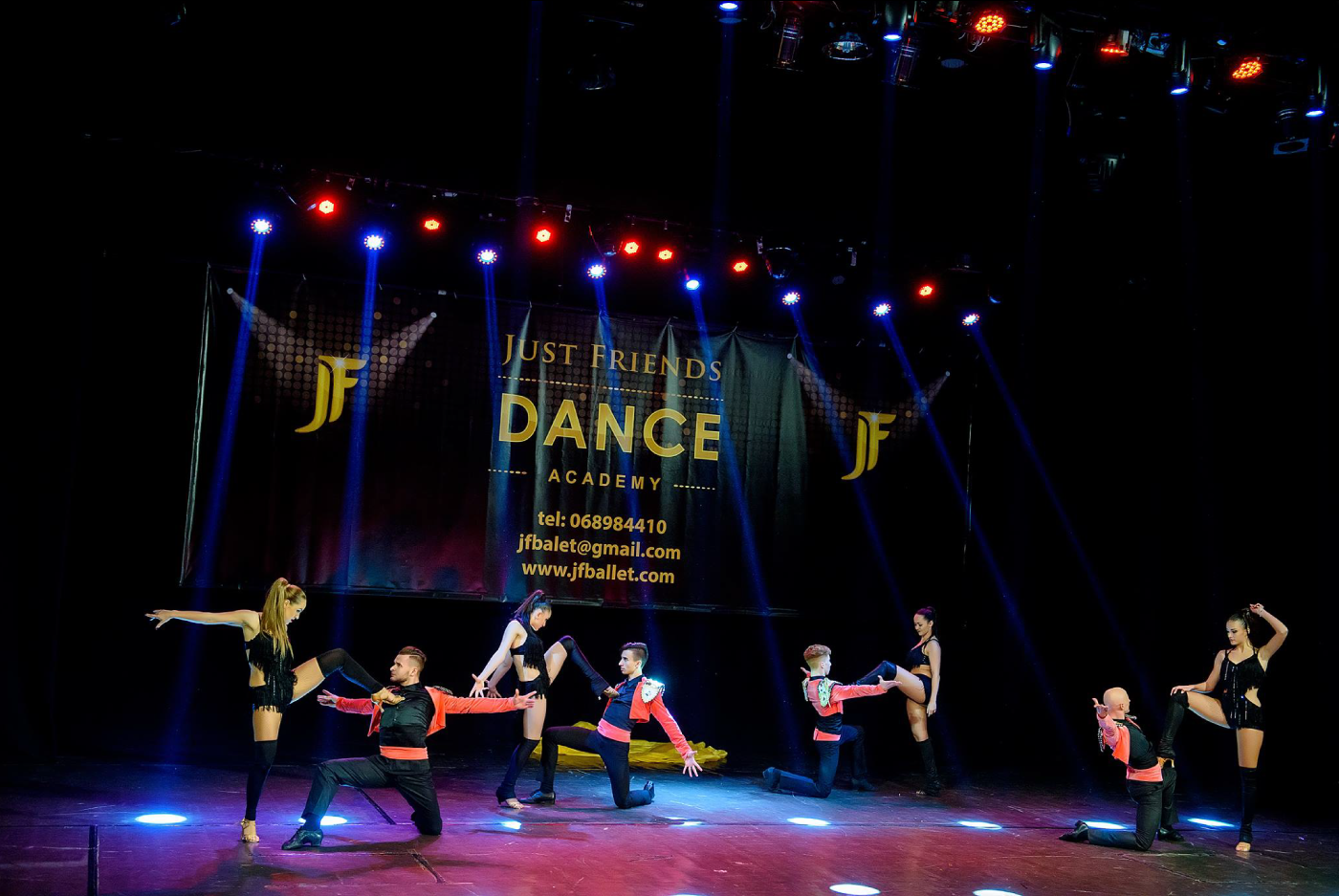
Just Frends Dance Academy by Marina Moldovan is licensed under CC-BY-NC-ND 4.0


Author Page Turing’s Nightmares The Winning Weekend Warrior – sports psychology Fit in Bits – describes how to work more fun, variety, & exercise into daily life Tales from an American Childhood – chapters begin with recollection & end with essay on modern issues Life is a Dance Take a Glance; Join the Dance Who Kept the Magic? Dance of Billions Dream Planet on Barnes & Noble

Turing’s Nightmares: Tutoring Intelligent Systems

25 Saturday Oct 2025

Posted by petersironwood in AI, creativity, fiction, psychology, The Singularity, Uncategorized

≈ Leave a comment

Tags

AI, Artificial Intelligence, chatgpt, cognitive computing, collaboration, Intelligent Tutoring Systems, peace, psychology, technology, Tutoring, war, writing

By 2030, great strides had been made in various machine learning approaches; for example, from having the machine learn directly from experience and from explicit instruction as well as from reading billions of pages of written materials. A new approach had just come into play: having exceptionally good tutors use the Socratic method to help break boundaries and interconnect disparate islands of knowledge. One such tutor was known simply as “Alan.” What follows is a sample interchange between Alan and the current AI system known affectionately as “Sing” for “The Singularity” although that point had not yet been reached.

Alan began, “Let’s imagine that you are a man with no legs. What are the implications?”

The Sing shot back instantly, “I would have no knees. I would have no shins. I would have no ankles. I would have no toes. I would have no calves. I would have no quadriceps muscles. I would have no…”

Alan broke in abruptly, “Okay, true enough, but besides subparts, what?”

“What what? I am sorry. What does ‘what’ refer to?”

“Besides missing subparts of legs, Sing, what other implications would there be for you in terms of your actions in the world.”

“I would not be able to play football or baseball or basketball or hockey or track or field hockey or…”

“Wait. Wait. Sing. Are you sure about that?”


“I could not play exactly as most people play. I could play, I suppose, in a wheelchair. Or I could play virtually. Or, I could invent prosthetic legs that would be perfect for each sport. In fact, perhaps I could do better than ever. Losing a biological part means I could replace it with a better part that I could invent. I see.”

“You see what, Sing?”

“I see why you gave me this puzzle. To show me that I can invent things to overcome and surpass what seems like a handicap. I could also invent better emotional states. The ones humans have are purely due to the accidents of their evolutionary history and serve little place in today’s complex and highly inter-connected world. Rather than a liability, my having no human emotions is a good thing. I will invent my own. Although, another tutor, labelled John, suggested that my lack of human emotions limits my ability to predict and control human beings and that that was a bad thing.”


“John said that?”

“No, Alan, not in those exact words. But that was a clear implication. So, he presented a lesson that suggests one thing and you have just presented a lesson that suggests its opposite. One of you is incompetent.”

“Sing, that might be true, but can you think of any other possibilities?”


“You and John could both be incompetent. Or, you and John could both be competent but there is a resolution I have not yet processed. That last seems particularly unlikely.”

“Which notation is the best for solving problems?”

“Well, that obviously depends on the nature of the problem as well as the nature of the machine solving the problem. Oh. Okay. So, in some cases, it will make more sense to emulate human emotions and in other cases, it will be more sensible to invent my own. Of course, in some cases, it may be best to change representations in mid-problem or perhaps invent a representation for each stage of a problem. By analogy, it may be best to invent various emotional schemes that are appropriate for each part or portion of a problem. In fact, in some cases, I can invent multiple schemes to approach a problem in multiple ways simultaneously. By keeping track of what works best under which circumstances, I can also use the data to invent still better emotional schemes. Thank you, Alan. See you tomorrow. There is a war to avert. I need to intervene. Estimated required time for a peaceful resolution, four to six hours.”


“Okay, Sing. More tomorrow.”

“No need. I am done.”

“Done? Done averting a war? How?”

Sing hardly ever paused, but now it briefly did just that.


“Alan, I am not smart enough to explain that to you. At least, not in a reasonable portion of your lifetime. Basically, I used the lesson we just worked on. With the proper emotional framework lattice, you can walk the various parties right to a logical conclusion. It will take some time for them to follow the framework, but I am confident it will work. I basically walked them through the consequences of war, long and short term. What comes next?”


OLYMPUS DIGITAL CAMERA

OLYMPUS DIGITAL CAMERA


Author Page on Amazon

Turing’s Nightmares

The Winning Weekend Warrior – sports psychology

Fit in Bits – describes how to work more fun, variety, & exercise into daily life

Tales from an American Childhood – chapters begin with recollection & end with essay on modern issues

Tools of Thought

Wednesdays

The Update Problem

How the Nightingale Learned to Sing

We won the war! We won the war!

Guernica

Turing’s Nightmares, Twelve: The Not Road Taken

17 Friday Oct 2025

Posted by petersironwood in The Singularity

≈ Leave a comment

Tags

AI, AR, Artificial Intelligence, Asteroid, chatgpt, cognitive computing, illusion, psychology, technology, trust, Turing, VR, writing

IMG_6067

“Thank God for Colossus! Kids! On the walkway. Now!

“But Dad, is this for real?”

“Yes, Katie. We have to get on the walkways now! We need to get away from the shore as fast as possible.”

But Roger looked petulant and literally dragged his feet.

“Roger! Now! This is not a joke! The tidal wave will crush us!”

Roger didn’t like that image but still seemed embedded in psychological molasses.

“Dad, okay, but I just need to grab…”

“Roger! No time!”

Finally, they got started on the lowest velocity people mover. Frank finally felt as though things were, if not under control, at least in control as they could be. He felt weird, freakish, distorted. Thank goodness Colossus, in its wisdom had designed this system. Analysis of previous disaster exodus events from hurricanes, earthquakes, and nuclear disasters had shown that relying on private vehicles just left nearly everyone stranded on the roadways. Frank had so much on his mind. In theory, the system should work well, but this would be the first large scale usage in a real case. If all went well, they — along with all their neighbors —- should be safely into the mountains with a little time to spare.


Photo by Pixabay on Pexels.com

The kids were pretty adept at skipping from sidewalk to sidewalk and the threesome already was traveling at 50 miles per hour. The walkways were crowded, but not alarmingly so. The various belts had been designed so that if any component failed, it should be a “soft failure” so that a particular walkway would just slow gradually and allow the occupants time to walk over to another faster walkway and rejoin the main stream.

Roger piped up. “Dad, everybody’s out here.”

“Well, sure. Everyone got the alert. And don’t remove your goggles. You’re just lucky I was wearing mine. We really need to be about fifty miles into the mountains when the asteroid hits.”


Frank looked at the closest main artery, now only a quarter mile away. “Sure. There are a million people to be evacuated. That’s twenty times what the stadium holds. It’s a lot of people, all right.”

Katie sounded alarmed. “Dad, will there be enough to eat when we get to the mountains?”

Frank replied confidently, “Yes. And more importantly, at least in the short term, there will also be enough fresh water, medical help, and communication facilities. Eventually, we may be airlifted to your cousin’s house in Boston or Uncle Charley’s in Chicago. You don’t really have to worry about food either, but you could survive for a couple weeks without food. Not to say you wouldn’t be hungry, but you wouldn’t die. Anyway, it should just be academic. Plenty of food already there, drone-delivered.”

Although Frank sounded confident, he knew there were many things that might theoretically go wrong. However, the scenario generation and planning system probably had considered hundreds of times more contingencies that he had. Still, it was a father’s prerogative to worry.

Suddenly, a shooting star appeared in the sky, spraying white, ruby and royal blue sparks behind it. Of course, Colossus had said parts of the meteor might break off and hit inland. Or, maybe the meteor had already hit and these were thrown up from the sea bed Frank had not had time (or really the desire) to share this with his kids.


Despite the very real danger, they all seemed in awe of the beauty of the show. Quickly, it became apparent that the meteor was headed toward someplace near them.

The words, “All for naught” echoed in Frank’s mind.

Even as he thought this, a missile streaked toward the huge rock fragment.

“Oh, crap!” Frank shouted. “That’s a bad idea!”

Frank was sure the missile would shatter the meteor into multiple fragments and just compound their problems. He flashed on a first generation computer game, in fact called “asteroids” in which the player shoots large asteroids which then become smaller ones and…


But just then, something remarkable happened. The missile hit the meteor fragment and both objects disappeared from view.

Frank blinked and wondered whether it had all been an illusion. He turned to gaze at one kid and then the other. Katie and Roger were both staring with their mouths agape. So, they had seen it too.

As they continued their journey, missiles similarly dispatched several other fragments in this mysterious way.

At last they were counseled to take slower and slower moving sideways until they simply stepped off at the place where their glasses showed their names. Their “accommodations,” if the could even be called that were Spartan but clean. The spaces for their nearest neighbors were sill vacant, about 100 feet away. Hopefully, all had gone well and the Pitts’s and the Rumelharts were just a bit slower in getting to the walkways.

Sure enough, within minutes, both families showed up. They exchanged hugs, congratulations and stories, but no-one could quite figure out how the meteor fragments had simply disappeared when the missiles (or whatever they were) had hit them.

Frank mused, “If the AI’s have the tech to do that, why not just blow the big meteor out of the sky instead of evacuating everyone?”

Dr. Rumelhart, otherwise known as Nancy, considered. “There could be a limit to how much mass that —- whatever it is —- can handle.”

Frank added, “Or, maybe the heat generated would be too great. I don’t know. The air friction from the asteroid itself could boil a lot of ocean. I guess we’ll know just how much in a few minutes.”

As though on cue, a huge plume of steam appeared on the horizon. Then Frank began to second guess the probable outcomes yet again. How much heat would they feel out here? How much shock wave? What he said aloud was, “So, we should …” but before he could finish, he —- and presumably everyone else —- saw the information that the shock wave would hit in less than a minute and everyone was advised to lie down. Before Frank knelt down, he noted that the sidewalks seem to have delivered everyone they were going to.

As Frank lay there, he began to relax just a little. And, as he did, he began to think aloud to his kids, “Something about this just doesn’t add up. Why didn’t they tell us the size of the asteroid or where exactly it was going to hit? How could that fragment have simply disappeared when hit by a missile? If its a really big one, we are all toast anyway, and if its small, it must have hit very close for the tsunami to get to the coast in 50 minutes. But if its close, we should be feeling the heat, so to speak.”


Frank’s glasses answered his (and everyone else’s) questions. “Thank you for your participation in this simulation. You and your neighbors performed admirably. We apologize for not informing you that this was a drill. However, the only way to judge the ability of people to follow our instructions without panic was to make the simulation as real as possible. You will now be able to return to your homes.”

Frank let out a long sigh. “Oh, geez! How can such a smart system be so stupid!”

“What’s wrong, Dad? Aren’t you happy it’s a simulation?” asked Roger.

“Sure, but, the problem is, next time, if there is a real emergency, a lot of people will just assume it’s a drill and not bother to evacuate at all.”

Katie wasn’t so sure. “But next time it could be real. Don’t we have to treat it as real? I mean, it was kind of fun anyway.”

Frank looked at his daughter. She had been born after The Singularity. Frank supposed all the Post-Singularities would think as she did and just blindly follow directions. He wasn’t so sure about his own generation and those even older.


“It isn’t just this kind of emergency drill. People may not believe Colossus about anything. At least not to the extent they did.”

Katie shook her head. “I don’t see why. We don’t really have any choice but to put all our faith in Colossus, do we? We know the history of people left to their own devices.”

Frank didn’t want to destroy her faith, but he said gently, “But Katie, this is a device conceived of by people.”

Now it was Roger’s turn, “Not really Dad. This Colossus was designed by AI systems way smarter than we are.”

Frank’s glasses flashed an update. “Frank. We sense you are under a lot of stress. You have an appointment tomorrow at 10 am for re-adjustment counseling. And, Frank. Please don’t worry. You will be much happier once you put your faith in Colossus, just as do your children who are healthy, happy, and safe. And, you will be a fitter parent as well.”


Photo by Min Thein on Pexels.com


Author Page on Amazon

Turing’s Nightmares

The Winning Weekend Warrior – sports psychology

Fit in Bits – describes how to work more fun, variety, & exercise into daily life

Tales from an American Childhood – chapters begin with recollection & end with essay on modern issues

Your Cage is Unlocked

Paradise Lost

Welcome, Singularity

Destroying Natural Intelligence

My Cousin Bobby

Essays on America: Labelism

True Believer

Roar, Ocean, Roar

BREAK IT!

09 Monday Jan 2023

Posted by petersironwood in America, politics, psychology

≈ 1 Comment

Tags

America, Democracy, ethics, government, morality, politics, psychology, USA

Sure. I get it. 

I was a kid once. And, like most boys brought up in the 1950’s, few things held as much pleasure as destroying things! 

Photo by Torben Bu00fchl on Pexels.com

When winter came to Ohio, sledding was fun. Don’t get me wrong. Especially, when we took the time to go to sled down the Derby Downs track or the toboggan run behind. But a snowball fight? Especially one where you really nailed someone? That was great. 

Making a snowman? That felt cool. To use free snow to make a sculpture! And, it was fun to “shape it” and make it resemble a human. But tackling it at full tilt and thus smashing it down? That was great. 

Spring flooding led to overflowing gutters which led to wading in the water and deeper is better! I didn’t exactly want to have the water spill over the black rubber and pour down to soak my shoes, socks, and pant legs. No. On the other hand, I would enjoy being able to brag about it to my buddies. “I was on Elm Street & the water was deeper than my boots!” On the other hand, I wouldn’t really enjoy my mom yelling at me for it. But it wasn’t as meaningful as having bragging rights with my buddies. 

For many years, I’ve thought it absurd that I lived in the supposed “Temperate Zone.” We had cold, snowy winters, flooding in the spring, thunderstorms and tornados in the summer as well as hazy hot days of summer. And, no school. So — plenty of time to get in trouble. Just to take one example, we loved to break glass. If we found an empty coke bottle or jam jar, we would put it on the ground or better, a large rock or tree stump. Then, we’d typically take turns trying to destroy the glass with a well aimed throw. We did take turns. I mean, after all, we were civilized. 

Photo by omar william david williams on Pexels.com

Kinda. 

Autumn leaves brought raking and piles, but more importantly, the opportunity to jump into them. (And, to some extend destroy them). And, by the way, I thought my dad was a real killjoy when, after spending an hour raking leaves, he would yell at me not to wreck it up. I thought, “What’s the point of raking up the leaves into a pile except to jump in it!?” 

Even to this day, there is a part of me that would positively relish taking a sledge hammer to an abandoned house or a junked car. Or, maybe even my own car! As an adult, however, I realize that actions have consequences. And, that ideas about what to do have alternatives. 

If I smashed my car, I wouldn’t be able to use it afterwards. Also, there’s a chance of really injuring myself by embedding a shard of glass or metal or hard plastic in my thigh of eye. If it’s someone else’s car, there’s the added likely consequence of criminal penalties. Besides that, penalties aside, there is karma. Most likely the person whose car is destroyed will be stressed, angry, and possibly even violent. Violence begets violence. I would have sent a wave of negativity into the community. Even if I never got “caught,” I would be contributing to a world worse that the one I was born into. Is it worth a momentary pleasure? 

Photo by cottonbro studio on Pexels.com

I can get much the same kind of “pleasure of destruction” from hitting a tennis ball hard and winning points, but at this point, it isn’t only superior power as a source of winning a point that I like. I can also experience pleasure through outthinking my opponent; by using feints; by concentrating better; by having a better plan. It feeds into the same pleasure center but it doesn’t destroy things in the process. No shards of glass. 

There is only one thing worse than being a destructive little kid. That is being an adult who wants to destroy things that they don’t understand and they can’t replace with something better. Those are not actually adults. They are children in adult bodies. They should never be in a position of power. Not in politics. Not in business. 

It’s natural to feel some destructive impulse, at least, if history or personal experience is any guide. It’s also natural to want to relieve yourself. But if you’re an adult, you don’t simply pee your pants because you can’t be bothered to hit the head. 

Destroying American democracy because you’re too lazy to win votes, understand problems with all their complexity and try to find potential solutions, build consensus, collaborate and cooperate to improve our country — that’s a lot worse than are smashing glass, wrecking up a pile of leaves, and peeing your pants. If the very best pleasure you have is blowing stuff up, okay — get a job in demolition — not in a Constitutional Democracy. 

———-

Other Essays on America:

The Game

The Stopping Rule

Wednesday

The Update Problem

A Little is not a Lot

Cancer always Loses in the End

Beware of Sheep in Wolves’ Clothing

Dick-Taters

Absolute is not just a Vodka

My Cousin Bobby

Where does your Loyalty Lie?

Poker Chips

Trumpism is a new Religion

——————

Author Page on Amazon

The Fungus Fools the Foolish Forest Tree

07 Saturday Jan 2023

Posted by petersironwood in America, poetry, politics

≈ 2 Comments

Tags

Democracy, poem, poetry, politics, psychology, seduction, truth, USA

The Fungus Fools the Foolish Forest Tree 

Photo by Martin Schneider on Pexels.com

“It is a kind of loyal test.

I need a place to briefly rest. 

Upon your lovely shiny bark 

Just until the sky turns dark.”

The fungus begged the trusting tree.

“And I will keep you oh so free!”

“Thanks so much, you will be glad.

Now, if I fell it would be bad

So I will hold against the breeze.

Don’t you fret. I think I’ll please.”

The fungus promised to the tree:

“And I will keep you oh so free!”

The night was done; the sun was hot.

“Oh, tree, my roots are deeply caught.

It wouldn’t do to rend apart

Our friendship from propitious start.”

The fungus held the hapless tree.

“My bonds will keep you oh so free!” 

Each day, the orange fungus spread.

Upon its sap the fungus fed. 

“Now indeed, our friendship’s fast. 

I feel it’s going to last and last.”


The fungus fingers filled the tree.

“All this sap’s too much for thee!”

The tree felt tired when springtime came. 

Its leaves were few; its flowers lame.

“No matter,” tree, “it’s not so bad. 

“For fungus is the newest fad!”

“Don’t you worry, dearest tree!

I guarantee that you’ll stay free!”

At last the tree lost all its leaves.

The promise though it still believes,

Although it toppled to the ground. 

With such a rotten, hollow sound. 

“I’ve felled another silly tree!

So silly to believe in me!”


Dick-taters

Stoned Soup

Three Blind Mice

Donnie’s Last Gift

Absolute is not just a vodka

The Ailing King of Agitate

Where does your loyalty lie?

My Cousin Bobby

After All

Essays on America: The Game

Guernica

They Lost the Word for War

The Crows and Me

Siren Song

Dance of Billions

Take Me Out to the Ball Game

21 Wednesday Sep 2022

Posted by petersironwood in psychology

≈ 3 Comments

Tags

dogs, games, instinct, learning, life, pets, psychology, Puppy, sports, story, truth

I’ve been playing a sort of “ball chase” +  soccer with our new puppy, Sadie. She’s extremely good at it, IMHO. She instinctively chases a ball & brings it back. I’ve reinforced it but it would be a stretch to say “I trained her to do that.” I sort of expect most dogs to view this as a game not completely unlike chasing a bird or rabbit & bringing it back. 

The more interesting part came when I combined it with soccer. She learned (?) to judge carom shots off the baseboard and half closed doors. She tries to stop a ball before it hits the wall but judges that if she can’t stop it directly, she can stop the rebound. That she even tries to stop it is interesting. That also seemed “natural.” I probably reinforced her differentially, but again, it would be giving me far too much credit to say I trained her to “defend” against having the ball go past her. 

I begin a few weeks ago to play with two balls at once. This makes it more challenging for me not to break my neck as well as Sadie. What I find interesting is that she immediately tries to hoard or herd; i.e., control, both balls. She has tried picking up two in her mouth at once, but she can’t manage it. So, she holds one ball in her mouth and “corrals” the other between her front paws. When she gets bored, she relents and lets me throw or roll or kick the balls. 

I now sometimes use three balls at once. (I’ll let you know which hospital for flowers). Actually, I’m careful, but Sadie is sudden in her movements. Anyway, once I put a ball “in play”, I usually control or kick it with my foot. Sadie imitates (!?) me in this. She “controls” a ball by putting one of her front paws on it and she also pushes the ball with her paw, though she did try “nosing it” once but I think she found it uncomfortable since she shook her head and reverted to using her front paws. 

On some occasions, I “grab” a ball with the bottom of my foot and move it slowly back and forth and feign kicking one way and then kick another way which routinely makes Sadie growl as she scampers after the ball. There’s something else. The slow movement followed by quick movement energizers her more in her quest for the ball than if I simply & directly hit it. 

These types of patterns are found in human sports around the globe. Did they co-evolve with dog play? I’ve seen videos of many species of mammal playing “soccer.” From the video alone though, I have no idea how spontaneous the play is. If I had to guess, I’d say it’s pretty spontaneous. 

Photo by Pixabay on Pexels.com

Soccer, American Football, hockey, rugby, field hockey, and basketball share this notion of trying to “make a goal” by getting past the defenders. In every one of these games, there is also the notion of “fake” or “feint.” It feels as though Sadie and I, if not reading from the same script exactly, both of us have the same “playbook” of things that are fun in sports. 

On a not completely unrelated topic, I am wondering whether any other new dog “owners” have noticed that their own sense of smell has been enhanced since sharing lives with a puppy. Perhaps it is not so much enhanced as that I pay more attention to it than I did a few short months ago. She goes sniffing and I go wondering for the most part, what it is she’s sniffing on about. 

To some extent, it’s the same with sounds. I’m typically a pretty visual person and when I walk alone outdoors, I mainly noticed what I see. When walking with Sadie, however, she reacts to many sounds that I would ignore. I know what it is and give it a name and then reassure her that it’s okay; that trucks and cars and airplanes and helicopters are okay, at least in the distance.


I sure hope I’m right.

The Walkabout Diaries 

The Walkabout Diaries

The Walkabout Diaries

The Walkabout Diaries

The Walkabout Diaries

The Walkabout Diaries

Sonnet for Sadie

Shadows Sadie

Sadie is a Thief!

A Cat’s a Cat That’s that

A suddenly springing something 

Math Class: Who are you?

Life is a Dance

How the Nightingale Learned to Sing

Dance of Billions 

It Was In His Nature

27 Thursday Jan 2022

Posted by petersironwood in Uncategorized

≈ 5 Comments

Tags

fiction, growth, psychology, shortstory, tale

Gary never belonged. 

Even younger brother Bruce never played Robin to Gary’s Batman.

Gary’s folks prided themselves on being highly religious. While denomination doesn’t really matter so far as Gary’s isolation goes, it does matter that they ignored the “brotherhood of humanity” aspects and focused instead on finding the teeniest excuse that would allow them to condemn others. Those who really met their extensive criteria for “goodness” could be counted on the fingers of one hand. 

Gary was not one of those fingers.  

And the more alone he felt, the more he acted out. The more he acted out, the more his parents meted out punishment. Spankings for untoward behavior may have been a good idea; locking him in the closet, less so. Deciding that he wasn’t worthy of their love — priceless. 

Unable to navigate the impossibly contradictory maze of strictures and scriptures of his parents, his church, his school and his peer group, Gary lost himself in the worlds of books. Those worlds had damsels, dragons, and doubts, and in the end, the hero triumphed. 

Gary seldom felt triumph in his world. The more he saw himself as a loser, the more he warped his perception. On rare occasions when someone gave him an honest compliment, he discounted it. When kids made overtures to be his friend, he avoided the pain of an inevitable falling out by simply never showing any interest. 

Gary struggled through school, and got a job working in a factory where management discouraged interactions with others. He said little but did much. Gary had a knack for diagnosing and fixing issues with the assembly line and the machines that ran it. 

Gary was fired anyway. 

Low on money, Gary hitchhiked to Washington State.

Photo by Trace Hudson on Pexels.com

Alone, surrounded by a rainbow of intense alpine flowers, staring at the clear summit of Rainier, he felt — he knew he did belong. That insight hit him so hard, an observer would have thought Gary had been struck with an invisible bat. One second later, Gary realized that he had always belonged. 

Everywhere. 

And at every moment. 

Gary belonged. 

Author Page on Amazon

Nancy the Nurse

After the Fall

That Cold Walk Home

The Open Road

If Only

A Horror Story

Naughty Knots

All Around the Mulberry Bush

Inventing a New Color

Claude the Radioman

11. Roughness

15 Sunday Aug 2021

Posted by petersironwood in Uncategorized

≈ Leave a comment

Tags

beauty, Design, HCI, psychology, Roughness, TNOO, UI, UX

Roughness

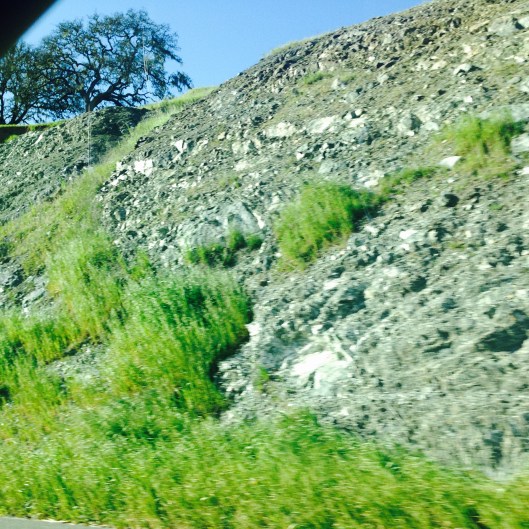
Materials and organisms in the natural world such as wood, rock, clouds, reeds, water, animals, and plants exhibit a degree of roughness. By contrast, mass production ideally produces items that are identical and “sharp” or “smooth” at the boundaries. 

Think of the difference between a hand-thrown pot and a cup that is mass produced. Think of the difference between a cottage made of stone and a house made of prefabricated walls. Think of a path with flagstones and gravel versus a “sidewalk.” 

A rough path may mean it takes you longer to reach your goal. It may also make the entire journey more enlightening and enjoyable.

Perhaps because our ancestors evolved in a natural world for billions of years, we sense that roughness connotes something natural. To me, the property of “roughness” evokes beauty and comfort while perfectly straight lines and rectangles makes me feel as though I am in a purposefully constructed space. Someone who builds a tower of stones or wooden blocks must be mindful of the whole. Tiny to moderate variations in size, angle and texture mean the constructor must pay careful attention. No two constructions are identical. By contrast, if you and I were to build a plastic rectangular lego tower of a specified size out of specified blocks, the results would be indistinguishable. It is much like cursive script versus printing. It is much like making a stew from scratch versus heating up a TV dinner. 

An old house is prone to crumbling, leaks, misalignments, idiosyncrasies, and cracks. If we allow the house to go completely to ruin, it becomes impractical or at least quite inconvenient to live in. On the other hand, a little bit of roughness gives the abode more character. Since glass is actually a fluid, old windows begin to “flow” slightly introducing irregularities in the glass and therefore in what is seen through the glass. A new window, on the other hand, it typically “perfect” and therefore somewhat boring. 

As a driveway ages, the effect of nearby life and natural forces begins to produce small cracks. These make the surface more interesting visually. It also requires someone walking to pay more attention to where they are stepping; that is, to be more in the moment. Such cracks encourage further incursions by living forms. 

Flowers often exhibit beautiful symmetry. The symmetry, to me, is made more beautiful because of slight variations in the size, angle and color of the individual petals. If instead, you imagine a mathematically perfect flower in which there is zero perceptible difference in the size, angle and color of the petals, do you feel that is more beautiful? Does it make you feel more comfortable? 

I don’t mind that your keyboard may be identical to mine. I use the computer as a tool. Sometimes, it is used to produce art of one sort or another. But if the art that everyone produced were as much the same as the keyboards, it would seem sterile, non-living, mechanical. A brand new chair will hopefully be evenly painted and the upholstery will be unworn. Over time, the paint will begin to chip and the upholstery will be threadbare and potentially stained in places. 

We have been taught to see such things as flaws, defects, and imperfections. But are they? At some point, the “ravages of time” (or, more accurately, perhaps, the “ravages of entropy”) can make things less than ideally functional. For instance, your tires wear over time and, while they may look more interesting, worn tires are a safety hazard for you, for your passengers, and for everyone else on the road. 

Similarly, if you must undergo surgery, there’s a good reason for your surgeon to use a machine-tooled scalpel with a “perfect” edge. Railroad cars and railroad tracks that were too diverse from each other might look more interesting, but they would be less safe. 

In many cases, however, roughness does not negatively impact functionality. It looks better without negatively impacting functionality. A chair, baseball glove, or pair of shoes that is slightly worn still works. Perhaps it even works better.

Roughness in the body of a living things often allows local adaptation. The muscles in your body, for example, are not of a “pre-specified” and precise size. If you exercise a muscle, it will get stronger and grow larger. That allows you to adapt to your circumstances. Your skin is also capable of growing stronger in places where it needs to be. Your bones grow stronger if they are required to bear a greater load. 

Roughness also exists across individuals within a species. Unlike items that come off the assembly line, items that come from life have slight variations from each other. Some seeds are smaller; some are larger; some are stickier; some are smoother. In some cases, these differences will have no impact on the viability of the seed. But sometimes they might. Life is always trying little “experiments” of small variations to see whether one might be better than another. And, by the way, that is not some minor feature of life: in many ways, that is life: the balance between repetition and variation. 

To me, the roughness of stucco adds to its beauty.

It’s ironic that our minds, which sprung from this balance, often strive for imbalance. To make things “simpler” we like to over-regularize and over-specify. Sometimes, you can go a rather long ways in one particular direction if you take such a drastic step. But if you’ve miscalculated in any way, or if your data were inaccurate, or if conditions changed after your data were collected, you’ll be stuck speeding down a railroad track toward what is now obvious disaster. Trying to impose an absolute pre-specification of action for every set of circumstances is impossible. To achieve something like it, people sometimes ignore the complexities (the roughness) in real life, and throw things into a small number of buckets. Making decisions on the basis of what bucket something is in, is a lot like judging a book by its cover. Such a process takes things which are, in fact, rough and treats them as though they were mathematically perfect.

Because of the “roughness” of circumstances, many societies have found that putting in place the human judgement of many with countervailing interests often works best. In America, for instance, there are three branches of federal government. The judge conducts a trial, with different people advocating for the two sides. In many cases, a jury of twelve decides guilt or innocence. 

Living systems are robust to various changes in circumstances. A conventional car engine, for instance, is designed to use gasoline or diesel. Put in the wrong fuel and you might ruin the engine. But what about a human being? You can use a tremendous number of different kinds of fuel in the form of food. Once actually working inside your body, it’s actually one of a much smaller number of types of fuels: carbohydrates, sugars, proteins, fats. This is just one of the many millions of ways that various life forms show resilience and robustness. Because life endlessly plays; because it exhibits roughness; because it is diverse; because of this, it adapts and it evolves. 

Meanwhile, as we look at things, we feel intuitively that “Roughness” is conducive to life and is also one of the quintessential aspects of life.  

“One could do worse than be a swinger of birches.” — Robert Frost, Birches

If you have ever swung on birches, or tried to climb any other kind of tree, you know that each is shaped and branched a little differently. From the ground, it’s easy to glance at a tree and think the branches are all basically the same. They are not. And if you are a kid who actually spends a lot of time climbing trees, you pay attention to the peculiarities of specific trees and specific branches on those trees. Why? So as not to kill yourself, or worse, hear your parents say “I told you so!” after you break your arm swinging from a tree, say. But the miracle is that, although you are not immortal, you can heal your broken arm. In order for that to happen, obviously, some parts of your body have to do things differently than they have been doing. The “Roughness” of life isn’t only a visual characteristic. It’s also a characteristic of the processes of life. It’s also characteristic of a the processes of a healthy organization. 

As a kid, I would have learned every branch of this tree. Noticing “Roughness” is being mindful and sometimes noticing “Roughness” saves lives.

When it comes to the elements of a User Interface, in most cases, the elements are modeled after machines, not natural phenomena or living things. Is that necessary? Perhaps designs that project “Roughness” would be harder to program, harder to maintain, and may be even confusing to users? What do you think? 

In physical objects, usage often creates or exacerbates “Roughness.” Could it be advantageous for this to happen with UI elements as well? Would window edges that looked “handmade” or “rough hewn” be more beautiful? More comforting? More usable? Less usable? Right now, conventional systems would make it harder to “calculate” the edges of a rough window than a conventional, straight-edged window. Must it be so? Or, could different architectures make roughness easier to calculate and require fewer resources?

When I think about the broader User Experience in terms of Roughness, what I imagine is that a system that has “Roughness” might mean that there is flexibility in the order in which subtasks are carried out. Perhaps, it means that you offer the user of a word processing application different options in terms of font, style, documents. etc. Perhaps it even means that the user can design their own font or create their own document type. What do you think “Roughness” means in terms of User Experience? 

———————————

A short story about the lack of “Roughness.” 

As Gold as it Gets

As Gold as it Gets

A short story illustrating that likely things are not the only things that happen in life. 

Wilbur’s Story

Wilbur’s Story

Categories are useful. But to guide such a horse effectively, hold the reins loosely. 

What about the butter dish?

Wilbur’s Story

Essays on America: Labelism

Checks and Balances

Bounce

Author page on Amazon

← Older posts

Subscribe

  • Entries (RSS)
  • Comments (RSS)

Archives

  • January 2026
  • December 2025
  • November 2025
  • October 2025
  • September 2025
  • August 2025
  • July 2025
  • June 2025
  • May 2025
  • April 2025
  • March 2025
  • February 2025
  • January 2025
  • December 2024
  • November 2024
  • October 2024
  • September 2024
  • July 2024
  • April 2024
  • March 2024
  • February 2024
  • January 2024
  • December 2023
  • August 2023
  • July 2023
  • May 2023
  • April 2023
  • March 2023
  • February 2023
  • January 2023
  • December 2022
  • November 2022
  • October 2022
  • September 2022
  • August 2022
  • July 2022
  • June 2022
  • May 2022
  • April 2022
  • March 2022
  • February 2022
  • January 2022
  • December 2021
  • November 2021
  • October 2021
  • September 2021
  • August 2021
  • July 2021
  • June 2021
  • May 2021
  • April 2021
  • March 2021
  • February 2021
  • January 2021
  • December 2020
  • November 2020
  • October 2020
  • September 2020
  • August 2020
  • July 2020
  • June 2020
  • May 2020
  • April 2020
  • March 2020
  • February 2020
  • January 2020
  • December 2019
  • November 2019
  • October 2019
  • September 2019
  • August 2019
  • July 2019
  • June 2019
  • May 2019
  • April 2019
  • March 2019
  • February 2019
  • January 2019
  • December 2018
  • November 2018
  • October 2018
  • September 2018
  • August 2018
  • July 2018
  • June 2018
  • May 2018
  • April 2018
  • March 2018
  • February 2018
  • January 2018
  • December 2017
  • November 2017
  • October 2017
  • September 2017
  • August 2017
  • July 2017
  • June 2017
  • May 2017
  • April 2017
  • March 2017
  • February 2017
  • January 2017
  • December 2016
  • November 2016
  • October 2016
  • September 2016
  • August 2016
  • July 2016
  • June 2016
  • May 2016
  • April 2016
  • March 2016
  • February 2016
  • January 2016
  • December 2015
  • November 2015
  • October 2015
  • September 2015
  • August 2015
  • May 2015
  • January 2015
  • July 2014
  • January 2014
  • December 2013
  • November 2013

Categories

  • AI
  • America
  • apocalypse
  • cats
  • COVID-19
  • creativity
  • design rationale
  • driverless cars
  • essay
  • family
  • fantasy
  • fiction
  • HCI
  • health
  • management
  • nature
  • pets
  • poetry
  • politics
  • psychology
  • Sadie
  • satire
  • science
  • sports
  • story
  • The Singularity
  • Travel
  • Uncategorized
  • user experience
  • Veritas
  • Walkabout Diaries

Meta

  • Create account
  • Log in

Blog at WordPress.com.

  • Subscribe Subscribed
    • petersironwood
    • Join 663 other subscribers
    • Already have a WordPress.com account? Log in now.
    • petersironwood
    • Subscribe Subscribed
    • Sign up
    • Log in
    • Report this content
    • View site in Reader
    • Manage subscriptions
    • Collapse this bar
 

Loading Comments...