• About PeterSIronwood

petersironwood

~ Finding, formulating and solving life's frustrations.

petersironwood

Tag Archives: peace

Karmic Architecture II

18 Friday Mar 2022

Posted by petersironwood in Uncategorized

≈ 4 Comments

Tags

Democracy, Dictatorship, essay, love, peace, truth, Ukraine, USA, war

You and I and King Cobra and Queen Anne’s Lace and every other living thing on earth are small and temporary little leaves on the ancient (4.5 billion years and counting), vast, and diverse Tree of Life. Typically, you know a lot more about the neighborhood surrounding your little leaf than you do about mine and vice versa. Yet, I may discover things that are of use to you. And, you may discover things that are of use to me. So, humans, have one gift that is valuable above all others. 

But before we explore what that valuable gift is, let me ask you a question about how you would react to a hypothetical.

Suppose you were so poor that you barely had enough to eat, no clothes to wear, a small damp cave for shelter. You were cold in the winter and hot in the summer. Now, suppose I gave you a magic ring that changed all that. If you wear this ring — voila! — you now have clean water and sufficient food and plenty of clothes and a house that really shelters you from the extremes of the environment. In return, you must wear the magic ring at all times. If you remove the ring, your life reverts immediately.

Photo by Jordan Rushton on Pexels.com


How tempted would you be to throw that magic ring in the toilet? 

Yet, that is precisely what many people do. 

And, if a sufficient number of people throw away the ring, everyone will essentially live the life of a beast. 

That “magic” ring is, like most rings, circular. It represents the whole of humanity. It represents the family. It represents a club, a marriage, a lodge, a company, a church, a school, a class, a group of friends. It represents our respect for each other as human beings. It represents our ability to communicate with each other. 

You could call that ring love and I wouldn’t object. It need not be imbued with so much positivity that people feel love. But it must be overall positive. It represents truth. It represents empathy. Love is strong and it can overcome both a few misdeeds by everyone and many misdeeds by a few. But if lies become more commonplace than truths, civilization will run downhill and eventually cease. 

Similarly, if hate and fear and contempt are how we mostly regard each other, the marriage, the family, the club, the school, the church, the party, the lodge, the company, the group of friends will eventually disintegrate. In many cases, it would disintegrate into a self-destructive war except that most people will stop themselves because they don’t want to be ostracized or jailed by the larger society. If, however, the entire society becomes rife enough with hate and fear, no one will come to anyone else’s rescue. 


Our entire survival depends on our gift, our ring, our community, our country, our fellow human beings. 

Our gift is not our lightning speed of running.

Our ring is not our ability to out-swim the shark.

Our gift is not our powerful jaws, or our steel strong talons. 

It is our ability to communicate with each other by sharing experiences. It is truth, caring, and cooperation. That is our one gift that enabled us to survive and thrive. 

Photo by Andrea Piacquadio on Pexels.com

A democracy can take many specific forms. What it is, at base, is that it recognizes the gift as a fundamental value to be cherished and used. The fundamental purpose is to ensure that government is aware of and takes into account how policies and people and processes actually impact people who live in the democracy. In a representative democracy, the people, in turn, can vote for people to represent them. They can vote for any reason they like; e.g., because they admire a particular person; they believe they will do a competent job; they like the candidate’s promised policy changes; they find that the candidate reminds them of his funny old uncle Al who always had the best candy on offer.  

No democracy is perfect. There has to be in its structure and processes more truth than lie; more empathy than indifference; more love than hate; more hope than fear. In some democracies, there are basically two parties; others have dozens. Parties may differ on philosophies, priorities, platforms, programs, etc. 

A “party” who rejects democracy itself however, is not an actual political party. The term “political party” only makes sense in the context of a democracy. If “elections” are determined by those in power, they are not actual elections and there is no party. It’s just a group of thugs who want to rule by hate and fear and lies. That is not a political party. It is not a legitimate part of a political process. They want to throw the ring away in the toilet. They want to subvert the truth to lies. They want to severely limit love and enhance fear and hate. They divide rather than unify. Oh, and guess what else? Historically, they want war. They will ensure that war just as Putrid is doing right now.

Democracies have also been known to start wars. When they do, it’s often based on lies. As communication has become more ubiquitous, it has been harder and harder for democracies to lie, cheat, and be cruel. Most people don’t want that! Most people want there to be more truth, love, caring, and cooperation. There are plenty of differences about how to go about that. That’s fine. That’s just the sort of difficult and messy problem that democracy is particularly less bad than any other system. 

As I said, I really think most people prefer interacting in a caring and cooperative way. We see that it’s more effective in getting things done and it simply feels better for everyone. For that reason, dick-tater-$hits have to provide lies to help assuage the consciences of its citizens. “Oh, they are all murderers and rapists! You shouldn’t feel bad about being cruel to them!” Another favorite is: “Oh, they aren’t really human beings, the way we are. No need to treat them any better than a fox trying to steal your chickens!”

Photo by u041eu043bu0435u0433 u042fu043au043eu0432u043bu0435u0432 on Pexels.com


Needless to say, this ploy completely fails on many people and isn’t completely effective on anyone. Any time you’re cruel, whatever story you tell yourself about it, you know you are destroying a bit of yourself. Except, what you are really destroying is something much vaster than a bit of yourself. In fact, what you are destroying is something much vaster than all of yourself. What you are destroying by being cruel, whatever story you tell yourself is the human branch of the Tree of Life. Lies weaken that branch. Cruelty weakens that branch. Bullying weakens that branch. So too does cowardice. 

The architecture of karma shows that the future impact of your present day behavior is much greater in scope than your present impact. Behaving well is in your interest because what you are is essentially a very small and very temporary part of that ancient, vast, and diverse Tree of Life. The more you can enhance that tree with truth and love, the better for the whole tree.


Don’t throw away the ring. Wear it proudly. It is truly an amazing gift! 

Photo by Pixabay on Pexels.com

Author page on Amazon

Dick-Tater

Absolute is not just a vodka

The First Ring of Empathy

Pattern Language for Cooperation 

How the Nightingale Learned to Sing

Listen: You can hear the echos of your actions

Poppa Goes the Weasel

The Three Blind Mice

Stoned Soup

The Orange Man

Math Class: Who Are You? 

Ripples

Happy Darwin Day!

Walkabout Diaries: Walk in the Park

12 Saturday Mar 2022

Posted by petersironwood in Uncategorized

≈ 5 Comments

Tags

Democracy, diversity, flowers, love, nature, peace, photos, Ukraine, USA

Today, I decided to change up the photo scene so I walked to a nearby State Park. Some nice flowers presented themselves on route. For instance, the bright yellow flowers under the bright blue sky reminded me of the bravery of Ukraine. 

When I arrived at the park, two flags I am proud of greeted me. Of course, it doesn’t mean the State of California is perfect — nor is the USA. But most of us at least are trying to make them better. 

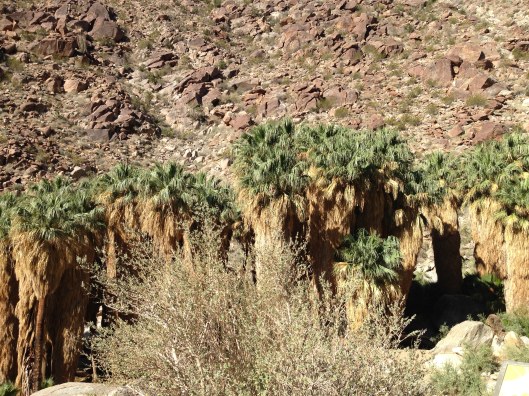
I was also rewarded with beautiful flowering trees on my walk on the park. 

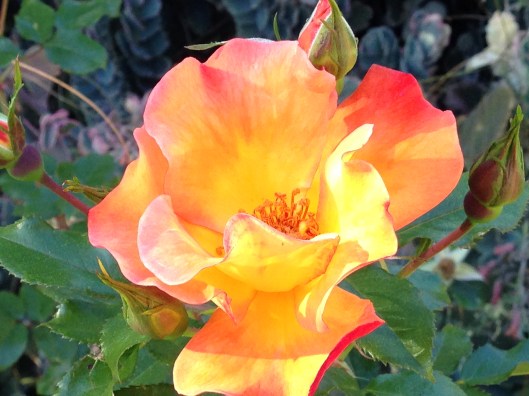
Many bright beautiful flowers also greeted me in my walk in the park.

Some of the beautiful flowers who greeted me on my walk in the park (as well as on the way there) showed their support for Ukraine and the bravery of her people.

The most beautiful gift of my walk was completely unexpected— a very large & very colorful celebration in an Indian tradition. I strongly suspect it was a wedding since I noticed a nearby restroom said “grooms”; people were in a good mood; the celebration included all ages; and everyone looked beautiful.

In addition to the color fest, a band arrived and played beautiful music beautifully! I thought about trying to record some. Where this picture was taken isn’t far from the highway. Since it was behind me, it was easy to block that noise out with my brain. It would be far harder for you listening to it on your device though. 

The walk in the park also reminded me how wonderful is the music made by little children. It is the same music regardless of language if you listen with your heart.

Once more, I find myself grateful that humanity survived & thrived in so many diverse ways. So many solutions to so many problems! Amazing wealth of experience! We can become wise at a whole new level — if we are respectful and kind to each other. Is that too much to ask? I really don’t think it is too much to ask. 

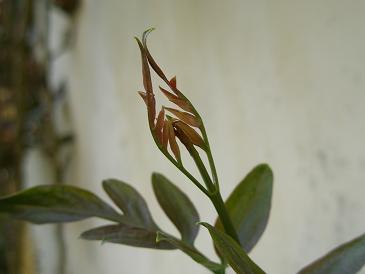
 I love also the way plants have invented so many solutions to so many problems. We have much more to learn from them — and each other — than we can currently even imagine.

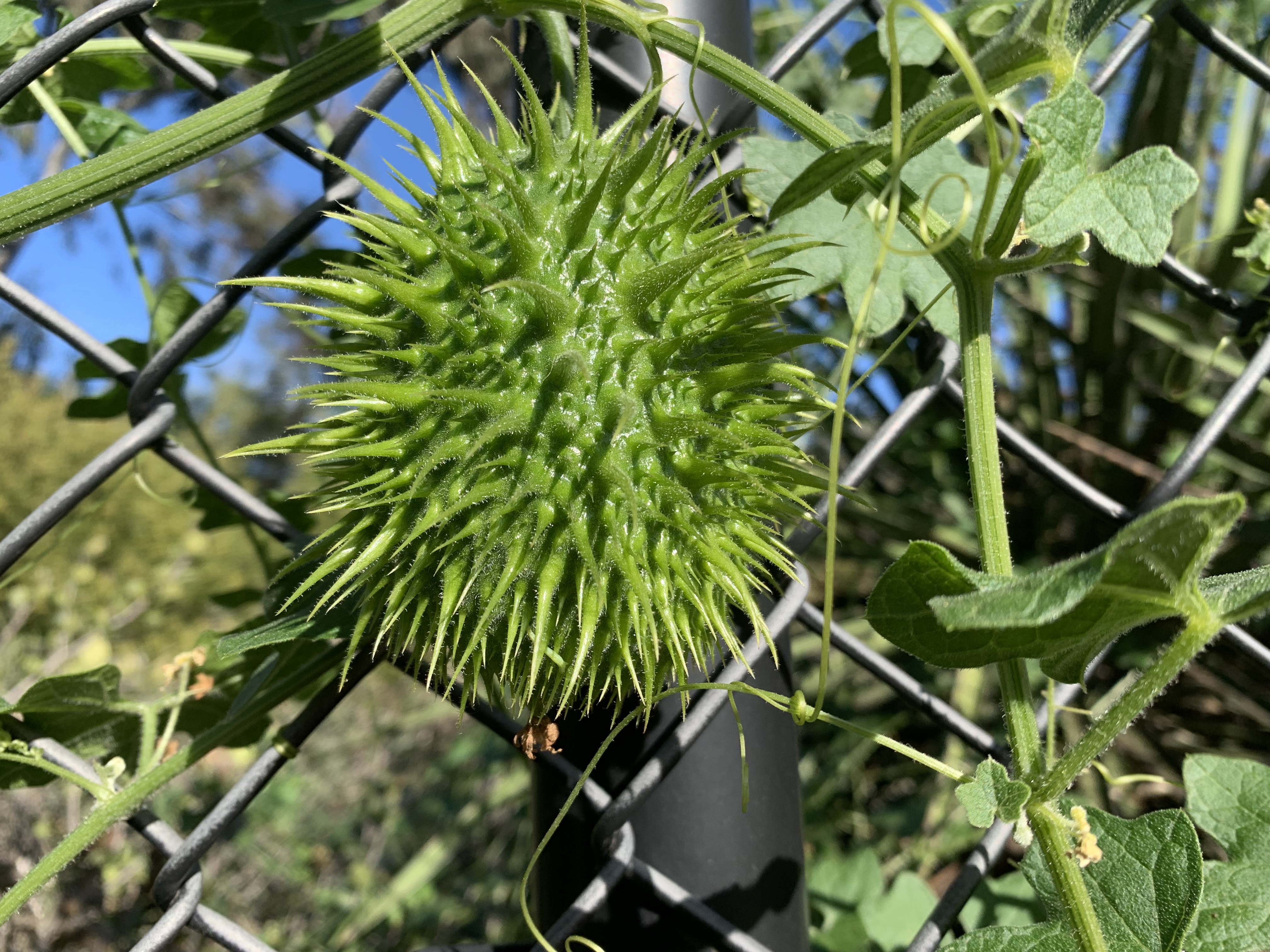
For example, I saw this “Wild Cucumber” as I began my walk home, still enjoying the music & the chattering children. This plant uses hydrostatic pressure to shoot its seeds out at 11 meters/sec. We can learn much from every living thing — including other humans.

I hope you enjoy your next walk in the park. 

———-

Author Page on Amazon

Life Will Find a Way

Ghosts of Flowers Past

The Walkabout Diaries: Life Will Find a Way

Sunsets

Bee Wise

Happy Darwin Day

Math Class: Who Are You?

A Rose is a Rose is a Thinking Rose?

The Walkabout Diaries: Friends

Stoned Soup

Three Blind Mice

Seed, Ground, Water, Light, Love

10 Thursday Mar 2022

Posted by petersironwood in Uncategorized

≈ 1 Comment

Tags

cooperation, council, Democracy, legend, myth, peace, politics, story, Veritas, war

——————

After some delicate and delicious love-making with Shadow Walker, Many Paths decided to check on She Who Saved Many Lives. If she seemed well enough, it might also be good to see whether her mentor had any further wisdom to share about Many Path’s plan to gather all the tribes. Her goal was to bring about peace but she realized that in trying to accomplish that, she might trigger the very things she hoped to avoid. Her tentative plan was therefore to gather as much wisdom as she might from many sources — but not to wait overlong. As the story goes, she thought to herself, if you waste the entire warm season deciding where to plant, you will starve in the season of great ice and snow.

Many Paths called out to her friend and mentor and received a surprisingly strong and cheery response. “Come in, Many Paths. Come in! I’ve been meaning to ask your advice about something. Do sit down. I will get you a cup of tea this time.” 

Not for the first time, Many Paths wondered whether it was actually possible for She Who Saved Many Lives to see into her heart and mind. After serving them both a cup of spicebush tea, ever so slightly flavored with mint, She Who Saved Many Lives went to her work area and brought over two patches of weaving. She placed one on each knee of Many Paths. The older woman smiled and said, “It never fails to amaze me how strong a weave of reeds is! It’s so wonderful. Just as I hope our community is.”

“I have had that exact same though,” Many Paths replied. Then, she laughed and added, “Likely because you pointed that out to me before I was even old enough to remember.”

The Elder Shaman tilted her head and nodded ever so slightly. “Perhaps. But you have made so many wonderful discoveries. And, not only you but the entire tribe. That’s because you have been open to learning and seeing what is there. But enough of that. I did have a question for you. Which of these two do you think is better?”

Many Paths frowned. “Better for what? What are you making?”

She Who Saved Many Lives considered, “A basket to carry things.” 

Many Paths nodded, “What things and how many? This weave has these stiffer switches to help support the weight. If you’re making a small bag to collect mint, for example, you wouldn’t have any need. If you’re making a large bag to collect apples, however, you would want the extra structuring support.”

Photo by Pierpaolo Riondato on Pexels.com

She Who Saved Many Lives nodded. “Yes, yes. That sounds obvious when you say it. I guess the fever must have addled my brain a bit. Anyway, thank you for reminding me. Soon, I will have to decide on what I want to use the bag for; then I will know which one is likely correct. Now, what did you want to ask my advice on?”

Many Paths took in a deep breath and slowly let it out. “I am quite sure I didn’t say anything about asking your advice.” 

She Who Saved Many Lives nodded. “I think you’re right. Sometimes I confuse us.” She laughed. “I know it sounds crazy but any way, I will get back to my weaving — or at least deciding why I’m weaving and let you go about your business — unless, of course, there was something else you wanted to talk about.” 

Many Paths chuckled. “As it turns out, I did want to ask your advice about something. You know I want to convene a  — Let me ask you another question first. Are you going to teach me how to see into another person’s mind?”

She Who Saved Many Lives laughed surprisingly long. At last, she caught her breath and said, “Many Paths! You won all seven rings of empathy! Of course, you can see into others. Of course, you can never be perfect at it. But you already do it. I knew you were busy. Yet you came to see me. You probably wanted to see whether I was dead or not, but even your footsteps and the way you called out told me you had something else on your mind. In fact, whether you knew it or not, you assumed I was alive. There was no edge of anxious worry in your voice. It was friendly — but also a bit — plaintive. I knew you wanted something from me. Now, you can see I have very few possessions. I find too many to be intolerably distracting. I am not going to help you with any arduous physical task. What is left? You want to offer me the opportunity to share my experiences; that is a great gift. For once we die, what else is left? So, naturally, I am more than willing to try to see what grows from our discussion.” 

Many Paths looked down and slowly shook her head. She realized that she could read people. She simply forgot sometimes to do it. If you really take the time to put yourself in their sandals, of course, you can make a good guess at what they’re thinking, she thought. Aloud, she said, “Yes. You’re right. So, I want to convene the tribes and I am wondering how, exactly, to go about it. How can I make sure it helps bring greater peace and doesn’t somehow spark off violence. Maybe it’s better not to try?” 

She Who Saved Many Lives replied, “I can say that no-one has attempted to bring all the tribes we know about together — not in my lifetime or the lifetime of my mother or the lifetime of my mother’s mother. During that time, there have been many wars and other atrocities. People stealing other people’s children? Even in our own tribe, we had some who forgot they were not the Tree of Life but a small and temporary part of the Tree of Life. I judge it’s worth the attempt.”

Many Paths. “As to how…?” 

She Who Saved Many Lives said, “What comes to mind for what you are trying to do is more akin to growing things than it is to making things. I am making a basket, and I will use it for a time. I don’t ever imagine that it will live forever any more than that I will or you, my dear. But if I know your heart correctly, you don’t want to make a thing, which will at some time break or dissolve. You want to make something grow for a hundred years, like a giant oak. Ideally, it would be an oak that would seed still more oaks when old mother oak also died.” 

Many Paths nodded. She realized that her mentor had described her desires precisely even though she herself could not have articulated so succinctly. “Yes, that’s exactly right.”

She Who Saved Many Lives nodded. “Let’s suppose then that you want to plant something so that it’s likely to grow. What do you need?” 

“A seed. Fertile ground. Water. Sun. That’s it. Is there more? Love! It’s all more likely to grow with love.” 

She Who Saved Many Lives nodded. “Yes. That’s it. I would start with the love. You already have that. Then, you need to know what seed. The seed determines what will grow though not exactly how. But you will need the ground, water, and sun so it can grow at all.” 

Many Paths continued the thought stream. “If you know what the seed is, then, you know what kind of place to look for. You know whether you need to plant it in bright sunlight or in shade. You know whether it needs very fertile ground or if it can grow in dirt and rocks. And, you know whether it needs to be in very wet ground or if arid ground will do.”

“Yes,” Many Paths, “and it occurs to me, that you might choose a place with enough light first, because, you can make the ground more fertile and bring more water, if need be. But brining light is more difficult.” She Who Saved Many Paths sighed. “Once, apparently, we knew how to bring light as those which lit the tunnel that leads to the Veritas on the … on the other side of the mountain.” 

“I do wonder, Old Mother, whether such light would is strong enough to grow plants. And then, Shadow Walker used reflections of the sun, along with other captives, to escape from the City of the Z-Lotz. It seems too contrived and elaborate for growing plants, but … perhaps writing is a little like that when it comes to providing enough truth so that peace can grow. It allows you to bring the light of wisdom to places that are many days walk from where they started. More importantly, you can place the light in a different time as well. We have all learned so much from the books uncovered in the great library. But, as usual, you are right. We must determine what type of thing we want to grow. That decision will determine the type of seed. The type of seed will determine the proper material, sunshine, and water.”


Many Paths arose and began pacing around in the Old Leader’s shelter. “Of course, since the outcome could impact everyone, I need to know how everyone believes it should be. Or, at least, find out as much as they know about how they want it to be.”

“Yes.” She Who Saved Many Lives considered for a moment before answering. “I suspect some will have many ideas about that while others may not care that much. Nearly everyone wants peace. On other matters, there may be great differences.” 

Many Paths sat back down. The two sat in a comfortable silence for a time. Many Paths rose at last and said, “Thank you for sharing your wisdom. I will look for some to walk with me a bit and contemplate the plants and their nature and try to see among them what it is that the people may be seeking. I’m glad you seem so much better.” 

“As am I, Many Paths. You know, you give me much to live for.” She Who Saved Many Lives smiled and added, “But I do think I will lie down for a nap now. Though some time in the near future, I might accompany you on such a walk.”

Many Paths left and saw Shadow Walker coming toward her. From the look on his face, Many Paths judged he had some news. His smile broadened as he approached and he said, “Hello my love! Can we go for a bit of a walk?” 

———————

Author Page on Amazon

Myths of the Veritas: The Orange Man

Myths of the Veritas: The Forgotten Field

Myths of the Veritas: The First Ring of Empathy

P is for Politics

08 Tuesday Feb 2022

Posted by petersironwood in Uncategorized

≈ 2 Comments

Tags

Democracy, peace, poem, poetry, politics, Resistance, USA

Politics starts with P

Often politics stars with P

Political Posturing has twice as much P

The former Pee-Resident really put the Pee in Politics

Thank his Pal who got him Putin office. 

Photo by Julius Silver on Pexels.com

Pride begins with P

Prejudice begins with P

Petulance and Pestilence 

And Putrid and Pathetic

Did I mention Putin and Putin’s Puppet?

Photo by Min Thein on Pexels.com


Perhaps, we the People ought to ban the letter P.

Phase out Paranoia and 

Purge Pathetic Pain and Pelf.

Purloin the letter P.

Proscribe it from the alphabet!


It seems the perfect plan!

But can we stand to ban the plum? 

Dare we deign to eat no peach?

Would we desire a pleasureless life? 

Would endless strife surpass our Peace? 

But then a thought occurs to me:

What if banning letter P

Doesn’t even impact what is real?

It’s just a game to make us squeal. 

Photo by Charlie Solorzano on Pexels.com

Imagine folks who lie

And ban the naming of that lie.

Imagine folks who beat

And steal your winter wheat. 

To get away with crime,

More than just one at a time.

Easier just to break all law.

Do it once & hide the flaw. 

Now your gang can really go to town!

Turn it all — all upside down! 

And if you are blind enough to think

Capitol attack is peachy pink.

Photo by Todd Trapani on Pexels.com

Could never come your way 

Well, guess again, I say.

There will be so many deaths

It will take away your breath

s.

Photo by Johannes Plenio on Pexels.com

The label’s not the thing

Wherein we’ll catch the king. 

What happens in our life

Determines peace or strife. 

Here’s the path to paradise:

Garden, love and plant a pine.

Be sort of nice; not blind of mind;

Being kind works many a time.

We will paradize our place.
And love our human race.

—————————-

Essay on America: Labelism 

Identity Theft

Where does your loyalty lie? 

My Cousin Bobby

The Ailing King of Agitate

Guernica

The only “them” that matters is all of us

Con-Con Man’s Special Friend

Siren Song

The Mud Pit

We’re all in this together

Fire and Ice

The All for me Bee

Life Will Find a Way

Author Page on Amazon

“It is in our very nature 

To improve our very nature.” 

We’re all in this together

30 Thursday Dec 2021

Posted by petersironwood in Uncategorized

≈ 7 Comments

Tags

community, cooperation, Democracy, earth, green, nature, peace, poem, poetry, society

We’re all in this together.

Each and every one. 

Oh, my God, it can’t be true. 

Perhaps for me, but not for you! 

You’re too black or brown or yellow!

I’m just an ordinary fellow! 

You’re too gay or straight or mellow!

You even eat that apple jello! 

We’re all in this together.

Each and every one.

Old & young and in-between;

The ever-seen and never-seen.

Oh, my God, it can’t be true. 

Perhaps for me, but not for you! 

You’re too fat or skinny or too tall!

Perhaps you’re short and way too small! 

We’re all in this together.

Each and every one.

Into games or sports of every sport.

Even tall and short and every sort.


Oh, my God, it can’t be true. 

Perhaps for me, but not for you! 

You’re too shallow, smart, or kind;

Too lame or sick or different mind. 

We’re all in this together.

Each and every one.

We’re all in this together.

Each and every one.


Take a glance join the dance

The Watershed Virus

The only “them” that counts is all of us

How the Nightingale Learned to Sing

Myths of the Veritas: The First Ring of Empathy

Stoned Soup

Three Blind Mice

Absolute is not just a Vodka

Fire and Ice

The “All for me” Bee

Life Will Find a Way

Myths of the Veritas: The Orange Man

Myths of the Veritas: The Forgotten Field

Fire & Ice

23 Thursday Dec 2021

Posted by petersironwood in Uncategorized

≈ 2 Comments

Tags

Democracy, fable, fire, ice, peace, story, war

Photo by Simon Berger on Pexels.com

Fire: “What are you doing here? Fool. I’m god here. You’re neither wanted nor needed. It’s over. Have an ice day!”

Ice: “Perhaps. Perhaps not.”

Fire: “Bah. In war, it is I who kills. Flame-throwers, the gunpowder propelling bullets, bombs, and best of all, but rarely used, atomic fire. Oh, it warms my heart to see.” 

Photo by Pixabay on Pexels.com

Ice: “Yes, but I am your best partner, though you know it not.”

Fire: “You? Hah. Okay, I grant you, frostbite and cold have destroyed the bodies of many. Napolean and Hitler and Lord knows who else’s armies. But still.”

Photo by Pixabay on Pexels.com

Ice: “No, you’re foolish and rambling as ever. I’m not talking about how I can help you kill. I’m talking about how I prepare the ground for you. Make people not care. Encourage the turning of a cold shoulder, a blind eye. Without me, people might never turn to you.”

Fire: “I doubt it. Fire begets fire. Hate begets hate. What does your little chill of indifference have to do with it? Be gone or I’ll melt you to water.” 

Photo by Tim Erben on Pexels.com

Ice: “Perhaps. But I might douse you to smoldering embers. I suggest you think about it. We can work as partners. Each making the other stronger. Actually, we have been partnering, but I’ve never gotten the credit I deserve. You’ve ignored me too long.”

Photo by Pixabay on Pexels.com

Fire: “Hah! Not nearly so much as you have ignored me! You’re useless without me!”

Ice: “Fine, if that’s the way you feel, then this is goodbye. Forever.”

God smiled. Humanity prospered.

Author Page on Amazon

Essays on America: Ice

Take a glance Join the Dance

How the Nightingale Learned to Sing

What about the butter dish?

Essays on America: The stopping rule

Essays on America: The Update Problem

Happy Talk Lies

Where does your Loyalty Lie?

My Cousin Bobby

The Loud Defense of Untenable Positions

It’s not your fault; send me money

Absolute is not just a vodka

Myths of the Veritas: The Tale of Three Blind Mice

15 Monday Nov 2021

Posted by petersironwood in Uncategorized

≈ 101 Comments

Tags

Aesop, America, fable, fiction, greed, hubris, myths, peace, treason, USA, Veritas

Many Paths sighed. “What do you mean by saying that it has all happened before, brother of mine?” 

Tu-Swift glanced back at Cat Eyes. Surely, Cat Eyes would be able to explain better than he could. But he could see that her parents Tree Vines and Gathers Acorns smothered her with affection, so he resolved to try to explain. “Throughout time, people have been prosperous for a time and then ruined it through the actions of the few who wish to indulge their greed and lies. We all know the story of the Orange Man. But there are many such stories, apparently from many places. Lies and greed always end the same way — with misery for the many and eventually with misery for those few greedy as well. I recently read — well, Cat Eyes read me a story about another liar whom they called “The Wobbly Man” who went into a beautiful, peaceful village and tore apart the people, one from another. And, just before Trunk of Tree came — before he discovered a short cut to the Veritas on the Other Side of the Mountain, we were decoding a whole series of stories that were meant to caution people so that they wouldn’t fall for the lies of the greedy. But why are such stories necessary? Why can’t people seem to see what the greedy are up to? If the answer to that puzzle is in the books, we have not yet found it.” 

Many Paths nodded. “I wish to know about these books and the wisdom in them. I need to hold council with people here. I need everyone’s wisdom to help me try to bring peace among the tribes. It seems that I may also gain good counsel from those who have gone before us. If, as you — and She Who Saves Many Lives — both seem to claim, this has all happened before, we can learn from these books what wisdom they have. Can you read me one of these stories?” 

So, it came to pass that Tu-Swift read to Many Paths the story called “The Three Blind Mice.” As he read, many of the Veritas gathered round to listen.

The Story of the Three Blind Mice.

Once before our time, a field of goldenrod provided a lovely home for a very large and prosperous camp-land of field mice. The goldenrod attracted grasshoppers and the mice loved the tasty and nutritious grasshoppers. When, as happens to all, eventually each individual mouse died, and they then provided food for the roots of the goldenrod which grew ever taller and more attractive to the grasshoppers. All was well in the golden field.


As things became ever more prosperous for the mice, a thought occurred to two of the mice. Their names were Cheat and Lie.

Cheat said to Lie: “We have more than we used to have. And that feels good. So, we would feel even better if we had more than anyone else.” 

Lie said to Cheat: “I suppose you’re right. But so what? Why would everyone agree to give us more?” 

They darted their eyes at random for awhile, wriggling their whiskers and trying to think of an answer to that puzzle. 

Presently, Lie said to Cheat, “We will lie to them! We will tell the that they are not happy. We will tell them that they are in danger! We will tell them that they cannot trust each other. They can only trust us. We will keep them safe!”

Cheat said to Lie: “That’s a wonderful idea!” Then, a mousy frown appeared between Cheat’s eyes and he said, “But why would they believe it? I mean look at us. We’re not by any means the fastest mice or the strongest. We don’t have the best eyesight. Why would they believe that we can protect them better than they themselves can?” 

Lie said to Cheat: “We will recruit Chaos to our cause! He has a knack for disorder. He will make everything so confusing that everyone will want to believe that we’ll take care of everything for them.”

That very night, while all the other mice slept, Cheat and Lie crept over to the usual sleeping spot of Chaos who was not too happy about being awakened.

Lie and Cheat cautioned him to be quiet and the trio snuck off to a part of the field that all the other mice typically avoided. They explained their plot to Chaos who readily agreed to play his part. He loved to confuse other mice every chance he had. 

Photo by u041eu043bu0435u0433 u042fu043au043eu0432u043bu0435u0432 on Pexels.com

The three were startled by the sudden appearance of a huge pair of eyes atop a gigantic maw of jaws. The Fox’s voice however, was surprisingly warm and smooth. “No need to run. I’m not interested in hurting you three. I overheard your plans. Very smart. Very smart. Still, I think I could improve upon your plans quite a bit. With my help, you three clever mice will get what you deserve! You deserve more than an equal share. Much more. And, I will help you.”

The three mice were feeling both reassured and proud. After all, they had been called “smart” by a fox! 

Cheat asked, “How can you help? And why would you, if you don’t mind my asking?” 

Fox nodded sagely. “You ask two excellent questions. You are indeed smart mice. First, let me just ask you a question so that I may answer your question in a way more tailored to your needs. Aren’t there among all you mice some that annoy you greatly or that you find unattractive?” 

Cheat answered first, “I really hate those mice that have to make up and follow rules.” 

Lie said, “And I hate the ones that always insist on the truth.”

Chaos answered, “I hate folks with pinkish toes. They just disgust me. For one thing, I’m highly attracted to them. But I don’t want to be. So, that makes me uncomfortable.” 

Fox nodded. “I can see exactly why you find those sorts annoying. I do too! You say you want to make everyone afraid even though things are going well. Now, imagine how much more fearful everyone will be when a fox shows up and eats some of the mice. Not just any mice of course, but just the icky ones. Mice with pink toes or who insist on the truth or follow rules. Of course, we will first have to make sure that lots of your fellow mice also hate those with pink toes and so forth. And, now, as you clever mice surely see, I have answered your original questions. Firstly, I can help by making your fellow mice so scared, they will literally come to believe anything you say and won’t mind giving some of their grasshoppers to you. Secondly, the why is simple. I get to eat the hateful ones among you. And that will make life better for you as well — no more hateful ones around.”

And, so, their deal was settled and, sure enough, thanks to helpful suggestions from Fox, over time, many of the mice came to hate those who played by the rules and came to hate mice with pink toes, and came to hate mice who insisted on the truth. 

Fox was happy to have his mice “delivered to him” ready to devour. He no longer had to chase after them. 

After some months, however, the supply of the hateful mice began to dwindle. Fox was no longer satisfied. He made it quite clear that he needed to speak to Chaos, Lie, and Cheat who had by now grown quite fat with the extra provisions they took from the other mice. 

Fox began: “Chaos, Lie, and Cheat, you have done quite well. Honestly, I’m quite amazed that things have gone as well as they have for all of us. You’re obviously all doing well. Let’s keep things going for both our sakes. You’ve run out of hateful mice, but that’s not a problem. We will simply need to expand the circle of hateful mice a little bit. No big deal. I can help you figure out how. Maybe mice with scraggly fur or mice with crooked teeth or mice that are unusually small. It’s totally up to you. I am really just a pawn in your plans.”


And, for a long while things went along much the same. Fox would get his fill of mice without having to chase them. The three mice — Chaos, Lie, and Cheat grew fatter and fatter. Some of the mice were rather shocked that Chaos, Lie, and Cheat were fomenting hate against certain mice and then ordering them to be rounded up to end up in the stomach of Fox. Some of the mice were rather glad it was happening. They were eager to help. They convinced themselves that they had always hated such and such a kind of mouse. Most of the mice were just glad that they weren’t the ones sacrificed to the Fox. After all, this was a world full of woe, just as Chaos, Lie, and Cheat kept saying.

At last, there came the day when Chaos, Lie, and Cheat had truly sad news to share with Fox. Cheat, Lie, and Chaos drew straws to see who would break the news to Fox. Lie lost and so he began: “I’m so sorry to break the bad news to you, Fox, but we seem to have run out of mice! We drew our circle tighter and tighter just as you suggested but you’ve now eaten up all of our hateful kin. But the good news is that you have been quite well fed for quite awhile and have plenty of fat to tide you over for a few months.”

Now, Cheat chimed in: “I suppose you’ll be moving on to other fields where there are still many mice?” 

Lie added, “It has been a pleasure doing business with you, Fox.” 

Fox smiled in a foxy sort of way: “Indeed it has. And, I will be moving on to other fields as you suggest. But, our business is not yet over, and I won’t be leaving this field today. First, to show my gratitude to three such clever mice, I have gifts for you. For each of you, I have a tooth of solid gold. Here, walk right in and take your trophy tooth.”

Fox opened his mouth wide. In walked the three clever mice to claim their prize. 

And, never walked out.

When Tu-Swift finished, everyone sat silently for no-one wanted to be the first to speak. Each person who had heard felt a heaviness inside. Each recognized from their own experience how easy it is for greed to lead to blindness; for those who have more, to think that they will be cleverer than all the overly greedy people who went before. It had been so for the Orange Man. It had been so for NUT-PI. It had been so for ALT-R and POND MUD. Each wondered whether the Veritas were doomed to suffer the same dismal and inevitable fate. Or, whether this time, perhaps Many Paths could once again help them find a ray of hope.

———————————————

Myths of the Veritas: The Orange Man

Myths of the Veritas: Stoned Soup

Myths of the Veritas: The First Ring of Empathy

Essays on America: My Cousin Bobby

Where Does Your Loyalty Lie?

Essays on America: The Stopping Rule

Absolute is not just a vodka

Plans for us; some GRUesome

Author Page on Amazon

Not-Separateness

24 Tuesday Aug 2021

Posted by petersironwood in Uncategorized

≈ 1 Comment

Tags

beauty, Design, ecology, GreenNewDeal, HCI, IBM, peace, TNOO, UI, usability, UX

Not-Separateness

It seems odd to specify a property of natural order in terms of what it is not. On the other hand, I cannot come up with a positive alternative that doesn’t bring other connotations with it. I think it’s related to “unified” or “integral” or “belonging” or “inter-related” but none of those seem quite so on the mark as does “Not-Separateness.” 

Christopher Alexander’s degree from MIT was in architecture. Part of the reason he may have chosen this particular term is in reaction to some examples of architecture in which the architect seems to be in the business of constructing a building whose primary purpose is to make them famous regardless of what that building does to the neighborhood or the occupants. 

Photo by BROTE studio on Pexels.com

Imagine Mr. Bigg designs a house that is a perfect black cube set on on vertex. In effect, this design says to me: “I am BIG. I am Mr. Bigg! I am a genius! You would have never been brilliant enough to design a house that is a cube on its vertex! You would have wasted your time and done something mundane like placed the cube on the ground on one of its faces. Anyone could think of that! But I put it on a vertex!” Indeed, we may easily imagine that he says words to this effect when his interview is reported on in the (mythical) architectural journal, Things that look different! 

“Mr. Bigg, you made the Bigg House out of black steel and black glass. Some critics have argued that this doesn’t fit with the existing neighborhood of stone cottages with thatched roofs.”

“Of course, little minds will always criticize Bigg ideas.” 

“Yes, yes. It also means that the construction costs of the house were quite high. And, the estimated costs of heating and cooling are much higher as well.”

“Nothing that a worthwhile (i.e., wealthy) client can’t afford.” 

“Some have also argued that it is inconvenient for the occupants who have to walk up and down at a steep angle and that furniture such as dressers, tables, chairs, and beds do not accommodate well to the tilted walls.” 

“Let me ask you aquestion. Would you have ever thought of putting a cube on its corner? No. I didn’t think so!” 

Of course, this is exaggeration. But not much. 

We would hope that User Experience designers take into account the users, their tasks, their contexts, and the way in which their designs interact with other related artifacts, people and processes. We would hope that applications and artifacts and services are all designed with the property of “Not-Separateness.” 

In the early 1980’s, I worked in the IBM Office of the Chief Scientist. My main assignment was to get IBM to pay more attention to the usability of its products. As part of that process, I visited quite a few IBM development labs around the world and spoke to many development teams. On many of these visits, I was accompanied by the Chief Scientist, a brilliant physicist, who “got” usability. 

On one occasion, we watched a new printing technology. Instead of printing out black printing on a white sheet of paper sized 8.5” x 11” or A4, this printout was of no standard size. The printing was black on a shiny silver sheet that curled severely. The Chief Scientist asked the head of the development team how they envisioned this being used. 

Chief Scientist: “Once someone printed this out, what would they do with it?”

Answer: “Oh, anything they liked.” 

Chief Scientist: “I mean, would people tape this into a notebook or paste it? Or would you imagine notebooks that would bind such paper?” 

Answer: “It’s not up to me to decide how people would use it. Doesn’t it look cool?” 

Another type of answer we heard more than once to the question, “How would this be used?” 

— “Oh, it’s a (replacement/upgrade) for this other IBM product.” 


“But who would use it and for what?” 


“It has three main components. Would you like a description of the components?” 

Photo by Andru00e9 Ulyssesdesalis on Pexels.com

Of course, there is a place for “playing around” with technology and thereby discovering things which someone else may find a use for. But in design and development of a product or service, having a clear notion of context of use and the users and tasks is fundamental. Of course, other users may appropriate a product or service for purposes beyond those envisioned by the original designers. That’s cool. 

What’s not cool is designing a device that is to be used in the bright outdoor sunlight and then testing the display in a typical office environment. Have you ever run across something like that? I have.

A more subtle lack of contextualization in design occurs when the design team fails to realize how many interruptions happen to the user while they are trying to accomplish a single task with the new application. If you “test” the application while the user is in a quiet “usability lab” and can give your tasks their undivided attention, then necessitating them to remember the invisible internal state of “Insert” versus “Edit” mode may not be a big deal at all. They will simply remember. But in their office environment, they may be interrupted by a phone call, a message, or their boss entering their office and asking a series of detailed questions. If they now go back to the task at hand, there is about a 50-50 chance that they will correctly guess whether they are in “Edit” mode or “Insert” mode. 

A design which shows the property of Not-Separateness is the natural result of a process which shows not-separateness. Here are a few common ways to help ensure the design process grows organically from the users and their goals & contexts. 

* Put people on the design team who are familiar with the users, and/or their tasks, and/or their contexts. 


* People on the design team observe people engaging in the relevant processes, whenever possible, not — or not only — in a “Usability Lab” but in the actual work environment. 

  • Jointly develop a product or service with the group who will use the product or service. 
  • Observe people actually using product P (or service S), version N so that version N+1 will be better attuned to the needs of the users. 
  • Gather and understand feedback from service calls and help desks and customer complaints in order to improve over time. 

There will be benefits to a company who takes such approaches beyond initial sales. If you’ve done any gardening, you will appreciate that the quality of the tomatoes you enjoy eating is related to the quality of the soil and the quality of the care you give the tomatoes. Similarly, a product or service that has the quality of Not-Separateness will not only be useful — users will fight to keep your product or service. It becomes integrated with the environment. To change the brand means that they will have to change the way they work; possibly even with whom they work. Not-Separateness is likely a path to what business people like to call a “Cash Cow.” 

If you’ve ever walked through a neighborhood after a hurricane, you’ve likely seen many uprooted trees. When you look at the roots of an uprooted tree, what do you see? Of course, you see roots. But what else? You see rocks and soil all around and embedded into the roots. They are Not-Separate. In a hurricane, there are typically not only high winds. There is also a lot of rain. The trees are hit with a double whammy. The wind pushes the tree but the rain weakens the solid soil in which the tree is embedded. It is the combination that makes it very difficult for the tree to “hold on” and keep from falling over. 

Living things, just like us, have a 4.5 billion year history of living. The living things adapt over time to their environment and they mold the environment to their needs. They are not separate. Flowers appeal to the insects who pollinate them. The insects who pollinate them are adapted to the characteristics of the flower. A horse adapts to their rider and the rider adapts to their horse. A product or service must have a design that serves the needs of its stakeholders. For a product or service to have maximum beauty, utility, and longevity, it must also have a way to adapt to the changing needs of the users and other stakeholders. At the same time, if the users and their organizations adapt to the product or service, then true Not-Separateness is achieved. 

If you want to skimp on designing your product or service, you can make it more separate, more divorced from its context, its users, and its tasks. Of course, if you do that, you also make much easier for your users to abandon your product and switch to a new one. 

Another way to think about this in terms of systems theory is where you draw the boundary. If you draw a sharp boundary around your product, you may find that, over time, your product becomes ever more peripheral to the community you’re trying to support and your product is ever more fungible with others in its class. On the other hand, if you draw the boundary around the product or service and the people and organizations who provide the product or service then, you are on the path of ever tighter interconnect. 

Not-Separateness is not only a quality of good design in terms of not overly separating the context and users from the product or service. It is also a good quality for the organization that produces products & services. Of course, some people today must manage a giant amorphous “organization” of tens of thousands of people so they set up divisions, and departments, and groups, and teams, and positions etc. There may indeed be a “UX Department” and a “Software Department” and a “Hardware Department.” That’s all fine. But it is counter-productive if the UX Department sees itself as separate from the rest of the company. To a great extent the success of the UX Department depends on the success of the Hardware and Software Departments. The Sales Department’s success will, of course, depend partly on the skills of the Sales Department. But it will also depend on the success of the UX Department, HW, SW and Services. 

Have you ever had a paper cut? It isn’t just the skin on a quarter inch of the inside of your ring finger that’s cut. You’re cut! It isn’t just that the finger feels pain. You feel pain! That causes you to take steps to ameliorate the pain and to try to make sure it doesn’t happen again. That’s why empathy in leadership is important. A leader must feel empathy for all, or the organization will disintegrate from lack of Not-Separateness. At some point, a raccoon may chew off its own arm in order to escape a trap. 

But it isn’t the first thing that occurs to them every time they experience a thorn in the paw! 

The raccoon doesn’t say to itself:  — “that paw is giving me pain! I’m going to chew it off! Then, it won’t hurt any more.”

Photo by anne sch on Pexels.com

Evolution did not evolve a raccoon that acts that way. Self-mutilation exists but it is typically a last resort.

But not for corporations. It is the first thing they think of:

“Our (you name it) Department is not performing well. Let’s lay them off and outsource it.”

What does that say to every thinking employee in the entire corporation? It says:

“You know what? All this talk about teamwork and pulling together is a total bunch of bull$hit. You cannot trust management to do what’s best for everyone. You can only trust them to do what’s best for them.” 

Living forms in nature are living forms. Their parts have severe Not-Separateness with the other parts of that form. Often, as in well-functioning families or teams, that extends to all members of the group. 

Not-Separateness is essentially deep cooperation. I give to the larger community by becoming a part of it and doing my part in it. I lend strength to the community. In return, I gain strength from that community. It is not a zero sum game, of course. The community, if it is functional, is much stronger than the sum of the individuals in that community. 

This is so deeply embedded in 4.5 billion years of evolution that it does not surprise me that we recognize beauty as being even more beautiful if it is not separate. Not-Separate enhances beauty because, like all the other properties, it is essential to life. 

Eventually, if humanity is to survive, we will realize that Not-Separateness applies to all of us. We are not there yet. But that doesn’t mean we cannot appreciate and design Not Separateness in our products, in our services, and our lives. 

Photo by Pixabay on Pexels.com

—————-

The Declaration of Interdependence

How the Nightingale Learned to Sing

Roar, Ocean, Roar

Imagine all the people

Ripples

Author Page on Amazon

Thomas, J.C. and Kellogg, W.A. (1989). Minimizing ecological gaps in interface design, IEEE Software, January 1989.

Thomas, J. C. (2012).   Patterns for emergent global intelligence.   In Creativity and Rationale: Enhancing Human Experience By Design J. Carroll (Ed.), New York: Springer.

Thomas, J. C. (2001). An HCI Agenda for the Next Millennium: Emergent Global Intelligence. In R. Earnshaw, R. Guedj, A. van Dam, and J. Vince (Eds.), Frontiers of human-centered computing, online communities, and virtual environments. London: Springer-Verlag.

Thomas, J.C. (1985). Human factors in IBM. IBM Research Report. RC-11267.  Yorktown Heights, NY: IBM Corporation.

Death-Cultery on Parade

18 Wednesday Aug 2021

Posted by petersironwood in Uncategorized

≈ 1 Comment

Tags

America, coronavirus, COVID, essay, pandemic, peace, truth, USA, war

Should we really be all that surprised? 

One quarter of the country is prepared to die and have their loved ones die for the sake of what they know or should know to be lies. 

But what happens in war? 

At least one side, and more typically both sides are willing to die and put their families at risk for what they know or should know to be lies. They don’t typically go into combat for their own benefit! They do it for country. They do it for their religion. They do it to protect their families. They do it in reprisal for some real or imagined actions in the past. But very few would willingly walk into combat hoping to “get more out of it” than they put into it! That would be like running through a rich neighborhood during a heavy lightening storm. Sure, you might be struck by lightening or hit by a falling tree and die or be permanently injured. But — hey! — there’s also a chance you might be able to sue one of these rich suckers and make millions! Yeah. That could happen. But, as I say, that’s not why most people put themselves in harm’s way.

So, to recapitulate, war itself is based, at least partly, on lies. 

Are we doomed to keep repeating the same mistakes over and over and over and over again? 

IDK

But consider this: 

Suppose there are two teams Purple and Green. These two teams have a competition in something. It doesn’t much matter whether it’s soccer, baseball, debate, ice hockey, figure skating, cheerleading or anything else. What matters is that each side wants to “win.” But it also matters, and more than a little bit, that each side also wants to enjoy themselves. They value other things in addition to winning or losing. Some enjoy the companionship. Some enjoy the challenge. Some enjoy improving. Some enjoy the sunshine. It doesn’t have to be the same value for everyone. 

The point is that tennis is not a zero sum game. It’s true that a particular match has one and only one winning team. But there are other benefits. Everyone is a “winner” in the sense of the challenge or the emotional ups & downs or the sheer joy of movement. The score is only one part of the value of the game. The same is true for all sports and for almost all human endeavors in the real world. It is very seldom a zero sum game. We can almost always find some state of affairs as being bad (all out atomic war destroys the entire human species) 

Similarly, both the Purple and the Green team want to keep the game going. In most cases, they also want to have cordial social relations with all the other players. So, in the vast majority of cases, people “handle” disagreements about the score, the line calls, etc. within the bounds of civility. Let’s suppose that one person of the four is a narcissistic sociopath who thinks he’s always right and insists he’s always right no matter how egregious his line calls. Eventually, such a person would destroy the game. It wouldn’t take a majority. A single sociopathic teammate could spoil it for everyone. But only if everyone else lets them get away with it. 

Have you ever watched an all-out bench-clearing brawl between to baseball teams or two hockey teams? Every time I’ve seen it, it’s really only triggered by one person and accepted by one person. So, two, among those whole teams, are sometimes enough to ignite a kind of “war.” While a brawl isn’t the most pleasant experience I can imagine, it’s even worse among professional athletes. It’s potentially career-ending. For most, it’s a potential financial hit from the world of brand endorsements. There could be legal trouble. For a few, there might be regret. Similarly, guess what? Most people do not benefit from war! It’s so obvious that I hesitate to say it, but it seems as though people do not see it as obvious. A very few people get very very rich. Many people die; many are seriously and permanently injured; many people’s homes are destroyed; families are separated; possessions are destroyed; plans are accomplishments are destroyed; peace of mind is destroyed; forests and wild places are destroyed; innocent animals are destroyed; friendships are destroyed; trust is destroyed…I mean, are you starting to see a pattern here?
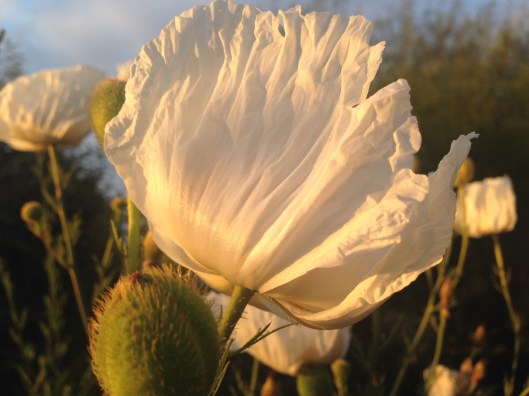
War is about destruction. War does not create beauty. War does not feed the hungry. War does not heal the sick. War does not comfort the soul. War benefits the few; never the many. 

At the extreme, there is dictatorship which will always be much more incentivized to war than will a democracy. The dictator will use the fact that there’s no free press to whip up hatred against an enemy. Then, he’ll attack (but pretend the other side started it), etc. Now, if attacked, the democracy has little choice but to respond. Encouraging a bully is a losing strategy. Going to war is also losing. War is never about winning. It’s about losing less. And going to war is better than giving in to a bully. If you succumb to the bully, you have no life any more. The bully is a parasite on you; one that you cannot get rid of while he sucks your blood and everyone else’s in the nation. Parasite is just another name for dictator.

In any case, a small number of people can start a war which, in turn, benefits only a small number of people, at most.

That doesn’t seem like a good system to me.

It sounds like “an accident waiting to happen.” And, it has. Over and over and over and over again. 

When will we ever learn?

And, while three fourths of America has battled their butts off for over a year and a half — socially distancing, wearing masks, making masks, getting vaccinated, staying healthy — in some cases working heroically — quite literally — heroically to fight the war against COVID. While that’s what’s been happening with about 3/4 of Americans….

One fourth of America has decided to join in the War on COVID — on the side of the virus! They refuse to get vaccinated; refuse to wear a mask; refuse to socially distance. Why? Because they’ve been ordered to by the leaders of a death cult. Make no mistake. This has nothing to do with personal freedom. If it were about personal freedom, there might be as many as seventeen people nationwide who would prefer to be intubated for weeks than to wear a mask for minutes. If it were really about personal freedom, the vast vast majority would choose a few moments of discomfort rather than dying or being permanently disabled. Ironically, most of  the cult leaders have been vaccinated, and when they’ve fallen ill, they’ve received expensive top notch care that you or I or the COVIDites will not be likely to receive.


Something there is that doesn’t love a war, not even a war on truth.

——————————-

The Truth Train

The Pandemic Anti-Academic

The Watershed Virus

Masklessness is not Manliness

Plans for us some gruesome 

Imagine all the people

Author page on Amazon 

Divining Divinity

29 Tuesday Jun 2021

Posted by petersironwood in Uncategorized

≈ 1 Comment

Tags

ecsatsy, life, mindfulness, nature, peace, poem, poetry

It seemed your path had just begun;

Yet here you are again, again: 

Another trip around the sun.

Playing out your heart to win.

When you move & check & slay

I hope you save some time for play. 

At end of day, who can say, 

They’ve truly won? The truth, I say: 

We’re all just one. We’re one.

If all the joy you ever feel 

Is when you hold the golden prize,

You’ve missed the real within the deal;

You’ve missed the deal within what’s real. 

Surprise! Surprise! 

You could instead find joyous joy 

In every move; in every shot. 

You need not be a dull robot;

You need not play the useful toy. 

All it takes is letting be

In life’s essential ecstasy. 

It’s all there is — yet quite enough.

It’s not about acquired stuff 

In the attic, coats of dust, 

Nothing but a coat of “must.” 

Feel your leafness in Life’s Tree. 

You be you and I’ll be me. 

Your mind is useful in a pinch;

Don’t let it steer your every inch.


He and she? — all part of we 

Exploring all Infinity; 

Sharing Life’s discovery;

Each being each our eachest each 

Extends our reach while teachers teach. 

Be the Hamlet! Eat that peach!

In every dance, you’ll feel romance. 

In every glance, you’ll seize your chance.

In every blade of grass you’ll see,

Lurking there: Divinity.

Life is a dance

Take a glance & join the dance

Math Class: Who are you?

https://www.amazon.com/author/truthtable

← Older posts
Newer posts →

Subscribe

  • Entries (RSS)
  • Comments (RSS)

Archives

  • December 2025
  • November 2025
  • October 2025
  • September 2025
  • August 2025
  • July 2025
  • June 2025
  • May 2025
  • April 2025
  • March 2025
  • February 2025
  • January 2025
  • December 2024
  • November 2024
  • October 2024
  • September 2024
  • July 2024
  • April 2024
  • March 2024
  • February 2024
  • January 2024
  • December 2023
  • August 2023
  • July 2023
  • May 2023
  • April 2023
  • March 2023
  • February 2023
  • January 2023
  • December 2022
  • November 2022
  • October 2022
  • September 2022
  • August 2022
  • July 2022
  • June 2022
  • May 2022
  • April 2022
  • March 2022
  • February 2022
  • January 2022
  • December 2021
  • November 2021
  • October 2021
  • September 2021
  • August 2021
  • July 2021
  • June 2021
  • May 2021
  • April 2021
  • March 2021
  • February 2021
  • January 2021
  • December 2020
  • November 2020
  • October 2020
  • September 2020
  • August 2020
  • July 2020
  • June 2020
  • May 2020
  • April 2020
  • March 2020
  • February 2020
  • January 2020
  • December 2019
  • November 2019
  • October 2019
  • September 2019
  • August 2019
  • July 2019
  • June 2019
  • May 2019
  • April 2019
  • March 2019
  • February 2019
  • January 2019
  • December 2018
  • November 2018
  • October 2018
  • September 2018
  • August 2018
  • July 2018
  • June 2018
  • May 2018
  • April 2018
  • March 2018
  • February 2018
  • January 2018
  • December 2017
  • November 2017
  • October 2017
  • September 2017
  • August 2017
  • July 2017
  • June 2017
  • May 2017
  • April 2017
  • March 2017
  • February 2017
  • January 2017
  • December 2016
  • November 2016
  • October 2016
  • September 2016
  • August 2016
  • July 2016
  • June 2016
  • May 2016
  • April 2016
  • March 2016
  • February 2016
  • January 2016
  • December 2015
  • November 2015
  • October 2015
  • September 2015
  • August 2015
  • May 2015
  • January 2015
  • July 2014
  • January 2014
  • December 2013
  • November 2013

Categories

  • AI
  • America
  • apocalypse
  • cats
  • COVID-19
  • creativity
  • design rationale
  • driverless cars
  • essay
  • family
  • fantasy
  • fiction
  • HCI
  • health
  • management
  • nature
  • pets
  • poetry
  • politics
  • psychology
  • Sadie
  • satire
  • science
  • sports
  • story
  • The Singularity
  • Travel
  • Uncategorized
  • user experience
  • Veritas
  • Walkabout Diaries

Meta

  • Create account
  • Log in

Blog at WordPress.com.

  • Subscribe Subscribed
    • petersironwood
    • Join 664 other subscribers
    • Already have a WordPress.com account? Log in now.
    • petersironwood
    • Subscribe Subscribed
    • Sign up
    • Log in
    • Report this content
    • View site in Reader
    • Manage subscriptions
    • Collapse this bar
 

Loading Comments...