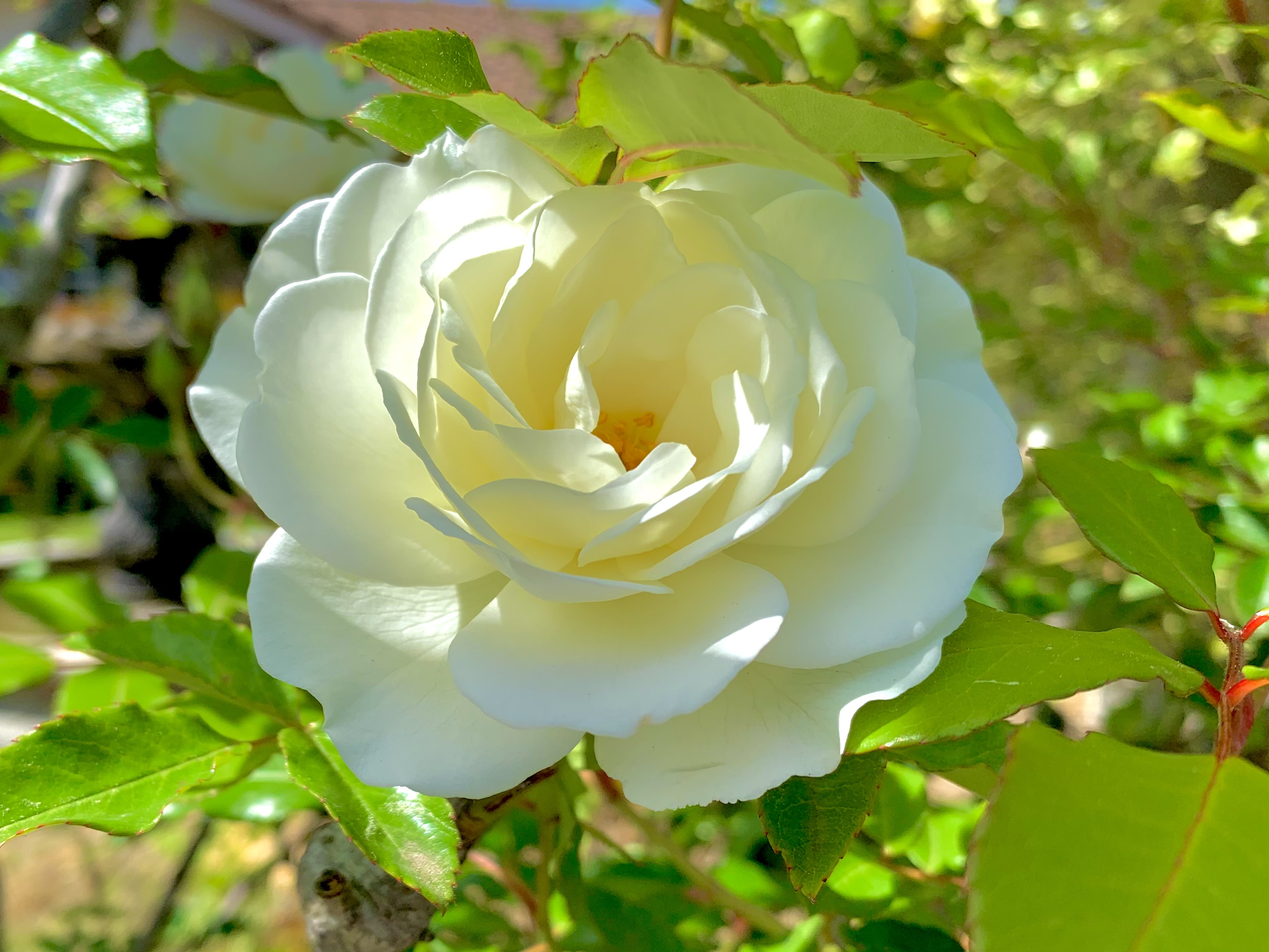
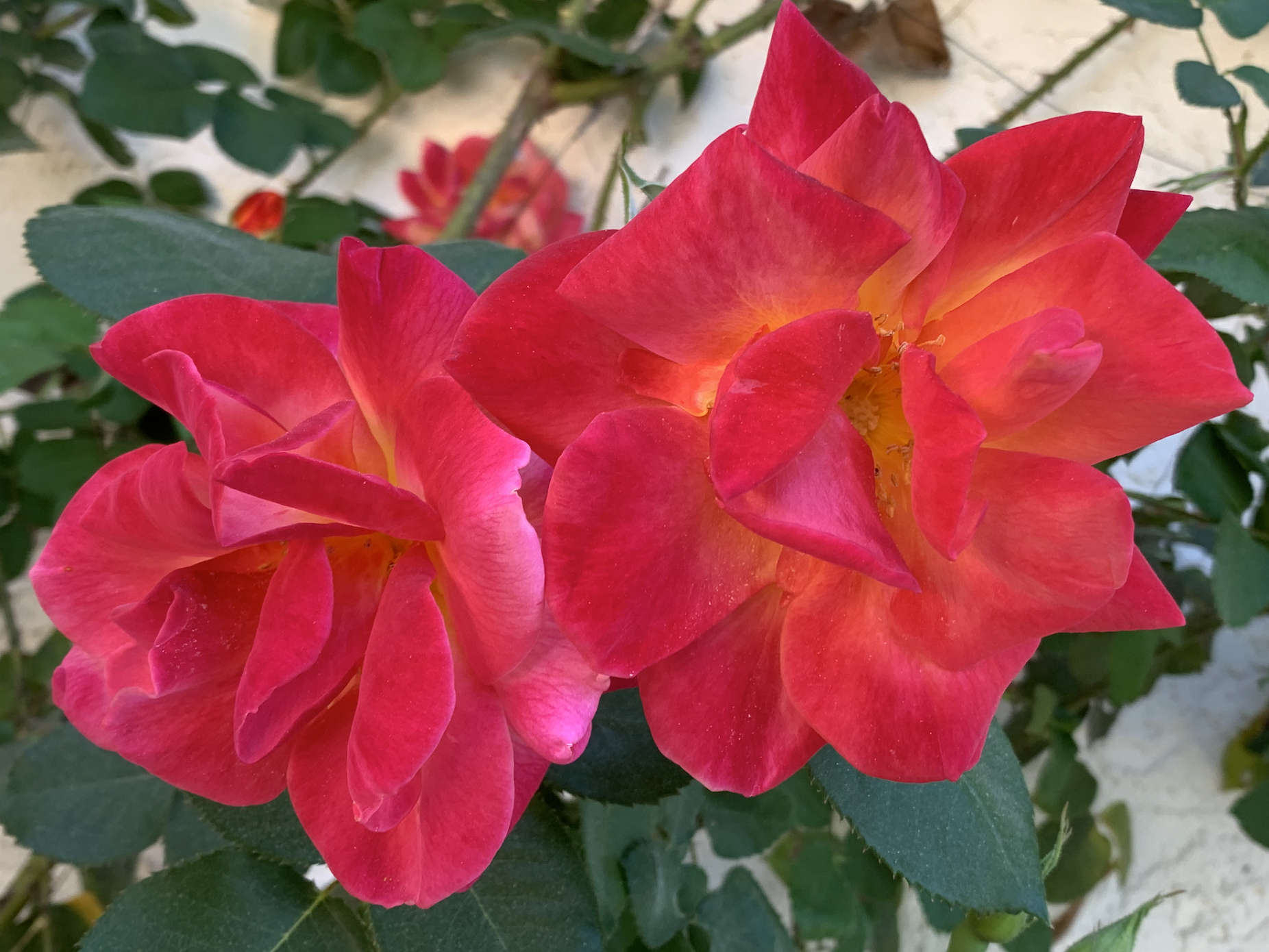
Christopher Alexander was an architect who wrote much about architecture, including the well-known book, A Pattern Language. Later, he also wrote about “The Nature of Order.” He posits 15 properties of natural beauty and good design, the first of which is “Levels of Scale.” I was thinking about that today as I admired our Jacob’s Coat Rose bush which blooms about 3-4 times a year here in San Diego.
Most of us see the flowers of the rose as beautiful. And indeed they are. They are beautiful from afar. They are beautiful up close. But so too are the other parts of the rose plant. At least, sometimes, the leaves are also quite beautiful.
Even the thorns are beautiful.
Beyond this surface level, the rose, like all living things, is beautiful inside. Like all living things, it’s survived four billion years of evolutionary time. The way cells are arranged and the way they work–this is beautiful as well. Moreover, the relationship that roses have to humans and bees are also beautiful. Imagine having the faith and hope to depend on a completely different species to reproduce. Imagine being so beautiful that human being across the globe spend their time and money to keep you thriving.
Did I mention that, like other green plants, roses remove carbon dioxide from the atmosphere and provide oxygen for animals like us?
Roses are so famous that they play a part in history and pageantry. The War of the Roses. The White House Rose garden. Destroying part of the Rose Garden is also symbolic. The Rose Parade. Individuals give each other roses. They are variously symbols of love, friendship, and peace. Roses appear in poetry, songs, paintings, and both first and last names.
Weather in San Diego is typically nice almost every day. Today is no exception, but that doesn’t mean that the weather is boring. There is a lot of natural variation. There is variation in the humidity, in the wind, in the position of the sun, in the heat, in the (fairly rare) precipitation.
Reflecting on this reminded me of another kind of natural variation: the variation in organisms of the same species. Without that variation, evolution would be far less effective.
It also reminds me of several of the characteristics of natural beauty and good design that Christopher Alexander writes about.
Things that have zero variation are mechanical, predictable, repetitive, and generally not very pleasing aesthetically. Mindless, endless repetition is aligned with death. Variation is aligned with life, freedom, creativity, growth, and joy.
Among things that are non-living artifacts, there is still a variation in how variable they are. Walls made of stone, are by their nature, “rougher” and more variable (and more beautiful) than walls made of bricks. Walls made of bricks are more irregular and beautiful than one made of solid steel. Similarly, at least to me, fences made of wood are more variable and beautiful than fences made of metal.
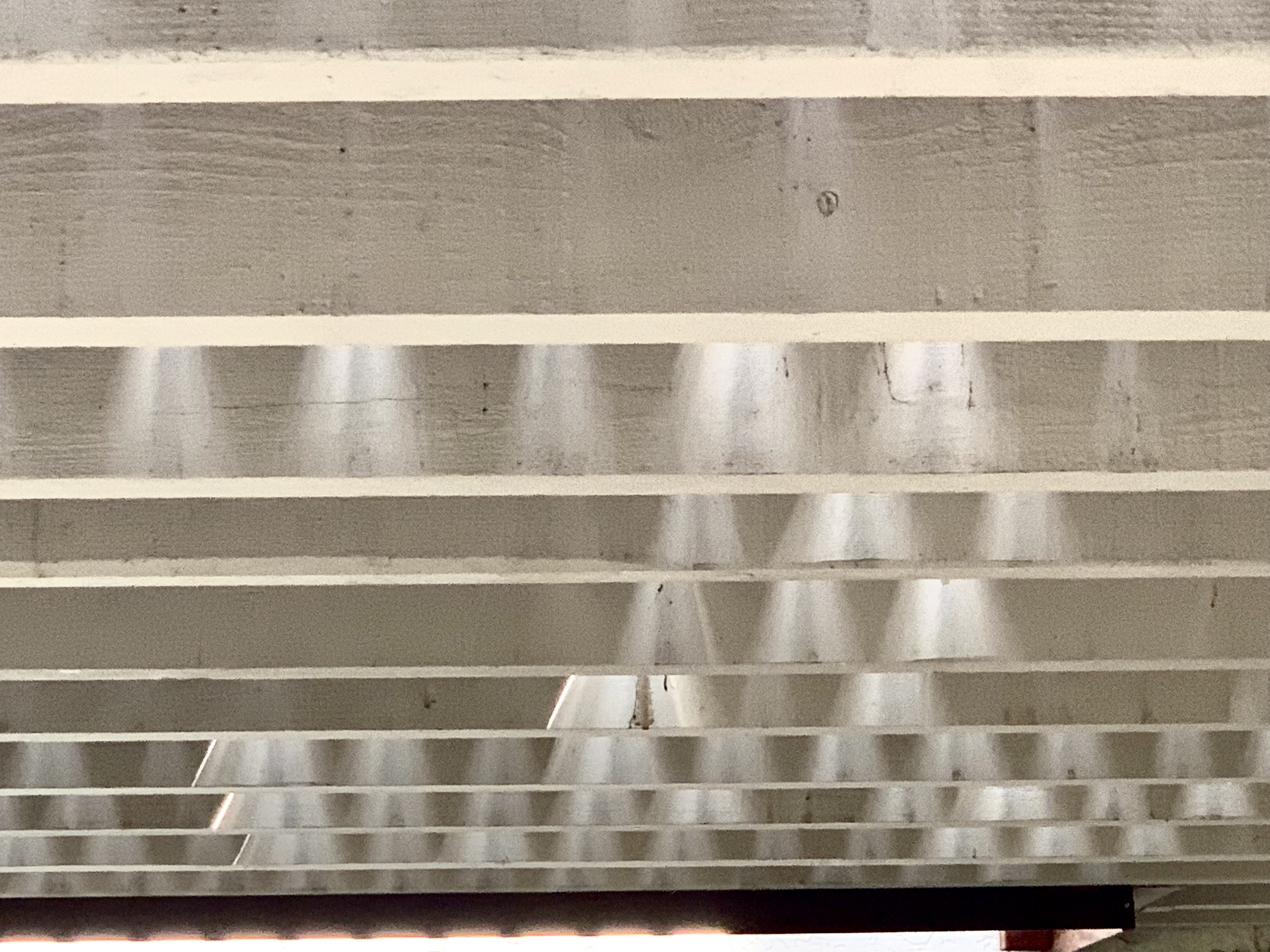
Building elements that make up a wooden deck show grain and irregularities in the surface of the deck. In addition, however, they even have interesting variability below the deck as shown here.
You can also see in this photo below a variety of materials. The stucco, by its very nature, more interesting and variable than steel or plaster.
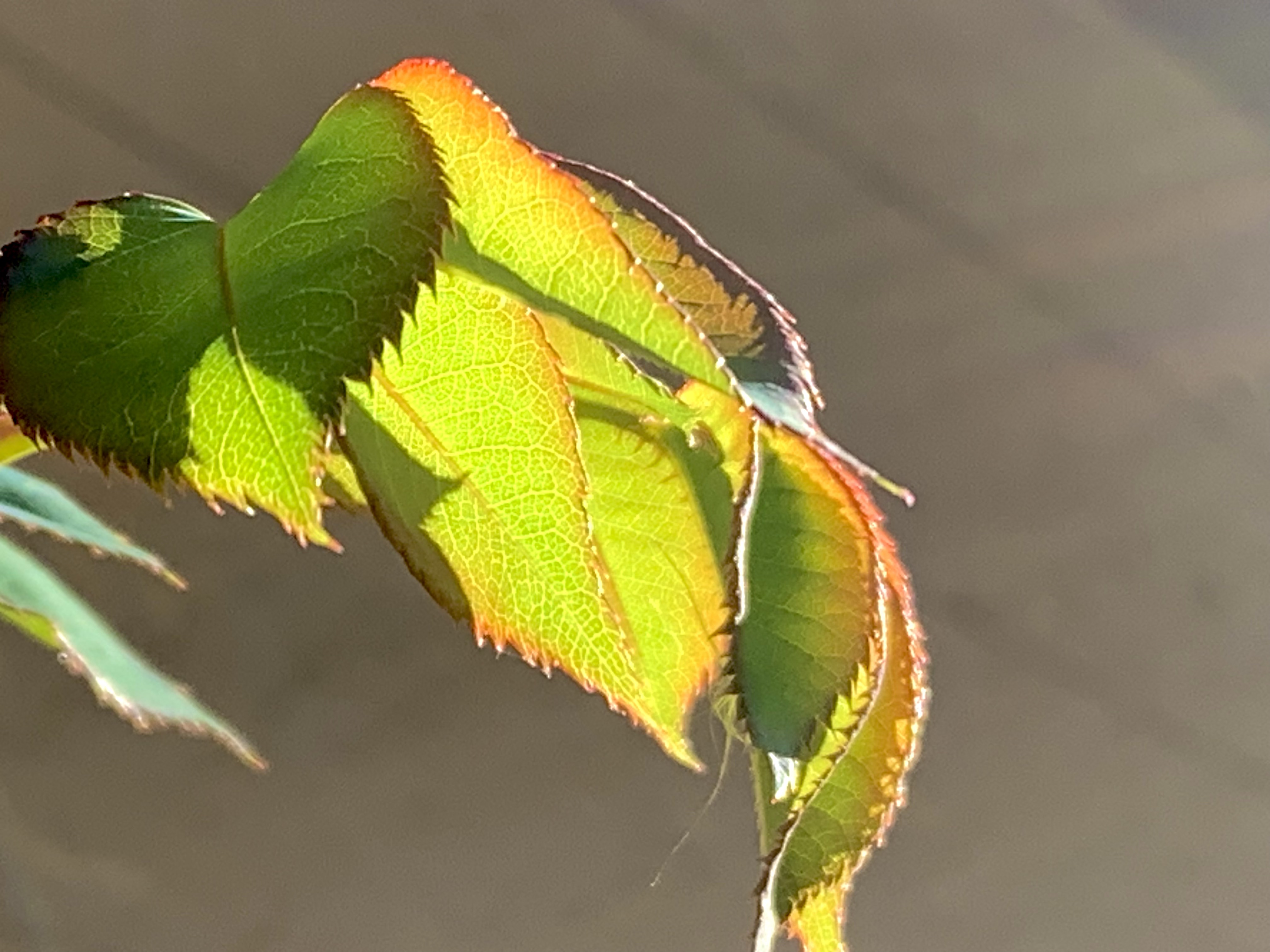
In these photos, you can see variation within leaves, among the leaves of a particular plant, and also among the plants themselves. Each plant and each part of the plant grows in accordance to its genetic blueprint. Except a “blueprint” is itself too fixed and unbending to be an appropriate metaphor. The growth will depend on the context–water sources, light sources, nutrients in the soil, other nearby plants and rocks will all play a part in how, precisely, a particular plant grows.
It would be absurd for one plant to say to itself: “Every plant should be just like me! I have a plan based on what works for me and everyone should do exactly what I do!”
(First appeared as part of The Poetry Exchange’s Featured Poet, Spring, 1997 under the title: “Deforested”)
Gray day wasted while the whippoorwill Wishes that the slushy city sewers Had not replaced the only lonely home he knew. The groggy foggy unfocussed hurly-burly rushing Of splashing autos on the gray macadam roadways That gnarl through the neighborhoods Is vaguely deja vu. Silhouetted smokestacks shadowly seen, Limned in gray on gray-green, Remind the mind how poor people pass the day after day. Where no home fire hearth lighted cabin In the winter woods beckons, beacons, hearkens Heartily a red sunset glow on white snow For a day’s work done.
One hardly knows.
Here, where machine clouds of steam unsentiently sip, sap the soul, You wonder as the rain water wanders, Then rushes through the gurgling gutters, What foul trick man played upon his own brave soul, To have forsaken all the fiery emotion that makes life great To sit at desks, to stand in lines, to wait. Where are the country color and The rich thick loves hidden Beneath the inventions, interventions, and pretensions of society?
We wander in our own gray-glass cages In a lurching kind of mock-precision, Like the nightmare dream of a psychotic technician. And the only color the commuter encounters In his travels to and from, Is the scarlet and the gold of a raccoon Too stupid to stay off the highways of modern civilization.
————
Pet Sematary (A relevant book by Stephen King which was a partial inspiration for the poem)
At least, most forms of life need water. Indeed, most forms of life are mostly made of water.
Water is some amazing stuff. It’s one of the few things that ordinary people in ordinary circumstances see in solid, liquid, and gaseous phases. One thing that’s unusual about water is that when it freezes, it expands. It also has a high “heat capacity.” This means that water takes a lot of heat energy, relative to most materials, to increase its temperature. It also means that, once heated, it takes a long time for the water to cool to the ambient temperature. It’s why land areas that are near the oceans tend to be more moderate in temperature than similar places inland.
A hundred miles inland from where I live is a place called “Palm Desert.” The average night temp in the coldest month is 41 degrees Fahrenheit while the average daytime temperature in the warmest month is 107 degrees Fahrenheit. That’s a difference of 66 degrees! I live near San Diego, a few miles from the ocean. For San Diego, the average coldest temperature is 51 degrees and the average for the high is 77. That’s a difference of 26 degrees. Quite a difference. That difference is due to the high heat capacity of water.
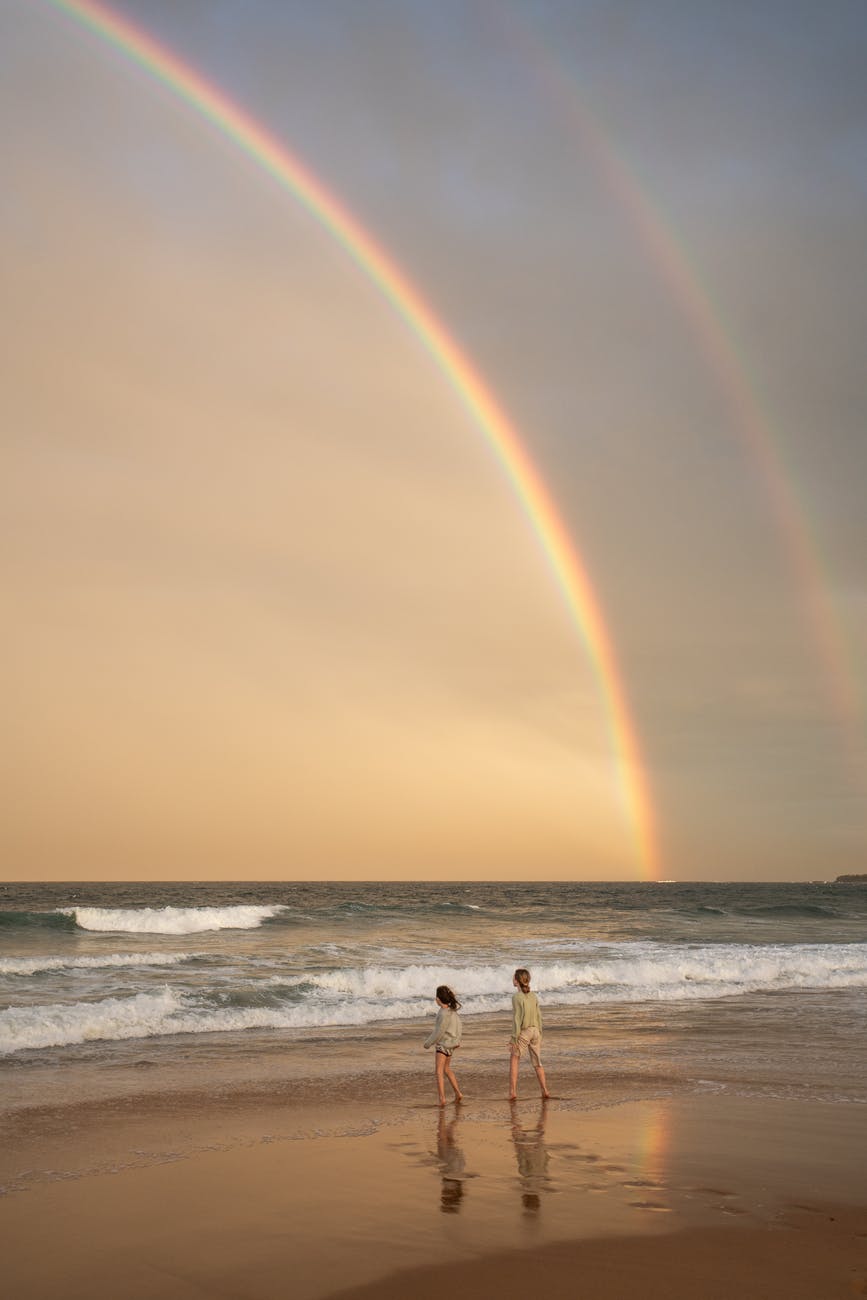
Water is beautiful in many forms: rivers, springs, waterfalls, clouds, rainbows, dew, rainstorms, ocean waves are just a few of the many ways that water strikes us as beautiful.
A well-fed adult human can last weeks without food but only a few days without water. I wonder whether we also need the beauty of water. It shows that the region we’re in may be survivable. It also indicates there is other life as well nearby. Perhaps as a corollary to these, water may remind us as well that what is “out there” and beautiful to look at is also “in here” — inside us.
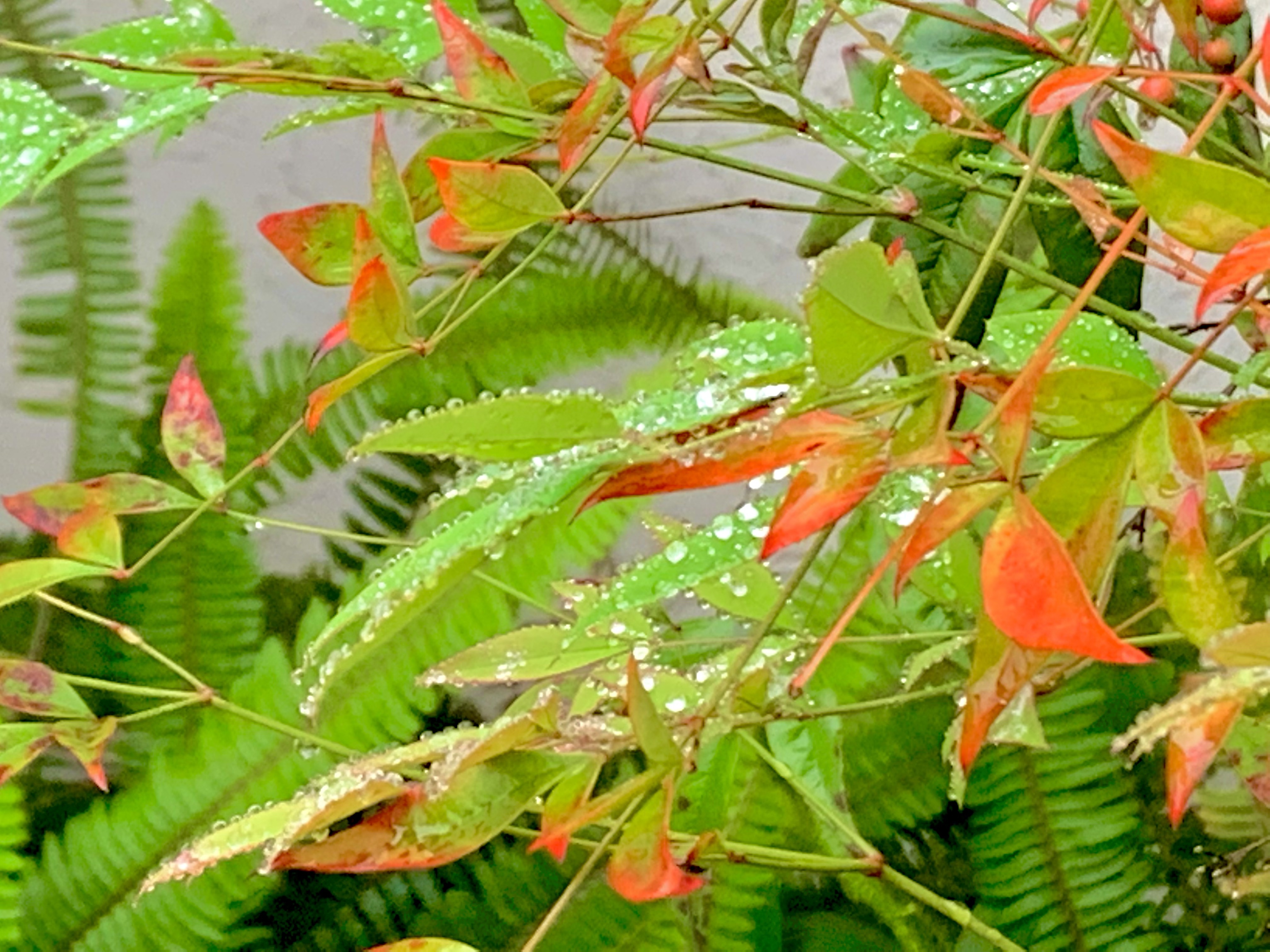
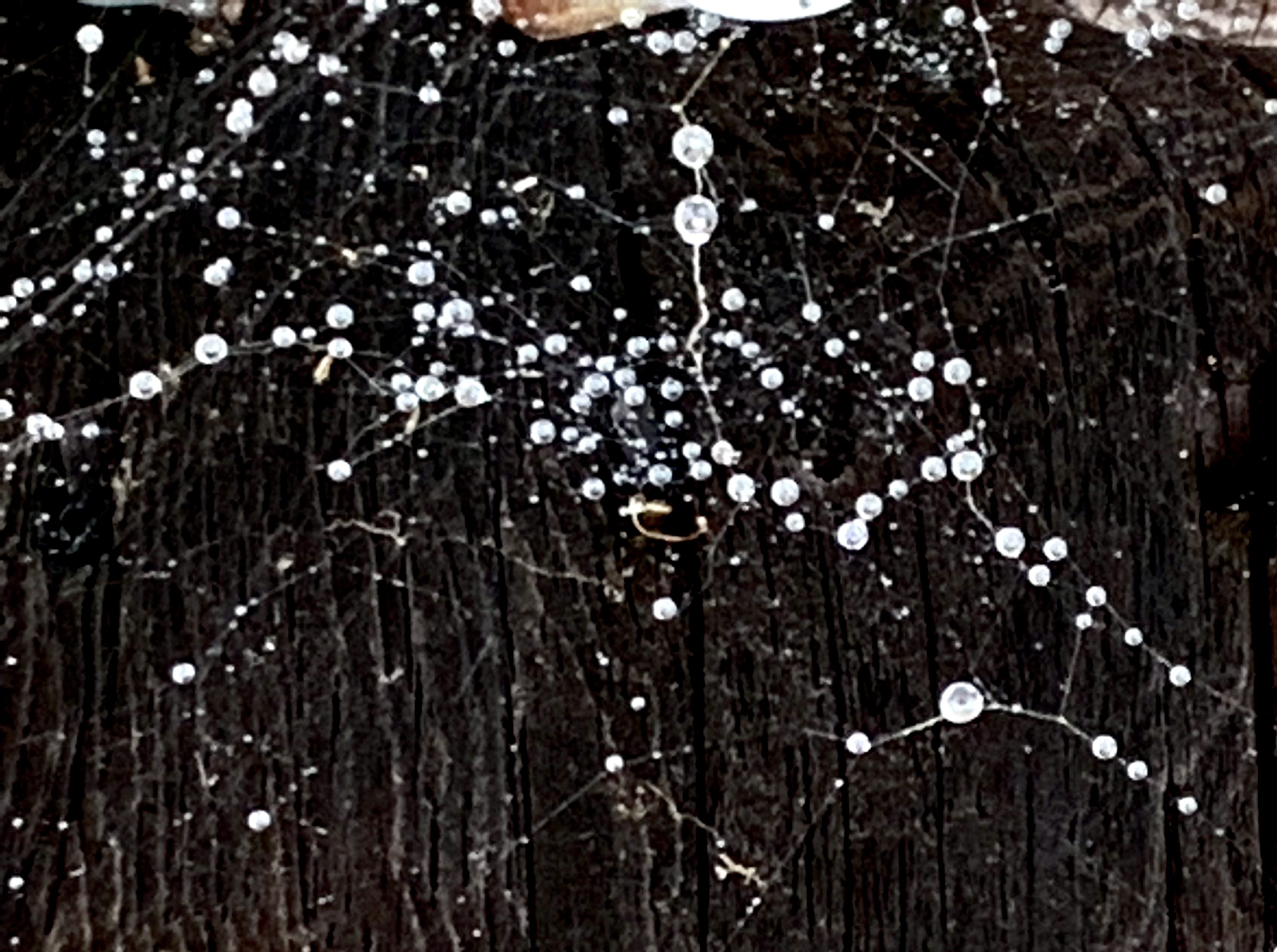
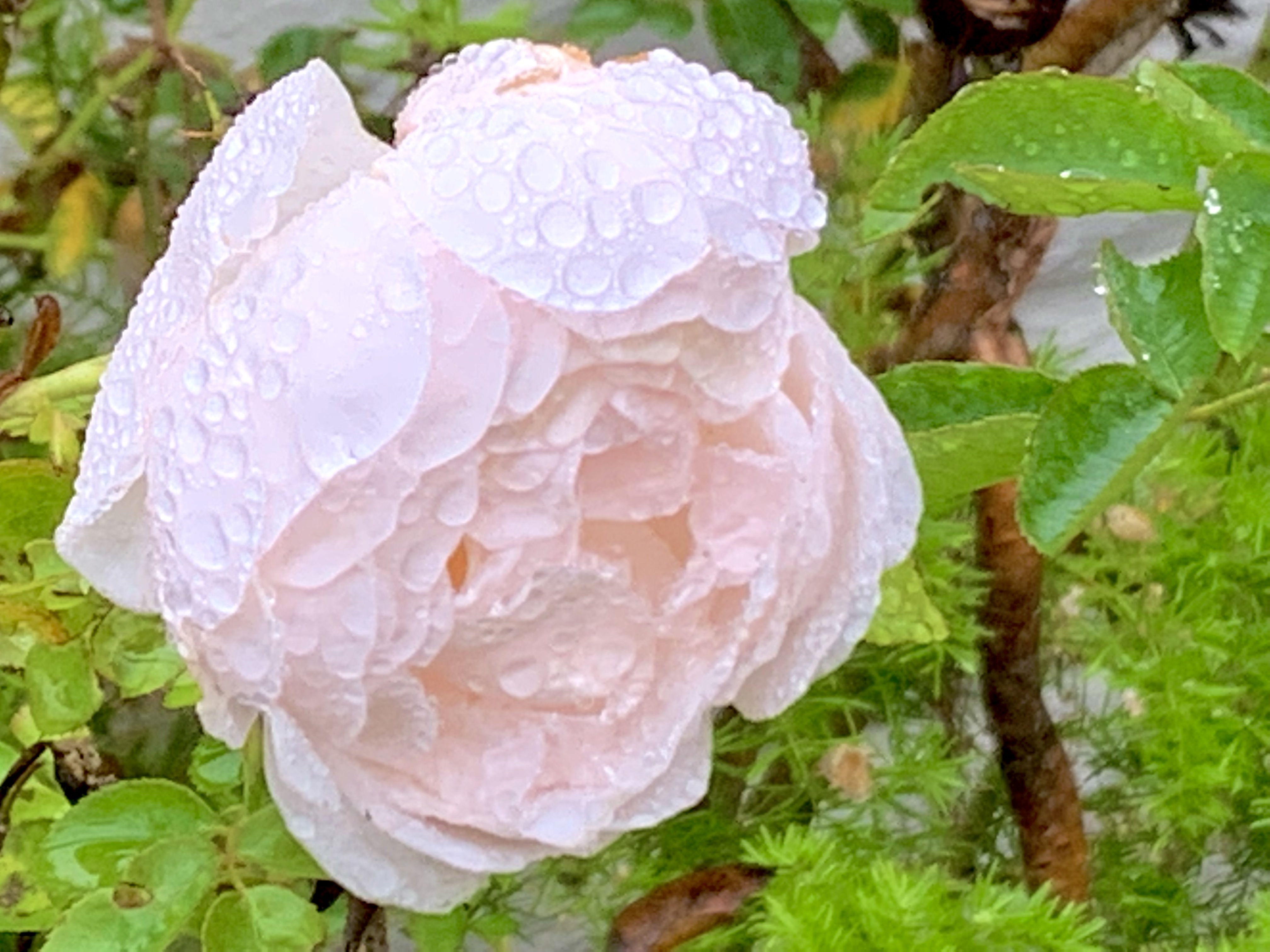
Water also plays with and transforms light. When water shows itself as droplets, as shown in the pictures here, it demonstrates two aspects of its nature: it adheres to other surfaces and it coheres to itself. A drop of water on a flower or leaf demonstrates its dual nature. This is also our own dual nature. We must play our part for a time as a separate droplet, but such a droplet does not keep that form forever. Each one of these water droplets has been part of a cloud, part of a river, part of an ocean. We too change. We too need to be coherent. But we also need to interact with and adhere, at least for a time, to aspects of our environment.
A drop of water does not obscure the form of the leaf or petal it finds itself on. Rather, the droplet enhances the form of the leaf or petal upon which it rests.
Have you ever been called the “Life of the Party”? Have you wanted to be the “Life of the Party”?
When you read the expression, “Life of the Party,” who or what do you think of? Who is the “life of the party” when it comes to our Garden?
Is it the brightly colored hooded oriole who flitted about just outside my office window during hours of ZOOM calls?
Or, was it his more drably colored mate?
Both are needed for the species to survive.
You might tend to think of flowers as the “Life of the Party” and it’s true that our Garden has many colorful flowers!
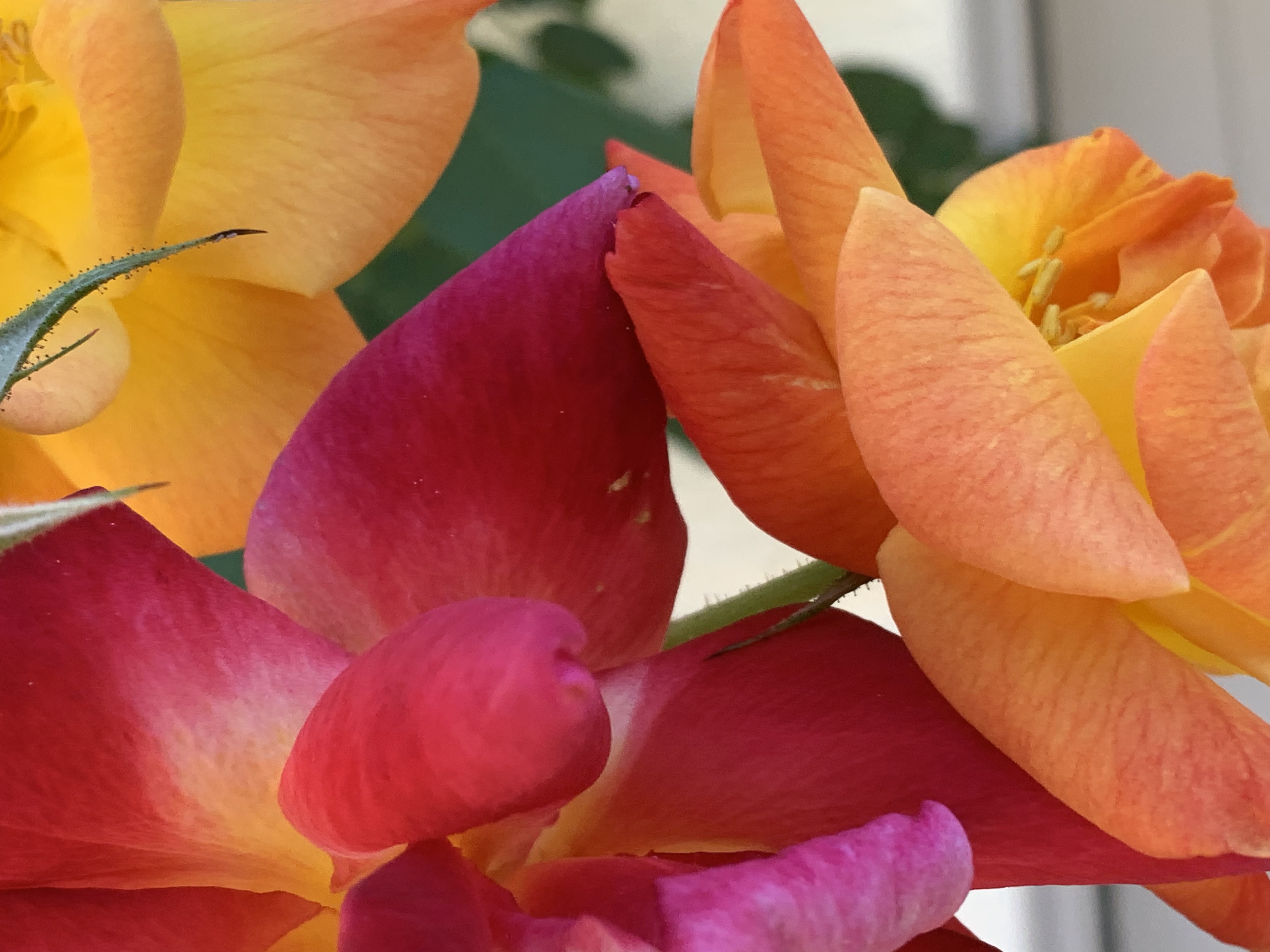
Bougainvillea A few of the many colors of the “Jacob’s Coat” rose in our Garden.
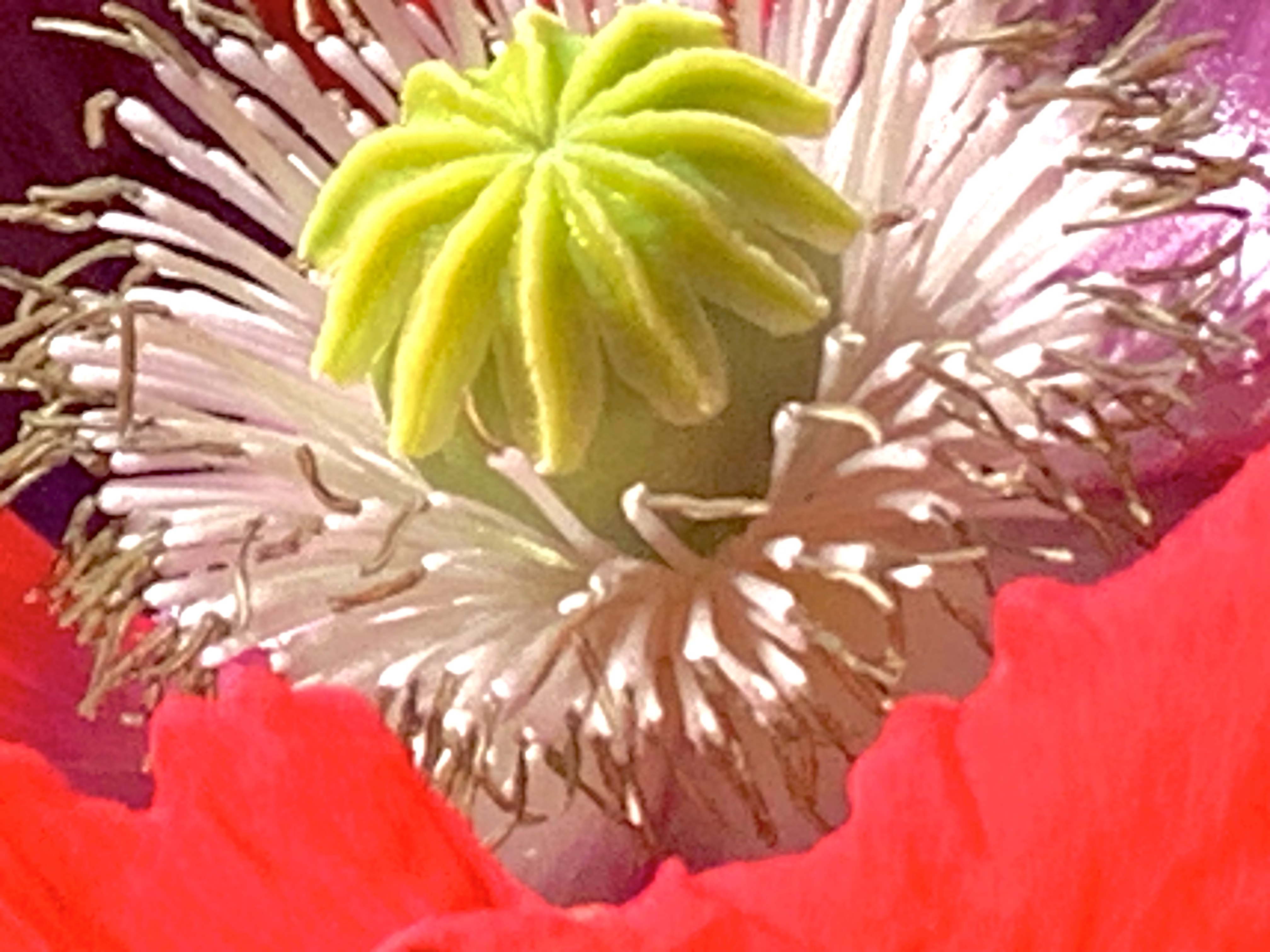
And even the not-so colorful flowers can be infused with light. Are they then, the life of the party?
White poppies.
In addition to flowers, the garden has more active members such as bees, lizards, and rabbits. I often see coyote scat, though I’ve never seen a coyote in the garden.
Can a snail be the Life of the Garden?
We may think of flowers as being the life of the party, but without leaves, flowers and fruits would not grow because they wouldn’t have a source of energy. Leaves also can exhibit many beautiful patterns and colors.
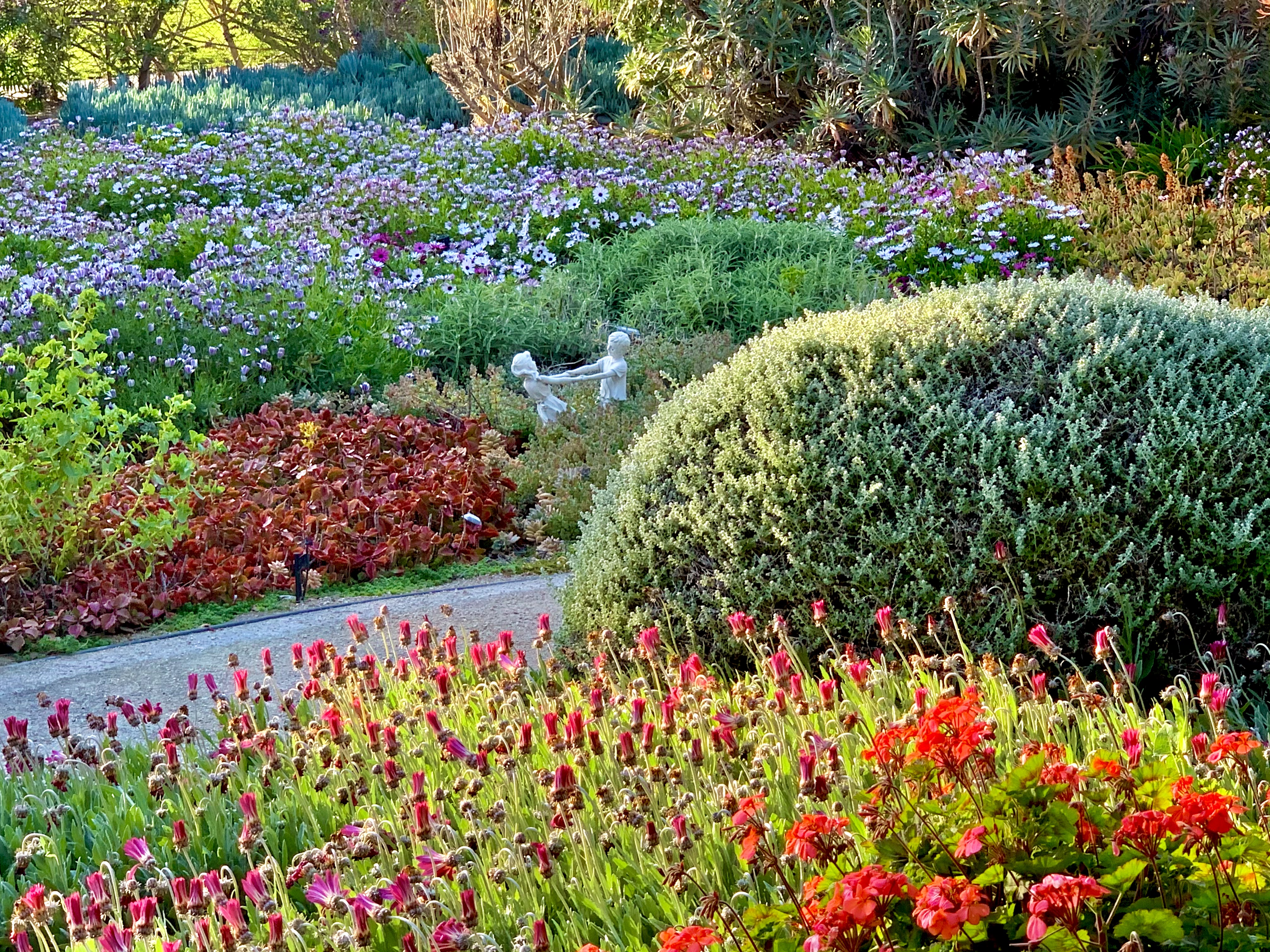
There are a few human figures in the Garden — statues engaged in two of my favorite activities: dancing and reading.
Are they the life of the party?
The crows are certainly among the most vocal of the participants in the party. Does that make them the life of the party?
And, what about me? I help show the beauty of the Garden far beyond its physical boundaries. Of course, that happens anyway! The bunny eats fruit in the Garden and poops somewhere else to fertilize the soil and perhaps spread seeds, sometimes taking them far beyond the range of the wind. All the green leaf plants in the Garden take CO2 out of the air and return O2, each molecule of which diffuses far and wide, eventually across the planet. The bees cross-pollenate across Gardens.
So, who, exactly is the life of the Garden? I think the only accurate answer is that everything alive is the “Life of the Garden.” Not just everything within the “boundaries” of our Garden but on the entire planet. Every molecule that is here, will eventually be somewhere else. Every molecule that will be here in a few million years is now far away.
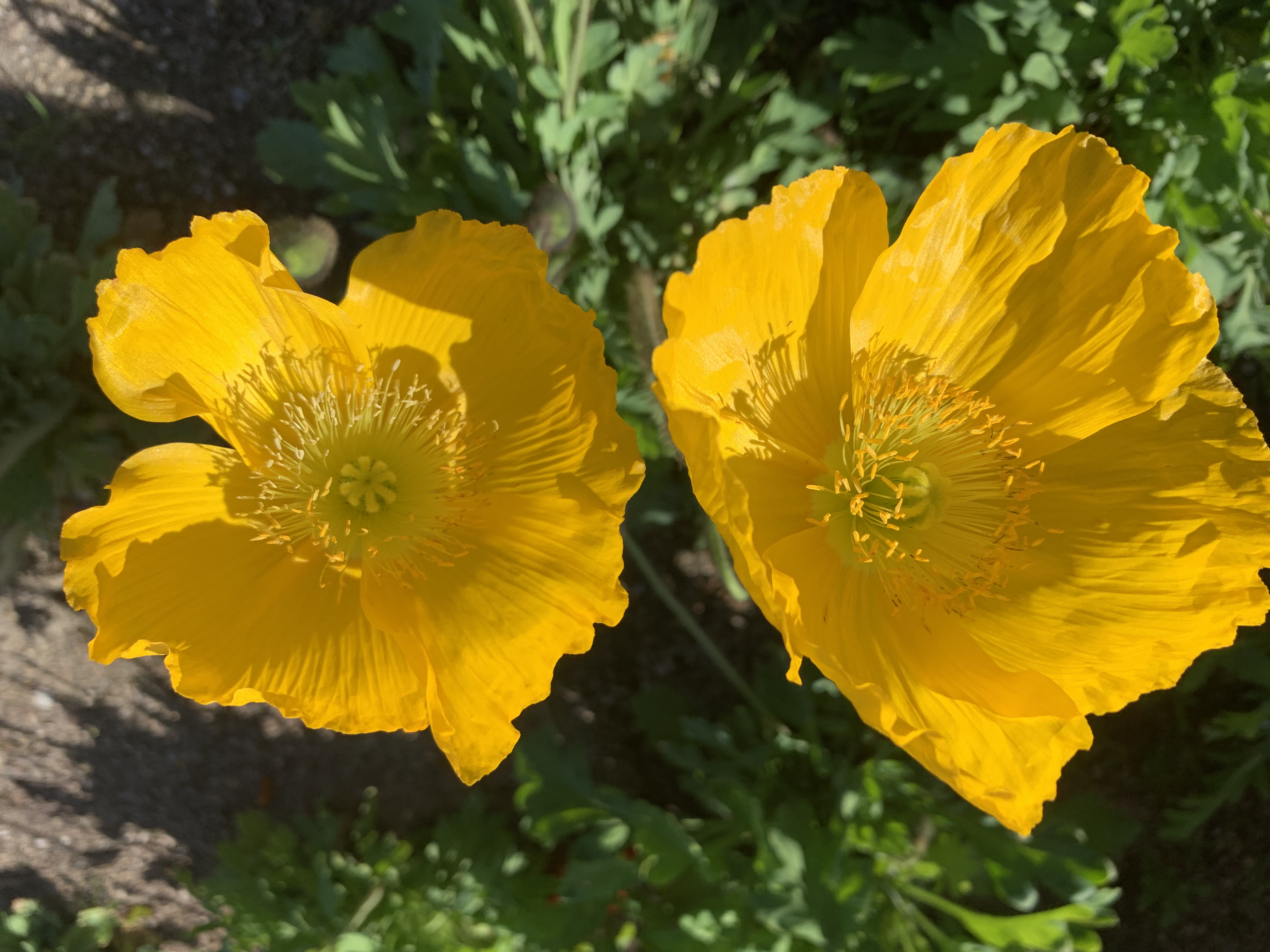
Today, I decided to change up the photo scene so I walked to a nearby State Park. Some nice flowers presented themselves on route. For instance, the bright yellow flowers under the bright blue sky reminded me of the bravery of Ukraine.
When I arrived at the park, two flags I am proud of greeted me. Of course, it doesn’t mean the State of California is perfect — nor is the USA. But most of us at least are trying to make them better.
I was also rewarded with beautiful flowering trees on my walk on the park.
Many bright beautiful flowers also greeted me in my walk in the park.
Some of the beautiful flowers who greeted me on my walk in the park (as well as on the way there) showed their support for Ukraine and the bravery of her people.
The most beautiful gift of my walk was completely unexpected— a very large & very colorful celebration in an Indian tradition. I strongly suspect it was a wedding since I noticed a nearby restroom said “grooms”; people were in a good mood; the celebration included all ages; and everyone looked beautiful.
In addition to the color fest, a band arrived and played beautiful music beautifully! I thought about trying to record some. Where this picture was taken isn’t far from the highway. Since it was behind me, it was easy to block that noise out with my brain. It would be far harder for you listening to it on your device though.
The walk in the park also reminded me how wonderful is the music made by little children. It is the same music regardless of language if you listen with your heart.
Once more, I find myself grateful that humanity survived & thrived in so many diverse ways. So many solutions to so many problems! Amazing wealth of experience! We can become wise at a whole new level — if we are respectful and kind to each other. Is that too much to ask? I really don’t think it is too much to ask.
I love also the way plants have invented so many solutions to so many problems. We have much more to learn from them — and each other — than we can currently even imagine.
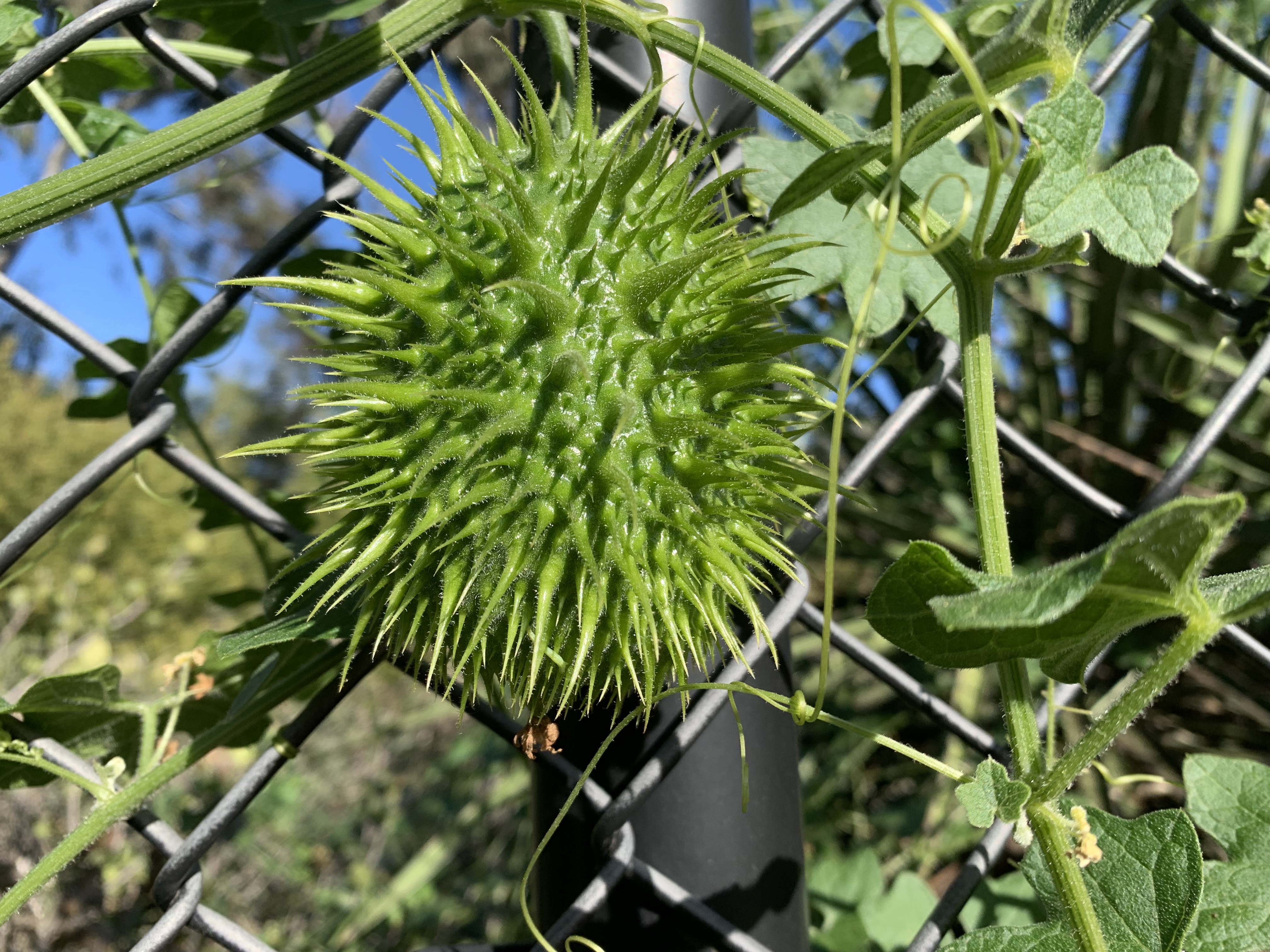
For example, I saw this “Wild Cucumber” as I began my walk home, still enjoying the music & the chattering children. This plant uses hydrostatic pressure to shoot its seeds out at 11 meters/sec. We can learn much from every living thing — including other humans.
She sensed that she was surrounded by others — some very like her and many very unlike her. Yet — she couldn’t shake the feeling that something was not right.
She felt — bound up. She wasn’t free to grow in the way she really wanted to. And now she was moving in a most peculiar way. Her ancestors had seldom moved in such a way as this except in times of great catastrophe such as an earthquake. Suddenly, she found herself completely disconnected from the nourishing earth. Beneath her was nothing but cold hard metal and a whirring vibration.
Now the warming sun disappeared, not as a gentle sunset. No. This was a sudden and violent transition from warm noon sun to complete and utter darkness. She sensed that she was not alone in this sunless prison. All of her fellow prisoners were also in a panic. Again, she sensed the cold hard metal beneath her and a deeper rumble of whirring vibration.
Then, and completely without warning, the sunlight again began to beat upon her with its full force.
Soon, she felt herself unbound. She struggled to understand. She tried to stretch her roots out, tentatively at first, as you might begin to wiggle your toes after waking from a deep coma. She felt an unslakable thirst, Then, she sensed moisture nearby and minerals.
She still felt as though she were in a very strange place. Had she formed her thoughts into words, she might have thought: “I have no idea why they would place me here of all places.” If rose had been human, that would have bothered her a great deal. But among her many distant aunts, uncles, and cousins, those who spent their energy decrying their placement, few survived. Her strategy, like those of her successful ancestors, was rather to spend her energy being as beautiful and varied as possible.
Her faith was strong. Had she had a verbal creed, it might have been something like this:
“I believe in the bees and the breeze.
I believe in my own heritage.
Like all other living things on earth today, my ancestry is 4.5 billion years old.
I believe in the power of my roots to seek out and find the nourishment I need; to keep in mind my goals of water and minerals. I push and push, and when I reach the impenetrable, I seek a way around. I dance the dance of life. I don’t avoid the strife. I relish it.”
In the next few days, visiting bees told her that there was plenty of sunshine around even though Rose herself was mainly in shade. That bee-speak was enough to give Rose all the hope she needed to grow tall and wide. She explored in every direction.
The bees that buzzed near Rose told her, in their own way, of the vibrant and varied colors of her many other neighbors. She found their descriptions exotic and evocative. From time to time, she attempted to emulate those neighbors. The buzzing bees would pause in their busyness on occasion to give her feedback on how well she matched the colors of her unseen neighbors.
Over time, she sensed the vibrations of other beings besides the bees. Feathering beings and furry beings, some large and some small. Mainly, they were friendly beings who admired her artwork. But there were also those who cared little for her artwork and instead simply came to feast upon her. Rose’s body became sustenance for mites and snails and aphids. Sometimes, other creatures came to protect her. She liked that. Sometimes, they failed to protect her and the pain became unbearable. But bear it she did.
Rose resolved to use the pain to make her creations more beautiful still.



























 petersironwood