• About PeterSIronwood

petersironwood

~ Finding, formulating and solving life's frustrations.

petersironwood

Category Archives: Uncategorized

Shooting the Moon

20 Sunday Dec 2020

Posted by petersironwood in Uncategorized

≈ 2 Comments

Tags

cards, courage, essay, fairness, moon shot, story, USA

Shooting the Moon

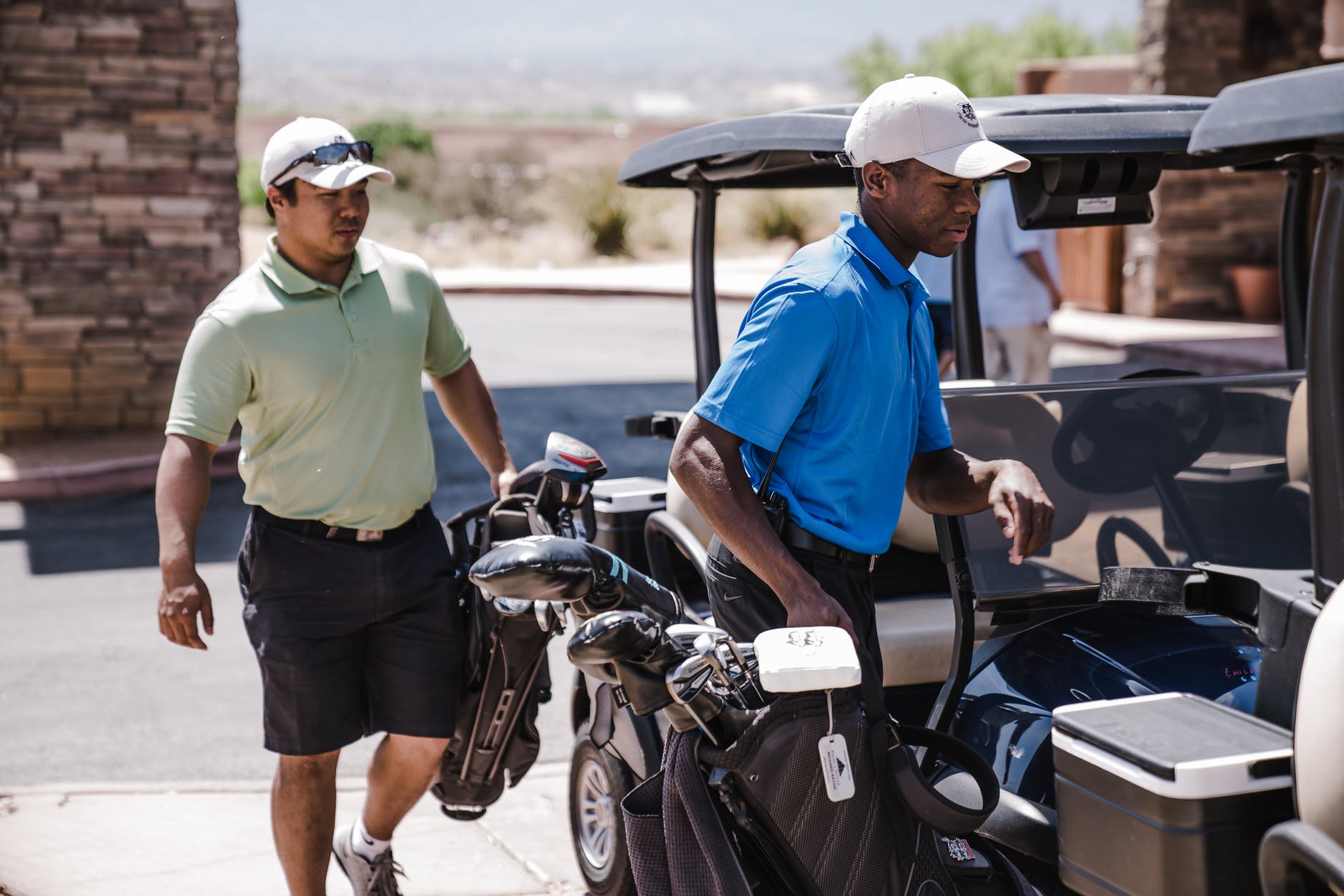
Photo by James Wheeler on Pexels.com

One of the first card games I ever learned to play was “Hearts.” It’s actually quite a fun game. Unlike bridge, which requires four people to play “normally”, Hearts, in my opinion, is even more fun with three. (If you like, you can read about the game before going on, but I don’t think it’s really necessary to understand the rest of this essay. The first link talks about the general rules and the second link gives some hints about “Shooting the Moon.”)

https://bicyclecards.com/how-to-play/hearts/

https://www.thesprucecrafts.com/how-to-shoot-the-moon-in-hearts-411727

Three was a good number (besides being prime, and a triangular number) because I was an only child for the first 11 years of my life. My parents taught me to play Hearts and Bridge at a fairly young age. I was young enough, for instance, that I looked carefully at each face card to try to understand the personalities of the people peering out! I liked the Jack of Diamonds and the Jack of Spades the best. I desperately wanted to meet them! (I wonder whether Roger Zelazny felt the same because in his rather wonderful “Amber” series…).

The back of the cards also fascinated me. I wondered what it would feel like to ride one of those bikes! I was particularly interested when one of the cards developed a flaw or bend mark. Even knowing the identity of one of your opponent’s hidden cards could be a tremendous advantage. 

Anyway, the game of hearts has an interesting payoff structure. You get a point counted against you for every heart that you take. You get 13 points against you if you end up taking a trick with the Queen of Spades in it. There’s a catch though. If you manage to take all thirteen hearts and the Queen of Spades, you get zero points against you. Your opponents each get twenty-six points against them. 

The player then is often faced with a dilemma: “Should I try to Shoot the Moon? If I do try, and fail, I will likely end up with many points scored against me. On the other hand, if I succeed, it is a huge advantage for me.” 

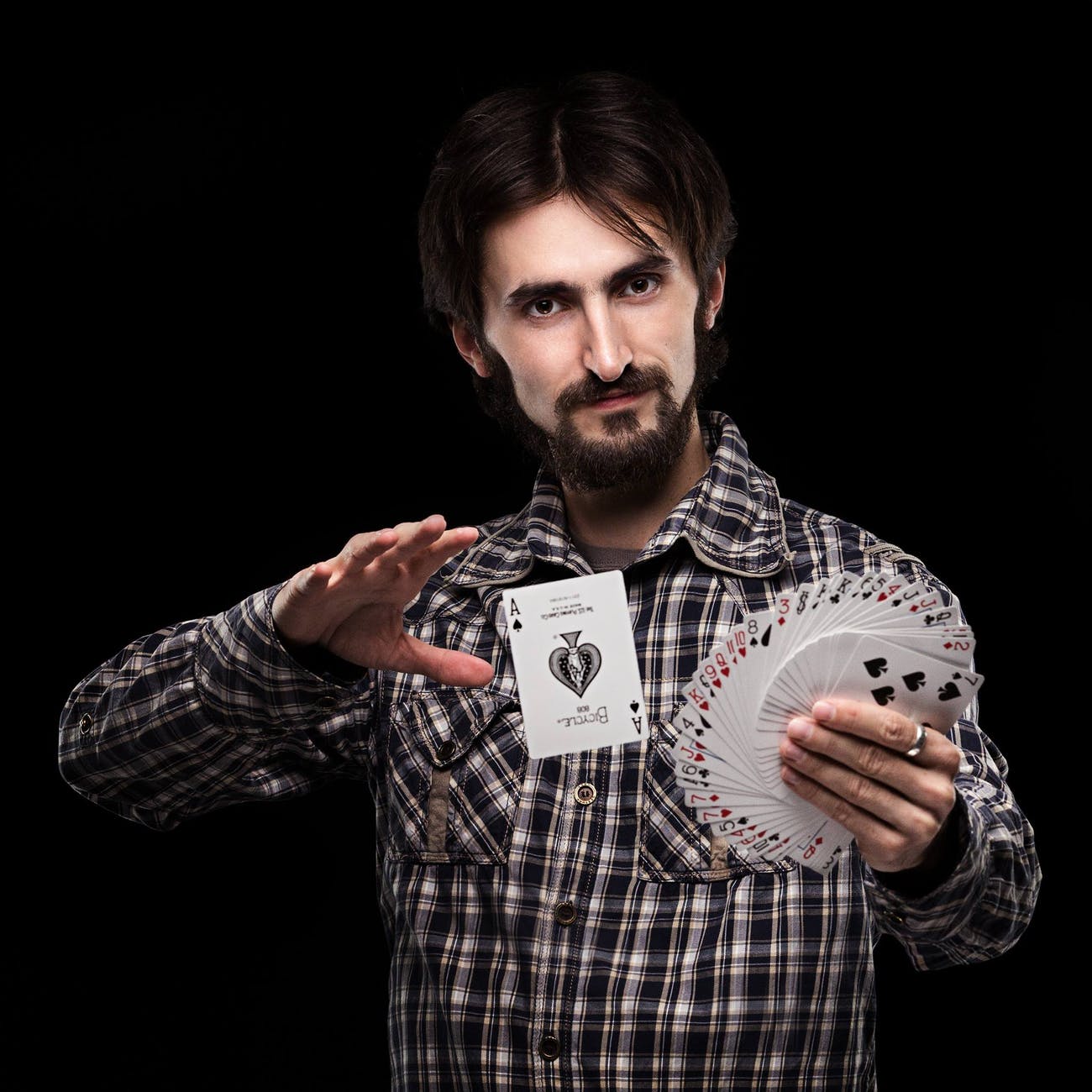
Photo by Andrea Piacquadio on Pexels.com

It isn’t only the points. At a young age, I could handle rules and strategy, but if I tried and just barely failed to “Shoot the Moon,” I would feel extremely frustrated. I didn’t initially try to hide it either! I would literally see red and the top of my head felt is though it were floating away. I would accuse my parents of cheating although I don’t think they ever did. I simply made a false assumption or miscounted or miscalculated. Often, I took a reasonable risk, but the cards just didn’t turn out the way I had hoped. At that point, my view of the world was still primitive: someone was at fault whenever I failed, and I desperately did not want it to be me who was at fault. 

Luckily for me, throwing temper tantrums at the outcome of a hand of Hearts was not the sort of nonsense up with which my parents put. I soon learned to hide my rage and eventually not to feel it at all unless there really was evidence of cheating. I didn’t “declare” cheating on my parents or friends just because I didn’t like the outcome — at least not past the age of 7 or 8.

In hearts, it often happens that the cards you are dealt will obviously not let you “Shoot the Moon.” In those cases, your strategy for the hand is clear. Avoid taking as many hearts as possible. However, if I weren’t careful, I could easily end up helping my Mom or Dad “Shoot the Moon.” Better to take one heart or even four hearts or even the dreaded Queen of Spades than to let them “Shoot the Moon” and end up with 26 points!

It is extremely rare, in my experience to be dealt a hand in Hearts that makes it obvious that you will Shoot the Moon so long as you don’t slip up. Generally, the most you can expect to get every round or two is a hand that might let you “Shoot the Moon.” In accomplishing this goal, it is important that you not let your opponents guess that you are trying to Shoot the Moon. The sooner they “catch on”, the lower your chances of succeeding. 
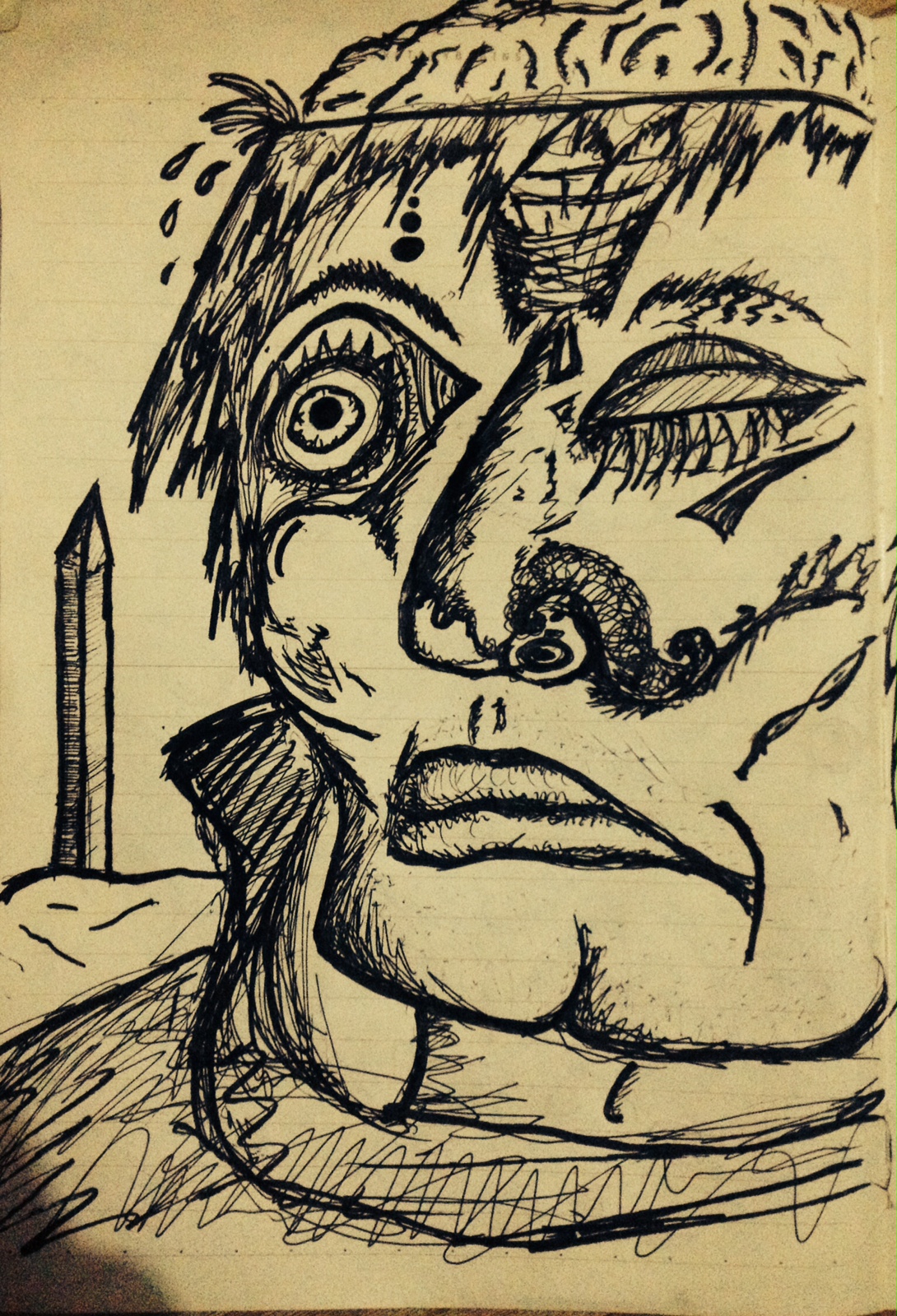
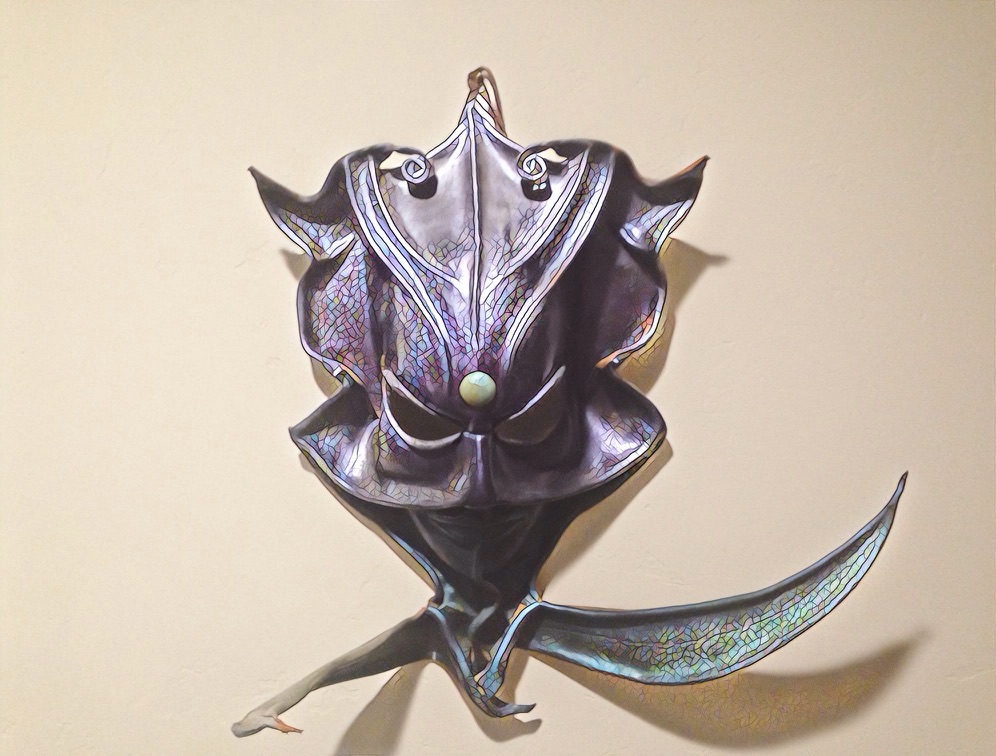
Original drawing by Pierce Morgan

At a very young age, I learned to “fake” my reactions to help my chances. For instance, the first time I took a trick in which someone laid a heart on me, I might grimace and growl and shoot the person with my dagger eyes. These ploys worked better against my friends than with my parents who quickly learned to read these fakes. Then, I learned to make them more subtle. Instead of grimacing and growling and shooting the person a nasty look, I would let the slightest hint of disappointment flash over my face quickly and then vanish like morning fog. It reminds me of toasting a marshmallow to perfection without letting it catch fire. 

I learned to judge more accurately whether I had a hand that would likely allow me to “Shoot the Moon” or a hand that would only allow me to “Shoot the Moon” if I were very lucky. If there was any chance at all, I would play for awhile and see how things went. After every trick I would “recalculate” my odds in some non-numeric kiddish way. I would often try and sometimes succeed. When I failed, I would try to learn from it. Sometimes, especially at the beginning, my parents would show me how I had messed up. For me, I discovered that it was more fun to try and fail than not to try at all, especially because I could learn from my failures. 

Photo by Jean van der Meulen on Pexels.com

———————————————

September 12, 1962: John F. Kennedy declared that “We choose to go to the moon.”

https://en.wikipedia.org/wiki/We_choose_to_go_to_the_Moon

On July 20, 1969, Neil Armstrong stepped onto the surface of the moon.

https://www.nasa.gov/audience/forstudents/k-4/stories/first-person-on-moon.html

The United States of America, literally decided to “Shoot for the Moon.” And succeeded.

During my working life, I have far more often heard so-called “leaders” in many different organizations encourage their workers to “Find the Low-hanging Fruit” than I have heard them encourage people to “Shoot the Moon.” What “leaders” will sometimes do is set a “stretch goal” for the workers to fulfill without any provision of the necessary time, resources, or personnel to achieve that goal. If the workers achieve the goal, the manager (not an actual leader) scores 26 points against his or her opponents. They shot the moon. But if, as a worker, you come up one heart short; if you fail to “Shoot the Moon”, then 25 points will be scored against the you the worker who failed. It is the worker who fails to “Shoot the Moon.”

Photo by Pixabay on Pexels.com


Since the late 1960’s, the real wages of workers have hardly moved at all. During that same time, because workers learned new methods, procedures, and technologies, productivity soared. In the past, the wealth created from increases in productivity had been split between the workers and the owners. Since, the 1960’s however, the increased wealth that accrued from increased productivity has gone completely to owners and virtually none of it has gone to the workers who increased their productivity. 

At the same time, and perhaps not coincidentally, most businesses, even pre-COVID, were not trying to “Shoot the Moon” — they were searching for “Low-Hanging Fruit.” 

What happened, America?

When do go for it again? 

When do we try to “Shoot the Moon” again?

When do we reshape our society to allocate windfall profits to the people who actually work for a living — and not just for the people who watch their wealth increase by simply owning stuff?

I do not think these two changes are unrelated. The people who actually do the work are willing to take risks to build something better. They are invested in the product or service they provide. They would like to be fairly paid, but it isn’t only about the money. It’s also about doing something really cool and providing value for the society as a whole.

Photo by Rakicevic Nenad on Pexels.com


The people who simply move money around from stock to stock to make money don’t want to take risks. They don’t really care whether their money is being spent to cure cancer or to develop a new toothpaste that comes out of the tube and whistles “Dixie” while it does so. They want a decent return on investment. They may be willing to invest some of their capital in a portfolio of high risk/high benefit investments but most of them will abandon backing the attempt to cure cancer to invest in the whistling toothpaste if that’s what the “numbers dictate.”

This is obviously not true of everyone who is rich, but it’s more often true than not. Those, like Bill Gates, or George Soros or Mike Bloomberg who do contribute enormous sums to good causes are pilloried. Is it by other billionaires because they don’t want to look bad by comparison?  Is it by foreign actors who simply want to sow dissent and distrust within America? I don’t really know. 

https://www.cnbc.com/2017/10/17/philanthropist-george-soros-donates-most-of-his-net-worth-to-charity.html

What about in your own life? Have you ever chosen to “Shoot the Moon?” Or, do you stick with picking the “Low-Hanging Fruit?” What do you encourage your family, friends, and co-workers to do? 

————————————

Poems, stories, and essays that touch on courage.

Roar, Ocean, Roar

Child Like? or Childish? 

Take a Glance; Join the Dance

Skirting the Turtle

Listen! You can Hear the Echos of your Actions.

John vs. Worrier

Process Re-engineering Moves to Baseball

Jennifer’s Invitation

Wilbur’s Story

The Touch of One Hand Clasping 

The Impossible 

Author Page on Amazon

Masklessness is not Manliness

18 Friday Dec 2020

Posted by petersironwood in Uncategorized

≈ 15 Comments

NOTE: Except for clearly marked quotes, all writing on my blog is my own original work. What follows below, however, is copied from something my daughter posted elsewhere. It relates to the title above. I chose the pictures.

Photo by Johannes Plenio on Pexels.com

It’s been a while since we have written an update about Avery. Spencer and I both try to be as positive as possible in our posts here, and unfortunately we are both really struggling to do that right now. This is going to be long, but please read it anyway.

There’s no denying that Avery is a fighter. She has been to hell and back over the last eight years. For those of you who haven’t been following her since birth, I will summarize her long, complex medical history at the end of this post. Avery has been through pain and suffering that most people can not fathom. She has been cut open and sown and stapled back together more times than I can think about without crying. She is fierce and tough and we are so, so proud of her. We have also had a tremendous amount of support from all of you-friends, family, and even strangers to get through all of this. I don’t think anyone would be able to read Avery’s history and say, “wow, that girl really deserves more hardships and to die after all she’s been through!” I believe that almost anyone would agree that she has had more than her fair share of difficulties in her eight years of life. What people DO say freely is “Covid only kills those with preexisting conditions.”

Preexisting conditions? Avery has too many of them to count. We have no idea how covid would affect her, but we will do whatever we can to not have to find out. We are happy to carry the majority of this burden but the unwillingness of some to lift even a finger to help keep her safe has been incredibly disheartening. Our family has remained at home since March 13. None of us even have set foot in a doctor’s appointment or grocery store. We get all of our food delivered and lysol wipe or wash every single item. We only eat food that is prepared at home. No playdates, no breaks for mom or dad, no therapies for Avery. It has been hard, but we know how to do hard. We have perfected hard over the last eight years and we will continue to do it for as long as we are lucky enough to have Avery here with us.

Unfortunately, no matter how careful we are, when covid is raging across the US, we are going to have some level of exposure. We have no choice but to interact with people in the pharmacy drive-through when we pick up medications. Last week we had to get our broken dishwasher replaced which meant having a person inside our home once to install it and another time to fix the leak that the installation had caused. And today?

Today Avery has a fever. A fever could mean any number of things for Avery, but none of them are good. Even if this fever has nothing to do with covid, Avery may still require medical attention (technically speaking anytime she is over 100.4 we are supposed to take her to the emergency room). Any medical care would result in even more exposure for Avery and for the rest of our family. Not to mention the fact that her needing any medical care in a hospital that is already operating far beyond its limits would absolutely affect the quality of care she would receive. So many people bent over backwards to help when Avery was sick, and now we are asking, begging, for your help again. Please, please see that we have 3 other young kids at home who have not played with their friends in almost a year. They can’t participate in any of the activities or camps they love. They can’t spend time with any of their relatives. They usually do all of this with a smile on their faces because they know they are helping to protect their sister and in this family, we value compassion and kindness.

I believe that most of you already take the steps needed to get this pandemic under control and I can not even begin to express my gratutde for that. If you are healthy enough to not have to worry about covid, please realize how lucky you are. Having “preexisting conditions” does NOT mean it’s somehow OK or not as bad if Avery dies from covid. She has fought like hell to be here and she did not do anything to deserve her preexisting conditions, just as those of us who are healthy have done nothing to deserve that either. It’s just luck of the draw.

Covid is not a hoax. It’s not being exaggerated by the mainstream media. It is a virus that has the capability to take our smart, happy, sassy, toothless little firecracker and leave a giant gaping hole in our family that will never be repaired. So please do the right thing, and encourage others to do the same. Wear the mask. Correctly. Avoid large gatherings. Stay home as much as possible. I realize it isn’t fun. The pandemic isn’t fun for anyone. But the only way we will get through this is by working together. Please, please don’t be the person who puts out the brightest light in our family.

Medical history:When Avery was born, we found out that she has heterotaxy syndrome. This rare syndrome effects everyone differently, but for Avery it primarily affected her heart and her digestive system. After birth, she spent 81 days in the NICU. During that time, she had two major surgeries on her heart, and three major surgeries involving her digestive system, along with countless other smaller procedures. Since Avery is a twin, we spent these three months driving to and from the NICU (we were not allowed to sleep there) with her twin sister. We learned to be parents by being thrown in the deep end of a very challenging situation. It was hard for all of us but she did the hardest work and we all got through those difficult months.

About a year later she needed another heart surgery which went well. She was growing and developing on target for her age and aside from her scars and g-tube, she was basically a “normal” toddler who spent most of her time bossing around her twin sister. When Avery was 2.5, she needed one more surgery on her heart, which was supposed to be her final planned surgery. Unfortunately, a few hours after this surgery, as I (mom) sat helplessly watching, Avery suffered two cardiac arrests, had her chest re-opened at the bedside, and was placed on ECMO (full life support). Her heart did not beat on its own for the first few days, and we were told to have our families all come to say goodbye. They could not close her chest due to swelling, so she laid, in a coma, with only plastic separating her heart from the rest of the world.

It was the absolute most horrific experience of all of our lives. Miraculously and against all odds, Avery survived. As I said before, she is a fighter and is far stronger than most of us will ever even dream of being. But even Avery wasn’t able to come out of this fight unharmed. While she was arresting and being placed on ECMO, she went for a long time without oxygen, leading to a catastrophic brain injury, called a hypoxic ischemic encephalopothy or H.I.E. Avery lost the ability to control her movements and could no longer walk, talk, or do most other “normal” 2.5 year old things. She would later be diagnosed with cerebral palsy. After almost 2 months in the hospital, Avery was well enough to come home (we were in Philadelphia), but soon after we got home she was back in the hospital, needing yet another surgery on her digestive system. She could no longer tolerate food and in order for her to come home we had to do around the clock food and medications through a special IV. Unfortunately, despite all precautions that were taken, she developed an infection and became septic. This also led to a brain bleed, and we almost lost her again. After her initial brain injury, Avery was diagnosed with Cerebral Palsy which caused her legs to spasm and tighten.

When she was 4, it had gotten to the point where she needed yet another surgery-this time to release the muscles in her leg, ankle, and foot. This recovery was worse and more painful for her than any of her other surgeries. Since that time, she has been relatively healthy, other than having more difficulty than her siblings with colds and other viruses. From day one, we have been extra careful about germs, typically staying home every year from November through March. We do this gladly, because all of us want to keep Avery safe.


Author Page on Amazon

BOUNCE!!

17 Thursday Dec 2020

Posted by petersironwood in Uncategorized

≈ 8 Comments

Tags

America, collaboration, cooperation, Democracy, Georgia, leadership, pandemic, politics, teamwork, USA

BOUNCE! 

The white line under the jumping man’s shadow is the “baseline”

I love to play tennis. Before I learned tennis or even knew it existed, I learned badminton. I love badminton as well as table tennis and racquetball. Now, living in San Diego, the weather gods are kind enough to shine sun and blue and warm so that tennis is often possible seven days a week. Unfortunately, my 75 year old body has issues with playing every day.

Before COVID, I went to the gym every other day and lifted. I still exercise my muscles but I can’t quite make it as effective as using real weights. Lack of strength and having flat feet combine to put a lot of stress on my feet and knees. Before COVID (will we call this “BC” at some point?) my strength was good. I was nearly as strong as when I was 16. 

As it turns out though, lifting strength is not the only factor that determines how well you can run and jump. The body has, in effect, a number of “springs.” When someone runs (at least when a young person runs), fully half of the power for a running stride comes from the rebound of internal springs which provide power from the previous stride. Our human running springs are primarily the arch, the Achilles tendon and the quad muscles. 

Photo by Pixabay on Pexels.com

My own arches, sadly, have never worked properly. When I step down forcefully, rather than compressing and expanding, my foot slips inward and does not rebound. But the muscles and tendons have also become less resilient with time. Wearing orthotics helps align my body and lessens pain in the arches. But orthotics do not provide the “bounce” of the natural bone arch as it rebounds from the previous step. Nonetheless, I enjoy playing tennis. It’s good for the body, the soul, and the mind. 

I enjoy playing singles but I mainly play doubles. And doubles also provides a variety of lessons (and challenges) in teamwork. 

Here’s one. 

Photo by Nafis Abman on Pexels.com

Consider that you are positioned near the baseline of the court (far away from the net) and someone hits a ball right at you. As it turns out, it is much much easier for your partner to tell whether this shot is going to be long or not than it is for you yourself to tell. Just today, for instance, I was standing just inside the baseline when a deep shot was hit right at me, about waist high. My partner yelled, “BOUNCE!” I let it go. I might mention that my partner’s eyesight is not so good as mine is. I’m not putting him down. That’s just a fact. Nonetheless, I prepared to hit the ball out of the air until I heard my partner yell “BOUNCE!” When that happened I pivoted and let it fly by me, turning so I’d have a good at where it landed. Two inches out.

It turns out that a similar kind of teamwork is important in the outfield of a baseball game. If you are playing in the outfield and a long fly ball is hit toward you, it is devilishly difficult to tell whether the ball is going to land near you, in front of you, or behind you. When a well-coached team plays, the outfielders will call out to one another and give guidance about whether a ball hit directly to another outfielder is going to land in front of them, roughly where they are or far behind them. In a poorly coached team, they do not help each other in this way. 

In a well-coached team, the fielder who is not going to catch a high fly ball does not simply “zone out” and think, “not my play.” Instead, they are still cognizant of their ability and responsibility to help out their teammate who is going to catch the ball, even though they are nowhere near that teammate. Competition for fame, fortune, recruiting, salary, etc. all push toward not helping each other out. But normal people on normal teams actually have a normal reaction to want to help the others on their team. Good coaching enhances a feeling of teamwork. It also involves explaining, at least to the younger players, the ways in which they can help each other. Calling “Forward” or “Back” to a fellow fielder is only one of the many ways teammates in baseball can help each other. 

Photo by Pixabay on Pexels.com

The man behind the mask (the Catcher) and the outfielder trying to throw a player out who is trying to score — that is a delicate sort of dance so that the outfielder throws the ball the spot where the Catcher can most likely tag the runner (advancing player) out. 

For a team to function at the highest level, there has to be both the skill to know how to coordinate and mutual trust. Mutual trust means everyone looks out for each other and wants everyone  to succeed. Some teams lack one or both of these qualities. If they lack both, it will be nothing more than a set of individuals doing assigned tasks. That is both less effective and a whole lot less joyous way to play Baseball or Tennis. (Or, Life, for that matter). 

Photo by Jopwell on Pexels.com

Perhaps you’re not a fan of tennis or baseball but you like golf. Watch one of the most prestigious tournaments of all, the Masters, played at the remarkably beautiful Augusta National. The winners of the Green Jacket show their excitement with a riotous palette of smiles, tears, cheers, and beaming. Regardless of how the excitement is exhibited, the winner shows a lot of excitement. That level of excitement does not, however, even begin to compare to the degree of excitement that the victors exhibit in the Solheim Cup competition nor the Ryder Cup where teams are competing against each other. 

There’s no comparison, to my eyes; or, in my own experience. Don’t get me wrong. I love to win an individual match. I am very competitive, likely too competitive. But I still experience a team victory as — not only more joyous. It’s a different level of joy. A private victory is much like a bite of my favorite food; perhaps a handful of cashews. I love cashews. 

But a team victory? That is more like going out to dinner (if you can still remember BC times) at a wonderful and unique restaurant. I think this feeling is nearly universal. The intensity and even quality of that feeling depends on the quality of the teamwork. If the team really knows how to work together and has the empathy and motivation to do so, and if that teamwork is largely the source of the victory, it is all the sweeter. 

The best teams have the skill and the motivation to cooperate well. Mediocre teams will lack one or the other of those qualities. Poor teams will have neither the desire to cooperate nor the skill to do so. But there is a fifth type of “team”: one composed of people who are actively working against each other. This is like a cancer in an organization.

If Susan sees Charlie fail to help Barbara as promised, Barbara will be less likely to help Charlie. She may even help him fail. But Susan does not remain unaffected either. She may also try to avenge Barbara. Or, she may say to herself, “Well, hell, if Charlie can get away with blaming someone else for his mistakes, why can’t I?” Mistrust, disloyalty, inefficiency, high turnover rates, actual violence in the workplace, absenteeism, theft  — just as you would expect, higher costs are associated with all of these things and all of these things are more common in a toxic environment — one where people cannot trust each other. 

In tennis, the on-court team is only two players. You might think the cooperation is simple. It’s more complicated than that. Believe me — or don’t — but it would be another whole essay to explain. One factor that’s important in all types of teamwork is mutual trust. If my partner says “BOUNCE!” and I let it go repeatedly only to watch it drop well in bounds, I’m eventually not going to trust those judgements of my partner any more.

Notice that trust broken is difficult to bounce back from. And, like arches, muscles, and tendons, when a society gets older, it may well have less “bounce” when it comes to forgiving betrayals. Perhaps the same is true for individuals. 

I don’t know. But it seems to me (as a liberal) as though Trumpists believe liberals are betraying Trump. But why should a liberal have any loyalty whatsoever to Trump. Initially, I felt some loyalty to the Office of the Presidency, and was willing to watch him with an open mind, but he has shredded trust like a pet hamster named Liberty that fell in the document shredder. Only, in the case of Trump, the pet hamster didn’t just fall in the shredder. Poor Liberty was thrown into the shredder. And, when the legless and hapless hamster tried to squirm its way out, he grabbed a handy Barr to push it back in. 

Photo by Element5 Digital on Pexels.com

There’s something even worse, from my perspective. My “teammates” on the “other side of the aisle” are being conned. From my perspective, over here, on the side, it is painfully obvious. To them, it is not obvious. The cons are coming right at them like a high line drive and they cannot see how deep these shots are or how close they take us to the brink of a fascist dictatorship or utter anarchy. 

I try to tell them, “BACK! BACK!” But instead of going back, or asking someone else, they continually insist they are not being conned. And then, they ask me why I hate America and hate Baseball. (Neither of those are true, by the way). 

The ball falls over their head; the other team is scoring runs; and they deny that anything ever happened! They don’t only deny they were not back far enough. They deny there was a ball even hit to them. Or, they insist that they are free and as such, they don’t have to back up just because I say so. 

They don’t even run back and get the ball that landed behind them! Someone else has to do that. I look at the scoreboard, and what I see is this:

Photo by Mike on Pexels.com


COVID19 — 300,000 dead
America – 12,000,000 unemployed

They apparently look at the scoreboard and see:

Liberal Hoax — 300,000 supposedly dead

DOW —————30,000

Donald Trump worked from day one of his Presidency to put our American “team” in the fifth and last category: a divided team without mutual trust. 

We have the skills of teamwork. We have the motivation to act as a team. What is missing is trust. Americans do have the skills to cooperate across every kind of divide. Most Americans do have the desire to work together on some serious problems such as immigration reform, sensible gun control, addressing climate change, increasing employment, decreasing crime, improving our standing in the world, stopping systemic racism. I don’t say all Americans share these goals, but most do. At a more fundamental level, we all want a shot at a decent life and a chance that our kids will do even better. That’s what most people want. We can get all of that and more with teamwork. 

The hardest part of that will be recovering and rebuilding mutual trust. There has been colossal betrayal that goes way beyond policy differences between liberals and conservatives or between Democrats and Republicans. Until the Trump administration, there was an expectation of truth; there was an expectation of hiring excellence for the government; there was an expectation that we would face a common enemy like Russia together; there was an expectation that we would all take an oath of office seriously; there was an expectation that people in high places would not, with absolute impunity, line their own pockets from the public treasury. There was an expectation that a President of the United States of America would tell the truth about a deadly pandemic and not spread lies about it and model lethal behavior. There was an expectation that both Republicans and Democrats would put our Democracy and the legitimacy of our elections ahead of conning followers out of millions of dollars just to line the pockets of Donald J. Trump. 

All those expectations were broken. Trust was broken. Now, we have to try to see that we’re on the same team and work together.

Photo by RF._.studio on Pexels.com


We can do it. But it won’t be easy. 

The most important thing that liberals, Democrats, Republicans, conservatives, and independents can focus on is that our election worked. I don’t just mean that the technology worked or the process worked. What’s most important is that the vast majority of both Republicans and Democrats worked together to make that election happen and be counted and be reported. Yes, there were some high-ranking high-profile Republicans who seemed to be joining the Trump “Let’s Destroy America!” Train; the Trump “If you don’t want me, fine! I’ll burn your silly little democracy down on the way out!” Train. But thousands and thousands of people of all political stripes and all across this country came together to make it work. People in the Great Plains worked together; people in small towns worked together; people in large cities worked together — Republicans and Democrats.

Those who supported Trump need to understand that we were not trying to rain on their parade or hate on them. We were trying to tell them that the damned ball was going over their head! They were being conned! (And many still are). Being conned can happen to anyone. And it’s pretty much always the case that it’s easier to see from the side as shown in the following dialogue.

Photo by Nikolay Ivanov on Pexels.com


Grandpa: “Oh, Grandson! You’ll never guess what happened today. I got a letter in the mail from this really nice man in Kremblinia and he’s giving me…us, really… a million dollars! Isn’t that amazing!” 

Grandson: “Grandpa. No-one gives away a million dollars!”

Grandpa: “No, no. You don’t understand. It’s not exactly a give away. He can’t get to his money because of political problems in Kremblinia. You know. It’s in Africa. I guess they have corruption there.” 

[Au: There!!??]

Grandson: “It’s still a scam.”

Grandpa: “No, it’s real. He just needs my bank routing number so he can wire me the money into my account.” 

Grandson: “You didn’t give it to him, did you?” 

Grandpa: “Of course I did! You think I’ll turn down the opportunity of a lifetime? Why are you being so negative?” 

Grandson: “Call the bank. Quick. He’s going to rob your account!”

Grandpa: “Let me just show you the letter. You can just tell he’s sincere. He’s very religious actually. He was taken from his mother when he just a little kid. Horrible. They do that there. Anyway, he became a Prince in this whole region, but then the Muslims came in. I forget all the details. I’ll show you next time you come over. You’ll see.” 

[Au: There??!!]

Grandson: “CALL THE BANK! Before it’s too late!”

“BOUNCE!!” 

———————————

My Cousin Bobby

Essays on America: The Stopping Rule

Essays on America: The Update Problem

Essays on America: Wednesday

Ramming Your Head into a Brick Wall Doesn’t Make you a Hero

Index of Best Practices in Collaboration and Teamwork

Author Page on Amazon

The Winning Weekend Warrior — book on sports psychology 

How the Nightingale Learned to Sing

14 Monday Dec 2020

Posted by petersironwood in Uncategorized

≈ 119 Comments

Tags

collaboration, cooperation, harmony, leadership, poem, poetry, singing, teamwork

There’s a teeny little bird

And he’s sittin’ in a tree

And he thinks that he’s the cutest thing

That ever there could be

But he’s really quite absurd.

He’s never learned to truly sing.


His feathers all awry,

He isn’t very spry;

He cackles like a jackal.

Like a wounded pterodactyl, 

He whizzes on his wing.

And fails and flails at everything.


There’s a teeny tiny bird

Who sits atop my fountain. 

He screams he’s on a mountain

But he’s really quite absurd.

He cannot speak one loving word. 

He keeps on countin’ countin’ countin.’


He gawks and stalks the birdie girls

Who are hardly more than chicks. 

He squawks and talks and hurls

Hate and fear and bloated ticks.

He overlooks the very thing

That could have let his melodies ring.

This most have known for ages past:

It isn’t screaming hate or flying fast.

It’s loving all of every hue;

Whether black or white or red or blue.

Then the song itself turns true. 

And all return the love to you.


The song of sweet with every beat

Now ripples with fountain’s bleat,

Echoes from the mountain peak.

Tickling back upon the beak 

The world wide, the answer’s known.

No-one wins from a louder groan. 

There’s a teeny little bird

And he’s sittin’ in a tree.

At last, he sings eternally. 

It seems at last, he knows the Word. 

Some say “Life” and some say “Love.” 

Some say both — when sung in harmony. 

Let’s sing each to each in harmony. 

Let’s make this earth a better place.

Not only for the human race. 

Let’s remake Eden where we each can be.

Let’s sing “Love!”; Let’s sing “Life!” Let’s sing “Grace!”

Let’s sing in perfect harmony!


Introduction to a “Pattern Language” for Cooperation

Index to Pattern Language for Cooperation

Myths of the Veritas: The First Ring of Empathy

Life is a Dance

Piano

Take a Glance; Join the Dance

Roar, Ocean, Roar!

Author Page on Amazon

Child-Like? Or, Childish?

12 Saturday Dec 2020

Posted by petersironwood in Uncategorized

≈ 5 Comments

Tags

child, childish, childlike, dance, essasy, joy, life, sociopathy

Aren’t they synonyms? Aren’t both these words applied to adults who have some of the characteristics of a child?

No. And … yes.

Both words are typically applied to adults. And both words are typically applied to indicate that the adult in question has some characteristic(s) in common with a child.

But the sense of these words is quite different.

I spent two wonderful summers in my mid-teens working as a counselor at a camp for kids with special needs. Many of these kids had been paralyzed from polio. Some were confined to a wheelchair. But polio was not the only cause of issues. One week was dedicated to kids who were severely hearing impaired. One of the great joys of that particular week was a camp tradition that the cook would “chase” the senior counselor while clanking a cow bell very loudly through the mess hall. Only two of the group of 50-60 kids were totally unable to hear. (Who knows? Maybe even those two have been since able to hear a little with cochlear implants). Anyway, although the rest couldn’t hear well enough to understand spoken speech, they could hear that very loud bell. People differ in all sorts of capabilities; most often the kids at the camp — and adults as well — have some mobility, or some hearing, or some coordination. The so-called “deaf kids” squealed with delighted laughter at the antic.

Photo by Helena Lopes on Pexels.com


Generally speaking, the weeks that the kids came were not organized by their particular special needs but by age range. The first campers to appear were young; perhaps 5-7. The next group were 8-10. There was a huge difference in the way these two groups approached things. The younger kids had a kind of … openness. A light burned behind their eyes. They were fully there. The second group were already wary. Instead of plunging ahead to answer a question based on what they themselves thought and felt, they would look at my face, or the face of another authority figure and try to read what they were supposed to think and feel. They had, it seemed, surrendered some of their soul to schools, and rules, and requirements. They knew how to be cagey. The light behind their eyes had dimmed.

Inside every adult however, that wild well-lit child still lingers and sometimes he or she will come out to play. For some folks, that requires drugs or alcohol. Others save it for special occasions like Mardi Gras or having their team win the World (sic) Series. And some adults are lucky (or unlucky) enough to be in a profession that actually rewards creativity — at least up to a point. Painters, writers, actors, therapists, scientists, dancers — often need to draw on that inner child to see afresh; to play; to dance; to interact with the world while minimizing preconceptions. That is being child-like. And, it is generally thought to be a good thing. Some adults find any hint of play annoying in other adults. Children almost universally like it — although they want the adults to be adult when a real danger is afoot.

Once, when my daughter was about four, she and I and my wife all sat on the floor listening to Leonard Bernstein’s introduction to the orchestra. We “adults” mimicked playing all of the various instruments. After a few minutes of this, my daughter looked back and forth between the two of us and said, “Oh! I get it! You two are really just little kids!” My wife and I burst out laughing. We took it as a great compliment.

Photo by David Trounce on Pexels.com

In graduate school at Michigan, one of my favorite courses was “Complex Adaptive Systems” taught by Professor John Holland. Most of the course consisted of his showing various mathematical models of complex adaptive systems. One modeling effort in particular I found interesting. It explored this question:

“If you are a complex adaptive systems (we humans are one example; so are cows, crayfish, corporations, and clans) how much of your resources should you spend on optimizing based on how much you already know and learning more about the environment (and then you can use that knowledge to optimize even more effectively later).”

Under a wide range of assumptions, it turns out that it is just about 50-50. That is, you should spend roughly half of your resources learning more about the world around you and half using what you already know to get more of what you need to survive and thrive; e.g., in the case of a person, food, water, love, etc.

Half.

How many organizations do this? How many adults do this? And, if an adult does learn, is it really open learning? In my experience, even when most adults do try to learn new skills, they are their own worst enemies. They have a highly evolved network of constraints, rules, assumptions and — yes, they do try to improve their skills — but only so long as it does not require a change in those constraints, rules, and assumptions.


To take a trivial example, people will go on to the tennis court and attempt to improve their game. But they often do it by making the same mistakes over and over. For fundamental improvement at tennis (or almost anything else), you will need to be open to fundamental change. By the way, making a fundamental change means that your performance will get slightly worse before it gets better. For instance, one of the people I sometimes play with exhibits a common error. He doesn’t bring his racquet back soon enough. He runs to hit a shot and only brings the racquet back after the ball bounces. As a result, he often rushes the shot, does not have any power, or mis-hits the ball. He’s trying to improve his skill, but he won’t improve much until he changes his approach.

For fundamental change, we need to dig deep and find that way of being in the world in which we are open to what is happening. Unfortunately, if a player does manage to “remember” to bring the racquet back father, his or her first few attempts will likely be worse than the way he or she usually hits the ball. Why? Because the timing of the shot will be quite different. The positioning and the weight transfer will also be different. A child seems to enjoy the movement itself and they seem to grasp intuitively that bringing the racquet back farther will naturally result in more powerful ground strokes. If you can be or become child-like while you learn, you will free yourself to learn at a deeper level.

To be childish is a quite different thing altogether. Someone who is childish is often not interested in learning or adapting or changing at all. They insist that they are already perfect and if they didn’t win the Monopoly game or the Chess Game or the Tic-Tac-Toe game, it’s not their fault (and therefore, there is no reason to learn to do better).

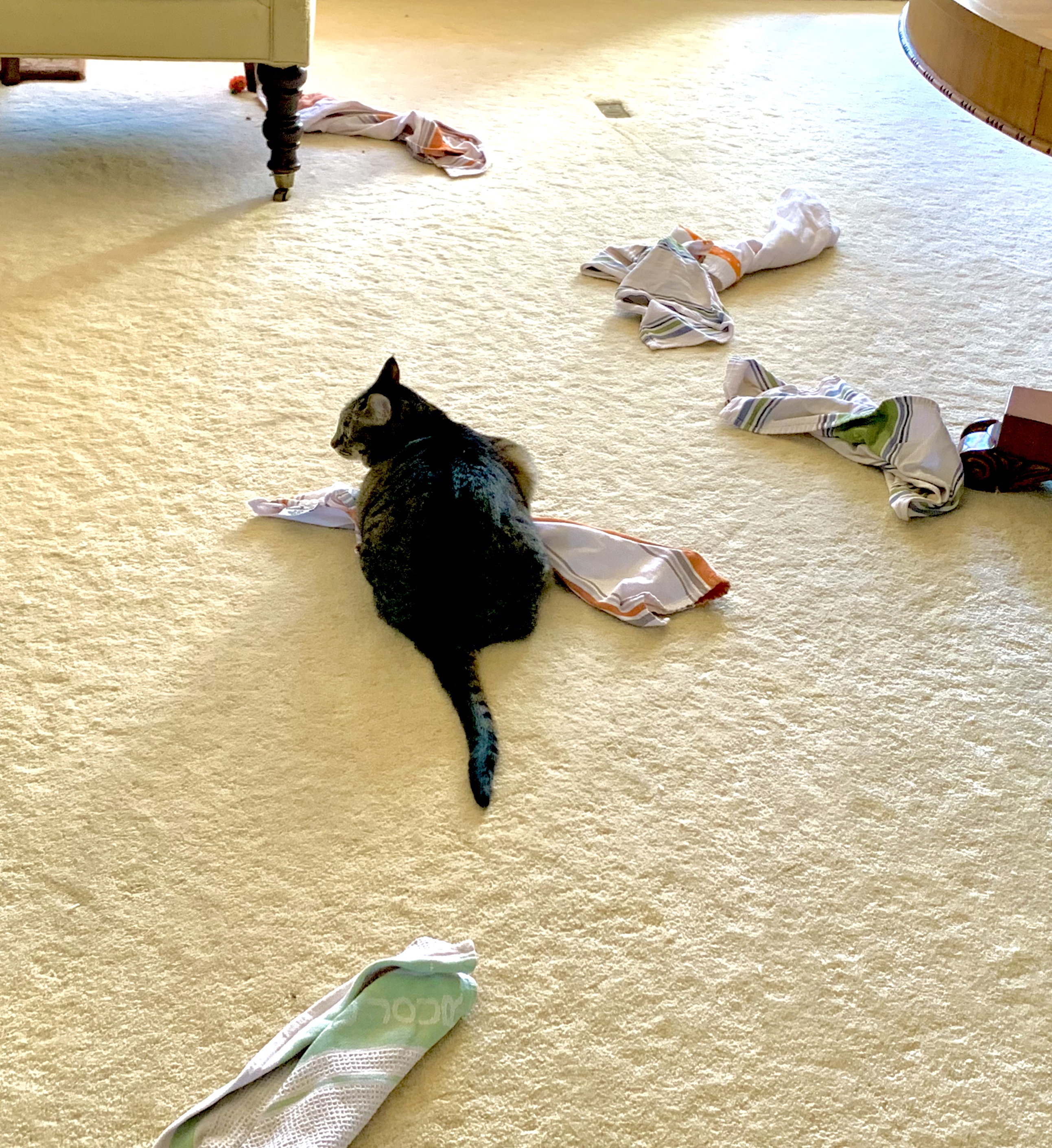
(one of my cats, Shadow, arranging the used dish towels she stole from the kitchen)

While I ran an AI lab at NYNEX, for a time, I had a pretty long commute. I listened to many “Books on Tape” during the commute including the autobiographies of many CEO’s of companies. Many of them were childish rather than child-like. Perhaps because they were rich and powerful, people told them what they wanted to hear all too often. As a result, these CEO’s often blamed their failures on factors beyond their control: the weather, government regulation, foreign competition, bad luck, fickle customers, etc. When they had successes, that was because they were smart enough to hire good people, make excellent decisions, provide superb leadership. That attitude of taking all credit for success and zero responsibility for failure is being childish — not child-like.

Incidentally, other animals can be stubborn (like a mule) and refuse to try something new — or they can be child-like and explore, play, and innovate. Play is not something that humans invented. We’ve all seen dogs play, but so do cats, otters, crows, ravens, horses, foxes, etc. In a very real sense, life itself is play. The replication and reproduction of life always allows for some variance. Life is always exploring the new and well as sticking with the old. Life itself is a balance between work (using what we already know to defend or acquire) and play (exploring new places, new ways of doing things). It is a balance between being an adult and letting that inner child continue to play. That is being child-like.

Photo by Rolandas Augutis on Pexels.com


Being childish is however quite different. That refers to a situation in which an adult (by chronological age) refuses to consider alternatives or the consider consequences; they refuse to think about the impact of their actions on others and even on themselves. Wearing a mask that has a Star Trek emblem or the likeness of a Skull or that’s colored like a rainbow — these are examples of being child-like. Refusing to wear a mask at all because someone doesn’t “feel like it”? That is being childish.

Wearing a condom that has a rocket ship on it is being child-like but not wearing one at all might be childish (unless you know you’re disease free and willing and able to raise a child). Putting on some of your favorite music and dancing while you’re doing the dishes is child-like; smashing the dishes on the floor because you’re fed up with washing them every day — that is childish. Making up a song so your students can learn math better is being child-like while being adult in taking your responsibilities seriously. Telling your students not to bother learning math — that is abdicating your responsibility to be an adult and being childish. Making up a funny protest sign and voting for the candidate whose policies you honestly think are good for the country is being an adult and being child-like. Refusing to learn about both candidates and voting for the one who makes absurd promises is being childish. Stubbornly refusing to learn the truth about your candidates failures and lies is being childish.


Life is a dance. Joining the dance and being child-like — that’s a really good thing for an adult’s health and well-being. It’s also good for society. Without any adults being child-like, there would be little or no math, science, art, music, or innovation. Of course, not all situations lend themselves to being child-like. You might have a job where the culture is so damned serious that any levity or joy will get you fired. If you have a family to feed, you might have to put on hold your desire to be child-like. If you give in to it and get fired, you’re being childish. First, get yourself a new job — hopefully one where you can be more child-like. Then, dance at the bank. If you are driving your car in bad weather, it’s not the time to “see what this baby can really do!”

Most people exhibit a mix of serious adult behavior, being child-like, and being childish. If a responsible adult “loses it” and smashes all the dishes, they will apologize; clean up the mess; buy new dishes. Rarely, we find a person who acts in a purely childish fashion. They will break the dishes and then, instead of apologizing, cleaning up the mess and buying new dishes, they will deny that they broke the dishes, blame others, and refuse to take any responsibility. Abusive parents and spouses fit into this category. But so do politicians who take a solemn oath of office to uphold the Constitution and then seek to overturn that Constitution that they swore to uphold. That is not being child-like. That is being childish.

And so is supporting such a person. To do so is to reject your own adult responsibilities.

Photo by Marlon Schmeiski on Pexels.com


———————————–

Purely fictional stories about a child sociopath named “Donnie Boy”

Ramming Your Head Into a Brick Wall Does Not Make You a “Hero”

Donnie Boy attends a Veteran’s Day parade

Donnie Boy lets his brother take the blame

Donnie Boy plays Sailor Man

Donnie Boy plays Soldier Man

Donnie Boy visits Granny

Donnie Boy Gets a Hamster

Donnie Boy Takes a Blue Ribbon in Spelling

Donnie Boy Gets his Name on a Tennis Trophy

Donnie Boy plays Bull-Dazzle Man

Poem: Life is a Dance

Poem: Serious Play

Essays on America: Rejecting Adulthood

The Myths of the Veritas: The First Ring of Empathy

Index to Catalog of ‘Best Practices’ in Teamwork and Collaboration

Author Page on Amazon


The Itsy Bitsy Spider & the Waterspout

08 Tuesday Dec 2020

Posted by petersironwood in Uncategorized

≈ 4 Comments

Tags

America, arachnid, collaboration, COVID, politics, spider, teamwork, USA, web

Photo by Candid Shots on Pexels.com

I do admit that spiders kind of creep me out.

However…

They are also a rather amazing family of creatures. Much like humans, they have managed to reach most of the lands on our planet. Spiders produce silk which, by weight, is five times as strong as steel.

https://www.sciencemag.org/news/2018/11/spider-silk-five-times-stronger-steel-now-scientists-know-why

Some make beautiful webs. And some are themselves beautiful. In any case, like every other advanced life form, their internal structure is an incredible design fitted to their environment.

Photo by Pixabay on Pexels.com


Their behavior is part of that beauty as well. I had an opportunity to observe a fairly large one for a few days. She had built a web, larger than a bicycle tire, all across the entry way of our back deck. My wife and I liked to go out on the back deck, but both of us were reluctant to destroy the beautiful symmetry of the web. I spent some time watching and she always returned to the center of his web after every “search and destroy” mission that she carried out. As soon as something hit the web, she rushed out unerringly to the spot where the unlucky mosquito, fly, or small moth struggled to set itself free. I only saw one insect succeed before the spider wrapped his prey and bit it to immobilize it. After wrapping up the unlucky prey, the spider would go back to the center. The center is a wise place for her to hang out. It gives the minimum maximum distance to “get to” the prey. And, it allows maximum discrimination for which direction to go. It also allows the spider to “run” the same “algorithm” to get to her prey.

Once, it happened by chance, that two little flying insects hit the web simultaneously and quite far apart. The spider rushed off to one of the two and wrapped it immediately in its silky tomb. Then she returned to the center. She seemed to recall that somewhere out there was another meal, but she didn’t know where. And the insect caught was no longer struggling. So — the spider began systematically “plucking” the radial strings of her web one by one. At last she came to the strand which led to the position of the fly who was attempting to play possum. But once that strand vibrated, the fly, out of what might be something like fear, began to struggle again. That was a fatal mistake. In a flash, the spider’s hypothesis confirmed, she ran up that strand and wrapped up that prey as well.

In The Hobbit, as well as The Lord of the Rings, large spiders are willful villains. It’s much the same in Harry Potter. It’s rare for a spider to be one of the “good guys” but it does happen; e.g., in Charlotte’s Web. Spiders can hurt and even kill people. But it is very rare in the United States; on average about 6 per year. About 30 are killed from stinging insects; about the same number as dogs. About 130 are killed from collisions with deer. The biggest killer worldwide, in terms of complex animals is the mosquito. Those critters have partners of course. They transmit malaria, dengue fever, Zika, encephalitis and other diseases. Spiders trap and kill a lot of mosquitos. Does that make them our friends? Is the enemy of my enemy necessarily my friend?

Photo by Pixabay on Pexels.com

The truth is that the web of life has many players and is a constant dance. We try to make sense of it, but we are not really in a position to really understand how the estimated 8 million species interact. In a few cases, like the novel coronavirus, it seems pretty clear that the virus is not friendly to humans. In this case, the “vector” that transmits the virus is not a mosquito. It’s other human beings — especially those who don’t wear masks or socially distance — who are acting as vectors, spreading disease, and killing their fellow Americans. Is the friend of my enemy my enemy?

A house divided against itself cannot stand.

Which is exactly why Putin is working so hard to divide Americans against each other and to break up the EU and NATO.

Have you heard the story about the tailor who killed giants by hiding in a tree and throwing stones at the giants? Each giant assumed another giant had thrown the stone and they ended up killing each other while the tailor sat hidden in the tree. Except in our case, we know there’s a tailor in the tree throwing stones and it makes no difference. Weird.

Meanwhile, the spider spins a web. Watch her grace. Watch her unity. It isn’t simply the left hand knowing what the right is doing. It’s every one of her eight hands knowing what each of the other seven is doing. When they don’t fight with each other, much can be accomplished.


Author page on Amazon

The Isle of Right

Opponent does not mean enemy

The Declaration of Interdependence


Led by the Deer

05 Saturday Dec 2020

Posted by petersironwood in Uncategorized

≈ 1 Comment

Tags

anger, deer, hunting, legend, myth, stalking, Veritas

Trunk of Tree wrapped his wound with boiled yellow dock and plantain leaves and then tied strips of rawhide to hold the poultice in place. He clenched his teeth. Then, he clenched them tighter still. He realized that he was hungry and exhausted. He had hiked aimlessly and alone for three days. Most of that time, he had been angry — so angry that he had stupidly stepped heavily upon the dry branch of a fallen tree. The branch had snapped and as his weight drew his leg downward now that nothing any longer held it; at the same time, the sharp end of the broken branch snapped upward, making a long gash in the side of his lower leg. 

He mentally listed his grievances. He was angry at the red death. He was angry at Many Paths for sending her own betrothed, Shadow Walker, with the only woman Trunk of Tree had ever loved, Eagle Eyes, on a mission together and now they were far away, living as king and queen and surely, they were mating now. Trunk of Tree clenched his fists and banged them down hard on the trunk of the fallen tree that he sat on. Even in his nearly blind anger, some small part of his brain knew enough to hit the bark with the side of his hand rather than his knuckles. That survival part of his brain knew that injuring his hands would not help him in his current situation, nor allow him somehow to win back Eagle Eyes, should he so deign.

Trunk of Tree swallowed a wordless growl as he thought about how angry he was with She Who Saves Many Lives. She had chosen Many Paths as her successor and then made up various schemes and tests to make it come true. He was sure of it. Many Paths was a woman and it annoyed Trunk of Tree that he had not been chosen as leader. He was much stronger than Many Paths. And, he knew what to do in any situation immediately while Many Paths apparently, he thought, felt obligated to live up to her name and think of a thousand ways to kill a deer while he just picked up the nearest stone and whacked it on the head. That wouldn’t work of course, but that wasn’t the point. 

Trunk of Tree could hear his stomach growl. He hadn’t eaten all day and the scant supplies he had grabbed as he stormed off had run out early yesterday. He looked down and saw deer tracks plain as day run through this small clearing where he had made his fire. Some of these tracks are fresh. Good, he thought. He stood up. 

Photo by Yoss Cinematic on Pexels.com

“My leg is okay to walk on,” he mumbled to himself. “It’s not bleeding through my crude bandaging. Good,” he muttered. “I don’t want the scent to scare off the deer. Nor my anger. I must slow my breathing and become one with the track and with the deer and with the traces of the deer and with wants and needs of the deer.” 

Trunk of Tree began to imagine once again that Shadow Walker and Eagle Eyes were together. “I need to discipline myself. I need to concentrate. I can kill them later if need be. But first, I need to find food. I need to focus on the deer. Find the deer. Find the deer. Kill the deer. Eat the deer.” 

He found that his wound did not slow him down much. The deer tracks were becoming fresher. At last he caught a glimpse of the buck he had been tracking. The hunter bent down and tightened the straps holding his bandage in place. When he stood back up, the buck was nowhere to be seen. He was still walking upwind and long training allowed him to stalk stealthily. He began to croon one of the soft hunting chants that he had learned as a boy. Although the slightest snap of a twig or a sudden movement would sent the buck bounding off through the brush, these songs seemed to pique the curiosity of the deer allowing a much closer approach. 

“I am the deer.
My mind is clear.
I walk with no sound,

Yet I sing you my song.
We all go to ground.
It cannot be wrong. 

Come become a part of me.

Someday I’ll die too.

Perhaps becoming part of you. 

This is how it’s meant to be.

I am the deer.

My mind is clear.” 

Trunk of Tree halted. The track led into a dense thicket of blackberry bushes. Trunk of Tree smiled at the irony. The only reason he would be able to keep tracking the deer was because of  his deer skin clothing. A smile crept onto the corner of his lips. This irony was all the funnier because he himself had killed the deer whose skin he was using. His memory flashed back to that day. Eagle Eyes, naturally, had first spotted the track. Trunk of Tree had begun to run after it since the tracks seemed so fresh. Shadow Walker had grabbed him, faced him and sniffed the air. Shadow Walker had been right. They would have simply spooked the deer. 

Anyway, Trunk of Tree, thought to himself, enough reminiscing. “I must return to the moment.” Trunk of Tree slid sideways through the thicket fairly easily. When he came out the other side though, the deer track went right into a cliff. He stared at the track. It made no sense. He began to recite his song again and followed the track right up to … a solid stone wall. He muttered to himself, “This makes no sense. Is this another of those stupid magic doors? I don’t see ….”

Photo by Julia Volk on Pexels.com


Then, Trunk of Tree noticed that what seemed to have been a solid wall really contained a narrow passageway barely wide enough for a deer. The rock walls of the passage tilted outwards slightly. As he walked through, he noticed markings along the moss and rock tripe growing on those wall as though deer antlers had scraped through. When he made it through this passage, he saw the deer tracks veer off to his left down toward a spring. The deer was not in sight. He contemplated tracking the deer across the cold running stream. If he did, his bandage would certainly be washed away along with the medicinal herbs he had so carefully searched out, boiled, and applied. 

He wished Eagle Eyes were here. Her eyes were remarkably good. Trunk of Tree tried to push the image away, but it came back. And as he imaged Eagle Eyes beside him, he realized for the first time in his life that Eagle Eyes not only had remarkable vision. She looked at things differently. Trunk of Trees eyes darted always, as did everyone’s. But sometimes, Eagle Eyes looked — for a long time — and she looked methodically. She looked patiently. Trunk of Tree bit his lower lip. It wasn’t just her eyes — it was her patience — and her method that made her so valuable. And, then, Trunk of Tree had another insight. While he may never have such clear vision as Eagle Eyes, he could use her patience and her method.

Trunk of tree looked off to the right. His stomach rumbled again, as though he needed to be reminded of his hunger. He decided to ignore that for a moment and he looked up the slope to his right, trying to imagine the way Eagle Eyes would look. He looked back and forth along a large rock outcropping and realized that something was amiss. At first, he couldn’t tell what. Then, in his mind, he heard the voice of Eagle Eyes say “road” in her wonderful voice. “Road” he muttered to himself. “What road?” He walked up the slope the length of a fallen pine and sure enough, there was a man-made road up there. He looked back toward the cleft in the rock that he had just slid through. There was no sign of the cleft. He walked back down. He couldn’t really see that the cleft was there until he was almost upon it. He walked back up to the road and scanned the far side of the stream, looking for a sign of the deer in the same patient, methodical way that Eagle Eyes would have used. He decided to walk along the road for a time. He now saw that it curved gently around the base of what appeared to be a mountain. As he walked he kept stopping and looking back toward the creek to see whether the deer had reappeared.


Trunk of Tree shook his head muttering to himself yet again. “I’m so damned hungry, I’m imagining the smell of deer meat cooking.” Then, he stopped and sniffed the air. “No,” he thought, “that’s no illusion. That is the smell of venison cooking.” 

As he followed the road, the scent strengthened. The road took a sharp turn to the right. Trunk of Tree found himself hungrier than ever now, but he slowed his pace. He may be coming upon enemies. He heard voices! Enemies! Wait, he thought. They are speaking Veritas. He frowned and thought, “That boy’s voice sounds exactly like…like that of Tu-Swift! Have I been going in circles?” 

Trunk of Tree stepped off the path and pressed himself against the rock, peering from behind a tree that grew next to the rocks. Coming down the path he saw Tu-Swift…holding hands with Cat Eyes! 

Seeing no-one else, Trunk of Tree stepped back to the road and looked again, forcing himself to look carefully, as Eagle Eyes might do.

He swallowed hard and spoke out loud. “Tu-Swift? Is that you? And Cat Eyes? What are you doing here?” 

Tu-Swift and Cat Eyes were both startled at the sudden appearance of the large, well-muscled body of Trunk of Tree and both reflexively hit the ground on either side of the path.  

Tu-Swift realized a split second later that it really was Trunk of Tree. He climbed back onto the path and yelled happily, “Trunk of Tree! Hey! Well met!” He loped toward him and embraced him. Cat Eyes came up as well and smiled at Trunk of Tree and took one of his hands. 

Tu-Swift shook his head. “How on earth did you get here? You’re nowhere near the ancient tunnel!” 

Trunk of Tree frowned. “How did I get here? How did … where am I exactly?” 

Cat Eyes answered, “You are in the village of the Veritas. The village you call ‘The Veritas on the far side of the mountain. But how did you get here? And, what happened to your leg?”

————————————————-

The Creation Myth of the Veritas

The Myths of the Veritas: The Orange Man

The Myths of the Veritas: The Forgotten Field

The First Ring of Empathy

Author Page on Amazon

Index for a Pattern Language for Collaboration

Index for Tools of Thought

Living on the Edge

03 Thursday Dec 2020

Posted by petersironwood in Uncategorized

≈ 4 Comments

Tags

COVID19, danger, joy, pandemic, risk, thrill

Photo by Frans Van Heerden on Pexels.com

From where the family had lived at the time, to Sesame Place in Pennsylvania constituted a two hour drive and plenty of traffic. But it was worth it. My kids enjoyed it. I enjoyed that my kids enjoyed it. But I also enjoyed it myself.

In particular, I enjoyed the water rides, particularly on this day because it was a typical 3-H day in the New York Greater Metropolitan Area — Hot, Hazy, and Humid. The water rides offered a nice way to cool off. I do not like getting wet when it’s cold. But when it’s hot and the sun dries me off quickly, I enjoy both the cooling and the warming back up. Beyond that, water slides provide the thrill of speed. And, for me, the thrill of speed is a more pure pleasure without the nagging sharp little chiggers of worry about someone having not sufficiently re-tightening a nut on the Ferris wheel or Roller-Coaster — a someone who has just found out they have terminal cancer, or their spouse just left them, or their favorite TV show has been cancelled. That’s a someone who is understandably quite distracted by all the little “worst case” scenarios that they have been playing out in their heads all day in the sizzling sun, perhaps even complaining to their imaginary pals about it. 

Photo by Amanda Cottrell on Pexels.com

No. When I think of a Water Slide, I think of Water. And water, unlike asphalt, is soft. If you fall, so what? And how can it break? It’s got no moving parts! What could be safer? 

Actually, it does have one moving part. That moving part is the user, the participant, the enjoyer, the thrill-seeker. In a word, me. To be fair, I am not much of an adrenaline junky. I’m happy to have speed thrills, but I want to do that without the risk of real injury. Hence, the Water Slide: my favorite kind of ride. 

Beyond that, I really like Water Slides because there is such elegance and simplicity. I am climbing the steps to the giant Water Slide and what am I wearing? A bathing suit. I have no tennis bag, no picnic bag, no bat, no ball, no safety helmet, no special shoes, no shin guards, no ignition key, no riding gloves, no spurs. I am damned near naked. I do not get into a seat, or a boat, or race car, or mount a horse (though I understand those can be wonderful for various different reasons). But this a particular thrill, though safe, is a naked thrill. I not literally naked of course. But I was as close as I could get in polite society. 

Photo by Aleksey Kuprikov on Pexels.com

The first time I used this particular Water Slide, I was sitting up. I noticed that most people did that, but some people lay flat. I considered that, but it seemed to me I wouldn’t get to see much except the sky. The way I visualized it, I would have a greater impression of speed if I sat up so that I could see the park-world that lay beyond the half-circle of yellow plastic pipe that formed our “race track.” So, off I went: ZOOM! (In the pre-COVID19 sense of the word). 

It was fun! Just as much fun as I had imagined. And more. It really felt good. If you enjoy the jets of a jacuzzi, you might appreciate that, in addition to the thrill of speed, the Water Slide offers a surprising kind of gentle but vigorous water massage while you are speeding through its universe. The turns and twists and falls seem a lot like a bobsled run. But the bobsledders are getting banged and bruised and on rare occasions killed, while I was getting a water massage instead. 

So being a person who likes to study things, I decided I would lay on my back for the second run. This time, I would go for speed and see whether the increased speed would make up for the less panoramic visual experience. 

Photo by Oladimeji Ajegbile on Pexels.com

Whoosh! Into the pool at the end, I went. Unbelievably, it had been even more fun the second time. So, once more, I climbed up the long staircase to the top of the Water Slide. The steps were ingeniously chosen to be of cross-grated metal which kept the stairs tolerably hot and made them less prone to someone slipping and falling, possibly taking out a host of climbers behind them. Of course, the climb lasted far longer than the slide, but I didn’t mind. I used my time planning how I would go even faster this time.

When you reach the top of the Water Slide, there are two workers — one on each side of the yellow half-pipe. They hold you in place until they are sure the person below you has cleared. And then they give you a shove to start you off. This is great because that time allowed me to execute my mental check list. I straightened my legs hard, pointed my toes, and pressed the soles of my feet together as hard as I could. I stretched my arms above me, pushing the inside of my upper arms against my ears and pushing my palms together as hard as I could.

ZOOM! Off I went! And, sure enough! My plan had worked! I was going even faster than my second time down — noticeably faster. This was heaven, all right. A considerable thrill but completely safe. 

Photo by Nikolay Ivanov on Pexels.com

So I thought. 

Apparently, the engineers who designed this water park didn’t design for grown men who had a curious enough streak to see what would happen if they really thought hard about how to minimize friction. 

I sizzled down the half-pipe in my slip-sliding way with no issues until the last and fastest turn. Here, my body quickly went from in the half-pipe to somewhat outside the half-pipe to half outside the half-pipe. I had been worried about the lack of view. But I had plenty of view of what my landing place would be like. Concrete and rocks about five feet below. 

I had exactly zero time to react before my body began to find its way back into the confines of the half pipe. It was a close thing. And, if I had “spun out,” that afternoon would have turned out far differently than it did. It would have certainly meant a trip to the hospital. Maybe I would have been spared broken bones and just gotten a world class case of road rash. That seems unlikely. Who knows? I might have been permanently disabled or, if my head happened to hit something in the wrong way, dead. 

Sometimes, we come up to that edge and we don’t even know it. And sometimes, we come to that edge because we think our way up to it. Every time we push the limit and get away with it, a little voice inside says, next time, we’ll push it a little more. Next time, we’ll push it a little more. And a little more. Sometimes, we get lucky. We get close enough to the edge to see what lies beyond and we modify our behavior. And sometimes, we get unlucky. We go over the edge. And there’s no turning back.

I still enjoy a Water Slide. 

But I don’t clever my way to the edge. 

I would go to the edge, and I would go beyond the edge, for a worthy enough cause. But a thrill or the pleasure of the moment — to me, that is not nearly enough cause.

How close do the edge do you like to come? 

Photo by Darren Lawrence on Pexels.com

————————————————————-

Author’s Page on Amazon. 

Link to a series on “tools of thought” 

Link to an essay about “cognitive dissonance.” 

Link to an essay about my experience getting “conned.”

Link to an index of “best practices” in teamwork and collaboration. 

Photo by u041fu0430u0432u0435u043b u0421u043eu0440u043eu043au0438u043d on Pexels.com

That First Time is So Special

01 Tuesday Dec 2020

Posted by petersironwood in Uncategorized

≈ 6 Comments

Tags

COVID, COVID19, fantasy, fiction, health, masks, pandemic, Sci-Fi, story

477-K-435-J glanced at his comrade. “You look nervous. You doing okay?”

“I’m not nervous! Just leave me alone. I’m fine.”

“Geez. OK. Have it your way. Look, it’s no big deal. I was nervous my first time too. You’ll get used to it. Kind of. I’m 477-K-435-J. You?” 

“Really? How did you know it was my first time? Oh, I’m 45-PP-45-PP, by the way. Pleased to meet you.” 

“Likewise. For one thing…look, you’ve got this all twisted the wrong way. May I? I just want to straighten this out for you.”

“I … okay.” 

“There we go. That’ll make it easier. Now, look. Truth is, 45-PP-45-PP, you should be nervous. Our enemy has some pretty potent weapons. You’d be an idiot not to be nervous. Poison gas is no fun.” 

Photo by VisionPic .net on Pexels.com

“Poison gas? They use poison gas?”

“Sometimes. Nitric oxide. Nasty stuff.”

“Thanks. Now, I have something else to be nervous about. It’s just … they so damned big. And, they have brains. Big brains.”

“Oh, believe me, that’s the last thing to be nervous about. Sure, they have big brains, but do they use them? That’s the question.”

“Why wouldn’t they use them? Don’t be ridiculous.”

“Yeah, I agree. Hell, we all agree. It’s one of the great mysteries of near-life. But, luckily for us, we don’t have to solve that. We just need to use the fact that they don’t use them very often to our own advantage.” 

(Long pause). 

“How do you know — how do you know where to put it in?”

“It’s kind of instinctual. You’ll know. Anyway, there are lots of places. It’s not just like there’s one perfect place. We all develop favorites. Personally, I like the lungs best. It feels — it just feels right. Warm and wet. And, they really suffer, just like an enemy should. Best of all, it makes ‘em cough. That’s a free ride to the next sucker.” 

234-HH-432-99 joined in. “That’s not what I like best. Sure, it’s warm and wet. But so are the mucous membranes in the mouth. The mouth is where it’s really at, if you ask me. To them, it’s quite an intimate place. That makes it all the more fun for me!” 

477-K-435-J shook slightly. “Nah. Lungs. More damage. More spread.” 

234-HH-432-99: “Ridiculous. Trust me, kid. There’s no greater feeling than penetrating one of those mouth cells and squirting your RNA into it. You are the boss then! That cell does what you tell it to. And what you make them do is make more of you! I love it. Whoever came up with that one…they deserve to be…to win something.”

477-K-435-J “Yeah, yeah. But no matter how much you screw over their mouth, they can still breathe. And if they can breathe, they have energy. And they can use that to send their destroyers out.  

234-HH-432-99 suddenly screamed, “Hit the deck!” 

Without the slightest idea what was going on, 45-PP-45-PP did as he was told. “What the hell was that?” 

Photo by Ketut Subiyanto on Pexels.com

477-K-435-J replied, “That, kid, that is something you want to look out for. It’s a god-damned mask is what that was.” 

“Huh? What’s a mask? Does that kill us too?” 45-PP-45-PP reflected again on how much danger he was in. 

234-HH-432-99 answered, “No, it doesn’t kill us exactly, but most of the time, it prevents us from fulfilling our mission. Get caught up in one of those damned masks, and you won’t be screwing their mouth cells, their lung cells or any other cells. You’ll just … disintegrate … and die with no sons and no daughters to carry on your alphanumeric designation. It’s as though you were never really alive at all. Well, actually, you’re not. But you get my drift. You’ll be forgotten and nothing to show for it.”

45-PP-45-PP said, “Holy crap! How do we avoid them? A bunch of those things would ruin our whole plan.”

477-K-435-J added, “Yes, you’re right, but we’ll be fine as long as enough people don’t wear them or don’t wear them properly.”

45-PP-45-PP had the distinct feeling that his more experienced comrades were putting him on and making fun of his ignorance. “Yeah. Right. They have a way to prevent our spread and don’t use it. It may be my first time, but I’m not stupid enough to fall for that one! If you want to razz the new guy, you’ll have to think of something more clever than that.” 

234-HH-432-99 said, “No, kid. We’re not putting you on. Your buddy ain’t puttin’ you on.”

45-PP-45-PP still felt he was being punked. “So you’e saying they have a weapon to keep up from doing in their lungs and doing … any of their cells … and they don’t use it? Why? That makes no sense! I don’t believe you.”

477-K-435-J said, “Look, it doesn’t matter whether you believe me or not. But we’re all in this together so why would I lie to you? No-one knows why they don’t use something that could save their life of the lives of their families. Some of their own kind have started rumors that the masks don’t work or that they infringe on their freedom.” 

234-HH-432-99 piped up again. “Hell, not only that! Some of them don’t even think we exist! They think we’re just a hoax!” 

45-PP-45-PP knew they were putting him on now. “Yeah, right. 1.5 million dead world-wide and 63 million sick …. And we’re a hoax? Come on. Give me a break. Just because it’s my first time doesn’t mean I’m totally naive.”

477-K-435-J shrugged, in his viral sort of way. “Look, kid, believe what you want. But trust me. Lungs. That’s where it’s at. And when… hey! Hey! Look sharp. This guys about to scream at someone, he’s surrounded by others, and none of them are wearing those damned mask. We’re in luck! Come on, troops! We’ve prepared our whole lives for this. Drill ‘em and kill ‘em! Drill ‘em and kill ‘em!” 

Soon the chant filled the air. 45-PP-45-PP joined in and all his nervousness, his uncertainty, his fear melted away. “DRILL ‘EM and KILL ‘EM.” He felt inexpressible lust at the thought of raping a species whose only outstanding natural weapon was its brain — a weapon so many refused to use. He thought to himself, in his viral manner, They deserve to be drilled! They deserve to be killed! He turned to the comrade who had first befriended him and said, “477-K-435-J, I’m going for the lungs!” Then, to himself:  “Warm and moist! Yum! You are mine you little slut cell! You’re going to birth 10,000 of my little babies! Whether you like it or not! You’ll see who’s a hoax!”

“Drill ‘em and Kill ‘em! Drill ‘em and Kill ‘em!”

And so they did.

Photo by Pixabay on Pexels.com

———————————————————————————

The Truth Train

The Pandemic Anti-Academic 

Unmasked 

Plans for us; some GRUesome

The Watershed Virus 

Thrumperdome

Author Page on Amazon

Take a Glance; Join the Dance

28 Saturday Nov 2020

Posted by petersironwood in Uncategorized

≈ 50 Comments

Tags

dance, live, mortality, peace, poem, poetry, unity

Every once in a while, 

Every so often,

It seems quite worth our while

To take a glance 

At what is outside our 

Usual reference Frame, 

That habitual way of seeing

And notice just this once instead

The very essence of our being.

In truth, you see,

We are each a universe of miracles.

After 4.5 billion years of trying, 

At last, long last, we now begin, 

Begin

To understand what we are spying. 

We are a universe of miracles

Surrounded by a sea of miracles:

The cat beside me;

The chair she lies upon

While she licks her fur —

With her dampish tongue of bur;

The house that holds us both;

The computer that I type upon; 

The internet that links me 

To you

And you

And you

And you

All across our common miracle:

That Eden

That garden of green and blue 

That whirling ball, 

Of ocean, river, stream, and waterfall. 

That garden filled with flowers

Which the prism of evolution 

(Or creation if you prefer)

Has refracted into a revolution 

Of colors, shapes, and sizes. 

There are no greater prizes; 

Nor more wondrous surprises.  

Photo by eberhard grossgasteiger on Pexels.com

We are here. 

We are alive. 

Each of us:

Seventy trillion cells apiece. 

We are a universe of miracles.

The product of 4.5 billion years of trying.

Most of us — 

Cat be nimble;

Mouse be quick;

Human living in a house of brick;

Humans who have built the house, 

Every human being 

And every, every living being. 

Photo by Helena Lopes on Pexels.com

We dance this dance together, 

Don’t you see? 

The music never ends, 

The dance will morph around a billion bends. 

And every move of every player, 

Telegraphs its fireworks display 

Photo by Rakicevic Nenad on Pexels.com

Like a soothsayer 

Like a prophet, 

Like a sinner, 

Like a saint. 

Ever-changing, 

Ever-ranging 

In our planet’s spiral dance

Across the utter and unspeakable vastness of space

Across the everywhere of place. 

Take a glance.

I know we buzz as busily as a bee

With little time to contemplate eternity. 

But take a glimpse every now and then, 

You might be shocked at what you see. 

Look beyond the daily grind 

And you will find

Millions of kinds of minds 

Of creatures large and small

And that’s not all!

They are dancing each and every one!

In that great and magic dance of life!

On and on the music goes.

On and on the rhythm flows. 

On and on the mystery grows.

Just because our own brief turn will end at last. 

That doesn’t end that endless dance divine!

No matter how you moan; no matter how you whine,

The earth will sing and spin even when your life has passed

(So fast). 

Just take a little peek and you at last will see

You change, you morph, you flash. 

But, regardless of your cash

You won’t outlast infinity; 

You won’t outwit eternity.

Don’t plot & scheme to check & slay and fight & clash.

No, help our cousins on this great green spaceship earth.

Help make this dance more graceful, fine, & filled with mirth. 

Photo by Marlon Schmeiski on Pexels.com

You can dance your dance without destroying 

You can do your thing without annoying.

You have a million ways to thrill 

Why pick out one instead to kill? 

The sun is sinking red and low 

The wind begins to blow and flow

Into the pines who dance with love

Inviting air and water, dirt and sun,

To join her in her laughing life-long dance

“You too can join in all the fun!

Become a part of me and you’ll have won!” 

Take the time to take a glance.

The ordinary world we live in is 

Extraordinary in every single way!

Every molecule of it sings.

Every moment has its million miracles! 

Take the hands on either side. 

Across the world, the world is wide. 

We’re divided just as far as we’ve decided we can be.

This division shows a silly decision; 

Not an ever-fixed reality.  

When we see the truth, 

We will have won.

The truth

Is that we’re one.

————————————-

Essays on America try to make sense of current politics in America though many of the issues extend beyond American borders.

Here’s a link, e.g., to an essay about how it can be hard to change your mind. 

The Myths of the Veritas is a fictional series that explores leadership, ethics, and empathy in another time and place. Our tale begins as the leader/shaman of the Veritas tribe seeks an eventual successor so she devises a series of increasingly difficult trials that mainly test empathy.

Here’s a link to The First Ring of Empathy.  

You might find value in this attempt to catalog “best practices” in teamwork and collaboration in the form of a Pattern Language. 

Here’s a link to the introduction.

Here’s a link to the index of Patterns. 

← Older posts
Newer posts →

Subscribe

  • Entries (RSS)
  • Comments (RSS)

Archives

  • April 2026
  • March 2026
  • February 2026
  • January 2026
  • December 2025
  • November 2025
  • October 2025
  • September 2025
  • August 2025
  • July 2025
  • June 2025
  • May 2025
  • April 2025
  • March 2025
  • February 2025
  • January 2025
  • December 2024
  • November 2024
  • October 2024
  • September 2024
  • July 2024
  • April 2024
  • March 2024
  • February 2024
  • January 2024
  • December 2023
  • August 2023
  • July 2023
  • May 2023
  • April 2023
  • March 2023
  • February 2023
  • January 2023
  • December 2022
  • November 2022
  • October 2022
  • September 2022
  • August 2022
  • July 2022
  • June 2022
  • May 2022
  • April 2022
  • March 2022
  • February 2022
  • January 2022
  • December 2021
  • November 2021
  • October 2021
  • September 2021
  • August 2021
  • July 2021
  • June 2021
  • May 2021
  • April 2021
  • March 2021
  • February 2021
  • January 2021
  • December 2020
  • November 2020
  • October 2020
  • September 2020
  • August 2020
  • July 2020
  • June 2020
  • May 2020
  • April 2020
  • March 2020
  • February 2020
  • January 2020
  • December 2019
  • November 2019
  • October 2019
  • September 2019
  • August 2019
  • July 2019
  • June 2019
  • May 2019
  • April 2019
  • March 2019
  • February 2019
  • January 2019
  • December 2018
  • November 2018
  • October 2018
  • September 2018
  • August 2018
  • July 2018
  • June 2018
  • May 2018
  • April 2018
  • March 2018
  • February 2018
  • January 2018
  • December 2017
  • November 2017
  • October 2017
  • September 2017
  • August 2017
  • July 2017
  • June 2017
  • May 2017
  • April 2017
  • March 2017
  • February 2017
  • January 2017
  • December 2016
  • November 2016
  • October 2016
  • September 2016
  • August 2016
  • July 2016
  • June 2016
  • May 2016
  • April 2016
  • March 2016
  • February 2016
  • January 2016
  • December 2015
  • November 2015
  • October 2015
  • September 2015
  • August 2015
  • May 2015
  • January 2015
  • July 2014
  • January 2014
  • December 2013
  • November 2013

Categories

  • AI
  • America
  • apocalypse
  • cats
  • COVID-19
  • creativity
  • design rationale
  • dogs
  • driverless cars
  • essay
  • family
  • fantasy
  • fiction
  • HCI
  • health
  • management
  • nature
  • pets
  • poetry
  • politics
  • psychology
  • Sadie
  • satire
  • science
  • sports
  • story
  • The Singularity
  • Travel
  • Uncategorized
  • user experience
  • Veritas
  • Walkabout Diaries

Meta

  • Create account
  • Log in

Blog at WordPress.com.

  • Subscribe Subscribed
    • petersironwood
    • Join 662 other subscribers
    • Already have a WordPress.com account? Log in now.
    • petersironwood
    • Subscribe Subscribed
    • Sign up
    • Log in
    • Report this content
    • View site in Reader
    • Manage subscriptions
    • Collapse this bar
 

Loading Comments...