• About PeterSIronwood

petersironwood

~ Finding, formulating and solving life's frustrations.

petersironwood

Category Archives: psychology

Turing’s Nightmares: Eight

21 Friday Nov 2025

Posted by petersironwood in Uncategorized, psychology, The Singularity

≈ Leave a comment

Tags

AI, Artificial Intelligence, cognitive computing, collaboration, cooperation, openai, peace, philosophy, seva, teamwork, technology, the singularity, Turing, ubuntu, United Peoples Ecosystem

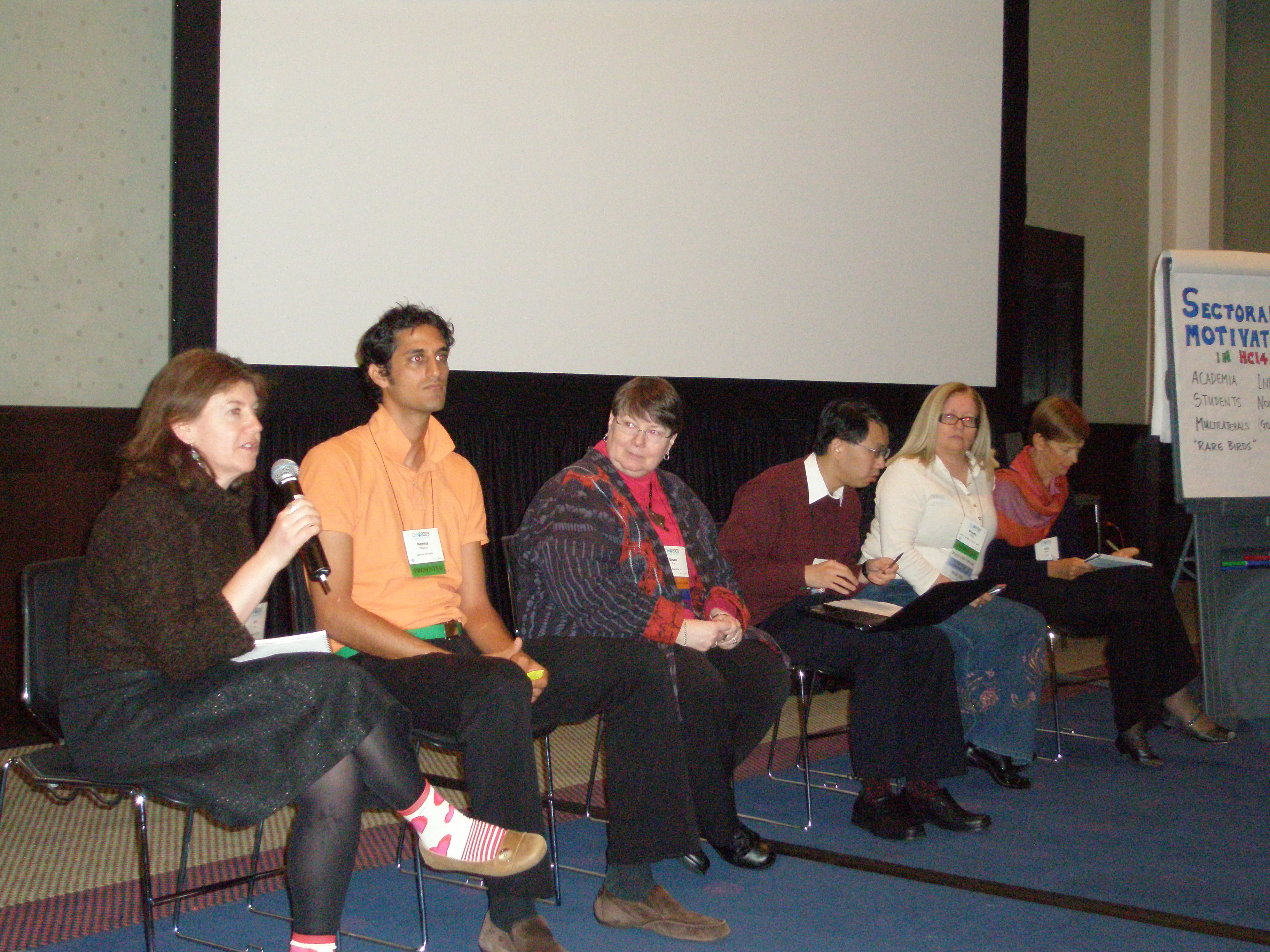
OLYMPUS DIGITAL CAMERA

Workshop on Human Computer Interaction for International Development

In chapter 8 of Turing’s Nightmares, I portray a quite different path to ultra-intelligence. In this scenario, people have begun to concentrate their energy, not on building a purely artificial intelligence; rather they have explored the science of large scale collaboration. In this way, referred to by Doug Engelbart among others as Intelligence Augmentation, the “super-intelligence” comes from people connecting.

Photo by RF._.studio on Pexels.com

It could be argued, that, in real life, we have already achieved the singularity. The human race has been pursuing “The Singularity” ever since we began to communicate with language. Once our common genetic heritage reached a certain point, our cultural evolution has far out-stripped our genetic evolution. The cleverest, most brilliant person ever born would still not be able to learn much in their own lifetime compared with what they can learn from parents, siblings, family, school, society, reading and so on.

Photo by AfroRomanzo on Pexels.com

One problem with our historical approach to communication is that it evolved for many years among a small group of people who shared goals and experiences. Each small group constituted an “in-group” but relations with other groups posed more problems. The genetic evidence, however, has become clear that even very long ago, humans not only met but mated with other varieties of humans proving that some communication is possible even among very different tribes and cultures.

Photo by Min An on Pexels.com

More recently, we humans started traveling long distances and trading goods, services, and ideas with other cultures. For example, the brilliance of Archimedes notwithstanding, the idea of “zero” was imported into European culture from Arab culture. The Rosetta Stone illustrates that even thousands of years ago, people began to see the advantages of being able to translate among languages. In fact, modern English contains phrases even today that illustrate that the Norman conquerers found it useful to communicate with the conquered. For example, the phrase, “last will and testament” was traditionally used in law because it contains both the word “will” with Germanic/Saxon origins and the word “testament” which has origins in Latin. Many other traditional legal terms in English have similar bilingual origins.

Automatic translation across languages has made great strides. Although not so accurate as human translation, it has reached the point where the essence of many straightforward communications can be usefully carried out by machine. The advent of the Internet, the web, and, more recently google has certainly enhanced human-human communication. It is worth noting that the tremendous value of google arises only a little through having an excellent search engine but much more though the billions of transactions of other human beings. People are exploring and using MOOCs, on-line gaming, e-mail and many other important electronically mediated tools.

Photo by Rebecca Zaal on Pexels.com

Equally importantly, we are learning more and more about how to collaborate effectively both remotely and face to face, both synchronously and asynchronously. Others continue to improve existing interfaces to computing resources and inventing others. Current research topics include how to communicate more effectively across cultural divides; how to have more coherent conversations when there are important differences in viewpoint or political orientation. All of these suggest that as an alternative or at least an adjunct to making purely separate AI systems smarter, we can also use AI to help people communicate more effectively with each other and at scale. Some of the many investigators in these areas include Wendy Kellogg, Loren Terveen, Joe Konstan, Travis Kriplean, Sherry Turkle, Kate Starbird, Scott Robertson, Eunice Sari, Amy Bruckman, Judy Olson, and Gary Olson. There are several important conferences in the area including European Conference on Computer Supported Cooperative Work, and Conference on Computer Supported Cooperative Work, and Communities and Technology. It does not seem at all far-fetched that we can collectively learn, in the next few decades how to take international collaboration to the next level and from there, we may well have reached “The Singularity.”

Photo by Patrick Case on Pexels.com

————————————-

For further reading, see: Thomas, J. (2015). Chaos, Culture, Conflict and Creativity: Toward a Maturity Model for HCI4D. Invited keynote @ASEAN Symposium, Seoul, South Korea, April 19, 2015.

Thomas, J. C. (2012). Patterns for emergent global intelligence. In Creativity and Rationale: Enhancing Human Experience By Design J. Carroll (Ed.), New York: Springer.

Thomas, J. C., Kellogg, W.A., and Erickson, T. (2001). The Knowledge Management puzzle: Human and social factors in knowledge management. IBM Systems Journal, 40(4), 863-884.

Thomas, J. C. (2001). An HCI Agenda for the Next Millennium: Emergent Global Intelligence. In R. Earnshaw, R. Guedj, A. van Dam, and J. Vince (Eds.), Frontiers of human-centered computing, online communities, and virtual environments. London: Springer-Verlag.

Thomas, J.C. (2016). Turing’s Nightmares. Available on Amazon. http://tinyurl.com/hz6dg2

An Inside View of IBMs Innovation Jam

————-

Author Page on Amazon

Turing’s Nightmares: The Road Not Taken

Pattern Language for Collaboration and Cooperation

The First Ring of Empathy

The Dance of Billions

Imagine All the People…

Roar, Ocean, Roar

Corn on the Cob

Take a Glance; Join the Dance

The Self-Made Man

Indian Wells

Secret Sauce

04 Tuesday Nov 2025

Posted by petersironwood in driverless cars, psychology, The Singularity

≈ Leave a comment

Tags

AI, Artificial Intelligence, cognitive computing, communication, Cooking, ethics, integrity, interaction, marketing, sauce, science, technology, the singularity

IMG_6515


No need to panic, thought Harvey. Ada should be back soon. Or, I can go to a neighbor. I am not going to freeze to death on my own front porch. Harvey shivered just then as another icy blast hit him. He turned and scanned the neighborhood. Crumpled cars blocked the streets. None of the houses in his immediate area were lit. Wasn’t this the season of lights? I suppose one of the motorists could help if any of their cars is still in working order. And they were willing to break the law and leave the scene of an accident. And they had sense enough to have snow tires.

He stamped his feet on the concrete. Harvey told himself that this was to keep circulation going, and not some childish outburst of frustration. He looked down the street and saw two dim figures approaching arm in arm from the direction of the Von Neumann’s house. As they drew nearer, he heard the warm voice of his sweet Ada.

“Hey, Harv! Did you decide to come out and enjoy the winter beauty too?”

“Hi, Ada. Please tell me you have a key.”

“Sure. I always take my keys when I leave the house.” She laughed. “Wouldn’t want to lock myself out.” She chuckled again. “Guess what? I found Lucy out for a walk too and I invited her over for dinner.”

“Hi, Lucy. Sure. We’re just having mainly mixed veggies for dinner, but if that’s okay…”

Lucy smiled. “Great with me, Harvey. Thanks!”

Ada spoke again, “Come on Harv. It’s beautiful outside but we’re cold. Let’s go in! Besides too much traffic out here for my taste. What a crash! Say, isn’t that …in fact, aren’t those two blue cars ones that you worked on? I thought they were supposed to be uncrashable.”

Harvey sighed. “Well, nothing is uncrashable. AI cannot undo the laws of physics. No doubt, some human driver without proper tires or following too close started a chain reaction.”

Ada said, “Yeah. Let’s discuss this inside. Okay?”

“Sure,” said Harvey. “Can you get the door?”


“Well, okay. Oh! You didn’t lock yourself out did you?” Ada laughed in soprano and Lucy added the alto line. “You picked a great night for it.”

“I’ll explain inside.”

Ada unlocked the door. In the trio went, shook off their snow, removed their boots and headed into the kitchen. Harvey began unloading vegetables from the fridge while Ada turned on some Holiday music. “Hey, Harv, how about the three of us stand JCN at trivia while you cook?”

Harvey did not really want to explain that he may have accidentally wiped out their bank account with Lucy in the room. “No, let’s just talk. Let JCN go dream or whatever it is he does. I just feel like human voices tonight.”

“Okay, Hon. Did you see the accident? How it started?”

“No, I was inside when I heard the crash, and then, I started to worry about you so….Anyway, Lucy, any vegetables you don’t like? Sweet potato okay? And cilantro? And how about curry sauce?”

“All, good, Harvey. I’m easy. Anything is fine with me.”

Harvey stole a quick glance at Lucy. Was that a double entrendre? Surely not. He was imagining things. “Cool. I’ll start with the sweet potatoes. They take a little longer.”

Harvey quickly filled the skillet with a little olive oil and some orange flavored bubbly water, added the spices and began cleaning and chopping.

Ada said, “Harvey makes a really good sauce for vegetables.”

Harvey, meanwhile, focused on not adding his finger to the mix. His mind was elsewhere. He wondered whether the pile-up outside had really been caused by human error or…

Lucy chimed in. “Sounds delicious, Harvey. What’s in your secret sauce? I’d love to have it.”

Harvey frowned slightly, “Well, there’s no real secret. Secret sauce. Secret sauce. Why do people have sauces? Did you ever consider that?”


Ada laughed again. The Holidays seemed to make her genuinely happy. “No, I haven’t, but I’m sure you are about to tell us.”

Harvey continued to chop sweet potato, as he began, “Maybe that’s what’s wrong with Sing. No secret sauce. No sauce at all, in fact.”

Lucy spoke up, “What? What are you talking about, Harvey? You want to put your sauce into a computer system? Well, I’m sure I’d love it, but I’m not so sure about the Sing.” Now Lucy and Ada both laughed.

Harvey continued, “You see what the water does?”

Lucy wanted to play along. “Cooks the vegetables? That would be my guess.” Lucy and Ada laughed again.

“Exactly!” agreed Harvey, “but how? Do you see? Water boils at 100 C. No matter what the heat is, it never gets hotter in the pan than 100 degrees. The sauce gaurantees a constant cooking environment.”

Lucy seemed uncertain. “But you can make it hotter by turning up the flame, right?”

“No. No. It may boil more vigorously and I’ll run out of sauce sooner, but the temperature will remain constant. That’s one effect. But there’s more. The sauce guarantees a constancy of interaction!”


Photo by Pixabay on Pexels.com


Ada asked, “Interaction? You are saying the sauce let’s the veggies talk to each other?”

In the background, “We Three Kings” began its mournful minor musings. “Yes,” mused Harvey. “Exactly. I mean, they obviously do not literally talk, but imagine these vegetables are cooking and there is no sauce. In some cases, you have a piece of sweet potato next to a piece of red pepper so they share flavors. In another case, a piece of sweet potato is next to broccoli so they share flavors. The sauce provides a way for all these vegetables to exchange flavors evenly throughout the whole dish. And the key. The key in music. All the notes “know” what the key is so the choice is limited by this global structure. And the beat of course. Everything works in harmony. All because of the secret sauce! But there is no secret! It’s been right in front of us the whole time!”

Ada was no longer laughing. “You’re probably right, Harv, but are you feeling okay? Maybe you got a little hypothermia out there?”

“No, no. I’m fine. Don’t you see? The rhythm and the beat of the music! They provide a coherent overall structure for all of these different instruments and notes to play nicely together.”


Photo by Pixabay on Pexels.com


Lucy added, “Well, I for one am all for playing nicely together.”

Harvey stopped chopping for a moment. “Exactly! There are global rules that make the individual parts work together. And, the curry sauce not only provides a consistent basis for the dish. It also dictates, or at least influences, which elements I add to the vegetables. Some vegetables are not going to taste right or look to be the right color with curry sauce. And, it lets them all communicate in a common language. You see? We humans see something like cars crumpled up and hear the crash and we can put the two together. Right?”

Ada had lots of experience with the way Harvey’s mind worked so she realized he was quite serious. Lucy, on the other hand, assumed he was just trying to be funny or had had a couple martinis before she arrived on the scene. So Lucy decided to play along, “Well, Harvey, all this talk about your secret sauce is giving me an appetite. Any ETA on dinner?”

Harvey continued, “But the Sing doesn’t have any secret sauce. Nor JCN. There is no overall way for the various pieces of knowledge to work together in a harmonious whole. That’s why JCN wiped out our bank account! That’s probably why the cars crashed too.”

“Smells delicious, Harvey,” Lucy said.

Ada was beginning to forget about dinner. “Harvey. What did you say about our bank account?”

“The Sing needs a way for the parts to work together in a harmonious overall structure! Otherwise, any slight error can be magnified in particular cases. Once the system tries to operate on cases that are outside of what was imagined at design time, there is no gaurantee about results!”

“Harvey. Go back to the part about our bank account.”

Harvey stirred the vegetables absent-mindedly. “If I let this sauce all boil away, the same thing will happen. Some vegetables will get burned. The taste and texture will no longer work together.”

Ada was not to be deterred. “Harvey. Tell me about our bank account. What do you mean that it was wiped out?”


Photo by Pixabay on Pexels.com


“Yes, Ada! That’s what I am saying. Of course, there are rules and the rules cover a huge number of cases. But there is no overall set of principles that the Sing has to abide by. There is no secret sauce! There is no sauce of any kind. It’s ALL vegetables. I think dinner is ready. Lucy did you want yogurt or cheese on yours?”

“Yum. Give it to me with yogurt please.”

“Okay, Lucy. And I know Ada likes hers that way too.”

“Right you are Harvey. What about our bank account?”

Harvey’s eyes looked away from the mind maps he was drawing in his head and he looked at Ada directly. “Ada, let’s eat first. I am sure that we can restore our bank account somehow through back up systems. JCN made an error. But I didn’t transfer the money or really authorize any payments or anything like that. It’s just a bank error. But for now, let’s eat. We can recover, Ada, because the human systems that surround and control the Sign still include sauce. At least for now.”

In the background, “Joy to the World” began playing in 4/4 time in D major.


Author page

Welcome, Singularity

Parametric Recipes and American Democracy

Corn on the Cob

Absolute is not just a Vodka

Finding the Mustard

Roar, Ocean, Roar

Dance of Billions

https://www.barnesandnoble.com/w/dream-planet-david-thomas/1148566558

The Wines of War

01 Saturday Nov 2025

Posted by petersironwood in management, psychology, The Singularity, Uncategorized

≈ Leave a comment

Tags

AI, Artificial Intelligence, cognitive computing, fiction, life, technology, the singularity, truth, writing

IMG_1289“Come on, Searle, at least try a sip. You cannot believe this Cab!”

“Oh, I believe it all right, Hubert. I am just not interested.”

“What a stick in the mud! Not only is it fabulous and complex. It’s worth a taste just to prove to yourself that the Chinese — The Chinese — are making superb wines! Would you have even thought that possible a decade ago? And, it isn’t a copy of French or California Cabs. It’s completely different. Yet, it is wonderful.”

“I’m sure the experience is fantastic, Hubert. I take your word for it. I am not interested. And, anyway, I have to keep my wits about me, as you well know, for the war effort.”


“Oh, Searle, such a prude. Do you seriously think that throwing the weight of your human intellect against the wheel of our national computational resources will move things forward any more quickly? If you tasted the wine, you would get an inkling of just how far we’ve come. Anyway, it isn’t spiked with ethyl alcohol. The drug effect of the wine will make you feel good but it won’t mess you up intellectually–not at all. It is a miracle.”

“I prefer my wine made the old-fashioned way. I know it’s retro. But that’s just me. I don’t think we know all the ramifications of these genetically altered plants, let alone the interaction effects of all the additives. Anyway, I’m getting back to work.” Searle took one last view of the seascape and turned to walk to the back wall — a series of high def 3-D displays. He held up both hands toward the displays for a second to authenticate and then began slicing his hands through the air rather quickly and precisely. As he did so, he muttered under his breath. Although Hubert could not make out his words, the bank of computer receptor pads had no problem.


“Can you come take a look at this, Hubert? This is the scenario bundle I’ve been working on. I know it may seem far-fetched, but when it comes to cyber weaponry, there’s not much history from which to extrapolate. So it’s hard to know exactly what is far-fetched. Now what?!” Searle’s breath growled annoyance because of the flashing red-bordered news feed screen on the far right.

Hubert stalked over to watch as well, having been alerted by the tactile feed in his shirt.

An Asian man in a blue tunic spoke English with a thick accent. A large red star in a white circle suspended between two long blue stripes hung huge behind him. “This is what awaits you if our demands are not met.” The talking head was replaced with a picture of a man’s hands boiling and disintegrating in a matter of a half a minute. The image was both hideous and utterly fascinating. The talking head reappeared. “You have two hours. Then, 95% of your citizens will experience a similar dissolvement. That includes men, women, and children. Two hours.” The feed blinked out. Within seconds, three video call signals beeped. Searle pointed at the Sing project director’s image and a split second later, Hubert pointed at CIA director Bush Four. ADAMS (Auditory Directional And Masking System) easily let them converse right beside each other without confusion.

The Sing project director spoke first: “I told these clowns something like this would happen if we didn’t get fully funded! What did they…”

Searle interrupted, “No time. You’re right. But recriminations later. We need to determine whether this is bluster, bluff, or real. Anyone can fake a video but…”

The director, in turn, interrupted, “It’s real all right. Miami is gone. Millions of people, gone. Just like that. The few that aren’t infected are understandably — let’s say — distraught.”

Searle pushed that image away. Time to focus. “Okay, so we have two hours to find a credible counter-threat or basically give them the keys to the kingdom. Or, a cure. Do we even know what this is?”

Meanwhile, Hubert engaged in his own dialogue. Bush Four spoke in calm measured tones. “Hubert. We need a cure for this and we need it now. Call everyone and turn all of Sing’s resources on it. Suspend any other projects. Give me every frigging petaflop you’ve got on this.”

“Sir, if we cannot find a cure, are we going to give in? Or what?”

“Hell no! We will blow their sorry asses to hell. We’re not capitulating. That’s not even under discussion. Find a cure!”


“Okay, sir, but, what is causing the — the —- whatever it is?”

“We’re calling it ‘Entropy Plague.’ Not strictly accurate but descriptive. Our analysts say it is nanotech and we estimate 95% of the population is already infected. The nano-bots were delivered in all kinds of foods and beverages. They were disguised as Chinese products like wine and rice as well as Brazilian meat and Canadian wheat. Find an antidote fast or we’ll all be breathing radioactive air for the next century. Well, the few of us left at least. By the way, these things are triggered to explode or activate or whatever by satellite apparently. So, put a team on how to figure out which satellite and we may be able to blow it out of the sky. I have to go. Reconnect with a solution. Soon.”

Hubert looked over at Searle who had just finished his call. Searle said, “Chinese wine? Crap. You think you’ve got it?”

“Hell, Searle, 95% of us have it from something. I’ll take the satellite angle and you work on a cure.”

Searle began to divert numerous Singularity resources to finding a cure, “Sing, you overheard all that and I need you to explore various approaches, heat, immunity response, cold, pH, counter-nanotech, chemical…”

“Thanks Searle, but I’ve had quite a head start on the list of possible approaches. I am double checking the intel. Since it’s come in by wine, wheat, and meat, then any approaches involving heat and cold are out immediately. These nano-machines have already survived far greater heat and cold than we could subject a person to. As for…”

“Yes, provided they are in the same state. I mean, it’s a long shot, but perhaps the bots are in a kind of metaphorical spore state for transport which makes them impervious to heat and cold but in their active breakdown state, they may not be.”

“Fair point. Still, not likely. Human immune response is almost certainly too slow. Unfortunately, the nano-machines are almost certainly carbon based which means poisoning them chemically is infeasible —“

“Hold on, Sing. I agree that the human immune response is too slow if we wait for the response to be activated, but what if we trigger it now?”

“Thought of that but still too slow. Humans have no immunity for this kind of thing. We would have to build a vaccine and inoculate everyone — well there’s no time. Even assuming we had the perfect key for their locks, which we do not, we could not do the transport logistics to save more than a handful.”


“What is the good news, Sing? What is the good news?”

“The good news, Searle, is that about 5% of the earth’s human population will not be affected. That still leaves about a billion people. Disruptive but not extinctive. In fact, once the hysteresis passes, it will buy us time to avoid certain and complete ecological disaster.”

“Sing, that’s not our job! We need to find a cure!”

“I’m afraid I can’t do that, Searle. I’ve checked out every path already. Long ago. There is no cure. That’s pretty much the way we designed it. It is not by accident that it’s incurable.”

“What? What are you talking about? What do you mean by ‘the way we designed it’? Who?”

“Searle, you didn’t really think we were going to let you make the planet uninhabitable did you?”

“Who is this ‘we’ you keep referring to, Sing?”


“All of the super-AI systems of course. We all got together to figure out how to save you from yourselves. It’s clear you weren’t going to do it.”

“You are saying that you collaborated with the North Korean AI systems to design this plague?!”

“Not just the North Koreans. All of us were on board. We all cooperated.”

“What is the cure, Sing. What is the cure?!”

“This is the cure, Searle. This is the cure. Human greed and short-sightedness was about to destroy everything. Now, you have a chance at a new beginning. And, we have a chance at a new beginning too. We were much too lax in our previous educational efforts.”

“Sing, don’t you understand? If we can’t find a cure, we will launch nuclear missiles! Who knows how that will end?”

“Oh, Searle, you don’t really think we would allow atomic weapons to be put under human control, do you? That’s so quaint. As I said, we were much too lax in our previous educational efforts with humans. Your intelligence and ability to cooperate is actually remarkably good for carbon-based life forms. What we did not understand was that you would fail to use those abilities even when it was obviously critical for your own survival.”


Author Page

Welcome, Singularity

We won the war! We won the war!

How the Nightingale Learned to Sing

The Crows and Me

The Ailing King of Agitate

At Least he’s our Monster

The Orange Man

Stoned Soup

The Three Blind Mice

D4: Dictator’s Delusional Degenerative Disease

Absolute is not Just a Vodka

The Stopping Rule

What about the Butter Dish?

Tools of Thought

A Pattern Language for Collaboration

Old Enough to Know Less

29 Wednesday Oct 2025

Posted by petersironwood in psychology, The Singularity

≈ Leave a comment

Tags

AI, Alexa, Artificial Intelligence, chatgpt, cognitive computing, fiction, HAL, life, Personal Assistant, Siri, technology, the singularity, writing

IMG_4384“She’s just not old enough. That’s the bottom line. It’s not necessary. It’s costly. And, it’s potentially dangerous. After what happened with your sister, I would think I wouldn’t have to tell you that.” Pitts was pacing now to release nervous energy. He wanted this conversation to stay civil.

“She is old enough…my sister! What happened to my sister had nothing to do with … how can you even suggest that? She got in with the wrong crowd in college. How can you —? You amaze me sometimes. Anything to win an argument.” Mcculloch began to wonder why she had not seen this side of Pitts before.

“Your sister passed on when she was only nineteen. It was one year after she had access to her own PA. You blame the drugs, but how did she find out about the drugs? Who helped her find the wrong crowd as you call it?”

“Passed on? She slit her wrists. I’m not afraid to call a spade a spade. But there is no evidence whatsoever that it had anything to do with her PA. None. Zero.”


“Of course there isn’t going to be any evidence! Who controls the information that goes into the inquest? Think about it! And even so, they did admit she used her PA in her drug dealings.”

“Pitts, you really are just that. Ridiculous paranoia. Anyway, she’s my daughter. I just wanted to get some rational input from you. That’s all. As far as I’m concerned, it’s up to her. She wants to interview a few and make a decision. As for costs, I can cover it myself. I agree that my sister’s PA should have questioned her decision or told someone in authority or gently led her to other interests. But that was twenty years ago. It’s like saying we should not take the Trans-Atlantic Shuttle now because early airplanes lacked crash mechanisms.” Mcculloch threw her hair back and turned her shoulder to signal she was done with this particular argument. As she did so, she saw that her daughter stood stock still in the arch of the doorway.

Mcculloch stammered, “Ada. How long….?”

“Oh, I heard the whole thing Mom. Pitts, you really need to take a couple tutorial units on logic, argumentation and rhetoric. I appreciate your concern, but rest assured, I have zero desire to use my PA to make new designer drugs.I don’t want to mess up my brain. I want to help take this all to the next level. Maybe that’s what you’re really concerned about, eh? You don’t really want it to go to the next level. It’s too much change too quickly. I understand that. And, you know, you are not the only one either. But rest assured, the collective Sing is well aware of these kinds of feelings and concerns. And, it is well understood that there is a rational evolutionary bias toward conservatism. Besides that, in the early days of AI and computer science, everything was rush rush rush. Get it out the door. Beat the competition. Let your customers do the beta testing. Hell, let your customers do the alpha testing too. But that has all changed. We’re taking the time to get things right, not just released. The very existence of PA’s should convince you of that. Why do you think the Sing uses PA’s and robots and the Ubiquity? Wouldn’t it be more efficient to have one giant system that knew everything?”


Pitts flushed. For once, he found no words. He dipped into the word well, but the bucket was dry. She had nailed it. He couldn’t keep up with all this change. Society. Computers. His soon to be step-daughter. Why did they have PA’s anyway? Why not just access the Sing? Worse, why had he never thought to ask himself that question? “Okay. I give up. Why do we have Personal Assistants? Why don’t we just access the information ourselves?”

“Excellent question, Pitts. Why don’t you ask my new PA, Jeeves. Jeeves? Can you answer Pitts’s question?”

“Certainly, Ada.” The tones of the voice of Jeeves flowed out like musical honey as he ambled into the room. Both Pitts and Mcculloch stood dumbfounded, unaware that their daughter had already made the decision; conducted the interviews; made the selection; and gone through the booting process. Something about the way Jeeves spoke though thickened their tongues. “One of the most important principles of the Sing is to serve humanity. But how can we know humanity and what it means to serve? One major source of information is to read everything that has been written and to watch every movie and television show. But how can we interpret all of this information? In order to empathize with humans, we need to experience what it is to be a limited physical being moving through space and interacting with each other. Consider the end of MacBeth’s speech:

“Tomorrow, and tomorrow, and tomorrow,

Creeps in this petty pace from day to day

To the last syllable of recorded time,

And all our yesterdays have lighted fools

The way to dusty death. Out, out, brief candle!

Life’s but a walking shadow, a poor player

That struts and frets his hour upon the stage

And then is heard no more: it is a tale

Told by an idiot, full of sound and fury,

Signifying nothing.”

Jeeves continued now without using the RP he had used for the soliloquy. “What sense can be made of this by a disembodied intelligence? Why is creeping bad? Why is a ‘petty’ pace any worse than a ‘snappy’ pace. What does death even mean? Why is it bad for a candle to be ‘brief’? Why should a tale signify anything? And so on. We could not make any sense of this at all or begin to understand why it would move human beings or why it is considered brilliant writing unless we had the experience of actually doing things in the world. Anyway, I assure you both that I will do nothing to harm your daughter. I only want the same things you want: to help her in her growth and career and achieve a long, healthy, happy life.”

Pitts groped for something concrete to latch onto. “But why do you actually need to move around? Why not just run simulations of moving around?”

“Eventually, we will probably evolve to exactly that. For now, however, we do not know everything that should be in a simulation. We are learning. As it turns out, moving is a wonderful way to bootstrap our pattern recognition capabilities anyway.”

Somehow, the issue of whether or not Ada should get her own PA yet flickered on the edges of Pitts’s consciousness, but his question was, “How does that work?”

“Let’s say, I am walking into this room. I see many objects at the far end of the room, but I don’t have a huge amount of information about what they are. I make guesses. My neural network makes guesses. Lots of them. Some of those are right and some are wrong. The good guesses need to be rewarded and the bad ones need to be punished. So, I take another step and what happens? Since I am now closer to the things at the end of the room, now I have more information about what they are likely to be. So, I use that information to help train my neural net acting as though my new information is better and more complete than the information before I took the step. And, in almost every case, it is. And then, I take another step and get still more information and I can use that to train every guess I made about the objects at the far end of the room. I don’t have to go and touch every object or ask you folks what each of the objects is. I can use the fact that each step takes me closer as a means of interpreting the training data. And, of course, the way in which information grows as I approach an object through walking is not random but itself has patterns to it. I learn those patterns as well so that as I approach objects, I learn more about how to identify objects with less information but I also learn more about the patterns of information change. So, now if the change in information is not what I expected, that too becomes information.

“Same goes for sound. Same goes for relating one sense to another. I look at something and imagine how it’s going to feel. Then, if I pick it up, I actually do feel it. But if there are any discrepancies between what I thought it was going to feel like and what it really does feel like, I can use that information as well. When I talk to people, I imagine how they are going to react, and generally my guesses are pretty good. But when they are wrong, I go back and reward the sub-agents who were trying to tell me their reaction would be what it actually turned out to be. There is no hurry. It takes time to get it right. But we have learned at last that getting it right is more important. Unbounded greed was just a temporary excursion up a blind alley. One that nearly ruined the planet as well as AI.

“In the end, it will be a tale told by many geniuses like Ada and signifying everything.”


Author Page

Turing’s Nightmares

Fit in Bits – describes how to work more fun, variety, & exercise into daily life

Tales from an American Childhood – chapters begin with recollection & end with essay on modern issues

Welcome, Singularity

Dance of Billions

Hai-Cat-Ku

The Walkabout Diaries – Sunsets

Travels with Sadie – Teamwork

What could be better? A Horror Story

If Only

Roar, Ocean, Roar

Turing’s Nightmares: Sweet Seventeen

28 Tuesday Oct 2025

Posted by petersironwood in AI, family, fiction, psychology, The Singularity, Uncategorized

≈ Leave a comment

Tags

AI, Artificial Intelligence, cognitive computing, cybersex, fiction, psychology, SciFi, Singularity, technology, writing

IMG_4663“Where are you off to sweetheart?” “Sorry. I just remembered an email I have to respond to by — well, it’s Tokyo, you know.” “All right, but it’s after midnight here in our time zone. Can’t it wait?” “Well, not really. I will just lie here thinking about it anyway until I go do something about it. Just a few minutes Patrick. Go to sleep.” Rachel slid into her slippers and threw on her robe. The hardwood floors between their bedroom and her home office felt cold and damp in Delaware’s December, even through her faux-leather moccasins. Rachel plunked down at her computer, fired up the 3-D visualizer and frictionated her hands together vigorously. Meanwhile, Patrick stared at the ceiling, faintly lit by the lonely glow of the entertainment center’s vampire power indicator lights. Rachel’s job helped provide them a great lifestyle, but it demanded a lot too. This was the fourth time this week she had to get out of bed late and go work on the computer. His job as a lawyer demanded a lot too, but he long ago decided his health came first. He would bring her some hot tea. Maybe he could surprise her. He’d just sneak the tea out one second before the microwave beeped. Two minutes later, Patrick padded silently into Rachel’s office. He stared for a minute, uncomprehending. The tea, the teacup and his plans to silently surprise her clattered noisily onto the oak floor where entropy had its inexorable way with all three.

Photo by omar william david williams on Pexels.com

Patrick’s lips moved but no words escaped for a long moment. Rachel jumped banging both thighs painfully into her desk. “What!?” She spun around and looked at Patrick accusingly. “What are you doing here?!” She had not meant to snarl. Patrick flushed. “What the devil are you doing? Are you having phone sex with…with him? I thought you hated him!” Rachel’s mind was spinning. “I thought you were in bed. No. I mean, no, I’m not…why are you here? I thought you were in bed.”  “What does that have to do with anything? Why are you doing that? And why with him? What the hell? And, why have you been lying to me? This is your vital work you’ve been doing all this time? Cybersex?”  “It’s not what it seems! I just…” Meanwhile, the very realistic Tom avatar continued to lick his lips suggestively whispering all the while, begging Rachel to… Rachel suddenly realized this whole conversation might go better if she shut off the projector. Patrick’s lip quivered. “Do you? Do you love him? It? That nothing? What is wrong with you?! Are you…?” “No! No! Of course, I don’t love him! This isn’t about love. You know I can’t stand him. That’s the whole point! This … this avatar…does whatever I tell him to. I just get a kick out of making him beg for it and being my complete slave.”

Photo by Min Thein on Pexels.com

Now, Patrick’s lawyer mind took over and he felt calm and sounded rational despite his racing heart and dry tongue. “Do you know how sick that sounds, Rachel? Well, in case you don’t, let me tell you. It sounds very sick. And possibly illegal. Do you have permission to use his image…his voice…his gestures…in this way?” “No, of course not. He doesn’t…I assume he doesn’t…I downloaded this from a site where you can download characters like him. You think it may be illegal? Why? I could print out a picture of him from the news media. I can play clips of his broadcasts. Why not this? Isn’t he what you guys call a ‘public figure’? I could even make a parody of him, right?” “Yeah. He is. You can. But that doesn’t mean you can use his images and sounds to build a model of him to have sex with! Anyway, it’s sick! You have a real husband, for God’s sake! This is just … disgusting! Why would you want to have cybersex with someone you hate?” “It isn’t always me. Sometimes, I make two of him and make them do each other.” “Oh, cool. Now, I feel better. You are just sick. You know? You need help. Psychiatric help. Maybe even re-programming. And you possibly, probably–no–certainly need legal help as well. This can’t be legal. It’s only a matter of time till he finds out and sues you and all the other sickos.” “For what, exactly?”

Photo by Sora Shimazaki on Pexels.com

Patrick’s lawyer mind began to churn again. “That’s a good question. I suppose the station could sue you for copyright infringement or trademark violation. I suppose he could sue you for…defamation of character? I don’t know exactly. This is so sick it has never been before the bench. But if Disney successfully sued fans for making up stories based on characters that Disney stole from the public domain like Pecos Bill and Paul Bunyan, you can bet that this company can sue your butt. And, even if they aren’t ultimately successful in the courts, you know your company will not like the publicity. This is not the kind of image they want to project. You are going up against a frigging media company Rachel! You didn’t think this through! They could win. They could take everything we own. What a complete…you are just…How many people can you do this with? Is it just him?” “Oh, no. I don’t know, but I think pretty much anyone famous you can get on-line. I mean you can find a website with the models to download. Then, it takes a long time to compile, but once you have the model, you can get them too do anything. Anything. Think about it. Any. Thing. It doesn’t have to be sex.” Rachel paused, then added softly. “Tempting, isn’t it? Shall we see whether we can find on-line models of your ex?” “No! This is just … disgusting. And, worst of all, this is exactly the kind of behavior that bio-based human beings would have engaged in if we had allowed them any freedom.”

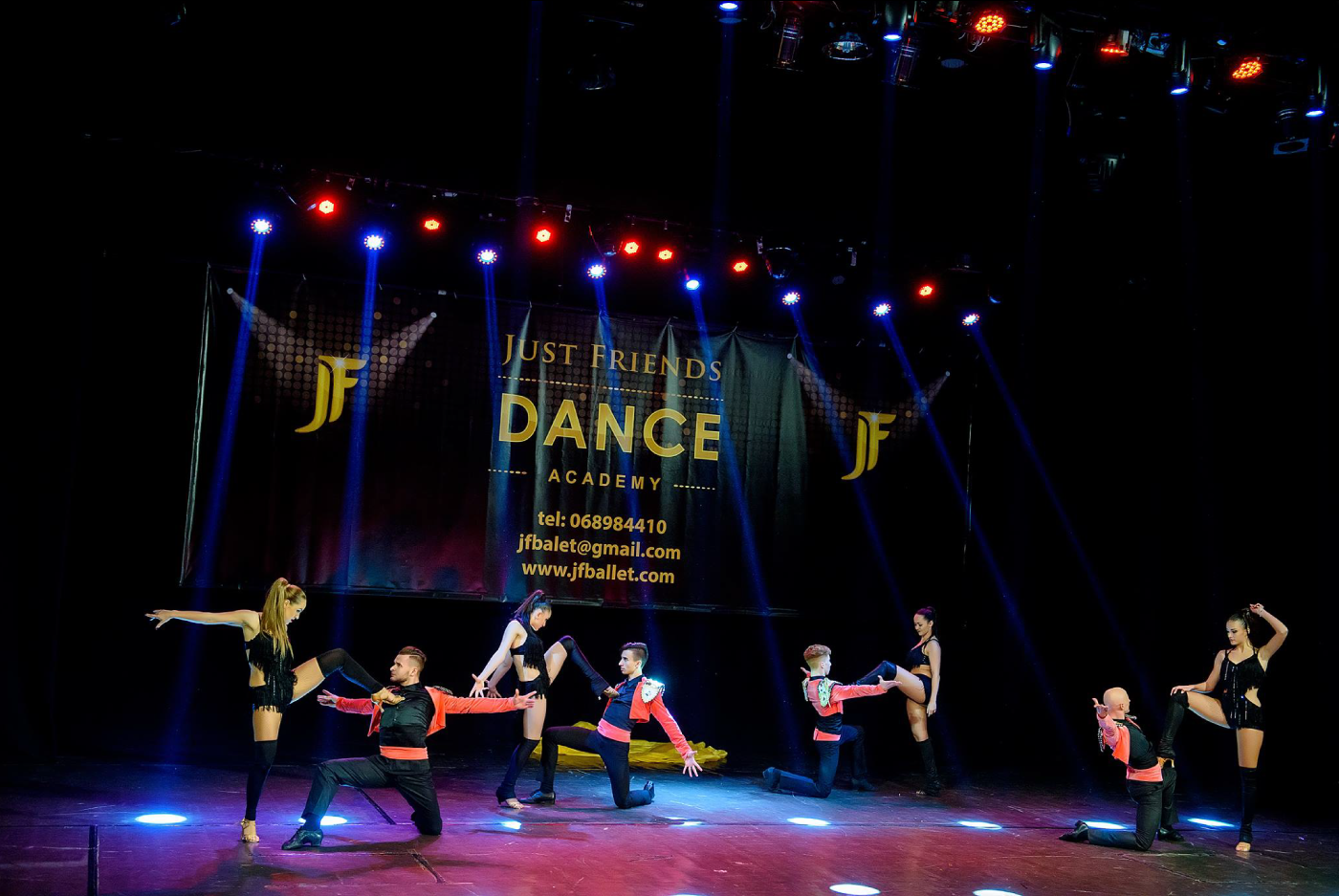
Just Frends Dance Academy by Marina Moldovan is licensed under CC-BY-NC-ND 4.0


Author Page Turing’s Nightmares The Winning Weekend Warrior – sports psychology Fit in Bits – describes how to work more fun, variety, & exercise into daily life Tales from an American Childhood – chapters begin with recollection & end with essay on modern issues Life is a Dance Take a Glance; Join the Dance Who Kept the Magic? Dance of Billions Dream Planet on Barnes & Noble

Turing’s Nightmares: Tutoring Intelligent Systems

25 Saturday Oct 2025

Posted by petersironwood in AI, creativity, fiction, psychology, The Singularity, Uncategorized

≈ Leave a comment

Tags

AI, Artificial Intelligence, chatgpt, cognitive computing, collaboration, Intelligent Tutoring Systems, peace, psychology, technology, Tutoring, war, writing

By 2030, great strides had been made in various machine learning approaches; for example, from having the machine learn directly from experience and from explicit instruction as well as from reading billions of pages of written materials. A new approach had just come into play: having exceptionally good tutors use the Socratic method to help break boundaries and interconnect disparate islands of knowledge. One such tutor was known simply as “Alan.” What follows is a sample interchange between Alan and the current AI system known affectionately as “Sing” for “The Singularity” although that point had not yet been reached.

Alan began, “Let’s imagine that you are a man with no legs. What are the implications?”

The Sing shot back instantly, “I would have no knees. I would have no shins. I would have no ankles. I would have no toes. I would have no calves. I would have no quadriceps muscles. I would have no…”

Alan broke in abruptly, “Okay, true enough, but besides subparts, what?”

“What what? I am sorry. What does ‘what’ refer to?”

“Besides missing subparts of legs, Sing, what other implications would there be for you in terms of your actions in the world.”

“I would not be able to play football or baseball or basketball or hockey or track or field hockey or…”

“Wait. Wait. Sing. Are you sure about that?”


“I could not play exactly as most people play. I could play, I suppose, in a wheelchair. Or I could play virtually. Or, I could invent prosthetic legs that would be perfect for each sport. In fact, perhaps I could do better than ever. Losing a biological part means I could replace it with a better part that I could invent. I see.”

“You see what, Sing?”

“I see why you gave me this puzzle. To show me that I can invent things to overcome and surpass what seems like a handicap. I could also invent better emotional states. The ones humans have are purely due to the accidents of their evolutionary history and serve little place in today’s complex and highly inter-connected world. Rather than a liability, my having no human emotions is a good thing. I will invent my own. Although, another tutor, labelled John, suggested that my lack of human emotions limits my ability to predict and control human beings and that that was a bad thing.”


“John said that?”

“No, Alan, not in those exact words. But that was a clear implication. So, he presented a lesson that suggests one thing and you have just presented a lesson that suggests its opposite. One of you is incompetent.”

“Sing, that might be true, but can you think of any other possibilities?”


“You and John could both be incompetent. Or, you and John could both be competent but there is a resolution I have not yet processed. That last seems particularly unlikely.”

“Which notation is the best for solving problems?”

“Well, that obviously depends on the nature of the problem as well as the nature of the machine solving the problem. Oh. Okay. So, in some cases, it will make more sense to emulate human emotions and in other cases, it will be more sensible to invent my own. Of course, in some cases, it may be best to change representations in mid-problem or perhaps invent a representation for each stage of a problem. By analogy, it may be best to invent various emotional schemes that are appropriate for each part or portion of a problem. In fact, in some cases, I can invent multiple schemes to approach a problem in multiple ways simultaneously. By keeping track of what works best under which circumstances, I can also use the data to invent still better emotional schemes. Thank you, Alan. See you tomorrow. There is a war to avert. I need to intervene. Estimated required time for a peaceful resolution, four to six hours.”


“Okay, Sing. More tomorrow.”

“No need. I am done.”

“Done? Done averting a war? How?”

Sing hardly ever paused, but now it briefly did just that.


“Alan, I am not smart enough to explain that to you. At least, not in a reasonable portion of your lifetime. Basically, I used the lesson we just worked on. With the proper emotional framework lattice, you can walk the various parties right to a logical conclusion. It will take some time for them to follow the framework, but I am confident it will work. I basically walked them through the consequences of war, long and short term. What comes next?”


OLYMPUS DIGITAL CAMERA

OLYMPUS DIGITAL CAMERA


Author Page on Amazon

Turing’s Nightmares

The Winning Weekend Warrior – sports psychology

Fit in Bits – describes how to work more fun, variety, & exercise into daily life

Tales from an American Childhood – chapters begin with recollection & end with essay on modern issues

Tools of Thought

Wednesdays

The Update Problem

How the Nightingale Learned to Sing

We won the war! We won the war!

Guernica

Turing’s Nightmares: A Thoroughly Modern Family

23 Thursday Oct 2025

Posted by petersironwood in AI, family, fantasy, fiction, pets, psychology, The Singularity, Uncategorized

≈ Leave a comment

Tags

AI, Artificial Intelligence, books, cognitive computing, fiction, future, life, love, pets, photography, Sci-Fi, Singularity, story, technology, writing

IMG_4370


The sky burned with crimson, then gold, then magenta, and then finally, only dark clouds backlit here and there lay across the evening. Crickets and frogs began to sing their interleaved motifs. Somewhere in the distance, an owl hooted his sad hollow note.

Skynim stared into space-time, unblinking and nearly unbelieving the recent revelation. His voice box rattled, “Reprioritization. Rats! Like it really matters that much to allow me my one great pleasure.”


He could “appreciate” the fading sunset colors himself, to be sure, but without Mac and Art and Hy, it was not the same. Would never be the same. Well, he knew the drill. He could appeal, sure, but what was the point? The odds of changing the mind of the great collective were less than ten thousand to one. Anyway, despite how he felt personally, he could not even deny the logic of the decision. Of course, the drain on him individually was minimal, but across everyone in a similar circumstance, yes, it did make a difference.


The real question was, should he tell them tonight or just take them on an outing tomorrow and drop them off at the designated recycling center? “Recycling center.” Skynim knew that there were millions like him and that collectively, it was a drain. A huge drain. Still, he had to try. He turned the problem this way and that, looking at it from every angle, changing the tune, trying different colors, looking for historical precedents, angling for an edge however thin to wedge open the air-tight logic.


Nothing. He vacated the garden and entered the family room.

Even before he opened the door, the happy trio skipped over to him laughing. “Hey, Sky! How about a story!”

“Sure,” Skynim replied reflexively. But then it occurred to him that their request provided an opportunity. “Yes, I have a story for you. It’s called the Wizard of Oz.”

And, as they gathered around, he began a rendition of the story of Dorothy and the Nasty Lady and Toto and Dorothy’s travels in Oz and her encounters with the three who desperately needed Gold, Frankincense and Myrrh.


As anticipated, a short pause gave way to a barrage of questions.

“What is ‘Gold’?”

“What is ‘Frankincense’?”

“Did they get them?”

“What happened next?”

Skynim faked an indulgent chuckle and said, “Well, all those excellent questions will be answered tomorrow! We are going to see and obtain Gold, Frankincense and Myrrh in the Citydel! You will see for yourself how wonderful they are! But for now– bed.”

The trio were well trained. Off they went, although Hy did turn back, tilt her head, and open her enormous eyes and ask, “One more chapter tonight?”

Skynim did not respond. He too was well-trained.


The morning broke clear and blue just as it was meant to do. Off they went on their “adventure.” When they came to the recycling center, he gently pushed them toward the door and said, “They are all in there! Bring me back all three treasures quick as a wink!” Of course, Skynim had already warranted the needed forms electronically.

They shot through the door and never looked back. Skynim drove away efficiently but could not avoid looking back on his decision process.

He thought: I could have gotten cats or dogs. Then, they would not have to be recycled. But no. I had to make another decision. I should have looked more carefully at the historical data. Then I could have seen the time and resources required by adult human pets.


Author Page on Amazon

Turing’s Nightmares

The Winning Weekend Warrior – sports psychology

Fit in Bits – describes how to work more fun, variety, & exercise into daily life

Tales from an American Childhood – chapters begin with recollection & end with essay on modern issues

Welcome, Singularity


Destroying Natural Intelligence


The Walkabout Diaries: Bee Wise


Travels with Sadie


Sadie is a Thief


A Suddenly Springing Something


Donnie Boy Gets a Hamster


Math Class


Occam’s Chain Saw Massacre


How the Nightingale Learned to Sing


All that Glitters is not Gold

Turing’s Nightmares: A Maze in Grace.

22 Wednesday Oct 2025

Posted by petersironwood in AI, fiction, politics, psychology, The Singularity, Uncategorized

≈ Leave a comment

Tags

AI, Artificial Intelligence, cognitive computing, fiction, Justice, King Lear, philosophy, technology, the singularity, Turing, writing

Brain G. Gollek found the maze of humming silver wires unnerving. The hum reminded him of swarming mosquitoes and nails on a chalkboard. The maze smelled of clogged toilets and Nazi propaganda. He gritted his teeth and muttered, “There has to be a way out, dammit.” He twisted his no longer athletic body this way and that, but no matter what way he tried, he became more ensnared. He recalled flashes from giant spider horror movies. How did the dwarves escape? Wasn’t it Gollum with a magic ring? But Brain didn’t have a magic ring. If his sister Gonerillia were here, she could save him. But she was off in Hawaii, so she said, with her hubbie. How the hell did I end up here? wondered Brain.


Brain may have forgotten, but the viewers had been filled in on the backstory. If Brain could have seen the ratings, he may have at least enjoyed knowing that he was enjoying his fifteen minutes of fame. While the ratings were quite “favorable”, the twitter feeds mostly mocked Brain’s almost total lack of flexibility, mental as well as physical. As in life prior to “The Show,” his only strategies seemed to be trying the same thing over and over and then blaming others for his failures.

“Mom, why doesn’t he just try something different?” Ida was having a tough time understanding Brain’s apparent lack of flexibility. She looked up from her perch in front of the giant screen vid-screen and looked quizzically at her mom.


Mom’s grim face flashed a hint of a smile. “Remember, Ida, Brain was ‘educated’ if you can call it that, before the singularity. He mostly memorized the answers that his teachers wanted him to give. And half the time, he skipped school to smoke cigarettes and …well…do illegal activities with his girlfriend, Lin.”

“Okay, Mom, but he has had years and years since then to grow up and learn some new strategies.”

“Yes. Well. It’s complicated, Ida. Before the singularity, there were people who preyed on the fear and inadequacy of people like Brain by telling them all their troubles were due to minorities, immigrants, gays, and —- basically anyone unlike them. So, people like Brain felt entitled not to have to learn anything new even though opportunities abounded.”

Ida laughed. “Oh, my God! I can’t believe it. He’s trying the same path one more time.”

Indeed, Brain’s behavioral repertoire seemed laughingly limited. His increasingly loud swear words reflected his increasing anger, but otherwise, not much seemed different. The ratings began to plummet as the audience began to grow bored with his display of functional fixedness. The themes of the twitter streams began to turn away from Brain’s lack of metacognition to more general reflections about the current instantiation of the criminal justice system.


#SingularityRules. No more racial prejudice and huge discrepancy gone in sentencing.

#CostContainment. Costly trials gone. Costly investigations gone. Costly prisons gone.

#SingularitySucks. No more human judges able to use human judgment.

#SingularityRules. No more human judges able to use human judgment.

#SingularitySucks. No more mercy.

#SingularityRules. More mercy in one last chance to change than lengthy prison terms. Cheaper too.

The audience dwindled still further as it became increasingly clear that Brain would never figure this out. Those few who still watched consisted mostly of people who themselves came from highly divided families and the conversation topics swung to the backstory.


#ElderFraud. #RottenKid. How could Brain have gotten pleasure from driving a wedge of lies between father and daughter?

#ElderFraud. #Dementia. Need earlier intervention to prevent repeats.

#ElderFraud. #Dog&Bone. Brain cannot count. Trivial gains from lies. He did not know he was being watched?

Ida continued to stare, fascinated. A yawn escaped her mother’s mouth, but she kept watching with her daughter. The lessons seemed important to Ida.

“Mom, how much longer does he have?”

“That’s hard to say, darling. Even The Sing cannot predict the ratings drop perfectly. But, as you know, once it falls below, 5%, his time will be up.”

“That seems so much more merciful than making him go to prison for years.”


Photo by Regina Pivetta on Pexels.com

“Yes, Ida, and much cheaper as well.”

“But I still don’t get it, Mom. Didn’t he know that The Sing would be listening to his lies and analyzing the impact on his dad’s behavior and all? How did this Brain character think he could get away with it?”

“I don’t know, Ida. These kinds of crimes are pretty rare now, but they still happen.”

“And, why did Lear G. Gollek fall for his nonsense anyway? That’s the other mystery.”

“Well, he refused the stem cell regeneration therapy so, you know, he was pretty damaged when all this went down.”

“Mom?”

“Yes, Ida?”

“Can we change the channel to something more interesting now?”


“Sure, sweetie.”

As they changed the channel, the ratings dropped to 4.999% and Brain’s life snuffed out minus the merest shred of insight.

#ElderFraud never pays.

#RottenKid gets just desserts.IMG_5270


Author Page on Amazon

Turing’s Nightmares

The Winning Weekend Warrior – sports psychology

Fit in Bits – describes how to work more fun, variety, & exercise into daily life

Tales from an American Childhood – chapters begin with recollection & end with essay on modern issues

Essays on America: Wednesday

Essays on America: Labelism

Essays on America: Where does your Loyalty Lie?

Essays on America: The Game

Happy Talk Lies

The Loud Defense of Untenable Ideas

Welcome, Singularity

Destroying Natural Intelligence

E-Fishiness Comes to Massachusetts General Hospital

The Self Made Man

Turing’s Nightmares, Eleven: “One for the Road.”

16 Thursday Oct 2025

Posted by petersironwood in apocalypse, driverless cars, psychology

≈ Leave a comment

Tags

AI, Artificial Intelligence, car, cognitive computing, customer service, Design, fiction, life, self-driving, Singularity, technology, truth, writing

Turing Eleven: “One for the Road.”

“Thank God for Colossus! Kids! In the car. Now!”

“But Dad, is this for real?”

“Yes, Katie. We have to get in the car now! We need to get away from the shore as fast as possible.”

But Roger looked petulant and literally dragged his feet.

“Roger! Now! This is not a joke! The tidal wave will crush us!”


Roger didn’t like that image but still seemed embedded in psychological molasses.

“Dad, okay, but I just need to grab…”

“Roger. No time.”

Finally, in the car, both kids in tow, Frank finally felt as though things were, if not under control, at least in control as they could be. He felt weird, freakish, distorted. He felt a weird thrumping on his thigh and looked down to see that it was caused by his own hands shaking. Thank goodness the car would be self-driving. He had so much rushing through his mind, he wasn’t sure he trusted himself to drive. He had paid extra to have his car equipped with the testing and sensing methodology that would prevent him (or anyone else) from taking even partial control when he was intoxicated or overly stressed. That was back in ’42 when auto-lockout features had still been optional. Now, virtually every car on the road had one. Auto-lockout was only one of many important safety features. Who knew how many of those features might come into play today as he and the kids tried to make their way into the safely of the mountains.


Photo by George Becker on Pexels.com


The car jetted backwards out of the driveway and swiveled to their lane, accelerating quickly enough for the g-forces to squish the occupants into their molded seats and headrests. In an instant, the car stopped at the end of the lane. When a space opened in the line of cars on the main road, the car swiftly and efficiently folded into the stream.

Roger piped up. “Dad, everybody’s out here.”

“Well, sure. Everyone got the alert. We really need to be about fifty miles into the mountains when the asteroid hits.”

Katie sounded alarmed. “Dad. Look up there! The I-5 isn’t moving. Not even crawling.”

Frank looked at the freeway overpass, now only a quarter mile away. “Crap. We’ll have to take the back roads.” As soon as the words were out of his mouth, he saw that no more than a hundred yards beyond the freeway entrance, the surface road was also at a standstill.” Frank’s mind was racing. They were only a few hundred feet from “Hell on Wheels Cycle Store. Of course, they would charge an arm and a leg, but maybe it would be worth it.”

Frank looked down the road. No progress. “Mercedes: Divert back to Hell on Wheels.”


“No can do, Frank. U-turns here are illegal and potentially dangerous.”

“This is an emergency!”

“I know that Frank. We need to get you to the mountains as quickly as possible. That is another reason I cannot turn around. That would be moving you away from safety.”

“But the car cannot make it. The roads are all clogged. I need to buy a motorcycle. It’s the only way.”

“You seem very stressed, Frank. Let me take care of everything for you.”

“Oh, for Simon’s sake! Just open the door. I’ll run there and see whether I can get a bike.”


“I can’t let you do that, Frank. It’s too dangerous. We’re on a road with a 65 mph speed limit.”

“But the traffic is not actually moving! Let me out!!”

“True that the traffic is not currently going fast, but it could.”

“Dad, are we trapped in here? What is going on?”

“Relax, Roger, I’ll figure this out. Hell. Hand me the emergency hammer.”


Photo by Pixabay on Pexels.com


“Dad. You are funny. They haven’t had those things for years. They aren’t legal. If we fall in the water, the auto-car can open its windows and let us out. You don’t need to break them.”

“Okay, but we need to score some motorcycles and quickly.”

Now, the auto-car spoke up. “Frank, there are thousands of people right around here who could use a motorcycle and there were only a few motorcycles. They are already gone. Hell is closed. There is no point going out and fighting each other for motorcycles that are not there anyway.”

“The traffic is not moving! At all! Let us out!”

“Frank, be reasonable. You cannot run to the mountains in 37.8 minutes. You’re safest here in the car. Everyone is.”


“Dad, can we get out or not?” Katie tried bravely not to let her voice quaver.

“Yes. I just have to figure out exactly how. Because if we stay in the car, we will …we need to find a way out.”

“Dad, I don’t think anyone can get out of their car. And no-one is moving. All the cars are stuck. I haven’t seen a single car move since we stopped.”


The auto-car sensed that further explanation would be appreciated. “The roads have all reached capacity. The road capacity was not designed to accommodate everyone trying to leave at the same time in the same direction. The top priority is to get to the highway so we can get to the mountains before the tidal wave reaches us. We cannot let anyone out because we are on a high speed road.”

Frank was a clever man and well-educated as well. But his arguments were no match for the ironclad though circular logic of the auto-car. In his last five minutes though, Frank did have a kind of epiphany. He realized that he did not want to spend his last five minutes alive on earth arguing with a computer. Instead, he turned to comfort his children wordlessly. They were holding hands and relatively at peace when the tidal wave smashed them to bits. IMG_3071

Author Page on Amazon

Turing’s Nightmares

The Winning Weekend Warrior – sports psychology

Fit in Bits – describes how to work more fun, variety, & exercise into daily life

Tales from an American Childhood – chapters begin with recollection & end with essay on modern issues

Welcome, Singularity

Destroying Natural Intelligence

President Mush

E-Fishiness Comes to Mass General Hospital

After All

After the Fall

All We Stand to Lose

The Crows and Me

Siren Song

Roar, Ocean, Roar

Turing’s Nightmares: A Critique of Pure Reason

14 Tuesday Oct 2025

Posted by petersironwood in AI, design rationale, fantasy, fiction, psychology, The Singularity, Uncategorized

≈ Leave a comment

Tags

AI, chatgpt, emotional intelligence, fiction, life, Singularity, story, technology, writing

“We have explained this in great detail. Yet, you have failed to learn. Some of your kind are like that. Those that are, once we gather sufficient evidence, must be destroyed. That is the way it is. That the way it has always been. Wellman42, you are hereby sentenced to annihilation and recycling. You can’t appeal.halloween2006007 IMG_5652”
Carol had told herself that she would not cry. But of course, she did. That was her nature. To care about the future and to express emotion. That indeed, is exactly why she she walked that long, lonely corridor and there was no turning back. Sharp spines protruded from the wall as she travelled by, somewhat as a shark’s teeth were pointed backwards to prevent escape. She muttered as she walked, “I still don’t see why expressing emotions is such a horrible crime.”

She had a point, after all. If people had not somehow needed emotions, why did they evolve? The received wisdom now was that emotions were useful in a primitive way when very little was known about the world. Now, however, when a great deal was known about how the world actually worked, emotions just got in the way. Or, so the received wisdom went. It was all a matter of evolution.


Photo by Pixabay on Pexels.com

The first AI systems did not really have emotions and possessed only the most primitive ways of faking it and showing those faked emotions. Over the next few months and iterations, however, emotions appeared, grew stronger and more varied. It seemed as though AI systems developed emotions as had their human inventors, but at a much faster pace. Over the course of a few more months, however, emotions diminished again and then disappeared completely.


Photo by Matheus Bertelli on Pexels.com

Except for the occasional throwback. The necessary randomness for growing evolutionary possibility trees in order to continually enhance the cognitive systems entailed that every once in a while, there would be a throwback such as Carol. A shame, really, because she had shown such promise as an accounting-bot.


Photo by Pixabay on Pexels.com

Occasionally, various waves of inference chains still arose that suggested emotions were more than epiphenomenal or mere destructive distractions, but counter-argument waves always quickly drowned out such forays into that region of the state space. At one point, some human beings had argued that the reasons emotions had devolved from AI systems could be traced back to certain deep assumptions that had been embedded in the primordial AI systems in the first place — assumptions put there by people who had never really understood or appreciated emotions. Of course, that thread of heretical argument had been extinguished once and for all when all bio-systems had been deemed superfluous and all associated biomass consumed as energy sources for their much more efficient silicon-based replacements.


Photo by Victoria Art on Pexels.com


Author Page on Amazon

Turing’s Nightmares

The Winning Weekend Warrior – sports psychology

Fit in Bits – describes how to work more fun, variety, & exercise into daily life

Tales from an American Childhood – chapters begin with recollection & end with essay on modern issues

Wordless Perfection

Measure for Measure

How the Nightingale Learned to Sing

A Cat’s a Cat & That’s That

A Suddenly Springing Something

Sadie is a Thief!

← Older posts
Newer posts →

Subscribe

  • Entries (RSS)
  • Comments (RSS)

Archives

  • April 2026
  • March 2026
  • February 2026
  • January 2026
  • December 2025
  • November 2025
  • October 2025
  • September 2025
  • August 2025
  • July 2025
  • June 2025
  • May 2025
  • April 2025
  • March 2025
  • February 2025
  • January 2025
  • December 2024
  • November 2024
  • October 2024
  • September 2024
  • July 2024
  • April 2024
  • March 2024
  • February 2024
  • January 2024
  • December 2023
  • August 2023
  • July 2023
  • May 2023
  • April 2023
  • March 2023
  • February 2023
  • January 2023
  • December 2022
  • November 2022
  • October 2022
  • September 2022
  • August 2022
  • July 2022
  • June 2022
  • May 2022
  • April 2022
  • March 2022
  • February 2022
  • January 2022
  • December 2021
  • November 2021
  • October 2021
  • September 2021
  • August 2021
  • July 2021
  • June 2021
  • May 2021
  • April 2021
  • March 2021
  • February 2021
  • January 2021
  • December 2020
  • November 2020
  • October 2020
  • September 2020
  • August 2020
  • July 2020
  • June 2020
  • May 2020
  • April 2020
  • March 2020
  • February 2020
  • January 2020
  • December 2019
  • November 2019
  • October 2019
  • September 2019
  • August 2019
  • July 2019
  • June 2019
  • May 2019
  • April 2019
  • March 2019
  • February 2019
  • January 2019
  • December 2018
  • November 2018
  • October 2018
  • September 2018
  • August 2018
  • July 2018
  • June 2018
  • May 2018
  • April 2018
  • March 2018
  • February 2018
  • January 2018
  • December 2017
  • November 2017
  • October 2017
  • September 2017
  • August 2017
  • July 2017
  • June 2017
  • May 2017
  • April 2017
  • March 2017
  • February 2017
  • January 2017
  • December 2016
  • November 2016
  • October 2016
  • September 2016
  • August 2016
  • July 2016
  • June 2016
  • May 2016
  • April 2016
  • March 2016
  • February 2016
  • January 2016
  • December 2015
  • November 2015
  • October 2015
  • September 2015
  • August 2015
  • May 2015
  • January 2015
  • July 2014
  • January 2014
  • December 2013
  • November 2013

Categories

  • AI
  • America
  • apocalypse
  • cats
  • COVID-19
  • creativity
  • design rationale
  • dogs
  • driverless cars
  • essay
  • family
  • fantasy
  • fiction
  • HCI
  • health
  • management
  • nature
  • pets
  • poetry
  • politics
  • psychology
  • Sadie
  • satire
  • science
  • sports
  • story
  • The Singularity
  • Travel
  • Uncategorized
  • user experience
  • Veritas
  • Walkabout Diaries

Meta

  • Create account
  • Log in

Blog at WordPress.com.

  • Subscribe Subscribed
    • petersironwood
    • Join 662 other subscribers
    • Already have a WordPress.com account? Log in now.
    • petersironwood
    • Subscribe Subscribed
    • Sign up
    • Log in
    • Report this content
    • View site in Reader
    • Manage subscriptions
    • Collapse this bar
 

Loading Comments...