• About PeterSIronwood

petersironwood

~ Finding, formulating and solving life's frustrations.

petersironwood

Tag Archives: thought

Tools of Thought: Problem Finding

03 Saturday Jan 2026

Posted by petersironwood in America, management, psychology, Uncategorized

≈ Leave a comment

Tags

AI, Business, creativity, Design, life, marketing, media, mental-health, problem finding, problem solving, research, thinking, thought, truth, writing

Problem Finding

IMG_5193

Today (18 December, 2018), I googled “problem solving” and it returned 287,000,000 results. In most of our school life as well as most people’s work life, we are given problems and asked to solve them. “Problem finding” only returned about 2.5 million or fewer than 1/100th as many hits. Solving problems can make processes more efficient and more effective. Solving problems can even save lives. We generally reward people both at school and at work for being good problem solvers. We seldom train people in problem finding. In fact, the reaction of many teachers and many managers when someone finds a problem is to dismiss it as being a non-problem. (FYI, Google now leads with an AI summary rather than links nor does it provide the number of “hits.”)

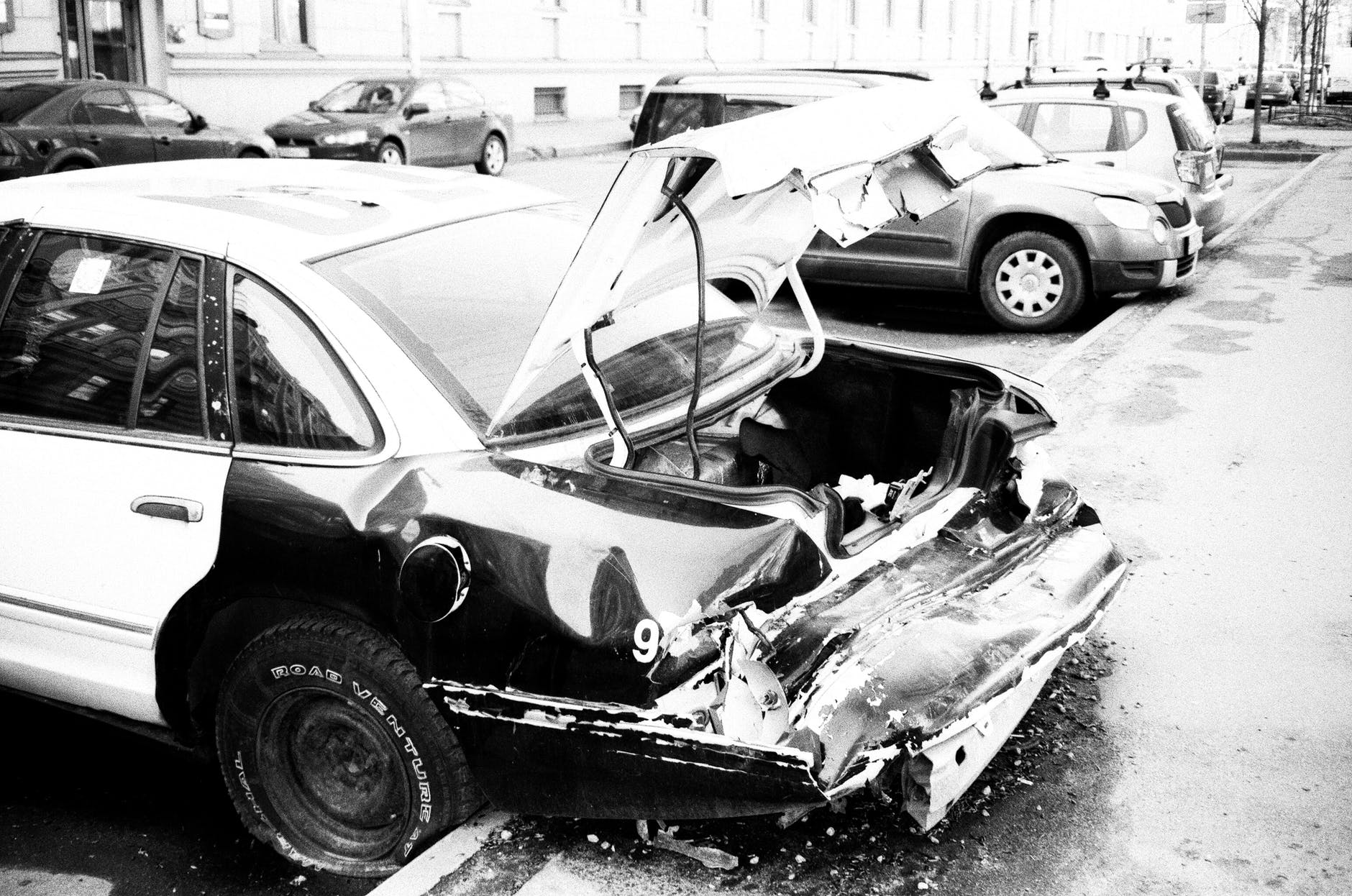
I can understand this sentiment; the emphasis on solving problems rather than finding them. As a teenager driving my dad’s car home from a date with my girlfriend, somebody beside me tried to make a right turn from the left lane and ran right into my dad’s blue Dodge. I heard what sounded like the voice of God say “NO!!” loud and clear. It was actually louder than the sound of crumpling metal. For a split second, I was in complete denial. Even some moments later, when we pulled over to assess the damage, to me, it looked minor enough to ignore and to just drive off. A more experienced guy from the corner gas station near where this happened said that while it may look minor, it would cost hundreds of dollars to fix and we therefore needed to trade information. I was stunned.

grayscale photo of wrecked car parked outside

Photo by Александр Неплохов on Pexels.com

In many cases, it is a human tendency to want to deny that a problem really exists. If you can get past that tendency however, and embrace problems and indeed, even learn to seek them out, you may be able to create tremendous value for yourself and for those around you. Problem solving can make your bookstore more profitable. Problem finding lets you invent Amazon. Problem solving lets you build a better internal combustion engine. Problem finding leads you to an electric vehicle.

What might you do to discover problems? First, you might take your own negative emotions as a jumping off place. If you find yourself angry, or anxious, or depressed, to the extent that you can trace back what is going on to the initiating event, you may be able to be consider whether that event is unique to you — or, more likely, that event is likely to trigger a negative reaction in many people. 

person holding white polaroid land camera

Photo by fotografierende on Pexels.com

If you found that waiting even 48 hours to have your photographs developed and printed — and you thought others might also be impatient to see the results–you might invent Polaroid instant photos. If you found cooking a casserole too time-consuming and messy for your taste, you might invent frozen dinners. If you drove a lot in hot, humid climates, you might be motivated to put air conditioning in cars. 

Of course, you do not have to limit yourself to your own misfortune. If you read about someone having a miserable time, you could dig a little deeper and ask yourself how a tragedy might have been prevented or how an accident could have been avoided. You can also look at a change that seems minor and ask yourself what will happen if this change becomes widespread. 

For example, if you read in the newspaper that a robot has been invented that harvests tomatoes, you might extrapolate to a more universal situation. What if all crops were harvested by machine? This might make groceries cheaper. But what else would it mean? Tomatoes are rather delicate, after all. You might wonder whether growers using a machine to harvest tomatoes would harvest them early to avoid them being mashed by the machine. You might wonder whether they would even genetically alter the tomatoes so that they were easier to harvest by machine (even if they were no longer as tasty). You might wonder what will happen to the tomato pickers. Politicians may tell you that they will all be retrained for higher paying jobs as machine inventors, machine programmers, and machine maintenance folks. But this makes no sense. If there were an equal number of IT jobs as there used to be tomato pickers but each of the new jobs came with a higher salary, why would the growers use robots? There will be fewer jobs after automation and in some cases, far fewer. 

close up of hands holding cherry tomatoes

Photo by rawpixel.com on Pexels.com

You might look at the global temperature trends and ask yourself what will happen if they continue. What will happen if global temperatures continue to rise? What can be done about it? Of course, once people start seriously mapping out the consequences, some people will react by saying, “Oh, it isn’t really happening!.” Why do they think that? Because it’s too scary to contemplate the truth; or too inconvenient to take the necessary actions. There are vested interests in old energy sources who will be happy to help you along in your fantasy of denial. In the short run, it’s often easier to imagine that problems do not exist, or are not that bad, or won’t get worse, or that there is just nothing to be done. 

Even most of the people who rail against what most of us think of as sensible gun regulation (requiring a license, showing ID, getting at least some training and testing the would-be gun owner’s knowledge, competency, and eyesight as we do with cars) don’t think that mass shootings of innocent children is a fine thing. They see it as a problem — just one that cannot be solved or one that can only be solved by adding cost and inconvenience to the potential victims. After such a tragedy, they may even send “thoughts and prayers.” 

black rifle

Photo by Specna Arms on Pexels.com

There is a possible “down side” to problem finding. The greedy may decide that they can make a lot of money by generating a solution to a problem that isn’t really a problem and making you believe it is a problem. My favorite, and so far made up, example is “Elbow Cream” for those unsightly skin wrinkles that appear on the back of your elbow when you straighten your arm. But that made up example is not too far off. You eat spicy food and it upsets your stomach? We can fix that! Of course, you could too by simply not eating overly spicy food! But nobody makes money that way. So they will sell you something that supposedly fixes the “problem.” While it might be fantasy to imagine “Elbow Cream” that will “fix” your “unsightly elbow wrinkles” it is not fantasy to imagine that people have been hoodwinked into spending money on “fixing” their faces and bodies. 

fullsizeoutput_11b5

Americans spent 16 billion dollars on cosmetic plastic surgery in 2017. There are 50 countries who each have a lower GDP than that. The beauty industry in the USA overall was supposedly around $445 billion in 2017. That’s more than the GDP of each of 151 countries! Both figures are also less than the federal government spends on reducing climate change. Or cancer research. 

Do you see that as a problem? I do. 

——————————————————

Author Page on Amazon. 

The Invisibility Cloak of Habit

Essays on America: The Game

One of the most enjoyable aspects of Science Fiction as a genre is that it often shows us problems that might occur in the future. In some cases, it suggests ways to prevent those problems and in some cases, it suggests how these future problems might be dealt with.

Turing’s Nightmares, for instance, comprises 23 short stories that explore the ethics and implications of AI. http://tinyurl.com/hz6dg2d

Dream Planet examines, among other things, the extrapolation of global warming and a radical attempt to stem it. https://www.barnesandnoble.com/w/dream-planet-david-thomas/1148566558

FaceGook

The Ides of February

A Day at the HR Department

Putin’s Favorite DOG-E

Silent Screams of Dead Men’s Dreams

Namble Mamble Jamble

May You Live in Interesting Times

Plastics!

The Last Gleam of Twilight

The “Not-See” Party

An Open Sore from Hell

Happy Talk Lies

Negative Space

02 Friday Jan 2026

Posted by petersironwood in creativity, management, psychology, sports, Uncategorized

≈ Leave a comment

Tags

AI, art, creativity, Design, HCI, illustration, music, negative space, painting, poetry, problem formulation, problem framing, sports, thinking, thought, UX, writing

Negative Space

When you look at a scene, it is natural to concentrate on the objects in the scene. So too, when one begins to design, it is natural to concentrate your attention on the things you intentionally put into the design whether those are menus, icons, images, banners, buttons and so on. You tend to give little thought to what is not there because, after all, there’s nothing there! 

IMG_9815

As your expertise grows, you will find it useful to spend some time and resources thinking about what is not there; the “negative space” if you will. In art, the “negative space” refers to the space around and between the objects. Often, paying attention to the “negative space” can result in a much more interesting and aesthetically pleasing composition. It is a concept that has applications far beyond artistic visual composition however. 

Consider music for a moment, or better yet, listen to some and you will note that the silence is just as important as are the notes. Increase or decrease the silence in a tune by a factor of two and it becomes a different, and in most cases much worse, tune. 

printed musical note page

Photo by Pixabay on Pexels.com

The same can be said of great acting whether on stage or in a movie. The silence while we wait for the actor’s response to some news — while they are saying nothing and possibly even showing nothing or very little on their face, can often be the most poignant and moving parts of the picture. If the actor reacts “too quickly” with no space, we can tell that the stimulus presented is something that they “trigger” on because they are upset about it or trying to deny it. The leading man, for instance, asks a seemingly innocent question on a first date, such as, “So, do you like French Cuis…” “NO!” she cuts in. The audience’s attention is immediately drawn to see what comes next. The response that is too fast indicates a “sore spot.” Did the leading lady want to become a French chef? Did she just end a love affair with a Frenchman? What is going on here? 

IMG_6022

On the other hand, imagine the leading man, says, “So, do you like French Cuisine?” One beat, two beats go by. No answer. A long pause. The leading lady’s face shows nothing. Perhaps she tightens her lips ever so slightly or frowns to the slightest possible extent. The pause continues. The leading man tilts his head as though to ask whether she’s okay. Finally, we come to expect a tirade about the French or French Cuisine or French wine or … something. Instead, after this long pause, the leading lady says nothing but punctuates her silence with something that sounds like a cross between a humorless laugh and a karate grunt. There are probably no words she could have said which would have intrigued us more than the non-response. We think, “What the hell is going on with her and French Cuisine?”  

IMG_9504

Speaking of French Cuisine, when you go to a fine restaurant, your focus is on the food. So too is the focus on the chef and the server. But the space is important as well. It is annoying when you are paying good money to have a nice dining experience and you are shown to your table, given menus and then ignored for the next twenty-five minutes. On the other hand, it is equally annoying when your server comes back every 30 seconds and asks, “Are you ready to order yet or do you need more time?” The optimal time to wait between courses is not always obvious either. Some people need or want much more time between courses. Maybe this nice dinner is all they have planned for the evening. The patrons are having a nice quiet dinner with good conversation. They are in no hurry. Just as one of the diners launches into a complex story or joke, the server comes over and interrupts to tell about the specials. Conversely, another foursome may be planning on attending a play and long pauses between courses may mean missing the first act. 

The negative space in dining is not just about the timing of events. It is also about the spatial arrangement of the food, the spacing between textures and colors. Often, the artistic arrangement is as much about the negative space as the objects on the plate. 

Sometimes, the food itself has positive and negative elements. In a meal with varied and complex and contrasting tastes, for instance, the rice or the bread can provide a kind of “negative space” between the tastier and more salient constituents. These neutral or negative elements allow more contrast among the salient elements than if the more salient elements were enjoyed right after each other. I’m reminded of a line from Kahil Gibran’s The Prophet:

“Let there be spaces in your togetherness.”

Negative space is important in architecture, painting, typography, cinematography, the design of user interfaces, culinary arts, music, and the design of other stimuli. It is also important in activity.

IMG_2769


One of the first popular video games was called “Asteroids.” In this black and white vector graphics game, you controlled a small space ship that shut bullets in the direction the space ship was aimed. All you could control was the speed and direction of the space ship and whether it was shooting. The screen also showed a number of large, irregular “asteroids” that you were meant to hit. When you hit one of these large asteroids with a bullet, it split into two moderate asteroids. When you hit a moderately sized asteroid with a bullet, it split into two small asteroids. When you hit a small asteroid with a bullet, it disappeared. If you got hit by an asteroid, you would die. There was also a flying saucer who came to hassle you. Anyway, I found that if I focused on all these floating asteroids and trying to not to get hit by one, it was a difficult game. For me, at least, it was much better to visualize a path among the asteroids and try to follow that path. In a way, concentrating on the negative space, helped. 

action athletes ball blur

Photo by Pixabay on Pexels.com

The importance of negative space in sports can hardly be over-emphasized. In American football, the back tries to find the holes to run through. In soccer, players seek paths between. In baseball, the hitter wants to “hit it where they ain’t.” In tennis, beginners often play only during half a point. Their attention is focused on the ball and the opposing player(s). They choose a target on the other side of the court and watch to see how well they hit that target. Just as their opponent begins to hit the ball they shift their attention to their opponent and watch where that opponent hits the ball, scurrying there as quickly as possible so as to hit the next shot. What does such a player do between the time they hit the ball and their opponent hits the ball? They watch! They want to see where the next ball goes. If you are young and fast and your opponent is not well skilled, you can often get away with this process. However, what higher level players do is something quite different though it may look similar. The good player has a target in mind but watches the ball while their mind has the target clearly in mind. By watching the ball, they are much less likely to mis-hit the ball. Furthermore, they are not giving away their intended target with their body language. Perhaps most importantly, long before their opponent hits a return shot, the good player thinks about the open spaces on their side of the court and go to cover the most likely of those spaces. 

Many otherwise well-skilled athletes only focus on the game during play. For example, many hitters on amateur softball teams, pay little or no attention to the game while their team is batting until they are “on deck” (almost ready for a turn at bat). This is absurd in the majors, but it’s even more absurd in amateur games. You should be taking this time to learn about the opposing pitcher and about the weaknesses in the opponent team’s fielders. Just because you’re not in the batter’s box doesn’t mean you can’t improve your play. Similarly, in tennis, you can use the time between points to think about tactics and strategy, as well as to mentally “reset” yourself if necessary. Some players wave their hands in front of their face after a point as a reminder/trigger to forget about what just happened and focus on the next point. Some will even turn away from the play, seemingly to talk with their “imaginary friend.” 

To close, a very short, short story based on true events in my first trip to Japan. 

tokyo tower behind black and white dojo building during daytime

Photo by Pixabay on Pexels.com

The Touch of One Hand Clasping

Japan, Tokyo, 1977. I walk crowded streets and beautiful gardens where care is taken for spaces as well as things that grow. I struggle — try to speak Japanese language but usually mispronounce “Key-Ray-Ee-Des” (It is beautiful) as “Key-Rah-Ee-Des” (It is dirty). I tip-toe through minefields of culture steeped in subtlety; lose huge chunks of flesh and karma with my thunderous, blunderous New York strides.

Shin-Ju-Ku: lights dim Times Square into grandmother’s fruit cellar. Row on countless row of Japanese stare hypnotized at small vertical pin-ball game called Pah-Chinn-Koe. This bright hustle bustle hassle hides deeper subtlety, deeper calm, inside, beneath, where foreign eyes can peer not.

I enter Tokyo subway. Then — she enters — total stranger, totally beautiful, black hair, endless eyes. I, of course, having learned small little in my many minefield walks, look everywhere but at her. Better, she looks everywhere but at me. We ride, totally not looking at each other. She stands in middle — nowhere to hold on to — unprotected, beautiful, vulnerable.

Suddenly, train lurches. Simultaneously: she shoots hand out to only spot I can possibly reach while I shoot hand out to only spot she can reach. Our hands clasp strongly for instant and I save her from fall. 

Slowly, we release.

Next stop, she rushes out. But — just before the doors bang shut, she turns — looks straight into my eyes. “Kohn-bahn-wah” she says (“Good Evening”).

Thus, Japanese beauty touches beyond body into very soul of clumsy Westerner.

———————————-

woman holding pink petaled flower

Photo by Đàm Tướng Quân on Pexels.com

Negative space….

———————————————-

Author Page on Amazon 

The Void

After All

It was in his Nature

Life is a Dance

Take a Glance; Join the Dance

Life Will Find a Way

At Least he’s Our Monster

What About the Butter Dish?

The Gods of Old

The Truth about Clouds and Gods

The Bubble People

Comes the Dawn

Is a Dream?

Good Morning!

Camelot is in your Heart

The Tree of Life

Tools of Thought: Metaphors We Live By & Die By

24 Wednesday Dec 2025

Posted by petersironwood in America, family, management, psychology, Uncategorized

≈ Leave a comment

Tags

analogy, Democracy, elections, Feedback, government, life, love, mental-health, metaphor, politics, problem solving, programming, sense-making, thinking, thought, writing

Metaphors We Live By and Die By

PicturesfromiPhone2 087

I love metaphors. I always have. I admit it. I think every youngster does, at least until they are exposed to poetry in English class. I was lucky to have an awesome English teacher who deepened rather than destroyed my natural love of metaphors. There are plenty in my own poems.  but in this post, I am not focusing on metaphors for poetry so much as metaphors that we use in our thinking. Metaphors impact the way we approach situations at work and at home. I was influenced to see this by two main sources. First, Lakoff & Johnson’s book, Metaphors we Live By  was first published in 1980. This book greatly influenced, among other things, our IBM Research team’s study of human-computer interaction. At this point in the history of human-computer interaction and user experience, researchers and practitioners began to explore how various metaphors (e.g.,desktop, trash can, windows, drag and drop) could be used to help users understand the capabilities of computers and how to invoke them. (See, e.g., Carroll, J. and Thomas, J.C. (1982). Metaphor and the cognitive representation of computer systems. IEEE Transactions on Man, Systems, and Cybernetics., SMC-12 (2), pp. 107-116). 

Consider the error messages “Illegal Syntax” and “User Error.” They both put the responsibility for an undesirable state of affairs squarely on the shoulders of the user. “Hey you! User! You did something dastardly! You used illegal syntax.”

man wearing jacket and peaked cap grayscale photo

Photo by Brett Sayles on Pexels.com

Generally, the term “illegal” implies that you did something that was against the law. It usually implies you did something unethical too. Gerry Weinberg, one of the pioneers of UX/HCI (a keynote speaker at the Gaithersburg Conference),  pointed out that the “legal” syntax of languages often has arbitrary restrictions. It might be more accurate to have an error message that says, “Our programmers were unable to take the time to allow dates to be entered in European or Chinese format. Please enter dates as MM/DD/YYYY as in 08/04/1961 for August 4th, 1961.” This longer message tells the user what was “wrong” with their input and how to correct it as well as conveying the very real truth that the limitation is with the software, not with the user. Similarly, what is called “User Error” actually comes up as a message when the user does something that seemed reasonable to the user and would most likely be interpretable by another human being but was not anticipated or could not be dealt with by the programming team. Suppose it said instead, “Software error. We did not anticipate this kind of input so we can’t deal with it.” Or, in many cases, a more honest message might be: “Software error. We knew people would want to do this, but we didn’t have budget to program properly.”  

silver and gold coins

Photo by Pixabay on Pexels.com

 At the same time I was thinking about metaphors and Human Factors in Computing Systems, I was also conducting therapy as a Fellow at the Institute for Rational Living. I was learning and supervising cognitive behavioral therapy under the direction of Albert Ellis. Here I observed how people used metaphors to help make sense of their lives and make decisions about their lives. For example, as pointed out by Lakoff & Johnson, people often viewed romantic love as a sickness! It is also common to view romantic love as a journey over which you have little or no control. It is understandable why it sometimes feels that way, but such a metaphor is not empowering. It does little to lead you to make reasonable decisions about love or about those whom you love. Think instead of love as a collaborative work of art. 

man standing beside his wife teaching their child how to ride bicycle

Photo by Agung Pandit Wiguna on Pexels.com

The “Love is a collaborative work of art” metaphor encourages you to realize that you must collaborate with your partner to make a relationship work over time. You can’t really collaborate very well unless you communicate. It also encourages you to realize that work is involved. It encourages you to realize that it is a creative endeavor. While you can certainly learn from the successes and mistakes of others, in the end, your relationship is unique. It will take creativity to make your relationship work. It puts the responsibility for the relationship on you and your partner, not on forces beyond your control. 

It isn’t only love about which people often use inappropriate metaphors. For example, when it comes to overcoming addiction, overeating, under-exercising, people often use sin as their over-arching metaphor. “I was bad last night. I had two pieces of pumpkin pie.” “I was horrible all week. I had those evil donuts every morning.” The metaphor that “eating is evil” is inaccurate. After all, you have to eat to live. Furthermore, that metaphor doesn’t lead to any solutions except to try harder to be “good.” Worse than that, if often subverts a person’s efforts. “I didn’t want to have any ice cream but I did. Oh, well, the night is blown. I may as well eat the whole quart.” (Now that I’ve sinned, I may as well enjoy it). Weight is best thought of in purely physical terms. If you ingest more calories than you burn you will gain weight. If you burn more calories than you consume, you will lose weight. That’s it! (That accounts for almost everything. Intaking more fiber and fluid can have an impact as well as doing *some* light exercise after eating, but it’s mainly just a physics issue). Making it about good and evil does not help and, in my experience, is completely counter-productive. 

donuts and bagel display

Photo by Igor Ovsyannykov on Pexels.com

Speaking of counter-productive metaphors, I have been annoyed and concerned for decades that the media have largely (though not wholly) reported on political matters as they report on sporting events. During election season, you will hear relatively little about the candidates, their positions, their backgrounds or their ethics. You will hear a lot about strategy and where they stand in the polls. Often you will literally hear nothing more than a sound bite per day about major candidates. Then, pundits will unendingly discuss and debate how this or that sound bite will work or not work with various voter groups. No matter how outrageous, unethical, or disgusting a candidate’s behavior is, the media will spend most of their coverage on how it will affect the “score.”

Metaphors have consequences. 

We now find ourselves in an extremely weird position, at least in America. One candidate has “won” the “World Series” of elections (American Presidency). Many of the people who voted for him think of themselves as his “fans” and “supporters.” They believe their guy “won” so they want to continue to support “their team.” After all, imagine that you are a Yankees fan and the Yankees won the World Series. You get to have bragging rights until the next World Series. If one of the Yankees turns out to be a tax evader, you’re still going to be a Yankees fan. If one of the Yankee pitchers turns out to have cheated during the games, say, by putting illegal substances on the baseball, you’ll still be a Yankees fan. Another Yankee might be a wife beater. But, hey, they won the World Series! So you’re still a loyal Yankees fan. 

man wearing new york yankees cap

Photo by Oleksandr Pidvalnyi on Pexels.com

Here’s the thing. It doesn’t make a whole lot of real difference in your life who won the World Series. It doesn’t matter materially to your kids. It doesn’t matter materially to your grandkids. Don’t get me wrong. It will make some difference in how you feel. You and your whole family might be happy they won. But it won’t make the air you breathe cleaner or dirtier. It won’t make the water you and your family drink pure or contaminated with carcinogenic toxins. It won’t make or break the economy. Having the Yankees or Boston Red Sox win the World Series will have zero impact on global climate change. Even if Chicago wins the World Series, it won’t start an atomic war. If the Phillies win, it won’t mean you will lose your health care. Stay loyal to those Yankees! Or to the Green Bay Packers. Or to Manchester United. Or to the India National Cricket Team. Or whoever your favorite team is. Why not? 

Politics though, regardless of how it is reported by the news media, is vastly and vitally different from a sporting event!  Who is in office can have a huge influence on what happens in the lives of people. In the case of an American President, who is in office can have a huge influence on the lives of people around the globe, not only today and tomorrow, but also for decades to come. 

white and grey voting day sign

Photo by Element5 Digital on Pexels.com

Collectively, those Americans who voted (about 137.5 million) in the last Presidential election hired someone for a job. (Actually, nearly 63 million voted to hire him while nearly 66 million voted to hire Hilary Clinton). POTUS is an important job and how that person does that job impacts your life in a very real way. It impacts the lives of your friends and your family. It impacts the lives of people around the world. Every action that person takes, every speech they give, every statement they tweet has an impact. You or I might send out a nasty tweet about people. But our nasty tweets are very unlikely to cause someone to construct and send pipe bombs to the people we tweeted about. We have hired someone to do a very important job. It isn’t a sporting event.

IMG_2349

Imagine instead of rooting for your favorite sports team that you hired a guy to take care of your kids. To you, that is certainly an important job. After you hire him, you discover that the person you hired lied to get the job. He lies to you every single day. He steals from you! Not only that. Every day, he trashes your house a little more. He has parties at your house and the people he invites include known criminals. Worst of all, this guy you hired is a child molester! That’s obviously a nightmare scenario. What makes it worse is that many people knew that the person you hired was a crook and a child molester. 

What do you do when there is a mountain of evidence that he is lying to you; stealing from you; trashing your house; consorting with known criminals; and is a child molester? 

IMG_9150
IMG_3123

Do you keep him on to watch your kids anyway out of a sense of loyalty? 

Do you feel so guilty about hiring him that you insist to all your friends and relatives that this guy is doing a great job? (Because, after all, that’s what he keeps saying). 

Do you keep him on until he is convicted in a court of law? 

Of course you don’t! You fire him immediately. 

You have the power to choose the metaphors you use. You don’t have to stick with a metaphor just because it was the first one to occur to you. 

Metaphors have consequences. Whether in your personal life, work life, or political life, choose your metaphors with care. Don’t latch on to one simply because it’s the one the mainstream media discovered rakes in the most ad revenue.

Since I first wrote this post about metaphors, there has been a COVID epidemic. According to the respected British medical journal, Lancet, the mishandling of the COVID epidemic in America cost at least 200,000 unnecessary deaths. Treating a pandemic as though it’s just a cosmetic problem that will “magically disappear” like a prom pimple turns out not to be very effective after all.

Elections are not sporting events. You are not simply a “fan.” If democracy and the rule of law in America are to survive, you must be an active participant. Cheering and jeering are not enough.

IMG_5126

Author Page on Amazon

Roar, Ocean, Roar

We Won the War! We Won the War!

Siren Song

The Ailing King of Agitate

After All

An Open Sore

All We Stand to Lose

At Least he’s Our Monster

Stoned Soup

The Tale of the Three Blind Mice

Travels with Sadie: Teamwork

The First Ring of Empathy

The Walkabout Diaries: Variety

Subscribe

  • Entries (RSS)
  • Comments (RSS)

Archives

  • January 2026
  • December 2025
  • November 2025
  • October 2025
  • September 2025
  • August 2025
  • July 2025
  • June 2025
  • May 2025
  • April 2025
  • March 2025
  • February 2025
  • January 2025
  • December 2024
  • November 2024
  • October 2024
  • September 2024
  • July 2024
  • April 2024
  • March 2024
  • February 2024
  • January 2024
  • December 2023
  • August 2023
  • July 2023
  • May 2023
  • April 2023
  • March 2023
  • February 2023
  • January 2023
  • December 2022
  • November 2022
  • October 2022
  • September 2022
  • August 2022
  • July 2022
  • June 2022
  • May 2022
  • April 2022
  • March 2022
  • February 2022
  • January 2022
  • December 2021
  • November 2021
  • October 2021
  • September 2021
  • August 2021
  • July 2021
  • June 2021
  • May 2021
  • April 2021
  • March 2021
  • February 2021
  • January 2021
  • December 2020
  • November 2020
  • October 2020
  • September 2020
  • August 2020
  • July 2020
  • June 2020
  • May 2020
  • April 2020
  • March 2020
  • February 2020
  • January 2020
  • December 2019
  • November 2019
  • October 2019
  • September 2019
  • August 2019
  • July 2019
  • June 2019
  • May 2019
  • April 2019
  • March 2019
  • February 2019
  • January 2019
  • December 2018
  • November 2018
  • October 2018
  • September 2018
  • August 2018
  • July 2018
  • June 2018
  • May 2018
  • April 2018
  • March 2018
  • February 2018
  • January 2018
  • December 2017
  • November 2017
  • October 2017
  • September 2017
  • August 2017
  • July 2017
  • June 2017
  • May 2017
  • April 2017
  • March 2017
  • February 2017
  • January 2017
  • December 2016
  • November 2016
  • October 2016
  • September 2016
  • August 2016
  • July 2016
  • June 2016
  • May 2016
  • April 2016
  • March 2016
  • February 2016
  • January 2016
  • December 2015
  • November 2015
  • October 2015
  • September 2015
  • August 2015
  • May 2015
  • January 2015
  • July 2014
  • January 2014
  • December 2013
  • November 2013

Categories

  • AI
  • America
  • apocalypse
  • cats
  • COVID-19
  • creativity
  • design rationale
  • driverless cars
  • essay
  • family
  • fantasy
  • fiction
  • HCI
  • health
  • management
  • nature
  • pets
  • poetry
  • politics
  • psychology
  • Sadie
  • satire
  • science
  • sports
  • story
  • The Singularity
  • Travel
  • Uncategorized
  • user experience
  • Veritas
  • Walkabout Diaries

Meta

  • Create account
  • Log in

Blog at WordPress.com.

  • Subscribe Subscribed
    • petersironwood
    • Join 662 other subscribers
    • Already have a WordPress.com account? Log in now.
    • petersironwood
    • Subscribe Subscribed
    • Sign up
    • Log in
    • Report this content
    • View site in Reader
    • Manage subscriptions
    • Collapse this bar
 

Loading Comments...