
Tags
fiction, leadership, learning, legends, myths, peace, politics, ROI, stories, strategy, tactics, trust, truth, Veritas, war, writing
Shadow Walker sighed and grimaced and ground his teeth. The more he considered the words of Cat Eyes, the angrier he made himself. Meanwhile, Jaccim drew back, afraid now that his “healer” was about to destroy him instead. The women drew back as well, feeling the escalation of tension.

Photo by Johannes Plenio on Pexels.com
Tu-Swift spoke next. “What is wrong, Shadow Walker? I think you are scaring our patient. And everyone, actually.”
Shadow Walker looked back over his shoulder at Tu-Swift. “Yes. I will talk no more of this right now, but I do want to learn more about — many things. But first, let me finish administering these cooling herbs.”
Jaccim soon abated his whimpering and seemed to sleep. A large part of Shadow Walker’s brain remained suspicious. He still wasn’t sure he believed the story of Cat Eyes, but if there were another branch of the Veritas, it would extremely desirable to make contact. He motioned everyone to draw away from the sleeping ROI. He gestured for them to sit in a small circle. They obeyed without question and it seemed to Shadow Walker that their immediate compliance wasn’t just because he was a man with a killing sword. It seemed as though these women … expected to obey. He chuckled as he thought about Many Paths or She Who Saves Many Lives “obeying” someone. Well, maybe he could work this to his advantage, he thought.
Shadow Path looked to Cat Eyes, “Do the other women also speak Veritas?”

Cat Eyes shook her head. “No, not really. We’ve all come from different places. We’ve taught each other a few words of each other’s language, but they won’t understand you if you speak that fast. If you ask me to, I can speak what you say in ROI. We all speak that. All of us were stolen at an early age for … well, as I said, as slaves.”
Shadow Walker shook his head. “I still don’t see. Why steal children? You have to feed them for years before they can do useful work.”
Cat Eyes stared at Shadow Walker for a long while. Her lip trembled and it seemed to Shadow Walker that she now looked through him to another place and another time. At last, she said, “’Early taken; easily shaken; slaves will see: it is their destiny’. That’s not a very good translation, but the ROI, and the Z-LOTZ as well, have such a saying. It means that you steal a child early and train them to be a slave and they won’t expect anything different. If you steal a grown man or woman, they will sabotage you when they can, possibly even murder you in your sleep. You have no such danger if you steal a child young enough.”
Shadow Walker glanced at Tu-Swift whose jaw had fallen open. At last, he spoke. “Can this be true? They steal children young just so they can … train them to be slaves with no spirit?”
OLYMPUS DIGITAL CAMERA
Cat Eyes nodded. “Yes, I’m afraid that is their reasoning. It does’t always work, by the way. Sometimes, even small children learn how to rebel in small ways. But the ROI and Z-LOTZ believe in the wisdom of stealing small children. In fact, it’s even one of the sayings in … well, in this gift I have. Please don’t ask me about how I obtained it, but I wanted to show it to you. I don’t quite understand it, but I think it’s important.” She pointed to a small bag nearby. “Can I show you?”
“This is not a weapon, I take it?” asked Shadow Walker.
Cat Eyes laughed a bit. “No, it’s not a weapon. At least, I don’t see how it can be such. But I do not totally understand it.” She strode off a few feet, rummaged through her bag, and brought out a smaller bag which she brought over the circle. From within the smaller bag, she took out a large skin with many markings on it. There were also two smaller skins, also with many markings. In addition to markings, there were several nicely made pictures of different animals. Several small stones also fell out.
Shadow Walker frowned. He glanced at the others. No-one seemed to understand. “What is this?”
Cat Eyes shook her head. “I don’t really know. But it is used by the children of the Z-LOTZ to learn ROI and by the ROI to learn Z-LOTZ. I have seen them use this and when they point at this mark, for example, they almost always say the same thing which is not a word but only a part of a word.”
Tu-Swift tilted his head to one side and looked at Cat Eyes. She did have rather intriguing green eyes. “Part of a word? What do you mean?”
Cat Eyes replied, “You know the creation myth, of course?”
Tu-Swift humpfed. “Of course!”
Cat Eyes nodded. “So, you recall the part about taking sounds from different animals. The ‘z’ from the bee and so on. The ‘z’ of the bee is what I mean by part of a word. It doesn’t mean anything till it’s put together with the sounds of other animals or things.”
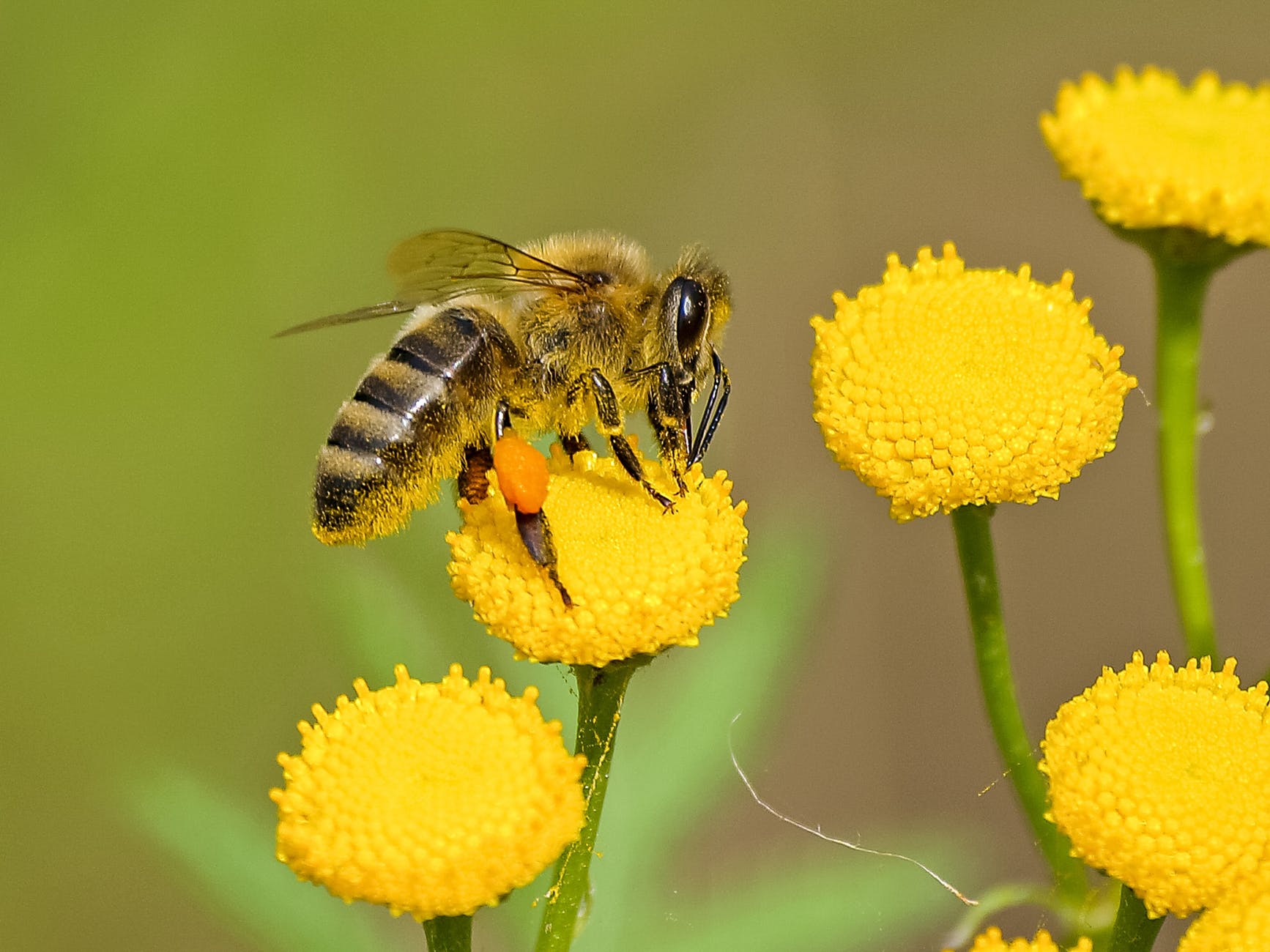
Photo by Pixabay on Pexels.com
Tu-Swift bent over the markings on the large skin and stared at them in more detail. “What on earth are these drawings of? They all look like firewood that’s been dropped at odd angles. What is this a picture of?” He pointed to one of the many marks.
“I really don’t know, Tu-Swift. I’m really sorry. I was a slave. My job…one of my jobs… was to watch the children of one of the priests of the Z-LOTZ. I watched them play and every so often my master would come in and watch as well. He seemed very pleased when his children would point to these markings and say parts of words. It was one of the most puzzling things I saw in the giant center place of the Z-LOTZ and that was indeed a place of many puzzling things.”
Shadow Walker then said, “Who are these Z-LOTZ and where are they? A giant center place? What do you mean by that?”
Cat Eyes had been trying to swat away the constant droning questions from her two female friends, but she could ignore them no longer. She quickly spoke in ROI, summarizing for them the conversation thus far. Then, she turned back to Shadow Walker.
“If our Center Place over Snow Mountain is an acorn, this village you burned down is a seedling. But the Center Place of the Z-LOTZ is a full-sized oak of the forest. I never saw all of it. There is a wall to keep all the slaves inside so we could not escape. It is not too far from here. Perhaps two or three day’s ride.”

Tu-Swift and Shadow Walker asked two different questions at the same time.
Tu-Swift: “Have you ridden a horse?”
Shadow Walker: “Why were you there?”
Cat Eyes looked at one and then the other. “Let me answer Tu-Swift’s question first as it is much easier. No. I never really controlled a horse. I have been tied onto a horse. It is not fun. As for…”
Tu-Swift cut in, “Me too! I agree! I was bruised.”
Cat Eyes nodded. “Yes. I don’t remember much about how I felt after they stole me. I mean, in terms of bruises. But I was older when the ROI took me to a Z-LOTZ priest for … well, that’s where I found this — which might be a game. I was there to watch smaller children and … learn other things.”
Shadow Walker could feel that Cat Eyes knew more but something about her time there was deeply troubling. “What can you tell us about the Z-LOTZ and the ROI?”
Cat Eyes responded, “They have an alliance but they are quite different people. As different from each other as they are from the Veritas — except that both are quite cruel people. I don’t recall a lot from the time before I was stolen, but I know we Veritas were kind people. And you seem kind. The ROI only care about doing everything quickly and making a lot of something. They mainly steal children for the Z-LOTZ. Some, like the three of us, have been used as slaves here as well, usually after…after a time with the Z-LOTZ. The Z-LOTZ — they have elaborate rituals and feasts. They have elaborate myths that everyone is required to repeat word for word. And everyone is supposed to believe them. So far as I can tell, the actual priests of the Z-LOTZ don’t really believe any of them. When my master had other priests and their wives over for feasts, they joked about how they used these myths to control the people. I think, in their view, it wasn’t just the stolen children who were slaves. Everyone was.”

Photo by Pixabay on Pexels.com
Tu-Swift listened to this with ever-widening eyes. He found Cat Eyes to be fascinating and believed every word that she uttered. Shadow Walker still had his doubts.
“If you were a slave, how did you come to find out so much?” asked Shadow Walker.
Cat Eyes frowned. She appeared to be taking this question seriously. At last she said, “I think I found out so much because they treated me as a slave. They didn’t actually think of me as a real person. As for the Z-LOTZ, I also don’t think they realized how much I understood their language. I had already learned a little of their language before I was sent there. The ROI don’t really talk all that much. They rely a lot on sign language — which is not that different from the Veritas. You were able to make yourself understood just now when you convinced them about the medicine.” She paused, and added, “I may be good at learning languages? I don’t know. But some of us — we did things — bad things, I guess. To get back at them. Some of the slaves though.” Here Cat Eyes paused, bit her lip, and a small tear appeared at the corner of her eye. “Some did not recall anything about their homes and they thought…they thought being a slave was just what they were supposed to do. But I remembered that not everyone is cruel. My people…our people were not cruel.”
As she had said all this in Veritas, the other two women began pelting her with questions in ROI so she turned to them and quickly explained that she was just telling what she knew about the ROI and the Z-LOTZ.
Then, Cat Eyes turned back and smiled at Tu-Swift. “I am glad you didn’t … I am glad you got rescued, even if you had to burn down our village to do it. When you appeared and I heard some words of Veritas, it gave me hope again.”

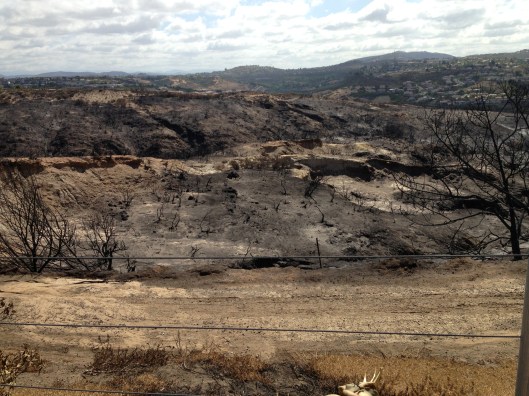
Shadow Walker shook his head. “I need to say one thing. We did not burn down this village. The ROI did that themselves! They meant to burn our small rescue party up with fire arrows. They shot them behind us into the dry grass and the wind blew the fire toward us and the fire nearly killed us all. I am still not sure whether or not all of the others in our party escaped. But we outran the fire, though we could not see very well as we ran and both Tu-Swift and I were injured. But the fire kept spreading into the forest and on to the village. We don’t use fire arrows. Only the ROI do that. As we know from the Legend of the Orange Man, fire, like hatred, is hard to control, once unleashed.”
Cat Eyes nodded. “I know. That is why…I am not proud of all the things I did against the Z-LOTZ and the ROI. I was only a child. There were so many of them. I could not fight them in the normal way. I used … other methods. Poisons for one. My mother was a medicine woman and I already knew things that she began to teach me when I was very young. I didn’t kill anyone. But I made many of them just slightly sick in some way. Just enough that they would not suspect poison. Sometimes, I would weaken their walls. And a few times, I put small holes in buckets so some grain would seep out as they carried it thus making a path for the rats to follow to their pantries. I put other irritants in their clothing. I taught some others to do the same. We had to be very careful. But they — we never showed our hatred outwardly. They thought of us…they didn’t really think of us as people and therefore not as enemies from within capable of doing damage. But damage — we did do damage. Anyway, what now? You said some of your party are yet unaccounted for?”
Shadow Walker found her story amazing, but he was still not convinced. He glanced at Tu-Swift and could see that he, at least, believed every word.
Shadow Walker said at last, “Thank you for sharing your story. I hope you don’t take this the wrong way, but Tu-Swift and I need to hold our own small council for a time. I need to go above and do a more thorough search to make sure there are no other ROI around.”
Cat Eyes looked him in the eyes. “Yes. I think most of the ROI escaped and were heading to the giant Center Place of the Z-LOTZ. We hid out here so we wouldn’t be given once again as slaves. I don’t think there are any left behind as guards. Is there anything up there left to guard? It seemed the entire village was about to be destroyed.”
Shadow Walker looked at her face which seemed so open and honest. “Indeed, there is not much left of your village. Nor have the horses returned. But I did meet one ROI on the way here. He tried to kill me — with this — (here he flicked the newly acquired sword) and I was very lucky to have escaped with my life. I have seen no sign of others — yet. One cannot be too careful. We will go and take a look. And, we need to decide on our next steps. We will guard you and search for food. We will talk again when the sun rises.” Shadow Walker stood, bowed, and began to back toward the stairs.

Photo by Denniz Futalan on Pexels.com
Cat Eyes bowed back to Shadow Walker and Tu-Swift. “I understand. You would be safer down here I should think. But you do not yet know me well enough to trust me.”
“I trust you!” said Tu-Swift.
Shadow Walker looked into Cat Eyes. “I mostly trust you. But it’s a lot to take in. We might be safer down here, but is there any other way in or out of this cellar?”
Cat Eyes shook her head. “No, just those stairs.”
Shadow Walker said, “Well, it would be easy to move heavy things from the armory across the trap-door and make it quite impossible for any of us to leave. We would be trapped down here to slowly die of hunger and thirst.”
Cat Eyes nodded. “Yes. But maybe then we should all leave? Except, I don’t think Jaccim is well enough. Maybe, in the morning, he will be recovered enough to travel.”
Shadow Walker said, “Yes. We will — do you think you can lend me all this until morning? I would like to contemplate this more.” He gestured at the marked skins.
Cat Eyes nodded solemnly. “Yes. I hope you can make more sense of it than I could.” She quickly gathered up the skins and stones and put them back in the small bag which she handed to Tu-Swift. She looked him directly in the eyes now, “Sweet dreams. I will see you in the morning. But before you go, do you mind if I take a look at your knee, Tu-Swift?”

Tu-Swift assented and she began to feel his knee and his entire leg. She massaged it gently and at one point not so gently. Tu-Swift cried out suddenly and Shadow Walker raised his sword. Without taking her eyes off Tu-Swift she addressed Shadow Walker. “I am not going to hurt Tu-Swift. I think his knee will feel better in the morning though. You go and ‘guard us’ as you put it. We will reconvene in the morning if you like. Hopefully, you will not pull heavy things over the trap door and trap us in here to starve slowly.” She then looked up at Shadow Walker and smiled at him.
Shadow Walker looked at her and said, “No, we will not trap you in here. I did think of that when we first came here, but no.”
Tu-Swift thanked Cat Eyes, for his knee did feel less … misplaced. Cat Eyes smiled back and again said, “Sweet Dreams.”
Tu-Swift muttered something and followed Shadow Walker up the stairs. They pulled the heavy trap door over the opening and sat on the ground. Tu-Swift immediately took out the marked skins and the stones and begin looking at them intently. Tu-Swift glanced up to ask Shadow Walker a question but he could see that Shadow Walker felt exhausted. Tu-Swift offered to keep first watch and looked at the marks.
Hours later, when the Starry Hunter was overhead, Shadow Walker awoke and said he would stand watch for a while so that Tu-Swift might sleep.
Tu-Swift immediately fell into a deep sleep and began a strange and wondrous dream.

The Myths of the Veritas, Book One
The Myths of the Veritas, Book Two
The Creation Myth of the Veritas



 —————————————————




































 petersironwood