

Reporter: “Mister President, do you have any comment about the explosion of yet another one of your rockets last night? Are you at all concerned it might have caused property damage or injured anyone?”
President Mush: “There was no explosion.”
Reporter: “Well. Many people saw the explosion and the falling debris in the night sky. How can you say there was no explosion.”
President Mush: “Easy. I use my mouth. Watch carefully. There was no explosion. See how I did that? I’m a genius. Did I mention that?”
Reporter: “Here’s a photograph of the explosion.”
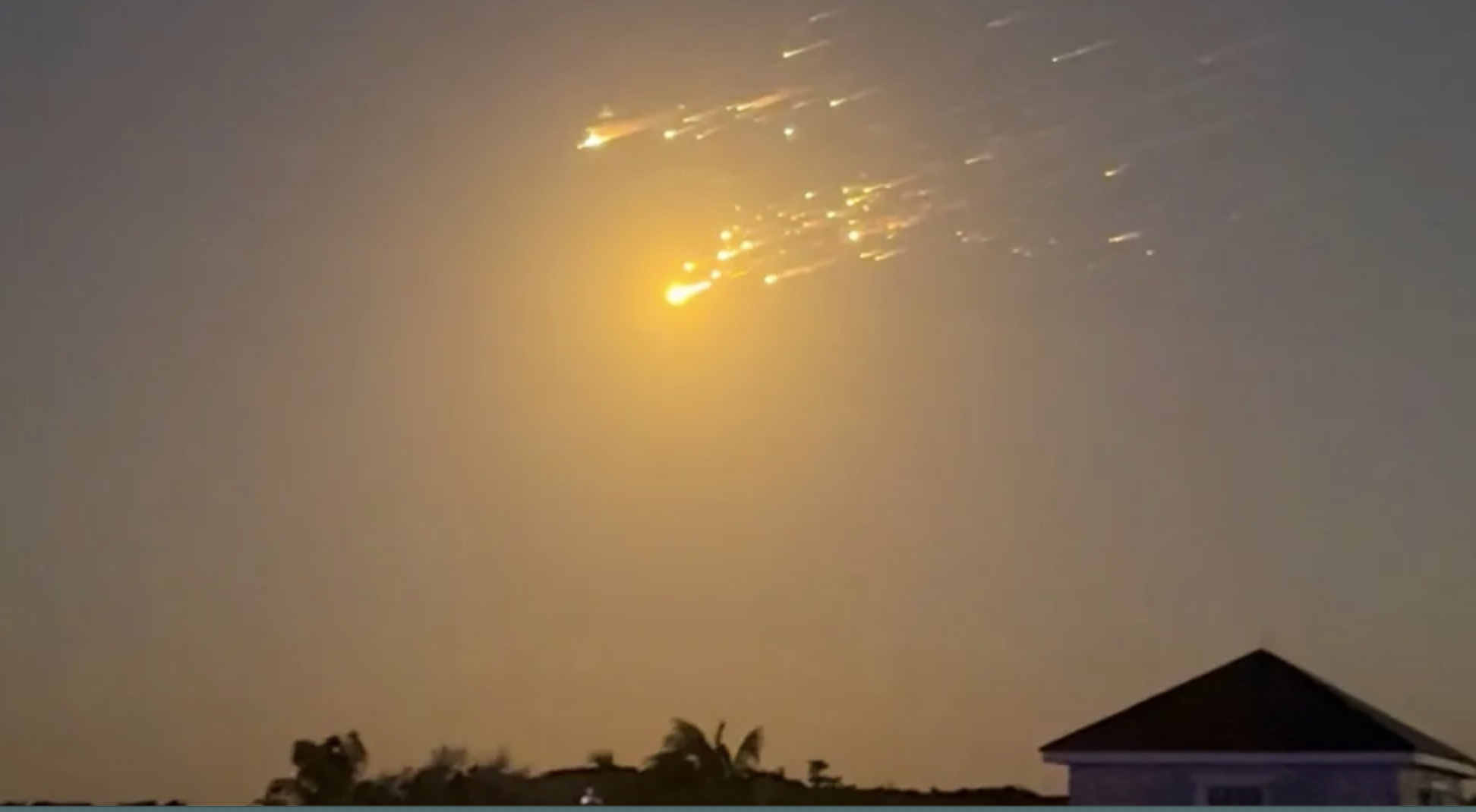
President Mush: “Oh, that! You’re referring to an unscheduled disassembly. It’s a great way to improve things. If you were a genius, you’d know that.”
Reporter: “Sorry, what’s the difference between an explosion and an unscheduled disassembly?”
President Mush: “An explosion sounds dangerous and might make people think we’re incompetent. An unscheduled disassembly makes it sound as though our rockets are so smart that they don’t even need to wait for us to tell them to disassemble. They do it on their own through artificial intelligence.”
Reporter: “So, you are saying AI caused the explosion?”
President Mush: “No! I’m not saying that at all. I just want to use polysyllabic words people don’t understand so they don’t object. If you’re stuck, in order to get unstuck, it’s sometimes mandatory to deconstruct and disassemble the stasis preliminarily prior to the instantiation of the improved and more efficient and effective state. That’s what we’re doing now with the government.”
Reporter: “You’re performing unscheduled disassembly of the Federal government? What are the side-effects of that?”

President Mush: “I’m having fun. The shady hackers I’ve hired are having fun. Putrid’s happy. I’m finding trillions of dollars of savings so it’s making America great again!”
Reporter: “You’re firing long-time experts in many parts of the government and that will impact many government services. Will it not? Just to take one example, you’re firing people from the Park Service. That means longer lines, less safety, more crime, more danger of fires. Is it worth it?”
President Mush: “Why should the Federal Government be involved in Parks at all? The private sector can do it much more efficiently. All Federal property should be turned into profit-making theme parks or used for strip mining or oil drilling. This will make quadrillions of dollars for the wealthiest .001% of Americans and we can pass along at least two bits worth of savings to every US Citizen. I mean, of course, real citizens whose parents are both white and were born in America.”
Reporter: “The US Constitution says quite clearly that anyone born in America is an American citizen.”
President Mush: “Right. And how stupid is that? When the Constitution says things that are clearly against the best interests of the ruling elite, we should ignore it and do what common sense demands.”
Reporter: “Were you born in the United States? Were your parents?”
President Mush: “I was born rich. And my parents were white. And I am rich. And, did I mention I am really really rich?”
Reporter: “Yet, you don’t pay taxes.”
President Mush: “I’m cutting more waste out of the Federal budget than you pay in taxes. Much more. For example, take the Veteran’s Administration. Do you have any idea how many veterans are no longer serving their country but they are taking advantage of the services of the so-called Veteran’s Administration? If they are no longer going to war for us, why are we giving them any services at all? And, even so, this so-called Veteran’s Administration is wasting incredible amounts of money! Just to take one example, they sterilize surgical instruments, perform an operation and then they want the taxpayers to pay for sterilizing those instruments all over again! What a waste!”
Reporter: “Did you yourself serve in the Armed Forces?”
President Mush: “I do better than that! I build rockets and satellites and exploding cars! Also, I helped insure Putrid’s victory over the Democrats with my money and by repeating the Kremlin’s propaganda on NaziX until people believed it! That’s a real contribution! The previous administration was siding with Ukraine for God’s sake! How stupid is that? Do you know how many nuclear missiles the Ukrainians have? Zero! Zero! Why the hell don’t we join forces with North Korea and Russia? Then, we’ll have the vast majority of the nuclear weapons! Don’t buddy up with Ukraine!”
Reporter: “As I understand it, Ukraine did have nuclear weapons but they agreed to give them up in return for security guarantees from America and Europe.”
President Mush: “That’s what I mean. How stupid was that? Why would anyone do that?”
Reporter: “To help reduce the risk of unlimited nuclear proliferation and atomic war?”
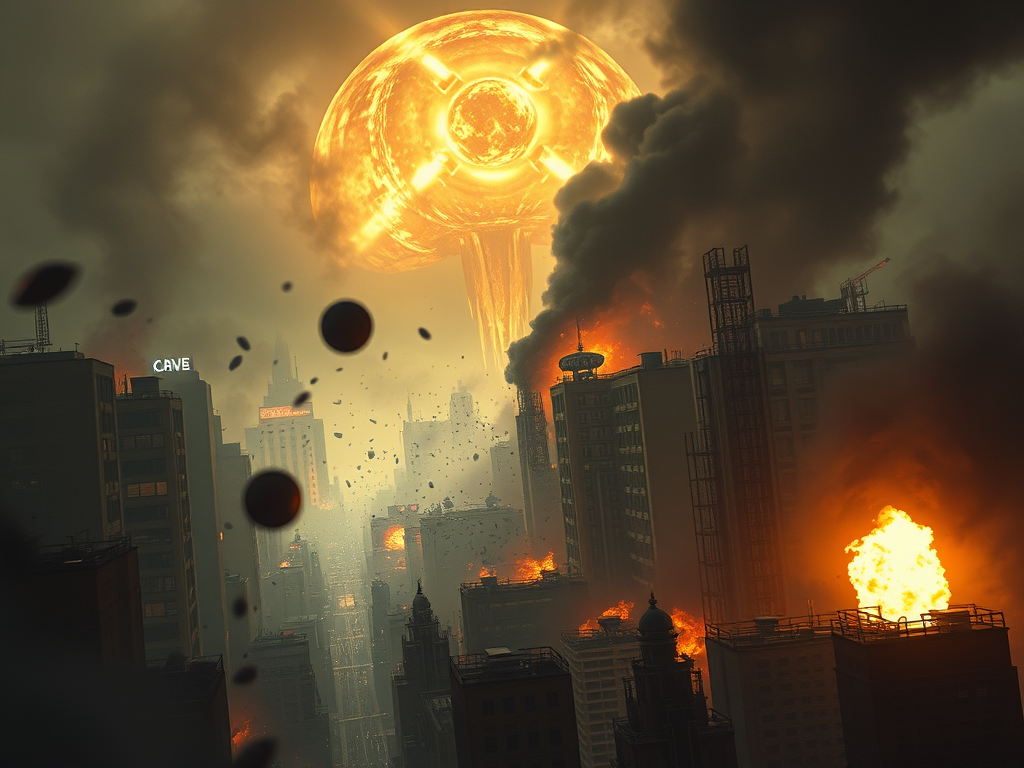
President Mush: “Yeah, yeah. That’s why I need more trillions of dollars to get humanity to Mars. That way, if we do have an atomic war, some of us—me, mainly—will continue the human race. Mars is perfect, by the way. No atomic weapons and no pollution. In fact, no disease. No large predators. No small predators. No pesky insects. No idiotic trees dropping their leaves. No stupid mushrooms to poison people. It’s ideal!”
Reporter: “It would be incredibly expensive to populate Mars, wouldn’t it?”
President Mush: “Who cares? We can tax the poor till they remember that they’re poor and were meant to be. All it takes is me and say a hundred beautiful baby ovens.”
Reporter: “Baby ovens?”
P-Mush: “Yeah. What you woke types slavishly call ‘women.’”
Reporter: “So, you want the people of earth to fund you to start a new colony on Mars which will consist of you and some young women? Aren’t you sad to leave your own kids on earth?”

P-Mush: “My human shields? No, they will have served their purpose by then.”
Reporter: “The rest of us…here on earth…what are your plans for us?”
P-Mush: “No plans. The rest of you are stupid enough to blow yourselves up.”
Reporter: “Does that include your sidekick?”
P-Mush: “He will have served his purpose as a clownish distraction. So, he should be happy. He’ll get a chance to kill a few hundred thousand people. He’s got Vlademort Putrid to help him. And Rat-Fink Klansman Junior to help him. Maybe he’ll kill a million. Maybe more. A guy that obese can’t live forever. At least his life won’t have been in vain.”
Reporter: “Because he’ll have been responsible for the deaths of others?”
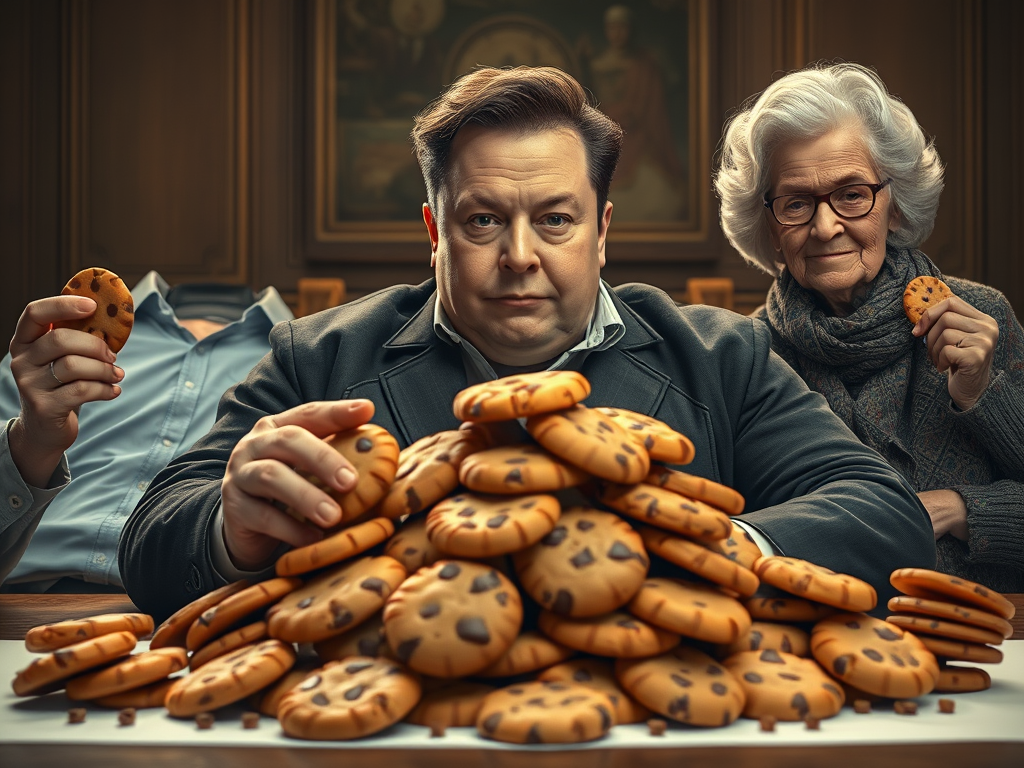
P-Mush: “Sure, and have stolen most of their wealth. What on earth is life for except to be the apex predator? If you can’t actually eat people, you should at least ruin their lives. Right? I mean if they’re stupid enough to believe some bull$hit I spew about making things more efficient for them and they swallow that bull$hit, then if I steal every last shred of joy from their life, don’t they deserve it?”

Reporter: “I would say, no. No, they don’t deserve to be lied to and cheated. For example, people paid money into Social Security their whole working lives and now you’re trying to steal the money. I wouldn’t say that’s something that they deserve. In fact, rumor has it that your real reasons for investigating fraud in the government is to plant evidence of fraud on the part of your competitors and squash investigations into your own fraud and incompetence. Is there any truth to that?”
P-Mush: “Truth is whatever the richest people say it is. You’ll find that out when I call the head of your paper and have you fired.”
Reporter: “I see our time is up. Thank you for your time, President Mush.”
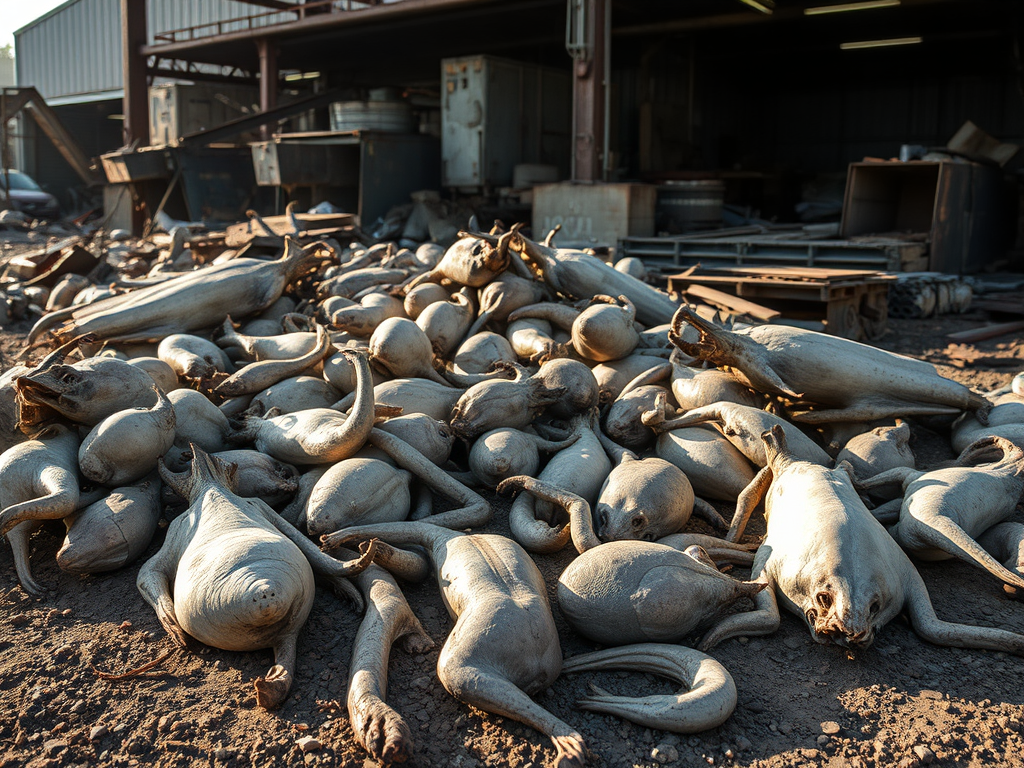
P-Mush: [Laughs a maniacal laugh]. “Our time? No. Your time is up. Not mine. I’m the apex predator and it’s time for my lunch!”

——————
Increased E-Fishiness in Government
Destroying Our Government Effectiveness








































 petersironwood