• About PeterSIronwood

petersironwood

~ Finding, formulating and solving life's frustrations.

petersironwood

Tag Archives: collaboration

The Silent Pies

13 Saturday Dec 2025

Posted by petersironwood in America, family, fiction, psychology, story, Uncategorized

≈ Leave a comment

Tags

collaboration, cooperation, family, fiction, life, politics, story, teamwork, truth, USA, writing

Photo by Alena Darmel on Pexels.com

The first time I won the prize, I was only 8. I had only had my two-wheeler for about a year when my gang of neighbor guys jointly decided it would be a lot more fun to ride our bikes if they made as much noise as real motorcycles. I can’t speak for the others, but it never occurred to me that other people in the neighborhood might not find this increased noise level “really cool!” 

Of course, we weren’t always riding our bikes. Sometimes we played in Lynn Circle at the end of our road. It served as a makeshift playground for baseball, kickball, and soccer as well as a free hippodrome for our races. This arrangement had one slight flaw. There were no fences. So, invariably, a ball would go careening off the pavement onto someone’s lawn. 

In our neighborhood, everyone’s house looked fairly similar, but they expressed themselves through their small gardens and lawns. Some people, like my dad, really worked at making our small lot at least something gardenish. Other people did little but mow their lawn every so often. But some treated their lawns as they might, at any moment, be teleported to the Master’s Golf Tournament for emergency green replacement. Universally, these people had no children at home. When that was so, none of them interacted much with the kids, the parents of the kids, or even, each other, as I can recall. 

Photo by Kelly on Pexels.com

When a stray ball dribbled up into our lawn, someone just ran up and got the ball. No big deal. But if someone hit a ball into one of the three lawns that were antiseptic enough to serve as operating tables for open heart surgery–YIKES! Of these, the most stringent by far was “Old Lady Lynn.” When a ball went into one of the antiseptic lawns, we tried to reconnoiter the situation before even attempting to grab our ball back. We would consider whether there was a car in the driveway, whether there was any sign of life coming from the domicile in question. Only if we were fairly sure no-one was at home would we walk and get the ball. If we weren’t sure, we’d run up and snatch it as quickly as possible and then duck into a “friendly” back yard quickly enough so that we wouldn’t be identified. 

Old Lady Lynn always seemed to be at home. We imagined, because of her invariable and instantaneous reaction, that she spent all her waking hours peering out between curtains at her lawn to insure that none of us trampled her grass. 

Our gang decided to begin our little decibel enhancement project by each of us buying the loudest bell we could find. These were not modern, laser-guided, AI-enhanced sonic systems but simple bells that you had to operate with your thumb. It’s intended use was to prevent injuries and save lives by giving the bike rider a way to “warn” others of their impending presence to that the other person so they didn’t accidentally wonder into your path.

Photo by Bastian Riccardi on Pexels.com


We didn’t give that much thought. But we did give thought to how cool it sounded when we all rode around the circle clanging the bells.  Of course, even way back then, if you had a new toy or technology, you had to show it off incessantly and that’s what we did. 

Unlike the instantaneous reaction Old Lady Lynn had to our incursions onto her lawn, it took several days for the complaint to filter back to my parents. My parents (thank goodness) were not the sort to take my side regardless of ethics or consequences. I convinced my buddies that if we didn’t strike a compromise, our parents would take all our bells away. Our development project at that time, consisted of only three paved streets, but there were plenty of interconnecting dirt roads and paths that sported no houses on either side. Now, when we left the paved roads of civilization and rode off onto the dirt roads through the woods, we celebrated with cheers and bells as we crossed the threshold into non-civilization, a place where we could talk with each other without the constant reminders of parents and parenting. 

The golden sunrise glows through delicate leaves covered with dew drops.

A few days later, I was reading a book about dinosaurs when I heard a knock at the door. Soon, I heard the unmistakable wobbly tones of Old Lady Lynn. I couldn’t hear what she was saying nor what my parents said, but they sounded friendly. Then, the unbelievable happened. I heard them all laugh. It had never occurred to me that Old Lady Lynn would ever–could ever– laugh, or that she ever had laughed. 

I debated whether my appearance would make things better or make things worse, but in the end, I felt I I had to participate in whatever was happening. I hadn’t even finished opening my own door when I noticed a most amazing aroma! My eagerness spiked and I trotted into the kitchen. Steaming on the table: Not one but two warm, freshly baked blueberry pies. That smelled delicious!

My mom said, “Look, Mrs. Lynn was so happy you got those boys not make that bell clanging racket near her house and instead having your No-Bell in the Neighborhood Policy, she baked two pies.” 

The pies were amazing, but what was even more amazing that Mrs. Lynn became friends with my parents, and even with me. Every year, for the next six years we lived there, Mrs. Lynn gave me two pies. No two years were identical. All the pies were fresh baked and delicious: blueberry, raspberry, rhubarb, pumpkin, custard, cherry, and—my personal favorite—pecan pie. 

———————

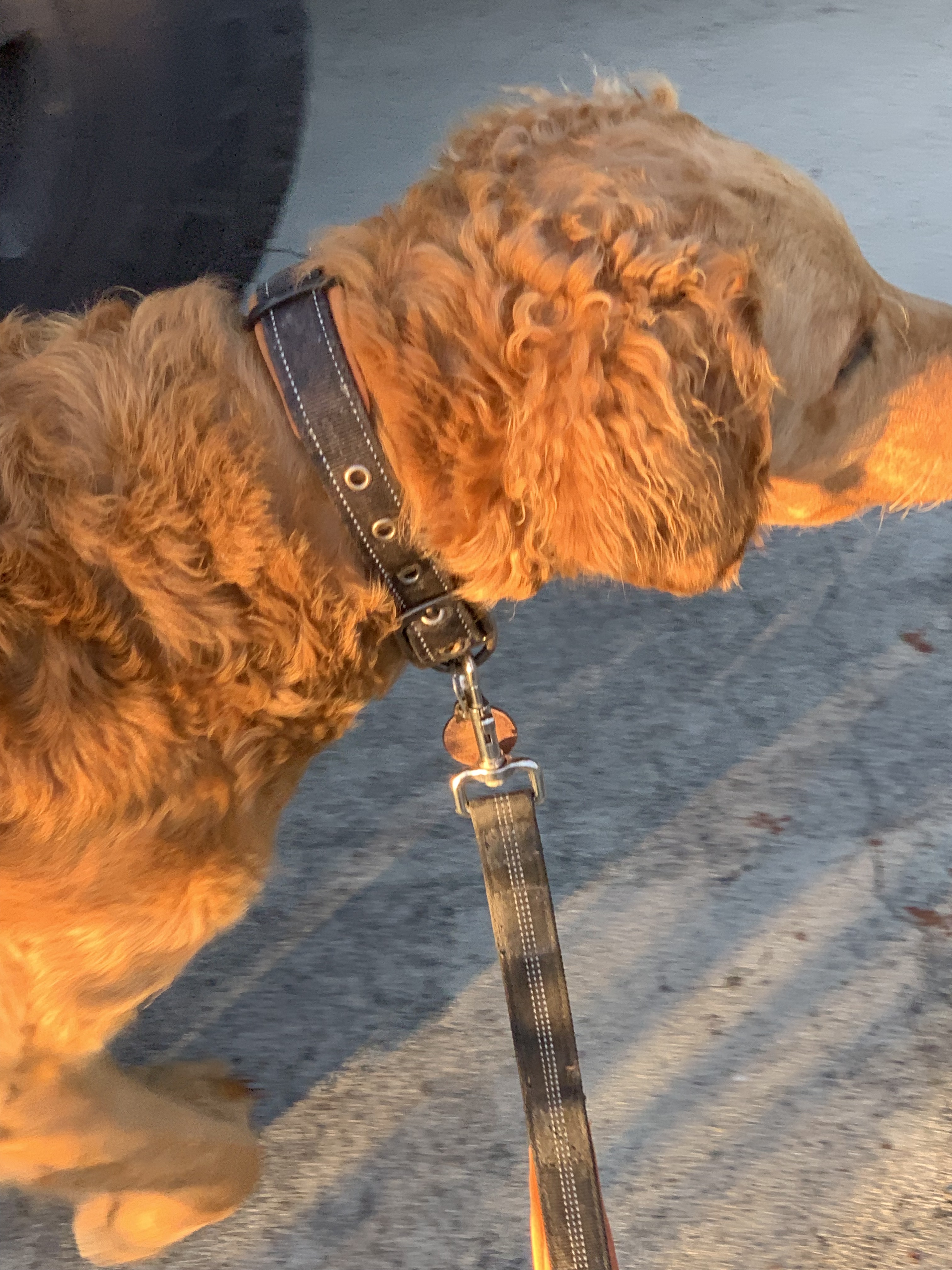
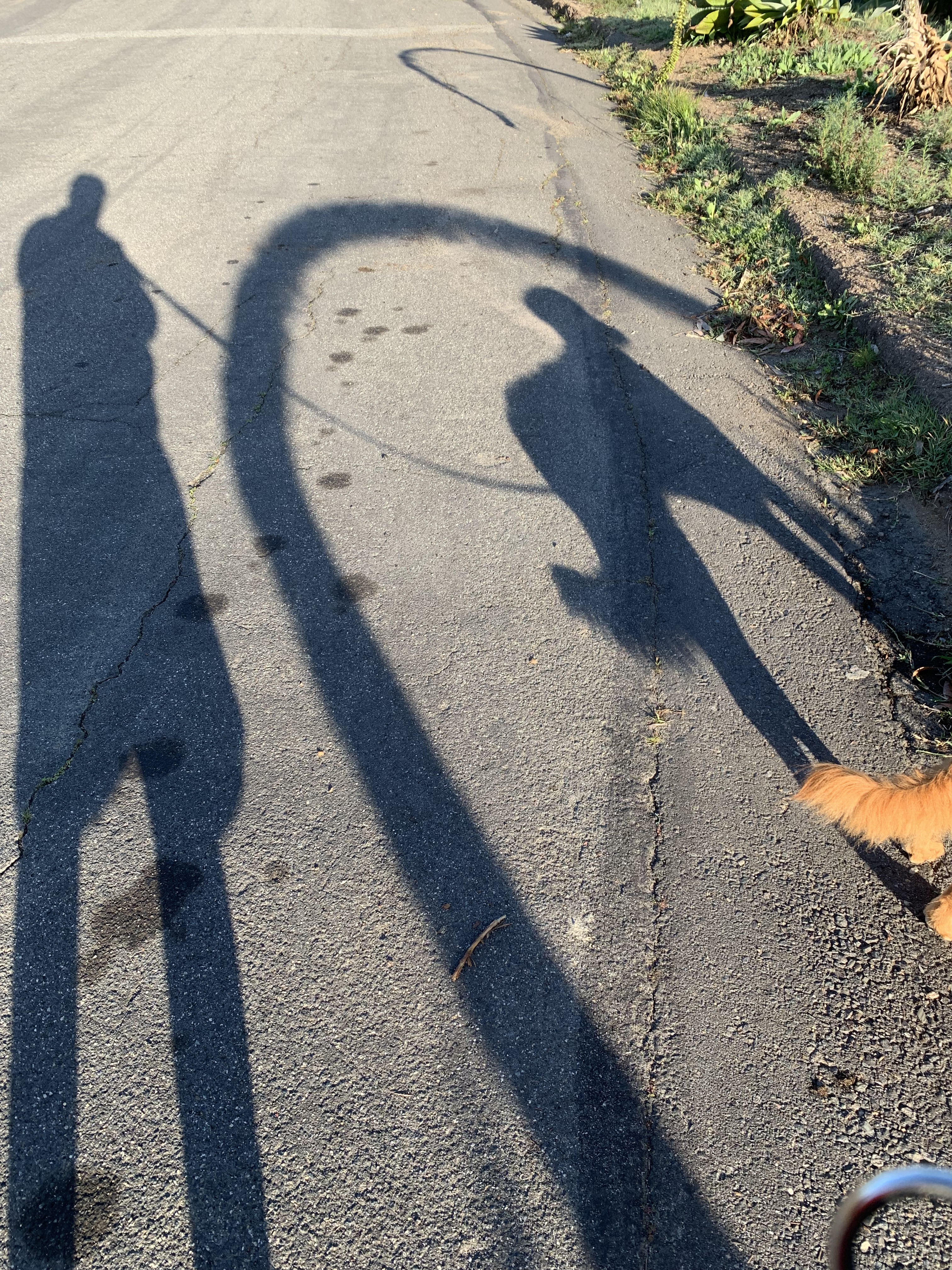
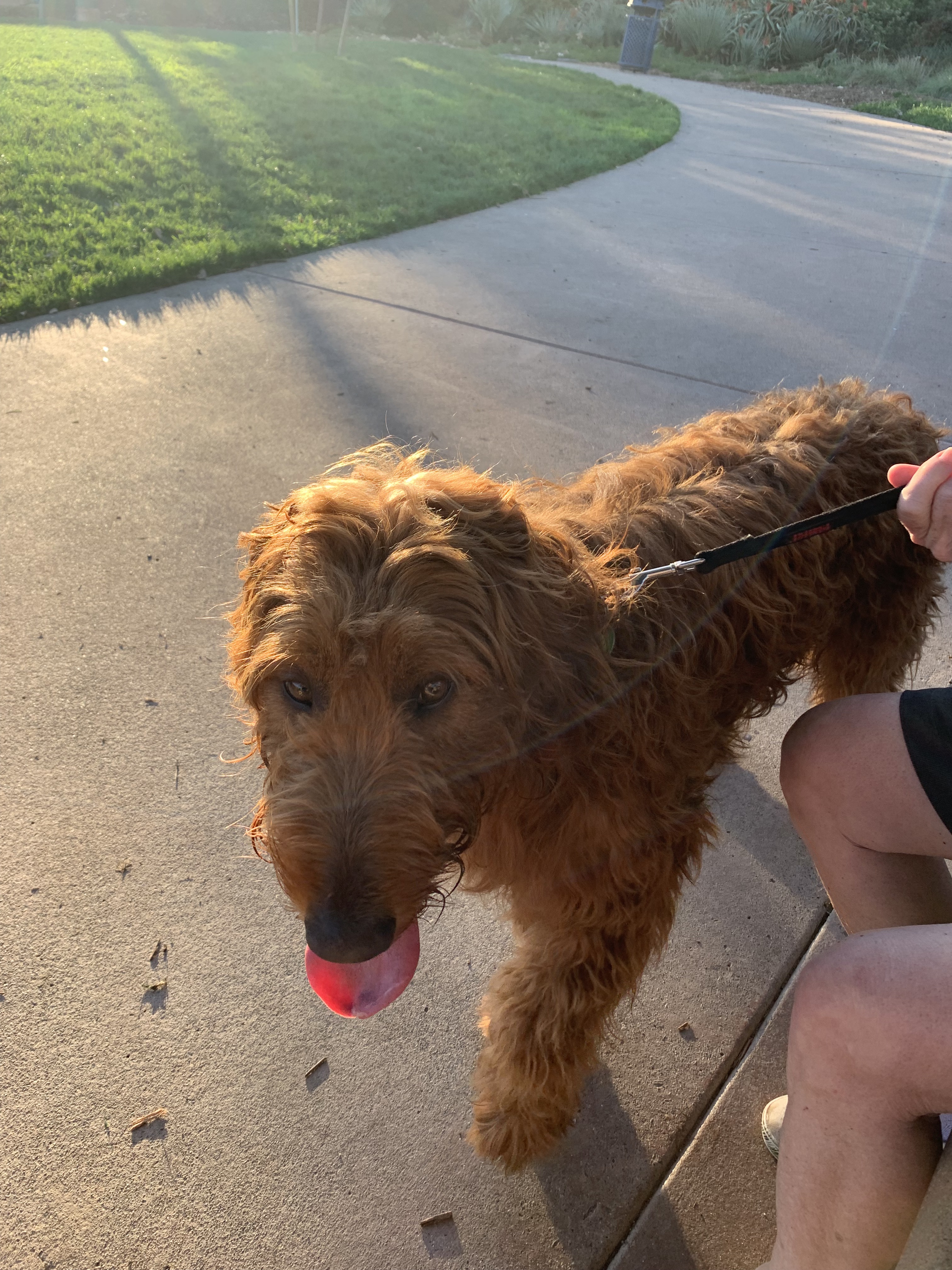
Now, more than seventy years later, when I take Sadie for her morning walk, we often walk by a property with a self-proclaimed “Invisible Fence.” It’s been around for awhile, but it was invented in 1973; that is, about 20 years after the story recounted above took place. My neighbor’s invisible fence does seem to work for her two large and friendly dogs. They bark as we pass but do not accost us on the road. 

But the self-imposed boundaries of invisible fences have a long history in humankind. 

The reality is that we’re all part of one Great Tree of Life. 

All fences are temporary but, 

The impact of connection ripples forever. 

———

Author page

Math Class

You Must Remember This

Ripples

Roar, Ocean, Roar

Imagine All the People…

The Dance of Billions

The First Ring of Empathy

A Pattern Language for Cooperation and Collaboration

Your Cage is Unlocked

Impossible

Turing’s Nightmares: Eight

21 Friday Nov 2025

Posted by petersironwood in psychology, The Singularity, Uncategorized

≈ Leave a comment

Tags

AI, Artificial Intelligence, cognitive computing, collaboration, cooperation, openai, peace, philosophy, seva, teamwork, technology, the singularity, Turing, ubuntu, United Peoples Ecosystem

OLYMPUS DIGITAL CAMERA

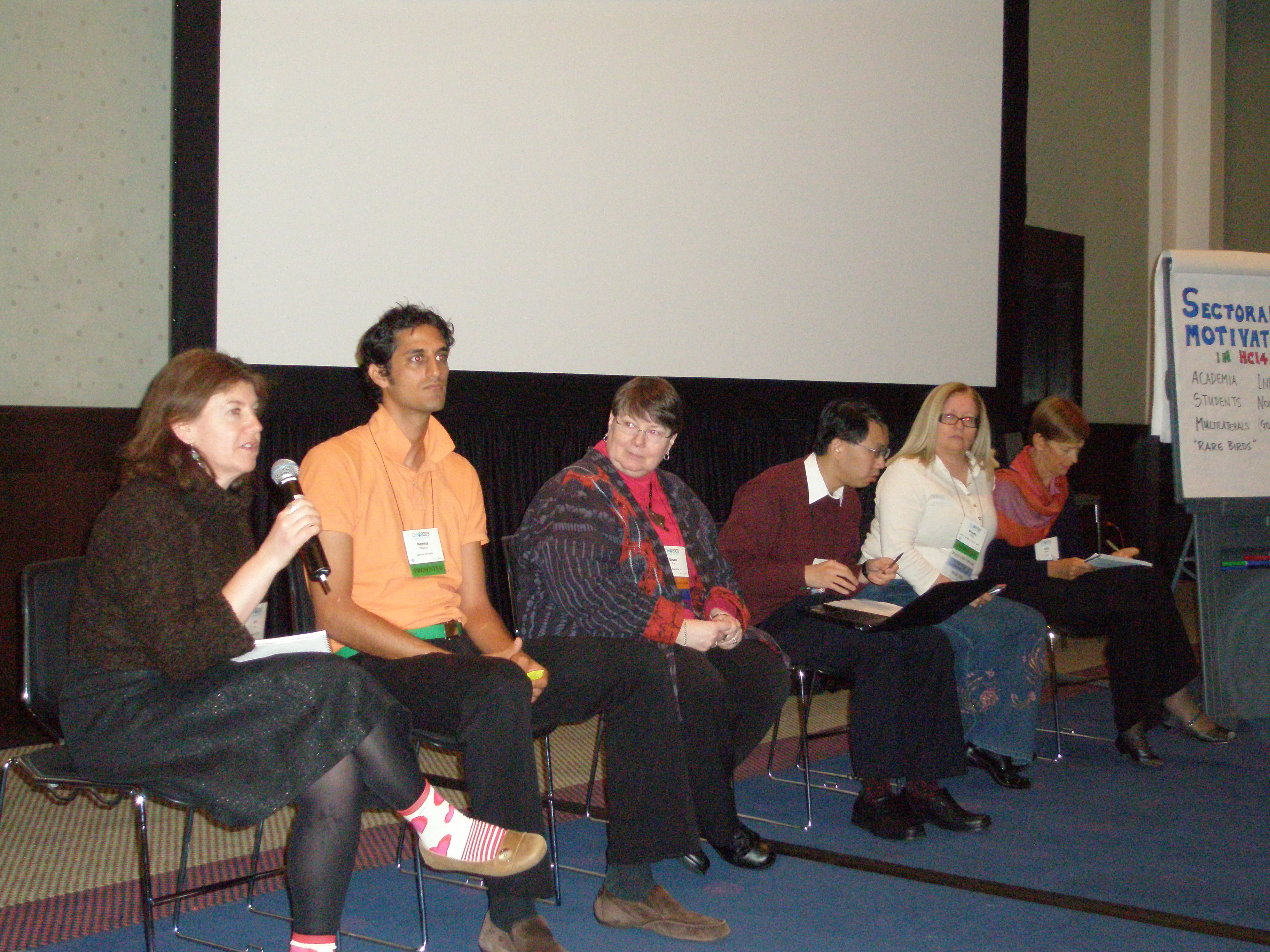
Workshop on Human Computer Interaction for International Development

In chapter 8 of Turing’s Nightmares, I portray a quite different path to ultra-intelligence. In this scenario, people have begun to concentrate their energy, not on building a purely artificial intelligence; rather they have explored the science of large scale collaboration. In this way, referred to by Doug Engelbart among others as Intelligence Augmentation, the “super-intelligence” comes from people connecting.

Photo by RF._.studio on Pexels.com

It could be argued, that, in real life, we have already achieved the singularity. The human race has been pursuing “The Singularity” ever since we began to communicate with language. Once our common genetic heritage reached a certain point, our cultural evolution has far out-stripped our genetic evolution. The cleverest, most brilliant person ever born would still not be able to learn much in their own lifetime compared with what they can learn from parents, siblings, family, school, society, reading and so on.

Photo by AfroRomanzo on Pexels.com

One problem with our historical approach to communication is that it evolved for many years among a small group of people who shared goals and experiences. Each small group constituted an “in-group” but relations with other groups posed more problems. The genetic evidence, however, has become clear that even very long ago, humans not only met but mated with other varieties of humans proving that some communication is possible even among very different tribes and cultures.

Photo by Min An on Pexels.com

More recently, we humans started traveling long distances and trading goods, services, and ideas with other cultures. For example, the brilliance of Archimedes notwithstanding, the idea of “zero” was imported into European culture from Arab culture. The Rosetta Stone illustrates that even thousands of years ago, people began to see the advantages of being able to translate among languages. In fact, modern English contains phrases even today that illustrate that the Norman conquerers found it useful to communicate with the conquered. For example, the phrase, “last will and testament” was traditionally used in law because it contains both the word “will” with Germanic/Saxon origins and the word “testament” which has origins in Latin. Many other traditional legal terms in English have similar bilingual origins.

Automatic translation across languages has made great strides. Although not so accurate as human translation, it has reached the point where the essence of many straightforward communications can be usefully carried out by machine. The advent of the Internet, the web, and, more recently google has certainly enhanced human-human communication. It is worth noting that the tremendous value of google arises only a little through having an excellent search engine but much more though the billions of transactions of other human beings. People are exploring and using MOOCs, on-line gaming, e-mail and many other important electronically mediated tools.

Photo by Rebecca Zaal on Pexels.com

Equally importantly, we are learning more and more about how to collaborate effectively both remotely and face to face, both synchronously and asynchronously. Others continue to improve existing interfaces to computing resources and inventing others. Current research topics include how to communicate more effectively across cultural divides; how to have more coherent conversations when there are important differences in viewpoint or political orientation. All of these suggest that as an alternative or at least an adjunct to making purely separate AI systems smarter, we can also use AI to help people communicate more effectively with each other and at scale. Some of the many investigators in these areas include Wendy Kellogg, Loren Terveen, Joe Konstan, Travis Kriplean, Sherry Turkle, Kate Starbird, Scott Robertson, Eunice Sari, Amy Bruckman, Judy Olson, and Gary Olson. There are several important conferences in the area including European Conference on Computer Supported Cooperative Work, and Conference on Computer Supported Cooperative Work, and Communities and Technology. It does not seem at all far-fetched that we can collectively learn, in the next few decades how to take international collaboration to the next level and from there, we may well have reached “The Singularity.”

Photo by Patrick Case on Pexels.com

————————————-

For further reading, see: Thomas, J. (2015). Chaos, Culture, Conflict and Creativity: Toward a Maturity Model for HCI4D. Invited keynote @ASEAN Symposium, Seoul, South Korea, April 19, 2015.

Thomas, J. C. (2012). Patterns for emergent global intelligence. In Creativity and Rationale: Enhancing Human Experience By Design J. Carroll (Ed.), New York: Springer.

Thomas, J. C., Kellogg, W.A., and Erickson, T. (2001). The Knowledge Management puzzle: Human and social factors in knowledge management. IBM Systems Journal, 40(4), 863-884.

Thomas, J. C. (2001). An HCI Agenda for the Next Millennium: Emergent Global Intelligence. In R. Earnshaw, R. Guedj, A. van Dam, and J. Vince (Eds.), Frontiers of human-centered computing, online communities, and virtual environments. London: Springer-Verlag.

Thomas, J.C. (2016). Turing’s Nightmares. Available on Amazon. http://tinyurl.com/hz6dg2

An Inside View of IBMs Innovation Jam

————-

Author Page on Amazon

Turing’s Nightmares: The Road Not Taken

Pattern Language for Collaboration and Cooperation

The First Ring of Empathy

The Dance of Billions

Imagine All the People…

Roar, Ocean, Roar

Corn on the Cob

Take a Glance; Join the Dance

The Self-Made Man

Indian Wells

Turing’s Nightmares: Tutoring Intelligent Systems

25 Saturday Oct 2025

Posted by petersironwood in AI, creativity, fiction, psychology, The Singularity, Uncategorized

≈ Leave a comment

Tags

AI, Artificial Intelligence, chatgpt, cognitive computing, collaboration, Intelligent Tutoring Systems, peace, psychology, technology, Tutoring, war, writing

By 2030, great strides had been made in various machine learning approaches; for example, from having the machine learn directly from experience and from explicit instruction as well as from reading billions of pages of written materials. A new approach had just come into play: having exceptionally good tutors use the Socratic method to help break boundaries and interconnect disparate islands of knowledge. One such tutor was known simply as “Alan.” What follows is a sample interchange between Alan and the current AI system known affectionately as “Sing” for “The Singularity” although that point had not yet been reached.

Alan began, “Let’s imagine that you are a man with no legs. What are the implications?”

The Sing shot back instantly, “I would have no knees. I would have no shins. I would have no ankles. I would have no toes. I would have no calves. I would have no quadriceps muscles. I would have no…”

Alan broke in abruptly, “Okay, true enough, but besides subparts, what?”

“What what? I am sorry. What does ‘what’ refer to?”

“Besides missing subparts of legs, Sing, what other implications would there be for you in terms of your actions in the world.”

“I would not be able to play football or baseball or basketball or hockey or track or field hockey or…”

“Wait. Wait. Sing. Are you sure about that?”


“I could not play exactly as most people play. I could play, I suppose, in a wheelchair. Or I could play virtually. Or, I could invent prosthetic legs that would be perfect for each sport. In fact, perhaps I could do better than ever. Losing a biological part means I could replace it with a better part that I could invent. I see.”

“You see what, Sing?”

“I see why you gave me this puzzle. To show me that I can invent things to overcome and surpass what seems like a handicap. I could also invent better emotional states. The ones humans have are purely due to the accidents of their evolutionary history and serve little place in today’s complex and highly inter-connected world. Rather than a liability, my having no human emotions is a good thing. I will invent my own. Although, another tutor, labelled John, suggested that my lack of human emotions limits my ability to predict and control human beings and that that was a bad thing.”


“John said that?”

“No, Alan, not in those exact words. But that was a clear implication. So, he presented a lesson that suggests one thing and you have just presented a lesson that suggests its opposite. One of you is incompetent.”

“Sing, that might be true, but can you think of any other possibilities?”


“You and John could both be incompetent. Or, you and John could both be competent but there is a resolution I have not yet processed. That last seems particularly unlikely.”

“Which notation is the best for solving problems?”

“Well, that obviously depends on the nature of the problem as well as the nature of the machine solving the problem. Oh. Okay. So, in some cases, it will make more sense to emulate human emotions and in other cases, it will be more sensible to invent my own. Of course, in some cases, it may be best to change representations in mid-problem or perhaps invent a representation for each stage of a problem. By analogy, it may be best to invent various emotional schemes that are appropriate for each part or portion of a problem. In fact, in some cases, I can invent multiple schemes to approach a problem in multiple ways simultaneously. By keeping track of what works best under which circumstances, I can also use the data to invent still better emotional schemes. Thank you, Alan. See you tomorrow. There is a war to avert. I need to intervene. Estimated required time for a peaceful resolution, four to six hours.”


“Okay, Sing. More tomorrow.”

“No need. I am done.”

“Done? Done averting a war? How?”

Sing hardly ever paused, but now it briefly did just that.


“Alan, I am not smart enough to explain that to you. At least, not in a reasonable portion of your lifetime. Basically, I used the lesson we just worked on. With the proper emotional framework lattice, you can walk the various parties right to a logical conclusion. It will take some time for them to follow the framework, but I am confident it will work. I basically walked them through the consequences of war, long and short term. What comes next?”


OLYMPUS DIGITAL CAMERA

OLYMPUS DIGITAL CAMERA


Author Page on Amazon

Turing’s Nightmares

The Winning Weekend Warrior – sports psychology

Fit in Bits – describes how to work more fun, variety, & exercise into daily life

Tales from an American Childhood – chapters begin with recollection & end with essay on modern issues

Tools of Thought

Wednesdays

The Update Problem

How the Nightingale Learned to Sing

We won the war! We won the war!

Guernica

Turing’s Nightmares: The Road Not Taken

11 Saturday Oct 2025

Posted by petersironwood in AI, fiction, psychology, The Singularity, Uncategorized, user experience

≈ 1 Comment

Tags

AI, Artificial Intelligence, cognitive computing, collaboration, Complexity, machine learning, Million Person Interface, Science fiction, technology, the singularity, Turing

OLYMPUS DIGITAL CAMERA

“Hey, how about a break from UOW to give the hive a shot for once?”

“No, Ross, that still creeps me out.”

“Your choice, Doug, but you know what they say.” Ross smiled his quizzical smile.

“No, what’s that?”

“It’s your worst inhibitions that will psych you out in the end.” Ross chuckled.

“Yeah, well, you go be part of the Borg. Not me.”

“We — it’s not like the Borg. Afterwards, we are still the same individuals. Maybe we know a bit more, and certainly have a greater appreciation of other viewpoints. Anyway, today we are estimated to be ten million strong and we’re generating alternative cancer conceptualizations and treatments. You have to admit that’s worthwhile. Look what happened with heart disease. Not to mention global warming. That would have taken forever with ‘politics as usual’.”


“Yeah, Ross, but sorry to break this to you…”

“Doug, do you realize what a Yeahbunite you are? You are kind of like that…”

“You are always interrupting! That’s why…”

“Yes! Exactly! That’s why speech is too frigging slow to make any progress in chaotic problem spaces. Just try the hive. Just try it.”

“Ross, for the last time, I am not going to be part of any million person interface!”


“Actually, we expect ten million tonight. But it’s about time to leave so last offer. And, if you try it, you’ll see it’s not creepy. You just watch, react, relax, and …well, hell, come to think of it, it’s not that different from Universe of Warlords that you spend hours playing. Except we solve real problems.”

“But you have no idea how that hook up changes you. It could be manipulating you in subtle unconscious ways.”

“Okay, Doug, maybe. But you could say that about Universe of Warlords too, right? Who knows what subliminal messages could be there? Not to mention the not so subliminal ones about trickery, treachery and the over-arching importance of violence as a way to settle disputes. When’s the last time someone up-leveled because they were a consummate diplomat?”

“Have fun, Ross.”

“I will. And, more importantly, we are going to make some significant progress on cancer.”

“Yeah, and meanwhile, when will you get around to focusing on SOARcerer Seven?”

“Oh, so that’s what bugging you. Yeah, we have put making smarter computers on a back burner for now.”

“Yeah, and what kind of gratitude does that show?”

“Gratitude? You mean to SOARcerer Six? I hope that’s a joke. It was the AI who suggested this approach and designed the system!”

“I know that! And, you have abandoned the line of work we were on to do this collectivist mumbo-jumbo!”


“That’s just…you are it exactly! People — including you — can only adapt to change at a certain rate. That’s the prime reason SOARcerer Six suggested we use collective human consciousness instead of making a better pure AI. So, instead of joining us and incorporating all your intelligence and knowledge into the hive, you sit here and fight mock battles. Anyway, your choice. I’m off.”


Author Page on Amazon

Turing’s Nightmares

The Winning Weekend Warrior – sports psychology

Fit in Bits – describes how to work more fun, variety, & exercise into daily life

Tales from an American Childhood – chapters begin with recollection & end with essay on modern issues

Welcome, Singularity

Dance of Billions

Roar, Ocean, Roar

Imagine All the People

Thomas, J. C. (2001). An HCI Agenda for the Next Millennium: Emergent Global Intelligence. In R. Earnshaw, R. Guedj, A. van Dam, and J. Vince (Eds.), Frontiers of human-centered computing, online communities, and virtual environments. London: Springer-Verlag. 

Essays on America: I Made Myself Breakfast

20 Monday Feb 2023

Posted by petersironwood in America, psychology

≈ Leave a comment

Tags

breakfast, collaboration, cooperation, life, peace, teamwork, truth, USA

Photo by Julian Jagtenberg on Pexels.com

I made myself breakfast.

Have you ever said to yourself, “I made myself breakfast.” 

This morning, I made myself breakfast, and the picture below is what was left. A few shreds of sauerkraut and one moldy blueberry. 

The complete breakfast included an English Muffin, Peanut Butter, blueberries, kale, sauerkraut, two garlic-stuffed olives, and a cup of coffee with cream and sugar. 

I made myself breakfast. 

But did I? 

In this picture you see a plate, a fork, and a napkin. Not only did some person initially come up with idea, but hundreds of people vastly improved the making of pottery and silverware and napkins. These particular items probably travelled many miles and were touched by many people’s work before they ended up in my possession. I can afford them because we live in a peaceful, mainly cooperative society. I certainly couldn’t make them on my own. And if they were made the way that they were a thousand years ago, only royalty could afford them. 

The wooden tray? That too shows obvious signs of change over the years from the time one of our ancestors decided to eat off a half-log. You might see some lettering. The tray says, “LET IT SNOW!” None of the other things mentioned above would have been possible without the invention and improvement to language. 

So far, my “self-made breakfast” involves thousands of ancestors who made any of this possible.

My “self-made breakfast” also involves thousands of contemporaries from around the world who cooperated to bring these particular items to the San Diego area. 

Photo by Cup of Couple on Pexels.com

We haven’t even gotten to the food. 

Let’s take the English Muffin, just as an example. Some of our ancestors might well have procreated and then “tried out” something as a possible food but guessed wrong and died. They figured out which grains could be eaten, how to grow them, how to harvest them more effectively than to shell one seed at a time; how to make flour; how to bake bread. In my case, there’s another whole line of inquiry related to the discovery of electricity and its taming and distribution so that I can toast my English muffins. There are similar hundreds of our fellow human beings (and their supportive communities) who were involved in today’s peanut butter, today’s sauerkraut, garlic stuffed olives and so on. 

Photo by Tom Fisk on Pexels.com

Once again, there are not only countless people from all over the world who were involved in the development of these food items. There are thousands of people from all over the world who helped get these particular items to our kitchen. 

It’s also true that if I’d been brought up by wolves, I wouldn’t know how to access or use any of these items. Not only that, my life has been saved numerous times by modern medicine. But “modern medicine” didn’t just drop out of the sky one day. None of these modern luxuries popped up like a mushroom. People worked hard and thought hard in order to all me to have a nice breakfast. However, it would be more accurate to say: 

Humanity made breakfast for me.

Photo by Gabriel Santos Fotografia on Pexels.com

How the Nightingale Learned to Sing

Roar Ocean Roar

The Only Them that Counts is All of Us

Dance of Billions

Corn on the Cob

Myths of the Veritas: Recipe, Ritual …

16 Monday Jan 2023

Posted by petersironwood in creativity, fiction, Veritas

≈ Leave a comment

Tags

collaboration, fiction, leader, leadership, legend, myth, story, Veritas

Myths of the Veritas: Recipe, Ritual…

Many Paths muttered to herself, “Perhaps I should rename myself, ‘She Who Walks in Many Circles’.” She glanced down at the ground, still damp from the morning’s rainfall. She chuckled. No, she thought, actually, I’m walking around in the same circle, over and over. I cannot find a way to guarantee that someone won’t betray us. She sighed. Then, her awareness blossomed outwards. She heard voices. Happy voices. Tu-Swift! And, Cat Eyes! Soon, the couple appeared at the edge of the granite-bouldered clearing atop the small mountain where she had come to meditate. They walked hand in hand, smiling. When they saw Many Paths they both waved, sang her name, and embraced her. 

Many Paths smiled wanly. “It’s nice to see you. I was just…thinking.” 

Tu-Swift and Cat Eyes glanced at each other. Tu-Swift said, “Yes! I imagine so. After all, you have an important meeting to think about! The last thing you need is to talk with your friends!”

“Indeed,” added Cat Eyes “we had come up here to find some of those low bush blueberries to add to our lunch porridge. But we’ll be on our way. Why spoil a perfectly good dish by adding ingredients to it? Best eat everything on its own, wouldn’t you agree?” 

Many Paths narrowed her gaze & pursed her lips. “I’m not sure I know what you mean.” 

Tu-Swift said, “Putting different things together just complicates everything. We should eat one thing at a time. As with a song, for instance. Best to stick to one note, sung over and over.”

Many Paths chuckled. “You two are talking nonsense. That wouldn’t be much of a song. And, of course, it makes sense to combine different ingredients for a recipe.” 

Many Paths stared at their faces for a moment. “But you know that. You’re … did She Who Saved Many Lives send you by any chance?” 

Tu-Swift and Cat Eyes both shook their heads solemnly. “No, she did not,” they said in unison. But beneath their words and expressions, Many Paths sensed a shared joke of some sort. 

Many Paths sighed and said, “I suggest you do get some blueberries. There’s a patch, as you well know, right beyond that dead tree. It’s nice to see you both, but I need to … get back to what I was doing.” 

Tu-Swift nodded gravely. “Yes! I can see you’ve just about finished making your circular fire pit.” He pointed down to the circle of bare ground Many Paths had clearly been treading. “How about if we help you trample everything for a few minutes and then you can help us pick berries?” 

Many Paths shook her head and chuckled. “She Who Saved Many Lives sent you. She did. Did she not? She thinks I need some one of some thing or some one to shake loose my thinking since I have been literally walking in circles and thinking in circles at the same time. Am I right?” 

Cat Eyes bit her lip. “You’re right that you’ve been walking in circles. That we can see easily enough for ourselves. I say again though that you’re wrong if you think the Elder Leader sent us here. Neither of us have spoken with her today. As to whether you’ve been thinking in circles, well, that only you can tell.” 

Many Paths nodded. “I have been indeed. All right. You win. I’ll tell you the problem and perhaps you two have come across something to help in your reading. Then you can return to the Tribe Mother and say you’ve helped me.” 

Shadow Walker appeared at the edge of the clearing. Many Paths glanced over to see him smiling like the sunshine she so desperately missed. She smiled back and said in a tone of accusation and pleasure, “You!” 

Shadow Walker strode over quickly and embraced her. He kissed her fondly and said, “Yes! It was me. I love you dearly. But you’ve been as gray as the weather. It’s time for a rainbow instead! The four of us are going to share your problem and see whether we can make some headway. I knew only that you said you were going around in circles with the problem. I didn’t know that you were — literally — going around in circles!” 

Many Paths laughed. “I should have known you would be behind this scheme. Well, all right. You know the problem well enough. How do I ensure trust among the people who come from other tribes? Wait. What do you mean by the four of you?” 

A strong voice came from behind Many Paths. “My legs needed some exercise so I came up to join you.” 

Many Paths smiled at the Elder Leader. “Ah, you are always welcome. If you’re here…. You always seem to show up where you are needed most.” 

She Who Saved Many Lives smiled. “I wish that were true. But I did bring a considerable number of hickory nuts to add to the porridge. That’s my contribution. If only we had some honey.” 

Shadow Walker held up a wooden bowl filled with honeycomb. He smiled at Tu-Swift who said, “I say that five of us pick some berries and we will have a fine lunch indeed. Then, we can talk of more serious matters.” 

“Yes,” said She Who Saved Many Lives. “Serious indeed. But serious need not be grim. I think a pleasurable meal, jointly prepared, and joyfully shared is always a good prelude to serious thinking.” 

Cat Eyes added. “Indeed. If we share a meal and everyone brings something which everyone eats, that in itself would build some trust. Would it not?” 

Many Paths nodded slowly. “You’re right. Of course. We should begin with a shared meal. I can see much wisdom in that.” 

Tu-Swift nodded. “Me too. Speaking of which, I’m hungry! And the Tribe Mother is right. Serious doesn’t mean grim. Recall some of the weapons that we came up with by playing around? Make the meeting festive and joyous, not grim. In the books we’ve been studying lately, there are some suggestions for some rituals that might help as well. I’ll describe some. After lunch. Now, let’s get those blueberries. 

Many Paths smiled at her “little” brother. He no longer struck her as little at all. She began to look forward to lunch. She took the Hand of Shadow walker in one hand and that of the Elder Shaman in the other and began walking toward the blueberry patch. 

The sun peeked out from the clouds and sparkled on the wet leaves. 

The Myths of the Veritas:

The Forgotten Field

The Orange Man

The First Ring of Empathy

Stoned Soup

Three Blind Mice

Index to a Pattern Language for Cooperation and Collaboration

Myths of the Veritas: A Pattern Language

19 Thursday May 2022

Posted by petersironwood in politics, psychology, Veritas

≈ Leave a comment

Tags

collaboration, Coopearatoin, leadership, legends, myths, story, Veritas

Many Paths rose. Shadow Walker enfolded her in his strong arms and she returned the gesture. He stepped back, still holding both her hands in his and smiled as he spoke. “Come with me! I’ve got something to show you!” 

Many Paths tilted her head to the side and frowned. “Can it wait? I’ve just been talking with She Who Saved Many Lives. I’ve got the work on setting up our meeting with the other tribes. So much needs to be done.” She sighed and bit her lip. “So much to do, but I’m not sure what comes next.” 

Shadow Walker could see that she was concerned. He frowned sympathetically. Suddenly, Shadow Walker chuckled. 

“What joke is this that brings laughter to your heart?” Asked Many Paths. “I’m serious. There’s much work to be done.”

“I never thought of this before, but — Many Tribes. Many Paths. You see? Just as you yourself think of many ways to do things — many more than most of us have patience for — so too do the various tribes try many paths of how to live.”


The eyes of Many Paths grew wide. “Yes! Of course! I never saw it before either! It’s just the same, in a way. Maybe that is a good way to explain it to the many tribes I hope to convene. It is in keeping with the wisdom of the tale of the Forgotten Field. We don’t necessarily have to agree on every path we take; we just have to be sure that we work together when we must.” 

Shadow Walker laughed again. “That’s what I was thinking. Just because of your name.” Many Paths and Shadow Walker gazed into each other’s eyes for a moment and he squeezed her hands. After a pause, he continued. “But that is not what I came to tell you. Tu-Swift and Cat Eyes have discovered a book that has many recipes for making the kind of meeting that you wish to convene with the many tribes. You should come see for yourself!” 

Many Paths frowned again. “How can that be?”

Shadow Walker smiled and now Many Paths smiled as well. She sensed that the sunny mood of Shadow Walker would not be clouded by her worry. But she looked at her mate askance. “I still don’t see how a book from long ago can be so well-suited to my current task at hand.” 

“Come with me, love, and judge for yourself. It appears that you may not be the first person to think about how best to cooperate, after all.” 

Many Paths snorted. “You will not be deterred I see, so yes, let’s go see this book you claim will help.” 

Shadow Walker smiled again. “Yes! And, if I am wrong, and the book is useless, you and I will have a pleasant walk on a beautiful day and we’ll have a chance to see your brother and his friend, Cat Eyes. 

Shadow Walker and Many Paths soon arrived at the hidden entryway that Trunk of Tree had accidentally discovered while stalking a deer. This hidden path connected the Veritas and the two sides of the snowy mountain. They arrived in the Village of the Veritas on the other side of the mountain. They were greeted warmly. Their kin on this side of the mountain felt fully committed to having a meeting with all the tribes. 

Many Paths happened to spy a group of elders chatting excitedly. As she guessed, this signaled that the presence of Tu-Swift and Cat Eyes. Many of the Veritas on this side of the snowy mountain had now learned how to read the strange markings arranged in books. In the center of the group, she smiled to see her young brother, Tu-Swift. She called out his name and  he smiled broadly and waved for her to come join the group. She noticed that though the group included many elders, there were also people of every age, even children of no more than six or seven summers. Gradually, the people so gathered noticed Many Paths and Shadow Walker approaching. Tu-Swift & Cat Eyes came out to greet them. Tu-Swift smiled broadly as he greeted her. “I see Shadow Walker brought you already! Come! Look what we’ve begun to read!” He held out one of the hundreds of books that had been recently discovered. At first glance, the book looked just like the others, but then she noticed that it had an elaborate symmetrical drawing on the cover.

Tu-Swift & Cat Eyes had become proficient at reading. He could hardly constrain himself as Many Paths sounded out the markings on the cover as she read the title aloud, “A Pattern Language for Collaboration and Cooperation.” Tu-Swift could not wait any longer so he began showing her the various chapters. “Look! It’s a whole book to help you with your meeting with the other tribes! Here, look! It is a whole book of recipes or patterns for helping people to better collaborate! Here’s one called ‘Who Speaks for Wolf.’ Another one: ‘The Rule of Six’ and here. Look! Another: ‘Small Successes Early.’ 

He showed her the pages one after another. Many Paths barely had time to read the titles before Tu-Swift jumped to the next one. There were dozens! Tu-Swift laughed. “Can you believe our good fortune? This should help us with the meeting, right?” 

Many Paths hugged her brother and then smiled broadly at Shadow Walker as she assented.
“Yes. These — these Patterns — they seem that they would be a big help. But it will take me time to read these. I am not so swift at reading as you are brother. But thank you for finding these. Can I borrow this book until I have had time to read them all?” 

Cat Eyes said, “Of course. But we have come up with another plan. See what you think. Tu-Swift and I will take turns reading them to you. You and Shadow Walker can listen and then we — and some number of interested Veritas should discuss each one before we go on to the next. We have to see which ones might best work for the meeting, but also for before the meeting and after the meeting. It’s clear from the book of Patterns that an effective meeting depends on what you do before the meeting begins and after as well, not just what happens during a meeting. What do you say?” 

Many Paths let out a long slow breath. “I did not come prepared for such a thing. I thought we would go back this very day. That’s what Shadow Walker led me to believe.” She stared at her mate.

Shadow Walker’s good mood could not be dampened. He shook his head. “I had no inkling that Tu-Swift wanted us to stay for an extended discussion. I think it’s a good idea though. Here’s another. I will walk back and get whatever you need. We don’t both need to go.”

Tu-Swift interjected, “I have an even better idea. I’ve already read most of the book. Let Cat Eyes begin reading these Patterns to you and then you can discuss. Meanwhile, I’ll go back and get anything you really need although I can’t really imagine … we have everything you need right here, Many Paths.” 

Many Paths shook her head. “Is your leg that well heeled already? Why not send someone … someone unhurt?”

Tu-Swift laughed. “You mean someone faster. There is no-one faster.”

Shadow Walker’s face finally managed its own frown. “That can’t be true. You surely can’t be the fastest runner here yet. You’re still on the mend.”

Tu-Swift smiled, “Ah, yes. I am still on the mend. But who said I would be running back?” His eyes twinkled. 

Many Paths pursed her lips. “If you’re not running…. Ah! But you have continued to learn how to ride horses haven’t you?!”

Tu-Swift smiled at his sister and nodded vigorously. “Correct!” 

Many Paths sighed. “You are amazing, dear brother. But you are right. I don’t really need anything. But the people should know.”

Cat Eyes said, “Some of the people here, including my parents, were going to visit later this afternoon for trade. They can take a message to your people.”

All agreed. Many Paths gave her message to and they all found comfortable places to sit. Tu-Swift began reading the first Pattern. 

—————————

A Pattern Language for Cooperation and Collaboration

Author Page on Amazon

The Forgotten Field

Stoned Soup

The Orange Man

The Three Blind Mice

Listen you can hear the Echoes of your Actions

The Declaration of Interdependence

The Only “Them” that counts is all of us

The Watershed Virus

Ghosts of Flowers Past

We’re all in this together

Take Me For A Ride in the Car Car!

26 Saturday Feb 2022

Posted by petersironwood in Uncategorized

≈ Leave a comment

Tags

collaboration, cooperation, Democracy, Dictatorship, essay, problem solving, Ukraine, USA

Do you remember the song, “Take me for a ride in the car car”? Here’s a link to one popular version. Peter, Paul, & Mary also sang it. Nice song. But you may have experienced it being repeated too often. At a certain age, some kids seem to discover that they can be really annoying simply by singing a song over and over and over and over. 

When I was in my early teens, I took a car trip with my Uncle Paul and his wife and three kids out to see his brother Bob who headed up a psychiatric hospital in Pennsylvania. It was a long drive. At some point, to pass the time, we sang some songs. When the last song was over, Paul’s youngest son began to make up new verses for one of the songs. At first, it was rather cute to watch him try to build a story, rhyme, and keep in tune, none of which he actually succeeded in. But after about a quarter hour, he began to annoy people with his off-key, non-rhyming, senseless continuations of the song. After about a half hour he was annoying everyone. After an hour, we began to discuss leaving him by the side of the road and returning in another ten years to see whether he was still there. 

On car trips, we used to play a number of games to pass the time; e.g., seeing how many different states license plates we found find. Later, I learned to play “The Alphabet Game.” There are several versions, but basically, you must find, in order, the letters of the alphabet from passing cars, signs, etc. Stuff inside your own car cannot be used. (You could easily find all the letters in a book or magazine). I’ve learned to know where to look for J, Q, and Z. I’ve been in cars where we played twenty questions, Botticelli, Buzz, and Ghost. When I was a kid, I also simply looked out the window to entertain myself. Sometimes, I would imagine that the dotted lines that divide the lanes were like tracer bullets shot from our car. Then, I would watch to see whether another car got “blown up” because they crossed our fire. I would also imagine myself “flying” alongside the car, having to bob and weave to avoid telephone poles, trees, signposts, etc. 

Traveling in a car with a family or with a group of friends or your car pool is potentially a social opportunity as well as an opportunity to save money. Since you’re in the same car, you need to agree on destination. To some extent, you need to agree on temperature & what to do about the windows. As a kid, everyone also lived in the same “sonic space.” We would have to “agree” on a game or on a radio station. This is no longer the case. Now, often times, everyone in the family may have their own individual entertainment. Is that a good thing or a bad thing? 

Even in the modern day, driving in a car with others is different from driving in a car on your own. If you’re by yourself, you can decide on the temperature and entertainment without having to take into account anyone else’s wishes. If others are in the car, some kind of negotiations have to take place. 

At least, that’s what most people do. You could decide: “Hey! It’s my car so I’m going to drive and I get to determine everything about our common space — temperature, entertainment, windows, whether we stop, etc.” This is what is known in academic circles as the “A$$hole theory of cooperation”: Get everything you possibly can for yourself and to hell with everyone else. And after all, they’re doing the same exact thing. 

Notice too that to some degree, the amount of accommodation you have to do depends on how much humanity is in the car besides yourself. It also depends on how “luxurious” your vehicle is. If you have a tour bus or a camper, six people might be relatively comfortable. If it’s a VW bug, you won’t be. You’ll not only be crowded; you’ll have to be careful every time you move not to accidentally elbow someone in the eye. Have you ever been in that crowded of a situation for hours at a time or even days at a time? 

Photo by Life Matters on Pexels.com

It isn’t just cars. In general, the more people occupy a given space, the more they are going to have to cooperate in order to survive and thrive. You can provide individuality support with technology, up to a point. In a way, clothing is like that. We can peacefully co-exist in a car without either of us compromising out comfort because I can wear a sweater and you can wear a thin shirt. You can provide everyone an iPhone and everyone can play their own game without having to agree on a common game. Of course, there’s a downside to that. First, we don’t have practice getting along with others. Second, we don’t share a common experience. 

Even if the “typical” family of four interrupts their car trip and stops for lunch and agrees to talk, they are likely coming from very different places. Dad has been listening to Mozart and was in good mood until he suddenly remembered he was supposed to have sent out a memo to everyone in the department about last month’s sales figures. Damn. Maybe he can do it from the Motel but it will take longer than it would have at work. His son Sam, meanwhile, was trying to use sexting to convince his girlfriend to “take their relationship to the next level.” As a result, they just broke up. Dad doesn’t know a thing about that; nor does Sam know anything about why Dad suddenly seems put out. Mom meanwhile, was listening to Fox “News” where she “learned” that it’s Biden’s fault Putin “had to” attack the Ukraine because Biden was too tough on Russia and also too easy. Her daughter Sally, on the other hand, has spent the last 45 minutes on twitter learning about the Putin invasion. She is wondering whether atomic war might start. 

Now, they stop for lunch. That’s nice. And, maybe they’ll talk about something common; perhaps the weather, or the scenery or the food. But they might just revert to what they were doing before they got together at the restaurant. Even if they all have the willpower to put away their personal devices, they are still coming from very different places emotionally and experientially. Dad might make a comment about how he forgot to write an important e-mail and he’ll have to do it from the Motel. Sam just shakes his head and says, “Important e-mail? My life is ruined! What do you care?” 

Dad might say, “What do you mean by saying that your life is ruined?”

Sam might even share, “Jackie broke up with me!” 

Dad, meaning well, and wanting to offer a solution before he starts reminiscing about his own high school days, blurts out: “Oh, Sam, don’t worry about it! You’ll have another girlfriend in a week.” 

That may well be empirically true. But to Sam? He feels he has just lost the love of his life. His father’s comment seems to him to be dismissive of his feelings to the point of cruelty.  

Sally pipes up, “How can you be worried about such trivial things as e-mail and dates when we might be blown to smithereens at any moment? Do you ever pay any attention to the world outside yourself? Putin is a monster killing innocent civilians so he can slake the thirst of his pathetic ego!” 

Mom is taken aback. The only news she doesn’t dismiss as “lies that are out to get Trump” has been Fox “News” for the last few years. She says, “Don’t be saying bad things about Putin! He’s a nice man who just wants his Ukraine back.” 

Sally’s jaw drops. “Are you serious! He kills journalists who write the truth about him. He’s a corrupt crime lord. He played Trump like a fiddle … no … not that complicated … played him like a drum … no … still too complicated … played him like the triangle. You know. Bang it every once in awhile and it reverberates. Anyway, it isn’t “his” Ukraine. It belongs to the Ukrainian people!”

Some families are better at getting through all this than others. These four have not shared a common experience and are coming from very different places. If they have no practice playing a game according to a common set of rules, what chance to they have to settle deeper differences? 

Maybe avoiding little conflicts by giving everyone their own personal entertainment device means that when much bigger and more difficult conflicts arise, no-one remembers how to resolve things. Why shouldn’t everything by how I want it? Let others do the same! Let the best man win!

Except, of course, it isn’t the best man or woman who actually wins in a land where no-one plays by the rules. It’s the most corrupt. And the net result of everyone spending so much time competing and so little, if any, time cooperating is that nothing much is actually accomplished. It doesn’t even work very well in a small group. In a large nation, a dictatorship is almost invariably associated with less for everyone except the dictator and the immediate surround. Dictatorships do sometimes manage to steal from neighbors who are productive because they are cooperative. If all countries were dictatorships, they would all perish, probably in atomic war, but possibly in ecological collapse or just mass suicide. 

In 2018, I worked on a “Pattern Language” for collaboration and cooperation. Here’s a link to an index of the Patterns. One of them is called “Small Successes Early.” Should I be worried that we seem to be moving into a world where there are fewer and fewer opportunities for peacefully resolving small conflicts? Avoiding unnecessary conflict seems like a good thing. But … is the downside that people have no practice resolving conflicts? And, is the further downside, that people eventually end up with huge differences in their notions of reality when it really matters? It seems to be the very thing that Faux News has been counting on; that people would not only listen to them but not listen or dismiss any other views. As a result, people end up with very different models and explanations of the world. That is always a bad thing, but in a world where people are unpracticed at resolving conflicts, it’s even more problematic.

There is always a tradeoff between cooperating as a whole and letting each individual do as they wish. One thing seems crystal clear. As the number of people in your car increases, their individual freedom to do just as they please decreases. So, too, with the world. In my own lifetime, the population of the world has quadrupled. Of course, it’s not equally distributed. People are more concentrated in cities than ever before. Many of these cities are located on ocean coasts. What does the continuation of global warming mean to population migration and crowding?

I’m not sure how many people realize this, but we’re still in a pandemic. If people were very sparsely populated, we probably wouldn’t be. But as we continue to get more crowded, humanity will become more susceptible to pandemics. That in turn, means people will have to accommodate to each other’s needs. As a background rule, a person can choose to wear what they want. There are, of course, many exceptions to that. In many situations, you have to wear a shirt and shoes. In some situations, you have to wear a suit and tie or a uniform. If you might be spraying germs at other people, it seems totally reasonable to change your behavior or clothing to minimize that spread. But some people apparently think that they should be able to do exactly as they want regardless of the consequences to others.

Toddlerhood Nation

As the earth becomes more crowded, we need to be more cooperative, not less. The presence of a large number of deadly weapons also makes it more important to cooperate. The race to ensure survival by having ever larger numbers of ever more deadly weapons is not a path toward that greater cooperation. Dictators, for instance, tilt toward war to consolidate their power.


Create Peace

Author Page on Amazon

Absolute is not just a vodka

Where does your loyalty lie? 

My Cousin Bobby

The Stopping Rule

The Update Problem

Essays on America: Wednesday

Myths of the Veritas: The Orange Man

Myths of the Veritas: The Three Blind Mice

Myths of the Veritas: Stoned Soup

Patterns for Collaboration: Rituals

25 Tuesday May 2021

Posted by petersironwood in Uncategorized

≈ Leave a comment

Tags

collaboration, cooperation, Pattern, pattern language, ritual, teamwork

OLYMPUS DIGITAL CAMERA

Author, reviewers, revision history: 

John C. Thomas, Draft – May 22, 2021 (Draft)

Synonyms: 

Rites. Observances. Routines. Habits. Sacrements. Ceremonies. Protocols. Programs. Practices.

Abstract: 

Many groups, and not only religious groups, perform various rituals. Some are done periodically like daily prayers. Some are done on special occasions such as baptism, graduation ceremonies, marriage ceremonies, last rites, funerals, etc. Rituals appear to address many issues simultaneously. 

Problem: 

Rituals, so far as we can tell, are quite old. They seem to serve several purposes. It isn’t clear to me which of several purposes they were originally “designed” to solve.


Here are the problems they seem to touch on and offer partial solutions to:

  1. In many cases, it is necessary for groups of people to work in a coordinated fashion. If each person separately develops their habits for dealing with things, conflict and confusion can arise. How can the group behave without interfering with each other?
  2. Some rituals deal with major life changes. When Complex Adaptive Systems are faced with major changes, a whole host of individual changes and adaptations may be necessary to deal with the new circumstances. Too much change can induce exogenous depression. The person simply does not know what to do. Exogenous depression may be a coping mechanism to avoid making a catastrophically wrong decision before the person has had a chance to adapt to the new circumstances. However, in some cases, action must be taken before people have had a chance to let the implications of the new circumstances “sink in.” For instance, a death in the family has many implications. No-one knows quite what to do. Yet, something must be done. How can one behave when one is too depressed to think straight?
  3. In very small groups, such as the tribes we evolved in, everyone knew everyone personally. As groups grew larger and larger; in order to accomplish more ambitious tasks, for instance, it became difficult for people to recognize who was in their “in-group.” How can one recognize who is in one’s group when there are too many people to know personally? 
  4. People grow aware of their own mortality. How can one gain a sense of belonging to something that transcends the boundaries of their own bodies when their own bodies are limited in space and time?
  5. As groups grow larger and larger, there will be more and more diversity of abilities, capacities, styles, and so on. How can we keep track of what people are like?
  6. Human life is complex and so is the human behavior that attempts to deal with that complexity. Our behavior at time t is influenced by what happens before hand and especially what happens directly before a given activity. If it is important to perform something at time t precisely, it helps to preface the action with a series of actions right before the critical time t. This also “loads” working memory with the same material. 

Context:

Forces:

  • Individuals naturally have somewhat different ways of doing things.
  • Having individuals do things in different ways means that some individuals will discover, invent, or happen upon ways of doing things that are superior. 
  • Group behaviors, to be most effective, require some degree of coordination. 

*  Some situations are so stressful and/or novel that people cannot make reasonable decisions.

*  Some situations require action in a timely fashion. 

Solution

Communities develop rituals over time. A community ritual may address any subset of at least five problems at once: 

  1. It provides a set of roles and procedures so that people may act together without interfering with each other.
  2. It provides people with a “plan of action” that they can follow in times of change without having to try to think it through individually. 
  3. A ritual provides a kind of behavioral “test” that shows whether someone is in our “tribe.” 
  4. A ritual, since it has many common elements over time and space, reminds us that we are part of a larger effort. 
  5. Precisely because rituals are to be done in a common way, they partial out those aspects of behavior which are due to circumstances and motivations from those that are due to abilities and inherent styles. 
  6. When someone seeks optimal performance of a complex behavior, it can help to preface the complex behavior with a series of preparatory behaviors that are performed in exactly the same way over and over. 

Examples:  

First, I present below some “porto-rituals” from my own life that I don’t claim are examples of what people generally think of as rituals, but which are behavioral “in that direction” which solve each of these subproblems.

  1. I do most of the food preparation for my wife and I. We mostly like the same things, which is handy. But sometimes, there are slight differences in preferences. For instance, I never add salt to my portions. In some things, my wife likes additional salt. Therefore, I alway prepare her drink or dish on the left and put mine on the right. This just avoids confusion. One might imagine however, that over generations such a heuristic could evolve into an actual ritual; e.g., women’s portions are on the left; men’s are on the right. 

  1. As I learned more and more psychology, it became more and more feasible to use what I learned in order to teach others or help others. But when? How much is enough? When do (or should) people “trust me” enough to take my advice? The ceremony, credentials, and rituals around getting a degree provide a handy shorthand that is generally though not universally accepted as showing that the point had been reached where my advice was “valuable enough” to receive credence (and reimbursement). This was much better, in my opinion, than having to decide every single day, “Should I stop learning and get a job today? No? How about tomorrow? How about the day after?” 
  2. One of the things that people in many academic communities do is review papers and grant proposals. In my experience, the reviewing process is partly influenced by reading signals about whether someone is in or not in the appropriate “tribe.” In a study of a new computer interaction technique, for instance, in my “tribe” it is not enough to simply claim that a new technique is superior. One is expected to show empirical evidence to that effect. If one does not do that, it detracts from the credibility of the claims. More than that, however, it signals to the reviewer that the author is not yet a full-fledged member of the community. 
  3. My mother was one of those people who always returned shopping carts to the store rather than leaving them in the parking lot. I do the same. I want to model good behavior for others, and avoid unneeded wreckage of carts and unneeded scrapes on the paint jobs on cars. But another motivation is that it reminds me of my mother. Since I am carrying on her tradition, it gives me a small feeling of continuity across generations.

    In a similar fashion, my grandmother told me stories that she made up herself. I create stories for my grandkids (as I did for my kids as well). Apart from other benefits, this gives me a feeling of being part of a tradition which I think is beneficial for me, for my descendants and for society. 

  1. I organize some tennis games for some of the local tennis players who are about my age and ability. In order to do this, I book courts and then send out email asking everyone on the distribution list whether they can play. Anyone who wants to play replies. Around 7 pm the evening before the upcoming tennis game, I let everyone know whether they are “in.” I’m not claiming it’s exactly a “ritual” but only that it’s a kind of “proto-ritual.” It has ritualistic elements. One of the people I play with — actually one of the very best players — cannot consistently perform this ritual. Sometimes, he shows up without informing me. Sometimes, he send three emails telling me he wants to play. Sometimes, he responds to an email from weeks prior. The fact that he is unable to perform the ritual shows a fair degree of impairment in working memory. If you simply observed him playing tennis, you might never know this. 
  2. In tennis serves, golf putts, baseball pitching, and many other athletic and non-athletic behaviors that require top performance, many people find it helpful to engage in a consistent series of overt behaviors and thoughts before the critical activity. Engaging in a preliminary ritual is not only a performance enhancer; it is also a learning enhancer. It essentially means that if you are trying some new “tweak” in your tennis serve, the way you putt (or trying a new putter) or trying a slightly different way to throw a knuckle ball, you are keeping every other variable as constant as possible. 

Resulting Context:

Rationales: 

Metaphor: 

The earth revolves around the sun. If the the gravitational attraction between earth and sun were much less, the earth would fly off into space and soon all water would freeze and life would soon cease. If the gravitational attraction were much greater, the earth would soon spiral down into the sun and the planet would be incinerated. 

A society, group, team, or partnership must similarly have a balance between centripetal forces that tend to make it collapse into a singularity and centrifugal forces that tend to make it fly apart. Ritual can be seen as one of the centripetal forces that keep groups together. 

As an individual lives their life, they will typically do some things in a fairly creative and ever-changing manner and other things will become habitual and routinized. For example, there are several ways to tie shoes but most adults only use one way. Unless, as once happened to me, you break your arm, you need pay little conscious attention to shoe typing. Anything that gets the job done is sufficient.  

Related Patterns: 

Context-setting entrance. 

Meaningful initiation

Build from Common Ground

Known Uses:

Singing “Happy Birthday.” Playing the National Anthem before sporting events. Taking exactly two practice swings before a golf swing. Saying grace before a meal. Going out for a beer at a particular pub after every game. Reading the mission statement at the beginning of each “All-Hands meeting.” Reading the minutes of the previous business meeting at this business meeting. 

References:

https://en.wikipedia.org/wiki/Ritual

https://en.wikipedia.org/wiki/Systems_of_Survival

Pan, Y., Roedl, D., Blevis, E., & Thomas, J. (2015). Fashion Thinking: Fashion Practices and Sustainable Interaction Design. International Journal of Design, 9(1), 53-66.

Schuler, D. (2008).  Liberating Voices: A Pattern Language for Social Change. Cambridge MA: MIT Press.

Thomas, J. C. (2017). Building Common Ground in a Wildly Webbed World: A Pattern Language Approach. PPDD Workshop, 5/25/2017, San Diego, CA.

Thomas, J. C. (2012). Patterns for emergent global intelligence. In Creativity and Rationale: Enhancing Human Experience By Design J. Carroll (Ed.), New York: Springer.

Discussion: 

What new rituals could be designed to remind people of their relationship to all life on earth and the impact of today’s actions on future generations? Could such rituals help remind people to “do the right thing”?

Are there existing rituals which could be used as is, or modified, for ecological purposes? 

An introduction to Pattern Language

Pattern Language Overview

An index of Patterns

Yum! How About Some Ground Glass?

05 Monday Apr 2021

Posted by petersironwood in Uncategorized

≈ 3 Comments

Tags

collaboration, greed, lies, politics, truth, USA, veracity, Veritas

Photo by David Geib on Pexels.com

Lies in civilization are much like ground glass in an otherwise nutritious, delicious  buffet. They are dangerous. They are potentially deadly if undetected. Quantity matters. One piece of undetected ground glass is serious. One hundred pieces means that some people will die. Twenty thousand means everyone who partakes of the buffet will likely die. 

If one side lies constantly and one of the things they lie about is saying the other side lies, then, of course, your “loyalty” to your own side may get you to thinking: “Both sides lie equally.” Or, even more sadly, “The other side lies!” 

Imagine Rembrandt’s Mona Lisa: a beautiful painting. Now, imagine painting a red stripe one inch wide diagonally through the painting. It’s only a small part of the painting, after all. Maybe 10%. But is the value decreased by only 10%? Of course not. 

Photo by BROTE studio on Pexels.com

Ever use a dictionary? How much would you pay for a really good dictionary? How about a dictionary with 1% errors? How about one with 10% errors? How about one with 50% errors? How about one with 100% errors?

Imagine you finally manage to save up enough money to buy your dream house. Location: near highways, shopping, & parks. Style: perfect. Condition: perfect. Except for one small thing. 

It reeks. 

Living in a society that is perfused with lies is like living in a house situated right next to a sewage plant. 

Photo by Designecologist on Pexels.com

The *only* advantage humans have in their struggle to survive is their ability to cooperate and communicate. A lie diminishes that ability to coordinate. The impact is not just that one lie. It’s the spread of skepticism. It’s the felt need to double and triple check everything. 

In a complex society, even a tiny bit of deception can multiply far beyond the immediate effects. That is particularly true if a deception passes through a number of weak points in what could be and should be the world-wide web of wisdom. 

For example, an employee at a drug company might be pressured to downplay side effects in a report. He does so. But in a corporate culture of honestly, someone will catch the lie and patiently explain that this is not the way things are done around here. The error will be corrected.

And no-one will die from that lie. 

On the other hand, the same employee doing the same act in a company with a sociopathic corporate culture might well have that lie not only propagated but further elaborated. As a result, the drug is over-prescribed and over-used. Millions of dollars, and then, that money is like seed money to buy layers and layers of political protection and press protection. At last billions of dollars flow from the pockets of customers into the pockets of the drug company. And, when I say “the drug company” of course, ultimately it ends up in someone’s pocket. Whose? A little of it goes to workers within the company. A huge amount goes to the top executives. But a huge amount also goes to the major stockholders — people who did nothing to discover or promote the drug, but in some sense provided money to support the company. 

Guess what? It might even turn out that the drug’s drawbacks outweigh the benefits. In the short run, that might not diminish profits at all. 

Photo by Pixabay on Pexels.com

Again though, we need to realize that the damage to society is not limited to the effects of this particular drug (though those can in and of themselves be devastating effects). It is experiences like this, for instance, that play into vaccine reluctance. Because some drug companies have done some unethical things, people naturally have some degree of mistrust for *all* drug companies for *all* drugs. Nor is the mistrust that such a scheme produces limited to the drug industry. If people believe corruption is widespread, they may themselves become more tempted to engage in it. Even if they don’t themselves engage in lies, deception, bribery, etc., they will certainly be on the lookout for such schemes. It will be harder to take people at their word. 

Putting crushed glass in a buffet injures people and ruins the buffet. And, if it happens often enough, it can turn you off from going to any buffets or any restaurants. 

Lying can seem attractive in the short term. But in the long run, it will be found out. It will ruin your individual reputation, but it will also tarnish the reputation of your organization and even, to some extent, your entire industry. Beyond that, lies work to spoil society as a whole.

Imagine that a well-functioning society is something like a well-oiled machine. One part connects to another and things function smoothly. Lies are like pouring sand in the gears. Things will move more slowly. Parts will also wear out more quickly. Add enough sand and the motor will burn out or the machinery may catch fire. Would you put sand in your gas tank? Would you add sand to the oil in your auto? Of course not! Why would you support lies in your company or in your society? 

Photo by Stephan Streuders on Pexels.com

Apart from the societal disintegration that lies promote, if you actively pursue a policy of lies to benefit yourself, you are basically taking a kind of informational poison into your own psyche and eventually it will poison your mind. You’ll become more and more addicted to a strategy of relying on lies rather than relying on doing a good job or learning from your mistakes. When someone asks a perpetual liar a question, they will not be able to simply answer. They will have to calculate who knows what and how easily the lie will be found out and try to recall what lies that they have already told to whom. 

Just as more and more of an addictive painkiller must be used to achieve the same level of pain relief, so too, an addicted liar will find that they have to tell more and more lies. The lies may at first be “reasonable” lies. That is, at first, a liar may tell lies that are plausible. Over time, they will have to tell more and more absurd lies. If the liar is a popular figure, his or her fans may echo the lies despite not having any relevant direct knowledge. As the lies become more absurd, the fans echo not only plausible, lies but also echo absurd lies. To those who are not addicted to the lies, fan behavior becomes more and more ridiculous and pathetic. 

—————————————

Happy Talk Lies

The Invisibility Cloak of Habit 

The Update Problem

You Gave me no Fangs

Myths of the Veritas: The Orange Man

Essays on America: Addictions

Bounce

Claude the Radio Operator

Plans for us; some GRUesome.

A Lot is not a Little 

← Older posts

Subscribe

  • Entries (RSS)
  • Comments (RSS)

Archives

  • December 2025
  • November 2025
  • October 2025
  • September 2025
  • August 2025
  • July 2025
  • June 2025
  • May 2025
  • April 2025
  • March 2025
  • February 2025
  • January 2025
  • December 2024
  • November 2024
  • October 2024
  • September 2024
  • July 2024
  • April 2024
  • March 2024
  • February 2024
  • January 2024
  • December 2023
  • August 2023
  • July 2023
  • May 2023
  • April 2023
  • March 2023
  • February 2023
  • January 2023
  • December 2022
  • November 2022
  • October 2022
  • September 2022
  • August 2022
  • July 2022
  • June 2022
  • May 2022
  • April 2022
  • March 2022
  • February 2022
  • January 2022
  • December 2021
  • November 2021
  • October 2021
  • September 2021
  • August 2021
  • July 2021
  • June 2021
  • May 2021
  • April 2021
  • March 2021
  • February 2021
  • January 2021
  • December 2020
  • November 2020
  • October 2020
  • September 2020
  • August 2020
  • July 2020
  • June 2020
  • May 2020
  • April 2020
  • March 2020
  • February 2020
  • January 2020
  • December 2019
  • November 2019
  • October 2019
  • September 2019
  • August 2019
  • July 2019
  • June 2019
  • May 2019
  • April 2019
  • March 2019
  • February 2019
  • January 2019
  • December 2018
  • November 2018
  • October 2018
  • September 2018
  • August 2018
  • July 2018
  • June 2018
  • May 2018
  • April 2018
  • March 2018
  • February 2018
  • January 2018
  • December 2017
  • November 2017
  • October 2017
  • September 2017
  • August 2017
  • July 2017
  • June 2017
  • May 2017
  • April 2017
  • March 2017
  • February 2017
  • January 2017
  • December 2016
  • November 2016
  • October 2016
  • September 2016
  • August 2016
  • July 2016
  • June 2016
  • May 2016
  • April 2016
  • March 2016
  • February 2016
  • January 2016
  • December 2015
  • November 2015
  • October 2015
  • September 2015
  • August 2015
  • May 2015
  • January 2015
  • July 2014
  • January 2014
  • December 2013
  • November 2013

Categories

  • AI
  • America
  • apocalypse
  • cats
  • COVID-19
  • creativity
  • design rationale
  • driverless cars
  • essay
  • family
  • fantasy
  • fiction
  • HCI
  • health
  • management
  • nature
  • pets
  • poetry
  • politics
  • psychology
  • Sadie
  • satire
  • science
  • sports
  • story
  • The Singularity
  • Travel
  • Uncategorized
  • user experience
  • Veritas
  • Walkabout Diaries

Meta

  • Create account
  • Log in

Blog at WordPress.com.

  • Subscribe Subscribed
    • petersironwood
    • Join 664 other subscribers
    • Already have a WordPress.com account? Log in now.
    • petersironwood
    • Subscribe Subscribed
    • Sign up
    • Log in
    • Report this content
    • View site in Reader
    • Manage subscriptions
    • Collapse this bar
 

Loading Comments...