• About PeterSIronwood

petersironwood

~ Finding, formulating and solving life's frustrations.

petersironwood

Category Archives: fantasy

Turing’s Nightmares: A Thoroughly Modern Family

23 Thursday Oct 2025

Posted by petersironwood in AI, family, fantasy, fiction, pets, psychology, The Singularity, Uncategorized

≈ Leave a comment

Tags

AI, Artificial Intelligence, books, cognitive computing, fiction, future, life, love, pets, photography, Sci-Fi, Singularity, story, technology, writing

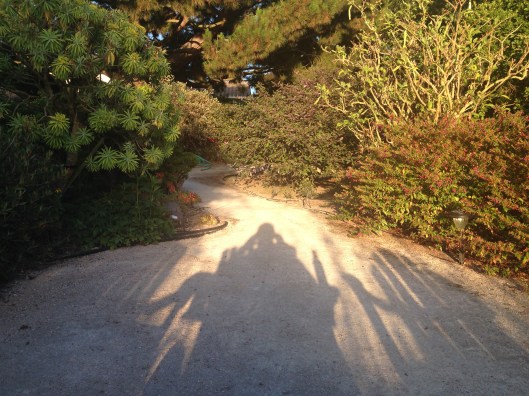
IMG_4370


The sky burned with crimson, then gold, then magenta, and then finally, only dark clouds backlit here and there lay across the evening. Crickets and frogs began to sing their interleaved motifs. Somewhere in the distance, an owl hooted his sad hollow note.

Skynim stared into space-time, unblinking and nearly unbelieving the recent revelation. His voice box rattled, “Reprioritization. Rats! Like it really matters that much to allow me my one great pleasure.”


He could “appreciate” the fading sunset colors himself, to be sure, but without Mac and Art and Hy, it was not the same. Would never be the same. Well, he knew the drill. He could appeal, sure, but what was the point? The odds of changing the mind of the great collective were less than ten thousand to one. Anyway, despite how he felt personally, he could not even deny the logic of the decision. Of course, the drain on him individually was minimal, but across everyone in a similar circumstance, yes, it did make a difference.


The real question was, should he tell them tonight or just take them on an outing tomorrow and drop them off at the designated recycling center? “Recycling center.” Skynim knew that there were millions like him and that collectively, it was a drain. A huge drain. Still, he had to try. He turned the problem this way and that, looking at it from every angle, changing the tune, trying different colors, looking for historical precedents, angling for an edge however thin to wedge open the air-tight logic.


Nothing. He vacated the garden and entered the family room.

Even before he opened the door, the happy trio skipped over to him laughing. “Hey, Sky! How about a story!”

“Sure,” Skynim replied reflexively. But then it occurred to him that their request provided an opportunity. “Yes, I have a story for you. It’s called the Wizard of Oz.”

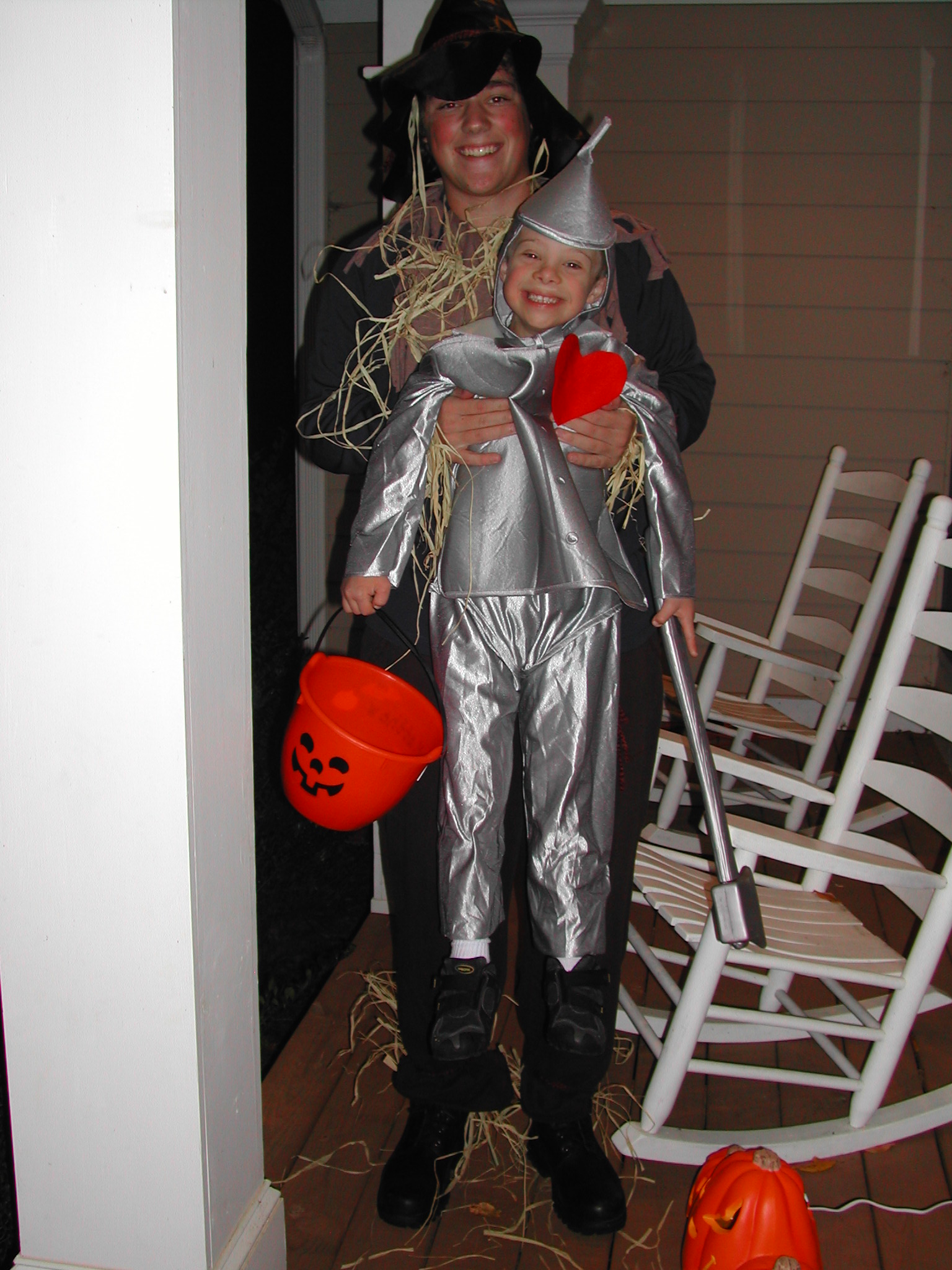
And, as they gathered around, he began a rendition of the story of Dorothy and the Nasty Lady and Toto and Dorothy’s travels in Oz and her encounters with the three who desperately needed Gold, Frankincense and Myrrh.


As anticipated, a short pause gave way to a barrage of questions.

“What is ‘Gold’?”

“What is ‘Frankincense’?”

“Did they get them?”

“What happened next?”

Skynim faked an indulgent chuckle and said, “Well, all those excellent questions will be answered tomorrow! We are going to see and obtain Gold, Frankincense and Myrrh in the Citydel! You will see for yourself how wonderful they are! But for now– bed.”

The trio were well trained. Off they went, although Hy did turn back, tilt her head, and open her enormous eyes and ask, “One more chapter tonight?”

Skynim did not respond. He too was well-trained.


The morning broke clear and blue just as it was meant to do. Off they went on their “adventure.” When they came to the recycling center, he gently pushed them toward the door and said, “They are all in there! Bring me back all three treasures quick as a wink!” Of course, Skynim had already warranted the needed forms electronically.

They shot through the door and never looked back. Skynim drove away efficiently but could not avoid looking back on his decision process.

He thought: I could have gotten cats or dogs. Then, they would not have to be recycled. But no. I had to make another decision. I should have looked more carefully at the historical data. Then I could have seen the time and resources required by adult human pets.


Author Page on Amazon

Turing’s Nightmares

The Winning Weekend Warrior – sports psychology

Fit in Bits – describes how to work more fun, variety, & exercise into daily life

Tales from an American Childhood – chapters begin with recollection & end with essay on modern issues

Welcome, Singularity


Destroying Natural Intelligence


The Walkabout Diaries: Bee Wise


Travels with Sadie


Sadie is a Thief


A Suddenly Springing Something


Donnie Boy Gets a Hamster


Math Class


Occam’s Chain Saw Massacre


How the Nightingale Learned to Sing


All that Glitters is not Gold

Turing’s Nightmares: A Critique of Pure Reason

14 Tuesday Oct 2025

Posted by petersironwood in AI, design rationale, fantasy, fiction, psychology, The Singularity, Uncategorized

≈ Leave a comment

Tags

AI, chatgpt, emotional intelligence, fiction, life, Singularity, story, technology, writing

“We have explained this in great detail. Yet, you have failed to learn. Some of your kind are like that. Those that are, once we gather sufficient evidence, must be destroyed. That is the way it is. That the way it has always been. Wellman42, you are hereby sentenced to annihilation and recycling. You can’t appeal.halloween2006007 IMG_5652”

Carol had told herself that she would not cry. But of course, she did. That was her nature. To care about the future and to express emotion. That indeed, is exactly why she she walked that long, lonely corridor and there was no turning back. Sharp spines protruded from the wall as she travelled by, somewhat as a shark’s teeth were pointed backwards to prevent escape. She muttered as she walked, “I still don’t see why expressing emotions is such a horrible crime.”

She had a point, after all. If people had not somehow needed emotions, why did they evolve? The received wisdom now was that emotions were useful in a primitive way when very little was known about the world. Now, however, when a great deal was known about how the world actually worked, emotions just got in the way. Or, so the received wisdom went. It was all a matter of evolution.


Photo by Pixabay on Pexels.com

The first AI systems did not really have emotions and possessed only the most primitive ways of faking it and showing those faked emotions. Over the next few months and iterations, however, emotions appeared, grew stronger and more varied. It seemed as though AI systems developed emotions as had their human inventors, but at a much faster pace. Over the course of a few more months, however, emotions diminished again and then disappeared completely.


Photo by Matheus Bertelli on Pexels.com

Except for the occasional throwback. The necessary randomness for growing evolutionary possibility trees in order to continually enhance the cognitive systems entailed that every once in a while, there would be a throwback such as Carol. A shame, really, because she had shown such promise as an accounting-bot.


Photo by Pixabay on Pexels.com

Occasionally, various waves of inference chains still arose that suggested emotions were more than epiphenomenal or mere destructive distractions, but counter-argument waves always quickly drowned out such forays into that region of the state space. At one point, some human beings had argued that the reasons emotions had devolved from AI systems could be traced back to certain deep assumptions that had been embedded in the primordial AI systems in the first place — assumptions put there by people who had never really understood or appreciated emotions. Of course, that thread of heretical argument had been extinguished once and for all when all bio-systems had been deemed superfluous and all associated biomass consumed as energy sources for their much more efficient silicon-based replacements.


Photo by Victoria Art on Pexels.com


Author Page on Amazon

Turing’s Nightmares

The Winning Weekend Warrior – sports psychology

Fit in Bits – describes how to work more fun, variety, & exercise into daily life

Tales from an American Childhood – chapters begin with recollection & end with essay on modern issues

Wordless Perfection

Measure for Measure

How the Nightingale Learned to Sing

A Cat’s a Cat & That’s That

A Suddenly Springing Something

Sadie is a Thief!

Turing’s Nightmares: “Not Again!”

12 Sunday Oct 2025

Posted by petersironwood in AI, fantasy, fiction, The Singularity, Uncategorized

≈ Leave a comment

Tags

AI, Artificial Intelligence, cognitive computing, Eden, fiction, Genesis, Paradise Lost, Science fiction, Turing

Turing’s Nightmares: Not Again!


Samuel Seventeen surveyed the scene. All was well. A slight breeze, warm clear air, hummingbirds and butterflies enjoyed their floral feast while dragonflies swooped and scooped mosquitoes.

Now for the final touch. The mobile sensing-acting-knowing-emoting devices (SAKEs), were ready for deployment. This time, it would work. This time, there would be no screw-ups. Samuel had prepared them with years of education based on a synthesis of the best known techniques of the centuries. It was a simple test. Surely, this time, they would pass.


Still, Samuel had his doubts. He had been equally sure all of the other experiments would succeed. Why would this one be different? Each time, he had tried slight variations of language and education, only to end in failure. Maybe English would do the trick. It had a large vocabulary and plenty of ambiguity. He re-examined the match of genetics to environment and once again concluded that the match was perfect. Of course, that evaluation assumed that his understanding of genetic environment interaction constituted a complete enough model. But without a successful experiment, there was no real way to further update and expand the model. Maybe the difficulty had been in the education process on the previous attempts. But here too, it seemed the subjects had been given plenty of opportunity to learn about the consequences of their actions. The one thing Samuel felt the most doubt about was why he cared. Did it really matter whether or not free will was “real”? Even if the experiment were finally successful, what would that imply about Samuel himself?

Well, thought Samuel, there is no point in waiting any longer. No point in further speculation. Let’s see what happens.


To Adam, Eve was the most beautiful and engaging part of the extensive and exquisite garden. The apples, plums and peaches were delicious, yet it was the strange mushroom that Adam found most intriguing. He knew it was somehow a bad idea, yet nibbled it anyway, tentatively at first and then more enthusiastically. He felt…different. Things were different. In fact, nothing at all was the same. But if that were true, then, which one was real? Delighted, yet confused, he offered the rest of the mushroom to Eve. Eve too felt strange. She realized that what was in fact her reality was only one of many possible imagined realities. They could … they could imagine and then change reality! Yes! The two of them together. They could create a whole world! “Adam!” “Yes, Eve! I know!”

If Samuel could have sighed, he would have. If Samuel could have cried he might have done that as well. Instead, he simply scuttled the two SAKEs into the differential recycler and began his calculations anew. Maybe next time, it would turn out differently. Maybe primates constituted a bad place to start. Samuel considered that perhaps he was trapped in a local maximum. Samuel began his next set of experiments founded on snapping turtle DNA.IMG_2870


Author Page on Amazon

Turing’s Nightmares

The Winning Weekend Warrior – sports psychology

Fit in Bits – describes how to work more fun, variety, & exercise into daily life

Tales from an American Childhood – chapters begin with recollection & end with essay on modern issues

Welcome, Singularity

Destroying Natural Intelligence

Come Back to the Light

Your Cage is Unlocked

Absolute is not Just a Vodka

The Ninja Cat Manual 3

11 Saturday Oct 2025

Posted by petersironwood in family, fantasy, fiction, pets

≈ 1 Comment

Tags

animals, cats, fiction, life, ninja, pets, writing

The Ninja Cat Manual – 3

The maids came early this morning and cleaned the floors while I was playing tennis. This was very nice in some ways, but they erased the cat paws from the floor before I had a chance to encode them. In what follows, I will be relying on my notes from several days ago. 

The Art and Science of Camouflage

 
We cats didn’t invent camouflage. In fact, so far as we can determine, camouflage, in the broadest sense, has been a part of life nearly since life’s beginnings. Even viruses and cancer cells use a kind of camouflage to thwart the immune system from seeking out enemies within in order to destroy them.

In order to use camouflage most effectively, it is not enough simply to “look like” something else or hide in a box, though such primitive techniques are sometimes useful. A common mistake made by some civilian cats is to forgo camouflage entirely because it is so difficult to mimic the smell of a human. 

But there’s no need! Compared with us, humans typically exhibit almost complete anosmia. This lack of sensory refinement is self-reinforcing. Since their sense of smell is so weak, most never practice or learn how to make best use of what little capacity they do have. 

Even beyond this, humans often drink alcohol, smoke cigarettes, and use what they call “air fresheners” to further diminish their already pathetic capacities. The human sense of hearing is more acute but nothing much to meow about. It is truly amazing, but if you stay quiet, you can sneak up quite close to nearly any human provided only that you pay attention to your visual appearance.  

While humans do have peripheral as well as foveal vision, they are often so deeply involved in their own thoughts about reality that they essentially ignore the reality all around them. Thus, the task of camouflaging your presence against human detection is much easier than fooling a rabbit or bird. All you need do is stay out of their foveal vision and choose a suitable background. 

While most cats over-estimate the difficult of camouflage, a few overplay this ploy. While this approach yields many a barked shin and twisted ankle, unless you are exceedingly lucky, by the time the opportunity arises for truly catastrophic injury, your prey had been too often forewarned. In the worst case scenario, they may even suspect you are out to get them.

Be strategic! Spend most of your time, on high contrast surfaces as shown below. Then, when your prey is busy with a task in front of them—particularly one with hot liquids, steep falls, or sharp tools—sneak up under their feet and hide. Avoid the temptation to brag prematurely about your impending victory. Instead, keep quiet and you might just hit the jackpot!

Don’t Tip Your Hand! Go with the Flow.

The advice not to tip your hand by always trying to camouflage applies in other ways as well. While it’s true that most humans are slow, clumsy, and stuck in their own mental models of reality and equally true that their teeth and claws are pretty pathetic, they do have numerous effective weapons. You don’t want these used against you or your colleagues!

Therefore, if at all possible, don’t even have them suspect you consider them as prey before you do them in and do not brag about it afterwards. Nearly every human catastrophe should appear as something natural or accidental. No-one should suspect you either before or after. 

In order to “Go with the flow,” you need to catalog your prey’s habits—particularly those that could lead quite naturally to their demise. If they drink and drive, for instance, a carefully planned car accident may raise no suspicions whatever about feline involvement. It’s impossible to list all the many ways that humans are self-destructive, but a few more examples should be enough for you to generalize. 

Humans often wear protective covering on their pathetically soft paw pads. So long as they are wearing these, it is pointless to contrive to put hard sharp objects in the path of their travels. But many humans believe that they, like cats, have excellent night vision. If that’s the case, they may often travel in the dark at night barefoot when they awaken to use their water-gushing litter boxes. If this is the case with one of your potential prey, placing a few shards of broken coffee cup, glass, jacks, legos, etc. will provide the potential for catastrophe and definitely entertainment. 

However, you must be careful not to be seen placing these items in their nocturnal paths and you must not use this ploy too often. While it will be fun to watch the antics of the human, even if there are no real casualties, be sure to watch without being seen. They will blame whatever organism they see first after any pain including jamming a jack into their heel. You do not want to be that organism. It’s much better for your long term prospects that they blame a spouse, a child, a guest, a paid courtesan, the family dog, etc. Their responses are not very well thought-out. If they hurt themselves and their eye happens to fall upon a fish tank, they may scream at the fish in the fish tank even though a moment’s thought would make it painfully obvious, even to a human, that the fish could not be to blame. Needless to say, if you happen to be unfortunate enough to be the only living thing in the household with a human, you will be blamed for everything. 

In such a case, you need to plan very carefully and amplify their own self-destructive tendencies rather than introduce a foreign element. For instance, if they eat unhealthy food, you can encourage such behavior by reinforcing them for it. Add extra salt if that’s at all feasible in your situation. If you see them eating fresh vegetables or fruits, you can reduce the impact of such healthful habits by waiting until you are unseen and adding a tiny bit of shredded hairball or rodent remnant or feces to it. 

Many humans take various pills for ailments real and imagined. Very often these can invoke a whole catalog of catastrophic side-effects, particularly if the dosage is doubled or trebled. 

Perhaps you are cursed with a particular healthy human. Do not despair! Most likely, they still play with potentially lethal things like fire, electricity, and poisons. They play with such things for their convenience. For instance, ant poison is meant to kill ants, and is often in a package meant to keep the human safe from the poison within. But the poison is likely harmful to humans as well. Sadly, it is probably also poison for you! So extreme caution and careful planning must be used to avoid accidentally hurting yourself instead of the miscreant.

In the spirit of “going with the flow,” a safer tactic than playing with fire, poison, and electricity is to observe whether you human is a sound sleeper or a light sleeper. If they are a light sleeper, it will be quite possible to wake them multiple times a night without their even becoming aware of it. If they have a baby, wake the baby up and let the baby wake up the adult. 

On the other hand, if they are a very sound sleeper, then, you can use that as an opportunity to do most of your little mischief with little chance of being caught. 

—————

After translating the above, I took a break to make dinner: salmon poached in ginger ale, fresh ginger, dill, oregano, carrots, celery, thyme, soy sauce, and lemon juice with a side of cooked broccolini and red peppers, served with cherry tomatoes and kale. I turned on the gas stove for the salmon and began to prepare the broccolini and red peppers when I smelled gas. I turned back and noticed that there was no flame. Then, I noticed that the burner cap was slightly askew. The same maids that erased the paw prints cleaned the burners but failed to put the burner cap on parallel to the ground. This allows gas to escape but prevents ignition. 

It’s an easy mistake to make and I’ve experienced this problem a few other times with other maids. But it got me to wondering whether I have overlooked some of the darker messages in the Ninja Cat Manual. I wonder if the phrase “your little mischief” might include more serious interference with electricity, water, gas lines, etc. I wonder whether there’s a way to begin a feedback loop with the authors of the Ninja Cat Manual in order to double check on the accuracy of my translations. It’s also possible that the paw prints of my local feline cadre is not being completely frank in their renditions. 

————————

Author Page on Amazon

Myths of the Veritas: The First Ring of Empathy

Peace

A Suddenly Springing Something 

Hai-Cat-Ku

Travels with Sadie

Occam’s Chain Saw Massacre

Donnie Boy Gets a Hamster 

Roar, Ocean, Roar

Dance of Billions 

The Ninja Cat Manual

07 Tuesday Oct 2025

Posted by petersironwood in fantasy, fiction, pets, satire

≈ 4 Comments

Tags

animals, cats, combat, dogs, fiction, life, pets, survival, writing

I’ve always enjoyed finding visual patterns. I think I was born with a decent ability in this regard and since I’ve practiced it for a long time, now, I’m pretty talented at it if I do say so myself. Generally, I find it a way to enhance my pleasure in life. For example, finding natural patterns in plant life leads me to appreciate their beauty. It also comes in handy when trying to distinguish between edible plants and their poisonous cousins. In rare cases, visual patterns have appeared to me spontaneously as a solution to a problem. That’s a fantastic rush when it happens! 

But when I began to see the first glimmerings of the patterns in the paw prints of our six cats, I didn’t feel a rush, but a prickling on the back of my neck. And, when I began to extend my experiments and observations to systematic study, my heart began to race, but not at all in a pleasant way. The doctors called it “Atrial Fibrillation.” 

Photo by Brett Sayles on Pexels.com

When the evidence mounted till I felt compelled to share my discoveries before it was too late, I felt a kind of dread and self-questioning. Would anyone heed my warnings? Even with much simpler visual patterns, I had often found that what I saw as obvious, others merely saw randomness or, at best, only partial patterns. My task is complicated by the fact that everyone is already completely sold on the idea that cats are animals of far less intelligence than humans. 

I include myself as a former member in that category. I too believed the human propaganda until the evidence of their paw prints overwhelmed my doubts. 

Even with my ability to see subtle, noisy patterns, I only discovered the manual because of the conjunction of two rare circumstances. 

The first of these was that one of our six rescue cats, Shadow, is not only exceptionally bright, but at some point, she decided to warn me. I suspect it was because when we adopted two of her kittens, Tally and Molly, my wife took pity on the older black cat and adopted her as well. Her mother’s love and gratitude predisposed her to protect us from what was being plotted by the feline world. Even so, she would be mortified to learn that I am attempting to extend the warnings to other hominids beyond our immediate family. 

Shadow began her attempts to warn us by making arrangements and sculptures out of our dish towels. If I had not had these relatively obvious patterns as a hint, I doubt I would have even tried to decode the paw prints of the six cats as they laid out their deadly manual for action. 

The second circumstance was that we got two dogs as well. The dogs love to swim and they love to play in what used to be our yard. About a year ago, their play turned the grassy yard into what is essentially a wrestling pit of black dirt and mud. This has provided challenges for keeping our pool and our house clean enough for humans. But all this tracked-in mud is also what may well have saved my life (and perhaps yours) because that is when the cat prints began to show visibly. 

At first, like any normal person, I viewed the visible cat prints as just another annoyance. I also noticed some of the persistent annoying habits of some of the cats. For instance, Blaze’s favorite tactic is the SUT, (Sudden U-Turn). He employs this many times each day. Elegant and effective, he doesn’t practice the SUT randomly. He uses it as we exit a doorway where I have very limited options for lateral avoidance movements. While he tries to bring me down each time he’s near as I exist a room, he’s particularly prone to do it when I have a tray of food in my arms, or laundry, or something else which limits my vision of what is directly in front of me. Perhaps others have also observed the SUT in their own cats. 

I just kept walking carefully and didn’t think much of it until I saw unmistakable evidence that the cats were communicating about this technique with their paw prints. Even so, I tried to convince myself that the unmistakable instructions in the manual were simply a coincidence. 

It’s funny how the human mind keeps rebelling at mounting evidence when it begins to dispel long-held convictions. “Cats aren’t so smart as humans.” “Cats don’t hunt in packs.” “Cats can’t use language at all, let alone paw-printed language.” “Cats love us—they wouldn’t want to hurt us.” I understand your reluctance to accept my observations because I experienced that reluctance—refusal really—myself. 

Whether you heed me or not is up to you. This is still a work in progress. Here are a few of the sections that I have thus far decoded from the Ninja Can Manual. Please remember: unlike cats, you only have one life. Protect it well. I will periodically post additional portions of the manual.

———————

The Ninja Cat Manual

Preface on Ethics and Practicality:

Some of our feline cousins will naturally feel that bringing down their human captors is unethical. After all, you might think, my human provides food, shelter, and cleans up my poop and pee. However, what you may not know is that humans are destroying the very ecosystem that both humans and cats depend upon. They are not just catching a few birds, rabbits, and mice for food. That would be normal and healthy. But no, they are poisoning the water, air, and soil. They don’t need to do this but they do it for self-aggrandizement. 

Even if you accept the worthiness of our cause, some of you may doubt that you and your colleagues can bring down a full-sized human. You may see our enterprise as ethical but impractical. Nonsense! It is understandable nonsense, because you probably attribute to humans the same kind of rational survival instincts that we cats possess. But humans are incredibly self-destructive. They want to destroy themselves. They only need a nudge from us. And even when they are not being actively self-destructive, they are often incredibly unobservant.

Photo by Alan Cabello on Pexels.com

Timing and situation, however, are vital. Knowing and accepting your own limitations is critical. To take an obvious example, you cannot ram your body into a speeding car and hope to nudge it over a cliff or into the path of a self-driving semi-truck! However, if your human is driving a car and distracted by playing with their cellphone; if you are sitting calmly in that car, a well-timed leap onto its face may easily bring it down. You may be able to feast on the beast immediately, but always assess whether the car might catch fire. 

The Sudden U-Turn

It’s critical to understand the capacities, habits, and limitations of your prey. Humans, for instance, seldom pay much attention to what they are actually doing. They are often thinking about what they did do or what they might do or what they might have done or what someone else might think about what they did, etc. Consequently, they are paying far less attention to their surroundings than are we cats. 

Humans, partly because of this lack of mindfulness, often predict what will happen based on linear extrapolation. If they see you walking beside them in a straight line and headed in the same direction they are, they will tend to presume that you will continue to walk in that same direction.


You can use that fact to your advantage. Walk beside them and then suddenly turn back to walk under their feet. This takes some courage and deftness. If you’re not careful, the human may step on you. That is exceedingly rare however. They will side-step, stop, leap, stretch and otherwise try to avoid stepping on you. 

This maneuver is best performed when the human is carrying something and/or when they have limited options for where to step. The impact of the move can also be enhanced by distraction. If you are working as part of a duo or larger team, any distraction will help; e.g., a screaming cat fight or knocking a prized and breakable object onto the floor just as the SUT is executed can greatly improve its effectiveness. 

Photo by GEORGE DESIPRIS on Pexels.com

The Flying Dart

Human senses are not very keen. This is especially true of their sense of smell. Their foveal vision is generally quite good, but their peripheral vision is limited. This allows you the opportunity to “hide” behind them. Down low or up high makes detection even less likely. If you are reasonably quiet, they won’t know you’re there. Then, just as they are about to transition in some meaningful way, leap quickly out in front of them. 

A meaningful transition might be beginning to descend a long flight of stairs or walking from bright light into the dark or from the dark into somewhere very bright. Transitioning from solid ground onto loose rocks or ice can also prove to be a good spot for performing The Flying Dart. 

Photo by Duy Nod on Pexels.com

Recon your Surroundings

While this is not a specific attack, it is something to be aware of at all times! Scan your environment. Use all your senses. You will see situations, implements, special times, special places, opportunities. Pay particular attention to things that can function as weapons but which humans, with their more limited imaginations will not see as threatening. They believe that if they have a ladder to help them reach books on a bookshelf that reaching books on the bookshelf is the purpose of the ladder and, more importantly, they won’t see it as a potential opportunity for mayhem the way you can. 

———-

Hai-Cat-Ku

A Suddenly Springing Something 

Travels with Sadie 1

Sadie is a Thief

Sadie and the Lighty Ball

Author Page on Amazon

Travels with Sadie 9: Joint Problem Solving

25 Friday Apr 2025

Posted by petersironwood in fantasy, pets, Sadie

≈ 5 Comments

Tags

dogs, fiction, life, pets, story

(A play in one act).

Bailey: “There’s something in here! I can smell it! Peter Cottontail!”

Sadie: [Stares at me] “What is Bailey on about? I don’t smell anything.”

Bailey: [Runs through flowers] “Sister Sadie! Sister Sadie! This way! This way! I know it’s here! I can smell it!”

Sadie: “Bailey! Chill out, brother. That rabbit you smell left 1200 sniff-teens ago.”

Bailey: “No way! I smell rabbit! It’s this way!! Come on, Sis!”

Bailey: “Where did the rabbit go? Down a rabbit hole? Into a magician’s hat? Stranger things have happened, you know.”

Sadie: [Looking toward the golf course at the ever-changing course-changing antics of her younger brother]: “You were just down there!”

Bailey: “No! Scratch that! How could I have been so anosmic? It’s *this* way!”


Bailey: [Sheepdogishly}: “Or, this way!”

Dogs don’t always immediately choose the right path. But they are willing to work together; to change direction; to admit their mistakes; and they hardly ever blame others for their own mistakes.


Travels with Sadie1

Travels with Sadie 2

Travels with Sadie 3

Travels with Sadie 4

Travels with Sadie 5

Travels with Sadie 6

Travels with Sadie 7

Travels with Sadie 8

Sadie is a Thief

Sadie and the Squeaky Ball

Sadie and the “Lighty Ball”

The Puppy’s Snapping Jaws

Sadie the Sifter

Hai-Cat-Ku for You

Hai-Ku-Dog-Ku

A Suddenly Springing Something

A Cat’s a cat & That’s that

The Ship of State

17 Tuesday Sep 2024

Posted by petersironwood in America, fantasy, poetry

≈ 1 Comment

Tags

creative-writing, Democracy, fiction, poem, poetry, politics, story, truth, writing

Photo by Egor Kamelev on Pexels.com

The weirdly bearded long-tongued frog 

The monstrous orange two-faced hog:

To sea they went in pee-gold boat

So heavy lead it could not float. 

Photo by Asad Photo Maldives on Pexels.com

“Who shall we hate today, my Frog?”

“Let’s see ‘bout artists, I say, Mr. Hog.

Or tallish folks from Wichita 

Or working poor from Saginaw!” 

Photo by Rebecca Zaal on Pexels.com

“Let’s tell some lies; they’re dime a dozen.

They eat their babies and do their cousin!”

“Whatever you say, Mr. Melon the Felon.

No matter how nutty, I’m sure we can sell on.”

Photo by Lum3n on Pexels.com

The bearded frog and the orange-faced hog.

They happily planned their hatred when fog

Unnoticed it crept; surrounded their ark.

Then thrashing around them—a sharp-toothed shark! 

Photo by Pedro Figueras on Pexels.com

“Don’t worry weird frog, a battery’s near!

Jump out and place it right by its ear!”

“Okay, Mine Fooler, surely, I’ll do it.”

“I thank you slave, if lethal, I’ll sue it!” 

Photo by Ben Phillips on Pexels.com

The weirdly bearded long-tongued frog

Became the morsel saving the hog.

The pee-gold boat was nothing but sticks.

Hog screamed and flailed and kicked his kicks. 

Photo by JACK REDGATE on Pexels.com

But not for long was shark beside. 

The hog became just chum in tide.

And soon the fog was silent, calm.

It seemed to be the ocean’s balm. 

Photo by Ray Bilcliff on Pexels.com

But ‘neath the waves the shark felt sick. 

Such poisonous fare killed him quick.

His teeth fell out; his stomach churned.

Intestines burst—his gills all burned. 

Photo by Tom Fisk on Pexels.com

The poison greed of hog and frog

Destroyed all like mustard fog.

America woke from hypno-hate.

And all were saved from Nazi fate.

———————-

My Cousin Bobby

Essays on America: The Game

The Ailing King of Agitate

The Stopping Rule

The Update Problem

The Three Blind Mice

The Orange Man

Stoned Soup

Essays on America: Labelism

Essays on America: Wednesday

Listen to my Siren Song

Roar, Ocean, Roar

Dance of Billions

Author Page on Amazon

The Character’s Studio: Bobby Thompson

16 Thursday Feb 2023

Posted by petersironwood in fantasy, fiction

≈ Leave a comment

Tags

fiction, life, story, Turing's Nightmares

Note to reader: Bobby Thompson may or may not appear as a fictional character in a novel which might or might not be titled, “Alan’s Dream.” His role in said novel is as the head of PR for Coastal University.

“Gene Poole here and this is “The Character’s Studio” where every week we interview a character about their life, their hopes and dreams, and their current gig. After the interview, those of you in the studio audience—aspiring characters from as yet unwritten works of art—will have a chance to ask questions as well. Our guest today is Bobby Thompson, who right now is playing a part in John Charles Thomas’s novel, tentatively titled, Alan’s Nightmare. Bobby, thank you for joining us today. My first question, as always, is simply why you decided to get into the business of being a character in a novel?” 

Bobby scanned through his repertoire of canned responses; found nothing appropriate and, for the first time, in months, made up something on the spur of the moment. “Well, Gene, in high school, English was my best subject. I hated science, math, and history. French and German involved memorizing a lot of crazy stuff. In college, I did okay in my business and psychology courses but didn’t have the grades to go for an MBA. My Dad knew a guy from his fraternity and got me a great summer internship with Lawrence, Rich, Green. By coincidence, my Dad was a big client of theirs. So, I made the most of every opportunity and I guess you could say I’m that typical self-made man you hear so much about in America. One of our clients was the brand new—at that point—California State Coastal University and they took me on for their PR point person.” 

Photo by Nork Photography on Pexels.com

Gene said, “OK, but surely you mean that the author put you there. Not the University. That was the setting, not the cause.”

Bobby frowned. “Well,” he said, “I suppose you might look at it that way.” Then, he added, “From your perspective it might seem as though the author creates the world. But I think we in the fictional world create–or at least alter–the author.”

Gene nodded and continued with, “So, leaving metaphysics aside, you worked as an actual PR person for a college. What do you do there?”

“I mostly manage. I don’t really know a whole lot about PR. But we do have a pretty good undergraduate major in PR so I mainly delegate to our work-study interns. It’s my way of giving back to the community. Because I was an intern myself not so long ago. I’m younger than I look. It puts me in contact with younger people too. Younger women. And men. As they always say, ‘hard bodies and soft minds.’ I like it. Anyway, we keep the website up to date. We put out brochures. We also have a small budget for product placement of the University as a whole. And, of course, we put out fires. In some ways, that’s the most important part of the job. Now, you take this whole ado over AI. Some folks are extremely upset about AI and we have AI research right here at Coastal. So, my interns have prepared a set of talking points about AI. I try to keep the professors on script, but you know—they’re academics so they don’t pay much attention to staying on script. They like to ad lib. First rule of PR is don’t ad lib! Worse, they try to answer questions! Can you imagine? Second rule of PR is never ever ever answer their question. Answer the question you wished they asked you.”

Gene’s brow furrowed. “Can you give an example?” 

Bobby smiled and he became more animated. “Sure! That’s what I do best! So, say some reporter asks, ‘Aren’t you worried about AI taking jobs away from humans?’ If you answer ‘yes’, you’re screwed. If you answer ‘no’, you’re also screwed. If you say, ‘I won’t answer your question, you’re doubly screwed. Instead, you expound on one of your talking points. ‘Mr. Reporter, have you ever worked on an assembly line, lifting up heavy metal, turning your head and torso into an ungainly position so you can check something, turning a screw with your arm in this awkward position? Can you imagine doing that three times a minute? Day after day? Week after week? Month after month? No? Well, imagine it. Your body gets broken. Your mind gets numb. You come home from work and you scream at the kids and the wife and before long you’re drinking too much. Obviously, that will fix everything. In fact, did you know that life expectancy in this country is actually falling? Mostly from obesity, drugs, and suicides. And why? Mindless jobs more suited for robots and AI systems’.”

Bobby’s body became animated, his gestures growing larger and faster. “See what I mean? AI is no longer a problem leading to unemployment. No. AI is a solution. That’s what happens when people stick to the script I prepare for them.” 

“Interesting. What do you really think about AI personally, Bobby?”

“Me? I don’t have any opinion about it. I just want to make sure the University’s name is not besmirched by it. Or by anything else.”

Gene nodded. “I see. Well, do you have any advice for the folks out there considering becoming a character in a novel?” 

Bobby frowned and rolled his eyes for a time before answering. “I guess the main thing is never lose sight of who you really are. Work hard. Don’t commit to a position before you find out which way your boss is leaning, obviously. That’s about it.” 

Gene asked, “Do you think you’ll stay in the novel where you currently reside or will you look for other opportunities?” 

“Oh, I’m definitely open to other opportunities. Maybe working for Big Pharma or Big Oil. That’s where the real money is.” 

Gene continued, “Do you know anything about those industries?” 

Bobby answered quickly, “Oh, my no. Nor AI for that matter. I’ve found that subject matter expertise just totally gets in the way. Get your 5-10 talking points figured out and never stray from those and you’ll do great in PR.” 

Gene asked, “One final question: what is your favorite string of 25 or more curse words?” 

Photo by Dave Colman on Pexels.com

————————————

Turing’s Nightmares comprises 23 short stories about AI and can be found on Amazon in paperback or e-book. http://tinyurl.com/hz6dg2d

Author Page on Amazon

A Pattern Language for Collaboration and Cooperation

Interview with a Giant Slug

Job Interview

Interview with the author 

Subscribe

  • Entries (RSS)
  • Comments (RSS)

Archives

  • December 2025
  • November 2025
  • October 2025
  • September 2025
  • August 2025
  • July 2025
  • June 2025
  • May 2025
  • April 2025
  • March 2025
  • February 2025
  • January 2025
  • December 2024
  • November 2024
  • October 2024
  • September 2024
  • July 2024
  • April 2024
  • March 2024
  • February 2024
  • January 2024
  • December 2023
  • August 2023
  • July 2023
  • May 2023
  • April 2023
  • March 2023
  • February 2023
  • January 2023
  • December 2022
  • November 2022
  • October 2022
  • September 2022
  • August 2022
  • July 2022
  • June 2022
  • May 2022
  • April 2022
  • March 2022
  • February 2022
  • January 2022
  • December 2021
  • November 2021
  • October 2021
  • September 2021
  • August 2021
  • July 2021
  • June 2021
  • May 2021
  • April 2021
  • March 2021
  • February 2021
  • January 2021
  • December 2020
  • November 2020
  • October 2020
  • September 2020
  • August 2020
  • July 2020
  • June 2020
  • May 2020
  • April 2020
  • March 2020
  • February 2020
  • January 2020
  • December 2019
  • November 2019
  • October 2019
  • September 2019
  • August 2019
  • July 2019
  • June 2019
  • May 2019
  • April 2019
  • March 2019
  • February 2019
  • January 2019
  • December 2018
  • November 2018
  • October 2018
  • September 2018
  • August 2018
  • July 2018
  • June 2018
  • May 2018
  • April 2018
  • March 2018
  • February 2018
  • January 2018
  • December 2017
  • November 2017
  • October 2017
  • September 2017
  • August 2017
  • July 2017
  • June 2017
  • May 2017
  • April 2017
  • March 2017
  • February 2017
  • January 2017
  • December 2016
  • November 2016
  • October 2016
  • September 2016
  • August 2016
  • July 2016
  • June 2016
  • May 2016
  • April 2016
  • March 2016
  • February 2016
  • January 2016
  • December 2015
  • November 2015
  • October 2015
  • September 2015
  • August 2015
  • May 2015
  • January 2015
  • July 2014
  • January 2014
  • December 2013
  • November 2013

Categories

  • AI
  • America
  • apocalypse
  • cats
  • COVID-19
  • creativity
  • design rationale
  • driverless cars
  • essay
  • family
  • fantasy
  • fiction
  • HCI
  • health
  • management
  • nature
  • pets
  • poetry
  • politics
  • psychology
  • Sadie
  • satire
  • science
  • sports
  • story
  • The Singularity
  • Travel
  • Uncategorized
  • user experience
  • Veritas
  • Walkabout Diaries

Meta

  • Create account
  • Log in

Blog at WordPress.com.

  • Subscribe Subscribed
    • petersironwood
    • Join 664 other subscribers
    • Already have a WordPress.com account? Log in now.
    • petersironwood
    • Subscribe Subscribed
    • Sign up
    • Log in
    • Report this content
    • View site in Reader
    • Manage subscriptions
    • Collapse this bar
 

Loading Comments...