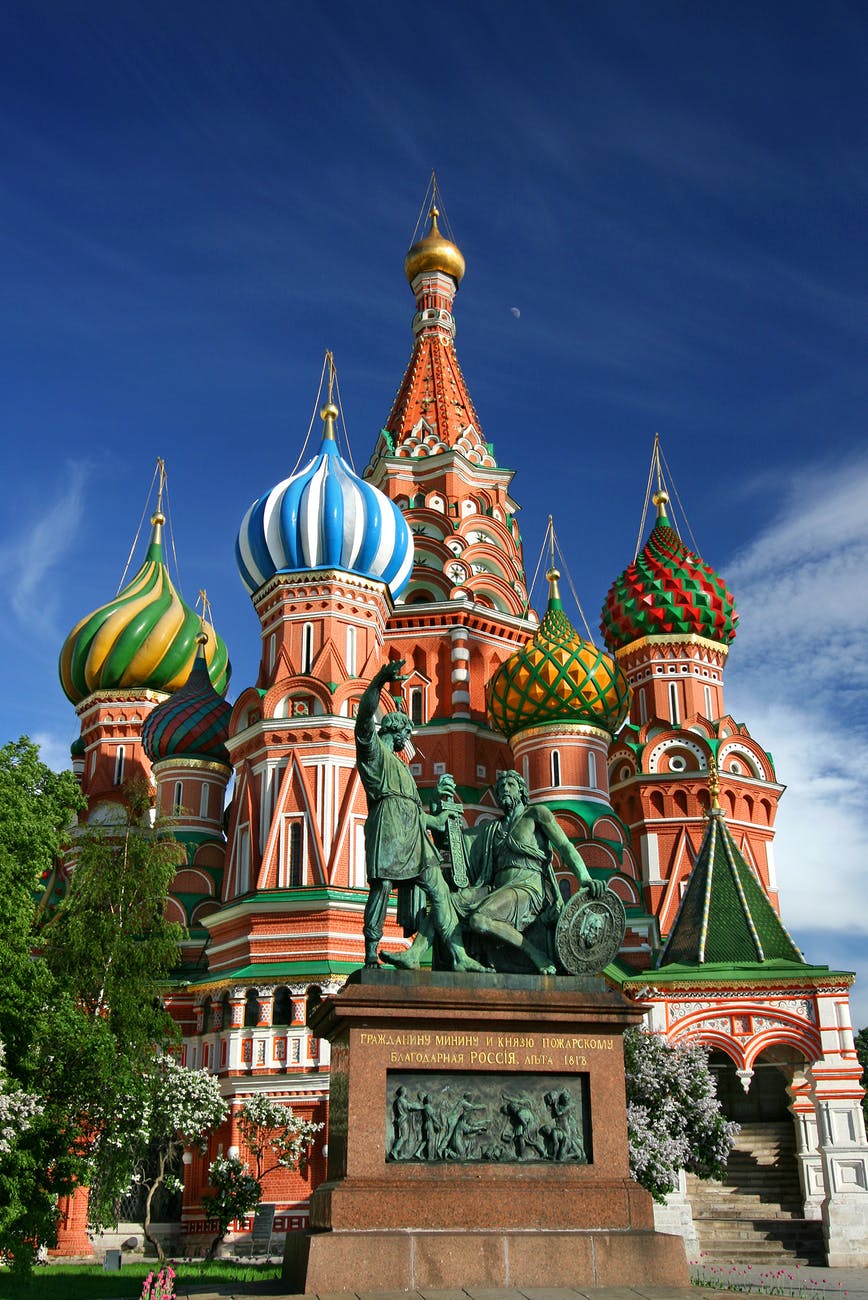
So, our instructor assigned us to write a story with a strong emphasis on irony. Mine is about a hypothetical future American tragedy of a coup financed and designed by the Kremlin. By way of summary, this is how it related to irony and I appended this to the story for the instructor’s edification.
“And, the most ironic part of the whole American tragedy was this: even though he spent his entire life conning others, it was beyond his ken to consider that Vlademort Putrid was likewise conning him. He had been lying and bragging so long about his competence in all things that he actually came to believe he was smarter and a better strategist than Putrid. Putrid likely could have done it alone. But, of course, he did not do it alone. Putrid had the collaboration of highly trained, highly dedicated KBG/GRU professionals to help.
“In principle, perhaps he could have enlisted American experts, but he didn’t feel the need. Furthermore, he faced a real dilemma. He couldn’t openly ask any but the corrupt for help against American interests. And those who were corrupt were generally far less competent and always less well connected to a healthy network of professionals than their more numerous and genuinely patriotic counterparts.
“I said that was the most ironic part of the whole American tragedy, but there are a few close contenders. Another highly ironic part of his entire con game was that he played the game as though the only thing in the universe that mattered was his own pleasure. Of course, no matter what moves he made or is yet to make, he is not actually immortal in and of himself. By lying to himself and everyone else, he essentially cut himself off from being part of The Great Tree of Life (or at least from being a non-cancerous part). Rather than living on through his actions that benefited the whole, he delimited his life, curtailed it, circumscribed it to his own physical mortality.
“The intertwined corollary of the above is that even while he lived, he missed out on the best feeling in life: being in caring and loving honest relationships. In order to absolutely and positively ensure that he grabbed as much as possible for himself, he limited his “prizes” to mere material crap and the pleasure of cruelty. “
So, this is how they responded:
“When it comes to being ironic, this is definitely A plus material.
However, sad to say, there are also some serious problems with your narrative. First, of all Americans are too well educated to fall for the lies of a known con man. And, why not simply make the character more believable? It’s not plausible that so many people would fall for the con. Apart from that, the cowardice you portray on the part of so many within his own party is also unbelievable.
Still, the mechanics of the writing was also clean, so I’m giving you a B+. Next time, focus on believability rather than forgoing that to punch the irony.”
The Winning Weekend Warrior focuses on the mental game for all sports using examples from tennis, golf, baseball, and other sports. It covers self-talk, imagery, mental practice, strategy, tactics, & sportsmanship. http://tinyurl.com/ng2heq3
Turing’s Nightmares explores the implications and ethics of Artificial Intelligence through fictional short stories. http://tinyurl.com/hz6dg2d
Fit in Bits shows many ways to put more fun, variety, & exercise into daily chores and habits to help with strength, flexibility, fitness, and balance. http://tinyurl.com/h6c7fce
Tales from an American Childhood recounts early experiences mainly in the American Midwest in the 1950’s and relates them to contemporary issues and events. https://tinyurl.com/y9ajvz9j
Dream Planet. Where do you run when the whole world is crumbling under the weight of human folly? When the lethal Conformers invade 22nd century Pittsburgh, escape becomes the top priority for lovebird scavengers Alex and Eva.
A talking worm develops an extremely loud screaming sound. He’s wrinkled and ugly and orange. But neither his physical ugliness nor his rancorous sound is his worst feature. He has evolved an extremely toxic poison.
How is it so toxic?
It is really three separate toxins: Fear and Hate and Greed. Together they are much more toxic than any one of them is alone.
He blackmails everyone around him, from sea to shining sea. He threatens to release the poison into the air if he doesn’t always get his way.
His way is to take all the money. His way is to take all the power.
His way is to use the money and power to make more toxin.
He uses the extra toxin to threaten even more people that he will release the poison into the air if he doesn’t get his way.
His way is to take all the money. His way is to take all the power.
His way is to use the money and power to make more toxin.
Eventually, he tries to blackmail everyone on earth.
He explains that he is a “self-made worm” — that it is his right to take over the world because he and he alone made the world.
That is, of course, a lie.
Life evolved for 4 billion years. All his ancestors, and the life his ancestors interacted with created the conditions for him to make the toxins. He doesn’t mind that he lies. Lying is fun!
He gets his way. To him, that’s all that matters.
He gets all the money.
He gets all the power.
He’s bored.
For fun, he releases the poison any way.
But now, it’s enough to destroy every living thing on earth.
The Constitution of the United States of America is a foundational document.The Constitution outlines a form of government and processes to ensure democracy. At the same time that the Constitution was ratified, so too were ten important Amendments collectively referred to as “The Bill of Rights.” The founders rightly thought that outlining the structures and processes of government was not enough to ensure democracy. It was also necessary, as they foresaw, to outline rights of the people that could not be abridged by those governmental structures and processes. They are often referred to as “unalienable rights.”
To comprehend what the Constitution says and how it came to be, it’s useful to outline just a little of what the founders were reacting to and who they were. They were men. For the most part, they were financially successful men and relatively well-educated. They were “white” men. They were overwhelmingly of European descent. They were mainly English speaking. They had successfully executed a War of Independence against England. They were not a homogenous group, but compared with the world as a whole or the current population of the United States, it was a very homogeneous group of people. They were still quite aware of the excesses of monarchies and the horrors of tyranny. That background is important to understanding why they wanted to make sure that people’s rights were protected from government over-reach.
Their homogeneity as relatively rich, well-educated, white men meant that the envisioned “government” would be for their own kind. Blacks had no rights. Children had no rights. Women had no rights. The other species on the planet had no rights. When they talked about rights, they were talking about their rights.
Their background and particularly, the homogeneity of their background, also meant that they presumed some degree of honor and rationality existed in the whole cohort. They didn’t agree with each other about everything. Far from it. There were many debates and compromises baked into the Constitution.
I cannot read the minds of the founders, but I imagine that because of their recent experience with tyrants, they were quite aware of the necessity of protecting rights. It’s not clear to me that they thought much about the need to codify obligations. They had been brought up to assume obligations and so had the other founders they worked with. It’s not surprising that they did not to bother to enumerate obligations. These were the days when a young woman or man of nobility would forgo someone they truly loved in order to fulfill family obligations. If men thought their “honor” had been besmirched they would duel to the death over it. Honor really mattered. I think that’s part of why they didn’t feel it necessary to even think about a “Bill of Obligations.”
I would like to engage in a little thought experiment based on the premise that now, centuries later, we do need to think carefully about obligations. You have the right to free speech. You do not have the right to go into a crowded theater and scream “FIRE!” In order to cause a panic and kill people. This didn’t occur to the founders because, none of them would have ever done such a thing; at least, because of honor. It isn’t that rich white men were morally or ethically superior to a multi-cultural society. Far from it. But it is another aspect of the historical reason, I think, why they might never have bothered to enumerate such obligations.
To start, let’s look at the very First Amendment to the Constitution. I hope everyone will have the patience to wade through this lengthy document.
Congress shall make no law respecting an establishment of religion, or prohibiting the free exercise thereof; or abridging the freedom of speech, or of the press; or the right of the people peaceably to assemble, and to petition the Government for a redress of grievances.
Oh, look. It’s really not that long after all.
The government should not be in the business of establishing a religion.
The government should not restrict people from practicing their religion.
The government should not abridge freedom of speech.
The government should not abridge the freedom of the press.
The government should not abridge the freedom to peacefully assemble.
The government should not abridge the freedom of people to petition the government for a redress of grievances.
Despite the simplicity of the concept, there have been various arguments, often in courts, about what these rights “really” mean. It is not legal to scream fire it a crowded theater. That seems reasonable. It is legal to use your wealth to ensure that your favorite candidate wins because the courts have recently held that spending money to buy politicians is just “freedom of speech.” Huh?
But I don’t want to argue about how to interpret “The Right of Free Speech.” Rather, I want to examine what might be reasonable and commensurate clauses in “The Obligations of Free Speech.”
Here are some candidates.
People have an obligation to speak the truth.
People have an obligation to listen respectfully.
People have an obligation to consider that their own opinion is not the only one that matters.
People have an obligation to follow agreed upon rules of conduct for the speech they are engaged in.
One major benefit of the right to free speech is that ideas can be discussed and debated, and people working together can come up with more intelligent decisions that those of any single individual. In order for that to work, we need to hear many ideas, not just one. The obligations of free speech are also necessary for that process to work in achieving its goals. If we hear many ideas but many people lie, or refuse to listen to each other, or are disrespectful or break the rules of debate, we will not have intelligent decisions.
Consider an analogy to tennis, although you could generate one for any sport; indeed, for nearly any human endeavor, but let’s stick to tennis. In tennis, you have the right to hit whatever shot you want. You can hit it hard or soft, or anywhere in between. You can hit it flat or put a lot of topspin on the ball or slice it or put sidespin on. You can drive the ball or hit a lob or a drop shot. You can hit it down the line or cross-court.
Over the years, people have tried all sorts of various strategies and tactics for tennis. People use different grips. Some hit a two-handed backhand and some hit a one-handed backhand. A few even hit with two hands on both forehand and backhand. People try different things out and play improves, not only for the individual, but for the sport. So it is in any sport. Performance improves over time because people try out different things and what works better tends to be repeated and what does not work tends to fade away. But none of that would happen unless all the players also follow the rules. Their right to hit the kind of shot that suits them works hand in hand with their obligation to follow the rules. If players did not fulfill their obligations to play by the rules, and instead began simply insisting that they had won every point, tennis as a whole would not improve nor would the individual players improve. Most would eventually quit and among those who were left “playing tennis,” without rules or obligations, it would soon degenerate into a fist fight, or, more likely, I suppose, it would escalate from shouting to shooting.
It’s the same for every human endeavor involving more than one person. You not only have some freedom of action vis a vis the other(s); you also have obligations. Just because you feel like assaulting someone on the street and taking their money, doesn’t mean you can do it. People who assault people are meant to end up in jail. Most eventually do.
A society with a high degree of freedom and no sense of obligations is like buying a Lambroghini and paying extra not to have any brakes. It isn’t just human institutions and inventions that have opposing systems in balance. Look at life itself. Inhibition/excitation; inhale/exhale; sympathetic nervous system/para-sympathetic nervous system; biceps/triceps; adductors/abductors; dilation/contraction; heartbeats; sleep cycles; ATP/ADP Cycle.
By the way, a society that was all obligations and no freedom would be like buying a Lambroghini and paying extra not to have a steering wheel or gas pedal; having the tires replaced by railroad wheels; you get to ride your Lambroghini down the track and back up again. That’s it. Well, that sucks! Yes. It literally sucks most of the fun out of life! It makes your life more predictable, but that’s not a good tradeoff; at least, not to me.
Compared with most people, I think I prefer a lot of freedom. That doesn’t mean that I don’t believe in obligation, however, or that my freedom is not subject to limits when it infringes on the freedom of others. I strongly prefer freedom of speech. I’m very happy for the First Amendment. But I would not go into a crowded theater and scream “Fire!” Nor should you.
How about someone using Big Data analytics on your on-line behavior being used to manipulate you into buying stuff from the company who’s paying for you data. Here’s the deal. You think you are communicating on GiantSocialMediumCompany with your friends. The GiantSocialMediumCompany hardly seems as though it’s even there.
“Sure, it pops up some annoying ad about Kepsi or Poke every so often, but it easy enough to scroll past it. Except, you know that most recent Kepsi ad was kind a cute. Anyway, of course, I didn’t click on it.”
Uh-huh. But you see, the fact that you even slowed down as you scrolled down past the Kepsi ad, is interesting data to Kepsi (and Poke too for that matter). They aren’t the only two parties who will be interested in your data. Who else might benefit? Lots of people. From many examples of your on-line behavior over time, they can determine which “wedge issue” you are most likely to emotionally react to. They likely have a rough categorization of the type of approach you’d pay most attention to: visual, clever text, GIF, video, website, complex/simple, personal/impersonal, etc. Then, you can be targeted with arguments that are calculated — not to open your mind or to help you see the other side. No. These are arguments designed to move you a little further away from your neighbors and friends; anyone who has even a slightly different opinion about a topic you care about. That’s the purpose. Not to educate. To divide. And it’s working.
And, that, to me, is a an absolutely egregious breach of what should be the First Article in the Bill of Obligations.
Cancer has not only “forgotten the face of its fathers” (as Stephen King’s gunslinger says).
Cancer has forgotten the fact that it even had fathers and mothers.
Cancer has forgotten the fact that its life is made easier, every day because of those who went before.
Cancer has forgotten that every little victory it feels today comes about because of millions of choices and struggles of other lives that went before.
Cancer doesn’t care.
Cancer acts as though it is the only life form in the universe that really “counts.”
Throughout history, there have been many individuals who act as cancer.
A few of them have gotten into positions of power and used that power to blackmail, strong-arm, and manipulate others into joining the cancer. Their “relationships” are based on lies and power.
Now, we live in an atomic era when cancerous people in power use that power to restrict the ability of their own people to know the truth.
We live in an atomic era when cancerous people in power threaten to use atomic weapons unless they get their way.
Cancerous leadership has never been a good thing in the same way that having a cancerous tumor in your body has never been a good thing.
Perhaps you think: well, I don’t really care much about politics.
Okay, then what do you care about?
Sports? Guess what. Sports are ruined by dick-taters. Outcomes can be predetermined or overturned by the dick-tater. Cheating becomes common. If you don’t “toe the line” politically, you won’t be able to play or you’ll be imprisoned or poisoned.
Business? Maybe you just care about business. Guess what. Business success is determined by how much “protection” money you pay to the dick-tater. Whoever pays the most will succeed. And, even then you aren’t safe. When business people become too successful under a dick-tater, the dick-tater destroys them and takes their assets. Just like Putrid.
Your family? Maybe you focus your attention on your family so you don’t really care about whether you live in a dick-tater$hit. You should care. Under dick-taters, the children are taught to spy on and inform the authorities if the parents do something “bad.” Of course, since it’s a dick-tater$hit, what counts as “bad” can change from day to day to the last syllable of recorded time. And your children might or might not understand what you actually said. No matter. Turning in the parents will be a “feather in their cap.” How do you think that will change your family? Husbands and wives are also encouraged to turn on one another. Romantic love and family love — these are antithetical to a totalitarian state. Everyone should love the dick-tater more than anyone in their own family. And, they’ll be asked to prove it. Tell your teen-ager they can’t date a drunkard. Yeah, that might make sense. But understand: if they get upset with your parental guidance, they may turn you in. They’ll make up crap. There’s no burden of proof in the courts that are run by a dick-tater. The dick-tater doesn’t really even care whether you’re guilty or not. Having an innocent person jailed for crimes against the state, especially if they’re turned in by their spouse or kid — that sends a nice strong message to everyone else in the Teliot.
You may have thought I was going to end that paragraph with the word “country.” I considered that. But it no longer a real country. It is more akin to a toilet. In an ordinary toilet, the waste is flushed. But in a dick-tater$hit, the waste is kept. Whatever is decent, honest, truthful, creative, loving — that is what is flushed away. Instead of a country, you have a reverse toilet — a Teliot.
Not caring whether or not you and your family and friends live in a dick-tater$hit — that makes exactly as much sense as not caring whether or not you and your family and friends have cancer.
“I don’t care if I have cancer, because I’m really into sports!”
Huh?
If you die, you can’t play or even watch sports.
“I don’t care if I have cancer, because I really care about my business!”
Huh?
If you die, you can’t run a business.
“I don’t care if I have cancer, because I care about my family!”
Huh?
Maybe ask your family whether cancer affects them.
“Well,” you might say, “Democracies are far from perfect too!”
That’s true. Democracies are not perfect. Sometimes, people are unfair, even in democracies. Sometimes people are cruel. Sometimes people are corrupt.
Similarly, even if you are cancer free, you might stub your toe, or cut your finger shaving or slicing vegetables. You might sprain your ankle. And a few people will die in auto accidents. Does that mean it doesn’t matter whether or not you have cancer? Cancer, if left untreated, will necessarily be bad. It is the very nature of cancer to be bad.
Imagine a world in which you don’t just suddenly “get cancer.” You don’t have some weird symptom, go to the doctor, have some tests and find out you “have cancer.” No. Imagine that the only way you get cancer is if you choose to have cancer. You go to the doctor and he offers you a choice: “Would you like cancer? I can give you some, really cheap.”
Imagine a society who decides, “People stub their toes and get sick anyway so let’s all get cancer!”
Imagine a society who decides: “People aren’t perfect under a democracy so let’s have a dick-tater run the country!”
Maybe all you really care about is food. Guess what? Food will be worse under a dick-tater$hit. Regulations about food safety will be rolled back. Your food will be more tainted.
Maybe all you really care about is art. Guess what? Art will be regulated under a dick-tater. In the Teliot State, the good stuff will all be flushed away, along with the artists who produced those works. The dick-tater will decide which are gets presented and most will be commissioned to glorify the dick-tater.
In the Teliot State, everything good is tainted. Everything good dies. Everyone decent is suppressed. Even the military is tainted, as the ineptitude of the massive Putrid war effort reveals. The police. The courts. The politicians. The shopkeepers. The business tycoons. The teachers. The parents. The kids. Everyone must allow the cancer of totalitarianism to invade and corrupt their body, their mind, their soul.
Democracy is hard. I grant that. And often it is messy. But it is a path to life. The Teliot State is a path to death. Don’t believe me. Ask the Russian journalists who have been disappeared. If you can find them. Ask their families. Ask the mothers of the thousands of Russian soldiers who were sent off to die — supposedly to “liberate” Russian speaking Ukrainians. A big fat lie, of course. Everything is based on lies in a Teliot State.
Don’t believe me. Ask the Russian athletes who are banned from international competitions.
Don’t believe me. Ask the families of the Russian oligarchs who were murdered in the last few days. Oh, wait you can’t, because they were killed too.
Don’t believe me. Ask the Ukrainians how much they’re enjoying their “liberation” so far. Ask the raped women. Ask the mutilated children. Ask the dead. Ask the tortured.
I’ve known many people who have had cancer. The treatments are painful and dangerous. But they’re still generally better than letting cancer take over. Because once cancer starts, it wants to take over everything. Cancer finds it distracting from its past failures so it keeps wanting to try to conquer new parts of the body. Same with Putrid.
Like all dick-taters, Putrid delivers far less than he promises. Of course he does. The Teliot State squelches incentives, creativity, innovation, truth, science, medicine, and life itself. To some degree Putrid and his ilk, tell lies about how well they’re doing, but the truth cannot be totally hidden from the people. So, Putrid, like all dick-taters is terrified of having the people find out just what a horrendously bad job he’s doing. That’s why he lies to the public and makes sure everyone else tells the same lies. If people don’t realize what a horrible job he’s doing, maybe an angry mob won’t tear him to shreds.
What better way to distract from your own failures than blame someone else?
So Putrid blames the west, NATO, the EU, the UN, Ukrainians, oligarchs who don’t spent enough time kissing his a$$, military commanders — in short, everyone but himself.
Remember the Berlin Wall? That was not erected by the West Germans to prevent poor people from East Berlin coming in and taking stuff. That was put in place by the Russian dick-taters to keep East Berliners from finding out just how bad off they were under the communist totalitarianism than were their brothers and sisters and cousins living in a democracy right next door! People were killed trying to get into West Berlin.
Every day, all around the world, people are trying to escape the cancer of the Teliot State. They risk their lives to do that. Why do you suppose they would do that? Because they have seen first hand what a stench-filled place a Teliot State becomes. The criminals run the Teliot State.
There may be honor among some thieves, but not among the sort of thieves who aspire to being dick-taters. They literally kill other members of their own families just so they can feel more assured none of them will try to replace them.That happened fairly recently in Saudi Arabia and in N. Korea. Putrid is now killing his oligarch supporters to strike even more fear into his fellow Russians. “See? You think I won’t kill you if you don’t support me? This long-time ally and friend had the nerve to ask me whether I should stop this war. The nerve! So, I killed him and his family.”
Maybe Putrid felt a teeny surge of heroism when the gave the order to kill his allies for gently questioning his wisdom, but mainly he did it to make sure every Russian understood the message: “I’ll kill anyone for anything so you do what I say or you’ll be next.”
As the Wicked Witch of the West once famously observed, “These things must be done delicately. “ So, Putrid made these murders look a little bit like suicide, but they were carried off with the same MO at almost the same time so that everyone in the country would get the message that these were killings ordered by the Teliot Tyrant but that everyone was supposed to act as though they were suicides.
The Russian people are in a tough spot. Ideally, they would rise up as one and get rid of the maniac; rid themselves of cancer. Ideally. But it’s a lot to ask. It’s one thing to go to a surgeon to put you under anesthetic and have them remove a cancerous growth. It’s quite another to perform the surgery yourself on your own body! Tom Hanks, in Castaway damn near killed himself taking out a bad tooth. It took a lot of nerve. And it will take more to take out a cancerous growth. But what choice is there? If you don’t kill the cancer, the cancer will kill you.
Meanwhile, we still have a choice. Do we want to put a monstrous cancer in charge of our country? And, that will not just mean that they are put in charge of government. Please understand, once in charge of government, they work to be in charge of everything up to and including your sex life. Before you decide that’s a good idea because everybody should have sex just the way you like it, you’d better understand that a dick-tater could just as easily decide and implement a policy that everyone should be trans or that everyone should be gay. At first, of course, a dick-tater$hip will implement policies that are supported by either a majority or at least supported by a violent minority. They need some support to gain absolute power. But not to keep it. Once they control the police, the courts, the army, they don’t need to institute policies that are popular any longer. They can institute any policy that benefits them. Any. Policy. Including your worst nightmare. It doesn’t matter what they say now. It doesn’t matter what they “really” believe. It doesn’t matter how many people agree with a position. Once they have absolute power, they will make it stick. They will accompany an unpopular policy with a host of lies to make it more palatable. These lies will not be debunked by the “free press” because there won’t be any. And if you yourself do not repeat these lies, you are subject to arrest — or worse.
Given any absurdity, given any cruel and stupid policy, I can write a paragraph of lies “explaining” why we’re doing this. Of course, it will typically be pretty transparent, but so what? It doesn’t have to stand up to debate. It doesn’t have to stand up to an election. It doesn’t have to stand up to the scrutiny of a free press. Everyone will be required to recite said paragraph. Everyone in such a society knows in their hearts that the policy is bad. And everyone knows in their hearts that they themselves are being evil by perpetrating it.
Can you image how that feels inside? To know that you are doing what you yourself know to be wrong, and yet, you feel compelled to do that evil every single day. On top of that, you’re required to encourage others to do that evil and to lie about it. It’s a whole evil and elaborate charade and every participant dies inside. But it makes the dick-tater feel good. The dick-tater is the only beneficiary.
In Russia right now, there are about 150,000,000 losers and one “winner.” Ultimately, the only person who benefits is Putrid. I have to qualify “ultimately” because of course, in the short run, some see a short term benefit of some kind (not be put in prison, receive bribe, steal neighbor’s wife, get his son a better grade) but at the same time, no matter how much people try to rationalize it, they know they are doing wrong.
In the USA, right now, we still have a democracy. But it’s hanging by a thread. There is nothing “conservative” about destroying democracy & instituting a dick-tater$hit. This is not a question of conservative versus liberal or left versus right. We can have those debates in a democracy because they are meaningful. Debates are shows in a dick-tater$hit. They are not meaningful. It doesn’t really matter to the dick-tater what philosophy he purports to adopt. One dick-tater might call themselves a “Communist” and the next one might call themselves a “Nazi” and the next might call themselves “Bicameral” and the next “Hufflepuff” — The dick-tater doesn’t believe any of those philosophies. Their “philosophy” is that the only thing that matters is them and whatever they feel like should determine what everyone does. And, if he goes absolutely insane and insists everyone in the country should all go eat poison ivy three times a day, most will pretend they did it and some will actually go do it. And on TV, there will be testimonials from people who ate poison ivy and it cured their gout or their heart disease or their “Ravenclaw” tendencies. People who die from eating poison ivy will not be counted in the official total as having died from poison ivy. It will be listed perhaps as “political putrefaction” but the world will find out fairly quickly.
Eventually, so will the Russian people. But by that time, something else cancerous happens first. People who survived the purges of Stalin, by definition, are more pro-Stalin and acted to please him more than the millions who were put to a fast or slow death. And the pro-Stalin survivors acted evilly for decades under him. One way to assuage your guilt about doing evil for a long time is to convince yourself that it isn’t really evil. The dick-taters like Stalin will give you a reason that you can tell yourself. The dick-tater knows it’s a lie; you know it’s a lie; everyone outside of Russia who thinks about it knows it’s a lie. But it makes you feel a little better. You start by habitually doing evil. Then you begin to habitually feel bad. Then, you find that believing the lies of the dick-tater makes you feel a little better. And now you have told yourself the lie so long that you actually come to believe it. That, in turn, means there is a lot of truth that you cannot listen to. You not only repeat Russian propaganda, you also self-censor because you don’t want to hear the voices of Western journalists, etc.; they will only make you question that which you do not want to question.
Question yourself now. Before it’s too late. Too late for you. Too late for the world.
An expression that perhaps goes back to the Roman Coliseum or “gentlemanly” dueling. What is a weapon? What can it mean to say, “The pen is mightier than the sword.”?
A few years ago, I decided to try a little experiment. I knew that studies showed that owning a handgun did not, in general, make you safer. Actually, it was the reverse. Nonetheless, I thought perhaps I would feel safer. For one week, I imagined that my cellphone was a lethal weapon. I could pull it out and cause someone else horrendous pain or end their life or both. As you might imagine, I did not feel more secure or safer. I felt more paranoid about others but also afraid I might accidentally shoot someone.
In the middle of Monday night, one of our cats turned over some cat bowls and made a huge ruckus. I immediately yelled bloody murder and jumped out of bed. I would not want to have a gun if I’m awakened like that. My body is primed for action and my mind is not yet anywhere to be found. I literally have no idea as to what’s going on. It only last a few moments. But those few moments are enough time to grab a gun and shoot someone. And that someone is far more likely to be someone in my family than a home invader. Maybe they left a book in your room and couldn’t sleep so they came into your room to retrieve it. I don’t really think an error like that is self-forgivable. Your mood would be altered much to the negative for the rest of your life. The only alternative would be to shut off your feelings so completely that you literally become a heartless monster.
What occurred to me tonight while taking pictures of flowers, as one is wont to do, is that taking pictures is making a much better use of the iPhone than a gun for home protection is. For one thing, if you own a gun for home protection, you hopefully rarely use it. I use the iPhone nearly every day. The statistics say that you’re actually more likely to die in a home invasion if you have a gun, but let’s say, no, in your particular case, you did manage to shoot two people dead. And, that’s that.
Except of course, it isn’t done at all. You will find out that the families of the two people you shot didn’t think it was so cool and they may sue you. Or, you may find out things about those families such as how desperate they were to make enough money to feed their kids that they turned to crime. Of course, you don’t want to hear that. They broke the law. And, indeed, in many states, that can be enough to get you off the hook.
The “hook” of the law, that is. But that’s not the only hook. There’s the social hook. How do you think other people would view you? Maybe some will view you as a hero. But certainly many will not. You might end up being much more annoyed at those who view you as a hero than at those who view you as a villain. Either way, your life will never be the same. Those changes are much more likely to be negative on balance.
There’s another social hook. How would you feel about someone you care about marrying into a family where someone killed two young lads? Better protected? Or, might you be worried about how that gun might be used in the future, in say, a marital dispute? (Although, of course, suicides and accidental killings should also be on your mind, but those are always a possibility with a gun owner. But in the case of the dual killer, we don’t just know he might kill when provoked; we know he will kill when provoked. Maybe you think a home invasion is sufficient reason for murder. But how about a marital dispute? Surely you’ve noticed that even couples who love each other can come to a point where they are too frustrated to think clearly. I don’t really see how a gun helps a situation like that.
Lastly, there is your own hook. That may be the sharpest and deepest cutting hook of all. You will second guess your actions on the night of the fatal shooting no matter what. That’s just human nature. Some dark, rainy evening, when that re-run is playing for the 13th time, it will hit you that you knew damned well they were unarmed. Another part of your brain screams “Bullshit!” And, so you block it out. Until several weeks later, you discover your cousin’s preferred brand of weed is way stronger than what you’re used to. And, as that snuff movie replays itself yet again, it occurs to you that you not only knew they were unarmed, you thought: “So what? Nobody’s going to put me in prison for it. In this state, they’l think I’m a hero.” Again, you hear the booming voice: “Bullshit!” Only this time, you realize that isn’t your voice at all. That voice is the one he used to destroy you when you told people about his molestations. That’s not you. Or is it? You might, at some point, find yourself depressed by this debate, perhaps riddled with self-doubt. At other times, maybe you’ll come to peace with your actions. But the debate will never stop.
I take pictures of flowers. They are for anyone to enjoy or ignore. No regrets. That’s my “weapon” of choice.
Do you remember the song, “Take me for a ride in the car car”? Here’s a link to one popular version. Peter, Paul, & Mary also sang it. Nice song. But you may have experienced it being repeated too often. At a certain age, some kids seem to discover that they can be really annoying simply by singing a song over and over and over and over.
When I was in my early teens, I took a car trip with my Uncle Paul and his wife and three (at that time) kids out to see his brother Bob who headed up a psychiatric hospital in Pennsylvania. It was a long drive. At some point, to pass the time, we sang some songs. When the last song was over, Paul’s youngest son began to make up new verses for one of the songs. At first, it was rather cute to watch him try to build a story, rhyme, and keep in tune. He actually succeeded at none of these, but it was still cute.
But after about a quarter hour, he began to annoy a few people with his off-key, non-rhyming, senseless continuations of the song. After about a half hour he was annoying everyone. After an hour, we began to discuss leaving him by the side of the road and returning in another ten years to see whether he was still there.
On car trips, we used to play a number of games to pass the time; e.g., seeing how many different states license plates we found find. Later, I learned to play “The Alphabet Game.” There are several versions, but basically, you must find, in order, the letters of the alphabet from passing cars, signs, etc. Stuff inside your own car cannot be used. (You could easily find all the letters in a book or magazine). I’ve learned to know where to look for J, Q, and Z. I’ve been in cars where we played twenty questions, Botticelli, Buzz, and Ghost. When I was a kid, I also simply looked out the window to entertain myself. Sometimes, I would imagine that the dotted lines that divide the lanes were like tracer bullets shot from our car. Then, I would watch to see whether another car got “blown up” because they crossed our fire. I would also imagine myself “flying” alongside the car, having to bob and weave to avoid telephone poles, trees, signposts, etc.
Traveling in a car with a family or with a group of friends or your car pool is potentially a social opportunity as well as an opportunity to save money. Since you’re in the same car, you need to agree on destination. To some extent, you need to agree on temperature & what to do about the windows. As a kid, everyone also lived in the same “sonic space.” We would have to “agree” on a game or on a radio station. This is no longer the case. Now, often times, everyone in the family may have their own individual entertainment. Is that a good thing or a bad thing?
Even in the modern day, driving in a car with others is different from driving in a car on your own. If you’re by yourself, you can decide on the temperature and entertainment without having to take into account anyone else’s wishes. If others are in the car, some kind of negotiations have to take place.
At least, that’s what most people do. You could decide: “Hey! It’s my car so I’m going to drive and I get to determine everything about our common space — temperature, entertainment, windows, whether we stop, etc.” This is what is known in academic circles as the “A$$hole theory of cooperation”: Get everything you possibly can for yourself and to hell with everyone else. And after all, they’re doing the same exact thing.
Notice too that to some degree, the amount of accommodation you have to do depends on how much humanity is in the car besides yourself. It also depends on how “luxurious” your vehicle is. If you have a tour bus or a camper, six people might be relatively comfortable. If it’s a VW bug, you won’t be. You’ll not only be crowded; you’ll have to be careful every time you move not to accidentally elbow someone in the eye. Have you ever been in that crowded of a situation for hours at a time or even days at a time?
It isn’t just cars. In general, the more people occupy a given space, the more they are going to have to cooperate in order to survive and thrive. You can provide individuality support with technology, up to a point. In a way, clothing is like that. We can peacefully co-exist in a car without either of us compromising our comfort because I can wear a sweater and you can wear a thin shirt. You can provide everyone an iPhone and everyone can play their own game without having to agree on a common game. Of course, there’s a downside to that. First, we don’t have practice getting along with others. Second, we don’t share a common experience.
Even if the “typical” family of four interrupts their car trip and stops for lunch and agrees to talk, they are likely coming from very different places. Dad has been listening to Mozart and was in good mood until he suddenly remembered he was supposed to have sent out a memo to everyone in the department about last month’s sales figures. Damn. Maybe he can do it from the Motel but it will take longer than it would have at work. His son Sam, meanwhile, was trying to use sexting to convince his girlfriend to “take their relationship to the next level.” As a result, they just broke up. Dad doesn’t know a thing about that; nor does Sam know anything about why Dad suddenly seems put out. Mom meanwhile, was listening to Fox “News” where she “learned” that it’s Biden’s fault Putin “had to” attack the Ukraine because Biden was too tough on Russia and also too easy. Her daughter Sally, on the other hand, has spent the last 45 minutes on twitter learning about the Putin invasion. She is wondering whether atomic war might start.
Now, they stop for lunch. That’s nice. And, maybe they’ll talk about something common; perhaps the weather, or the scenery or the food. But they might just revert to what they were doing before they got together at the restaurant. Even if they all have the willpower to put away their personal devices, they are still coming from very different places emotionally and experientially. Dad might make a comment about how he forgot to write an important e-mail and he’ll have to do it from the Motel. Sam just shakes his head and says, “Important e-mail? My life is ruined! What do you care?”
Dad might say, “What do you mean by saying that your life is ruined?”
Sam might even share, “Jackie broke up with me!”
Dad, meaning well, and wanting to offer a solution before he starts reminiscing about his own high school days, blurts out: “Oh, Sam, don’t worry about it! You’ll have another girlfriend in a week.”
That may well be empirically true. But to Sam? He feels he has just lost the love of his life. His father’s comment seems to him to be dismissive of his feelings to the point of cruelty.
Sally pipes up, “How can you be worried about such trivial things as e-mail and dates when we might be blown to smithereens at any moment? Do you ever pay any attention to the world outside yourself? Putin is a monster killing innocent civilians so he can slake the thirst of his pathetic ego!”
Mom is taken aback. The only news she doesn’t dismiss as “lies that are out to get Trump” has been Fox “News” for the last few years. She says, “Don’t be saying bad things about Putin! He’s a nice man who just wants his Ukraine back.”
Sally’s jaw drops. “Are you serious! He kills journalists who write the truth about him. He’s a corrupt crime lord. He played Trump like a fiddle … no … not that complicated … played him like a drum … no … still too complicated … played him like the triangle. You know. Bang it every once in awhile and it reverberates. Anyway, it isn’t “his” Ukraine. It belongs to the Ukrainian people!”
Some families are better at getting through all this than others. These four have not shared a common experience and are coming from very different places. If they have no practice playing a game according to a common set of rules, what chance to they have to settle deeper differences?
Maybe avoiding little conflicts by giving everyone their own personal entertainment device means that when much bigger and more difficult conflicts arise, no-one remembers how to resolve things. Why shouldn’t everything by how I want it? Let others do the same! Let the best man win!
Except, of course, it isn’t the best man or woman who actually wins in a land where no-one plays by the rules. It’s the most corrupt. And the net result of everyone spending so much time competing and so little, if any, time cooperating is that nothing much is actually accomplished. It doesn’t even work very well in a small group. In a large nation, a dictatorship is almost invariably associated with less for everyone except the dictator and the immediate surround. Dictatorships do sometimes manage to steal from neighbors who are productive because they are cooperative. If all countries were dictatorships, they would all perish, probably in atomic war, but possibly in ecological collapse or just mass suicide.
In 2018, I worked on a “Pattern Language” for collaboration and cooperation. Here’s a link to anindex of the Patterns. One of them is called “Small Successes Early.” Should I be worried that we seem to be moving into a world where there are fewer and fewer opportunities for peacefully resolving small conflicts? Avoiding unnecessary conflict seems like a good thing. But … is the downside that people have no practice resolving conflicts? And, is the further downside that people eventually end up with huge differences in their notions of reality when it really matters? It seems to be the very thing that Faux News has been counting on; that people would not only listen to them but not listen or dismiss any other views. As a result, people end up with very different models and explanations of the world. That is always a bad thing, but in a world where people are unpracticed at resolving conflicts, it’s even more problematic.
There is always a tradeoff between cooperating as a whole and letting each individual do as they wish. One thing seems crystal clear. As the number of people in your car increases, their individual freedom to do just as they please decreases. So, too, with the world. In my own lifetime, the population of the world has quadrupled. Of course, it’s not equally distributed. People are more concentrated in cities than ever before. Many of these cities are located on ocean coasts. What does the continuation of global warming mean to population migration and crowding?
Remember the COVID pandemic? I’m not sure how many people realize this, but we’re likely to see other pandemics. If people were very sparsely populated, we probably wouldn’t be at risk. But as we continue to get more crowded, humanity will become more susceptible to pandemics. That in turn, means people will have to accommodate to each other’s needs. As a background rule, a person can choose to wear what they want. There are, of course, many exceptions to that. In many situations, you have to wear a shirt and shoes. In some situations, you have to wear a suit and tie or a uniform. If you might be spraying germs at other people, it seems totally reasonable to change your behavior or clothing to minimize that spread. But some people apparently think that they should be able to do exactly as they want regardless of the consequences to others.
As the earth becomes more crowded, we need to be more cooperative, not less. The presence of a large number of deadly weapons also makes it more important to cooperate. The race to ensure survival by having ever larger numbers of ever more deadly weapons is not a path toward that greater cooperation. Dictators, for instance, tilt toward war to consolidate their power. A world with zero dictators wouldn’t necessarily be at peace, but when there are dictators or people seeking to become dictators, there will certainly be wars.
In a crowded car, people need to accommodate each other. Under a dictatorship, you quite possibly won’t own a car, but even if you do, there will only be a few or even one channel of “entertainment.” One song will be sung: a song of praise for “Der Fooler” and more than likely, it won’t be high quality in terms of rhyme, logic, music, or lyrics. The singer will be the one who bribes or cajoles the parasite(s) in charge.
I was about five when my grandfather held my ear in the Solarium as we watched for cars and tried to guess the color of the next one. And, he quoted Confucius:
“When I reach over and pinch my grandson’s ear for a moment, I hold immortality in my hand.” When I was a child, I took this to mean that I was his immortality since I would live on. And, he did mean that. But I also think that he meant me to remember it when I became a grandfather. So, I pass down this wisdom, originally perhaps from Confucius and perhaps from much older sources.
In any case, when I contemplate their lives, it also means I hold immortality in my mind. I see the unbroken chain of ideas as well as the unbroken chain of biology. We are all part of a great tree of life. And, now we are also part of a giant tree of information. Ideally, the two work together as one. We learn more and as we learn more we use that knowledge to make the tree of life ever more resilient and ever more diverse. The healthier the Great Tree of Life, the more time and energy will be left over for us to learn more and more. Biology and knowledge reinforce each other in a natural virtuous circle.
Destroying the chain of knowledge and instead corrupting it for selfish purposes will mar the Great Tree of Life. It cannot be otherwise. How can we do what is wise for any part of the Tree of Life, if we are filled with lies? We will utterly fail to be nourishing. The Cancer-Greed will want you to think nothing of the welfare of any life except a small circle which they will, of course, claim to include you in. But focusing that narrowly on life always results in catastrophe. It’s like driving a car in LA traffic while staring at a spot on your steering wheel through a magnifying glass.
“Short-sightedness can be fatal.”
——————-
Certain experiences jump so easily to mind after many decades much more readily than they have any right to. For example, my grandfather made a wonderful rock garden with a goldfish pond. Once when I was perhaps 5, we sat on a rock and I saw some ants on the ground traveling in a line. He wondered aloud whether they were “sugar ants” or “fat ants.” He claimed that some ants like sugar and others prefer fat. Well, I certainly knew where I stood on that issue and announced, “Oh, they are sugar ants!” We got two little bottle caps and in one, put some sugary water and in the other some lard. (Back in those days, people used lard. It’s true.)
I knew, even then, that my grandpa was a really smart guy. And, yet, here I was — absolutely sure of the answer without even having to do an experiment. Fat? Yech! Don’t get me wrong. I already loved bacon and nuts. But Lard? What self-respecting ant is going to want to eat that? I certainly wouldn’t!
It didn’t take long for me to be proven right. The ants almost totally ignored the lard and had an entire supply chain set up in minutes for the sugar water. Of course, it’s easy to see now that my reasoning was completely naive and self-centered. But that didn’t mean I believed it any less fervently. Grandpa designed an experiment and we looked at the results. But it was no experiment to me. I knew the answer — so I thought. It wasn’t as though I thought it more likely that they would go for the sugar. No. I knew they would go for the sugar because that’s what I would do.
“Pilots who die from running out of gas were sure they wouldn’t when they took off.”
Have you ever heard that expression? Perhaps you have even hurled it at someone in frustration. Or, perhaps you’ve had other people hurl it at you. Maybe both. But have you ever analyzed what such a statement really means? Have you ever heard someone say, “If you’re so smart, why can’t you jump higher?” Or, have you perhaps said, “If you’re so smart, why aren’t you a gardener?” How about this one: “If you’re so smart, why aren’t you nice?”?
Here’s what I think. Some among the extremely rich want people throughout the world to think that every rich person, no matter how they acquired that wealth, got that wealth by being smart. They don’t want you to think they simply inherited it. They certainly don’t want you think they stole it. They don’t want you to think they were just lucky. Every time you hear this expression — “If you’re so smart, why aren’t you rich?” — you are essentially implying that anyone who is smart should be rich. You are also implying that, of course, pursuing wealth is the top priority for everyone and the smartest are the richest are the smartest. If you were smart, you wouldn’t possibly “settle” for less wealth because you enjoyed living in a certain area or because you found more meaning or pleasure in a lower paying pursuit.
Among the very rich, and especially among the very rich who did not actually earn any of their wealth, there are some who are insanely greedy. Please understand, I’m not talking about wanting your fair share, or putting yourself and your family ahead of others. Nor am I talking about people who really wantmore than their share and will cheat if they can get away with it. That’s what I call greed. I am talking about insane greed.
As you likely know from numerous TV shows about lawyers, “insanity” is not a psychological or psychiatric term so much as a legal term. In our society, you can’t lock someone up simply because they are neurotic, or psychotic, or manic-depressive, or because of claustrophobia or because they insist that the moon is made of green cheese or that the earth is flat. The test for involuntary residence at a psychiatric facility is whether you are a danger to yourself or others. The insanely greedy are precisely a danger to themselves and others.
It’s probably obvious to most that the insanely greedy are a danger to others. To go from being a billionaire to billionaire with another dime in their pocket, they will pollute and that pollution kills. They will tout false cures. They will design, build and sell deadly products like cigarettes and pretend it’s all fine. They don’t care. If they can get away with it, they just don’t care. They are insanely greedy in that their greed is a danger to others.
Their greed also makes them a danger to themselves. True enough, they typically know that they are a danger to others; they just don’t give a damn. But they often delude themselves so severely that they literally do not realize that they are also a danger to themselves. They are a danger in ways both trivial and substantial.
They are trivially a danger to themselves in that many of the things they propagate such as global climate change and pollution will hurt the life stream of which they are a very small and temporary part. If they understood their true nature, they would realize that their greed ultimately hurts them.
Their substantive self-harm specifically has to do with supporting a known liar, cheat, and criminal in his attempt to become dictator because they believe that since they are funding an insurrection to install him as dictator, that TFG will look favorably on them; e.g., by giving federal business to them or jailing their competitors. Or, perhaps they’re the sort of person who will simply enjoy having innocent people destroyed because of their religion or national origin or taste in dance music, or whatever other bogus divisiveness comes into vogue. It doesn’t matter. Regardless of the reason, there is zero evidence in TFG’s behavior that he shows actual loyalty to anyone. It isn’t that he has rarely betrayed others; it isn’t that he has sometimes betrayed others; it isn’t that he has often betrayed others. He’s consistently betrayed others. He’s cheated his wives, his business partners, his contractors, his own lawyers, his supporters, his fans, his co-workers, his customers, the people who gave to his charities, and random strangers.
TFG needs the money of his donors in order to gain power. He doesn’t need their money once he has power. He would control the intelligence agencies, the justice department, the military, and the press. He would no longer need the money of his donors or of their power. Supporting TFG to become dictator is essentially writing a blank check to him. He will simply take whatever he wants.
Poor people are deluded into thinking TFG won’t betray them because they went to a super spreader hate rally and wore a red hat.
Rich people are deluded into the thinking TFG won’t betray them because he used their wealth to become dictator.
I don’t know about you. But I see no reason to ever say, “If you’re so smart, why aren’t you rich.”
Some are quick to reply (and that very quickness might be an indicator of indoctrination more than conscious choice) that a project is successful if it meets its objectives and is on time and within budget. I have to admit that seems logical and tidy.
In comparing two projects, we might say project A is more successful than project B if project A achieves more objectives in a shorter time with fewer resources.
A little more about objectives however. Does every objective need to be explicitly stated? Or, to put it another way, if an objective seems obvious to most people but it hasn’t been put in writing, then it need not be met?
Suppose I contract someone to build a pool in the back yard and they do indeed build a pool of the proper size and they do it at estimated cost and time frame. Wonderful! But what if, in the process, they made so much noise, I was successfully sued for twice the cost of the pool? The answer is: “Hey, it wasn’t in the contract we couldn’t do it at night and loudly.” ?
Or, if the pool construction allowed water to run under the nearby house and ruin the foundation and the house fell down and killed everyone inside. But “Hey, it’s not in the contract.”?
Here are some sample objectives that might be included in every contract. I’d prefer that we would all simply agree to abide by them as members of the human race, but if not, we could boilerplate it I suppose.
You project should, on the whole, provide a positive environment for everyone working there. People should not be harassed, belittled, or needlessly endangered. People who work on the project will learn new skills. Your project will not destroy innocent people or their environment.
Your employees will not have to lie to the public. If the project is wildly successful in any way, that success should be shared.
There are many more constraints that might be suggested. What do you think?
If we put too many constraints on people, maybe no-one will never become a multi-billionaire and become too rich to jail.