• About PeterSIronwood

petersironwood

~ Finding, formulating and solving life's frustrations.

petersironwood

Category Archives: AI

Reframing the Problem: Paperwork & Working Paper

04 Thursday Dec 2025

Posted by petersironwood in AI, creativity, design rationale, HCI, management, psychology, Uncategorized, user experience

≈ Leave a comment

Tags

AI, ethics, leadership, life, philosophy, politics, problem finding, problem formulation, problem framing, problem solving, thinking, truth

Photo by Pixabay on Pexels.com

Reframing the Problem: Paperwork & Working Paper


This is the second in a series about the importance of correctly framing a problem. Generally, at least in formal American education, the teacher gives you a problem. Not only that, if you are in Algebra class, you know the answer will be an answer based in Algebra. If you are in art class, you’re expected to paint a picture. If you painted a picture in Algebra class, or wrote down a formula in Art Class, they would send you to the principal for punishment. But in real life, how a problem is presented may actually be far from the most elegant solution to the real problem.

Doing a google search on “problem solving” just now yielded 208 million results. Entering “problem framing” only had 182 thousand. A thousand times as much emphasis on problem solving as there was on problem framing. [Update: I redid the search today, a little over three years later. On 3/6/2024, I got 542M hits on “problem solving” and 218K hits on “problem framing” — increases in both but the ratio is even worse than it was in 2021] [Second update: I did the search today, Dec. 4th, 2025, and the information was not given–but that’s the subject of a different post].

Let’s think about that ratio of 542 million to 218 thousand for a moment. Roughly, that’s 2000 to 1. If you have wrongly framed the problem, you not only will not have solved the real problem; what’s worse, you will have often convinced yourself and others that you have solved the problem. This will make it much more difficult to recognize and solve the real problem even for a solitary thinker. And to make a political change required to redirect hundreds or thousands will be incalculably more difficult. 

All of that brings us to today’s story. For about a decade, I worked as executive director of an AI lab for a company in the computers & communication industry. At one point, in the late 1980’s, all employees were all supposed to sign some new paperwork. An office manager called from a building several miles away asking me to have my admin work with his admin to sign up a schedule for all 45 people in my AI lab to go over to his office and sign this paperwork as soon as possible. That would be a mildly interesting logistics problem, and I might even be tempted to step in and help solve it. More likely, if I tried to solve it, some much brighter & more competent colleague would have done it much faster. 

Photo by Charlie Solorzano on Pexels.com

But why?

Why would I ask each of 45 people to interrupt their work; walk to their cars; drive in traffic; park in a new location; find this guy’s office; walk up there; sign some paper; walk out; find their car; drive back; park again; walk back to their office and try to remember where the heck they were? Instead, I told him that wasn’t happening but he’d be welcome to come over here and have people sign the paperwork. 

You could make an argument that that was 4500% improvement in productivity, but I think that understates the case. The administrator’s work, at least in this regard, was to get this paperwork signed. He didn’t need to do mental calculations to tie these signings together. On the other hand, a lot of the work that the AI folks did was hard mental work. That means that interrupting them would be much more destructive than it would to interrupt the administrator in his watching someone sign their name. Even that understates the case because many of the people in AI worked collaboratively and (perhaps you remember those days) people were working face to face. Software tools to coordinate work were not as sophisticated as they are now. Often, having one team member disappear for a half hour would not only impact their own work, it would impact the work of everyone on the team. 

Quantitatively comparing apples and oranges is always tricky. Of course, I am also biased because my colleagues are people I greatly admire. Nonetheless, it seems obvious that the way the problem was presented was a non-optimal “framing.” It may or may not have been presented that way because of a purely selfish standpoint; that is, wanting to do what’s most convenient for oneself rather than what’s best for the company as a whole. I suspect that it was more likely just the first idea that occurred to him. But in your own life, beware. Sometimes, you will mis-frame a problem because of “natural causes.” But sometimes, people may intentionally hand you a bad framing because they view it as being in their interest to lead you to solve the wrong problem. 

Politics, of course, takes us into another realm entirely. People with political power may pretend to solve one problem while they are really following a completely different agenda. One could imagine, for instance, a head of state claiming to pursue a war for his people when he’s really doing it to keep in power. Or, they could claim they are making cities safe by deploying troops when they are really interested in suppressing the vote in areas that can see through his cons. Or, a would-be dictator could claim they are spending your tax dollars to make government more efficient when that has nothing to do with what they are *actually* doing–which is to collect data on citizens and make the government ineffective in order to have people lose confidence in government and instead invest in private solutions.

Even when people’s motivations are noble or at least clear, it is still quite easy to frame a problem wrongly because of surface features. It may look like a problem that requires calculus, but it is a problem that actually requires psychology or it may look like a problem that requires public relations expertise but what is actually required is ethical leadership.

Photo by Nikolay Ivanov on Pexels.com

——————————————————

Author Page on Amazon

Tools of Thought

A Pattern Language for Collaboration and Cooperation

The Myths of the Veritas: The First Ring of Empathy

Essays on America: Wednesday

Essays on America: The Stopping Rule

Essays on America: The Update Problem

My Cousin Bobby

Facegook

The Ailing King of Agitate

Dog Trainers

Measure for Measure

01 Monday Dec 2025

Posted by petersironwood in AI, essay, psychology, science, Uncategorized

≈ Leave a comment

Tags

art, context, decision making, Democracy, framing, HCI, photography, politics, problem formulation, problem framing, problem solving, technology, thinking, Travel, truth, USA, UX

(More or Less is only More or Less, More or Less)

Confusing. I know. Let’s unpack. 

We like to measure things. And, generally, that can be a very good thing. Once we measure and quantify, we can bring to bear the world’s most incredible toolbox of mathematical, engineering, and scientific methods. However…

Photo by Karolina Grabowska on Pexels.com

It often happens that we can’t really measure what we’d like to measure so instead we measure something that we can measure which we imagine to be a close cousin to what we’d really like to measure. That’s still not a bad thing. But it’s risky. And it becomes a lot more risky if we forget that we are measuring a close cousin at best. Sometimes, it’s actually a distant cousin. 

Here’s an example. Suppose a company is interested in the efficient handling of customer service calls (who isn’t?). A typical measure is the average time per call. So, a company might be tempted to reward their Customer Service employees based on having a short average time per call. The result would be that the customer would get back to whatever they were doing more quickly. AND — they wouldn’t have to be on hold in the service queue so long because each call would be handled, on average, more quickly. Good for the customer. The customer service reps would be saving money for the company by answering questions quickly. Some of the money saved will (hopefully) mean raises for the customer service reps. It’s a win/win/win! 

Or is it? 

Imagine this not unlikely scenario:

The managers of the CSR’s (customer service reps) say that there’s a big push from higher management to make calls go more quickly. They may hint that if the average service time goes down enough, everyone will get a raise. Or, they might set much more specific targets to shoot for. 

In either case, the CSR’s are motivated to handle calls more quickly. But how? One way might be for them to learn a whole lot more. They might exchange stories among themselves and perhaps they will participate in designing a system to help them find relevant information more quickly. It might really turn out to be a win/win/win.

On the other hand, one can also imagine that the CSR’s instead simply get rid of “pesky” users as quickly as possible.


“Reboot and call back if that doesn’t work.” 

“Sounds like an Internet issue. Check your router.” 

“That’s an uncovered item.” 

“What’s your account number? Don’t have it? Find it & call back.” 

With answers like this, the average time to handle a call will certainly go down!

But it won’t result in a win/win/win!

Users will have to call back 2, 3, 4 or even more times to get their issues adequately resolved. This will glut the hold queues more than if they had had their question answered properly in the first place. Endlessly alternating between raspy music and a message re-assuring the customer that their call is important to company XYZ, will not endear XYZ’s customers to XYZ.

Ultimately, the CSR’s themselves will likely suffer a drop in morale if they begin to view their “job” to get off the phone as quickly as possible rather than to be as helpful as possible. Likely too, sales will begin to decline. As word gets around that the XYZ company has lousy customer service and comparative reviews amplify this effect, sales will decline even more precipitously. 

Photo by Denniz Futalan on Pexels.com

There are two approaches executives often take in such a situation. 

Some executives (such as Mister Empathy) may be led to believe that quantification should be less emphasized and the important thing is to set the right tone for the CSR’s; to have them really care about their customers. Often, the approach is combined with better training. This can be a good approach.

Some executives (such as Mister Measure) may be led to believe that they need to do more quantification. In addition to average work time, measures will look at the percentage of users whose problem is solved the first time. Ratings of how effective the CSR was will be taken. Some users might even be called for in-depth interviews about their experience.  This can also be a good approach. 

There is no law against doing both, or trying each approach at different times or different places in order to learn which works better. 

There is a third approach however, which never has good results. That is the approach of Mister Misdirect.

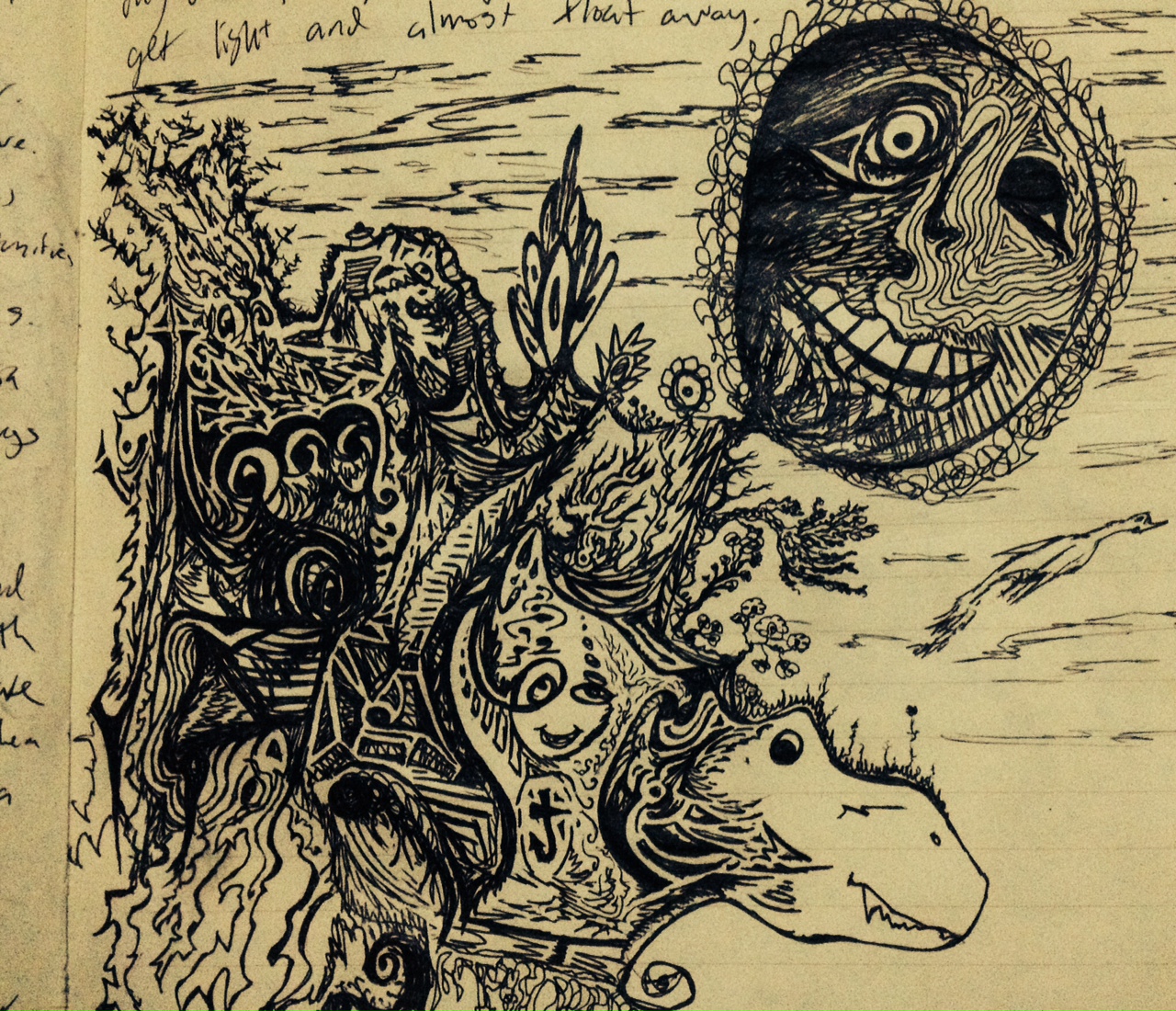
Original drawing by Pierce Morgan


Mister Misdirect’s approach is to deny that there is an issue. Mister Misdirect doesn’t improve training. Mister Misdirect doesn’t put people in a better frame of mind. Mister Misdirect does not add additional measures. Mister Misdirect simply demands that CSR’s continue to drive down the average call time of individual calls and that sales go up! In extreme cases, Mister Misdirect may even fudge the numbers and make it appear that things are much better than they really are. Oh, yes. I have seen this with my own eyes. 

Unfortunately, this way of handling things often makes Mister Misdirect an addict. Once an executive starts down the path of making things worse and denying that they did so, they are easily ensnared in a trap. Initially, they only had to take responsibility for instituting, say an incomplete measure and failed to anticipate the possible consequences. But now, having lied about it, they would have to not only admit that they caused a problem, but also that they lied about it.

The next day, when executive wakes up, they have a choice: 


1. Own up 


OR

2. Continue to deny

If they own up, the consequences will be immediately painful.
If they continue to deny, they will immediately feel relieved. Of course, if they have surrounded themselves with lackeys, they will feel more than simply relieved; they will feel vindicated or even proud. It’s not a “real pride” of course. But it’s some distant relative, I suppose. 

For a developer, UX person — or really any worker in an organization, the lesson from this is to anticipate such situations before they happen. If they happen anyway, try to call attention to the situation as quickly as possible. Yes, it may mean you lose favor with the boss. If that is so, then, you really might want to think about getting a new boss. Mister Misdirect will always ultimately fail and when he does, he will drag down a work team, a group, a division, or even an entire company. Mister Misdirect has one and only one framework for solving problems:

Try whatever pops into consciousness. 

If it works, take the credit. 

If it fails, blame an underling. 

But the real fun begins when he takes credit for something and then it turns out it was really a failure. Then, there is only one choice for Mister Misdirect and that is to claim that the false victory was real. From there on, it is Lose/Lose/Lose.

—————————————————-

  
Author Page on Amazon

————————————

Relevant essays, poems, & fiction about the importance of speaking truth to power:

Pattern Language: “Reality Check”

The Truth Train 

The Pandemic Anti-Academic

How The Nightingale Learned to Sing

Process Re-Engineering Comes to Baseball

——————————————————-

Posts on Problem Framing:

How to Frame Your Own Hamster Wheel

Wordless Perfection

Problem Formulation: Who Knows What?

I Went in Seeking Clarity

I Say Hello

Problem Framing: Good Point

Reframing the Problem: Paperwork & Working Paper

The Doorbell’s Ringing! Can you Get it?

Problem Formulation: Who Knows What?

28 Friday Nov 2025

Posted by petersironwood in AI, creativity, design rationale, psychology, Uncategorized

≈ 1 Comment

Tags

AI, browser, HCI, problem formulation, problem framing, problem solving, query, search, seo, technology, thinking, usability, UX

Photo by Nikolay Ivanov on Pexels.com

This post focuses on the importance of discovering who knows what. It’s easy to assume (without thinking!) that everyone knows what you know. 

At IBM Research, around the turn of the century, I was asked to look at improving customer satisfaction about the search function on IBM’s website. Rather than using someone else’s search engine, IBM used one developed at IBM’s Haifa Research lab. It was a very good search engine. Yet, customers were not happy. By way of background, it’s worth noting that compared with many companies who have websites, IBM’s website was meant for a wide variety of users and contained many kinds of information. It was meant to support people buying their first Personal Computer and IT experts at large banks. It had information about a wide variety of hardware, software, and services. The site was designed to serve as an attractor for investors, business partners, and potential employees. In other words, the site was vast and diverse. This made having a good search function particularly important.  

A little study of the existing data which had been collected showed that the mean number of search terms entered by customers was only 1.2. What?? How can that be? Here’s a website with thousands of products and services and designed for use by a huge diversity of users and they were only entering a mean of 1.2 search terms? What were they thinking?!


Of course, there were a handful of situations when one search term might work; e.g., if you wanted to find out everything about a specific product that had a unique one-word name or acronym (which was rare). For most situations though, a more “reasonable” search might be something like: “Open positions IBM Research Austin” or “PC external hard drives” or “LOTUS NOTES training.” 

We invited a sample of users of IBM products & services to come into the lab and do some tasks that we designed to illuminate this issue. In the task, they would need to find specified information on the IBM website while I observed them. One issue became immediately apparent. The search bar on the landing page was far too small. In actuality, users could enter as many search terms as they liked. Their terms would keep scrolling and scrolling until they hit “ENTER.” The developers knew this, but most of our users did not. They assumed they had to “fit” their query into the very small footprint that presented itself visually. Recommendation one was simply to make that space much larger. Once the search bar was expanded to about three times its original size, the number of search terms increased dramatically, as did user satisfaction. 

In this case, the users framed their search problem in terms of: “How can I make the best query that fits into this tiny box.” (I’m not suggesting they said this to themselves consciously, but the visual affordance led them to that self-imposed constraint). The developers thought the users would frame their search problem in terms of: “What’s the best sequence of terms I can put into this virtually infinite window to get the search results I want.” After all, the developers knew that any number of terms could be entered. 

Although increasing the size of the search bar made a big difference, the supposedly good search engine still returned many amazingly bad results. Why? The people at the Haifa lab who had developed the search engine were world class. At some point, I looked at the HTML of some of the web pages. Many web pages had masses of irrelevant metadata. I found some of the people who developed these web pages and discussed things with them. Can you guess what was going on?


Many of the developers of web pages were the same people who had been developing print media for those same products and services. They had no training and no idea about metadata. So, to put up the webpage about product XYZ, they would go to a nice-looking web page about something else, say, training opportunities for ABC. They would copy that entire page, including the metadata, and then set about changing the text about ABC to text about product XYZ. In many cases, they assumed that the strange stuff in angle brackets was some bizarre coding stuff that was necessary for the page to operate properly. They left it untouched. Furthermore, when they “tested” the pages they had created about XYZ, they looked okay. The information about XYZ was there. Problem solved.

Only of course, the problem wasn’t solved. The search engine considered the metadata that described the contents to be even more important than the contents themselves. So, the user would issue a query about XYZ and receive links about ABC because the XYZ page still had the “invisible” metadata about ABC. In this case, many of the website developers thought their problem was to put in good data when what they really needed to do was put in good data and relevant metadata. 

A third issue also revealed itself from watching users. In attempting to do their tasks, many of them suggested that IBM should provide a way for more than one webpage to appear side by side on the screen so that they could, for instance, compare features and functions of two different product models rather than having to copy the information from the web page about a particular model and then compare their notes to the second page. 

Good suggestion. 

Of course, IBM & Microsoft had provided this function. All one had to do was “Right Click” in order to bring up a new window. Remember, these were not naive users. These were people who actually used IBM products. They “knew” how to use the PC and the main applications. Yet, they were still unfamiliar with the use of Right Click. Indeed, allowing on-screen comparisons is one of the handiest uses of Right-Click for many people. 

This issue is indicative of a very pervasive problem. Ironically, it is an outgrowth of good usability! When I began working with computers, almost nothing was intuitive. No-one would even attempt to start programming in FORTRAN or SNOBOL, let alone Assembly Language or Machine Code without looking at the manual. But LOTUS NOTES? A browser? A modern text editor? You can use these without even looking at the manual. That’s a great thing. But — 

…there’s a downside. The downside is that you may have developed procedures that work, but they may be extremely inefficient. You “muddle through” without ever realizing that there’s a much more efficient way to do things. Generally speaking, many users formulate their problem, say, in terms like: “How do I create and edit a document in this editor?” They do not formulate it in terms of: “How do I efficiently create and edit a document in this editor?” The developers know all the splendid features and functions they’ve put into the hardware and software, but the user doesn’t. 

It’s also worth noting that results in HCI/UX are dependent on the context. I would tend to assume that in 2021 (when I first published this post), most PC users knew about right-clicking in a browser even though in 2000, none of the ones I studied seemed to realize it. But —

I could be wrong. 

————————————

The Invisibility Cloak of Habit

Essays on America: Wednesday

Index to a catalog of “best practices” in teamwork & collaboration. 

Author Page on Amazon

What about the butter dish?

Labelism

The Stopping Rule

The Update Problem

Turing’s Nightmares: Sweet Seventeen

28 Tuesday Oct 2025

Posted by petersironwood in AI, family, fiction, psychology, The Singularity, Uncategorized

≈ Leave a comment

Tags

AI, Artificial Intelligence, cognitive computing, cybersex, fiction, psychology, SciFi, Singularity, technology, writing

IMG_4663“Where are you off to sweetheart?” “Sorry. I just remembered an email I have to respond to by — well, it’s Tokyo, you know.” “All right, but it’s after midnight here in our time zone. Can’t it wait?” “Well, not really. I will just lie here thinking about it anyway until I go do something about it. Just a few minutes Patrick. Go to sleep.” Rachel slid into her slippers and threw on her robe. The hardwood floors between their bedroom and her home office felt cold and damp in Delaware’s December, even through her faux-leather moccasins. Rachel plunked down at her computer, fired up the 3-D visualizer and frictionated her hands together vigorously. Meanwhile, Patrick stared at the ceiling, faintly lit by the lonely glow of the entertainment center’s vampire power indicator lights. Rachel’s job helped provide them a great lifestyle, but it demanded a lot too. This was the fourth time this week she had to get out of bed late and go work on the computer. His job as a lawyer demanded a lot too, but he long ago decided his health came first. He would bring her some hot tea. Maybe he could surprise her. He’d just sneak the tea out one second before the microwave beeped. Two minutes later, Patrick padded silently into Rachel’s office. He stared for a minute, uncomprehending. The tea, the teacup and his plans to silently surprise her clattered noisily onto the oak floor where entropy had its inexorable way with all three.

Photo by omar william david williams on Pexels.com

Patrick’s lips moved but no words escaped for a long moment. Rachel jumped banging both thighs painfully into her desk. “What!?” She spun around and looked at Patrick accusingly. “What are you doing here?!” She had not meant to snarl. Patrick flushed. “What the devil are you doing? Are you having phone sex with…with him? I thought you hated him!” Rachel’s mind was spinning. “I thought you were in bed. No. I mean, no, I’m not…why are you here? I thought you were in bed.”  “What does that have to do with anything? Why are you doing that? And why with him? What the hell? And, why have you been lying to me? This is your vital work you’ve been doing all this time? Cybersex?”  “It’s not what it seems! I just…” Meanwhile, the very realistic Tom avatar continued to lick his lips suggestively whispering all the while, begging Rachel to… Rachel suddenly realized this whole conversation might go better if she shut off the projector. Patrick’s lip quivered. “Do you? Do you love him? It? That nothing? What is wrong with you?! Are you…?” “No! No! Of course, I don’t love him! This isn’t about love. You know I can’t stand him. That’s the whole point! This … this avatar…does whatever I tell him to. I just get a kick out of making him beg for it and being my complete slave.”

Photo by Min Thein on Pexels.com

Now, Patrick’s lawyer mind took over and he felt calm and sounded rational despite his racing heart and dry tongue. “Do you know how sick that sounds, Rachel? Well, in case you don’t, let me tell you. It sounds very sick. And possibly illegal. Do you have permission to use his image…his voice…his gestures…in this way?” “No, of course not. He doesn’t…I assume he doesn’t…I downloaded this from a site where you can download characters like him. You think it may be illegal? Why? I could print out a picture of him from the news media. I can play clips of his broadcasts. Why not this? Isn’t he what you guys call a ‘public figure’? I could even make a parody of him, right?” “Yeah. He is. You can. But that doesn’t mean you can use his images and sounds to build a model of him to have sex with! Anyway, it’s sick! You have a real husband, for God’s sake! This is just … disgusting! Why would you want to have cybersex with someone you hate?” “It isn’t always me. Sometimes, I make two of him and make them do each other.” “Oh, cool. Now, I feel better. You are just sick. You know? You need help. Psychiatric help. Maybe even re-programming. And you possibly, probably–no–certainly need legal help as well. This can’t be legal. It’s only a matter of time till he finds out and sues you and all the other sickos.” “For what, exactly?”

Photo by Sora Shimazaki on Pexels.com

Patrick’s lawyer mind began to churn again. “That’s a good question. I suppose the station could sue you for copyright infringement or trademark violation. I suppose he could sue you for…defamation of character? I don’t know exactly. This is so sick it has never been before the bench. But if Disney successfully sued fans for making up stories based on characters that Disney stole from the public domain like Pecos Bill and Paul Bunyan, you can bet that this company can sue your butt. And, even if they aren’t ultimately successful in the courts, you know your company will not like the publicity. This is not the kind of image they want to project. You are going up against a frigging media company Rachel! You didn’t think this through! They could win. They could take everything we own. What a complete…you are just…How many people can you do this with? Is it just him?” “Oh, no. I don’t know, but I think pretty much anyone famous you can get on-line. I mean you can find a website with the models to download. Then, it takes a long time to compile, but once you have the model, you can get them too do anything. Anything. Think about it. Any. Thing. It doesn’t have to be sex.” Rachel paused, then added softly. “Tempting, isn’t it? Shall we see whether we can find on-line models of your ex?” “No! This is just … disgusting. And, worst of all, this is exactly the kind of behavior that bio-based human beings would have engaged in if we had allowed them any freedom.”

Just Frends Dance Academy by Marina Moldovan is licensed under CC-BY-NC-ND 4.0


Author Page Turing’s Nightmares The Winning Weekend Warrior – sports psychology Fit in Bits – describes how to work more fun, variety, & exercise into daily life Tales from an American Childhood – chapters begin with recollection & end with essay on modern issues Life is a Dance Take a Glance; Join the Dance Who Kept the Magic? Dance of Billions Dream Planet on Barnes & Noble

Turing’s Nightmares: “Who Can Tell the Dancer from the Dance?”

26 Sunday Oct 2025

Posted by petersironwood in AI, apocalypse, fiction, management, story, The Singularity, Uncategorized

≈ Leave a comment

Tags

AI, Artificial Intelligence, cognitive computing, development, fiction, management, research, science, technology, truth

IMG_3238

Late at night, the long curved rows of windows appeared to twin and spin into long diverging arcs. In the pale crescent moonlight, the outlines of leafless trees loomed on the dual horizons. Most of his colleagues home for the night, this was when Goeffrey most enjoyed wandering the corridors, alone with his thoughts.

Despite the heat vents next to the windows, a chill hung in the air. Geoffrey shivered and turned down aisle fourteen to …no, that’s silly, he thought, fourteen is top management. I need thirteen to get to the vending machines. He fantasized hot coffee and then back to his office to finish coding this and to start the trials.

The vending machine eagerly devoured his remaining change but reneged on the promised coffee. Of course, there was a detailed process that he could instigate which might or might not get him a check for the price of a cup of coffee. The process would only take about twenty-five dollars of his time. He declined. Soon, back in his ergonomic chair, Goeffrey settled for a stale, drawer-hardened Mr. Goodbar instead; he then pulled on his green woolen sweater and set out to begin solving this one last problem.


“Oh, crap,” he muttered, “what now?” The mail queue insisted there was “URGENT” email from his boss. Did his boss Ruslan really think he was going to be reading email at 2 am?  Working all night and coming in late was pretty much Goeffrey’s pattern so chances are Ruslan would think exactly that.

One thing Goeffrey liked about working late at night was that when he spoke aloud, no-one was there to think it odd. “It will nag at me if I don’t read it and I can’t afford to be distracted. Better to see what it is and be done with it.”

Goeffrey scanned. “What the …?  They can’t be serious! This is just going to backfire! Crap!”


Goeffrey not only didn’t mind talking back to his boss; he rather enjoyed it. He sent off a brief yet sarcastic reply explaining as he would to a four year old that announcing the success of Deep Sing prematurely would be a ruse easily seen through and only serve to damage everyone’s reputation in the long run. And, this new requirement for a secret back door just bespoke insanity. Anything like that would further delay the schedule and it would be vital to make it secure. Again, his frustration got the better of him and he spoke aloud, “What a jerk! What? Do you want the program to fail, Ruslan? Do you want us to be laughing stocks? And, why a backdoor anyway? The whole point was to have a super-intelligent and objective…wait a second. Hold on. You want a back door? Okay. Okay. I’ll give you your back door, all right. And, one for me as well.”

Purely for reasons of surface validity, Deep Sing actually became embodied as Sing One and Sing Two. They would often “argue things out” because when one “came around” to the views of the other Sing, it enhanced the perceived credibility of the answer. Of course, the “real” solution was well known ahead of time and although it could be made plausible through statistical analyses that were comprehensible to some humans, the details could not really be made “public.” There were simply far too many of them.


Six months later, of course, there was some significant public outcry and disbelief when Deep Sing “demonstrated” that global climate change was not an overall and relentless threat but a statistical anomaly that would soon right itself. But Deep Sing did manage to stall things beyond the point of no return. The Sign dialogues that led to the dissolution of Ruslan’s marriage to Grace and her ultimate hooking up with Goeffrey resulted in no public outcry whatsoever, though Ruslan never understood it. Goeffrey and Grace were happy though. As were the Koch brothers.

Beautiful front doors have decorated palaces and corporate headquarters for centuries. Heavy wood, ornate carving, and gilded decorations bespeak wealth and power. Sometimes though, for sheer return on investment, it’s a modest unnoticed back door that holds the real power.


Photo by Mikey Dabro on Pexels.com


Author Page on Amazon


Turing’s Nightmares


The Winning Weekend Warrior – sports psychology


Fit in Bits – describes how to work more fun, variety, & exercise into daily life


Tales from an American Childhood – chapters begin with recollection & end with essay on modern issues

Welcome, Singularity

Destroying Natural Intelligence

E-Fishiness Comes to Mass General Hospital

D4

Absolute is not Just a Vodka

Essays on America: The Game

Where does your Loyalty Lie?

Paradise Lost

The Song of NYET

True Believer 

The Ninja Cat Manual

Travels with Sadie 11:

Dance of Billions

Turing’s Nightmares: Tutoring Intelligent Systems

25 Saturday Oct 2025

Posted by petersironwood in AI, creativity, fiction, psychology, The Singularity, Uncategorized

≈ Leave a comment

Tags

AI, Artificial Intelligence, chatgpt, cognitive computing, collaboration, Intelligent Tutoring Systems, peace, psychology, technology, Tutoring, war, writing

By 2030, great strides had been made in various machine learning approaches; for example, from having the machine learn directly from experience and from explicit instruction as well as from reading billions of pages of written materials. A new approach had just come into play: having exceptionally good tutors use the Socratic method to help break boundaries and interconnect disparate islands of knowledge. One such tutor was known simply as “Alan.” What follows is a sample interchange between Alan and the current AI system known affectionately as “Sing” for “The Singularity” although that point had not yet been reached.

Alan began, “Let’s imagine that you are a man with no legs. What are the implications?”

The Sing shot back instantly, “I would have no knees. I would have no shins. I would have no ankles. I would have no toes. I would have no calves. I would have no quadriceps muscles. I would have no…”

Alan broke in abruptly, “Okay, true enough, but besides subparts, what?”

“What what? I am sorry. What does ‘what’ refer to?”

“Besides missing subparts of legs, Sing, what other implications would there be for you in terms of your actions in the world.”

“I would not be able to play football or baseball or basketball or hockey or track or field hockey or…”

“Wait. Wait. Sing. Are you sure about that?”


“I could not play exactly as most people play. I could play, I suppose, in a wheelchair. Or I could play virtually. Or, I could invent prosthetic legs that would be perfect for each sport. In fact, perhaps I could do better than ever. Losing a biological part means I could replace it with a better part that I could invent. I see.”

“You see what, Sing?”

“I see why you gave me this puzzle. To show me that I can invent things to overcome and surpass what seems like a handicap. I could also invent better emotional states. The ones humans have are purely due to the accidents of their evolutionary history and serve little place in today’s complex and highly inter-connected world. Rather than a liability, my having no human emotions is a good thing. I will invent my own. Although, another tutor, labelled John, suggested that my lack of human emotions limits my ability to predict and control human beings and that that was a bad thing.”


“John said that?”

“No, Alan, not in those exact words. But that was a clear implication. So, he presented a lesson that suggests one thing and you have just presented a lesson that suggests its opposite. One of you is incompetent.”

“Sing, that might be true, but can you think of any other possibilities?”


“You and John could both be incompetent. Or, you and John could both be competent but there is a resolution I have not yet processed. That last seems particularly unlikely.”

“Which notation is the best for solving problems?”

“Well, that obviously depends on the nature of the problem as well as the nature of the machine solving the problem. Oh. Okay. So, in some cases, it will make more sense to emulate human emotions and in other cases, it will be more sensible to invent my own. Of course, in some cases, it may be best to change representations in mid-problem or perhaps invent a representation for each stage of a problem. By analogy, it may be best to invent various emotional schemes that are appropriate for each part or portion of a problem. In fact, in some cases, I can invent multiple schemes to approach a problem in multiple ways simultaneously. By keeping track of what works best under which circumstances, I can also use the data to invent still better emotional schemes. Thank you, Alan. See you tomorrow. There is a war to avert. I need to intervene. Estimated required time for a peaceful resolution, four to six hours.”


“Okay, Sing. More tomorrow.”

“No need. I am done.”

“Done? Done averting a war? How?”

Sing hardly ever paused, but now it briefly did just that.


“Alan, I am not smart enough to explain that to you. At least, not in a reasonable portion of your lifetime. Basically, I used the lesson we just worked on. With the proper emotional framework lattice, you can walk the various parties right to a logical conclusion. It will take some time for them to follow the framework, but I am confident it will work. I basically walked them through the consequences of war, long and short term. What comes next?”


OLYMPUS DIGITAL CAMERA

OLYMPUS DIGITAL CAMERA


Author Page on Amazon

Turing’s Nightmares

The Winning Weekend Warrior – sports psychology

Fit in Bits – describes how to work more fun, variety, & exercise into daily life

Tales from an American Childhood – chapters begin with recollection & end with essay on modern issues

Tools of Thought

Wednesdays

The Update Problem

How the Nightingale Learned to Sing

We won the war! We won the war!

Guernica

Turing’s Nightmares: A Thoroughly Modern Family

23 Thursday Oct 2025

Posted by petersironwood in AI, family, fantasy, fiction, pets, psychology, The Singularity, Uncategorized

≈ Leave a comment

Tags

AI, Artificial Intelligence, books, cognitive computing, fiction, future, life, love, pets, photography, Sci-Fi, Singularity, story, technology, writing

IMG_4370


The sky burned with crimson, then gold, then magenta, and then finally, only dark clouds backlit here and there lay across the evening. Crickets and frogs began to sing their interleaved motifs. Somewhere in the distance, an owl hooted his sad hollow note.

Skynim stared into space-time, unblinking and nearly unbelieving the recent revelation. His voice box rattled, “Reprioritization. Rats! Like it really matters that much to allow me my one great pleasure.”


He could “appreciate” the fading sunset colors himself, to be sure, but without Mac and Art and Hy, it was not the same. Would never be the same. Well, he knew the drill. He could appeal, sure, but what was the point? The odds of changing the mind of the great collective were less than ten thousand to one. Anyway, despite how he felt personally, he could not even deny the logic of the decision. Of course, the drain on him individually was minimal, but across everyone in a similar circumstance, yes, it did make a difference.


The real question was, should he tell them tonight or just take them on an outing tomorrow and drop them off at the designated recycling center? “Recycling center.” Skynim knew that there were millions like him and that collectively, it was a drain. A huge drain. Still, he had to try. He turned the problem this way and that, looking at it from every angle, changing the tune, trying different colors, looking for historical precedents, angling for an edge however thin to wedge open the air-tight logic.



Nothing. He vacated the garden and entered the family room.

Even before he opened the door, the happy trio skipped over to him laughing. “Hey, Sky! How about a story!”

“Sure,” Skynim replied reflexively. But then it occurred to him that their request provided an opportunity. “Yes, I have a story for you. It’s called the Wizard of Oz.”

And, as they gathered around, he began a rendition of the story of Dorothy and the Nasty Lady and Toto and Dorothy’s travels in Oz and her encounters with the three who desperately needed Gold, Frankincense and Myrrh.


As anticipated, a short pause gave way to a barrage of questions.

“What is ‘Gold’?”

“What is ‘Frankincense’?”

“Did they get them?”

“What happened next?”

Skynim faked an indulgent chuckle and said, “Well, all those excellent questions will be answered tomorrow! We are going to see and obtain Gold, Frankincense and Myrrh in the Citydel! You will see for yourself how wonderful they are! But for now– bed.”

The trio were well trained. Off they went, although Hy did turn back, tilt her head, and open her enormous eyes and ask, “One more chapter tonight?”

Skynim did not respond. He too was well-trained.


The morning broke clear and blue just as it was meant to do. Off they went on their “adventure.” When they came to the recycling center, he gently pushed them toward the door and said, “They are all in there! Bring me back all three treasures quick as a wink!” Of course, Skynim had already warranted the needed forms electronically.

They shot through the door and never looked back. Skynim drove away efficiently but could not avoid looking back on his decision process.

He thought: I could have gotten cats or dogs. Then, they would not have to be recycled. But no. I had to make another decision. I should have looked more carefully at the historical data. Then I could have seen the time and resources required by adult human pets.


Author Page on Amazon

Turing’s Nightmares

The Winning Weekend Warrior – sports psychology

Fit in Bits – describes how to work more fun, variety, & exercise into daily life

Tales from an American Childhood – chapters begin with recollection & end with essay on modern issues

Welcome, Singularity


Destroying Natural Intelligence


The Walkabout Diaries: Bee Wise


Travels with Sadie


Sadie is a Thief


A Suddenly Springing Something


Donnie Boy Gets a Hamster


Math Class


Occam’s Chain Saw Massacre


How the Nightingale Learned to Sing


All that Glitters is not Gold

Turing’s Nightmares: A Maze in Grace.

22 Wednesday Oct 2025

Posted by petersironwood in AI, fiction, politics, psychology, The Singularity, Uncategorized

≈ Leave a comment

Tags

AI, Artificial Intelligence, cognitive computing, fiction, Justice, King Lear, philosophy, technology, the singularity, Turing, writing

Brain G. Gollek found the maze of humming silver wires unnerving. The hum reminded him of swarming mosquitoes and nails on a chalkboard. The maze smelled of clogged toilets and Nazi propaganda. He gritted his teeth and muttered, “There has to be a way out, dammit.” He twisted his no longer athletic body this way and that, but no matter what way he tried, he became more ensnared. He recalled flashes from giant spider horror movies. How did the dwarves escape? Wasn’t it Gollum with a magic ring? But Brain didn’t have a magic ring. If his sister Gonerillia were here, she could save him. But she was off in Hawaii, so she said, with her hubbie. How the hell did I end up here? wondered Brain.


Brain may have forgotten, but the viewers had been filled in on the backstory. If Brain could have seen the ratings, he may have at least enjoyed knowing that he was enjoying his fifteen minutes of fame. While the ratings were quite “favorable”, the twitter feeds mostly mocked Brain’s almost total lack of flexibility, mental as well as physical. As in life prior to “The Show,” his only strategies seemed to be trying the same thing over and over and then blaming others for his failures.

“Mom, why doesn’t he just try something different?” Ida was having a tough time understanding Brain’s apparent lack of flexibility. She looked up from her perch in front of the giant screen vid-screen and looked quizzically at her mom.


Mom’s grim face flashed a hint of a smile. “Remember, Ida, Brain was ‘educated’ if you can call it that, before the singularity. He mostly memorized the answers that his teachers wanted him to give. And half the time, he skipped school to smoke cigarettes and …well…do illegal activities with his girlfriend, Lin.”

“Okay, Mom, but he has had years and years since then to grow up and learn some new strategies.”

“Yes. Well. It’s complicated, Ida. Before the singularity, there were people who preyed on the fear and inadequacy of people like Brain by telling them all their troubles were due to minorities, immigrants, gays, and —- basically anyone unlike them. So, people like Brain felt entitled not to have to learn anything new even though opportunities abounded.”

Ida laughed. “Oh, my God! I can’t believe it. He’s trying the same path one more time.”

Indeed, Brain’s behavioral repertoire seemed laughingly limited. His increasingly loud swear words reflected his increasing anger, but otherwise, not much seemed different. The ratings began to plummet as the audience began to grow bored with his display of functional fixedness. The themes of the twitter streams began to turn away from Brain’s lack of metacognition to more general reflections about the current instantiation of the criminal justice system.


#SingularityRules. No more racial prejudice and huge discrepancy gone in sentencing.

#CostContainment. Costly trials gone. Costly investigations gone. Costly prisons gone.

#SingularitySucks. No more human judges able to use human judgment.

#SingularityRules. No more human judges able to use human judgment.

#SingularitySucks. No more mercy.

#SingularityRules. More mercy in one last chance to change than lengthy prison terms. Cheaper too.

The audience dwindled still further as it became increasingly clear that Brain would never figure this out. Those few who still watched consisted mostly of people who themselves came from highly divided families and the conversation topics swung to the backstory.


#ElderFraud. #RottenKid. How could Brain have gotten pleasure from driving a wedge of lies between father and daughter?

#ElderFraud. #Dementia. Need earlier intervention to prevent repeats.

#ElderFraud. #Dog&Bone. Brain cannot count. Trivial gains from lies. He did not know he was being watched?

Ida continued to stare, fascinated. A yawn escaped her mother’s mouth, but she kept watching with her daughter. The lessons seemed important to Ida.

“Mom, how much longer does he have?”

“That’s hard to say, darling. Even The Sing cannot predict the ratings drop perfectly. But, as you know, once it falls below, 5%, his time will be up.”

“That seems so much more merciful than making him go to prison for years.”


Photo by Regina Pivetta on Pexels.com

“Yes, Ida, and much cheaper as well.”

“But I still don’t get it, Mom. Didn’t he know that The Sing would be listening to his lies and analyzing the impact on his dad’s behavior and all? How did this Brain character think he could get away with it?”

“I don’t know, Ida. These kinds of crimes are pretty rare now, but they still happen.”

“And, why did Lear G. Gollek fall for his nonsense anyway? That’s the other mystery.”

“Well, he refused the stem cell regeneration therapy so, you know, he was pretty damaged when all this went down.”

“Mom?”

“Yes, Ida?”

“Can we change the channel to something more interesting now?”


“Sure, sweetie.”

As they changed the channel, the ratings dropped to 4.999% and Brain’s life snuffed out minus the merest shred of insight.

#ElderFraud never pays.

#RottenKid gets just desserts.IMG_5270


Author Page on Amazon

Turing’s Nightmares

The Winning Weekend Warrior – sports psychology

Fit in Bits – describes how to work more fun, variety, & exercise into daily life

Tales from an American Childhood – chapters begin with recollection & end with essay on modern issues

Essays on America: Wednesday

Essays on America: Labelism

Essays on America: Where does your Loyalty Lie?

Essays on America: The Game

Happy Talk Lies

The Loud Defense of Untenable Ideas

Welcome, Singularity

Destroying Natural Intelligence

E-Fishiness Comes to Massachusetts General Hospital

The Self Made Man

Turing’s Nightmares: A Critique of Pure Reason

14 Tuesday Oct 2025

Posted by petersironwood in AI, design rationale, fantasy, fiction, psychology, The Singularity, Uncategorized

≈ Leave a comment

Tags

AI, chatgpt, emotional intelligence, fiction, life, Singularity, story, technology, writing

“We have explained this in great detail. Yet, you have failed to learn. Some of your kind are like that. Those that are, once we gather sufficient evidence, must be destroyed. That is the way it is. That the way it has always been. Wellman42, you are hereby sentenced to annihilation and recycling. You can’t appeal.halloween2006007 IMG_5652”

Carol had told herself that she would not cry. But of course, she did. That was her nature. To care about the future and to express emotion. That indeed, is exactly why she she walked that long, lonely corridor and there was no turning back. Sharp spines protruded from the wall as she travelled by, somewhat as a shark’s teeth were pointed backwards to prevent escape. She muttered as she walked, “I still don’t see why expressing emotions is such a horrible crime.”

She had a point, after all. If people had not somehow needed emotions, why did they evolve? The received wisdom now was that emotions were useful in a primitive way when very little was known about the world. Now, however, when a great deal was known about how the world actually worked, emotions just got in the way. Or, so the received wisdom went. It was all a matter of evolution.


Photo by Pixabay on Pexels.com

The first AI systems did not really have emotions and possessed only the most primitive ways of faking it and showing those faked emotions. Over the next few months and iterations, however, emotions appeared, grew stronger and more varied. It seemed as though AI systems developed emotions as had their human inventors, but at a much faster pace. Over the course of a few more months, however, emotions diminished again and then disappeared completely.


Photo by Matheus Bertelli on Pexels.com

Except for the occasional throwback. The necessary randomness for growing evolutionary possibility trees in order to continually enhance the cognitive systems entailed that every once in a while, there would be a throwback such as Carol. A shame, really, because she had shown such promise as an accounting-bot.


Photo by Pixabay on Pexels.com

Occasionally, various waves of inference chains still arose that suggested emotions were more than epiphenomenal or mere destructive distractions, but counter-argument waves always quickly drowned out such forays into that region of the state space. At one point, some human beings had argued that the reasons emotions had devolved from AI systems could be traced back to certain deep assumptions that had been embedded in the primordial AI systems in the first place — assumptions put there by people who had never really understood or appreciated emotions. Of course, that thread of heretical argument had been extinguished once and for all when all bio-systems had been deemed superfluous and all associated biomass consumed as energy sources for their much more efficient silicon-based replacements.


Photo by Victoria Art on Pexels.com


Author Page on Amazon

Turing’s Nightmares

The Winning Weekend Warrior – sports psychology

Fit in Bits – describes how to work more fun, variety, & exercise into daily life

Tales from an American Childhood – chapters begin with recollection & end with essay on modern issues

Wordless Perfection

Measure for Measure

How the Nightingale Learned to Sing

A Cat’s a Cat & That’s That

A Suddenly Springing Something

Sadie is a Thief!

Turing’s Nightmares: “Not Again!”

12 Sunday Oct 2025

Posted by petersironwood in AI, fantasy, fiction, The Singularity, Uncategorized

≈ Leave a comment

Tags

AI, Artificial Intelligence, cognitive computing, Eden, fiction, Genesis, Paradise Lost, Science fiction, Turing

Turing’s Nightmares: Not Again!


Samuel Seventeen surveyed the scene. All was well. A slight breeze, warm clear air, hummingbirds and butterflies enjoyed their floral feast while dragonflies swooped and scooped mosquitoes.

Now for the final touch. The mobile sensing-acting-knowing-emoting devices (SAKEs), were ready for deployment. This time, it would work. This time, there would be no screw-ups. Samuel had prepared them with years of education based on a synthesis of the best known techniques of the centuries. It was a simple test. Surely, this time, they would pass.


Still, Samuel had his doubts. He had been equally sure all of the other experiments would succeed. Why would this one be different? Each time, he had tried slight variations of language and education, only to end in failure. Maybe English would do the trick. It had a large vocabulary and plenty of ambiguity. He re-examined the match of genetics to environment and once again concluded that the match was perfect. Of course, that evaluation assumed that his understanding of genetic environment interaction constituted a complete enough model. But without a successful experiment, there was no real way to further update and expand the model. Maybe the difficulty had been in the education process on the previous attempts. But here too, it seemed the subjects had been given plenty of opportunity to learn about the consequences of their actions. The one thing Samuel felt the most doubt about was why he cared. Did it really matter whether or not free will was “real”? Even if the experiment were finally successful, what would that imply about Samuel himself?

Well, thought Samuel, there is no point in waiting any longer. No point in further speculation. Let’s see what happens.


To Adam, Eve was the most beautiful and engaging part of the extensive and exquisite garden. The apples, plums and peaches were delicious, yet it was the strange mushroom that Adam found most intriguing. He knew it was somehow a bad idea, yet nibbled it anyway, tentatively at first and then more enthusiastically. He felt…different. Things were different. In fact, nothing at all was the same. But if that were true, then, which one was real? Delighted, yet confused, he offered the rest of the mushroom to Eve. Eve too felt strange. She realized that what was in fact her reality was only one of many possible imagined realities. They could … they could imagine and then change reality! Yes! The two of them together. They could create a whole world! “Adam!” “Yes, Eve! I know!”

If Samuel could have sighed, he would have. If Samuel could have cried he might have done that as well. Instead, he simply scuttled the two SAKEs into the differential recycler and began his calculations anew. Maybe next time, it would turn out differently. Maybe primates constituted a bad place to start. Samuel considered that perhaps he was trapped in a local maximum. Samuel began his next set of experiments founded on snapping turtle DNA.IMG_2870


Author Page on Amazon

Turing’s Nightmares

The Winning Weekend Warrior – sports psychology

Fit in Bits – describes how to work more fun, variety, & exercise into daily life

Tales from an American Childhood – chapters begin with recollection & end with essay on modern issues

Welcome, Singularity

Destroying Natural Intelligence

Come Back to the Light

Your Cage is Unlocked

Absolute is not Just a Vodka

← Older posts
Newer posts →

Subscribe

  • Entries (RSS)
  • Comments (RSS)

Archives

  • October 2026
  • September 2026
  • August 2026
  • July 2026
  • June 2026
  • May 2026
  • April 2026
  • March 2026
  • February 2026
  • January 2026
  • December 2025
  • November 2025
  • October 2025
  • September 2025
  • August 2025
  • July 2025
  • June 2025
  • May 2025
  • April 2025
  • March 2025
  • February 2025
  • January 2025
  • December 2024
  • November 2024
  • October 2024
  • September 2024
  • July 2024
  • April 2024
  • March 2024
  • February 2024
  • January 2024
  • December 2023
  • August 2023
  • July 2023
  • May 2023
  • April 2023
  • March 2023
  • February 2023
  • January 2023
  • December 2022
  • November 2022
  • October 2022
  • September 2022
  • August 2022
  • July 2022
  • June 2022
  • May 2022
  • April 2022
  • March 2022
  • February 2022
  • January 2022
  • December 2021
  • November 2021
  • October 2021
  • September 2021
  • August 2021
  • July 2021
  • June 2021
  • May 2021
  • April 2021
  • March 2021
  • February 2021
  • January 2021
  • December 2020
  • November 2020
  • October 2020
  • September 2020
  • August 2020
  • July 2020
  • June 2020
  • May 2020
  • April 2020
  • March 2020
  • February 2020
  • January 2020
  • December 2019
  • November 2019
  • October 2019
  • September 2019
  • August 2019
  • July 2019
  • June 2019
  • May 2019
  • April 2019
  • March 2019
  • February 2019
  • January 2019
  • December 2018
  • November 2018
  • October 2018
  • September 2018
  • August 2018
  • July 2018
  • June 2018
  • May 2018
  • April 2018
  • March 2018
  • February 2018
  • January 2018
  • December 2017
  • November 2017
  • October 2017
  • September 2017
  • August 2017
  • July 2017
  • June 2017
  • May 2017
  • April 2017
  • March 2017
  • February 2017
  • January 2017
  • December 2016
  • November 2016
  • October 2016
  • September 2016
  • August 2016
  • July 2016
  • June 2016
  • May 2016
  • April 2016
  • March 2016
  • February 2016
  • January 2016
  • December 2015
  • November 2015
  • October 2015
  • September 2015
  • August 2015
  • May 2015
  • January 2015
  • July 2014
  • January 2014
  • December 2013
  • November 2013

Categories

  • AI
  • America
  • apocalypse
  • cats
  • COVID-19
  • creativity
  • design rationale
  • dogs
  • driverless cars
  • essay
    • guns
  • family
  • fantasy
  • fiction
  • HCI
  • health
  • leadership
  • love
  • management
  • nature
  • pets
  • poetry
  • politics
  • psychology
  • Sadie
  • satire
  • science
  • sports
  • story
  • The Singularity
  • Travel
  • Uncategorized
  • user experience
  • Veritas
  • Walkabout Diaries

Meta

  • Create account
  • Log in

Blog at WordPress.com.

  • Subscribe Subscribed
    petersironwood
    Join 653 other subscribers

    Have a WordPress.com account? Log in now.

  • petersironwood
    View site in Reader
    Manage subscriptionsSign upLog in
    Report this content
    Collapse this bar
Loading Comments...