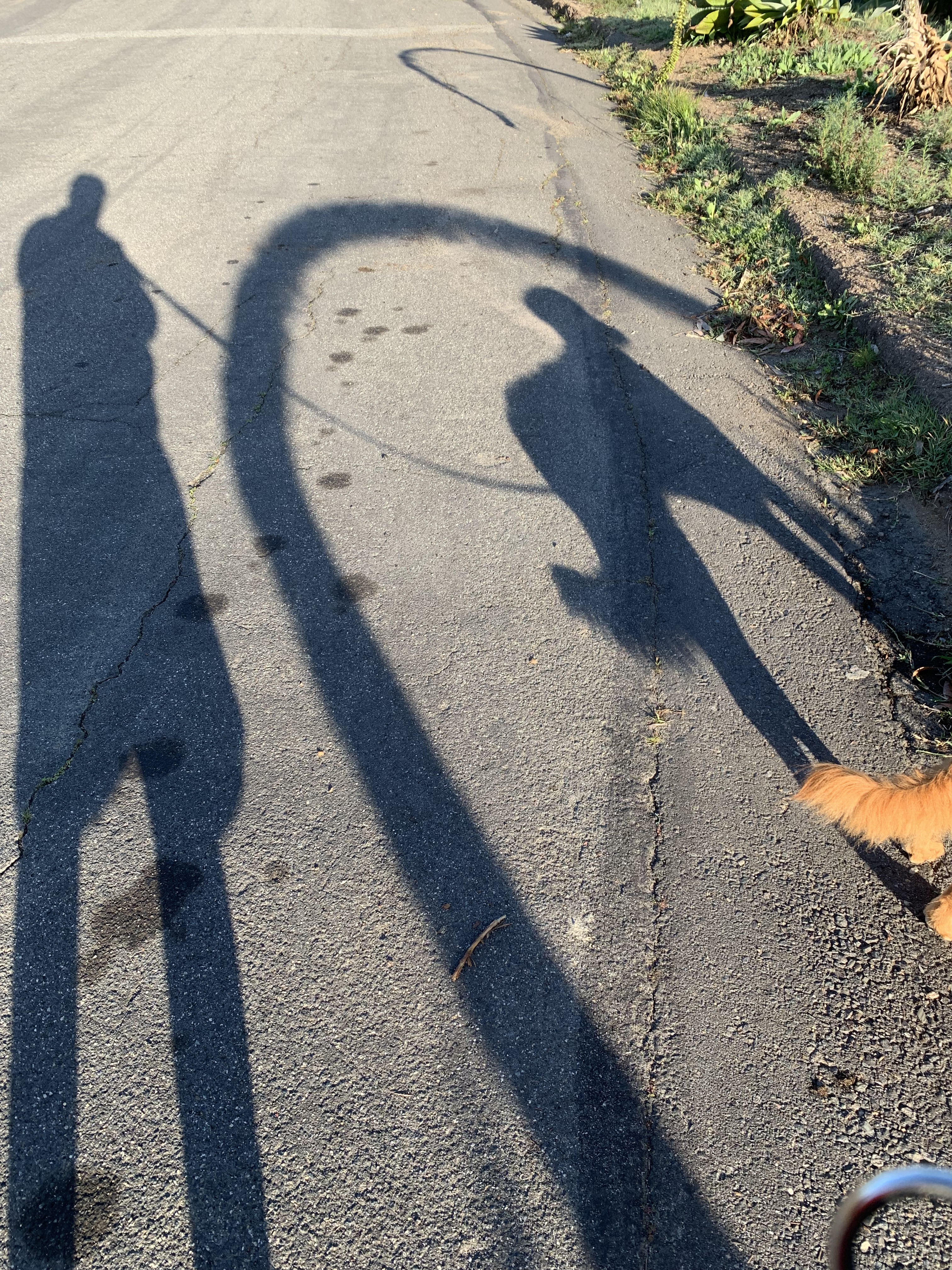
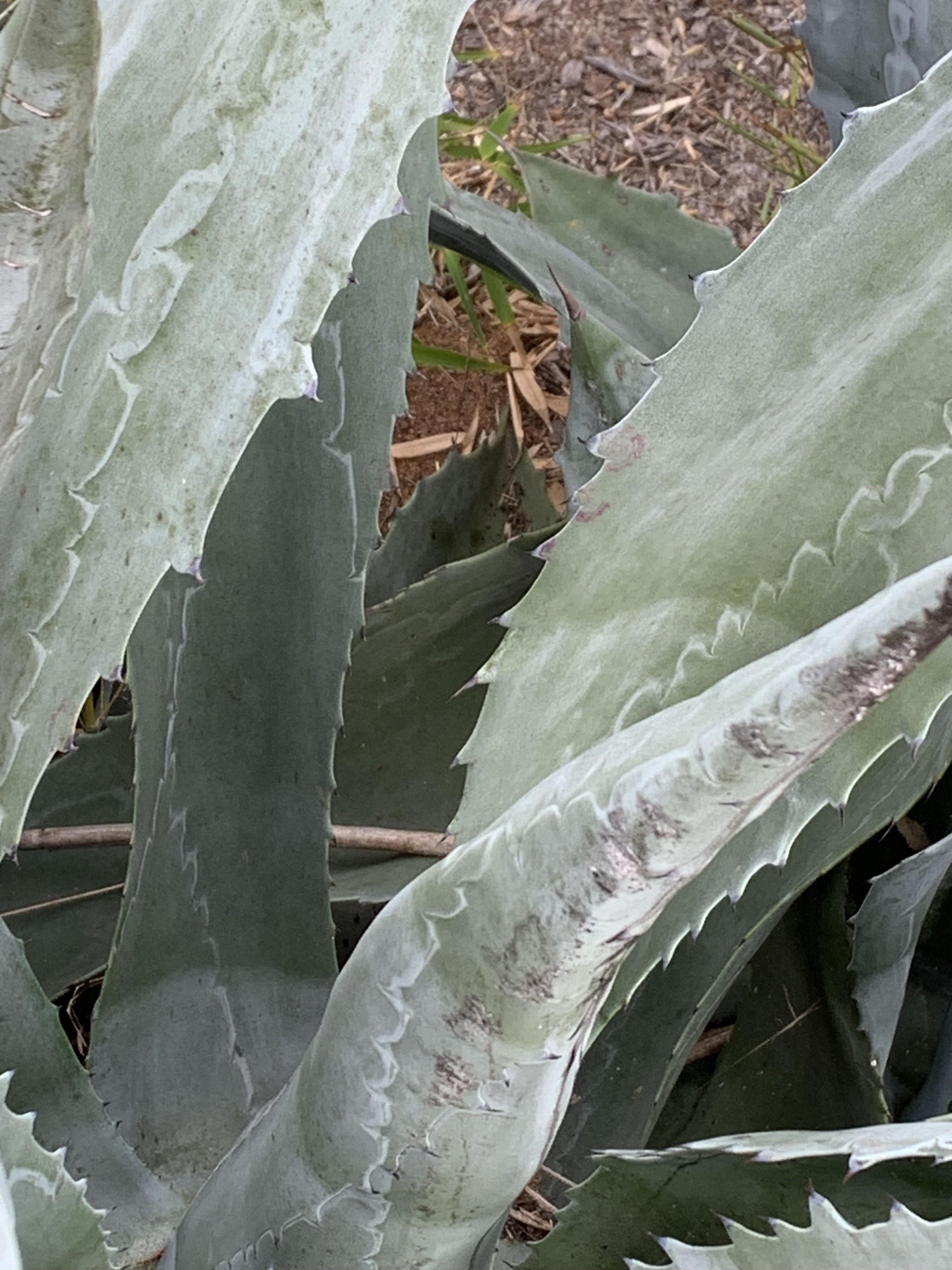
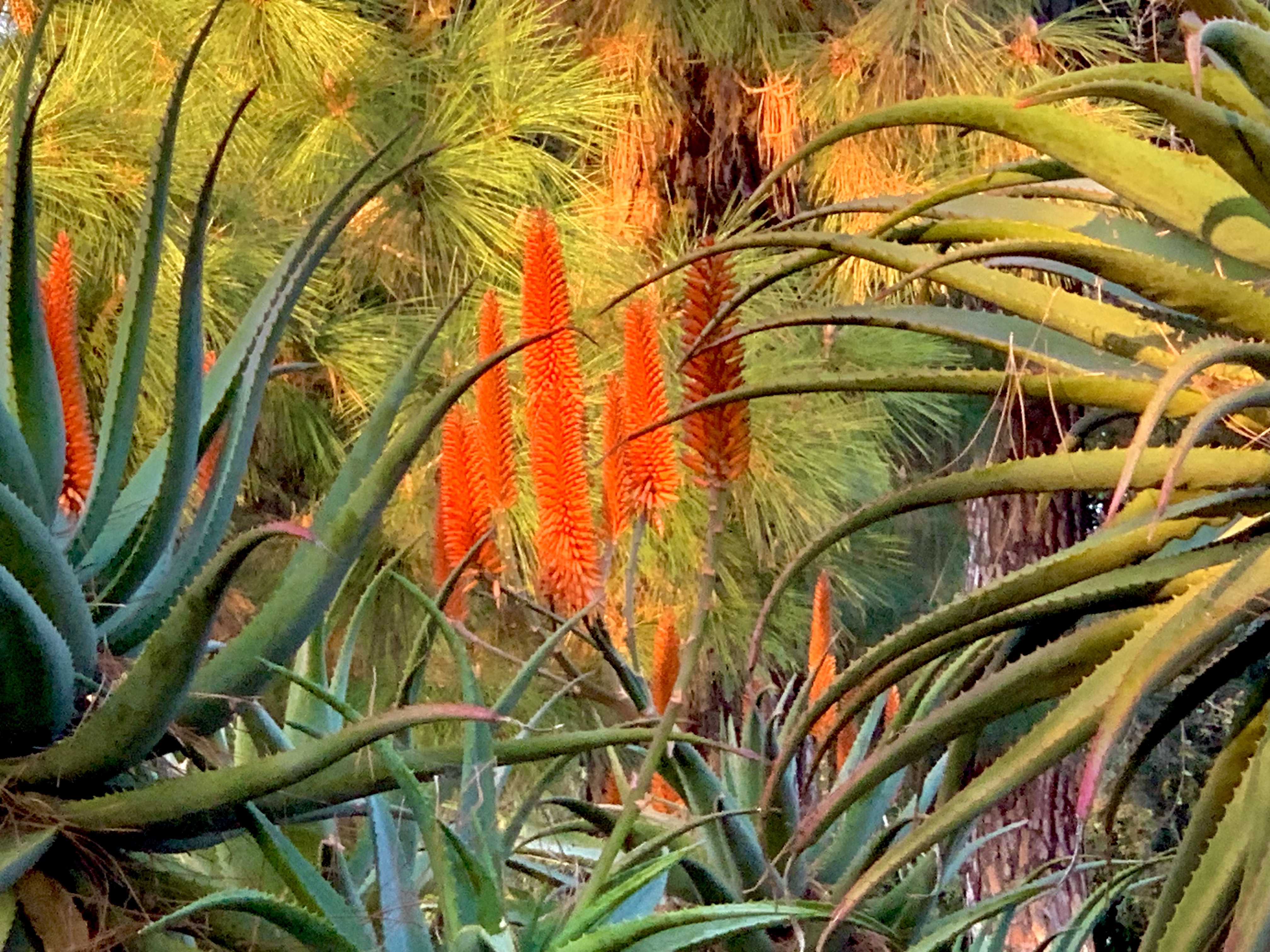
Typically, I take Sadie for a walk in the morning and again in the evening. Last evening, Sadie went over to an aloe plant on one of our usual routes and stared at it. Then, she tried to stick her nose in it. I should mention that both edges of each aloe leaf have a row of fairly sharp thorns.
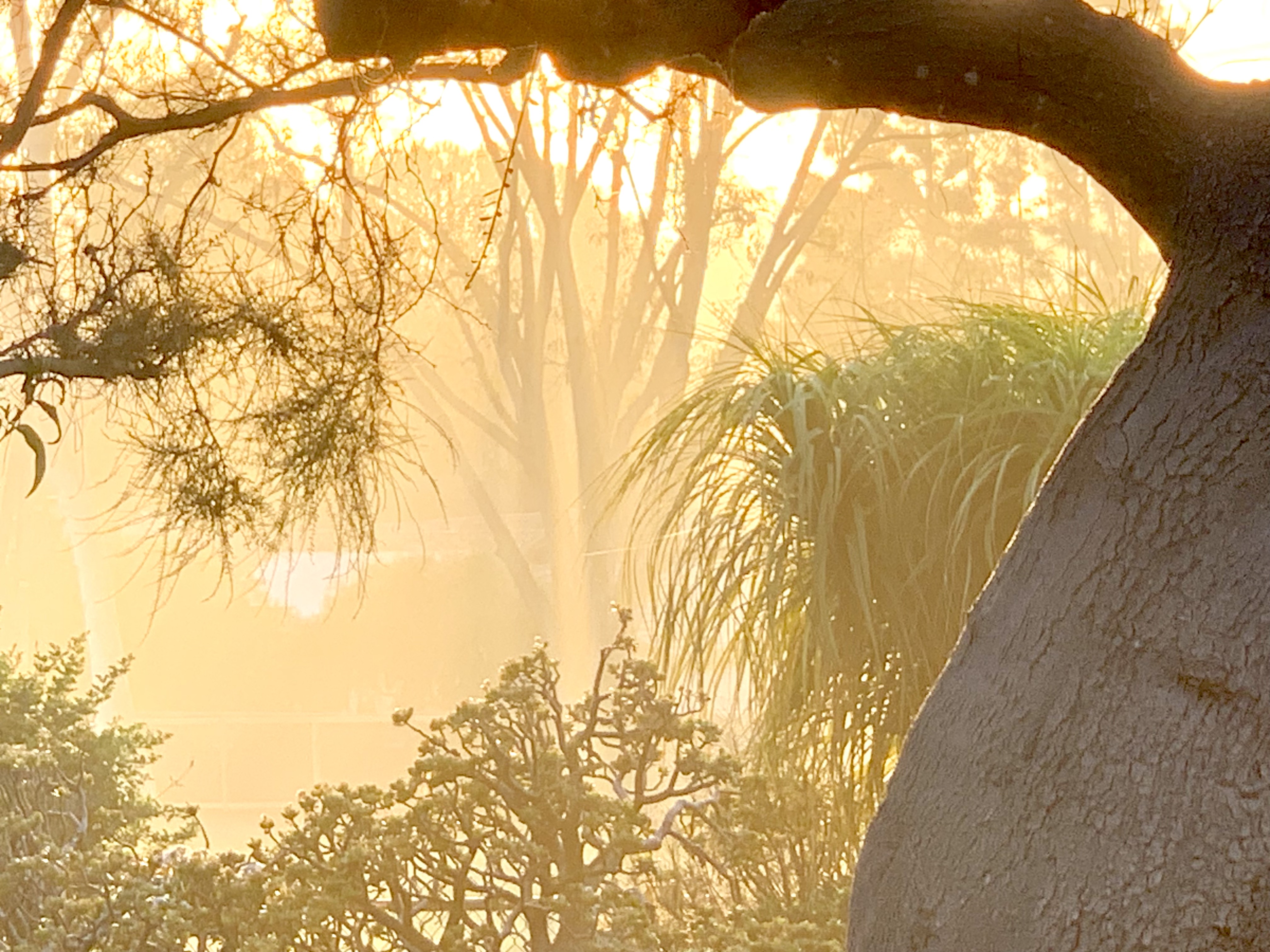
(This is the aloe plant in question but I took the picture this morning in full daylight.)
She backed out and stuck her nose into another spot. I went over and saw that there were two tennis balls stuck near the very center of the aloe plant. I knew from her orientation and from her previous behavior that she was after what we call “The Special Ball.” Instead of being a monotone yellow/green, “Special Balls” have two colors. They are also slightly softer. I also have reason to believe that Sadie can smell the difference.
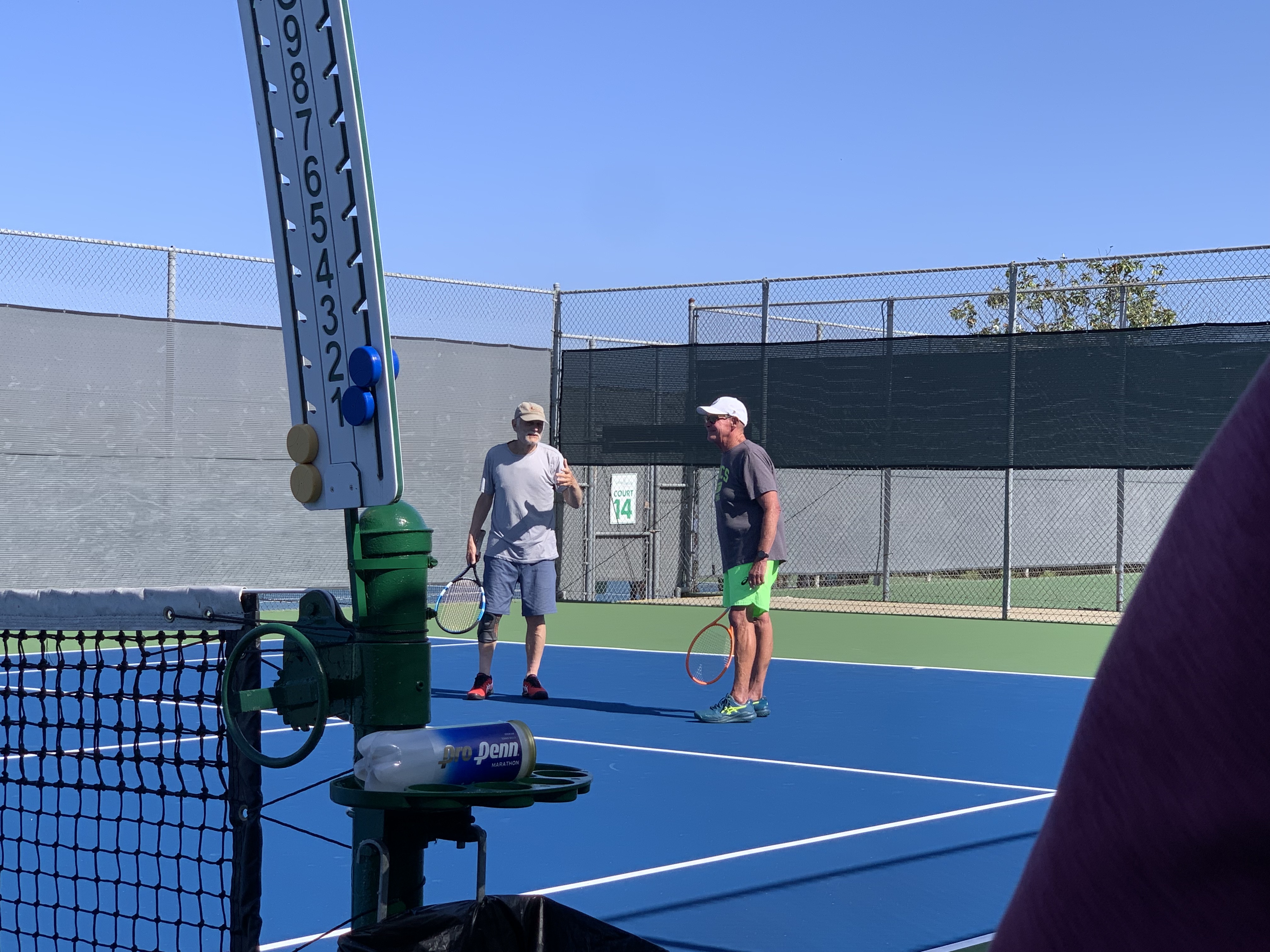
The tennis club uses them for beginners under the theory they are easier to learn with. Being somewhat of a doubting Thomas, I wonder whether there is any empirical evidence of that. Anyway, I hypothesize that Sadie prefers them because they are chewier. It’s also possible that she prefers the smell/taste of them. They also provide a focus for our play.
For instance, if we have three “normal” tennis balls and one “Special Ball,” Sadie likes to keep the “Special Ball” in her mouth and chase after and “corral” the other balls with her body, head, and paws rather than catching them in her mouth. Alternatively, she drops the “Special Ball” and I pick up all four and throw them one at a time for her. I save the “Special Ball” till last. In this version, Sadie will catch each ball in turn and then immediately drop them—until the last throw. She likes to “keep” the “Special Ball” for a time.
Anyway, on the night in question, I told Sadie I would try to get the “Special Ball” for her. She backed off and I tried to thread my hand in between the close-growing thorny leaves to retrieve the ball. Sadie couldn’t safely reach the ball with her snout, but I couldn’t safely reach it with my hand either.
I told Sadie that I would look for a stick to use as a tool. You may think she has no idea what that means, but I have used the word “tool” in conjunction with many instances of trying to reach something I can’t otherwise get. I’ve applied the term to the tennis racquet, the grabber, a long stick, a rake, a back-scratcher, a crutch, and a net for the pool. In each of these cases, the “tool” has been used to get an otherwise hard to reach tennis ball.
On a few occasions, I’ve used the word “tool” in other contexts; for instance, I’ve cautioned both dogs to stay away from the stove top and told them I don’t touch it directly because it’s hot and would hurt me. That’s why, I explain, I use a spatula. I’ve also applied the word “tool” to oven mitts and to knives for cutting.
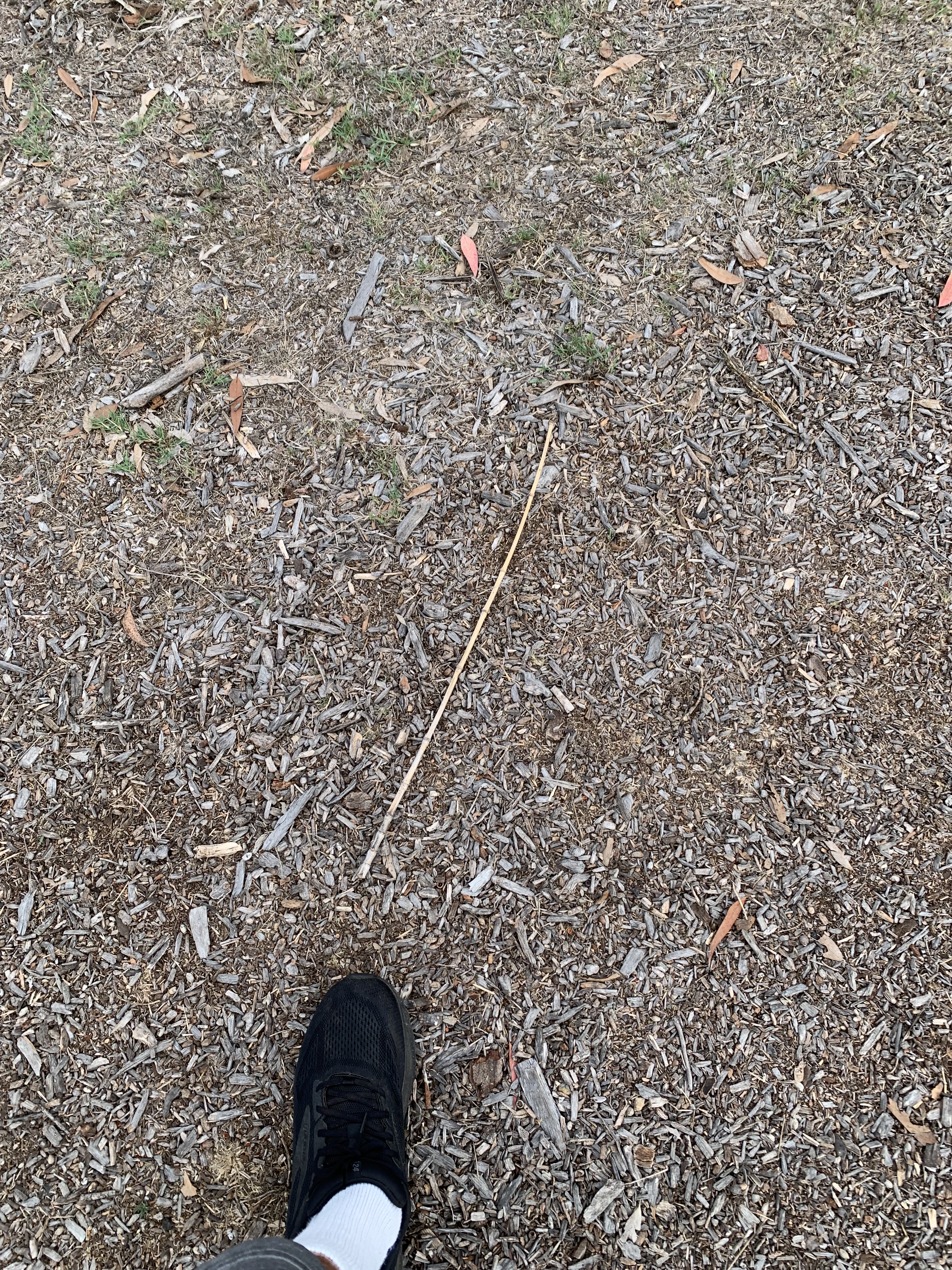
I have no idea how general her understanding of “tool” is, or whether, indeed, she has any at all. But she consistently backs off trying to reach an out of reach tennis ball when I tell her I will reach it with a tool. And she does that in many contexts. Tonight, she seemed to wait while I looked for a stick. The dusky light fooled my eyes into thinking I had spied a stout stick but closer examination proved it to be merely a holy semi-cylinder of Eucalyptus bark, far too flimsy for the job. I reported on all this ideation to Sadie as it occurred.
In the semi-dark, this looked like a sturdy stick, but alas, no.
Then, I saw a slender bamboo pole. I doubted it was up to the task, but I gave it a try. Unlike most “store-bought” tools like a hammer or machete, I was quite aware that even pushing a tennis ball was going to be pushing this thin pole to its limits. I gave it a try. I gently rolled the ball from one of the center most leaves onto a more peripheral one and repeated this ploy again. Now, Sadie could see that the ball was within her grasp and she snatched it with her teeth. She carried it for a time in her mouth but then I told her I could carry it in my pocket and that I would give it to her when we got home. How much of my assurance she understood from words, from tone, and from body language I have no way of knowing, but she relented and let me store the ball in my pocket till we got home. Of course, I gave it to her once we got inside.
Thin and light but sufficient.
On the walk back, I told her that we were a team and that working together to get something done was called “teamwork.” I have long been in the habit of recounting the highlights of our morning and evening walks to Wendy. I described our little adventure and again used the word “teamwork.”
Does Sadie understand the word “teamwork”? Probably not. Not yet, at least. But if she hears it in enough different contexts, I think her brain will begin to operate appropriately, at least statistically (somewhat like ChatGPT). She seems to understand a lot more than she did when she was one or two years old.
I speak to her much as I would to another person, but I slightly exaggerate as I might if I were on a stage. I also try to use the same terms. For example, I sometimes tell her: “I am going to work on my computer for a while now.” With a person, I might sometimes say, “Now, I’m going to use my laptop” or “I have to get on the MAC now.” With Sadie, I try to use the same wording and intonation each time.
If I want her to accommodate me, I need to accommodate her.
Recovering from recently moved across the country, fixing up our new house, dealing with a huge moving van fire, health and family issues, I found myself with 45 seconds of uncommitted time, so I was **thrilled** to get a wonderful form letter from American Express informing me that a credit card I had cancelled about five years ago nonetheless had been compromised and it was up to me to take a series of time-consuming steps. At last!! Something to do!! How thoughtful! If all goes well, this would not only eat up the 45 seconds of free time but about 45 additional days. Of course, all of these steps require either going on-line or calling an 800 number so we KNOW that all will NOT go well. Going to a website generally means getting an account with a user name and email address. These may be the same or different depending on the site. You can pretty much bet PeterSIronwood and Peter Ironwood and PIronwood are already taken so I will end up with some completely impossible to recall username like IPeterIWoodIS437. Of course, I can regenerate my username by merely answering three simple security questions such as, “What is your favorite movie star?” I don’t know. Or, worse, it changes from day to day. Maybe the people who made up these security questions have a favorite movie star that they keep constant for their entire 23 year lives. But I don’t. “Where did you grow up?” What makes you think I grew up? And, what makes you sure it was in one place? And, even if it was in one place, which is the exact spelling I used last time: “SanDiego”, “San Diego”, “San_Diego”, “San Diego, CA”, “San Diego, California”, “California”, “SoCal”, etc. etc. Of course, I could take the OTHER route and call an 800 number. “We’re sorry. All of our agents are helping other customers. Due to unusual call volumes, your call may take longer to answer than usual. Your estimated wait time is 5.5 centuries. But meanwhile, you can listen to really loud, really repetitious, soul-sucking low-fidelity music. This century’s selection is entitled, “The Dementor’s Theme Song.” You know what? If YOU screw up YOU fix it! Don’t impose on ME to fix it.
But let’s not forget that most people, most of the time cooperate. It’s much more pleasant for normal people to cooperate and the results are also much more pleasant.
Is there road rage? Does that exist? Yes, but statistically, the vast majority of people cooperate when they drive.
And, when they do anything else. We depend on many people from many places cooperating in order to eat. First, the efficiency and effectiveness of our food growing, harvesting, transporting and preparing depends on the cooperation of millions of people in the past who found out what was edible, how to grow it, which crops worked best in various conditions, how to irrigate, how to fertilize, how to harvest and so on. The food we have available today depends on the collaborative efforts of many previous generations. These dependencies are not just on food per se, but also depend on scientific advances, transportation advances, financial advances, and so on.
Much of our food also depends on people from many parts of the world cooperating today. The prevalence of cooperation is not just true of driving and food production but also on the construction of buildings and cities; it’s true of our clothing, our medical care, our learning.
Despite the fact that cooperation is much more prevalent than criminality, evil, and violence, there are at least three reasons that the evil of human behavior seems much more prevalent than it really is. These are: 1. Effect Size, 2. Cognitive Bias, and 3. Media Bias.
Effect Size:
First of all, it takes many people working smart and hard over a long period of time to provide value through cooperation. By contrast, it only takes a few people working stupidly over a short period of time to destroy something. The effort to make a pane of glass is immense. To make it efficiently takes a large number of people with different skills. To destroy a pane of glass requires only one second of bad action by one unskilled bratty child.
AI-generated image
Think about how much work goes into planting, growing, and harvesting an acre of corn versus what it takes to burn it down. Think about how much time and effort it takes to raise a child for the first ten years of their life versus destroying that life with an assault weapon. Think about what was required to build a functioning democracy over the course of hundreds of years by cooperation versus how easy it is for a very small group of greedy stupid people to destroy it. The examples are endless. Writing a novel versus burning a book; training to become a world class figure skating versus putting an ice pick in someone’s knee; becoming a skilled artist and painting the Mona Lisa versus splashing it with black paint.
It’s the same with a functioning human body. To be healthy requires the coordination of trillions of cells. The kind of cooperation found in the human body (or an eagle or wolf or whale) took billions of years of evolution. To destroy the health of the body only takes a few stupidly greedy cancer cells. So, although evil destruction is far less prevalent than constructive cooperation, evil destruction can undo the effort of many over the course of a long time.
Second, because destruction can so quickly undo so much good work, our nervous system is very reactive to evil and violence. We perceive it more easily and we remember it more easily. In a crowded city, you might pass by hundreds of people every day. Most of them, most of the time, you don’t notice. But if one of them robs you at gunpoint, you will notice and remember.
Media Bias:
The first two reasons we perceive evil to be more common than it really have existed for millions of years. Now, however, in our modern society, we have people whose job is to report on the news.
When is the last time you saw a headline like: “Two hundred thousand people drove into San Diego from Mexico yesterday with zero fatalities!” Or, “Three million people ate dinner in San Diego county last night! Zero died of food poisoning!”
It is sometimes said that “No news is good news.” It’s also generally the case that good news is no news. There are some exceptions. When World War Two ended, there were headlines. What we don’t see is this headline: “Canada, for the 57,670th consecutive day did not attack the United States of America.” Understanding this, a complete sociopath with an audience might try to increase their own fame by declaring: “America should annex Canada!” An actual war will definitely result in a headline. But threatening war, especially with a friendly country might also result in a headline.
The tendency to report bad news over good news has always been a “feature” of the media. But now that much of our news is basically click-bait for advertisements, the tendency is worse than ever. When I was on the school newspaper, we were taught to put the most important information in the headline; add the most important details in the first paragraph and add more detail in the rest of the article. Now, most headlines are fairly meaningless and important information is hidden behind a paywall or an advertisement.
“Is Earth About to Plunge into the Sun?!”
AI-generated image to prompt: “The earth plunges into the sun.”
Ka-ching!
(No, but we could sure use some extra cash, so click here to find out.)
“Does T-Rump have Proof that Obama was Born in Kenya!?”
An AI-generated image
Ka-ching!
(No, actually, but if you want to find out, click here and pay us money.)
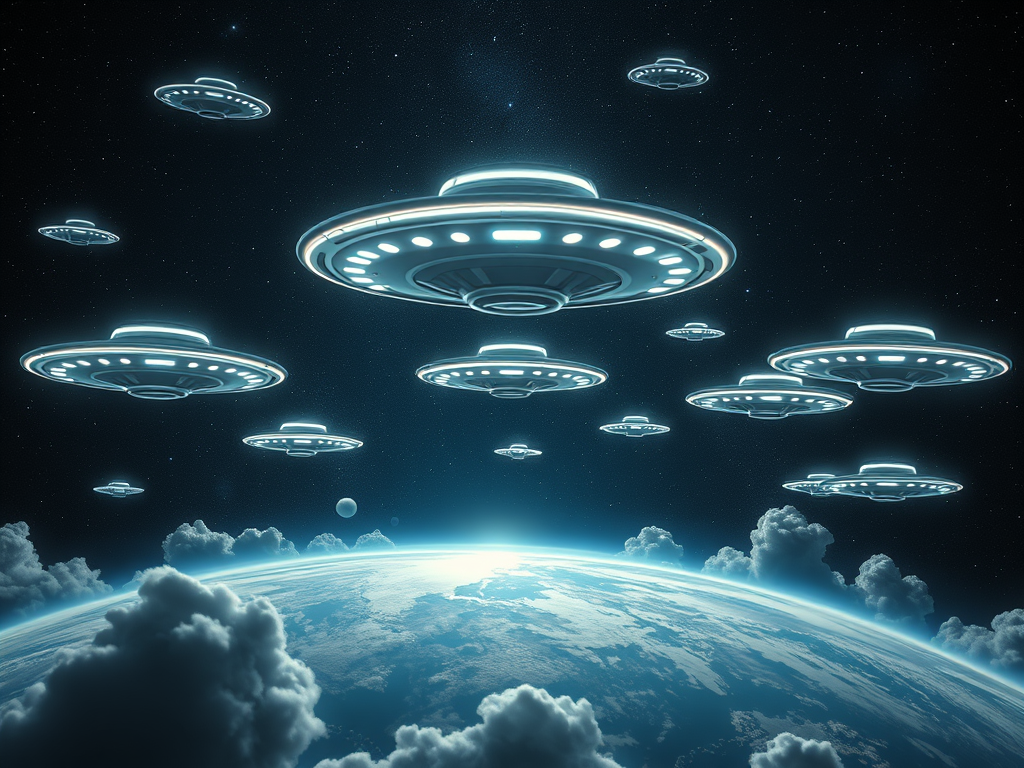
“Could Space Invaders have Brought Life to Earth?!”
AI-generated image to prompt: “A fleet of UFOs hovers over the earth”
Ka-ching!
(Well, sure, anything’s possible. And, while we have no evidence of that, thanks for making one of the greediest people on earth a little richer!)
Dishonesty, greed, and mistrust work in a vicious circle. As you discover that more people are lying; that more people are evil, you yourself become more cynical and more tempted to lie, cheat, and steal. If you succumb to that temptation, it makes others more likely to lie, cheat, and steal.
Here’s the important thing to remember about a positive feedback loop though. It works in both directions. To the extent you can behave in a trustworthy fashion and be kind to others, it increases the chances that others will be inspired also to behave well. Cooperating is the natural and normal course for humanity. You will be happier doing that and you’ll help build a better world.
Donnie Dump arrived first. He sniffed. He sighed. The place stunk. He took a deep breath and ambled over to the plain wooden door with the brass numbers ‘4’ and ‘2’ glued on at a slight angle. The door looked to be plywood.
He dug around in the front right pocket of his too-tight Lee’s and found the crumpled piece of paper. He uncrumpled it. He nodded and mumbled: “Yep. This is the place.” He re-crumpled the paper and jammed it back into his pocked. Then, he turned the cheap brass knob and pushed. The door opened into a room without light. “Crap. I’m the first one here.”
Donnie fumbled around the door jamb for a light switch and flipped one. He said, “Let there be light.” And, there was light. A row of florescent lights flickered on to reveal a small arc of cheap chairs. In a corner of the smallish room, a vending machine offered a variety of salty and sugary snacks.
Donnie hated being late. But he hated being early even more. Yet, here he was. Early. The first one here. He thought, How the hell was I supposed to know traffic would be so light. The truth was traffic was always “unusually” light now, but he hadn’t yet connected the dots; he hadn’t noticed nor had he realized how that fact related to his own ‘second career’ as he often called it.
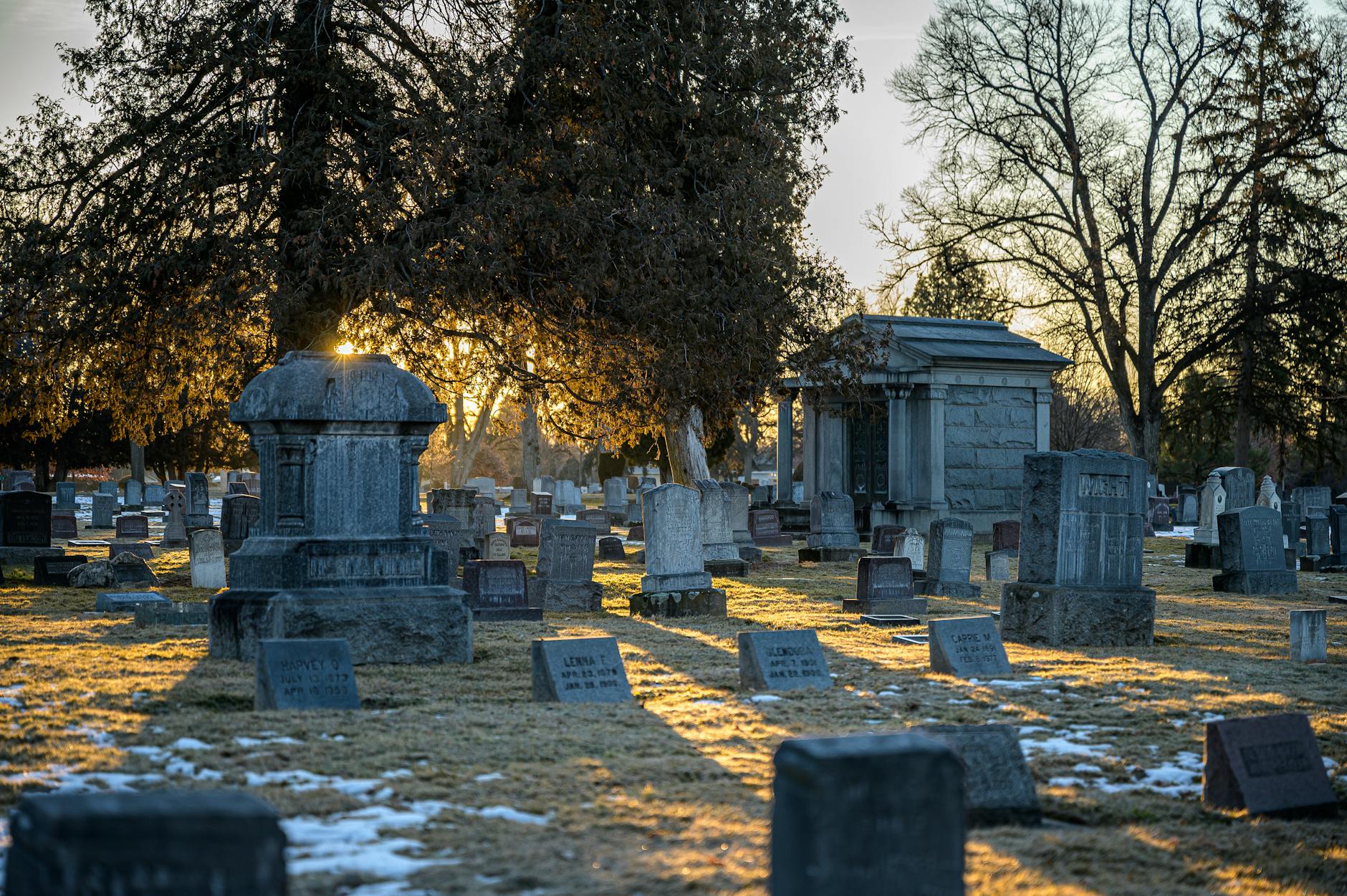
AI generated image.
Just then, he heard a noise and spun quickly to see another obese, masked marvel of manhood who raised a hand to him and said, “Hey. AA?”
Donnie nodded and began to regret having agreed to come. His wife Maggie had been insistent. Maggie the Naggie, he thought. She should just mind her own damned business. “I don’t need fixing!” He had told her.
She had countered, “I’m not saying you need fixing. But you’re just—understandably stressed. It’s not an easy job.”
Donnie now glanced at his watch. He could see several other guys out in the hallway. He was glad to see half of them were at least as old as he was. It was hard work chasing down folks trying to run away from you. He thought: True, the numbers and the weaponry made it safe enough but so is a carnival ride and they’re plenty scary too. But it’s whacking ‘em on the head I really get off on. Head wounds bleed a lot. The thought that they might be stupid the rest of their life from that one blow, or have a part of their body paralyzed or weakened. That was power. I like the taste. And, when the opportunity comes up, I’ll take whatever the hell I want. What’s everyone staring at me like that for?
Everyone had been seated for awhile and had been taking turns jabbering on about something or other. The so-called “Facilitator” had just said something to him. But what? That’s the question. Everyone’s staring at me.
Donnie stammered: “Sorry, what was the question?”
The facilitator faked a smile and said in a pleasant voice that Donnie just knew had to be rehearsed: “Have you experienced any unusual symptoms since joining NICE?”
Donnie shook his head and thought: Symptoms sound like I’m some kind of psycho or something. Aloud, he said, “No, nothing. No unusual symptoms. Like what?”
The F-man shrugged and said, “Like drinking more alcohol than you used to or using more pot or bad dreams. Anything.”
Donnie shook his head. Maybe I shook it too hard. This is weird. No wonder Maggie wanted me to come. This is chick stuff. Feelings and that crap. I wish I knew what the other guys said. Doesn’t matter. They can’t prove what I think or what I did. We’re all masked. I can hold my liquor just fine. Who cares? It’s good to celebrate our victories. Kids. Some of them look like kids but so what? They’re criminals at heart. And not America citizens. Not because some liberals wrote it into a Constitution. Not with skin that dark. Everyone’s staring at me again. I want my assault rifle. Why is everyone staring at me?
Donnie said, “Look, I feel fine. I like beer. So what? I do my job. I’m only here because my wife insisted. Well, that won’t matter much longer. Everybody knows it works better when women are property and we stop pretending their people with their own ideas. Go on to the next guy.”
The meeting only lasted an hour but to Donnie, it seemed like a lifetime of boredom.
It was late when Donnie got back home from the meeting and the post-meeting meeting at the “NICE GUY TAVERN.” Maggie had fallen asleep in her bathrobe staring at the boob tube. The twins must be asleep, he thought.
I don’t drink too much. I just want to feel good.
Donnie didn’t see anything wrong with that. But he did see something wrong with his damned wife being asleep when he got home. He didn’t exactly shout, but he did want to be heard over the sound of the frigging TV and he did want to wake her up and he had been drinking so his “Hey!” Sounded a lot more like: “HEY! Wake the hell up, Bitch!”
Maggie sat up and said, “Hey, Donnie. How was the meeting? I didn’t realize it would run so long. Was it fun?”
Donnie was already pouring himself a few fingers of Jack D. He bolted it down in one gulp before turning back toward Maggie and snarling in a soprano of swishy sarcasm, “Was it fun? Was it fun? Did you boys have fun talking about your frigging feelings?” He switched to his own voice and added, “No, it wasn’t fun! It was boringand useless just like you knew it would be. Do me a favor. Next time you get a brilliant idea, just keep it to yourself. I don’t drink too much. End of story.”
Maggie didn’t really agree, but she bit her lip to keep from…saying anything she’d regret.
Meanwhile, Donnie was pouring himself yet another Jack D but only got two fingers’ worth. He yelled, “What the hell? Drink your own damned drinks! Don’t drink my good whiskey! Ain’t lady-like anyway! Don’t you have some sprizzer chicker drinker? Leave mine alone! Now, I’m out of Jack!”
At the moment Donnie said that, he was not, in fact, out of Jack. There was another fifth, unopened, staring right at him from the edge of the countertop. The fifth stood just a little too close to the edge. It should have known better but it didn’t know better because, first, it was filled with booze and secondly, it was only a bottle and didn’t really know much of anything.
In any case, when Donnie staggered and stumbled into the counter top, his elbow toppled the bottle onto the hard tile of the kitchen. Maggie and Donnie didn’t own any pets and the twins were asleep, so when the bottle shattered into smithereens, Donnie could see no-one to blame but Maggie. His subsequent screaming did manage to wake the twins who toddled out to the kitchen in a daze to see what all the commotion was about.
Maggie saw them toddling forward in their PJs and yelled at them to go back to bed, but not before each of them managed to step on several broken shards. Maggie was horrified to see the blood of her darling toddlers mixing with the stinging whiskey. The toddlers were none too happy either. Their pain and confusion were exacerbated by the increased tension they had felt at home ever since Donnie joined NICE.
Tears streamed down Maggie’s cheeks. She shook her head and stared at her husband—a man whom she had once loved. She could see that he was smiling and that the smile was genuine. It was the happiest she’d seen him since he had started working at NICE. She gripped the her elbows with her hands, knowing she should get her kids and fix them, but suddenly, she didn’t know how. She just cried silently wondering what had happened to the nice man who used to live inside Donnie’s skin.
If you guesses heart disease and cancer, you’re right! Yay! RFK Junior and the Second Putin Misadministration may well change that in the next few years. By discouraging vaccinations, rolling back regulations for food quality, air quality, and water quality; by making proper nutrition much harder for non-wealthy families, the causes of death may change and infectious diseases my well rise to the top of the list again.
The First Putin Misadministration had a dry run by mishandling COVID. They did just about everything they could to kill additional Americans. By modeling disease-spreading behavior, waffling on whether vaccines were good, pooh-poohing the very existence of the disease for the critical early months, and, importantly, by making sure that the logistics of tests, masks, & other protective equipment was put in the hands of an over-spoiled teenager rather than any one of the hundreds of world class logistics experts in America, they did what they could but COVID only rose to third.
We could argue about the details, however, because it is undeniable that, because of the pandemic, many people did not get tests and interventions designed for early diagnosis of cancer and heart disease. So some of the deaths attributed to cancer and heart disease may also have been partly due to COVID. Nonetheless, cancer and heart disease do cause a lot of deaths even without any help from COVID.
Both “cancer” and “heart disease” are very broad labels. And, in both cases, we know that there are a number of factors that influence the incidence of various types of cancer and heart disease. A large number of genetic factors play a part. So too do diet and exercise. A completely sedentary life-style is bad for your health in many ways. One of the motivations for my book, Fit in Bits, is to make it easier for people to incorporate more exercise into daily life.
However, there is evidence that the environment also plays a large part in the prevalence of both cancer and heart disease. Almost all of these studies are understandably correlational in nature. I say “understandably” because most people are unwilling to have their behavior dictated for twenty years. So, we are left with comparing people who, left primarily to their own devices, encounter different environmental factors. However, lab rats and cell cultures do not object to being mistreated so we have additional indirect evidence that plastics are bad for life. For these reasons, one environmental factor that is drawing increasing attention is the “one word” for Benjamin in The Graduate: “Plastics!”
I don’t like plastic. I’m not saying that because I don’t like sea turtles and sea birds strangled with plastic. Of course, I don’t like those things either, but I’m talking about my sensory experience. I’m saying that for me, plastic doesn’t smell, taste, sound, or feel good. For that matter, it doesn’t even look that nice.
Materials I do like include metal, rock, wood, glass, and ceramics. I like them at a sensory level.
Recently, it has struck me just how prevalent plastic has become in my own life. When I was a kid, I had some things that were plastic, but it was much less prevalent than it is today. Let’s take a little look.
One of the first things I do in the morning is have coffee. That’s made from a bean. That’s not plastic.
Or, is it?
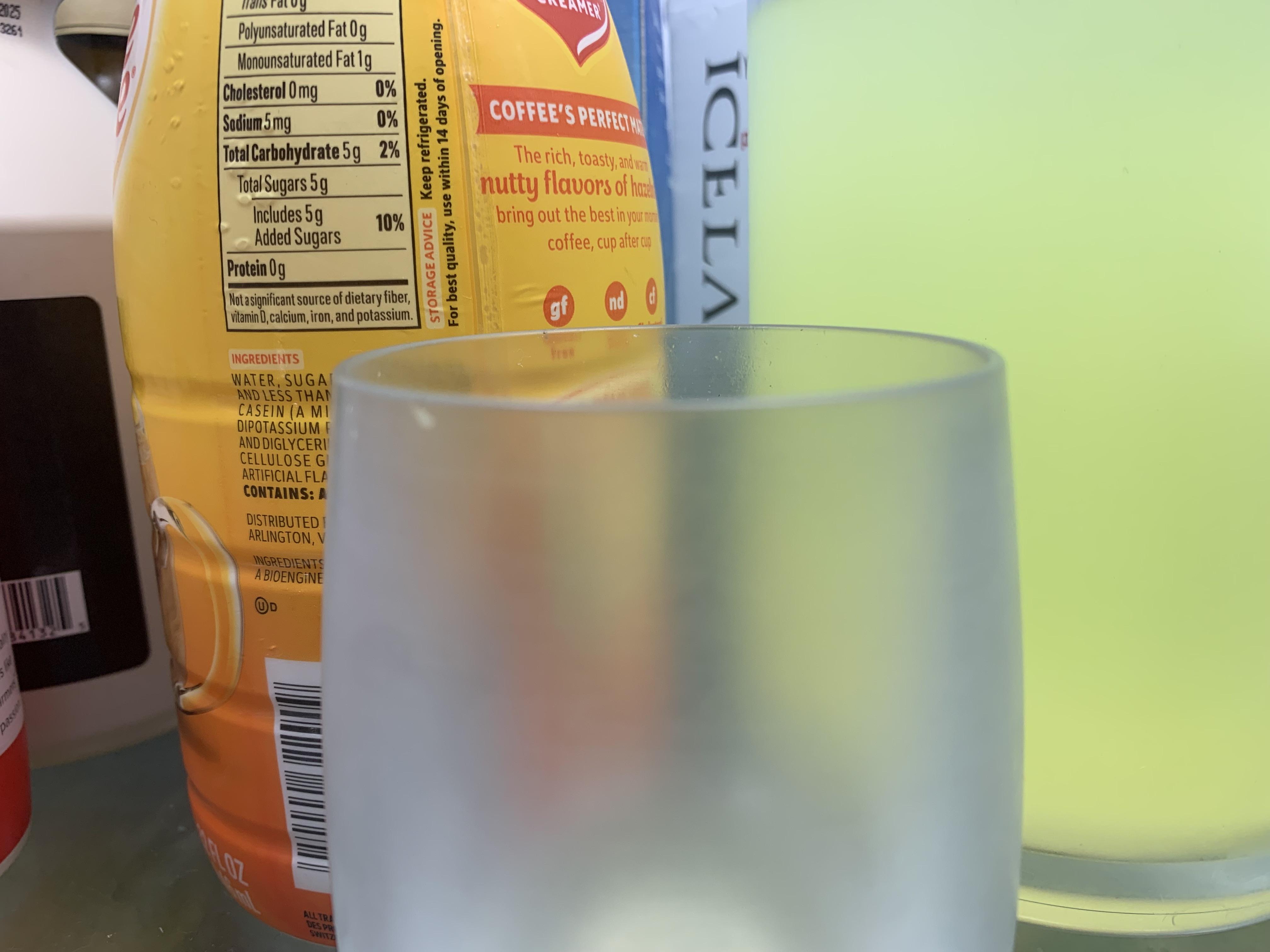
Lately, I make it in this coffee maker which holds coffee in little plastic capsules. The water sits in a plastic reservoir. The sugar sits in a plastic jar. I put in a little milk and hazelnut creamer. Guess what? They also come in plastic.
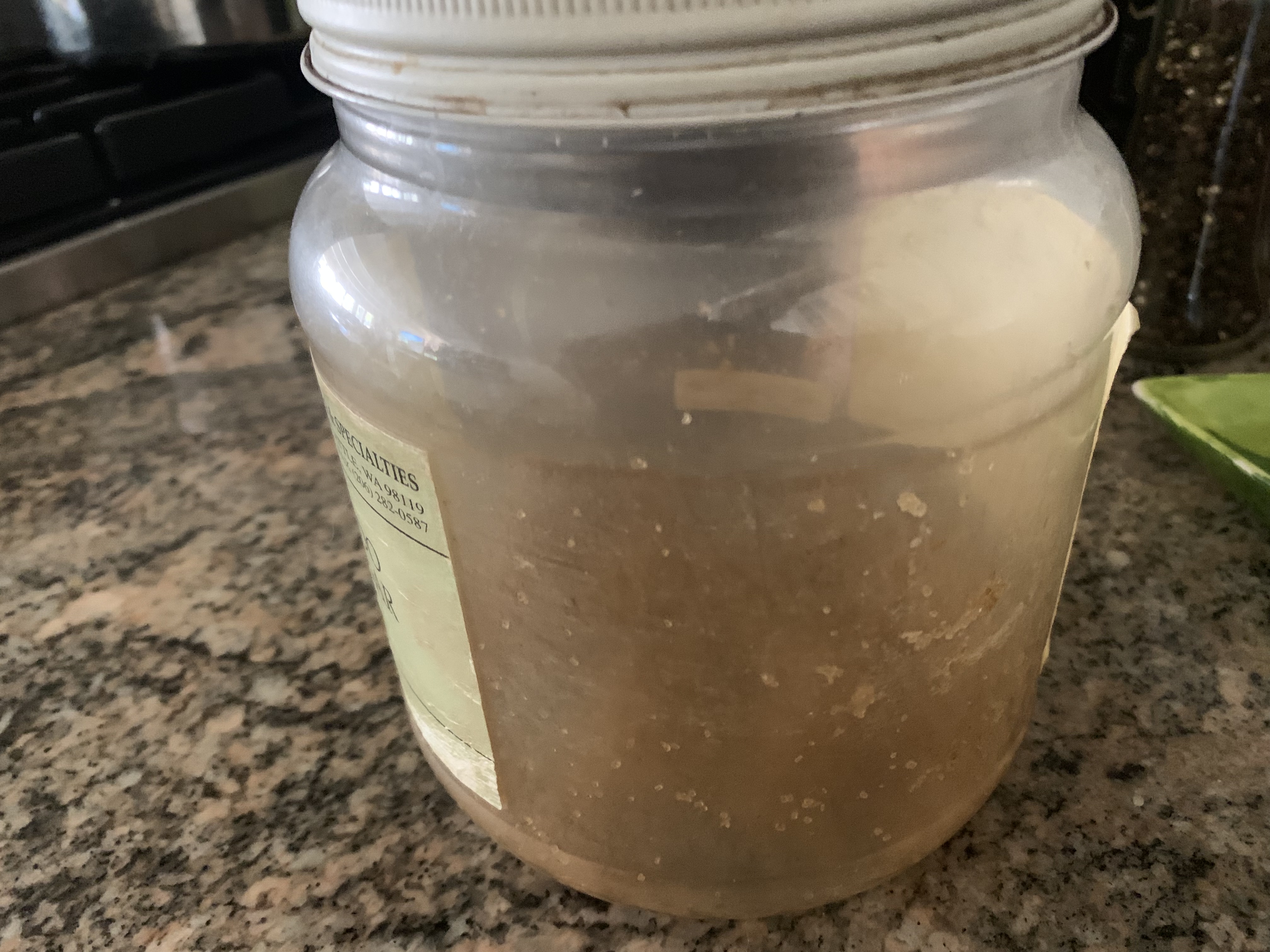
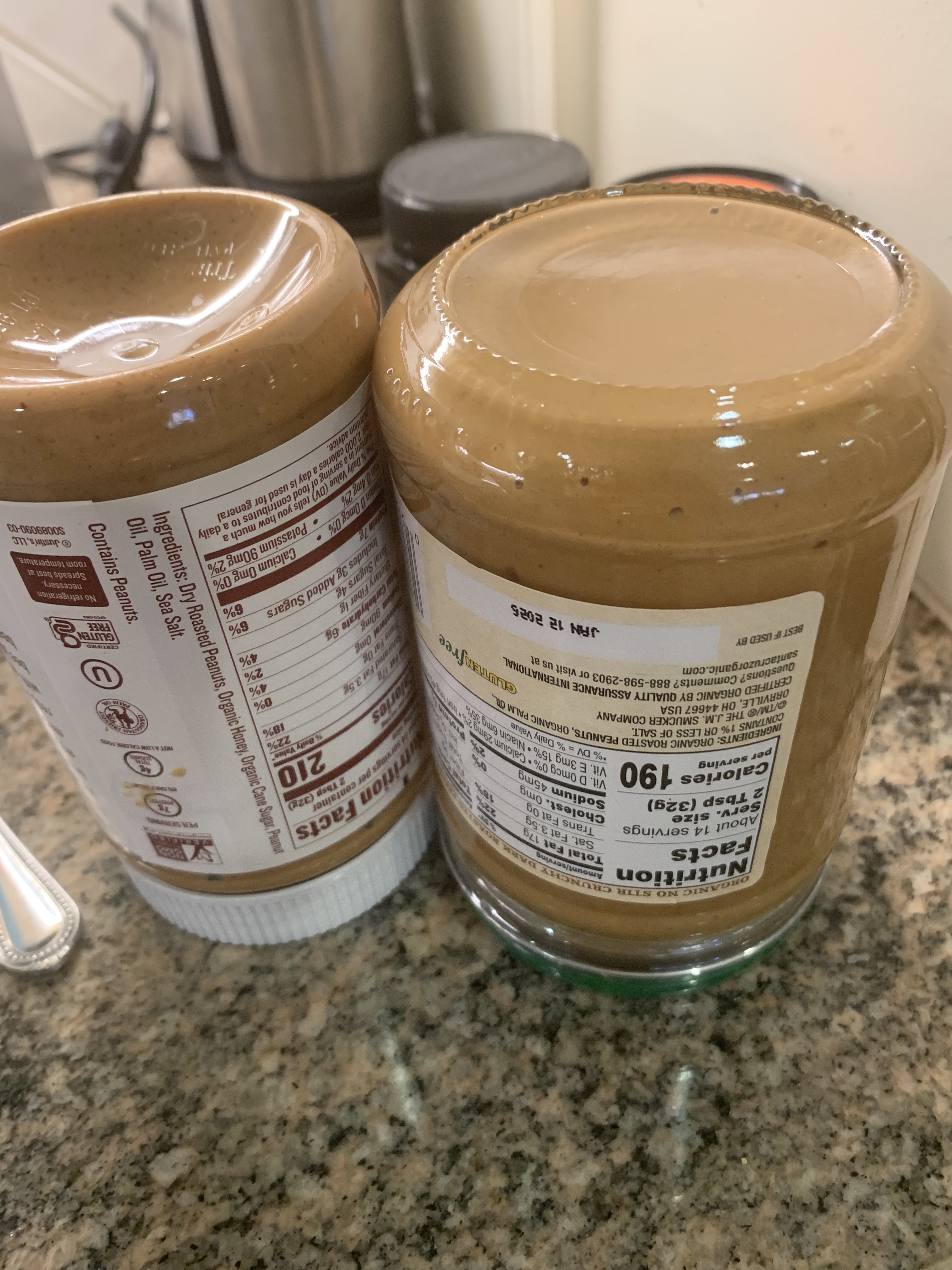
The cup, at least, is ceramic. I often have a whole wheat English muffin. The muffin comes in a container that is part paper and part plastic. I often like to put peanut butter on it. The peanut butter I usually buy comes in plastic. I often put honey or berries on the peanut butter. They come in plastic.
Sometimes, rather than a high fiber English Muffin, I enjoy a bread which is called “Fitness Bread.” It’s high fiber and tasty. And, it comes wrapped in plastic. I often spread hummus or guacamole on it. These are also pretty healthy choices. But they spend a lot of their life in plastic.
As I side dish, I like cherry tomatoes. They are colorful and tasty and low calorie. And they come packaged in–did you guess? Plastic. On sandwiches, I often put ketchup or mayo. They also come in handy squeeze bottles made of…let’s say it together: “Plastic.”
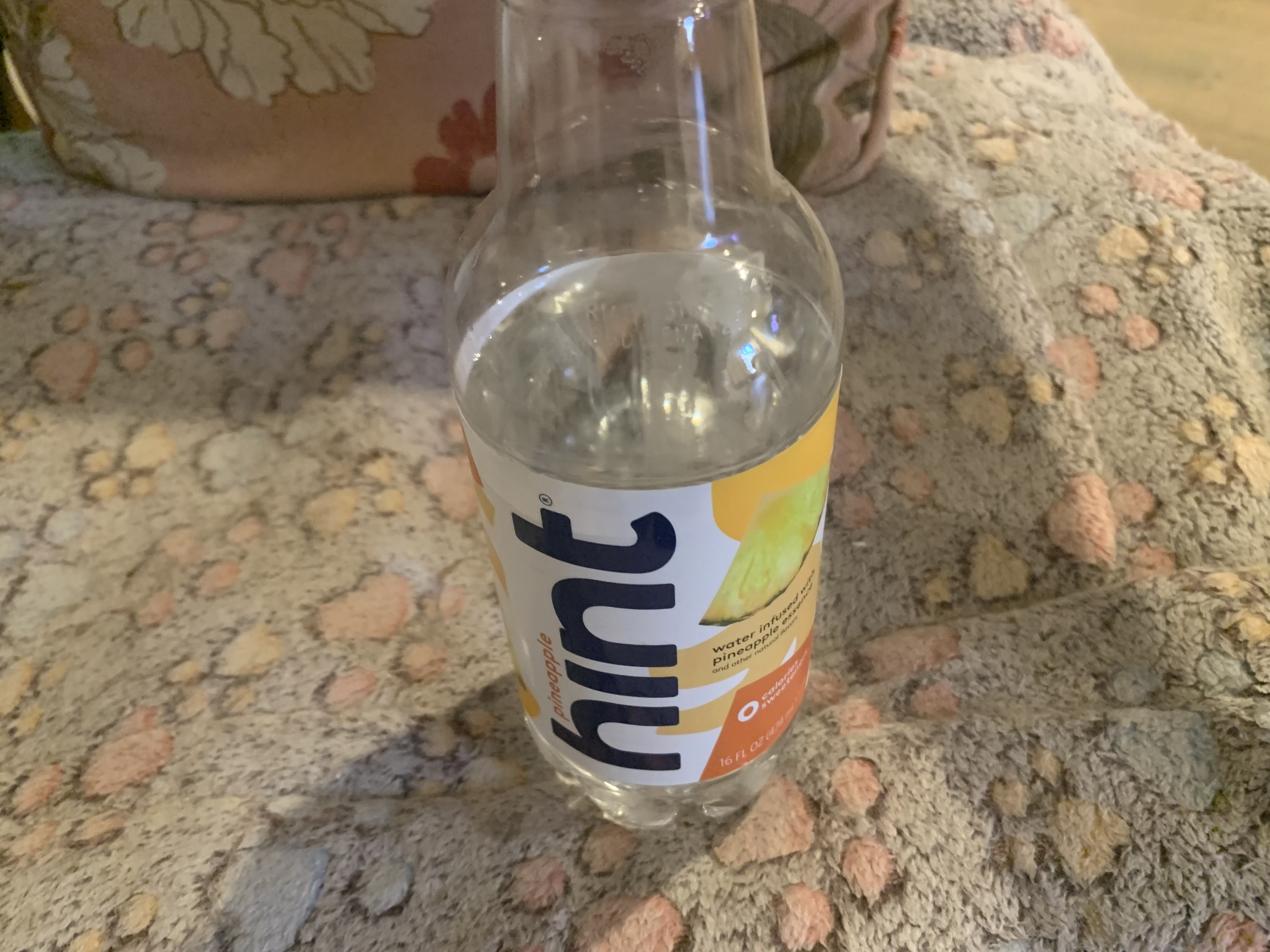
I don’t drink any alcohol, and often drink Hint or BAI, both of which I like quite a lot and both of which come only in plastic containers. This is not great for the environment at large, but also not good for the environment of my body. We also sometimes drink a powdered lemonade mix which comes in plastic packets. Then, a pitcher in the fridge keeps it cold. The pitcher is plastic. Then it is served in a “glass” which is, in fact, not glass, but plastic.
There’s an advantage to plastic over glass. We have cats and dogs and they have a tendency to knock things onto the floor. Plastic things are far less likely to break. Plastic glasses also weigh less than glass.
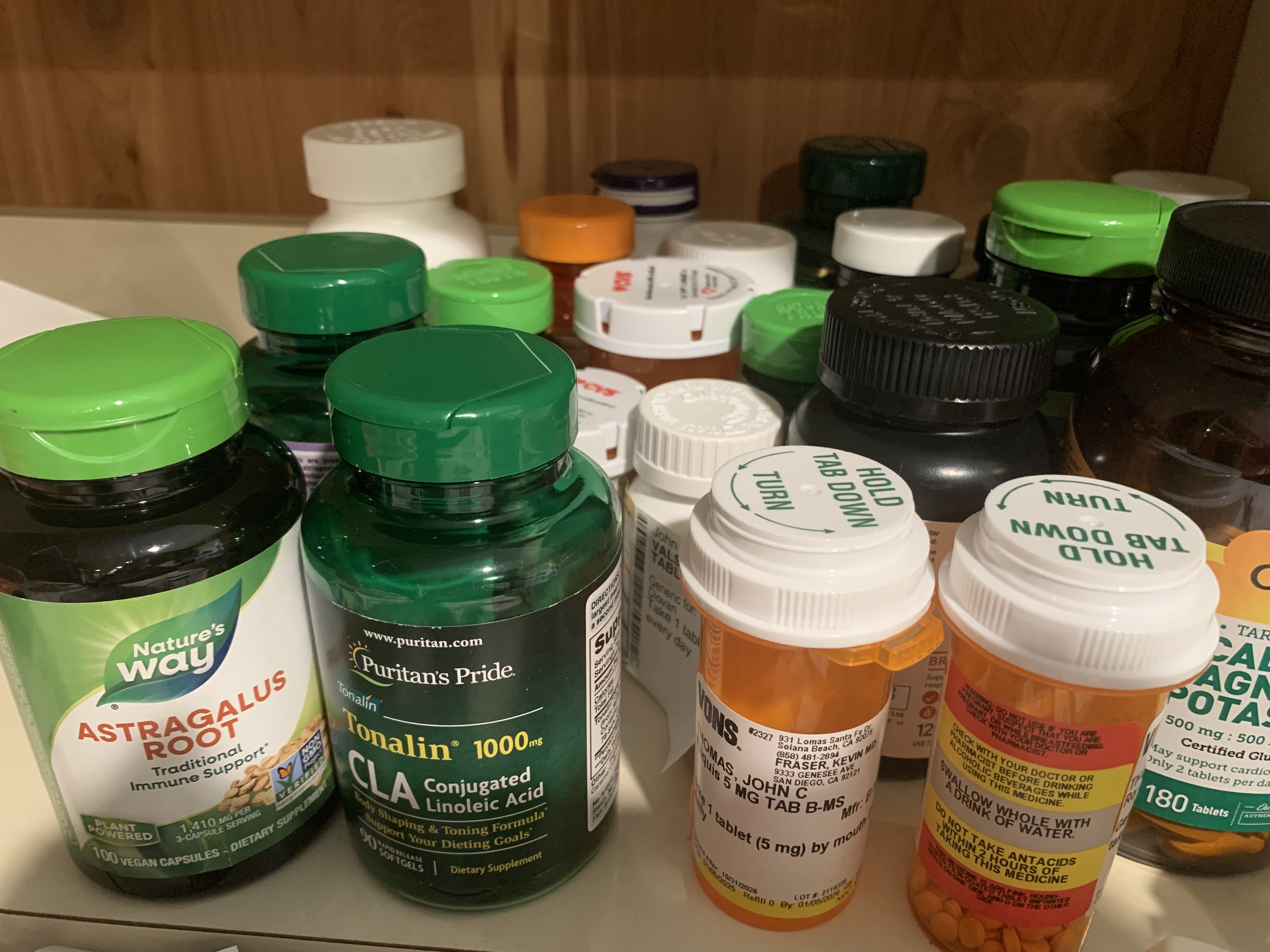
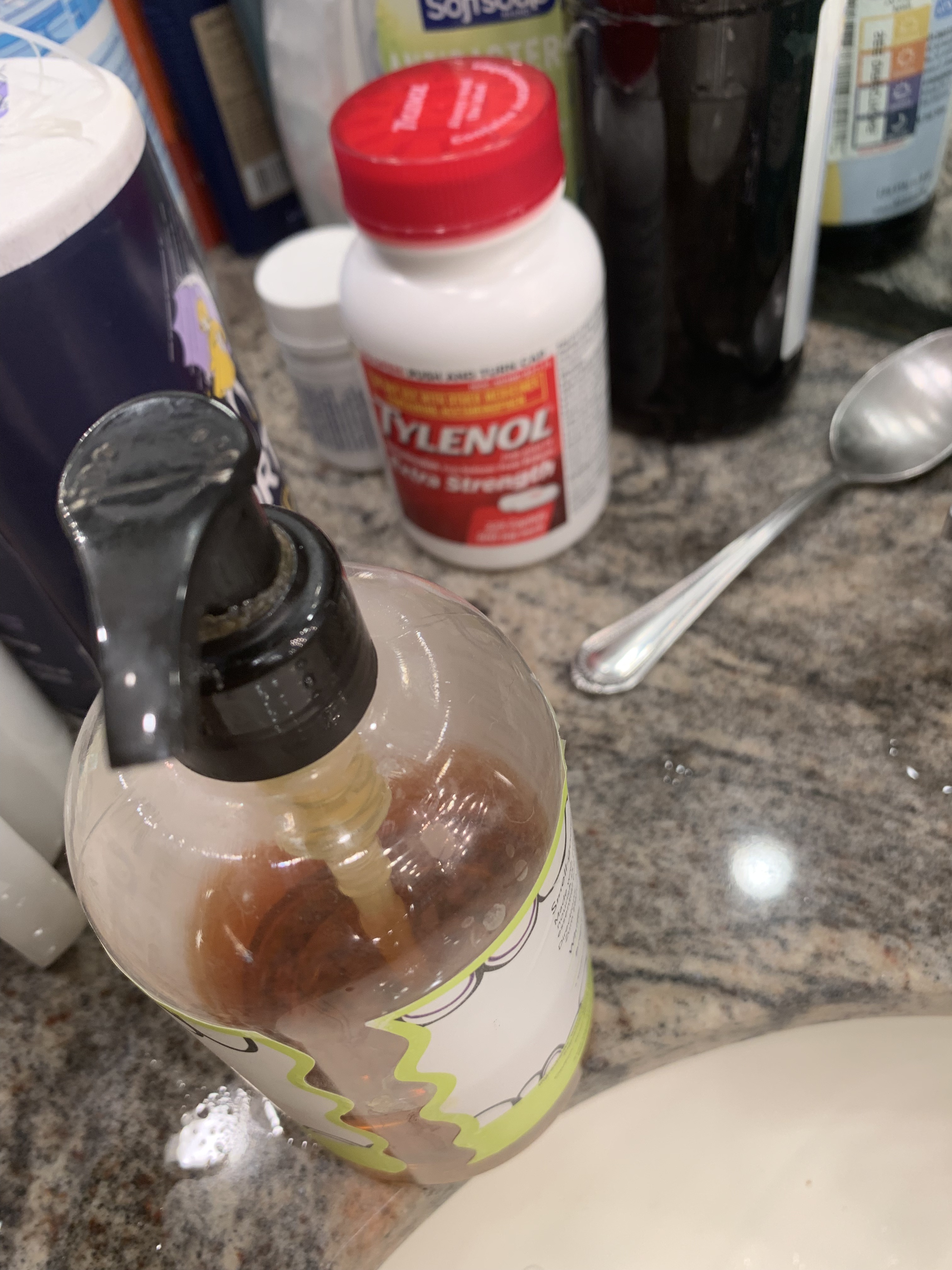
After breakfast, it’s time to take some supplements for my health. These almost always come in plastic containers as do the prescribed medications I take.
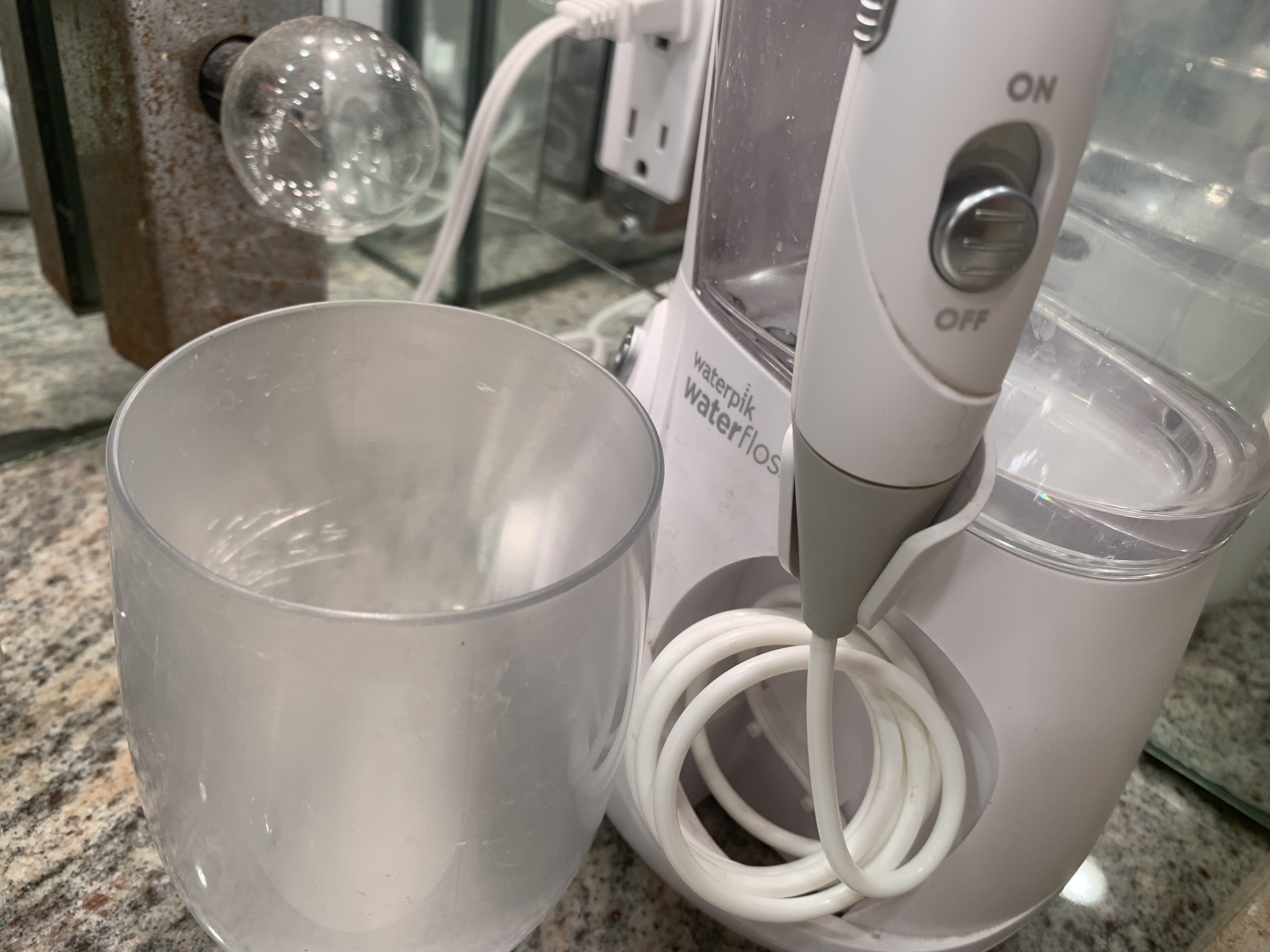
I brush my teeth. That’s a health-promoting activity. But the water glass I use is plastic. The toothbrush bristles are plastic. Lately, I’ve started using a water pick as well, which I highly recommend, by the way, though the reservoir for the water and the entire mechanism is made of plastic.
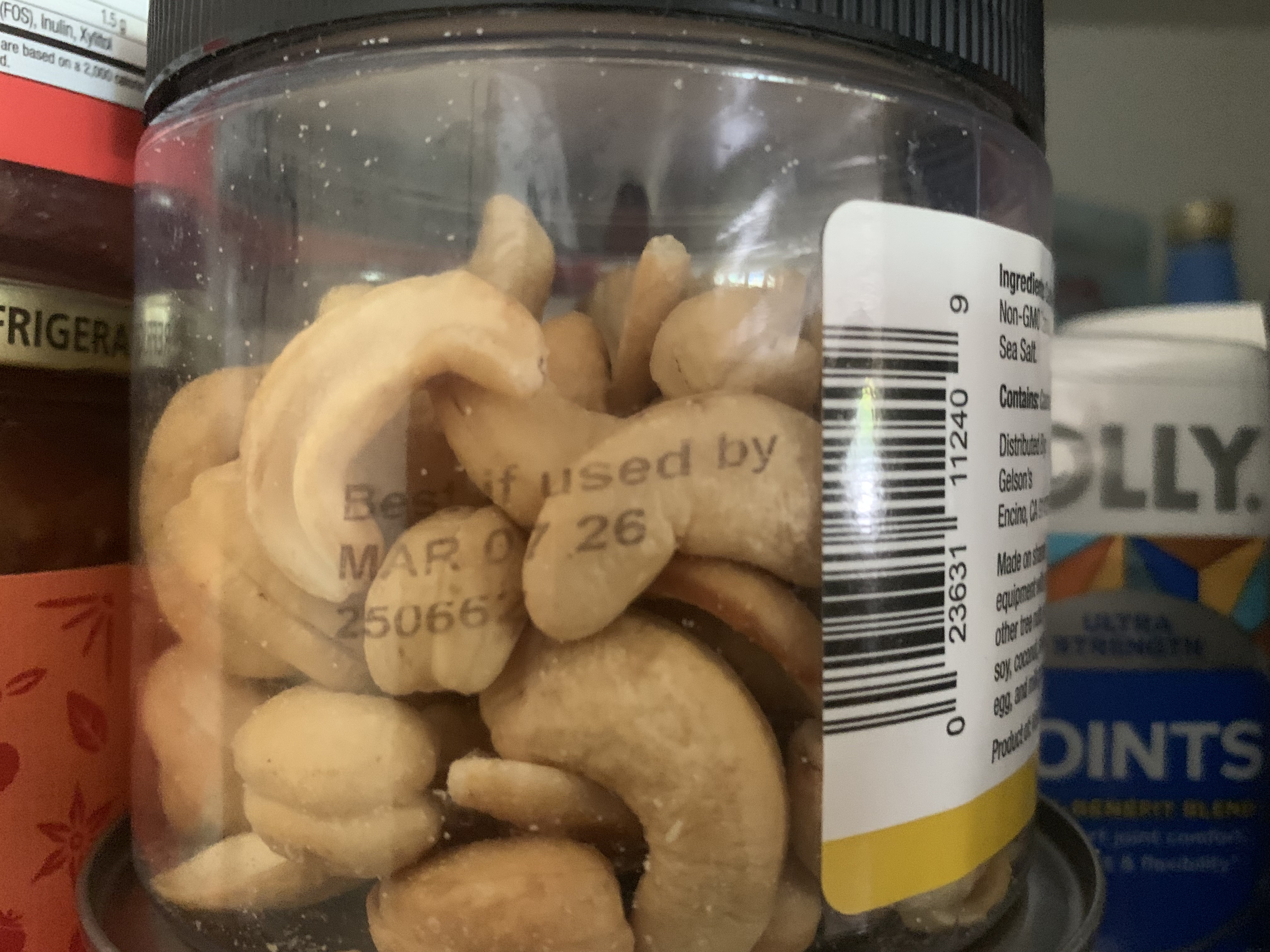
I often cook for the two of us. Lately, I’ve been using cutting boards made of…you guessed it! Plastic! For healthy snacks, I like dried fruit and nuts. Guess what? They come in…
What’s to be done?
In today’s America, with science and truth becoming illegal, it probably won’t make a huge difference. I’m more likely to die of infection or Civil War or unprovoked police violence than from plastic, but I am making some changes.
We bought bamboo cutting boards and paper cups. I’m cutting out the BAI and Hint and exploring options for drinks that come in glass or non-BHA coated metal. I am trying out another type of peanut butter that comes in a glass container. But the vast majority of products at the grocery store come in plastic. Even the vegetables and fruits.
Despite all the years of increasing the percentage of items that are plastic, I still do not actually like plastic.
I’m switching out what I can, and it may be too late in life to make a lot of difference for me personally, especially with a Misadministration that wants to end American lives (and brags about it!). But it may not be too late for you.
Do your own inventory. Hopefully, you will find things you like that are not wrapped in that one word of biological disaster wrapped up with economic faux-prosperity. The word? Here’s a